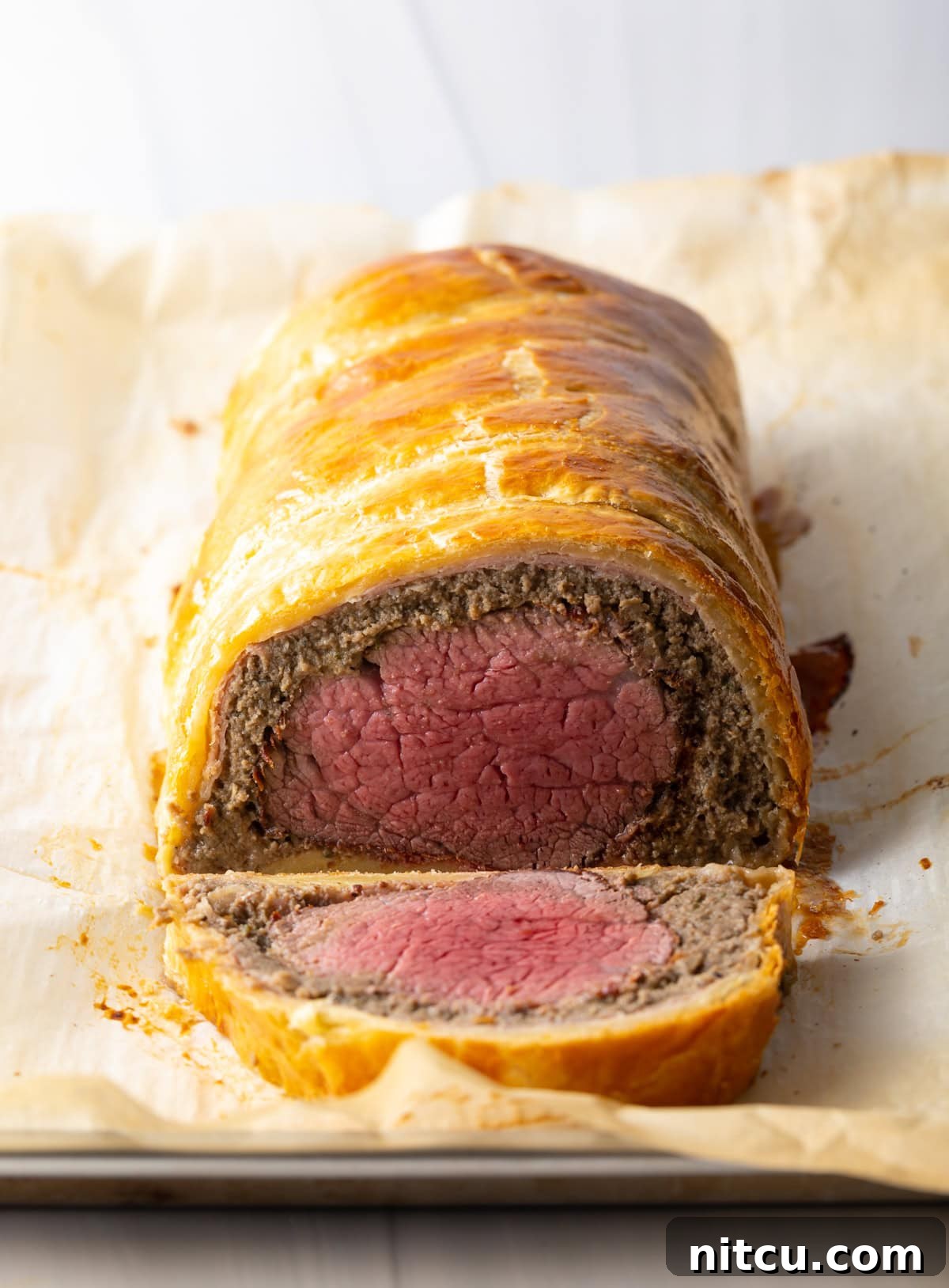
This is the Best Beef Wellington Recipe you’ll ever make, featuring tender and juicy meat wrapped in golden, flaky perfection!
The Ultimate Guide to Crafting the Best Beef Wellington
Step into the world of culinary elegance with this exceptional Beef Wellington recipe. A true showstopper, Beef Wellington is a magnificent steak dish known for its perfect blend of tender, juicy beef tenderloin, rich mushroom duxelles, savory prosciutto, and crisp, golden puff pastry. Traditionally a centerpiece for holiday feasts and special occasions, this classic recipe offers a dramatic presentation and an unforgettable flavor experience that will undoubtedly impress your guests and elevate any dining event.
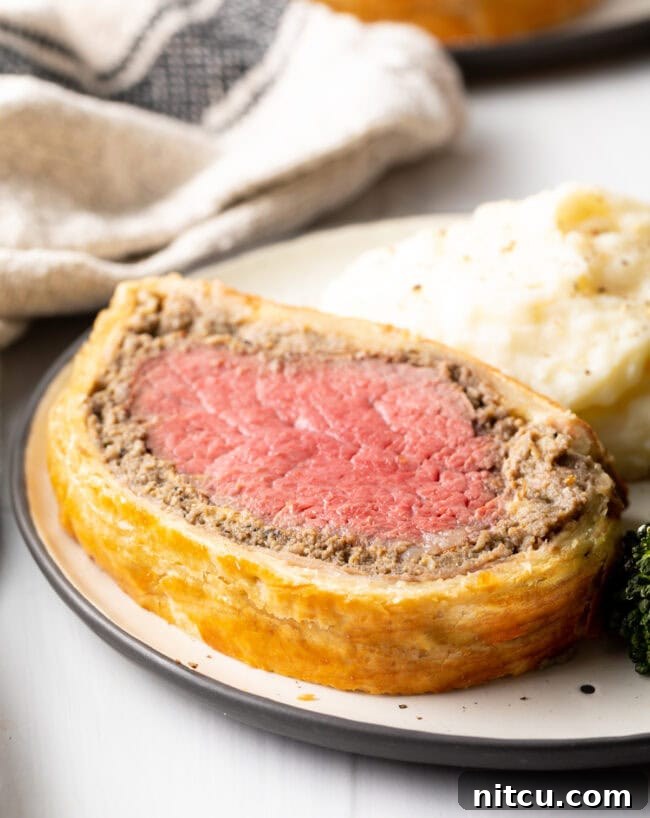
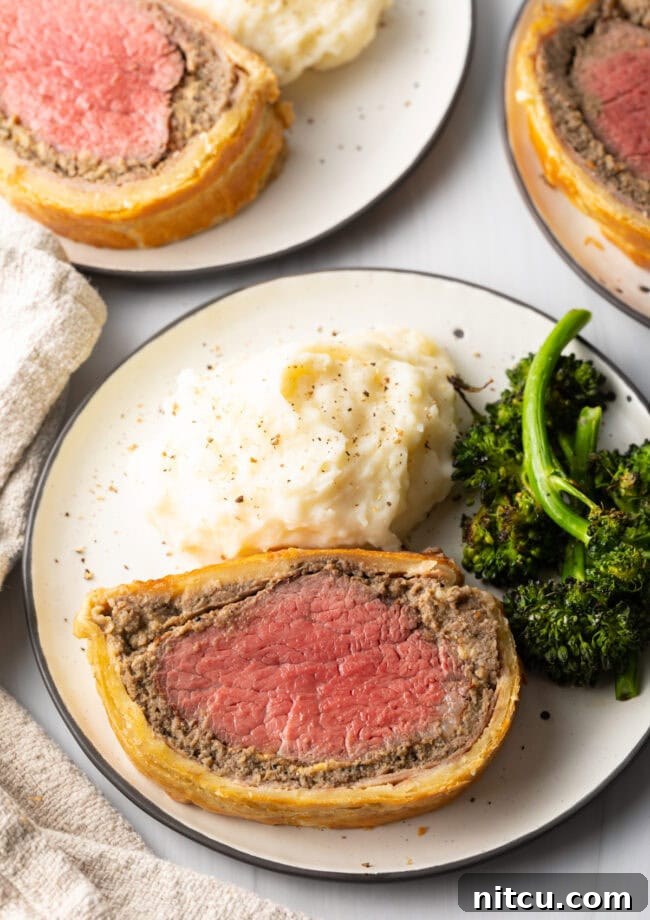
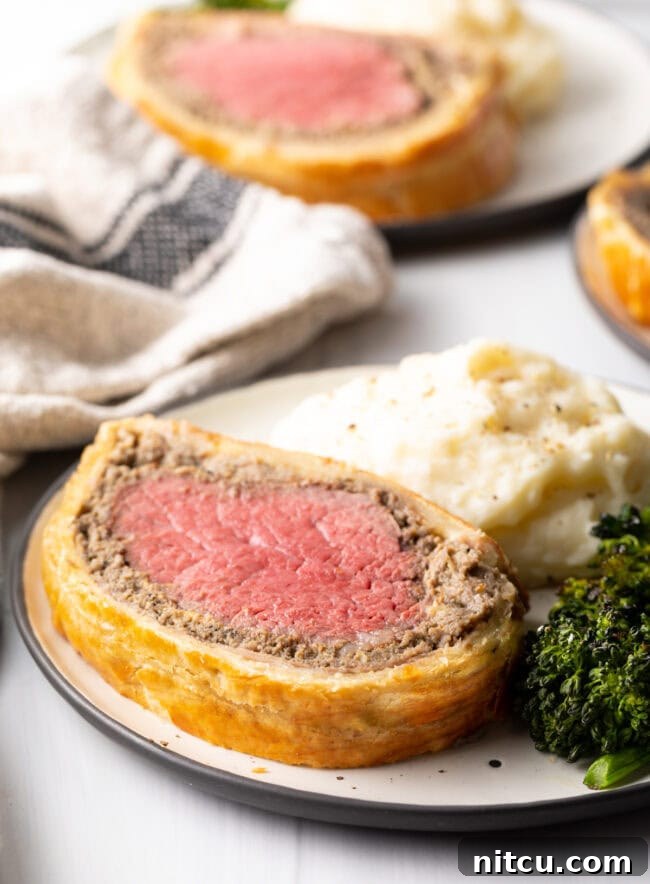
This dish, with its buttery, flaky exterior giving way to a perfectly cooked, medium-rare steak within, creates a delightful contrast in every bite. While its reputation suggests complexity, preparing Beef Wellington is more achievable than you might imagine, and the results are consistently rewarding. Get ready to transform your kitchen into a gourmet haven and create a dish that tastes as incredible as it looks!

Why This Beef Wellington Recipe Will Impress Every Time
If you’re seeking a dish that combines grandeur with incredible flavor, look no further. This Beef Wellington recipe is designed to deliver a culinary triumph that is both dramatic and surprisingly accessible. It’s a guaranteed crowd-pleaser that will have everyone talking long after the last slice is savored.
Achieve Restaurant-Quality Results at Home
- Gourmet Dining Experience: Experience the luxury of a high-end restaurant meal from the comfort of your own home, without the extravagant price tag. This recipe guides you through creating a dish that rivals professional chef preparations.
- Effortless Entertaining with Make-Ahead Options: Many components of this recipe can be prepared in advance, significantly reducing stress on the day of your event. The mushroom duxelles, for instance, can be made and cooled beforehand, saving you valuable time when entertaining.
- Perfectly Portioned for Gatherings: Crafted to serve 6-8 people generously, this Beef Wellington is ideal for dinner parties, festive holiday meals, or any special occasion where you want to make a lasting impression with a truly elegant dish.
- Essential Tool for Precision: To ensure your beef reaches that perfect medium-rare doneness, an oven-safe meat thermometer is indispensable. This small investment guarantees consistent, impeccable results every time you cook, preventing over or undercooking.
Whether you’re aiming to captivate your guests or simply indulge yourself in a truly elevated culinary experience, this Beef Wellington recipe is sure to deliver that undeniable “WOW factor.”
Unveiling the Key Ingredients for a Flawless Wellington
The success of a truly magnificent Beef Wellington lies in the quality and preparation of its core components. Here’s a closer look at the essential ingredients and tips for selecting and handling them:
- Beef Tenderloin: Opt for a center-cut beef tenderloin, often referred to as filet mignon. This cut is prized for its exceptional tenderness, minimal fat content, and absence of bones or cartilage, making it the perfect choice for a luxurious Wellington. Its uniform shape also ensures even cooking.
- Mushrooms for Duxelles: The flavorful mushroom duxelles forms a crucial layer. You have the flexibility to choose your favorite type of mushroom, or a combination. White button, cremini, shiitake, or even hearty portobello mushrooms work wonderfully. The key is to finely chop or process them and cook out as much moisture as possible to create a concentrated, savory paste that won’t make your pastry soggy.
- Puff Pastry: For convenience and consistent results, high-quality store-bought puff pastry is your best friend. It provides the signature flaky, buttery crust without the laborious process of making it from scratch. Ensure it is fully thawed but still cold enough to work with easily.
- Dijon Mustard: Don’t skimp on quality here! A good quality Dijon mustard adds a subtle tang, a touch of heat, and a crucial layer of flavor that complements the beef beautifully. It also acts as a tenderizer and helps the prosciutto adhere to the beef.
- Prosciutto: While not a strictly traditional element in all Beef Wellington variations, thinly sliced prosciutto adds an incredible depth of salty, savory flavor and acts as an essential moisture barrier between the duxelles and the puff pastry. This prevents the pastry from becoming soggy and ensures a perfectly crisp crust.
Creative Variations & Dietary Adaptations
Beef Wellington is a versatile dish that can be customized to suit different preferences and dietary needs:
- Individual Wellingtons: For a more personalized and elegant presentation, create individual portions using 8-ounce pieces of filet mignon. This makes serving easier and allows each guest to enjoy their own perfect Wellington.
- Mushroom-Free Option: If mushrooms aren’t to your taste, you can substitute the duxelles with a rich, sweet caramelized onion filling. Cook onions slowly until deeply golden and tender, then spread as you would the mushroom paste.
- Add a Cheesy Twist: Incorporate a sprinkle of finely grated Parmesan cheese into your mushroom duxelles mixture for an added layer of savory depth and a delightful cheesy surprise.
- Vegetarian Wellington: Transform this classic into a magnificent vegetarian dish by swapping the beef tenderloin for large, whole portobello mushroom caps. Ensure the portobellos are roasted or seared first to reduce moisture.
- Lower-Fat Alternative: For a lighter version, omit the prosciutto layer and choose a leaner cut like turkey tenderloin instead of beef tenderloin. Adjust cooking times accordingly for the turkey.
- Gluten-Free Version: With the increasing availability of gluten-free products, you can easily make this dish gluten-free by using a store-bought gluten-free puff pastry. Always double-check that all other condiments and ingredients are certified gluten-free.
Step-by-Step: Crafting Your Masterpiece Beef Wellington
Creating a Beef Wellington may seem intimidating, but by following these detailed steps, you’ll achieve a stunning and delicious result. Remember, patience and a good meat thermometer are your best allies!
You’ll find the complete, printable Beef Wellington recipe with precise measurements and comprehensive instructions at the end of this guide.
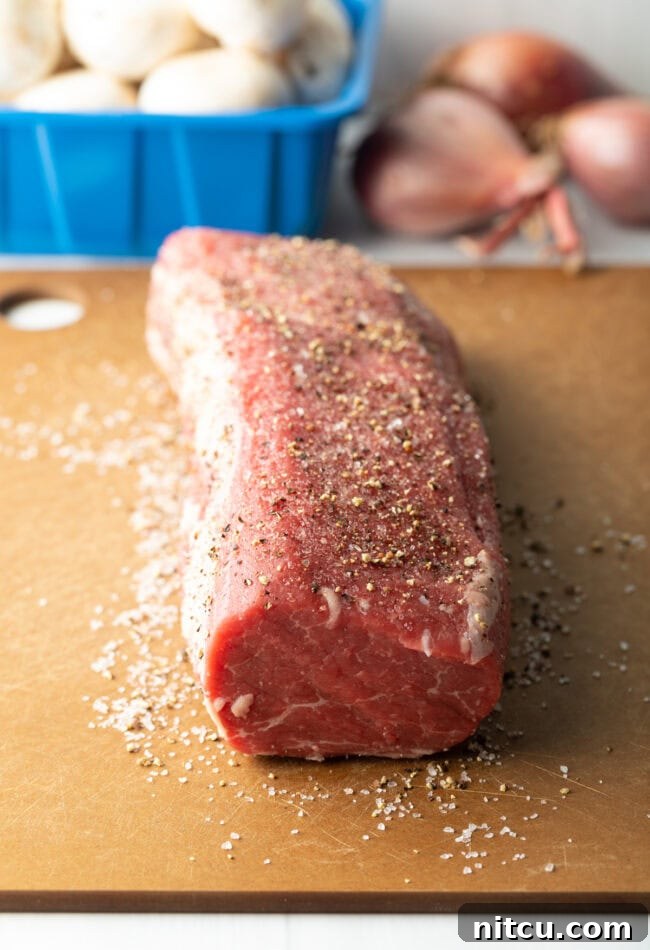
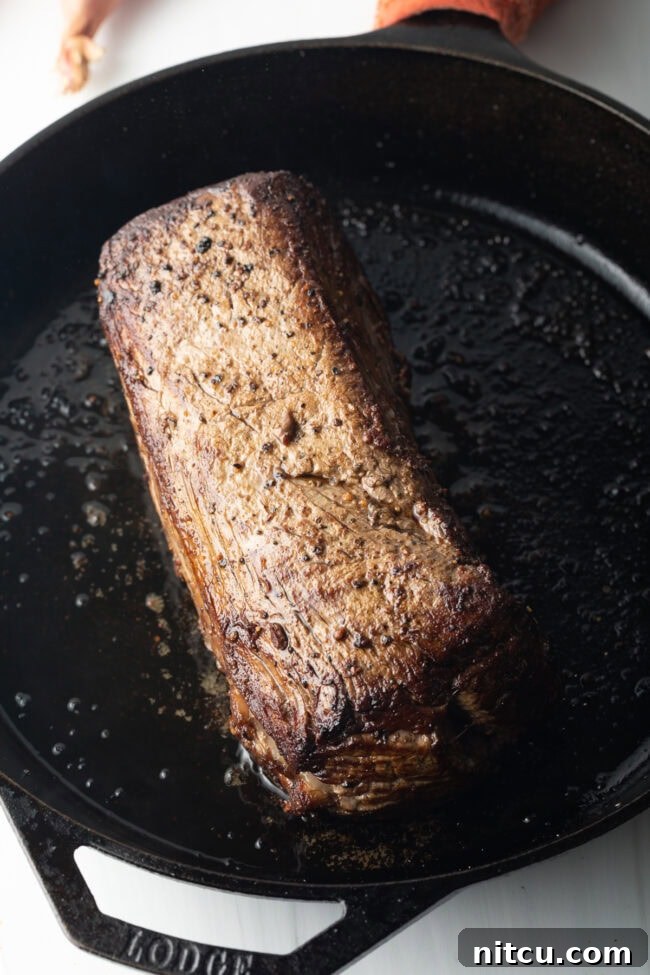
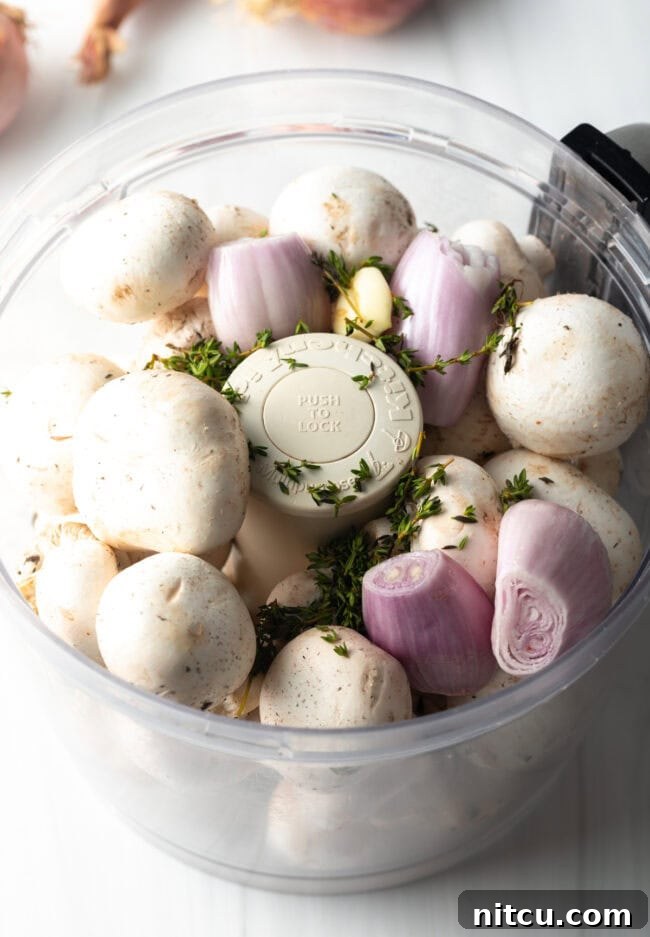
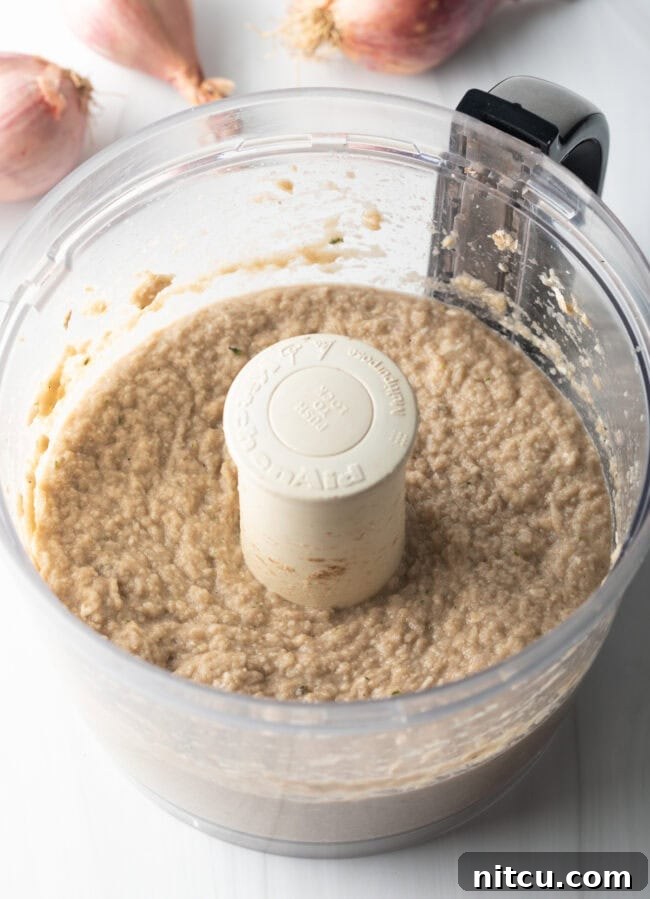
Preparing the Beef Tenderloin
- Begin by preheating your oven to 400°F (200°C) and adjusting the oven rack to the lowest position to ensure even baking of the pastry. Prepare a large baking sheet by lining it with parchment paper for easy cleanup and to prevent sticking.
- Generously season the beef tenderloin on all sides with salt and freshly ground black pepper. Heat a large cast-iron skillet or heavy-bottomed sauté pan over medium-high heat. Add the butter or oil, and once shimmering, sear the beef tenderloin for approximately 3 minutes per side, rotating to ensure all four sides develop a beautiful golden-brown crust. This searing step locks in juices and builds flavor. Remove the seared beef from the skillet and allow it to cool completely before proceeding.
Creating the Flavorful Duxelles
- In a food processor, combine the roughly chopped mushrooms, peeled shallots, fresh thyme leaves, garlic, and sherry (or cognac). Pulse until the mixture forms a fine, smooth paste.
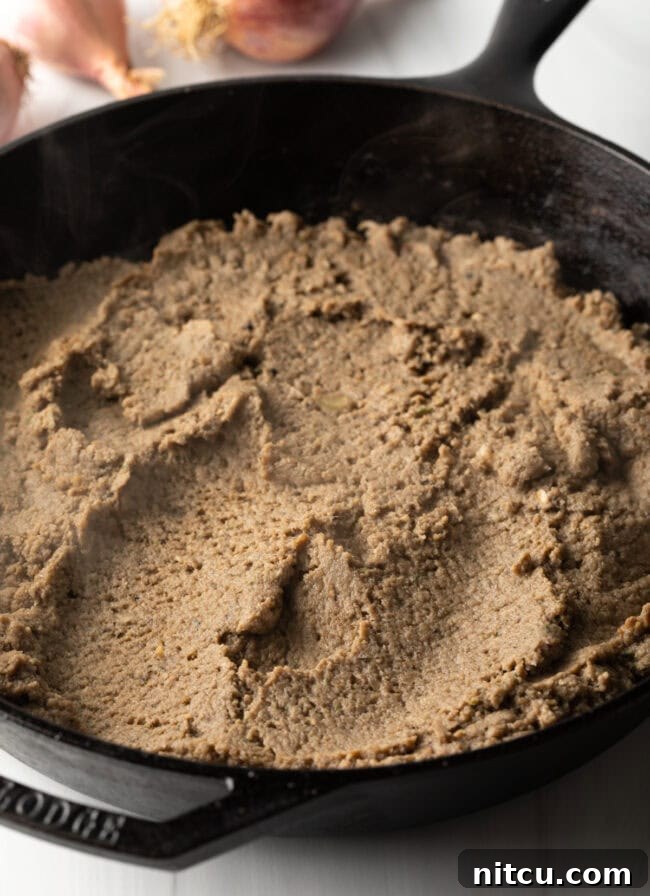
- Transfer the mushroom purée back into the same skillet (no need to clean it) and sauté over medium heat for about 10 minutes, stirring frequently. The goal here is to cook out as much moisture as possible, allowing the duxelles to become a concentrated, flavorful paste. This step is crucial for preventing a soggy pastry. Once dried and cooled, the duxelles is ready.
The Strategic Wrapping Process
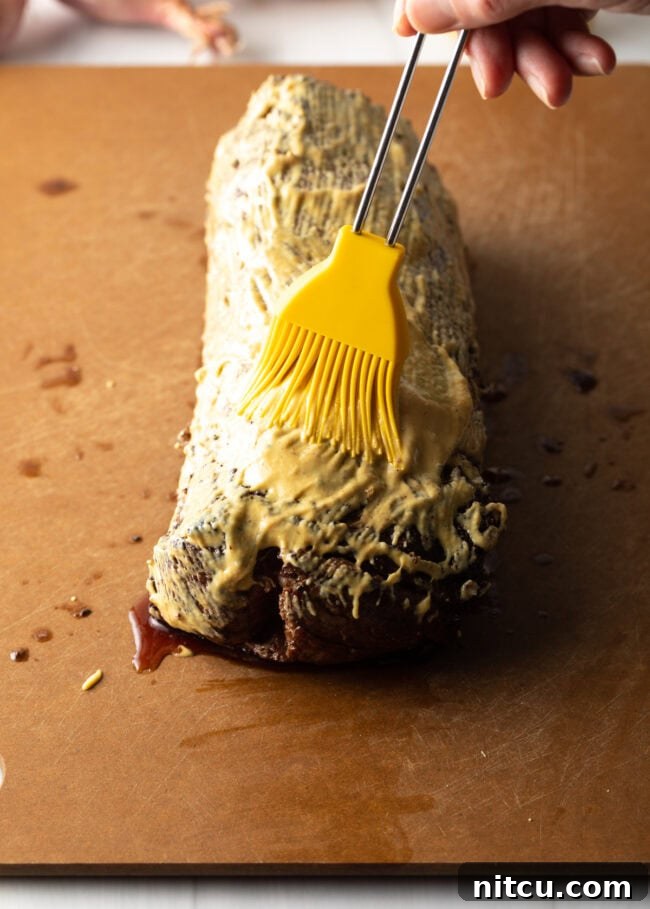
- Once the seared beef tenderloin has cooled, brush its entire surface evenly with a generous layer of Dijon mustard. This adds flavor and helps the prosciutto adhere.
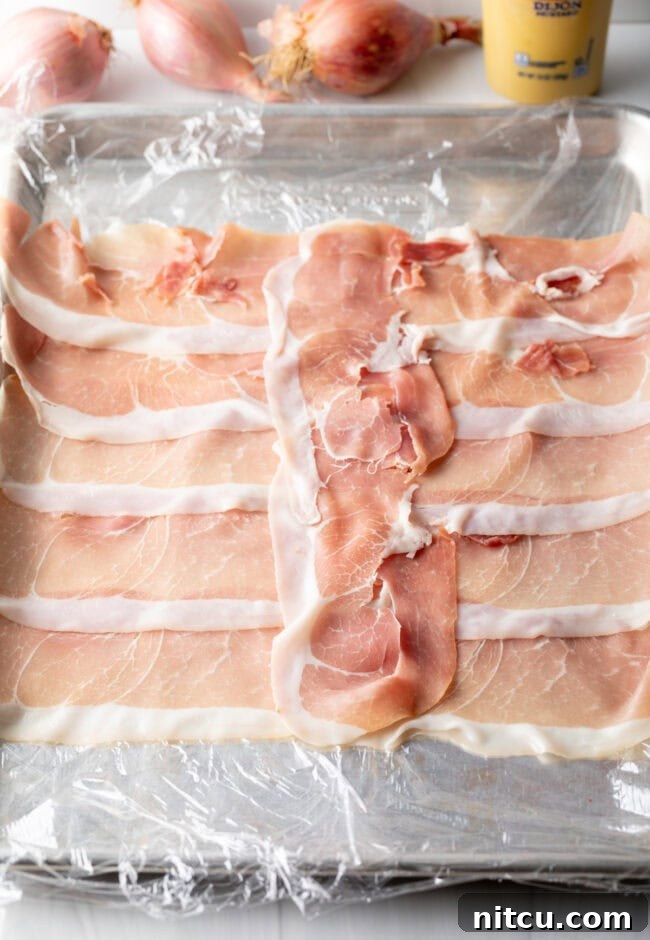
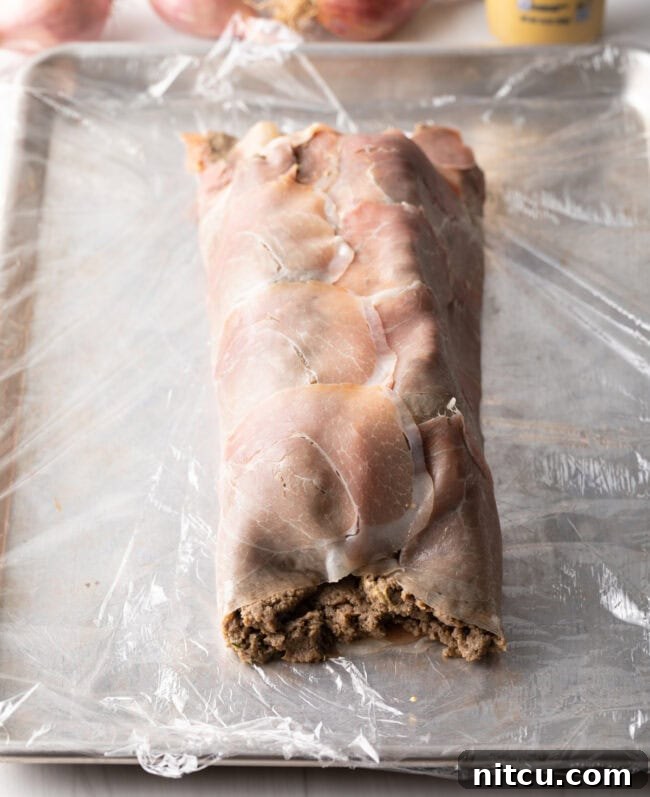
- Lay a large piece of plastic wrap on a clean surface. Arrange the thinly sliced prosciutto in overlapping layers on the plastic wrap, creating a rectangle large enough to completely enclose the beef tenderloin.
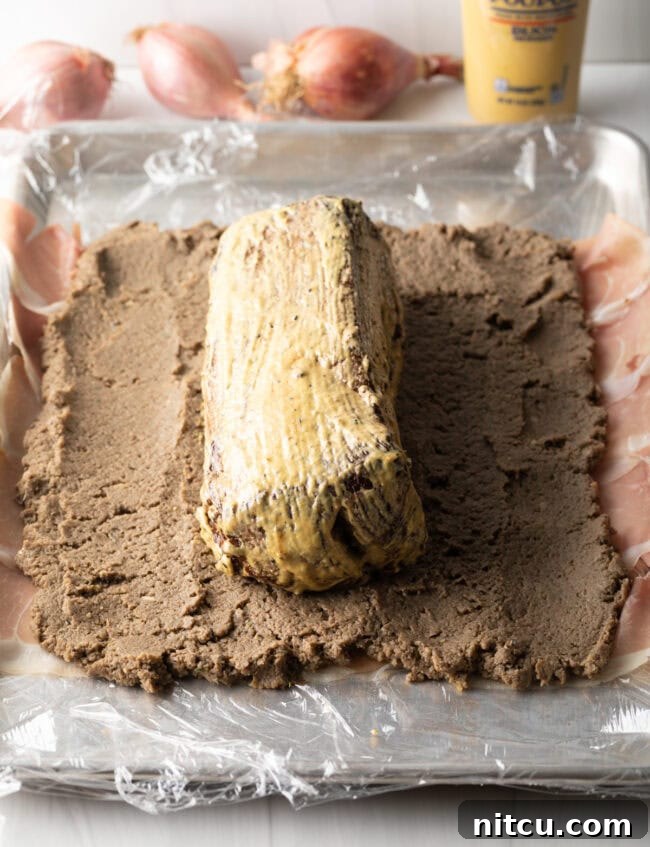
- Evenly spread the cooled mushroom duxelles over the prosciutto layer. Carefully place the Dijon-coated beef tenderloin in the center of the duxelles-covered prosciutto.
- Using the plastic wrap as an aid, tightly wrap the prosciutto around the beef tenderloin, ensuring a snug fit. Twist the ends of the plastic wrap to tighten further, creating a compact cylinder. Tuck in any loose ends. (Some duxelles might gently squeeze out, which is normal.) Refrigerate this wrapped beef for at least 30 minutes to firm up.
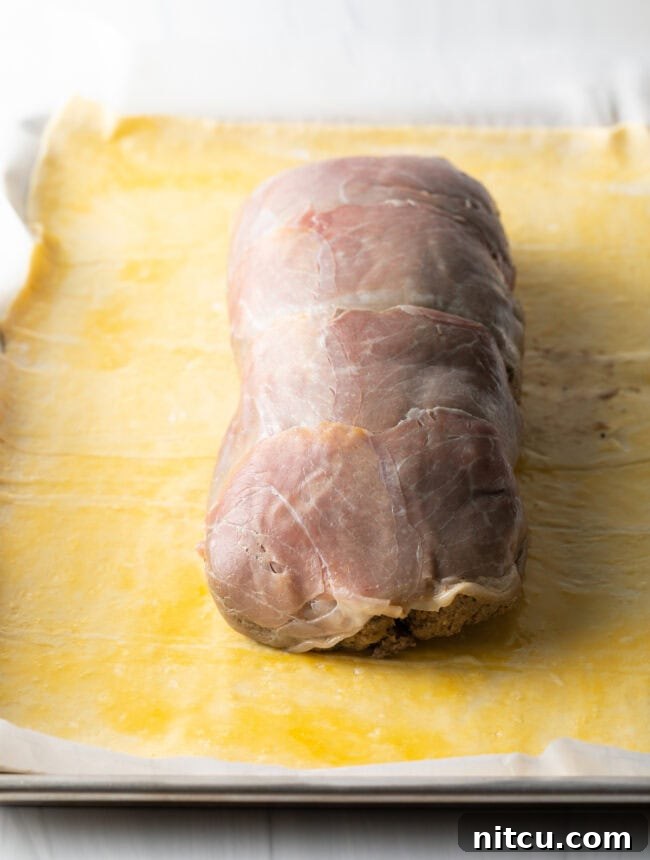
- On the parchment-lined baking sheet, unroll one large sheet (or two overlapping smaller sheets, carefully sealed) of puff pastry. Roll out the pastry slightly to form a rectangle large enough to fully encase the prosciutto-wrapped beef, typically around 13×18 inches to match the baking sheet size.
- Lightly brush the surface of the puff pastry with some of the beaten egg. Carefully unwrap and discard the plastic wrap from the beef tenderloin. Place the prosciutto-wrapped tenderloin in the center of the egg-washed puff pastry.
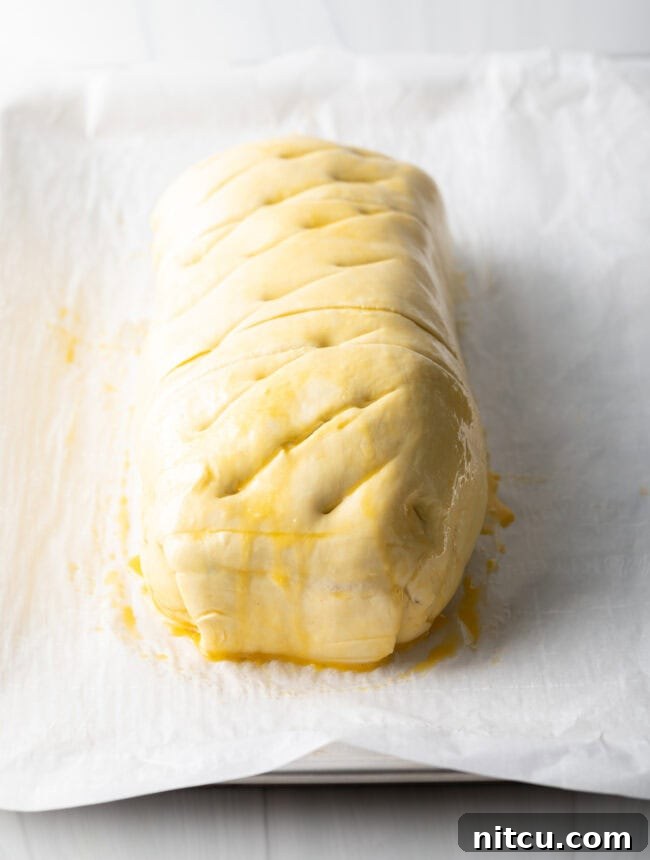
- Fold the long edges of the puff pastry over the tenderloin, much like wrapping a present, ensuring the pastry edges overlap and are sealed. Flip the entire Beef Wellington over so the seam is now on the bottom. Trim any excess pastry, then fold and tuck the loose ends underneath the tenderloin to create a neat, sealed package.
Baking to Golden Perfection
- Brush the entire outer surface of the wrapped Beef Wellington with the remaining beaten egg wash for a beautiful golden-brown finish. Using a small paring knife, gently score decorative vents on the top of the puff pastry. These vents allow steam to escape during baking, preventing the pastry from becoming soggy.
- Carefully insert an oven-safe meat thermometer into the very center of the beef tenderloin, ensuring it doesn’t touch the pastry or duxelles layer. Set your thermometer alarm to 125°F (52°C) for a perfect medium-rare.
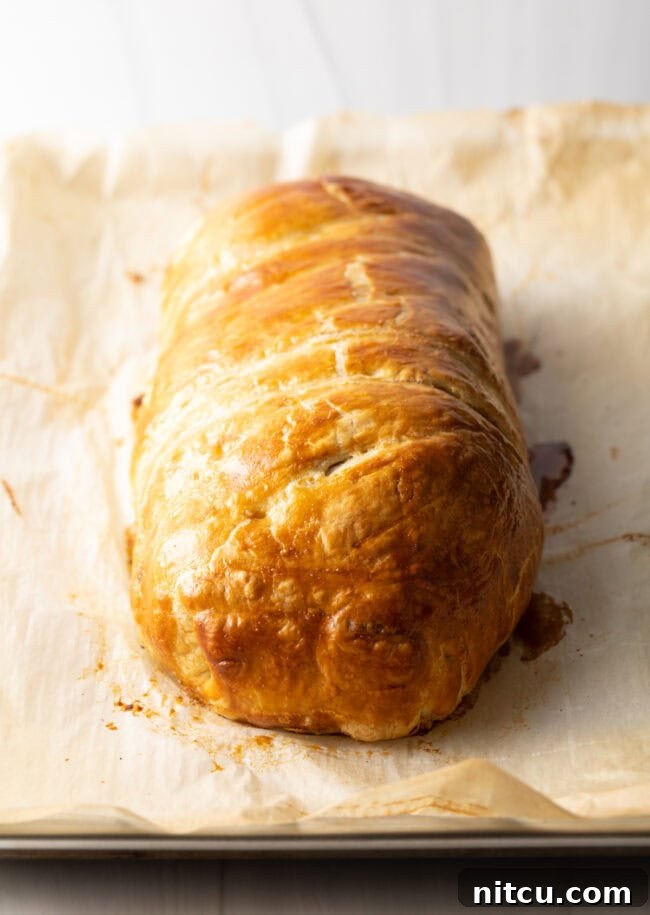
- Bake in the preheated oven for 35 to 45 minutes, or until the internal temperature of the beef reaches 125°F (52°C). The pastry should be beautifully golden and puffed.
- Once baked, remove the Beef Wellington from the oven and let it rest on a cutting board for at least 10-15 minutes before slicing and serving. This resting period is crucial for the juices to redistribute, ensuring a tender and moist steak.
Tips for a Perfectly Cooked Beef Wellington Every Time
Achieving Beef Wellington perfection is all about attention to detail. Here are some invaluable tips to ensure your dish is a triumph:
- Cool Everything Down: Ensure both the seared beef tenderloin and the mushroom duxelles are completely cooled before wrapping them in prosciutto and puff pastry. Warm ingredients create steam, which can lead to a soggy bottom crust.
- Dry Duxelles is Key: When sautéing your mushroom duxelles, take the time to cook out as much moisture as possible. A dry duxelles is a flavorful duxelles, and it’s essential for maintaining the crispness of the puff pastry.
- Wrap Tightly: Each layer – the prosciutto, duxelles, and puff pastry – needs to be wrapped snugly around the beef. This creates a protective seal and helps maintain the shape of the Wellington during baking.
- Invest in a Meat Thermometer: This is arguably the most critical tool for Beef Wellington. An oven-safe, leave-in thermometer allows you to monitor the internal temperature of the beef precisely, guaranteeing your desired level of doneness (125°F for medium-rare, 130°F for medium).
- Don’t Skip the Rest: After baking, let the Beef Wellington rest for at least 10-15 minutes. This allows the internal temperature to equalize and the juices to redistribute throughout the meat, resulting in a more tender and flavorful slice.
- Mind the End Pieces: Our recipe suggests wrapping the mushroom pate and prosciutto slightly around the short ends of the tenderloin. This protects the ends from overcooking. When slicing, cut the end pieces slightly thicker to ensure they still contain a good portion of the perfectly cooked beef.
- Generous Duxelles Layer: Our recipe features a hearty layer of mushroom duxelles. This generous amount ensures that every bite of beef is complemented by the rich, earthy flavor of the pate, often eliminating the need for additional sauces.
Storing and Reheating Your Beef Wellington
While Beef Wellington is truly best enjoyed fresh from the oven, you can certainly preserve leftovers to savor later. Proper storage and reheating techniques are crucial to maintain its deliciousness.
- Storing Leftovers: Allow any leftover slices to cool completely to room temperature. Transfer them to an airtight container and store in the refrigerator for up to 3 days.
- Freezing Leftovers: For longer storage, slices of Beef Wellington can be frozen. Wrap individual portions tightly in a layer of plastic wrap, followed by a layer of aluminum foil, and then place them in a freezer-safe plastic bag. This triple-layer protection helps prevent freezer burn. Store in the freezer for up to 3 months.
- Reheating Leftovers: The key to reheating Beef Wellington is to warm it through without overcooking the tenderloin or making the pastry soggy. Preheat your oven to a low 300°F (150°C). Place the slices on a parchment-lined baking sheet and loosely cover them with aluminum foil to prevent the pastry from browning further. Bake for approximately 15-20 minutes, or until warmed through. The foil helps retain moisture and protect the pastry.
Elegant Serving Suggestions
Beef Wellington is inherently a celebratory dish, perfect for holiday meals, intimate dinner parties, or any special occasion deserving of a touch of culinary flair. Enhance the experience with thoughtful pairings:
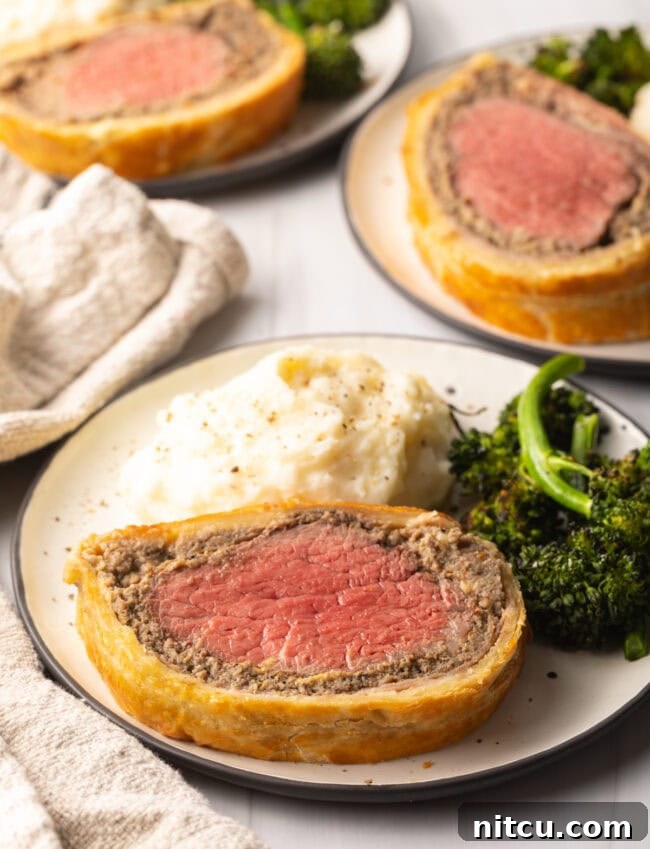
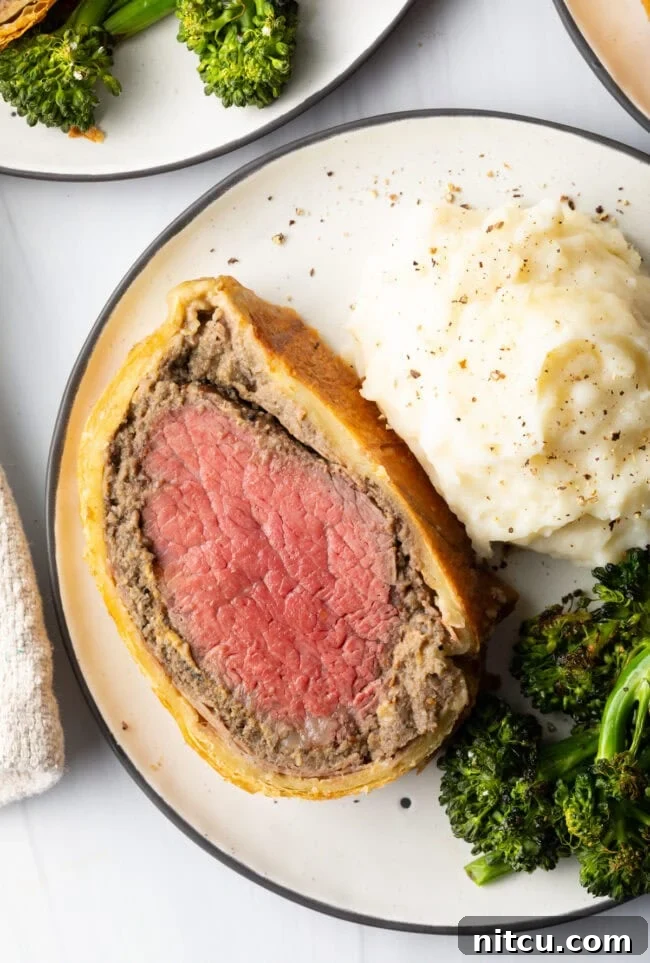
Serve generous, thick slices alongside classic accompaniments such as fluffy creamy mashed potatoes or elegant Duchess Potatoes. Complement the richness of the beef with vibrant green vegetables like crisp Brussels sprouts, tender roasted green beans almondine, or perfectly roasted broccoli. A simple side salad with a light vinaigrette can also offer a refreshing contrast. For wine pairings, a robust Cabernet Sauvignon, a structured Merlot, or a rich Bordeaux would beautifully complement the savory beef and earthy mushrooms.
Frequently Asked Questions About Beef Wellington
How do you keep Beef Wellington from getting soggy on the bottom?
The key to a crisp bottom crust is twofold: ensuring the seared tenderloin is completely cooled before wrapping, and cooking the mushroom duxelles until very dry. Warm meat or moist duxelles will release steam during baking, turning the pastry soggy. Additionally, wrapping the tenderloin tightly in the prosciutto layer acts as a crucial moisture barrier, protecting the pastry.
How do you keep Beef Wellington from falling apart?
To prevent your Beef Wellington from falling apart, focus on tight wrapping at every stage. The prosciutto should be snug, and the puff pastry should completely encase the beef, with all seams securely sealed. Removing excess moisture from the duxelles is also vital, as a wet filling can weaken the structure of the pastry. Chilling the wrapped Wellington before baking helps the pastry hold its shape.
How do I know when the beef is done?
The most reliable way to check doneness is by using an oven-safe meat thermometer inserted into the thickest part of the beef, avoiding the pastry. For a perfect medium-rare, aim for an internal temperature of 125°F (52°C) when it comes out of the oven. The temperature will rise a few degrees as it rests. Always allow the Beef Wellington to rest for at least 10-15 minutes before slicing; this is crucial for juicy, tender meat.
What is the purpose of the prosciutto layer?
Beyond adding a fantastic layer of salty, savory flavor, the prosciutto serves a critical functional purpose: it acts as a moisture barrier. It helps to seal in the juices of the beef and prevents the moisture from the duxelles from seeping into and making the puff pastry soggy. This ensures a beautifully crisp and flaky pastry crust.
Essential Recipe: Best Beef Wellington
Here’s the complete recipe for preparing this iconic dish. Follow these steps carefully for an unforgettable culinary experience.
Best Beef Wellington Recipe
Prep Time: 45 minutes
Cook Time: 1 hour
Total Time: 1 hour 45 minutes
Servings: 8 servings
The ultimate holiday main dish! Tender beef filet wrapped in French mushroom paté, prosciutto, and golden puffy pastry. Perfection!
Ingredients
- 3 tablespoons butter or oil
- 2.5-3 pounds center-cut beef tenderloin
- Salt and pepper, to taste
- 1 ½ pounds mushrooms (white button, cremini, shiitake, or portobello)
- 2 shallots, peeled
- 1 tablespoon fresh thyme leaves
- 3-4 cloves garlic, minced
- ¼ cup sherry or cognac
- ¼ cup Dijon mustard
- 6 ounces thinly sliced prosciutto
- 16-18 ounce box puff pastry, thawed
- 2 large eggs, beaten (for egg wash)
Instructions
- Prep The Beef Tenderloin: Preheat your oven to 400°F (200°C). Adjust the oven racks so you can place the Beef Wellington in the lowest position. Line a large rimmed baking sheet with parchment paper.
- Set a large cast-iron skillet (or heavy-bottomed sauté pan) on the stovetop over medium-high heat. Generously sprinkle the beef tenderloin on all sides with salt and pepper.
- Add the butter or oil to the hot skillet, then sear the beef tenderloin for 3 minutes per side, rotating to sear all four sides (12 minutes total). This creates a beautiful crust and locks in juices. Remove the beef tenderloin from heat and allow it to cool completely to room temperature.
- For the Mushroom Duxelles: Place the mushrooms, peeled shallots, thyme leaves, garlic, and sherry (or cognac) into a large food processor. Process into a fine, smooth paste.
- Add the mushroom purée to the same skillet (no need to clean). Stir and sauté the mushroom mixture over medium heat until it forms a thick, smooth paté and most of the moisture has evaporated, about 10 minutes. This is crucial for preventing a soggy pastry. Remove from heat and let it cool completely.
- Once the beef tenderloin has cooled, brush its entire surface thoroughly with Dijon mustard.
- Wrapping the Wellington: Lay out a large sheet of plastic wrap on a clean counter. Arrange overlapping slices of prosciutto on the plastic wrap, forming a rectangle large enough to fully enclose the beef tenderloin.
- Next, evenly spread the cooled mushroom paté over the surface of the prosciutto. Carefully place the Dijon-coated beef tenderloin in the center of the prosciutto sheet.
- Using the plastic wrap to help, tightly wrap the prosciutto around the beef tenderloin, creating a snug cylinder. Twist the ends of the plastic wrap to tighten the bundle, then tuck in the ends. (It’s normal if a little mushroom pate squeezes out). Place the wrapped beef in the refrigerator for at least 30 minutes to firm up.
- On your parchment paper-lined baking sheet, lay out one large sheet (or two smaller overlapping sheets, sealed together) of puff pastry. Roll out the puff pastry into a rectangle large enough to completely wrap around the beef tenderloin and tuck in the edges, typically around 13 x 18 inches.
- Brush the entire surface of the rolled-out puff pastry with some of the beaten egg.
- Carefully unwrap the plastic from the chilled beef tenderloin and discard it. Place the prosciutto-wrapped tenderloin in the center of the puff pastry sheet.
- Fold the long edges of the puff pastry over the tenderloin, much like you are wrapping a present, ensuring they overlap and seal well. Flip the Beef Wellington over so the seam is now on the bottom. Trim any excess pastry, then fold and tuck the loose ends underneath the tenderloin to fully seal the package.
- Brush the remaining beaten egg over the entire outer surface of the wrapped Beef Wellington for a golden finish. Use a small paring knife to cut decorative scored vents in the surface of the puff pastry. These allow steam to escape.
- Insert an oven-safe meat thermometer into the thickest part of the beef tenderloin, making sure it goes into the meat and not just the duxelles or pastry. Set the desired internal temperature for medium-rare at 125°F (52°C).
- Bake for 35 to 45 minutes, or until the internal temperature reaches 125°F (52°C) and the pastry is beautifully golden and puffed.
- Remove the Beef Wellington from the oven and allow it to rest on a cutting board for at least 10-15 minutes before slicing and serving. This resting period is vital for the juices to redistribute, ensuring maximum tenderness and flavor.
Notes
- This recipe has you wrap mushroom pate and prosciutto around the short ends of the tenderloin before wrapping it in puff pastry. This helps protect the end pieces, preventing them from overcooking. When slicing, cut the end slices slightly thicker than the center sections to ensure they still include ample beef tenderloin.
- Our recipe includes a hearty layer of mushroom pate, thicker than some recipes. This generous amount ensures a rich mushroom flavor with every bite of beef tenderloin, often making additional sauces or toppings unnecessary.
Nutrition Information
Serving: 1 pc, Calories: 845kcal, Carbohydrates: 31g, Protein: 37g, Fat: 63g, Saturated Fat: 22g, Polyunsaturated Fat: 6g, Monounsaturated Fat: 30g, Trans Fat: 0.03g, Cholesterol: 155mg, Sodium: 464mg, Potassium: 849mg, Fiber: 2g, Sugar: 3g, Vitamin A: 125IU, Vitamin C: 4mg, Calcium: 45mg, Iron: 6mg
Course: Main, Main Course
Cuisine: American, British
Author: Sommer Collier
Discover More Delicious Recipes
We hope this comprehensive guide inspires you to create your own unforgettable Beef Wellington. This truly special dish is a testament to the joys of cooking and sharing delicious food with loved ones. Enjoy the process and the exquisite flavors!