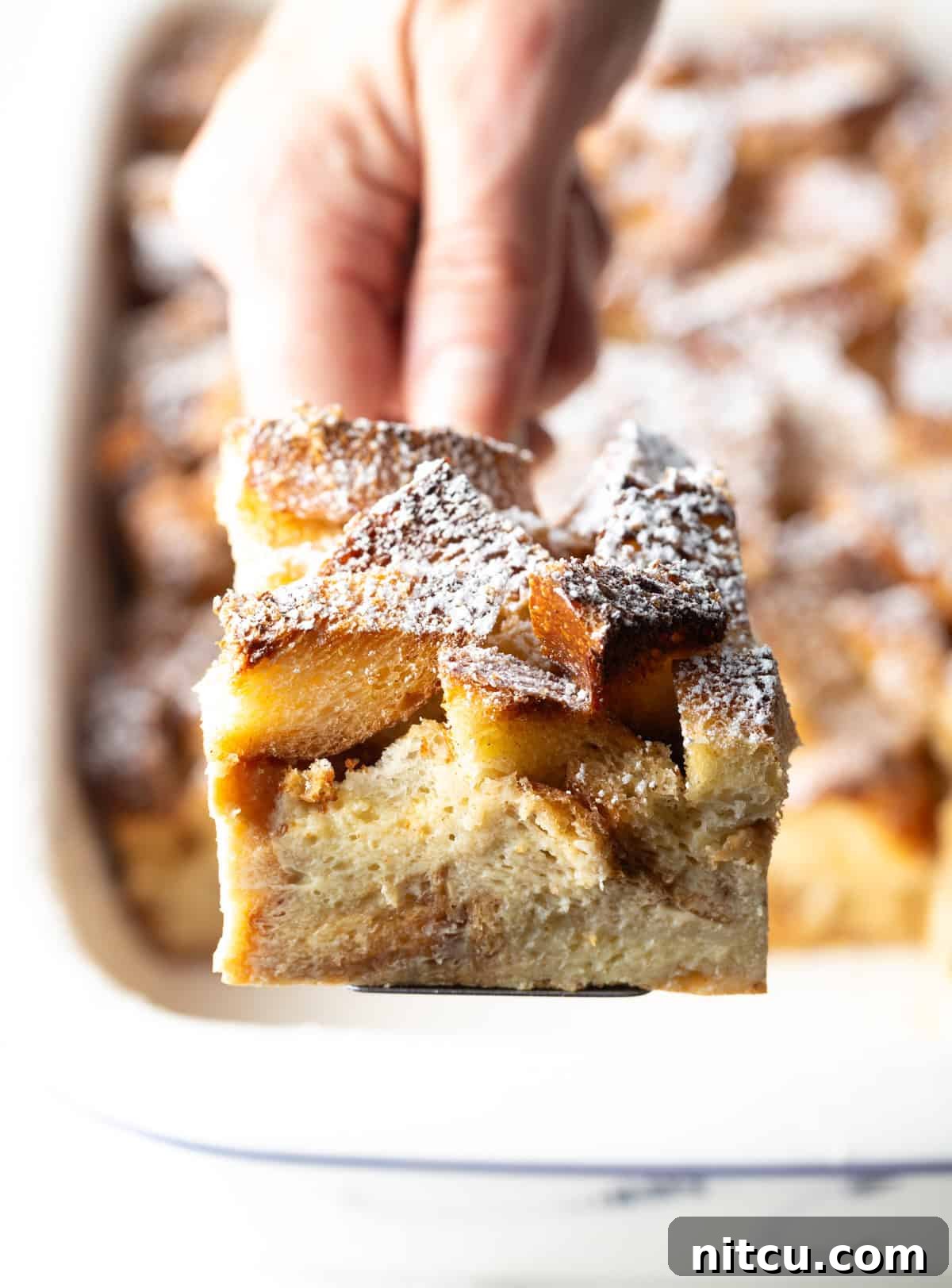
Transform your morning routine and delight a crowd with this incredibly easy Overnight French Toast Casserole recipe! Say goodbye to frantic breakfast prep and hello to leisurely mornings. With just a handful of staple ingredients, you can whip up this delightful dish in under 10 minutes the night before, allowing it to soak up all the flavorful goodness in your refrigerator. Imagine waking up to the aroma of cinnamon and vanilla, then simply popping it into the oven. In less than an hour, you’ll be serving thick, fluffy, and custardy slices of French toast, perfectly crisp on the edges and beautifully sweet. It’s the ultimate solution for busy mornings, holiday breakfasts, or any special occasion when you want to impress without the stress.
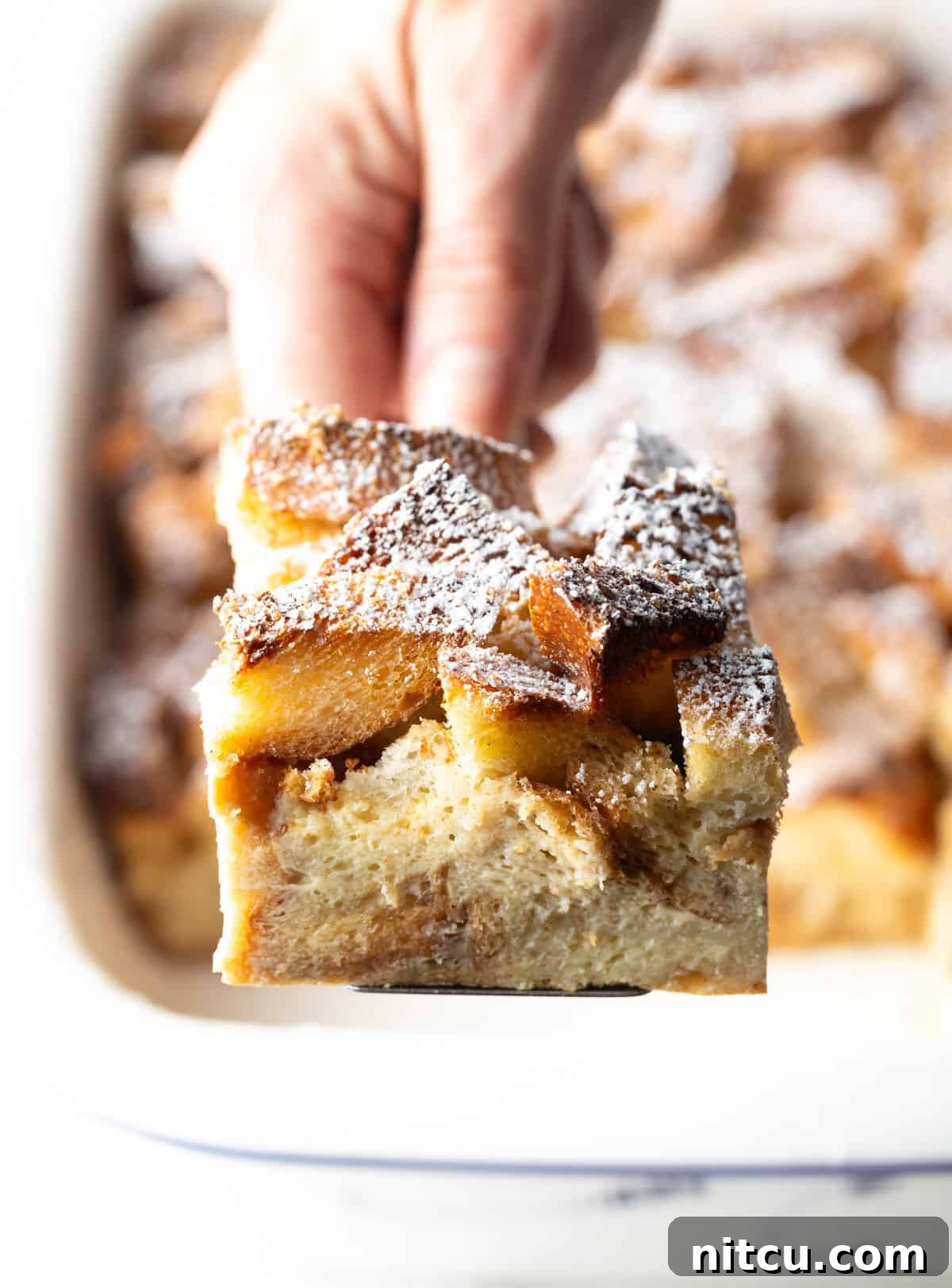
In many homes, classic French toast is often reserved for weekends or special events. This is largely due to the continuous effort it demands: dipping each slice of bread, frying them a few at a time, and repeating the process until everyone is fed. This traditional method often means the cook spends more time standing at the stove than enjoying the meal with family and guests. If you’ve ever struggled to achieve that perfect, custardy texture with a classic pain perdu, or simply wish to enjoy a stress-free breakfast alongside your loved ones, this overnight French toast casserole is your culinary savior! It’s designed for convenience, allowing you to prepare it effortlessly the night before, then bake and serve without breaking a sweat. Plus, a major advantage is that all pieces cook simultaneously, ensuring that everyone receives a warm, fresh plate at the same time – no more waiting turns at the breakfast table!
Table of Contents
- Why This Recipe Is a Must-Try
- Essential Ingredients & Expert Tips
- Step-by-Step Preparation Guide
- The Secret to Perfect French Toast Casserole
- Delightful Serving Suggestions
- Storing and Reheating Your Casserole
- Frequently Asked Questions About This Recipe
- Explore More Breakfast Recipes

Why This Recipe Is a Must-Try
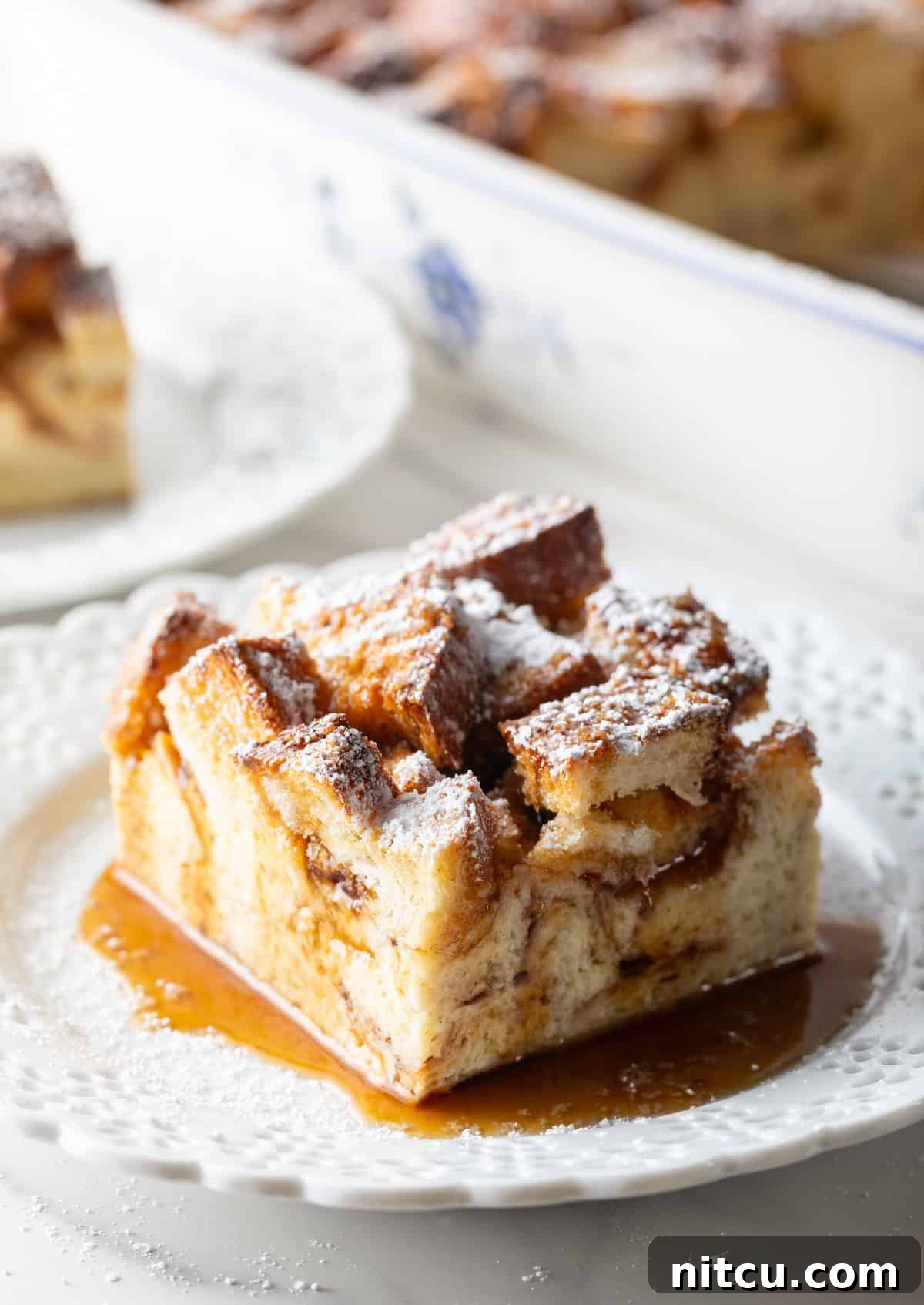
Experience French Toast, Elevated: This overnight French toast casserole offers all the beloved flavors and textures of traditional French toast, but with an unparalleled level of ease and a superior texture. You are only three simple steps away from a breakfast masterpiece featuring incredibly fluffy, delicately custardy, and perfectly sweet French toast with irresistibly crispy golden edges. Forget the hassle of juggling multiple bowls, messy stovetop frying, or worrying about over or undercooked slices. This practically foolproof baked French toast delivers amazing flavors and textures in one go. A final dusting of powdered sugar on top provides that authentic French toast look and feel. The secret lies in allowing the bread to soak overnight in a rich cream and egg mixture, transforming it into cinnamon-infused clouds of pure delight when it bakes in the oven.
Smart and Sustainable Cooking: This recipe is a fantastic way to utilize leftover or slightly stale bread, minimizing food waste and maximizing flavor. Whether you have a rustic country loaf, a soft French loaf, or even brioche, this casserole is incredibly adaptable. Sliced or unsliced, fresh or a day old – any fluffy white bread will work beautifully. Instead of consigning that extra bread to the back of your freezer, turn it into a magnificent French toast casserole that everyone will rave about. It’s an economical and delicious approach to cooking that benefits both your pantry and your palate.
The Ultimate Brunch Buffet Star: I’m renowned for my diverse collection of breakfast casserole recipes, which are always a huge hit for feeding large groups during holidays like Christmas and Easter, special gatherings, or whenever family and friends come together. This delightful baked French toast is not only elegant to slice and serve at your convenience, but it also shines on a brunch buffet. Its versatility means it’s equally delicious served warm straight from the oven or enjoyed at room temperature, making it ideal for entertaining and hassle-free hosting. Prepare to receive endless compliments!
Essential Ingredients & Expert Tips
- Bread – As previously mentioned, this recipe is incredibly forgiving and perfect for using up almost any leftover, slightly stale bread. For the absolute best results, I highly recommend a rustic country bread or a soft, rich French loaf. The sturdier, slightly dried-out texture of day-old bread is crucial, as it allows the bread to absorb the custardy mixture without becoming mushy. Avoid overly soft or freshly baked bread for this dish, as it might disintegrate during the overnight soak.
- Half & Half – This ingredient is key to achieving that signature rich, luxurious, and truly custardy texture and flavor that elevates this French toast bake. While you can substitute with whole milk, using half & half will provide a significantly creamier and more decadent result, making every bite an indulgence.
- Eggs – Always opt for large eggs for consistent results in this recipe. A vital tip for an evenly baked casserole is to allow your eggs, and indeed the entire egg mixture, to come to room temperature before combining. This helps prevent the casserole from cracking or baking unevenly in the oven.
- Brown Sugar – Light brown sugar adds a beautiful mellow sweetness and a subtle depth of flavor that complements the cinnamon perfectly. Its molasses notes enhance the overall warmth of the dish. You can also sprinkle an extra tablespoon on top before baking for a slightly caramelized crust.
- Vanilla Extract – This is not the place to skimp! Invest in high-quality pure vanilla extract. The difference in flavor between a good vanilla and a cheaper, imitation extract is truly remarkable and will significantly impact the final taste of your overnight French toast. It adds a layer of fragrant sweetness that is simply irreplaceable.
- Ground Cinnamon – Just like with vanilla, the quality of your ground cinnamon makes a noticeable difference. A premium, fresh ground cinnamon will provide a warm, inviting spice that permeates every custardy bite. Ensure your spices are fresh for the most vibrant flavor profile.
Step-by-Step Preparation Guide
For full ingredient proportions, precise measurements, detailed instructions, storage guidance, and a helpful video tutorial, please refer to the printable recipe card located at the very bottom of this post.
Prepare Your Baking Dish – As the name suggests, this is an overnight casserole, so plan to assemble it the evening before you intend to bake and serve it for breakfast or brunch. Begin by generously smearing butter across the entire inside surface of a 9 x 13-inch baking dish. Ensure every nook and cranny is well-coated; this crucial step prevents the casserole from sticking and helps create those coveted crispy edges.
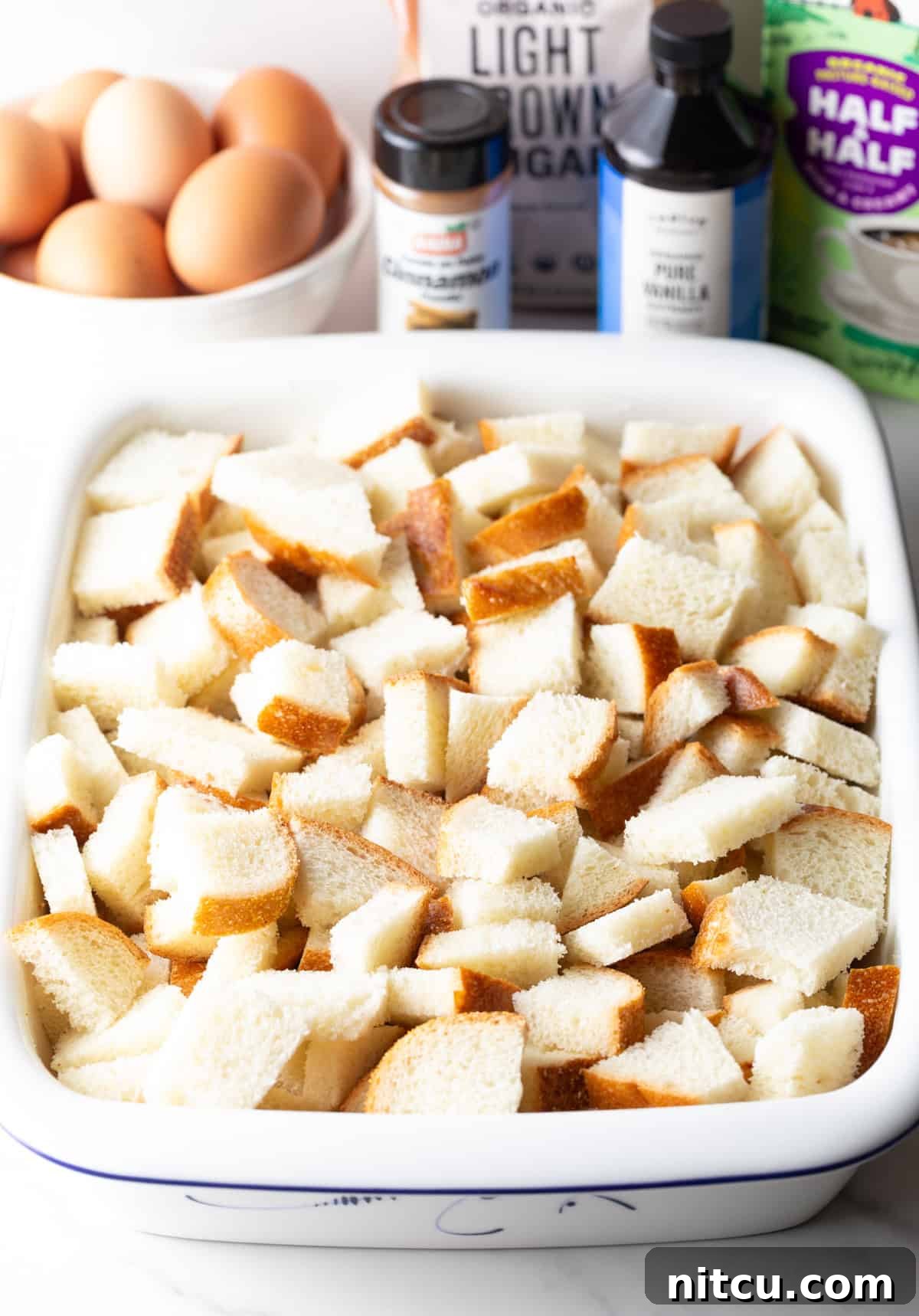
Next, use a sharp knife or a serrated bread knife to cut your chosen bread into substantial 1 to 1½-inch chunks. Don’t worry about perfect aesthetics at this stage; focus on making the pieces as uniform in size as possible to ensure even absorption and baking. Distribute these bread chunks evenly across the buttered baking dish, creating a single layer.
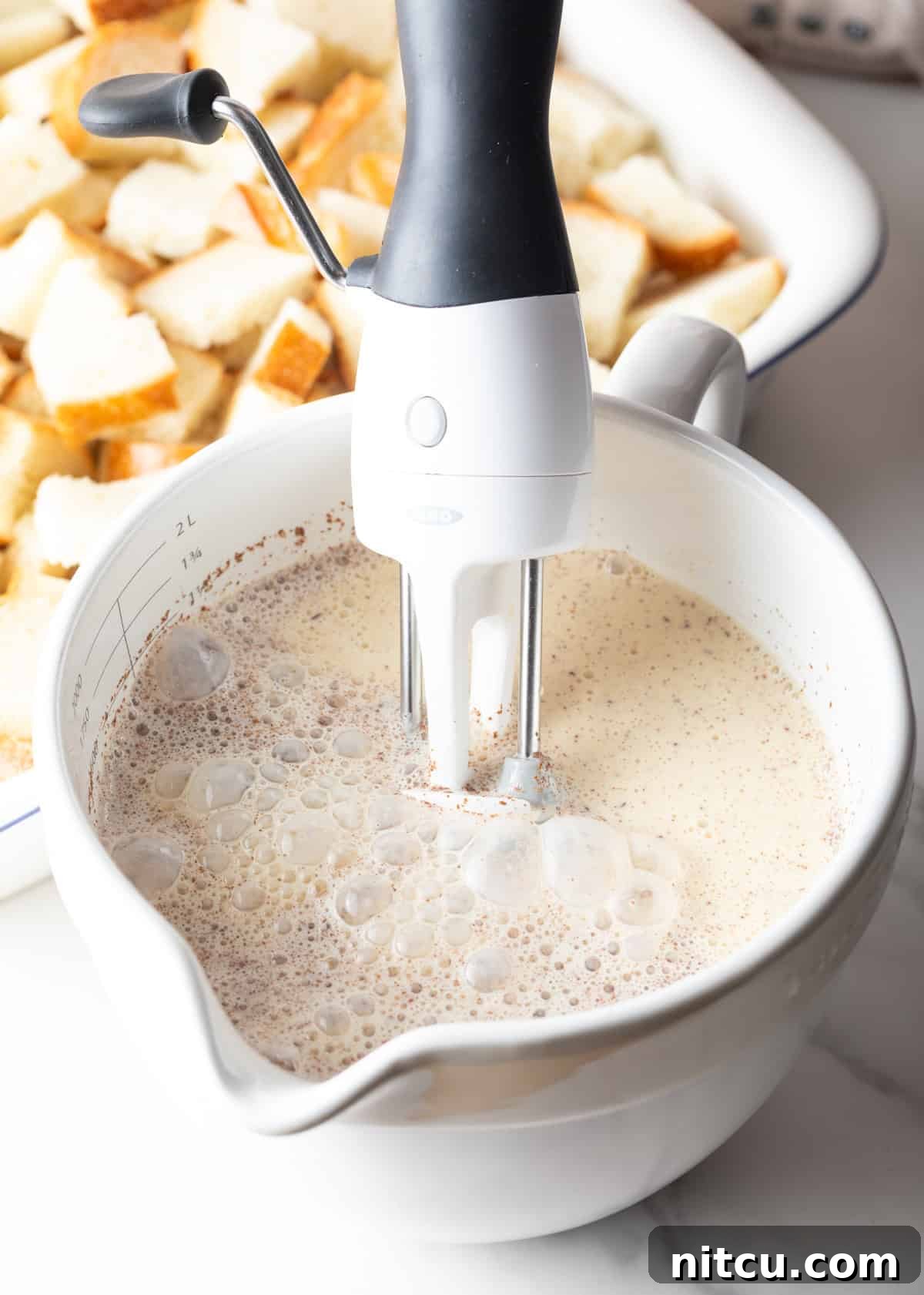
Craft the Creamy Custard Mixture – In a large mixing bowl or a convenient measuring pitcher, combine the half & half, large eggs, light brown sugar, pure vanilla extract, and ground cinnamon. For quick and thorough mixing, I often reach for my trusty egg beater. Alternatively, apply a bit of muscle with a wire whisk and blend the mixture diligently until it is completely smooth and all ingredients are fully incorporated. There should be no visible streaks of egg yolk or undissolved sugar.
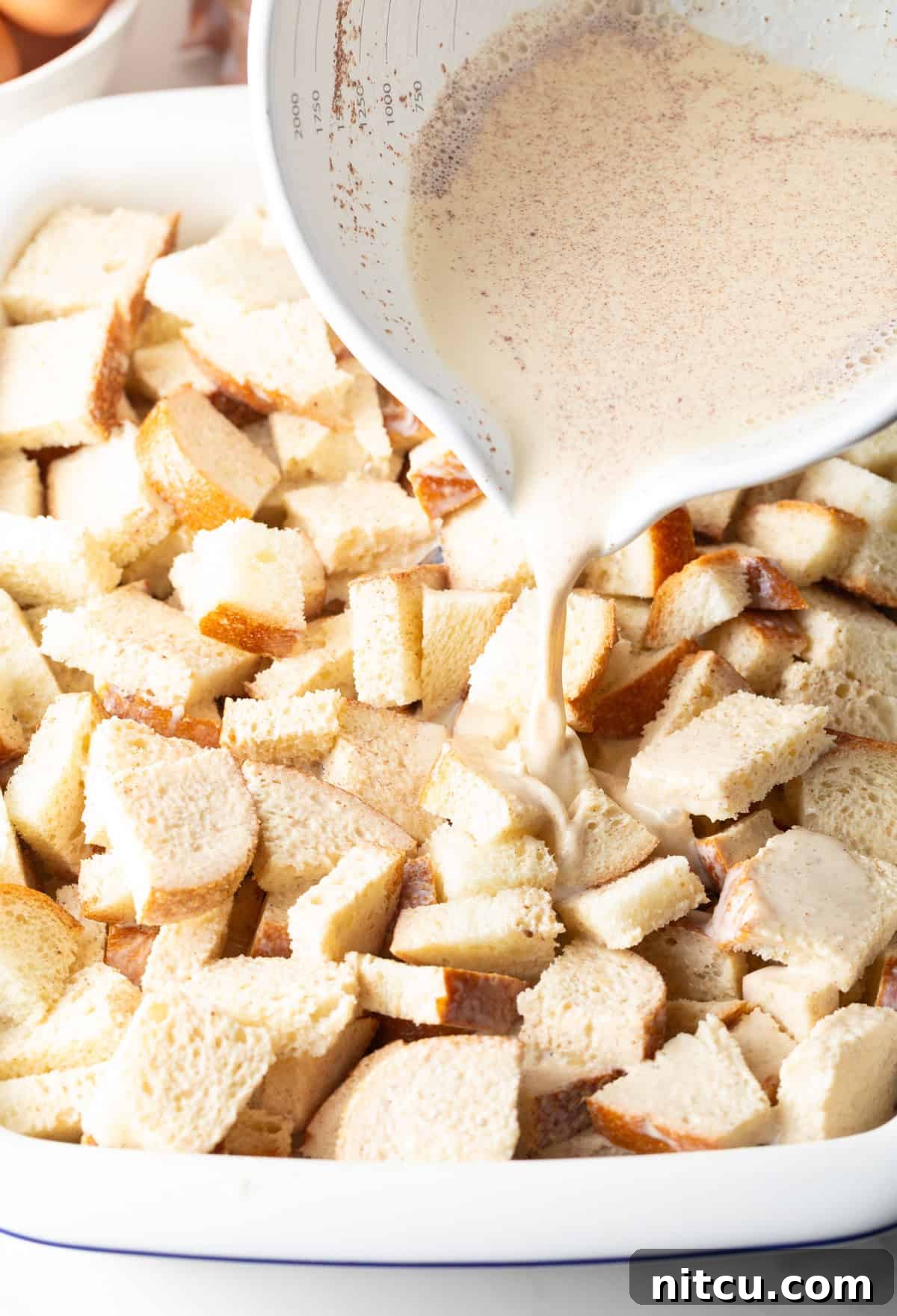
Soak the Bread in Sweetness – Now, with a steady hand, slowly and carefully pour the luscious egg and cream mixture over the bread cubes in the casserole dish. Take your time to ensure that every single piece of bread is thoroughly and evenly coated. This is paramount for achieving the desired custardy interior; inadequate soaking can result in dry, overly crunchy spots in the final baked dish. Remember, we’re aiming for crispy on the outside, not bone-dry – a crucial distinction!
Chill and Anticipate – Once the bread has absorbed the delightful mixture, securely cover the casserole pan with plastic wrap. Ensure it’s sealed tightly to prevent any air from drying out the bread. Then, gently transfer the pan to the refrigerator. This overnight soak is where the magic truly happens, allowing the bread to fully imbibe the custard, preparing it for an unparalleled texture. After this, you can unwind with a good book, enjoy a nightcap, and head off to bed, dreaming of tomorrow’s delicious breakfast.
The Morning Bake – Good morning! Approximately 60 to 90 minutes before you plan to serve your baked French toast, remove the casserole dish from the refrigerator. It’s important to let it come closer to room temperature before placing it into a hot oven. Transitioning directly from cold to hot can, in rare cases, cause some baking dishes to crack. More importantly, allowing the egg mixture to warm slightly ensures a more even and consistent bake, resulting in a perfectly custardy interior.
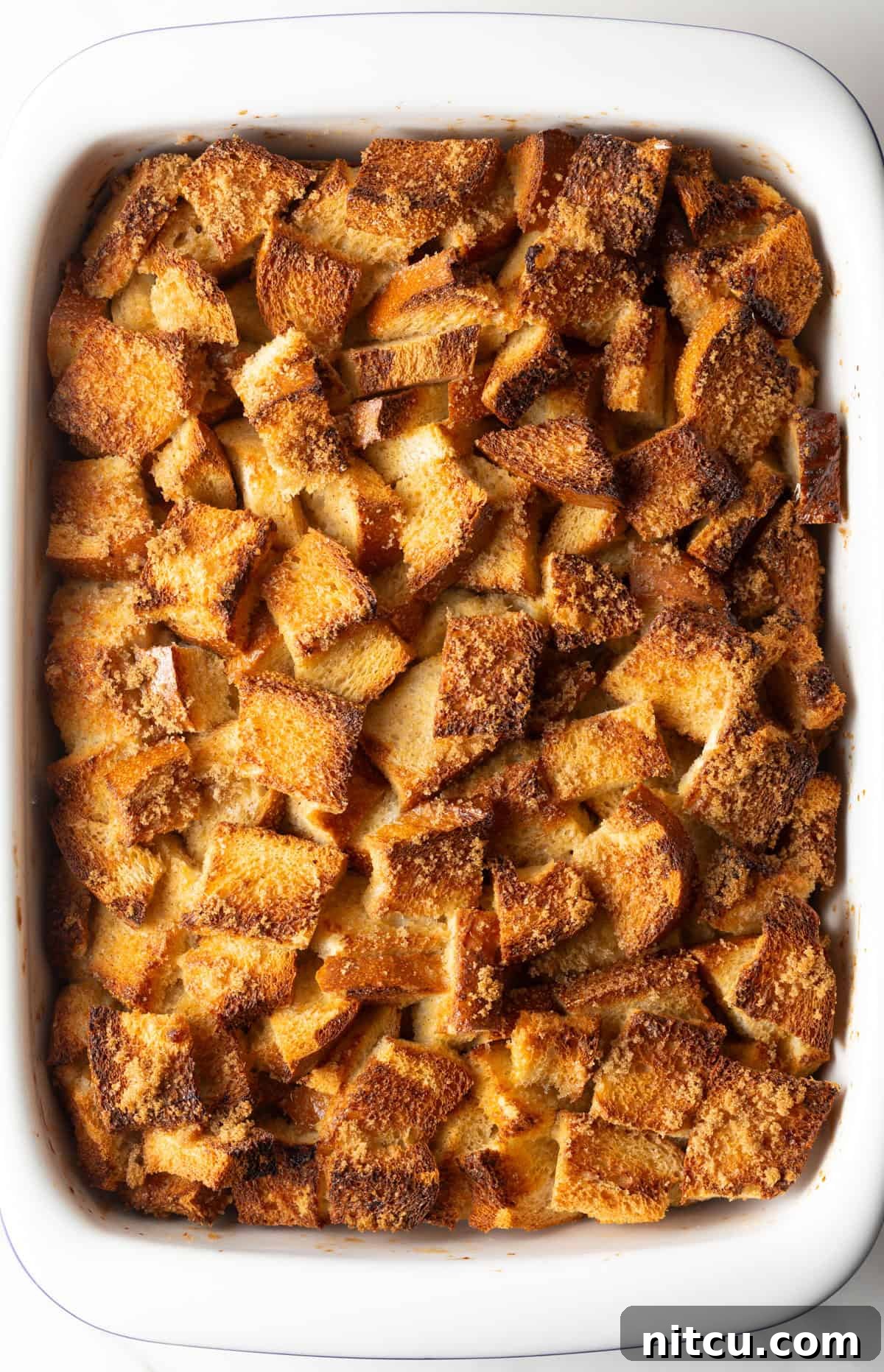
During this tempering period, preheat your oven to 375 degrees F (190 degrees C). Once the oven is hot and the casserole has rested, remove the plastic wrap. Carefully place the dish in the preheated oven and set a timer for 30 minutes. When the timer sounds, gently insert a small paring knife into the center of the casserole to check for doneness. If the knife comes out clean or with only a slight dampness, your French toast is ready. If there’s still a noticeable amount of liquid or eggy-ness clinging to the knife, return it to the oven for an additional 5-10 minutes, checking periodically, until it reaches perfect golden-brown puffiness.
The Secret to Perfect French Toast Casserole
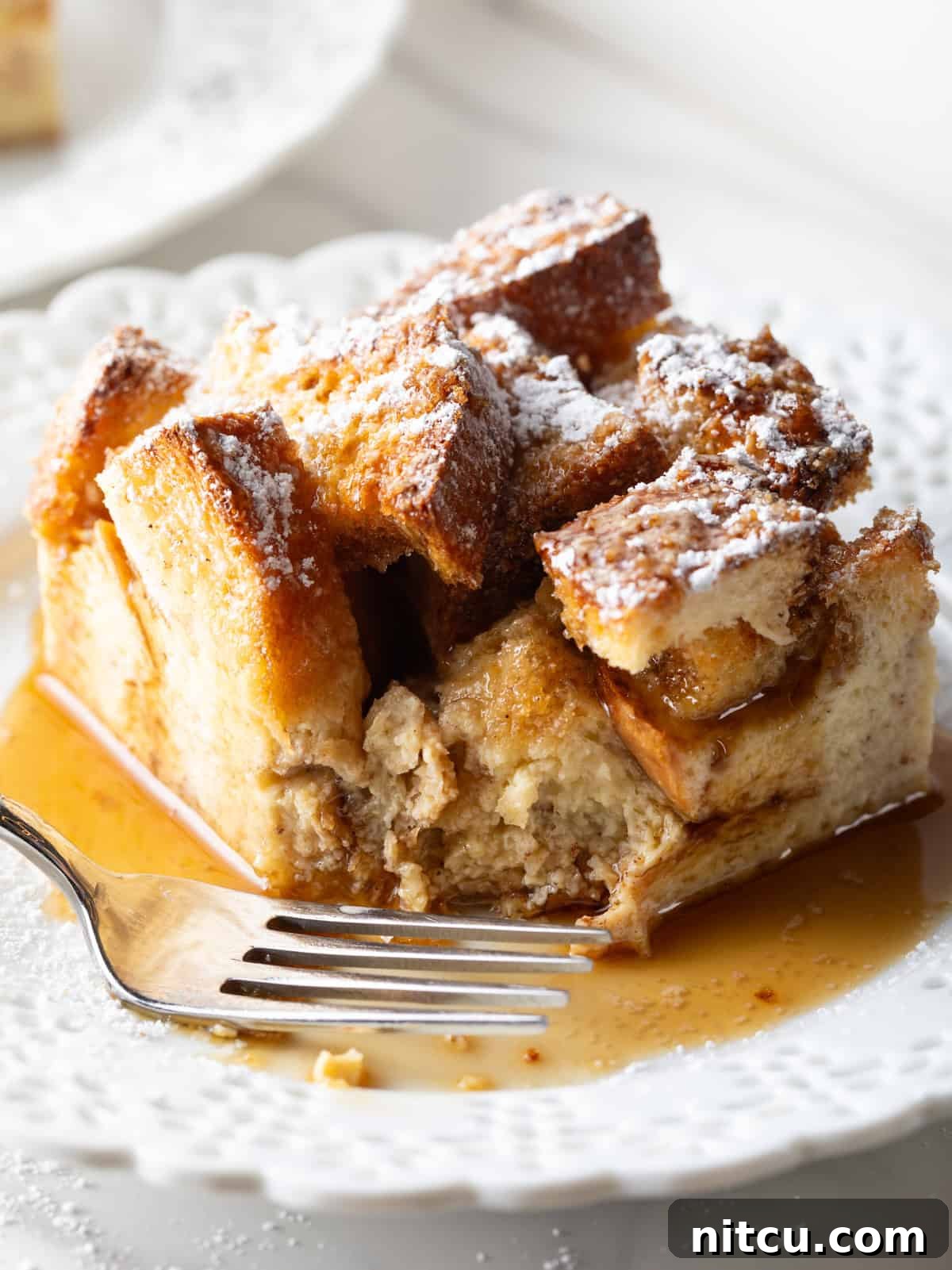
A common question arises: “Do I really need to prepare this French toast casserole overnight?” The unequivocal answer is a resounding yes! This vital step is not merely a suggestion; it is the cornerstone of this recipe’s success. The prolonged soak allows the bread to fully absorb the rich cream and egg mixture, creating an ultra-lush and incredibly fluffy texture that transforms during baking. This deep absorption is what causes the casserole to puff up beautifully in the pan, developing a magnificently crispy, golden-brown top while ensuring the interior remains silky-smooth and custardy – pure perfection!
Seriously, do not attempt to rush this process! The overnight rest is the difference between a good French toast casserole and an unforgettable one that will have everyone asking for the recipe. Patience truly pays off in the most delicious way when it comes to this make-ahead breakfast delight.
Delightful Serving Suggestions
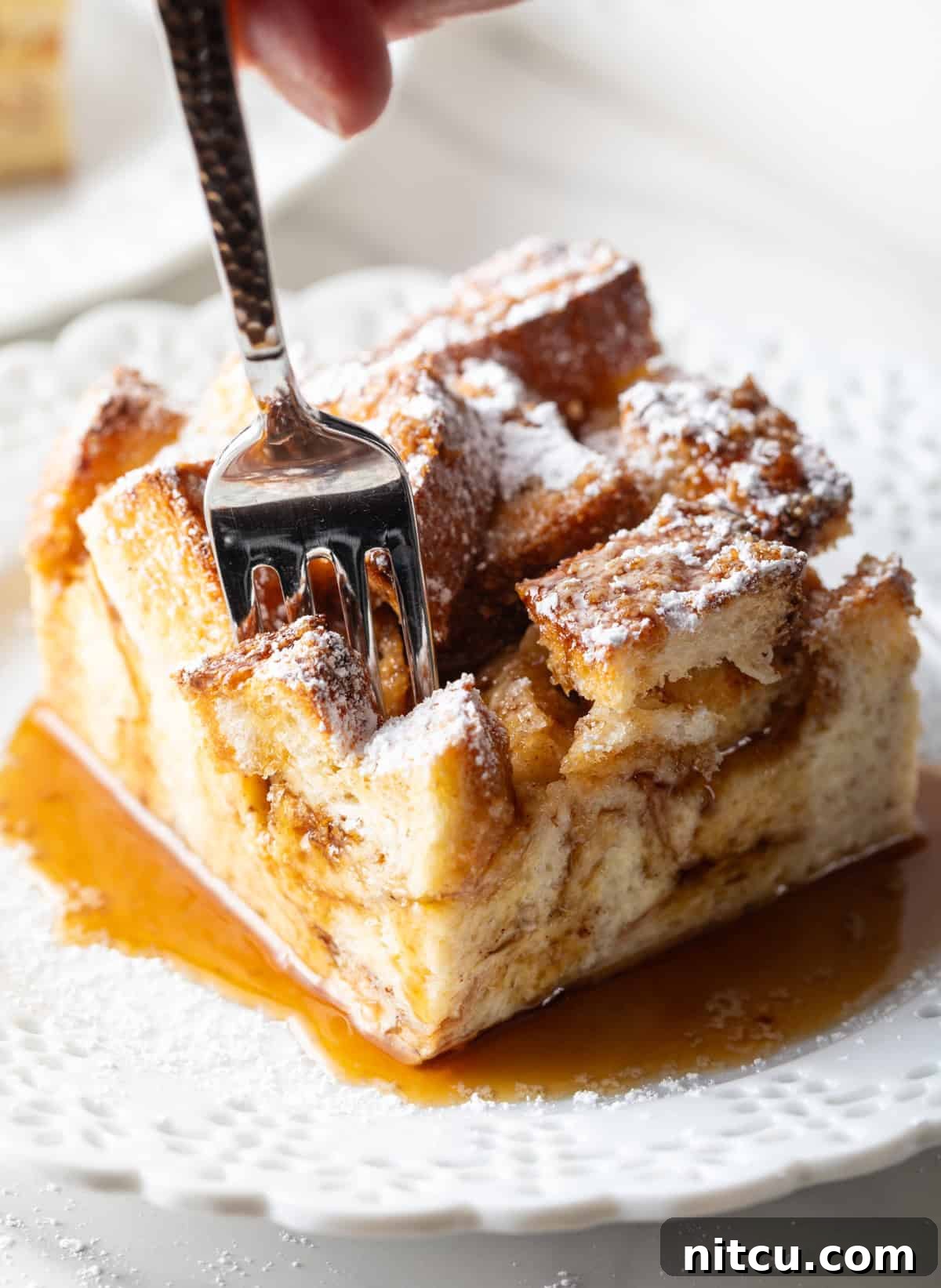
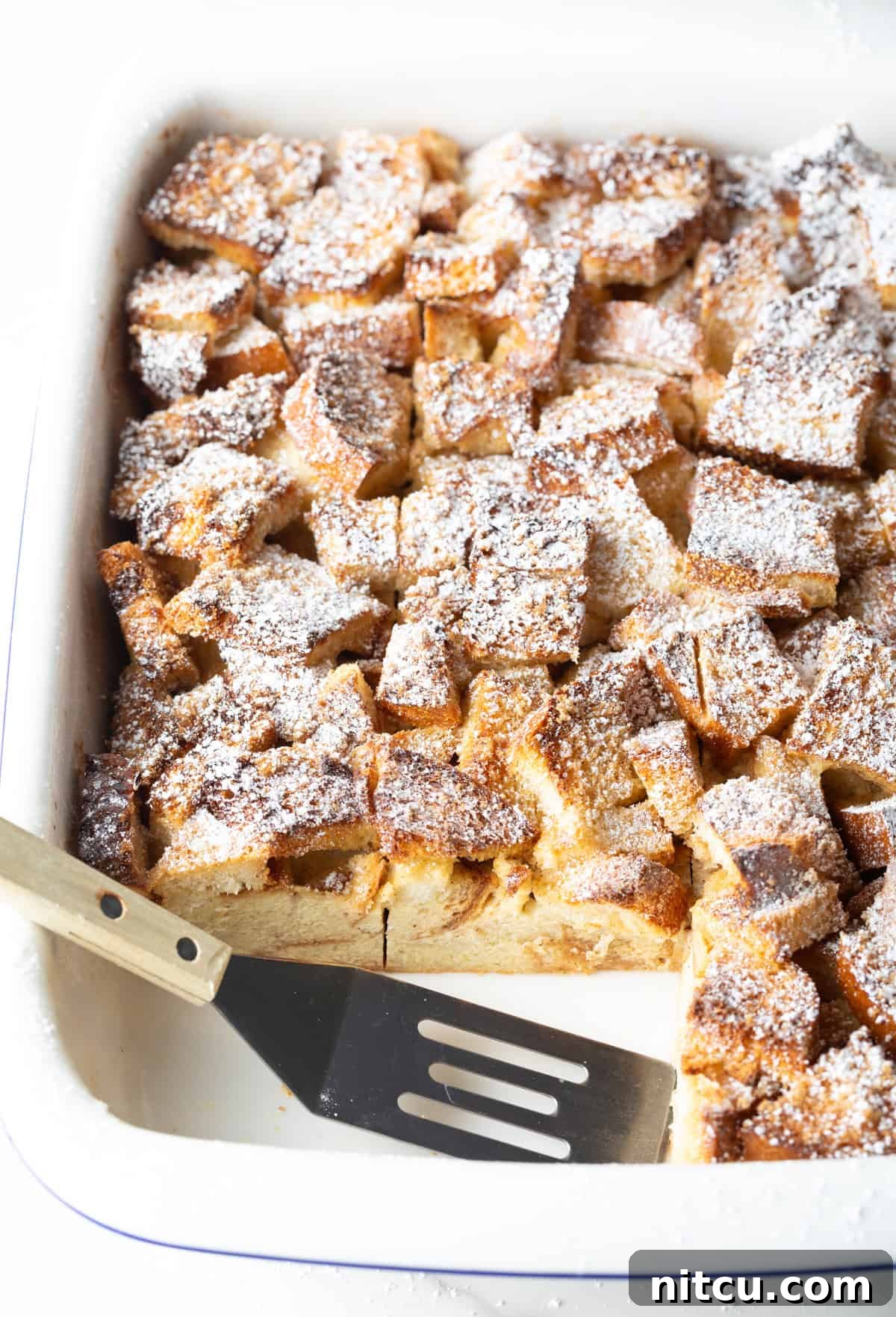
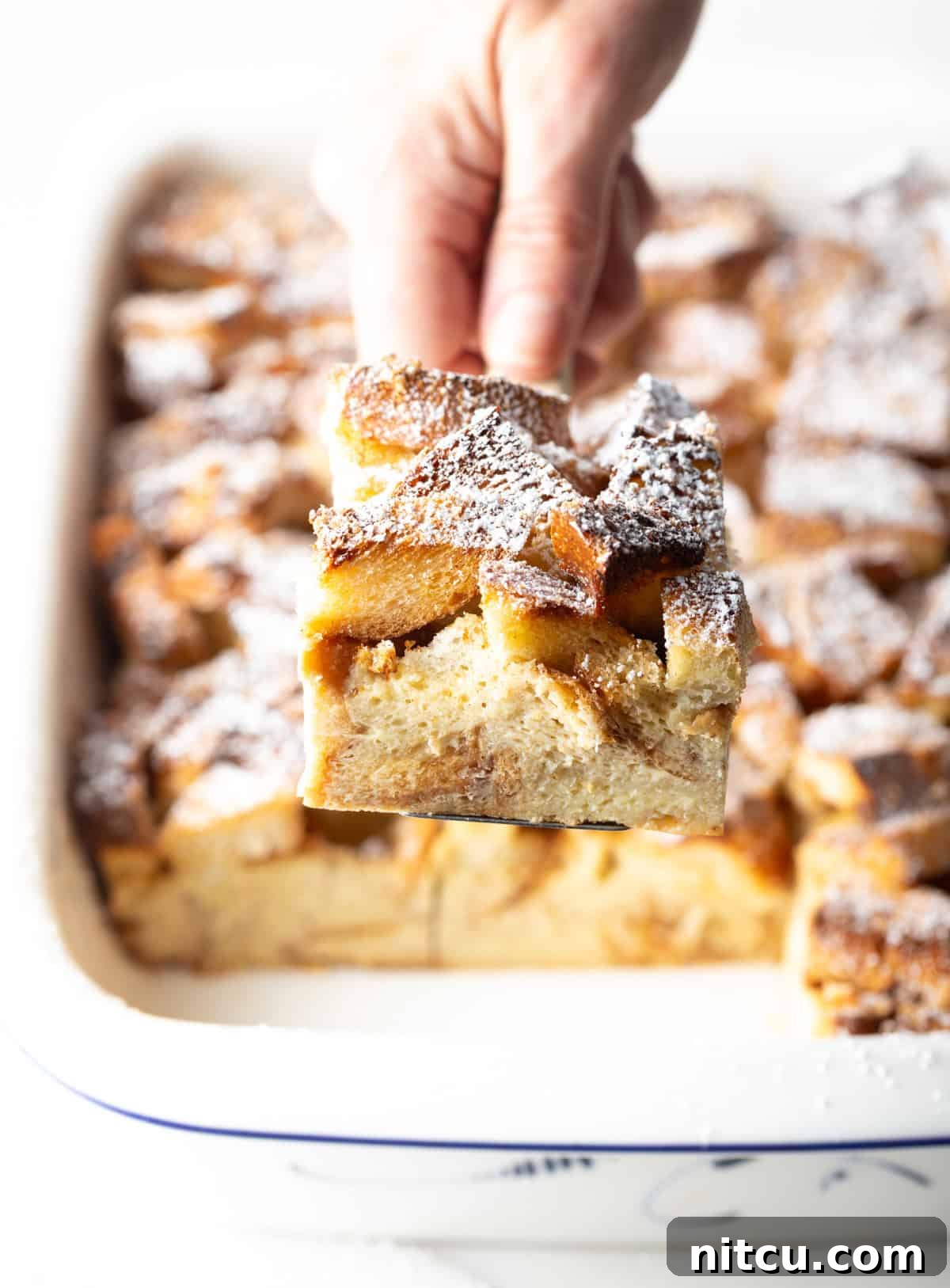
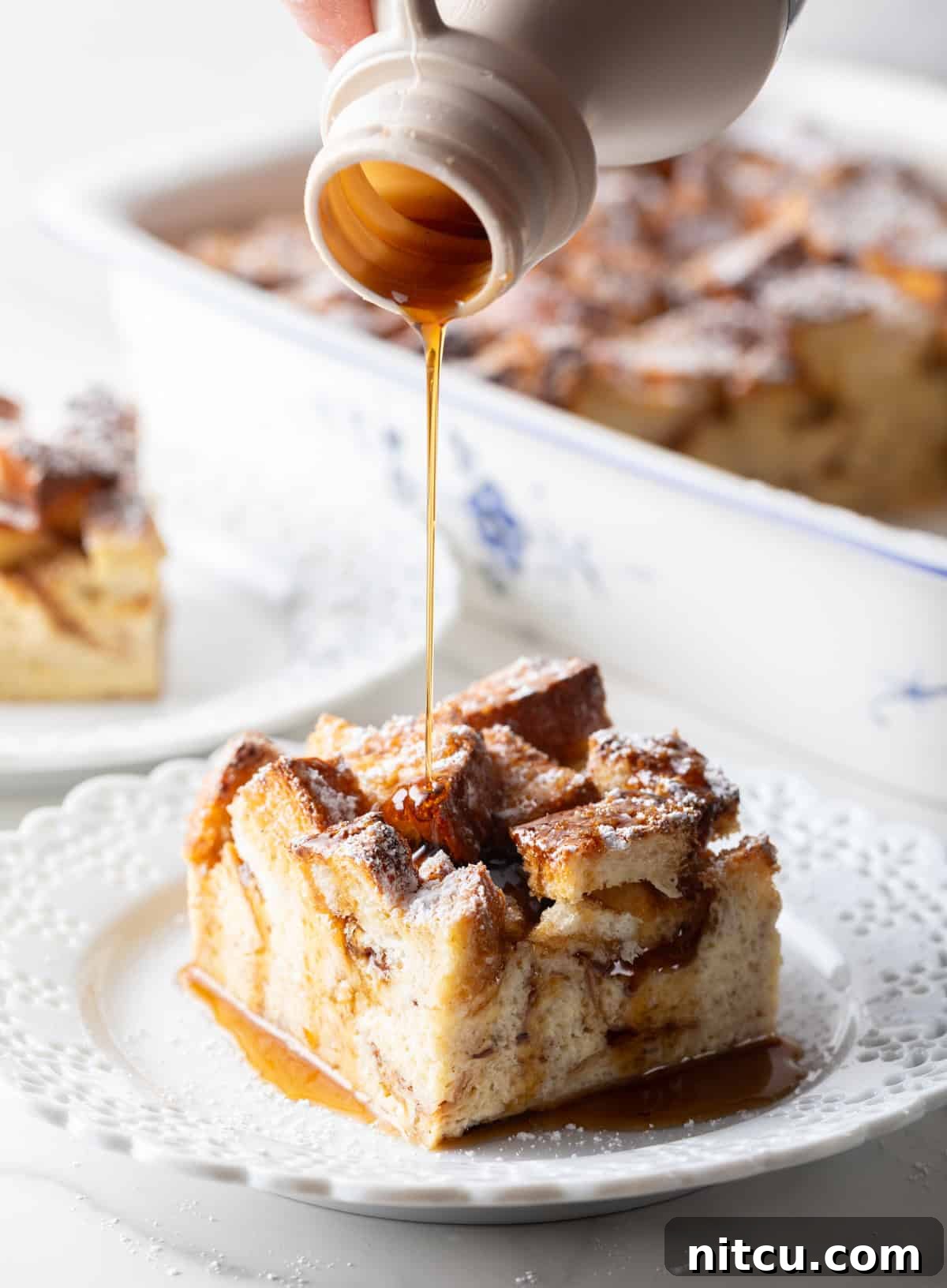
Once your Overnight French Toast Casserole emerges golden and fragrant from the oven, allow it to cool slightly before dusting generously with confectioner’s sugar. This crucial waiting period prevents the powdered sugar from melting instantly into the hot bread, ensuring a beautiful, pristine finish. Then, slice the casserole into generous squares and either plate them individually or leave them attractively arranged in the baking pan for a charming buffet-style presentation, allowing guests to serve themselves at their leisure. And without exception, always serve this delightful French toast casserole with a generous pour of pure maple syrup on the side. Emphasize “pure” – none of that artificial pancake syrup in a squeeze bottle! The rich, authentic flavor of real maple syrup perfectly complements the sweet, custardy French toast.
To balance the sweetness of the casserole, I frequently pair it with savory or spicy breakfast sausages, crispy strips of bacon, or a hearty ham steak. For an added boost of protein and a more substantial meal, consider whipping up a batch of fluffy scrambled eggs or preparing a few perfect over-easy eggs, especially for smaller gatherings. Fresh fruit is another exquisite accompaniment, either artfully arranged on top of the casserole or served alongside as a vibrant, refreshing counterpoint. I love setting out a colorful bowl of assorted berries – plump blueberries, juicy raspberries, and sweet strawberries are always a hit – allowing guests to customize their plates. And for a truly festive brunch, don’t forget to mix up a batch of perfect mimosas. You know, for the essential vitamin C!
Storing and Reheating Your Casserole
Leftover pieces of this delectable Overnight French Toast Casserole can be easily transferred to an airtight container and stored in the refrigerator for up to 3-4 days. It makes for a wonderful quick breakfast or snack throughout the week!
For longer storage, this French toast bake also freezes exceptionally well for up to a month. To freeze, wrap individual portions tightly in a layer of plastic wrap, followed by a layer of aluminum foil. For maximum protection against freezer burn, place these wrapped portions together in a heavy-duty plastic freezer bag or an airtight freezer-safe container. When you’re ready to enjoy, simply thaw the desired portions in the refrigerator overnight. Once thawed, they are ready for reheating.
While you can quickly reheat leftovers in the microwave using short, 20-second bursts at 50% power, for the absolute best texture and to recapture that delightful crispness on top, I highly recommend reheating portions in the oven. Place them on a baking sheet and bake at 350 degrees F (175 degrees C) for approximately 10-15 minutes, or until thoroughly heated through and the edges have crisped up again. Keep a close eye on them to prevent them from drying out.
Frequently Asked Questions About This Recipe
The most critical step to prevent a soggy French toast casserole is to use slightly stale or very dry bread. If the bread retains too much moisture, it can indeed dissolve into a mushy consistency before baking, especially after an overnight soak. While the casserole would still bake through, you wouldn’t achieve those distinct, custardy bread pieces. For best results, leave your bread out on the counter overnight, or lightly toast fresh bread cubes in a low oven for 10-15 minutes before assembly.
While you technically can, for optimal texture and flavor, it is always best to bake the casserole first before freezing. If you plan to freeze the entire casserole, I recommend assembling it in a disposable aluminum baking pan. After baking and cooling completely, wrap the pan tightly in several layers of plastic wrap, followed by heavy-duty aluminum foil. It can be frozen for up to 2 months. To serve, thaw the casserole in the refrigerator overnight, unwrap it in the morning, and bake at 350 degrees F (175 degrees C) for 20-25 minutes, or until heated through.
Absolutely! This recipe, as written, generously yields 12 servings in a standard 9 x 13-inch pan, making it ideal for a crowd. If you’re hosting a smaller gathering or simply want a delicious breakfast for a few days, you can easily halve all the ingredients. Assemble the reduced recipe in a square 8 x 8-inch or 9 x 9-inch baking pan, which will provide approximately 6 perfect servings.
For the ultimate Overnight French Toast Casserole, hearty, slightly stale breads work best. Popular choices include Challah, Brioche, or a French baguette. These breads are sturdy enough to soak up the custard without falling apart and develop a wonderful chewy-yet-custardy texture inside, with crisp edges after baking. Avoid soft sandwich breads as they can become too mushy.
Explore More Breakfast Recipes
Help Me Spread the Word about this Fabulous Free Recipe! Sharing this recipe link on Pinterest and Facebook is super impactful, and I greatly appreciate it! Find the share buttons below the recipe form.

Print Recipe
Leave a Review »
Overnight French Toast Casserole
Video
Ingredients
- 16 ounce loaf country bread or a fluffy French loaf (using day-old bread is highly recommended for best results)
- 3 ½ cups half & half (for a rich, custardy texture)
- 8 large eggs (allow to come to room temperature before mixing)
- ¾ cup light brown sugar packed (+1 tablespoon for sprinkling on top before baking, optional)
- 1 tablespoon pure vanilla extract (use high-quality for best flavor)
- 1 teaspoon ground cinnamon (freshly ground for optimal aroma and taste)
- 2 tablespoons unsalted butter (for greasing the baking dish)
- Optional: powdered sugar (for dusting) and pure maple syrup (for serving)
Instructions
-
Thoroughly butter the inside of a 9 x 13 inch (3 quart) baking dish, ensuring the entire surface is well-coated to prevent sticking and aid in creating crispy edges. Set the prepared dish aside.
-
Using a sharp serrated knife, chop the day-old bread into generous 1 to 1½-inch chunks. Distribute these bread pieces evenly across the bottom of the buttered baking dish, creating a single, uniform layer.
-
In a large mixing bowl, combine the half & half, large eggs, light brown sugar, pure vanilla extract, and ground cinnamon. Whisk vigorously until all ingredients are fully combined and the mixture is smooth, with no lumps or streaks remaining. Ensure eggs are at room temperature for an even bake.
-
Slowly pour the prepared cream and egg mixture over the chopped bread in the casserole dish. Take care to ensure every single piece of bread is thoroughly saturated; this is essential for a custardy interior.
-
Cover the baking dish tightly with plastic wrap and refrigerate for at least 3 hours, or ideally, overnight (8-12 hours). This extended soaking period is key to achieving the ultimate custardy texture.
-
About 60-90 minutes before baking, remove the casserole from the refrigerator to allow it to come to room temperature. Preheat your oven to 375°F (190°C). Once preheated, remove the plastic wrap from the dish and bake for 30-40 minutes, or until the top is golden brown, slightly puffed, and the center is set. Test for doneness by inserting a small paring knife into the center; if it comes out clean or with minimal dampness, it’s ready. If wet, continue baking in 5-10 minute increments.
-
Let the casserole cool slightly for a few minutes, then slice into 12 generous pieces. Dust with powdered sugar (optional) and serve warm with a drizzle of pure maple syrup.
Notes
Freezing for Later: For longer storage, individual portions of the French toast bake freeze exceptionally well for up to a month. First, wrap each portion tightly in a layer of plastic wrap, followed by a layer of aluminum foil. Then, place these wrapped portions together in a plastic Ziploc freezer bag or an airtight freezer-safe container to protect against freezer burn. To serve, thaw portions overnight in the fridge before reheating.
Reheating Tips: You can reheat individual portions in the microwave in short, 20-second bursts at 50% power. However, for the very best texture, and to revive that delightful crisp top, I highly recommend reheating portions in a preheated oven. Bake at 350°F (175°C) for 10-15 minutes, or until warmed through and crisped. Keep a close eye to prevent them from drying out.
Customization: Feel free to experiment with additions like a sprinkle of nutmeg with the cinnamon, a pinch of orange zest in the custard, or a topping of sliced almonds before baking for added crunch and flavor.