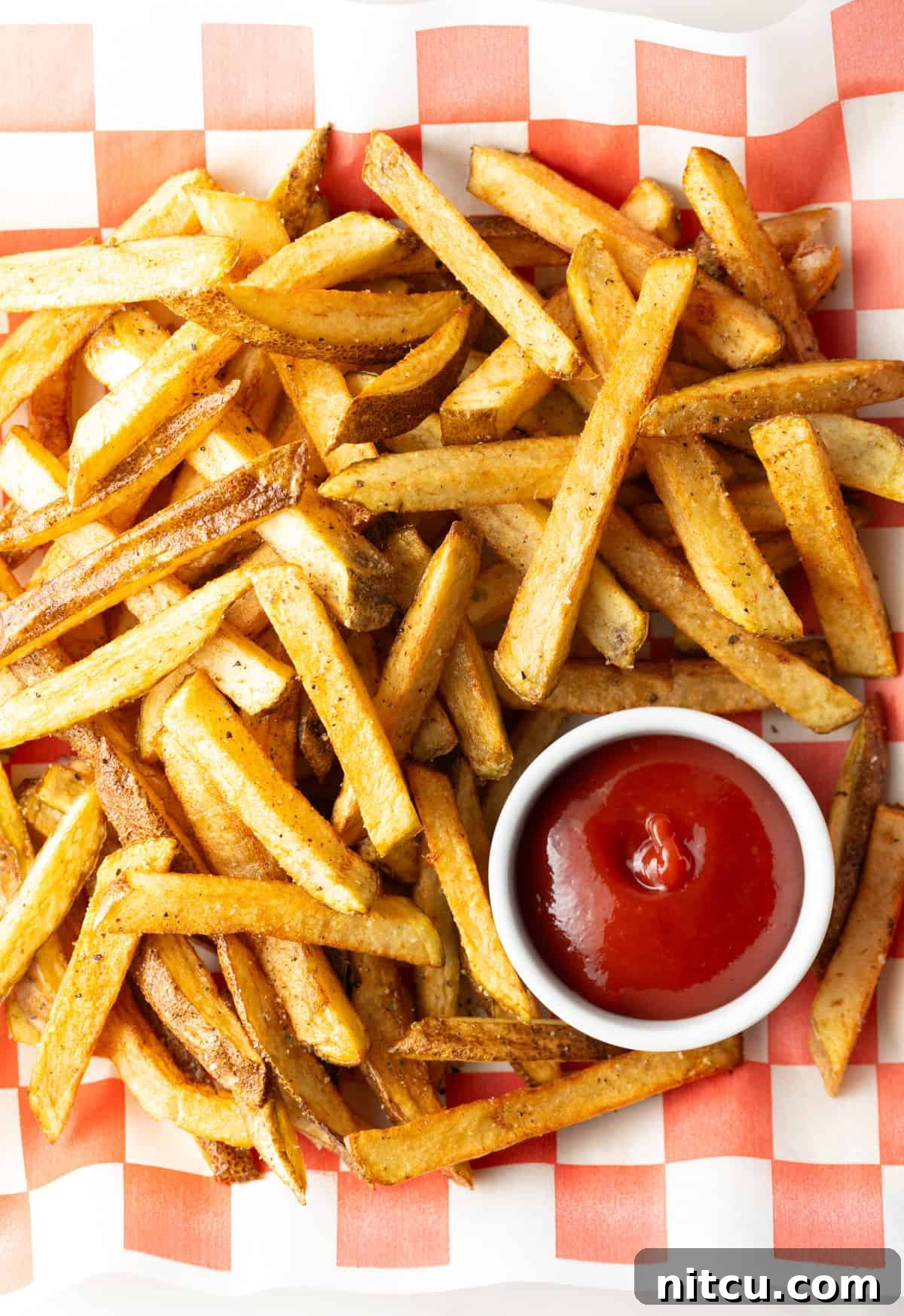
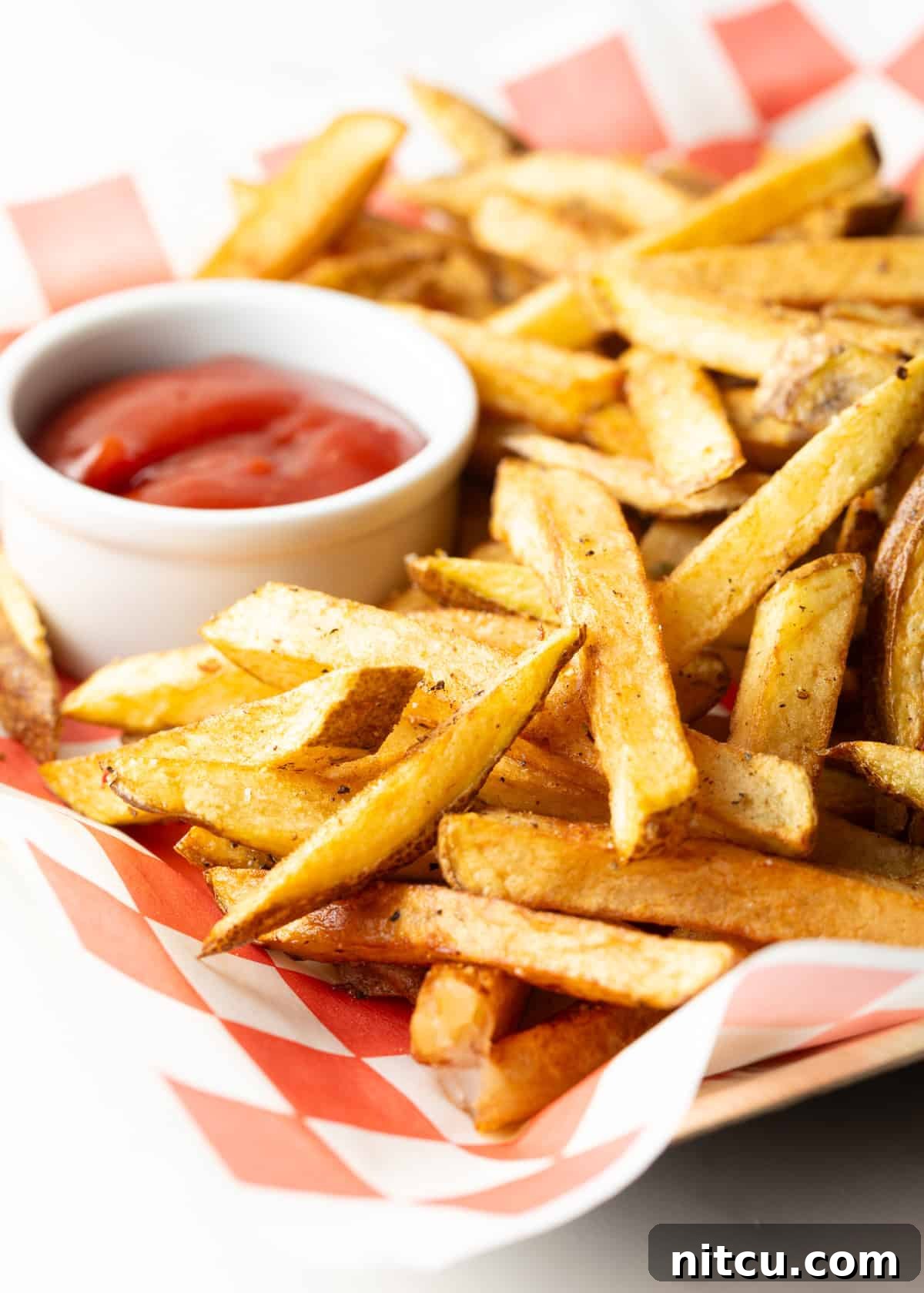
Craving that perfect golden crispiness and fluffy interior of restaurant-style French fries but want to enjoy them from the comfort of your own kitchen? Look no further! This ultimate homemade french fries recipe transforms humble potatoes into an irresistible gourmet experience. Forget soggy, reheated takeout; with a few simple steps and expert tips, you’ll be deep-frying batches of unbelievably crispy, perfectly seasoned fries that rival any diner or fast-food joint. My secret? A crucial ice water soak and precise temperature control, ensuring every fry is golden on the outside and tender on the inside, ready for your favorite dipping sauces.
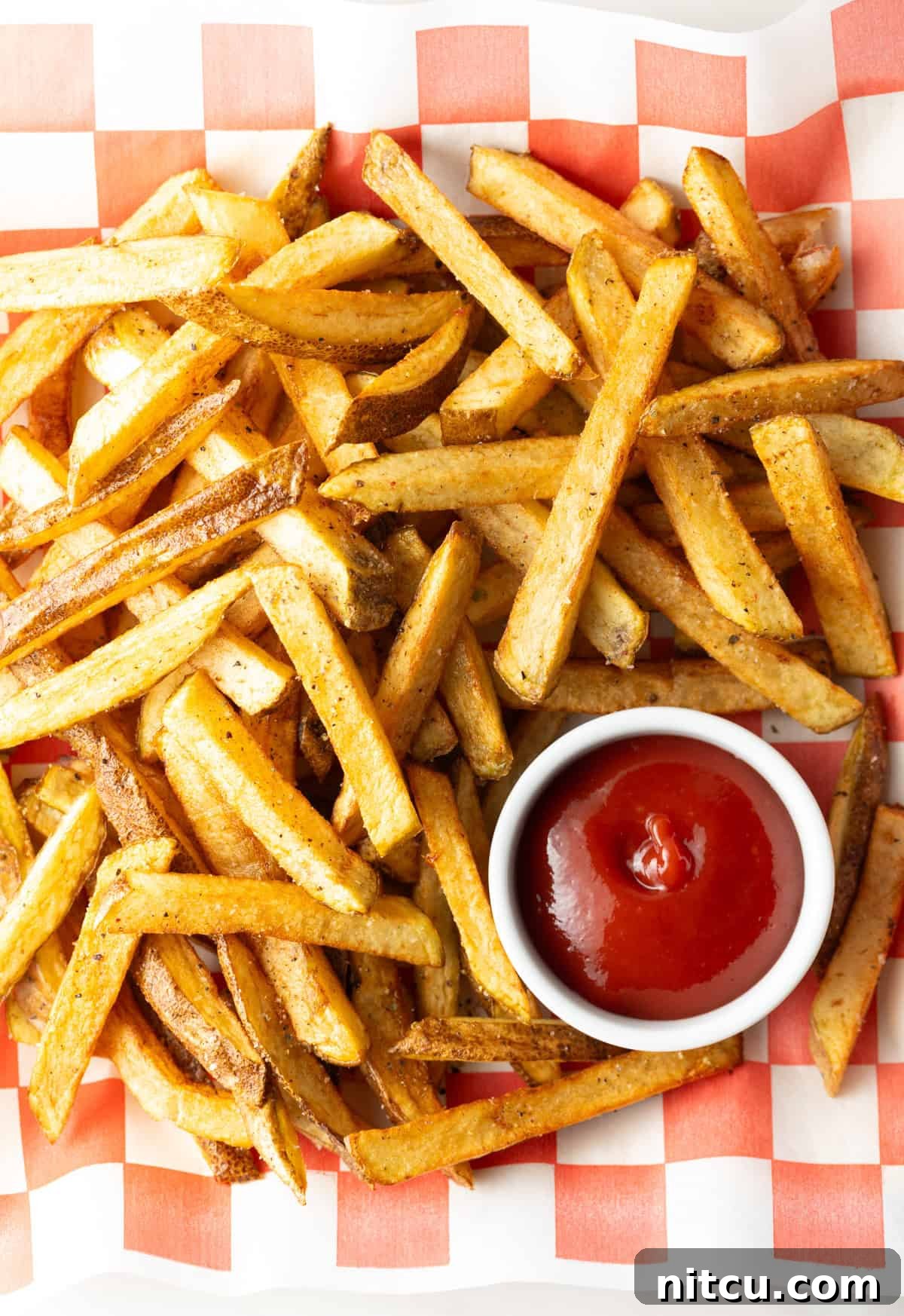
As a devoted snacker, there’s nothing quite like the allure of hot, crunchy, yet tender, and perfectly salty homemade fries. It’s a culinary ritual that brings immense satisfaction, far beyond just opening a bag. Classic deep-fried French fries are undeniably America’s favorite snack and a quintessential side dish for countless meals. Today, I’m thrilled to share my tried-and-true method for making the absolute best homemade french fries using just three core ingredients: potatoes, oil, and your choice of seasoning. While a sprinkle of simple salt and pepper is always a winner, I highly recommend trying my renowned Cajun fry seasoning for an extra kick of zesty flavor. Follow these straightforward steps and embrace my expert advice, and I guarantee you’ll master restaurant-quality fries that are spectacularly crispy, light, and utterly addictive, perfect for dipping into ketchup or any gourmet sauce you desire.
Table of Contents
- Recipe Highlights: Why You’ll Love These Fries
- Mastering the Fundamentals: Key Ingredients & Essential Tips
- Essential Tools for Perfect Deep-Fried Fries
- Step-by-Step Guide: How to Make Crispy Homemade French Fries
- Pro Tips for Unforgettable French Fries
- Elevate Your Fries: Serving Suggestions & Dipping Sauces
- Storage and Reheating Tips for Leftover Fries
- Frequently Asked Questions About Homemade French Fries
- More Delicious Finger Food Recipes to Try

Recipe Highlights: Why You’ll Love These Fries
Making french fries at home might seem daunting, but this recipe is designed for success, offering several advantages over store-bought or restaurant options:
Simple, Wholesome Ingredients – Unlike the mysterious ingredient lists found on frozen fry bags or in many restaurant preparations, my homemade fries are crafted from just potatoes, oil, and your preferred seasoning. You have complete control over the quality and type of each component, ensuring a cleaner, more natural snack. This transparency means you’re feeding your family wholesome goodness without hidden additives.
Unbeatable Freshness & Flavor – Imagine fries served piping hot, straight from the fryer, perfectly seasoned and bursting with flavor. That’s the homemade difference! These fries taste infinitely better than any reheated leftovers from a restaurant doggy bag. I’ll guide you through the precise techniques to achieve diner-style excellence at home, guaranteeing every bite is a revelation of crispness and tender potato goodness.
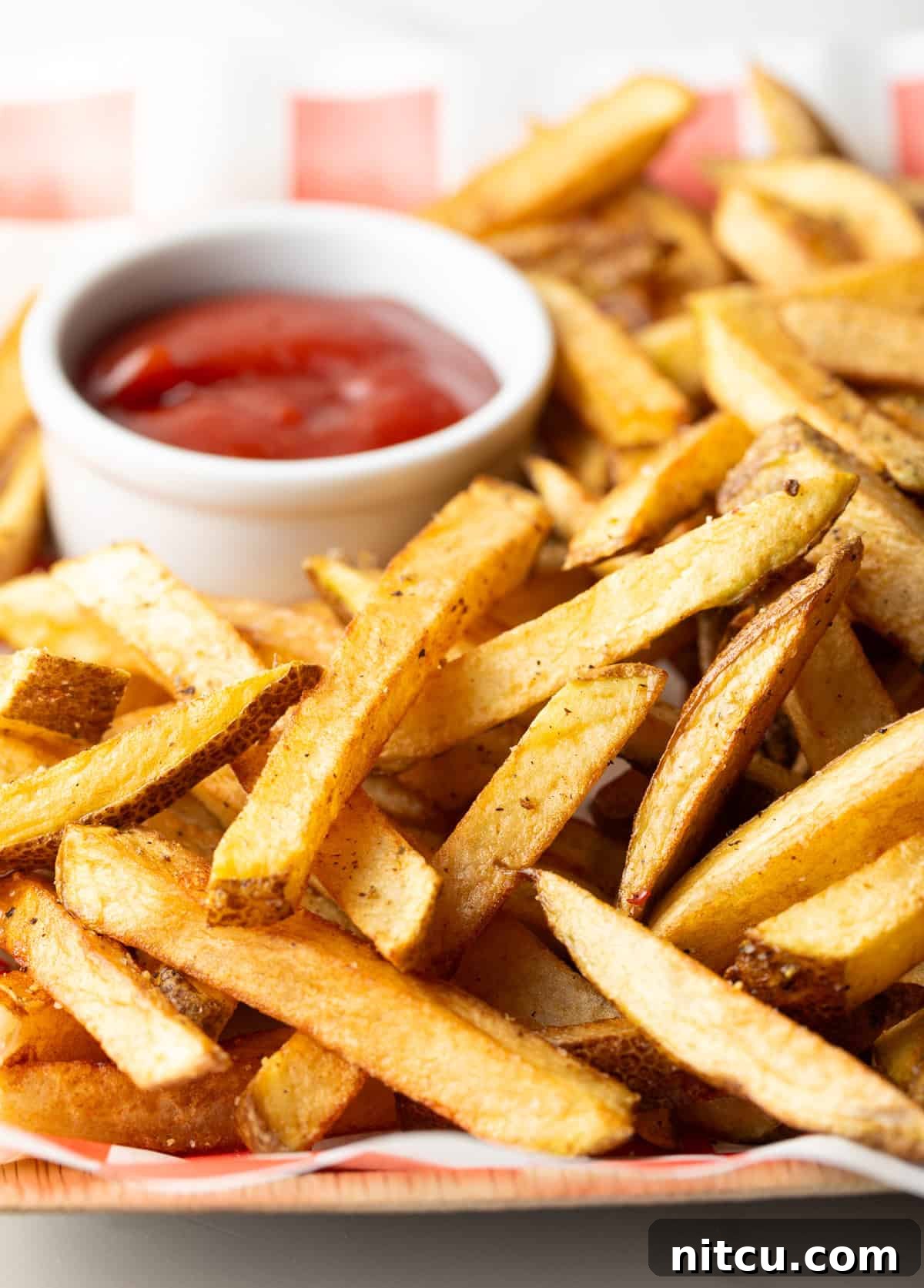
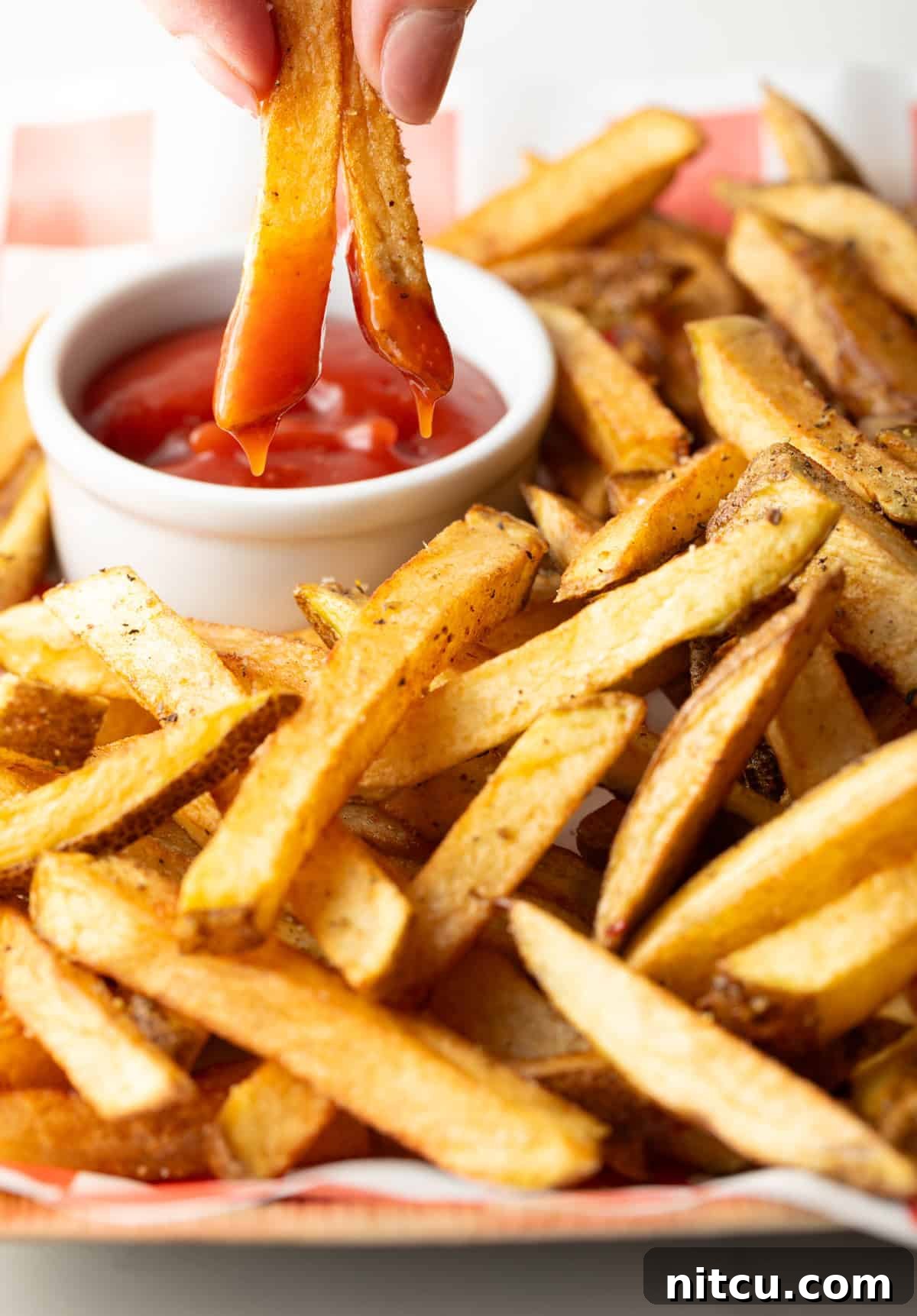
Optimally Dippable Texture – French fries are synonymous with dipping, and these fries are engineered for maximum dip-ability! They strike the ideal balance – not too thin to break in your sauce, and not too thick to be cumbersome. Each fry boasts a robust crispness and sturdy structure, making them the perfect edible utensil for scooping up generous amounts of your favorite zesty dips and rich sauces. For those who adore super thin fries, explore my recipe for julienne fries!
Customizable to Your Taste – One of the greatest joys of making fries at home is the freedom to customize. From the type of oil to the precise blend of seasonings, you are the master of flavor. Whether you prefer a classic salted chip, a spicy kick with Cajun seasoning, or a herbaceous blend, this recipe provides the perfect canvas for your culinary creativity.
Mastering the Fundamentals: Key Ingredients & Essential Tips
Success with homemade french fries begins with selecting the right ingredients and understanding their roles. Here’s what you need to know:
- Potatoes – The Russet Reign Supreme: For the ultimate crispy and fluffy french fry, Russet potatoes are your best friend. Their high starch content and low moisture make them ideal for achieving that coveted light, airy interior and golden-brown exterior. When shopping, try to choose potatoes of similar size, free from major blemishes, to ensure uniform cooking.
- Fry Oil – High Heat for High Quality: The choice of oil is critical. I highly recommend peanut oil due to its exceptionally high smoke point and neutral flavor profile, which won’t overpower your fries. Canola oil is another excellent alternative. High-temperature oils prevent your fries from tasting greasy and allow them to achieve that perfect crispness without burning. Plus, peanut oil can often be strained and reused for future frying adventures.
- Salt and Pepper – The Foundation of Flavor: At a minimum, a generous sprinkle of salt and freshly ground black pepper will make your homemade fries sing. However, for a truly elevated flavor experience, I implore you to try my irresistible Cajun fry seasoning. Its blend of spices adds an incredible depth and a delightful kick that transforms plain fries into a flavor sensation!
- Cold Water for Soaking – The Game Changer: While technically not an ingredient for frying, an ice water bath is perhaps the most crucial “ingredient” for perfect fries. This simple step removes excess surface starch, which is the primary culprit behind soggy fries. By soaking, you ensure your potato strips cook evenly, achieve maximum crispness, and boast that enviable fluffy interior.
Essential Tools for Perfect Deep-Fried Fries
Having the right equipment makes the deep-frying process safer, easier, and ensures professional-quality results every time. Don’t worry, you likely have most of these items already!
- Deep Pot – Safety First: A sturdy, heavy-bottomed deep pot, such as a Dutch oven or a large soup pot, is essential. Choose one that can hold the oil without overflowing when the potatoes are added – ideally, you’ll fill it roughly halfway. The depth prevents oil splatters and allows for even heat distribution. Its heavy bottom maintains a consistent oil temperature, crucial for perfect frying.
- Cooking Thermometer – Precision is Key: This is arguably the most vital tool for deep frying. A clip-on candy or deep-fry thermometer allows you to continuously monitor the oil temperature, ensuring it stays within the optimal range. Guessing the temperature often leads to either burnt or soggy fries, so invest in a reliable thermometer for guaranteed success.
- Metal Skimmer or Slotted Spoon – Safe Retrieval: A long-handled metal skimmer or slotted spoon is indispensable for safely adding and removing fries from the hot oil. It allows you to maneuver the potatoes without risk and efficiently drain excess oil before transferring them to the cooling rack.
- Paper Towel-Lined Baking Sheets – For Drying & Draining: You’ll need at least one large baking sheet lined with several layers of paper towels for draining the raw potato strips before frying, and another one (or two) similarly lined for resting the freshly fried potatoes. This helps absorb excess oil, keeping your fries crispy and less greasy.
- Large Bowl for Soaking – Prep Station: A large bowl is needed for the ice water bath, comfortably accommodating all your hand-cut potato strips for their crucial soak.
Step-by-Step Guide: How to Make Crispy Homemade French Fries
You’ll find the complete ingredient proportions, detailed instructions, storage tips, and a video tutorial in the **printable recipe section** below.
1. Prep the Potatoes: The Soaking Secret
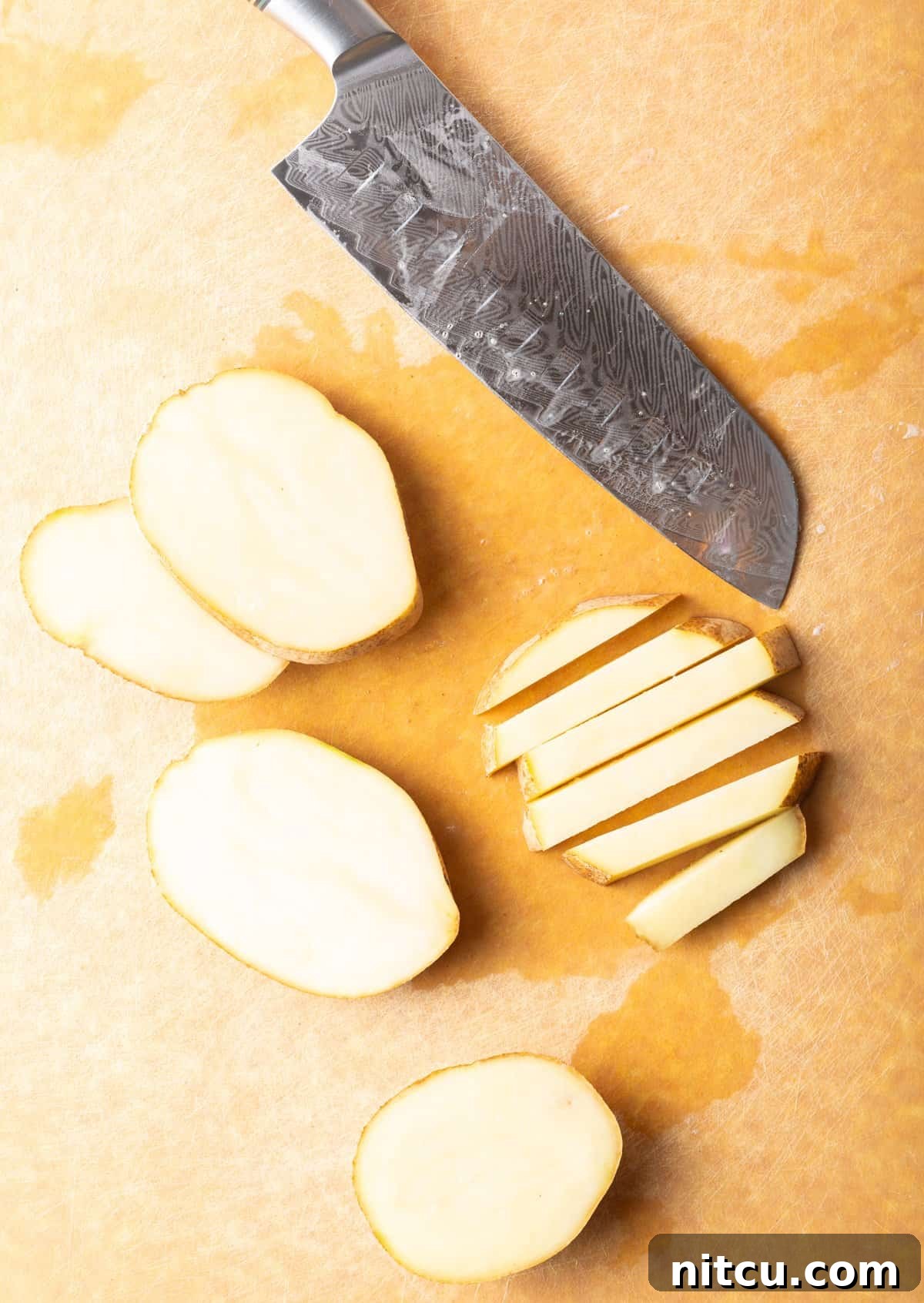
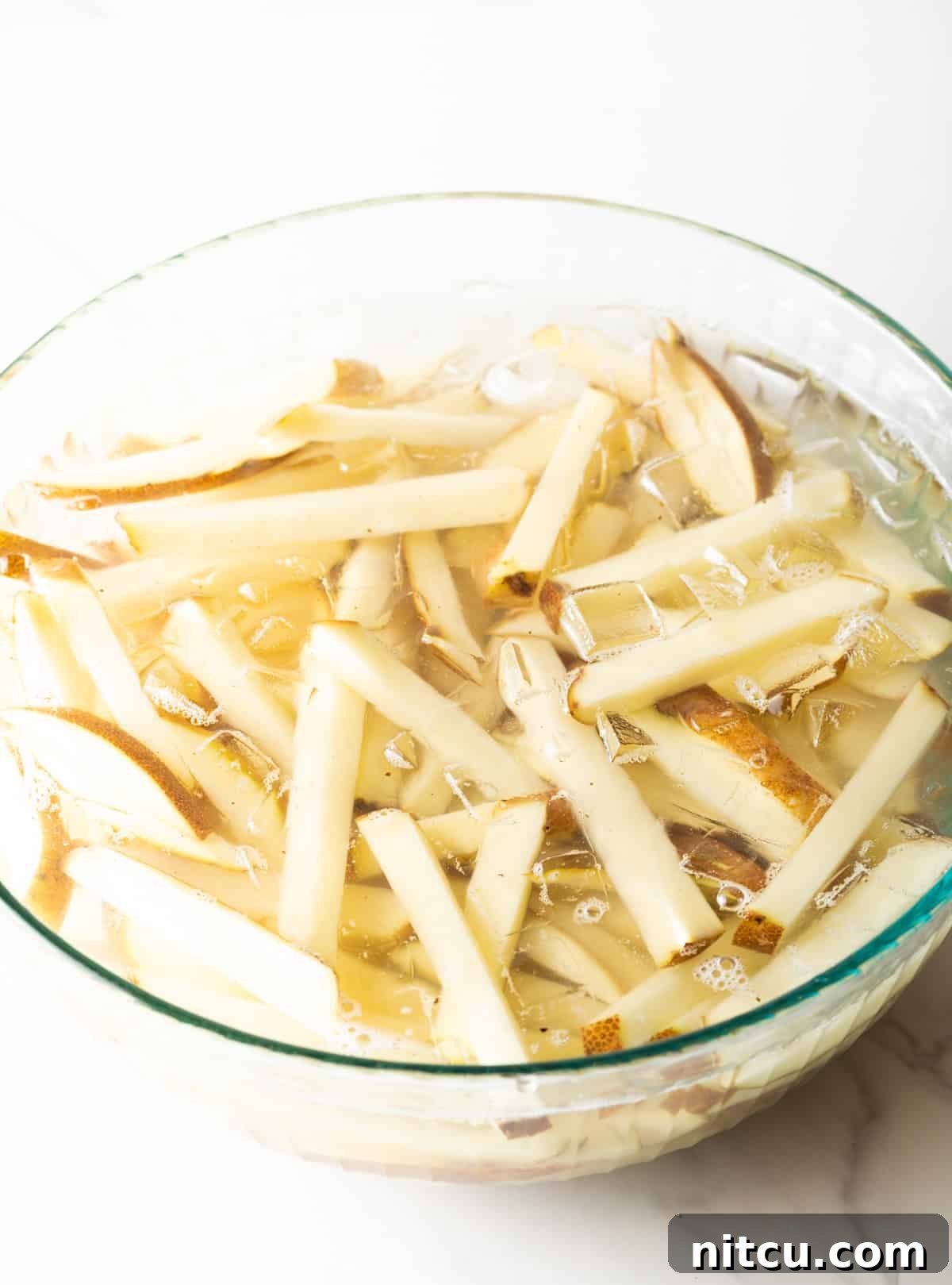
Begin by filling a large bowl halfway with cold water and ice. Next, thoroughly scrub your Russet potatoes. You have the option to peel them or leave the skins on; I personally prefer to leave the skins for added rustic texture and a boost of flavor. Using a sturdy, sharp knife, carefully cut the potatoes into uniform strips, aiming for approximately 1/3 to 1/2-inch thick. Consistency in size is key to even cooking. As you cut each potato, immediately transfer the strips into the ice water bath. This prevents oxidation and, more importantly, begins the starch removal process. Let the potato strips soak for at least 1 hour, or up to several hours. This seemingly simple step is the not-so-secret key to achieving the crispiest, fluffiest homemade french fries. It draws out excess starches, preventing sogginess and ensuring beautifully even browning. While you can soak them longer, most of the benefit occurs within that first hour.
2. Drain and Dry: Essential for Crispness & Safety
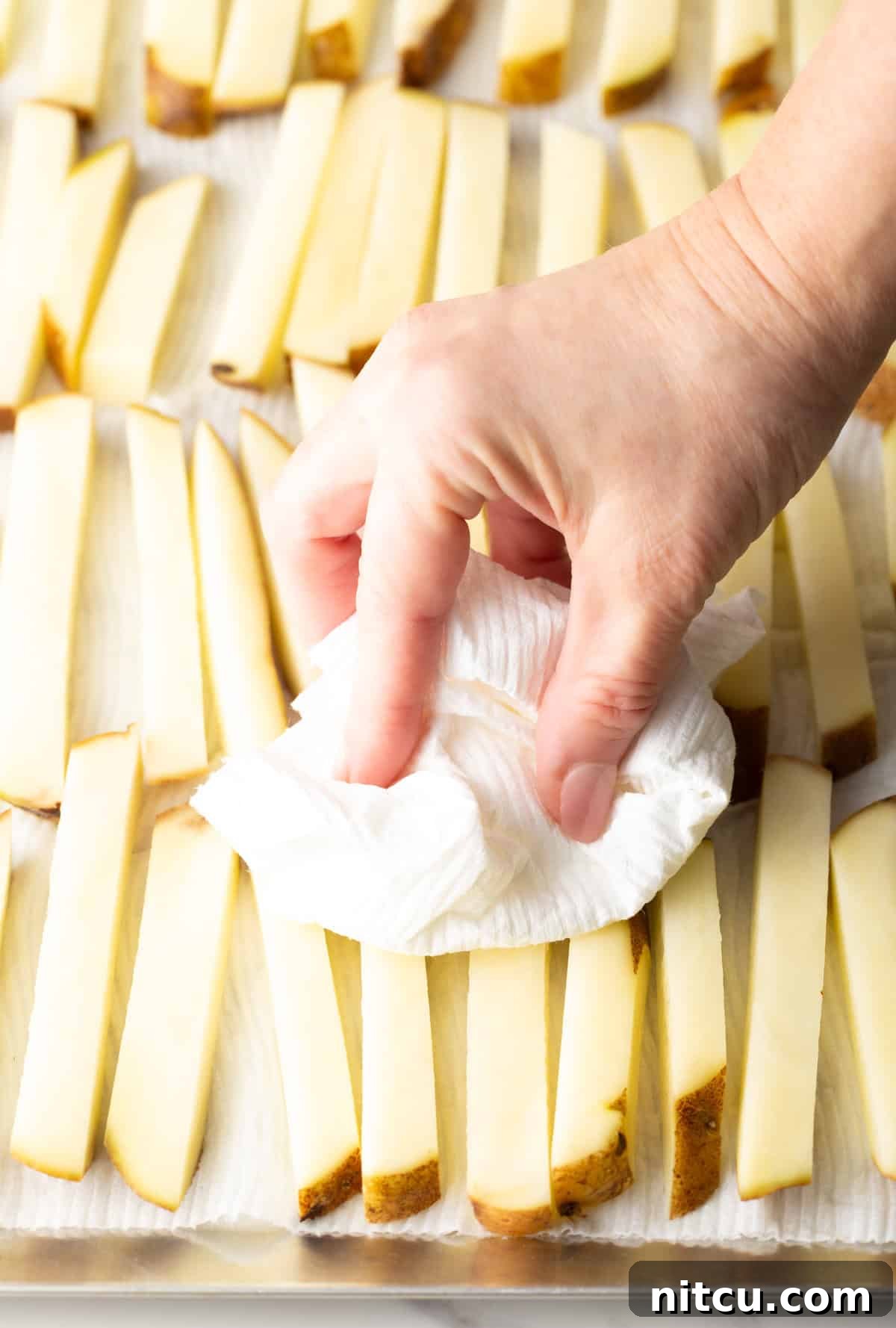
After the soaking period, carefully drain the water from the bowl. Line one or two large baking sheets with several layers of paper towels. Spread the potato strips in a single, even layer over the paper towels. Then, use additional paper towels to firmly blot and pat them dry, removing as much moisture as possible. This step is absolutely critical: dry potatoes equal incredibly crispy fries! Furthermore, it’s a vital safety measure; excess water on the potato strips can cause the hot oil to violently pop and splatter, posing a burn risk. Take your time to ensure they are thoroughly dry.
3. Heat the Oil & Fry in Batches
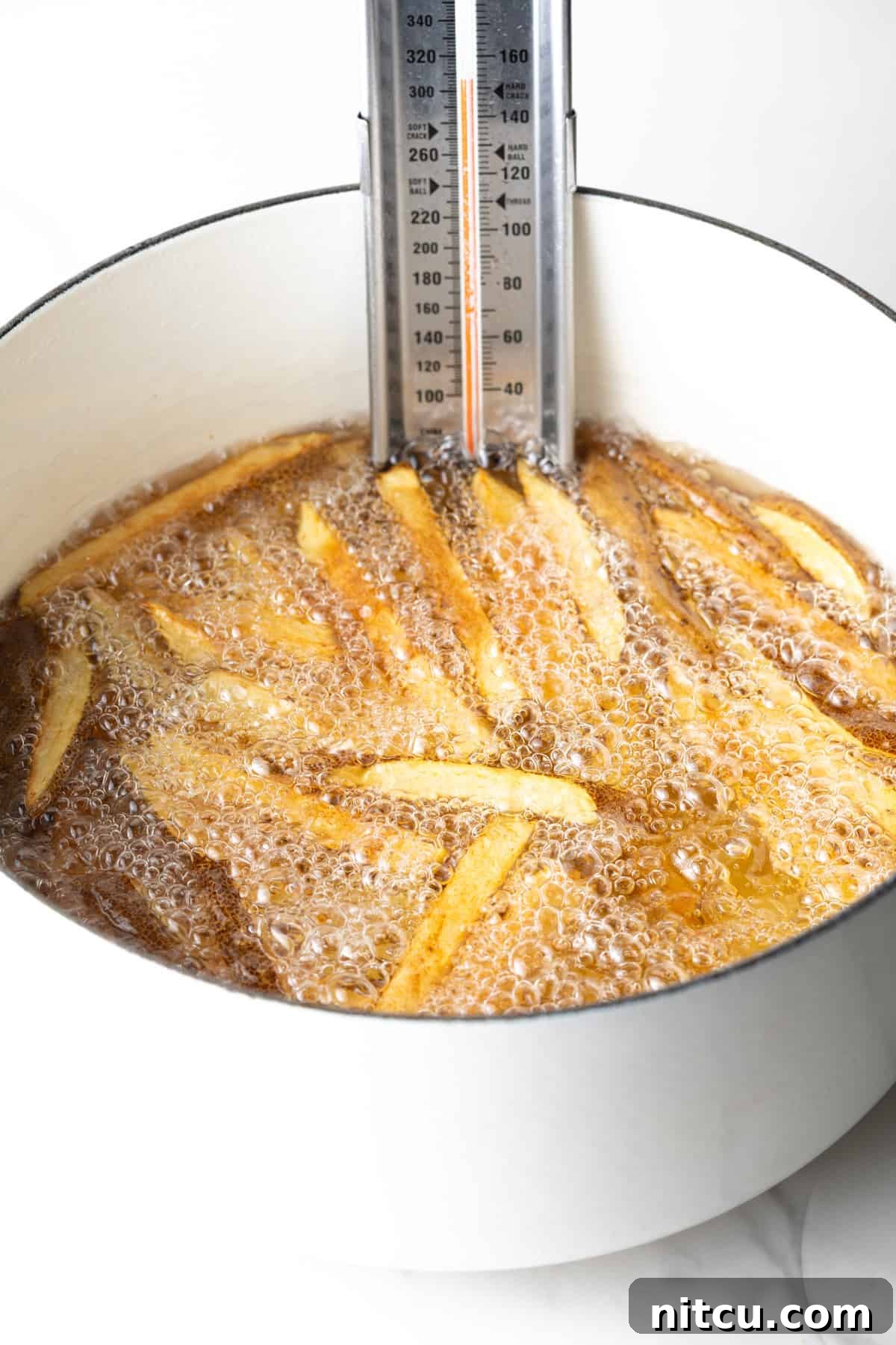
While your potato strips continue to air dry slightly on the paper towels, place your deep pot on the stovetop over medium-high heat. Carefully fill the pot about halfway with your chosen frying oil (peanut or canola are preferred). Attach a cooking thermometer securely to the side of the pot, ensuring the tip is submerged in the oil but not touching the bottom. Now is also a good time to prepare another baking sheet lined with fresh paper towels to drain the cooked fries. Allow the oil to heat gradually until it reaches a temperature of 310-320°F (154-160°C).
Once the oil is at temperature, use your skimmer or slotted spoon to gently and carefully add about two handfuls of potato strips into the hot oil. It is paramount not to overcrowd the pot, as this will significantly drop the oil temperature and lead to soggy fries. Work in small batches. The oil temperature will initially drop to around 300°F (149°C); your goal is to maintain this temperature as consistently as possible throughout the frying process.
4. Skim, Season, and Keep Warm
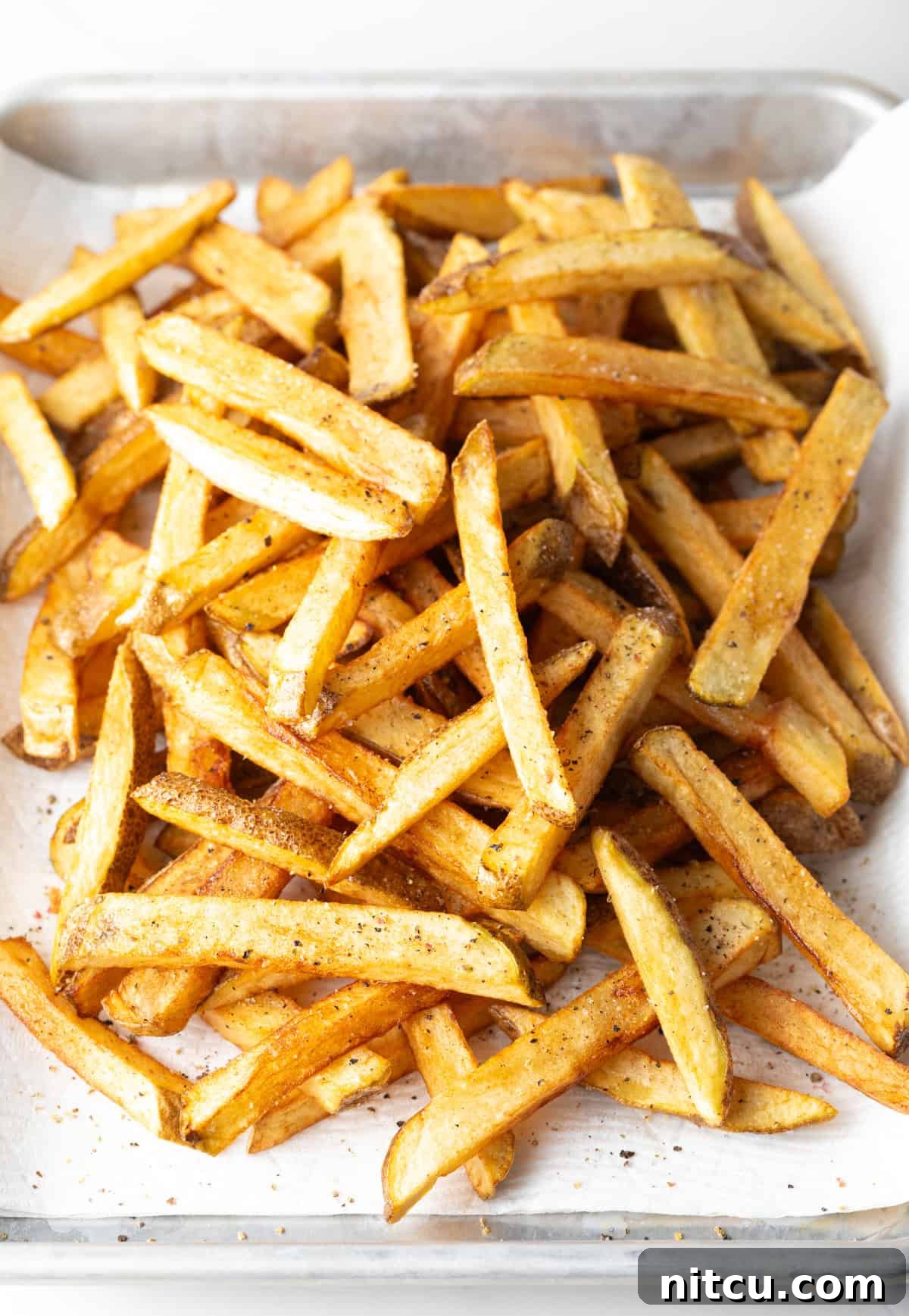
Your fries will typically take approximately 4-6 minutes to achieve perfection. Keep a close eye on their color; as soon as they turn a light golden-brown, they are ready. Overcooking will result in dry, tough, or even burnt fries. Promptly remove them from the pot using your skimmer, allowing any excess oil to drip off briefly. Transfer the freshly fried potatoes to the prepared paper towel-lined baking sheet. Gently spread them into a single layer and immediately sprinkle generously with salt, pepper, or your chosen fry seasoning. Toss them lightly to ensure all sides are evenly coated with flavor. For larger batches, to keep earlier batches warm and crispy, transfer the seasoned fries to a separate baking sheet and place them in a preheated oven set to a low temperature, around 200°F (93°C). This keeps them hot without making them soggy.
5. Repeat for Perfection
Continue this frying and seasoning process in batches until all your potato strips are cooked. Between batches, use your skimmer to remove any small, crispy potato fragments that might have broken off; this keeps your oil clean and prevents them from burning and imparting a bitter taste. Always monitor the oil temperature, ensuring it remains within that ideal 300-310°F (149-154°C) range. Consistency is key to a batch of uniformly delicious fries. Once all fries are cooked and seasoned, give them a final toss together and serve them piping hot for the ultimate experience.
Pro Tips for Unforgettable French Fries
Achieving that coveted perfect french fry – gloriously crispy on the outside and tenderly soft in the middle – hinges on a few crucial techniques. Master these, and you’ll be making diner-quality fries every time:
- Embrace the Ice Water Soak: This step is non-negotiable for truly exceptional fries. Soaking your hand-cut potato strips in cold water for a minimum of one hour actively removes excess surface starch. Without this, potatoes remain starchy, preventing them from crisping up properly and often leading to a greasy, dense texture. The cold water also helps keep them firm. Don’t ever skip this vital pre-frying step!
- Utilize a Cooking Thermometer Religiously: Consistent oil temperature is the bedrock of perfectly fried foods. As mentioned, a reliable cooking thermometer is an absolute must. Fluctuations in temperature are the enemy of good fries: if the oil is too cool, fries absorb too much oil and become soggy; if too hot, they burn on the outside before cooking through on the inside. Keeping the oil consistently within the 300-320°F (149-160°C) range ensures optimal cooking and unparalleled crispness.
- Never Overcrowd the Pot: Resist the urge to dump all your potatoes into the fryer at once, no matter how hungry you are! Overcrowding dramatically lowers the oil temperature, which, as discussed, leads directly to greasy, soggy fries. Frying in small, manageable batches allows the oil to maintain its optimal temperature, ensuring each fry cooks evenly and crisps up beautifully. Patience here truly pays off.
By diligently following these three expert tips, you will consistently produce homemade french fries that not only taste as good as your favorite burger joint but often surpass them in freshness and quality.
Elevate Your Fries: Serving Suggestions & Dipping Sauces
While ketchup reigns supreme as the quintessential American dipping companion for fries, why limit yourself? Your glorious homemade frites deserve to be paired with an array of delectable sauces and hearty main courses. Get ready to explore a world of flavor combinations!
Irresistible Dipping Sauces:
- French Fry Dipping Sauce: A classic for a reason, perfectly designed to complement every crispy bite.
- Comeback Sauce: A rich, tangy, and slightly spicy Southern classic that’s incredibly addictive.
- Chick-Fil-A Sauce: Recreate this beloved fast-food favorite at home for a sweet and savory delight.
- Honey Mustard Dressing: The perfect blend of sweet and sharp, ideal for those who love a zesty dip.
- Burger Sauce: Don’t let the name mislead you! This creamy, savory sauce is phenomenal on fries too.
- Garlic Aioli Sauce: A sophisticated and incredibly flavorful garlic mayonnaise that elevates any fry experience.
Perfect Pairings: The Ultimate Burger Companions:
Nothing complements a pile of hot, crispy fries quite like a juicy, perfectly cooked hamburger. Pair your homemade fries with my reader-favorite homemade hamburger patties (keeping seasonings minimal to let the fries shine), or try them with any of these mouth-watering burger creations:
- Spicy Cowboy Burger: For those who love a bit of heat and savory bacon.
- Smash Burgers: Thin, crispy-edged patties that are quick to make and incredibly flavorful.
- Air Fryer Burgers: A healthier, convenient option that still delivers on taste.
- Homemade Big Macs: Imagine combining these iconic burgers with your fresh, hot deep-fried potatoes – an experience far superior to any fast-food restaurant meal!
Beyond burgers, these versatile fries are also fantastic as the base for other indulgent delights, such as classic cheese fries or my unbelievably delicious and ultra-super WOW chili cheese fries. Get creative and enjoy!
Storage and Reheating Tips for Leftover Fries
It’s a rare and almost miraculous occurrence to have leftover homemade fries, as they are truly at their peak when consumed fresh out of the fryer. The exceptional taste and texture are simply unmatched. However, should you find yourself with a miraculous bounty of extra fries, proper storage and reheating can help preserve their deliciousness.
For storage, place any cooled leftover fries in an airtight container and refrigerate for up to 2-3 days. While they will technically keep for up to 4 days, their taste and, especially, their texture will noticeably degrade after the first couple of days. Expect them to lose much of their initial crispness and become softer.
The key to reviving leftover fries is to reintroduce dry heat at a relatively high temperature. Here are the best methods:
- Oven Reheating: Preheat your oven to 350°F (175°C). Spread the fries in a single layer on a baking sheet. Bake for about 10-15 minutes, flipping them halfway through, until they are hot and have regained some crispness.
- Air Fryer Reheating: For even faster and often superior results, preheat your air fryer to 350°F (175°C). Place the fries in the air fryer basket in a single layer (work in batches if necessary). Cook for 3-5 minutes, shaking the basket halfway through, until thoroughly heated and crispy.
With either method, the goal is to evaporate any residual moisture quickly without overcooking. While they may not be as perfect as fresh-from-the-fryer, these reheating techniques will give you the best possible second-day fries.
Frequently Asked Questions About Homemade French Fries
Yes, absolutely! Soaking the hand-cut potato strips in an ice water bath is a fundamental step you should never skip if you desire truly crispy, fluffy, and tender fries. This process effectively draws out excess surface starch from the potatoes. Without this starch removal, the potatoes will not crisp up properly in the hot oil, often resulting in a dense, gluey, or soggy texture instead of the light, airy interior we all crave. It’s a small effort that yields monumental results in texture.
Soggy fries are a common frustration but usually stem from one of two key issues: insufficient soaking or inadequate oil temperature. If the potato strips aren’t soaked long enough, they retain too much starch, hindering crispness. More critically, if your frying oil isn’t hot enough (below 300°F/149°C), the potatoes will absorb the oil instead of cooking in it, becoming heavy and limp. Always ensure your oil reaches 310-320°F (154-160°C) before adding potatoes, and strive to maintain a minimum of 300°F (149°C) throughout the cooking process. Overcrowding the pot can also drastically lower oil temperature, contributing to sogginess.
Fries can burn easily if the oil temperature is too high. The ideal range for frying is delicate, and exceeding it can quickly lead to charred exteriors and undercooked interiors. Ensure the oil temperature does not rise above 320°F (160°C) before you introduce the potato strips, and aim to keep it below 310°F (154°C) while they are actively frying. Monitor them vigilantly, and remove the fries with a skimmer as soon as they achieve a light golden hue, *before* they turn a deep brown. Remember that fries will continue to cook slightly and darken a bit through residual heat as they cool on the draining rack or paper towels, so err on the side of removing them a touch earlier.
While undeniably delicious, traditional deep-fried french fries are an indulgent food choice and are not typically considered a nutritious staple. They are higher in fat and calories due to the deep-frying process. They’re best enjoyed as an occasional treat rather than a regular part of your diet. If you’re seeking a snack with a similar crisp-yet-soft texture but with fewer calories and less fat, you might consider healthier alternatives like my baked turnip fries recipe or even air-fried potato options. Enjoying homemade fries in moderation allows you to savor the experience without guilt.
Help Me Spread the Word about this Fabulous Free Recipe! Sharing this recipe link on Pinterest and Facebook is super impactful, and I greatly appreciate it! Find the share buttons below the recipe form.
More Finger Food Recipes
Homemade Fries Recipe
This recipe guides you through creating irresistibly crispy and fluffy homemade french fries. Starting with an essential ice water bath, you’ll learn how to quickly deep-fry potatoes to golden perfection in less than 10 minutes, achieving that desirable tender interior. Far superior to any drive-thru option, these fries can be seasoned to your liking and are perfect for pairing with your favorite dipping sauces.
Prep Time: 30 minutes
Cook Time: 30 minutes
Soak Time: 2 hours
Total Time: 3 hours
Servings: 8 servings
Ingredients
- 3 pounds Russet potatoes
- 1 ½ quarts peanut oil or canola oil
- Salt and pepper or my Fry Seasoning recipe
Instructions
- Prep the French Fries: Prepare a large bowl, filling it halfway with water and ice to leave ample room for the potatoes. Scrub the potatoes clean. You may peel them for a smoother fry or leave the skin on for added texture and flavor. Using a sturdy knife, cut the potatoes into uniform strips, approximately 1/3 to 1/2 inch wide. Aim for evenness to ensure consistent frying. Immediately place the cut potato strips into the ice water. Allow them to soak for at least one hour, or up to several hours. This critical step removes excess starch, which is key to achieving a fantastic crispy and fluffy French fry texture.
- Drain and Dry Thoroughly: When you’re ready to cook, drain all the water from the potato strips. Lay several layers of paper towels out on your counter or a baking sheet. Spread the potato strips in a single layer on the paper towels. Use additional paper towels to firmly press and blot the strips, removing as much surface moisture as possible. This meticulous drying prevents oil splattering and ensures maximum crispness during frying.
- Heat the Oil and Prepare for Frying: Place a large (6-8 quart) deep pot on your stovetop over medium-high heat. Attach a cooking thermometer to the side of the pot, ensuring its tip is submerged in the oil but not touching the bottom. Pour the fry oil into the pot, filling it about halfway. Set a rimmed baking sheet lined with paper towels near the pot; this will be for draining the finished fries. Allow the oil to heat until the thermometer reads between 310-320°F (154-160°C).
- Deep Fry in Batches: Once the oil is at temperature, use a skimmer or slotted spoon to carefully lower 1 to 2 handfuls of potato strips into the hot oil. Avoid overcrowding the pot, as this will drop the oil temperature and result in soggy fries. Stir the oil gently to prevent sticking. Fry the potatoes for 4 to 6 minutes, or until they turn a beautiful light golden-brown. Throughout the process, adjust the heat as needed to keep the oil temperature consistently around 300°F (149°C).
- Skim and Season Immediately: Using your skimmer, remove the fried potatoes from the oil, allowing any excess oil to drip back into the pot. Transfer them to the prepared paper towel-lined baking sheet. Immediately sprinkle them generously with salt and pepper, or your chosen fry seasoning. Gently toss them to ensure even coating.
- Repeat and Serve: Continue frying the remaining potato strips in batches, seasoning each batch as it comes out of the oil. If any small potato pieces break off and become overly crisp, remove them from the oil between batches with your skimmer to keep the oil clean. Once all fries are cooked and seasoned, give them a final good toss together and serve them piping hot.
- Keeping Fries Warm: If you’re cooking a large quantity and need to keep early batches warm, you can place the baking sheet of seasoned fries in a preheated oven set to 200°F (93°C) until you’re ready to serve. This helps maintain warmth without drying them out.
Notes
- Store any leftover french fries in an airtight container in the refrigerator for optimal taste and texture for only a day or two.
- The best way to reheat leftover fries is either in a preheated oven at 350°F (175°C) for about 10-15 minutes, or in an air fryer at 350°F (175°C) for 3-5 minutes. For both methods, flip the fries halfway through to ensure even crisping.
Nutrition Information
Serving: 6oz, Calories: 373kcal, Carbohydrates: 31g, Protein: 4g, Fat: 27g, Saturated Fat: 5g, Polyunsaturated Fat: 9g, Monounsaturated Fat: 12g, Sodium: 9mg, Potassium: 709mg, Fiber: 2g, Sugar: 1g, Vitamin A: 2IU, Vitamin C: 10mg, Calcium: 22mg, Iron: 1mg
Recipe Details
Course: Appetizer, Side Dish, Snack
Cuisine: American
Author: Sommer Collier