
There’s nothing quite like a fluffy omelet to kickstart your day, but the thought of individually crafting them for a brunch gathering often feels like a culinary marathon. Imagine trying to serve a crowd while juggling multiple pans – it’s a daunting task that can quickly turn breakfast into a chore. That’s precisely why I’ve perfected this effortless Denver Omelet Casserole. It encapsulates all the beloved elements of a classic Denver omelet – savory ham, crisp bell peppers, sweet onions, and a generous layer of melted cheddar cheese – all baked to perfection in a single, convenient pan. This recipe delivers the same delightful fluffy texture and gooey cheese you adore, but with significantly less fuss and enough to comfortably feed a large family or a hungry group of friends.

If you’re a devoted fan of the traditional Denver omelet, prepare to be absolutely thrilled by this protein-packed, dump-and-bake casserole. It’s bursting with tender ham, vibrant onions, colorful bell peppers, and rich cheddar cheese, offering a symphony of flavors in every bite. While I’ve previously shared our quick and easy stovetop Denver omelet recipe, which is perfect for a speedy individual meal, the beauty of this casserole lies in its ability to multiply your efforts. Instead of cooking one omelet at a time, you can prepare a whole batch simultaneously, ready to be sliced into neat squares and served to a happy crowd. It bakes up beautifully in under an hour, making it an ideal choice for a relaxed weekend breakfast or a special occasion brunch. Serve it warm with your favorite Tex-Mex inspired condiments and an array of delightful side dishes for a truly memorable meal!
Table of Contents
- Why This Denver Omelet Casserole is a Must-Try
- Essential Ingredients and Expert Tips
- Step-by-Step Guide to Making Your Casserole
- Mastering the Perfect Omelet Casserole
- Delightful Serving Suggestions
- Storage and Reheating Best Practices
- Frequently Asked Questions
- Explore More Breakfast Recipes
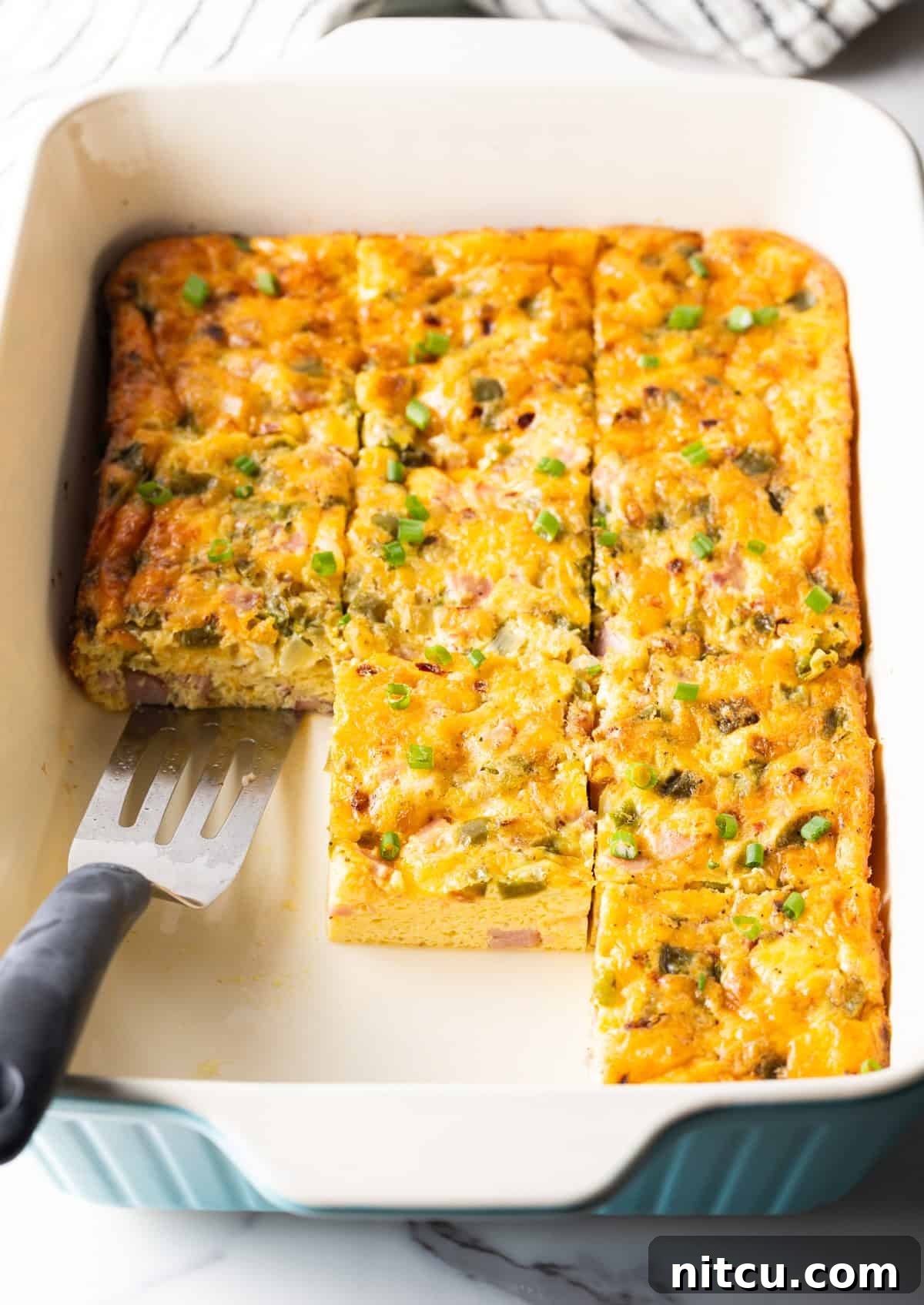

Why This Denver Omelet Casserole is a Must-Try
This Denver Omelet Casserole isn’t just another breakfast dish; it’s a culinary revelation that simplifies feeding a crowd without compromising on taste or quality. Here’s why it deserves a permanent spot in your recipe collection:
Unbeatable Fluffiness and Exquisite Flavor – Prepare to be amazed by the remarkably spongy, tender, and fluffy texture of the baked eggs. This casserole masterfully captures the airy lightness of a perfectly cooked omelet. Beyond the texture, it boasts incredible sweet and savory Southwestern flavors derived from the harmonious blend of diced ham, vibrant bell peppers, sautéed onions, and, of course, an abundance of rich cheddar cheese. The taste and texture are so remarkably similar to a freshly cooked Denver omelet that you’ll hardly believe it came from a single baking dish!
A True Protein Powerhouse – Fuel your day with this robust breakfast. The combination of eggs, lean ham, and protein-rich cheese makes this baked Denver casserole an excellent source of sustained energy. Each generous slice provides approximately 13 grams of protein, helping you feel fuller for longer. Furthermore, by opting out of traditional starchy additions like potatoes or bread, this recipe offers a relatively low-carb alternative compared to many classic breakfast casseroles, such as a hearty ham and egg bake (which, while undeniably delicious, tends to be higher in carbohydrates).
Effortless Entertaining and Ample Servings – One of the standout features of this baked Denver omelet is its impressive yield. Designed to serve up to a dozen people, it’s the ultimate solution for large family breakfasts, holiday brunches, or even casual get-togethers. But its versatility doesn’t stop there; if you’re cooking for a smaller household, you can easily prepare a large pan and enjoy the convenience of quick, delicious breakfasts throughout the week. Simply portion, refrigerate, and reheat for a hassle-free start to your mornings.

Essential Ingredients and Expert Tips
Crafting the perfect Denver Omelet Casserole begins with selecting quality ingredients and understanding how each contributes to the final masterpiece:
- Butter – While oil can be used, I highly recommend butter for sautéing the vegetables. It imparts a richer, more profound flavor to the onions and bell peppers, elevating the overall taste of the casserole. This subtle difference makes a significant impact on the final profile.
- Eggs – For the best results, use large eggs. A pro tip: allow them to sit on the counter for about 15-20 minutes to reach closer to room temperature before mixing. Eggs that are too cold can sometimes slow down the cooking process and potentially affect the texture. Room temperature eggs also blend more smoothly into the mixture.
- Veggies – The heart of a true Denver omelet lies in its classic vegetable combination: white onion, green bell pepper, and minced garlic. I prefer white onion for its slight crispness and zesty bite, but yellow onion can be substituted for a milder, sweeter flavor profile if you prefer. Ensure your bell peppers are fresh and vibrant, and the garlic is finely minced to distribute its aromatic essence throughout the dish.
- Ham – This recipe is a fantastic way to utilize leftover cooked and cubed spiral ham from holidays like Christmas, Thanksgiving, or Easter. The seasoned ham adds a wonderful savory depth. If you don’t have leftovers, a high-quality precooked ham from your local grocery store will work just as well. Look for varieties with good flavor and texture for optimal results.
- Cheese – Shredded cheddar cheese is the traditional choice for a Denver omelet, offering a sharp, creamy contrast. For the absolute best flavor and melt, I strongly advise shredding your own cheese by hand. Pre-shredded cheeses often contain anti-caking agents and preservatives that can affect both the taste and the way the cheese melts. Freshly shredded cheese melts more smoothly and tastes superior.
- Half & Half – This ingredient is crucial for achieving that coveted fluffy texture. While whole milk can be used in a pinch, it won’t yield the same light and airy consistency. Half & half, with its higher fat content, contributes significantly to the richness and delicate fluffiness of the casserole, so stick to it if you can for the most authentic result.
- Seasonings – A simple yet effective blend of salt, black pepper, and crushed red pepper flakes forms the backbone of the seasoning. The red pepper flakes add a pleasant, subtle heat that complements the other flavors beautifully, but feel free to adjust or omit them if you or your guests are sensitive to spice.
Step-by-Step Guide to Making Your Casserole
Find the full ingredient proportions, detailed instructions, storage tips, and a video tutorial in the printable form at the bottom of the post.
Creating this delicious Denver Omelet Casserole is a straightforward process when broken down into these manageable steps:
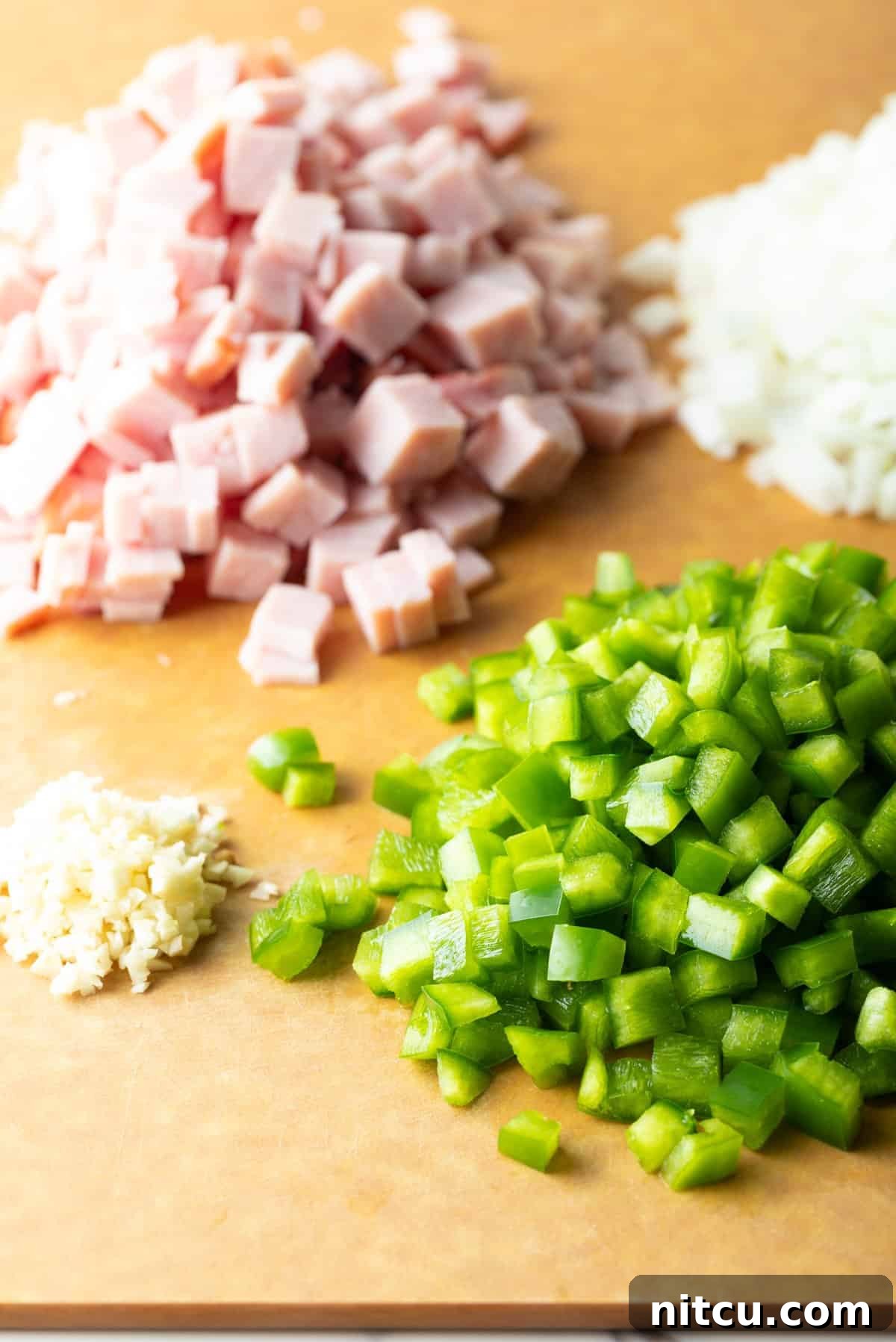
1. Chop and Prep Your Ingredients – Begin by preheating your oven to 350 degrees Fahrenheit (175 degrees Celsius). While the oven comes to temperature, prepare your baking dish. Spray the inside of a large 9×13-inch casserole dish generously with nonstick cooking spray to prevent sticking and ensure easy serving. Next, meticulously chop your cooked ham into small, uniform cubes. Peel and finely chop the white or yellow onion. Remove the seeds from the green bell pepper and dice it into small pieces. Finally, mince your garlic cloves. Grate your cheddar cheese by hand and set it aside; this advance preparation, known as mise en place, makes the assembly process seamless.
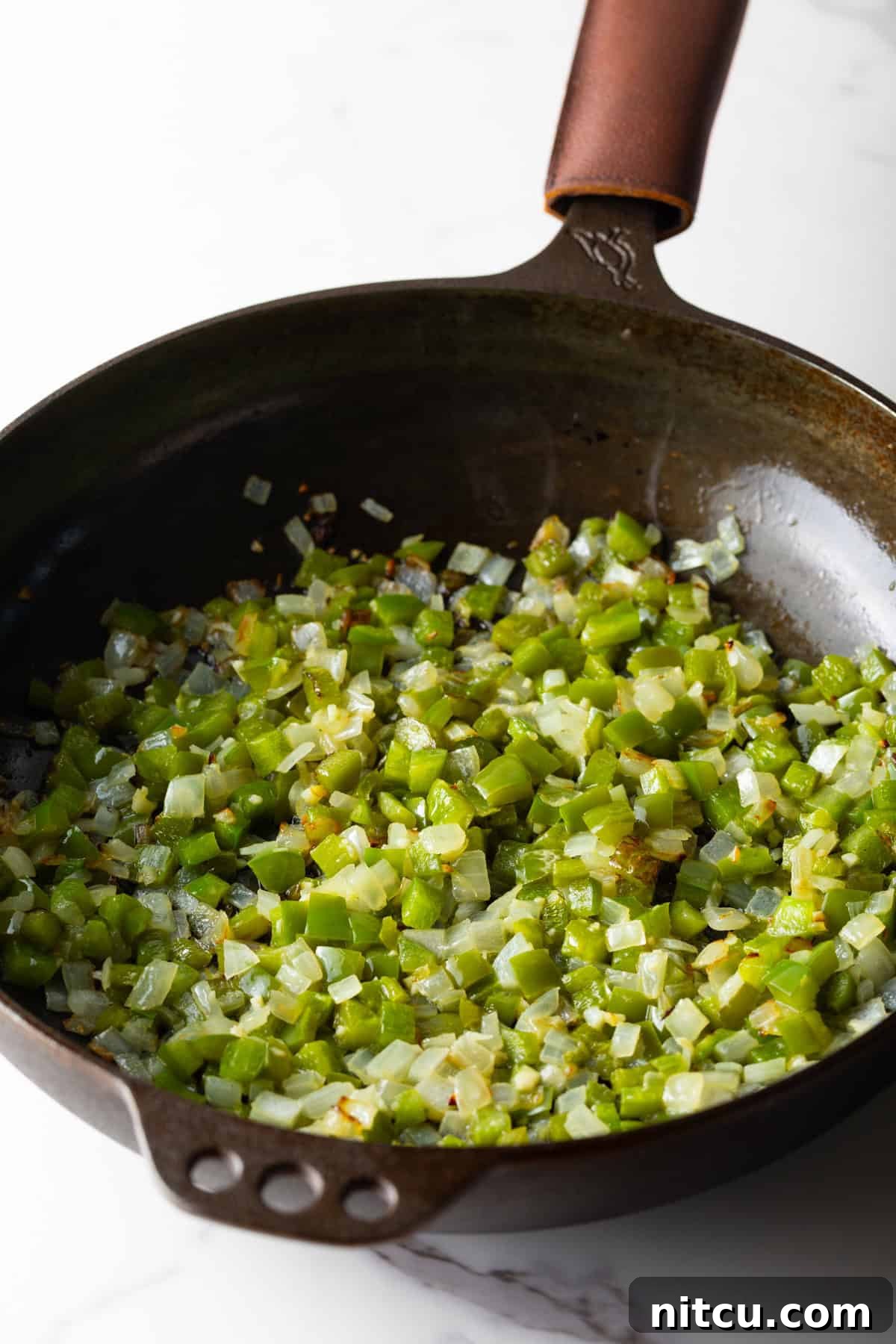
2. Sauté the Aromatic Veggies – Place a small skillet over medium heat and melt the butter. Be careful not to let the butter brown or burn. Once the butter is shimmering, add the diced bell peppers, chopped onion, and minced garlic to the skillet. Sauté them for only a few minutes, stirring frequently with a spatula, just until the onions begin to soften and become translucent. The goal is to soften them slightly and bring out their natural sweetness, not to cook them thoroughly, as they will continue to cook in the oven. Immediately turn off the heat and remove the pan from the burner. This prevents them from becoming overly soft or mushy during the subsequent baking process, ensuring a pleasant texture in the finished casserole.
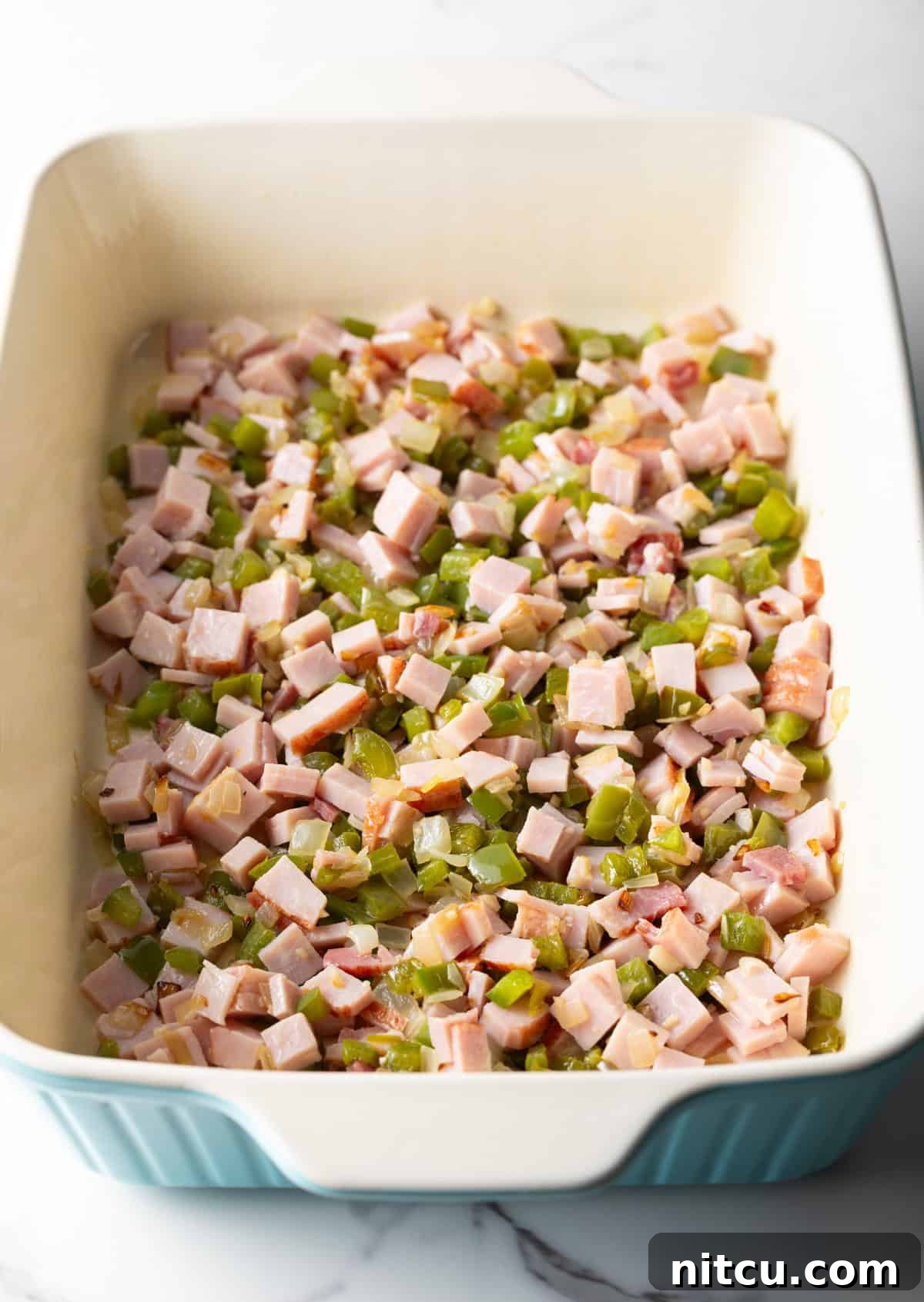
3. Layer Ham and Cooled Veggies in the Baking Dish – While the sautéed onions, peppers, and garlic cool slightly in the skillet, arrange the diced ham evenly across the bottom of the prepared baking dish. Once the vegetables have cooled sufficiently (they should be warm to the touch, not hot), add them from the skillet to the baking dish, ensuring all the flavorful melted butter is also scooped in. Spread the vegetables over the ham. It’s crucial to allow these ingredients to cool before adding the egg mixture; this prevents the eggs from cooking too quickly or prematurely scrambling when they hit the hot vegetables, which could result in an undesirable texture.
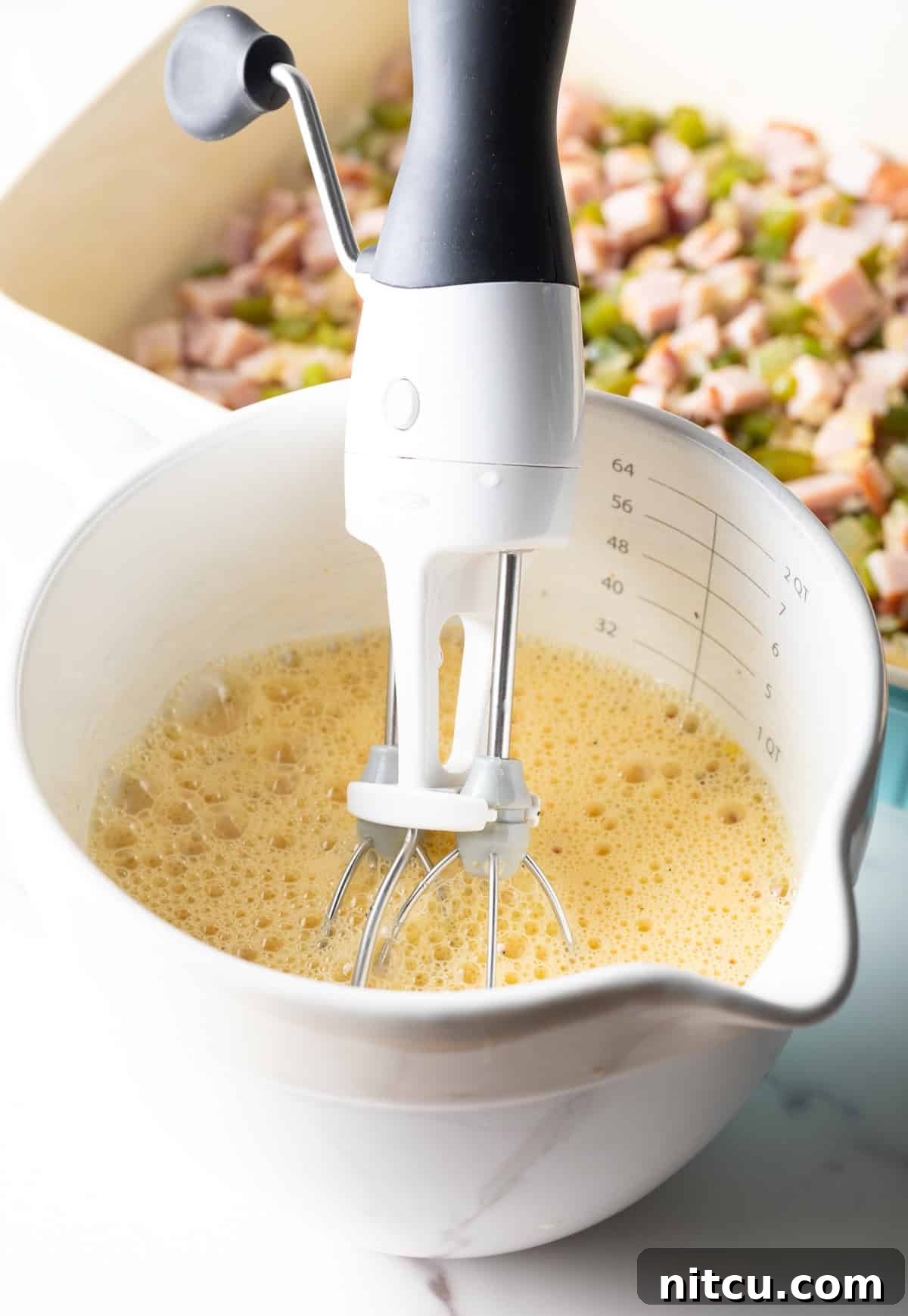
4. Prepare the Fluffy Egg Mixture – Now it’s time to whip up the heart of your omelet casserole! Crack the large eggs into a medium-sized mixing bowl. Pour in the half & half. Using a hand beater, vigorously beat the eggs and half & half together until the mixture becomes wonderfully frothy and light. While a whisk can work, a hand beater is highly recommended for achieving the desired level of frothiness and air incorporation, which is key to a truly fluffy casserole. Refer to the accompanying picture to see the ideal frothy consistency. Once frothed, beat in the salt, black pepper, and the crushed red pepper flakes (if you enjoy a pleasant kick of heat – I certainly do!). Ensure all seasonings are well combined.
5. Combine Cheese with Ham and Veggies – Temporarily set the frothy egg mixture aside. Double-check that the ham and sautéed vegetables in the casserole dish are cool to the touch. Then, sprinkle the shredded cheddar cheese evenly over the ham and vegetable layer in the pan. Using a large spoon, gently toss and combine the cheese with the ham, bell peppers, onion, and garlic. The goal is to distribute these ingredients evenly across the bottom of the dish without packing them down too tightly. You might even give the pan a gentle shake or ‘lil jiggle to create small pockets and spaces between the cheese and vegetables, allowing the egg mixture to seep into every nook and cranny for a cohesive bake.

6. Pour the Egg Mixture Evenly – Carefully pour the frothy egg and half & half mixture over the prepared layer of veggies, ham, and cheese in the baking dish. Pour slowly and steadily, moving the mixing bowl back and forth across the pan to ensure an even distribution. Again, give the dish a very slight, gentle shake to help the egg mixture settle and work its way down through all the ingredients, filling any small gaps and creating a uniform base for baking.

7. Bake to Golden Perfection – Gently transfer the baking dish into your preheated oven. Bake the Western egg bake for approximately 45-50 minutes. You’ll know it’s perfectly done when the eggs have fully set, the center is slightly puffed, and the top has achieved a beautiful golden brown hue. A good indicator is when the edges of the casserole begin to separate subtly from the sides of the pan. To confirm doneness, carefully insert a knife into the center; it should come out clean, without any wet, uncooked egg. A little melted cheese residue is perfectly normal, but the core of the casserole should not be runny. If it seems not quite set, return it to the oven for an additional 5 minutes and check again. Don’t overbake, as this can lead to a dry texture.

Mastering the Perfect Omelet Casserole
Achieving an unbelievably flavorful and fluffy baked omelet casserole hinges on a couple of crucial techniques:
First and foremost, the secret to preventing rubbery vegetables and enhancing the overall flavor is to **sauté the onions, bell peppers, and garlic thoroughly** before incorporating them into the egg mixture. This preliminary step softens the vegetables, caramelizes their natural sugars, and significantly reduces their moisture content. Skipping this stage can lead to an undesirable crunchy or rubbery texture in the final product and may even introduce excess moisture that makes the casserole soggy. A well-sautéed vegetable base adds a layer of depth and sweetness that truly makes a difference.
Secondly, the key to a light and airy texture lies in **beating the eggs vigorously with the half & half** until they become significantly frothy. This process incorporates air into the egg mixture, creating tiny bubbles that expand during baking, resulting in that delightful fluffy omelet consistency. If the eggs aren’t properly aerated, your casserole might end up with a denser texture, more akin to scrambled eggs than a light, puffy omelet. I highly recommend using a hand beater for this step, as it’s far more effective at achieving the optimal frothiness and homogeneous blend compared to a standard whisk.

Delightful Serving Suggestions
Once your Denver Omelet Casserole emerges golden and fragrant from the oven, it’s ready to be transformed into a memorable meal with a few thoughtful additions. I love to serve individual portions generously sprinkled with freshly sliced scallions for a pop of color and a mild oniony bite. On the side, a vibrant salsa and cool sour cream are absolute must-haves, offering a creamy counterpoint and a zesty kick to each bite. If you’re looking for homemade salsa options, I have several fantastic recipes on my site to complement this dish perfectly:
- Homemade Salsa Recipe (a fan-favorite with nearly 5 stars from over 400 reviews!)
- Roasted Tomato Salsa for a smoky depth
- Creamy Avocado Salsa Verde for a smooth, refreshing twist
- Pico de Gallo for fresh, chunky goodness
And, for those who appreciate an extra layer of flavor and heat, I confess I can’t resist a few dashes of my favorite spicy hot sauce over my baked egg dish. It adds a wonderful zing that perfectly rounds out the Southwestern profile.
This casserole is already packed with protein and wholesome vegetables, making it a substantial meal on its own. However, to create a truly complete and satisfying breakfast or brunch spread, consider pairing it with some classic starchy side dishes. Golden-brown home fries, crispy homemade hash browns, or delicate pan-fried potato cakes would all make excellent companions. You could also serve it alongside fresh fruit, a simple green salad, or warm tortillas for a more Tex-Mex experience.
Storage and Reheating Best Practices
One of the many advantages of this Denver Omelet Casserole is its excellent potential for leftovers, making meal prep a breeze. While freshly baked is always best, refrigerated and reheated slices maintain a lovely, tender texture and retain their delightful Southwestern flavors.
For refrigeration, allow the casserole to cool completely before transferring slices or the entire remaining portion into an airtight container. Stored properly in the refrigerator, it will keep wonderfully for up to 3-5 days. This makes it perfect for quick weekday breakfasts or brunches when you’re short on time but still crave a hearty meal.
Freezing is also an option for longer-term storage, though it’s important to note that freezing can slightly alter the taste and texture, often making it a bit denser. To freeze, wrap individual slices tightly in plastic wrap, then place all wrapped portions together in an airtight freezer bag or container. This method helps prevent freezer burn. The casserole can be frozen for up to 3 months. When ready to enjoy, transfer frozen slices to the refrigerator overnight to thaw.
When it comes to reheating, the oven is your best friend for restoring the casserole’s texture and warmth. For refrigerated slices, reheat in a preheated oven at 350 degrees Fahrenheit (175 degrees Celsius) for 10-15 minutes, or until heated through. If reheating from frozen (after thawing), it may take a little longer. If you’re pressed for time, the microwave can be used, but proceed with caution. Reheat in short, 10-second bursts at 50% power to avoid overcooking. Be aware that microwaved slices tend to be a bit moister and can sometimes develop a slightly rubbery texture compared to oven reheating, so the oven method is highly recommended for optimal results.

Frequently Asked Questions
The most critical step to prevent a soggy casserole is to thoroughly sauté the vegetables (onions, peppers, garlic) before adding them to the baking dish. This process cooks out any excess moisture from the vegetables. If you skip this step, the moisture will release into the egg base during baking, resulting in a watery, soggy texture. Also, ensure the vegetables are cooled before mixing with the eggs.
While I personally find the casserole to be at its peak fluffiness and flavor when made and served fresh, you can certainly prepare components ahead of time. You can chop and sauté the vegetables and ham the night before, storing them separately in airtight containers in the refrigerator. In the morning, simply whisk the eggs, combine everything, pour into the dish, and bake. This significantly cuts down on morning prep time.
Absolutely! This recipe, as written, is designed for a 9×13-inch baking dish and yields 12 generous servings. To halve the recipe, simply reduce all ingredient quantities by half and bake it in a smaller 8×8-inch or 9×9-inch square pan. Adjust baking time accordingly, likely reducing it by 10-15 minutes, but still test for doneness with a knife in the center.
Yes, this casserole is quite adaptable! Feel free to experiment with other vegetables like mushrooms, spinach (sautéed and squeezed dry), or even a different color of bell pepper. For cheese, Monterey Jack, Colby Jack, or a Mexican blend would also work beautifully, offering slightly different flavor profiles and melting characteristics.
By nature, this Denver Omelet Casserole recipe is gluten-free, as it relies on eggs, ham, vegetables, cheese, and half & half, none of which contain gluten. However, always double-check the labels of your specific ham and any packaged ingredients (like seasonings) to ensure they are certified gluten-free if you have a severe allergy or sensitivity.

Help Me Spread the Word about this Fabulous Free Recipe! Sharing this recipe link on Pinterest and Facebook is super impactful, and I greatly appreciate it! Find the share buttons below the recipe form.
Explore More Breakfast Recipes

Print Recipe
Leave a Review »
Denver Omelet Casserole
15 minutes
45 minutes
55 minutes
12
Pieces
Video
(Video unavailable – please refer to the instructions below)
Ingredients
- 3 tablespoons butter
- 1 cup diced onion
- 1 cup green bell pepper
- 2 cloves garlic minced
- 2 cups diced ham
- 12 large eggs
- 1 cup half & half
- 1 ½ cups shredded cheddar cheese
- 1 ½ teaspoon salt
- 1 teaspoon pepper
- ¼ – ½ teaspoon crushed red pepper flakes
Instructions
-
Preheat the oven to 350°F (175°C). Prepare a 9 x 13-inch baking dish by spraying the inside generously with nonstick cooking spray. Chop and prepare all ingredients as outlined in the “Essential Ingredients and Expert Tips” section.
-
Set a small skillet over medium heat. Add the butter to the skillet and melt it, being careful not to burn it. Once melted, add the diced onions, bell pepper, and minced garlic. Stir and sauté until the onions are soft and translucent, typically 3-5 minutes. Then, turn off the heat and remove the skillet from the burner to allow the vegetables to cool slightly.
-
Meanwhile, add the diced ham in an even layer to the bottom of the prepared baking dish. Once the sautéed vegetables have cooled to warm (not hot), add them to the baking dish, ensuring all the melted butter is transferred. Spread the ham and vegetables evenly and allow them to cool further while you prepare the egg mixture.
-
In a medium mixing bowl, crack the large eggs. Add the half-and-half and beat vigorously with a hand beater (or whisk) until the mixture is light and frothy, incorporating plenty of air. Then, beat in the salt, pepper, and crushed red pepper flakes (if using) until well combined.
-
Once the ham and vegetables in the baking dish are cool, sprinkle the shredded cheddar cheese evenly over them. Use a large spoon to gently toss and combine the cheese with the ham, peppers, onion, and garlic. Spread the mixture out in an even layer across the bottom of the dish, without packing it down too tightly. A gentle shake of the pan can help create small gaps for the egg mixture.
-
Slowly and evenly pour the frothy egg and cream mixture over the layered ham, cheese, and vegetables in the baking dish. Gently shake the dish slightly to ensure the egg mixture settles and fills all the spaces among the ingredients.
-
Carefully place the baking dish in the preheated oven. Bake for 45-50 minutes, or until the center is set, slightly puffed, and the edges are golden brown. A knife inserted into the center should come out clean (some melted cheese is fine). Allow the omelet casserole to cool for at least 5-10 minutes before slicing and serving. Garnish with sliced scallions and serve with salsa and sour cream, if desired.
Notes
You can also freeze individual slices for longer storage. Wrap each piece tightly in plastic wrap, then place all portions together in an airtight freezer bag or container. Freeze for up to 3 months. Thaw slices in the refrigerator overnight before reheating.
For the best reheating results, use the oven. Reheat slices at 350°F (175°C) for 10-15 minutes, or until warmed through. If using a microwave, reheat in short, 10-second bursts at 50% power to prevent a rubbery texture. Be aware that microwaving may result in a slightly moister and less fluffy texture compared to oven reheating.
Nutrition
Calories: 202kcal,
Carbohydrates: 4g,
Protein: 13g,
Fat: 15g,
Saturated Fat: 7g,
Polyunsaturated Fat: 1g,
Monounsaturated Fat: 4g,
Trans Fat: 0.1g,
Cholesterol: 203mg,
Sodium: 730mg,
Potassium: 150mg,
Fiber: 1g,
Sugar: 2g,
Vitamin A: 940IU,
Vitamin C: 17mg,
Calcium: 153mg,
Iron: 1mg
Breakfast
American
Sommer Collier
Cook It? Love It? Rate It!
YOU can help this recipe RANK on Google – TAP 5 STARS so other hungry people can find it. Thank you!