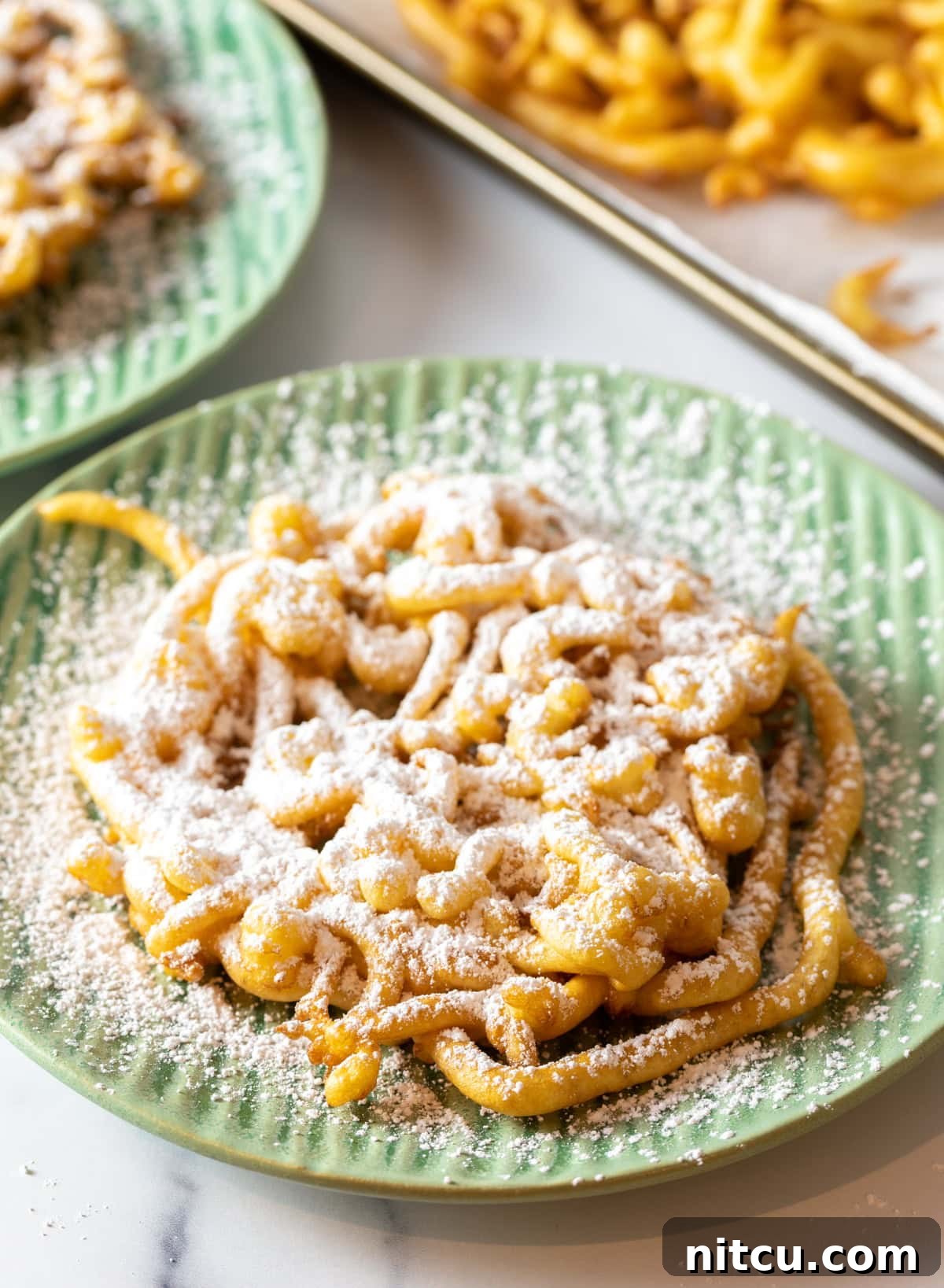
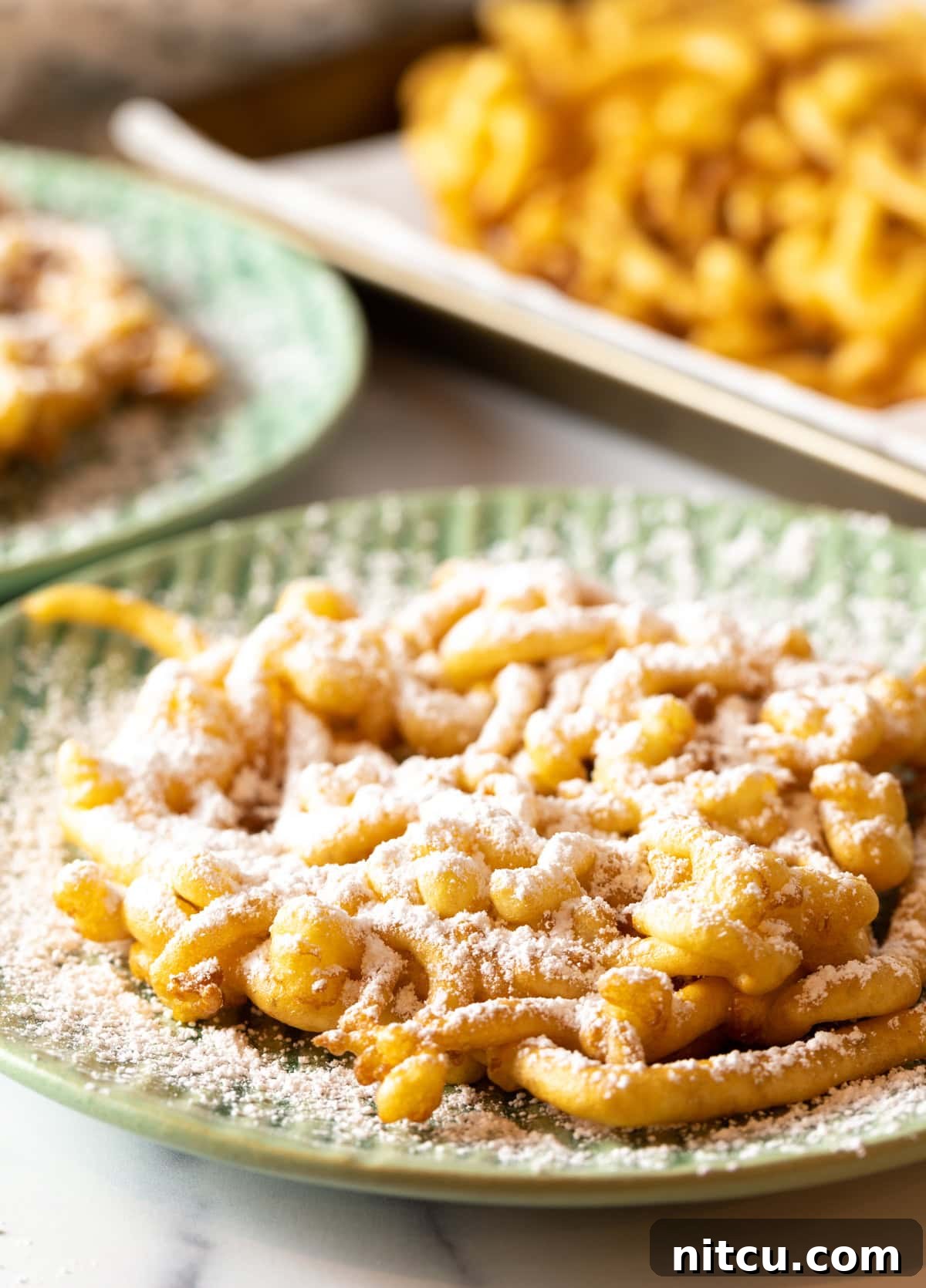
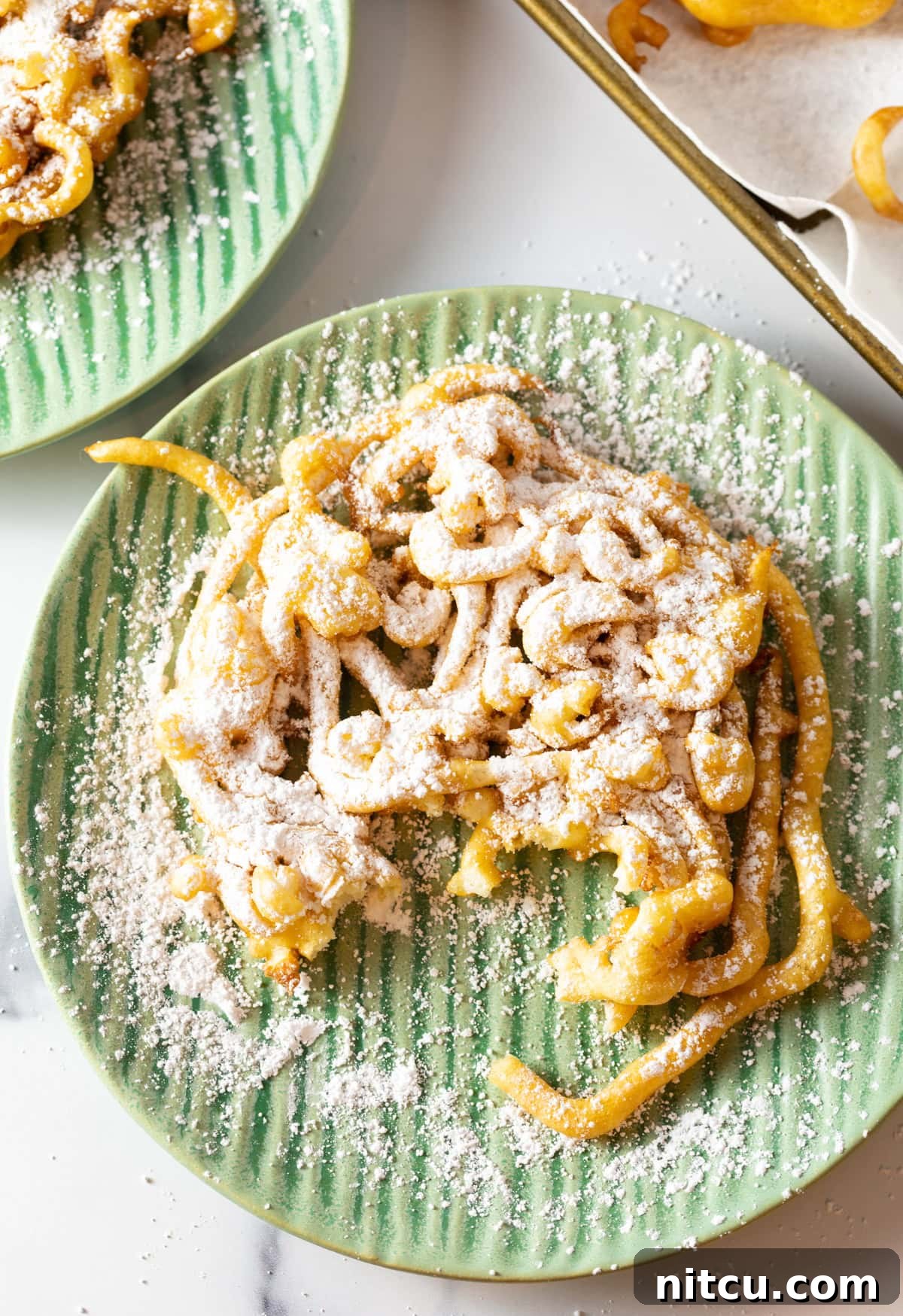
Unlock the secret to carnival happiness right in your own kitchen with this incredible homemade funnel cake recipe! Forget long lines and sticky fingers at the fair; now you can create crispy, fluffy, and utterly delicious deep-fried cakes whenever the craving strikes. Dusted generously with powdered sugar and ready for your favorite toppings, this easy recipe promises a nostalgic taste of summer, crafted from simple ingredients and a dash of creativity. Get ready to experience the pure joy of making and devouring this classic treat from scratch!
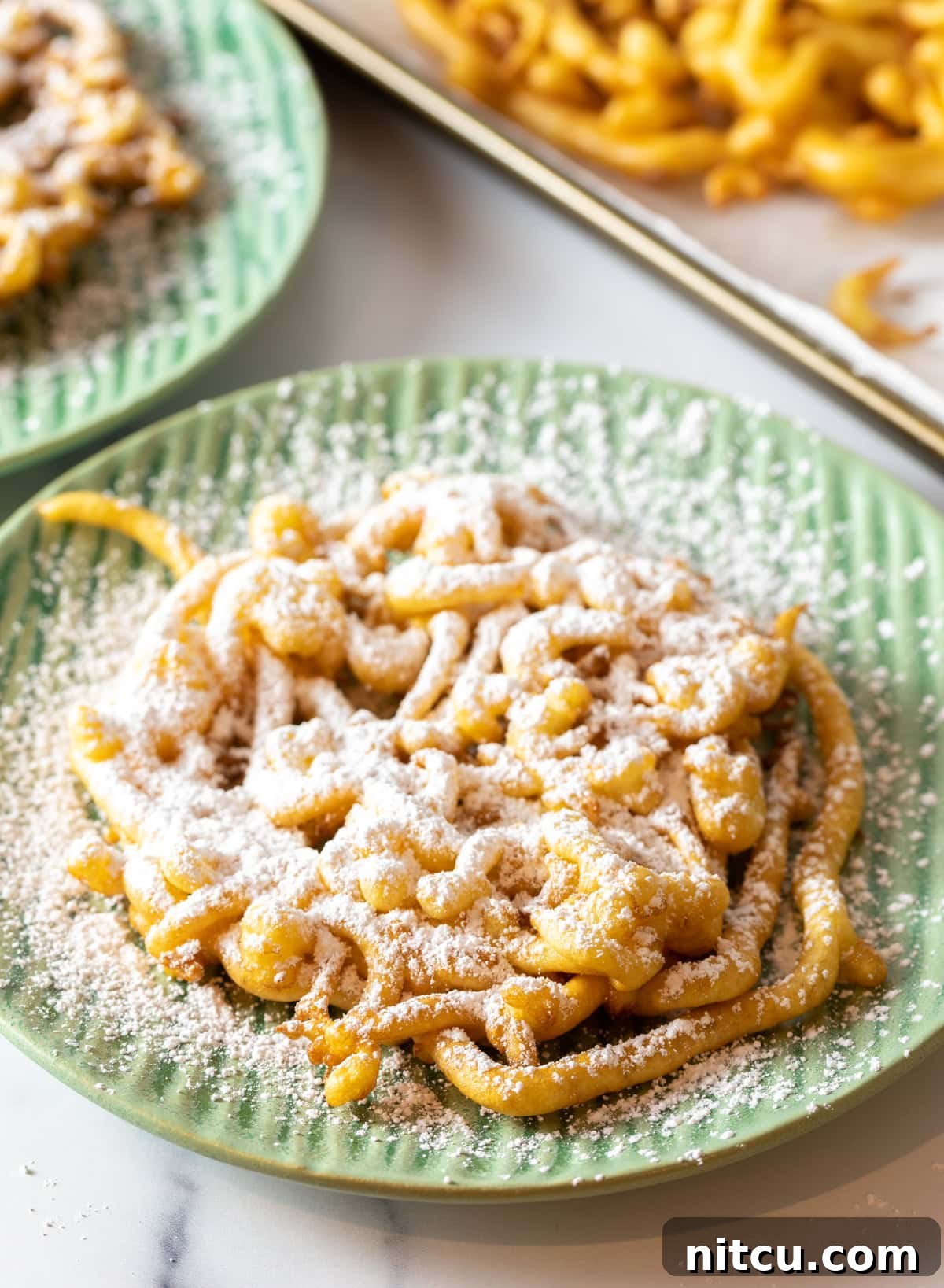
There’s nothing quite like the irresistible charm of a freshly made funnel cake. This beloved dessert, a staple at state fairs and carnivals, is surprisingly simple to recreate at home. My classic funnel cake recipe transforms a basic, sweet batter – reminiscent of a delightful Navajo fry bread – into a chaotic yet beautiful abstract pattern as it’s drizzled into hot oil. The result? A perfectly golden, airy, and slightly chewy cake that captures the essence of a joyous festival.
Many people assume that making authentic funnel cakes requires specialized skills or elaborate equipment. However, with a few essential tools and my expert tips, you’ll discover that preparing these delightful treats is not only straightforward but also incredibly fun! The key to achieving that perfectly crisp exterior and tender interior lies in having the right setup: a large, deep pot for safe deep-frying, a reliable cooking thermometer to maintain precise oil temperature, and a convenient squeeze bottle or a classic funnel for shaping your cakes. And, of course, the experience wouldn’t be complete without an array of scrumptious toppings to truly elevate your homemade carnival experience.
Imagine the aroma filling your kitchen, the sizzle of the batter meeting the hot oil, and the satisfied smiles of family and friends as they bite into their personalized funnel cakes. This recipe isn’t just about making dessert; it’s about creating memories, sharing laughter, and bringing a touch of that magical fairground atmosphere right to your dining table. So, let’s dive into making the best homemade funnel cakes you’ve ever tasted – perhaps even better than those from your favorite fair stand!
Table of Contents
- Why You’ll Love This Funnel Cake Recipe
- Essential Ingredients and Pro Tips
- Step-by-Step Guide to Making Funnel Cakes
- Expert Frying Tips for Perfect Funnel Cakes
- The Best Funnel Cake Toppings
- Storage and Reheating Advice
- Frequently Asked Questions
- More Delightful Dessert Recipes

Why You’ll Love This Funnel Cake Recipe
A Fair Experience, Elevated at Home – While the charm of a carnival food stand is undeniable, nothing quite beats the superior taste and quality of funnel cakes made from scratch in your own kitchen. This recipe gives you total control over fresh ingredients, ensures a pristine frying environment, and lets you skip the queues and the sunburn. Enjoy a premium, gourmet version of your favorite fair treat with ease and comfort.
A Joyful Activity for All Ages – Making homemade funnel cakes is more than just cooking; it’s an interactive and exciting activity for the whole family. Kids and adults alike will delight in the process of squirting the batter into unique, whimsical patterns, turning each funnel cake into a personal culinary creation. This hands-on dessert is meant to be eaten with your hands, making it a delightfully unfussy and engaging treat that brings smiles and shared moments.
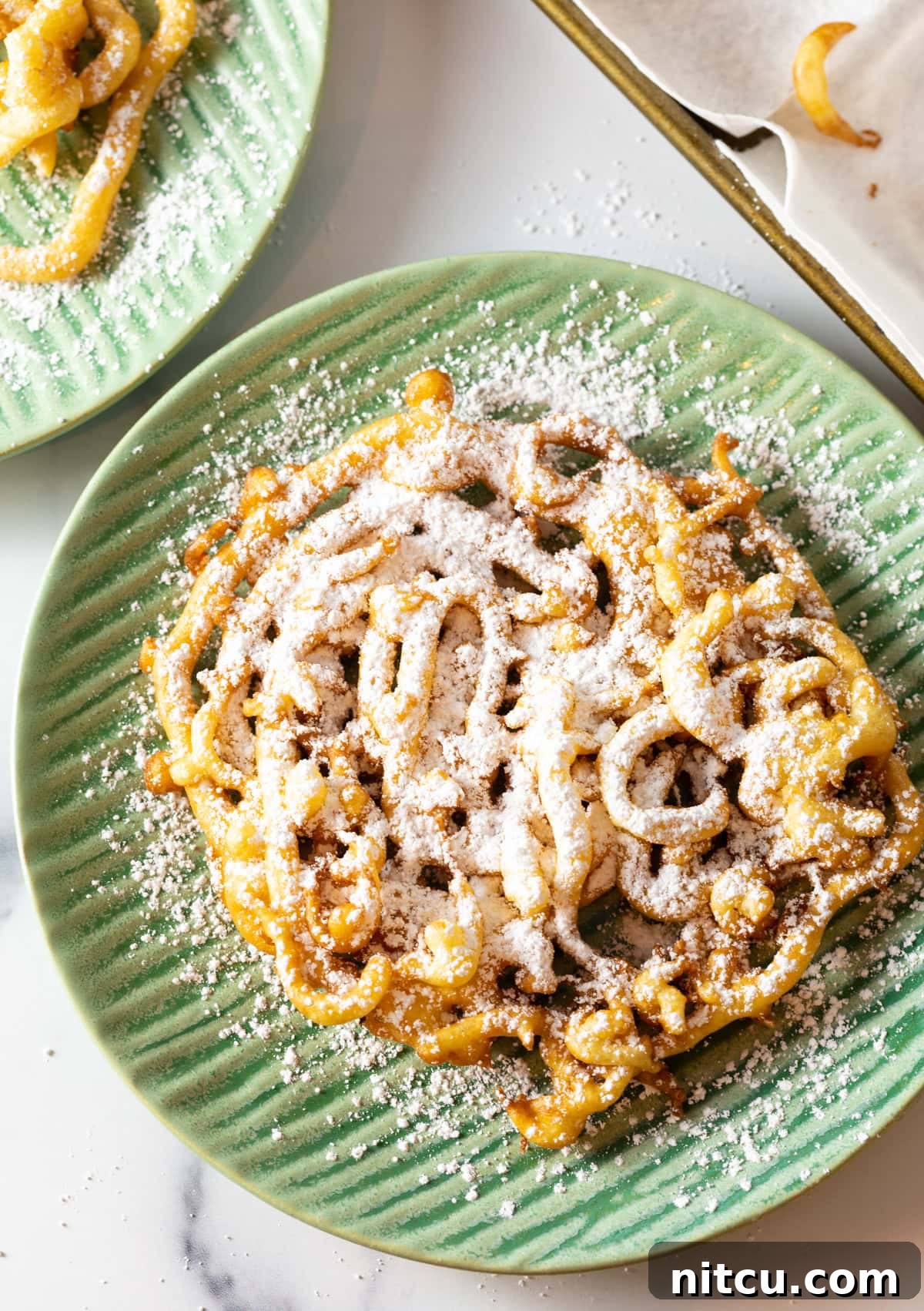
Unleash Your Topping Creativity – Funnel cakes are essentially a delicious blank canvas, eagerly awaiting a masterpiece of sweet toppings. While a simple dusting of powdered sugar (also known as confectioner’s sugar) is the timeless classic, the possibilities are truly endless! Transform your funnel cake into a gourmet dessert with a drizzle of rich caramel sauce, warm hot fudge, sweet fruit jams, a scattering of chocolate chips, or a vibrant medley of fresh berries. Below, you’ll find even more inspired ideas and links to delightful topping recipes to spark your imagination.
Essential Ingredients and Pro Tips
Creating perfect homemade funnel cakes begins with understanding the role of each simple ingredient. Here’s what you’ll need and some valuable tips to ensure success:
- Dry Ingredients – Our base consists of all-purpose flour, granulated white sugar, baking powder, and a touch of salt. This straightforward combination delivers a wonderfully light and airy batter, likely containing far fewer unpronounceable ingredients than what you might find at a commercial fair stand, offering a purer, cleaner taste.
- Milk – Use either whole milk or 2% milk. The fat content in whole milk will contribute to a richer, more tender crumb, but 2% will also work beautifully without compromising the overall texture.
- Eggs – For optimal consistency and to ensure even cooking, it’s best to let your eggs come to room temperature. Simply take them out of the refrigerator about 20-30 minutes before you plan to start mixing your batter. Cold eggs can sometimes result in a tougher texture and can affect the batter’s overall viscosity.
- Vanilla Extract – This humble ingredient plays a crucial role in enhancing the sweetness and depth of flavor in your funnel cakes. While it might be tempting to opt for a cheaper alternative, investing in a high-quality pure vanilla extract truly makes a noticeable difference. It elevates the simple batter into a more sophisticated and aromatic treat.
- Oil for Frying – The choice of oil is paramount for achieving that signature crispy exterior. Peanut oil or canola oil are highly recommended due to their high smoke points, making them ideal for deep frying. These oils cook the funnel cakes quickly and evenly without imparting any unwanted flavors, ensuring your cakes taste purely of their sweet, delicious batter.
Step-by-Step Guide to Making Funnel Cakes
For precise ingredient measurements, detailed step-by-step instructions, comprehensive storage tips, and a helpful video tutorial, please refer to the printable recipe card located at the bottom of this post.
Prepare Your Frying Station – Begin by carefully pouring your chosen frying oil into a large, deep pot (a 6-8 quart pot is ideal for safe deep frying). Place the pot over medium-high heat on your stove. Attach a reliable kitchen thermometer to the side of the pot, ensuring its tip is submerged in the oil, allowing for an accurate temperature reading. Your goal is to heat the oil to a precise 375 degrees F (190 degrees C). Keep a watchful eye on the oil as it heats, ensuring it reaches the target temperature but doesn’t exceed it.
While the oil is coming up to temperature, prepare a landing spot for your finished funnel cakes. Line a cooling rack or a sturdy tray with several layers of paper towels. This setup will be essential for draining any excess oil from the freshly fried cakes, ensuring they remain perfectly crisp and non-greasy.
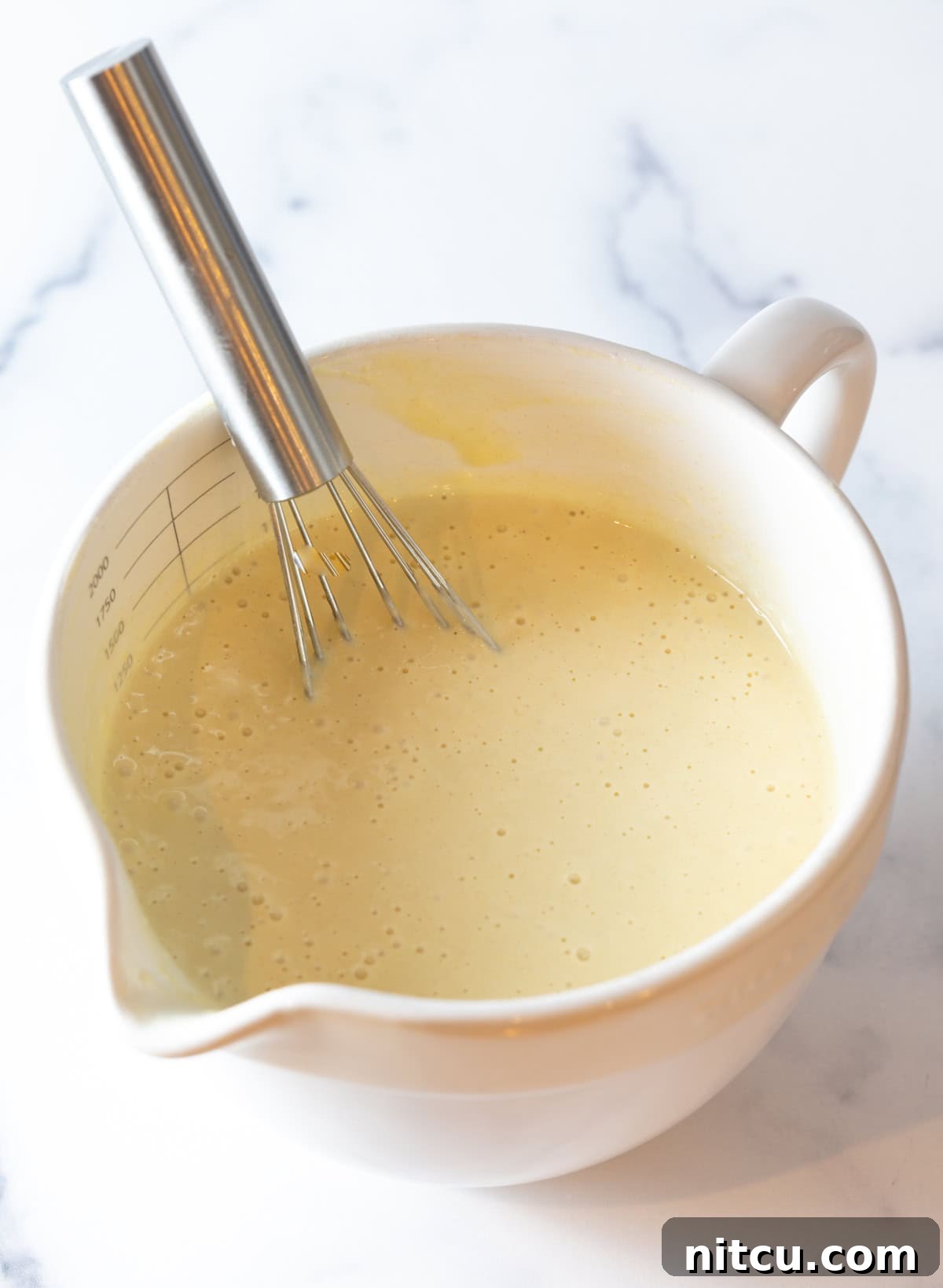
Craft the Perfect Funnel Cake Batter – In a spacious measuring pitcher or a large mixing bowl, combine all your dry ingredients: the all-purpose flour, granulated sugar, baking powder, and a pinch of salt. Using a measuring pitcher for mixing can be particularly helpful as it facilitates easier transfer of the batter later. Whisk these dry ingredients thoroughly until they are well combined. Next, pour in the wet ingredients – the milk, room-temperature eggs, and vanilla extract. Continue to whisk everything together until you achieve a smooth, pourable batter, similar in consistency to my delightful Brazilian cheese bread recipe. Don’t worry if you notice a few small lumps or some bubbles; this is perfectly normal and a sign of a properly mixed batter. The key is to avoid overmixing, which can lead to a tough funnel cake.
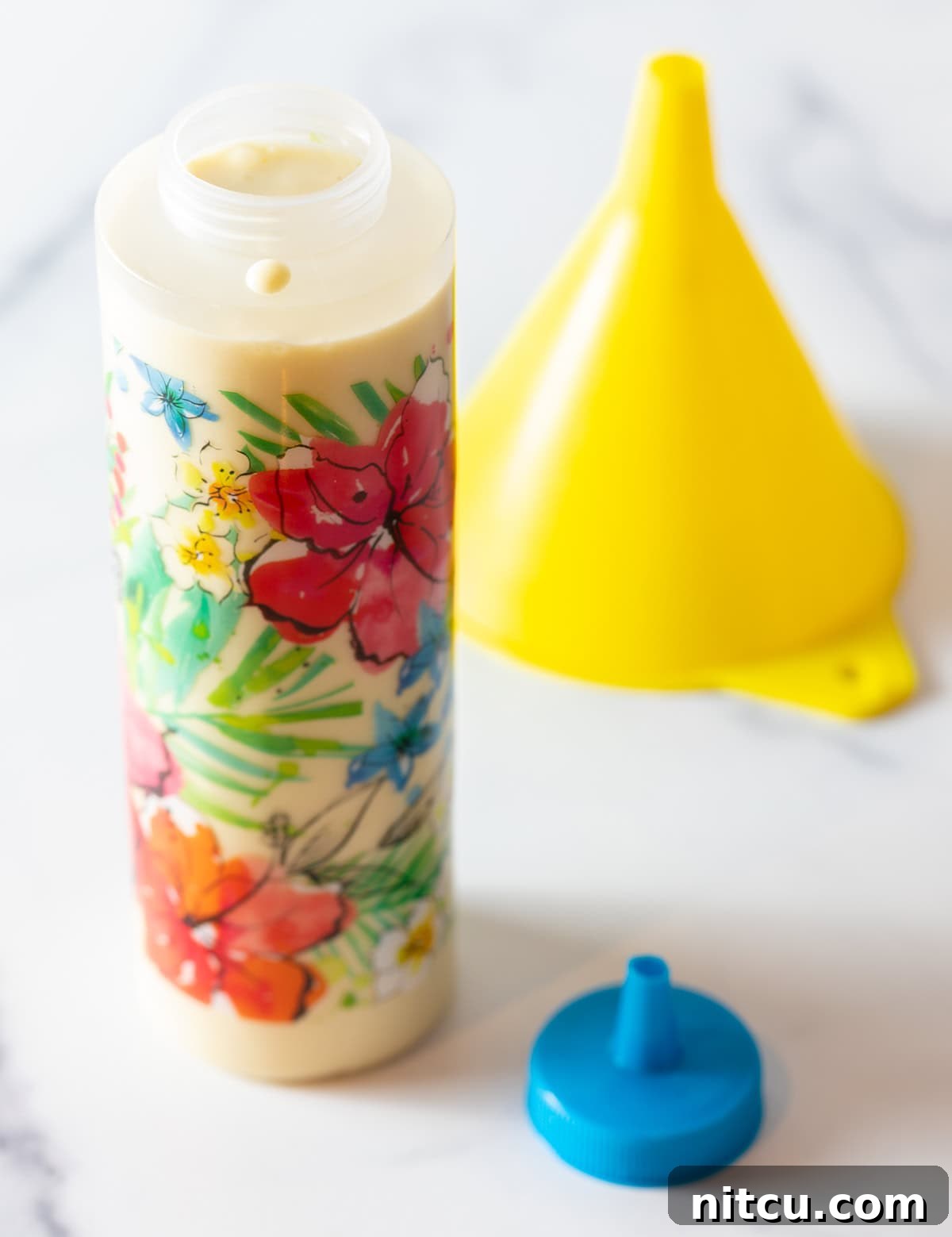
Ready the Batter for Frying – Once your batter is perfectly mixed, carefully transfer it into a squeeze bottle. As mentioned, preparing the batter in a pitcher makes this step incredibly simple, allowing for a clean and efficient pour. If you opted for a mixing bowl, you can use a ladle with a lip or a small measuring cup to scoop and transfer the batter into the squeeze bottle. You might need to fill the bottle in batches, depending on its size and the amount of batter you’ve prepared.
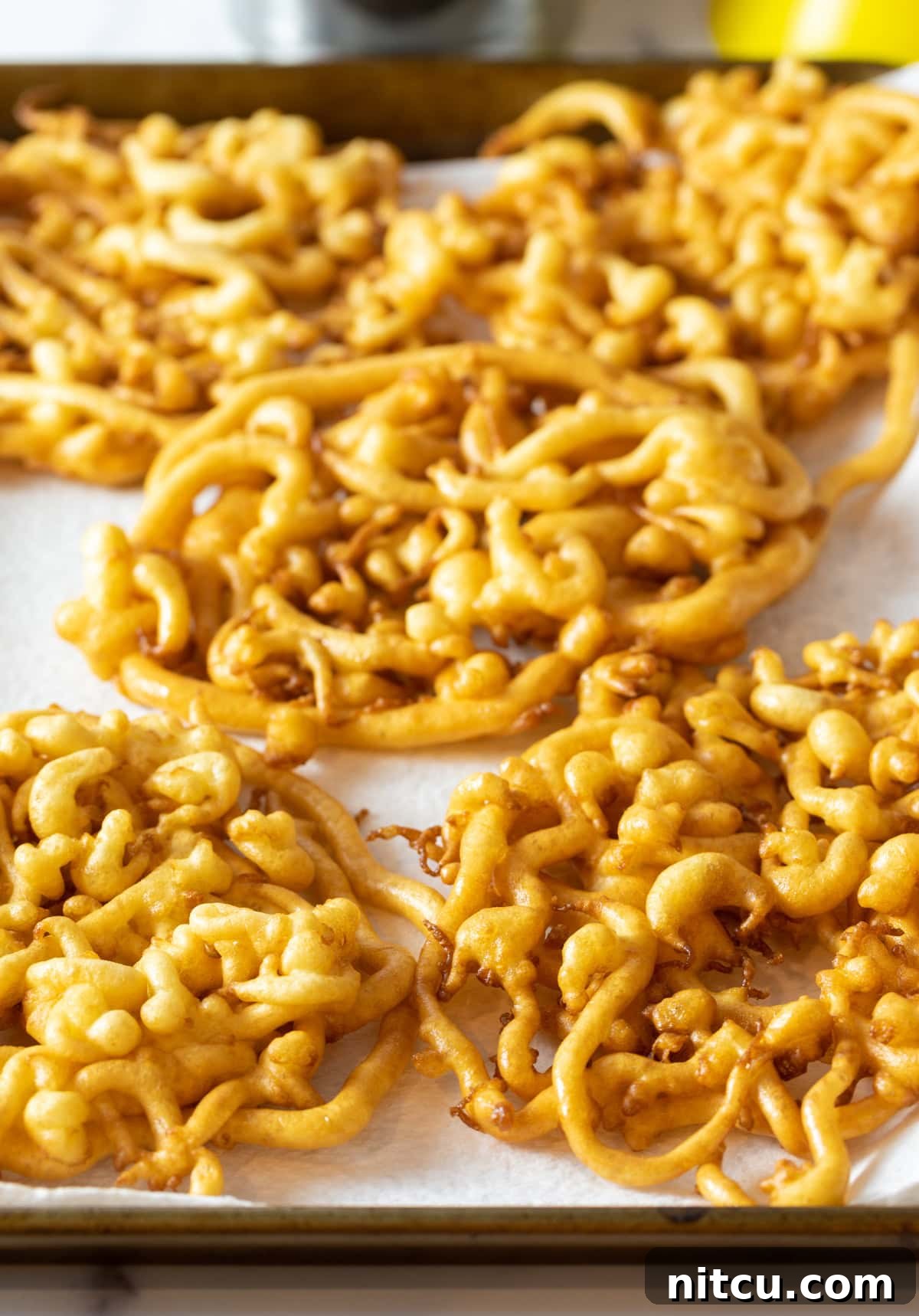
The Exciting Fry Time – Before you begin, double-check your kitchen thermometer to confirm that the oil has reached the ideal temperature of 375 degrees F (190 degrees C). Now, working quickly and carefully, begin to squirt the funnel cake batter into the hot oil. Start by creating a large circular shape, approximately 6 inches in diameter, using a continuous circular motion. Then, go back over your initial circle, creating smaller circles, zig-zags, and wiggly lines within the larger shape to fill it in and create the iconic funnel cake pattern. Depending on the size of your pot, you may be able to fry 2-3 funnel cakes at a time. It’s crucial not to overcrowd the pot, as this will drastically lower the oil temperature and result in greasy cakes. As the cakes begin to cook, the oil temperature will naturally drop slightly, typically settling around 350 degrees F (175 degrees C). Strive to maintain this temperature range; if it drops too low, gently increase the heat to bring it back into the sweet spot.
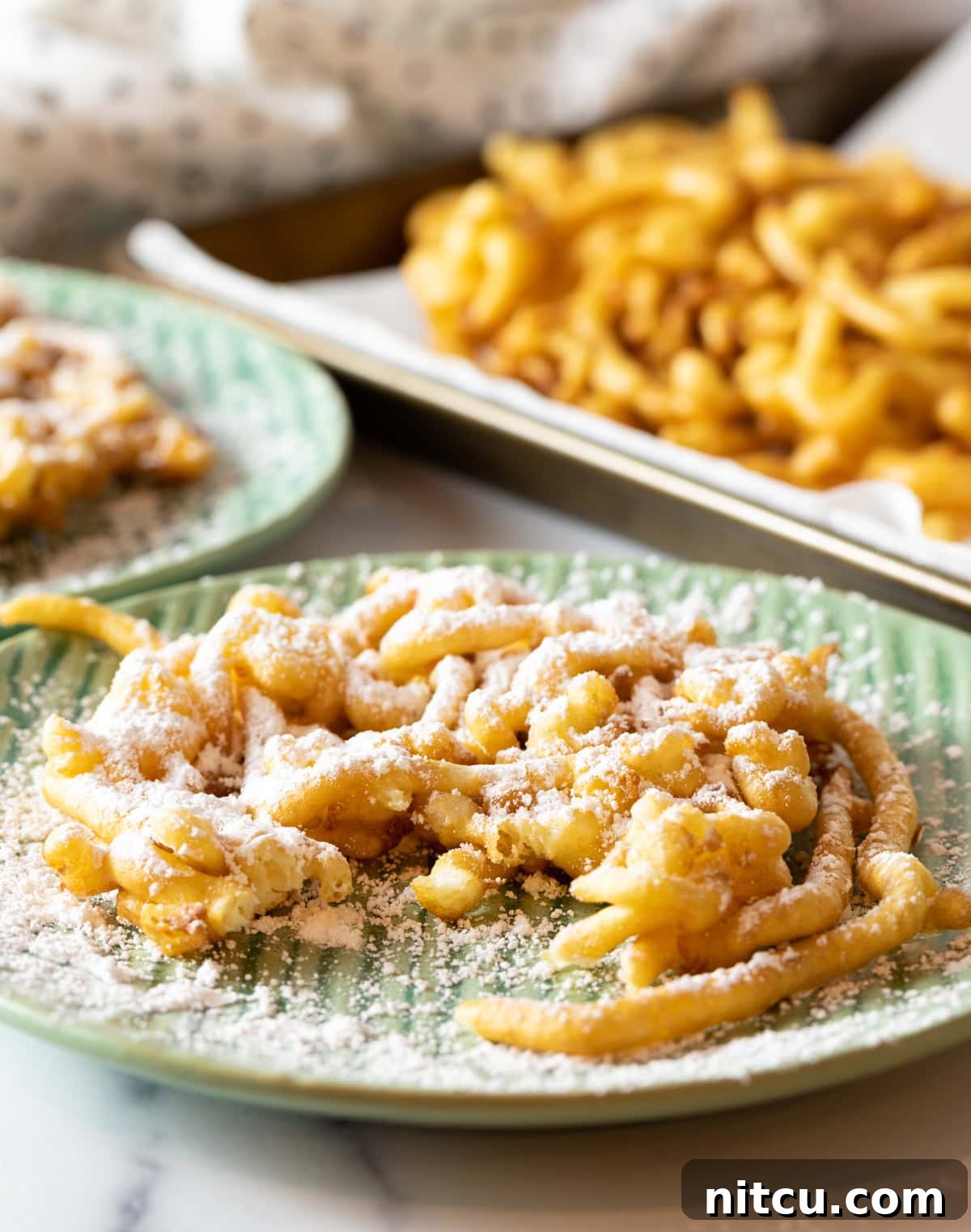
Fry each side of the funnel cake for approximately 30 seconds. Using sturdy tongs, carefully flip the cake and continue to cook for another 30 seconds or until it achieves a beautiful light golden-brown color. This timeframe is a general estimate, so prioritize the visual cue of that perfect honey-gold hue. As soon as they reach this delightful color, promptly remove them from the hot oil with your tongs and transfer them to the prepared paper towel-lined cooling rack to drain. Before frying the next batch of batter, allow the oil to return to the initial 375 degrees F (190 degrees C) to ensure consistent results and perfectly crispy cakes every time.
Expert Frying Tips for Perfect Funnel Cakes
While the name “funnel cake” implies the use of a funnel, I’ve found that a **squeeze bottle offers superior control and less mess** during the frying process, helping you achieve more uniform and intricate patterns. However, if you prefer the traditional method, you can certainly use an actual funnel. Hold the funnel a few inches above the hot oil with one hand, and with the other, ladle 1/4 to 1/3 cup of batter into the funnel while quickly moving it in circular motions and zig-zags around the pot to form your cake.
Maintaining optimal oil quality and temperature is crucial for perfectly cooked, non-greasy funnel cakes. Before you begin frying each new batch, use a skimmer to gently scoop out any small, over-fried crispy bits of batter that may have broken off during cooking. These rogue pieces can burn and impart an off-flavor to subsequent cakes. After skimming, always verify that the oil temperature has climbed back up to 375 degrees F (190 degrees C) before squirting in more batter. Remember, the temperature will drop slightly (to around 350 degrees F / 175 degrees C) once the new batter is introduced, so starting at 375°F ensures it stays within the ideal cooking range.
For the absolute best flavor and texture, funnel cakes are truly meant to be served piping hot, straight out of the oil. While they need to drain and cool slightly on paper towels to remove excess oil, don’t let them sit for too long. This immediate gratification is part of the fun! It’s why making them at home is such a wonderful group activity – each person can fry their own, quickly add their favorite toppings, and enjoy their warm, crispy creation, leaving the pot free for the next eager chef.
The Best Funnel Cake Toppings
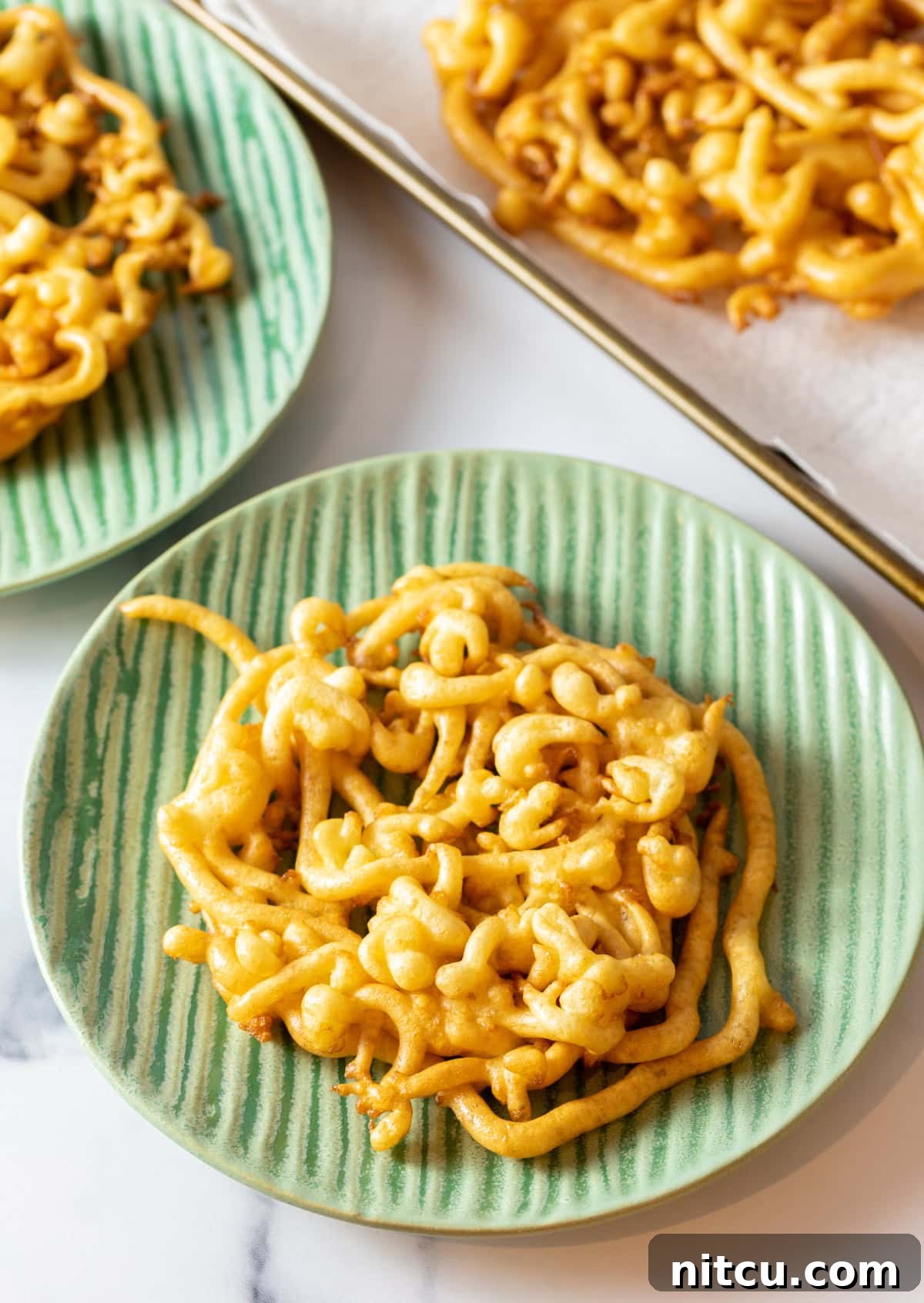
While a generous dusting of powdered sugar remains the quintessential, most classic fair-style topping, your homemade funnel cake is an invitation to culinary experimentation! This is your canvas, so load it up with whatever delectable goodies your heart desires. I love setting out a vibrant “topping bar” and letting everyone personalize their own deep-fried masterpiece. Here are some of our family favorites to get you started:
- Rich Caramel Sauce: A warm, buttery drizzle that adds sophisticated sweetness.
- Decadent Hot Fudge Sauce or classic chocolate syrup: A must-have for any chocolate lover.
- Sweet Strawberry Sauce: Bright, fruity, and reminiscent of summer.
- Homemade Fruity Jam: Think vibrant flavors like a homemade freezer jam for an extra burst of fresh fruit.
- Cloud-like Whipped Cream or frozen whipped topping (like Cool Whip): Adds a light, creamy contrast.
- Assorted Baking Chips: Chocolate chips, peanut butter chips, white chocolate chips – sprinkle them generously while the cake is still warm!
- Luscious Pie Fillings: Canned or homemade options like a sweet and tart cherry pie filling.
- Fresh, Vibrant Fruit: Sliced strawberries, juicy blueberries, ripe bananas, or tart raspberries add a fresh, healthy balance.
Storage and Reheating Advice
For peak crispiness and the most delightful texture, homemade funnel cakes are undeniably at their best when enjoyed fresh, shortly after frying. The magical contrast of a crispy exterior and a soft, pillowy interior is truly something to savor in the moment.
However, if you happen to have leftovers (a rare but possible occurrence!), you can certainly store them. Place your cooled funnel cakes in an airtight container at room temperature, where they will remain fresh for up to 3 days. To prevent them from sticking together if stacking, I highly recommend placing a piece of parchment paper between each layer.
For extended enjoyment, funnel cakes are also suitable for freezing. Wrap each individual cake tightly in plastic wrap, then place them all together in a heavy-duty freezer bag. They will freeze well for up to 3 months. When you’re ready to enjoy them, thaw them on the counter for about 20-30 minutes before reheating.
The best methods for reheating leftover funnel cakes are either in the oven or an air fryer, as these will help restore some of their original crispiness. Preheat your oven to 350 degrees F (175 degrees C) and bake for approximately 10 minutes. Alternatively, if using an air fryer, cook them for 5-6 minutes, making sure to flip them halfway through for even reheating. While they won’t be quite as perfect as fresh from the oil, these methods will bring them back to a wonderfully enjoyable state.
Frequently Asked Questions
If your funnel cake crumbles or disintegrates during frying, it’s typically an indication that either your batter consistency wasn’t quite right (perhaps too thin or not enough binder) or the oil temperature was too high. Ensure you don’t overwork the batter when whisking, and always make sure your oil is precisely at 375 degrees F (190 degrees C) before you start frying. Too hot oil can cook the exterior too quickly, causing it to shatter.
A greasy funnel cake is most commonly caused by the oil temperature dropping too much once the batter is introduced. While a slight drop to around 350 degrees F (175 degrees C) is expected, allowing it to go significantly lower means the cake absorbs more oil rather than frying quickly to a crisp. Be diligent in monitoring and quickly increasing the heat if needed to keep it in the optimal frying range. Additionally, don’t skip the crucial step of allowing the cakes to rest on paper towels for a minute or two after frying; this allows any excess surface oil to be absorbed.
The lack of crispiness often points back to insufficient oil temperature. If the oil isn’t hot enough (ideally around 350-375 degrees F or 175-190 degrees C during cooking), the batter won’t instantly crisp up and will instead cook more slowly, resulting in a soft, rather than crunchy, texture. Ensure your oil maintains the correct temperature and deep fry the cakes just long enough to achieve that beautiful, light honey-golden color on both sides.
Help Me Spread the Word about this Fabulous Free Recipe! Sharing this recipe link on Pinterest and Facebook is super impactful, and I greatly appreciate it! Find the share buttons below the recipe form.
More Delightful Dessert Recipes
Print Recipe
Leave a Review »
Homemade Funnel Cake
Video
Ingredients
- 1 ½ cups all-purpose flour
- 2 tablespoon sugar
- 1 teaspoon baking powder
- ½ teaspoon salt
- 1 cup whole milk
- 2 large eggs
- 1 teaspoon vanilla extract
- 2 quarts oil for frying peanut or canola oil
- Powdered sugar for dusting
Instructions
-
Set a large 6-8 quart pot over medium-high heat. Add the oil, and clip a cooking thermometer to the side of the pot. Make sure the tip of the thermometer is down in the oil. Heat the oil to 375 degrees F. Set a paper towel lined tray to the side for the finished funnel cakes.
-
Meanwhile, set out a mixing bowl. Combine the flour, sugar, baking powder, salt, milk, eggs, and vanilla. Whisk well, until the mixture is completely smooth. (No clumps.) Pour the batter into a squirt bottle. You can cut the tip of the squirt bottle to make the batter come out easier.
-
Once the oil reaches the right temperature, squirt the batter into the hot oil. Move fast, making a 6 inch circle, then filling it in with small circles or zig zags. The temperature will come down as the cake cook. Adjust the temperature as needed, to keep it around 350 degrees F.
-
Fry the funnel cake for 30-60 seconds per side, flipping once. Try to pull each funnel cake out of the oil when it reaches a light honey color, or it will cool and be too crispy.
-
Repeat with the remaining batter refilling the squirt bottle as needed. Once all the funnel cakes are ready, give them a generous sprinkling of powdered sugar. Serve warm and fresh.
Notes
You can also freeze them for longer storage, if you like. I suggest wrapping each cake individually in plastic wrap, then storing them together in a Ziploc bag. They’ll freeze well for up to 3 months. Thaw them on the counter for 20-30 minutes before reheating.
The best way to reheat them is in the oven or air fryer. Preheat the oven to 350 degrees F and bake for 10 minutes, or air fry for 5-6 minutes, flipping the cakes once at the halfway mark.