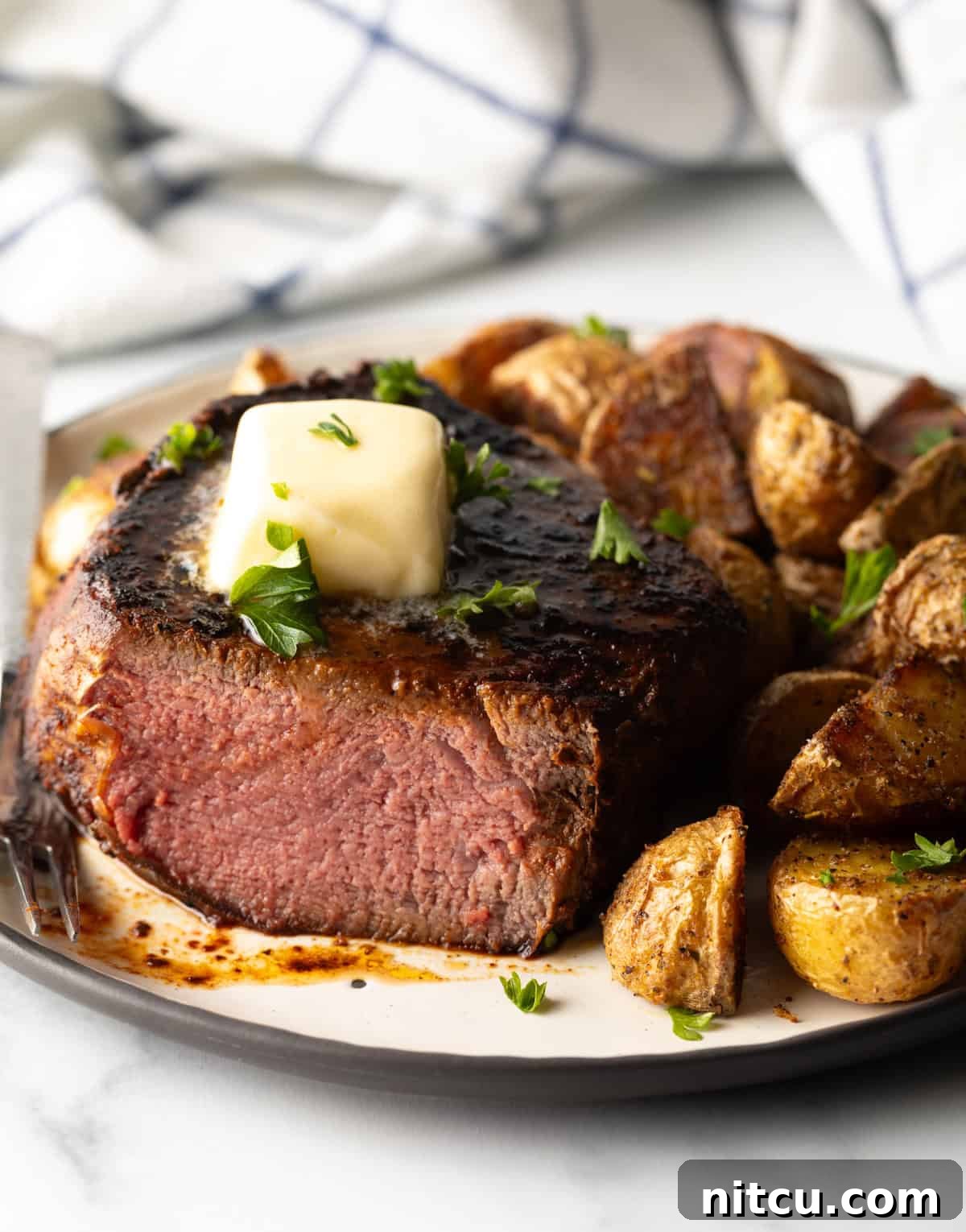
Master the Reverse Sear: Achieve the Perfect, Juicy Steak Every Time
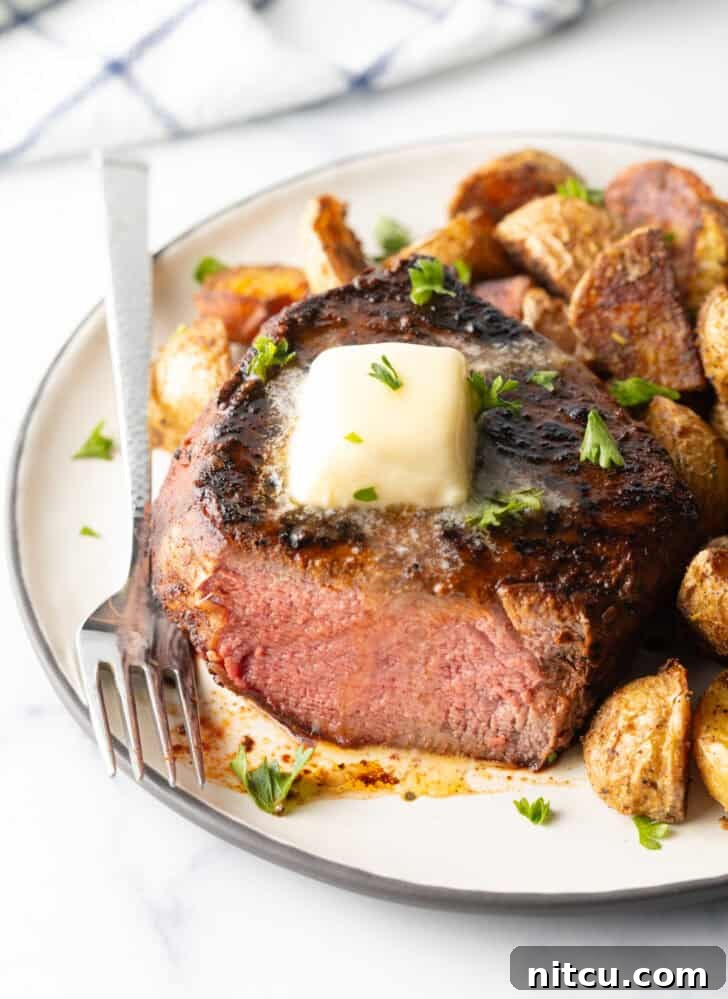
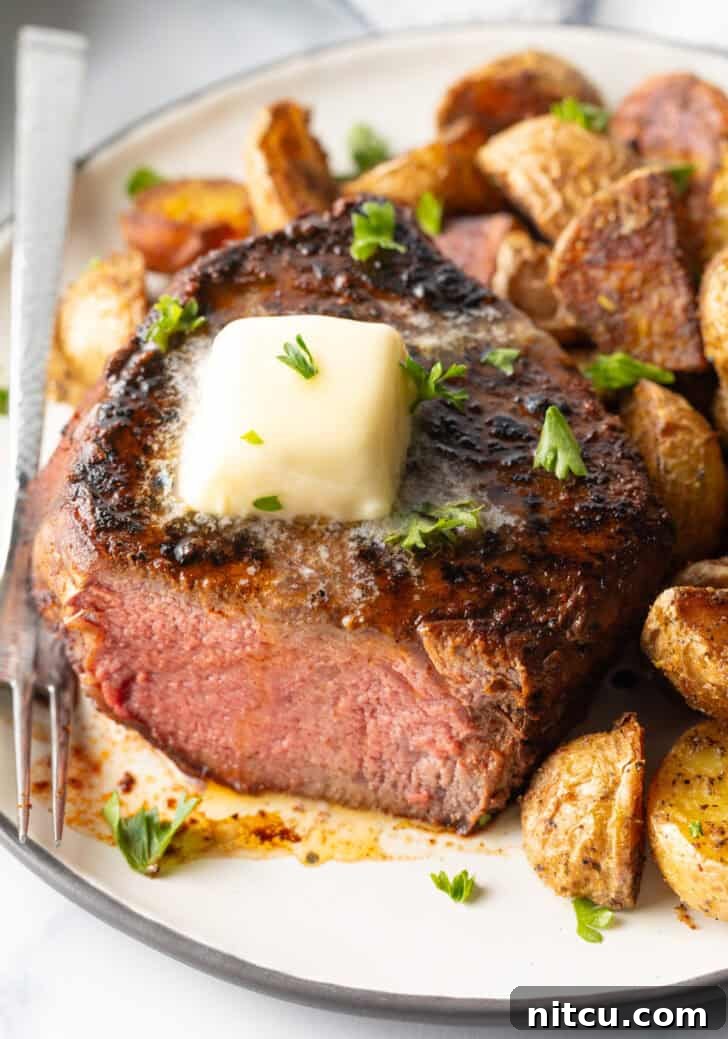
Unlock the secret to a perfectly cooked steak. Learn the simple steps and expert tips to reverse sear any cut – from Filet Mignon to Ribeye – ensuring it’s incredibly juicy, melt-in-your-mouth tender, and boasts a phenomenal crust.
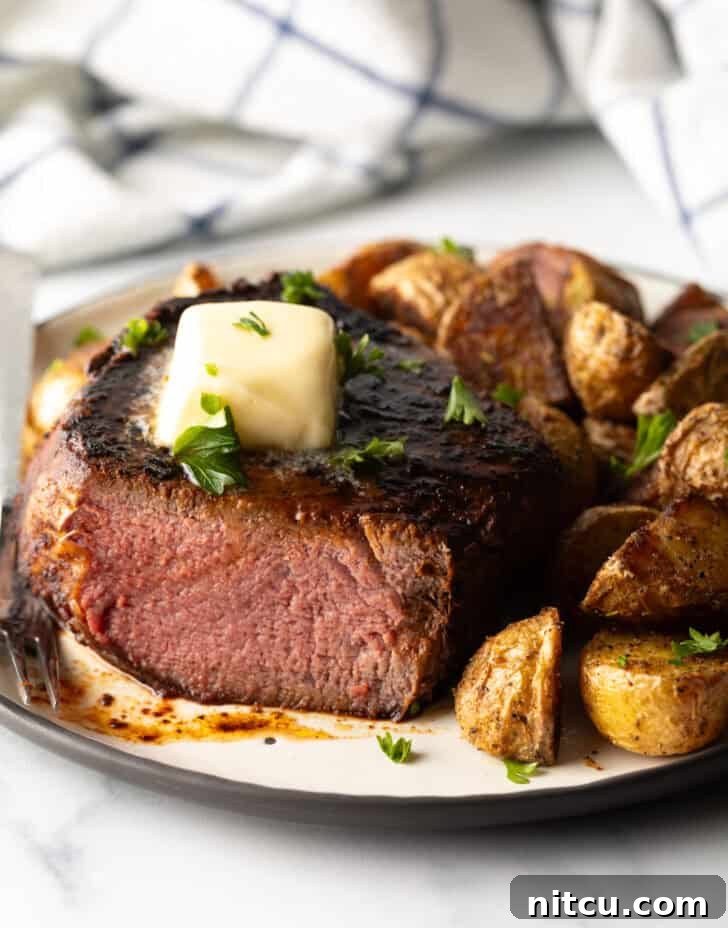
Why the Reverse Sear Method is a Game Changer for Steak Lovers
For discerning steak enthusiasts, the pursuit of a perfectly cooked steak is a culinary quest. While many methods promise success, the reverse sear stands out as a true game-changer. This technique consistently delivers steaks that are incredibly tender, astonishingly juicy, and boast a uniformly caramelized crust that classic searing often struggles to achieve. Whether you’re tackling a delicate Filet Mignon, a robust Ribeye, a flavorful New York Strip, or a hearty Porterhouse, reverse searing grants you unparalleled control over the cooking process, ensuring exquisite results every single time.
Unlike traditional methods that often leave a gradient of doneness, with overcooked edges and a cooler center, reverse searing ensures the internal temperature of your steak rises slowly and evenly. This gentle cooking process allows the muscle fibers to relax, resulting in a steak that is tender from edge to edge. The final high-heat sear then creates that irresistible, deeply flavorful crust without overcooking the perfectly tender interior. It’s an approach that maximizes flavor, texture, and overall enjoyment, making it a favorite among professional chefs and home cooks alike.
Understanding the Reverse Sear Method
The conventional wisdom for cooking steak typically involves searing it first at high heat to “lock in juices,” followed by a period in the oven or on a grill at lower temperatures to finish cooking the interior. While this method can yield good results, it demands precision and often leaves little room for error. The intense initial sear can create a band of overcooked meat just beneath the surface, and it’s easy to push the internal temperature past your desired doneness in the subsequent oven stage.
The reverse searing method, as its name suggests, flips this traditional approach on its head. You begin by slowly cooking your steak at a much lower temperature until its internal temperature is just shy of your target doneness. This extended, gentle heating period allows the steak to cook through uniformly, preventing the common “grey band” often associated with rapid, high-heat cooking. Once the interior is perfectly cooked, a quick blast of high heat is applied to the exterior, creating a beautiful, crispy, and flavorful crust through the Maillard reaction. This two-stage process ensures an incredibly even cook from edge to edge, deep beefy flavor throughout, and that coveted perfect crust.
Think of it as similar in principle to sous vide cooking, but without the need for specialized water baths or vacuum-sealed bags. You simply leverage your oven or a low-temperature grill/smoker for the slow cook, followed by a screaming hot cast iron skillet on the stovetop or a direct high-heat grill for the ultimate sear. This technique empowers you to achieve steakhouse-quality results right in your own kitchen, providing a level of control and consistency that is unmatched and virtually foolproof.
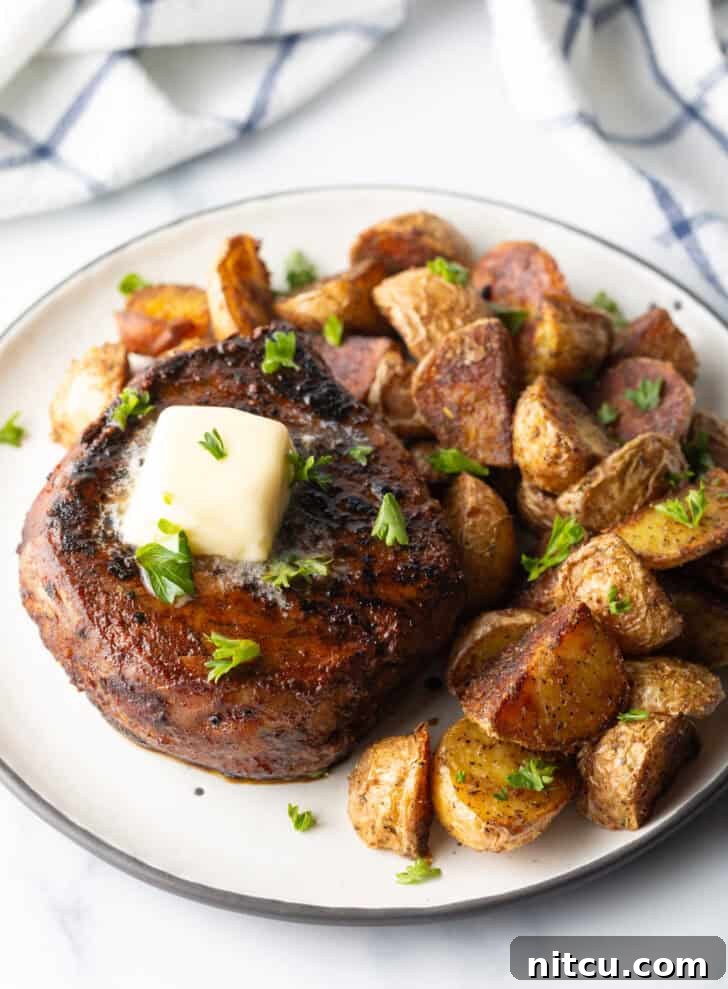
Choosing the Best Steaks for Reverse Searing
While the reverse sear method is incredibly versatile, certain cuts and thicknesses of steak truly shine with this technique. The key to successful reverse searing lies in allowing enough time for the steak’s interior to cook slowly and evenly, which means thickness is paramount. Always opt for steaks that are at least 1 to 1.5 inches thick. However, this method excels even more with extra-thick cuts, as it provides ample time for the gentle cooking phase without burning the exterior, resulting in an even more pronounced tender texture.
Here are some of the prime beef cuts that are ideal for reverse searing:
- Filet Mignon: Known for its exceptional tenderness, the filet benefits immensely from reverse searing. Its lower fat content means gentle cooking prevents it from drying out, while the quick sear develops a beautiful crust.
- Ribeye Steaks: A favorite for its rich marbling and intense beefy flavor. The fat renders beautifully during the slow cook, contributing to an incredibly juicy and flavorful result, perfectly complemented by a crisp sear.
- New York Strip Steak: Offering a good balance of tenderness and chew, the New York Strip takes well to reverse searing. Its distinct fat cap can be rendered to perfection, enhancing its savory profile.
- Porterhouse or T-Bone: These cuts feature both the tender filet and the flavorful New York strip, making them a fantastic choice for a reverse sear. You get to enjoy the best of both worlds, cooked to perfection.
- Sirloin: While generally leaner, a very thick cut of sirloin (often labeled as top sirloin) can also be successfully reverse-seared, yielding a more tender result than traditional high-heat methods.
Beyond the cut, the quality of your steak matters. Look for cuts with good marbling (the white flecks of fat within the muscle), as this contributes significantly to flavor and juiciness. Allow your steaks to come to room temperature for 20-30 minutes before seasoning to promote more even cooking, a small step that makes a big difference.
Seasoning Your Steak and Choosing the Right Oil
A great steak needs great seasoning to elevate its natural flavors. We highly recommend a robust, homemade Steak Seasoning Blend to create a rich, savory crust. Generously rub it into all surfaces of the meat, ensuring full coverage for maximum flavor. Alternatively, a simple yet incredibly effective seasoning of high-quality kosher salt and freshly ground black pepper will also do wonders, allowing the steak’s inherent, pure beefy taste to shine through.
For the final searing step, you’ll need a high-heat cooking oil. This is crucial for achieving that perfect, deeply caramelized crust without burning the oil and imparting off-flavors. Options with a high smoke point are essential:
- Avocado Oil: Boasts an exceptionally high smoke point (around 520°F/270°C) and a neutral flavor, making it perfect for high-heat searing.
- Canola Oil: A widely available and affordable option with a smoke point of about 400°F/204°C, suitable for most searing applications.
- Grapeseed Oil: Another neutral-flavored oil with a high smoke point (around 420°F/215°C), ideal for achieving a crisp crust.
- Light Olive Oil: Note that this is different from extra virgin olive oil. Light olive oil has a higher smoke point (around 465°F/240°C) and can be used for searing, whereas extra virgin olive oil is better suited for finishing or lower-heat cooking.
Elevate Your Steak with Perfect Toppings and Sauces
Once your beautifully reverse-seared steak is rested and ready to be carved, consider adding an optional garnish or sauce to enhance its flavor profile and presentation. Simple additions can make a huge difference, transforming a great steak into an extraordinary culinary experience:
- Fresh Chopped Parsley: Adds a touch of vibrant color and a refreshing herbal note that cuts through the richness of the beef.
- Unsalted Butter: A simple pat of butter melting over a hot steak adds incredible richness, a silky mouthfeel, and a subtle dairy flavor.
- Compound Butter: These flavored butters, infused with herbs (like rosemary or thyme), garlic, shallots, or other aromatics, melt into a fragrant, savory sauce, imparting complex layers of flavor.
- Cowboy Butter: A popular choice, this zesty, herbaceous compound butter often features a robust blend of garlic, chives, smoked paprika, and a hint of spice, creating a dynamic flavor bomb.
- Caramelized Onions: Sweet, deeply savory, and tender, caramelized onions are a classic and highly complementary topping for rich beef.
- Sautéed Mushrooms: Earthy and umami-rich, mushrooms sautéed with garlic and herbs pair wonderfully with the robust flavor of steak.
- Blue Cheese Crumbles: For those who love a bold flavor, a sprinkle of crumbled blue cheese adds a tangy, pungent kick.
For even more inspiration, explore these FABULOUS Best Steak Toppings options, including quick zippy pickled veggies that offer a delightful textural and flavor contrast!
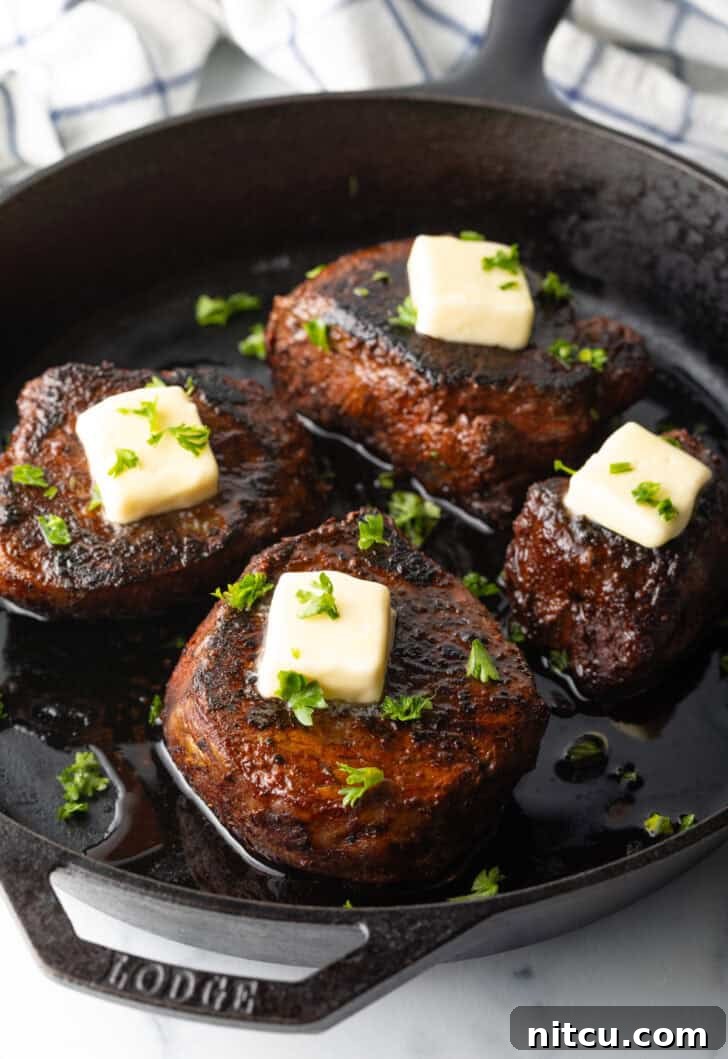
How to Reverse Sear a Steak: A Step-by-Step Guide for Perfection
Executing the reverse sear method is surprisingly straightforward, yet it consistently yields spectacular, restaurant-quality results. The process hinges on a gentle, slow bake in the oven (or smoker), followed by a rapid, high-heat finish on the stovetop in a screaming hot cast-iron skillet. Follow these detailed steps for an unforgettable steak experience:
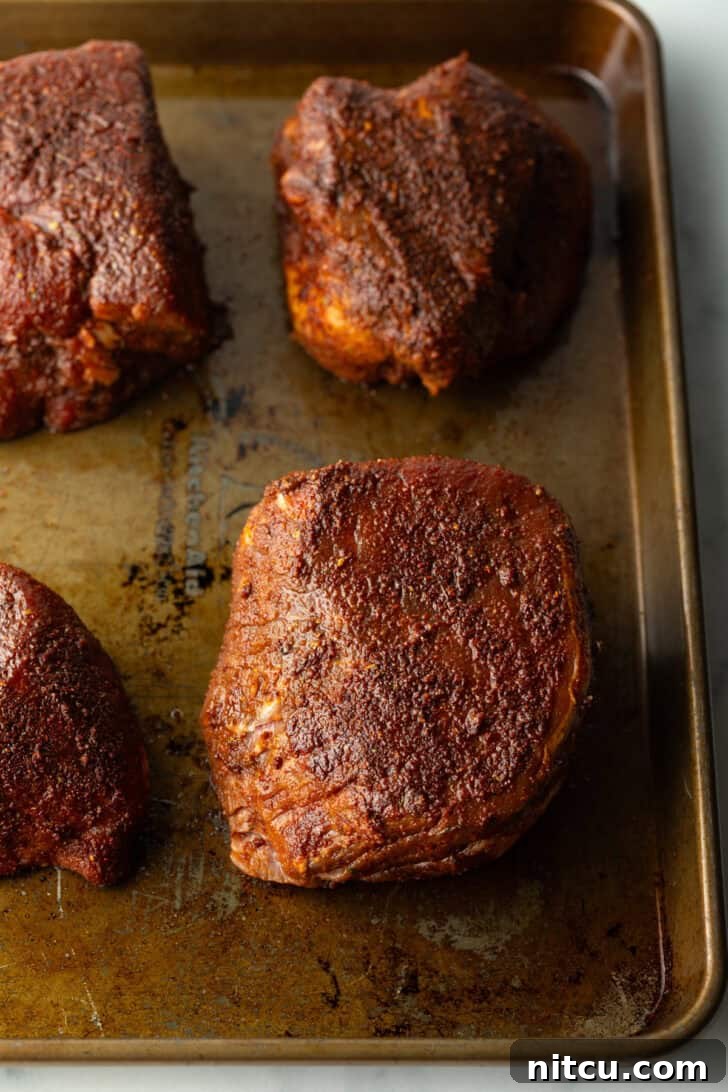
- Prepare Steaks and Begin Slow Cook: Start by preheating your oven to a very low temperature of 190°F (88°C). While the oven heats, remove your steaks from the refrigerator and pat them thoroughly dry with paper towels. This crucial step removes surface moisture, which is essential for achieving a good, crispy crust later. Season the meat generously on all sides with your chosen steak seasoning or a liberal amount of salt and pepper, making sure to rub it into the surface for maximum flavor adhesion. Place the seasoned steaks on a wire rack set over a rimmed baking sheet. This setup allows air to circulate evenly around the entire steak, promoting a consistent cook. Transfer the baking sheet to the preheated oven.
- Monitor Internal Temperature: For a medium-rare steak, cook for approximately 55-60 minutes, or until the internal temperature reaches about 120-125°F (49-52°C) for rare, or 130°F (54°C) for medium-rare. A reliable instant-read meat thermometer inserted into the thickest part of the steak is your most important tool here; trust the thermometer, not just the clock, especially with varying steak thicknesses.
- Prepare for High-Heat Sear: Approximately 10-15 minutes before your steaks are expected to reach their target internal temperature in the oven, begin preheating your cast iron pan. Place it over high heat on your stovetop and allow it to get screaming hot, aiming for a surface temperature of 450-500°F (232-260°C). Alternatively, if using a gas grill, preheat it to high heat. Add a thin layer of your chosen high-heat cooking oil (avocado, canola, or grapeseed) to the pan, ensuring it’s shimmering hot but not smoking excessively.
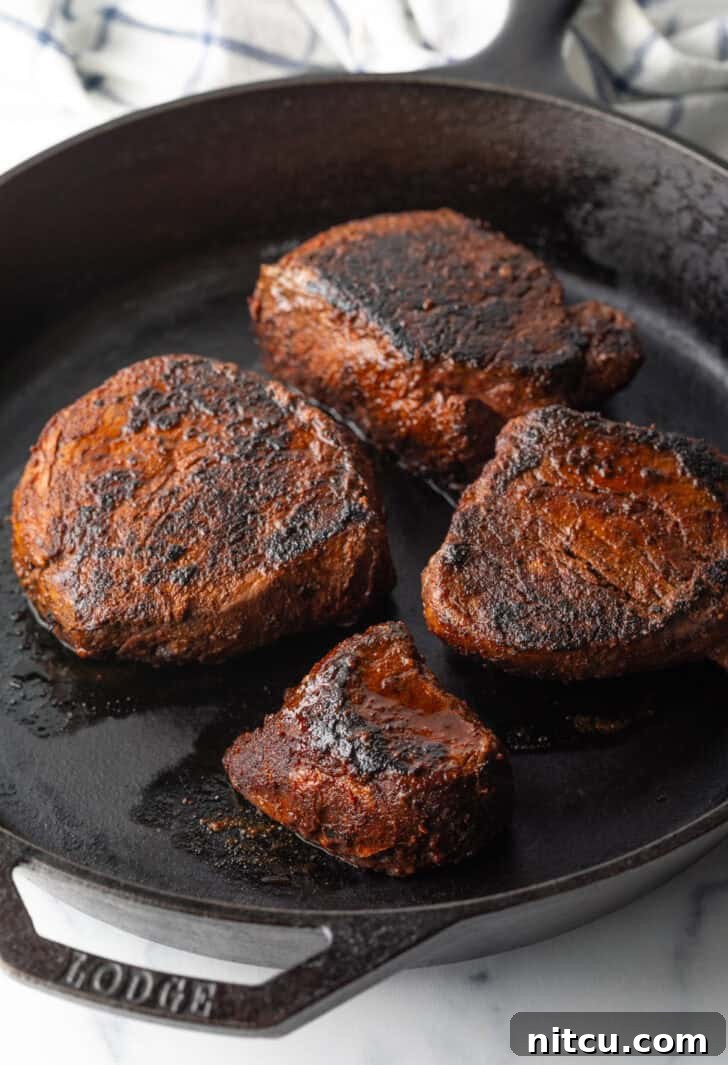
- Execute the Sear for a Perfect Crust: Carefully transfer the steaks directly from the oven (or smoker/grill) to the preheated cast iron skillet or grill. Sear for precisely 1 minute per side to create a beautiful, deep caramelization and a crisp, irresistible crust. It’s vital not to move or shift the steaks during this minute on each side; let them develop that deep brown, flavorful exterior undisturbed. For exceptionally thick steaks (over 2 inches), you may extend the searing time to 2 minutes per side to achieve the desired crust.
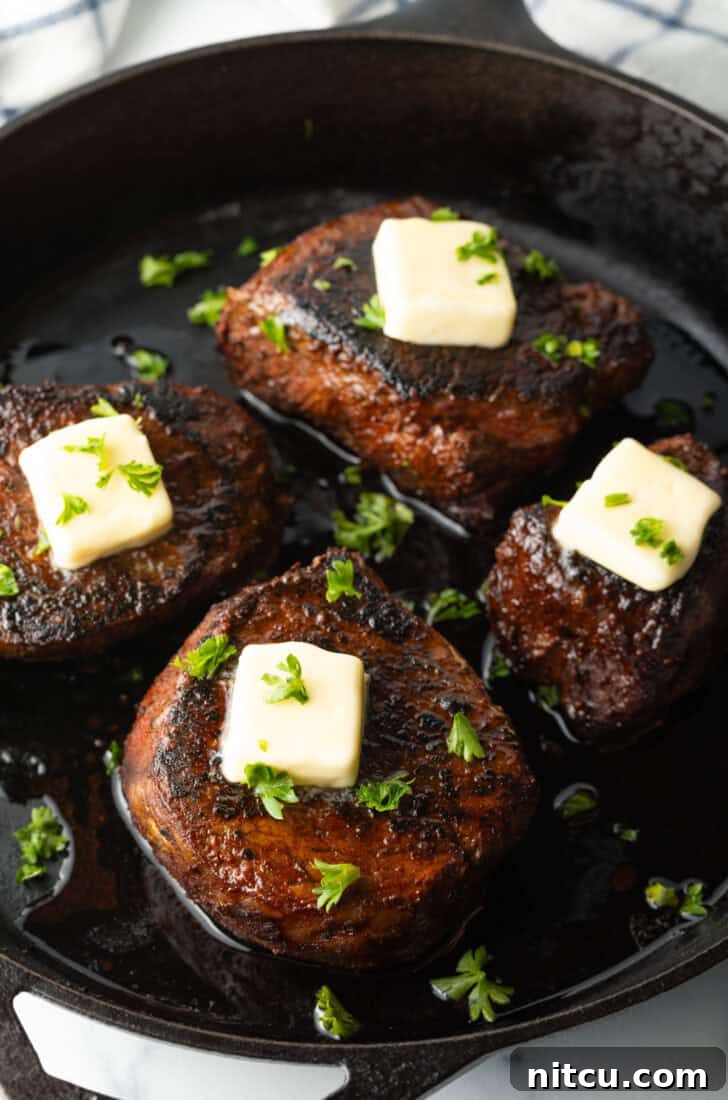
- Rest and Finish: Once your Ribeye, Filet Mignon, or other cuts have achieved that perfect crust and optimal internal temperature, remove them immediately from the heat. Place a generous pat of unsalted butter on top of each steak. The residual heat will gently melt the butter, infusing the meat with additional richness and moisture. Most importantly, allow the steaks to rest for at least 5 to 10 minutes on a clean cutting board before slicing. This critical resting period allows the juices, which have been pushed towards the center during cooking, to redistribute evenly throughout the meat, ensuring every bite is incredibly juicy and tender.
Pro Tip: You can also achieve the slow-cooking phase in an electric smoker or on a low-heat grill! Simply set the temperature to 190°F (88°C) and follow the same cooking times and temperature guidelines as you would for an oven. Precision is key for success, so always double-check your appliance’s thermostat for accuracy with a separate oven thermometer.
Steak Doneness Guide: Achieving Your Ideal Temperature
Knowing your desired steak doneness is paramount for a truly satisfying meal. A reliable instant-read meat thermometer is your most valuable tool here, ensuring accuracy and consistent results every time. Always insert the thermometer into the thickest part of the steak, making sure to avoid any bone, which can give a false reading.
Here’s a comprehensive guide to internal temperatures and their corresponding levels of doneness:
- Rare: 120-125°F (49-52°C) – Characterized by a cool, dark red center. The texture will be very tender and juicy.
- Medium Rare: 130-135°F (54-57°C) – Exhibits a warmer, but still distinctly deep pink center. In our professional opinion, this is the optimal doneness level for maximum flavor, incredible tenderness, and juicy texture, allowing the beef’s natural qualities to truly shine through.
- Medium: 140-145°F (60-63°C) – Presents a warm, lighter pink center, with a slightly firmer texture than medium-rare.
- Medium Well: 150-155°F (66-68°C) – Results in a mostly brown center with only a faint hint of pink remaining. The steak will be quite firm.
- Well Done: 160°F+ (71°C+) – Cooked completely through with no pink visible, typically brown throughout. While achievable with reverse sear, most culinary experts recommend against this level for optimal tenderness and juiciness, as it can lead to a drier, tougher steak.
Remember that the internal temperature will continue to rise by a few degrees (known as carryover cooking) even after the steak is removed from the heat, especially during the searing and resting phases. Always remove your steak from the oven a few degrees below your final target temperature to account for this residual cooking and ensure you hit your desired doneness precisely.
Expert Tips for the Best Reverse Sear Steak
To truly master the reverse sear technique and consistently achieve steakhouse-quality results in your home kitchen, keep these invaluable expert tips in mind. They will elevate your steak cooking from good to gourmet:
- Bring Steaks to Room Temperature: This is a critically important first step. Before you even begin the slow-cooking process, remove your steaks from the refrigerator and let them sit at room temperature for about 20-30 minutes. This pre-temperaturaing allows the meat to cook much more evenly from edge to center, preventing a cold core and resulting in a uniformly tender and juicy final product.
- Don’t Skimp on Seasoning: Be incredibly generous with your chosen seasoning blend. Ensure all surfaces of the steak are thoroughly and evenly covered. The seasoning not only infuses deep flavor into the meat but also plays a vital role in creating that desirable, deeply flavorful crust during the searing process.
- Choose Your Method: Timed vs. Temperature: While a timed method (e.g., 55 minutes for medium-rare) can work if your oven or grill thermostat is incredibly accurate, for foolproof and consistently perfect results, the internal temperature method using a reliable instant-read meat thermometer is vastly superior. Don’t guess; measure.
- Utilize a Meat Thermometer Relentlessly: For absolute precision, insert a probe thermometer into the thickest part of one of your steaks before it goes into the oven. Monitor the temperature closely. When the steak reaches approximately 130°F (54°C) for medium-rare (or a few degrees below your desired final doneness), remove it from the oven. The subsequent high-heat sear will elevate the internal temperature by another couple of degrees through carryover cooking, bringing it to absolute perfection.
- Ensure Excellent Ventilation for Searing: When it’s time to sear, turn on your kitchen exhaust fan to its highest setting, or open nearby windows wide. Searing steaks at very high temperatures, especially fattier cuts like ribeye, can generate a significant amount of smoke. Good ventilation will keep your kitchen clear of smoke and ensure a comfortable cooking environment.
- Resting is Non-Negotiable: This step is just as important as the cooking itself, so do not skip it. After searing, let your reverse-seared filet mignon or ribeye rest on a cutting board for at least 5-10 minutes. During this crucial time, the contracted muscle fibers relax, allowing the flavorful juices (which have been drawn to the center during cooking) to redistribute evenly throughout the entire steak. Cutting into the steak too soon will cause these precious juices to run out onto your board, leaving you with a noticeably drier and less flavorful steak.
- Slice Against the Grain: When you’re finally ready to serve your masterpiece, always slice the steaks against the grain. Look closely at the cooked meat, and you’ll easily see visible lines – these are the muscle fibers, or “the grain.” By cutting directly across these lines, you effectively shorten the muscle fibers, making the meat incredibly tender and much easier to chew. This simple yet powerful technique can significantly enhance the texture and overall eating experience of even the best-cooked steak.
Complement Your Steak: Perfect Side Dishes for an Unforgettable Meal
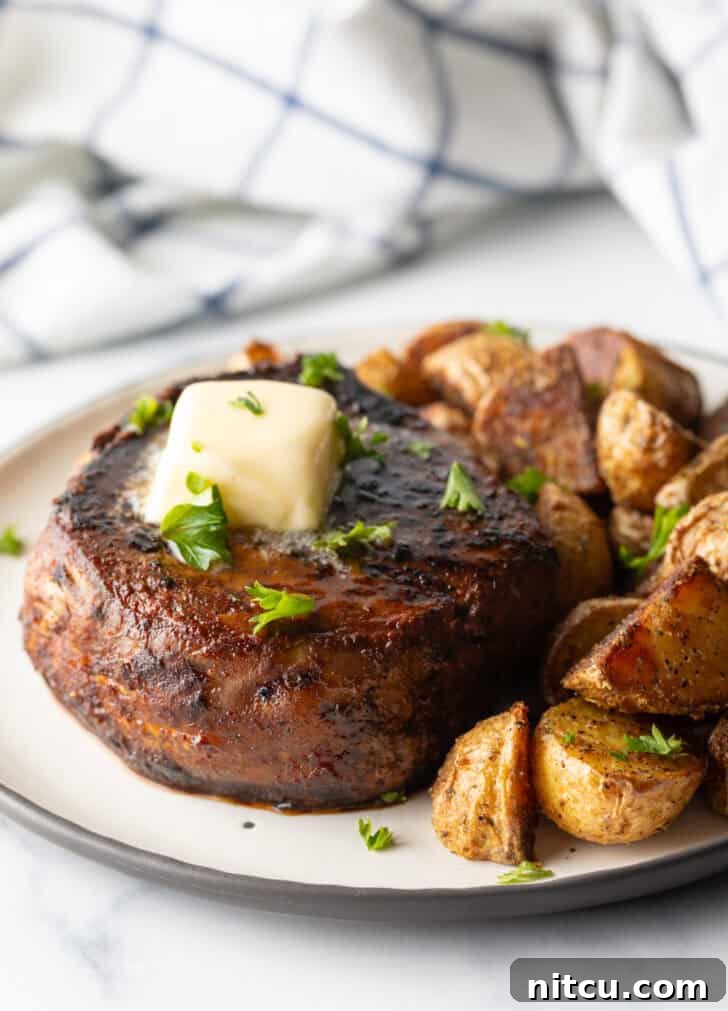
A perfectly cooked reverse-seared steak deserves equally delicious and thoughtfully chosen accompaniments. While we often pair our reverse-seared Filet Mignon with our classic 2-Ingredient Roasted Potatoes – delightfully crisp on the outside and fluffy on the inside – the possibilities for creating your dream steak dinner are truly endless. Explore these “potaTOtally” awesome recipes and other fantastic sides to round out your meal:
Delectable Potato Side Dishes
- Classic Baked Potatoes: A timeless comfort food, offering a fluffy interior and crispy skin, perfect for loading with butter, sour cream, and chives.
- Crispy Air Fryer Potato Wedges: A healthier and quicker alternative to traditional fries, these wedges are wonderfully seasoned and incredibly satisfying.
- Elegant Duchess Potatoes: Beautifully piped, golden-brown mashed potatoes that add a touch of sophistication and rich flavor to any special meal.
- Russet Potatoes Every Which Way!: Versatile and delicious, russet potatoes can be transformed into countless dishes, from crispy potato skins to savory gratins.
- Spicy Mesquite Twice Baked Potatoes: Loaded with a flavorful mixture of potato, cheese, bacon, and a touch of smoky spice, these are a hearty and indulgent side.
- Crispy Ribbon Fries: A fun, visually appealing, and addictive twist on traditional fries, offering a unique texture.
- Creamy Mashed Potatoes: A timeless classic that provides a smooth, buttery contrast to the steak, perfect for soaking up delicious meat juices.
- Cheesy Scalloped Potatoes Au Gratin: Rich, creamy, and utterly indulgent layers of thinly sliced potatoes baked in a decadent cheese sauce.
Sweet Potato Delights
For a touch of natural sweetness, vibrant color, and extra nutrients, consider these delightful sweet potato side dishes:
- Garlic Butter Scalloped Sweet Potatoes: A savory-sweet combination that’s incredibly flavorful and comforting.
- Instant Pot “Baked” Sweet Potatoes: A quick and easy way to achieve perfectly tender, fluffy sweet potatoes with minimal effort.
- Ultimate Mashed Sweet Potatoes: A velvety smooth and subtly sweet alternative to traditional mashed potatoes, often enhanced with a hint of cinnamon or brown sugar.
Fresh and Crisp Salads to Balance Your Meal
Balance your rich and savory steak and potato feast with a refreshing, crisp salad. These classic recipes are always a hit and provide a welcome counterpoint to the heartiness of the main course:
- Steakhouse-Style Caesar Salad: A timeless choice with crisp romaine, crunchy croutons, and a creamy, garlicky Caesar dressing, often topped with grated Parmesan.
- Romaine Hearts Salad: A simple, elegant salad featuring fresh romaine hearts, often dressed lightly with vinaigrette, allowing the crisp texture to shine.
- Blue Cheese Wedge Salad: A classic steakhouse favorite, combining crisp iceberg lettuce with a decadent blue cheese dressing, savory bacon bits, and fresh tomatoes.
Frequently Asked Questions About Reverse Searing Steaks
Does reverse searing make steaks more tender?
While reverse searing doesn’t fundamentally change the inherent tenderness of the meat itself, it significantly increases the likelihood of achieving maximum tenderness. This is because the slow, gentle cooking process allows for far greater control over the internal temperature, preventing the muscle fibers from seizing up due to rapid, high heat. By easily reaching your desired doneness without overcooking, you’re more likely to end up with a consistently tender, juicy steak from edge to edge, free from the tough, overcooked bands often seen with traditional searing methods.
Is reverse searing a steak worth the extra time?
Absolutely, yes! Although the reverse sear isn’t the fastest way to cook a steak, the slightly longer cooking time is a small price to pay for the guaranteed superior results. It is, by far, one of the best methods to ensure your beef reaches the perfect level of doneness you crave, complete with an incredible, evenly cooked interior, deep beefy flavor, and a deeply caramelized, crispy crust. The consistency, control, and sheer quality of the finished product make it well worth the investment of time for any steak lover.
How long does leftover reverse-seared steak last?
Cooked reverse-seared steak, like any cooked steak, will keep well in an airtight container in the refrigerator for up to 3-4 days. For best flavor and texture when reheating, allow it to come to room temperature slightly before gently warming it (e.g., in a low oven or quickly in a pan). Alternatively, leftover steak is excellent served cold, thinly sliced over salads or in sandwiches.
Can I reverse sear thinner steaks?
While the reverse sear method is optimized for thicker steaks (ideally 1.5 inches or more) to allow sufficient time for even internal heating, you can still use it for thinner cuts. However, the initial slow cook time will be significantly reduced, and you’ll need to monitor the internal temperature very closely to prevent overcooking. For very thin steaks (under 1 inch), a traditional high-heat, quick sear might be more practical and efficient for achieving a good crust without drying out the interior.
What essential equipment do I need for reverse searing?
The essential equipment for a successful reverse sear includes: an oven (or a smoker/grill capable of maintaining low temperatures), a sturdy wire rack and a rimmed baking sheet for proper airflow during the slow cook, a high-quality cast iron skillet (or a grill for searing at high heat), and most importantly, a reliable instant-read meat thermometer for precise temperature control. Optional but highly recommended items include: a good pair of tongs, a sharp chef’s knife, and a cutting board with a juice groove.
Reverse Sear Steak Recipe
How to Reverse Sear Steak
Learn the easy steps and best tips to reverse sear a beautiful filet mignon, ribeye, New York strip, or porterhouse so that it’s the most juicy, melt-in-your-mouth tender, perfect steak possible!
Prep Time: 5 minutes
Cook Time: 1 hour
Total Time: 1 hour 5 minutes
Servings: 2-4 steaks
Ingredients
- 2-4 steaks, at least 1 – 1.5 inches thick (filet mignon, ribeye, New York strip, or porterhouse are ideal)
- 2-4 tablespoons Best Steak Seasoning or a generous amount of kosher salt and freshly ground black pepper
- 2-4 tablespoons unsalted butter
- 1-2 tablespoons high-heat cooking oil (such as avocado, canola, or grapeseed oil)
Instructions
- Preheat Oven & Prepare Steaks: Preheat your oven to 190°F (88°C). Take steaks out of the refrigerator and pat them thoroughly dry with paper towels. Season generously on all sides with your chosen steak seasoning. Place the seasoned steaks on a wire rack set over a rimmed baking sheet.
- Slow Cook to Desired Doneness: Place the baking sheet with steaks in the preheated oven. Cook for approximately 55-60 minutes for medium-rare (target internal temperature around 130°F / 54°C). For best results, use a reliable meat thermometer. This step can also be done in an electric smoker or a low-heat grill at 190°F (88°C).
- Preheat Skillet & Sear: Near the end of the slow-cooking time, preheat a cast-iron skillet (or gas grill) to high heat, aiming for 450-500°F (232-260°C). Add 1-2 tablespoons of high-heat cooking oil to the skillet until shimmering. Carefully transfer the steaks from the oven to the hot skillet. Sear for 1 minute per side for steaks 1 to 2 inches thick, or 2 minutes per side for steaks over 2 inches thick, to create a deep caramelization and crispy crust.
- Rest & Serve: Remove steaks from the heat. Immediately top each perfectly seared steak with a generous pat of butter and allow it to rest on a cutting board for at least 5-10 minutes. This allows juices to redistribute, ensuring maximum tenderness and juiciness. Slice against the grain and serve immediately with desired toppings and side dishes.
Notes
- Optional Garnishes: Enhance your steak by topping it with fresh chopped parsley or scallions, rich caramelized onions, sautéed mushrooms, or your favorite steak sauce or compound butter.
- Storage: Cooked reverse-seared steak will keep well in an airtight container for up to 3-4 days in the refrigerator.
Nutrition (Estimated per serving, based on original content)
Serving Size: 8oz
- Calories: 572 kcal
- Carbohydrates: 0.01g
- Protein: 46g
- Fat: 43g
- Saturated Fat: 21g
- Polyunsaturated Fat: 2g
- Monounsaturated Fat: 18g
- Trans Fat: 0.5g
- Cholesterol: 168mg
- Sodium: 7184mg (Note: This sodium count seems exceptionally high. It likely includes salt from a very generous seasoning blend and might be an overestimation or from a specific high-sodium blend. Please adjust seasoning to taste and dietary needs.)
- Potassium: 613mg
- Sugar: 0.01g
- Vitamin A: 384 IU
- Calcium: 24mg
- Iron: 4mg
Course: Main, Main Course
Cuisine: American
Author: Sommer Collier
Enjoy your perfectly reverse-seared steak! If you loved this recipe and found these tips helpful, we encourage you to share your experience and leave a review to help others discover this fantastic cooking method. Your feedback helps our community!
Looking for More Handy How-To Guides to Elevate Your Cooking?
If you enjoyed mastering the reverse sear, you might be interested in exploring other culinary techniques and recipes to expand your cooking repertoire. Check out these related guides: