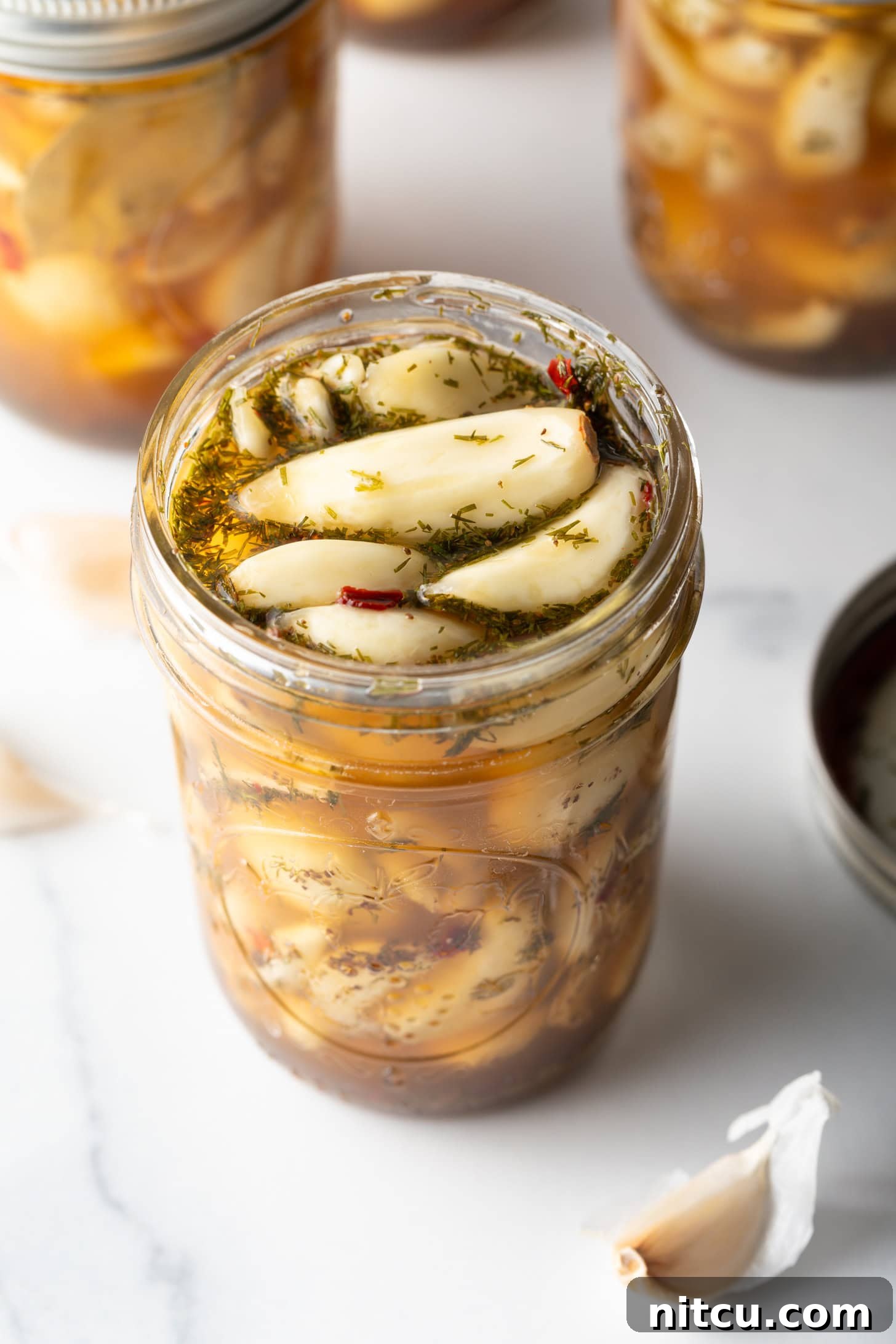
How to Make Delicious Pickled Garlic: A Simple Refrigerator Pickle Recipe for Flavorful Preservation
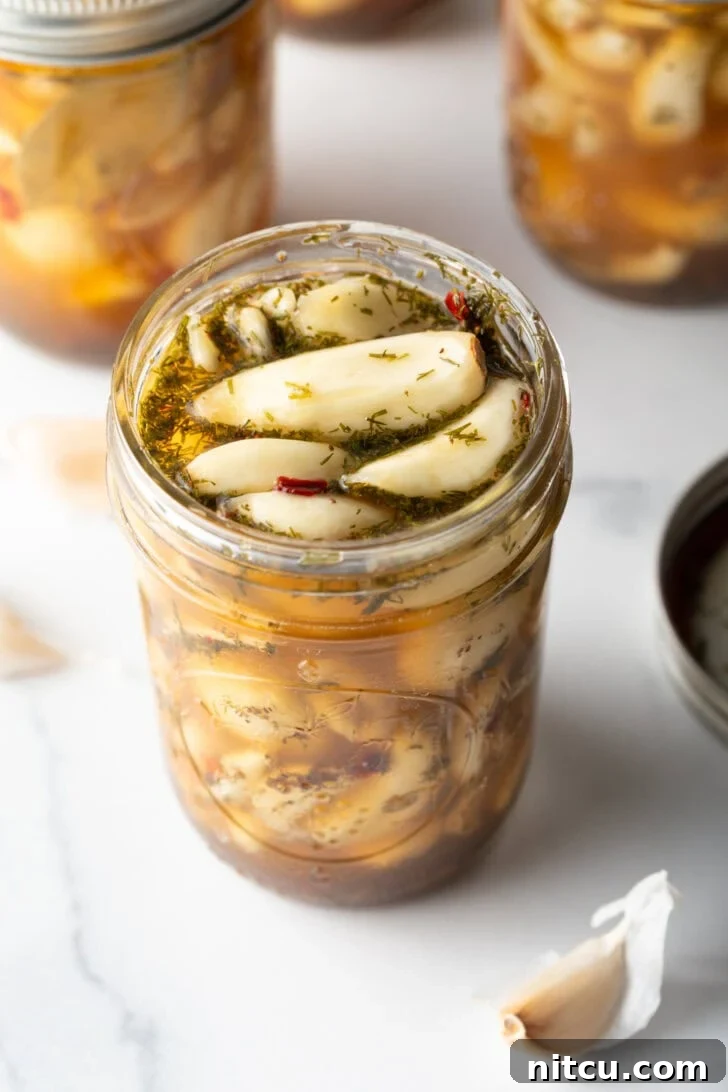
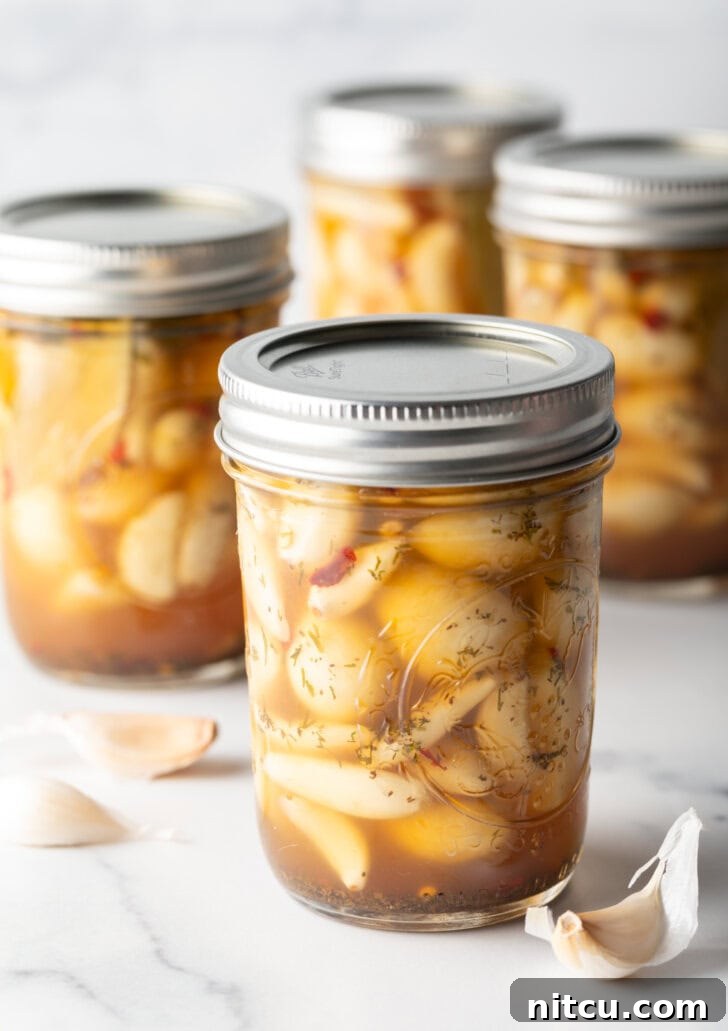
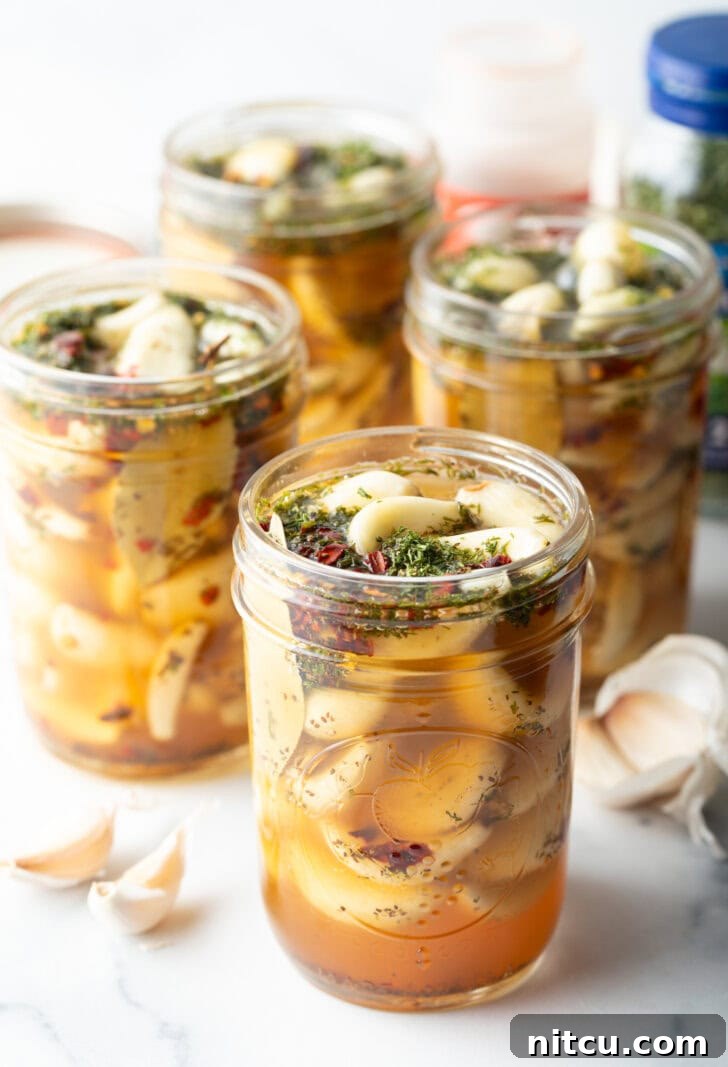
Discover the delightful world of pickled garlic with this classic quick refrigerator pickles recipe. In just four simple steps, you can transform fresh garlic cloves into a tangy, bold, and incredibly versatile condiment. Perfect for adding a burst of flavor to countless savory dishes or enjoying straight from the jar as a zesty snack, these preserved garlic cloves will become a staple in your kitchen. Say goodbye to strong raw garlic breath and hello to a mellow, aromatic treat that lasts for months!
Why You’ll Love This Homemade Pickled Garlic Recipe
If your garden is overflowing with fresh garlic this season, or if you simply found an amazing deal at the farmer’s market, mastering the art of pickling garlic is an invaluable skill. This recipe offers a fantastic opportunity to create jars of flavorful, preserved garlic for future enjoyment. But why go through the effort of pickling garlic?
- Extended Shelf Life: Pickling is a time-honored method of preservation that significantly extends the life of fresh garlic. Instead of worrying about your garlic going bad, you can enjoy these tangy cloves for up to a year when stored correctly in the refrigerator.
- Enhanced Flavor Profile: The pickling process infuses the garlic with a unique blend of sweet, sour, and savory notes, complemented by aromatic spices. It creates a complex flavor that is distinct from raw or cooked garlic, adding depth to any dish.
- Milder Taste & Texture: One of the most appealing aspects of pickled garlic is its transformation. The pickling brine works its magic, desensitizing the garlic cloves. This makes them significantly milder in flavor, removing the harsh, pungent bite often associated with raw garlic. The texture also softens slightly, making them pleasant to eat whole.
- Odor Reduction: Worried about garlic breath? Pickling dramatically reduces the potent odor and sharp aftertaste of garlic. This means you can enjoy the delicious flavor without the lingering worry of bad breath, making them perfect for snacking or incorporating into social meals.
- Versatile Culinary Ingredient: From charcuterie boards to salads, sandwiches, and even cooked dishes, pickled garlic cloves add a gourmet touch and a pop of flavor. They’re an easy way to elevate everyday meals.
Important Note on Preservation: This recipe focuses on making refrigerator garlic pickles. Using 1 ½ to 2 pounds of garlic typically yields about four 8-ounce jars. These jars are designed for cold storage and can be safely kept in the refrigerator for 9-12 months. It is crucial to understand that according to the USDA, you should NOT attempt to home can garlic cloves using traditional methods (like a water bath or pressure canning) to achieve shelf-stability outside of the refrigerator. Garlic is a low-acid food, and improper canning can lead to the risk of botulism. Always keep your pickled garlic in the fridge!
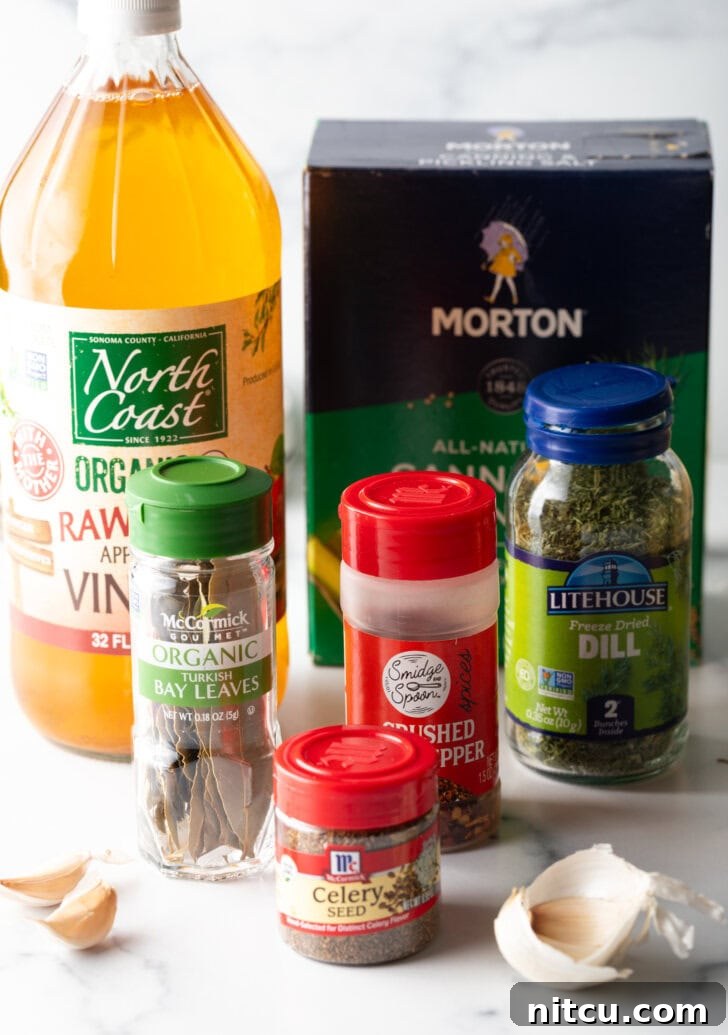
Essential Ingredients for Your Pickled Garlic
Crafting the perfect batch of pickled garlic starts with selecting fresh, high-quality ingredients. Each component plays a vital role in creating the irresistible flavor and ensuring proper preservation. Here’s what you’ll need:
- Fresh Garlic Heads (1.5-2 lbs): This amount generally translates to about 15-30 heads, depending on their size. Opt for firm, unblemished garlic heads. Avoid any with soft spots, sprouts, or signs of mold. The quality of your fresh garlic directly impacts the final flavor and texture of your pickled cloves.
- Apple Cider Vinegar (or alternative) (32 oz): Apple cider vinegar is highly recommended for its slightly sweet, fruity tang that beautifully complements the garlic without being overly sharp. Its acidity is essential for the pickling process, creating an environment that inhibits bacterial growth.
- Alternatives: White wine vinegar offers a similar mild acidity and a delicate flavor. Rice vinegar, with its subtle sweetness, is another excellent choice for a less assertive tang. While white vinegar can be used, its stronger, sharper taste might overpower the delicate nuances of the garlic and spices.
- Canning & Pickling Salt (¼ cup): This specialized salt is pure sodium chloride, free of iodine and anti-caking agents. Iodine can discolor pickles and anti-caking agents can make the brine cloudy.
- Alternative: Any iodine-free salt, such as kosher salt (ensure it’s pure, without additives) or sea salt (fine grain is best for consistent measurement), can be used as a substitute. Do not use table salt.
- Bay Leaves (4 leaves): These aromatic leaves impart a subtle, earthy, and slightly floral note to the pickling brine, adding complexity to the overall flavor profile. They are for flavoring only and are not meant to be eaten.
- Dill (2 tsp dried or 2 tbsp fresh): Dill is a classic pickling herb, providing a fresh, slightly grassy, and distinctive taste that pairs wonderfully with garlic. Whether you choose dried dill weed or fresh dill sprigs, it will contribute significantly to the pickle’s character.
- Celery Seeds (1 tsp): Celery seeds have a warm, slightly bitter, and earthy flavor that helps to mellow the sharp bite of the garlic and adds a traditional pickle spice note.
- Crushed Red Pepper Flakes (1 tsp) (Optional): For those who enjoy a little heat, crushed red pepper flakes provide a pleasant kick. Adjust the quantity to your preferred level of spiciness, or omit them entirely for a milder pickled garlic.
Simple Steps to Preserve Garlic with This Recipe
Making homemade pickled garlic is a straightforward process that yields incredibly rewarding results. Follow these easy steps to create your delicious jars of preserved garlic:
Step 1: Prepare Your Jars and Garlic
Begin by setting out four sanitized 8-ounce canning jars (also known as half-pint jars). Proper sanitization is crucial to prevent spoilage. You can sanitize jars by washing them thoroughly in hot, soapy water, rinsing well, and then either running them through a dishwasher’s sanitizing cycle or boiling them in water for at least 10 minutes. Allow them to air dry or keep them warm until ready to use.
Next, prepare your garlic. Separate the heads of garlic into individual cloves. The most time-consuming part of this recipe is peeling all the cloves. You can expedite this process by lightly smashing each clove with the flat side of a chef’s knife or by blanching them briefly in boiling water for 15-20 seconds before transferring them to an ice bath; the skins should then slip off easily. Once peeled, stuff the clean, ready-to-pickle garlic cloves into the sanitized canning jars, leaving a little space at the top.
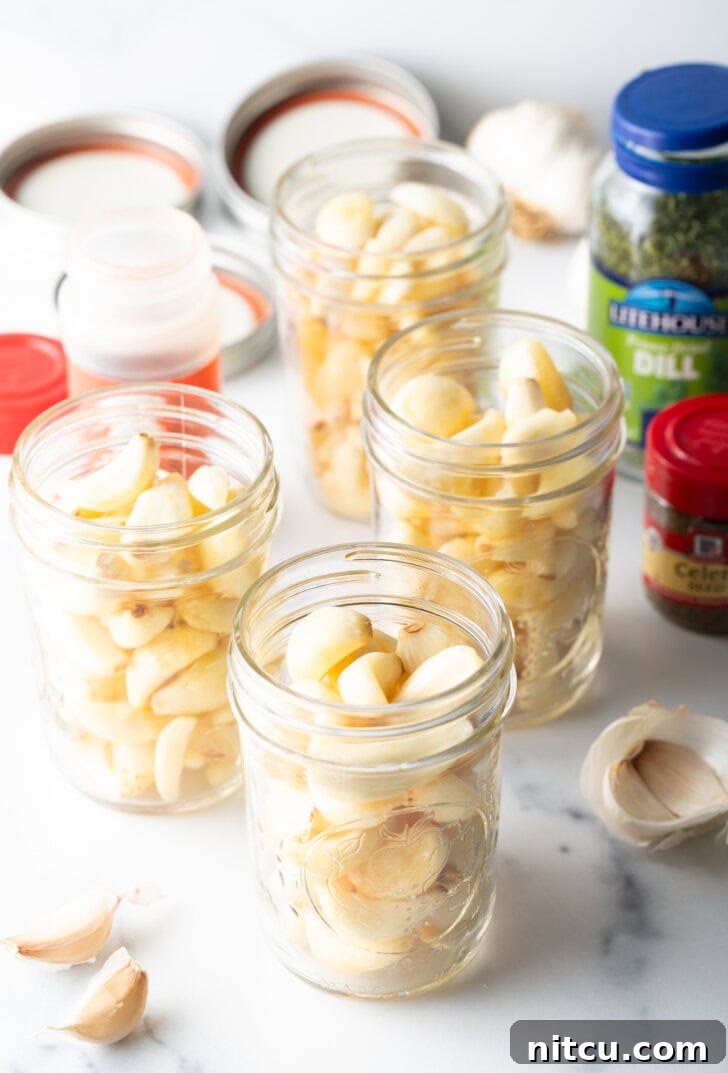
Step 2: Add Your Flavorful Spices
To each jar filled with peeled garlic cloves, add your chosen spices. This step is where the magic of flavor infusion begins. Distribute them evenly among the jars:
- One bay leaf per jar
- ½ teaspoon of dried dill per jar (or ½ tablespoon of fresh dill)
- ¼ teaspoon of celery seeds per jar
- ¼ teaspoon of crushed red pepper flakes per jar (if desired for a spicy kick)
For a complete, printable recipe card with exact measurements and detailed instructions, scroll down below!
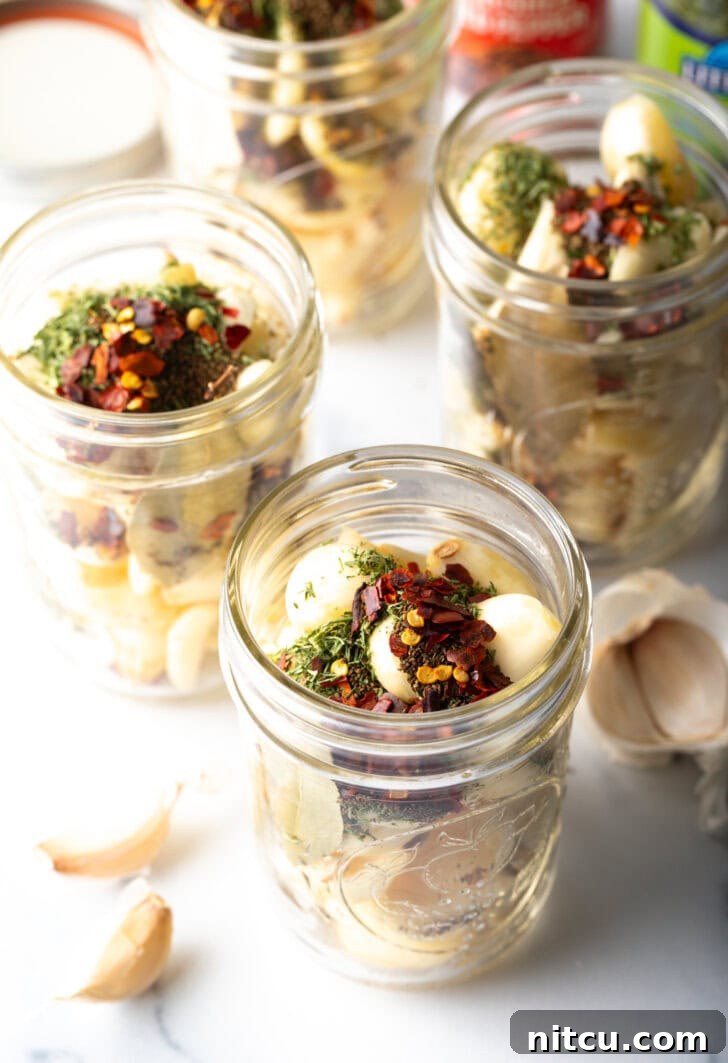
Step 3: Prepare the Brine
Set a medium saucepan on high heat on your stovetop. Carefully pour in the apple cider vinegar and the canning and pickling salt into the pot. Bring this mixture to a rolling boil. Stir occasionally to ensure the salt dissolves completely. This brine will be the flavorful liquid that preserves and transforms your garlic.
Step 4: Fill Jars with Hot Brine and Seal
Once the pickling brine is boiling, carefully ladle the hot liquid over the top of the garlic and spices in each canning jar. Fill the jars, making sure the garlic cloves are fully submerged, up to ½-inch headspace from the top rim of the jar. This headspace is important for proper sealing and preservation.
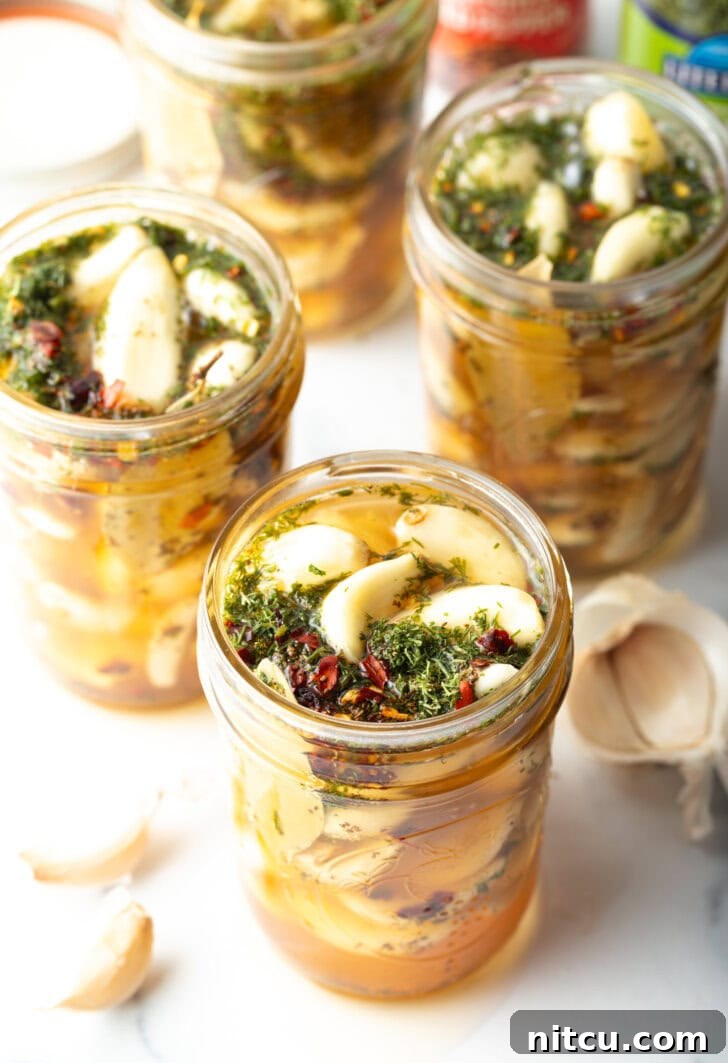
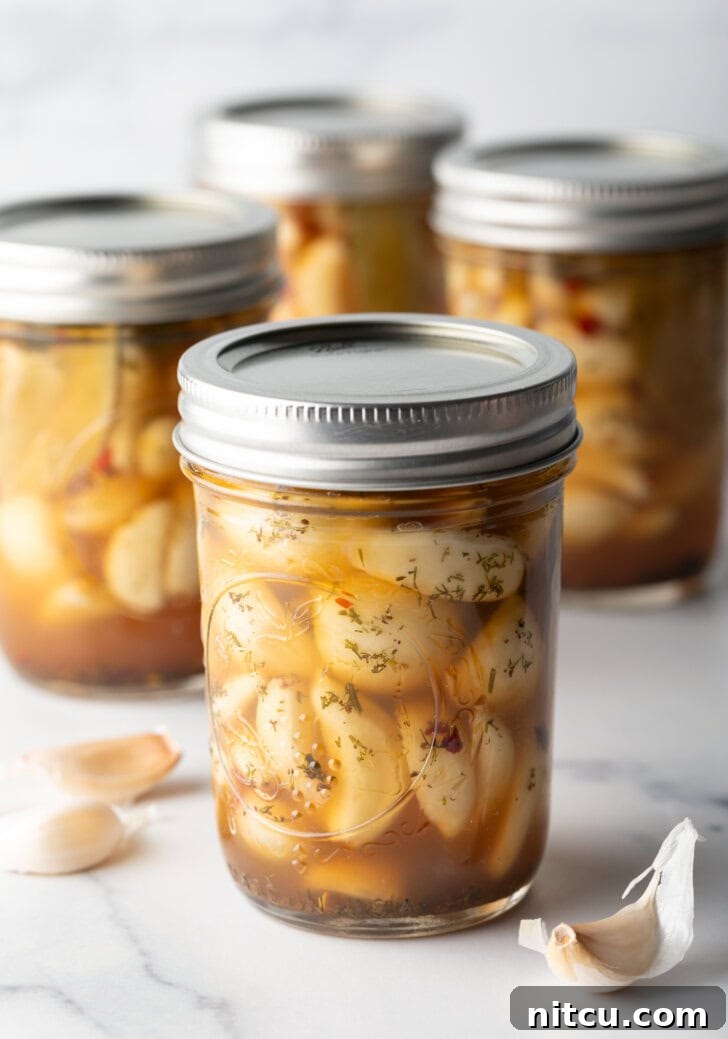
While the jars are still hot from the brine, carefully screw the lids on tight. The heat from the brine helps to create a vacuum seal as the jars cool, which aids in preserving the garlic. Allow the sealed jars to cool completely to room temperature on your countertop. Once cooled, immediately transfer them to the refrigerator for storage.
For the best flavor and texture, allow your pickled garlic to rest in the refrigerator for at least 48 hours before serving. This crucial waiting period allows sufficient time for the garlic cloves to absorb the tangy brine and begin their desensitizing process. The longer they sit in the pickling brine, the more mellow, flavorful, and wonderfully integrated the tastes will become. Some prefer to wait even a week or two for optimal flavor development.
Creative Ways to Enjoy Your Pickled Garlic
Once you’ve made a batch of delicious pickled garlic, you’ll find countless ways to incorporate these tangy, mellow cloves into your culinary repertoire. How exactly do you use pickled garlic cloves? Think of them as you would any other pickled item – they’re incredibly versatile!
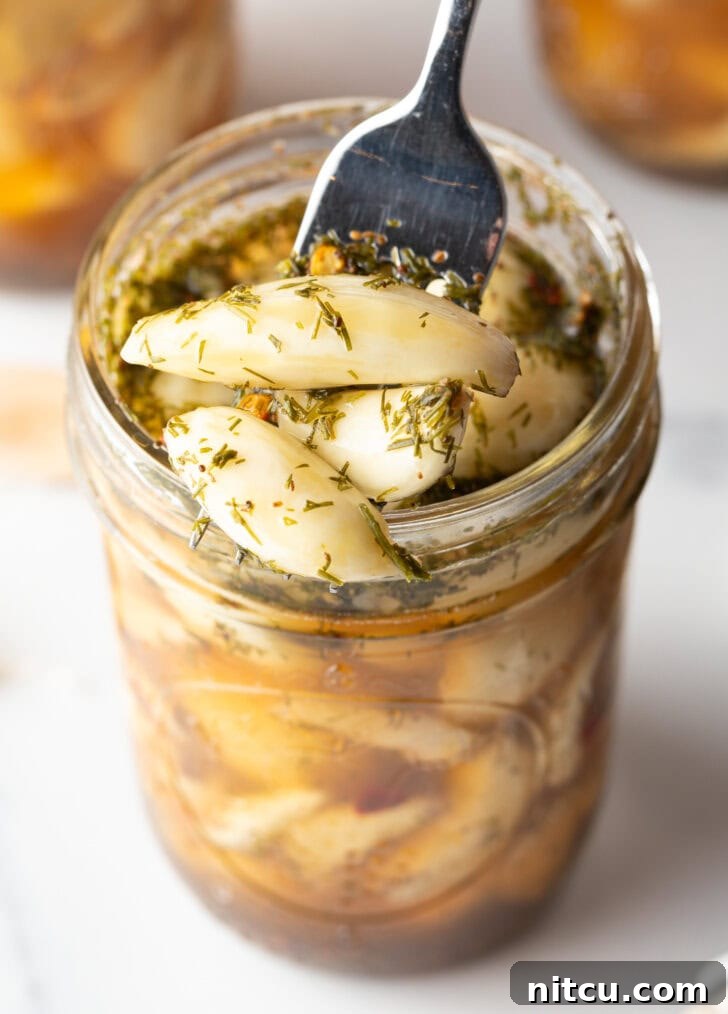
You can simply eat them cold, right out of the jar, as a refreshing and flavorful snack. Beyond that, they seamlessly integrate into a wide array of savory dishes, adding a unique tang and a delightful texture. Here are just a few of our favorite ways to use preserved garlic:
- Elevate Sandwiches and Wraps: Slice or chop pickled garlic and layer it into your favorite sandwiches, subs, or wraps for an unexpected burst of zesty flavor that cuts through richer ingredients.
- Gourmet Pizza Topping: Roughly chop the pickled cloves and scatter them over homemade or store-bought pizzas before baking. The mild, tangy garlic adds a sophisticated twist.
- Enhance Salads: Add whole or sliced pickled garlic to a variety of salads. They are particularly fantastic in antipasto salad, hearty farro salad, vibrant pasta salad, or a simple green salad for a punch of flavor. The brine can even be incorporated into your salad dressing.
- Charcuterie Boards and Snack Plates: Pickled garlic is a must-have on any impressive charcuterie board or snack platter. Their bright flavor and appealing texture pair beautifully with cheeses, cured meats, olives, and crackers.
- Boost Grain and Protein Bowls: Incorporate them into healthy grain bowls (like quinoa or rice bowls) or protein-packed salad bowls for an extra layer of taste and nutrition.
- Flavorful Garnish: Finely mince pickled garlic and sprinkle it over roasted vegetables, grilled meats, or even scrambled eggs for a quick flavor upgrade.
- Creative Appetizers: Skewer whole pickled garlic cloves with cherry tomatoes and mozzarella balls for a quick and easy caprese-style appetizer.
And don’t forget, you can also chop and cook them as you would fresh garlic cloves! This means they can be added to stir-fries, sauces, sautés, or stews, imparting a milder, tangier garlic flavor that’s less assertive than raw garlic but still incredibly aromatic. Experiment and discover your favorite applications!
Frequently Asked Questions About Pickled Garlic
They offer distinctly different culinary experiences. Fresh garlic is known for its hard, crisp texture and a strong, pungent, earthy flavor. Pickled garlic, by contrast, has a slightly softer texture and a tangy, savory, and often herbaceous taste, thanks to the pickling brine and spices. Neither is inherently “better” than the other; they simply serve different purposes and provide unique flavors to dishes.
If you desire very mellow garlic cloves, you can pre-boil them before adding the brine. After peeling the cloves, place them directly into the boiling pickling brine on the stovetop and let them boil for about 5 minutes. This extra step helps to further soften the garlic and significantly reduce its pungency. After boiling, carefully ladle both the cloves and the brine into the prepared jars.
Absolutely! Many people enjoy pickled garlic straight from the jar as a snack or appetizer. Its milder flavor and satisfying texture make it a surprisingly delightful treat. A typical serving is roughly 2-3 tablespoons, which you can enjoy on its own or as part of a larger spread.
When stored properly in sealed jars in the refrigerator, homemade pickled garlic can last for up to 9-12 months. Always ensure the garlic cloves remain submerged in the brine for optimal preservation. Discard if you notice any signs of spoilage, such as mold, off-smells, or unusual discoloration.
Any variety of fresh, firm garlic heads can be used for pickling. Look for heads that are plump, free of sprouts, and without any soft spots or signs of decay. Hardneck varieties often produce larger, easier-to-peel cloves, but softneck garlic works perfectly fine too.
Yes, absolutely! This recipe provides a classic base, but feel free to experiment with other pickling spices. Mustard seeds, coriander seeds, peppercorns, and even a touch of fresh rosemary or thyme can add interesting dimensions to your pickled garlic. Just remember to add them to the jars along with the other dry spices.
Looking for More Perfectly Pickled Recipes? Be Sure to Try:
- Quick Pickled Jalapeños
- Pickled Radish Recipe
- Chamoy Pickles
- Spicy Beet Pickled Eggs
- Pickled Banana Peppers
- Pickled Green Tomatoes
- Quick Pickled Red Onions
- Pickled Watermelon Rind
Print Recipe
Leave a Review »
Pickled Garlic (Preserved Garlic)
30
minutes
5
minutes
35
minutes
80
servings (4 jars)
Ingredients
Metric
-
1 ½ – 1 ¾
pounds
fresh garlic heads
peeled and separated into cloves -
32
ounces
apple cider vinegar
-
¼
cup
canning & pickling salt
iodine free salt -
4
bay leaves
-
2
teaspoons
dried dill
or 2 tablespoons fresh dill -
1
teaspoon
celery seeds
-
1
teaspoon
crushed red pepper flakes
Instructions
-
Set out four sanitized 8-ounce canning jars. Separate the heads of garlic and peel all the cloves. Then stuff the clean cloves into the canning jars.
-
To each jar, add one bay leaf, ½ teaspoon of dried dill, ¼ teaspoon of celery seeds, and ¼ teaspoon of crushed red pepper.
-
Set a medium sauce pot on high heat. Pour in the apple cider vinegar, and pickling salt into the pot. Bring to a boil.
-
Once boiling, carefully ladle the boiling-hot pickling brine over the top of the canning jars. Fill the canning jars up to ½ inch from the top.
-
While the jars are hot, screw the lids on tight. Cool to room temperature and then store in the refrigerator for at least 48 hours before serving. This allows time for the garlic cloves to start desensitizing. The longer they sit in the pickling brine, the more mellow they become!
Notes
If you want to make sure the garlic cloves are VERY mellow, you can place them in the boiling brine on the stovetop and boil them for 5 minutes. Then ladle the cloves and brine into the jars.
Here we’re pickling 1 ½ to 2 pounds of garlic, which equals about four 8-ounce jars. These jars can be kept in the refrigerator for 9-12 months. However, according to the USDA it’s best not to try to can garlic cloves to be shelf stable. Keep them in the fridge!
Nutrition
Serving:
2
tb
,
Calories:
15
kcal
,
Carbohydrates:
3
g
,
Protein:
1
g
,
Fat:
0.1
g
,
Saturated Fat:
0.01
g
,
Polyunsaturated Fat:
0.02
g
,
Monounsaturated Fat:
0.01
g
,
Sodium:
356
mg
,
Potassium:
44
mg
,
Fiber:
0.2
g
,
Sugar:
0.1
g
,
Vitamin A:
10
IU
,
Vitamin C:
3
mg
,
Calcium:
17
mg
,
Iron:
0.2
mg
Condiment, Side Dish, Snack
American
Sommer Collier
Cook It? Love It? Rate It!
YOU can help this recipe RANK on Google – TAP 5 STARS so other hungry people can find it. Thank you!