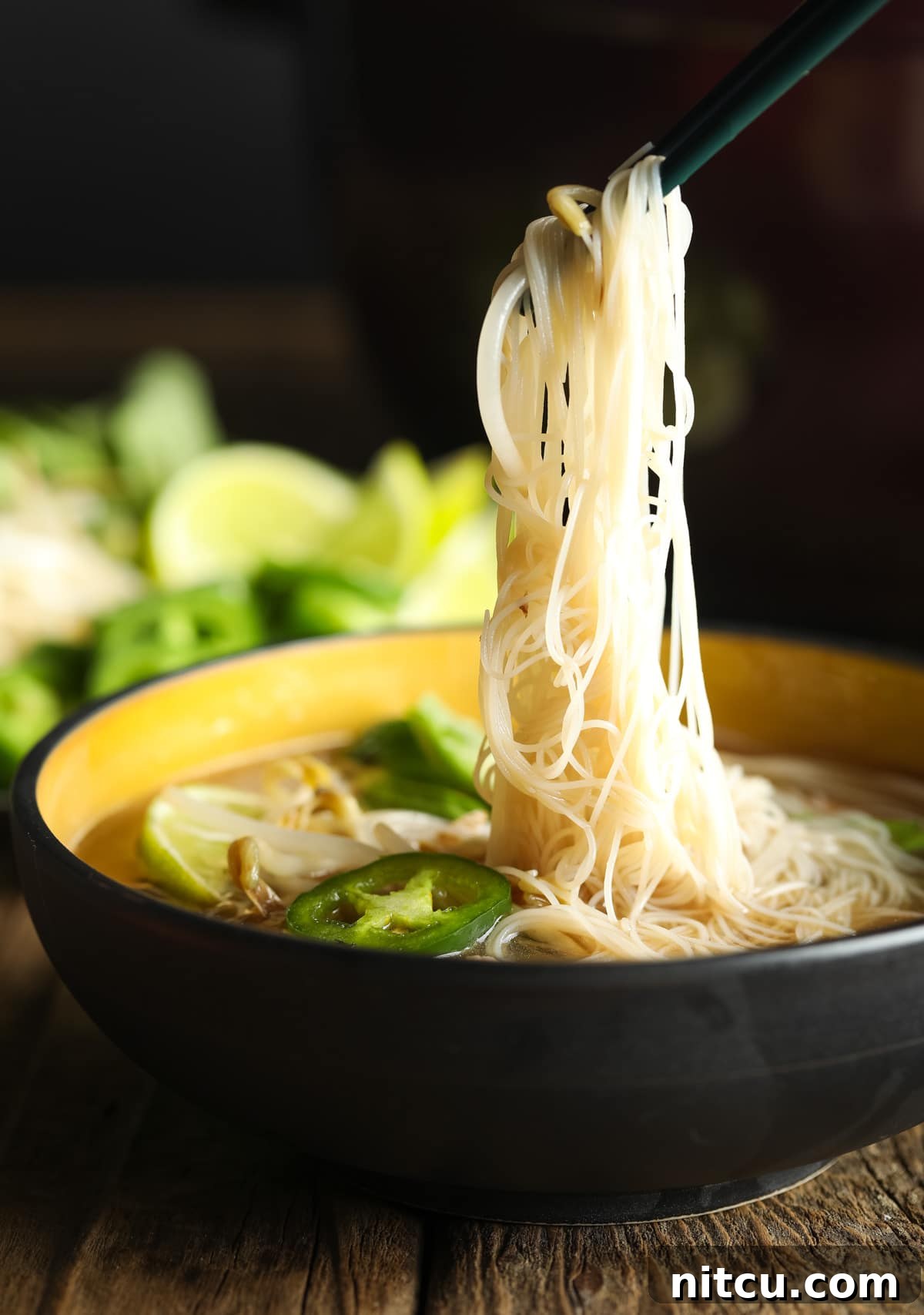
As the chill of colder seasons sets in, there’s a profound comfort found in a steaming bowl of **Vietnamese beef pho soup**. This isn’t just any soup; it’s an aromatic journey, a culinary embrace that warms you from the inside out. Over the years, I’ve perfected a rendition that captures the authentic, bold, and brothy essence of this beloved Vietnamese staple, while also making it wonderfully adaptable for various dietary needs. My signature **healthy pho recipe** features a rich, deeply flavored broth simmered to perfection, paired with low-carb noodles to ensure it’s light, lean, and compliant with many popular diets, including keto and paleo.
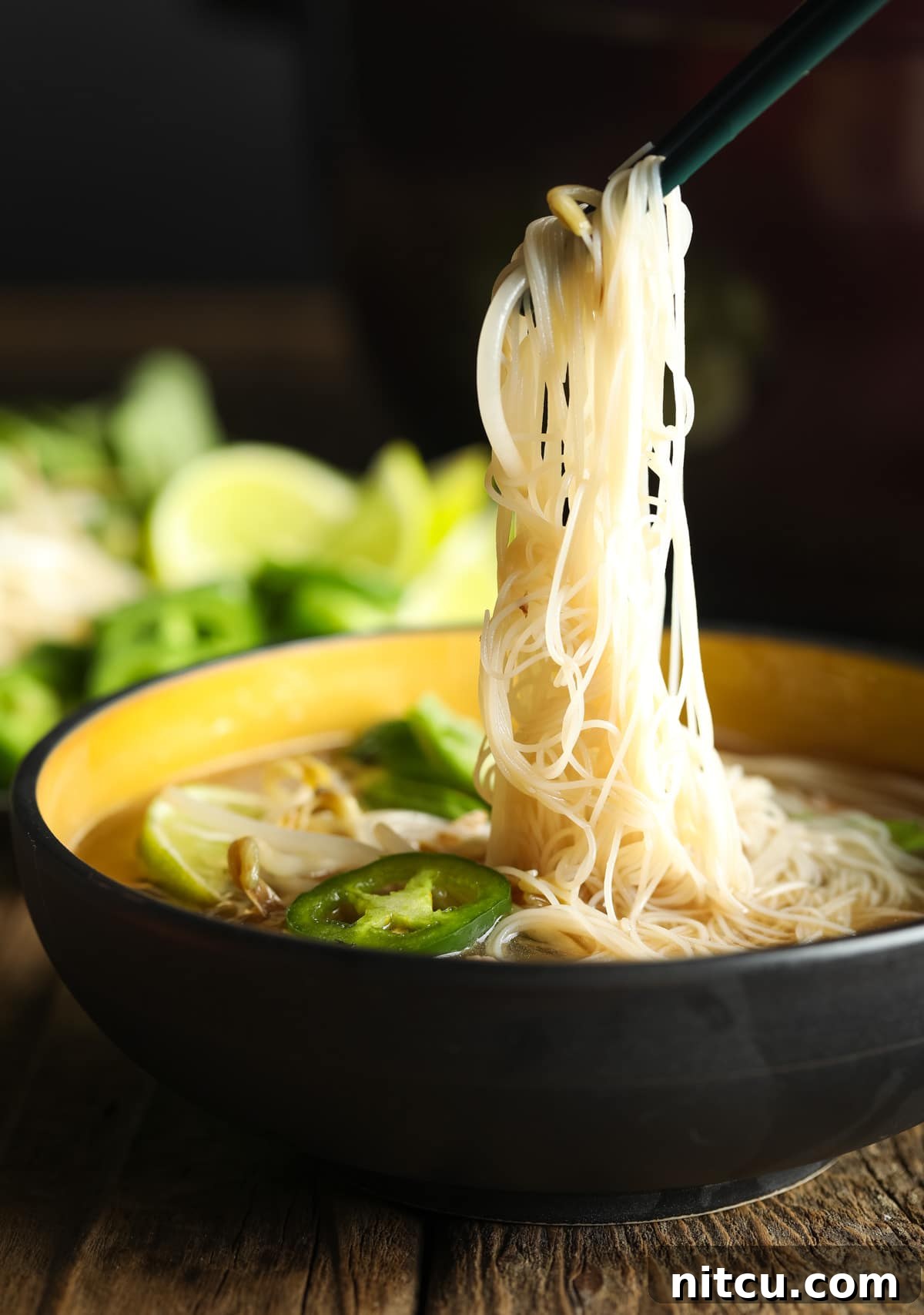
Vietnamese pho holds a special place in my family’s heart, consistently ranking among our top favorite meals. The mere mention of it often leads to a unanimous decision to visit our cherished local Vietnamese restaurant. The allure of this noodle soup is undeniable: a complex, spicy-sweet broth forms the foundation, perfectly complemented by the refreshing crunch and vibrant zest of fresh ingredients added at the table. While traditional pho is inherently nutritious, this recipe takes it a step further. I’ve incorporated just a few thoughtful adjustments to transform this tantalizing beef soup into a guilt-free pleasure, ideal for a New Year’s resolution or any healthy eating plan. Much like my Japanese clear soup recipe, it offers a profoundly satisfying and wholesome meal in a single bowl.
Frank Mosher — ⭐⭐⭐⭐⭐ Wow!! The first recipe I have ever seen from a blog (have to say your’s is my favourite) featuring “konjac” pasta, which is virtually carb-free! Your recipe for “Pho” is great also!! Cheers. You must have had a few bowls of it on your recent trip! Many thanks!
The Allure of Vietnamese Pho
Pho is more than just a soup; it’s a culinary icon that embodies the soul of Vietnamese cuisine. Originating in the early 20th century, pho has evolved into a global phenomenon, celebrated for its deeply aromatic broth, tender slices of meat, and delicate noodles. Traditionally, pho is a harmonious blend of savory, sweet, salty, and umami flavors, often enjoyed as a breakfast staple but equally comforting at any time of day. Its complex flavor profile comes from a meticulous simmering process, where bones and an array of spices are slowly coaxed to release their essence into a clear, golden broth. The beauty of pho lies not only in its taste but also in its interactive serving style, allowing each diner to customize their bowl with fresh herbs, chiles, and lime, creating a truly personalized experience.
Table of Contents
- Sommer’s Recipe Highlights
- Why Choose a Healthy, Low-Carb Pho?
- Key Ingredients for Authentic Flavor
- Step-by-Step: How to Make the Perfect Pho
- Substitutions and Variations
- Storage and Reheating Tips
- Frequently Asked Questions
- More Asian Soup Recipes
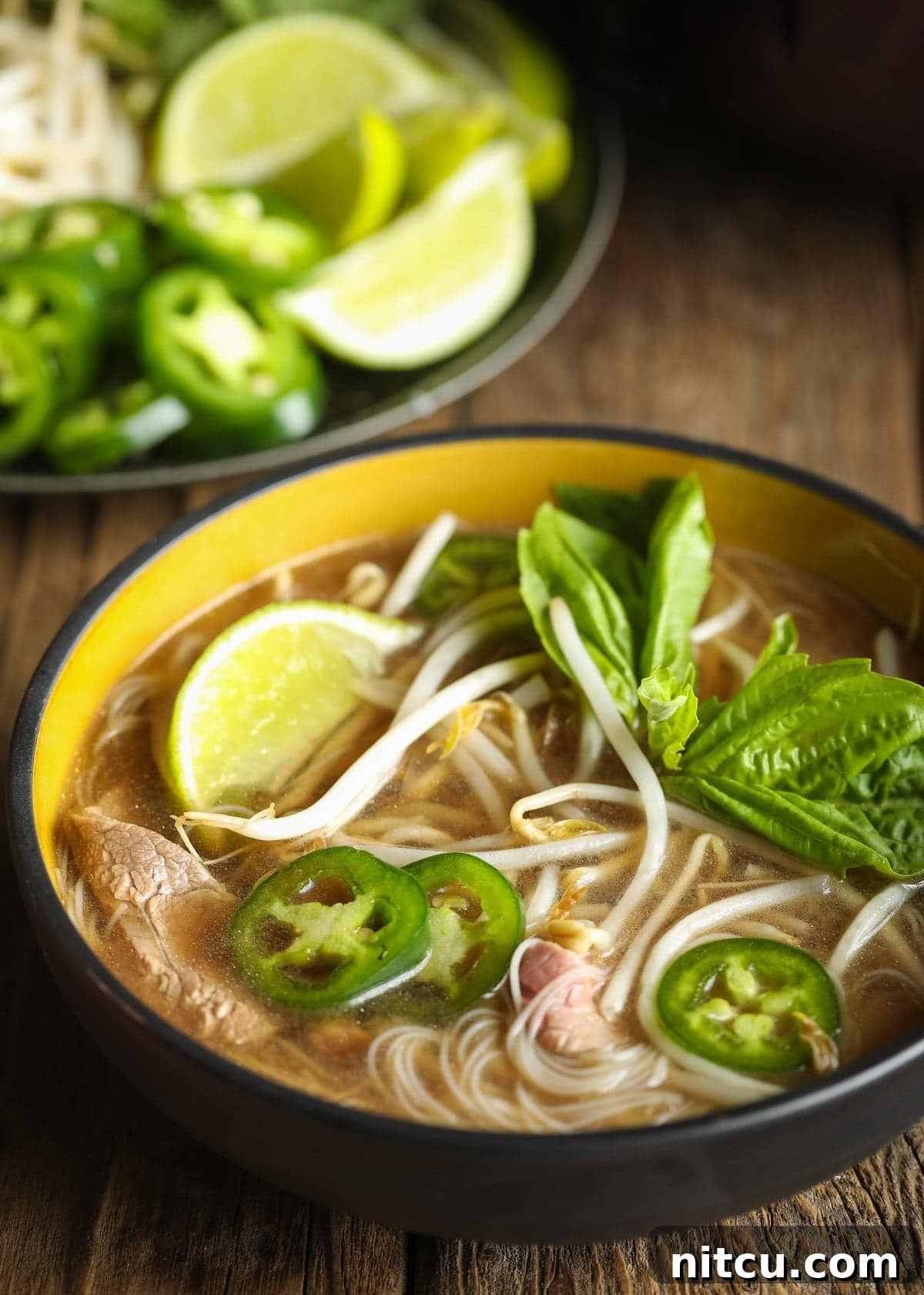

Sommer’s Recipe Highlights
When I set out to create this healthy pho recipe, my goal was to bring the incredible flavors of an authentic Vietnamese restaurant experience right into your kitchen, with a mindful approach to health and diet. Here’s what makes this recipe truly stand out:
Authentic Taste, Made Accessible: Achieving that complex, restaurant-quality pho flavor typically involves a long list of ingredients and a dedicated cooking process. While my recipe does require more than a handful of components, each plays a vital role in building an incredibly rich and nuanced broth that rivals your favorite takeout. The best part? All the ingredients, including specialty items like shirataki noodles, are readily available at most local grocery stores or online, making this gourmet experience achievable for home cooks.
Diet-Friendly and Delicious: This steaming, brothy soup is inherently wholesome. It’s built upon an herb-infused broth, lean cuts of beef, an abundance of fresh vegetables, and the innovative addition of healthy low-carb noodles. This makes it an ideal choice for those managing carb intake, whether following a keto, paleo, or whole30 diet. It’s a fantastic meal to satisfy those carb cravings without derailing your dietary goals, much like my popular chicken detox soup recipe.
Flavor That Deepens with Time: In my culinary philosophy, truly great soups only improve with age. The extended simmering of the broth base allows the spices and aromatics to meld and intensify, developing a profound depth of flavor that’s simply unmatched. This characteristic also makes it an exceptional make-ahead meal. Prepare the broth in advance, and you’ll have a wonderfully flavorful base ready to warm and serve throughout the week, offering convenience without compromising on taste.
Why Choose a Healthy, Low-Carb Pho?
In an increasingly health-conscious world, adapting classic dishes to fit modern dietary needs is a game-changer. This low-carb pho recipe offers all the beloved flavors of traditional Vietnamese pho while supporting your wellness goals. By substituting high-carb rice noodles with shirataki noodles, we drastically reduce the carbohydrate count, making it suitable for keto, paleo, and even Whole30 diets (ensure all ingredients are compliant). This means you can indulge in a hearty, satisfying bowl of pho without the guilt, enjoying a meal that is:
- Rich in Protein: Lean flank steak provides an excellent source of protein, essential for muscle maintenance and satiety.
- Packed with Nutrients: The fresh garnishes like bean sprouts, basil, and lime add vital vitamins, minerals, and antioxidants.
- Hydrating and Comforting: A warm, flavorful broth is not only incredibly comforting but also helps with hydration, especially during colder months.
- Low in Calories and Carbs: The strategic swaps keep the calorie and carb count low, making it a perfect meal for weight management or specific dietary protocols.
Key Ingredients for Authentic Flavor
The magic of pho lies in its unique blend of ingredients, each contributing to its distinctive profile. To achieve that authentic Vietnamese taste, selecting quality ingredients and understanding their role is crucial.
- Aromatics for the Broth: The soul of any pho lies in its broth, and this recipe is no exception. A carefully curated combination of fresh ginger, robust onions, pungent garlic, fragrant cinnamon sticks, exotic star anise, warm cloves, and earthy cardamom pods forms the foundation. These are gently sautéed to release their essential oils before being simmered with fish sauce to create a rich, complex, and deeply aromatic broth that truly gets better with age. For optimal flavor extraction and convenience, considering making the broth in a crockpot while you’re out, allowing it to slowly infuse over several hours.
- Flank Steak: My preferred cut for pho is flank steak due to its excellent beefy flavor and lean texture. When sliced paper-thin, it cooks almost instantly in the hot broth, remaining tender and delicious. However, this recipe is incredibly versatile. You can easily substitute flank steak with other cuts of beef such as sirloin or eye of round, or even explore other proteins like thinly sliced pork, chicken, or shrimp for a different take.
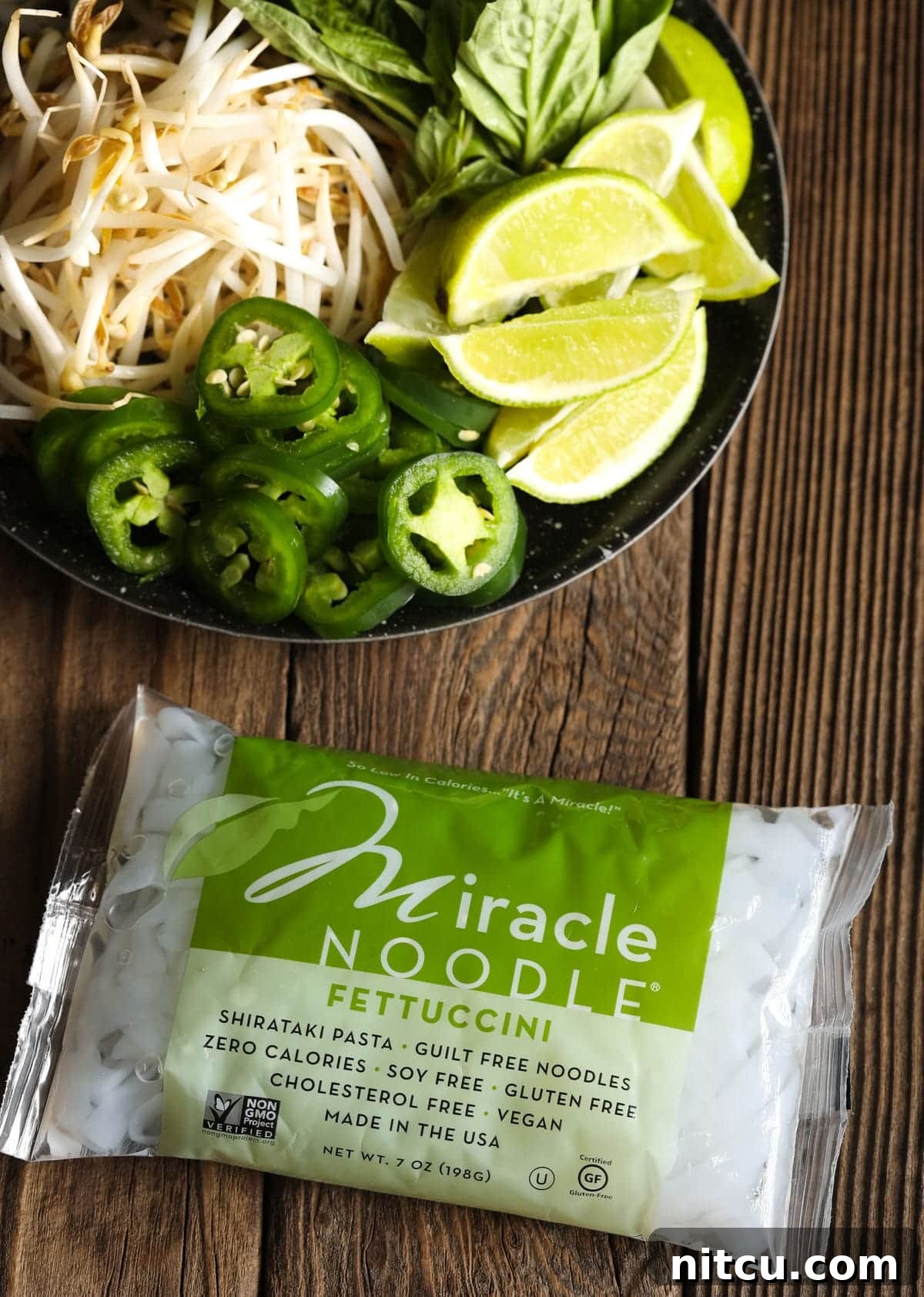
- Shirataki Noodles: Also known as Konjac noodles, these are a game-changer for a low-carb pho. They are grain-free, incredibly low in carbohydrates, and virtually calorie-free, making them an excellent choice for keto, paleo, and gluten-free diets. Their slightly chewy texture holds up well in the broth. You can typically find shirataki noodles in the refrigerated pasta or produce section of most well-stocked grocery stores, or conveniently purchase them online through retailers like Amazon. Before adding them to your soup, remember to rinse them thoroughly to remove any residual odor and then pat them dry.
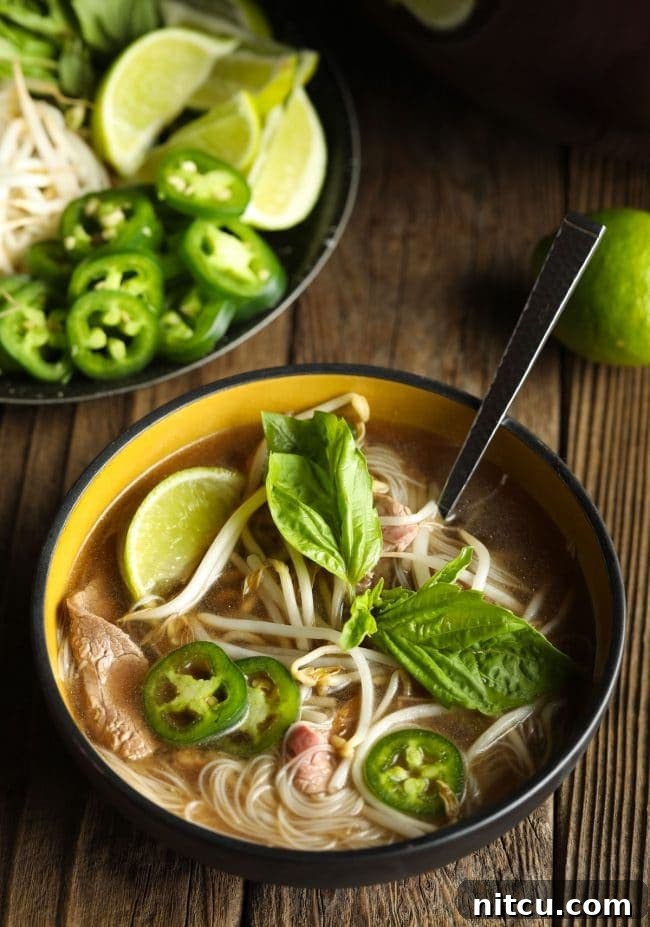
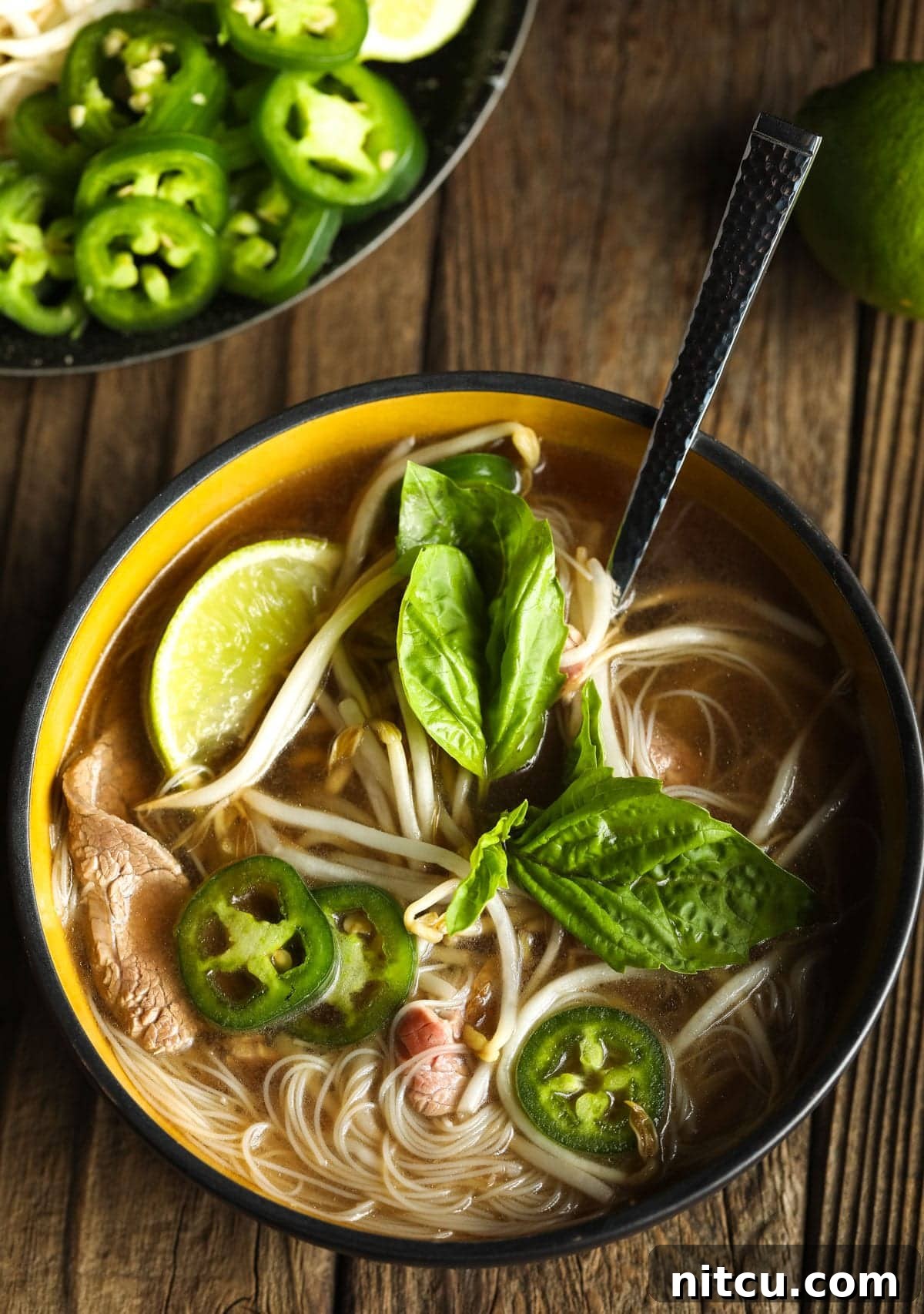
- Fresh Garnishes: These are not mere decorations; they are integral to the pho experience, providing crucial contrasts in flavor and texture. The most traditional garnishes include crisp mung bean sprouts, aromatic Thai basil leaves, zesty lime wedges, and fiery jalapeño slices. For those who love additional freshness, thinly sliced scallions and fresh cilantro are also fantastic additions that elevate the overall flavor profile.
Step-by-Step: How to Make the Perfect Pho
For precise ingredient quantities, detailed step-by-step instructions, and comprehensive storage guidance, please refer to the printable recipe card located at the conclusion of this post.
Crafting this flavorful pho involves a few key stages, each designed to build depth and complexity in your bowl. Follow these steps for an unforgettable homemade pho:
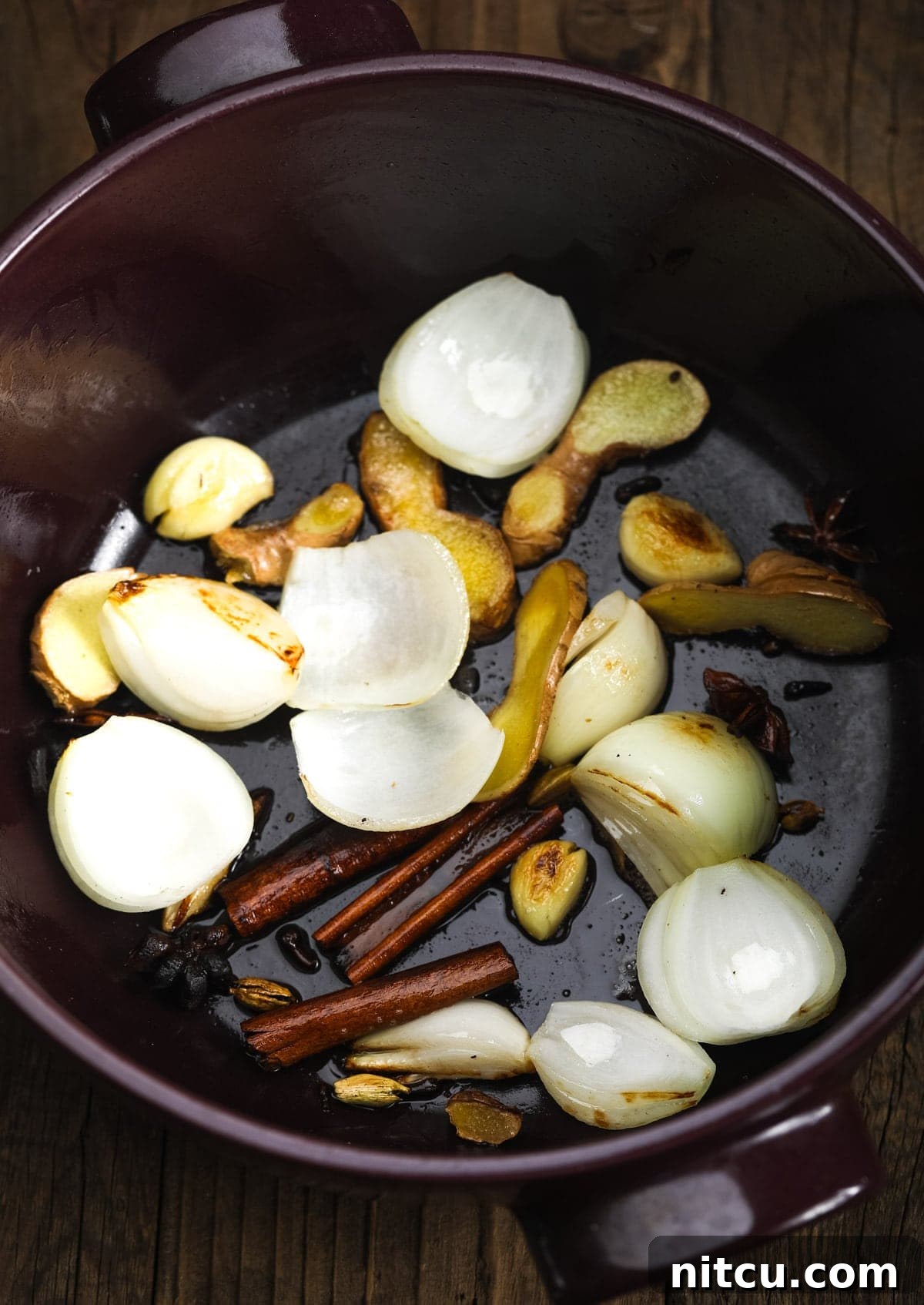
1. Sauté the Aromatics and Spices: Begin by placing a large stockpot over medium heat. Add coconut oil, followed by the quartered onion, sliced ginger, smashed garlic, cinnamon sticks, star anise, cloves, and smashed cardamom pods. Sauté these aromatics for about 10 minutes, stirring occasionally, until the onions begin to brown and the spices release their fragrant oils. This crucial step caramelizes the vegetables and toasts the spices, intensifying their flavors and adding a beautiful golden hue to your broth.
2. Slowly Simmer the Broth to Perfection: Once your aromatics are fragrant, pour in the water, beef broth, fish sauce, and palm sugar (if using). Bring the mixture to a gentle simmer. Reduce the heat to low and allow the broth to simmer for at least one hour. The longer the broth simmers, the more profound and harmonious its flavors will become. For an even more intense and restaurant-quality taste, you can simmer it for several hours or even prepare the broth a day in advance. (Don’t be deterred by the initial aroma of fish sauce; it transforms into a rich, savory depth in the final dish!)
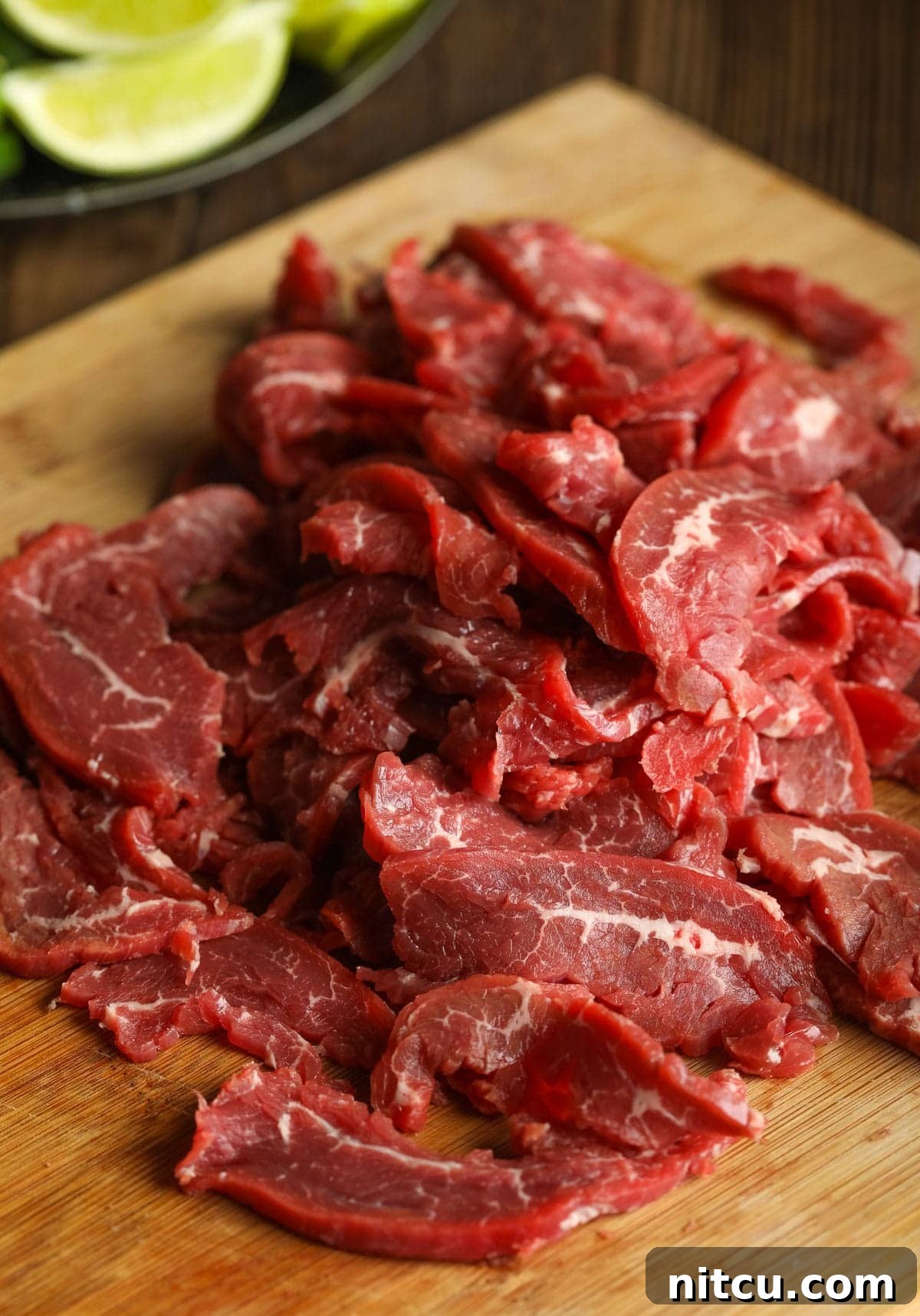
3. Prepare the Flank Steak: While the broth is simmering, prepare your flank steak. Place the steak in the freezer for about 30 minutes. This “flash freezing” technique slightly firms the exterior of the meat, making it much easier to slice against the grain into incredibly thin, uniform ribbons. The interior should remain mostly thawed, allowing for effortless slicing. This thinness is key, as it enables the beef to cook almost instantly when added to the hot broth.
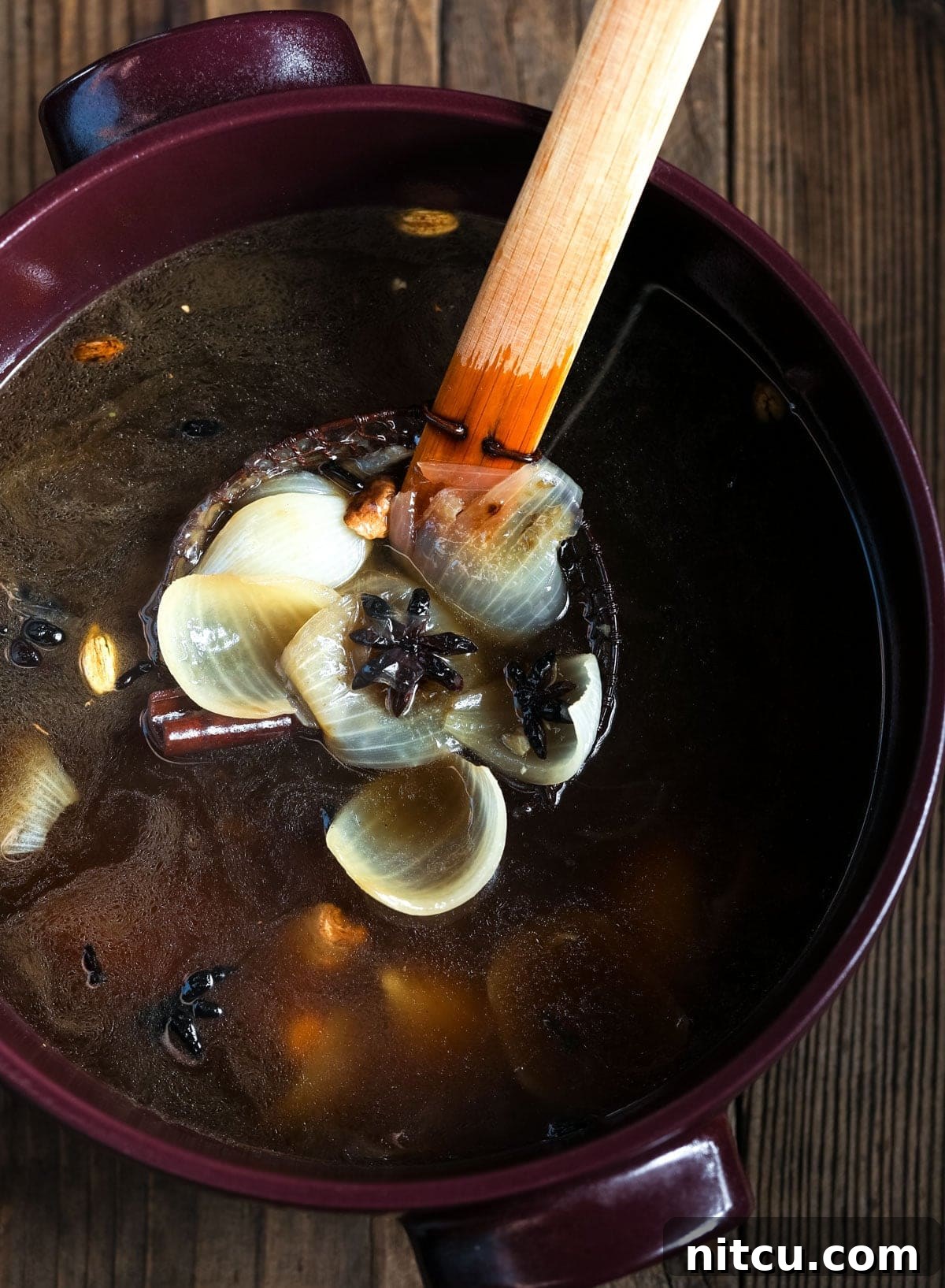
4. Skim and Prepare Garnishes: After the broth has simmered to your desired depth of flavor, use a skimmer or fine-mesh sieve to carefully remove all the cooked onions, ginger, garlic, and whole spices. This leaves you with a beautifully clear, debris-free soup base. While the broth is ready, arrange your fresh garnishes—mung bean sprouts, sliced jalapeños, lime wedges, and fresh basil leaves—neatly on a serving platter. Having them ready ensures a smooth serving process.
5. Add Noodles and Beef Just Before Serving: The beauty of thin-cut beef and shirataki noodles is how quickly they cook. Just a few minutes before you’re ready to serve, add the prepared shirataki noodles to the hot broth and cook for 2-3 minutes, or according to package instructions. Then, turn off the heat. Stir in the paper-thin slices of beef. The residual heat of the broth is sufficient to perfectly cook the beef to a tender, slightly pink doneness. Overcooking should be avoided to maintain tenderness.
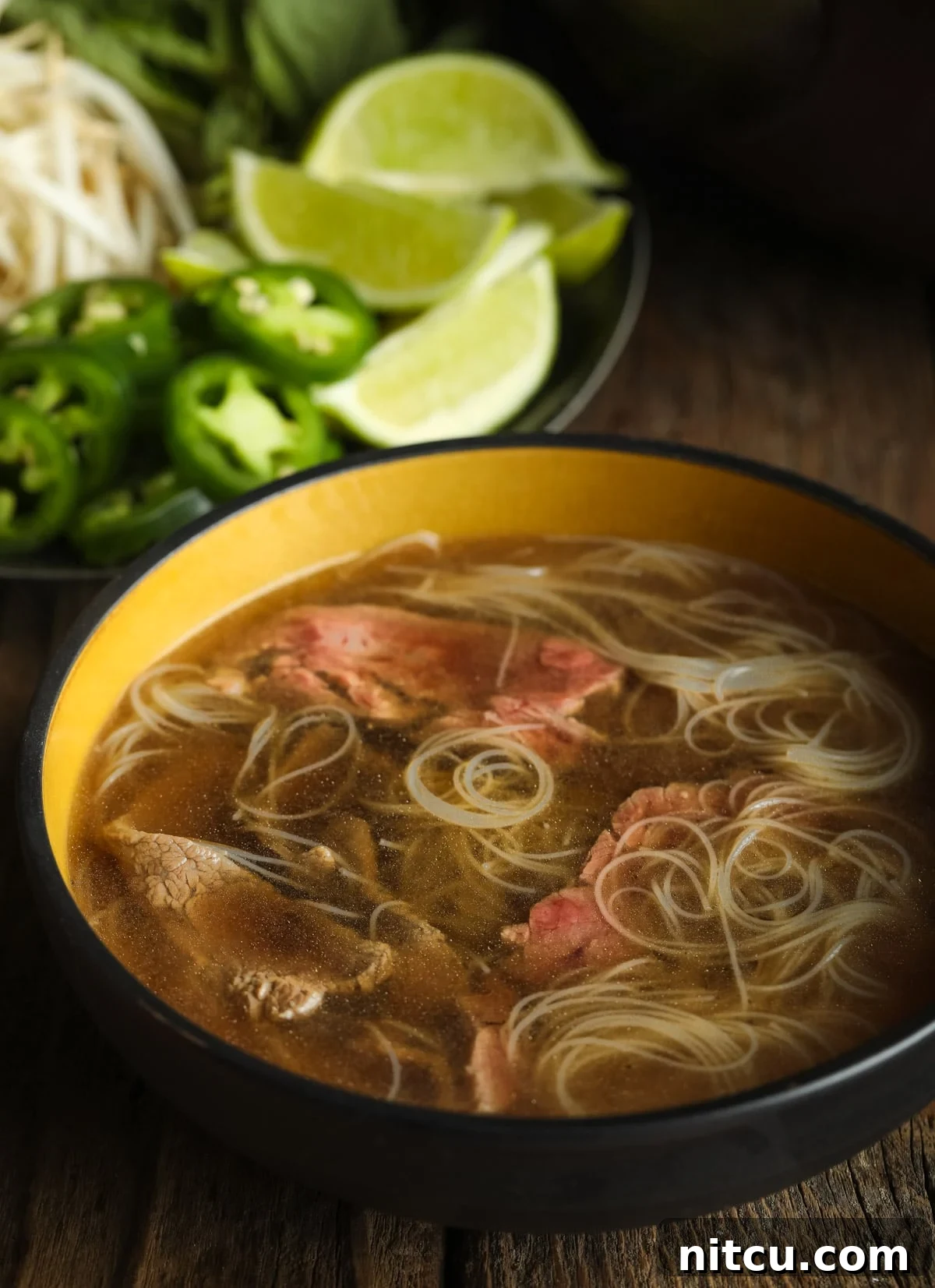
6. Serve with Fresh Garnishes: The toppings are truly what elevate a bowl of pho from delicious to extraordinary. Ladle the hot soup, noodles, and beef into individual bowls. Allow each guest to customize their serving with the array of fresh garnishes you’ve prepared. The addition of cool, crisp bean sprouts, fragrant basil, spicy jalapeños, and a squeeze of fresh lime juice provides a bright, refreshing pop of flavor and texture that perfectly balances the rich, warm broth. Enjoy immediately!
Substitutions and Variations
While this recipe aims for an authentic yet healthy pho experience, don’t hesitate to customize it to your preferences or what you have on hand. Here are some smart substitutions and variations:
- Fish Sauce: Fish sauce is a cornerstone of Vietnamese cuisine, imparting a deep, pungent, and umami-rich saltiness that is hard to fully replicate. If you absolutely cannot find it, a good quality soy sauce or even Worcestershire sauce can provide a similar savory depth, though the flavor profile will differ slightly. Use an equal portion as directed.
- Flank Steak: If flank steak isn’t available, excellent alternatives include skirt steak, flap meat steak, or lean sirloin. The key is to choose a lean cut that can be sliced very thinly against the grain to ensure tenderness when quickly cooked in the hot broth. Prepare and slice them as instructed for the flank steak.
- Palm Sugar: Palm sugar is a traditional sweetener in Asian cooking, offering a subtle caramel note. For this recipe, you can easily substitute it with white granulated sugar or, for a closer flavor profile, light brown sugar. I personally lean towards brown sugar for its complementary warmth. For strict keto diets, you can omit the sugar entirely or use a keto-friendly sweetener.
- Noodle Alternatives: If shirataki noodles aren’t your preference or you can’t find them, fresh zucchini noodles (zoodles) make another excellent low-carb, gluten-free option. For those not adhering to a low-carb diet, traditional rice noodles are, of course, the classic choice and can be used as directed on their package.
- Protein Variations: Feel free to experiment with other proteins. Thinly sliced chicken breast, pork tenderloin, or even shrimp can be quickly cooked in the hot broth. For a vegetarian or vegan pho, replace the beef broth with vegetable broth and add plenty of mushrooms (shiitake or oyster are excellent), tofu, and extra vegetables like bok choy or spinach.
Storage and Reheating Tips
One of the best qualities of homemade pho broth is its ability to deepen in flavor with time, making it an excellent candidate for meal prep. Properly storing and reheating your pho will ensure you can enjoy its deliciousness for days.
Store any leftover pho components separately for best results. The broth, once completely cooled, should be transferred to an airtight container and refrigerated. It will keep well for up to 5 days. Cooked noodles and beef are best stored in separate containers from the broth and garnishes to prevent them from becoming soggy or overcooked. Fresh garnishes should be stored in an airtight container in the refrigerator and added fresh to each serving.
To reheat, gently warm the broth in a saucepot over medium heat until simmering. Add the cooked noodles and beef (if storing them cooked) to the hot broth just until warmed through. Alternatively, for a truly fresh experience, slice fresh beef and cook the noodles as you would initially, then add them to the reheated broth. Serve with a fresh assortment of garnishes.
Frequently Asked Questions
Flash freezing is a technique used to quickly firm up meat, making it much easier to slice into extremely thin, uniform pieces. When meat is at room temperature, it can be pliable and difficult to cut precisely. By popping it in the freezer for about 30 minutes, the exterior becomes firm, providing resistance that allows for clean, paper-thin cuts. The interior remains mostly thawed, ensuring it’s not frozen solid and still workable.
The extended simmering of pho broth is essential for developing its characteristic depth, warmth, and complex flavor profile. A long simmer allows all the aromatic herbs and vegetables—ginger, onions, star anise, cinnamon, etc.—to slowly release their essential oils and essences into the liquid. This slow extraction process creates a rich, full-bodied broth that cannot be achieved with a shorter cooking time. For the most robust flavor, I highly recommend making the broth a day in advance; the flavors continue to meld and intensify overnight, resulting in an even more exquisite soup.
Absolutely, and it’s highly encouraged for an even richer, more authentic pho! Many traditional Vietnamese restaurants simmer their pho broth with beef bones (often marrow bones or knuckle bones) for many hours. This practice extracts collagen, gelatin, and bone marrow, which contribute to a silkier mouthfeel, a deeper beefy flavor, and added nutritional benefits. If you have beef bones on hand, simply add them to the pot along with the water and beef broth at the start of the simmering process, removing them before serving. Just be sure to blanch the bones first to remove impurities if you’re aiming for a very clear broth.
Yes, this healthy pho recipe can be easily adapted to be Whole30 compliant! The primary considerations are to ensure your fish sauce is Whole30 approved (check labels for added sugars or soy) and to omit the palm sugar entirely. All other ingredients, including the lean flank steak, shirataki noodles, and fresh aromatics and garnishes, are typically Whole30 friendly. Always double-check ingredient labels to confirm compliance.
Shirataki noodles sometimes have a slightly fishy or distinctive odor when first opened. To effectively reduce this, thoroughly rinse them under cold running water for several minutes. After rinsing, you can briefly boil them for 1-2 minutes or even dry-roast them in a hot, dry pan for a few minutes. This process helps to remove the odor and improve their texture, ensuring they seamlessly integrate into your pho.
More Asian Soup Recipes
If you’ve enjoyed this healthy pho recipe and are eager to explore more vibrant flavors from Asian cuisine, here are some other fantastic soup recipes to add to your repertoire. Each offers a unique taste experience, from spicy and sour to rich and creamy:
I genuinely hope this healthy and flavorful pho recipe becomes a staple in your kitchen, offering warmth, satisfaction, and a taste of Vietnam without compromising your dietary goals. It’s a labor of love that rewards you with an incredibly comforting and nutritious meal.
Print Recipe
Healthy Pho Recipe
Video
Ingredients
- 1 tablespoon coconut oil
- 2 inch piece of fresh ginger, sliced
- 1 large onion, peeled and quartered
- 5 cloves garlic, smashed
- 5 cinnamon sticks
- 3 whole star anise
- 10 cloves
- 4 cardamom pods, smashed
- 12 cups water
- 2 cups beef broth
- 2 tablespoon fish sauce (gluten free)
- 1 tablespoon palm sugar (omit for keto)
- 1 pound flank steak
- 1 pound shirataki noodles
- 4 ounces mung bean sprouts
- 2 jalapeños, sliced
- 1 cup fresh basil leaves
- 1 lime, cut into wedges
Instructions
-
Place a large stock pot over medium heat. Add the onion wedges, ginger, garlic, cinnamon, star anise, cloves, cardamom, and coconut oil. Sauté the onions and spices for about 10 minutes, stirring to brown the onions on all sides and release their aromatics.
-
Pour in the water, beef broth, fish sauce, and palm sugar (if using). Bring the mixture to a simmer. Then lower the heat to its lowest setting, cover, and simmer for at least 60 minutes. For a richer flavor, you can simmer for up to 2-3 hours, or even a day in advance. (Remember, fish sauce has a strong aroma when uncooked, but it’s crucial for the authentic pho flavor!)
-
Meanwhile, place the flank steak in the freezer for 30 minutes. This will firm the exterior, making it easier to slice thinly. Once slightly firm, slice the steak against the grain into paper-thin pieces.
-
Use a skimmer or fine-mesh sieve to remove all the cooked onions, ginger, and whole spices from the broth, leaving a clear soup base. Then, arrange the mung bean sprouts, sliced jalapeño, lime wedges, and fresh basil on a serving plate.
-
Just before serving, add the shirataki noodles to the hot broth and cook for 2-3 minutes, or according to their package instructions.
-
Turn off the heat. Immediately stir in the thin pieces of beef. The residual heat of the hot broth will gently cook the beef to a perfect tender doneness within moments.
-
Scoop the pho into individual bowls, ensuring each serving gets a good portion of noodles and beef. Allow guests to add their preferred fresh veggie and herb garnishes to taste. Serve hot and enjoy!
Notes
- If shirataki noodles are unavailable or not to your taste, raw zucchini noodles (zoodles) are an excellent low-carb, gluten-free alternative.
- For those not following a low-carb diet, traditional rice noodles can be used in place of shirataki noodles. Follow package instructions for cooking time.
- The broth’s flavor intensifies with longer simmering. You can reduce the heat to low and let it simmer for up to 2 hours for an even deeper, more complex taste. For the best flavor, consider making the broth a day ahead and then adding the noodles and beef just before serving.
- Slow Cooker Pho Soup: This recipe can easily be adapted for a slow cooker. First, sauté the vegetables and spices on the stovetop as directed in step 1. Then, transfer them to your slow cooker, add the liquids and palm sugar (if using), and slow cook the broth on low for 8-12 hours. Once the broth is ready, proceed with step 4 (skimming), and then follow steps 5 and 6 (adding noodles, beef, and garnishes) just before serving.