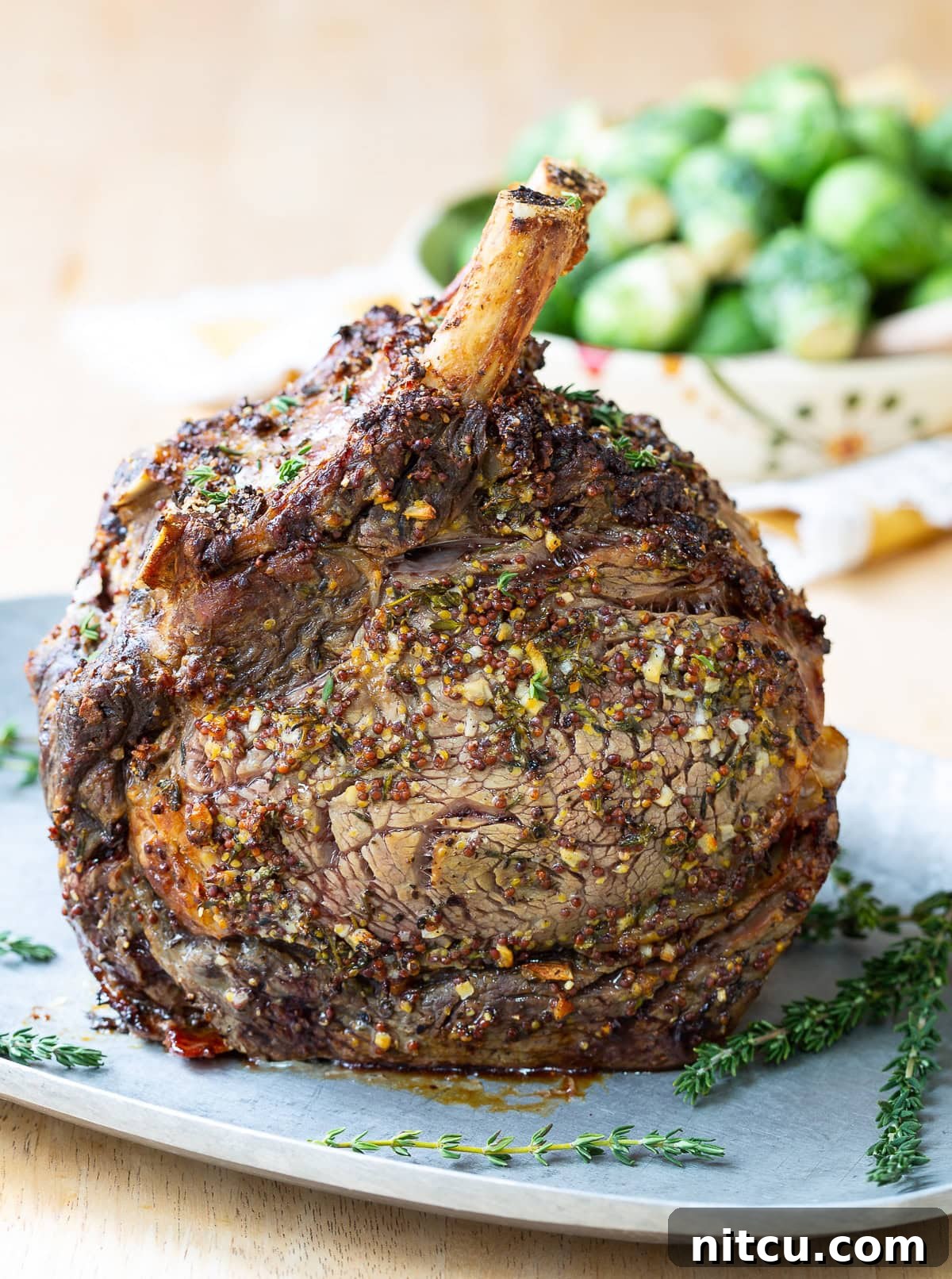
The standing rib roast, often celebrated as Prime Rib, stands as the undeniable king of celebratory main courses. Its reputation for being a show-stopping centerpiece is well-deserved, promising an unparalleled dining experience that rivals the finest five-star restaurants, all from the comfort of your own home kitchen. Imagine a golden-brown, herb-crusted exterior giving way to an impossibly tender, perfectly pink interior, each slice bursting with rich, succulent beef flavor. This isn’t just a meal; it’s an event, a culinary masterpiece that transforms any ordinary gathering into an extraordinary feast.
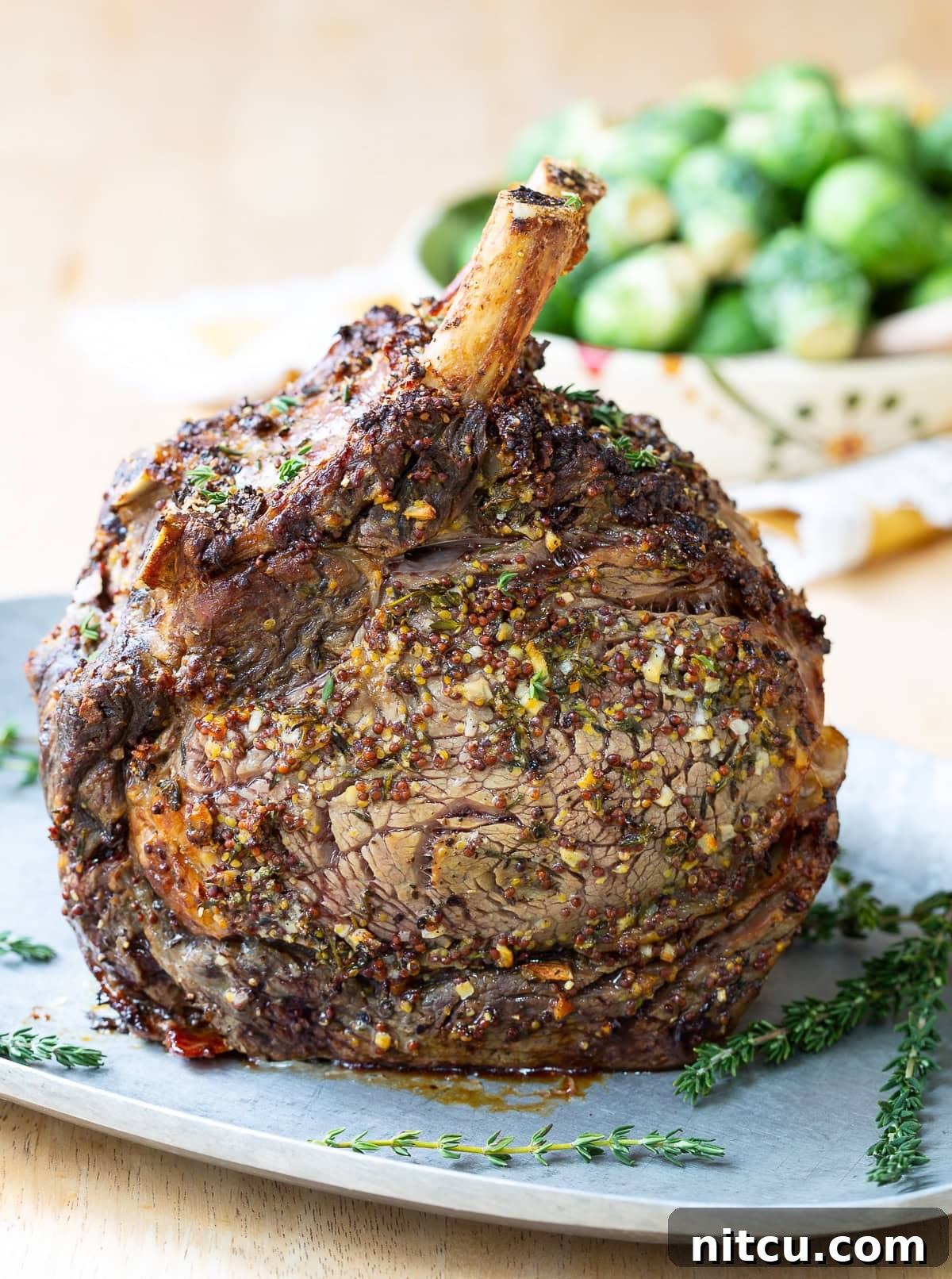
For special occasions like Christmas dinner, a perfectly cooked standing rib roast elevates the celebration, making the day feel truly magical. This is the kind of dish that commands attention, tantalizing guests with its aromatic presence and stunning presentation. Every year, I witness the same delighted gasps and eager anticipation as I bring this masterpiece to the table. The herb-packed, crispy crust gives way to a melt-in-your-mouth pink interior, delivering a symphony of textures and flavors. While traditionally roasted, this recipe achieves a depth and richness reminiscent of a slow-smoked prime rib au jus, without the need for a smoker. This foolproof method ensures a festive and unforgettable evening, creating cherished memories around a spectacular meal that will be talked about long after the last bite.

Why This Standing Rib Roast Recipe Stands Out
Crafting the perfect standing rib roast doesn’t have to be intimidating. This recipe, honed over years of holiday gatherings, offers a path to culinary triumph with surprising ease and guaranteed deliciousness. Here’s why it’s become a beloved staple in my home:
- Unforgettable Flavor Profile: The magic starts with the exterior – a gorgeously crispy crust infused with a robust blend of fresh herbs and the tangy kick of whole grain mustard. This forms a protective and flavorful barrier, locking in moisture. Beneath this savory crust lies a perfectly pink, incredibly juicy interior, boasting the rich, beefy essence that only prime rib can deliver. Each bite is a harmonious blend of textures and deeply satisfying flavors.
- Remarkably Simple Preparation: Despite its luxurious appearance, this standing rib roast recipe is far from complicated. While it requires time in the oven, the active prep work is minimal and the steps are straightforward. You don’t need advanced culinary techniques or specialized equipment (beyond a reliable meat thermometer) to achieve gourmet results. It’s truly a testament to how quality ingredients and a simple, precise method can create extraordinary food.
- Guaranteed to Impress Every Guest: There’s an inherent prestige associated with serving prime rib, and this recipe delivers on that promise. It’s the ultimate “wow factor” dish, designed to delight and impress your guests for any special occasion. Whether it’s a grand holiday feast or an intimate dinner party, this roast elevates the meal, making everyone feel like they’re dining at an exclusive restaurant. Prepare for compliments and requests for the recipe!
Essential Ingredients and Expert Tips for Success
Creating an extraordinary standing rib roast begins with selecting the right ingredients and understanding how to maximize their potential. Here’s a closer look at what you’ll need and some crucial advice:
- Standing Rib Roast (Prime Rib): This 5-6 pound cut of beef is the star of your show, typically yielding 8-10 generous servings. When selecting your roast, aim for a well-marbled piece – the streaks of fat throughout the meat will melt during cooking, ensuring incredible tenderness and flavor. For an impressive presentation, ask your butcher to “french” the bones, trimming the meat from the top of the ribs to expose them. You might also consider whether you prefer a bone-in or boneless roast; bone-in often offers more flavor and protection during cooking, while boneless is easier to carve.
- Whole Grain Mustard: This isn’t just any mustard; its coarse texture and tangy, slightly spicy flavor create an exceptional crust when combined with herbs and fat. The mustard acts as a binder for the seasonings and contributes significantly to the roast’s bold, complex flavor profile. If whole grain isn’t available, a good quality Dijon or spicy brown mustard can be substituted, though the texture of the crust will vary slightly.
- Bacon Grease: While optional, bacon grease is a game-changer for this recipe. Its rich, smoky flavor deeply penetrates the beef, adding an unparalleled savory depth and helping to create an incredibly moist interior. This rendered fat also contributes to a superior, crispy crust. If you prefer, you can substitute it with high-quality olive oil or melted unsalted butter, both of which will still provide moisture and aid in browning, albeit with a different flavor profile.
- Fresh Aromatics: Fresh herbs are non-negotiable for that authentic holiday aroma and taste. Fresh thyme, with its subtle, earthy notes, complements beef beautifully and evokes a classic celebratory feel. Minced fresh garlic adds a pungent warmth that enhances the beef’s natural richness. While dried herbs can work in a pinch, fresh varieties offer a brighter, more vibrant flavor that truly makes a difference in this dish. Consider adding a sprig of fresh rosemary for an extra layer of fragrant complexity.
Step-by-Step Guide: Crafting Your Perfect Standing Rib Roast
Follow these detailed instructions to create a show-stopping standing rib roast that is perfectly cooked, juicy, and flavorful. The full recipe with precise ingredient proportions and a video tutorial can often be found in a printable format for easy kitchen use.
Step 1: Prepare the Oven and the Roast
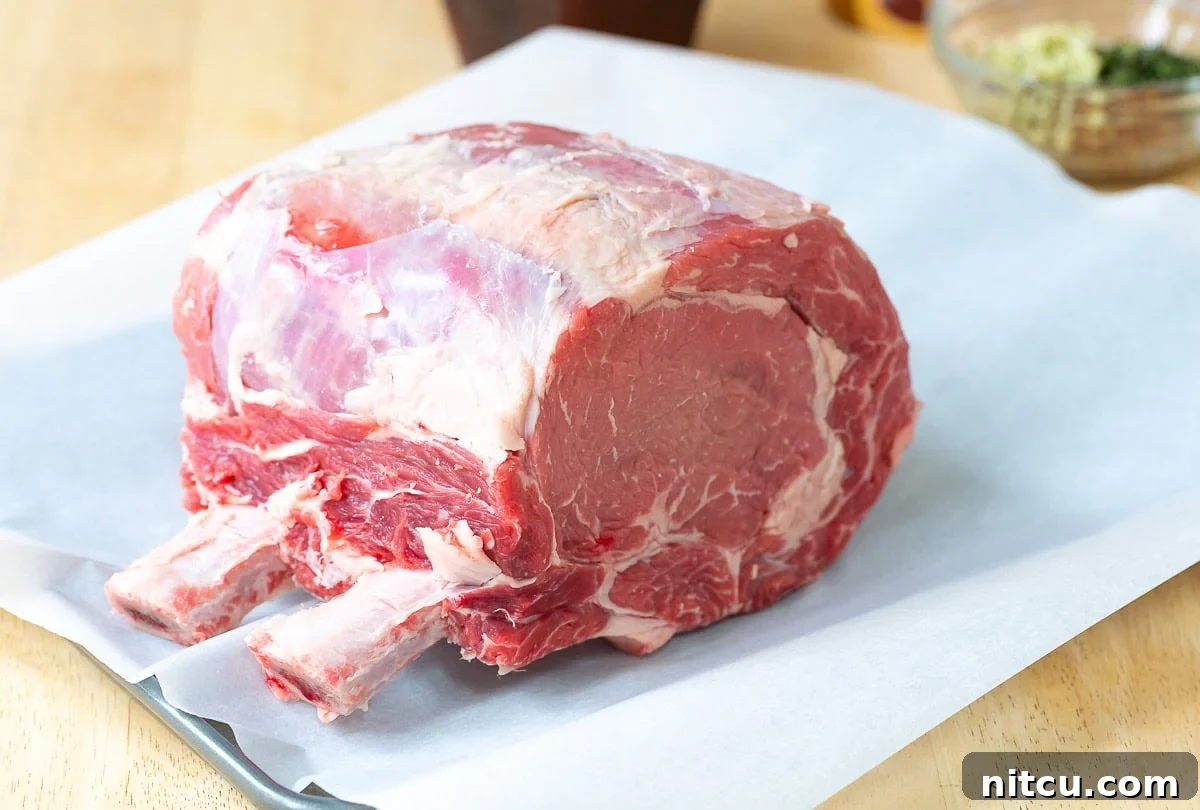
Begin by preheating your oven to a robust 450 degrees Fahrenheit (232°C). This initial high temperature is critical for developing that coveted crispy crust and searing the exterior, locking in the juices. Make sure to remove the top oven rack to create ample space for your impressive roast. Next, prepare a sturdy baking sheet by lining it with aluminum foil or parchment paper for easier cleanup. Place your standing rib roast directly onto the lined sheet. Inspect the meat for any excessive fat. While some fat marbling is desirable for flavor and moisture, large, thick layers of external fat should be carefully trimmed. This prevents an overly greasy roast and allows for better browning. If your roast has a thick fat cap, carefully score it in a crosshatch pattern without cutting into the meat itself. This helps the fat render more efficiently and allows the rub to penetrate better. If you’re aiming for the fancy “french” appearance, carefully trim any meat off the exposed rib bones with a paring knife to achieve a clean look.
Step 2: Create the Flavorful Herb Crust (Marinade-Rub)
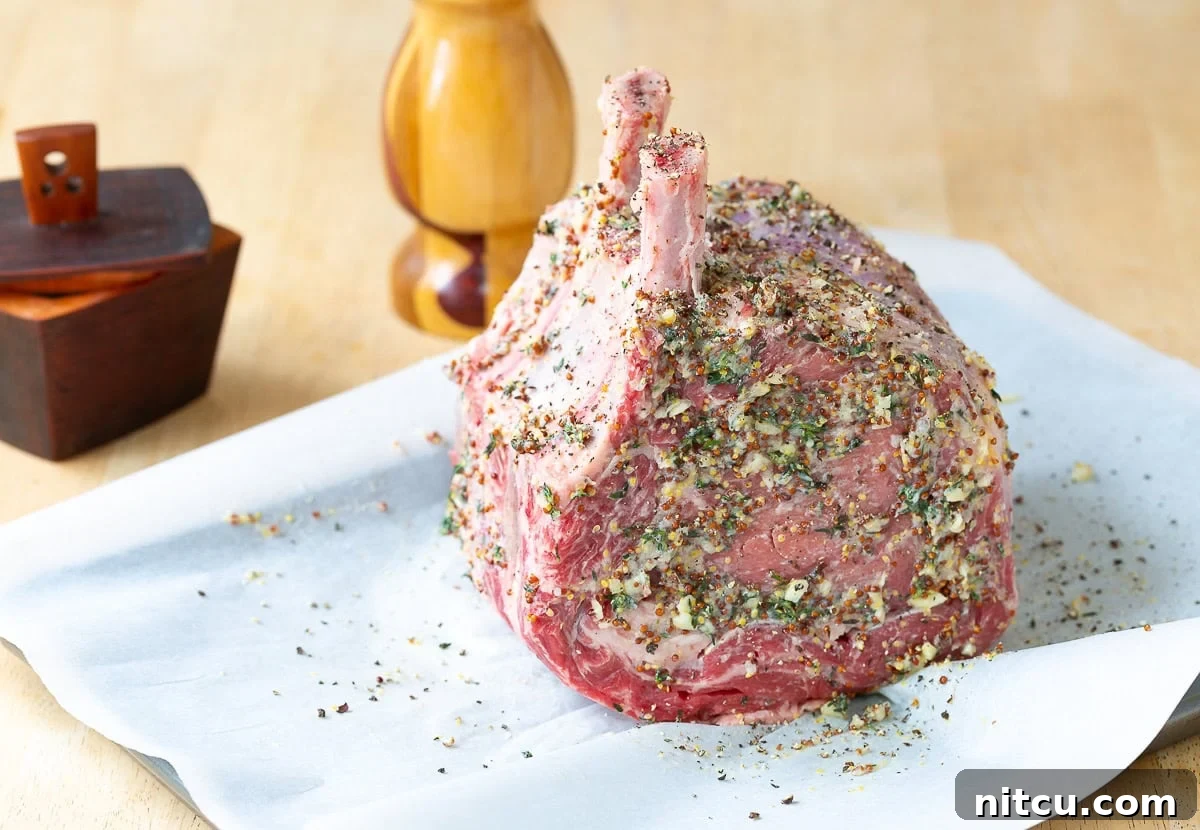
Position the standing rib roast on the baking sheet with the rib bones facing upwards. This orientation helps to protect the meat from overcooking and allows for even heat circulation. In a medium-sized bowl, combine all the ingredients for your rich marinade-rub: whole grain mustard, bacon grease (or your chosen substitute), fresh thyme leaves, minced garlic, a generous amount of sea salt, and freshly cracked black pepper. Mix these ingredients thoroughly until you have a thick, cohesive paste. Now, generously lather this aromatic mixture all over the entire surface of the roast, ensuring every inch is coated, including the sides and the top of the ribs. This rub is what will develop into that irresistible crispy crust and infuse the beef with deep flavor.
Step 3: Insert the Meat Thermometer for Precision
Before the roast enters the oven, this step is absolutely crucial for achieving perfectly cooked results. Insert an oven-safe meat thermometer into the thickest part of the beef, making sure the tip does not touch any bones. The thermometer is your secret weapon against overcooking, allowing you to monitor the internal temperature throughout the roasting process accurately. This precision ensures your roast reaches the desired doneness, whether you prefer it rare, medium-rare, or medium.
Step 4: Roast to Pink Perfection
Carefully slide the prepared roast into your preheated 450°F (232°C) oven. Roast it at this high temperature for approximately 20 minutes. This initial burst of heat is essential for developing a beautiful, golden-brown crust and sealing in the juices. After 20 minutes, reduce the oven temperature to 350 degrees Fahrenheit (177°C) without opening the oven door unnecessarily. Continue roasting until your internal meat thermometer reads 125 degrees Fahrenheit (52°C) for a perfect medium-rare, or 130°F (54°C) for medium. The roasting time will vary depending on the size and initial temperature of your roast, so always rely on the thermometer rather than time alone. This two-stage roasting method ensures a crispy exterior and an evenly cooked, rosy pink interior.
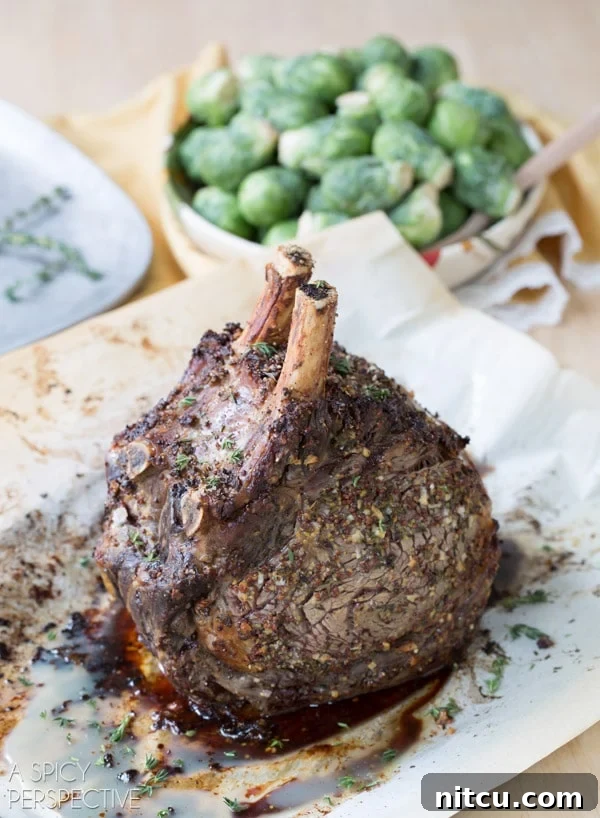
Step 5: Rest, Slice, and Serve
Once your roast reaches the desired internal temperature, remove it from the oven immediately. This next step is perhaps the most important for a juicy, tender roast: allow it to rest. Transfer the roast to a clean cutting board, loosely tent it with aluminum foil, and let it rest for at least 15-20 minutes. During this resting period, the muscle fibers relax, and the juices, which have been pushed to the center during cooking, redistribute evenly throughout the meat. This process ensures that when you slice into it, the juices remain within the meat, rather than spilling out onto the cutting board. Be aware of “carryover cooking,” where the internal temperature of the roast will continue to rise by another 5-10 degrees Fahrenheit during resting. After resting, slice the roast against the grain into thick, impressive portions, and prepare to serve your magnificent creation.
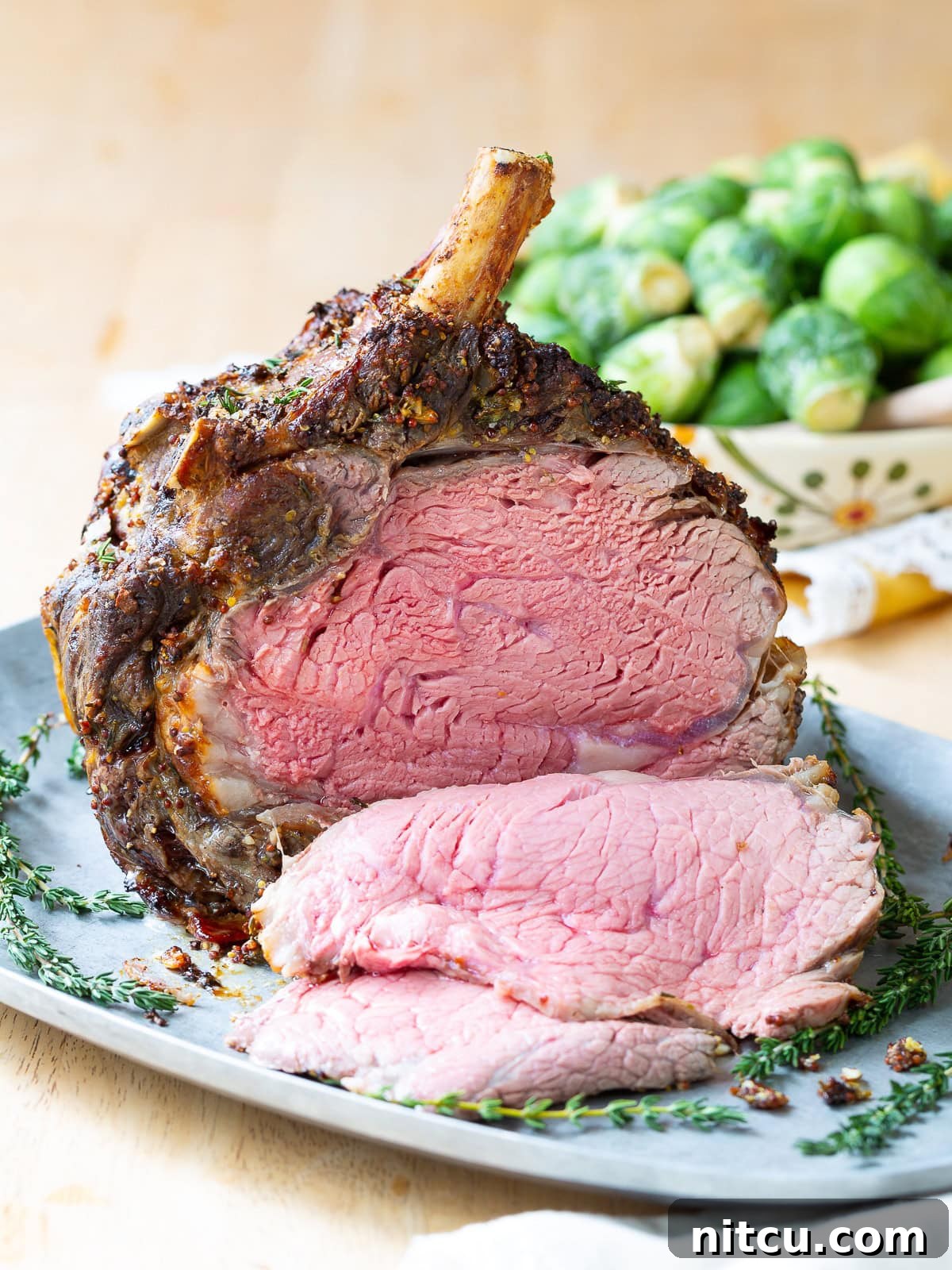
Expert Tips for a Flawless Prime Rib Every Time
Achieving prime rib perfection isn’t just about following steps; it’s about understanding the nuances. These expert tips will help you master the art of the standing rib roast:
- Embrace the Leave-In Meat Thermometer: This is your ultimate tool for success. A leave-in meat thermometer eliminates all guesswork and practically guarantees a perfectly cooked standing rib roast. It allows for continuous monitoring of the internal temperature without repeatedly opening the oven, which can cause temperature fluctuations. Insert it into the thickest part of the roast, away from the bone, and set it to your desired final temperature (remembering carryover cooking). This is truly a fool-proof method.
- Master the Two-Stage Roasting Method: The technique of starting the roast in a hot oven (450°F / 232°C) and then lowering the heat (350°F / 177°C) is key to a beautiful roast. The initial high heat creates a fantastic, flavorful crust and helps develop the Maillard reaction on the surface. Lowering the heat then allows the roast to cook slowly and evenly through to the center, preventing the exterior from burning while ensuring a uniform pink doneness.
- Understand Doneness Levels:
- Rare: 115-120°F (46-49°C) internal temperature before resting.
- Medium-Rare: 125-130°F (52-54°C) internal temperature before resting. This is generally considered the ideal doneness for prime rib, balancing juiciness and tenderness.
- Medium: 130-135°F (54-57°C) internal temperature before resting.
- Medium-Well: 135-140°F (57-60°C) internal temperature before resting.
Always account for the 5-10°F rise during the resting period.
- The Art of Resting and Carving: Resting your roast for 15-20 minutes is non-negotiable. This critical step allows the juices to redistribute, ensuring a tender and moist final product. When ready to carve, remove the bones if desired, then slice the roast against the grain into portions. Slicing against the grain shortens the muscle fibers, making each bite more tender.
Exciting Recipe Variations to Explore
While this recipe is a classic, don’t hesitate to experiment with these variations to tailor the flavor to your preferences or to try something new:
- Butter-Based Rub: If bacon grease isn’t your preference, unsalted butter is an excellent alternative. You can elevate it further by creating an herb-garlic butter: simply melt unsalted butter and stir in finely minced garlic, fresh rosemary, thyme, and a touch of lemon zest. This creates a beautifully aromatic and flavorful crust.
- Add a Spicy Kick: For those who love a bit of heat, incorporate a dash of cayenne pepper, a pinch of red pepper flakes, or even a teaspoon of smoked paprika into your herb rub. This adds a subtle warmth and a touch of complexity without overpowering the beef’s natural flavor.
- Tangy Horseradish Boost: Horseradish is a classic pairing with roast beef. For a tangy and pungent kick within the crust, stir a teaspoon or two of prepared horseradish (not creamed horseradish sauce) into your mustard paste. This will add a sharp, piquant note that complements the richness of the beef wonderfully.
- Citrus Infusion: For a brighter, fresher flavor, consider grating the zest of one lemon or orange into your rub mixture. Citrus zest adds aromatic oils that subtly brighten the overall taste profile of the roast.
- Coffee Rub: For a unique, deep, and slightly smoky flavor, experiment with adding a tablespoon of finely ground coffee to your spice rub. Coffee enhances the beef’s natural umami and creates a dark, rich crust.
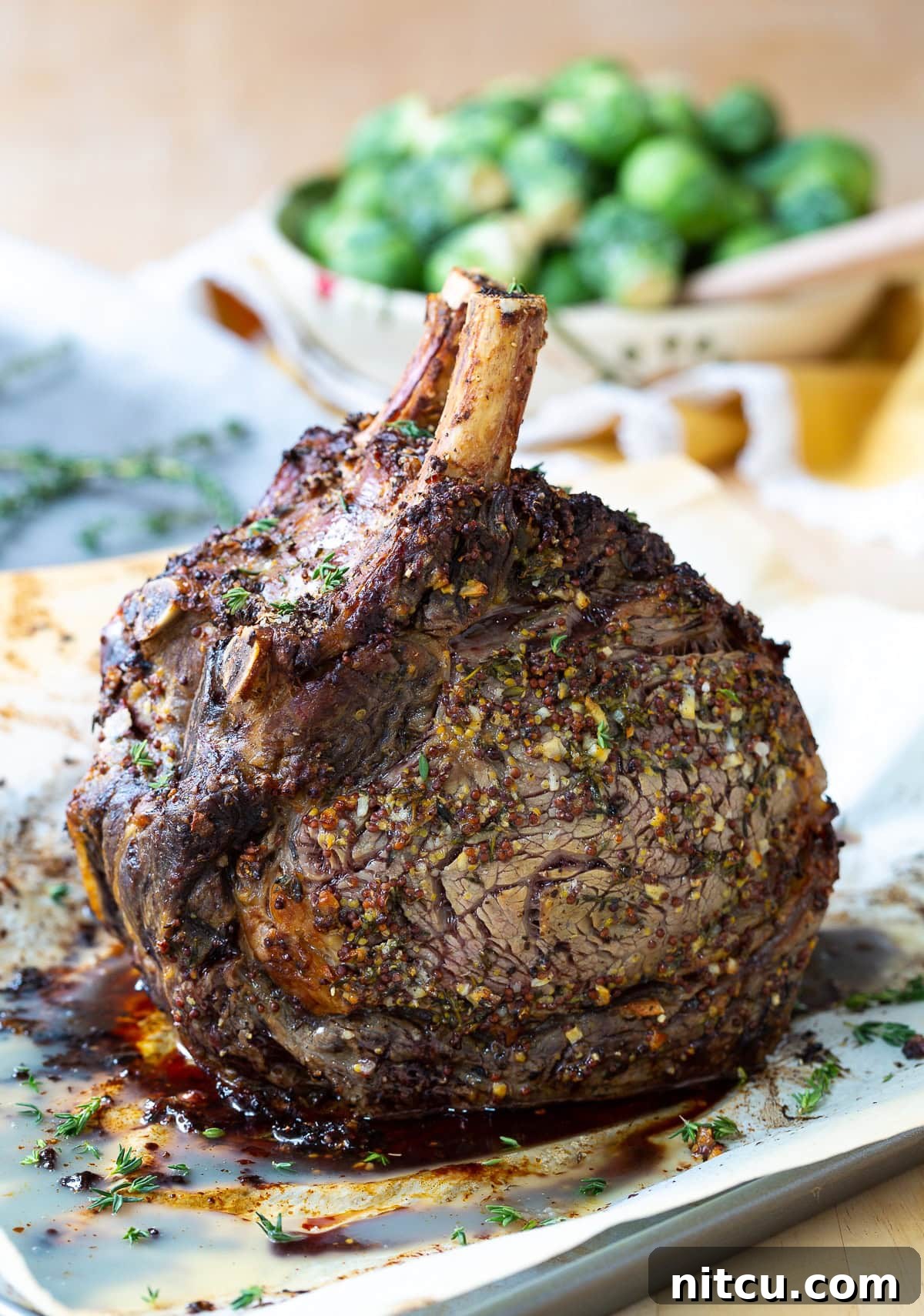
Complementary Serving Suggestions
A glorious standing rib roast deserves equally magnificent accompaniments. Pair thick, juicy slices of this savory beef with your favorite elevated or comforting side dishes to complete the gourmet experience. Here are some ideal pairings:
- Crispy Roasted Brussels Sprouts: Their slightly bitter, earthy notes and crispy texture provide a wonderful contrast to the rich beef.
- Epic Seafood Stuffing: A unique and decadent stuffing can elevate the entire meal, especially for holiday feasts.
- Sautéed Yellow Squash with Blistered Tomatoes: A lighter, fresh vegetable side that adds color and a gentle sweetness.
- Classic Homemade Caesar Salad: The sharp, tangy dressing and crisp lettuce offer a refreshing counterpoint.
- Zesty Mustard Sauce: A homemade mustard sauce can echo the flavors in the rub and add another layer of complexity.
- Creamy Pesto Sauce: A fresh, herb-packed pesto can offer a vibrant, garlicky counterpoint to the rich beef.
- Garlic Mashed Potatoes: A timeless classic, perfect for soaking up the delicious au jus.
- Creamed Spinach: Rich and comforting, a fantastic complement to any roast.
- Roasted Asparagus: Simple yet elegant, with a crisp-tender texture.
- Red Wine Reduction Sauce (Au Jus): Don’t forget to make a simple pan sauce from the drippings for an authentic prime rib au jus!
Frequently Asked Questions About Standing Rib Roast
A standing rib roast, often referred to as prime rib, is a large, impressive cut of beef taken from the rib section of the steer. It’s essentially a bone-in ribeye steak that has been left whole, allowing the fat to marble throughout the meat. This marbling is key to its ultra-luxurious taste and incredibly tender, juicy texture when cooked. It’s known for its rich flavor and substantial size, making it a perfect centerpiece for special gatherings.
Yes, “standing rib roast” and “prime rib” are largely interchangeable terms for the same cut of beef. The term “standing rib roast” refers to how the roast is typically cooked, standing upright on its rib bones, which act as a natural roasting rack and protect the meat from overcooking on the bottom. “Prime rib” is more of a marketing term that implies a higher quality grade, though technically, any rib roast can be called a standing rib roast regardless of its USDA grade (Prime, Choice, or Select).
After resting, place the roast on a cutting board. If bone-in, carefully slice along the curve of the bones to remove the entire section of meat from the rack. Then, place the boneless roast flat and slice it against the grain into desired thickness (typically 1/2 to 3/4 inch). If you prefer to carve individual slices directly off the bones, simply slice down between each bone. A sharp carving knife is essential for clean cuts.
Most chefs and enthusiasts agree that medium-rare (internal temperature of 125-130°F before resting) is the optimal doneness for prime rib. At this temperature, the meat is incredibly tender, juicy, and has a beautiful rosy pink color from edge to edge. While personal preference varies, cooking it beyond medium (130-135°F) can diminish its inherent tenderness and juiciness.
Storing and Reheating Your Standing Rib Roast Leftovers
Proper storage and reheating are crucial to enjoying your delicious prime rib leftovers without compromising on taste or texture. You want to preserve that succulent tenderness!
- Storing Leftovers: Once the roast has cooled to room temperature (within two hours of cooking), wrap individual slices or larger pieces tightly in plastic wrap. Then, place them in an airtight container or a heavy-duty ziplock bag. Stored this way, prime rib will remain fresh in the refrigerator for up to 4-5 days.
- Freezing: For longer storage, wrap slices or smaller portions tightly in plastic wrap, then again in aluminum foil. Place these double-wrapped portions into a freezer-safe bag or container. Frozen prime rib can maintain its quality for up to 3-6 months. When you’re ready to enjoy it, thaw the frozen roast in the refrigerator overnight before reheating.
- Reheating Leftovers: The key to reheating prime rib is gentle, slow heat to prevent further cooking and drying out the meat. Preheat your oven to a low 250 degrees F (120°C). Place the prime rib slices in an oven-safe dish with a splash of beef broth or au jus to keep them moist. Cover the dish tightly with aluminum foil. Heat for approximately 10-20 minutes, or until the meat is just warm through to the center. The exact time will depend on the thickness and size of your pieces. Avoid high heat or extended reheating, as this will turn your beautiful pink prime rib grey and dry.
- Reheating Frozen Roast: If reheating from frozen, the first step is always to thaw it completely in the refrigerator, which can take 8+ hours or even overnight. Once thawed, proceed with the same gentle oven reheating method as described above, adding a bit of au jus and covering with foil.
Help Me Spread the Word about this Fabulous Free Recipe! Sharing this recipe link on Pinterest and Facebook is super impactful, and I greatly appreciate it! Find the share buttons below the recipe form.
More Delicious Beef Recipes To Try
Print Recipe
Rated 5 out of 5 stars based on 21 reviews.
Leave a Review »
Standing Rib Roast (Prime Rib au Jus)
10 minutes
1 hour 30 minutes
1 hour 40 minutes
This standing rib roast is the ultimate show-stopping centerpiece dish. Every time I make this juicy, succulent, and perfectly pink roast, I feel like I’m dining at the fanciest five-star restaurant — except I’m actually in the comfort of my own home!
10 servings
Video Tutorial

Watch the video to see how to prepare this delicious Standing Rib Roast.
Ingredients
- 5-6 pounds standing rib roast
- 2 1/2 tablespoons whole grain mustard
- 1 tablespoon bacon grease (or olive oil/butter)
- 1 tablespoon fresh thyme leaves
- 2 cloves garlic, minced
- Salt and cracked black pepper, to taste
Instructions
- Preheat your oven to 450 degrees F (232°C) and remove the upper rack to create enough space for the roast. Line a rimmed baking dish with foil or parchment paper. Place the standing rib roast on it. If your roast has excessive fat, carefully trim it off the top to expose the rib bones for a cleaner appearance. If desired, clean the rib bones with a paring knife.
- Stand the roast with the rib bones facing up. In a small bowl, combine the whole grain mustard, bacon grease (or chosen substitute), fresh thyme, minced garlic, 1 teaspoon of sea salt, and 1/2 teaspoon of cracked black pepper. Mix these ingredients well to form a paste, then generously rub it over the entire surface of the standing rib roast. Insert an oven-safe meat thermometer into the thickest part of the roast, ensuring the tip is in the center and not touching any bone.
- Place the prepared roast in the preheated oven and roast at 450 degrees F for 20 minutes. After 20 minutes, reduce the oven temperature to 350 degrees F (177°C) and continue roasting until the internal temperature reaches 125 degrees F (52°C) for medium-rare, or your preferred doneness. Remove the roast from the oven and allow it to rest for at least 15-20 minutes before carving and serving. This resting period is crucial for juicy results.
Notes
Storage Notes:
- Storing Leftovers: Once cooled, wrap tightly with plastic wrap and store in an airtight container or ziplock bag in the fridge for 4 to 5 days.
- Freezing: For longer storage, wrap slices tightly in plastic wrap and then foil. Store in the freezer for up to 6 months. Thaw in the refrigerator overnight before reheating.
- Reheating: Reheat prime rib leftovers in a 250 degree F (120°C) oven. Place in a baking dish with a splash of beef broth or au jus, cover with foil, and heat until just warm (10-20 minutes). Avoid overcooking to maintain juiciness.
If you’re trying to reheat a frozen roast, first thaw it completely in the fridge for 8+ hours. Once thawed, preheat the oven to 250 degrees F (120°C), place the meat on a baking pan with some au jus, cover with foil, and heat for about 10 minutes or until warm.
Nutrition Information (per serving)
Serving: 1 serving
Calories: 693kcal
Carbohydrates: 1g
Protein: 31g
Fat: 62g
Saturated Fat: 26g
Cholesterol: 138mg
Sodium: 146mg
Potassium: 510mg
Fiber: 1g
Sugar: 1g
Vitamin A: 35IU
Vitamin C: 1.3mg
Calcium: 23mg
Iron: 3.4mg
Main Course
American
Sommer Collier
Cook It? Love It? Rate It!
YOU can help this recipe RANK on Google – Share your review so other hungry people can find it. Thank you!