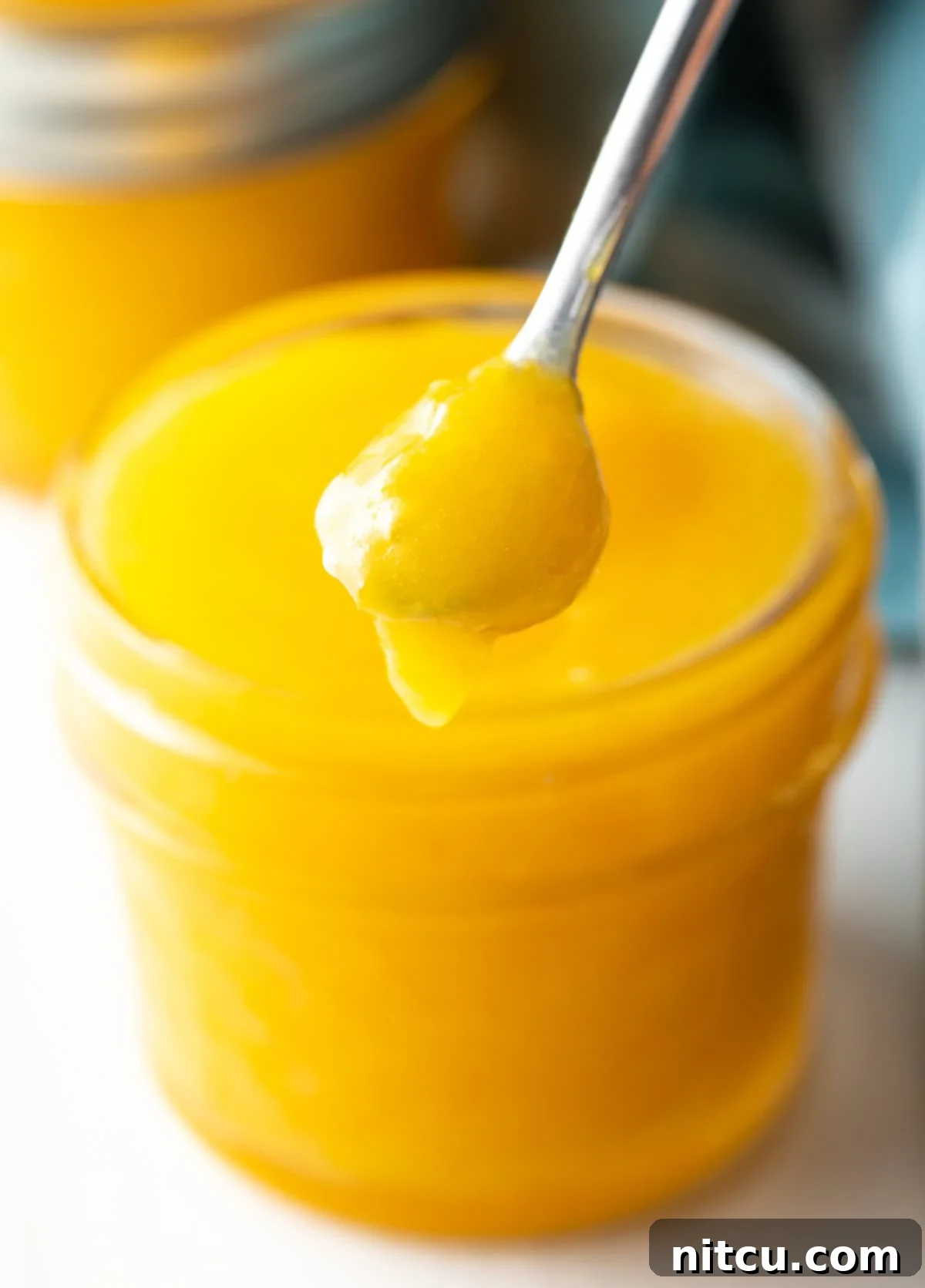
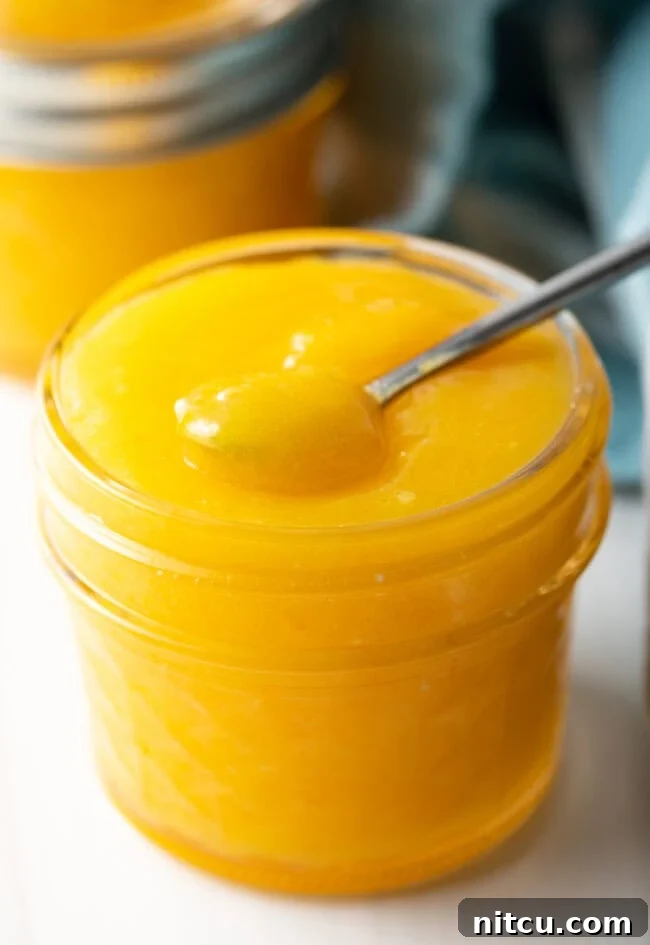
Brighten your breakfast and elevate your desserts with this incredibly easy, homemade Orange Curd recipe. Crafted with just 6 simple ingredients, this vibrant and sweet citrus spread is ready in a mere 15 minutes, promising to become a beloved staple in your kitchen for topping everything from toast to delicate pastries!
Why You’ll Adore This Homemade Orange Curd
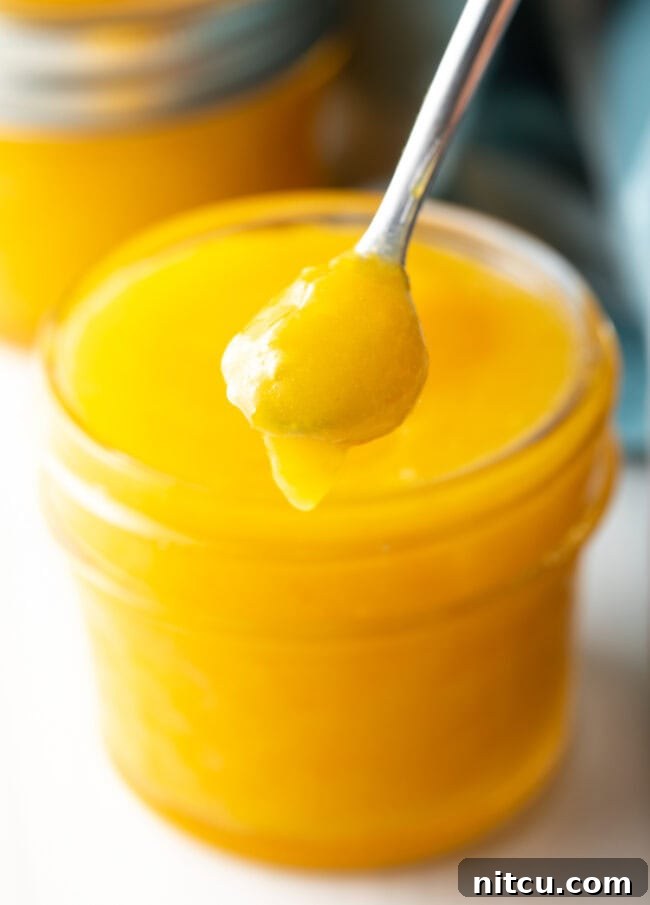
There’s something truly magical about a creamy, zesty citrus curd, and this homemade orange version is no exception. It’s an exquisitely delightful condiment, perfect for elevating your morning routine or adding a touch of gourmet flair to your favorite snack-time treats. While often compared to fruit jams or preserves in its sweetness, orange curd offers a uniquely opulent experience. The secret lies in its luxurious texture, achieved by incorporating egg yolks and butter, which transform it into a rich, silky-smooth spread that feels far more indulgent.
If you’re a connoisseur of classic lemon curd, prepare to be captivated by this magnificent Orange Curd variation. The flavor profile is a sublime balance, offering a slightly sweeter taste with a gentle tartness that’s less assertive than its lemon counterpart. This makes it incredibly versatile, pairing flawlessly with an extensive array of baked goods. Imagine slathering it onto wholesome muffins, delicate scones, flaky croissants, or decadent cookies. Its sunny disposition brings a refreshing lift to any dish, making it an indispensable addition to your culinary repertoire.
What makes this particular orange curd recipe truly special is its remarkable simplicity and speed. Designed to be practically foolproof, it requires only six common pantry ingredients and can be prepared from start to finish in a mere 15 minutes. This efficiency means you can whip up a batch whenever a craving strikes, or even on a whim for last-minute guests. The recipe yields a generous two cups of luminous orange curd—the ideal quantity to savor some immediately and effortlessly fill several charming jars, perfect for gifting to friends and family or stocking your own pantry for future delights.
Essential Ingredients for Perfect Orange Curd
Crafting this exquisite orange curd requires a handful of fresh, high-quality ingredients, each playing a vital role in achieving its signature flavor and velvety texture. Here’s a closer look at what you’ll need and why:
- Oranges: The star of the show! Fresh, ripe oranges are absolutely crucial for the base of this recipe. While regular navel oranges work wonderfully, feel free to experiment with other varieties like Cara Cara for a delicate floral note, or blood oranges for a deeper, sweeter flavor and stunning color. The zest provides intense aromatic oils, while the juice delivers the bright citrus tang.
- Lemon: A touch of lemon juice is added to balance the sweetness of the oranges, providing that essential hint of tartness that makes citrus curd so invigorating. It brightens the overall flavor profile without overpowering the orange.
- Granulated Sugar: This provides the perfect level of sweetness, transforming the tart citrus into a delightful, palatable spread. It also contributes to the curd’s smooth consistency and helps prevent crystallization.
- Large Eggs + Egg Yolks: These are the magical components responsible for the curd’s luxurious, silky-smooth texture and rich body. The proteins in the eggs thicken the mixture as it heats, while the yolks add emulsification and a beautiful golden hue, ensuring a decadent mouthfeel. Using extra yolks enhances the richness significantly.
- Unsalted Butter: Butter is key to creating a truly rich and creamy curd. It adds a wonderful depth of flavor, a glossy sheen, and contributes to the smooth, spreadable consistency. Using unsalted butter allows you to control the overall saltiness of the dish.
- Salt: Just a small pinch of salt acts as a flavor enhancer, balancing the sweetness and tartness, making all the other ingredients shine and bringing a more complex, well-rounded taste to the curd.
For precise measurements and a detailed step-by-step guide, please refer to the comprehensive recipe card below.
Mastering the Art of Homemade Orange Curd
Creating this luminous orange curd is a straightforward process, but a few key techniques will ensure a perfect, velvety result every time. Follow these steps for success:
Step 1: Zest Your Citrus with Precision
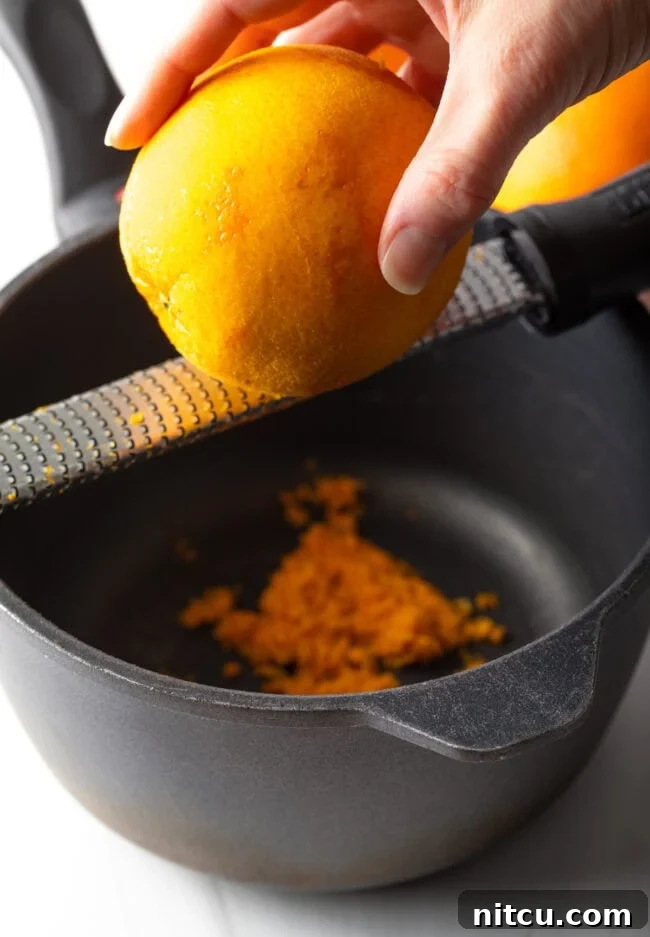
Begin by carefully zesting all three oranges and the lemon. The goal here is to capture only the vibrant outer colored layer, which holds all the aromatic oils and flavor. Be mindful to avoid the white pith underneath, as it can impart a bitter taste to your curd. A microplane zester is ideal for this task, yielding fine, flavorful zest.
Collect the zest from both the oranges and lemons. You should aim for at least 1 tablespoon of orange zest and 1 teaspoon of lemon zest. Don’t be shy – use it all! The orange zest is paramount to infusing your curd with its distinctive, bright orange essence and irresistible aroma.
Step 2: Juice Your Citrus
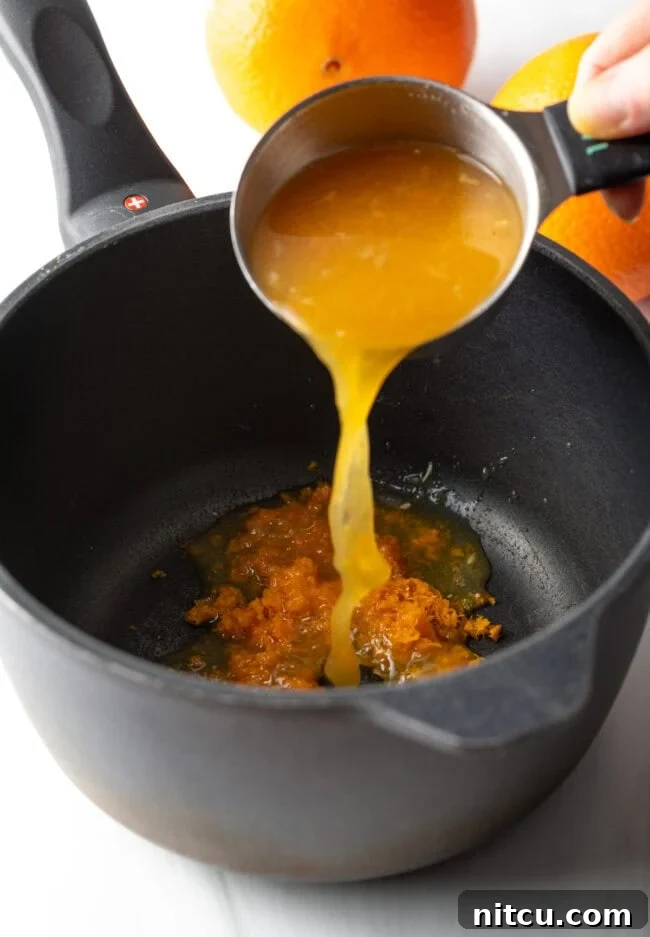
Next, cut 1-2 of your zested oranges and squeeze out ½ cup of fresh orange juice. Freshly squeezed juice is non-negotiable for the best flavor. Then, squeeze the lemon and measure out precisely 1 tablespoon of lemon juice. This small amount of lemon juice is essential for balancing the sweetness and providing a bright, tangy counterpoint.
Step 3: Combine and Whisk Ingredients
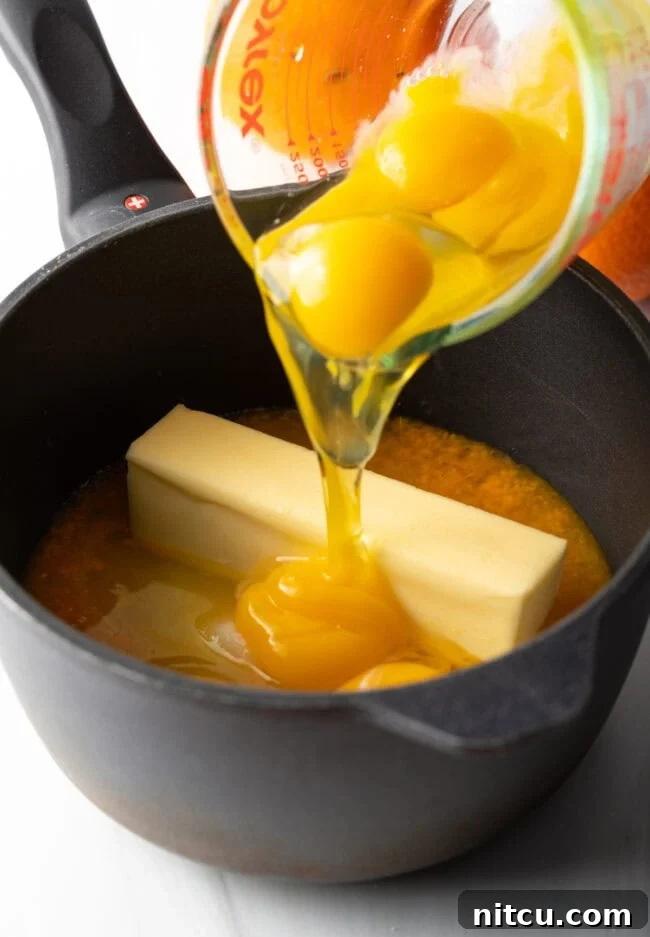
Set a small, heavy-bottomed saucepan over medium heat. Add the measured ½ cup of orange juice, 1 tablespoon of lemon juice, and all the orange and lemon zest to the pot. Then, introduce the granulated sugar, the two large eggs along with the four additional egg yolks, the butter (cut into pieces to help it melt evenly), and the pinch of salt.
Using a whisk, begin to gently mix the ingredients together. Continue whisking consistently as the butter slowly melts. It’s crucial to whisk thoroughly throughout this stage to ensure all ingredients are well combined and there are absolutely no clumps, especially from the melting butter or the initial mixing of eggs.
Step 4: Cook Until Thickened
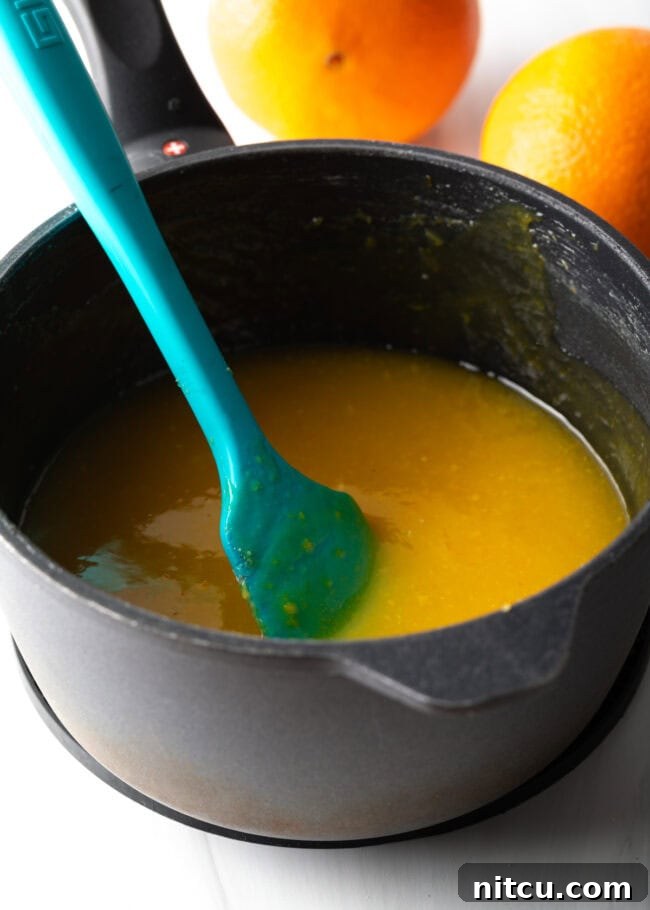
Gradually bring the mixture to a gentle boil over medium heat, stirring consistently with your whisk. This constant stirring is vital to prevent the eggs from scrambling and to ensure even cooking and a smooth texture. Once the curd begins to boil gently, lower the heat to a simmer if necessary to prevent rapid boiling and scorching. Continue to simmer and stir for approximately 5 to 6 minutes, or until the mixture visibly thickens to a custard-like consistency.
Pro Tip for Perfection: To ensure the curd cooks evenly and doesn’t stick or burn to the bottom of the pan, I highly recommend using a rubber spatula to scrape the bottom and sides of the saucepan constantly as you stir. This prevents any hot spots and guarantees a perfectly smooth, unburnt batch of orange curd.
Step 5: Strain (Optional, for Extra Smoothness) and Cool
Once the curd has reached your desired thickness (it should be thick enough to coat the back of a spoon), remove it immediately from the heat. For an exceptionally silky-smooth texture, you can strain the hot curd through a fine-mesh sieve into a clean bowl or directly into your storage jars. This step removes any tiny bits of cooked egg or zest, resulting in a pristine finish.
Carefully pour the finished orange curd into clean, sterilized jars. This recipe typically yields enough to fill two 8-ounce jars or four 4-ounce jars, with a delightful little bit leftover for you to enjoy right away as a reward for your culinary efforts.
Allow the curd to cool slightly at room temperature, then cover each jar tightly with a lid or, for ultimate freshness and to prevent a skin from forming, press a piece of plastic wrap directly onto the surface of the curd before sealing. Chill the orange curd in the refrigerator until it is completely set and thoroughly cold. It will continue to thicken significantly as it chills. Once cooled and set, keep it refrigerated until you’re ready to serve and indulge!
Delightful Ways to Enjoy Your Homemade Orange Curd
Once you’ve experienced the bright, sweet, and tangy bliss of homemade orange curd, you’ll find endless opportunities to incorporate it into your meals and snacks. Its versatility is truly one of its best attributes! Here are some of our favorite ways to enjoy this golden spread:
Spread It on Baked Treats
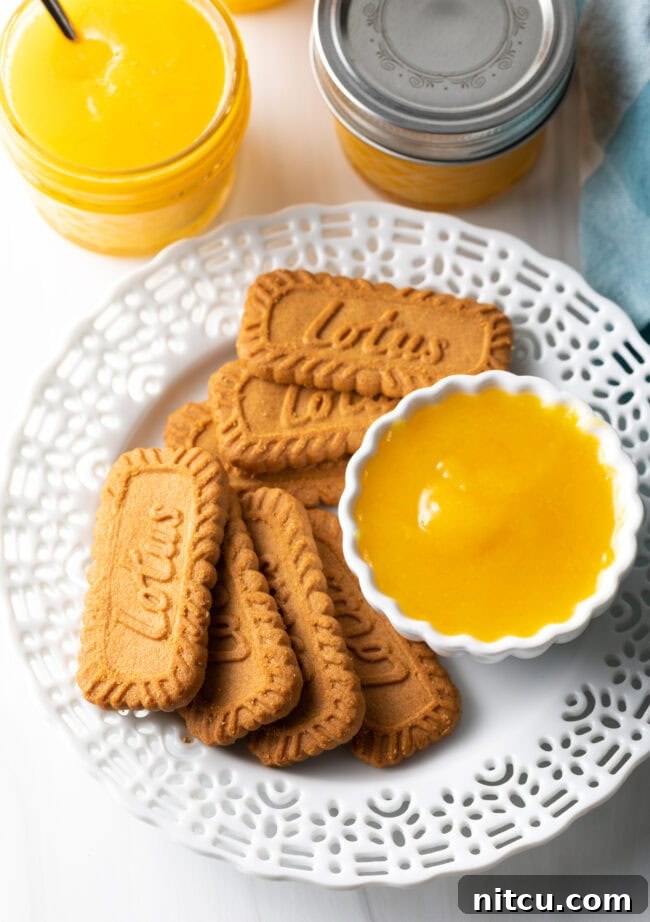
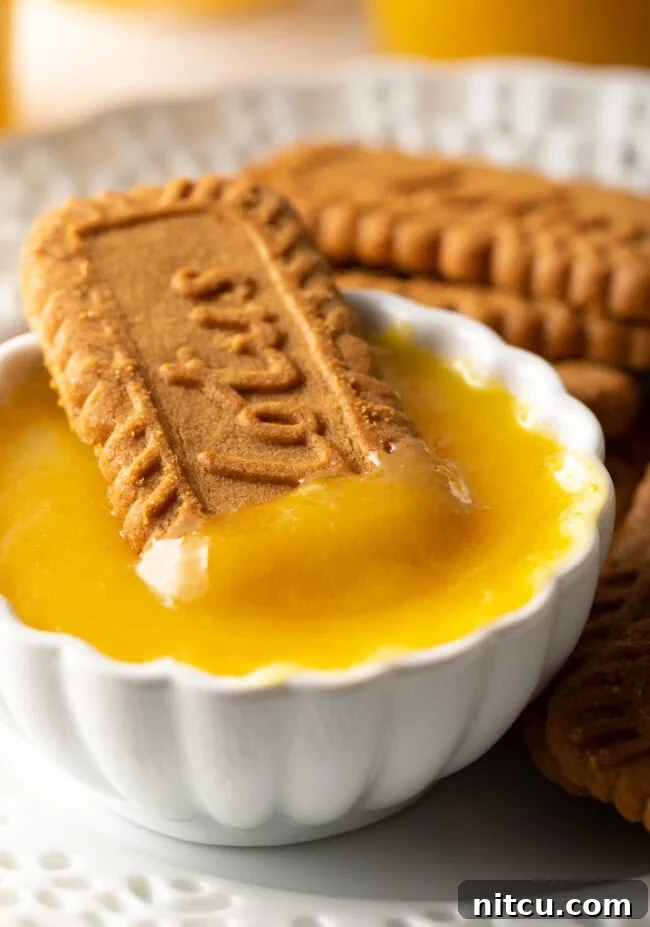
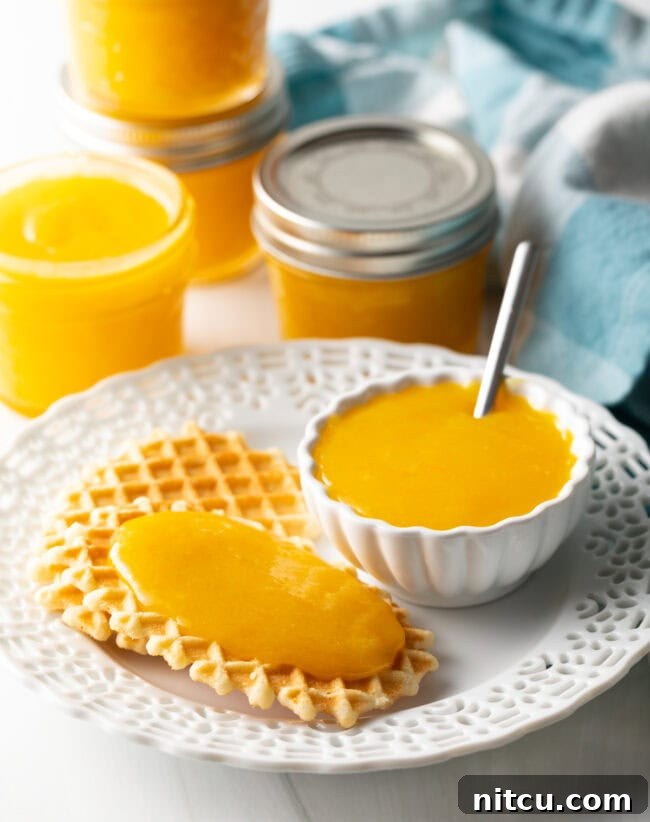
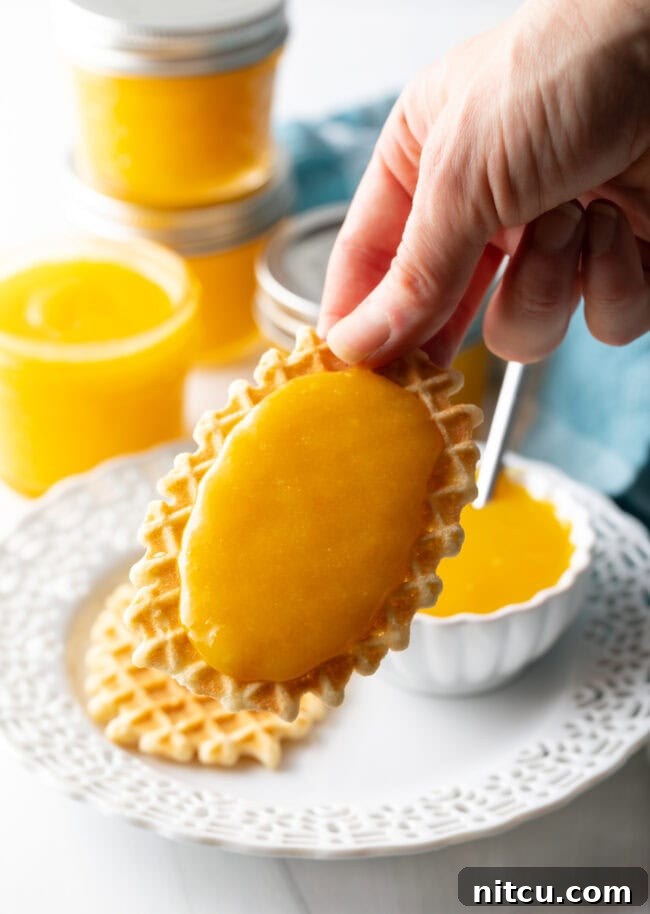
The most classic and undeniably delicious way to enjoy orange curd is by spreading it generously on your favorite baked goods. Whether they’re store-bought or lovingly homemade, the curd adds an irresistible burst of citrus flavor. Consider these fantastic pairings:
- The Best Sugar Cookies: A simple sugar cookie provides a perfect canvas for the vibrant curd.
- Cornmeal Cookies: The subtle texture and flavor of cornmeal cookies offer an interesting contrast.
- Lemon Cookies: For a true citrus explosion, pair orange curd with lemon cookies – a mouth party awaits!
- Scottish Shortbread: The buttery richness of shortbread is beautifully complemented by the tangy sweetness of the curd.
- Scones and Muffins: Elevate a plain scone or a blueberry muffin with a dollop of orange curd.
- Croissants and Danish Pastries: Turn a simple pastry into an exquisite dessert or breakfast item.
Enhance Your Breakfast & Brunch
Orange curd is a magnificent addition to nearly any sweet breakfast or brunch item, transforming ordinary into extraordinary. Imagine:
- Homemade Waffles and Pancakes: Ditch the syrup for a refreshing citrus alternative.
- Sweet Irish Soda Bread: A traditional bread finds new life with this bright spread.
- Walnut Cherry Scones: The nutty and fruity notes in the scones will sing alongside the orange.
- Blueberry Muffin Cake: A burst of orange can perfectly complement the blueberries.
- Jamaican Johnny Cakes: These delightful fried dough cakes are fantastic with orange curd.
- Toast or English Muffins: A simple yet utterly satisfying way to start your day.
- Yogurt and Granola Parfaits: Layer orange curd with Greek yogurt and crunchy granola for a delightful and wholesome breakfast or snack.
- Crepes: Spread thinly inside warm crepes, perhaps with some fresh berries, for an elegant dish.
Decadent Fillings and Toppings
Beyond spreads, the creamy consistency of citrus curd makes it an exceptional filling and topping for a variety of desserts:
- Pie and Tart Filling: Use it as a luscious filling for pies, tarts, or even a stunning orange curd cake for a truly impressive dessert.
- Cupcakes, Donuts, and Eclairs: Pipe it into cupcakes, fill donuts, or use it in eclairs for a delightful surprise.
- Dessert Topping: Drizzle it warm or cold over Homemade Vanilla Ice Cream, cheesecake, panna cotta, or pavlova.
Don’t be afraid to get creative and discover your own favorite ways to enjoy this vibrant homemade orange curd. The possibilities are truly endless!
Frequently Asked Questions About Orange Curd
Fruit curd is a luxurious, thick dessert spread or topping, most commonly made with citrus fruits, though it can be adapted for various other fruits. Unlike fruit jams or preserves, which rely on pectin for thickening, fruit curd achieves its signature creamy and silky-smooth texture through the emulsifying and thickening properties of eggs and egg yolks, along with butter and sugar. The result is a richer, more decadent spread with a vibrant, intense fruit flavor that’s perfect for both sweet and savory applications.
If your orange curd appears chunky or has a scrambled egg-like texture, it means the eggs in your mixture cooked too quickly and coagulated before they could properly integrate and thicken the curd smoothly. This often happens if the heat is too high or the mixture isn’t stirred continuously. To prevent this, always cook curd over medium-low heat, and whisk the mixture constantly from the moment you add the eggs until it reaches its desired thickness. This ensures the eggs heat slowly and evenly, creating that desired silky consistency. If your curd does become slightly chunky, you can try straining it through a fine-mesh sieve after cooking to remove any larger pieces, though a completely scrambled curd may be beyond saving.
Any type of ripe, juicy orange is excellent for this orange curd recipe. The key is to select fruits that are slightly soft to the touch when gently squeezed, indicating they are ripe and full of juice and flavor. Avoid overly firm oranges, which might not yield as much juice or zest. Navel oranges are a classic choice, offering a perfect balance of sweetness and tartness. For a delicate floral undertone, consider Cara Cara oranges. If you’re looking for a dramatically deep sweet flavor and a stunning rosy hue, blood oranges are a fantastic option. You can even experiment with mandarins or tangerines for a slightly different, wonderfully sweet flavor. You truly can’t go wrong with any fresh, ripe orange!
This versatile curd recipe can easily be adapted for other citrus fruits, creating unique and delicious variations! Lime curd will offer a distinctively tart and tropical flavor, generally less sweet than orange or lemon curd, perfect for pies or tropical desserts. Grapefruit curd tends to have a lighter, slightly bitter-sweet taste that is less sweet than orange or lemon. You can also make a pure lemon curd by replacing all orange components with lemon, following a similar method. The principles of balancing juice, zest, sugar, eggs, and butter remain the same, allowing for delightful experimentation with various citrus profiles.
If your preference leans towards the bright, zesty tang of lemon, you can certainly adapt this recipe. For a truly perfect homemade lemon curd, we recommend following our dedicated lemon curd recipe, which is specifically formulated for optimal lemon flavor and texture. However, if you wish to modify this orange curd recipe, you would simply swap the oranges for lemons – using lemon zest and lemon juice instead of orange zest and orange juice, and potentially adjusting the sugar slightly to account for lemon’s higher acidity. Always taste and adjust to your preference!
Curd requires a specific cooking process to thicken properly. If yours isn’t thickening, the most common reasons are insufficient cooking time or not enough heat. The mixture needs to be cooked for several minutes, consistently whisked, until it reaches a temperature where the egg proteins coagulate (typically between 170-175°F or 77-80°C). Don’t lose patience; just keep cooking on medium heat and continue whisking until it thickens to a custard-like consistency that coats the back of a spoon. Remember that fruit curd will also continue to thicken considerably as it cools in the refrigerator, so don’t expect it to be jam-thick right off the stove.
When properly stored in an airtight container in the refrigerator, your delicious homemade orange curd will maintain its fresh taste and delightful texture for an impressive period of up to 2 weeks. For longer storage, you can freeze fruit curd for several months, though its texture might become slightly looser upon thawing. Always ensure your jars are clean and sterile for the best preservation.
Craving More Delicious Dips and Spreads?
If you’ve fallen in love with the versatility and flavor of this homemade orange curd, you’ll be thrilled to explore other homemade dips and spreads that can elevate your culinary creations. From sweet jams to savory dips, these recipes are perfect for entertaining or simply enjoying with your family. Discover new favorites from our collection:
- Strawberry Rhubarb Jam Recipe
- Cream Cheese Caramel Apple Dip
- Nutella Chocolate Fondue
- Cranberry Jalapeno Dip
- Retro Cream Cheese Fruit Dip
- Cherry Cheesecake Dip with Pie Crust
Each of these recipes brings its own unique flavor profile and texture, promising to add excitement to your meals and gatherings. Enjoy exploring and expanding your repertoire of delectable homemade spreads!
Print Recipe
Easy Orange Curd Recipe
Ingredients
- 3 oranges (for zest and juice)
- 1 lemon (or lime, for zest and juice)
- 1 ½ cups granulated sugar
- 2 large eggs
- 4 large egg yolks
- ½ cup unsalted butter (1 stick, cut into cubes)
- ¼ teaspoon salt
Instructions
-
Use a zester (microplane recommended) to carefully zest all three oranges and the lemon, ensuring you only remove the colored outer layer and avoid the bitter white pith beneath. Collect at least 1 tablespoon of orange zest and 1 teaspoon of lemon zest.
-
Cut 1-2 of the zested oranges and squeeze to yield ½ cup of fresh orange juice. Squeeze the lemon and measure out 1 tablespoon of fresh lemon juice.
-
In a small, heavy-bottomed saucepan, combine the ½ cup of orange juice, 1 tablespoon of lemon juice, all the orange and lemon zest, granulated sugar, the 2 large eggs, the 4 additional egg yolks, cubed butter, and salt.
-
Place the saucepan over medium heat. Using a whisk, continuously mix all the ingredients together as the butter melts. Continue whisking thoroughly once the butter has completely melted, ensuring there are no clumps and everything is well combined.
-
Bring the mixture to a gentle boil, stirring consistently to prevent the eggs from scrambling. Once it reaches a boil, reduce the heat to a simmer if needed, and continue to cook and stir for 5 to 6 minutes, or until the mixture thickens to a custard-like consistency that coats the back of a spoon. Use a rubber spatula to scrape the bottom and sides of the pan frequently to prevent burning.
-
Remove the curd from the heat. For an extra smooth finish, you can strain the curd through a fine-mesh sieve into a clean bowl or directly into your storage jars.
-
Pour the orange curd into two 8-ounce jars or four 4-ounce jars. Cover the jars with lids or press plastic wrap directly onto the surface of the curd to prevent a skin from forming. Chill in the refrigerator until completely set and cold, at least 2-4 hours. Keep refrigerated until ready to serve.
Notes
Homemade orange curd will keep well for up to 2 weeks when stored in an airtight container in the refrigerator.
Nutrition Information
Calories: 128kcal,
Carbohydrates: 20g,
Protein: 1g,
Fat: 6g,
Saturated Fat: 3g,
Polyunsaturated Fat: 1g,
Monounsaturated Fat: 2g,
Trans Fat: 1g,
Cholesterol: 32mg,
Sodium: 80mg,
Potassium: 56mg,
Fiber: 1g,
Sugar: 19g,
Vitamin A: 234IU,
Vitamin C: 15mg,
Calcium: 15mg,
Iron: 1mg