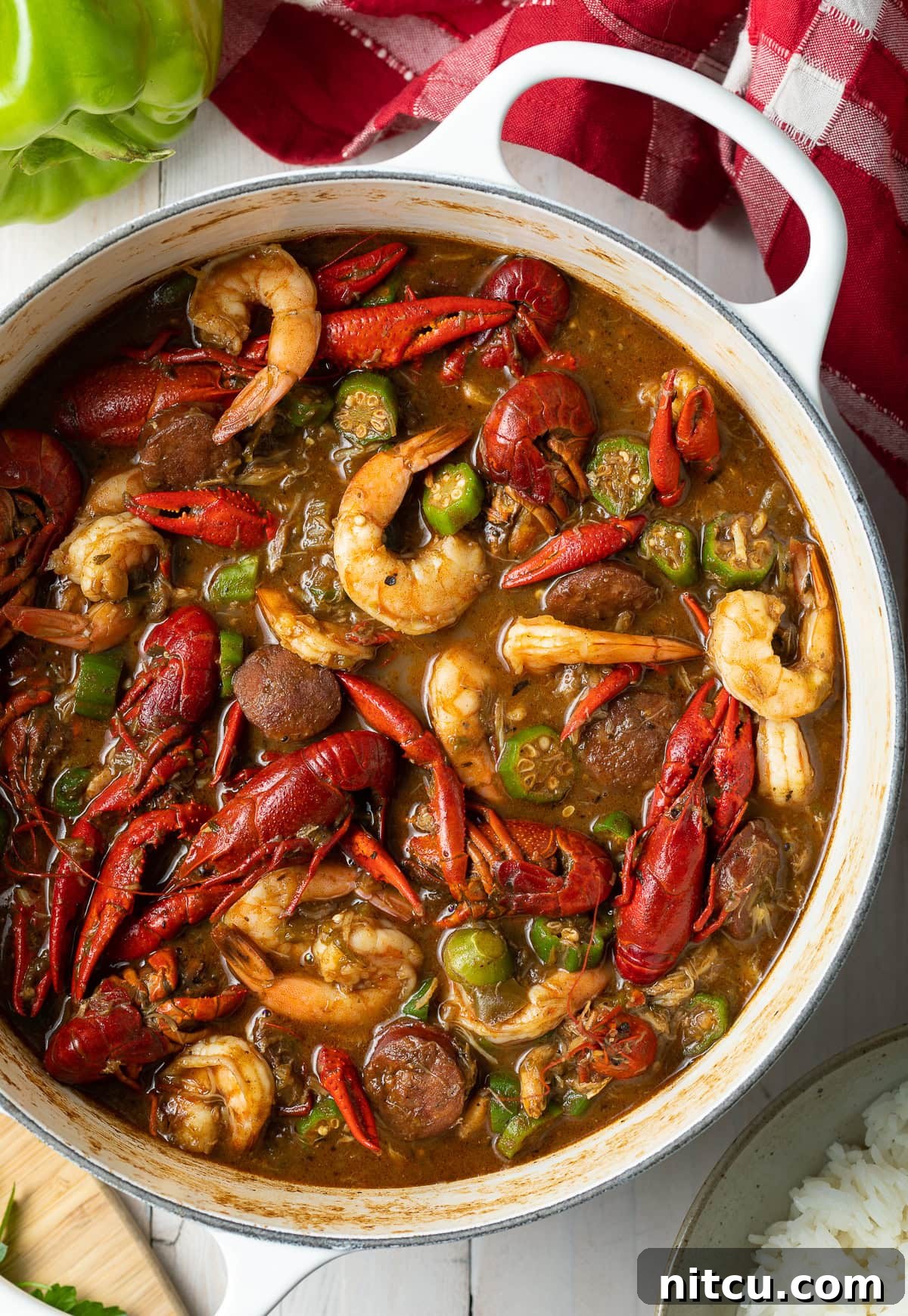
How to Make Authentic New Orleans Seafood Gumbo – A Culinary Journey to Louisiana – This exceptional homemade New Orleans Gumbo recipe is a celebration of the Gulf Coast, brimming with the freshest seafood and an explosion of robust Cajun flavors. Prepare your senses for an unforgettable taste of Louisiana’s rich culinary heritage.
Mastering Seafood Gumbo: The Heart of Louisiana Cuisine
There’s an unparalleled depth and soulfulness in a truly authentic Louisiana gumbo that few other dishes can match. It’s more than just a meal; it’s a warm embrace, a story told through layers of flavor, deeply rooted in the vibrant culture of the South. Our authentic seafood gumbo recipe brings this experience right into your kitchen.
This classic dish showcases a symphony of ingredients: the slow-developed richness of a dark roux, the aromatic foundation of the Cajun “Holy Trinity” (onion, bell pepper, and celery), and an abundance of succulent seafood. Add to that the smoky spice of Andouille sausage and a blend of traditional warm Cajun seasonings, and you have a dish that truly bursts with the incredible essence of the Gulf Coast.
However, it’s crucial to understand that creating a truly spectacular Gumbo is not a task for a rushed weeknight. This is a culinary endeavor that demands patience, careful preparation, and a loving hand. It’s a weekend cooking project, a rewarding experience that culminates in a pot of vibrant, savory goodness that is absolutely, unequivocally worth every moment of time and effort invested. The resulting flavors are deep, complex, and utterly satisfying, a testament to the art of slow cooking.
New Orleans Gumbo: A Culinary Identity
Many aspiring home cooks often wonder about the distinctions between Louisiana’s most famous culinary exports: “What’s the difference between Etouffee, Jambalaya, and Gumbo?” While all three are iconic, each possesses a unique identity that sets it apart.
Classic Cajun Etouffee, for instance, typically features a thinner, often tomato-based sauce, and is traditionally served over a bed of fluffy white rice. It highlights a single main ingredient, usually crawfish or shrimp, in its rich, savory gravy.
Easy Jambalaya, on the other hand, shares a similarity with etouffee in its use of a tomato base, but its primary characteristic is that the rice is cooked directly *within* the dish. This results in a heartier, more integrated creation, akin to a flavorful rice pilaf, often featuring a medley of meats and vegetables.
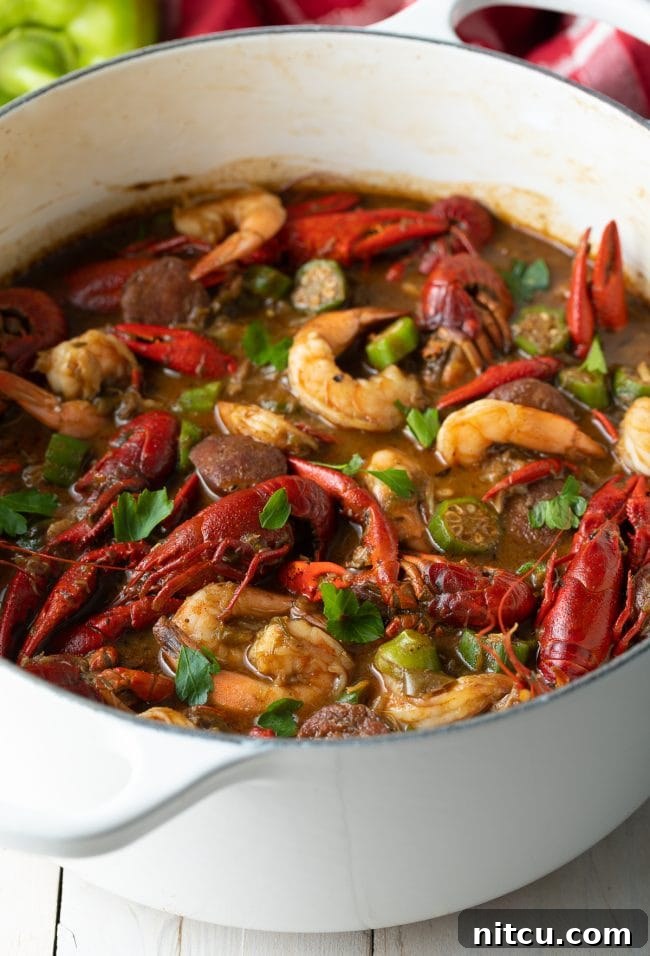
Louisiana Gumbo stands alone with its signature base: a rich, dark roux. This caramelized mixture of flour and fat is the heart and soul of gumbo, providing its characteristic nutty flavor and deep color. Unlike its cousins, traditional gumbo does not include tomatoes, allowing the complex flavors of the roux, seafood, and aromatics to truly shine. The texture is a robust, stew-like consistency, making it a filling and hearty meal that perfectly embodies the spirit of Cajun and Creole cooking. This deep, flavorful broth is what elevates gumbo to its legendary status, offering a culinary experience that is truly unique to the bayous and kitchens of Louisiana.
Essential Ingredients for the Best Seafood Gumbo
While this New Orleans Seafood Gumbo recipe might be one of the more involved dishes you’ll tackle, the unparalleled flavor and comfort it delivers make the extra effort incredibly worthwhile. You’ll soon find yourself wanting to share this delicious creation for all your special gatherings, or simply for a comforting weekend feast.
To craft the ultimate seafood gumbo, sourcing high-quality ingredients is paramount. Here’s a detailed look at what you’ll need to create this magnificent dish:
- For the Roux: All-purpose flour, vegetable oil, and butter are the simple yet foundational elements that will be cooked slowly to create the iconic dark roux, the essential flavor base of any good gumbo.
- For the Aromatics (The Holy Trinity & Beyond): A large onion, green bell pepper, and celery stalks form the classic “Holy Trinity” of Cajun cuisine, providing the aromatic backbone. Fresh garlic cloves add pungent depth, while a habanero or serrano pepper introduces a delightful kick of heat, customizable to your preference.
- Proteins: Andouille sausage, known for its smoky, spicy flavor, is a non-negotiable component. For the seafood, we’ll use crawfish (preferably whole, for maximum flavor), “gumbo crabs” or blue crabs (again, shells contribute immense depth), raw shrimp (large and deveined), and shucked oysters for a briny finish. These fresh seafood elements are what truly elevate this recipe to a gourmet experience.
- Liquid Base: High-quality seafood stock is crucial for a rich, authentic taste. It forms the liquid foundation, harmonizing all the other flavors.
- Seasonings and Enhancers: Worcestershire sauce adds umami and complexity, while dried thyme and authentic Cajun seasoning provide that unmistakable Southern spice profile. A bay leaf infuses a subtle, earthy note during the slow simmer.
- The “Other” Essential: Okra, often a point of debate, plays a dual role: it acts as a natural thickener and contributes its unique, earthy flavor. We’ll show you how to prepare it to minimize its natural sliminess.
- To Serve: Long-grain white rice is the traditional accompaniment, soaking up all the rich gumbo broth. Fresh parsley or scallions (green onions) are perfect for a vibrant garnish, adding a touch of freshness and color.
A Note on Gumbo Authenticity and Variation:
When discussing “authentic” gumbo, one steps into a spirited debate. Many traditional Louisiana Gumbo recipes, especially in rural Cajun areas, might feature a dark roux base with *only* sausage and shrimp, or perhaps chicken and sausage, alongside okra. Some purists might even raise an eyebrow at the addition of crawfish or oysters in a single pot. However, the beauty of gumbo lies in its regional diversity and family traditions.
Our goal with this recipe is to represent a “chef-ier” interpretation, drawing inspiration from several of the most celebrated and flavorful gumbos we’ve encountered in New Orleans’ renowned culinary scene. While maintaining the rustic, soulful notes that define the dish, we’ve opted for a more expansive seafood selection. The inclusion of various forms of seafood, especially those with shells like whole crawfish or crabs, is strategic. These shells are natural flavor powerhouses, intensifying the seafood broth to create unparalleled depth and intrigue. They contribute a rich umami that permeates the entire dish. Furthermore, by offering a broader array of seafood, we aim to ensure that you can find delicious, flavorful ingredient options regardless of your local availability. So, before you “knock it,” we encourage you to try it – the layers of flavor are truly extraordinary!
Crafting the Perfect New Orleans Gumbo: A Step-by-Step Guide
Embarking on the journey to create the ultimate New Orleans Gumbo is a rewarding culinary adventure. While the entire process may seem intricate at first glance, each individual step is surprisingly straightforward. The true secret lies in patience and allowing the flavors to develop naturally, building that crave-able, authentic Cajun taste layer by layer.
Here’s how to bring this masterpiece to life:
1. Master the Roux: The Foundation of Flavor
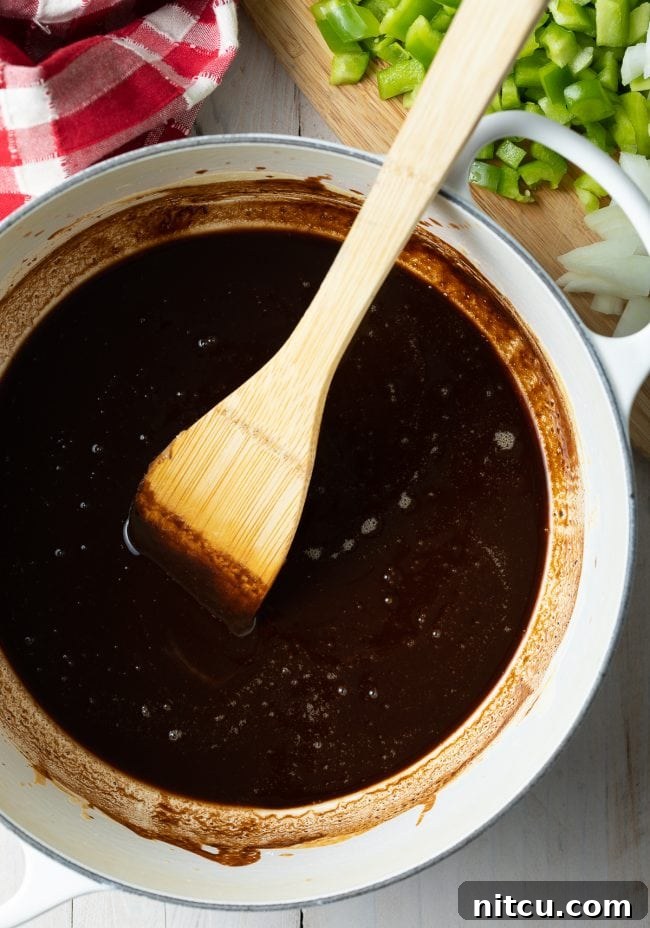
Begin by setting a large, heavy-bottomed 7-8 quart sauce pot over medium-high heat. Add the all-purpose flour, vegetable oil, and butter to the pot. Whisk these ingredients thoroughly to ensure there are no lumps, creating a smooth, thick paste. This is your roux, and it requires your undivided attention. Cook the roux for approximately 30-40 minutes, whisking constantly and diligently. The goal is to achieve a deep, rich color, similar to that of milk chocolate or even darker, as shown in the accompanying picture. This slow caramelization of the flour is what imparts the distinct nutty flavor and deep hue essential to authentic gumbo. Do not rush this step; patience here directly translates to exceptional flavor.
2. Prepare Your Ingredients: Efficiency is Key
While your roux is slowly transforming into a golden-brown wonder, maximize your time by prepping the remaining ingredients. This involves chopping the Andouille sausages into bite-sized pieces, dicing all the vegetables for your “Holy Trinity,” mincing the garlic, seeding and mincing your habanero or serrano pepper, and finely chopping your fresh herbs. Having everything ready to go will make the subsequent steps seamless and enjoyable.
3. The Secret to Perfect Okra: De-Sliming
Incorporating okra into gumbo is a traditional choice, but it can sometimes introduce a “slimy” texture if not prepared correctly. This is where a crucial step comes in: de-sliming the okra. In a smaller sauce pot, bring water to a rolling boil over high heat. Add two tablespoons of white vinegar to the boiling water. Once boiling vigorously, add your chopped okra. Allow it to boil for just 3-4 minutes. This brief blanching with vinegar effectively reduces the okra’s mucilage (the “slime”). Afterward, drain the okra thoroughly and set it aside. This simple trick ensures your gumbo has the desired texture without any unwanted sliminess.
4. Building the Flavorful Base: Aromatics and Sausage
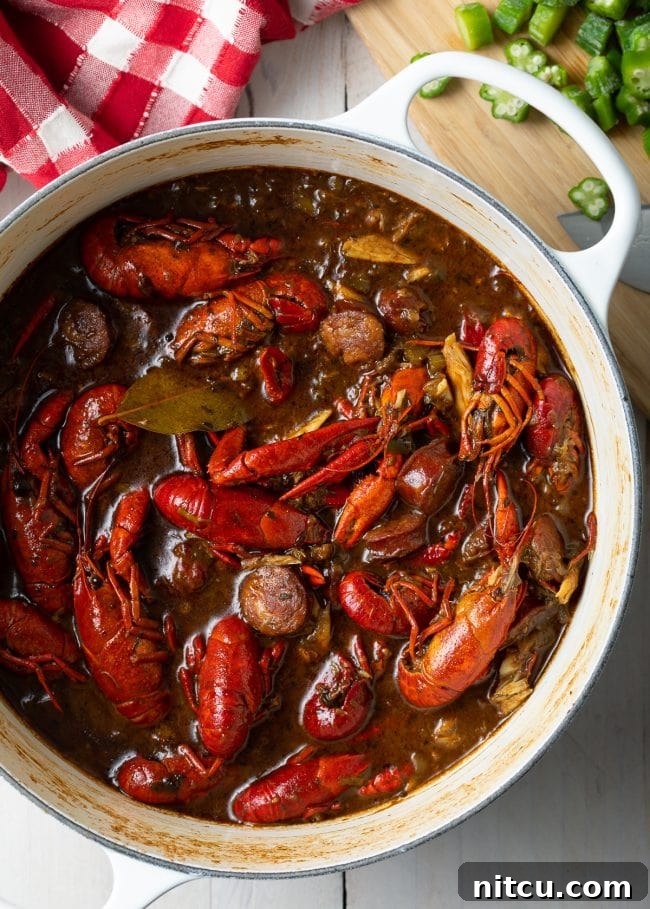
Once your roux has reached that beautiful, dark rich brown color, it’s time to build the base of your gumbo. Add the chopped Andouille sausages to the hot roux. Fry the sausage for 1-2 minutes, allowing it to release its smoky, spicy fats and further flavor the roux. Next, add the chopped onion, bell pepper, celery, minced garlic, and minced habanero (or serrano) pepper. Stir everything well, ensuring the vegetables are coated in the rich roux. Sauté this mixture for 8-10 minutes, until the vegetables have softened and become fragrant. This step deepens the savory notes and creates a complex aromatic foundation for the entire dish.
5. The Slow Simmer: Unlocking Deep Flavors
Now, pour in the seafood broth, followed by the Worcestershire sauce, dried thyme, Cajun seasoning, and a bay leaf. Stir thoroughly to combine all the ingredients, ensuring the spices are evenly distributed. Next, gently mix in the crawfish (preferably whole, with shells for extra flavor) and the whole crabs (if using). Bring the mixture to a gentle simmer, then reduce the heat to low or medium-low, cover the pot, and let it slowly simmer for a full hour. This extended simmering time is crucial for allowing all the flavors to meld and deepen, extracting maximum flavor from the seafood shells and creating a truly harmonious broth.
6. Perfecting Your Rice: The Ideal Accompaniment
To minimize cleanup, you can use the same smaller pot you used for the okra to cook your long-grain white rice. Follow the package instructions carefully for perfect fluffy rice. Once cooked, fluff the rice with a fork and cover it to keep warm until you’re ready to serve. A good tip is to start your rice cooking just before the gumbo’s simmering process is complete, ensuring it’s fresh and warm when the gumbo is ready to be plated.
7. The Finishing Touch: Delicate Seafood
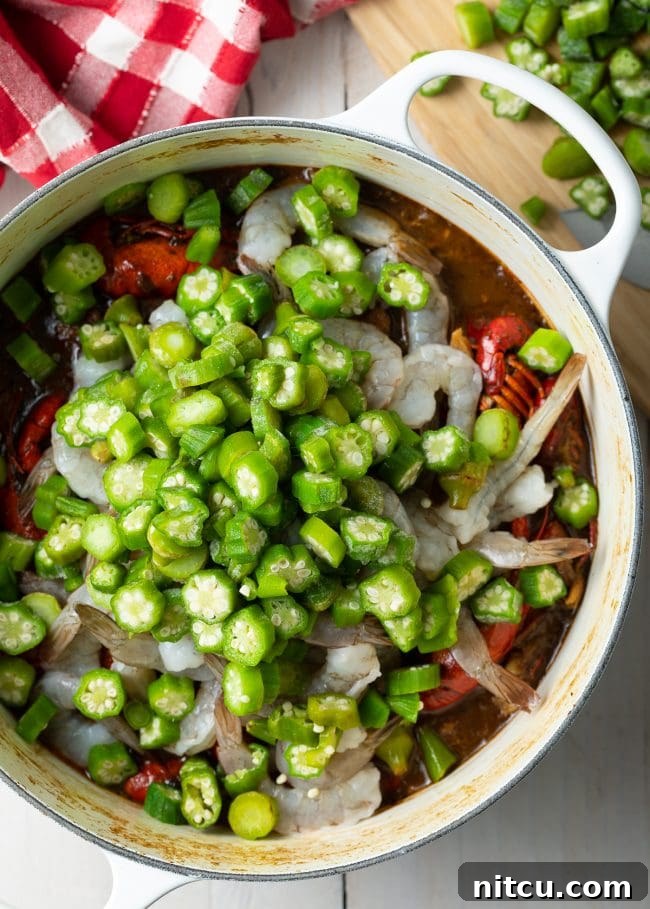
After the gumbo has simmered for an hour, it’s time to add the more delicate seafood. Incorporate the large raw shrimp, shucked oysters (if using), and your de-slimed okra. Stir gently to combine. Allow the gumbo to simmer for just another 5 minutes, or until the shrimp turn pink and opaque, and the oysters curl slightly at the edges. Be careful not to overcook the seafood, as it can become tough. This short cooking time preserves their tender texture and natural sweetness.
8. The Essential Rest: Flavor Integration
Once all the seafood is cooked, cover the gumbo pot tightly and turn off the heat. Allow the gumbo to rest for at least 30 minutes, or even longer if time permits. This resting period is absolutely critical. It gives all the incredible flavors more time to mix and mingle, allowing them to deepen and become more cohesive, without the risk of overcooking the delicate seafood. I know it’s incredibly tempting to dive in immediately when your kitchen smells so unbelievably delicious, but I promise you, this wait is truly worth it for the superior flavor experience.
9. Serving and Enjoying Your Masterpiece
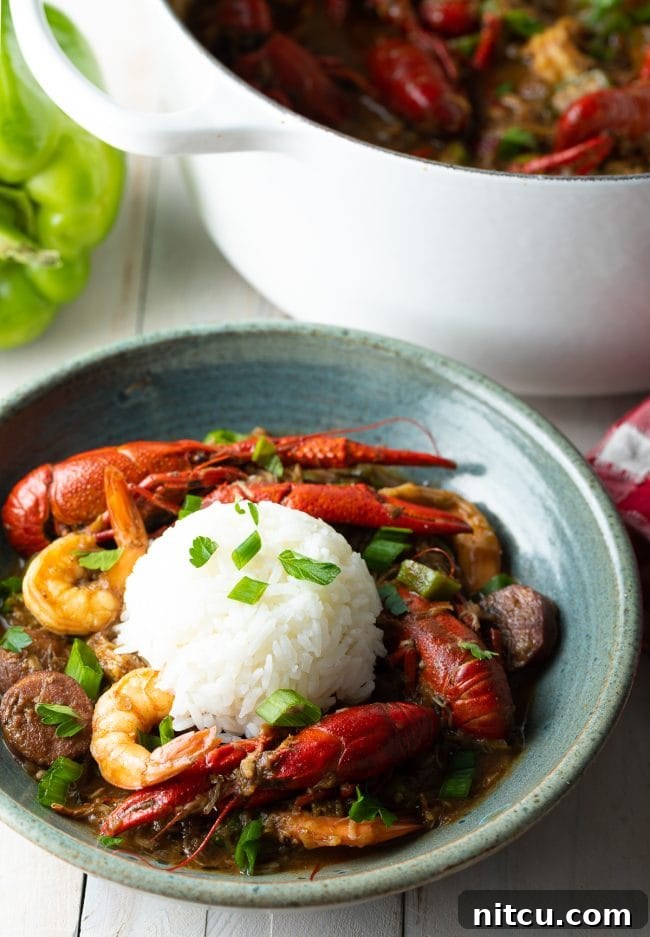
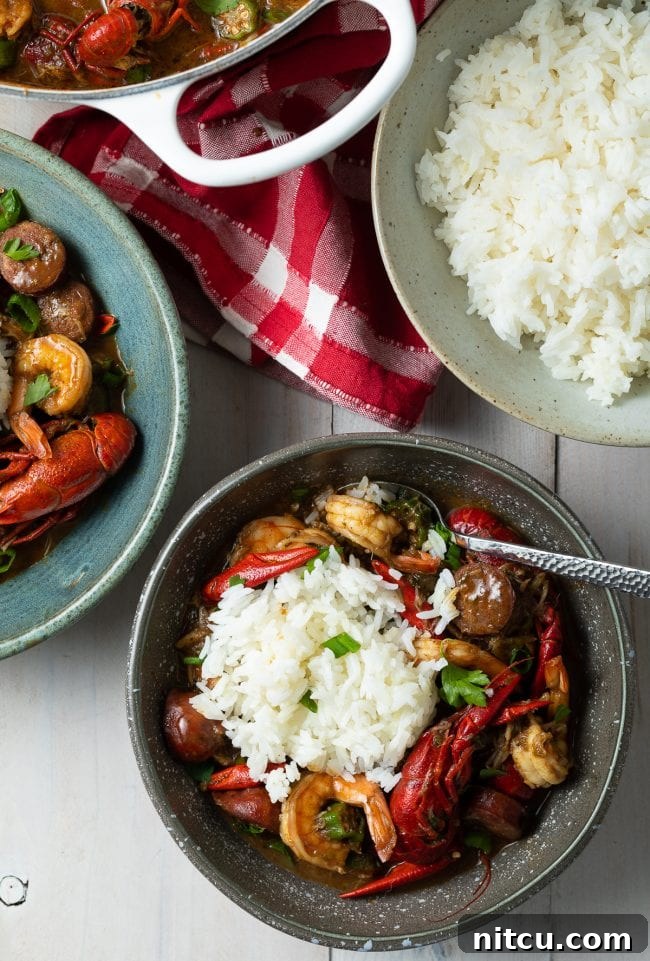
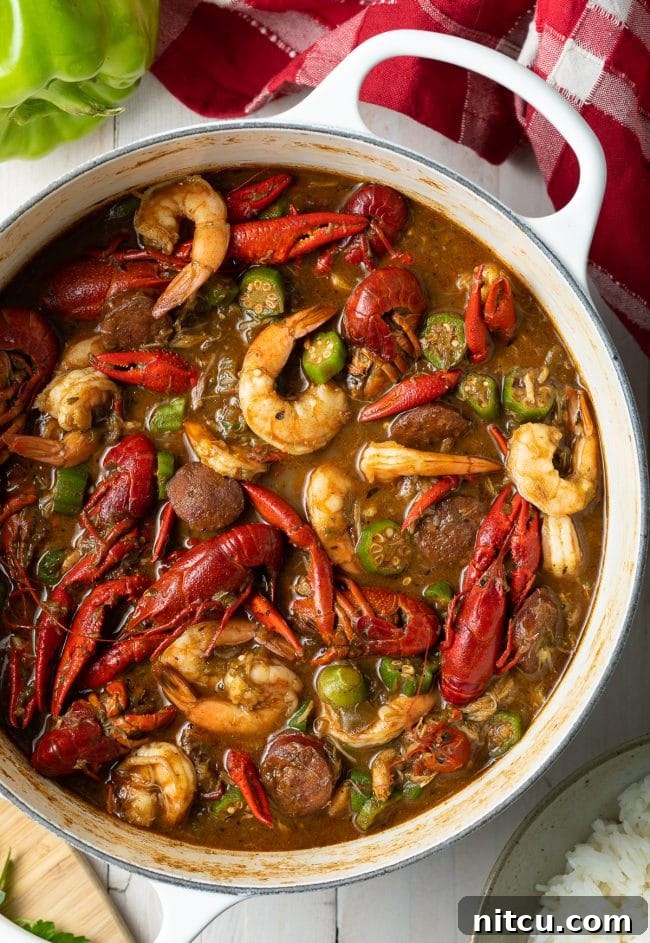
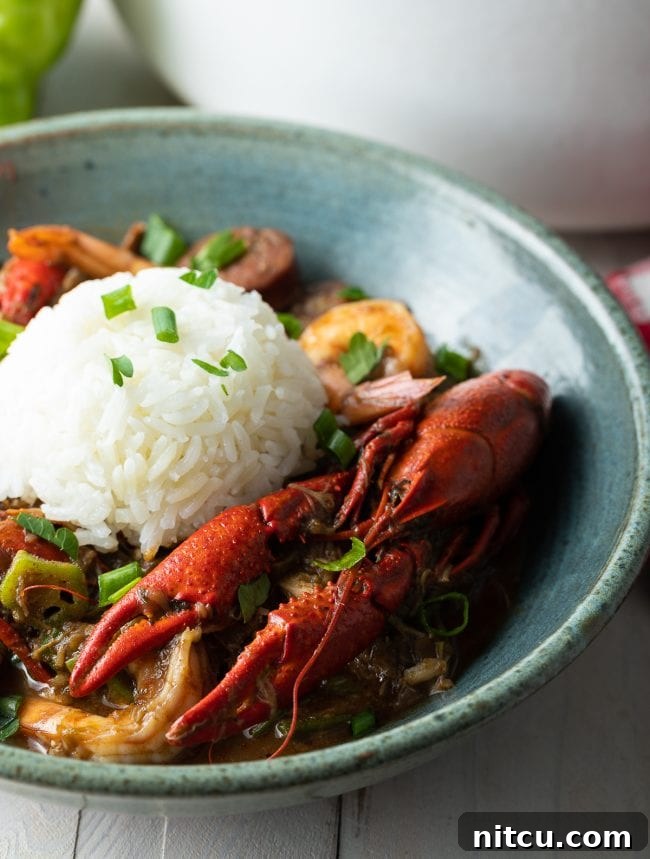
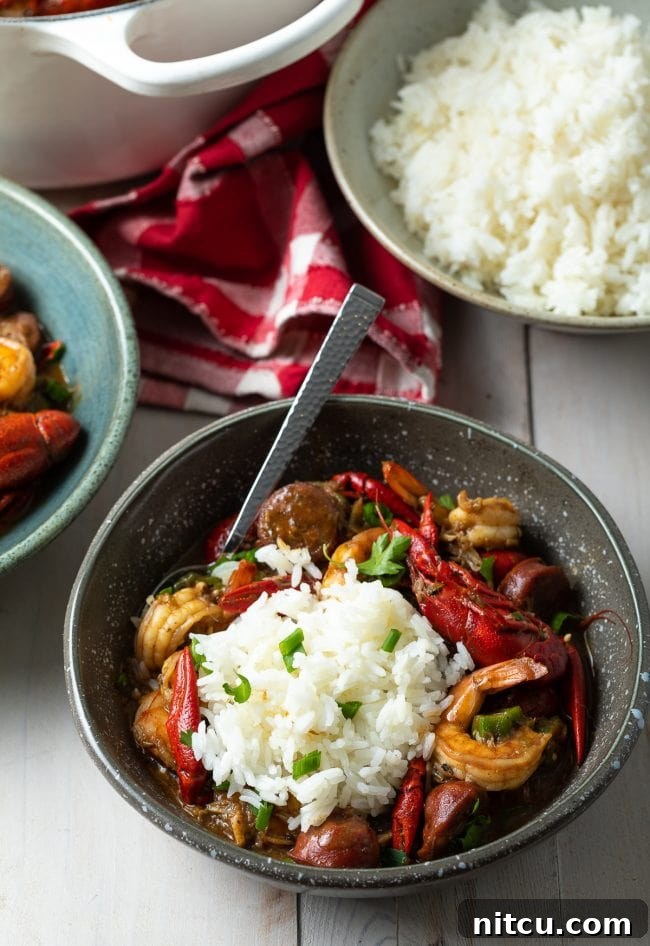
When you’re ready to serve, gently rewarm the gumbo for a few minutes if necessary. Ladle generous portions into large bowls, placing a heaping scoop of warm, fluffy white rice in the center or alongside. Finish with a fresh sprinkling of chopped parsley and/or scallions for a burst of color and herbaceous freshness. Serve immediately and savor every spoonful of this rich, comforting, and deeply flavorful Louisiana classic.
Storing Leftover Louisiana Gumbo:
Any leftover Louisiana Gumbo will keep wonderfully in an airtight container in the refrigerator for up to 3 days. In fact, many connoisseurs agree that gumbo often tastes even better the next day, as the flavors have had more time to intensify and meld. When reheating, gently warm it on the stovetop over low heat. While the gumbo itself holds up beautifully, I highly recommend preparing a fresh batch of rice to enjoy with your reheated portions for the best experience.
Exploring New Orleans Gumbo Variations
The beauty of gumbo lies in its adaptability and the rich tapestry of regional and family traditions. While our recipe offers a robust seafood experience, it’s worth exploring some common and delicious variations:
Okra: A Matter of Preference
Okra has a long history in gumbo, contributing both flavor and acting as a natural thickener. However, many gumbo variations, particularly some Creole versions, do not contain okra, instead relying on filé powder (ground sassafras leaves) or simply a well-made roux for thickening. If you are not a fan of okra’s unique texture or simply prefer a different profile, it is perfectly acceptable to leave it out of this recipe.
Seafood Selection: Freshness is Paramount
After sampling countless “famous” gumbos across New Orleans, a consistent observation is that many do not include crawfish, or at least not crawfish in their shells. My personal conviction, however, is that seafood cooked in its shells — like whole crawfish or blue crabs — creates an immeasurably richer and more profound seafood flavor in the broth. The shells contribute valuable compounds that infuse the gumbo with an unmatched depth. That said, using shell-on seafood is not a strict requirement for a delicious gumbo. The most critical factor, above all else, is to always use the freshest seafood you can possibly find, regardless of the type or whether it’s shelled or unshelled.
Chicken & Sausage Gumbo: A Hearty Alternative
If seafood isn’t your preference, or if you’re simply craving a different kind of gumbo, a classic chicken and sausage gumbo is a fantastic choice. Many traditional gumbos feature a hearty combination of smoky Andouille sausage and tender shredded chicken. To adapt this recipe, simply omit the seafood and stir in pre-cooked, shredded chicken once the gumbo has completed its main simmering phase, just before the final 5-minute simmer and resting period. This ensures the chicken remains moist and flavorful while still soaking up all the incredible gumbo essence.
Get the Complete (Printable) New Orleans Seafood Gumbo Recipe Below. Enjoy!
Optimizing Your Seafood Choices: Flexibility and Flavor
Finding specific types of seafood, such as whole crawfish or “gumbo crabs,” can sometimes be challenging depending on your geographic location and local market availability. The good news is that gumbo is wonderfully flexible, allowing you to adapt the recipe with other fresh, high-quality seafood that is readily accessible to you. You can absolutely swap out the crawfish and small crabs for other delicious options.
Simply follow this essential guideline to ensure perfectly cooked seafood:
If the seafood is *in* shells (like mussels, clams, small whole crabs, or shell-on shrimp), incorporate it during the main simmering stage and allow it to simmer for the full hour. The shells will help build an even richer stock and the longer cooking time is often needed for these items. However, if you are using seafood that is already peeled and deveined (such as raw shrimp without shells, scallops, or crab meat), only add it during the final 5 minutes of simmering. This prevents overcooking, ensuring your seafood remains tender, succulent, and full of flavor. Freshness remains the paramount factor for any seafood you choose to include.
Discover More Cajun-Inspired Recipes!
If the bold and comforting flavors of this New Orleans Seafood Gumbo have captured your heart, you’ll love exploring other dishes inspired by the vibrant culinary traditions of Cajun and Creole cooking. Expand your Southern cooking repertoire with these delectable recipes:
- Creamy Skillet Cajun Chicken and Mushrooms Recipe
- Cajun Chicken and Rice Casserole
- Easy Red Beans and Rice Recipe
- Cajun Hot Shrimp Dip Recipe
- Cajun Dirty Rice Recipe
- Cajun Boiled Peanuts Recipe
- Classic Muffuletta Sandwiches
Find detailed nutrition information, including calories, protein, sodium, fiber, and vitamin percentages, on the printable recipe card below.
Print Recipe
Leave a Review »
New Orleans Gumbo Recipe
Ingredients
- ½ cup all-purpose flour
- ¼ cup vegetable oil
- ¼ cup butter
- 12 ounces fresh or frozen okra chopped
- 2 tablespoons white vinegar
- 2 cups dried long grain rice
- 12 ounces andouille sausage, sliced
- 1 large sweet onion peeled and chopped
- 1 large green bell pepper
- 1 cup chopped celery
- 4-5 cloves garlic minced
- 1 habanero pepper seeded and minced (or serrano)
- 8 cups seafood stock
- 1 tablespoon Worcestershire sauce
- 2 teaspoons dried thyme
- 2 teaspoons Cajun seasoning
- 1 bay leaf
- 1 pound crawfish
- 1 pound small “gumbo crabs” or blue crabs or crab meat
- 1 pound large raw shrimp cleaned
- 1 pint shucked oysters optional
- 1 cup chopped parsley and/or chopped scallions for garnish
Instructions
-
Make the Roux: Set a large 7-8 quart saucepot over medium-high heat. Add the flour, oil, and butter. Whisk well to break up any clumps. Cook the roux for 30-40 minutes, whisking regularly, until it is the color of milk chocolate.
-
Prep: Meanwhile, chop the sausages, all the vegetables, and herbs.
-
De-Slime the Okra: Set a smaller saucepot filled with water and over high heat. Add the vinegar. Once boiling, add the chopped okra. Boil for 3-4 minutes to reduce the slime. Then drain and set aside.
-
Build the Base: Once the roux is a dark rich brown color, add in the andouille sausages. Fry it in the roux for 1-2 minutes, then add in the chopped onion, bell pepper, celery, garlic, and habanero. Stir and sauté for 8-10 minutes.
-
Slow Simmer: Add in the seafood broth, Worcestershire sauce, thyme, Cajun seasoning, bay leaf. Stir well. Then mix in the crawfish and whole crabs. Simmer on low for 1 hour.
-
Cook the Rice: Use the same smaller pot you used for the okra to cook the rice. Cook according to the package instructions. Once cooked, fluff the rice, and cover until ready to use.
-
Finish: Now add the shrimp, oysters (plus crabmeat if using), and okra. Simmer another 5 minutes.
-
Rest: Cover the gumbo pot and turn off the heat. Let the gumbo rest for at least 30 minutes, so all the flavors have longer to mix and mingle, without overcooking the seafood.
-
To Serve: Rewarm the gumbo, if needed, for 2-3 minutes. Then serve it in large bowls with a heaping scoop of rice, and a sprinkling of parsley and/or scallions.