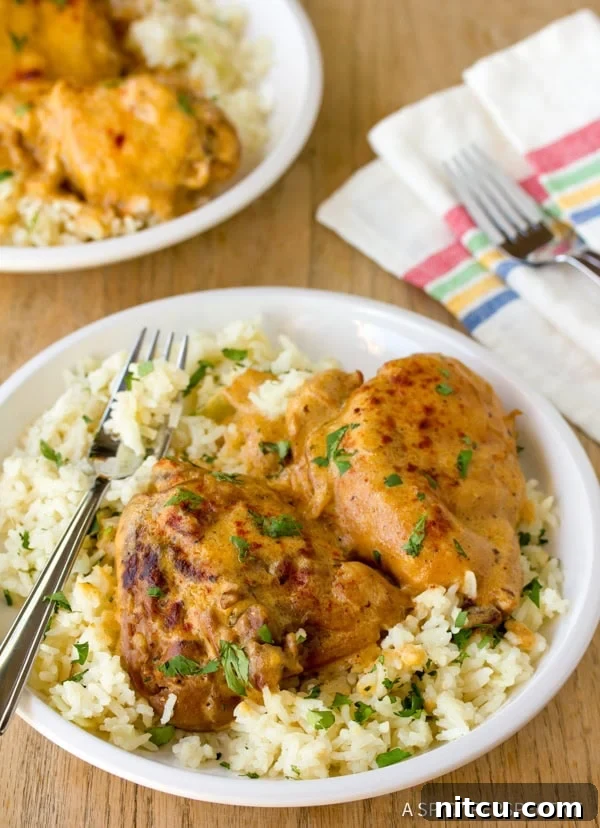
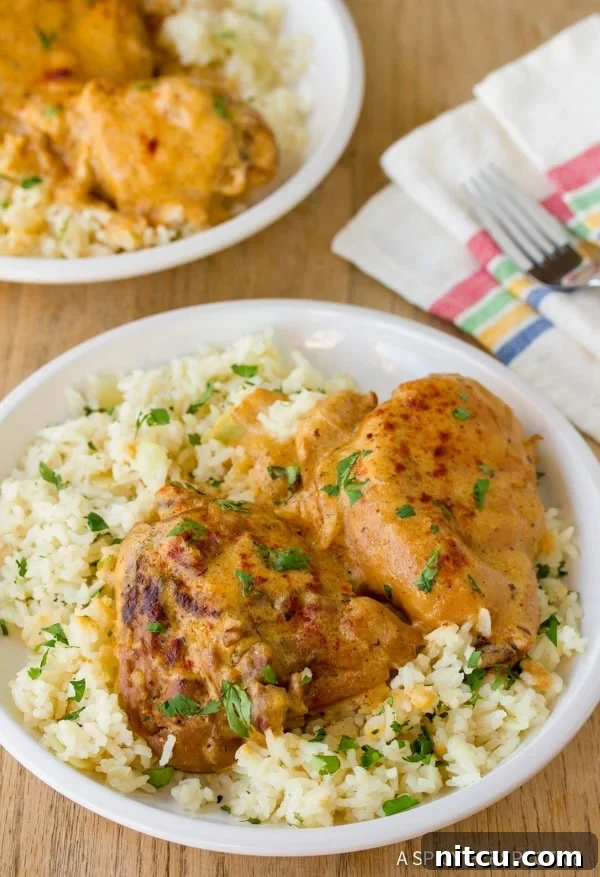
Delve into the comforting embrace of Hungarian Chicken Paprikash (Paprikas), a culinary masterpiece that embodies warmth, tradition, and rich flavor. This beloved dish, with its tender chicken enveloped in a luscious, creamy paprika sauce, is more than just a meal; it’s a cherished family legacy passed down through generations, bringing joy and comfort to every dinner table.
The Enduring Allure of Chicken Paprikash
Some dishes transcend mere sustenance, becoming threads woven into the fabric of family history. Hungarian Chicken Paprikash is precisely one such dish for us. It evokes vivid memories of loved ones, particularly Lt. Dan’s great-grandmother, Grandma Rosie, a woman whose life spanned 96 vibrant years until 2009. I fondly recall the simple pleasures of sitting in her living room, enjoying pirouette cookies and tall glasses of Sprite, as she regaled us with tales of her ballroom dancing days and her distinguished career as an executive secretary at Studebaker. We’d watch Notre Dame football, her tiny notebook diligently recording stats. Her spirit and stories, deeply cherished, live on in our family gatherings.
A Culinary Inheritance: Hungarian Paprikash Through Generations
The culinary traditions of a family are often as potent as their stories. Years ago, we were blessed with a visit from Lt. Dan’s grandparents, Mo and Papa. This lively couple, brimming with wonderful memories of family and travels, shared not just their wisdom but also a profound connection to their Hungarian heritage. Mo, who became a surrogate grandmother to me after losing my own at a young age, radiated a “certain fire” that seemed intrinsically linked to their remarkable longevity and zest for life.
Our time with Mo and Papa was always filled with colorful anecdotes, punctuated by laughter and affectionate head-shaking. After 59 years of marriage, they truly seemed to hold many of life’s secrets, and we eagerly soaked in their overflowing wisdom. It was through them that I was introduced to the rich cultural tapestry of Hungarian traditions and, most notably, their incredible cuisine. Among the many dishes, one always stood out as the undeniable family favorite: the hearty and soulful Hungarian Chicken Paprikash.
Understanding Paprikash: The Soul of Hungarian Comfort Food
So, what exactly is Paprikash? At its core, this traditional Hungarian recipe features incredibly tender, melt-in-your-mouth chicken, often served over a bed of fluffy rice or delicate egg noodles, all generously smothered in a rich, velvety, creamy paprika sauce. It’s a dish that warms the soul and satisfies even the deepest hunger.
Historically, Paprikash was conceived as “working man’s food” – simple, inexpensive, and utterly filling meals designed to nourish families after a hard day’s labor. While modern versions predominantly use chicken, older traditions sometimes featured rabbit meat, reflecting a time when dinner was caught rather than purchased from a market. Hungarian dishes might not always be the most glamorous visually, but their depth of flavor and comforting nature are unparalleled. The true magic, undoubtedly, lies within that exquisite sauce. The unique blend of sour cream and paprika creates a luxurious, silky texture that elevates humble chicken and rice into something truly extraordinary.
Mo passed away this year. This is my last photo of her cooking.
It was during that memorable visit that Mo generously shared her wisdom, teaching me the intricacies of making authentic Hungarian Paprikash. Cooking with grandmas is always an adventure; their recipes often rely on instinct rather than precise measurements. Phrases like, “Add enough flour until it looks right,” or “Stir it until it’s done,” were common. This meant I had to recreate the dish several times on my own, meticulously recording measurements and cooking times, to truly capture her culinary brilliance in a repeatable recipe.
Perfecting the Paprikash: Tailoring a Timeless Recipe
While Mo’s original recipe for Paprikash was impeccable, I made two minor adjustments to better suit my family’s preferences and our smaller household. Mo, ever the generous host, cooked as if she were feeding an entire village – and she likely did! Therefore, I scaled down her recipe to comfortably serve four people, ensuring there’s enough to enjoy without an overwhelming amount of leftovers.
Secondly, regarding the star ingredient, paprika: Mo traditionally used Hungarian sweet paprika. However, in our home, we appreciate a bit more warmth and character in our spices. So, I incorporated hot smoked paprika, which adds a subtle smoky depth and a delightful kick without overpowering the dish. Mo herself approved of this modification, agreeing that the hot paprika, when balanced with the creamy sour cream, offered just the right amount of extra zing. Of course, the beauty of Paprikash is its adaptability, so feel free to choose your preferred variety of paprika – be it sweet, hot, or smoked – to tailor the flavor to your liking.
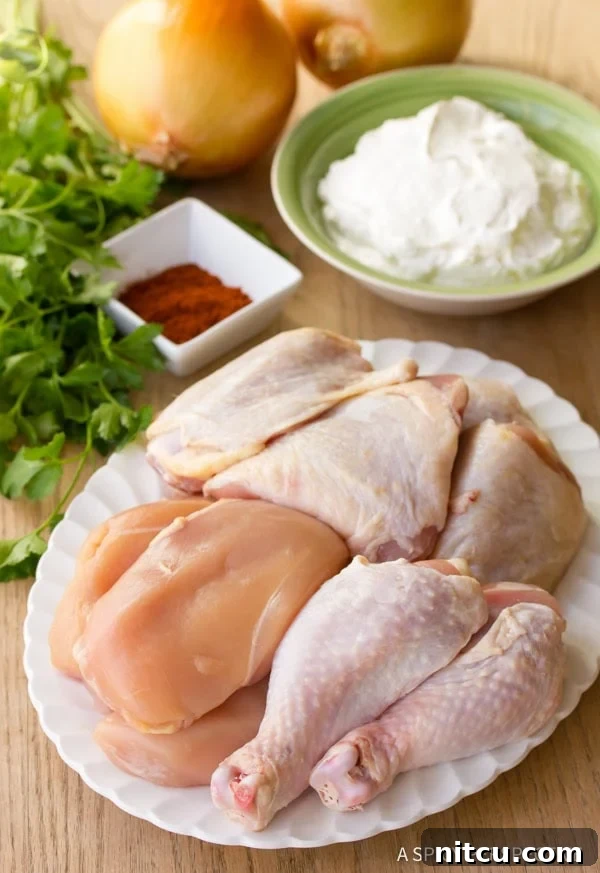
Another crucial element Mo emphasized was the choice of chicken pieces. She often used a combination of boneless, skinless chicken breasts and bone-in drumsticks or thighs. The chicken breasts, slow-cooked in the rich sauce, become incredibly tender – so much so that you can cut them with just a fork. Meanwhile, the bones and skin from the drumsticks and thighs contribute immense depth and flavor to the simmering broth, which forms the base of the divine sauce. This blend ensures both succulence and a robust flavor profile, making for an unforgettable meal.
Each time I prepare Hungarian Chicken Paprikash, I’m transported back to the precious moments shared with Grandma Rosie and Mo. The aroma filling my kitchen conjures memories of their love, their stories, and the marvelous meals that bonded our family. This dish has become a cherished staple in our home, especially during the crisp days of fall and the festive holiday season. It brings a genuine smile to my face, knowing that my children will grow up carrying on this delicious tradition of Chicken Paprikash, made with the same love and care that was passed down to me.
Your Questions About Hungarian Paprikash Answered
Both goulash and paprikash are iconic Hungarian comfort foods, but they differ significantly. Hungarian Goulash is traditionally a rustic, hearty stew made with beef (or sometimes wild game) and a variety of vegetables, often featuring a rich, brothy sauce. Paprikash, on the other hand, is primarily a poultry dish (most commonly chicken) known for its distinctive creamy, paprika-infused sauce, typically served with rice or egg noodles.
Chicken Paprikash offers a bold yet incredibly smooth and comforting flavor profile. The creamy sour cream sauce provides a tangy richness that beautifully complements the tender chicken. Depending on the paprika used, you might experience a delicate sweetness or a subtle smoky spice, creating a wonderfully balanced and deeply satisfying taste.
Absolutely. While “regular” paprika can be sourced from various regions globally (including Spain, California, and Central/South America), Hungarian paprika holds a special status as Hungary’s national spice. Its production is meticulously regulated, resulting in eight distinct variations. Authentic Hungarian paprika typically boasts a brighter red color and a more profound, often sweeter, and more robust flavor than generic paprika blends. High-quality Hungarian paprika is essential for achieving the true character of Paprikash.
When a recipe calls for Hungarian paprika, you can certainly substitute it with any variety you prefer. If you’re not keen on the heat of hot paprika or the smoky notes of smoked paprika, opting for a sweet paprika will still provide the signature color and a milder, pleasant flavor. However, for an authentic experience, seeking out true Hungarian sweet or hot paprika is recommended.
Yes, absolutely! While a combination of boneless breasts and bone-in thighs/drumsticks is ideal for maximizing flavor and tenderness, you can certainly customize. A whole fryer pack of bone-in chicken pieces works wonderfully, or for a quicker preparation, you can use all boneless chicken pieces like breasts or thighs.
Definitely! While rice is a popular accompaniment, Hungarian Paprikash is equally delicious served with traditional Hungarian dumplings (nokedli or spaetzle), wide egg noodles, or even mashed potatoes. Choose your favorite starchy side to soak up every last drop of that incredible sauce.
Leftover Chicken Paprikash can be stored in an airtight container in the refrigerator for up to 3-5 days. It often tastes even better the next day as the flavors have more time to meld.
Technically, you can freeze Paprikash for up to 3 months. However, be aware that the rice and the creamy sour cream sauce may not always thaw perfectly, sometimes leading to a slightly altered texture (the sauce can separate or become grainy). For the absolute best flavor and texture, it’s generally advised not to freeze this dish. If you do, consider freezing just the chicken and sauce, then preparing fresh rice or noodles when reheating.
Discover More Hungarian Culinary Delights
If you’ve fallen in love with the flavors of Hungary through Chicken Paprikash, you’re in for a treat! Explore other authentic Hungarian recipes that promise to bring warmth and robust flavors to your kitchen:
- Hungarian Goulash Recipe
- Hungarian Mushroom Soup
- Hungarian Haluski Cabbage and Noodles

Print Recipe
Hungarian Chicken Paprikash Recipe
Ingredients
- 3 pounds chicken, a combination of boneless breasts and bone-in drumsticks/thighs
- 2 large chopped onions, divided
- 4 tablespoons oil, divided (such as vegetable or canola oil)
- 1 tablespoon Hungarian Hot Smoked Paprika
- 16 ounces sour cream
- 1/4 cup all purpose flour
- 2 cups long-grain rice
- 4 cups chicken broth
- 1/4 cup chopped fresh parsley
- Salt and freshly ground black pepper to taste
Instructions
-
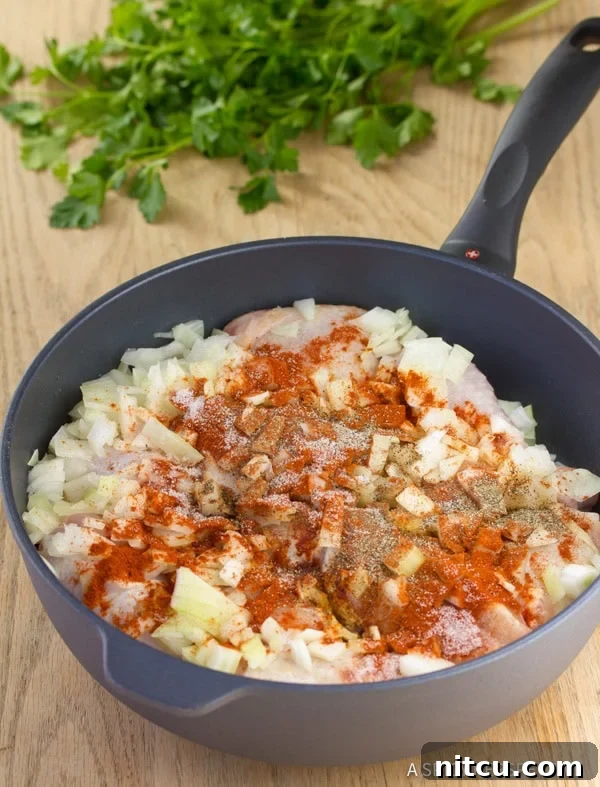
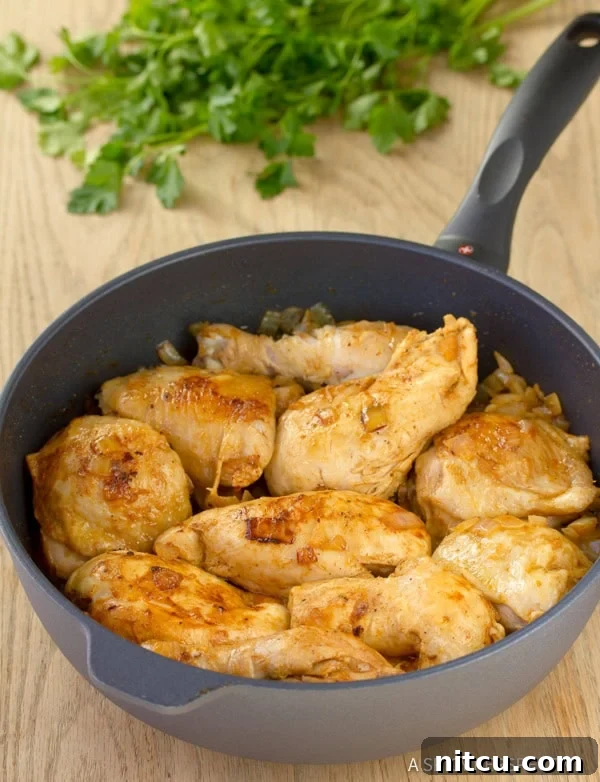
In a large Dutch oven or heavy-bottomed pot, heat 3 tablespoons of oil over medium heat. Add the chicken pieces, 1 chopped onion, paprika, 1 teaspoon of salt, and 1/2 teaspoon of pepper. Brown the chicken thoroughly on all sides, stirring the onions as you turn the chicken, for approximately 10 minutes. The onions should soften and begin to caramelize, adding depth to the base.
-
Once the chicken is well-browned, add enough water to the pot to almost completely cover the chicken pieces. Bring the liquid to a gentle simmer, then cover the pot, reduce the heat to low, and allow the chicken to slowly cook for about 45 minutes. The chicken should become incredibly tender, practically falling off the bone.
-
While the chicken is simmering, prepare the rice. In a separate medium-sized pot, heat the remaining 1 tablespoon of oil over high heat. Add the second chopped onion and sauté for 2 minutes until translucent and fragrant. Stir in the 2 cups of long-grain rice and continue to sauté for another 1-2 minutes, allowing the rice to toast slightly. Pour in the 4 cups of chicken broth, bring to a boil, and give it a good stir. Reduce the heat to a low simmer, cover the pot tightly, and cook according to package directions (typically around 20 minutes), or until all the broth has been absorbed. Once cooked, stir in the chopped parsley. Remove from heat, keep covered, and set aside.
-
When the chicken is fork-tender, carefully remove it from the Dutch oven and transfer it to a plate. Cover it loosely with foil to keep it warm while you prepare the sauce. In a medium-sized glass bowl, combine the 16 ounces of sour cream with the 1/4 cup of all-purpose flour. Whisk vigorously until the mixture is completely smooth and no lumps of flour remain.
-
You should have approximately 3 cups of flavorful pan juices remaining in the Dutch oven. If there’s significantly more, carefully ladle out some until you have about 3 cups. Take 1 1/2 cups of these warm pan juices and slowly whisk them into the sour cream and flour mixture in the glass bowl. This crucial step, known as tempering, gradually raises the temperature of the sour cream, preventing it from curdling when added back to the hot pot and ensuring a perfectly smooth, silky sauce.
-
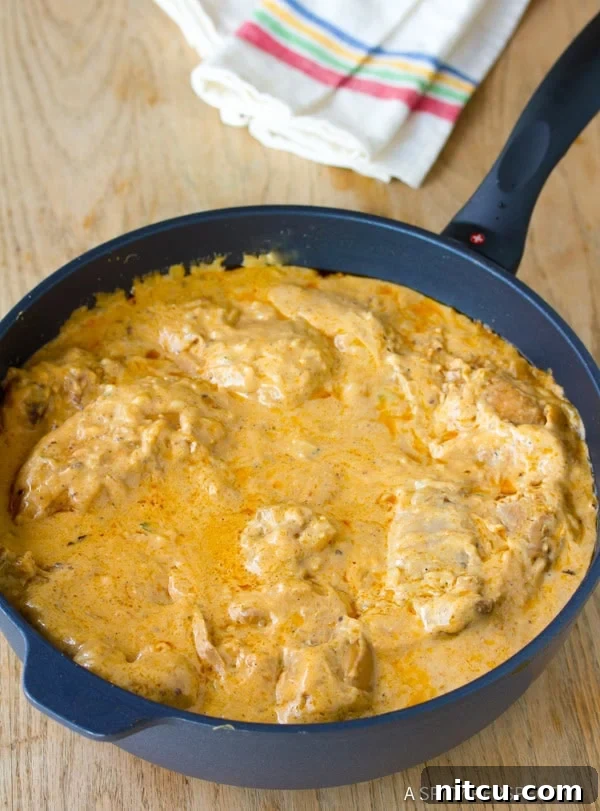
Now, pour the tempered sour cream mixture back into the Dutch oven with the remaining pan juices. Whisk continuously over medium heat until the sauce comes to a gentle boil and thickens to a rich, gravy-like consistency. Season with additional salt and pepper to taste, adjusting until the flavor is just right.
-
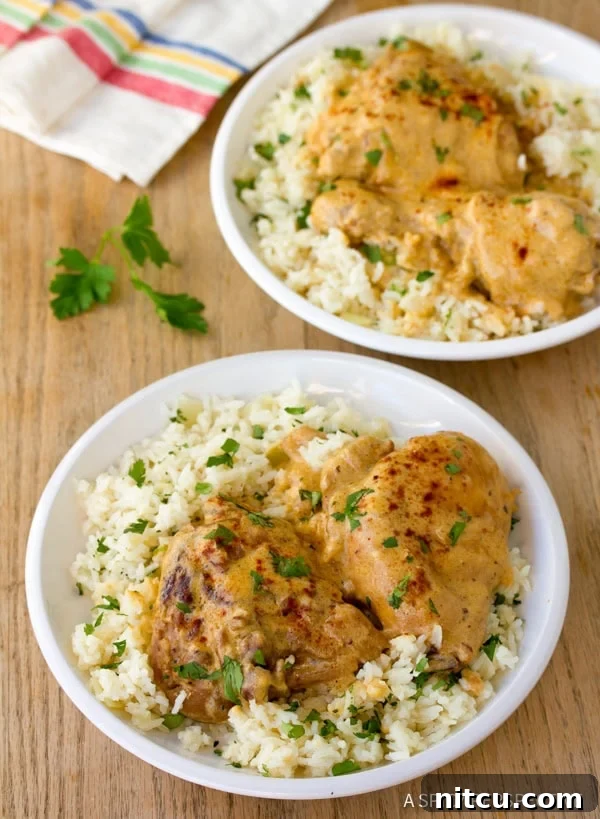
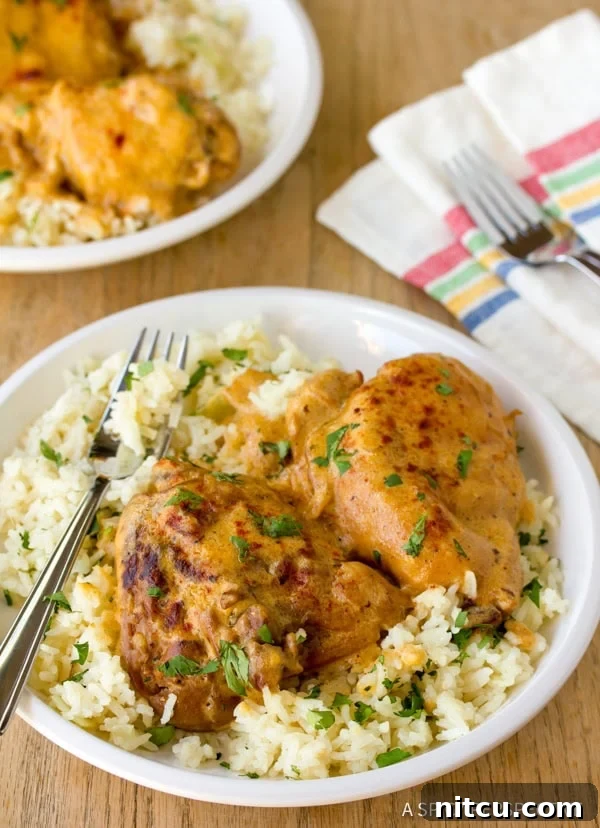
Return the warm, cooked chicken pieces to the pot, gently stirring to coat them thoroughly with the luscious paprika sauce. Serve the Hungarian Chicken Paprikash immediately, spooning the chicken and plenty of extra sauce over portions of the fluffy rice. Garnish with a sprinkle of fresh parsley if desired.