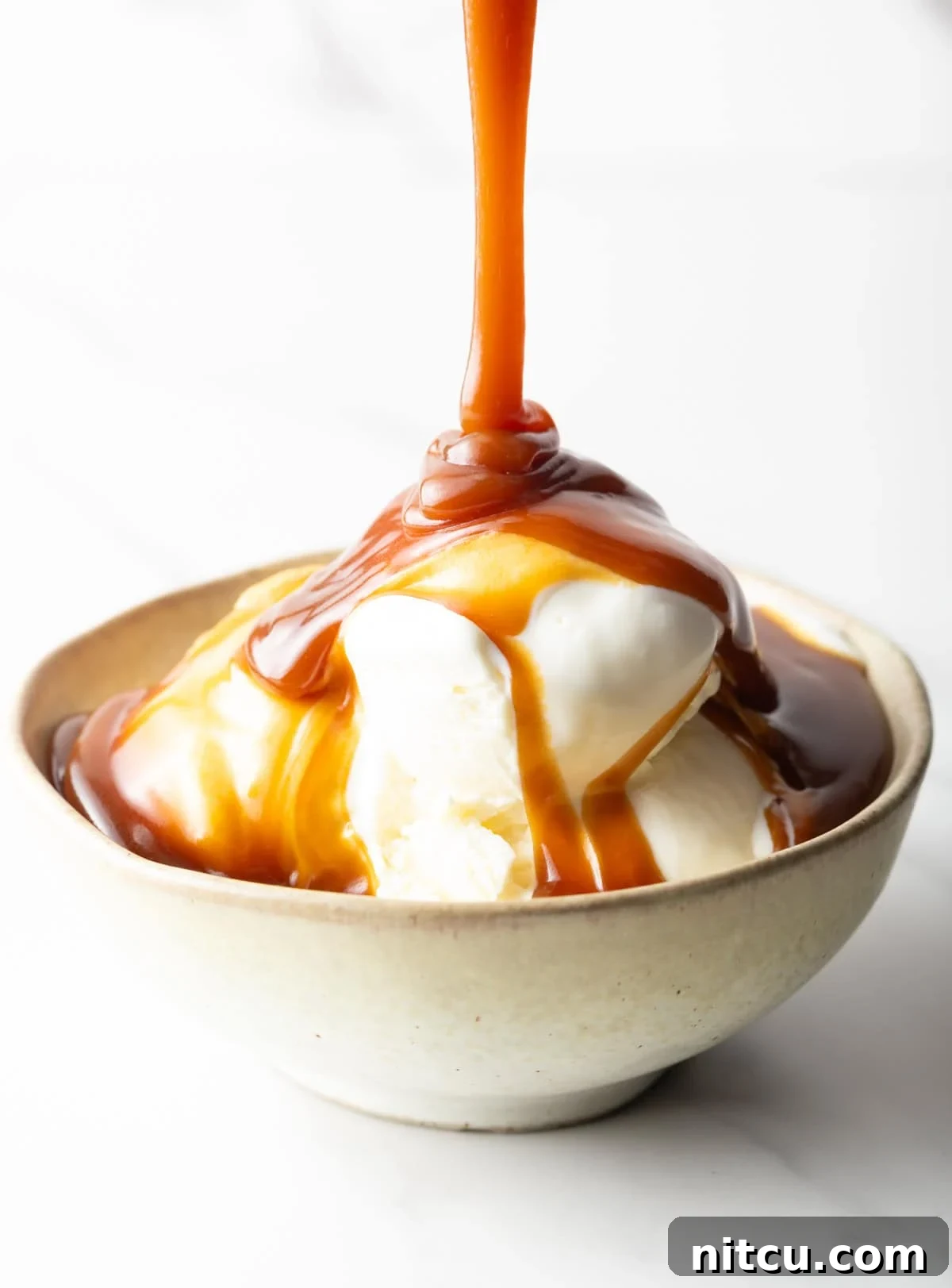
Forget store-bought caramel sauces filled with questionable ingredients and artificial flavors. Once you experience the unparalleled richness and silky texture of homemade salted caramel, you’ll never look back! With just five simple, wholesome ingredients, you can whip up the most incredible, gourmet-quality salted caramel sauce from scratch. This effortless recipe comes together in under 15 minutes, making it a perfect quick indulgence or a fantastic base for your favorite dessert creations. Whether you’re dipping fresh fruit, drizzling it lavishly over ice cream, or incorporating it into baking, this homemade marvel promises a depth of flavor that jarred varieties simply cannot match.
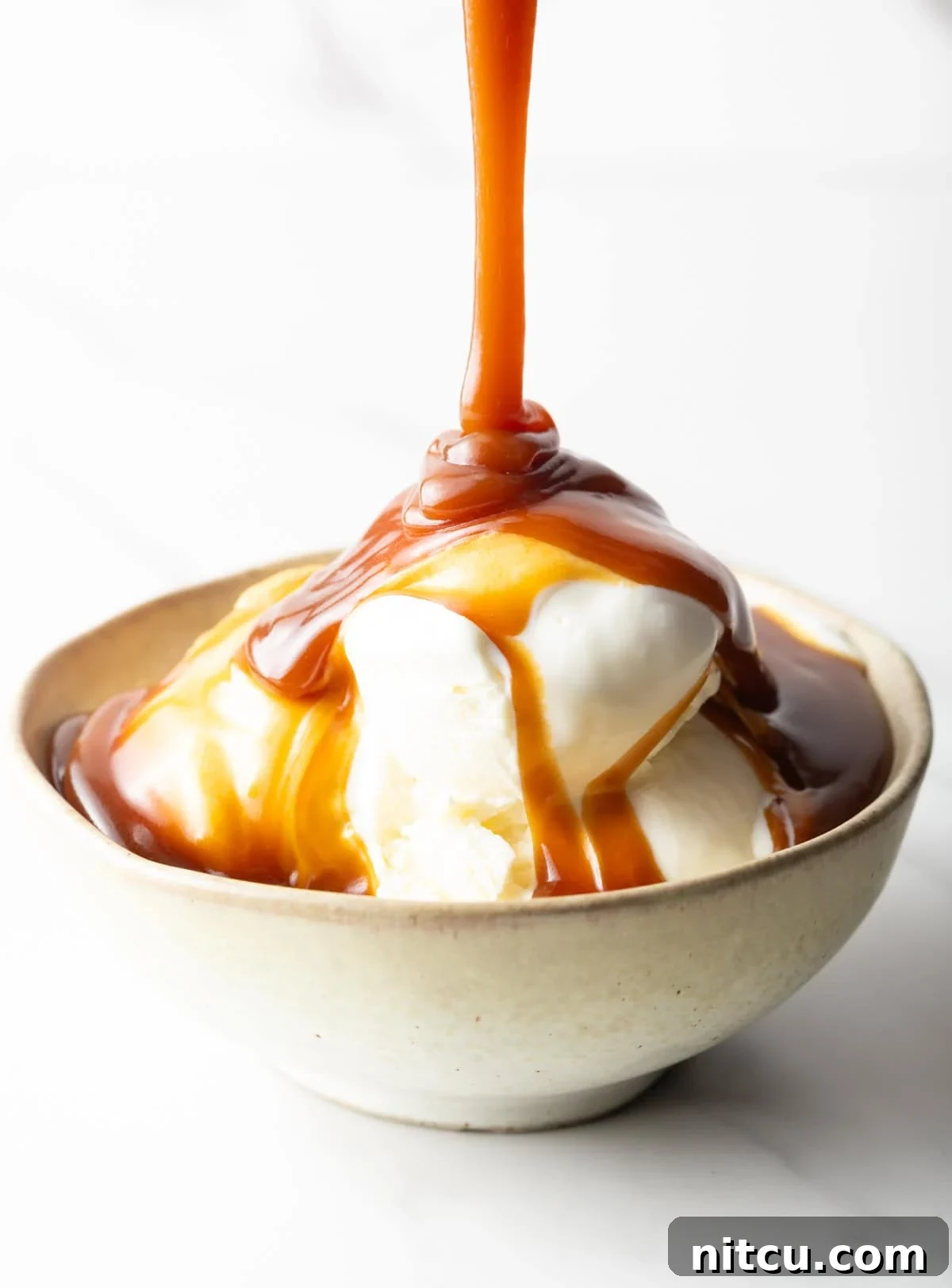
Are you firmly on Team Chocolate, or does the allure of luscious caramel capture your heart? While I often find myself appreciating both, my family’s undeniable love for all things caramel usually tips the scales. It’s a secret weapon in our household; if I need a little extra motivation for chores, simply mentioning my famous salted caramel candy or brewing a batch of my renowned hot caramel drink guarantees enthusiastic participation! But when it comes to a versatile, stand-alone sauce, this recipe is my go-to. I’ve perfected it over the years to create a thick, velvety, and irresistibly flowing salted caramel sauce that brings smiles all around. It’s ideal for enhancing caramel cookie bars, elevating simple desserts, or simply serving alongside crisp, fresh fruit for an elegant treat. The flavor profile is a symphony of sweet and salty, a robust dance that keeps you coming back for more. If you, like me, appreciate exceptional taste and a touch of homemade magic, you’ll discover that buying pre-made caramel will become a distant memory.
Table of Contents
- Why This Salted Caramel Recipe Shines
- Essential Ingredients & Expert Tips
- Step-by-Step Guide to Perfect Caramel
- Advanced Caramel Making Tips
- Delightful Serving Ideas
- Storing Your Homemade Caramel Sauce
- Frequently Asked Questions About Caramel
- More Irresistible Dessert Recipes

Why This Salted Caramel Recipe Shines
Crafted with Care and Love – It’s genuinely surprising to discover the lengthy list of unfamiliar and often undesirable ingredients that lurk within a typical jar of store-bought caramel. We’re talking about things like high-fructose corn syrup, a slew of artificial flavors, and synthetic colors that do nothing for your dessert or your well-being. This perfect recipe, however, champions simplicity and purity. By focusing on just five core ingredients, we eliminate all the unnecessary additives, resulting in a caramel sauce that not only tastes profoundly better but is also something you can feel good about serving. An added bonus? You have complete control over the saltiness, allowing you to tailor it precisely to your preference, from a subtle hint to a bold, pronounced salted flavor.
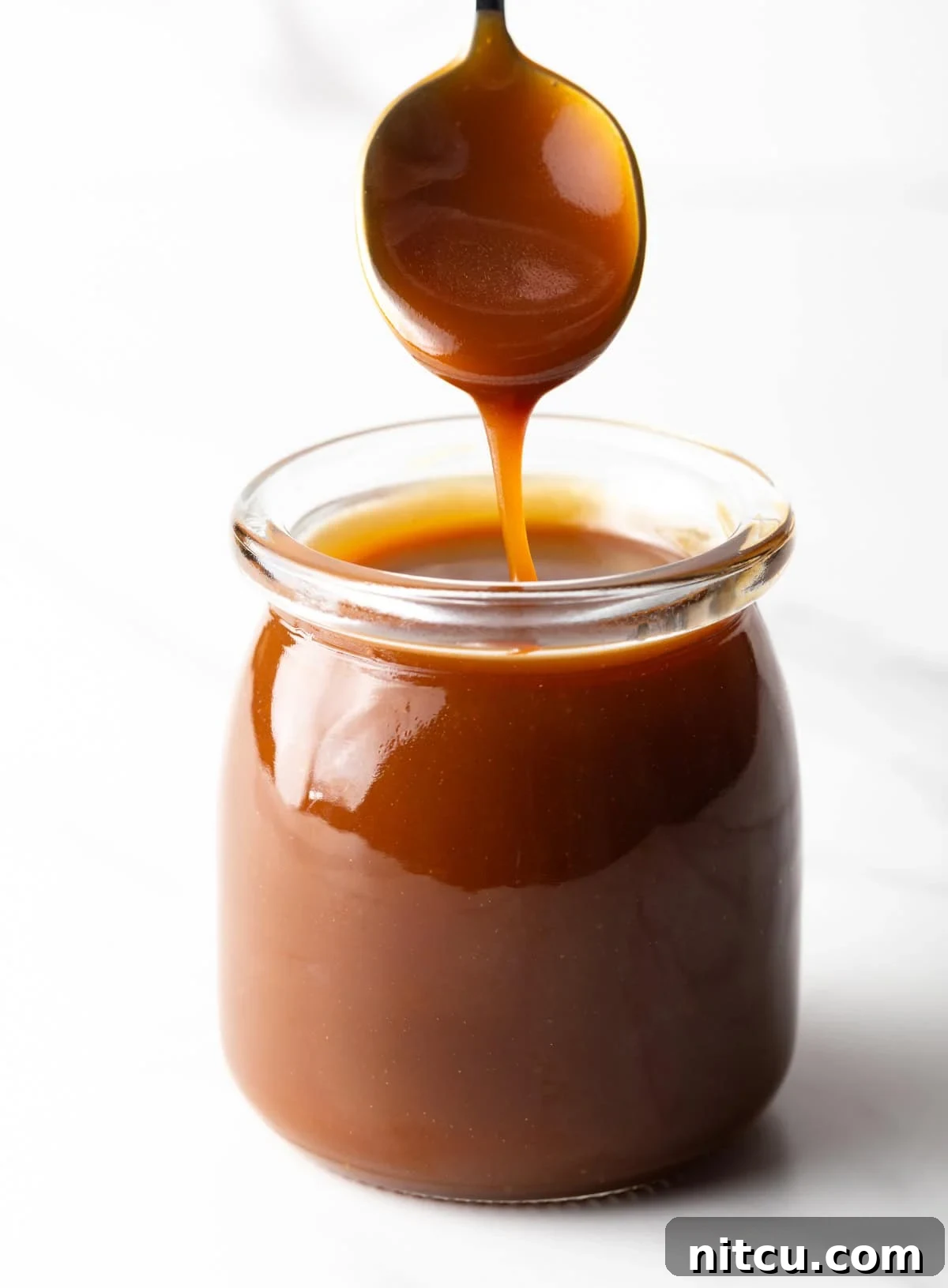
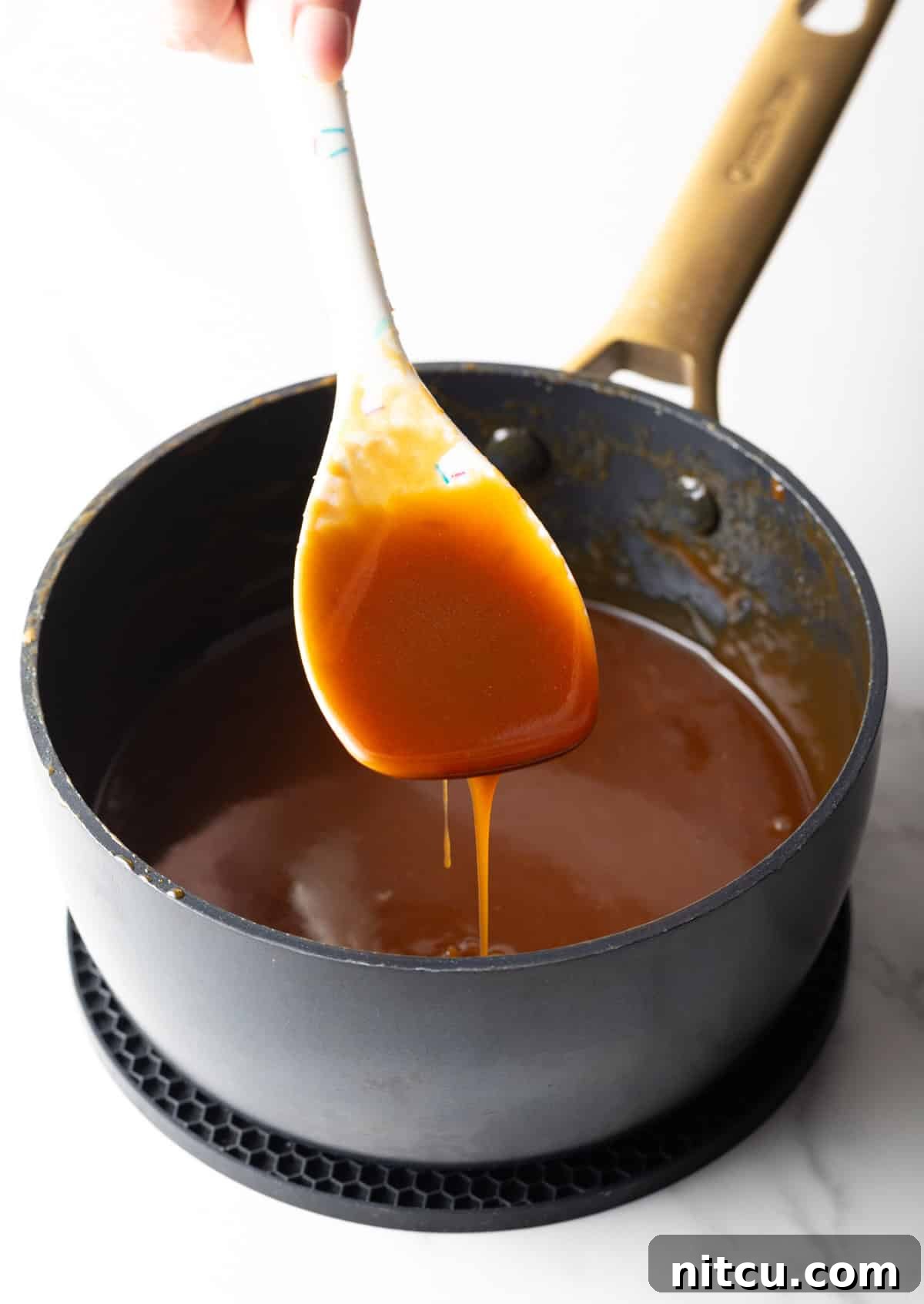
The Epitome of Caramel Perfection – Just a glance at the accompanying photos reveals the magnificent quality of this sweet concoction. Its consistency is nothing short of ideal: beautifully thick yet effortlessly drizzly, wonderfully smooth, and sticky in the most delightful way—never overwhelmingly so. Each spoonful delivers a rich, buttery, and creamy flavor profile, balanced exquisitely by the salt. This interplay prevents the caramel from becoming cloyingly sweet, instead creating a harmonious blend that tantalizes the taste buds and leaves a lasting impression. It’s the kind of caramel that makes any dessert feel gourmet.
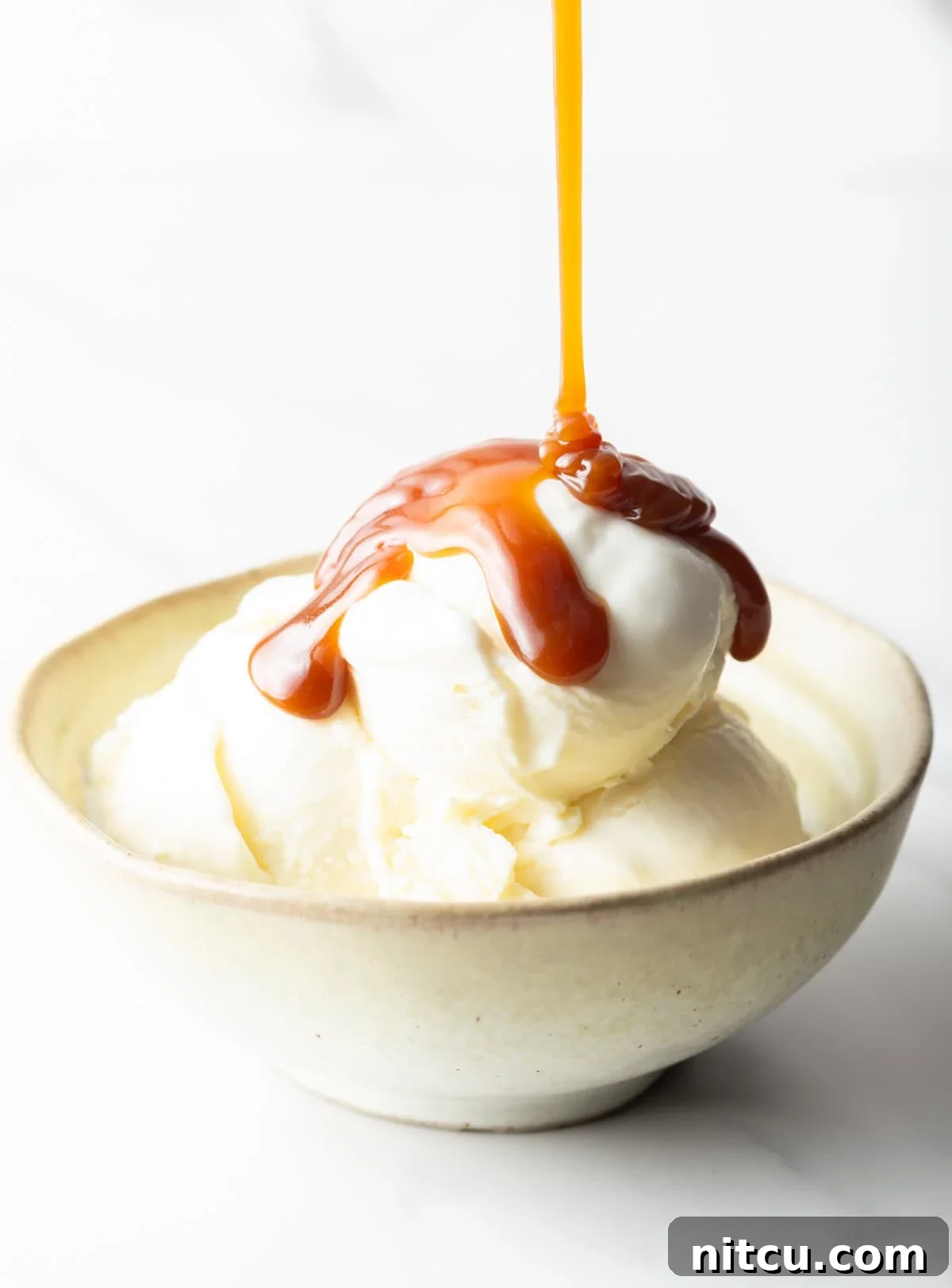
An Incredibly Versatile Sauce – A truly exceptional homemade caramel sauce transcends being merely an ingredient; it’s a culinary superpower. Its versatility makes it an invaluable addition to your kitchen arsenal, perfect for a myriad of baking applications. Imagine it generously poured over a warm slice of apple pie, transforming a simple scoop of vanilla ice cream into an extraordinary indulgence, or adding a sophisticated touch to cheesecakes and brownies. Beyond baked goods, it makes a superb dip for substantial fruit slices like crisp apples and juicy pears, turning healthy snacks into decadent treats. And as the festive season approaches, I often prepare extra batches, carefully pouring them into charming jars to create thoughtful, homemade gifts that are always cherished.
Essential Ingredients & Expert Tips
Achieving the perfect salted caramel sauce begins with understanding the role of each fundamental ingredient. While this recipe is remarkably simple, selecting the right components and following a few key guidelines will guarantee outstanding results every time.
- Granulated White Sugar – The foundation of our caramel. Basic granulated white sugar is all you need for caramelization. Avoid using powdered sugar or brown sugar, as they contain additional ingredients or moisture that can interfere with the precise caramelization process required for this sauce. The goal is a clean, pure sugar syrup that transforms into rich caramel.
- Heavy Cream – This is where the magic truly happens, and there’s no room for compromise. Heavy cream is non-negotiable for achieving that luxurious, velvety texture and rich mouthfeel characteristic of exceptional caramel. Do not be tempted to substitute with half-and-half, milk, or any lower-fat dairy product. The high fat content of heavy cream prevents crystallization and creates the stable emulsion necessary for a smooth, thick sauce. If you attempt a swap, you simply won’t achieve the same depth of flavor or decadent consistency, and I can’t guarantee your results! For best results, gently warm your heavy cream slightly before adding it to the hot sugar, which can help prevent it from seizing up excessively.
- Unsalted Butter – Unsalted butter is paramount for precise flavor control in this salted caramel recipe. While butter inherently adds richness and a delightful gloss to the sauce, using unsalted butter allows you to dictate the exact amount of salt that goes into your caramel. Since we’re purposefully adding a specific quantity of fine table salt to achieve that perfect sweet-salty balance, introducing additional, unknown amounts of salt from salted butter would throw off the delicate equilibrium. For optimal results, ensure your butter is at room temperature; this helps it melt smoothly into the hot caramel mixture without causing temperature shock.
- Salt – The “salted” in salted caramel isn’t just for show; it’s a critical component for balancing sweetness and enhancing overall flavor. I exclusively use fine table salt because its small, uniform crystals dissolve quickly and completely into the hot caramel sauce, resulting in a perfectly smooth finish. Coarser salts, such as kosher salt or flaky sea salt (unless finely ground first), run the risk of not fully dissolving, leaving your beautiful caramel with an unpleasantly grainy texture. This fine salt integrates seamlessly, ensuring every spoonful delivers that ideal contrast.
- Quality Vanilla Extract – Because vanilla extract is added at the very end and isn’t subjected to prolonged cooking, its flavor truly shines through in this sauce. This is precisely why investing in a high-quality, pure vanilla extract makes a monumental difference. While it might be a bit pricier than imitation vanilla, the rich, complex, and aromatic notes it imparts elevate the caramel from delicious to absolutely sublime. Trust me, the difference in taste is profound and entirely worth the splurge!
Step-by-Step Guide to Perfect Caramel
For precise ingredient proportions, comprehensive instructions, detailed storage advice, and a helpful video tutorial, please consult the printable recipe card located at the bottom of this post.
Crafting homemade salted caramel might seem intimidating, but by following these simple steps, you’ll achieve perfection every time. The key is careful observation and timely action.
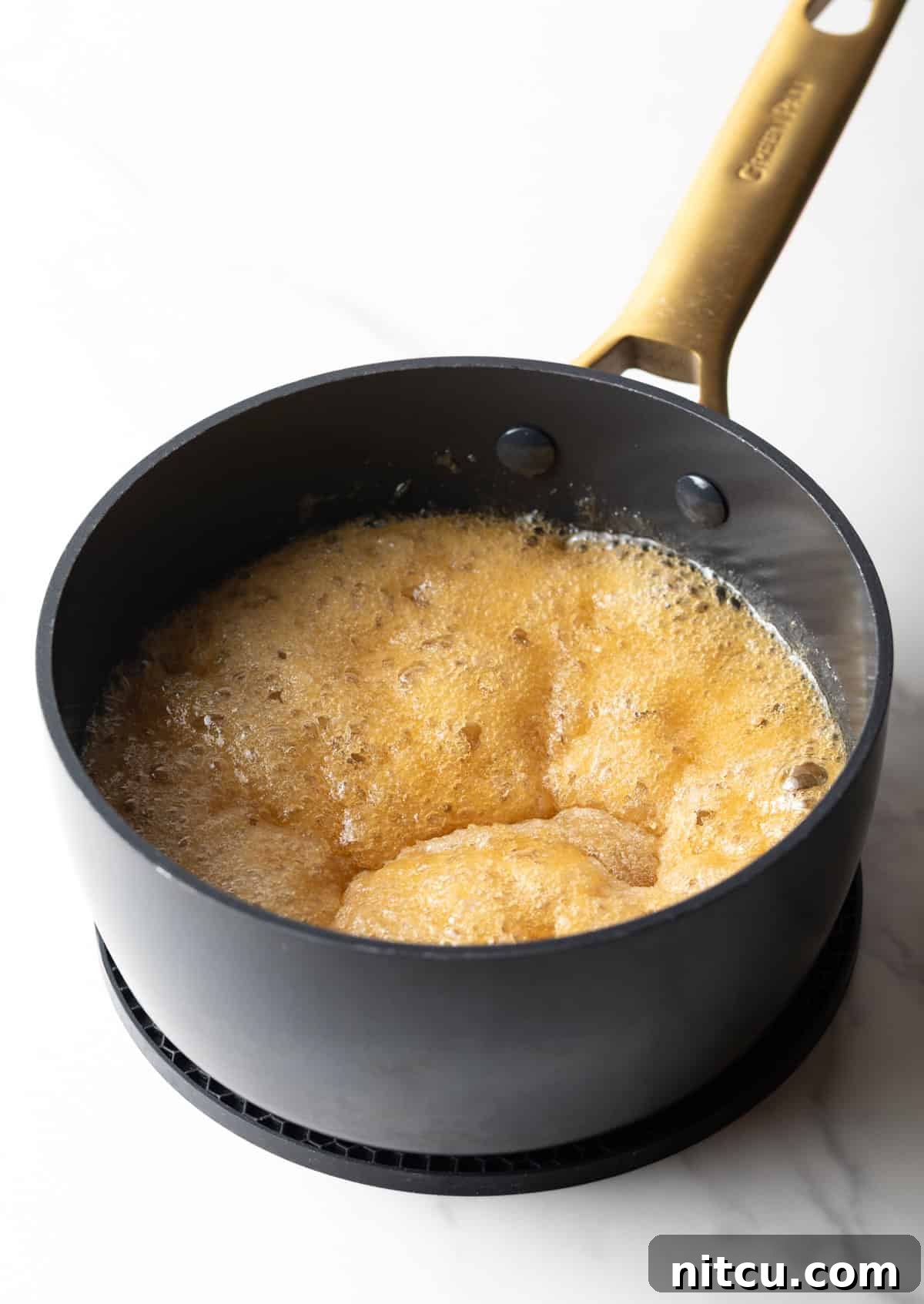
Initiate the Caramelization Process (Prep & Watch) – Begin by pouring the measured granulated sugar into a medium-sized, heavy-bottomed saucepan. A heavy-bottomed pan is crucial as it distributes heat more evenly, preventing hot spots that can lead to burnt sugar. Add the specified amount of water, ensuring all the sugar is moistened. Place the pan over medium heat. At this initial stage, you’ll want to stir occasionally with a heat-resistant spatula or wooden spoon just until the sugar dissolves completely into the water. Once dissolved, resist the urge to stir vigorously. Instead, you can gently swirl the pan to ensure even cooking. Keep a very close eye on the mixture; it will start to bubble, then transition from clear to a pale yellow, gradually deepening into a rich amber color. This caramelization process typically takes between 5 to 10 minutes. The critical point here is to prevent burning. Sugar can go from perfectly caramelized to burnt in a matter of seconds, resulting in a bitter taste you can’t salvage. Look for a beautiful “teddy bear brown” color before proceeding.
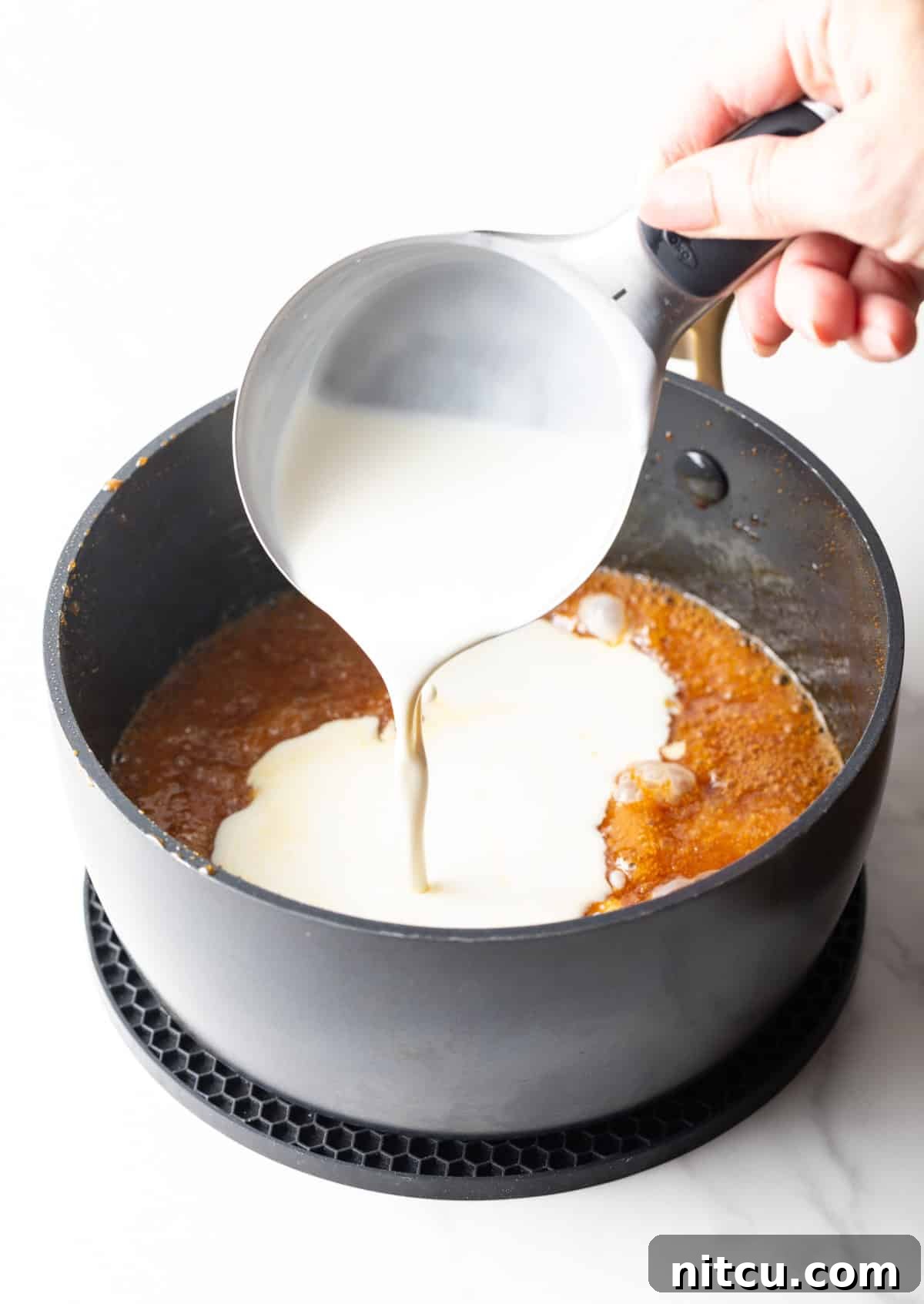
The Creamy Transformation (Stir, Stir, Stir) – The very moment your sugar syrup reaches that gorgeous, inviting golden-brown hue – a strong medium brown, but definitely not a dark chocolatey brown – immediately remove the pot from the heat. This timing is essential. Promptly and carefully, pour in the heavy cream while whisking continuously. Be prepared: when the cooler cream hits the very hot caramel, it is entirely normal for the mixture to seize up and become stiff or lumpy. Do not be alarmed by this reaction! This is simply the temperature difference causing the sugar to solidify momentarily. The most important thing is to keep whisking vigorously and consistently. The warmth of the mixture and the agitation will cause the caramel to melt back into the cream, creating a smooth, luscious liquid. Continue stirring until all lumps are dissolved and the sauce is homogenous and flowing beautifully.
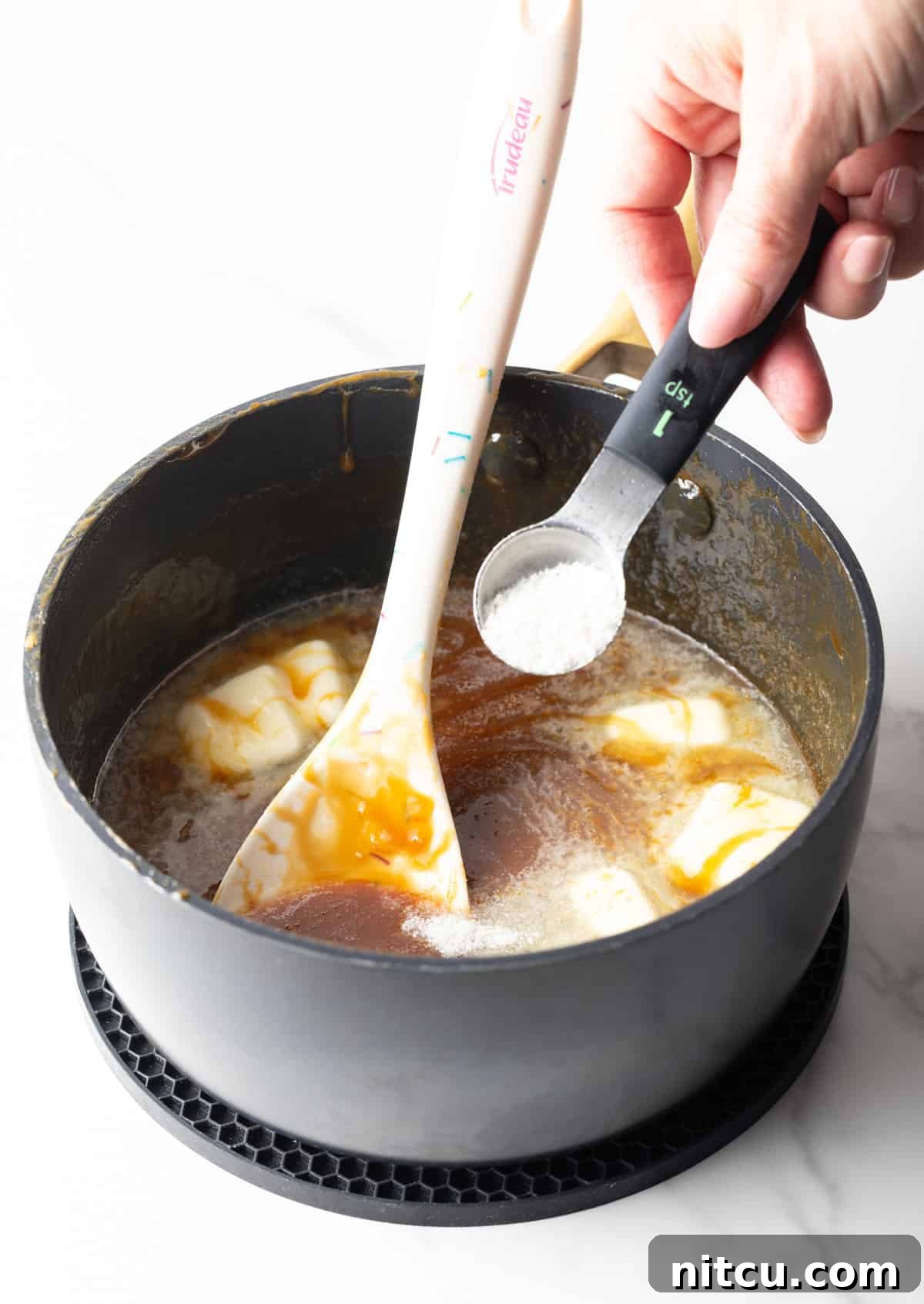
Infuse the Final Flavors (Add the Flavoring) – Your caramel is almost complete! After the cream has been fully incorporated and the sauce is smooth, it’s time for the final flavor enhancers. Return the pot to the stovetop over very low heat, or simply continue stirring off the heat if your caramel is still quite warm. Now, add the unsalted butter (preferably at room temperature), the fine table salt, and the pure vanilla extract. Continue to stir gently until the butter is completely melted and fully incorporated into the caramel, and the salt and vanilla are evenly distributed. This final stirring ensures a uniform texture and a perfectly balanced flavor profile. Once smooth and glossy, your homemade salted caramel sauce is ready to be enjoyed! It will thicken further as it cools.
Advanced Caramel Making Tips for Success
Mastering caramel requires a keen eye and a bit of patience. These expert tips will help you avoid common pitfalls and ensure your homemade salted caramel sauce is flawless every single time.
- Precision in Caramelization: The “Teddy Bear Brown” Benchmark – The initial stage of cooking sugar and water is perhaps the most critical. You must keep a vigilant eye on the sugar as it browns. The ideal target is a vibrant “teddy bear brown” color. This signifies a strong medium brown, where the sugar has fully caramelized to develop deep, complex flavors. However, be extremely cautious not to let it darken further to a “dark chocolatey brown.” At that point, the sugar has likely burnt, and your caramel will carry an irredeemably bitter, acrid taste. Unfortunately, there’s no way to salvage burnt caramel, so if you reach this stage, it’s best to start over. Err on the side of a lighter caramel if you’re unsure; it will still be delicious.
- Combatting Crystallization: The Wet Brush Technique – To prevent sugar crystals from forming on the sides of your saucepan and causing your entire batch of caramel to crystallize (turn grainy), use a clean pastry brush dipped in water. During the initial sugar cooking stage, periodically brush down the inside edges of the pot. This washes any stray sugar crystals back into the main syrup, where they can dissolve properly, ensuring a perfectly smooth outcome.
- The Advantage of Warm Cream – While it’s completely normal and expected for the cream to seize up when added to the hot sugar, you can significantly mitigate this effect by gently warming the heavy cream before incorporating it. Microwave the heavy cream in a separate bowl for about 30-60 seconds, or until it’s warm to the touch (but not boiling). Adding warm cream reduces the temperature shock, leading to less seizing and a smoother, quicker re-emulsification of the caramel. This means less vigorous stirring on your part and a faster route to a silky sauce.
- Ensuring Silky Smoothness: The Sieve Solution – After all the stirring and adding of ingredients, your caramel sauce should be perfectly smooth and free of any sugar clumps. However, if you happen to notice any stubborn, undissolved sugar crystals or tiny lumps, there’s absolutely no need for concern or self-judgment! Simply pour your freshly made salted caramel sauce through a fine-mesh sieve or strainer into a heatproof glass jar or bowl. This simple step will capture any remaining solid particles, leaving you with nothing but impeccably smooth, luscious caramel perfection.
Delightful Serving Ideas for Your Homemade Salted Caramel
While the temptation to drizzle this heavenly sauce on absolutely everything is strong, I’ve managed to channel its decadent potential into some truly spectacular desserts. Homemade salted caramel sauce is an incredibly versatile ingredient that elevates a wide range of sweet treats. Here are some of my absolute favorite ways to enjoy it:
- Caramel Cake: Layered with rich caramel frosting, this cake becomes an absolute showstopper.
- Stuffed Caramel Brownies: Imagine gooey pockets of warm caramel nestled within fudgy brownies – pure bliss!
- Apple Slab Pie: A generous pour over a warm apple slab pie adds an irresistible dimension of flavor and moisture.
- Apple Dump Cake: Transforms a simple dump cake into a decadent, autumnal dessert.
- Better Than Sex Cake: This classic dessert is already incredible, but a homemade caramel takes it to another level.
- Pecan Pie Bars: The perfect sticky-sweet topping for crunchy pecan pie bars.
Beyond these specific recipes, this sauce is divine as a topping. I highly recommend adding a generous drizzle (or two, or nine!) to your morning caramel macchiato drink for an instant upgrade, or simply pouring it over a variety of desserts like:
- Homemade Vanilla Ice Cream: The warm caramel melting into cold ice cream is a classic for a reason.
- Kulfi Indian Ice Cream: A unique fusion of flavors that adds a rich twist.
- Warm Apple Crisp: The perfect complement to the spiced apples and crunchy oat topping.
- Cream Cheese Pound Cake: Elevates the dense, moist cake with a sweet, salty glaze.
- Crockpot Cheesecake: A delightful topping that adds complexity to a creamy cheesecake.
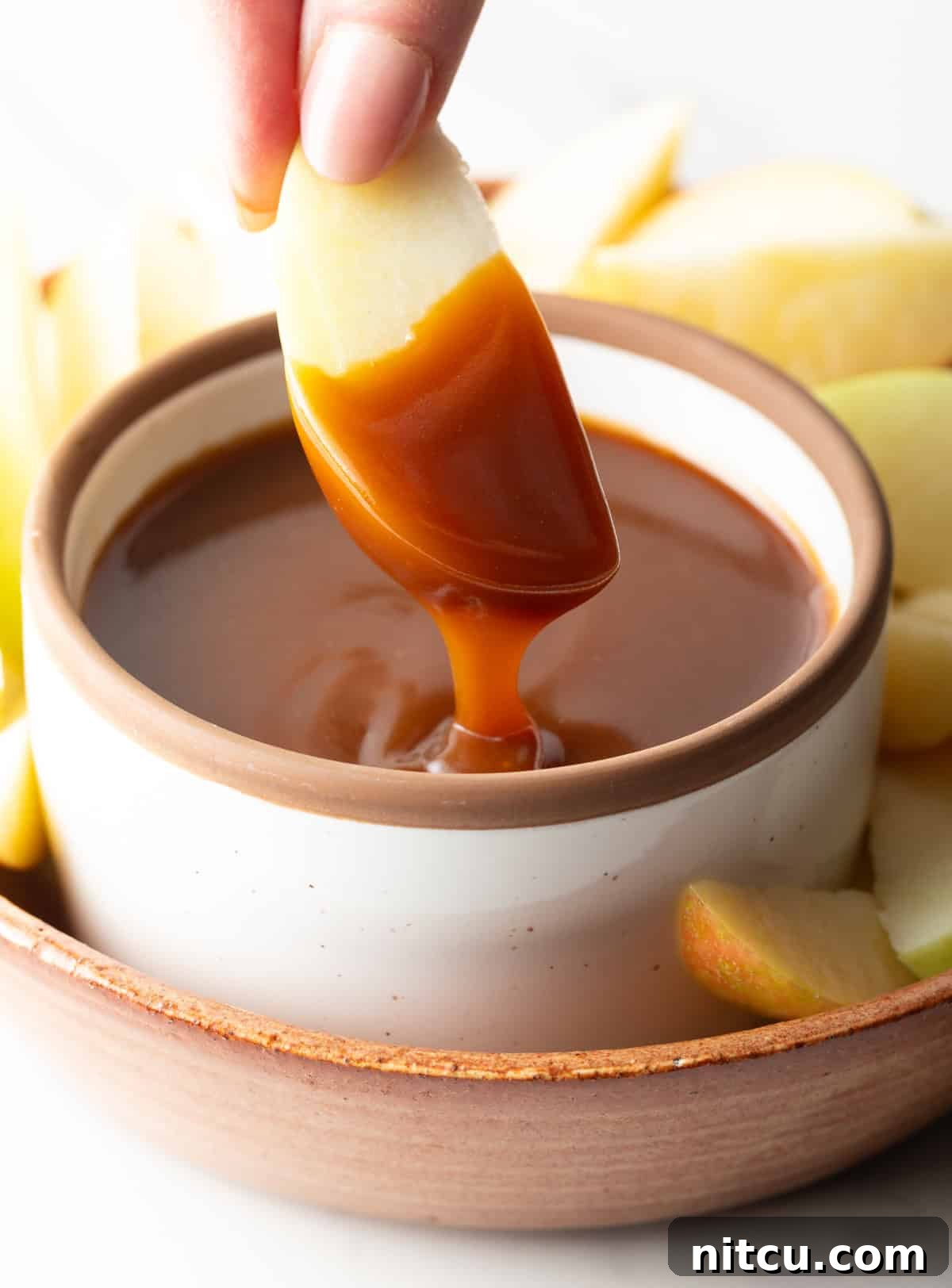
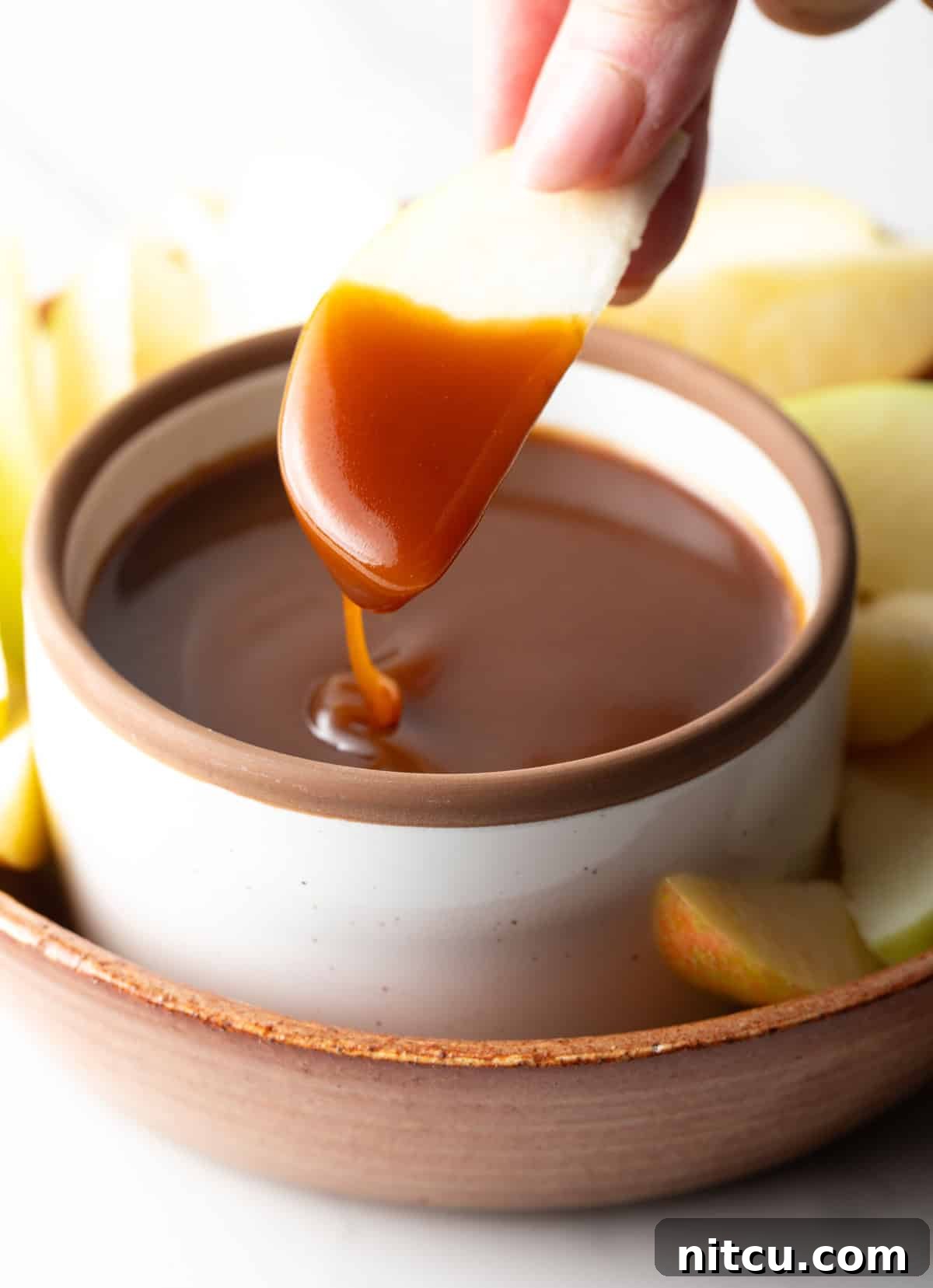
It’s also absolutely exquisite when used to make my popular cream cheese caramel apple dip, or simply enjoyed with slices of fresh, crisp fruit such as Granny Smith or Fuji apples, juicy pears, and sweet strawberries. The contrast of the cool, fresh fruit with the warm, rich caramel is truly irresistible.
Storing Your Homemade Caramel Sauce for Maximum Freshness
If you’re fortunate enough to have any of this delectable sauce leftover (a rare occurrence in my house!), proper storage is key to maintaining its smooth texture and rich flavor. The most crucial step is to allow the caramel to cool down completely to room temperature before transferring it to a storage container. Attempting to store and refrigerate the caramel while it’s still warm or hot can lead to an undesirable grainy texture, which absolutely no one wants! The rapid cooling can cause sugar crystals to form, ruining that perfect silky consistency.
Once cooled, transfer your homemade salted caramel sauce into a clean, heatproof glass container with a tight-fitting lid. It can be safely stored in the refrigerator for up to three weeks, ready to enhance your next sweet craving. When you’re ready to indulge again, avoid reheating the entire glass container directly from the fridge, as thermal shock can cause it to crack. Instead, scoop out the desired amount of caramel into a microwave-safe bowl. Gently reheat the sauce in the microwave in short bursts of 10-15 seconds, stirring thoroughly between each interval. Continue this process until the caramel reaches your preferred gooey, luscious, and perfectly drizzle-able consistency. This gradual reheating prevents overheating and helps maintain its smooth texture.
Frequently Asked Questions About Homemade Caramel
Crystallization is a common issue, but entirely preventable! It often occurs when undissolved sugar crystals on the sides of the pot fall back into the syrup and cause the entire batch to seize. To prevent this, ensure all the sugar is fully submerged in water at the beginning of the cooking process, leaving no dry spots. Once the sugar has dissolved, minimize stirring. Instead of stirring, gently swirl the pot to distribute the heat evenly. Additionally, using a clean, heavy-bottomed pot helps ensure uniform heat distribution, reducing the chances of sugar burning or crystallizing in specific areas. A wet pastry brush can also be used to wipe down the sides of the pot to dissolve any stray sugar crystals.
Don’t worry, this is a completely normal reaction! When the cooler heavy cream is added to the extremely hot caramelized sugar, the sudden temperature difference causes the sugar to solidify rapidly, making the mixture seize and become very stiff. Rest assured, this is a temporary phase. Simply keep the pot over very low heat (or off the heat if it’s still quite warm) and continue stirring patiently and vigorously. The hardened caramel will gradually melt back into the cream, transforming into a beautifully smooth and luscious sauce. If you want to reduce this effect, gently warm your heavy cream beforehand.
Unfortunately, if your caramel tastes bitter, it means the sugar has been overcooked and burnt. Once sugar burns, it develops a harsh, acrid, and irreparable bitter flavor. There is no way to salvage burnt caramel; adding more ingredients won’t mask the bitterness. The only solution is to discard the batch and start over. The key to preventing this is constant vigilance: sugar can go from perfectly caramelized to burnt incredibly fast, so keep a very close eye on the color and remove it from the heat as soon as it reaches that ideal “teddy bear brown” hue.
While a candy thermometer can be a helpful tool for precision, it is absolutely not necessary for this recipe. You can successfully make perfect caramel by relying on your senses of sight and smell. The visual cues are key: you’re aiming for a beautiful golden-brown color (like a teddy bear’s fur) and a rich, nutty aroma. Avoid any dark brown hues or a smoky, burnt smell, as these indicate overcooking. Trust your instincts and keep a close watch, and you’ll achieve delicious results without any special equipment.
More Irresistible Dessert Recipes to Explore
If you’re a fan of rich, sweet treats, you’ll love these other dessert recipes from my kitchen. They perfectly complement the lusciousness of homemade caramel and are sure to satisfy any sweet tooth!

Print Recipe
Leave a Review »
Homemade Salted Caramel Sauce
Video Tutorial
Ingredients
- 1 1/2 cups granulated sugar
- 6 tablespoons water
- 1 cup heavy cream
- 6 tablespoons unsalted butter
- 1 teaspoon fine table salt
- 1 teaspoon pure vanilla extract
Instructions
-
In a medium heavy-bottomed sauce pot, pour the water and add the granulated sugar. Place over medium heat. Stir gently until the sugar dissolves. Then, let it cook undisturbed (swirling occasionally is fine) for 5-10 minutes, watching closely as the sugar begins to dissolve and then caramelize, darkening in color.
-
The moment the sugar reaches your desired color – aiming for a rich golden-brown to medium-brown, like a teddy bear – immediately remove the pot from the heat. *Crucial: Darker caramels offer a more robust flavor, but never let the sugar turn dark brown, as it will taste burnt and require you to start over.
-
Immediately and carefully whisk in the heavy cream. Be prepared for the caramel to seize up and harden – this is normal! Continue to whisk vigorously until the hardened caramel melts back into the cream, forming a smooth, unified sauce.
-
Once the cream is fully incorporated and the caramel sauce is smooth, stir in the room temperature butter, fine table salt, and pure vanilla extract until everything is well combined and the butter has melted completely. Serve your exquisite homemade salted caramel sauce warm, or transfer it to a jar and refrigerate until ready for use.
Notes
Store the cooled sauce in a glass container with a tight-fitting lid in the refrigerator for up to 3 weeks. To reheat, scoop the desired amount into a microwave-safe bowl and gently warm in 10-15 second bursts, stirring well between each, until it reaches your preferred gooey, drizzle-able consistency.