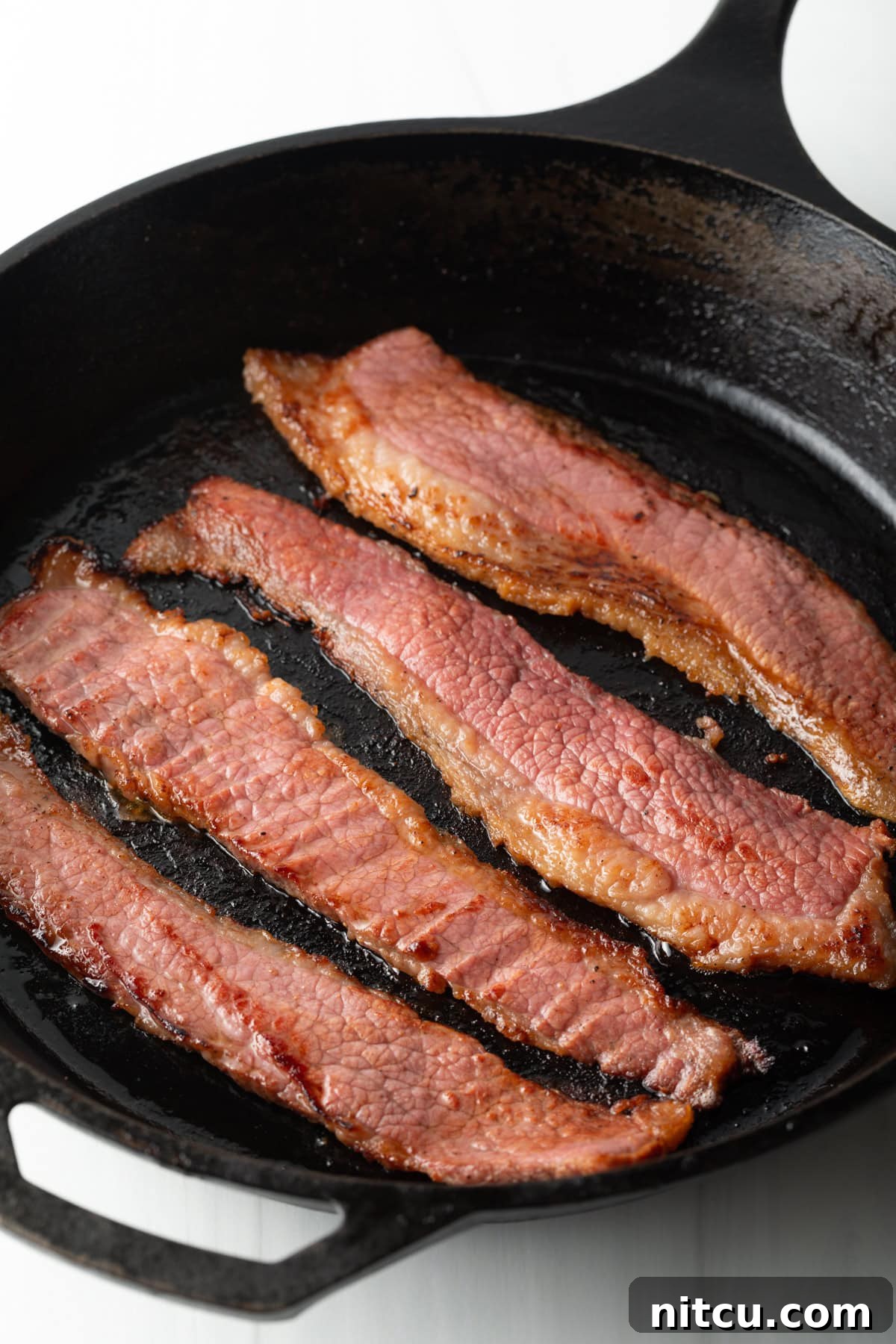
Unlock the secrets to crafting the ultimate Beef Bacon right in your own kitchen! This comprehensive, step-by-step guide will walk you through transforming humble slabs of beef into incredibly crisp, perfectly chewy, deeply meaty, and utterly delicious bacon, rivaling any store-bought variety. Prepare to impress your taste buds with homemade dry-aged beef bacon that’s rich in flavor and satisfyingly robust.
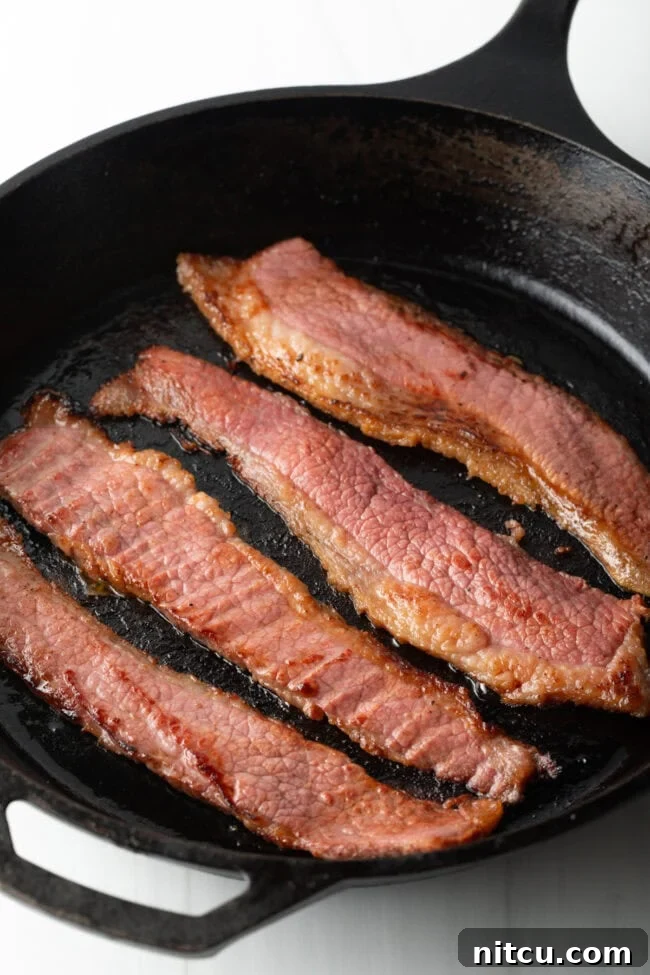
Why Homemade Beef Bacon is a Game Changer
Bacon holds a special place in the hearts of many, a universally adored breakfast staple, sandwich enhancer, and flavor booster. However, for those who choose not to consume pork, the joy of bacon often remains out of reach. This is where our practically foolproof cured beef bacon recipe steps in as a culinary hero. It empowers you to create mouth-watering, pork-free bacon from fatty cuts of beef, delivering an irresistible texture and a rich, profoundly beefy flavor that stands on its own.
The beauty of making beef bacon from scratch lies in its straightforward process, divided into distinct stages: first, the careful curing of the meat; next, a thorough rinse followed by a crucial dry-aging period; then, precise slicing; and finally, pan-frying or oven-baking to golden perfection. It’s a journey from raw beef to crispy bliss, and the satisfaction of biting into bacon you’ve crafted yourself is unparalleled. While not essential, if you’re fortunate enough to own a smoker, adding a smoking step after dry aging can infuse your bacon with an extra layer of complex, smoky notes, elevating the flavor profile even further.
For those familiar with traditional pork bacon making, you’ll find the methodology remarkably similar, proving the versatility of this curing technique. But if you’ve never ventured into the world of beef bacon, we wholeheartedly encourage you to give it a try. It’s a delightful alternative that offers a distinct culinary experience – leaner than pork bacon, with a robust taste that’s unmistakably beef. It’s perfect for anyone seeking a different flavor or a dietary alternative, without compromising on the joy of crispy bacon.
Essential Ingredients for Your Homemade Beef Bacon
Crafting exceptional beef bacon starts with selecting the right ingredients. Each component plays a vital role in achieving that perfect balance of flavor, texture, and safety.
- Beef navel – This cut is often referred to as beef belly and is the ideal choice due to its excellent fat-to-meat ratio, similar to pork belly. The generous marbling and layers of fat render beautifully, contributing to that classic bacon texture and rich flavor. If beef navel is hard to find, a well-marbled brisket flat or short ribs (boneless) can be excellent alternatives, offering sufficient fat for a delicious result. Look for cuts with even fat distribution for the best outcome.
- Granulated Sugar – More than just adding sweetness, sugar plays a crucial role in the curing process. It helps to balance the saltiness, tenderize the meat, and contributes to the beautiful caramelization when the bacon is cooked. Granulated white sugar is recommended for its consistent texture and subtle flavor contribution.
- Curing spices – This blend is the heart of your bacon’s flavor and safety:
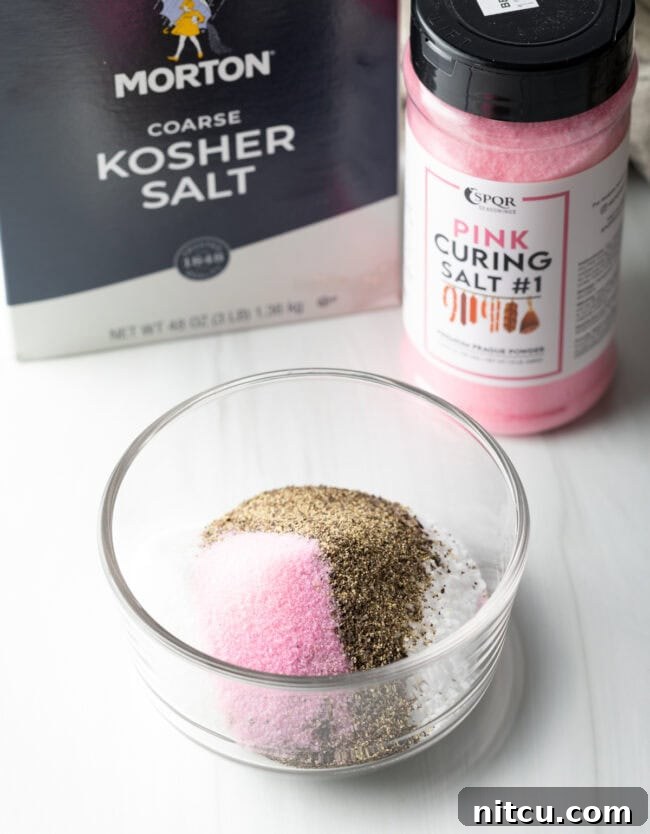
- Kosher salt – Used for its larger crystal size, which makes it easier to handle and ensures a more even distribution during the curing process compared to fine table salt. It’s essential for drawing out moisture and preserving the meat.
- Black pepper – Freshly ground black pepper adds a warm, spicy, and aromatic note that complements the beef’s richness beautifully.
- Pink curing salt (Prague Powder #1) – This is a critical ingredient for safety and traditional bacon characteristics. It contains sodium nitrite, which inhibits the growth of harmful bacteria (like Clostridium botulinum), preserves the meat’s pink color, and contributes to that distinctive cured flavor. It is not regular table salt and should be used precisely as directed. A little goes a long way, and using too much can be dangerous. Ensure you are using “pink curing salt #1” or “Prague powder #1” which is specifically designed for short cures like bacon.
Mastering the Art of Homemade Beef Bacon: A Step-by-Step Guide
Embark on your journey to homemade beef bacon with these detailed instructions, ensuring a delicious and safe culinary creation.
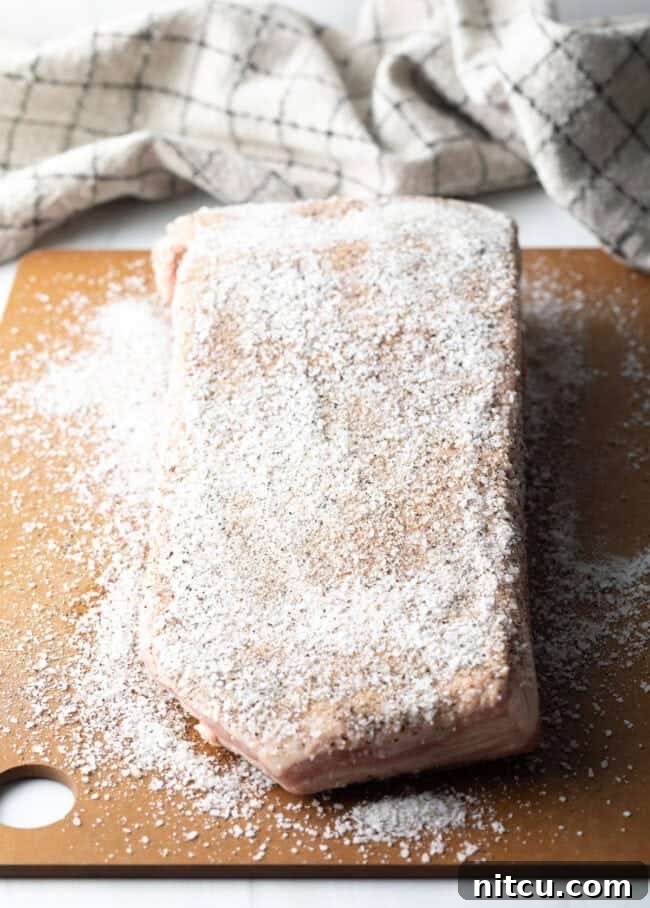
- Prepare the Cure and Apply to Beef: In a small bowl, combine the granulated sugar, kosher salt, black pepper, and pink curing salt. Mix thoroughly until all ingredients are evenly distributed. Place your beef navel (or chosen alternative) on a clean cutting board. Generously rub the entire surface of the beef with the prepared salt mixture, ensuring all sides and edges are completely coated. This comprehensive coverage is vital for proper curing. Once coated, lay out a large piece of plastic wrap. Carefully place the beef slab in the center, and if there’s any remaining curing mixture in the bowl, sprinkle it over the beef. Wrap the beef tightly in the plastic wrap, ensuring no air pockets. This tight seal helps the cure penetrate evenly. Transfer the wrapped beef to the refrigerator and allow it to cure for a period of 4 to 5 days. During this time, the salt will draw out moisture and begin the curing process, transforming the beef’s flavor and texture.
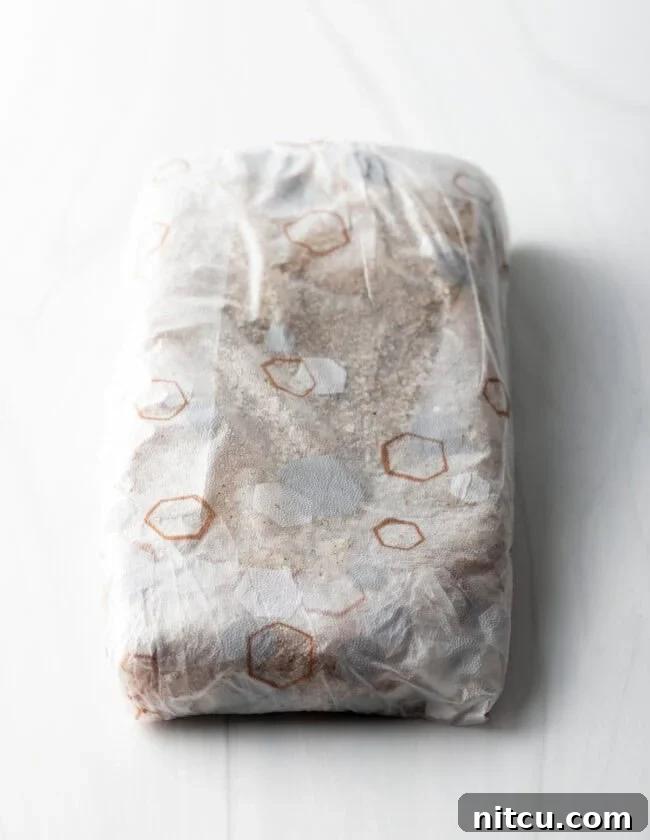
- Rinse and Dry-Age the Cured Beef: Once the curing period is complete (4-5 days), unwrap the beef. You’ll notice it feels firmer and has likely released some liquid. It’s crucial to thoroughly rinse the cured beef under cold, running fresh water. Dedicate several minutes to this step, gently rubbing the surface to remove all excess salt and any residual curing mixture. An incomplete rinse can result in overly salty bacon. After rinsing, place the beef on a wire rack set over a rimmed baking sheet. Pat the beef thoroughly dry with kitchen paper towels. The goal is to remove as much surface moisture as possible. Leave the beef uncovered on the rack and return it to the refrigerator for another 1 to 2 days for the dry-aging process. This allows the surface to dry, concentrating flavors and contributing to the desired chewy yet crisp texture of bacon. The dry air in the refrigerator helps develop a pellicle (a slightly sticky, dry surface) which is ideal for cooking and, if desired, smoking.
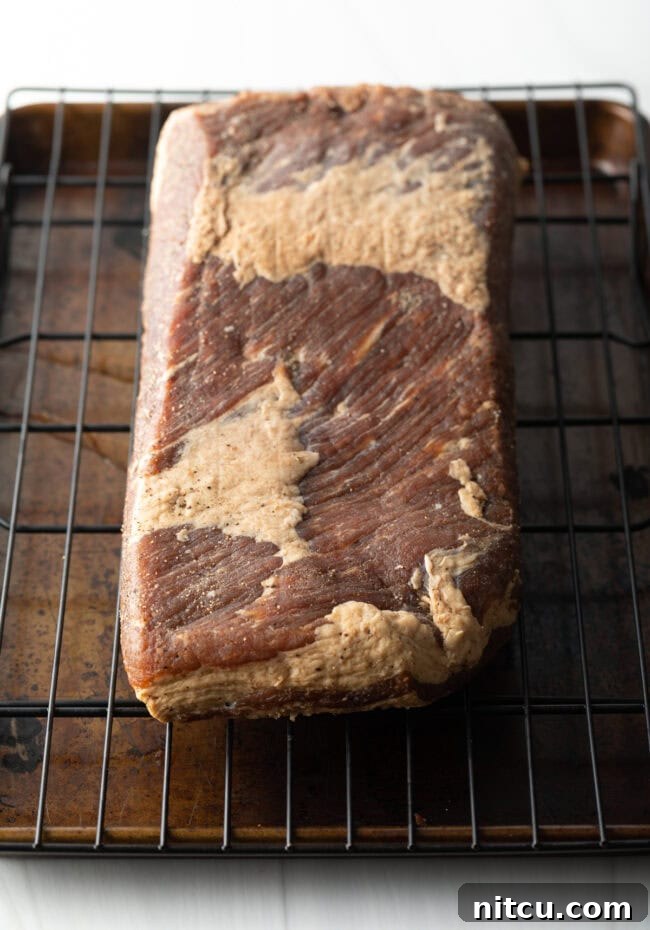
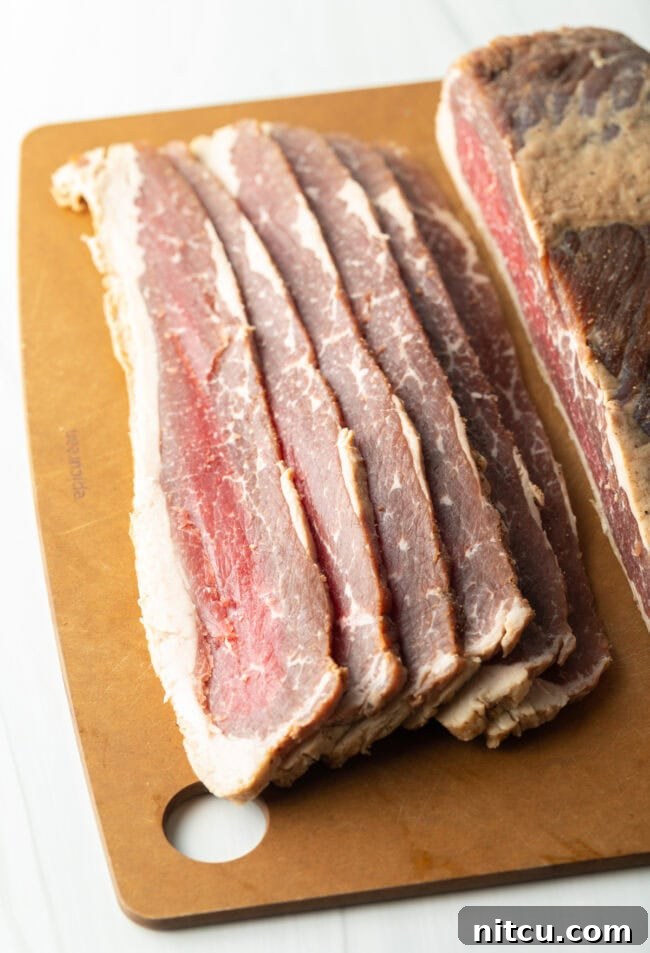
- Flash Freeze, Slice, and Store: After the dry-aging period, your beef should have a visibly drier surface. To make slicing easier and achieve uniform strips, transfer the beef slab to the freezer for 30 to 60 minutes to flash freeze. The goal is for the meat to be firm enough to hold its shape perfectly while slicing, but not so frozen solid that a knife cannot pass through it. This semi-frozen state allows for very thin, consistent slices. Using a sharp knife or a meat slicer, carefully cut the beef into thin strips, aiming for your preferred bacon thickness. The thinner the slices, the crisper your bacon will become. Once sliced, gather your beef bacon strips and place them in a high-quality, freezer-safe Ziploc bag. Press out as much air as possible before sealing the bag tightly. This helps prevent freezer burn and maintains freshness. Refrigerate the uncooked bacon until you are ready to cook and enjoy its deliciousness. It will keep well in the fridge for up to 5-7 days, or in the freezer for up to 1 month.
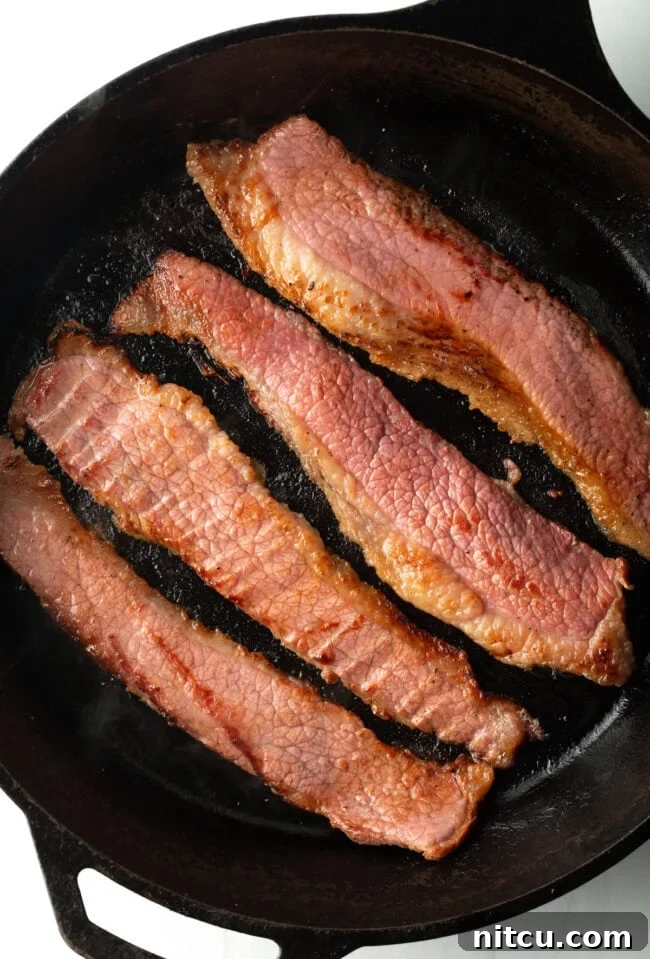
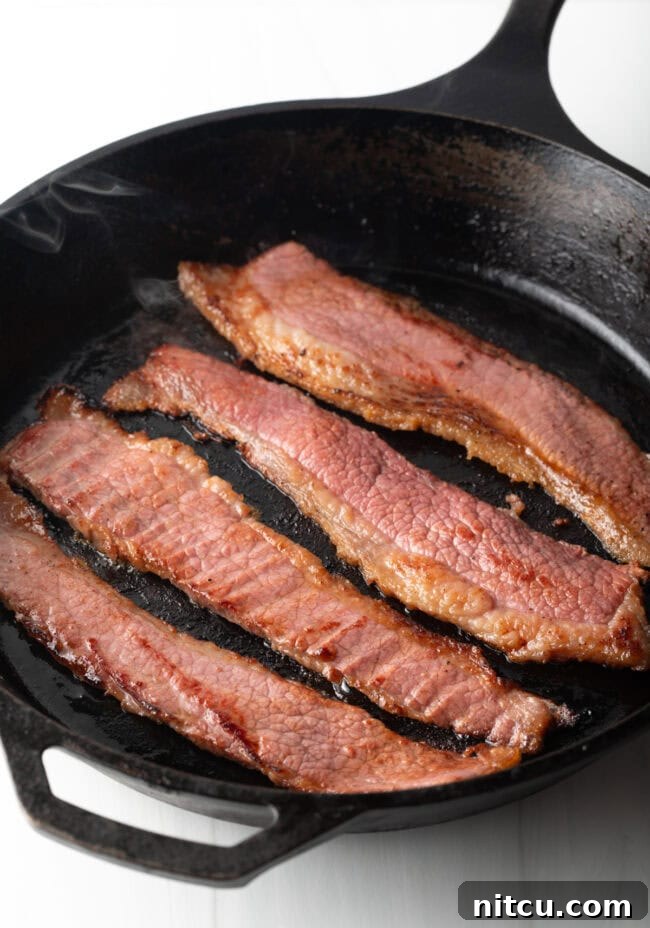
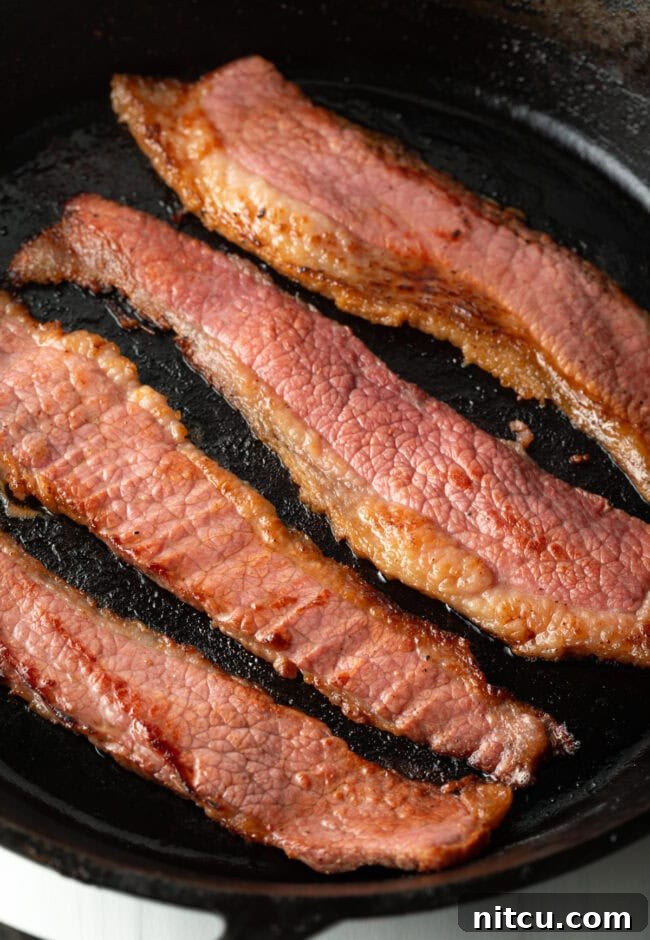
- Cook to Crispy Perfection: When you’re ready to savor your homemade beef bacon, remove the desired number of slices from the fridge. Heat a large skillet (cast iron works wonderfully for even heat) over medium heat. There’s no need to add oil, as the bacon fat will render out. Lay several strips of bacon in the hot skillet, ensuring not to overcrowd the pan, which can lead to steaming rather than frying. Cook the bacon for approximately 3 to 4 minutes per side, or until they achieve your desired level of crispiness and are beautifully golden brown. The cooking time may vary depending on the thickness of your slices and your skillet’s heat. For an alternative, less oily result, you can also bake the beef bacon in the oven (see “Recipe Variations” for details). Transfer the cooked bacon to a plate lined with paper towels to absorb any excess fat before serving.
Get the Complete (Printable) Homemade Beef Bacon Recipe + VIDEO Below. Enjoy!
Delightful Serving Suggestions for Beef Bacon
Once you’ve mastered homemade beef bacon, the possibilities for enjoying its rich, savory flavor are endless! Here are some fantastic ways to serve this versatile delight:
- Classic Breakfast & Brunch: Elevate your morning meal by serving crisp beefy bacon alongside other breakfast and brunch favorites like fluffy scrambled eggs, perfectly fried eggs, golden homemade pancakes, sweet French toast, or even a vibrant breakfast salad for a fresh twist.
- Pork-Free Recipe Enhancer: Beef bacon is a superb pork-free alternative that can transform numerous recipes. Substitute it in dishes that traditionally call for pork bacon to add a rich, beefy depth. Try it in:
- Irish Bacon and Cabbage for a comforting, hearty meal.
- Spicy Cowboy Bacon Burgers, where the beef bacon adds a delicious layer of crunch and flavor.
- Easy Alambre Tacos With Carne Asada for an authentic Mexican-inspired dish.
- Baked Brie With Jam, providing a savory counterpoint to the sweet jam and creamy cheese.
- Any dish that benefits from a pop of bacony goodness, from salads to pasta dishes, quiches, or even wrapped around vegetables like asparagus.
- Snack & Appetizer Star: Crumble cooked beef bacon over loaded baked potatoes, sprinkle it on mac and cheese, or use it as a garnish for creamy soups. Wrap dates or shrimp in thin slices of beef bacon for an elegant appetizer.
- Sandwich & Salad Booster: Add a few strips to your BLT for a unique beefy twist, or chop it into bits for a flavorful addition to your favorite salads, adding texture and savory depth.
Exciting Recipe Variations for Your Beef Bacon
Experiment with these delicious variations to customize your homemade beef bacon and discover new favorite flavors and textures:
- Sweet & Caramelized Brown Sugar Bacon: For a delightful sweet and savory experience, brush your uncooked beef bacon strips with a light coating of brown sugar before frying or baking. As it cooks, the brown sugar will melt and caramelize, creating a slightly sticky, incredibly flavorful crust that offers a beautiful contrast to the savory beef. This variation is particularly wonderful for breakfast or as a standalone snack.
- Spicy Kick with Cayenne Pepper: If you love a hint of heat, sprinkle a pinch of cayenne pepper onto the bacon while it’s sizzling in the skillet or before baking. The warmth of the cayenne pepper will infuse into the bacon, adding a subtle yet noticeable spiciness that complements the beefy flavor without overpowering it. You can also mix a small amount of cayenne into your curing spice blend for an all-over spice infusion. Other spices like smoked paprika or a dash of chili powder can also achieve a similar effect.
- Alternative Cuts for Unique Textures: While beef navel is ideal, don’t hesitate to try other juicy cuts of beef for different flavor and texture profiles:
- Brisket: A well-marbled brisket flat can yield incredibly flavorful bacon. The leaner sections will be meatier, while the fatty cap will render beautifully. It might result in slightly less uniform slices than navel but offers a robust taste.
- Short Ribs (Boneless): If you can source boneless beef short ribs with good marbling, they can produce exceptionally tender and flavorful bacon. The fat woven through the short rib meat creates a melt-in-your-mouth texture when cooked.
- Experiment with these to discover your preferred meatiness and marbling.
- Lighter, Evenly Cooked Oven Baking Method: Instead of frying your beef bacon, you can achieve a lighter, less oily, and more evenly cooked result by baking it in the oven.
- How to Bake: Preheat your oven to 400°F (200°C). Arrange the bacon strips in a single layer on a wire rack set over a rimmed baking sheet. This allows air to circulate around each strip, promoting even cooking and crispiness. Bake for 15-20 minutes, or until desired crispiness is achieved. Keep a close eye on it, as cooking times can vary based on thickness. This method often results in less splatter and easier cleanup.
Frequently Asked Questions About Beef Bacon
Absolutely! The basic curing salt mixture is a great starting point, but feel free to customize it. To add extra spice and complexity, consider mixing in some smoked paprika for a smoky depth, ground Szechuan pepper for a unique citrusy and numbing heat, a pinch of red pepper flakes for general warmth, or even garlic powder and onion powder for an umami boost. Just ensure any additions are finely ground to distribute evenly.
Generally, beef bacon can be a leaner option compared to traditional pork bacon. While nutritional values vary based on the specific cut of beef and its fat content, beef bacon often provides more protein with less fat and calories per serving than many pork bacon varieties. This is partly because beef navel, while marbled, often has a higher meat-to-fat ratio than pork belly. Always check the nutrition facts for your specific cuts and preparation methods to compare.
Many people prefer homemade beef bacon for several compelling reasons. Firstly, it offers a fantastic alternative for those with dietary restrictions or preferences against pork. Secondly, beef bacon is typically leaner, which means when you crisp it up, it tends to shrink significantly less than pork bacon. With pork bacon, you might start with a large slice only to find it diminishes to a tiny piece due to rendering fat. Beef bacon maintains more of its original size and offers a rich, robust beefy flavor that is distinct and incredibly satisfying. It’s a culinary adventure worth trying!
While it shares the familiar slightly chewy and crisp texture when cooked, beef bacon has a distinct flavor profile. Unlike the often fattier, pork-specific taste of traditional bacon, leaner beef bacon offers a rich, savory, and deeply beefy/meaty flavor. It’s less sweet and smoky (unless you add a smoking step or smoked paprika) and more robust, highlighting the natural taste of high-quality beef. It provides the same satisfying crispness but with a unique beef essence.
Proper storage is key to enjoying your beef bacon for as long as possible:
- Uncooked Beef Bacon: Uncooked, sliced beef bacon will keep exceptionally well in the fridge for up to 5-7 days. To store, stack the slices neatly, wrap them tightly together in plastic wrap to minimize air exposure, and then place them inside a zipper bag or another sealed, airtight container.
- Freezing Uncooked Bacon: For longer storage, you can freeze uncooked bacon for up to 1 month. Arrange slices in a single layer on a baking sheet to flash freeze for about an hour, then transfer to a freezer-safe bag or container. This prevents sticking and allows you to take out just what you need.
- Cooked Bacon Leftovers: Any cooked beef bacon should be stored in an airtight container in the fridge and will remain fresh for up to 3 days. Reheat gently in a skillet or oven for best results.
Yes, it is perfectly safe to make beef bacon at home when using pink curing salt (Prague Powder #1) correctly. The key is to follow the recipe’s measurements precisely, as pink curing salt contains sodium nitrite which is vital for preventing the growth of harmful bacteria like Clostridium botulinum. It is not table salt and should never be substituted. Using the correct amount ensures food safety while contributing to the bacon’s characteristic flavor and pink color. Always measure accurately and store pink curing salt away from regular salt to avoid confusion.
Beef navel is a cut of meat from the underbelly of the cow, similar to where pork belly comes from on a pig. It’s highly recommended for making beef bacon due to its excellent fat-to-meat ratio. This marbling and layering of fat are crucial for achieving the classic crispy yet chewy texture and rich flavor associated with bacon. The fat renders beautifully during cooking, infusing the meat with moisture and taste. If beef navel isn’t available, well-marbled brisket or short ribs can serve as good alternatives.
To achieve truly crispy beef bacon, several factors are important:
- Thin Slices: The thinner you slice your bacon, the crispier it will become. Flash freezing before slicing helps immensely with this.
- Even Heat: Cook bacon over medium heat. Too high, and it burns; too low, and it steams instead of crisps.
- Don’t Overcrowd the Pan: Cook in batches if necessary. Overcrowding lowers the pan temperature and prevents proper rendering and crisping.
- Wire Rack for Baking: If baking, use a wire rack over a baking sheet. This allows air to circulate around the strips, promoting even crispness and letting rendered fat drip away.
- Pat Dry: Before cooking, ensure your bacon slices are patted dry. Excess moisture can hinder crisping.
Looking for More Delicious Beef & Curing Recipes? Be Sure to Also Try:
- Easy Gravlax Recipe (Cured Salmon)
- Top Round Roast
- Philly Cheesesteak Sliders
- Bone In Ribeye Steak
- Chopped Steak with Mushroom Gravy
- Baked Corned Beef and Cabbage in the Oven
- Best Smoked Beef Brisket
- How to Smoke Trout
- The Best Turkey Brine Recipe
- Texas Style Oven Brisket Recipe
Print Recipe
Leave a Review »
Beef Bacon Recipe
10
8
7
7
18
35
+ strips (pieces)
Video
Ingredients
-
3.5 – 4
pounds
beef navel
or well-marbled brisket or short ribs -
¼
cup
granulated sugar -
¼
cup
kosher salt -
2
tablespoons
ground black pepper -
1
teaspoon
pink curing salt
Instructions
-
Set out a small bowl. Mix the granulated sugar, kosher salt, black pepper, and pink curing salt together until well combined. This is your curing rub. Place the beef navel slab on a clean cutting board. Generously rub the salt mixture over all sides and edges of the beef, ensuring complete coverage. Lay out a large piece of plastic wrap. Place the beef slab in the center of the plastic wrap and sprinkle any remaining curing salt on top. Wrap the beef tightly in the plastic, ensuring a good seal. Refrigerate for 4 to 5 days.
-
After the curing period, unwrap the slab of beef and rinse it thoroughly under cold running water to remove as much salt as possible. This step is crucial to prevent your bacon from being overly salty. Place a baking rack on a rimmed baking sheet or in a baking dish. Place the rinsed beef on the rack. Pat it dry very well with paper towels, removing all surface moisture. Place the beef, uncovered, back in the refrigerator for 1 to 2 days to dry age. This process develops a pellicle and concentrates the flavors.
-
Once the bacon has sufficiently dry aged and feels firm, place it in the freezer for 30 to 60 minutes to flash freeze. This step makes slicing much easier, allowing you to achieve thin, even strips. The beef should be firm enough to hold its shape as you cut, but not completely frozen solid. Slice the bacon into thin strips according to your preference. Place the bacon strips in a resealable freezer-safe bag (like a Ziploc bag) and remove all air before sealing it. Refrigerate the uncooked bacon until ready to use, or freeze for longer storage.
-
To cook your homemade beef bacon, set a large skillet (cast iron is excellent) over medium heat. Lay several strips of bacon in the skillet, ensuring not to overcrowd the pan. Fry them for 3 to 4 minutes per side, or until they are perfectly golden brown and crispy to your liking. Alternatively, use our oven baking method described in the “Recipe Variations” section for a hands-off approach. Serve immediately and enjoy!
Notes
Uncooked beef bacon will keep well in the fridge for up to 6-7 days when stored properly. Keep the slices stacked and wrapped tightly together in plastic wrap, and place them inside a zipper bag or other sealed container to prevent air exposure.
For extended storage, freeze the uncooked bacon for up to 1 month. Ensure it’s in an airtight, freezer-safe container or bag.
Cooked bacon leftovers should be stored in an airtight container in the fridge and will keep well for up to 3 days. Reheat gently for best flavor and texture.
Nutrition
Serving:
1
pc
,
Calories:
288
kcal
,
Carbohydrates:
2
g
,
Protein:
38
g
,
Fat:
13
g
,
Saturated Fat:
5
g
,
Polyunsaturated Fat:
0.4
g
,
Monounsaturated Fat:
6
g
,
Cholesterol:
112
mg
,
Sodium:
1018
mg
,
Potassium:
603
mg
,
Fiber:
0.1
g
,
Sugar:
1
g
,
Vitamin A:
2
IU
,
Calcium:
11
mg
,
Iron:
4
mg
Breakfast, Brunch, Lunch, Main, Main Course
American
Sommer Collier
Cook It? Love It? Rate It!
YOU can help this recipe RANK on Google – TAP 5 STARS so other hungry people can find it. Thank you!