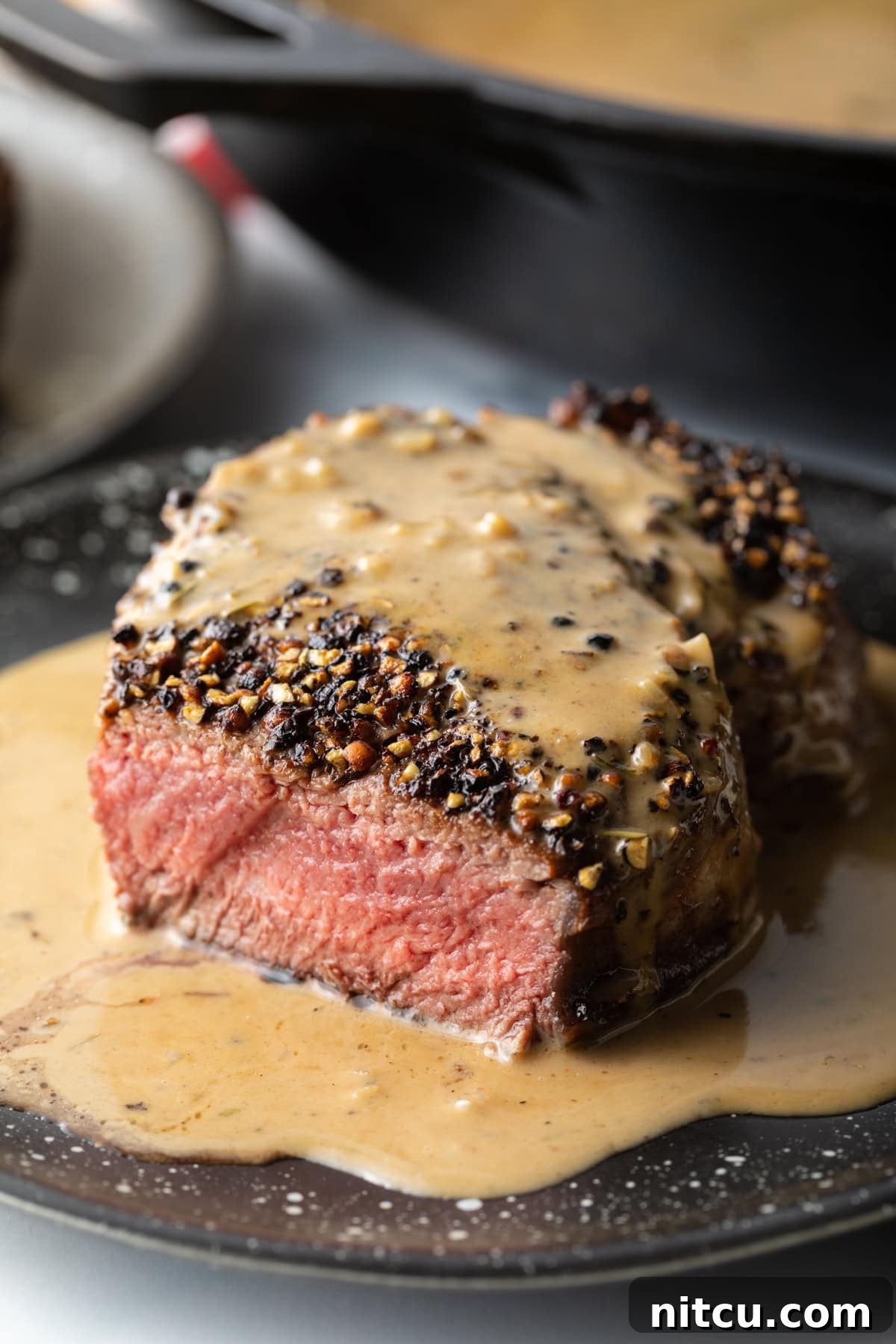
Experience the epitome of classic French cuisine with this exquisite Steak au Poivre recipe. Succulent tenderloin steaks are expertly seared to achieve a robust peppercorn crust, then elevated with a luxurious and utterly decadent cognac cream sauce. This iconic dish promises a gourmet dining experience right in your home.
Why This French Pepper Steak Recipe Will Become Your Favorite
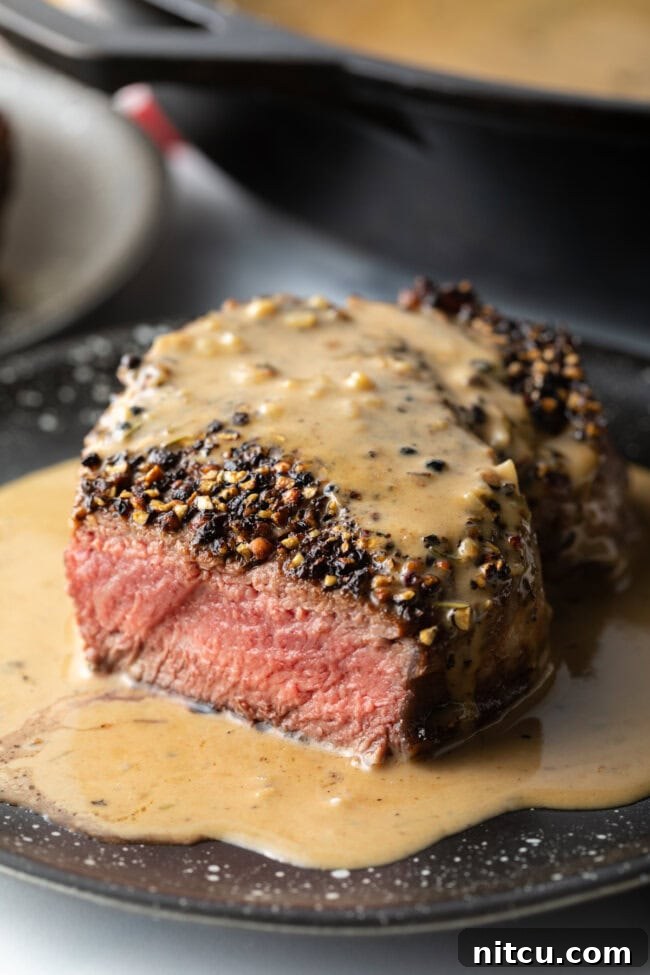
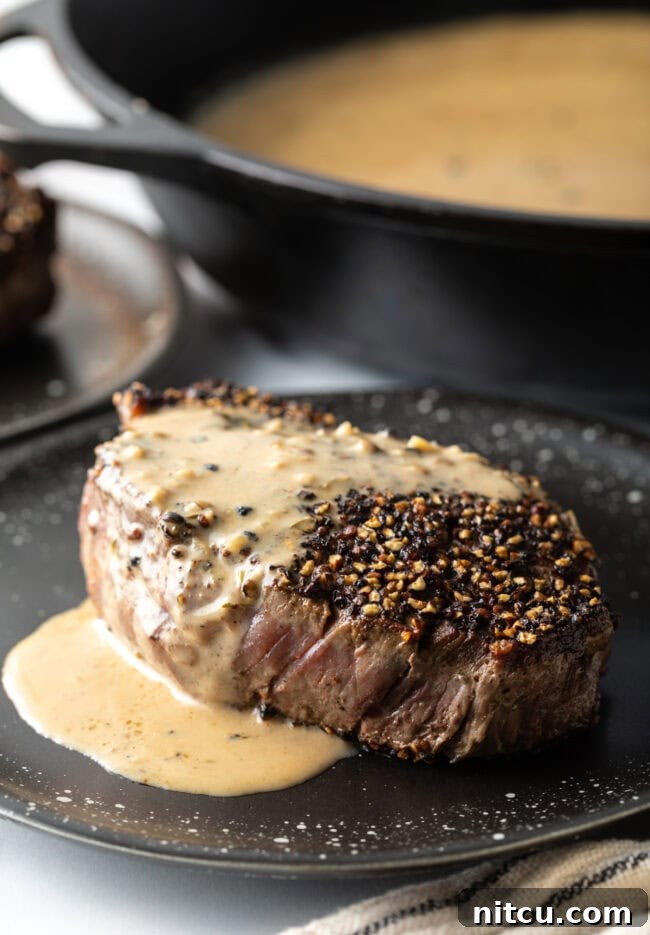
For any true aficionado of fine meat, preparing to fall in love is an understatement. This French pepper steak recipe delivers thick, impeccably tender, intensely peppery, and incredibly juicy steaks – the very embodiment of a carnivore’s dream! What makes a well-executed Steak au Poivre so utterly irresistible is the harmonious blend of textures and flavors. Imagine a perfectly cooked medium-rare steak, so tender it practically melts in your mouth, encased in a crunchy, spicy, and aromatic peppercorn crust. It’s an addictive symphony of sensations that sets this dish apart.
As these magnificent steaks sear to perfection, some of the cracked peppercorns naturally release into the hot skillet. These flavorful remnants are then expertly incorporated to infuse the subsequent silky cognac cream sauce. This rich, velvety, and delightfully boozy sauce boasts a subtle caramel sweetness from the alcohol, beautifully balanced by the lingering spice of the peppercorns. It’s the ideal complement to the crusted steak, creating a sophisticated flavor profile that lingers on the palate. The careful balance of a generous yet expertly flamed cognac, combined with the creamy elements, ensures a sauce that is both robust and refined, adding an unforgettable touch to every bite.
Unveiling the Classic: What Exactly is Steak au Poivre?
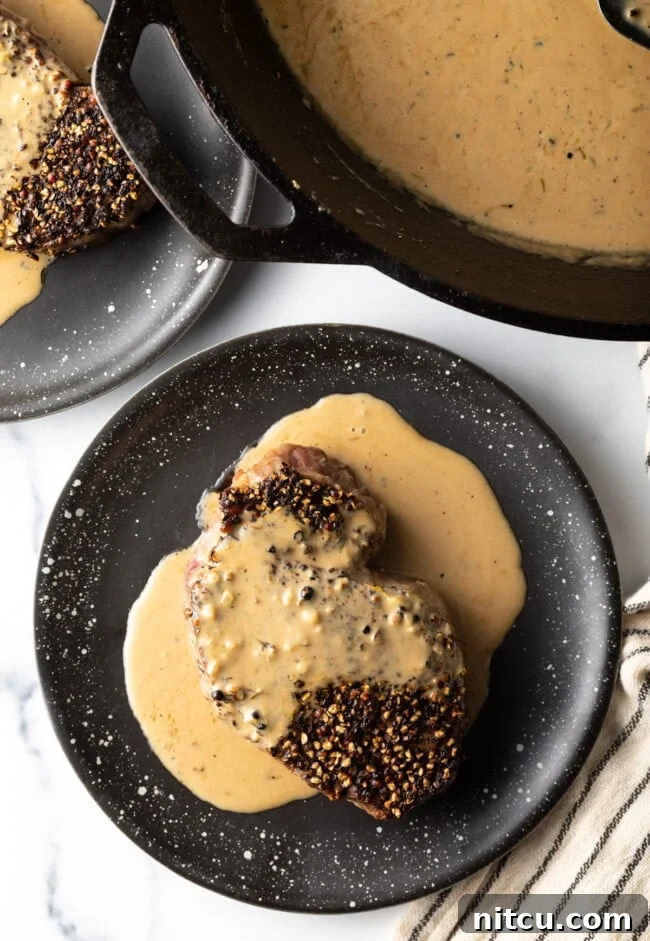
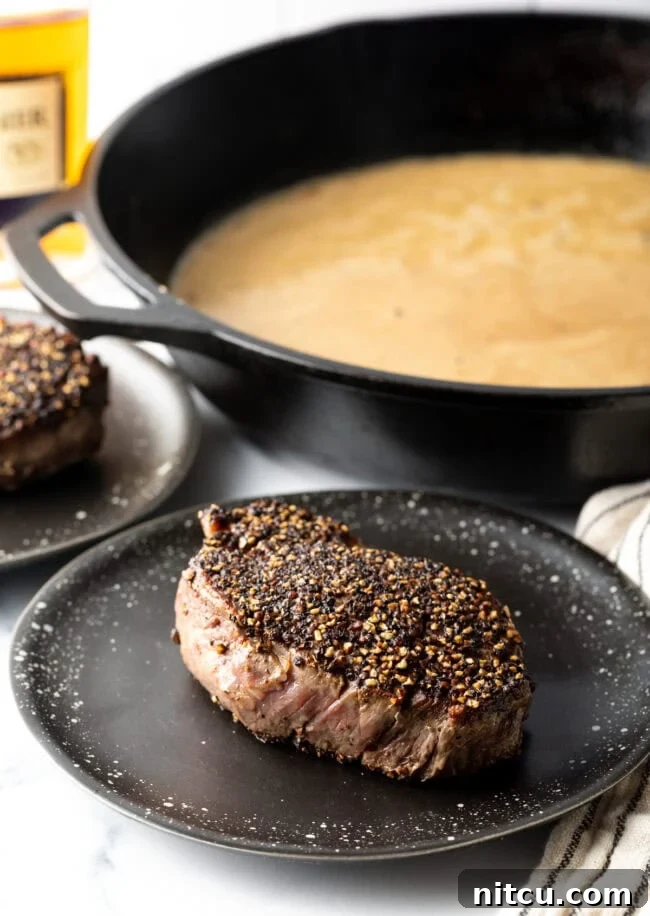
Steak au Poivre, meaning “peppered steak” in French, is a timeless bistro classic renowned for its bold flavor and luxurious texture. Originating in French culinary traditions, it’s the sophisticated ancestor of what many in the United States might refer to simply as “pepper steak.” At its heart, this dish features thick-cut steaks, traditionally premium cuts like tenderloin filets, generously pressed into a bed of very coarsely ground or cracked black peppercorns. This creates a distinctive, aromatic crust that’s then expertly seared to a perfect doneness.
The hallmark of an authentic Steak au Poivre doesn’t end with the steak itself. It’s always served with a rich and savory cream sauce, almost universally made with cognac. The process involves deglazing the pan where the steak was seared, capturing all the browned bits and peppercorn essence, then adding cognac, allowing it to flame and reduce, and finally enriching it with heavy cream and other seasonings. This meticulous preparation results in a sauce that beautifully marries the sharp bite of pepper with the smooth, boozy notes of cognac and the velvety richness of cream, perfectly complementing the seared, peppery steak. My recipe today adheres faithfully to this beloved French tradition, ensuring an authentic and unforgettable culinary experience.
Essential Ingredients for Your Perfect Peppercorn Crusted Steak
Crafting this exquisite French Pepper Crusted Steak Recipe requires a select handful of high-quality ingredients. Each component plays a vital role in building the layered flavors and luxurious textures that define this classic dish. Here’s a detailed look at what you’ll need, along with insights into their importance and potential alternatives:
- Thick Steaks: The foundation of this dish. Opt for premium cuts that are at least 1 ½ to 2 inches thick to ensure a juicy, tender interior while developing a crisp crust. Ideal choices include:
- Tenderloin (Filet Mignon): The traditional choice, prized for its exceptional tenderness and mild flavor, allowing the peppercorn crust and sauce to shine.
- Ribeye: Offers more marbling and rich flavor, creating an equally decadent alternative.
- New York Strip: A firm, flavorful cut that holds up beautifully to the bold peppercorn crust.
- Peppercorns: This is non-negotiable for an authentic Steak au Poivre.
- Whole Black Peppercorns: Crucial for the vibrant, pungent flavor and crunchy texture of the crust. Pre-ground pepper is too fine and lacks the aromatic intensity. Look for high-quality Tellicherry or Malabar peppercorns for the best results.
- Olive Oil: Used for searing the steaks.
- Choose a high-heat cooking oil such as refined olive oil, canola oil, grapeseed oil, or avocado oil, which can withstand the temperatures needed for a proper sear.
- Unsalted Butter: Added to the skillet with the oil to enhance browning and contribute a rich, nutty flavor to the searing process and the pan drippings for the sauce.
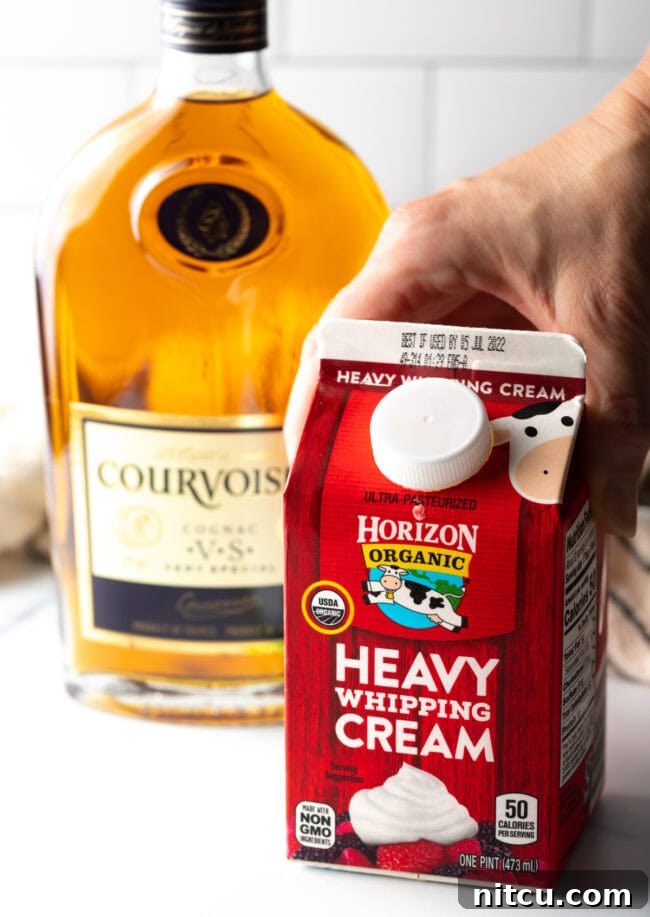
- Cognac: The heart of the iconic cream sauce.
- A French brandy from the Cognac region, it imparts distinct fruity, floral, and subtly sweet notes. Its complex flavor is paramount to the sauce.
- Substitutions: Good quality brandy, bourbon, or even a dry white wine can be used. For an alcohol-free version, a rich beef broth is the best alternative, though the flavor profile will differ slightly.
- Heavy Cream: Transforms the pan drippings and cognac into a velvety, luscious sauce. Use full-fat heavy cream for the most decadent and stable sauce.
- Garlic: Finely minced, garlic provides an aromatic depth and savory backbone to the cream sauce, perfectly complementing the pepper and cognac.
- Dried Thyme: This herb introduces an earthy, slightly floral note that beautifully enhances the savory and spicy elements of the pepper steak, adding complexity without overpowering.
- Beef Base: A concentrated beef stock product that adds a significant boost of umami and savory depth, balancing the peppery and sweet notes in the sauce.
- Salt: Essential for seasoning the steaks.
- Coarse Salt (like Kosher salt or sea salt): Ideal for seasoning the thick steaks before they are coated in peppercorns. Its larger crystals adhere well and season the meat evenly.
Step-by-Step Guide: How to Master Steak au Poivre
Achieving the perfect Steak au Poivre involves a few critical steps that ensure a tender steak, a crunchy crust, and a divine sauce. Follow these instructions carefully for a restaurant-quality result.
1. Steak Preparation and Seasoning
For even cooking and optimal tenderness, it’s crucial to prepare your steaks properly. Remove the thick-cut steaks from the refrigerator at least 30 minutes, and ideally up to an hour, before you plan to cook them. This allows the meat to come closer to room temperature, ensuring it cooks more evenly from edge to center and reaches your desired internal temperature without overcooking the exterior. Generously sprinkle all sides of each steak with coarse salt, such as Kosher salt. This pre-seasoning helps draw out moisture and enhances the natural flavor of the beef.
2. Preparing the Peppercorn Crust
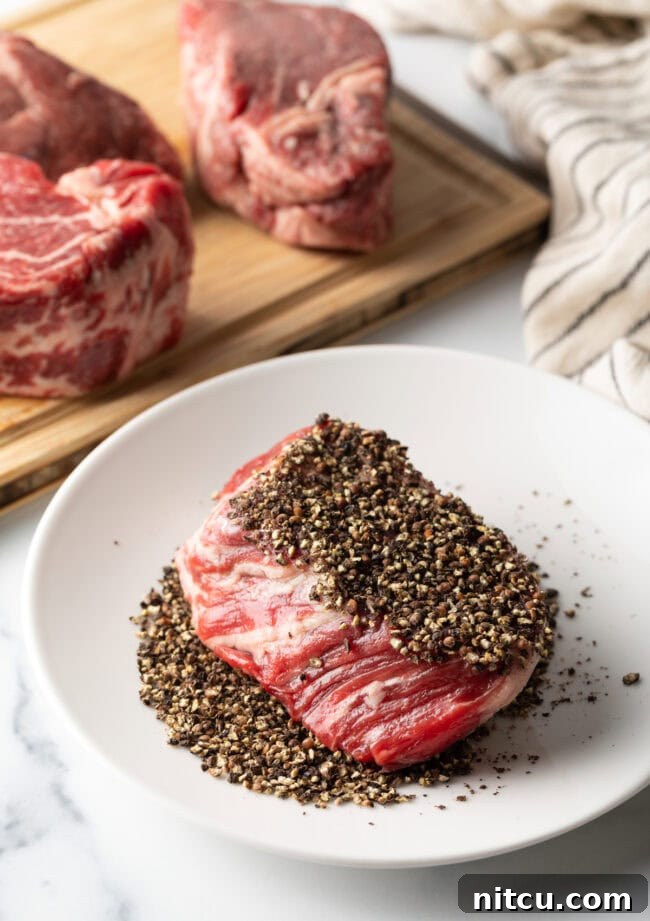
The signature crunch and bold flavor of Steak au Poivre come from the coarsely ground peppercorns. For the most aromatic and flavorful dish, I strongly recommend hand-grinding whole black peppercorns just before use. Set your pepper grinder to the largest possible setting to produce very coarse, irregular pieces. If your grinder settings are too fine, or if you don’t have a suitable grinder, you can achieve the perfect texture by pouring the whole peppercorns into a mortar and pestle and crushing them into large, cracked pieces. Alternatively, place them in a sturdy ziplock bag and gently smash them with the bottom of a heavy pan or a meat tenderizer.
Once you have your coarsely cracked peppercorns, spread them out evenly on a plate. Take each salted steak and firmly press both sides into the crushed peppercorns, ensuring an even and thorough coating. Gently shake the plate between coatings to redistribute the peppercorns and ensure maximum adhesion. You want a thick, flavorful crust on each side of the steak.
3. Searing the Steaks to Perfection
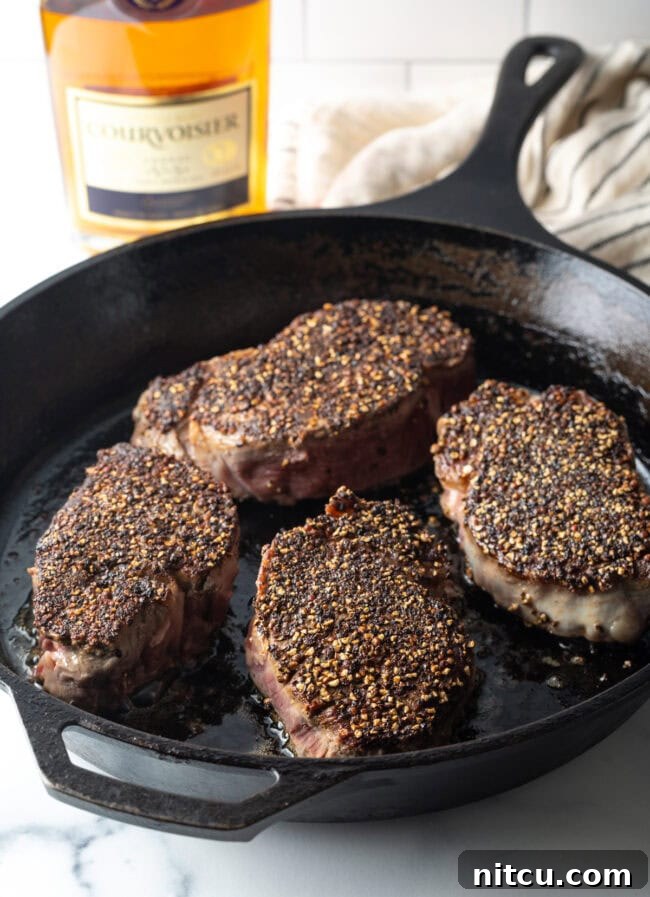
Place a large, heavy-bottomed skillet, preferably a cast-iron skillet, over medium-high heat. A cast-iron skillet is ideal because it retains heat exceptionally well, ensuring a consistent temperature and superior sear. Once the skillet is hot, add the olive oil and butter. Allow the butter to melt and foam, indicating it’s ready for searing. Carefully place the peppercorn-crusted steaks into the hot skillet.
Sear the steaks for 4 to 5 minutes per side. The exact searing time will depend on the thickness of your steaks and your desired level of doneness:
- For 1 ½-inch thick steaks aiming for medium-rare, sear for approximately 4 minutes per side.
- For 2-inch thick steaks aiming for medium-rare, extend the searing time to about 5 minutes per side.
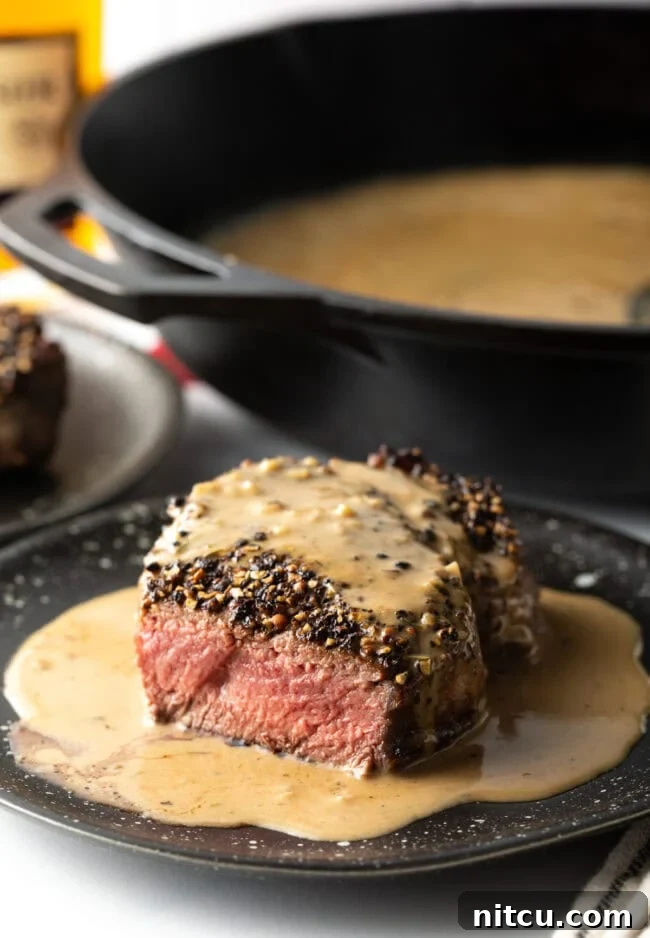
For a medium cook, add an additional minute per side. The goal is a beautiful, deeply browned crust. You can use an instant-read thermometer to check for doneness: 130-135°F (54-57°C) for medium-rare, 135-140°F (57-60°C) for medium. Once seared, transfer the steaks to a separate holding plate and loosely tent them with foil. Allow the steaks to rest for at least 5-10 minutes. This crucial resting period allows the juices to redistribute throughout the meat, ensuring a tender and moist steak when sliced.
4. Crafting the Decadent Cognac Cream Sauce
Using the very same skillet you used for the steaks – do NOT clean it! – you will now prepare your exquisite cognac pan sauce. Those browned bits and leftover peppercorns in the skillet are packed with flavor and are essential for a rich, deeply savory sauce. Carefully pour ½ cup of cognac into the hot skillet. If you are using a gas stove, slightly tip the pan towards the flame to ignite the cognac. Allow the alcohol to burn off, gently shaking the pan as needed until the flame naturally subsides. This process, known as flambéing, concentrates the flavors of the cognac while removing the raw alcohol taste. If you have an electric stovetop, simply let the cognac simmer vigorously for 1-2 minutes until most of the alcohol has evaporated.
Pro Tip for Boozy Flavor: If you enjoy a more pronounced alcoholic kick in your sauce, after the initial flambé and before adding the cream, you can add a small “nip” – about a teaspoon or two – of fresh cognac to the pan. This will retain more of the raw, boozy essence.
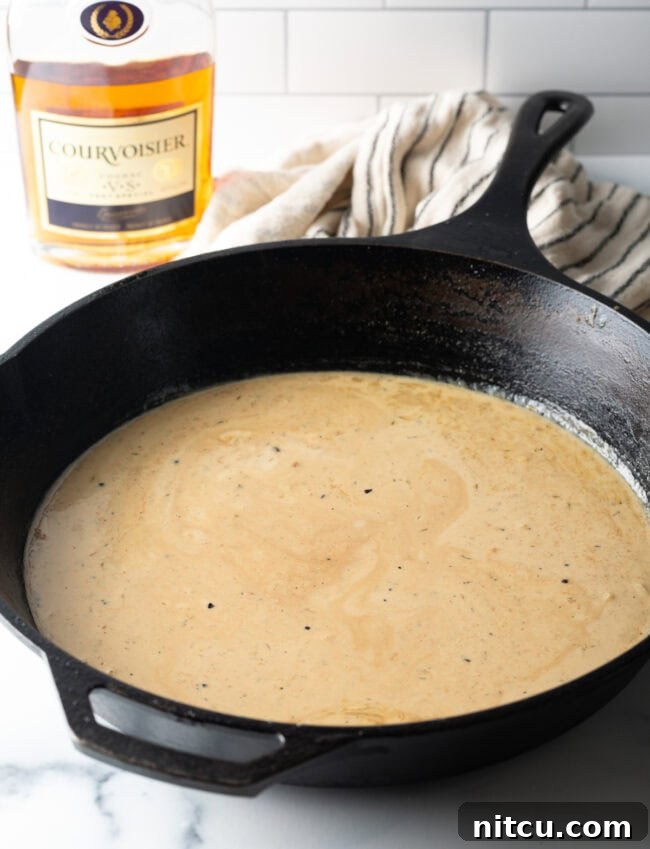
Next, pour the heavy cream into the skillet, followed by the minced garlic, dried thyme, and beef base. Whisk all the ingredients together thoroughly until smooth. Bring the cream mixture to a gentle simmer and allow it to cook for 4 to 5 minutes, whisking occasionally. The sauce should noticeably thicken and be able to coat the back of a spoon. Taste the sauce, then add 1 to 4 more tablespoons of cognac, to your personal preference (2 tablespoons is a common sweet spot for a balanced flavor). Season with salt as needed, tasting to adjust. The sauce should be rich, creamy, subtly sweet from the cognac, and have a pleasant peppery warmth.
5. Serving Your Masterpiece
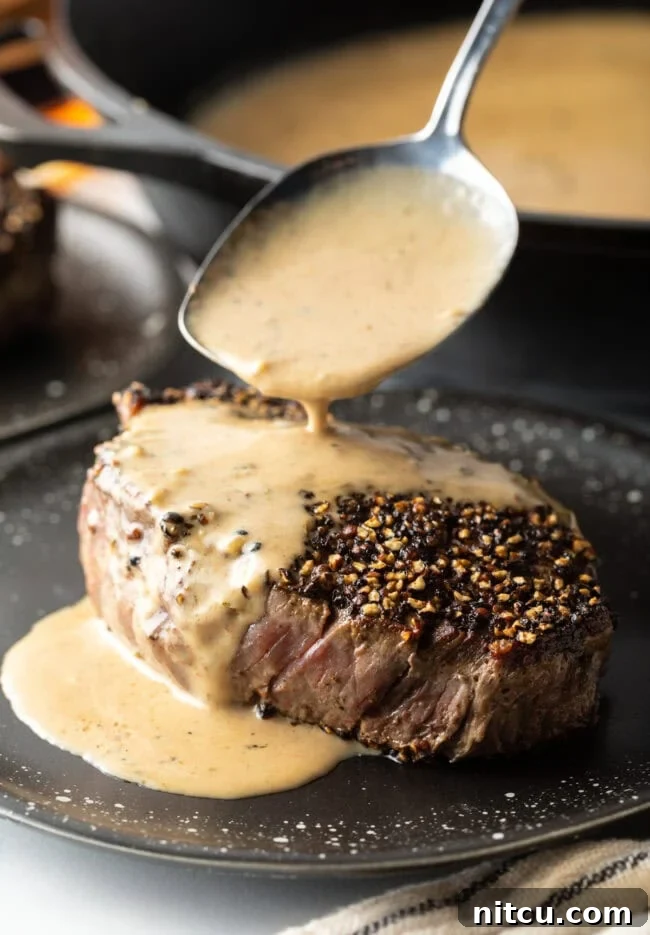
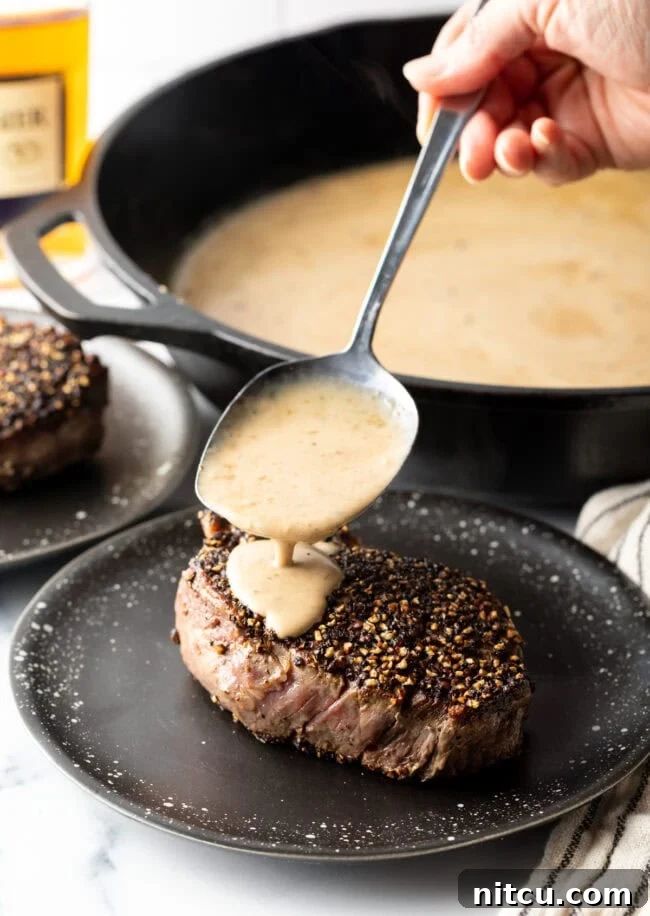
Once the sauce is ready, un-tent your rested steaks. Place each beautifully seared and crusted steak on an individual serving plate. Then, generously spoon the warm, velvety cognac cream sauce over the top of each steak. Serve immediately with your favorite complementary sides to soak up every last drop of that incredible sauce. Enjoy this luxurious French classic!
Serving Suggestions for a Complete French Dining Experience
To fully appreciate the richness and complexity of Steak au Poivre, it should be served immediately with its warm, aromatic peppercorn sauce. The key is to pair it with sides that can beautifully absorb the decadent cream sauce, elevating the entire meal.
Starchy Sides to Absorb the Sauce:
- Classic Mashed Potatoes: Creamy, buttery mashed potatoes are an absolute dream with this sauce. Their smooth texture and mild flavor make them the perfect canvas. For a healthier, low-carb alternative, consider Creamy Cauliflower “Mashed Potatoes.”
- Duchess Potatoes: For a more elegant presentation, these piped, baked, and golden-brown potato creations offer a delightful textural contrast.
- Fluffy White Rice: Simple yet effective, white rice is excellent for soaking up all the flavorful sauce.
- Thick Egg Noodles: Al dente egg noodles tossed lightly in butter can provide a comforting base that embraces the sauce beautifully.
- Crusty French Bread: Don’t forget a good baguette to sop up any leftover sauce on your plate – it’s a quintessential French way to enjoy every last drop!
Complementary Vegetable Side Dishes:
To balance the richness of the steak and sauce, a fresh and vibrant vegetable side dish is highly recommended. Here are a few favorites that perfectly complement this pepper steak recipe:
- Air Fryer Asparagus: Quick, easy, and vibrant green, offering a crisp texture.
- Haricot Vert and Baby Potatoes: Delicate French green beans and small roasted potatoes seasoned with herbs provide an earthy, fresh element.
- Grilled Vegetables: A medley of seasonal vegetables like bell peppers, zucchini, and onions, lightly grilled, adds a smoky depth.
- Sautéed Mushrooms: Earthy mushrooms sautéed in butter and garlic are a natural pairing, enhancing the savory notes of the dish.
Expert Tips & Tricks for a Flawless Steak au Poivre
Achieving a restaurant-quality Steak au Poivre at home is entirely possible with a few key techniques and considerations. Here are some expert tips and tricks to ensure your dish is nothing short of spectacular:
- Temper Your Steaks: This is arguably one of the most crucial steps. Always let your steaks come to room temperature for at least 30 minutes, or even an hour for very thick cuts, before searing. A cold steak hitting a hot pan will cook unevenly, resulting in an overcooked exterior and a raw center. Room temperature steaks sear more uniformly and reach your desired doneness more predictably.
- The Perfect Peppercorn Grind: For the characteristic crunchy crust and intense flavor, use whole black peppercorns and crush them coarsely. A pepper grinder set to its largest setting is ideal. If you don’t have one, a mortar and pestle works wonders. As an alternative, place peppercorns in a heavy-duty ziplock bag, expel the air, and use a rolling pin or the flat side of a meat tenderizer to smash them into sizable, jagged pieces. Avoid using finely ground pepper, as it will burn and become bitter in the pan.
- The Importance of Resting: Patience is a virtue, especially after searing your steak. Do not cut into your steak immediately after cooking; allow it to rest, loosely tented with foil, for at least 5-10 minutes. This resting period allows the muscle fibers to relax and reabsorb the juices that have migrated to the center during cooking. Cutting too soon will cause all those precious, flavorful juices to escape onto your cutting board, leaving you with a drier steak.
- Choose the Right Skillet: While a cast iron skillet is the preferred choice for searing steaks due to its exceptional heat retention and even heat distribution, it’s not the only option. A heavy-bottomed stainless steel skillet or your sturdiest nonstick pan can also achieve excellent results. The key is a pan that maintains consistent heat to create a deep, flavorful crust.
- Mastering Doneness: The best way to ensure your steak is cooked to your liking is by using an instant-read meat thermometer. For medium-rare, aim for an internal temperature of 130-135°F (54-57°C). For a true medium, cook until the thermometer reads 135-140°F (57-60°C). Remember that the temperature will rise slightly during resting.
- Flaming Cognac Safely: When flambéing the cognac, ensure your range hood is off to prevent flames from being drawn upwards. If you are uncomfortable with open flames, simply let the cognac simmer for a few minutes to cook off the alcohol. The flavor will still be excellent.
- Adjusting Sauce Consistency: If your sauce becomes too thick while simmering, you can easily thin it out with a splash more heavy cream or a touch of beef broth. Conversely, if it’s too thin, continue to simmer gently, stirring occasionally, until it reaches your desired consistency, which should be thick enough to coat the back of a spoon.
Frequently Asked Questions About Steak au Poivre
What is the difference between Steak Diane and Steak au Poivre?
While both Steak Diane and Steak au Poivre are luxurious French steak dishes served with a rich cognac cream sauce, their primary distinction lies in their flavor profiles and key ingredients. Steak au Poivre’s defining characteristic is its bold, crunchy peppercorn crust, lending a spicy and robust flavor. Steak Diane, on the other hand, typically omits the peppercorn crust and instead often features sautéed mushrooms, shallots, and sometimes Worcestershire sauce or Dijon mustard in its sauce. This gives Steak Diane a more savory, earthy, and sometimes slightly tangy flavor compared to the peppery, boozy kick of Steak au Poivre. Both are undeniably delicious French culinary masterpieces!
What does “au poivre” mean?
The term “au poivre” is French for “with pepper” or “peppered.” When you encounter “au poivre” in a dish description, it signifies that pepper, particularly coarsely ground black pepper, will be a prominent and defining flavor. It’s a direct indicator of a robustly peppered preparation.
What is poivre sauce made of?
The classic poivre sauce, specifically for Steak au Poivre, is traditionally composed of a few essential ingredients: the browned bits and peppercorns left in the pan after searing the steak (fond), cognac, and heavy cream. Often, aromatics like minced garlic and savory elements like beef base or beef broth are added for extra depth. This combination creates a rich, creamy, subtly boozy, and distinctly peppery sauce that is the perfect accompaniment to the steak.
How long does beef tenderloin take to cook?
Thick-cut beef tenderloin steaks (1 ½ to 2 inches thick) cook relatively quickly. For a perfect medium-rare to medium internal temperature, the total cooking time is typically about 8-10 minutes of searing (4 to 5 minutes on each side). For a true medium cook, you might add an extra minute per side. The most accurate way to determine doneness is with an instant-read thermometer:
- Medium-Rare: Cook until the internal temperature reaches 130-135°F (54-57°C).
- Medium: Cook until the internal temperature reaches 135-140°F (57-60°C).
Remember that the temperature will continue to rise slightly (carryover cooking) during the resting period.
What can I substitute for cognac to make the cream sauce?
While cognac offers a unique depth, several excellent substitutes can be used if it’s unavailable or if you prefer a different flavor profile:
- Alcoholic Substitutes:
- Brandy: As cognac is a type of brandy, a good quality regular brandy is the closest substitute, offering similar fruity and warming notes.
- Bourbon: For a slightly sweeter and more robust, smoky flavor profile.
- Dry White Wine: Such as a Chardonnay or Sauvignon Blanc, will lend a lighter, more acidic note to the sauce.
- Non-Alcoholic Substitute:
- Beef Broth or Stock: This is the best option for an alcohol-free Steak au Poivre sauce. Use a rich, low-sodium beef broth to deglaze the pan and build the sauce. While the sauce won’t have the same complex, subtly sweet, and boozy undertones, it will still be incredibly flavorful and savory.
How do you thicken peppercorn sauce?
The peppercorn sauce for Steak au Poivre naturally thickens as it simmers due to the reduction of the liquid and the fat content from the heavy cream. To achieve your desired thickness:
- Continue Simmering: Keep the sauce at a gentle simmer, stirring occasionally. The longer it simmers, the more liquid will evaporate, and the thicker it will become. This typically takes 4-5 minutes, but can extend a bit more.
- Avoid Over-Thickening: Be mindful not to over-thicken the sauce. It should be rich and creamy but still pourable, easily coating the back of a spoon. If it becomes too thick, you can always add a small splash more heavy cream or beef broth to adjust the consistency.
How should I store leftover Steak au Poivre?
To store leftover Steak au Poivre, place the steak and any remaining cognac sauce in an airtight container and refrigerate for up to 2 days. When reheating, gently warm the steak and sauce together in the microwave or a skillet over low heat. Be aware that reheating the steak, especially in a microwave, will continue to cook it further, potentially resulting in a less rare doneness. To preserve some tenderness, consider reheating only the sauce and serving it over thinly sliced cold steak, or gently warming the steak in a low oven.
Beyond Steak au Poivre: More Decadent Dinner Recipes to Explore
If you’ve savored the rich flavors of this Steak au Poivre and are eager to discover more exquisite main courses, explore these other decadent dinner recipes that promise to impress:
- Oven Roasted Salmon with Pink Peppercorn Sauce
- Retro French Chicken (Baked Lemon Garlic Chicken)
- Easy Chicken Kiev
- Best Smoked Prime Rib Au Jus
- Italian Veal Parmigiana
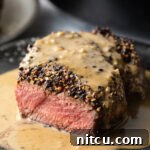
Steak au Poivre Recipe with Cognac Cream Sauce
This classic French Pepper Steak Recipe features tenderloin steaks seared with a peppercorn crust and finished with a decadent cognac cream sauce.
Recipe Details
- Prep Time: 20 minutes
- Cook Time: 15 minutes
- Total Time: 35 minutes
- Servings: 4 servings
Ingredients
- 4 tenderloin steaks, 1 ½ – 2 inches thick (8 oz each)
- ¼ cup peppercorns (whole black)
- 1 tablespoon olive oil
- 1 tablespoon unsalted butter
- ¾ cup cognac, divided
- 1 ¼ cup heavy cream
- 1 clove garlic, minced
- 1 teaspoon dried thyme
- ½ teaspoon beef base
- Salt, to taste
Instructions
- Pull the steaks out of the refrigerator at least 30 minutes before cooking. Sprinkle generously with salt on all sides.
- Set your pepper grinder on the largest setting. Grind the whole black peppercorns into very coarse pieces. If your grinder settings are too small, pour the peppercorns into a mortar and pestle and crush them into large coarse pieces.
- Pour the cracked peppercorns on a plate. Press the steaks into the peppercorns on both sides, ensuring they are evenly coated. Shake the plate in between to ensure even adhesion.
- Set a large cast-iron skillet over medium-high heat. Once hot, add the olive oil and butter to the skillet. Once the butter melts and foams, add the prepared steaks to the skillet and sear for 4 to 5 minutes per side. (Four minutes for 1 ½-inch steaks, five minutes for 2-inch steaks for medium-rare to medium doneness.)
- Move the seared steaks to a holding plate and cover loosely with foil to rest. Carefully pour ½ cup of cognac into the hot skillet (do not clean the pan). If using a gas stove, slightly tip the pan so the cognac catches the flame and flambé. Allow the alcohol to burn off, shaking the pan as needed until the flame dies. If using an electric stovetop, simply let the cognac simmer vigorously for 1-2 minutes until most of the alcohol has evaporated.
- Pour the heavy cream into the skillet, followed by the minced garlic, dried thyme, and beef base. Whisk well and allow the cream to come to a gentle simmer. Simmer for 4 to 5 minutes, whisking occasionally, until the sauce slightly thickens and coats the back of a spoon. Taste, then add 1 to 4 more tablespoons of cognac, to taste (2 tablespoons is often ideal). Adjust seasoning with salt as needed.
- Serve the rested steaks warm with a generous spoonful of the rich, peppery cognac sauce poured over the top. Enjoy!
Notes
This recipe can also be prepared with Ribeye steaks for a slightly richer flavor profile.
The amount of cognac is important for this dish. Burn off the largest portion before adding the cream to remove the harsh alcohol taste, then add a small “nip” at the very end to give the sauce a delicate boozy kick and enhance its complex flavor.
Nutrition
- Serving: 1pc
- Calories: 787kcal
- Carbohydrates: 12g
- Protein: 54g
- Fat: 47g
- Saturated Fat: 25g
- Polyunsaturated Fat: 2g
- Monounsaturated Fat: 16g
- Trans Fat: 0.1g
- Cholesterol: 236mg
- Sodium: 231mg
- Potassium: 1075mg
- Fiber: 4g
- Sugar: 2g
- Vitamin A: 1271IU
- Vitamin C: 1mg
- Calcium: 171mg
- Iron: 5mg
Recipe Information
- Course: Main, Main Course
- Cuisine: French
- Author: Sommer Collier