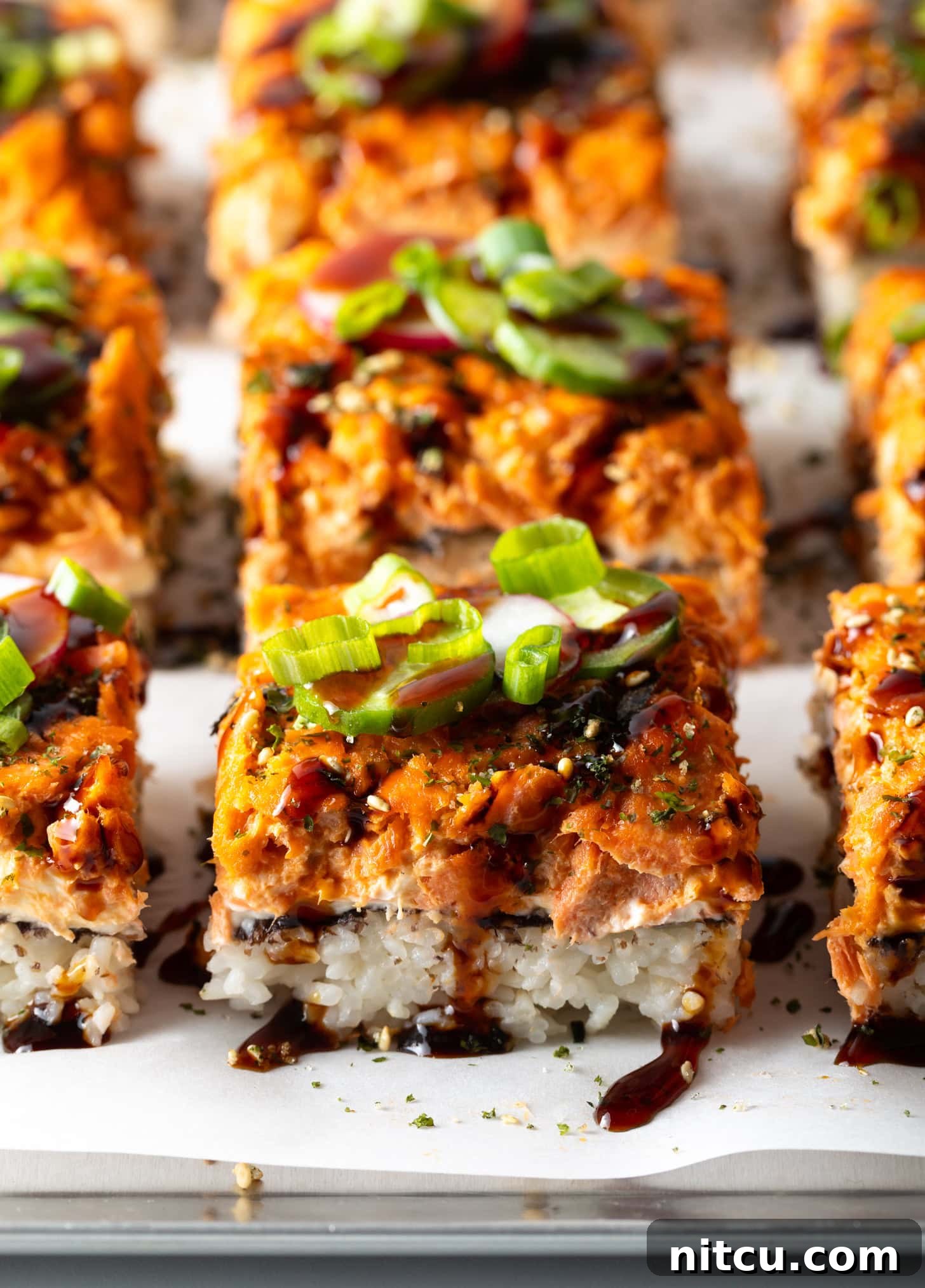
Elevate your home cooking with this incredibly delicious and crowd-pleasing Salmon Sushi Bake! It’s a modern, unique spin on a non-traditional sushi roll, offering all the delightful flavors and textures you love, but with perfectly cooked salmon. Layers of tender sushi rice, luxurious cream cheese, crisp nori, and a savory, spicy salmon mixture are all baked to golden perfection, then served with an array of fresh, vibrant garnishes that truly make this dish shine.
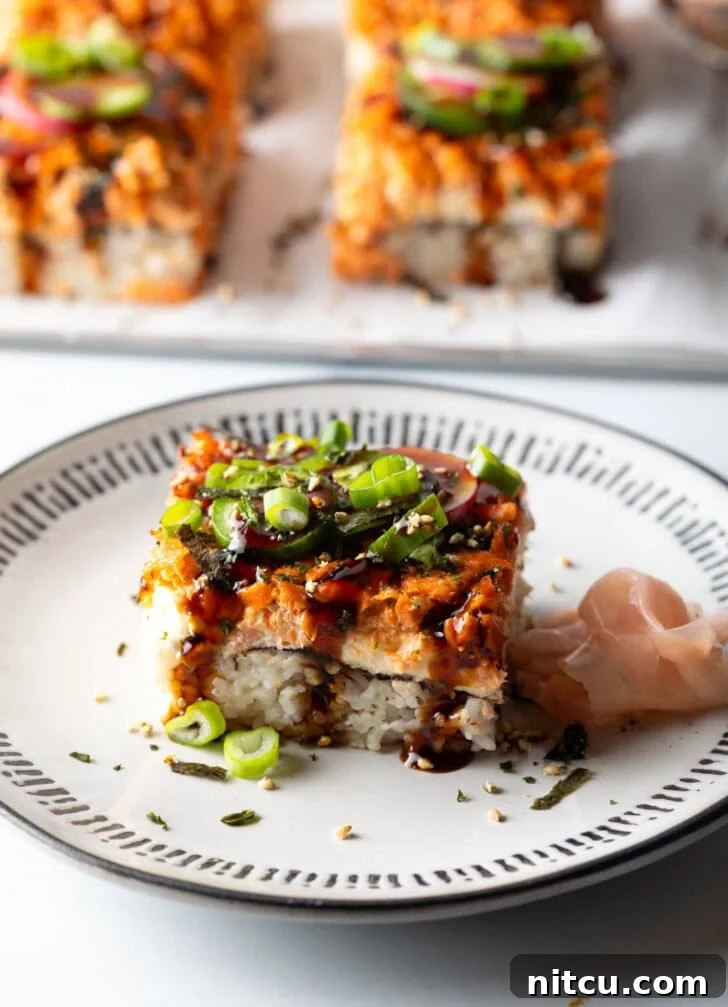

Sommer’s Insight: Why This Baked Salmon Sushi Recipe Shines
For years, the idea of “baked sushi” seemed contradictory to me. Sushi, in its purest form, often features raw fish, and the concept of cooking it felt like a deviation from tradition. However, the viral popularity of sushi bake recipes online and across social media platforms over the last decade finally piqued my curiosity. And I am so glad it did!
This Baked Salmon Sushi casserole is not just a trend; it’s a culinary revelation for anyone who adores the vibrant flavors and intricate textures of sushi but might be hesitant about consuming raw seafood. It transforms those beloved elements into a comforting, approachable, and utterly delicious dish that’s perfect for every palate.
Why You’ll Adore This Salmon Sushi Bake
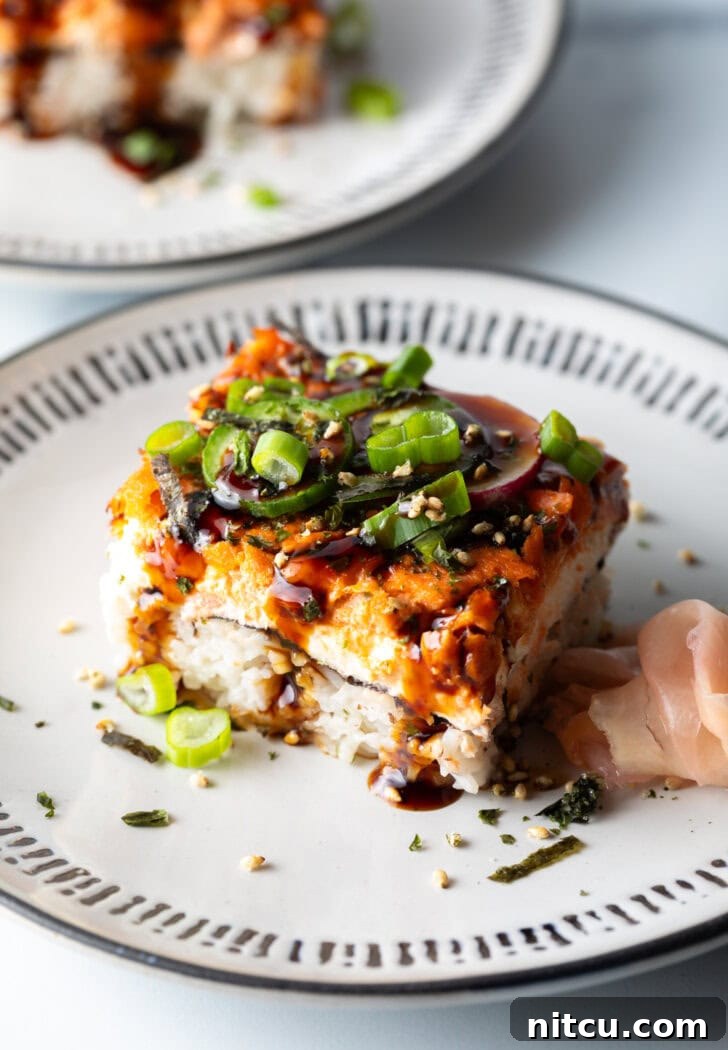
- Layers of Irresistible Flavor and Texture: My recipe goes beyond the basic sushi bake. It features a delicate layer of creamy, softened cream cheese that perfectly balances the rich, savory, and spicy notes from the salmon mixture. Beyond that, it’s crowned with a drizzle of sweet unagi sauce, a generous sprinkle of umami-packed furikake rice seasoning, and fresh scallions. For an extra pop, I recommend additional garnishes like crisp thinly sliced cucumbers, zesty jalapeños, and peppery radishes, creating a multi-dimensional eating experience that’s both exciting and satisfying.
- Versatile Serving Temperature: One of the best aspects of this salmon sushi bake is its adaptability. While it’s certainly delightful served warm right out of the oven, I often prefer to bake and then chill it completely. This not only makes cutting it into neat, perfect squares much easier but also allows the flavors to meld beautifully and gives it a texture reminiscent of traditional, cold sushi rolls. Whether you serve it warm, at room temperature, or chilled, it’s a winner!
- The Ultimate Crowd-Pleaser for Any Occasion: This Salmon Sushi Bake recipe is a fantastic show-stopper that’s guaranteed to impress at any party, potluck, or family gathering. It offers a unique and engaging presentation, inviting guests to customize their bites with various toppings, making it a fun and interactive appetizer or main course.
- Beginner-Friendly Sushi Experience: If you’ve always wanted to make sushi but felt intimidated by rolling techniques or handling raw fish, this recipe is your perfect entry point. It captures the essence of sushi in a much simpler, casserole-style format, making it accessible for home cooks of all skill levels.
- Highly Customizable: This recipe is incredibly forgiving and open to customization. You can easily swap proteins, adjust spice levels, or add your favorite vegetables, ensuring it always suits your taste preferences and dietary needs.
Key Ingredients for Your Perfect Salmon Sushi Bake & Essential Tips
Crafting a memorable salmon sushi bake begins with quality ingredients and a few helpful pointers. Here’s what you’ll need and how to make the most of each component:
- Salmon: For the best flavor and texture, I highly recommend using wild-caught sockeye salmon. Its vibrant color and firm texture hold up beautifully when baked. However, the most crucial tip is to always buy the freshest salmon available to you, ensuring a delightful taste. Frozen salmon can also work, just ensure it’s fully thawed and patted dry before cooking.
- Soy Sauce: This essential ingredient adds a foundational umami depth to the salmon. For those with dietary restrictions, gluten-free tamari or liquid aminos are excellent substitutes that maintain the savory profile.
- White Rice: The base of our sushi bake! It’s vital that your white rice is precooked and cooled before assembly. This prevents it from becoming mushy and allows it to absorb the rice vinegar properly. Sushi rice is ideal for its stickiness, but any medium-grain white rice will do.
- Rice Vinegar: This is what gives sushi rice its characteristic tangy flavor. Don’t skip it, as it brightens the dish and complements the rich salmon.
- Nori Sheets (Dried Seaweed): These thin, dark sheets are indispensable for that authentic sushi flavor. You can typically find large packs of nori in the international aisle of most major supermarkets or Asian grocery stores. They act as a delicious, edible divider and add a slight crispness.
- Cream Cheese: Use a regular, full-fat cream cheese for the best creamy texture and rich flavor. It’s essential that it’s softened to room temperature before you attempt to spread it, otherwise, it will tear the nori and rice layers. A block of cream cheese usually yields a smoother spread than whipped varieties.
- Sriracha Mayonnaise: This is where the magic happens for that signature spicy kick! If you can’t find pre-made sriracha mayo, it’s incredibly easy to whip up your own by simply combining good quality mayonnaise with sriracha hot sauce to your preferred level of spiciness. Japanese mayo (Kewpie mayo) makes an exceptional base for its richer, tangier flavor.
- Garnishes: These are non-negotiable for both visual appeal and a burst of fresh flavor! Stock up on sliced green onions (scallions), sweet and savory eel sauce (also known as unagi sauce, found in Asian markets), and furikake seasoning (a Japanese rice seasoning mix, often containing sesame seeds, dried seaweed, and sometimes bonito flakes). Beyond these, consider optional goodies like thinly sliced radishes for crunch and peppery notes, crisp cucumbers, fiery jalapeños for a fresh heat, creamy avocado slices, and tangy pickled ginger. These additions truly elevate the entire experience.
Creative Variations & Dietary Swaps for Your Sushi Bake
One of the joys of cooking is customization, and this sushi bake recipe is wonderfully adaptable. Feel free to experiment with these variations to make it your own:
- Alternative Proteins: While salmon is a stellar choice, don’t limit yourself! Other types of fish commonly found in sushi rolls, such as tuna or whitefish (like cod or snapper), work beautifully when baked. For a different texture, consider baked shrimp or even finely chopped imitation crab meat. If you’re looking for a hearty option, cooked chicken or even pulled pork can be adapted with a suitable sauce.
- Mini Versions for Effortless Entertaining: Transform this casserole into bite-sized appetizers by baking it in a muffin tin or a smaller square pan, then cutting into even tinier squares. These mini versions are perfect for parties, making them easy to pick up and enjoy without cutlery, and presenting a sophisticated look.
- Vegetarian & Vegan Adaptations: Easily convert this into a plant-based delight. Replace the salmon with savory sautéed mushrooms (shiitake or cremini work well), seasoned roasted sweet potato cubes, or even marinated and baked tofu or tempeh for a protein boost. For a fully vegan version, use vegan cream cheese and a plant-based mayonnaise alternative.
- Nutritious Brown Rice: Swap out white rice for brown rice to create a more fiber-rich and nutritious version. Ensure your brown rice is cooked and cooled thoroughly, and adjust the amount of rice vinegar to taste.
- Cream Cheese Alternatives: For a slightly lighter dish, opt for low-fat cream cheese. If you prefer to skip the creaminess or are looking for a dairy-free option, you can make this salmon sushi bake entirely without cream cheese by layering the salmon mixture directly on top of the nori. Some recipes also use a thin layer of mashed avocado in place of cream cheese for a richer, healthier fat.
- Mayo Flavor Swaps: The spicy sriracha mayo is iconic, but you can adjust the heat to your liking. Use plain mayonnaise for a mild casserole, or elevate the flavor with authentic Japanese Kewpie mayo, known for its rich, umami-packed taste. You can also experiment with other spicy sauces like gochujang mayo or even a touch of wasabi mixed into plain mayo for a different kind of kick.
- Added Vegetables: Integrate finely diced bell peppers, carrots, or spinach into your rice layer for added nutrients and color. Top with quick-pickled onions or shredded carrots before serving for extra crunch and tang.
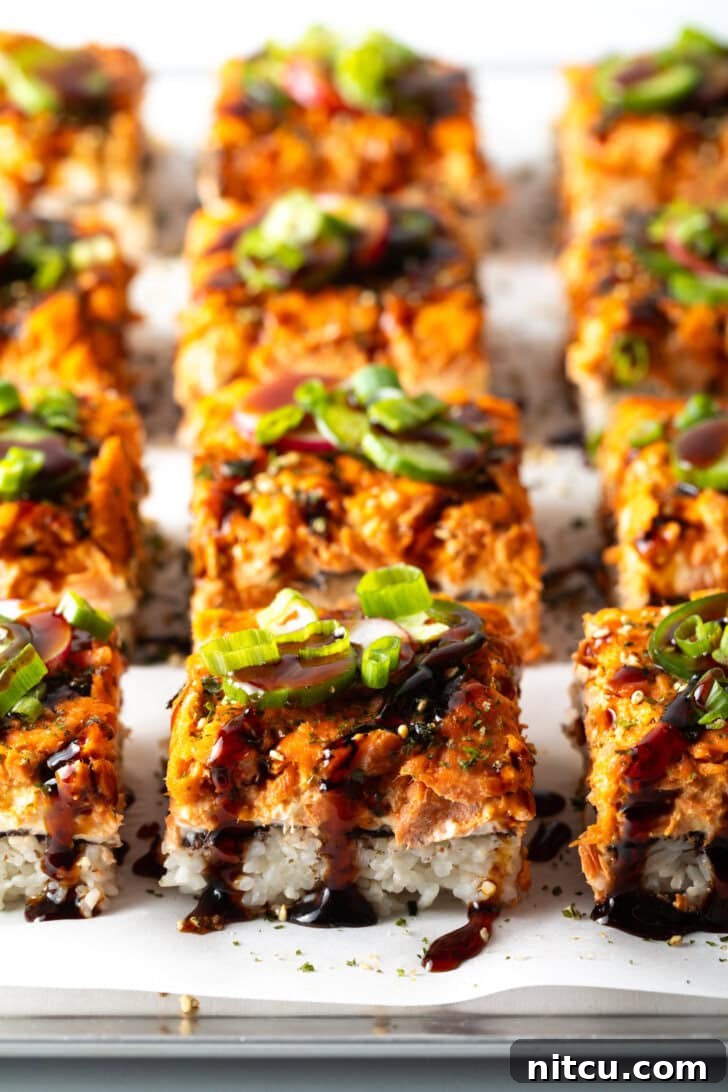
Crafting Your Delicious Salmon Sushi Bake: A Step-by-Step Guide
Creating this irresistible salmon sushi bake is simpler than you might think. Follow these detailed steps for a perfect result every time.
Tips for Success: For the most visually appealing and satisfying sushi bake, dedicate a little extra time to ensure each layer is evenly spread and neatly presented. This makes for easier cutting and a more professional finish.
You’ll find the full Salmon Sushi Bake recipe with precise measurements, detailed instructions, and helpful storage tips in the printable recipe card located further down the page!
Storage & Reheating for Optimal Enjoyment
- Storing Leftovers: Properly storing your salmon sushi bake ensures its deliciousness for future enjoyment. Once the casserole has completely cooled to room temperature, transfer any leftovers to an airtight container. It will keep beautifully in the refrigerator for up to 2 days. For best quality, avoid storing it longer, as the rice can dry out and the flavors may diminish.
- Freezing: Freezing salmon sushi bake is not recommended. The texture of the rice and cream cheese can become undesirable after thawing.
- Reheating (Optional): If you prefer your sushi bake warm, individual portions can be gently reheated in the microwave for 30-60 seconds, or in a preheated oven at 300°F (150°C) for about 10-15 minutes, until just warmed through. Be careful not to overcook, as this can dry out the salmon and harden the rice. Many, including myself, find it equally delicious served cold or at room temperature, making reheating unnecessary.
Serving Suggestions: Elevate Your Sushi Bake Experience
This versatile dish can be enjoyed at any temperature, though I personally find it most refreshing when cooled to room temperature or chilled from the refrigerator. This allows the flavors to fully meld and the layers to set beautifully for perfect presentation.
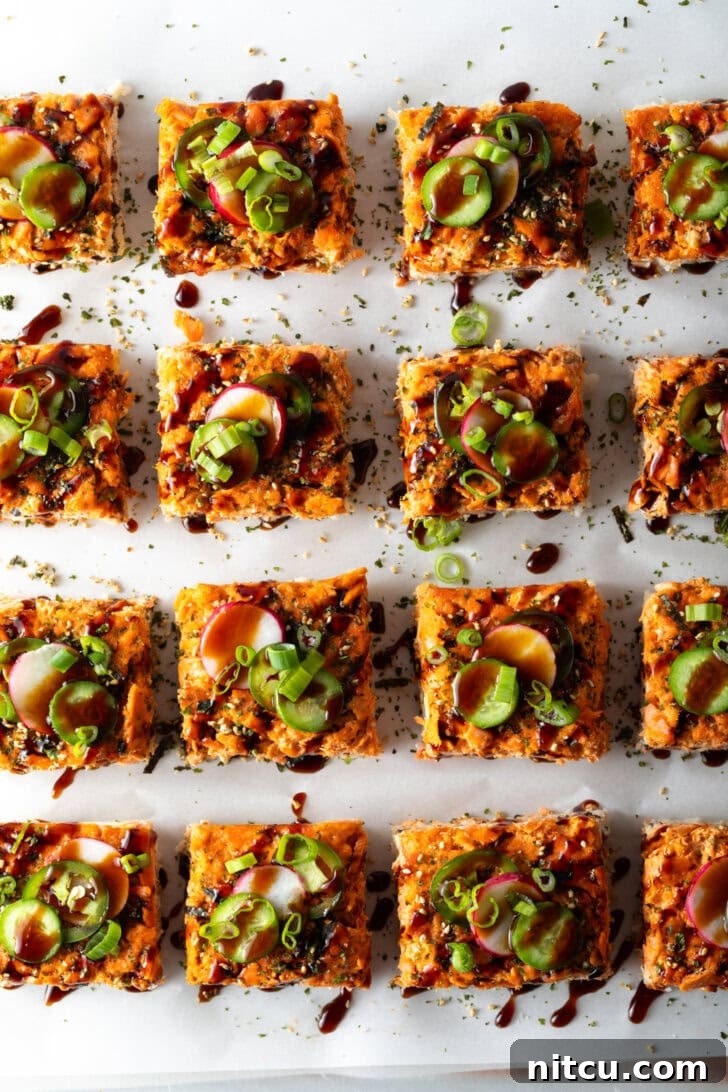
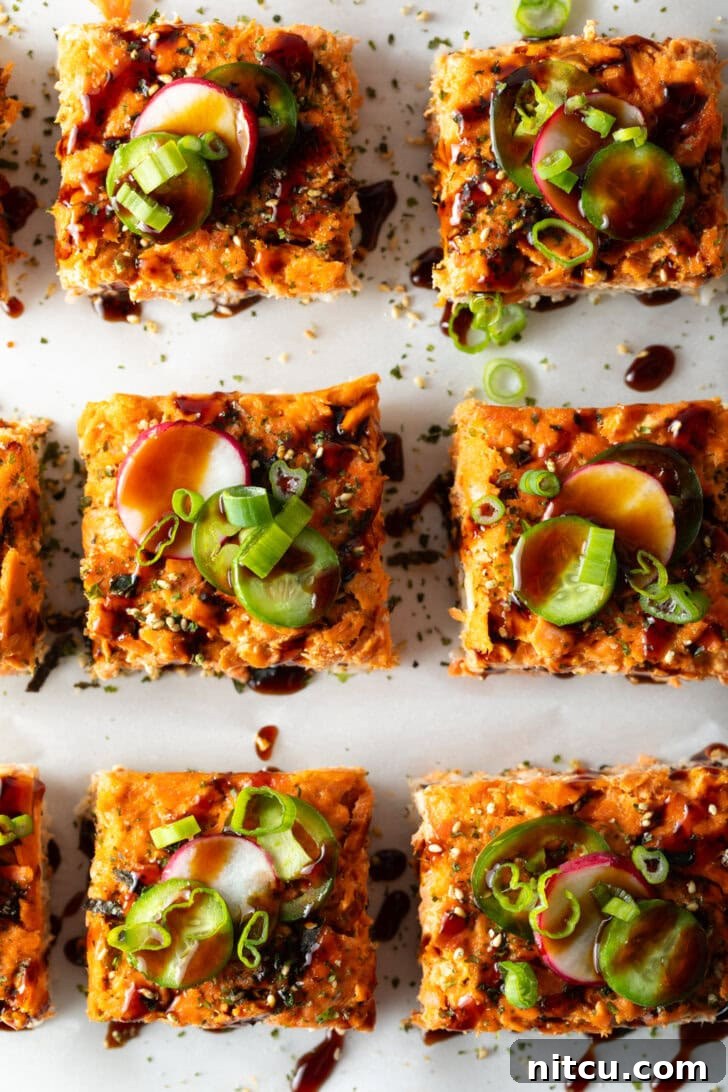
When you’re ready to serve, carefully cut the baked salmon sushi into 12 to 24 pieces, depending on your desired portion size. Square or rectangular cuts work best. Then, it’s time for the final flourish! Generously sprinkle the tops with furikake rice seasoning, which adds a wonderful umami crunch. Next, drizzle a sweet and savory eel sauce (unagi sauce) over each piece, followed by a sprinkle of fresh, vibrant scallions.
Don’t hesitate to add extra fresh and crunchy garnishes to truly make this dish pop! Our favorites include a thin slice of crisp cucumber for coolness, a delicate radish slice for a hint of spice, and a sliver of jalapeño for a fresh, zesty kick. You can also add creamy avocado slices on top, but here’s a Pro Tip: if using avocado, serve and consume the pieces immediately, as avocado tends to brown quickly when exposed to air.
Consider serving your salmon sushi bake with additional small bowls of soy sauce, extra sriracha mayo, or even a dash of sesame oil for dipping, allowing guests to customize their perfect bite. It pairs wonderfully with a light salad or a simple miso soup for a complete meal.
Frequently Asked Questions About Salmon Sushi Bake
A Salmon Sushi Bake is a delicious, deconstructed sushi dish presented in a casserole form. It typically consists of layers of seasoned sushi rice, nori seaweed, a creamy element (like cream cheese or spicy mayo), and a cooked fish topping (like salmon), all baked together. It offers the beloved flavors and textures of sushi but without the need for raw fish or intricate rolling techniques, making it a popular choice for home cooks and those new to sushi.
The key to neutralizing any overly “fishy” taste in salmon for this bake lies in proper seasoning and combination. By baking the salmon with soy sauce, you infuse it with umami and subtle saltiness. Blending the cooked, flaked salmon with sriracha mayonnaise then transforms its flavor profile, creating a perfectly balanced sweet and spicy mixture. This robust combination effectively masks any lingering fishiness, resulting in a delightfully sweet and spicy salmon layer that even seafood-skeptics will enjoy!
You have the flexibility to enjoy sushi bake both hot and cold, depending on your preference! While it’s delicious served warm right out of the oven, it tends to hold its shape much better once it has cooled. For optimal texture and easier, cleaner cuts, it’s often best to let the baked sushi cool to room temperature or even chill it thoroughly in the refrigerator before serving. Many find the chilled version more reminiscent of traditional sushi and its melded flavors.
Yes, you absolutely can! Preparing the salmon sushi bake a few hours ahead, or even the day before, is a great strategy for entertaining. Simply bake it, allow it to cool completely, cover it tightly, and refrigerate. When ready to serve, you can either enjoy it chilled (my preferred method!), or gently reheat it in the oven. This makes it a fantastic make-ahead option for parties and busy weeknights.
The secret to clean, perfect cuts is allowing the sushi bake to cool and set completely. Once chilled, use a very sharp knife, preferably one that’s been run under hot water and then wiped dry, to cut through the layers. Clean the knife blade between each cut to prevent sticking and ensure crisp edges. Pressing the rice layer firmly during assembly also helps it hold its shape.
Print Recipe
Leave a Review »
Salmon Sushi Bake Recipe
30 minutes
25 minutes
55 minutes
12 pieces
Ingredients
- 1 ½ – 2 pounds wild sockeye salmon filet
- 2 tablespoon soy sauce
- 32 ounces ready-made cooked sticky rice (or 3 cups dried sushi rice, cooked according to package)
- 2 tablespoons rice vinegar
- 2-3 nori sheets
- 16 ounces cream cheese, softened to room temperature
- ½ cup sriracha mayonnaise
- ½ cup chopped green onions
- 3 tablespoons eel sauce (or oyster sauce)
- 1-2 tablespoons furikake rice seasoning
- Optional garnishes: thinly sliced radish, cucumbers, jalapeno, avocado, and/or pickled ginger
Instructions
-
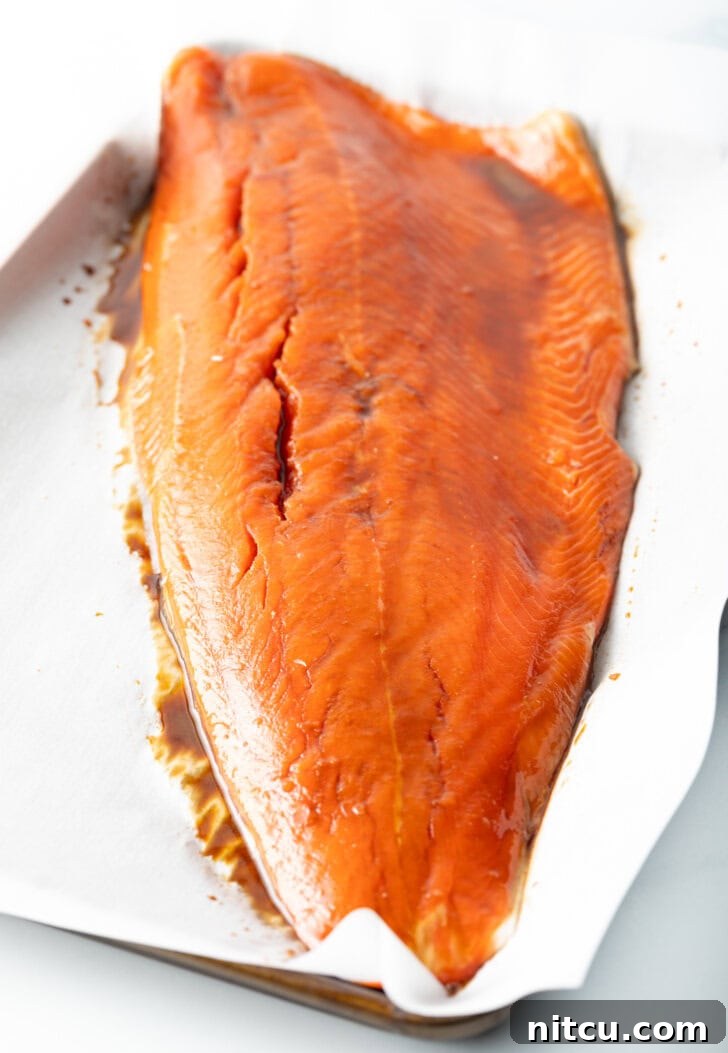
Preheat the oven to 400°F (200°C). Prepare a large rimmed baking sheet by lining it with parchment paper. Place the salmon fillet on the parchment paper and drizzle 2 tablespoons of soy sauce evenly over the top.
-
Bake the salmon for 15 minutes, or until it is cooked through and flakes easily. Remove from the oven and set aside to cool slightly.
-
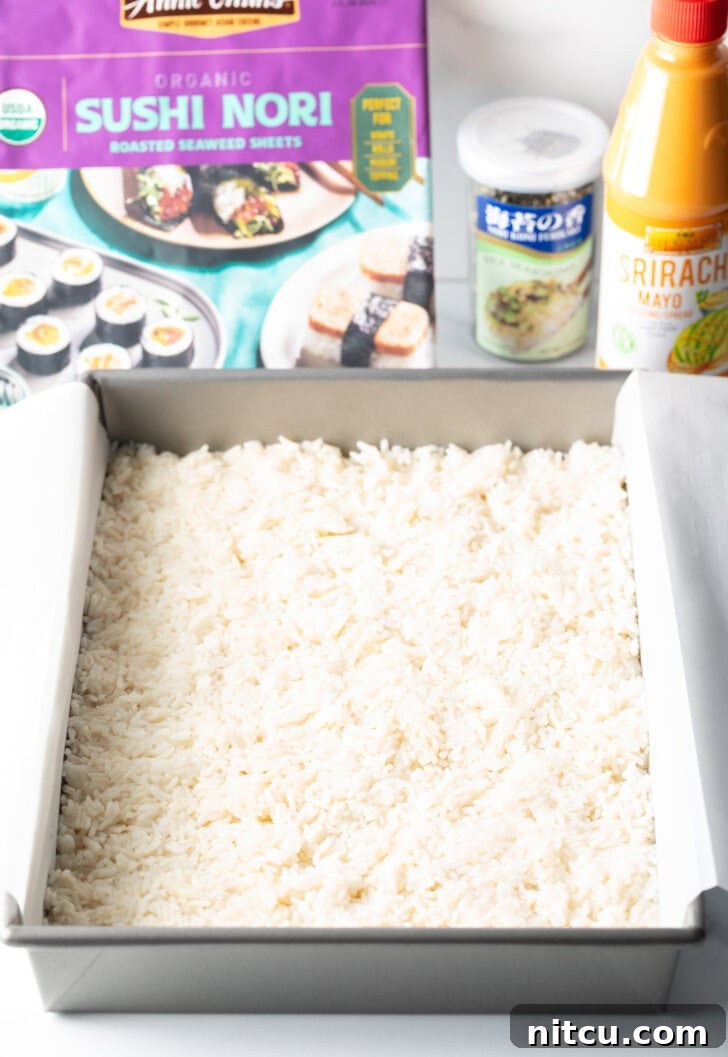
While the salmon bakes, prepare a 9×13-inch baking dish. Lightly spray the dish with nonstick cooking spray. Transfer the cooked rice into the baking dish and drizzle with 2 tablespoons of rice vinegar. Using your hands (or a spoon), gently toss the rice to distribute the vinegar, then press it firmly and evenly into a compact layer at the bottom of the dish.
-
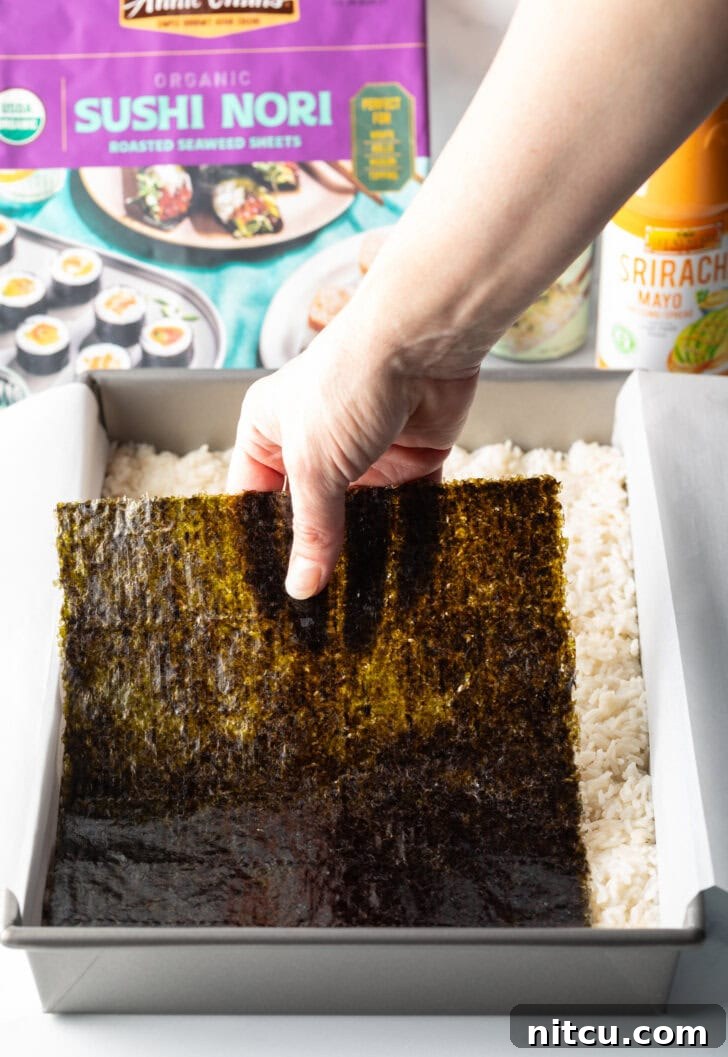
Next, carefully lay the nori sheets over the top of the pressed rice. If needed, use scissors to cut the nori sheets so they fit neatly and completely cover the entire surface of the rice layer.
-
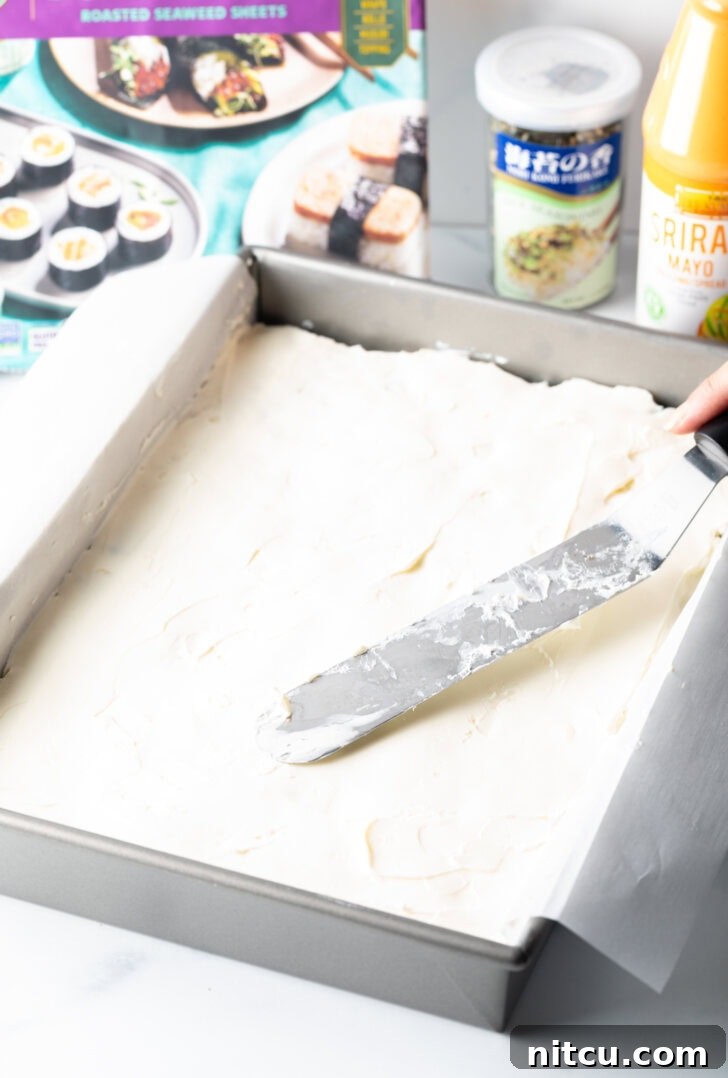
Gently spread the softened cream cheese in an even layer over the entire surface of the nori sheets. A large, flat frosting spreader or an offset spatula works best for achieving a smooth, consistent layer without disturbing the nori below.
-
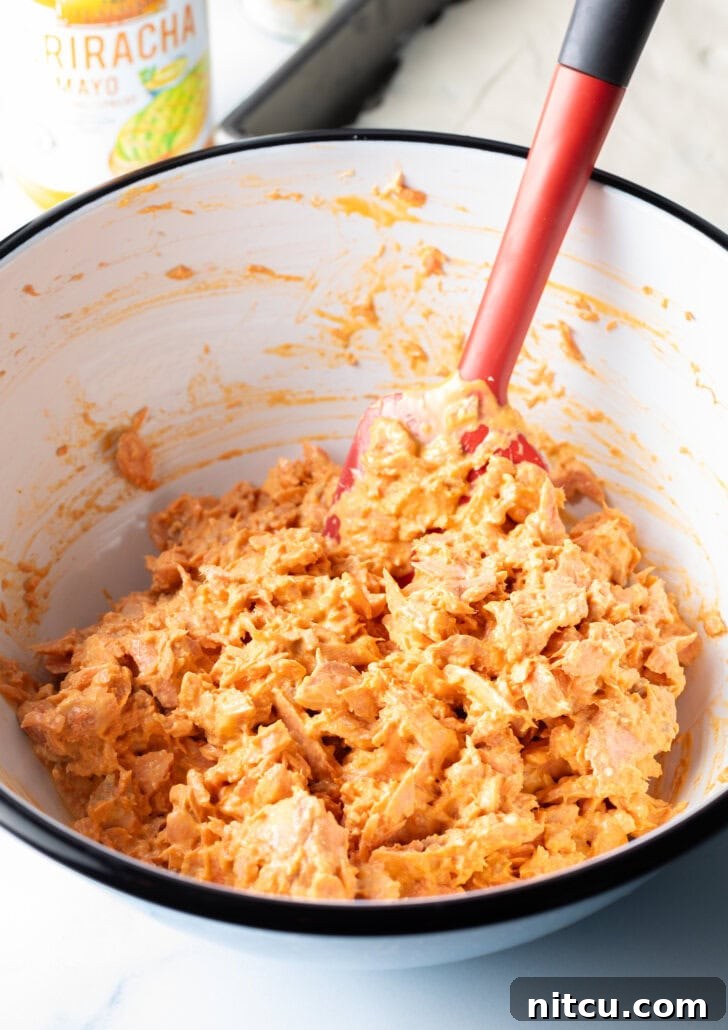
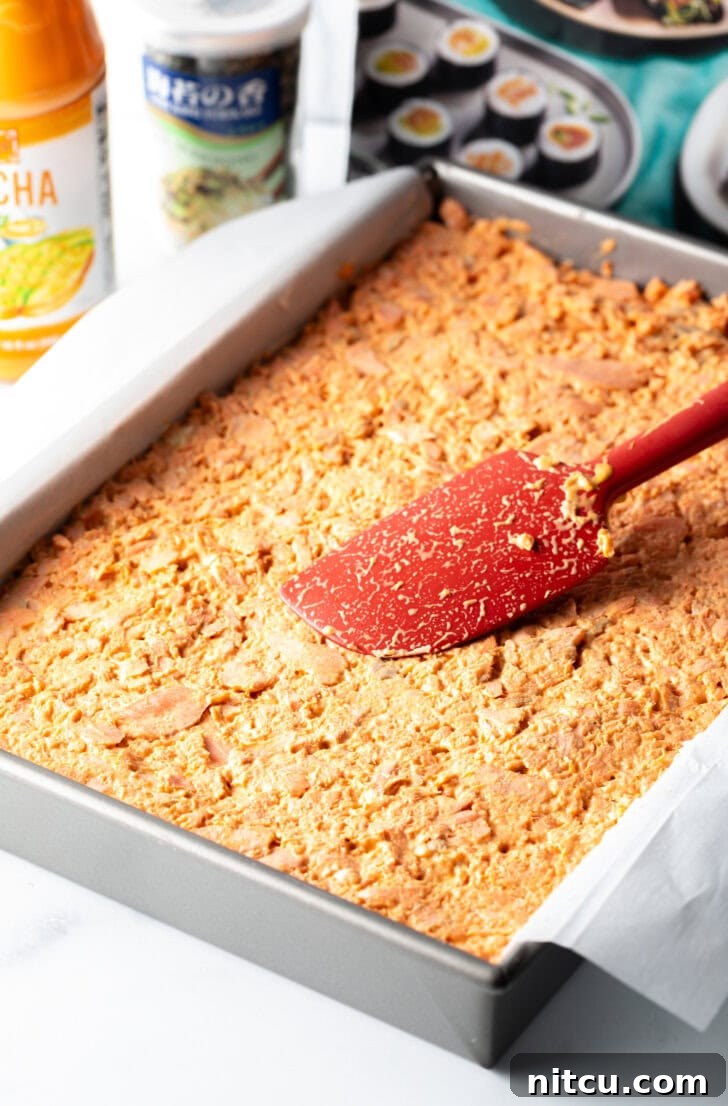
Once the baked salmon has cooled enough to handle, remove the skin and discard it. Crumble the cooked salmon into a mixing bowl. Add the sriracha mayonnaise to the salmon and mix thoroughly until the salmon is well combined with the mayo and evenly coated. Spread this salmon mixture over the top of the cream cheese layer in an even, smooth fashion.
-
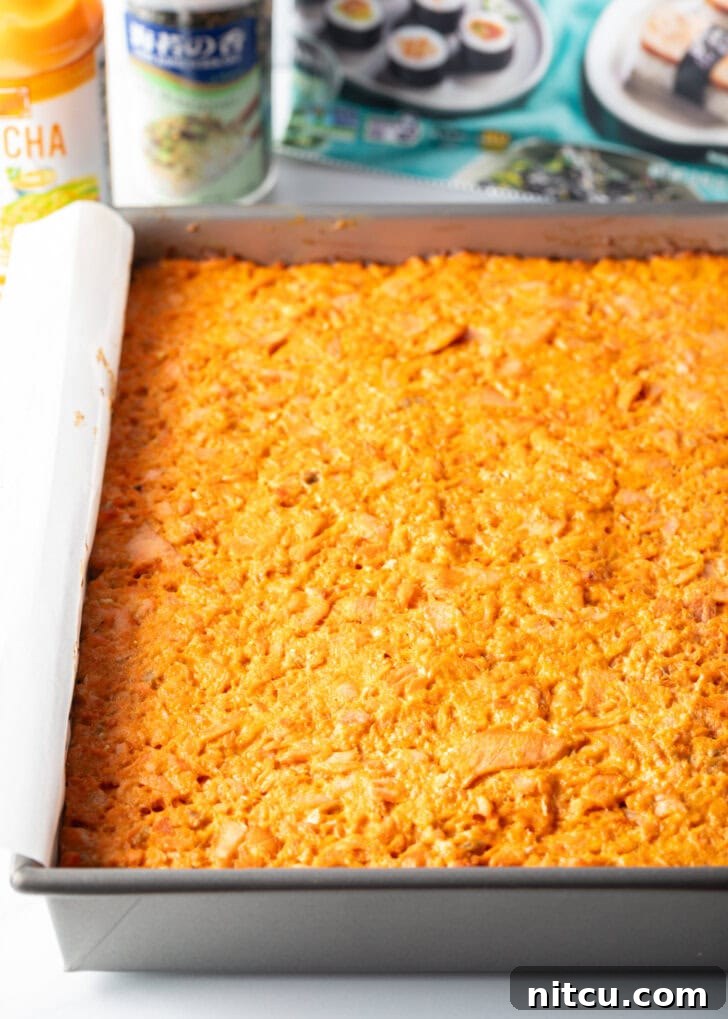
Place the assembled sushi bake back into the preheated oven and bake for an additional 10 to 15 minutes, or until the salmon layer is nicely set and lightly golden.
-
Remove the sushi bake from the oven and let it cool for at least 10 minutes before cutting. For the cleanest cuts and a more traditional sushi-like experience, I recommend refrigerating it until it’s completely cold before slicing.
-
When ready to serve, cut the sushi bake into 12 to 24 pieces, depending on your desired portion size. Sprinkle the tops generously with furikake rice seasoning. Drizzle eel sauce over the top of each piece and finish with a sprinkle of fresh scallions.
-
Feel free to add extra fresh and crunchy garnishes! As shown here, a thin slice of cucumber, radish, and jalapeño on top adds wonderful flavor and texture. Avocado slices are also fantastic, but add them just before serving to prevent browning.
Notes
Leftovers will keep well for a day or two in the fridge. Ensure the casserole is completely cooled before transferring to an airtight container and storing it in the refrigerator.
Nutrition
Calories: 325 kcal,
Carbohydrates: 26 g,
Protein: 17 g,
Fat: 17 g,
Saturated Fat: 5 g,
Polyunsaturated Fat: 6 g,
Monounsaturated Fat: 4 g,
Trans Fat: 0.02 g,
Cholesterol: 56 mg,
Sodium: 511 mg,
Potassium: 417 mg,
Fiber: 0.2 g,
Sugar: 2 g,
Vitamin A: 309 IU,
Vitamin C: 1 mg,
Calcium: 73 mg,
Iron: 2 mg
Main, Main Course
American, Asian, Japanese
Sommer Collier
Similar Recipes You Might Like