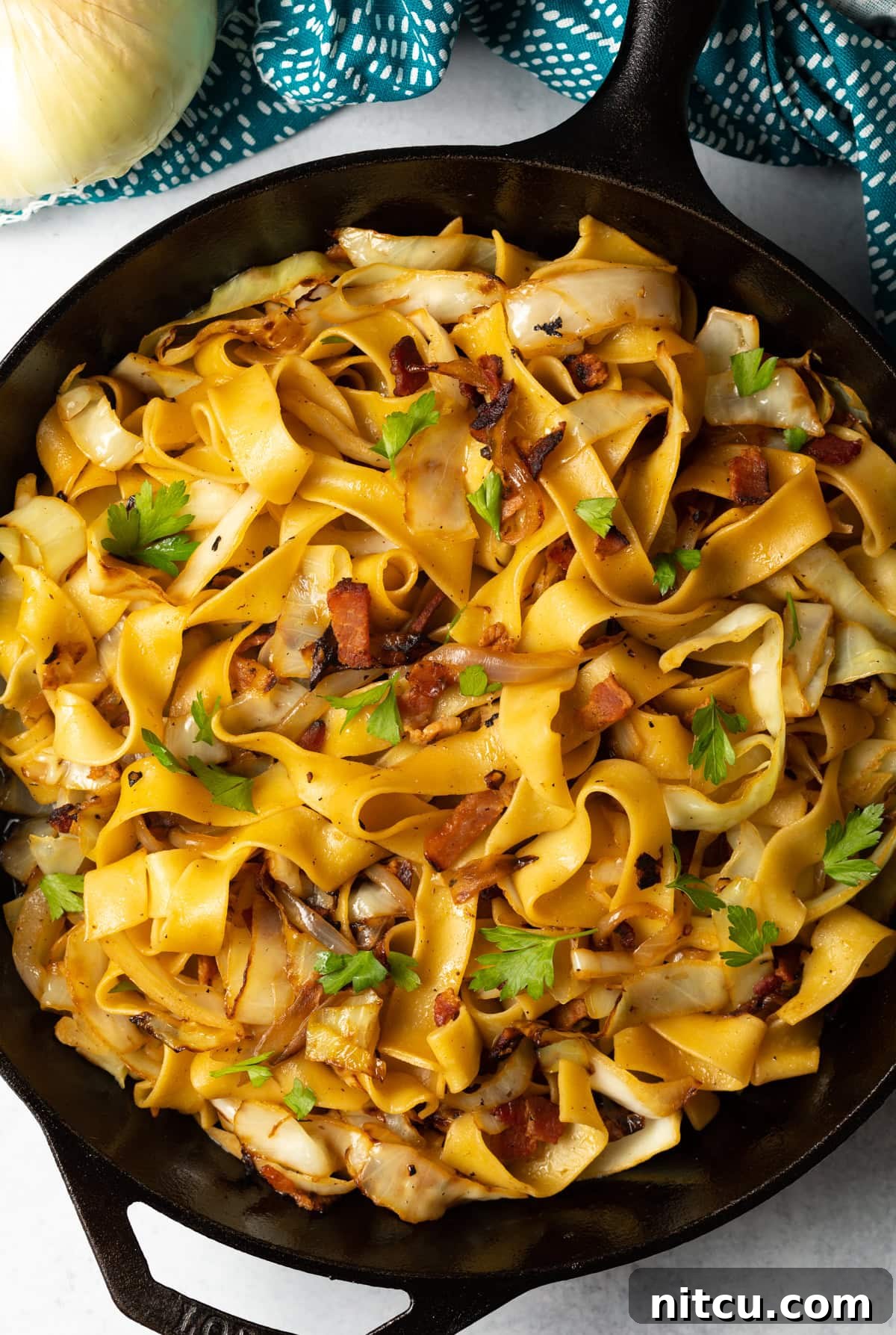
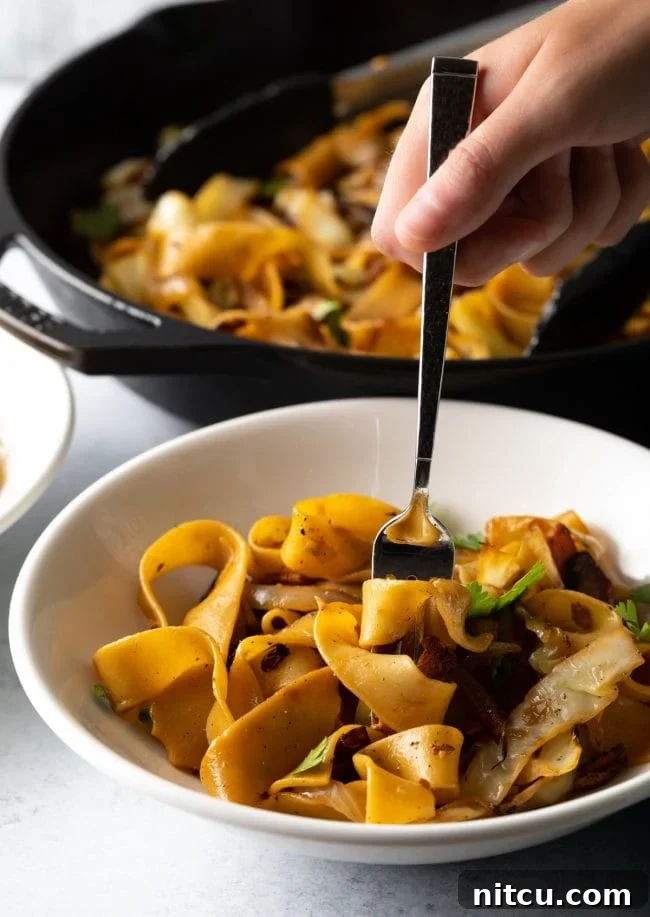
Hungarian Haluski (Cabbage and Noodles Recipe) offers a true taste of Eastern European tradition, bringing together remarkably simple ingredients to create a dish that is deeply satisfying and profoundly flavorful. This classic recipe, often referred to as Kaposztas Kocka in Hungary, masterfully combines tender sautéed cabbage with rich, savory bacon and perfectly cooked egg noodles. It’s the quintessential comfort food, especially cherished during the cozy holiday season, but delightful and easy enough to prepare for any weeknight meal.
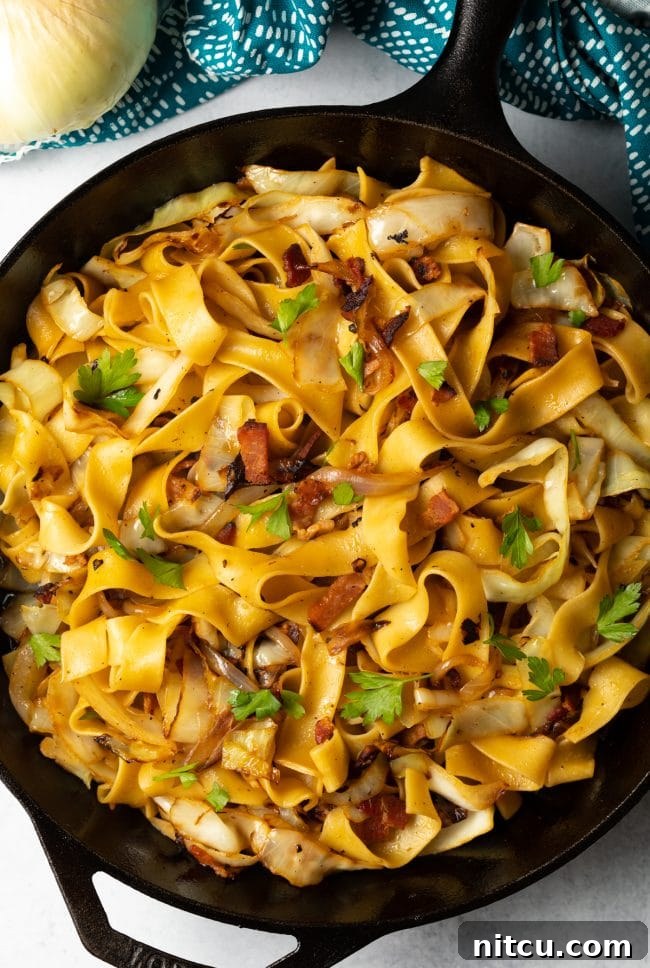
Why You’ll Fall in Love with This Authentic Haluski Recipe
The holiday season, with its festive spirit and cherished gatherings, often prompts a desire to reconnect with our roots and celebrate family heritage. For many, this means revisiting ancestral recipes passed down through generations, each dish telling a story of culture and tradition. While my own heritage is a rich tapestry of various backgrounds – a wonderful “mutt” mixture of Native American, English, French, and more – I’ve found a special, heartwarming connection to Hungarian traditions through my husband, Lt. Dan, and his family.
Growing up, my family created unique holiday customs, crafting new traditions rather than strictly adhering to those that came before us. This embrace of the new, while still honoring the spirit of togetherness, is perhaps a distinct American trait. However, Lt. Dan’s strong Hungarian background has opened a fascinating window into a vibrant culture, filled with captivating stories from his grandmother about their “old country” customs and, most delightfully, their special holiday dishes.
Through our marriage, I’ve lovingly adopted Hungarian cuisine as my chosen cultural tie, allowing many of our festive meals to stem directly from Lt. Dan’s great-grandmother’s time-honored recipes. This Hungarian Haluski recipe is more than just a dish; it’s a culinary journey that connects us to family history, creating new cherished memories with every savory bite. Its simplicity, affordability, and profoundly heartwarming quality make it a staple in our home, symbolizing warmth, tradition, and togetherness. It’s a dish that feeds both the body and the soul, reminding us of the enduring power of food to bring generations closer.
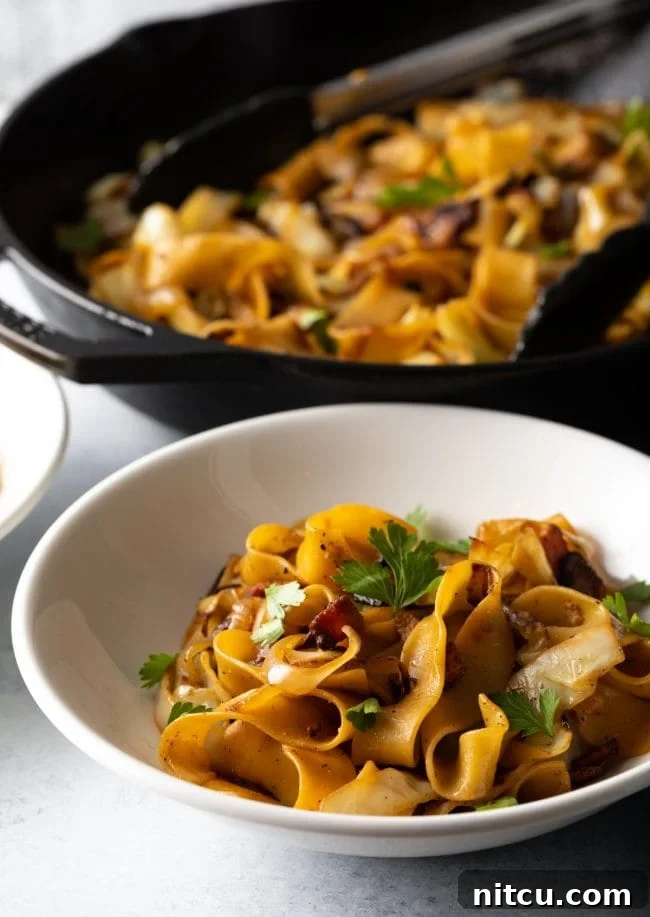
What Exactly is Hungarian Haluski (Kaposztas Kocka)?
In previous years, our Christmas Eve culinary tradition often centered around another Hungarian favorite: Chicken Paprikash, a rich and creamy dish that perfectly ushers in the festive spirit. While Paprikash holds a special place in our hearts, Haluski offers a different kind of comfort – one defined by its elegant simplicity, incredible satisfaction, and remarkably quick preparation time. This traditional cabbage and noodle dish, known as Kaposztas Kocka in Hungarian, is so easy to prepare, takes no time at all, and requires just 5 essential ingredients – with a sixth if you choose a fresh herb garnish.
Haluski, or Kaposztas Kocka (literally “cabbage squares,” referring to the traditional square-cut noodles or dumplings), is a humble yet profoundly delicious traditional dish. At its core, it’s a delightful combination of tender, caramelized cabbage, typically fried in rendered bacon grease, tossed with plump, perfectly cooked egg noodles. The beauty of Haluski lies in how these simple components – quality egg noodles, fresh green cabbage, a savory onion, aromatic garlic, and crispy bacon – transform into a symphony of flavors and textures. The smoky depth from the bacon fat infuses every bite, elevating what was once a peasant dish into a comforting meal fit for any table.
It’s important to acknowledge that while I proudly share this specific recipe with its Hungarian lineage, given the cherished family stories that accompanied it, Cabbage and Noodles is a remarkably widespread and beloved dish across a vast swathe of Eastern Europe. Variations of Haluski are deeply ingrained in the culinary traditions of Poland, Slovakia, the Czech Republic, Ukraine, and beyond. Each region often boasts its unique twist, with different names like pierogi or kluski (Poland), strapačky or bryndzové halušky (Slovakia), or simply “noodles with cabbage.” These variations might involve different noodle types (from simple egg noodles to potato dumplings), local cheeses, or distinct seasoning profiles. Regardless of its specific origin point, the universal appeal of sautéed cabbage and noodles remains a testament to its enduring comfort, affordability, and deliciousness, making it a cornerstone of Eastern European cuisine.
Crafting the Ultimate Haluski: Tips for the Best Flavor and Serving
What makes this Hungarian Haluski recipe truly exceptional? It’s the masterful blend of robust flavors, anchored by the rich, smoky essence of bacon, rendered to perfection. This dish isn’t just about combining ingredients; it’s about coaxing out their full potential, creating a harmonious and deeply satisfying meal that transcends its humble origins. The “best” Haluski isn’t complicated; it’s simply well-executed, allowing each ingredient to shine.
This “no-frills” Hungarian Cabbage and Noodles recipe is luxuriously bathed in flavorful bacon grease, which acts as the golden foundation for sautéing the cabbage and onions. This rich, savory fat is absolutely key to its comforting appeal, infusing every component with unparalleled depth. This makes Haluski an ideal standalone meal for a cozy evening, or a profoundly hearty and flavorful side dish to complement a grand meaty main course. Imagine pairing this Haluski with a perfectly roasted turkey or chicken, a succulent braised pork shoulder, or even a thick, juicy steak – the flavors meld beautifully, creating a memorable and satisfying dining experience for family and guests alike.
Speaking of passion for heritage and quality ingredients, the DeLallo family of DeLallo Foods embodies this spirit with every product they create. Their dedication to authentic Italian products resonates deeply with the ethos of cherishing traditional recipes and delivering exceptional flavor. This holiday season, DeLallo invites us to embrace the #SpiritofNatale (Christmas in Italian) by sharing heartwarming family dishes and creating unforgettable meals. Their commitment to excellence ensures that ingredients like their superb egg noodles will elevate your Haluski to new heights, adding an authentic touch and superior texture to this cherished Hungarian classic.
Simple Ingredients for an Unforgettable Haluski
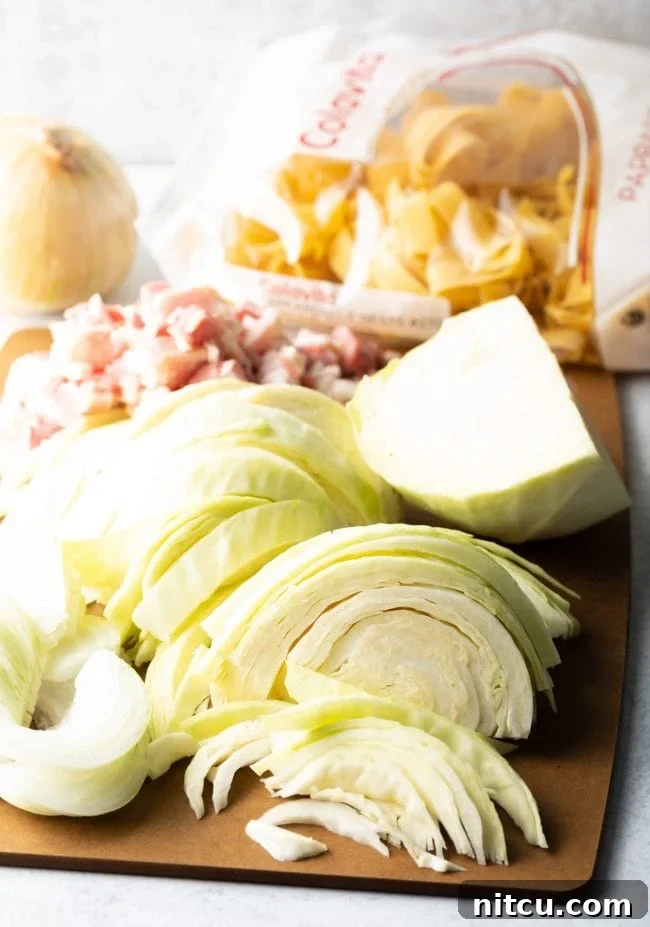
One of the many beautiful aspects of this Haluski recipe is its reliance on a minimal list of readily available and affordable ingredients. You don’t need exotic items or complex preparations to create something truly delicious and deeply satisfying. Here’s what you’ll need to gather for this heartwarming cabbage and noodles dish:
- Thick-Cut Bacon: The cornerstone of flavor for this dish. Chopped into small pieces, it will render delicious fat that becomes the savory base for your cabbage and noodles, and then crisp up to provide a wonderful textural contrast.
- Green Cabbage: Fresh, vibrant, and essential. You’ll only need about half a head of a medium cabbage, thinly sliced. Look for firm, dense heads with crisp, bright green leaves for the best results.
- Medium Onion: Sliced thinly, the onion caramelizes beautifully alongside the cabbage, adding a sweet and aromatic depth that complements the savory bacon.
- Minced Garlic Cloves: Just a couple of cloves are all it takes to infuse the dish with a pungent, irresistible aroma that rounds out the savory flavors and adds an extra layer of complexity.
- Quality Egg Noodles: A crucial component for the authentic Haluski experience. For a tender yet toothsome texture, we highly recommend a good quality egg noodle. We used DeLallo Pappardelle egg noodles, which offer a delightful chewiness and absorb the flavors wonderfully. Any broad egg noodle will work beautifully.
- Fresh Chopped Parsley: An optional but highly recommended garnish. A generous sprinkle of fresh parsley adds a pop of bright color and a fresh, herbaceous note that beautifully brightens the entire dish before serving.
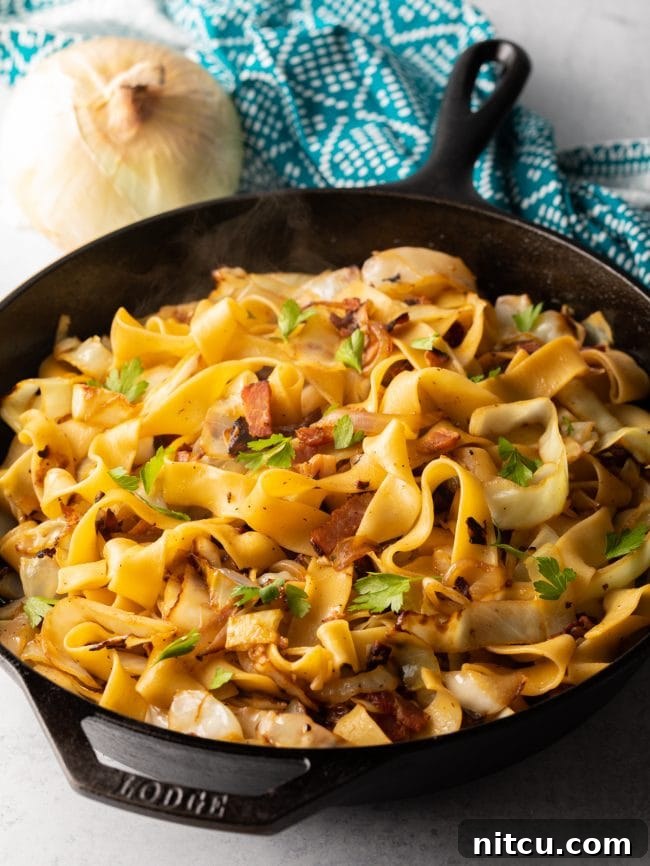
Step-by-Step Guide: How To Make Flavorful Hungarian Haluski
Creating this delicious Hungarian Haluski is remarkably straightforward and comes together quickly, making it perfect for busy evenings or when you crave a quick, comforting meal. Follow these simple steps for a truly rewarding culinary experience:
- Cook the Noodles to Perfection: Begin by filling a large pot with generously salted water and bringing it to a rapid, rolling boil over high heat. Add your chosen quality egg noodles, such as DeLallo Pappardelle, and cook them according to the package directions until they are perfectly al dente – tender but with a slight bite. Once cooked, drain the noodles thoroughly, but be sure to reserve about 1 cup of the starchy pasta water. This “liquid gold” will be invaluable later for binding the flavors and achieving the perfect, cohesive consistency for your Haluski. Set both the drained noodles and the reserved pasta water aside.
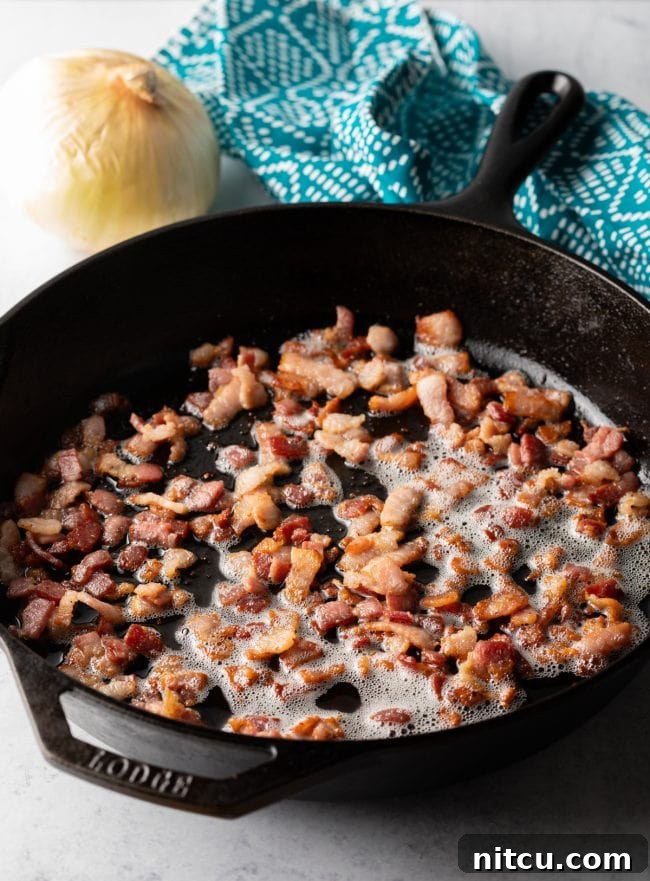
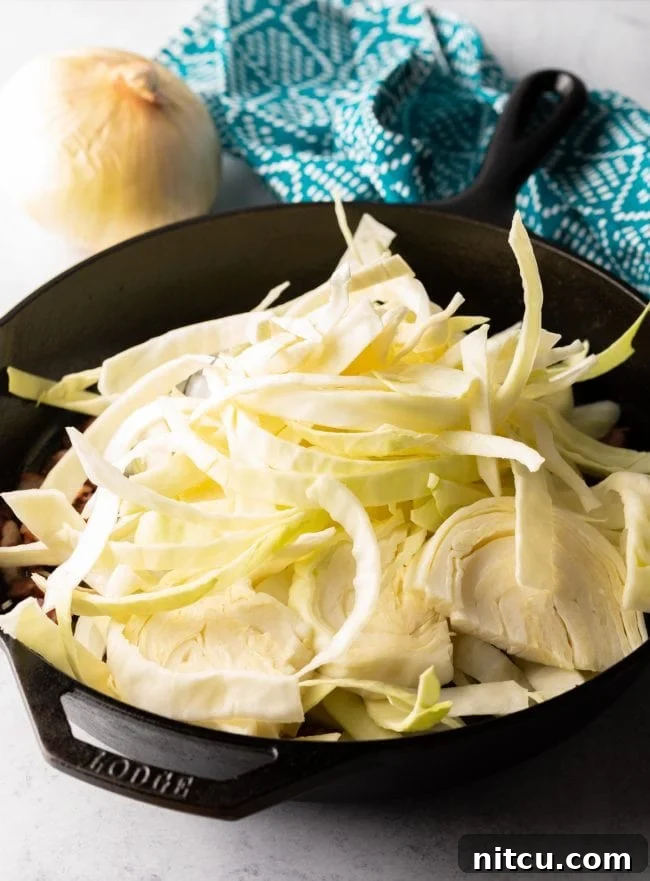
- Prepare and Sauté the Aromatics: While your noodles are cooking, turn your attention to the vegetables. First, take your cabbage and onion; cut them into quarters, then proceed to slice them into thin, even strips. For the cabbage, focus on retaining the thinner white and green layers, discarding any thickest, tougher white core sections as they can be fibrous. Next, place a large, sturdy skillet (a cast iron or heavy-bottomed pan works best for even cooking) over medium heat. Add the chopped thick-cut bacon and render it until it’s wonderfully crisp and golden, releasing all its savory fat into the pan. Carefully remove the crispy bacon pieces with a slotted spoon and set them aside to garnish your finished dish, if desired. Leave the precious rendered bacon fat in the skillet – this is your essential flavor base!
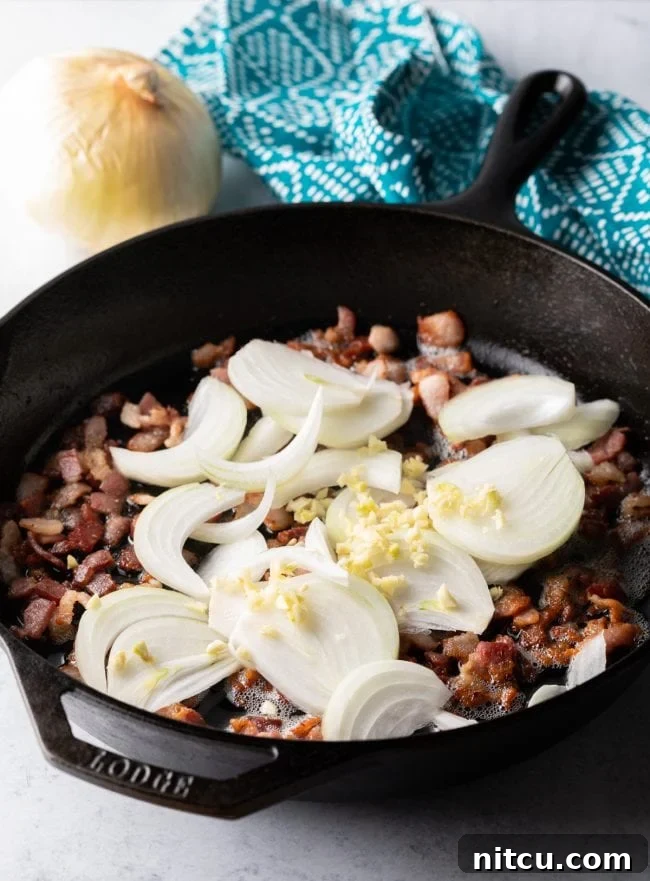
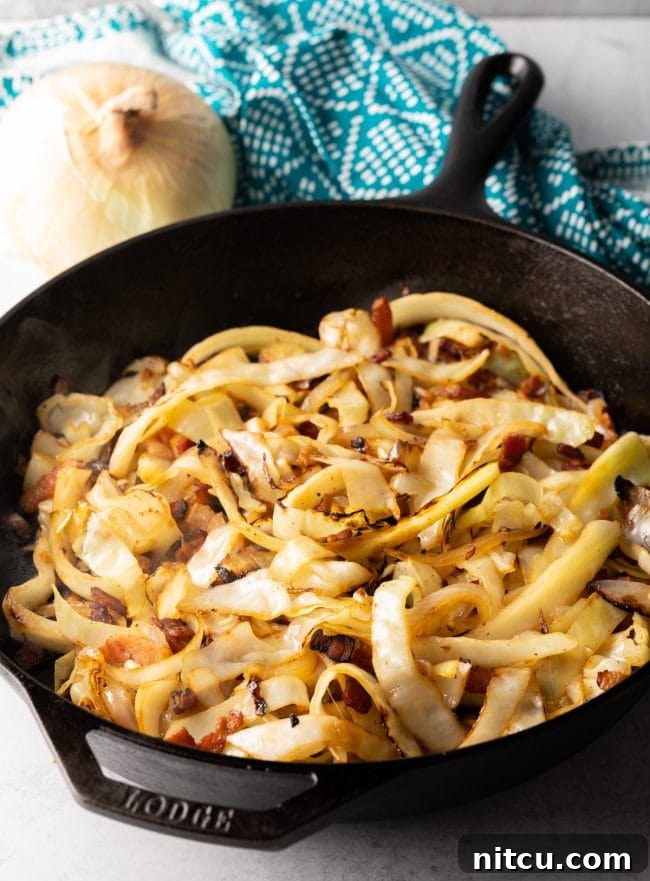
- Caramelize the Cabbage and Onions: Into the hot bacon fat remaining in the skillet, add your prepared sliced cabbage and onions. Sauté these vegetables for about 5 minutes, stirring occasionally, until they begin to soften and develop a beautiful, light caramelization. Season generously with salt and freshly ground black pepper to taste during this stage; this helps draw out moisture and intensify flavor. Now, stir in the minced garlic cloves and continue to sauté for another 5 minutes, or until the garlic becomes wonderfully fragrant and the cabbage is tender-crisp – avoid overcooking to prevent mushiness.
- Combine and Finish the Dish: Once the cabbage and onions are perfectly tender and aromatic, add the cooked and drained egg noodles directly into the skillet with the vegetables. Gently toss everything together, ensuring the noodles are thoroughly coated in the flavorful bacon fat and the sautéed vegetables. If the mixture seems a little dry or needs help in blending together, add a tablespoon or two of the reserved pasta water at a time, stirring until the desired consistency is reached. This starchy water helps create a light sauce that binds the dish beautifully. Taste and adjust the seasoning one last time, adding more salt or pepper if needed. Finally, sprinkle generously with fresh chopped parsley for a burst of vibrant color and herbaceous freshness that truly brightens the entire dish. Serve your Hungarian Haluski immediately and savor every comforting, flavorful bite!
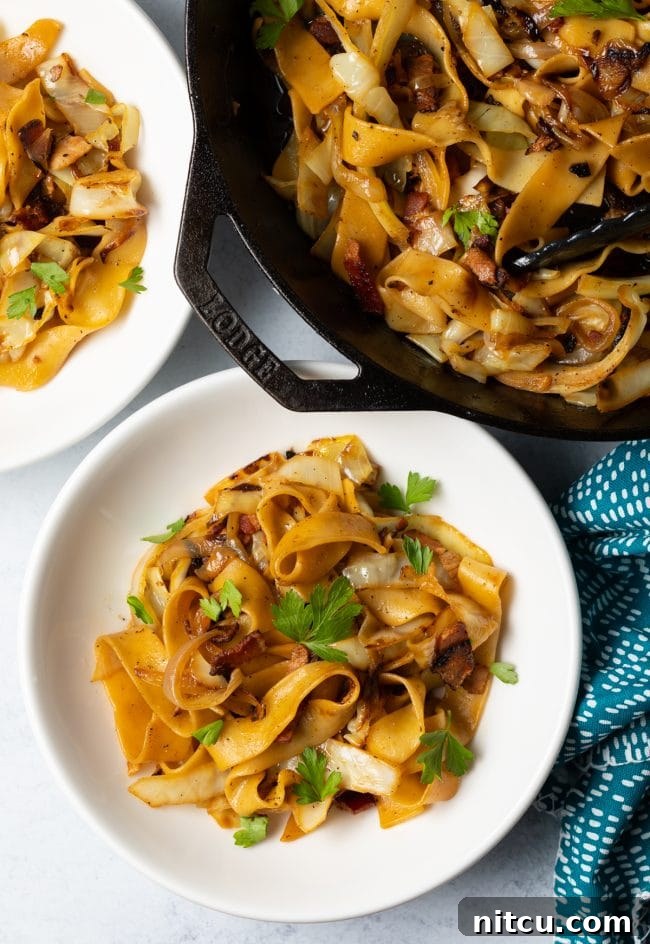
Unlock the Full Recipe: Hungarian Haluski Cabbage and Noodles
Below, you’ll find the complete, detailed, and printable recipe for this heartwarming Hungarian Haluski, a dish that promises to become a cherished favorite in your culinary repertoire. We encourage you to try it and experience the rich, comforting flavors of this classic Eastern European staple. Enjoy!
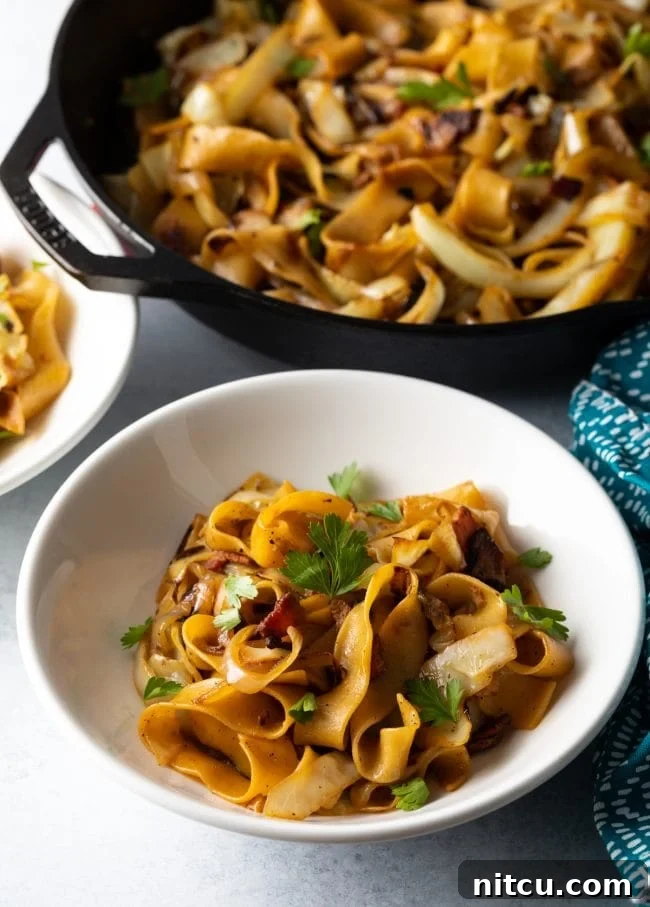
Print Recipe
Leave a Review »
Hungarian Haluski (Cabbage and Noodles Recipe)
10 minutes
15 minutes
25 minutes
A traditional Hungarian (and Polish) dish made of sautéed Haluski Cabbage and Noodles, delivering hearty comfort with every bite. This easy recipe is perfect for holidays or a quick weeknight dinner.
4
Video
Ingredients
- 5 ounces thick-cut bacon, chopped
- 5 cups sliced green cabbage (about half a medium cabbage)
- 1 medium onion, sliced (find on Amazon)
- 2 cloves garlic, minced (find on Amazon)
- 8.8 ounces package DeLallo Egg Noodles (I used Pappardelle)
- Chopped fresh parsley, for garnish (find on Amazon)
Instructions
-
Place a large pot of generously salted water over high heat and bring it to a rolling boil. Add your chosen egg noodles and cook them according to package instructions until they are al dente. Drain the noodles and set them aside, making sure to reserve 1 cup of the starchy pasta water for later use.
-
Meanwhile, prepare your vegetables. Cut the cabbage and onion into quarters, then slice them into thin strips. Discard the thickest, tougher white core sections of the cabbage, focusing on the more tender white and green layers. Place a large skillet over medium heat. Add the chopped bacon and sauté until it becomes wonderfully crisp. Remove the crispy bacon pieces with a slotted spoon and set aside for garnish, leaving the rendered fat in the skillet. Add the sliced cabbage and onions to the hot bacon fat and sauté for approximately 5 minutes, stirring occasionally, until they begin to soften. Season generously with salt and pepper to taste. Stir in the minced garlic and continue to sauté for another 5 minutes, or until the cabbage is tender-crisp and the garlic is fragrant.
-
Once the cabbage is tender, add the cooked and drained noodles directly into the skillet with the sautéed vegetables. Toss everything well to combine, ensuring the noodles are thoroughly coated in the savory fat and vegetable mixture. If the mixture seems a little dry or needs help in blending the flavors, add a tablespoon or two of the reserved pasta water at a time, stirring until the desired consistency is reached. Taste and adjust for salt and pepper one final time. Garnish with fresh chopped parsley just before serving warm.
Notes
Leftover Haluski can be stored in an airtight container in the refrigerator for 3 to 5 days. For longer storage, it can be frozen for 2 to 3 months; ensure minimal air exposure to prevent freezer burn.
Nutrition
Calories: 422 kcal,
Carbohydrates: 53 g,
Protein: 15 g,
Fat: 17 g,
Saturated Fat: 5 g,
Cholesterol: 76 mg,
Sodium: 265 mg,
Potassium: 411 mg,
Fiber: 5 g,
Sugar: 5 g,
Vitamin A: 140 IU,
Vitamin C: 34.6 mg,
Calcium: 66 mg,
Iron: 1.8 mg
Main Course, Side Dish
Hungarian, Eastern European, American
Sommer Collier
Cook It? Love It? Rate It! Help this recipe reach more hungry people by leaving a 5-star review. Your feedback is greatly appreciated and helps others discover this delicious dish!
Frequently Asked Questions About Haluski
What is Haluski, truly?
At its heart, Haluski is a cherished Eastern European comfort food. While often deeply associated with Hungary, it’s also a prominent and beloved dish in the culinary traditions of Poland, Slovakia, and Ukraine. Typically, it refers to a hearty dish made with a specific type of tender noodle or potato dumpling (the exact type varies by region), generously tossed with fried, often caramelized, cabbage and usually enriched with bacon or a rich fat. Our specific recipe simplifies the noodle component by using readily available egg noodles, offering a quicker yet equally satisfying take on this beloved classic.
How long can Haluski leftovers be stored in the refrigerator?
Properly stored Haluski is an excellent candidate for delicious leftovers, often tasting even better the next day as the flavors meld! Once the dish has cooled completely, transfer the cabbage and noodle mixture to an airtight container. It will keep beautifully in the refrigerator for 3 to 5 days. To reheat, gently warm it on the stovetop over low heat or in the microwave. If it appears a little dry, add a splash of chicken broth or water to bring back its moisture and luscious texture.
Can I freeze Haluski for later enjoyment?
Yes, you can absolutely freeze this Haluski recipe to enjoy at a later date! To ensure the best quality and flavor upon thawing, allow the prepared dish to cool down completely to room temperature. Then, transfer it to a freezer-safe, airtight container. If possible, remove as much air as you can from the container – using a vacuum sealer is ideal, or you can press plastic wrap directly onto the surface of the Haluski before sealing the container. This helps prevent freezer burn. The dish will maintain its quality in the freezer for 2 to 3 months. When ready to serve, thaw overnight in the refrigerator before reheating gently.
Are there other meats I can add to this Haluski recipe to make it heartier?
Absolutely! This Haluski recipe is wonderfully versatile and readily welcomes additional proteins to make it an even heartier meal. For a robust addition, consider adding cooked and sliced kielbasa sausage or diced smoked sausage directly into the skillet with the cabbage and noodles. Shredded cooked chicken, tender chunks of pork, or even ground beef can also be incorporated. Some traditional variations even include savory meaty dumplings or small pieces of ham alongside the cabbage and noodles. Feel free to experiment with your favorite cooked meats to personalize this dish to your taste and make it a complete one-pan meal.
What are some popular variations of Haluski I should know about?
Beyond adding different meats, Haluski boasts many fascinating regional variations across Eastern Europe. In some areas, particularly Slovakia and parts of Ukraine, the “haluski” often refers to small potato dumplings (similar to gnocchi) instead of egg noodles, providing a chewier texture. Other recipes might include a touch of sour cream or Greek yogurt stirred in at the end for tanginess and creaminess, or a generous sprinkle of sweet paprika for color and characteristic Hungarian flavor. Some versions use butter instead of bacon fat for a vegetarian option, or incorporate other vegetables like sliced mushrooms, carrots, or bell peppers for added depth and nutrition. Even the choice of herbs can vary, with dill being a popular addition in some traditions. Exploring these variations can open up a whole new world of Haluski enjoyment!
Disclosure: This post is sponsored by DeLallo Foods. All opinions expressed are my own and reflect my genuine appreciation for their quality products.
Explore More Comforting Dinner Recipes
If you’ve enjoyed the heartwarming and robust flavors of our Hungarian Haluski, we know you’ll love exploring other hearty and satisfying main dishes from our extensive collection. Expand your culinary horizons and discover new family favorites with these delicious recipes:
- Smoked Meatloaf
- Chicken Manchurian
- Apple Baked Stuffed Pork Chops
- Savory Cheese and Spinach Pie
- Nana’s Epic Chicken and Rice
- Crock Pot Pork Tenderloin with Apples and Onions
- Smoked Pork Loin & Tenderloin Recipe
- Best Burnt Ends (Brisket) Recipe