
Unlock the secret to gourmet dining at home with this surprisingly simple yet utterly delicious Gravlax Recipe. Master the art of curing salmon from scratch and elevate your brunches, appetizers, and everyday meals with this delicate, flavorful delicacy. Enjoy it on crispy toast, classic bagels, or however you savor smoked salmon!
Elevate Your Brunch: Simple Homemade Gravlax That Feels Fancy
Imagine serving a dish so exquisite, so rich in flavor and delicate in texture, that your guests assume it was purchased from a high-end deli. Now imagine that dish taking only minutes of active prep time to create, with no cooking involved. That’s the magic of this homemade gravlax recipe. Forget the store-bought versions; once you experience the flaky, moist, and intensely flavorful cured salmon made in your own kitchen, you’ll be hooked. This recipe isn’t just easy; it’s a serious game-changer for anyone looking to add a touch of gourmet elegance to their culinary repertoire.
Gravlax, a Nordic delicacy, traditionally consists of raw salmon cured with salt, sugar, and dill. It’s a method that predates refrigeration, originally used by fishermen to preserve their catch by burying it in the sand above the high-tide line (hence “grav” which means “grave” or “pit” in Scandinavian languages). Today, this ancient technique results in a sophisticated dish that rivals its smoked counterparts, offering a unique texture and flavor profile that is both fresh and deeply savory.

Sommer’s Culinary Insights: Why This Gravlax Stands Out
This gravlax recipe, infused with a subtle twist of gin, is poised to become the MVP of your next brunch. Having tried countless store-bought versions, I can confidently say that the homemade rendition is simply superior – fresher, more vibrant, and entirely customizable. It’s incredibly versatile, perfect for adorning everything from hearty bagels and fluffy eggs to elegant pasta dishes.
Unveiling the Appeal: Why This Salted Salmon Recipe Will Be Your New Favorite
- Effortless Elegance with No Cooking Required: The beauty of gravlax lies in its simplicity. This recipe requires absolutely no cooking, relying purely on the curing process to transform fresh salmon into a delicate, flavorful masterpiece. It’s incredibly satisfying to create such a sophisticated dish with minimal fuss – just cure, chill, and enjoy!
- Infinitely Customizable to Your Palate: While traditional gravlax is divine, this recipe serves as a perfect canvas for your culinary creativity. Feel free to experiment with different herbs, spices, citrus zests, or even a touch of beetroot for a stunning visual and earthy flavor. Make it uniquely yours, tailored to your taste preferences.
- Perfect for Meal Prep and Entertaining: Planning ahead is a breeze with homemade gravlax. Once cured, it remains fresh and exquisitely delicious in the refrigerator for days, making it an ideal option for holiday entertaining, weekly meal prep, or simply having a gourmet snack on hand. It allows you to focus on other aspects of your meal without last-minute stress.
- Budget-Friendly Gourmet: Enjoying high-quality cured salmon typically comes with a hefty price tag. By making gravlax at home, you can achieve superior flavor and texture at a fraction of the cost, proving that delicious, elegant food doesn’t have to break the bank. This recipe truly brings the “WOW” factor to your table without the premium price.
Gravlax is more than just cured fish; it’s an experience. The transformation of raw salmon into a silken, seasoned delight is a culinary marvel that everyone can achieve. This guide empowers you to craft a gravlax that will impress and satisfy, solidifying its place as a staple in your home.

The Foundation of Flavor: Ingredient Notes and Expert Tips
The success of your homemade gravlax hinges on the quality and careful selection of a few key ingredients. Each component plays a vital role in achieving that perfect balance of flavor, texture, and preservation.
- Salmon: The Star of the Show
- Type: Opt for a whole fillet of high-quality salmon, whether wild-caught or sustainably farmed. Wild salmon often offers a richer, more complex flavor, while farmed salmon tends to be fattier and more consistent in texture. Ensure it’s very fresh, ideally “sushi-grade” or labeled for raw consumption.
- Skin On: Always use salmon with the skin on. The skin helps hold the fillet together during the curing process and can be easily removed after curing, if desired.
- Pin Bones: Before curing, run your fingers along the salmon fillet to check for any small, leftover pin bones. Use a clean pair of tweezers or needle-nose pliers to carefully pull them out. This ensures a smooth, enjoyable texture.
- Kosher Salt: The Primary Curing Agent
- Quality Matters: Use a high-quality kosher salt. Its coarse texture is ideal for drawing out moisture from the fish, preventing it from becoming too salty too quickly, and creating the perfect curing environment. Avoid fine table salt, as it can over-salt the fish due to its smaller crystal size.
- Role: Salt not only cures and preserves the salmon but also contributes significantly to its firm texture and deep flavor.
- Granulated Sugar: Balancing Act and Preservation
- Purpose: Sugar plays a dual role in gravlax. It balances the strong saltiness, adding a subtle sweetness that enhances the salmon’s natural flavors. Additionally, sugar aids in the curing process, contributing to the desirable silky texture of the gravlax.
- Fresh Dill: The Classic Aromatic
- Essential Herb: Fresh dill is the quintessential herb for gravlax, providing its signature herbaceous, slightly anise-like aroma and flavor. Coarsely chop a generous amount to maximize its impact. Do not substitute with dried dill; the fresh herb is crucial for the authentic gravlax experience.
- Gin or Vodka: The Secret Flavor Enhancer (Optional but Recommended)
- Flavor and Freshness: A good quality gin or vodka isn’t just for a subtle boozy note; it serves a crucial purpose in gravlax. The alcohol helps to reduce any potential fishiness that might develop during the curing process, ensuring a clean, vibrant flavor. It also adds a layer of aromatic complexity, especially with gin’s botanical notes. If opting out of alcohol, see the variations below for alternatives.
Expand Your Palate: Recipe Variations & Dietary Swaps
While the classic dill-cured gravlax is a timeless favorite, don’t hesitate to experiment with these exciting variations to discover new flavor dimensions or accommodate dietary needs. Each modification offers a unique twist that can transform your gravlax experience.
- Beetroot Infusion for a Striking Hue and Earthy Notes: For a visually stunning and earthy flavored gravlax, blend raw beetroot (grated or finely chopped) with the curing mixture. Coat the salmon fillet, flesh-side up, in this vibrant beet mixture. The beetroot imparts a gorgeous, deep red color to the salmon, alongside a subtle, sweet earthiness that pairs beautifully with the richness of the fish. This is a showstopper for any table.
- Citrus Zest for a Refreshing Brightness: Elevate the freshness of your gravlax by incorporating finely grated orange or lemon zest into the salt curing mixture. The aromatic oils from the citrus zest infuse the salmon with bright, zesty notes that cut through the richness and add a delightful perfumed quality. A combination of both lemon and orange zest can create a more complex, nuanced flavor profile.
- Herbaceous Explorations Beyond Dill: While dill is traditional, a world of herbs awaits your experimentation. Consider these alternatives for distinct flavor profiles:
- Fresh Basil: Offers a sweet, peppery aroma, perfect for an Italian-inspired gravlax.
- Tarragon: Brings a delicate, slightly anise-like flavor, enhancing the sophistication.
- Parsley: Provides a fresh, clean, and mildly peppery note.
- Fennel Seeds: Crushed fennel seeds impart a wonderful sweet licorice-like flavor and aromatic warmth.
- Cilantro: For a vibrant, citrusy, and slightly peppery twist, ideal for a more modern take.
You can also combine herbs for a more complex bouquet of flavors.
- Sugar-Free Alternatives for Health-Conscious Curing: If you’re managing sugar intake, you can swap refined granulated sugar with a sugar-free alternative. Erythritol or a stevia-based sweetener can be used in similar quantities to achieve the necessary balance and texture contribution without the sugar content. Ensure the alternative you choose is suitable for curing.
- Alcohol-Free Gravlax with a Tangy Kick: For those who prefer to omit alcohol, simply leave out the gin or vodka. To maintain a balanced flavor profile and help reduce fishiness, replace the alcohol with a splash of apple cider vinegar or fresh lemon juice. These acidic ingredients will provide a similar brightening effect and contribute to the overall complexity of the cure.
Crafting Your Masterpiece: A Detailed Guide on How to Make Gravlax
Making gravlax is a straightforward process, but it does require patience and a bit of planning. The magic happens slowly in your refrigerator as the salt and aromatics transform the salmon into a tender, cured delight. Follow these steps carefully to ensure a perfect result every time.
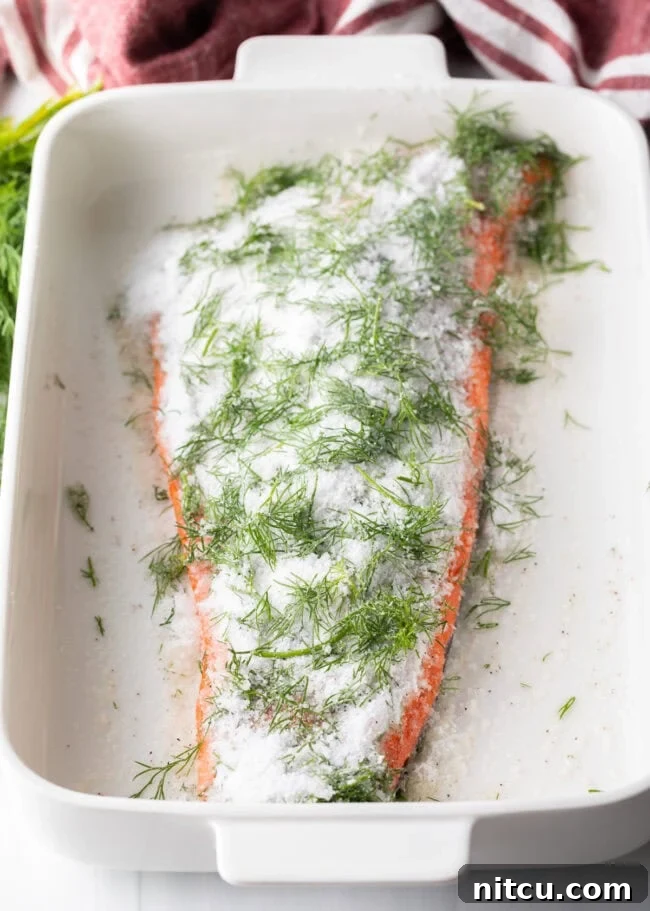
The salmon is generously coated in a salt and herb mixture, then pressed and refrigerated. This method draws out moisture, infusing the fish with incredible flavor and changing its texture. You’ll begin to notice the salmon becoming soft-cured within 36 hours. For a lighter cure and a more tender, almost sashimi-like texture, 36 hours is often sufficient. However, if you prefer a heavier salt cure with a slightly denser, firmer texture, similar to traditional lox, extend the curing time to 48 hours, or even up to three full days. I personally find the 48-hour mark to yield the perfect balance of flavor and texture – robust yet still delicate.
For your convenience, find the complete, step-by-step Gravlax recipe with all detailed instructions, precise measurements, and essential storage tips in the printable recipe card towards the bottom of this post!

Preserving Perfection: Storage and Freezing Your Gravlax
Proper storage is key to enjoying your homemade gravlax for as long as possible while maintaining its exquisite flavor and texture. Follow these guidelines to keep your cured salmon fresh and delicious.
- Storing Sliced Leftovers: Once your gravlax is sliced, transfer the delicate pieces to an airtight container. Refrigerate promptly, and aim to enjoy them within 2 weeks of slicing. For optimal freshness and to significantly extend its shelf life, I highly recommend using a vacuum sealer. This method removes air, which is the primary enemy of freshness, effectively locking in the gravlax’s pristine flavor and texture for an even longer period.
- Freezing Cured Salmon: Yes, you can freeze gravlax, but there’s an important caveat: it’s only recommended if you started with fresh (never-frozen) salmon. Re-freezing fish that has already been frozen and thawed can compromise its texture and quality. To freeze:
- Wrap the entire cured fillet (before slicing) very tightly in several layers of plastic wrap.
- Place the well-wrapped fillet into an airtight plastic zipper bag, removing as much air as possible.
- Freeze for up to 2 months.
To enjoy frozen gravlax, simply thaw it slowly in the refrigerator overnight. Once thawed, slice and consume within a week for the best quality.
Beyond the Plate: Creative Ways to Serve Gravlax
Gravlax is incredibly versatile and can be enjoyed in a myriad of ways, from traditional pairings to innovative culinary creations. Its delicate flavor and silken texture make it a fantastic addition to almost any meal or snack occasion. Here are some of our favorite ways to serve this exquisite cured salmon:
Traditional Pairings:
- Classic Honey Mustard Sauce: Gravlax is often accompanied by a tangy honey mustard dill sauce (Hovmästarsås) or a creamy sour cream-based sauce with a hint of horseradish. The sweetness and tang perfectly complement the savory salmon.
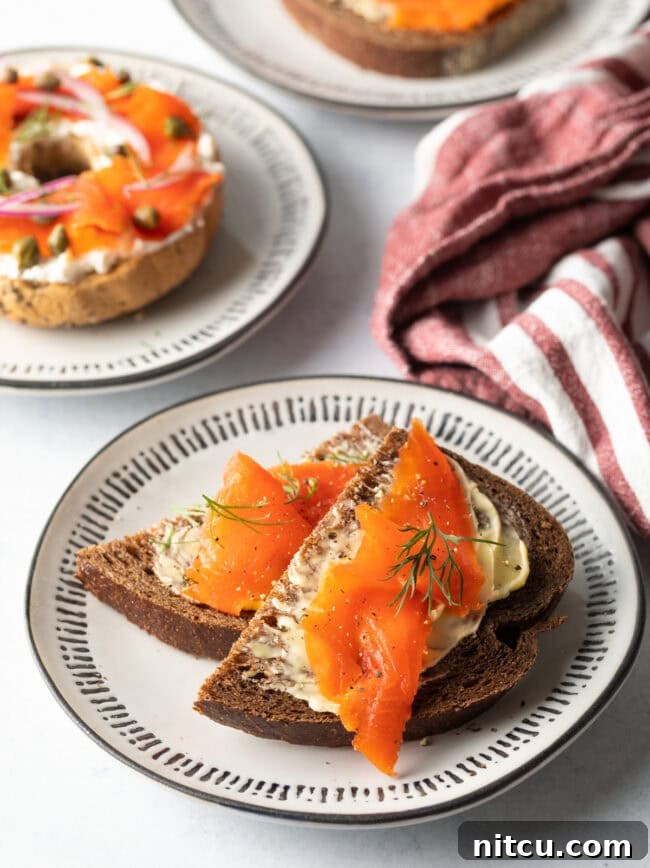
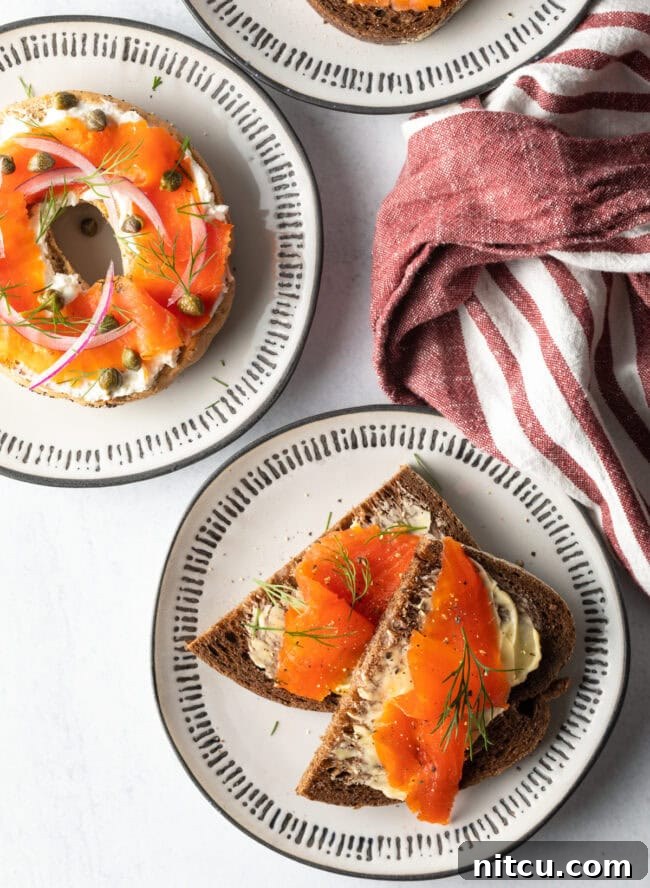
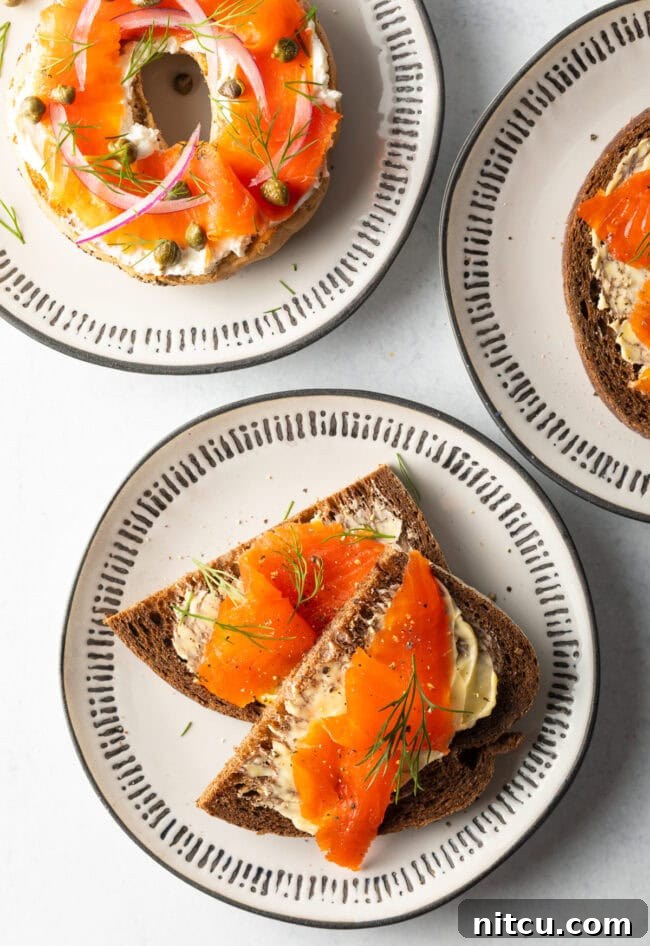
- Rye or Pumpernickel Bread: In many parts of the world, especially Scandinavia, gravlax is traditionally served simply on a slice of dense rye or pumpernickel bread, perhaps with a good smear of salty butter, a sprinkle of fresh dill, and a sliver of gravlax on top. This allows the salmon’s flavor to truly shine.
Modern & Versatile Uses (Any way you’d use smoked or cured salmon!):
- Bagels and Cream Cheese: The quintessential combination! Pile thin slices of gravlax onto a toasted bagel slathered with cream cheese, then garnish with capers, thinly sliced red onions, and a sprig of fresh dill for a truly satisfying breakfast or brunch.
- Elegant Appetizers & Charcuterie Boards: Gravlax is a sophisticated addition to any charcuterie board. Arrange slices artfully with gourmet crackers, artisan cheeses, olives, cornichons, and other cured meats. For individual appetizers, roll gravlax slices around asparagus spears or cream cheese-filled cucumber slices.
- Salads & Sandwiches: Elevate your green salads or open-faced sandwiches by adding a generous portion of gravlax. It pairs wonderfully with crisp mixed greens, avocado, cherry tomatoes, and a light lemon-dill vinaigrette.
- Breakfast & Brunch Delights: Beyond bagels, gravlax is incredible alongside poached eggs, a cheesy egg scramble, or even incorporated into an omelet. Its rich flavor makes any breakfast feel special.
- Pasta Dishes: For a light yet luxurious main course, toss gravlax with pasta, a creamy sauce (perhaps lemon-dill or a light cream sauce), and a sprinkle of Parmesan cheese.
- Garnish & Finishing Touch: Use thin slivers of gravlax to garnish blinis, potato pancakes (latkes), or even cold cucumber soup for an unexpected burst of flavor and elegance.
When preparing to serve, remember to use a very sharp knife to cut your gravlax into paper-thin slices, cutting against the grain. This ensures the best texture and maximizes flavor. Garnish with additional fresh dill, crispy fried capers, delicate slices of cucumber, and a wedge of fresh lemon for a truly memorable presentation.
And don’t stop there! Homemade gravlax can also be a fantastic base for other delightful salmon recipes, such as our rich Smoked Salmon Dip or these incredibly flavorful Smoked Salmon Deviled Eggs!

Gravlax FAQs: Your Questions Answered
Gravlax, also known as graved salmon, is a traditional Nordic dish where raw salmon is cured, not cooked, with a mixture of salt, sugar, and fresh dill. The term “gravlax” literally translates to “grave salmon,” referencing an ancient preservation method of burying fish in sand. It differs from lox primarily in its curing process: lox is typically just salt-cured, while gravlax always includes dill and often sugar. Neither gravlax nor lox are smoked. Smoked salmon, on the other hand, undergoes a smoking process (either cold or hot) after curing, which imparts a distinct smoky flavor and can alter its texture significantly.
Yes, it is possible to cure gravlax for too long, and it can negatively impact the texture and flavor. While a longer cure (up to 72 hours or three full days) results in a firmer, saltier product, exceeding this timeframe can cause the salmon to break down excessively, becoming mushy or excessively salty. The ideal curing time, typically between 36 and 48 hours, allows for optimal texture and flavor development without degradation.
Absolutely! When prepared correctly with fresh, high-quality salmon and proper hygiene, homemade gravlax is completely safe to eat and incredibly flavorful. The salt and sugar in the curing mixture act as natural disinfectants and preservatives, drawing out moisture and inhibiting bacterial growth. Always ensure you are using sushi-grade or fresh salmon from a reputable source, handle it with clean hands and tools, and follow the recipe instructions carefully for a delicious and safe cured fish experience.
Gravlax offers a mixed bag nutritionally. On the positive side, salmon itself is an incredibly nutritious fish, packed with lean protein, heart-healthy omega-3 fatty acids, and essential vitamins and minerals like Vitamin D and B12. However, like most cured foods, gravlax does have a relatively high salt and sugar content due to the curing process. Therefore, while it provides excellent health benefits from the salmon, the key is moderation, especially for individuals monitoring their sodium intake. Enjoy it as a delicious treat or part of a balanced diet.
Discover More: Similar Recipes You Might Like

Print Recipe
Easy Homemade Gravlax Recipe
15 minutes
2 days
2 days 15 minutes
12 servings
Ingredients
- 1.5-2 pounds whole salmon fillet (farmed or wild-caught, skin on)
- ½ cup kosher salt
- ½ cup granulated sugar
- ½ cup chopped fresh dill
- 1 teaspoon black pepper
- 3 tablespoons gin (optional, but highly recommended for flavor balance)
Instructions
- Lay the salmon fillet flat on a clean work surface. Gently run your fingertips across the surface to detect any small pin bones that may have been missed. Use tweezers or your fingertips to carefully pull out any lingering bones.
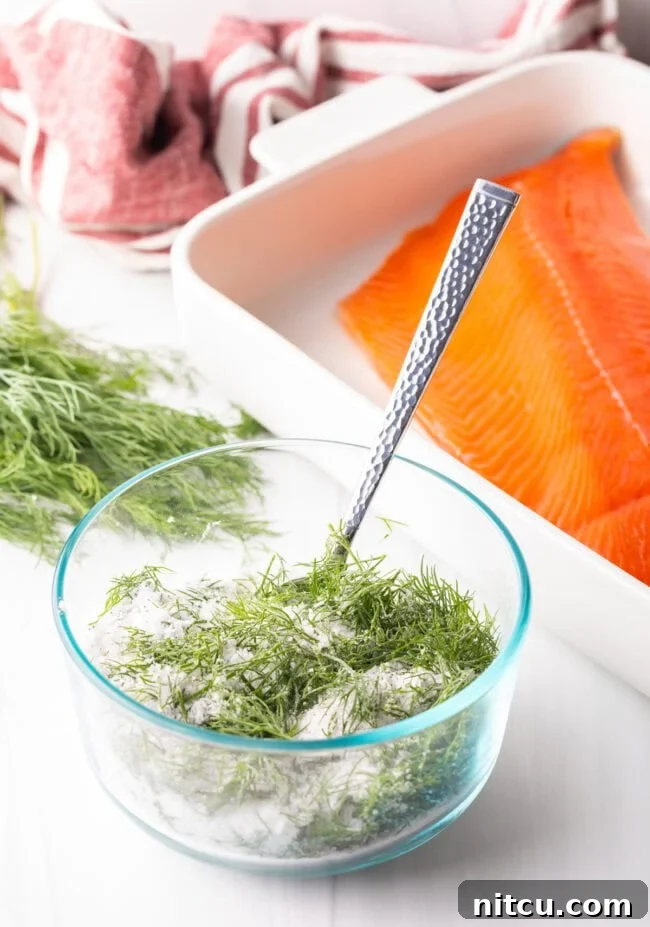
- In a small mixing bowl, combine the kosher salt, granulated sugar, freshly chopped dill, and black pepper. Mix these ingredients thoroughly until well combined.
- Lightly drizzle the gin (if using) evenly over the entire surface of the salmon fillet. Then, generously rub the prepared salt and sugar mixture over the entire surface of the salmon, including the skin side. Pile any remaining curing mixture on top of the fillet.
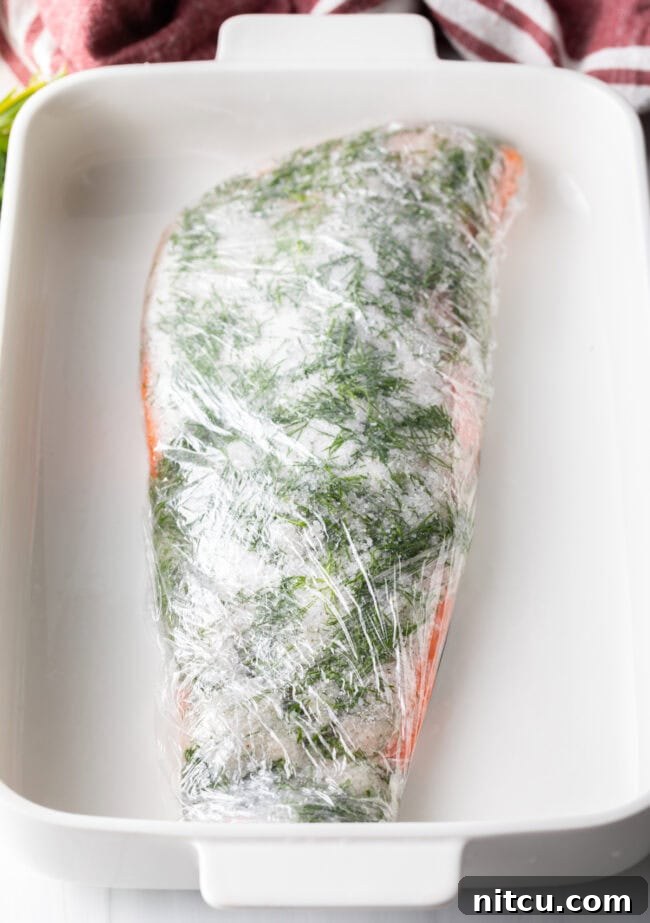
- Carefully wrap the salmon fillet very tightly in several layers of plastic wrap, ensuring no air pockets. This tight wrap is crucial for the curing process.
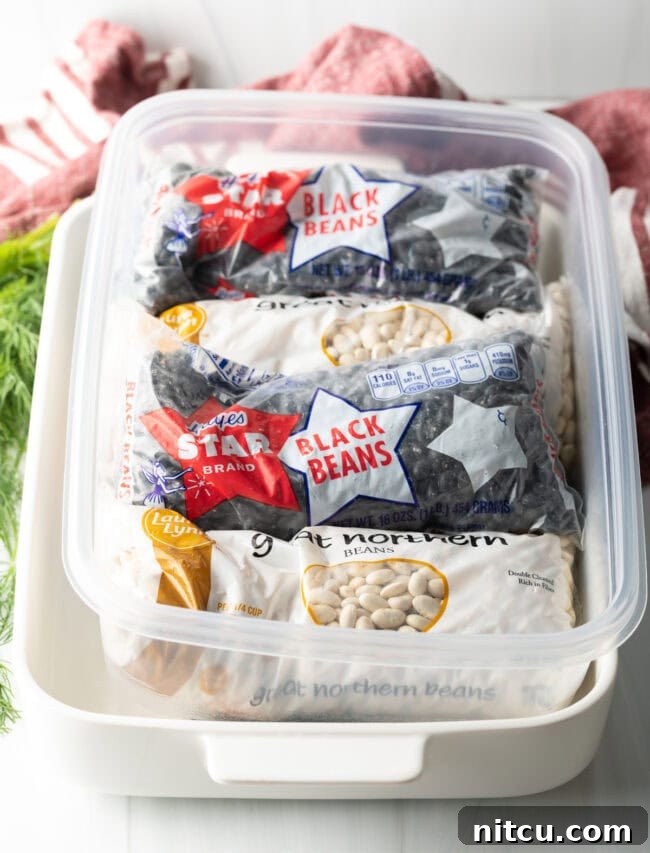
- Place the tightly wrapped salmon fillet into a baking dish or a shallow container. Find a smaller container or board that fits roughly the length of the salmon fillet, and place it directly on top of the wrapped salmon. Then, place something heavy inside this smaller container – bags of dried beans, canned goods, or even a few heavy books work perfectly. The goal is to press the salt mixture firmly into the salmon over several days.
- Transfer the entire setup (baking dish with weighted salmon) to your refrigerator. Allow it to cure undisturbed. The salmon will achieve a soft cure within 36 hours, resulting in a very tender texture. For a firmer, slightly denser texture and a more pronounced salt cure, I recommend curing the salmon for up to 48 hours. You can even extend this to three full days for an extra firm result, but do not exceed 72 hours. My preferred time is usually the 48-hour mark for optimal balance.
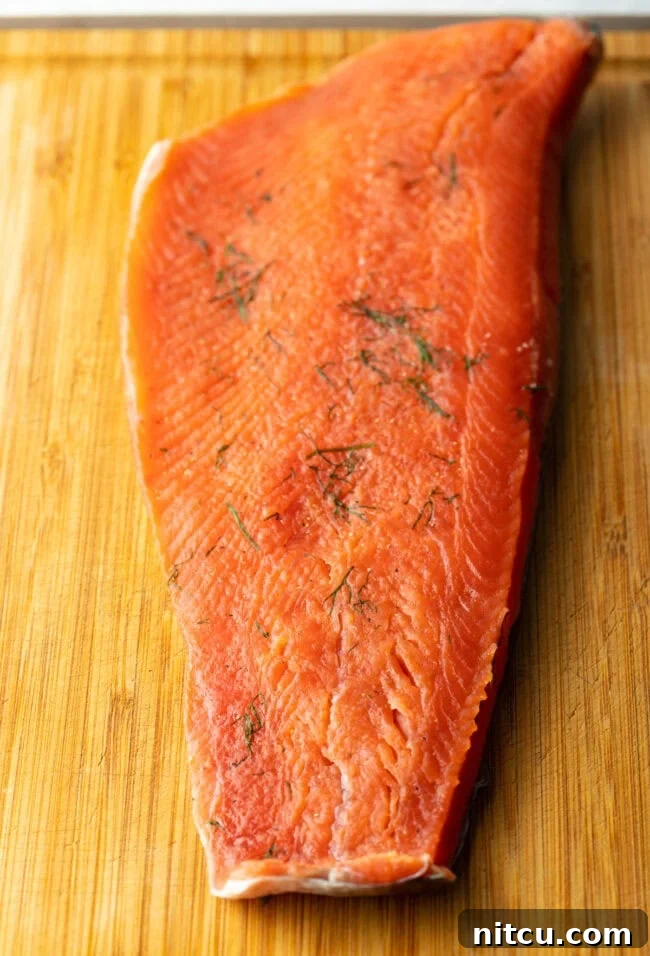
- Once the curing time is complete, unwrap the salmon fillet. Gently rinse it thoroughly under cold running water to remove all excess salt, sugar, and dill. This step is important to prevent over-salting and to ensure a clean finish. Pat the fillet completely dry with paper towels.
- Using a very sharp knife, slice the cured salmon at an angle, against the grain, into fine, translucent slivers. If you chose a shorter 36-hour cure and the salmon is very soft, you might find it easier to cut slightly thicker slices.
- Place the freshly sliced gravlax in an airtight container and refrigerate until you are ready to serve and enjoy.
Notes
While optional, the gin (or vodka) in the cure mixture serves an important purpose beyond flavor. It helps to neutralize and balance the natural flavors of the salmon, ensuring that any inherent fishiness does not intensify during the curing process, resulting in a cleaner tasting gravlax.
For the freshest flavor and best quality, consume sliced gravlax within 2 weeks of curing. To significantly extend its shelf life and maintain peak freshness, consider using a vacuum sealer for storage.
You can successfully freeze gravlax, but only if it was made from fresh salmon that had not been previously frozen. It is not recommended to re-freeze fish that has already been thawed. To freeze, wrap the whole cured fillet (before slicing) tightly in plastic wrap, then place it in an airtight plastic zipper bag. It can be stored in the freezer for up to 2 months. When ready to enjoy, thaw the gravlax overnight in the refrigerator and consume within one week.
Nutrition
Calories: 123 kcal,
Carbohydrates: 9 g,
Protein: 11 g,
Fat: 4 g,
Saturated Fat: 1 g,
Polyunsaturated Fat: 1 g,
Monounsaturated Fat: 1 g,
Cholesterol: 31 mg,
Sodium: 4742 mg,
Potassium: 296 mg,
Fiber: 0.1 g,
Sugar: 8 g,
Vitamin A: 175 IU,
Vitamin C: 2 mg,
Calcium: 15 mg,
Iron: 1 mg
Appetizer, Condiment, Snack, Starter
American, Norwegian, Swedish
Sommer Collier
Your feedback helps others find this amazing recipe. Please consider leaving a review!