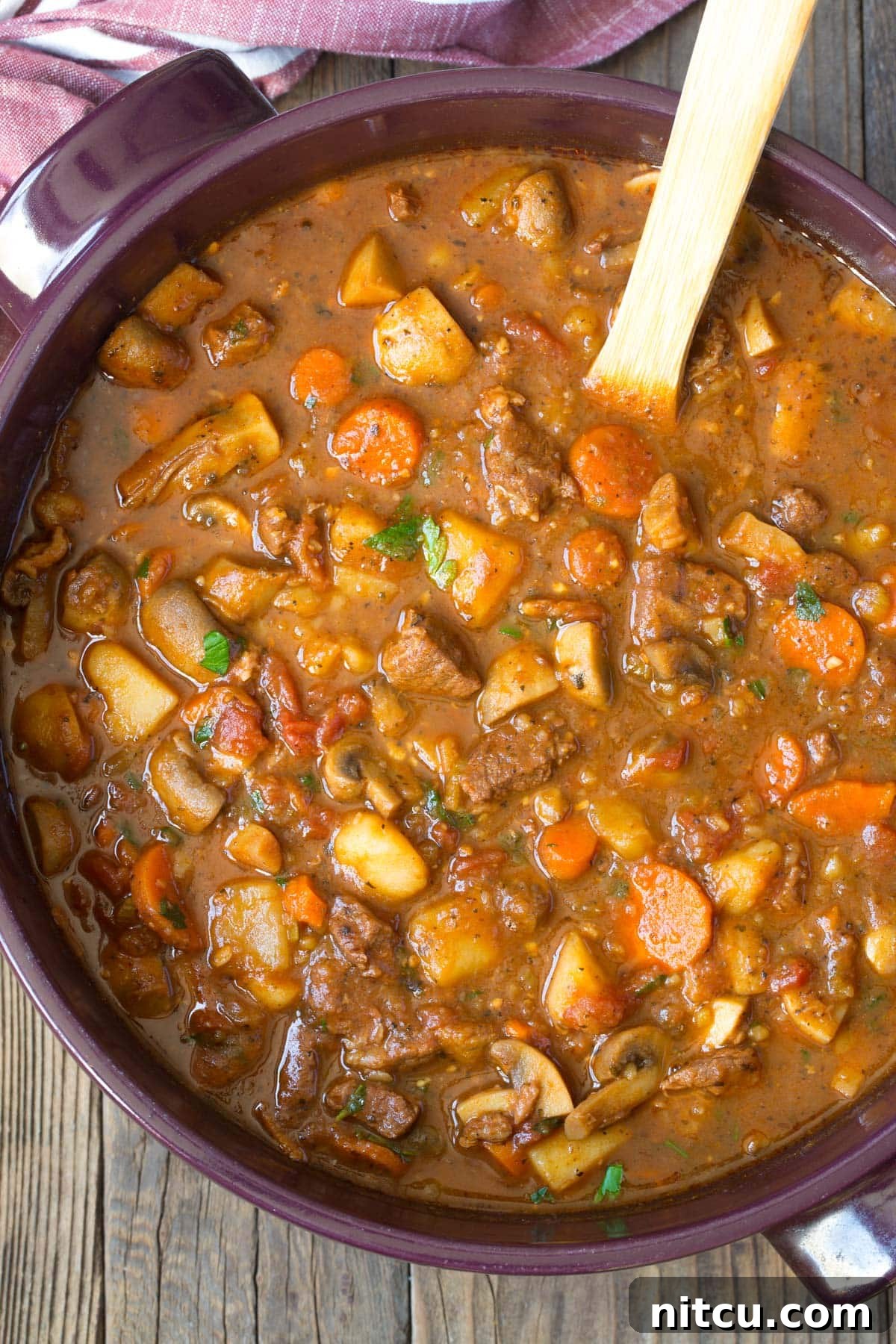
The Best Beef Stew Recipe: A Hearty One-Pot Comfort Food Classic
As the days grow shorter and a cool, crisp evening sets in, there’s nothing quite like the comforting embrace of a warm, hearty bowl of beef stew. This isn’t just any beef stew; it’s a culinary journey back to childhood, a recipe deeply inspired by my mom’s legendary creation – a dish that has consistently won over every palate it has graced. I’m utterly obsessed with the rich, herbaceous melt-in-your-mouth beef chunks, slow-simmered in the most savory, veggie-packed broth. This incredible one-pot meal is not only a fantastic make-ahead option but also delivers pure, unadulterated comfort with every single spoonful.
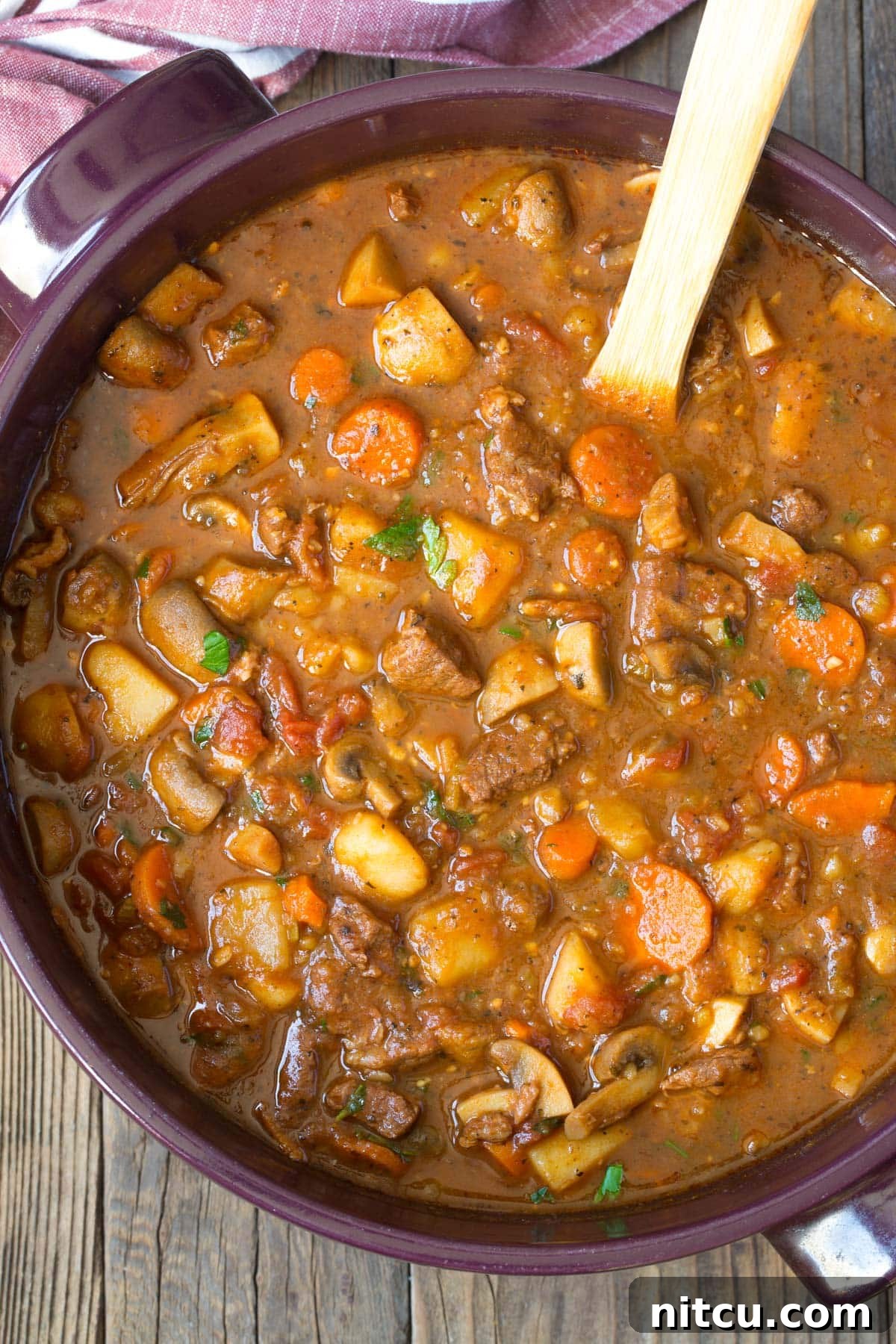
For me, growing up, beef stew wasn’t just a meal; it was a weekly tradition, a source of warmth and togetherness around the family table. My mom truly perfected the art of beef stew, and while I’ve sampled countless versions over the years, none have ever come close to hers. Her recipe features perfectly chunky yet incredibly tender pieces of beef, harmoniously blended with soft, silky vegetables like sweet carrots, starchy potatoes, and earthy mushrooms. All these wonderful ingredients are enveloped in a rich, deeply flavored, herb-packed broth that sings of home. That comforting and cozy feeling, that distinctive taste of nostalgia, is what directly inspired this recipe – my personal tribute to her timeless dish. It’s as hearty and nourishing as a classic stew, but with an abundance of vegetables in every bite, ensuring a satisfying and wholesome experience.
Jessica Burgess – ⭐⭐⭐⭐⭐ “This beef stew is a new go-to! I didn’t realize it was so easy to make until I tried this recipe and it’s the best we’ve ever had!”
Table of Contents
- Why This Beef Stew Recipe Stands Out
- Mastering the Key Ingredients and Expert Tips
- Step-by-Step: How to Make the Best Beef Stew
- Delicious Recipe Variations to Explore
- Serving Suggestions for a Complete Meal
- Frequently Asked Questions About Beef Stew
- Storing and Reheating Your Beef Stew
- Discover More Comforting Soups and Stews

Why This Beef Stew Recipe Stands Out
Unbeatable Leftovers: One of the many joys of this slow-simmered beef stew is how incredibly well it tastes the next day, and even the day after! The flavors deepen and meld beautifully overnight, making the leftovers even more delicious than the fresh batch. This is precisely why I often prepare a larger batch than immediately needed, ensuring I can savor these soul-warming bowls of goodness for several days, especially during the colder months when a comforting meal is a true blessing.
Perfectly Tender Beef: The hallmark of an exceptional beef stew is undeniably the tenderness of its meat. The secret to achieving melt-in-your-mouth beef is the magic of low and slow simmering for a few hours. This allows the tough connective tissues in the beef to break down gradually, transforming ordinary chunks of meat into incredibly soft, succulent morsels that practically dissolve on your tongue. Forget tough, chewy beef; I’ll guide you through the process to achieve that desirable, ultra-tender texture every single time.
A True Family Favorite: This is that rare, cherished recipe that genuinely delights everyone at the dinner table. From the youngest picky eaters to the most discerning adults, this stew has a universal appeal. Time and again, I’ve seen family members, and even guests, go back for second helpings. In a world where aligning dinner preferences can be a challenge, finding a dish that unites everyone in appreciation is a culinary victory, and this beef stew consistently delivers just that.
Mastering the Key Ingredients and Expert Tips
Crafting the best beef stew starts with selecting quality ingredients and understanding how each contributes to the final masterpiece. Here’s a breakdown of the essential components and some insider tips:
- Thick-Cut Bacon: Move over, bland cooking oils! I prefer to render thick-cut bacon instead of using oil or butter to sauté the initial aromatics. The rendered bacon fat infuses the stew with a luxurious, smoky, porky essence, adding an incredible layer of foundational flavor and richness that elevates the entire dish. Don’t discard those crispy bacon bits either; they make a fantastic garnish!
- Beef Chuck Roast: This cut is the star of our stew. Chuck roast is ideal because it boasts just the right amount of fat marbling and connective tissue, which, during a long, slow simmer, breaks down into gelatin, enriching the broth and ensuring the beef cooks down into wonderfully tender, flavorful morsels. While high-quality beef is always a plus, chuck roast’s inherent structure means it will tenderize beautifully even if you opt for a more economical cut, making it perfect for slow-cooking to perfection.
- Stewed Tomatoes: Canned stewed tomatoes are a non-negotiable addition. They provide a crucial balance to the richness of the beef, offering a touch of acidity and a vibrant burst of color to the stew. For the best texture, remember to break them up with a wooden spoon or even crush them gently in your hands before adding them to the pot, allowing their juices to blend seamlessly into the broth.
- Italian Seasoning: A robust blend of dried herbs, Italian seasoning is perfectly suited for beef stew and other long-simmering soups. The extended cooking time allows these dried herbs to fully rehydrate and release their full aromatic potential, deepening the overall herbaceous flavor of the stew. Feel free to adjust the amount to your taste.
- High-Quality Beef Broth: The quality of your beef broth significantly impacts the depth of flavor in your stew. I strongly advocate for using a really good quality beef broth for a truly exceptional result. If a premium broth isn’t available, you can certainly use beef bouillon or a beef base mixed with water. For an interesting twist and an extra layer of umami, mushroom broth can also be a delightful alternative.
- Red Wine: A splash of dry red wine, such as Cabernet Sauvignon or Merlot, is the secret weapon that gives this stew that little “something extra.” It’s not strictly necessary, but it absolutely makes a noticeable difference in the overall complexity and depth of flavor, adding a subtle tang and richness. You can use a designated cooking wine or, even better, a regular wine that you enjoy drinking.
- Russet Potatoes: For that desired chunky goodness and to help naturally thicken the stew, russet potatoes are my go-to. Their high starch content contributes to a luscious, full-bodied broth. If russets aren’t on hand, Yukon Gold potatoes are an excellent substitute, offering a slightly creamier texture.
- Mushrooms: When paired with beef, mushrooms are magical. They contribute a rich, earthy umami flavor that complements the meat beautifully, adding a layer of savory depth that is truly irresistible. Button mushrooms are versatile, but feel free to experiment with cremini or even a mix of wild mushrooms for more complexity.
- Onion: The humble onion is the unsung hero and the foundational backdrop for almost all great savory dishes. We build the aromatic base of this incredibly savory broth with freshly chopped sweet onions, which caramelize slightly during sautéing, adding a subtle sweetness and depth.
- Carrots: Beyond their vibrant pop of color, carrots impart a delicate, natural sweetness to every spoonful of this hearty stew. They soften beautifully during the simmer, becoming tender and releasing their earthy-sweet notes into the broth.
Step-by-Step: How to Make the Best Beef Stew
Find the complete recipe with precise ingredient proportions, detailed instructions, and a video tutorial in the printable recipe card at the bottom of this post.
Making a truly exceptional beef stew involves a few key steps, each contributing to the depth of flavor. Follow these guidelines for a stew that will impress every time:
1. Prepare Your Ingredients: Begin by thoroughly chopping all the vegetables, reserving the potatoes for a later step. Trim and cut the beef chuck roast into uniform 1-inch cubes. This ensures even cooking. Set a large, heavy-bottomed pot or Dutch oven over medium heat.
2. Sizzle the Bacon: Add the chopped thick-cut bacon to the heated pot. Cook the bacon until it’s crispy and has rendered its fat. Remove the crispy bacon bits with a slotted spoon and set them aside for garnish (or a chef’s snack!), leaving the flavorful rendered fat in the pot. This bacon fat will be the foundation of your stew’s rich flavor.
3. Sauté the Aromatics: Into the warm bacon fat, add the chopped onions, celery, and minced garlic. Sauté these vegetables for about 5-7 minutes, stirring occasionally, until they soften and become fragrant. This step builds the aromatic base for the stew.
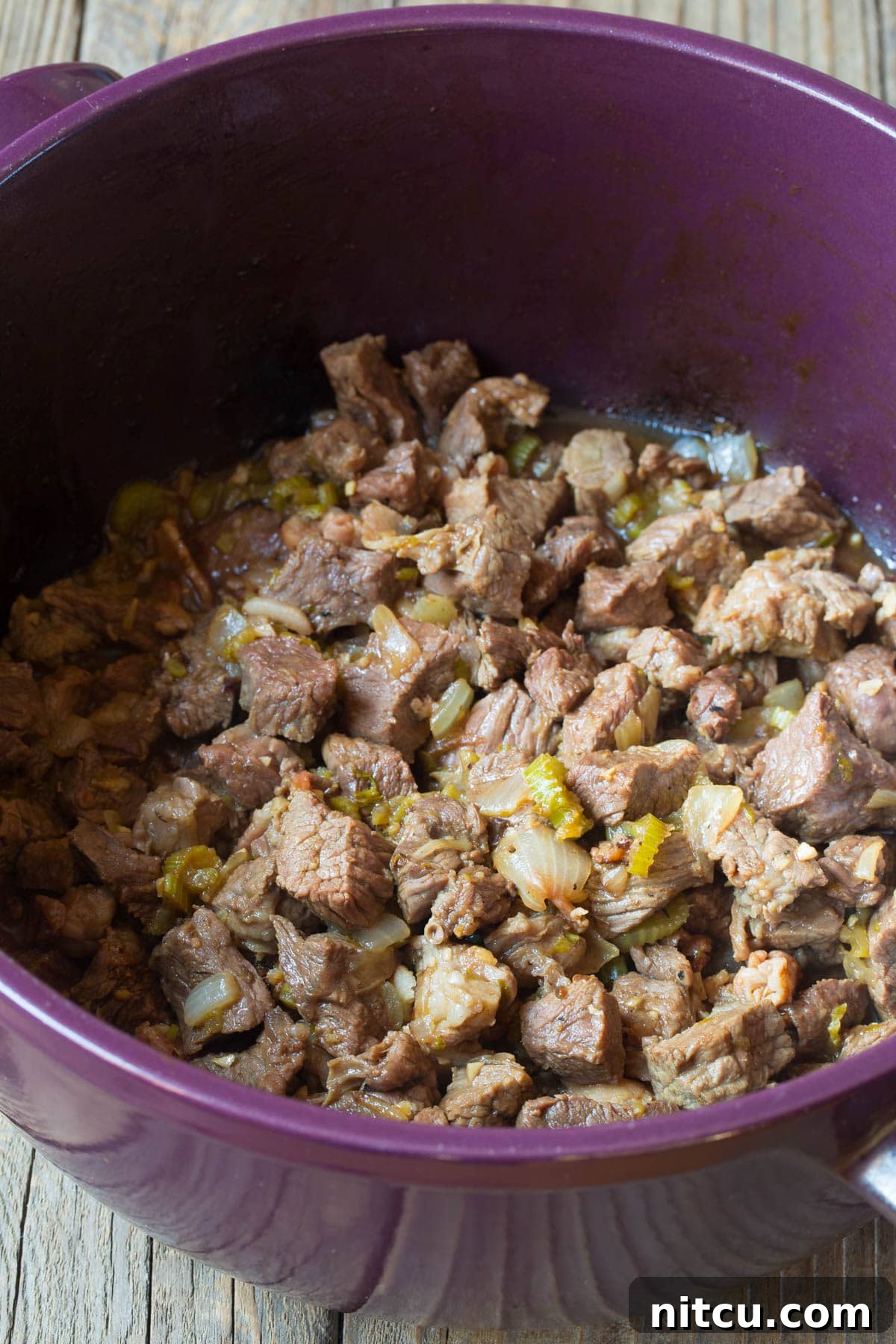
4. Brown the Beef: Gently push the softened vegetables to one side of the pot, creating space in the center. Add the beef chunks in a single layer, making sure not to overcrowd the pot. If necessary, work in batches. Sear the beef on all sides until it’s beautifully golden brown. This browning step is crucial for developing deep, complex flavors through the Maillard reaction.
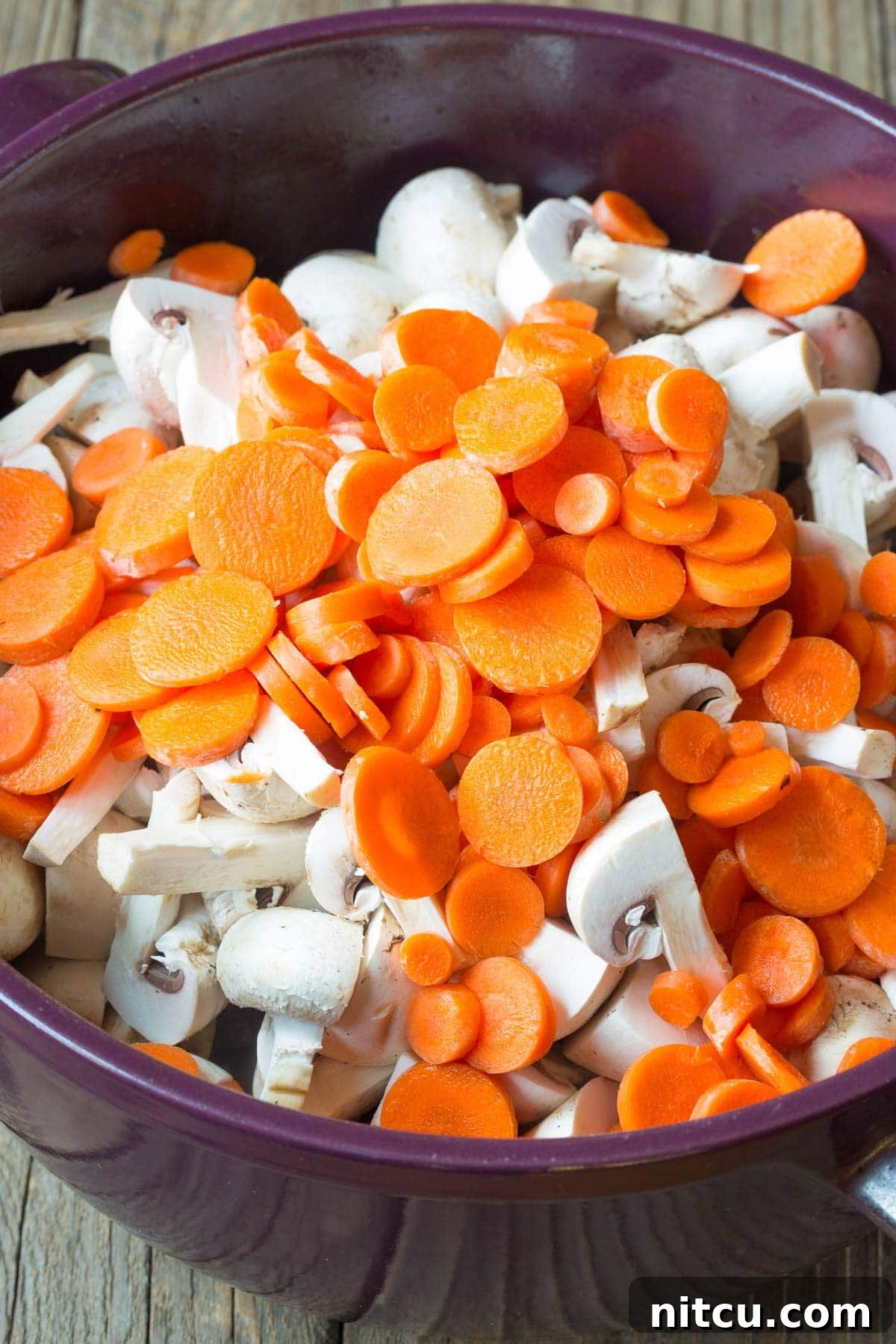
5. Build the Broth: Once the beef has developed that gorgeous golden crust, incorporate the remaining vegetables—carrots, mushrooms, and stewed tomatoes (along with their juices). Stir in the Italian seasoning, high-quality beef broth, and the red wine. Use a wooden spoon to gently break up the stewed tomatoes and scrape any delicious browned bits from the bottom of the pot (this is called deglazing and adds immense flavor!). Season with salt and freshly ground black pepper to taste. Cover the pot and bring the mixture to a gentle boil, then reduce the heat to a low simmer.
6. The Potato Timing Secret: Let the stew simmer, covered, for approximately 30 minutes. At this point, peel and chop your potatoes into 1-inch cubes. Stir these potato chunks into the simmering stew. Giving the beef a head-start allows it to begin tenderizing before the potatoes are added. This ensures the potatoes cook until soft and release their starches to thicken the stew base, without fully disintegrating and becoming mushy, maintaining their delightful chunky texture.
7. Slow Simmer for Ultimate Tenderness: Re-cover the pot and allow the stew to continue simmering on low to medium-low heat for another 60 to 90 minutes, or until the beef chunks are incredibly tender and yield easily when pierced with a fork. This long, gentle simmer is paramount for achieving that melt-in-your-mouth beef texture. There is nothing more disappointing than tough beef in a stew, so don’t rush this step. Stir occasionally to prevent sticking and ensure even cooking.
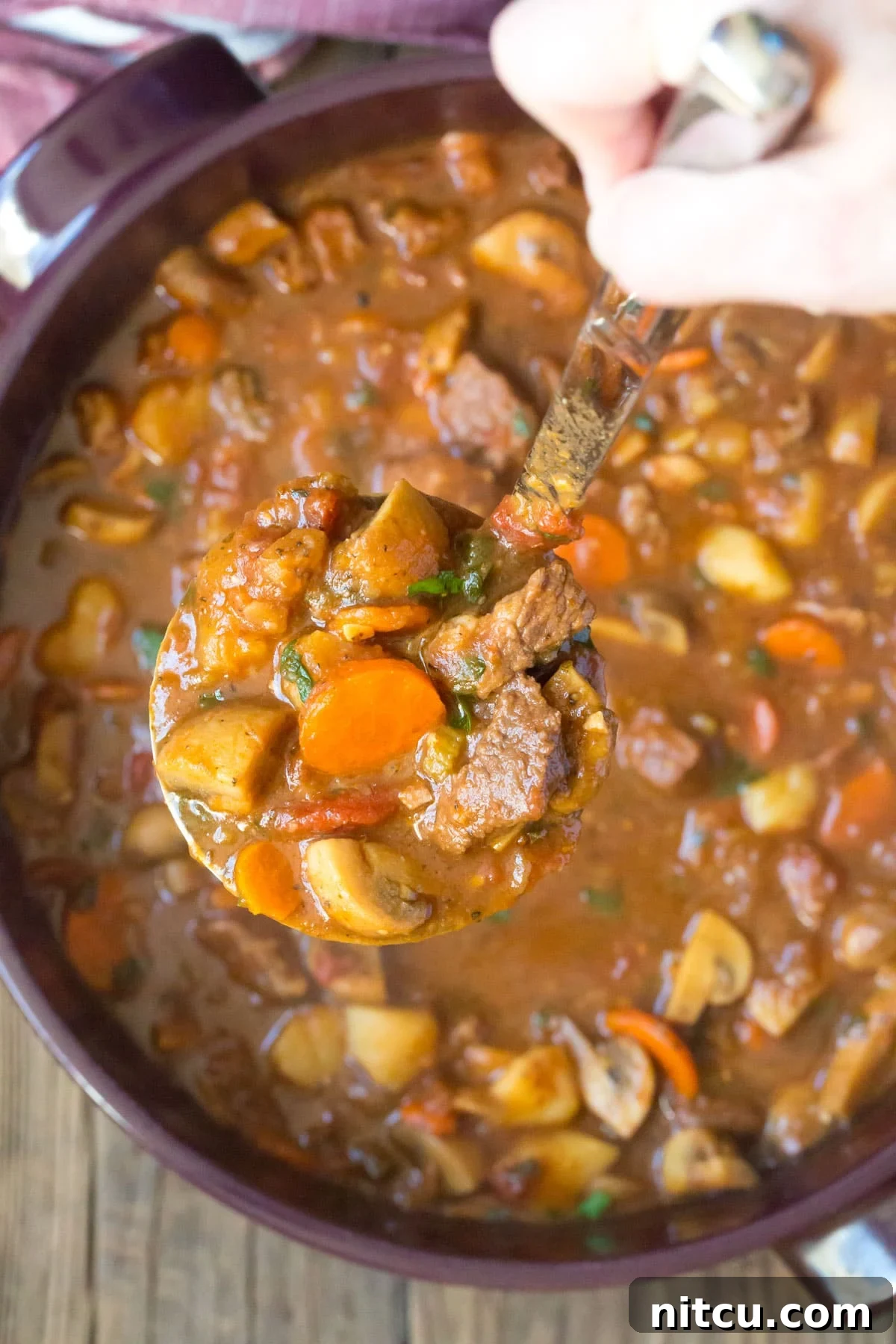
8. Finish and Serve: Once the beef is perfectly tender and the potatoes are soft, remove the stew from the heat. Stir in a generous amount of fresh chopped parsley for a bright, herbaceous finish. Taste and adjust seasoning with additional salt and pepper if needed. Serve hot and enjoy!
Delicious Recipe Variations to Explore
This beef stew recipe is wonderfully versatile, allowing for easy customization to suit your taste preferences or whatever ingredients you have on hand. Here are a few exciting variations to try:
- Sweet Potatoes: For a delightful twist and an added touch of sweetness, consider swapping out the russet potatoes for sweet potatoes. They add a different flavor profile and a beautiful color.
- A Hint of Heat: If you enjoy a subtle kick, stir in a dash of cayenne pepper or a pinch of crushed red pepper flakes along with the Italian seasoning. Adjust the amount to your desired level of spice.
- Creamy Indulgence: For a richer, more luxurious stew, finish it with a splash of heavy cream or half-and-half stirred in during the last few minutes of simmering. This adds a beautiful creaminess without overwhelming the robust flavors.
- Fresh Herb Boost: To amplify the fresh, aromatic flavors, tuck a sprig or two of fresh rosemary or thyme into the pot as the stew simmers. Just remember to remove them before serving. A sprinkle of fresh dill or chives at the end can also add a lovely dimension.
- Vegetable Medley: Don’t limit yourself to the classic carrots and mushrooms. Feel free to add other hearty vegetables like chopped bell peppers, parsnips, turnips, or even frozen peas or corn (add these during the last 15 minutes of cooking).
- Gluten-Free Option: This recipe is naturally gluten-free! Just ensure your beef broth is certified gluten-free. If you typically thicken with flour, use a cornstarch slurry or skip it entirely as the potatoes and slow reduction will thicken it sufficiently.
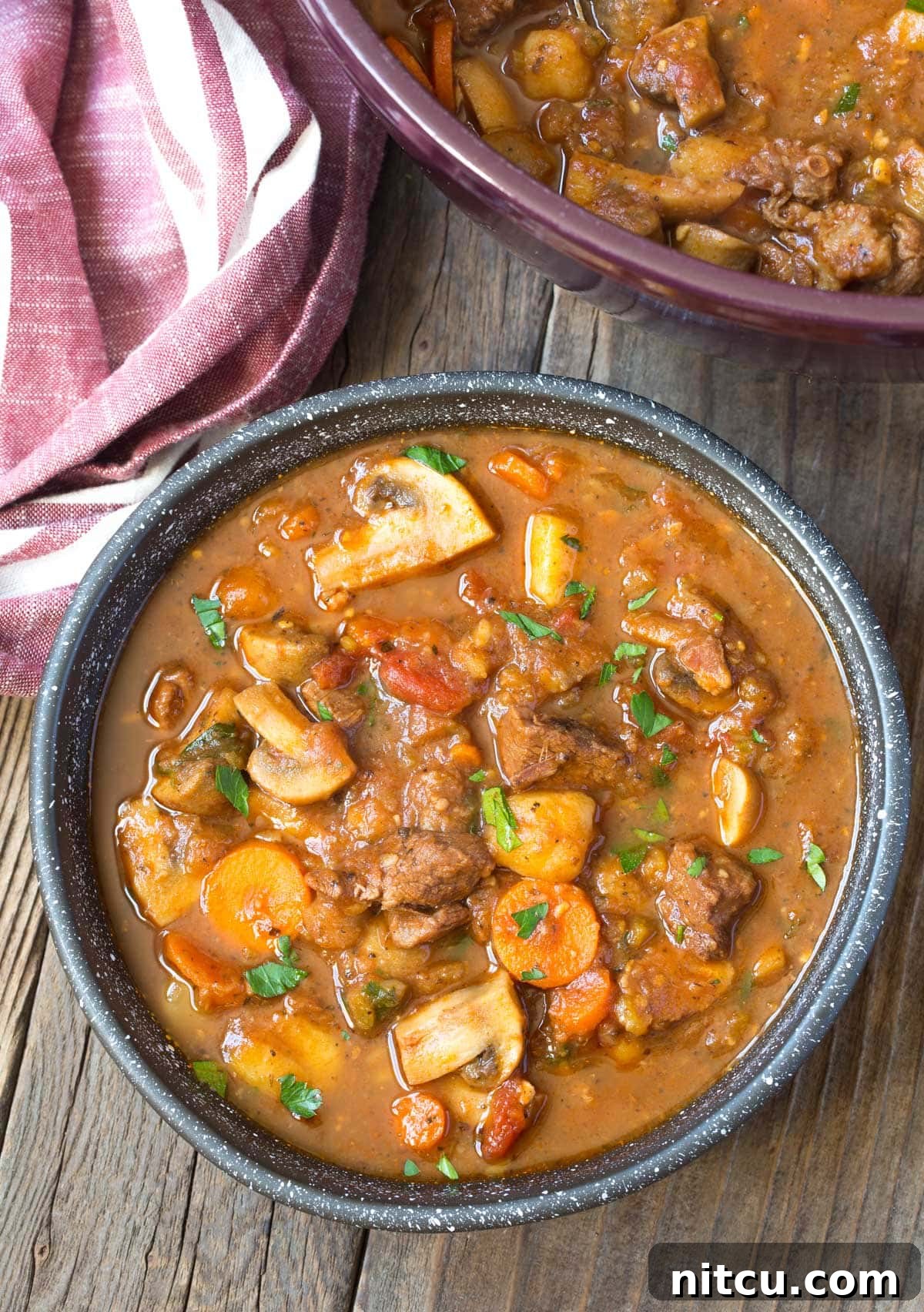
Serving Suggestions for a Complete Meal
This hearty beef stew is wonderfully wholesome and filling enough to be a complete meal on its own. However, sometimes we crave that little extra something to soak up every last drop of the delicious broth. Here are some of my favorite accompaniments to serve alongside it, transforming your meal into an unforgettable feast:
- Crusty Garlic Bread: The perfect companion for dipping into the rich, savory broth. The crispy crust and garlicky butter are simply irresistible.
- Fluffy Southern Biscuits: Soft, buttery biscuits are ideal for sopping up all the delicious juices. Their tender texture is a wonderful contrast to the chunky stew.
- Creamy Burrata: A dollop of fresh, creamy burrata cheese on top of a serving of hot stew adds a luxurious, velvety texture and a mild, milky flavor that melts beautifully into the broth.
- Fresh Avocado Chunks: For a refreshing contrast and an extra dose of healthy fats, add chunks of fresh, creamy avocado just before serving. Their cool, smooth texture is a delightful complement.
- Silky Mashed Potatoes: While the stew already contains potatoes, a side of perfectly smooth, buttery mashed potatoes offers another wonderful way to enjoy the rich gravy, making the meal even more substantial and comforting.
- A Simple Green Salad: To lighten the meal and add a touch of freshness, a crisp green salad with a vinaigrette dressing provides a lovely counterpoint to the richness of the stew.
Frequently Asked Questions About Beef Stew
If your stew hasn’t reached your desired thickness, a cornstarch slurry is your best friend. Simply whisk together 1 tablespoon of cornstarch with 2 tablespoons of cold water until smooth. Stir this slurry into the simmering stew and let it cook for a few minutes. The stew will visibly thicken. You can add more slurry, one tablespoon at a time, until it reaches your preferred consistency. Another natural thickener is to gently mash some of the cooked potatoes against the side of the pot.
Absolutely! Beef stew is incredibly flexible when it comes to vegetables. Frozen corn kernels are a quick and easy add-in during the last 15 minutes of cooking. Chopped bell peppers (any color), zucchini, parsnips, turnips, or even lima beans would also make fantastic additions, enhancing both the flavor and nutritional value of your stew.
Beef chuck roast (also known as pot roast, boneless short rib, or beef stew meat) is widely considered the best cut for stew. Its rich marbling and connective tissue break down beautifully during long, slow cooking, resulting in incredibly tender, succulent meat that also enriches the broth with gelatin, giving it body and flavor. Avoid leaner cuts like sirloin or tenderloin, as they can become tough when simmered for extended periods.
Yes, absolutely! Beef stew is one of those dishes that often tastes even better the next day, as the flavors have more time to meld and deepen. You can prepare the entire stew a day or two ahead of time. Allow it to cool completely, then store it in an airtight container in the refrigerator. Reheat gently on the stovetop over low heat or in the microwave until thoroughly warmed through.
Storing and Reheating Your Beef Stew
Proper storage is key to enjoying your delicious beef stew for days to come. When stored in an airtight container, beef stew will remain fresh and flavorful in the refrigerator for up to seven days. To reheat, simply transfer your desired portion to a microwave-safe bowl and heat until steaming hot, or gently warm it on the stovetop in a saucepan over medium-low heat, stirring occasionally, until thoroughly reheated. If the stew appears too thick after refrigeration, you can add a splash of beef broth or water to reach your preferred consistency.
For longer storage, beef stew freezes exceptionally well. Allow the stew to cool completely before transferring it to an airtight freezer-safe container or heavy-duty freezer bags. It can be frozen for up to nine months without significant loss of quality. To enjoy, thaw the frozen stew completely in the refrigerator overnight or at room temperature. Once thawed, reheat it gently on the stovetop, adding a little extra liquid if needed, until it is piping hot. This makes it a fantastic meal prep option for busy weeks!
Discover More Comforting Soups and Stews
Help Spread the Word about this Fabulous Free Recipe! Your support means the world! Sharing this recipe link on Pinterest and Facebook is super impactful and helps other home cooks discover this comforting dish. We greatly appreciate your shares! You can easily find the share buttons below the recipe card.

Print Recipe
5 stars (29 reviews)
Leave a Review »
Best Beef Stew Recipe
15 minutes
2 hours 15 minutes
On a cool, crisp evening, nothing beats winding down with a hearty bowl of this best beef stew recipe. Indulge in delicious melt-in-your-mouth beef chunks simmered in the most savory veggie-packed broth. This is literal comfort in every spoonful.
10
Video Tutorial
Ingredients
- 2 strips thick-cut bacon, chopped
- 1 1/2 pounds beef chuck roast, trimmed and cut into 1-inch cubes
- 1 large onion, peeled and chopped
- 1 cup sliced celery
- 6 cloves garlic, minced
- 1 1/2 cups sliced carrots
- 1 1/2 pounds button mushrooms, quartered
- 28 ounces stewed tomatoes
- 1 tablespoon Italian seasoning
- 8 cups beef broth
- 1/2 cup red wine
- 3 cups russet potatoes, peeled and cut into 1-inch cubes
- 1/4 cup chopped fresh parsley
- salt and freshly ground black pepper, to taste
Instructions
- Chop all the meat and produce, except the potatoes. Set a large soup pot or Dutch oven over medium heat. Add the chopped bacon and cook until crispy, then remove the bacon bits, leaving the rendered fat in the pot.
- Add the chopped onions, celery, and minced garlic to the bacon fat. Sauté for 5-7 minutes until softened. Push the vegetables to the sides of the pot and add the beef chunks. Sear and brown the beef for another 5-10 minutes, turning to brown all sides.
- Next, add in the carrots, mushrooms, stewed tomatoes with their juices (breaking them up slightly), Italian seasoning, beef broth, red wine, 2 teaspoons of salt, and 3/4 teaspoon of freshly ground black pepper. Stir well, ensuring any browned bits at the bottom of the pot are scraped up. Cover and bring to a boil, then reduce heat to a low simmer.
- Let the beef stew simmer, covered, for about 30 minutes. Meanwhile, peel and chop the potatoes into 1-inch cubes. Stir the chopped potatoes into the pot.
- Cover the pot again and allow the stew to continue simmering on medium to medium-low heat for another 60-90 minutes, or until the beef is very tender and easily pulls apart. Stir occasionally to prevent sticking. When ready to serve, stir in the fresh chopped parsley. Taste and adjust seasoning with additional salt and pepper if needed. Serve hot.
Notes
Crockpot (Slow Cooker) Instructions:
- Start by browning the bacon, sautéing the vegetables, and searing the beef on the stovetop as detailed in steps 1 and 2 above. This crucial step develops deep flavors.
- Transfer the browned beef and sautéed vegetables to a large slow cooker. Add all remaining ingredients, except the fresh parsley.
- Cover the slow cooker and cook on LOW for 8-10 hours, or on HIGH for 4-6 hours, until the beef is fork-tender. Stir in the chopped parsley just before serving.
Instant Pot Instructions:
- For optimal results in the Instant Pot, reduce the entire recipe by half. (You can adjust ingredient measurements using a servings calculator if available, or simply halve each quantity).
- Use the “Sauté” function on your Instant Pot to brown the bacon, then sauté the onions, celery, and garlic for about 5 minutes. Remove bacon bits.
- Add the beef to the Instant Pot and brown it using the “Sauté” function.
- Once browned, add all remaining ingredients to the Instant Pot (except parsley). Ensure liquid does not exceed the MAX fill line.
- Secure the lid and set the Instant Pot to “Pressure Cook High” (or “Manual High Pressure”) for 20 minutes.
- Once cooking is complete, perform a “Quick Release” of the pressure. When the float valve drops, it’s safe to open the lid. Stir in the fresh parsley and serve.
Storage & Reheating: Beef stew will last for 7 days when stored in an airtight container in the refrigerator. Reheat in the microwave or on the stove until thoroughly warmed. Store cooled leftovers in an airtight freezer container and freeze for up to 9 months. Thaw completely at room temperature or in the refrigerator overnight before reheating on the stovetop for best results.
Nutrition Information (Approximate)
Calories: 265kcal
Carbohydrates: 19g
Protein: 20g
Fat: 11g
Saturated Fat: 4g
Cholesterol: 51mg
Sodium: 1021mg
Potassium: 1052mg
Fiber: 3g
Sugar: 6g
Vitamin A: 3535IU
Vitamin C: 15.1mg
Calcium: 84mg
Iron: 4mg
Main Course
American
Sommer Collier
Cook It? Love It? Rate It!
You can help this recipe RANK on Google – TAP 5 STARS so other hungry people can find it. Thank you!