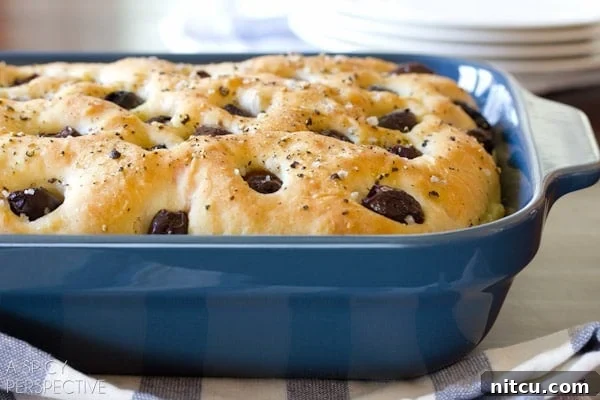
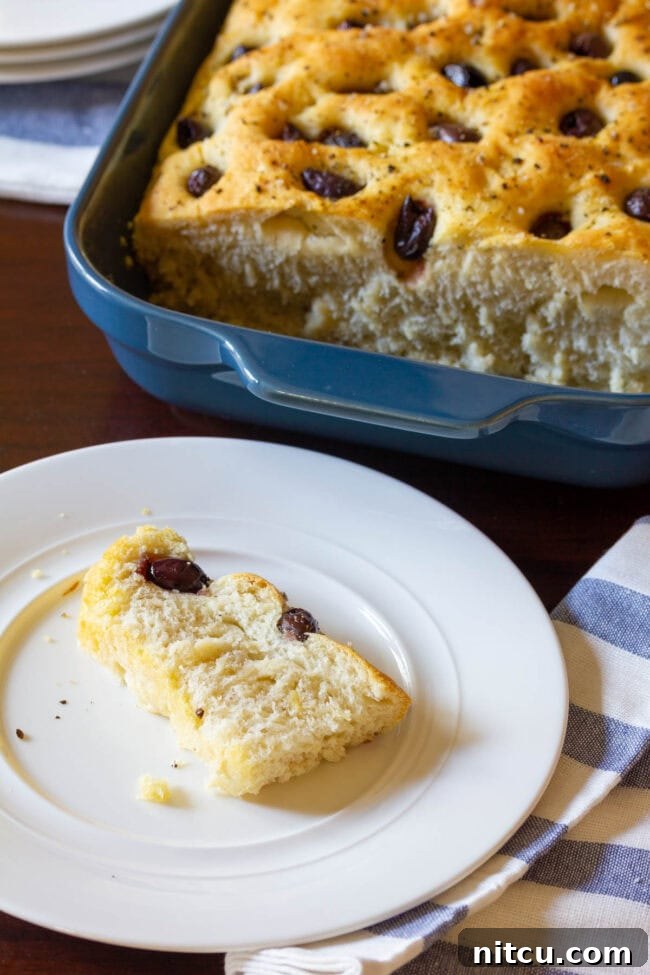
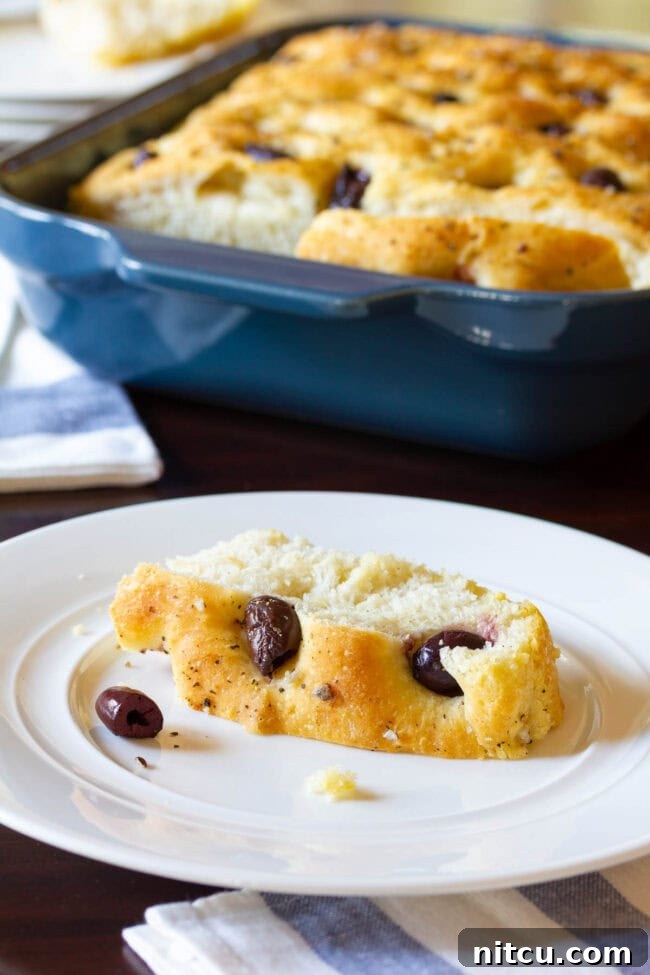
This incredibly tender, soft, and impressive yet wonderfully rustic Olive Focaccia bread, generously studded with roasted garlic and briny olives, boasts a rich olive oil flavor that makes it a spectacular addition to any meal!
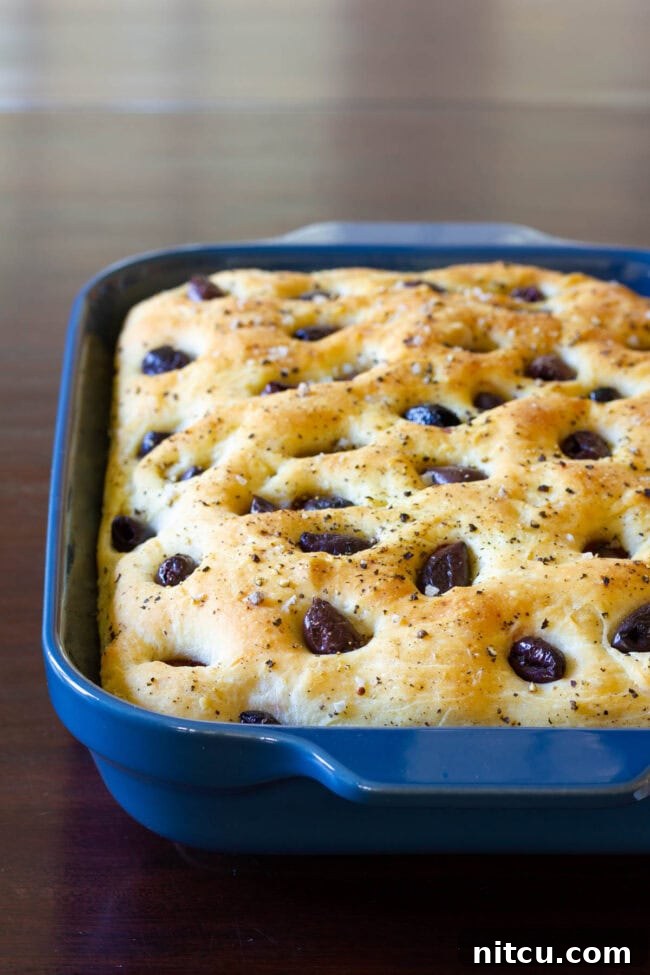

Crafting the Perfect Roasted Garlic & Olive Focaccia
There’s something uniquely satisfying about baking homemade bread, and focaccia holds a special place in my heart. Its perfectly unfussy nature, combined with a naturally flavorful and rustic appeal, makes it one of my absolute favorite breads to create in my own kitchen. While I’ve previously shared a delightful lemon-herb focaccia, adorned with vibrant red onions, this recipe takes a savory turn with the irresistible combination of sweet roasted garlic and tangy Kalamata olive “buttons” pressed into its golden surface.
This particular Focaccia Bread with Roasted Garlic and Olives distinguishes itself with a remarkably lighter and more tender texture than many other focaccia recipes I’ve explored. It still delivers that quintessential rich olive oil flavor, but its crumb is reminiscent of a soft, comforting country bread. Each bite is a harmonious blend of the mellow, sweet notes from the roasted garlic and the bright, briny contrast provided by the deeply embedded Kalamata olives. You are truly going to adore this elevated twist on a classic Italian staple!
Why This Homemade Olive Focaccia Will Become Your New Favorite
More than just a delicious bread, this easy Olive Focaccia recipe offers numerous reasons to fall in love with homemade baking:
- No Fancy Equipment Needed: You don’t need a professional baker’s arsenal to achieve impressive results. All it takes is a reliable stand mixer (or even strong hands for kneading!) and a standard baking dish. This simplicity makes it accessible for home cooks of all skill levels.
- Bold & Irresistible Flavors: Every slice of this rustic Italian bread is bursting with a symphony of flavors. The robust taste of olives and the deep, sweet notes of roasted garlic are beautifully infused throughout, creating a savory masterpiece crowned with a perfectly rich and golden crust.
- Incredibly Versatile: The beauty of focaccia lies in its adaptability. Enjoy it on its own, torn into satisfying pieces and dipped in premium extra virgin olive oil, perhaps with a splash of balsamic vinegar. It transforms beautifully into exceptional sandwich bread, cradling fresh mozzarella and prosciutto, or sliced chicken. It also makes a stunning and effortless centerpiece for your next charcuterie board, adding an artisan touch to any gathering.
- A Relaxing Weekend Project: Baking focaccia is a therapeutic and rewarding experience. This recipe is ideal for a leisurely weekend afternoon, filling your home with an intoxicating aroma before culminating in a delicious family dinner.
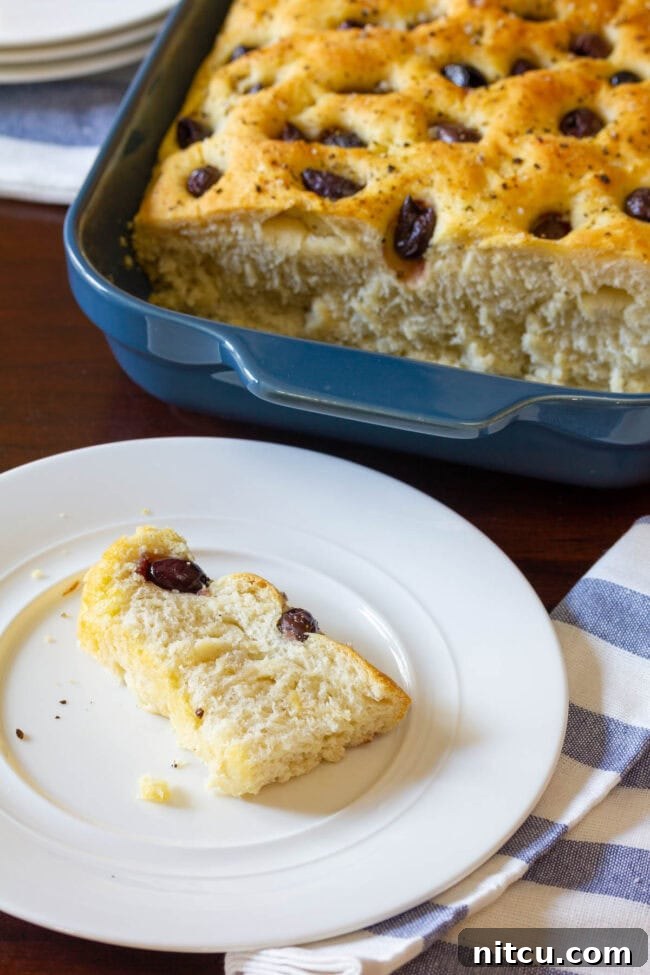
Essential Ingredients and Expert Tips for Success
Crafting the perfect Olive Focaccia starts with selecting the right ingredients and understanding how each contributes to the final masterpiece. Here’s a breakdown of what you’ll need and some crucial advice:
- Water: You’ll need both warm water (around 105-115°F or 40-46°C) to activate the yeast and cold water to control the dough’s temperature during mixing. The exact temperature of the warm water is vital for yeast activity – too hot will kill it, too cold won’t activate it.
- Active Dry Yeast: This recipe specifically calls for active dry yeast. Do NOT substitute with instant dry yeast, as it behaves differently and may affect your proofing times and the overall texture of the focaccia. Ensure your yeast is fresh; old yeast will result in a flat, dense bread.
- Honey: A touch of honey (or agave nectar) provides subtle sweetness, balancing the savory elements and feeding the yeast, contributing to a more flavorful and tender crumb.
- Roasted Garlic Cloves: The star flavor! Make sure your roasted garlic is thoroughly smashed before incorporating it into the dough. Roasting garlic mellows its pungent flavor and transforms it into a sweet, spreadable delight, perfect for infusing into this focaccia. You can easily roast a whole head of garlic by slicing off the top, drizzling with olive oil, wrapping in foil, and baking until soft.
- All-Purpose Flour: For the most accurate results, I highly recommend measuring your flour by weight (using a kitchen scale) rather than by measuring cups. This prevents over-flouring, which can lead to a dry, tough focaccia. A typical cup of all-purpose flour weighs around 120-125 grams.
- Kalamata Olives: These briny, purple-black olives add a wonderful depth of flavor and beautiful visual appeal. While buying pitted Kalamata olives is convenient, always take an extra moment to double-check for any stubborn pit remnants – nobody wants a surprise crunch! You can roughly chop them or leave them whole, pressing them firmly into the dough.
- High-Quality Olive Oil: Since “olive” is in the name, the quality of your olive oil truly shines through. Use a good extra virgin olive oil for both the dough and for drizzling generously over the top before baking. It contributes immensely to the rich flavor and characteristic tender crust of focaccia.
- Sea Salt and Freshly Ground Black Pepper: A generous sprinkle of flaky sea salt on top before baking creates a delightful textural contrast and enhances all the flavors. Freshly ground black pepper adds a subtle kick.
Delicious Recipe Variations and Dietary Swaps
One of the joys of baking Olive Focaccia is its adaptability. Feel free to customize this recipe to your taste preferences or dietary needs:
- Add Tomatoes: For a burst of juicy sweetness, halve some cherry or grape tomatoes and gently press them onto the surface of the focaccia alongside the olives before baking. They’ll roast beautifully in the oven.
- Cheesy Goodness: Elevate the savory profile by sprinkling some crumbled feta cheese (for a tangy, salty note) or grated Parmesan cheese (for a nutty, umami flavor) over the bread during the last 10-15 minutes of baking.
- Herbaceous Touch: Incorporate fresh herbs directly into the dough or sprinkle them generously on top. Fresh rosemary and thyme are classic choices that pair wonderfully with olive and garlic. Dried herbs can also be used, but fresh offers a more vibrant aroma and taste.
- Spicy Kick: For those who love a bit of heat, add a pinch of red pepper flakes to the dough or sprinkle them on top with the sea salt.
- Gluten-Free Focaccia: To make this recipe gluten-free, substitute the all-purpose flour with a high-quality gluten-free all-purpose flour blend that contains xanthan gum. You might need to adjust the water slightly to achieve the right dough consistency, as gluten-free flours absorb liquids differently.
- Different Olives: While Kalamata olives are fantastic, feel free to experiment with other varieties like green Castelvetrano olives for a buttery, mild flavor, or black Mission olives for a more earthy profile. Just ensure they are pitted!
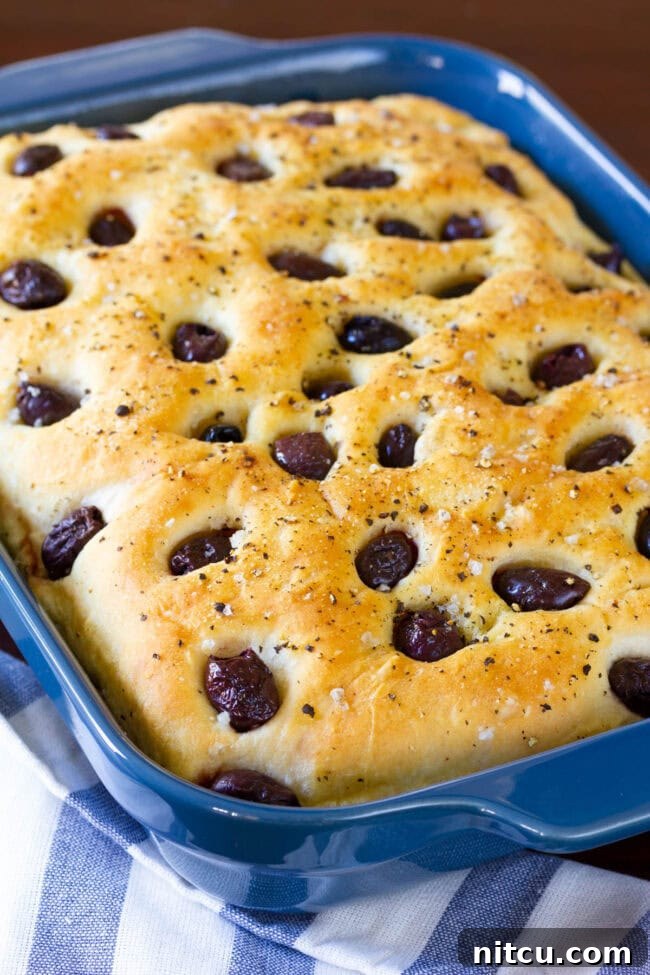
How To Make This Irresistibly Delicious Olive Focaccia
Creating this impressively delicious Roasted Garlic & Olive Focaccia bread requires just a handful of simple, rustic ingredients and, perhaps most importantly, a little patience. The process is straightforward and incredibly rewarding.
Find the full Olive Focaccia recipe with detailed instructions and storage tips in the dedicated recipe card below!
Pro Tips for Focaccia Perfection
Achieving that iconic focaccia texture and flavor is easier than you think with a few key techniques:
- Embrace the Dimples: Don’t be shy about really pressing your fingers deeply into the dough when shaping it in the baking dish. This creates those characteristic “dimples” or punctures, which are not only visually appealing but also help create pockets for olive oil, leading to a wonderfully textured and flavorful crust. This is the hallmark of traditional focaccia bread.
- Monitor Baking Time Closely: Baking times can vary depending on your oven and the size and material of your baking dish. For a 9×13 inch dish, it might take 35-45 minutes. If you opt for a larger 11×15 inch dish, which results in a thinner loaf, the baking time could be closer to 30-35 minutes. Always keep a close eye on your Olive Focaccia, especially after about 28 minutes in the oven, to prevent over-browning. You’re looking for a beautiful golden-brown top.
- Generous Olive Oil is Key: Focaccia is known for its rich olive oil flavor. Don’t skimp on oiling the bowl for the first rise, the baking dish, and especially drizzling a good amount over the top of the dough before the second rise and baking. This contributes to the irresistibly crisp exterior and tender interior.
- Allow for Proper Proofing: Dough rising (proofing) is crucial for a light and airy focaccia. Ensure your kitchen is a warm, draft-free environment. The first rise develops flavor, and the second rise creates the signature airy texture. Don’t rush these steps!
Smart Storage and Reheating Methods
While homemade focaccia is best enjoyed fresh, knowing how to store and reheat it ensures you can savor its deliciousness for longer:
- Storing Leftovers at Room Temperature: For maximum freshness, store leftover Olive Focaccia tightly wrapped in aluminum foil or in an airtight container at room temperature for up to 1-2 days. If your kitchen is particularly warm or humid, it’s safer to move it to the refrigerator.
- Refrigerating for Extended Freshness: Focaccia can be stored in the refrigerator for up to 3 days. Again, ensure it’s well-wrapped in foil or an airtight container to prevent it from drying out or absorbing other odors.
- Freezing for Long-Term Enjoyment: Focaccia bread freezes exceptionally well for up to 3 months. To freeze, wrap individual slices or portions tightly in plastic wrap, then an additional layer of aluminum foil. Place these well-wrapped pieces into a freezer-safe plastic zipper bag to prevent freezer burn. Thaw at room temperature or reheat directly from frozen.
- Best Way to Reheat Focaccia: The ideal method for reheating focaccia is to cut individual servings, wrap each piece in aluminum foil, and bake in a preheated oven at 350°F (175°C) for about 5-10 minutes, or until the fluffy inner crumb is warm and the crust is slightly crisp again. Alternatively, for a quick reheat, sprinkle a few drops of water over a slice, wrap it in a paper towel, and microwave in 5-second bursts until warmed through. This prevents it from becoming dry.
Delightful Serving Suggestions for Your Focaccia
This Roasted Garlic & Olive Focaccia bread is incredibly versatile and can enhance almost any meal or snack. Here are some of my favorite ways to enjoy it:
- Simple Indulgence: There’s nothing quite like tearing off a piece straight out of the oven and dipping it into a good quality extra virgin olive oil, perhaps with a splash of balsamic vinegar or a sprinkle of herbs.
- Pair with Antipasto: Serve it as part of an Italian antipasto spread, alongside cured meats, cheeses, marinated vegetables, and other olives. Its robust flavor stands up beautifully to these accompaniments.
- Gourmet Sandwiches: Transform your ordinary lunch into an extraordinary experience. Use slices of focaccia as the base for gourmet sandwiches filled with fresh mozzarella, ripe tomatoes, basil, and prosciutto, or with sliced roasted chicken, pesto, and arugula.
- Soup and Stew Companion: Focaccia is the ultimate dipper for hearty soups, stews, and chilis. Its tender crumb soaks up rich broths and sauces perfectly.
- Charcuterie Board Centerpiece: Make your next charcuterie spread truly shine by featuring this beautiful, rustic bread. Its visual appeal and bold flavors will impress your guests.
- Breakfast or Brunch: Yes, even for breakfast! A lightly toasted slice of focaccia can be topped with scrambled eggs, avocado, or even a simple smear of cream cheese.
Roasted Garlic & Olive Focaccia
Prep Time: 30 minutes
Cook Time: 45 minutes
Rising Time: 3 hours
Total Time: 4 hours 15 minutes
Servings: 12 pieces
This tender and soft, impressive yet rustic Olive Focaccia bread with roasted garlic and olives has a rich olive oil flavor and makes a wonderful addition to any meal!
Recipe Video Guide
Ingredients (US Customary)
- 1/4 cup hot water (105-115°F / 40-46°C)
- 1 packet (2 1/4 teaspoons) active dry yeast (find here)
- 2 teaspoons honey (find here)
- 1 1/2 cups cold water
- 3 tablespoons olive oil + extra for the bowl and pan (find here)
- 1 1/2 teaspoons flaky sea salt (find here)
- 2 tablespoons roasted garlic, smashed (from about 1 head of garlic)
- 4 cups all-purpose flour, measured by weight (about 480-500g) (find here)
- 2/3 cups pitted Kalamata olives (find here)
- Additional salt and pepper, to taste (find here)
Instructions
- Activate the Yeast: In the bowl of your electric mixer, combine the hot water and honey. Swirl the bowl around until the honey has fully dissolved and the water is lukewarm to the touch (test with a clean finger). Add the packet of active dry yeast and swirl gently. Allow the yeast to bloom and foam for about 10 minutes, indicating it is active.
- Prepare the Dough: To the foamed yeast mixture, add the cold water, 3 tablespoons of olive oil, sea salt, and the smashed roasted garlic. Attach the dough hook to your mixer. Turn the mixer on low speed and gradually add the all-purpose flour, one cup at a time. Continue to “knead” the dough on low speed for approximately 10 minutes until it forms a smooth, elastic ball that pulls away from the sides of the bowl.
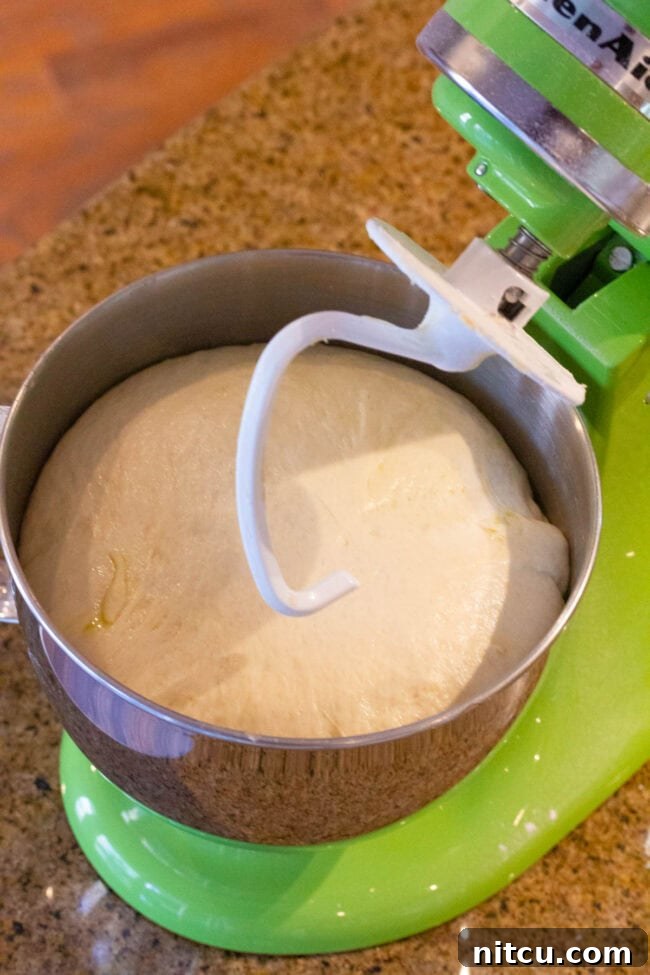
- First Rise: Gently pull the dough away from the sides of the bowl. Lightly rub the inside of the bowl with a little extra olive oil to prevent sticking. Cover the bowl tightly with plastic wrap or a damp kitchen towel. Let the dough rise in a warm, draft-free place for 1 1/2 to 2 hours, or until it has doubled in size. Once risen, remove the plastic wrap and turn the mixer back on low for about 30 seconds to gently “punch down” the dough.
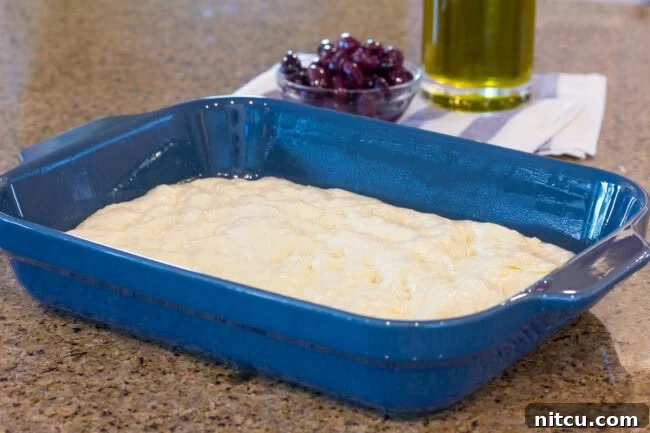
- Prepare for Baking: Generously oil a 9×13 inch or 11×15 inch rimmed baking dish with olive oil. Transfer the dough into the prepared dish. With oiled hands, gently press the dough outwards towards the edges of the pan. Don’t be afraid to let your fingers deeply puncture the dough – this creates the signature bumpy, rustic texture of traditional focaccia bread.
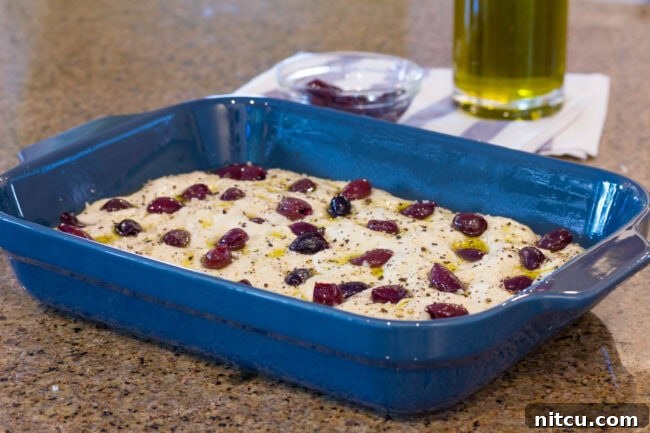
- Second Rise & Topping: Once the dough is spread out, use your fingertips to poke deep cavities (dimples) evenly across the surface of the dough. Place one pitted Kalamata olive into each hole. Make sure to push the olives down far into the dough; otherwise, they might pop out as the dough rises and bakes. Drizzle the entire surface with more olive oil and sprinkle generously with flaky sea salt and freshly ground black pepper. Cover the dough loosely with a clean, damp towel and allow it to rise again for at least 1 hour, or until visibly puffy.
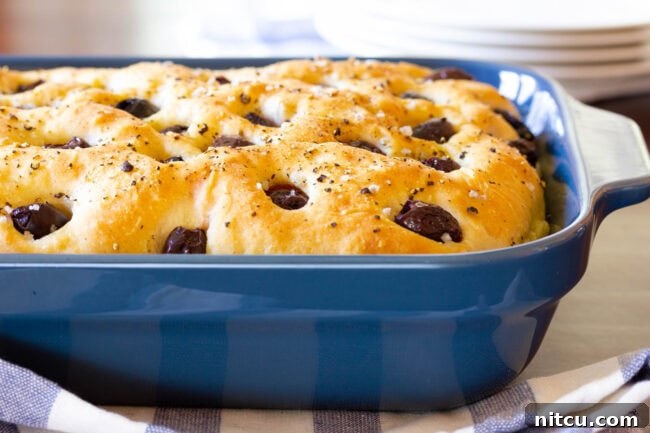
- Bake the Focaccia: Preheat your oven to 400°F (200°C). Carefully transfer the baking dish to the preheated oven. Bake for 35-45 minutes, or until the top is beautifully golden-brown and the internal temperature reaches around 200-210°F (93-99°C). Note: If you used a larger 11×15 inch dish, the baking time might be closer to 30-35 minutes due to the thinner dough. Keep a close eye on your focaccia, especially as it approaches the 28-minute mark.
- Cool and Serve: Once baked, remove the focaccia from the oven. You can leave it in the baking dish or carefully turn it out onto a wire rack for easier cutting. Allow it to cool for at least 15-20 minutes before slicing and serving. Enjoy warm!
Recipe Notes and Tips
- Baking Dish Size: This recipe is flexible! You can make a huge, flatter loaf in an 11×15 inch baking dish for a more traditional thin focaccia. Alternatively, a 9×13 inch pan will yield a slightly taller and thicker loaf, or you can even press it out free-form on a large baking sheet for a rustic, irregular shape.
- Serving Presentation: You can leave the focaccia directly in the baking dish for a beautiful presentation, or carefully turn it out onto a cutting board for easier, cleaner slicing.
- Freshness and Storage: For optimal freshness, wrap the bread tightly in plastic wrap or store it in an airtight container. It will keep well for 1-2 days at room temperature. If you plan to keep it longer, store it in the refrigerator for up to 3 days.
- Freezing Instructions: Focaccia bread can be frozen for up to 3 months. To freeze, wrap individual slices or larger portions in layers of plastic wrap and then aluminum foil. Place these securely wrapped pieces into a freezer-safe plastic zipper bag to protect against freezer burn. Thaw at room temperature before reheating.
Nutrition Facts
Serving: 1 piece
- Calories: 201 kcal
- Carbohydrates: 34 g
- Protein: 5 g
- Fat: 5 g
- Saturated Fat: 1 g
- Sodium: 411 mg
- Potassium: 59 mg
- Fiber: 2 g
- Sugar: 1 g
- Vitamin A: 30 IU
- Vitamin C: 0.4 mg
- Calcium: 14 mg
- Iron: 2 mg
(Nutrition values are estimates and may vary based on specific ingredients and preparation.)
Course: Bread
Cuisine: American, Italian
Author: Sommer Collier
Frequently Asked Questions About Focaccia
You have several options! For a traditional flat loaf, an 11×15 inch baking dish is excellent. For a slightly taller loaf, a 9×13 inch pan works perfectly. You can also press the dough out free-form directly onto a baking sheet, or even use a large cast iron skillet for a lovely crispy bottom.
The best method is to cut individual servings from the loaf, wrap each piece in aluminum foil, and bake in a preheated oven at 350°F (175°C) for about 5-10 minutes, until the fluffy inner crumb is warm. Alternatively, you can sprinkle a little water over slices of bread, wrap them in a paper towel, and microwave in 5-second bursts until warm. Be careful not to over-microwave, as it can dry out the bread.
Absolutely! While Kalamata olives offer a wonderful briny flavor, you can certainly experiment with other varieties. Green olives (like Castelvetrano or Manzanilla) or black olives (such as Mission or Gaeta) would also be delicious. Just ensure they are pitted before adding them to your dough.
Yes, you can! Besides standard baking dishes, this focaccia bakes beautifully in a large cast iron skillet, which can give it an exceptionally crisp bottom crust. A regular sheet pan also works well, allowing for a thinner, crispier focaccia, similar to a pizza crust.
Yes, you can! After the first rise, gently punch down the dough, cover the bowl tightly with plastic wrap, and refrigerate it for up to 24-48 hours. When you’re ready to bake, remove the dough from the fridge, let it come to room temperature for about 30-60 minutes, then proceed with shaping, the second rise, and baking as instructed.
Similar Recipes You Might Like
If you loved making this Roasted Garlic & Olive Focaccia, be sure to explore these other delightful bread recipes from our kitchen: