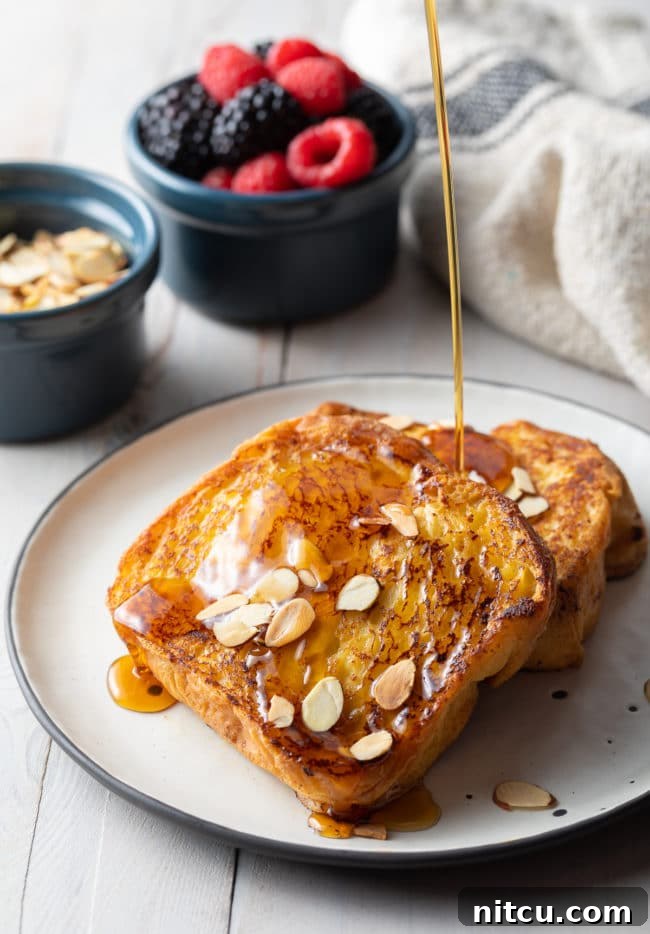
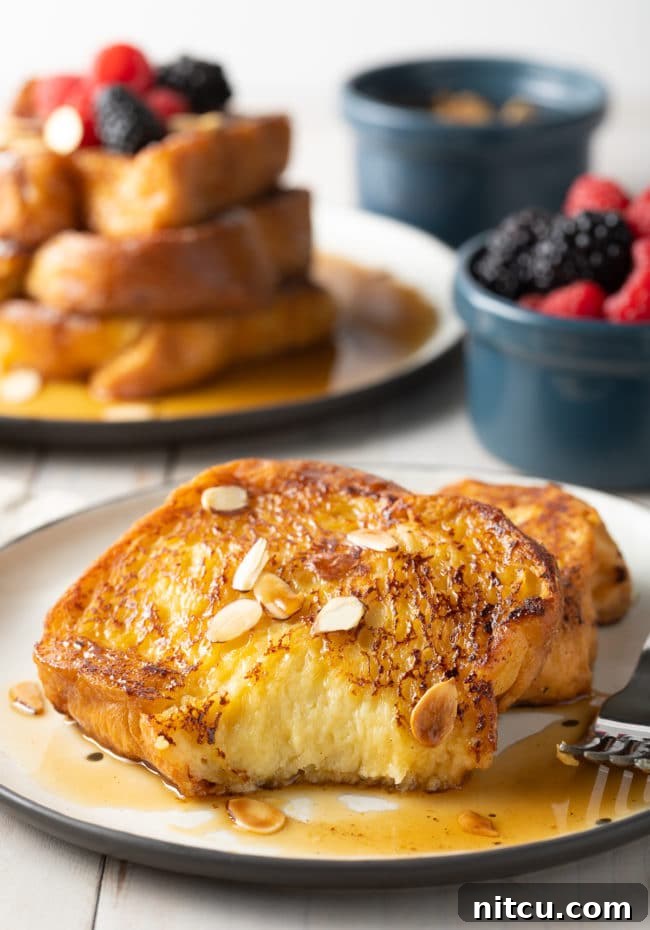
Unlock the secret to the BEST French Toast you’ve ever tasted – authentic Pain Perdu. Imagine a breakfast marvel with a perfectly crispy, golden exterior giving way to an impossibly soft, rich, and custard-like interior. Our easy French Toast recipe isn’t just a meal; it’s a magical culinary experience that transforms simple ingredients into an extraordinary delight. Prepare to elevate your brunch game and discover the true essence of French artistry in every bite.
Discover the Authentic Delight: Why This Pain Perdu Recipe is a Game Changer
For years, I believed I had mastered the art of French toast. My Sunday brunches were often praised, and I confidently thought my recipe was the pinnacle. However, a series of trips to France unexpectedly challenged my culinary assumptions. Immersing myself in Parisian culture and taking several authentic cooking classes revealed a profound truth: there was an entirely different, superior way to prepare this beloved breakfast staple. The French version, known as Pain Perdu, meaning “lost bread,” was far removed from the overly eggy, sometimes dry, or even soggy versions I was accustomed to in America.
This journey of discovery led me to understand the key distinctions that transform a good French toast into an extraordinary one. American French toast often suffers from thin, insipid sandwich bread, a custard mix that’s too heavy on whole eggs (leading to an “eggy” flavor), and an overabundance of spices like cinnamon and nutmeg that can mask the delicate flavor of the bread and custard. It can be disappointingly dry in the center if not sufficiently soaked, or conversely, a soggy mess if the liquid ratios are off. In stark contrast, authentic Pain Perdu is a revelation. It demands thick slices of quality bread, enveloped in a luxurious, vanilla-kissed custard, pan-fried to a golden crispness, and baked until the interior is akin to a light, pillowy dessert. It boasts a perfectly balanced sweetness, requiring no heavy syrup, allowing the sublime vanilla custard notes to shine. This isn’t just breakfast; it’s a gourmet experience.
The transformation in my own kitchen was remarkable. After extensive experimentation, combining traditional French techniques with a few modern tweaks, my French toast finally rivaled the exquisite Pain Perdu I savored in Paris. It’s truly a dish that stands on its own, a testament to careful preparation and quality ingredients. Once you experience the depth of flavor and the perfect textural harmony of this genuine Pain Perdu, you’ll undoubtedly find it hard to return to any other version. Prepare yourself for a culinary awakening that will redefine your perception of French toast forever.
Essential Ingredients for Perfect Pain Perdu
Crafting the ultimate Pain Perdu relies on a select few high-quality ingredients. Each plays a crucial role in achieving that signature crispy exterior and velvety, custard-like interior. Here’s what you’ll need to gather:
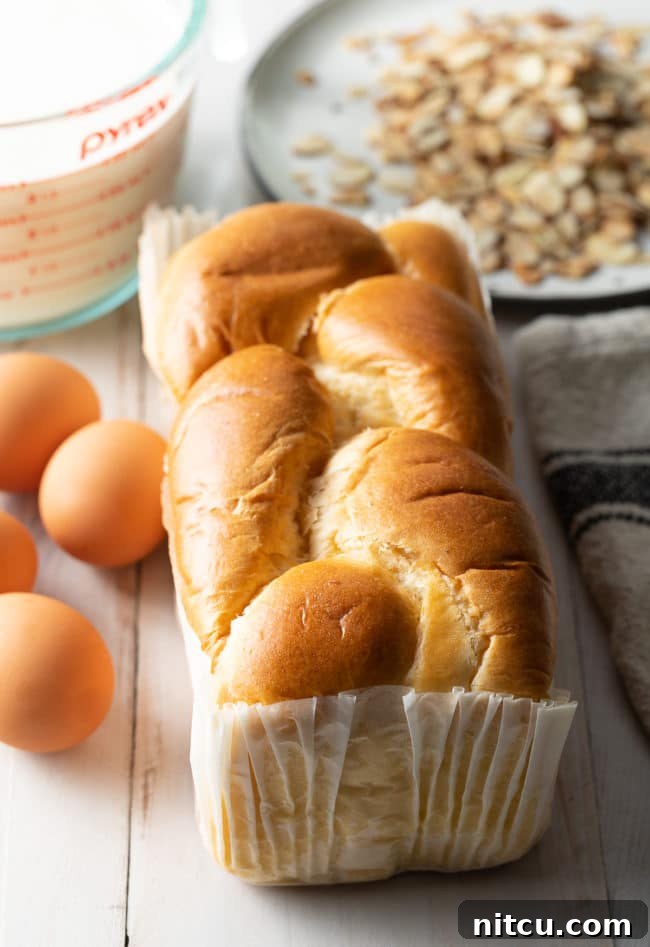
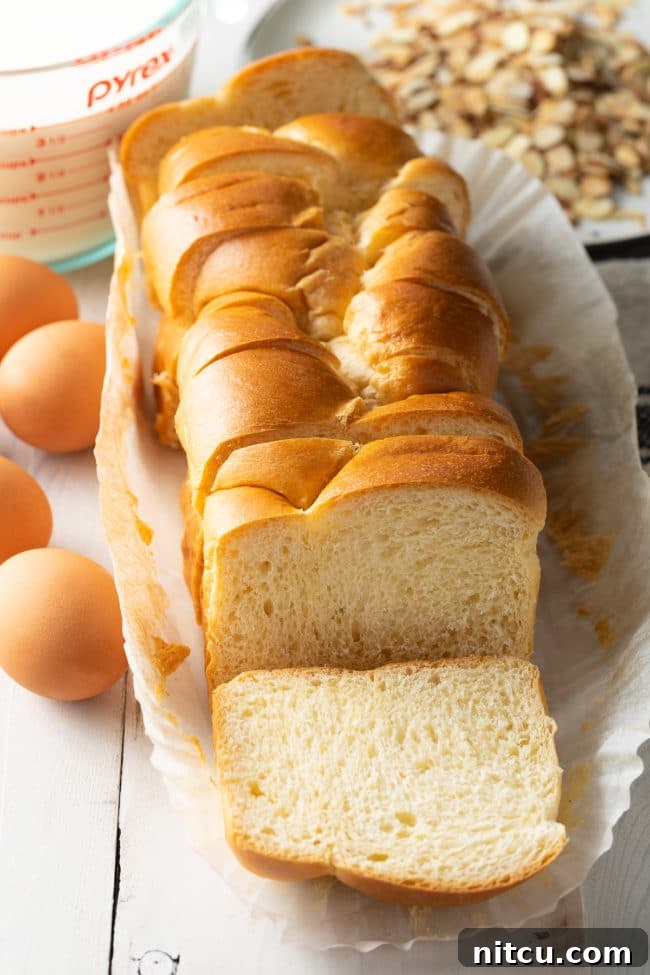
- Brioche Bread Loaf (Unsliced): This is the cornerstone of exceptional Pain Perdu. Brioche, with its rich, buttery flavor and tender crumb, soaks up the custard beautifully without falling apart. Buying an unsliced loaf allows you to cut thick, generous slices (about 1 inch each), which are essential for achieving the desired textural contrast. If brioche is unavailable, challah bread is an excellent alternative due to its similar richness and density. You do not necessarily need day-old bread; fresh brioche works wonderfully when cut thickly.
- Half & Half (Full-Fat): Forget counting calories for this indulgence! Full-fat half & half provides the perfect richness and creaminess for the custard. While some recipes might combine whole milk and heavy cream, a single carton of half & half simplifies the process and provides the ideal fat content for a luscious, silky batter. This richness is key to the melt-in-your-mouth texture.
- Egg Yolks: This is where the magic truly happens to prevent an “eggy” flavor. By using only egg yolks, you create a significantly richer, smoother, and more custardy batter. The yolks provide unparalleled richness and a silky texture, transforming the bread into a dessert-like consistency, far from the rubbery texture often associated with French toast made with whole eggs.
- Granulated Sugar: A modest amount of sugar is incorporated directly into the custard, ensuring the Pain Perdu is perfectly sweet on its own. This eliminates the absolute necessity for syrup, although it remains a delightful option. The sugar caramelizes beautifully during frying, contributing to the golden-brown crust.
- Vanilla Extract: Just a touch of pure vanilla extract is enough to infuse the custard with a delicate, aromatic vanilla flavor. This subtle essence is vital, enhancing the richness without overpowering the other ingredients, creating a truly gourmet profile.
- Pinch of Salt: A tiny pinch of salt might seem insignificant, but it’s a flavor enhancer. It balances the sweetness, deepens the vanilla notes, and brings all the flavors into harmonious balance, making each bite more complex and satisfying.
- Unsalted Butter: Generous amounts of butter are essential for frying. It not only prevents sticking but also contributes significantly to the golden-brown, irresistibly crispy crust and adds another layer of rich, savory flavor that complements the sweet custard.
Mastering the Art of Perfect French Toast: A Step-by-Step Guide
Are you ready to create a breakfast that will genuinely impress? This easy-to-follow recipe for authentic Pain Perdu promises a truly mind-blowing experience. Let’s get started!
- Preheat Your Oven: Begin by preheating your oven to a gentle 275°F (135°C). While the French toast cooks on the stovetop, the oven acts as a warming chamber. This crucial step ensures that each batch stays warm, slightly puffs up, and develops an even more delightful texture. It also helps to “finish off” the cooking process gently, guaranteeing a perfectly cooked, non-raw interior. Prepare a large baking sheet by lining it with parchment paper for easy transfer.
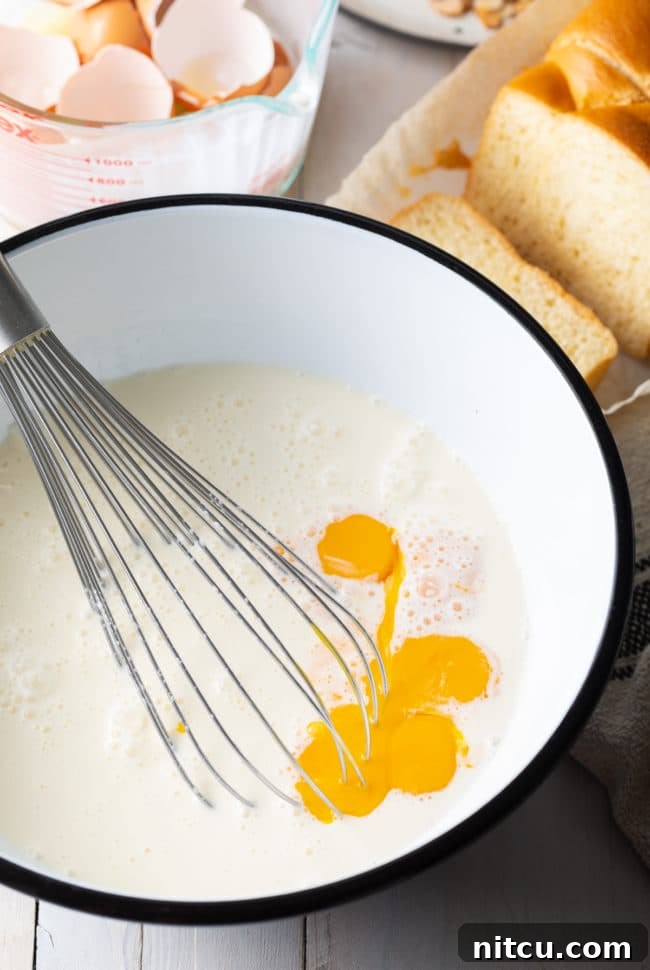
- Whisk the Custard: In a wide, shallow dish or bowl (choose one large enough to comfortably dip your bread slices), combine the half & half, egg yolks, granulated sugar, vanilla extract, and a pinch of salt. Whisk vigorously until all ingredients are thoroughly combined and the sugar has completely dissolved. The mixture should be smooth and homogenous. This creates the rich, flavorful custard that will transform your brioche.
- Slice the Brioche: Using a sharp serrated knife, carefully slice your brioche loaf into generous 1-inch thick pieces. Precision here is key; slices that are too thin will become soggy, while overly thick slices may not cook through properly. Aim for about 10 uniform slices from a standard loaf. Contrary to a common misconception, you don’t need stale or day-old bread for this recipe; fresh brioche works exceptionally well when cut to the right thickness.
- Prepare the Skillet: Place a large, heavy-bottomed skillet (cast iron or non-stick works best) over medium heat. Add 1-2 tablespoons of unsalted butter, allowing it to melt and coat the bottom of the pan evenly. The butter should be shimmering but not smoking, indicating the perfect temperature for frying.
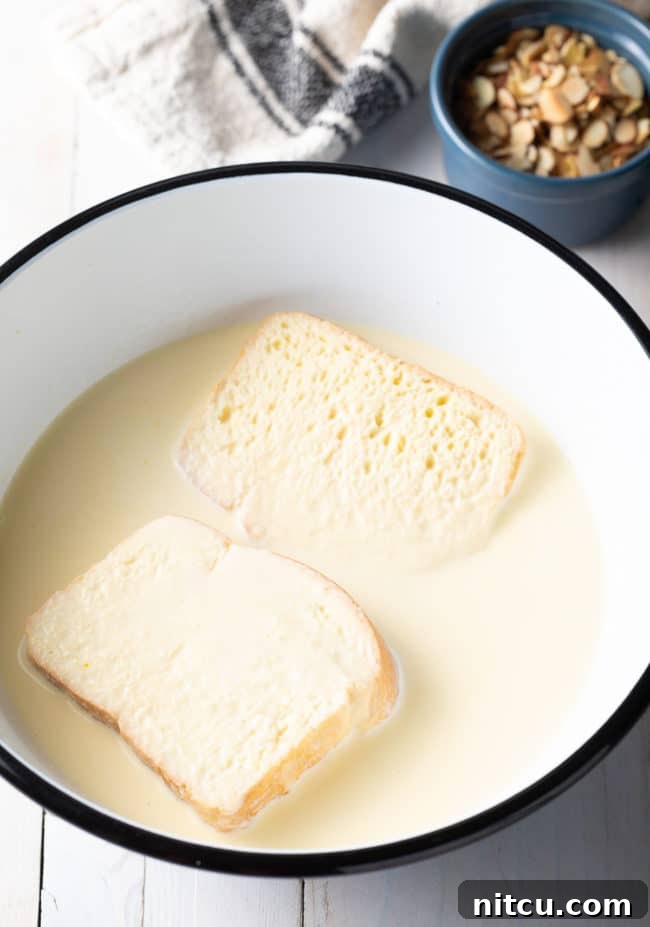
- Soak the Brioche: Gently place 2-3 slices of brioche into the prepared custard batter. Allow the bread to soak for approximately 30-60 seconds per side, flipping once to ensure both sides are thoroughly saturated. The goal is for the bread to absorb enough liquid to become moist and custardy inside without dissolving or becoming mushy. This step is critical for achieving the signature pillowy interior.
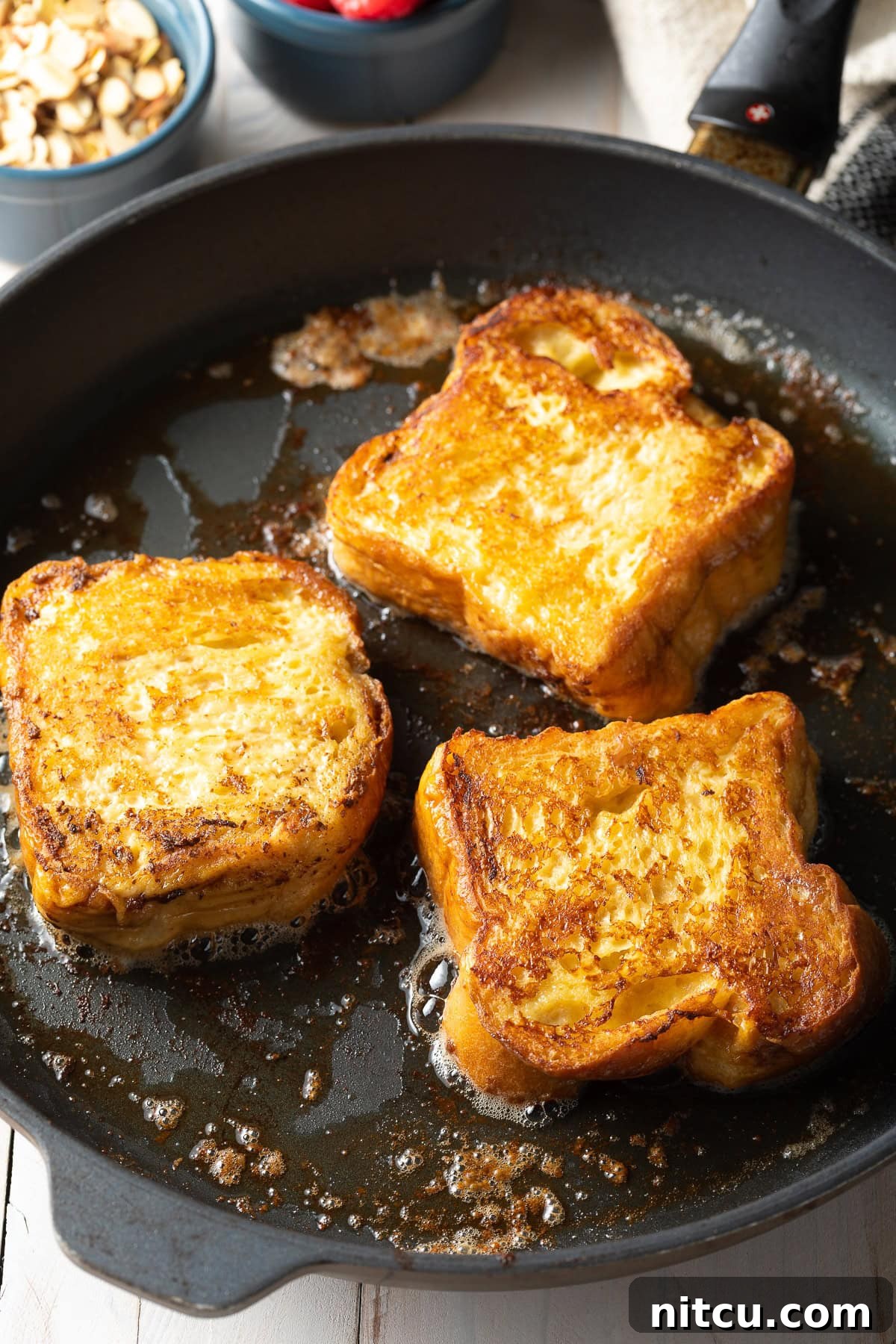
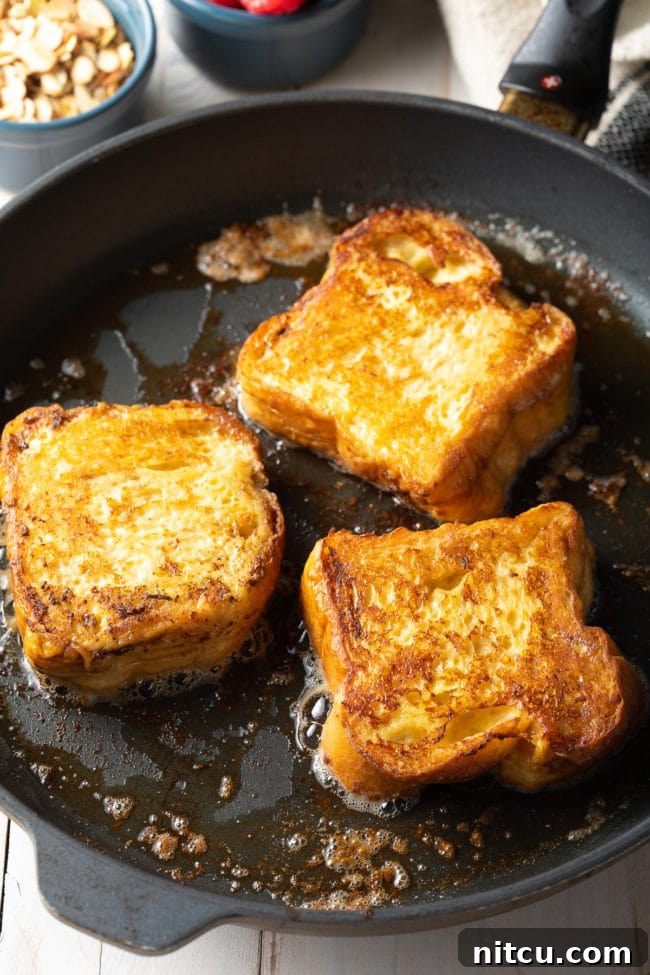
- Fry to Golden Perfection: Carefully transfer the soaked brioche slices from the custard to the hot, buttered skillet. Fry each side for 2-3 minutes, or until it achieves a beautiful golden-brown color and a crispy exterior. Keep a close eye on the heat; if the bread is browning too quickly, reduce the heat to medium-low. This allows the interior more time to cook through slowly, ensuring that custardy center without burning the outside.
Pro Tip for Perfection: The hallmark of truly great Pain Perdu is a delightful contrast: a golden-brown, crispy crust giving way to an incredibly tender, custard-like, and pillowy interior. The inside should be fully cooked, not raw. Adjusting the heat and allowing sufficient cooking time on the skillet is key to achieving this harmonious texture.
- Keep Warm in the Oven: Once fried to perfection, transfer the cooked French toast pieces to the prepared baking sheet in the preheated oven. The low heat will keep them warm and prevent them from becoming soggy. This gentle warmth also allows the interior to continue to puff up, enhancing the light, custardy texture.
- Repeat the Process: Wipe out the skillet with a paper towel if there’s any dark butter residue, then add another tablespoon of fresh butter. Continue soaking and frying the remaining brioche slices in batches until all the bread is beautifully cooked. Place each completed batch in the oven with the others to ensure everything stays warm and perfect for serving.
Essential Pro Tip: Never skip the oven step! This low-heat resting period is vital. It not only keeps your French toast warm and ready but also plays a significant role in achieving that sought-after fluffy, pillowy internal texture. If you’re concerned about the center being undercooked, the oven provides a gentle finish, ensuring a consistently delightful, fully cooked custard interior without over-browning the exterior. This technique sets authentic Pain Perdu apart.
Below, you’ll find the full printable recipe for the Best French Toast (Pain Perdu). Get ready to enjoy an unforgettable breakfast!

Elevate Your Pain Perdu: Decadent Topping Suggestions
One of the beauties of this authentic Pain Perdu recipe is its inherent deliciousness. Thanks to the carefully balanced sweetness and rich vanilla custard flavor, it’s perfectly delightful served plain, straight from the oven. No additional toppings are strictly necessary!
However, if you’re inclined to add an extra layer of indulgence or variety, here are some exquisite topping suggestions to complement your gourmet French toast:
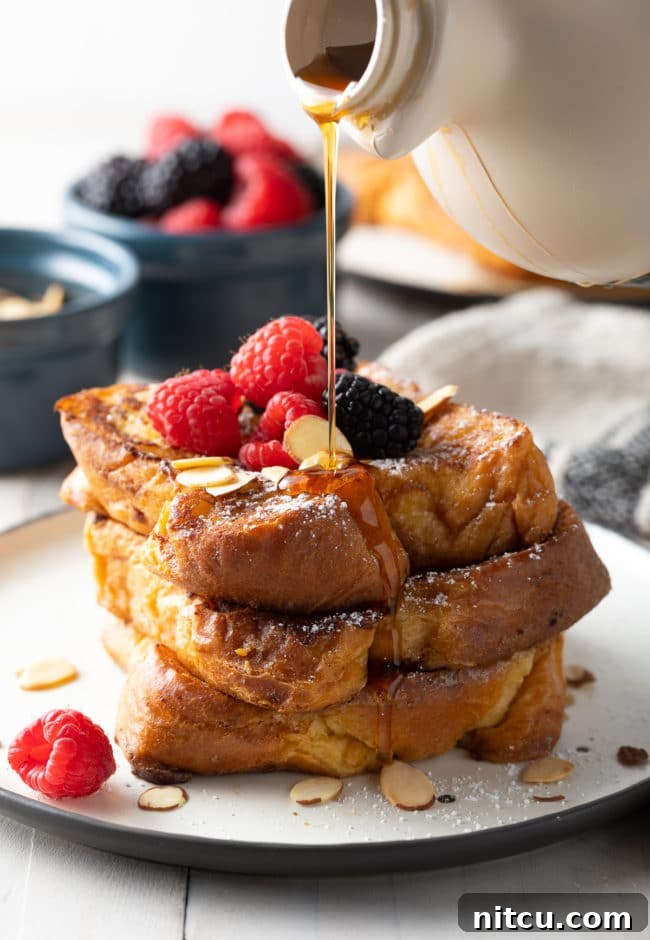
- Pure Maple Syrup: A classic choice, a light drizzle of high-quality maple syrup adds a touch of natural sweetness and earthy warmth.
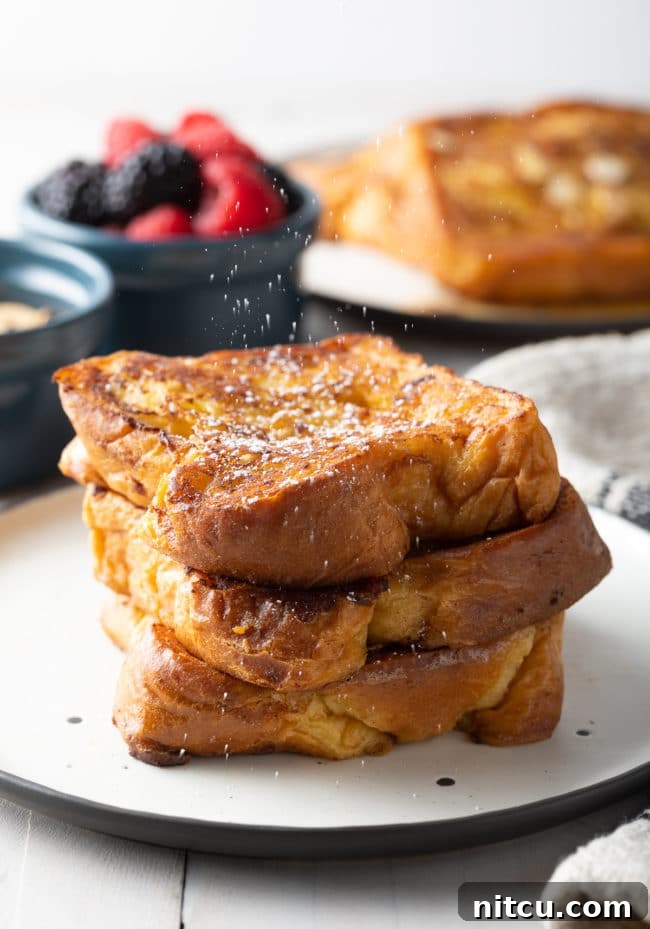
- Delicate Powdered Sugar: A simple dusting of powdered sugar (confectioners’ sugar) provides an elegant finish and a subtle sweetness that melts beautifully.
- Homemade Whipped Cream: Lightly sweetened whipped cream adds a cloud-like texture and rich dairy counterpoint, perfect for special occasions.
- Toasted Nuts: A sprinkle of toasted slivered almonds, chopped pecans, or walnuts offers a delightful crunch and nutty flavor contrast.
- Fresh Seasonal Fruit: Brighten your plate with an assortment of fresh berries like blueberries, raspberries, blackberries, and sliced strawberries. Peaches or sliced bananas also pair wonderfully, adding natural sweetness and vibrant color.
- Luxurious Caramel Sauce: A warm, gooey caramel sauce can transform your Pain Perdu into a truly decadent dessert.
- Fine Chocolate Shavings: For the chocolate lovers, a scattering of dark or milk chocolate shavings adds an elegant touch and intense flavor.
- Lemon Zest: A finely grated lemon zest can add a surprising burst of freshness, cutting through the richness beautifully.
- Cinnamon Sugar: While the custard has vanilla, a light sprinkle of cinnamon sugar after cooking can add a familiar comforting spice for those who love it.
Frequently Asked Questions About Pain Perdu (French Toast)
The distinction between American-style French toast and traditional French Pain Perdu is quite significant, mainly revolving around bread choice, custard composition, and resulting texture. American French toast commonly uses thinner slices of sandwich bread, soaked in a batter of whole eggs, milk, and often heavily spiced with cinnamon and nutmeg. This can result in a dish that feels “eggy,” sometimes dry if under-soaked, or soggy if over-soaked and undercooked. It typically relies heavily on syrup or other toppings for flavor and moisture. Pain Perdu, meaning “lost bread,” on the other hand, elevates the concept. It calls for thick slices of a rich bread like brioche or challah, immersed in a luxurious, custard-like mixture primarily made with egg yolks, half & half (or cream), vanilla, and less sugar. The absence of egg whites minimizes the “eggy” flavor and contributes to a remarkably rich, creamy, and pillowy interior with a beautifully crispy, golden exterior. Its balanced sweetness and delicate vanilla flavor mean it’s designed to be enjoyed on its own, without a deluge of toppings, though they can certainly enhance the experience.
Absolutely not! While authentic Pain Perdu should possess a moist, incredibly saturated, custard-like texture in the center, it should never be soggy or wet. The interior should be soft and pillowy, a stark contrast to a dry, bready middle. This custardy consistency is often moister than what many Americans traditionally expect from French toast. To achieve this perfect balance—a brilliantly caramelized, crispy exterior and a soft, custard cloud interior—it’s crucial to manage your cooking heat. If the exterior is browning too rapidly, lower the heat to medium-low. This allows the bread to cook through more slowly, letting the rich custard fully set and expand into that desired pillowy texture without becoming raw or soggy.
The ideal Pain Perdu should present a visual and textural symphony: a gorgeous golden and crispy crust, hinting at the decadent interior. When you cut into it, the center should be wonderfully custard-like and pillowy, yet fully cooked—never raw. If you notice the exterior browning too quickly on the skillet, promptly reduce the heat to medium-low. This adjustment provides crucial extra time for the heat to penetrate and thoroughly cook the interior, ensuring that creamy, smooth consistency. An invaluable technique to guarantee doneness and enhance texture is the oven warming step. Transferring the finished toast pieces to a low-temperature oven (around 275°F) allows them to gently finish cooking, puff up slightly, and prevents them from becoming soggy. This step is not merely for keeping them warm; it’s a vital part of perfecting the Pain Perdu’s texture, ensuring a consistently cooked, delightful result. Do not skip it!
The oven step primarily serves to keep your French toast warm and continue its internal transformation, making it puffier and more custardy. A “dry time” of just a few minutes, typically 5-10 minutes, as you finish cooking subsequent batches, is usually sufficient. However, if you are particularly concerned about ensuring the very center is thoroughly cooked, or if you prefer an even puffier texture, you can extend this period up to 20 minutes. Just ensure your oven temperature remains low (around 275°F) to prevent excessive browning or drying out. The longer it rests in the gentle heat, the more the interior will set into that desired airy, custard-like consistency.
Absolutely! To adapt this recipe for a lactose-free diet without sacrificing the signature custard-like consistency, I highly recommend using thick canned coconut milk. Unlike thinner dairy-free alternatives such as almond milk or oat milk, canned coconut milk provides the necessary richness and fat content to mimic the luxurious mouthfeel of half & half. Pair it with your favorite plant-based butter for frying, and you’ll achieve a wonderfully creamy and flavorful Pain Perdu that caters to dietary needs without compromising on taste or texture.
While Pain Perdu, like most fresh breakfast items, is undoubtedly at its peak when enjoyed immediately after preparation, leftovers can be stored. If you happen to have any extra slices, place them in an airtight container and refrigerate them for up to 3 days. When reheating, it’s best to do so gently in a toaster oven or a skillet over low heat to help restore some of its crispness and avoid a rubbery texture. A quick flash in the microwave is also an option for speed, but may result in a softer texture.
Explore More Delicious Breakfast & Brunch Recipes!
If you’ve fallen in love with the art of breakfast making, we have a curated selection of other incredible recipes that are perfect for starting your day right or impressing guests at brunch. Expand your culinary repertoire with these delightful dishes:
- Easy Almond Flour Pancakes
- Sweet Potato Hash
- Tropical Breakfast Muffins
- Egg White Frittata with Spinach and Peppers
- Budwig Cheese Spreads
- Spinach Scrambled Egg Muffins
- Corned Beef Hash
- Cinnamon Twist Recipe
- Ginger Blackberry Muffins
- Cheater Kouign Amann
- Greek Omelette Casserole
Below, you’ll find the full printable recipe for the Best French Toast (Pain Perdu). Get ready to enjoy an unforgettable breakfast!

Print Recipe
How To Make French Toast (Pain Perdu)
Prep Time: 10 minutes
Cook Time: 24 minutes
Discover how to make the BEST French Toast recipe: Insanely delicious Pain Perdu with the perfect texture on both the inside and outside. This easy French toast recipe will blow your mind!
Servings: 10 thick slices
Video

Ingredients
- 1 loaf brioche bread, unsliced
- 3 cups half & half
- 5 egg yolks
- 1/2 cups granulated sugar
- 1 teaspoon vanilla extract
- 2 pinches salt
- 6 tablespoons butter
- Possible Toppings: Toasted almonds, fresh berries, powdered sugar, maple syrup, caramel sauce, chocolate shavings
Instructions
- Preheat the oven to 275 degrees Fahrenheit (135°C). Lay out a large baking sheet, preferably lined with parchment paper.
- In a large, shallow bowl, whisk together the half & half, egg yolks, sugar, vanilla, and salt until completely combined and the sugar is fully incorporated.
- Use a serrated knife to slice the brioche loaf into thick 1-inch pieces. You should get approximately 10 slices.
- Set a large skillet (cast iron or non-stick recommended) over medium heat. Add 1-2 tablespoons of butter, allowing it to melt and coat the pan.
- Carefully place 2-3 pieces of brioche into the egg mixture. Let them soak for about 30-60 seconds per side, ensuring the bread is fully saturated without becoming overly soggy.
- Gently transfer the soaked bread to the hot skillet. Fry the French Toast slices for 2-3 minutes per side, until they are beautifully golden brown and crispy. If browning too quickly, reduce the heat to medium-low to ensure the interior cooks through.
- Move the cooked French Toast to the baking sheet and place it in the preheated oven to keep warm and allow it to puff up further.
- Wipe the skillet clean with a paper towel if there is any dark residue, then add more butter. Repeat the soaking and frying process with the remaining bread slices until all are cooked. Place each batch in the oven to keep warm.
- Serve warm with fresh berries, maple syrup, or your favorite gourmet toppings!
Notes
Perfect French Toast (Pain Perdu) should feature a golden, crispy exterior and a wonderfully soft, custard-like, pillowy center – but never raw.
The oven step is crucial! Placing the finished French Toast pieces in the oven under low heat not only keeps them warm but also allows them to puff up and prevents sogginess. It also gently finishes cooking the interior, ensuring that delightful custard texture. Do not skip this important step!
Nutrition
Serving: 1 piece, Calories: 369kcal, Carbohydrates: 29g, Protein: 8g, Fat: 25g, Saturated Fat: 15g, Cholesterol: 201mg, Sodium: 327mg, Potassium: 104mg, Sugar: 10g, Vitamin A: 888IU, Vitamin C: 1mg, Calcium: 109mg, Iron: 1mg
Course: Breakfast, Dessert
Cuisine: French
Author: Sommer Collier