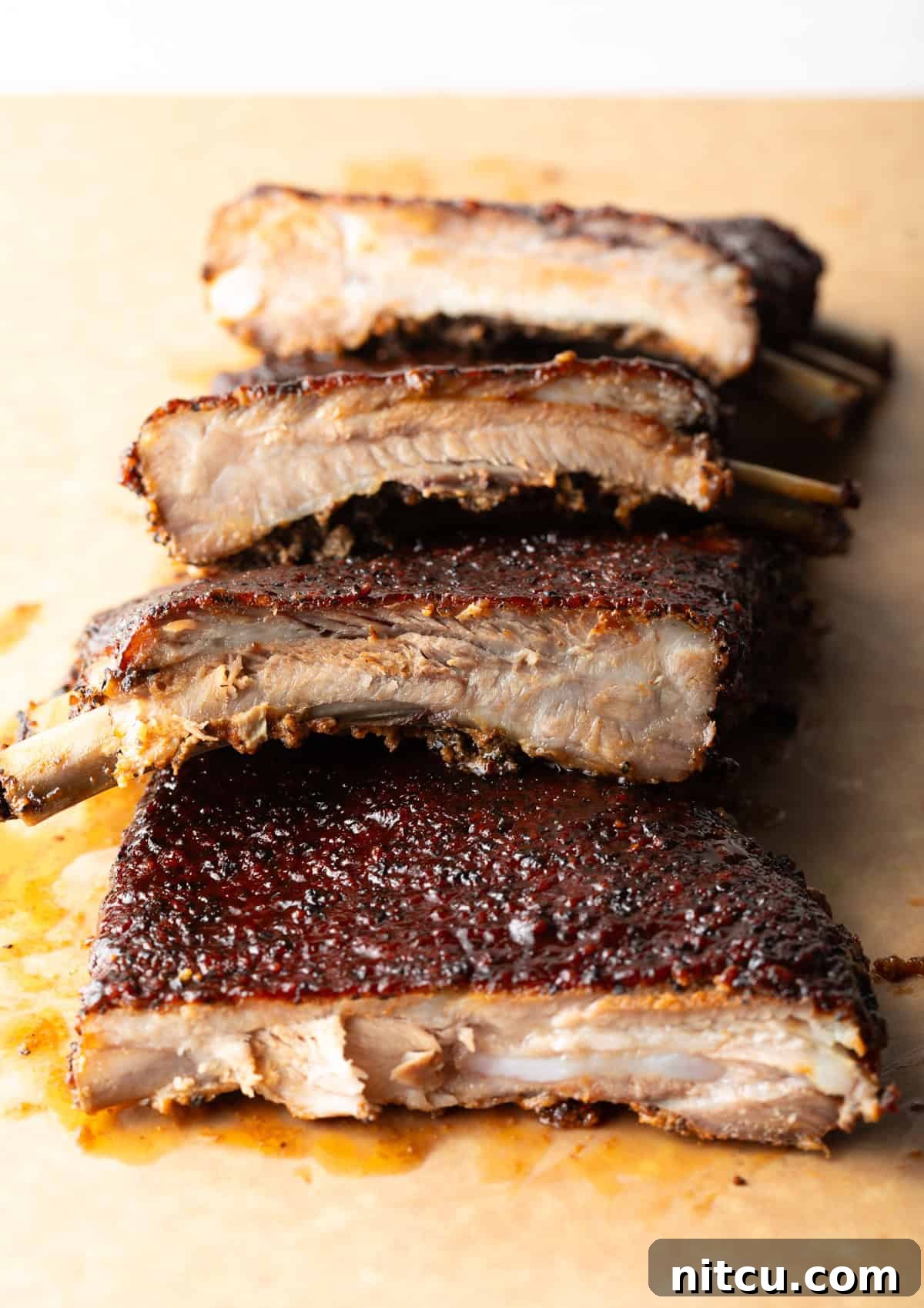
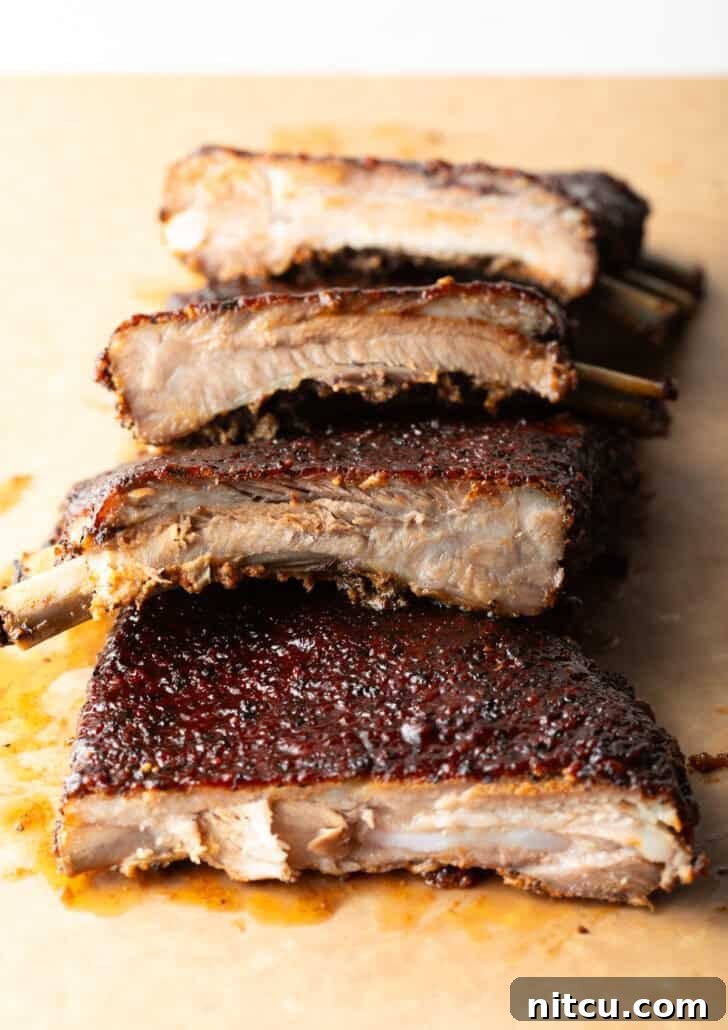
Unlock the secrets to crafting the best St. Louis-style pork ribs right in your home kitchen, wherever you are! Whether you prefer to grill them to smoky perfection or bake them low and slow in the oven, these spare ribs, generously slathered with Dijon mustard and your favorite BBQ sauce, will deliver an irresistible, fall-off-the-bone tenderness that truly melts in your mouth.

Sommer’s Culinary Insights: Mastering St. Louis Ribs
Welcome, fellow enthusiasts of savory, succulent meats! While our household doesn’t indulge in meat at every meal, the sight of a hot, saucy rack of melt-in-your-mouth pork ribs instantly transforms me into a devoted carnivore. There’s something undeniably satisfying about perfectly cooked ribs, and today, we’re diving deep into the art of making St. Louis-style pork ribs.
Our site boasts several fantastic recipes, showcasing various methods for preparing baby back ribs – whether baked in the oven, grilled to smoky perfection, or even made conveniently in an air fryer or slow cooker. Today, our focus shifts to the more substantial St. Louis ribs, a distinct cut from a different section of the pig, yet equally straightforward and rewarding to cook. If you appreciate robust, meaty pork ribs that deliver on flavor and tenderness, this easy-to-follow recipe is precisely what you’ve been searching for!
Why St. Louis-Style Ribs Are a Must-Try
Choosing St. Louis-style ribs for your next barbecue or family dinner comes with a host of delicious advantages:
- Become a Rib Connoisseur: This guide thoroughly explores the nuances of St. Louis versus baby back ribs, covering their size, shape, texture, and taste, empowering you to choose and prepare like a pro.
- Flexible Cooking Methods: We provide detailed instructions for both baking these ribs in the oven and cooking them on a grill, ensuring you can achieve perfect results regardless of your preferred equipment or weather conditions.
- Unforgettable Flavor Profile: Our proven recipe guarantees savory, incredibly moist, and consistently fall-off-the-bone tender pork spare ribs, infused with deep, rich flavor in every bite.
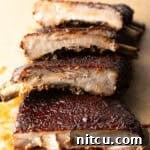
The base recipe comfortably serves 2-4 people, but it is incredibly easy to double or even triple to accommodate larger gatherings. As you’ll observe in the accompanying photos, I often prepare a double batch to serve 4-8 hungry guests, ensuring everyone gets to savor these magnificent ribs.
Essential Ingredients and Expert Tips
Crafting the perfect St. Louis-style ribs starts with selecting quality ingredients and understanding how each contributes to the final masterpiece:
- Pork Ribs (St. Louis-style spare ribs): Opt for large, meaty racks. St. Louis ribs are typically cut into a rectangular shape, making them ideal for even cooking. When purchasing from a butcher, don’t hesitate to ask them to remove the tough silverskin membrane from the back of the ribs; it’s a crucial step that needs to be done anyway for optimal tenderness and flavor absorption.
- Dijon Mustard: This seemingly unconventional ingredient serves a dual purpose. Its tangy, slightly pungent flavor cuts through the richness of the pork and complements the sweetness of the BBQ sauce beautifully. More importantly, it acts as an excellent binder for your dry rub, helping the seasonings adhere evenly to the meat and creating a flavorful crust.
- Pork Rub Seasoning: A quality dry rub is fundamental for building layers of flavor. You can use our cherished homemade pork seasoning, which is perfectly balanced, or choose a high-quality store-bought BBQ rub. For a quick and effective homemade option, combine 2 teaspoons brown sugar, 1 ½ teaspoons salt, 1 teaspoon black pepper, ½ teaspoon garlic powder, ½ teaspoon cumin, and ½ teaspoon paprika. This blend provides a delightful mix of sweet, savory, and smoky notes.
- BBQ Sauce: The beauty of BBQ sauce lies in personal preference! There’s no single “best” BBQ sauce for ribs, so feel free to use your absolute favorite. Traditional sweet and tangy sauces work wonderfully, as do spicier, peppery varieties. Mesquite and hickory bourbon flavors are also fantastic choices that add a deep, smoky complexity. Experiment to find the perfect pairing for your palate!
St. Louis vs. Baby Back Ribs: A Comprehensive Comparison
Understanding the distinctions between baby back and St. Louis-style ribs is key to appreciating their unique qualities and choosing the right cut for your culinary endeavors. Let’s break down the differences in cut, size, and flavor profile.
Cut of Meat
- St. Louis Ribs: These ribs are derived from the larger, fattier portion of the pig’s ribcage, specifically the area below the belly and breastbone, after the brisket and sternum are removed. This cut is also where bacon originates, which explains why St. Louis ribs tend to be richer in connective tissue and cartilage. When cooked low and slow, these collagen-rich tissues break down and melt into the meat, imparting incredible succulence and intensifying the pork’s natural flavor. This results in a truly luxurious eating experience.
- Baby Back Ribs: Also known as loin back ribs, these are cut from the upper portion of the ribcage, closest to the spine and loin muscle. This area is typically leaner, with less fat and connective tissue compared to St. Louis ribs. While still flavorful and tender when prepared correctly, baby backs offer a different texture and a slightly milder pork essence.
Size and Shape
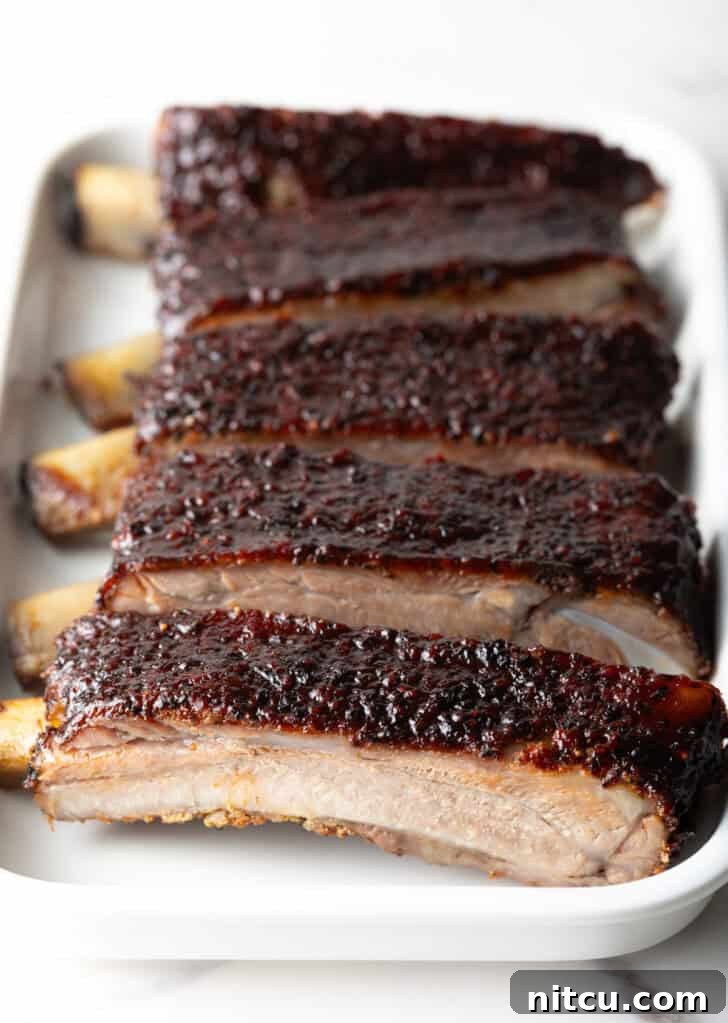
- St. Louis Ribs: Characterized by their larger, flatter, and more rectangular shape, St. Louis ribs are generally more substantial. A typical rack weighs between 2.5 to 3.5 pounds. Their uniform, flat bone structure is advantageous for cooking, as it allows them to lie evenly on a grill grate or baking sheet, promoting consistent heat distribution and more even cooking. This also makes them easier to handle and slice into individual portions.
- Baby Back Ribs: These ribs are shorter and possess a distinctive curve, tapering from one end to the other. A rack usually weighs around 1.5 to 2.5 pounds. Despite being leaner and smaller, baby back ribs are still wonderfully meaty and remain a popular choice for their quick cooking time and tender texture.
Texture and Taste
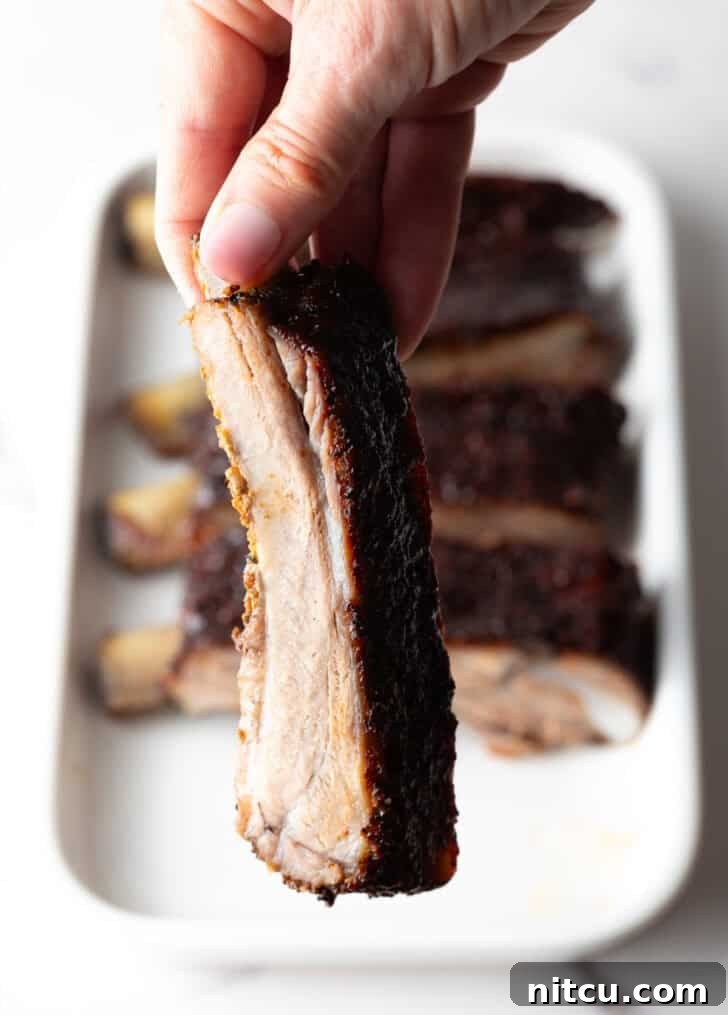
- St. Louis Ribs: The generous marbling of fat within St. Louis cuts is a significant contributor to their superior flavor and texture. When cooked patiently, at lower temperatures for an extended period, the fat renders beautifully, permeating the meat and creating an intensely rich, profound pork flavor. The breakdown of connective tissues results in a pleasingly chewy yet incredibly tender texture, often described as “pull-off-the-bone” rather than “fall-off-the-bone” for a more authentic barbecue experience.
- Baby Back Ribs: As mentioned, baby back ribs are notably leaner with very little intramuscular fat. This characteristic makes them cook relatively faster and results in a meat that is moist and tender, albeit with a milder pork flavor compared to their St. Louis counterparts. They offer a delicate bite that many find appealing.
Step-by-Step Guide: Crafting St. Louis Ribs at Home
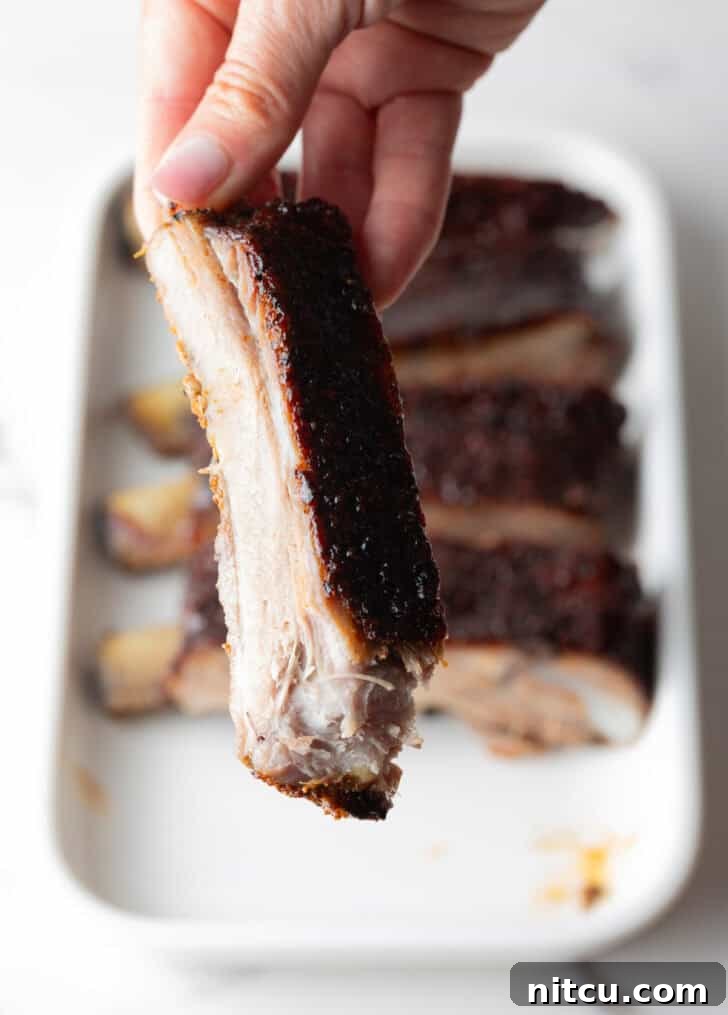
Achieving perfectly tender and flavorful St. Louis-style ribs is simpler than you might think, especially with these crucial tips. Remember, patience is your best friend when it comes to ribs!
For the complete St. Louis-Style Ribs recipe, including precise measurements, comprehensive instructions, expert storage advice, and a helpful video tutorial, please refer to the detailed recipe card found towards the end of this post.
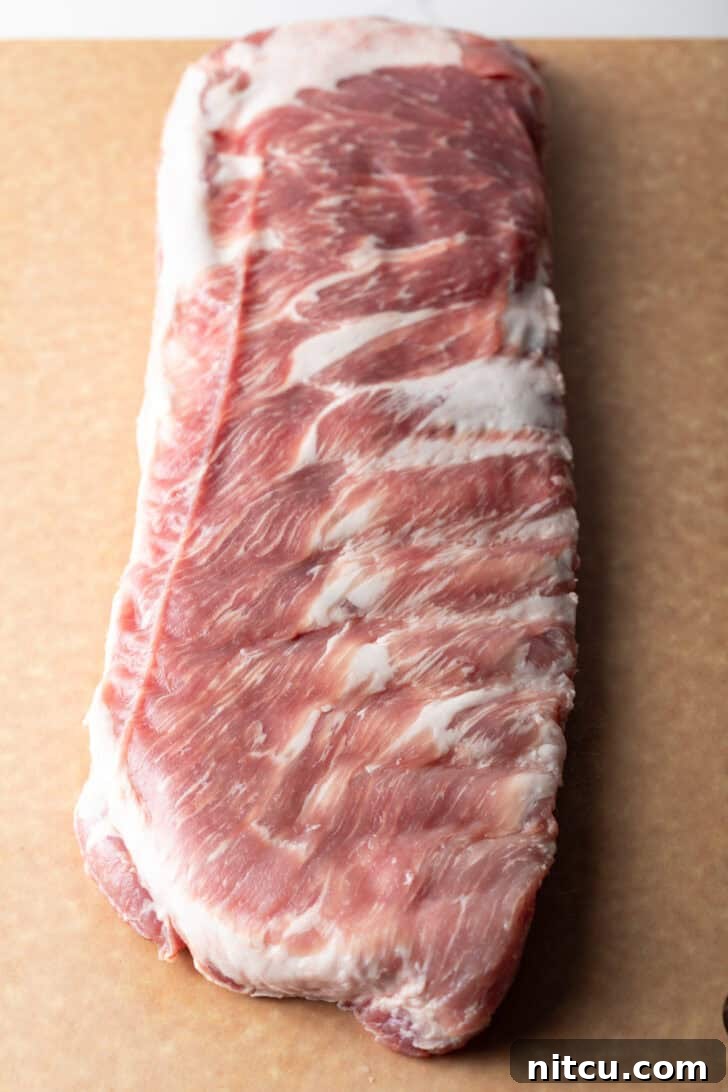
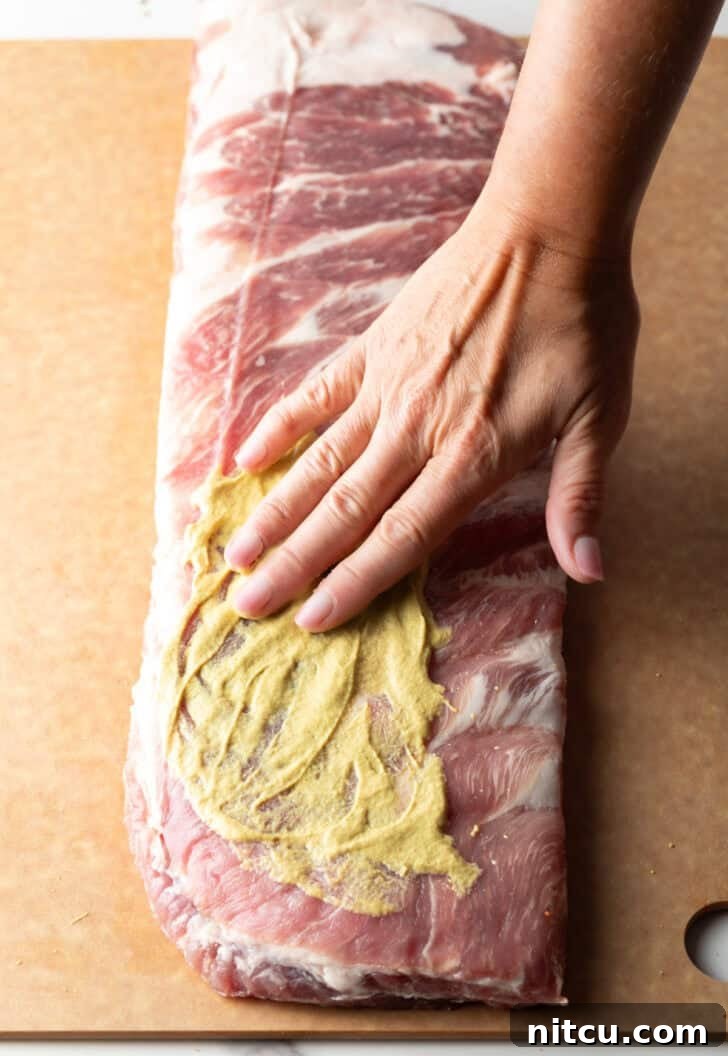
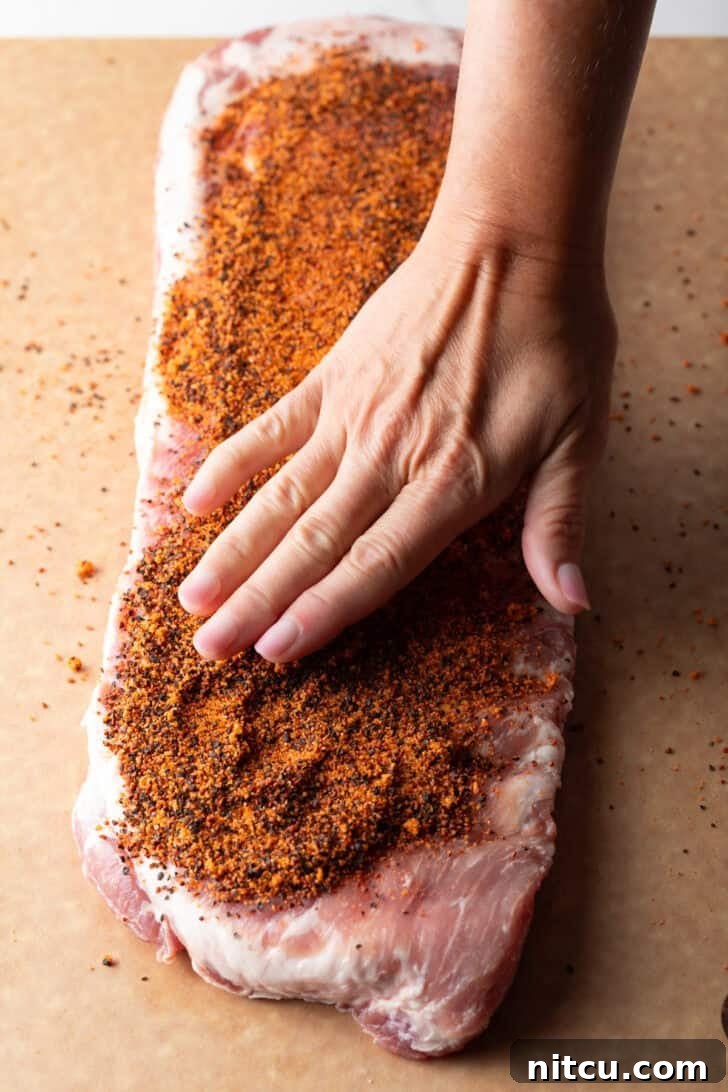
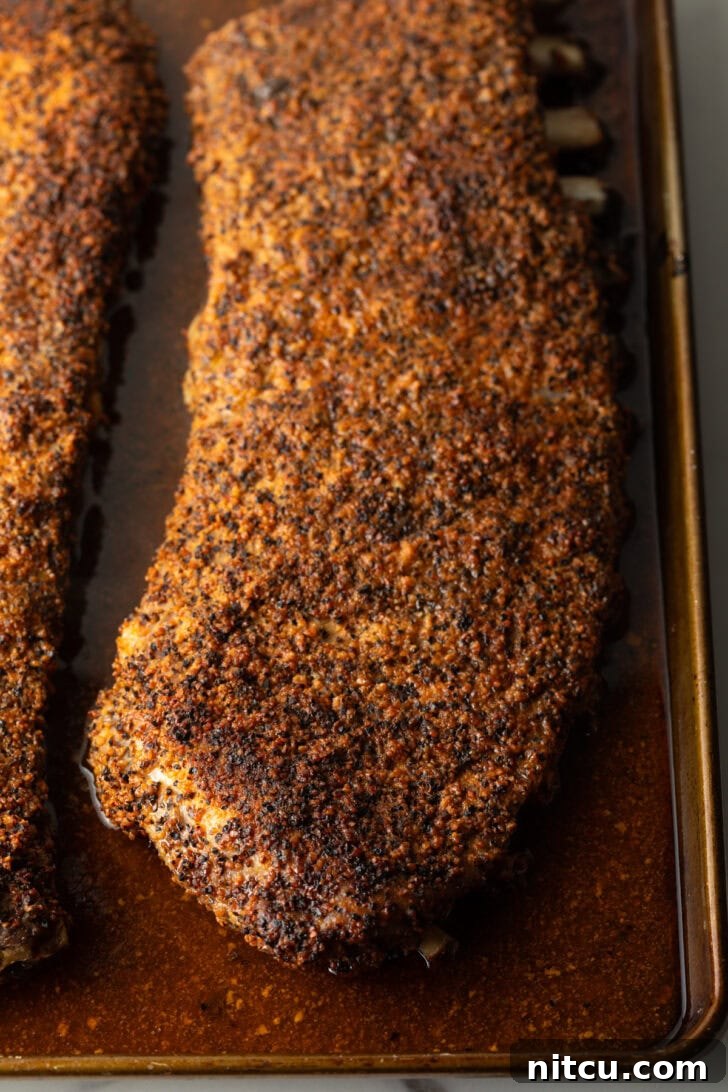
Prepping Your Ribs for Success
Proper preparation is the foundation for outstanding ribs. Don’t skip these crucial initial steps:
- Remove the Silverskin: This thin, tough membrane on the underside of the ribs must be removed. It prevents seasonings from penetrating and results in a chewy, undesirable texture. To remove, flip the rack over. Use a butter knife or the blunt end of a spoon to gently slide under one corner of the membrane, working it free. Once you have a loose edge, grasp it with a paper towel (for better grip) and pull steadily across the rack. It should peel off in one large sheet. If it tears, simply repeat the process with the remaining pieces.
- Apply Dijon Mustard: Spread a thin, even layer of Dijon mustard over both sides of the ribs. This acts as an adhesive for your dry rub and contributes a subtle tang that balances the richness of the pork. Don’t worry, the strong mustard flavor will mellow considerably during cooking.
- Generously Season with Pork Rub: Sprinkle your chosen pork seasoning liberally over both sides of the mustard-coated ribs. Gently pat the rub into the meat to ensure it adheres well. A crucial tip for success: Avoid the temptation to add extra seasoning beyond what’s specified. Ribs absorb flavors incredibly well, and over-salting can quickly lead to an expensive, disappointing mistake. The recommended amount ensures perfect seasoning.
Mastering the Cook: Oven or Grill
Both oven baking and grilling yield fantastic St. Louis ribs. Choose the method that best suits your equipment and preference.
Oven Method: Low and Slow Perfection
- Initial Bake (Foil-Wrapped): Preheat your oven to 350°F (175°C). Place the seasoned ribs on a large rimmed baking sheet. For ultimate tenderness and moisture retention, cover the baking sheet tightly with aluminum foil, crimping the edges securely to create a sealed environment. Bake for an initial 2 hours. This steaming process inside the foil is what truly breaks down the connective tissues, making the ribs incredibly tender.
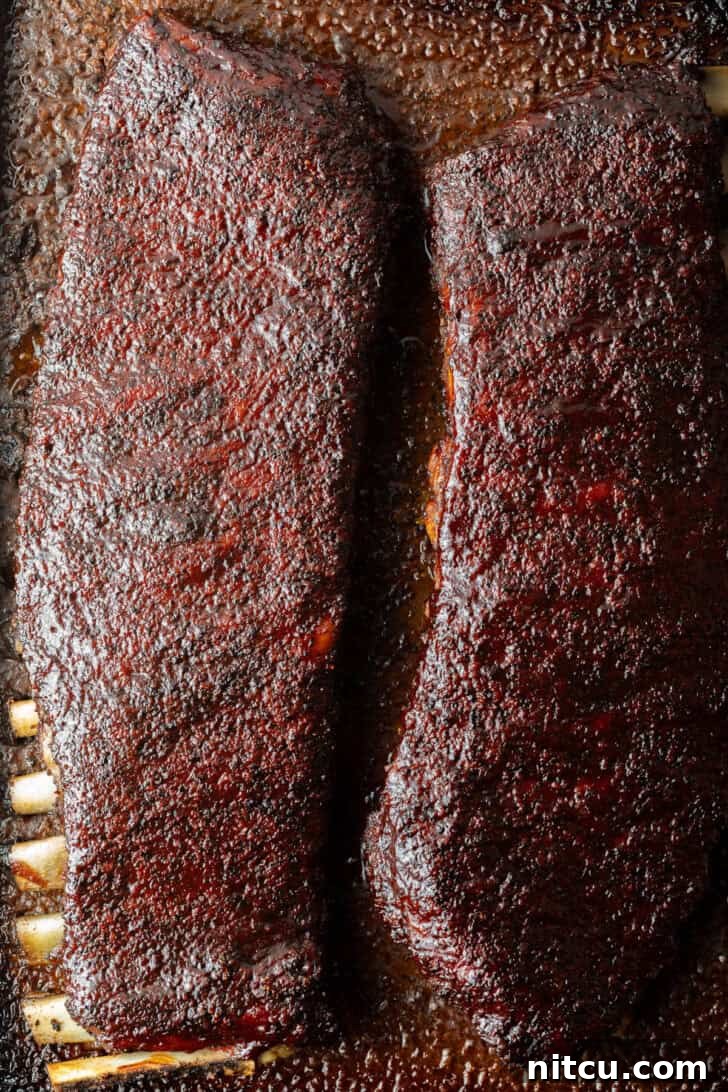
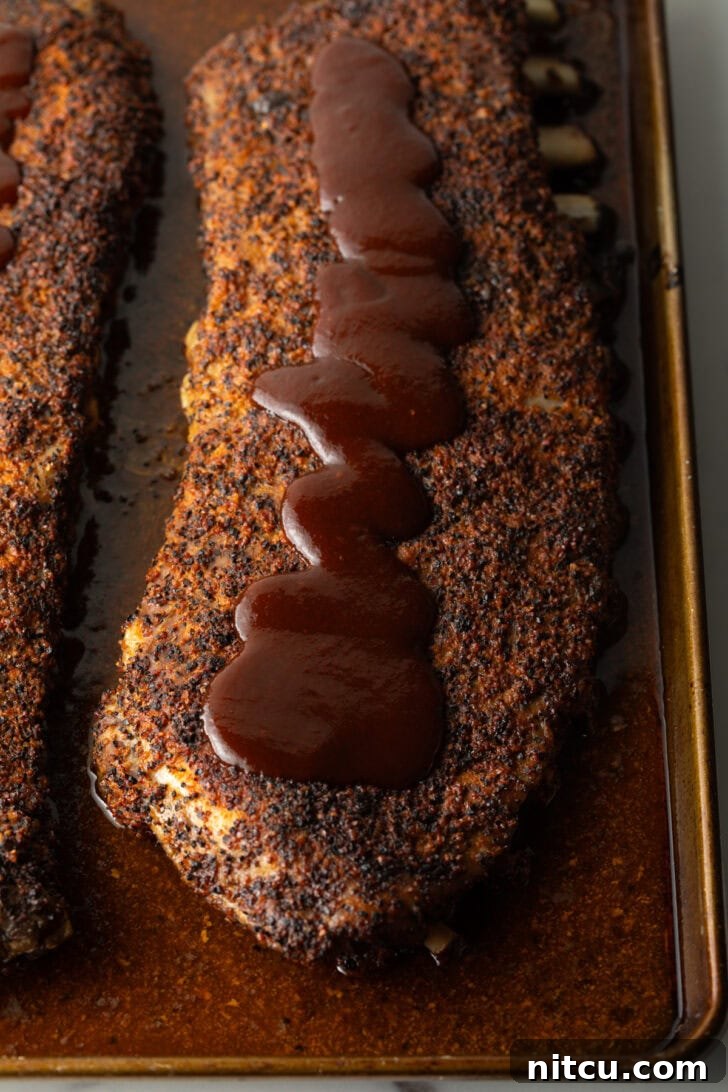
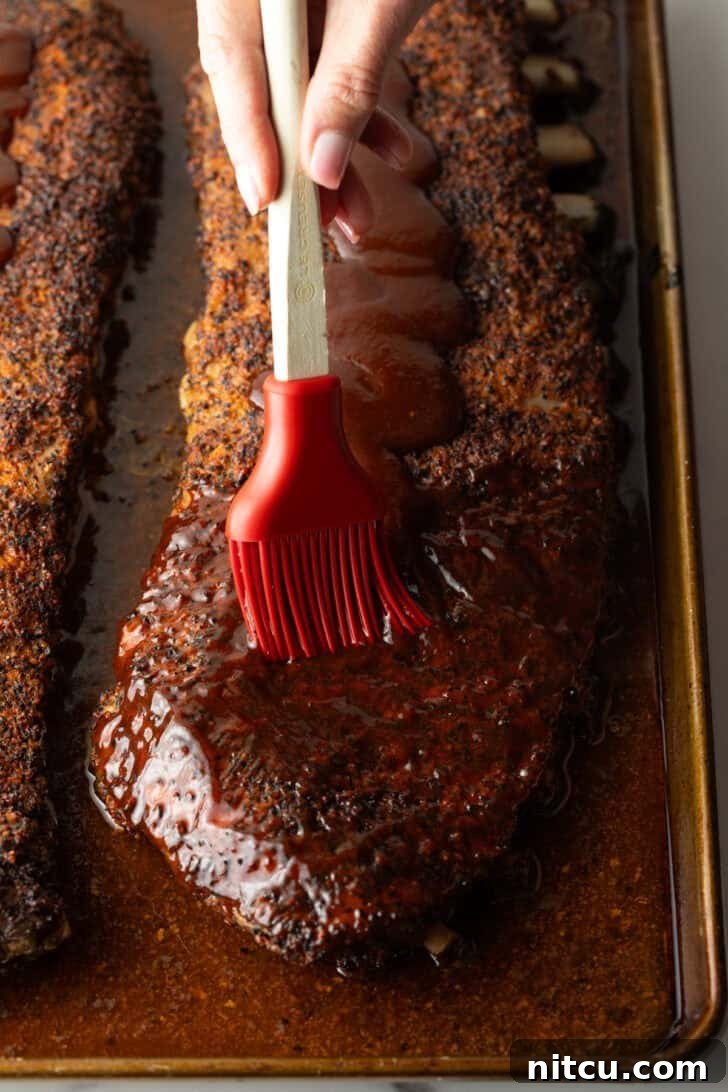
- The Bark and Glaze Phase: After the initial 2 hours, carefully remove the ribs from the oven. Increase the oven temperature to 425°F (220°C). Remove the foil from the baking sheet. Return the uncovered ribs to the hot oven for an additional 10 minutes to start forming a slight crust. Then, generously brush the ribs with ½ cup of your favorite barbecue sauce. Place them back in the oven for another 10 minutes. Repeat this process: remove, brush with a second ½ cup of barbecue sauce, and bake for a final 10 minutes. This last uncovered cooking phase, with multiple layers of sauce, is what creates that desirable “bark” – a sticky, caramelized, flavorful crust around the exterior of the ribs. Once done, let them rest for a few minutes before slicing and serving.
Grill Method: Authentic Smoky Flavor
- Initial Grill (Foil-Wrapped): Preheat your gas grill to a steady 325°F (160°C). If using a charcoal grill, aim for a similar indirect heat. Wrap the entire rack of seasoned ribs tightly in heavy-duty aluminum foil. Place the foil-wrapped ribs on the grill, over indirect heat, and cook for 1 hour, flipping once halfway through (30 minutes per side). This initial foil-wrapped cooking ensures the ribs become tender and infused with a subtle smoky flavor without drying out.
- Direct Grilling and Glazing: After the initial foil-wrapped cook, carefully unwrap the ribs and return them to the grill, bone-side down, over indirect heat for 10 minutes. Then, flip the ribs over, brush them generously with barbecue sauce, and cook for another 10 minutes. Continue this process of brushing with sauce and flipping every 10 minutes for approximately 1 hour. This extended, uncovered grilling time allows the sauce to caramelize and creates a fantastic smoky “bark.” The total cooking time on the grill should be at least 2 hours, but don’t hesitate to cook for up to 2 ½ hours if they don’t feel as tender as you desire. Ribs are done when they are tender enough to slightly bend without breaking, and the meat pulls away easily from the bone.
Storage and Reheating Tips for Leftovers
Don’t let any delicious leftovers go to waste! Proper storage and reheating will ensure your St. Louis ribs remain flavorful and tender.
- Storing Leftovers: Once cooled, store any leftover ribs in an airtight container. They will keep beautifully in the refrigerator for up to 3 days.
- Freezing for Later: Ribs freeze exceptionally well! If you’ve already cut them into individual ribs, wrap each one tightly in a layer of plastic wrap, then bundle them together and wrap securely in aluminum foil. For an extra layer of protection against freezer burn, place the foil-wrapped ribs into a freezer-safe plastic ziploc bag. St. Louis pork ribs can be stored in the freezer for up to 3 months. When ready to enjoy, thaw them overnight in the refrigerator before reheating.
- Reheating for Optimal Taste: To reheat, you have a couple of excellent options. In the microwave, reheat in short bursts at 50% power, checking after each burst to avoid overcooking and drying them out. Alternatively, for best results, wrap the ribs loosely in aluminum foil and bake them on a baking sheet in a 350°F (175°C) oven for about 15-20 minutes, or until heated through. This method helps retain moisture and tenderness.
Perfect Pairings: What to Serve with St. Louis Ribs
To truly embrace the St. Louis-style experience, serve your baked or grilled ribs with classic Midwestern and Southern side dishes. These pairings elevate the meal and create a truly satisfying spread.
For a taste of the Midwest, consider serving these ribs with our irresistibly cheesy baked company potatoes (affectionately known as funeral potatoes), creamy scalloped potatoes, a refreshing broccoli salad, or a vibrant broccoli cauliflower salad. These dishes are consistently crowd-pleasers!
Given St. Louis’s proximity to the South, you can absolutely get away with serving quintessential Southern barbecue sides. Complement the rich pork ribs with a decadent homemade mac and cheese, crisp and creamy coleslaw, hearty baked beans, and large squares of fluffy, sweet cornbread. Each bite will transport you straight to a backyard barbecue feast!
Frequently Asked Questions About St. Louis Ribs
Removing the silverskin membrane is crucial because it’s a tough, chewy layer that will prevent your ribs from becoming truly tender. It also acts as a barrier, preventing your delicious seasonings and rubs from fully penetrating the meat, which means less flavor in your final product. Don’t skip this step for the best results!
A full rack of St. Louis-style ribs typically yields between 10 to 13 individual ribs. The exact number can vary slightly depending on how the butcher trims the rack, but you can generally expect a substantial portion perfect for sharing or generous individual servings.
While Dijon mustard is recommended for its specific tangy flavor and excellent binding properties, you can absolutely experiment with other types of mustard. Yellow mustard or even a coarse-ground mustard can work effectively as a binder and will impart a slightly different flavor profile. The key is to use a thin layer to help the rub stick.
For “fall-off-the-bone” tender ribs, the ideal internal temperature for pork ribs is typically between 190°F (88°C) and 205°F (96°C). At these temperatures, the connective tissues break down significantly, yielding that desirable tender texture. While pork is technically safe to eat at 145°F (63°C), ribs benefit greatly from cooking to a higher temperature for tenderness, not just safety.
There are a few indicators for “fall-off-the-bone” tenderness. One common test is the “bend test”: pick up the rack of ribs with tongs in the middle. If the ribs are done, they should bend significantly and almost break in half, showing cracks in the bark, and the meat should appear very loose on the bone. Another sign is when the meat has pulled back from the ends of the bones by about ¼ to ½ inch.
Print Recipe
Leave a Review »
St. Louis Style Ribs: The Ultimate Recipe
10 minutes
2 hours 30 minutes
2 hours 40 minutes
2-4 Servings
Video Tutorial
Ingredients
- 1 rack St. Louis pork ribs (approximately 3-4 pounds, also known as spare ribs)
- 2 tablespoons Dijon mustard
- 2 tablespoons pork rub seasoning (See notes below for homemade quick rub option)
- 1 cup BBQ sauce (Your favorite brand or homemade)
Instructions
-
Prepare the Ribs (Remove Silverskin): Place the rack of ribs bone-side up on a clean cutting board. Locate the tough, thin membrane (silverskin) on the back. Using a butter knife or the handle of a spoon, gently pry up a corner of the membrane until you can grip it. Use a paper towel for a firmer grip and pull the membrane off the ribs in one continuous sheet. Discard the membrane.
-
Season the Ribs: Spread 2 tablespoons of Dijon mustard evenly over both sides of the ribs. Next, sprinkle 2 tablespoons of pork rub seasoning over both sides, patting gently to ensure it adheres. Do not add extra seasoning beyond this amount, as ribs retain salt well and can become overly salty.
-
Oven Method (Bake for Tenderness): Preheat your oven to 350°F (175°C). Place the seasoned ribs on a large rimmed baking sheet. Cover the baking sheet tightly with aluminum foil, pressing the foil firmly around the edges to seal in moisture. Bake the ribs for 2 hours.
-
Oven Method (Glaze and Bark): Remove the ribs from the oven and carefully remove the foil. Increase the oven temperature to 425°F (220°C). Return the uncovered ribs to the oven for an additional 10 minutes to begin crisping. Then, remove them again, brush generously with ½ cup of your favorite barbecue sauce, and return to the oven for another 10 minutes. Repeat this step once more with the remaining ½ cup of barbecue sauce, baking for a final 10 minutes. This last uncovered cooking phase caramelizes the sauce and creates a delicious “bark” on the ribs. Slice and serve immediately.
-
Grill Method (Foil-Wrapped Cook): Preheat a gas grill to 325°F (160°C). Wrap the seasoned rack of ribs tightly in heavy-duty aluminum foil. Place the foil-wrapped ribs on the grill over indirect heat (or directly if your grill allows for very low, consistent heat) and cook for 1 hour, flipping the rack once after 30 minutes.
-
Grill Method (Unwrapped and Glazed): Unwrap the ribs and place them back on the grill, bone-side down, over indirect heat for 10 minutes. Turn the ribs over, brush them generously with barbecue sauce, and cook for another 10 minutes. Continue brushing with sauce and flipping the ribs every 10 minutes until they have cooked uncovered for a total of 1 hour. The ribs should cook for at least 2 hours total (including the foil-wrapped portion), but up to 2 ½ hours if they haven’t reached your desired tenderness. Serve hot.
Notes
- Storing Leftovers: Store leftover ribs in an airtight container in the refrigerator for up to 3 days.
- Freezing: Ribs freeze exceptionally well! For best results, wrap each individual rib in a layer of plastic wrap, then bundle them together and wrap tightly in aluminum foil. For extra protection against freezer burn, place the foil-wrapped ribs in a plastic ziploc bag. Store St. Louis pork ribs in the freezer for up to 3 months. Thaw overnight in the fridge before reheating.
- Reheating: Reheat ribs gently to maintain moisture. In the microwave, use short bursts at 50% power, checking frequently. Alternatively, wrap them loosely in foil and bake on a baking sheet at 350°F (175°C) for about 15-20 minutes until warmed through.
Nutrition Information
(Approximate values per 0.5 rack serving)
- Calories: 255kcal
- Carbohydrates: 59g
- Protein: 2g
- Fat: 1g
- Saturated Fat: 0.1g
- Polyunsaturated Fat: 0.3g
- Monounsaturated Fat: 1g
- Sodium: 1638mg
- Potassium: 354mg
- Fiber: 2g
- Sugar: 48g
- Vitamin A: 331IU
- Vitamin C: 1mg
- Calcium: 57mg
- Iron: 1mg
BBQ, Dinner, Main Course
American
Sommer Collier
Cook It? Love It? Rate It!
Your feedback helps others discover delicious recipes. Thank you for your support!