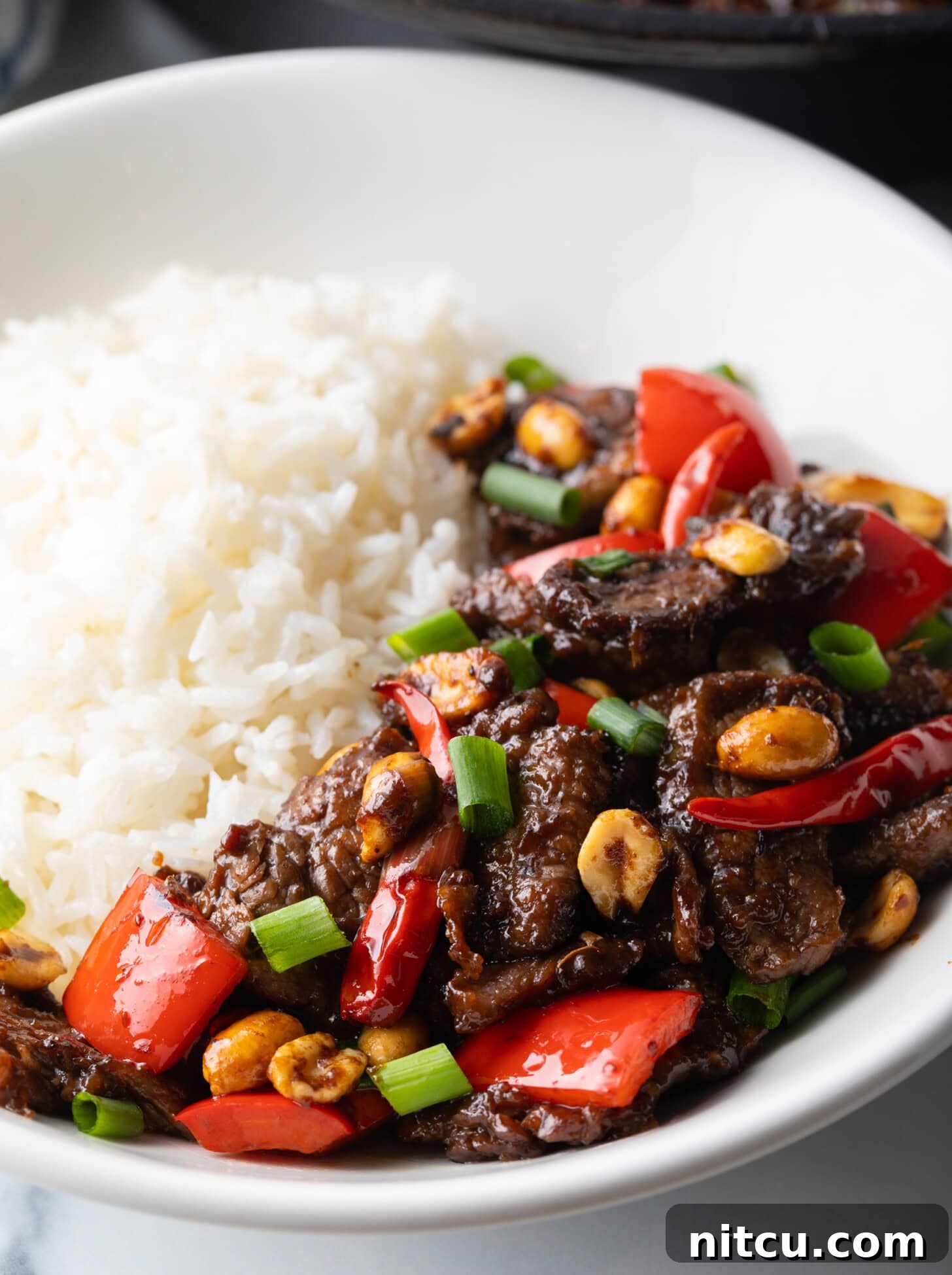
Homemade Kung Pao Beef Stir Fry: A Takeout Favorite Made Easy
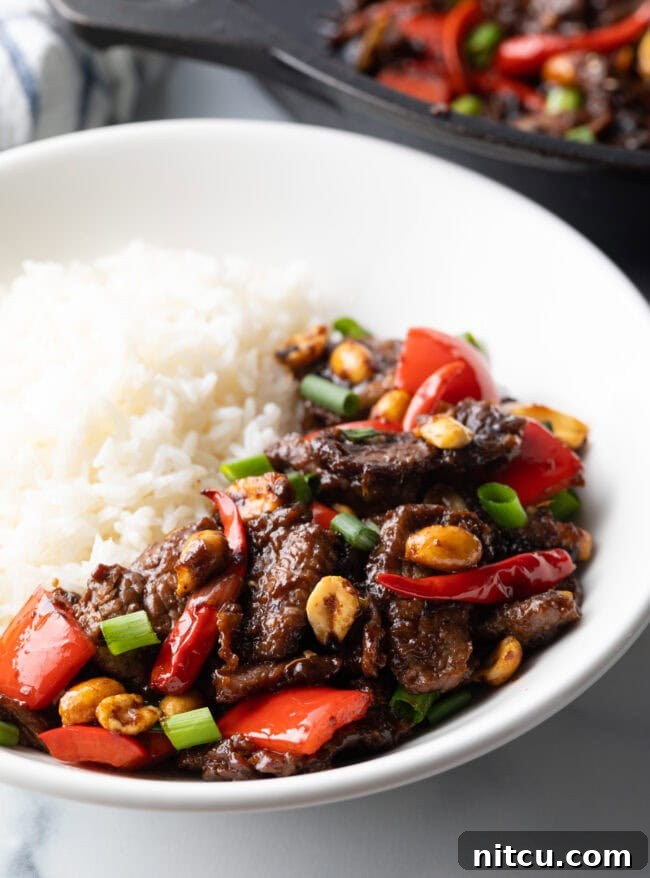
Unlock the secret to incredibly savory and spicy Kung Pao Beef right in your own kitchen! This homemade stir-fry, bursting with tender beef, vibrant bell peppers, and crunchy peanuts, delivers an authentic flavor experience that rivals your favorite Chinese restaurant takeout. Get ready to impress your taste buds and simplify your weeknight meals!
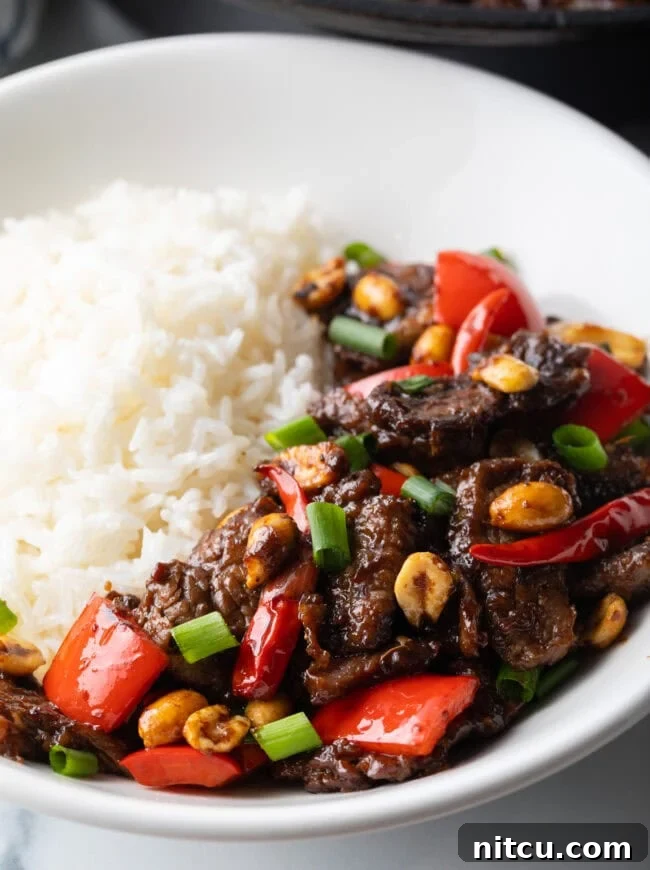

Experience the Sizzling Magic of Kung Pao Beef
If you’re a fan of the classic Kung Pao Chicken, prepare to be captivated by our robust Kung Pao Beef Stir Fry Recipe! This dish masterfully combines the rich, savory depth characteristic of premium beef stir-fries with the exhilarating spicy kick that defines authentic Kung Pao dishes from China’s renowned Sichuan province. It’s a flavor adventure, bringing complex heat and umami notes to your dinner table in a surprisingly simple preparation.
The signature spicy heat in this recipe stems from a harmonious blend of Szechuan peppercorns and Chinese red chilies. These two components deliver a distinct “ma la” sensation – a numbing, tingling spice that is both intense and addictive. For those who prefer a milder experience, the beauty of homemade cooking lies in customization: you can easily adjust or even omit these fiery ingredients to suit your palate. Remember, the whole Kung Pao chilies are primarily for visual appeal and a gentle infusion of heat, not necessarily for direct consumption – they are indeed quite potent!
Why This Kung Pao Beef Recipe Will Become Your New Favorite
- Superior to Takeout: Forget greasy, overly sweet restaurant versions. This homemade Kung Pao Beef is crafted with fresh, wholesome ingredients, making it a healthier and far more satisfying alternative. You control the quality, the spice level, and every delicious detail.
- Meal Prep Perfection: This recipe is a dream for busy individuals and families. Prepare a generous batch at the start of the week, and enjoy flavorful, nutritious leftovers for days. It reheats beautifully, making quick lunches and dinners a breeze.
- Explosion of Bold Flavors: Every bite of this stir-fry is a symphony of tastes and textures. Picture succulent, tender beef, crunchy roasted peanuts, and vibrant, crisp-tender vegetables, all enveloped in a thick, savory, and spicy sauce. It’s a culinary masterpiece that truly screams bold flavor.
- Effortlessly Customizable: One of the most appealing aspects of this Kung Pao Beef recipe is its adaptability. Unlike many restaurant preparations, which offer limited variations, preparing it at home allows you to fine-tune the spiciness, adjust the sweetness, or swap ingredients to perfectly match your family’s preferences.
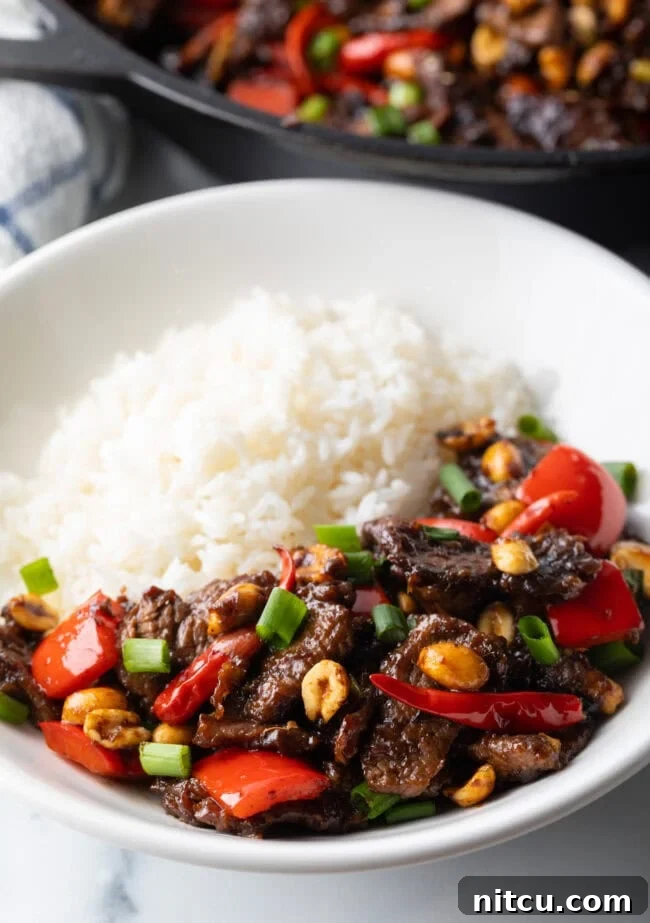
Essential Ingredients for Authentic Kung Pao Beef
Crafting the perfect Kung Pao Beef starts with selecting quality ingredients that contribute to its distinctive flavor profile. Here’s what you’ll need to gather:
- Flank Steak: This cut is an ideal choice for stir-frying. It’s lean, relatively thin, and budget-friendly, making it perfect for slicing into quick-cooking slivers. When properly prepared, it becomes wonderfully tender.
- Cornstarch: A crucial ingredient for achieving that silky, thick sauce without the need for flour. It also aids in tenderizing the beef (a technique known as velveting) and helps the sauce cling beautifully to every piece of meat and vegetable.
- Fresh Vegetables:
- Scallions: Provide a mild, oniony flavor and a fresh green garnish. We’ll use both the white and green parts for different stages of cooking.
- Red Bell Pepper: Adds a touch of sweetness, vibrant color, and a pleasant crunch. Seeded and chopped into 1-inch pieces, they cook quickly while retaining their texture.
- Grated Ginger: Infuses the dish with a warm, pungent, and aromatic zest that is fundamental to Chinese cooking.
- Minced Garlic: Delivers a sharp, savory foundation, enhancing the overall depth of flavor.
- Chinese Tien Tsin Chilies (or Thai Bird’s Eye Chiles): These small, dried red peppers are the primary source of the Kung Pao’s signature heat. Handle with care, as they are very hot!
- Cooking Sherry (or Rice Wine): This secret ingredient adds an incredible depth and complexity to the sauce, creating an authentic restaurant-quality flavor. If cooking sherry is unavailable, a dry rice wine or even a good quality dry white wine can be substituted.
- Low Sodium Soy Sauce: Essential for salty, umami flavor. Opting for low-sodium helps control the overall saltiness of the dish, especially since other sauce components are also salty.
- Black Bean Garlic Sauce: A flavorful paste made from fermented black beans and garlic, providing a pungent, savory, and slightly salty kick that is characteristic of many Sichuan dishes. It adds wonderful umami depth.
- Chinese Black Vinegar: Offers a unique tangy, malty, and slightly sweet flavor that balances the richness and spice of the dish. It’s distinct from regular white vinegar and contributes significantly to the authentic profile.
- Szechuan Peppercorns: These unique peppercorns don’t just add heat; they impart a distinctive citrusy, floral aroma and a fascinating numbing sensation (ma la) that is a hallmark of Sichuan cuisine. Toasting them briefly before use enhances their flavor.
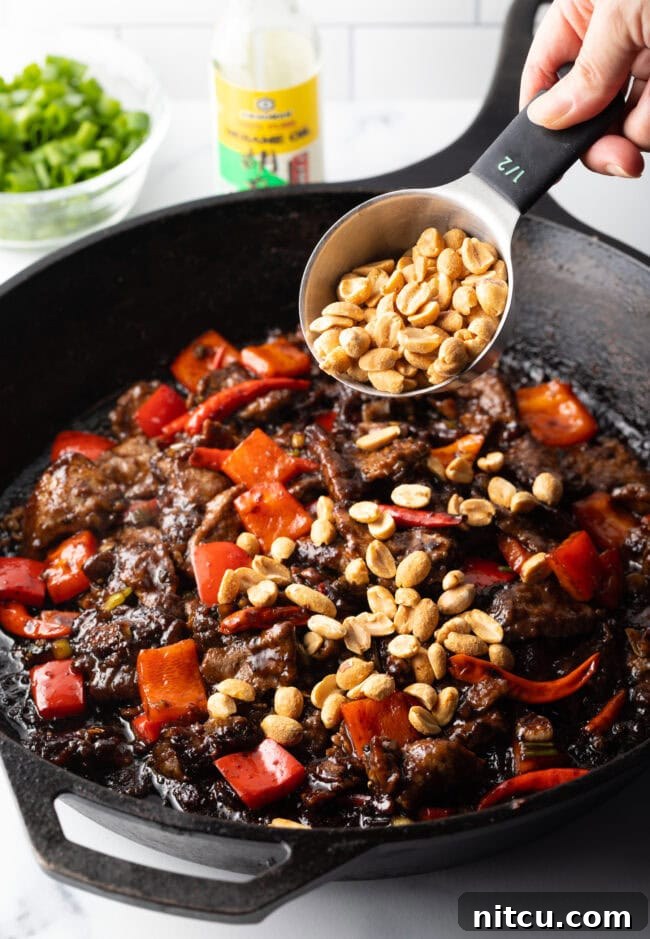
- Roasted Peanuts: Crucial for the classic Kung Pao crunch and a nutty finish. Use either salted or unsalted, depending on your preference, and add them as a garnish at the very end to maintain their crispness.
Creative Variations and Dietary Adaptations for Your Stir Fry
One of the joys of cooking at home is the freedom to customize. This Kung Pao Beef recipe is incredibly versatile, allowing you to tailor it to your dietary needs or simply to explore new flavor combinations:
- For a Mild Experience: If fiery flavors aren’t your preference, you can significantly reduce or completely omit the spicy Chinese chilies and Szechuan peppercorns. The dish will still retain its rich, savory profile with a gentle warmth.
- Bell Pepper Rainbow: While red bell peppers are traditionally used for their sweetness and color, feel free to experiment with other varieties. Green, yellow, or orange bell peppers can add different nuances of flavor and visual appeal to your stir-fry.
- Sauce Swaps: If black bean garlic sauce isn’t readily available, you can substitute it with hoisin sauce for a sweeter, thicker glaze, or oyster sauce for a rich, savory umami boost. Each will give a slightly different, yet still delicious, character to the sauce.
- Vinegar Alternatives: Chinese black vinegar has a unique flavor, but if you can’t find it, white rice vinegar is a good alternative, providing a clean tang. A small dash of balsamic vinegar can also work in a pinch, though it will impart a darker color and a slightly fruitier note.
- Alcohol-Free Version: To make this a family-friendly dish, simply omit the cooking sherry. You can substitute it with an equal amount of chicken broth or even water without significantly impacting the overall flavor profile.
- Nut-Free Option: For those with peanut allergies or simply a dislike for nuts, feel free to leave out the roasted peanuts entirely. You can also serve them on the side, allowing individuals to add them as desired. Toasted cashews or sesame seeds can offer a similar crunch if tolerated.
- Boost Your Veggies: Enhance the nutritional value and texture by incorporating a wider array of vegetables. Zucchini, carrots, green beans, broccoli florets, or snap peas are all excellent additions that cook well in a stir-fry and absorb the sauce wonderfully.
- Protein Powerhouse: This recipe’s sauce and cooking method are highly adaptable to various proteins. Easily swap the flank steak for sliced chicken breast or thighs, tender pork, succulent shrimp, or even firm tofu for a delicious vegetarian or vegan rendition. Ensure cooking times are adjusted accordingly for different proteins.
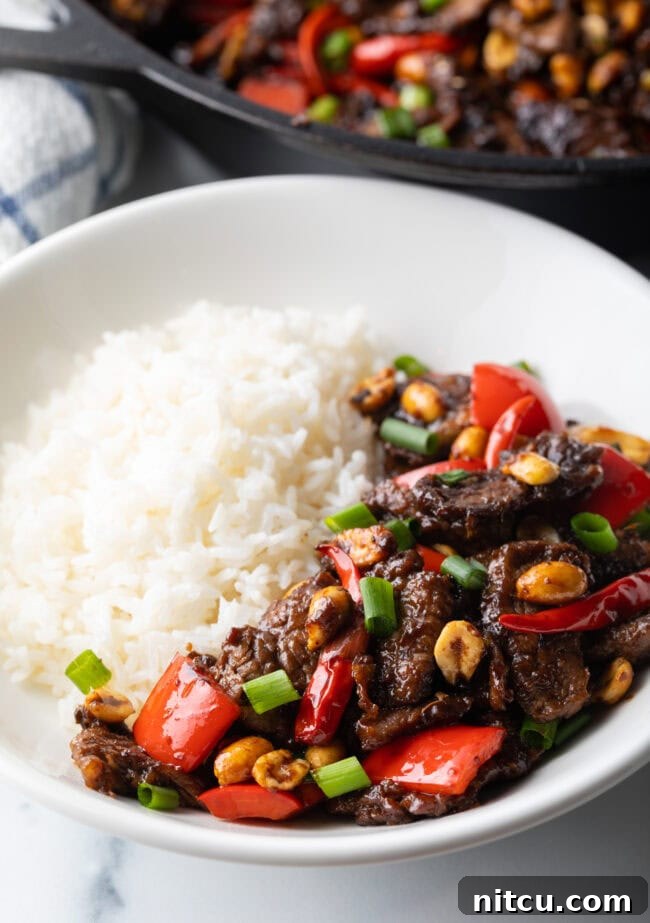
How To Create Your Own Irresistible Kung Pao Beef Stir Fry
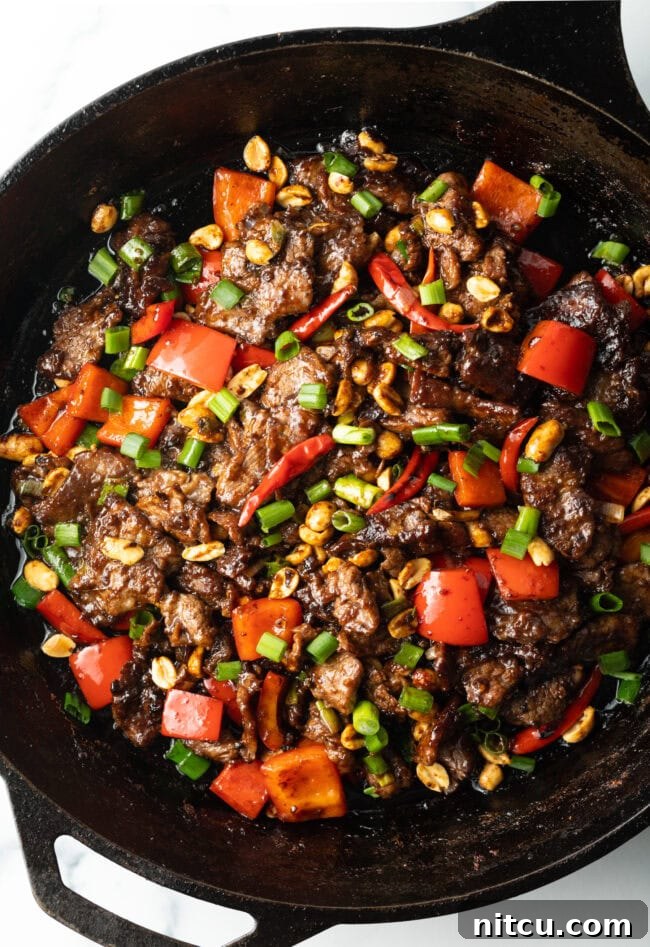
Get ready for a culinary adventure as we transform simple ingredients into a sizzling, flavor-packed Kung Pao Beef stir fry. This dish comes together quickly once you have your ingredients prepped, proving that restaurant-quality Chinese food is absolutely achievable in your home kitchen. From tender beef to vibrant veggies and that signature spicy sauce, you’ll be enjoying this delightful meal in no time!
Discover the complete Kung Pao Beef recipe with meticulous instructions, ingredient measurements, and helpful storage guidelines in the comprehensive recipe card below!
Mastering Your Kung Pao Beef Stir Fry: Expert Tips for Success
Achieving a restaurant-quality Kung Pao Beef at home is easier than you think with a few key techniques. Follow these tips to ensure your stir fry is perfectly cooked, wonderfully tender, and bursting with flavor every time:
- Mind the Salt Content: The black bean garlic sauce, Chinese black vinegar, and especially soy sauce are naturally quite salty. We highly recommend using low-sodium soy sauce to prevent your dish from becoming overly salty. Taste your sauce before adding any additional salt; often, none is needed.
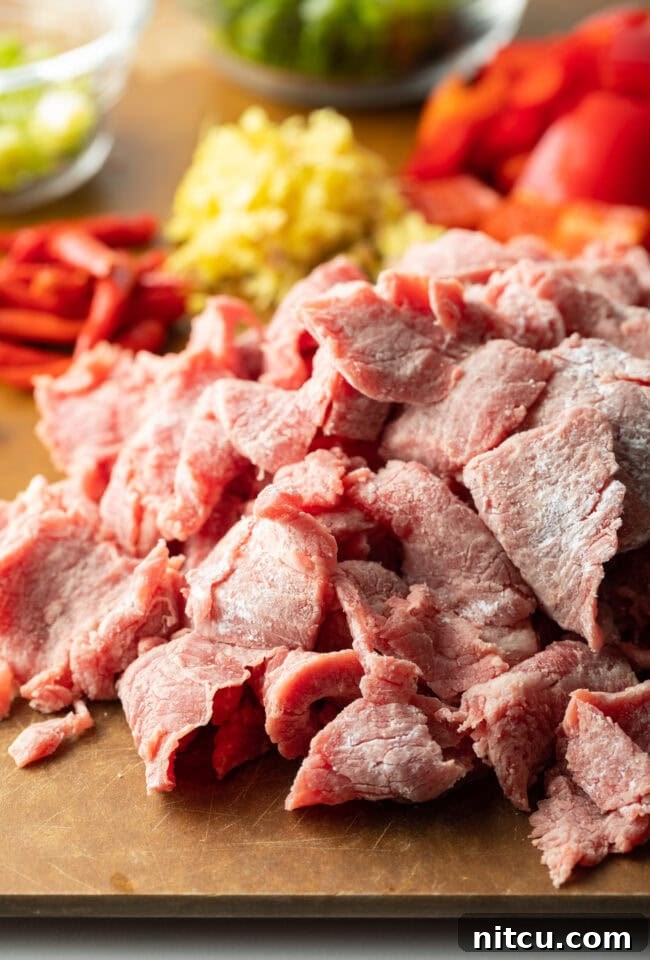
- Precision Slicing for Tender Beef: For beautifully thin, even slivers of flank steak that cook quickly and remain tender, try this chef’s trick: toss the steak into the freezer for about 30 minutes before you begin slicing. This firms up the meat, making it much easier to achieve those delicate cuts.
- Always Cut Against the Grain: This is a fundamental rule for cooking tender beef, particularly with cuts like flank steak. Cutting across the muscle fibers (against the grain) shortens them, preventing the meat from becoming tough or chewy during cooking.
- High Heat is Your Friend: Stir-frying requires intense heat to quickly sear the ingredients, locking in juices and flavors. Ensure your wok or skillet is smoking hot before adding oil and ingredients. This creates that desirable “wok hei” (breath of the wok) flavor.
- Don’t Crowd the Pan: When cooking the beef or vegetables, work in batches if necessary. Overcrowding the pan will lower the temperature, causing the ingredients to steam rather than sear, resulting in a less desirable texture and color.
- Prep Everything Ahead (Mise en Place): Stir-fries cook incredibly fast. Have all your ingredients chopped, measured, and ready to go before you even turn on the heat. This ensures a smooth cooking process and prevents anything from burning while you’re scrambling for the next ingredient.
Storage and Reheating for Delicious Leftovers
This Kung Pao Beef is an excellent candidate for meal prepping, as it holds up beautifully in the refrigerator:
- Storing Leftovers: Allow any leftover stir-fry to cool completely to room temperature before transferring it to an airtight container. Store it in the refrigerator, where it will remain fresh and delicious for 3-4 days.
- Reheating Leftovers: To preserve the best texture and flavor, reheat your Kung Pao Beef in a skillet over medium heat, stirring occasionally, until thoroughly warmed through. If using a microwave, reheat in short, controlled bursts, stirring between each interval, to prevent the beef from overcooking and drying out.
Perfect Pairings: Serving Suggestions for Your Kung Pao Beef
This tender, spicy, savory, and saucy beef stir-fry is a complete meal on its own, but it truly shines when paired with complementary sides. Here are some fantastic serving suggestions to make your meal even more satisfying:
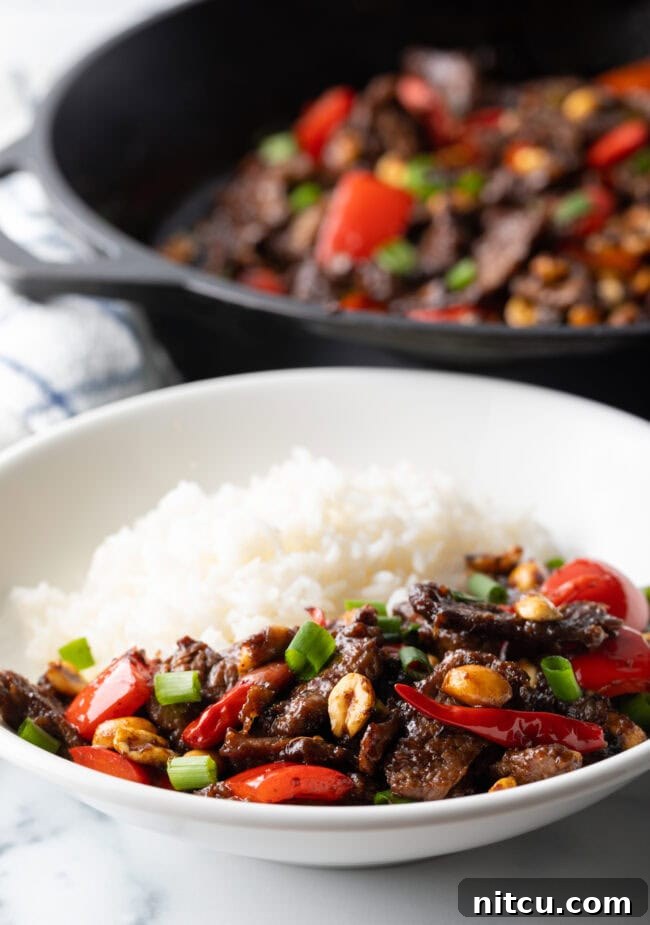
- Classic Rice Accompaniments: Serve your Kung Pao Beef atop a bed of fluffy white rice or nutritious brown rice. The rice acts as a perfect canvas, absorbing all the delicious, spicy sauce.
- Low-Carb Alternatives: For a lighter, low-carb rendition of this Chinese favorite, consider pairing it with Roasted Cauliflower Rice or Broccoli Rice. These options provide a similar texture to traditional rice without the carbohydrates.
- Create a Family-Style Feast: Elevate your meal into a grand, family-style spread by serving your Kung Pao Beef alongside other Chinese-inspired dishes. Consider homemade Veggie Lo Mein, savory Chinese Dumplings (potstickers), fresh Panda Express Super Greens (copycat recipe), and a comforting bowl of Egg Drop Soup. Present everything in individual dishes and let everyone dig in and create their perfect plate!
- Crisp Salad: A simple, crisp green salad with a light vinaigrette can offer a refreshing contrast to the richness of the stir-fry.
Kung Pao Beef Recipe Card
This homemade stir-fried Kung Pao Beef with bell pepper and peanuts is savory, spicy, and just as delicious as your favorite takeout restaurant dish!
Prep Time: 35 minutes
Cook Time: 15 minutes
Total Time: 50 minutes
Yields: 4 – 6 servings
Ingredients
- 4 tablespoons sesame oil, divided
- 1 ½ pounds flank steak
- 2 tablespoons cornstarch
- 1 bunch scallions, divided (whites and greens separated)
- 1 large red bell pepper, seeded and chopped into 1-inch pieces
- 10-15 Chinese Tien Tsin chilies (or Thai bird’s eye chiles)
- 3 cloves garlic, minced
- 2 tablespoons grated ginger
- ¼ cup cooking sherry (or rice wine)
- 3 tablespoons low sodium soy sauce
- 2 tablespoons black bean garlic sauce
- 1 tablespoon Chinese black vinegar
- 1 tablespoon Szechuan peppercorns
- ½ cup roasted peanuts
Instructions
- Begin by preparing the flank steak. Cut the steak in half lengthwise, against the grain. Then, slice each half into very thin slivers. For easier slicing, flash freeze the flank steak for about 30 minutes until firm before you start.
- In a medium bowl, toss the prepared flank steak strips with 2 tablespoons of cornstarch until each piece is lightly coated. Set aside to marinate slightly.
- Prepare your vegetables: Finely chop the scallions, separating the white parts from the green parts. Chop the red bell pepper into 1-inch pieces. Mince the garlic cloves, and grate the fresh ginger.
- Place an extra-large skillet or a wok over high heat. Add 2 tablespoons of sesame oil to the hot pan and swirl it around to ensure the entire cooking surface is coated.
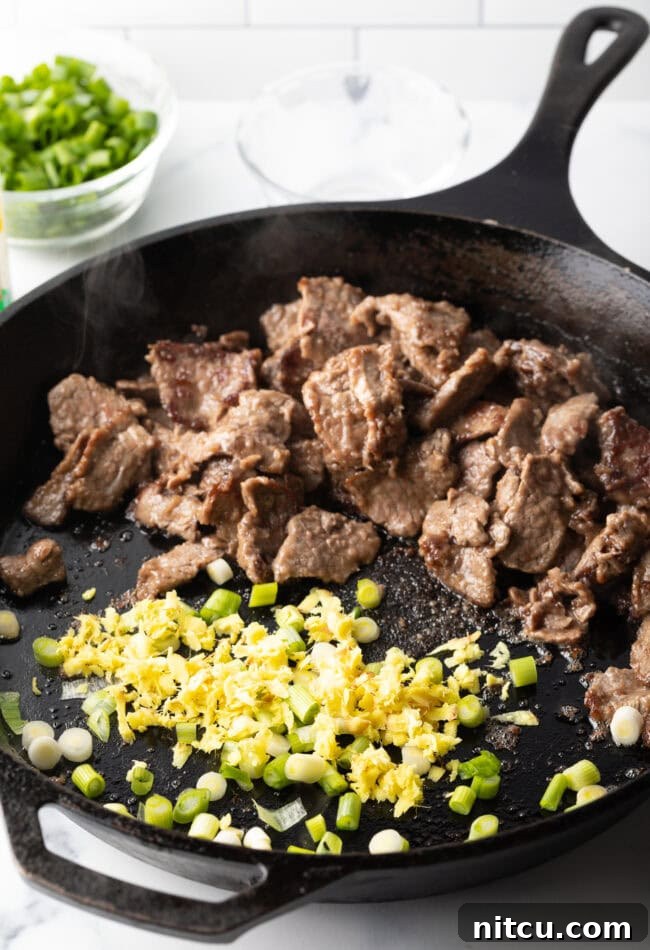
- Once the skillet is very hot (it might be lightly smoking), add the cornstarch-coated beef slices in a single layer. Stir fry the beef until it is seared to a rich brown on all sides, ensuring not to overcrowd the pan (cook in batches if necessary).
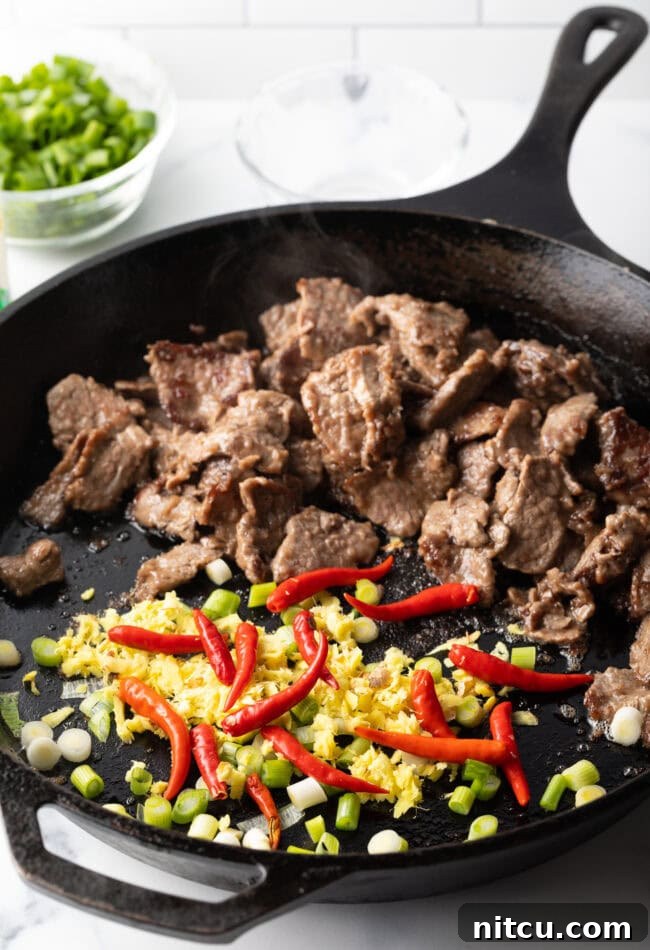
- Once the beef is seared, push it to one side of the pan. Pour the remaining 2 tablespoons of sesame oil into the empty side of the skillet. Add the scallion whites, red bell peppers, Chinese chilies, minced garlic, and grated ginger. Stir fry these vegetables for 3 to 4 minutes until they begin to soften and become aromatic.
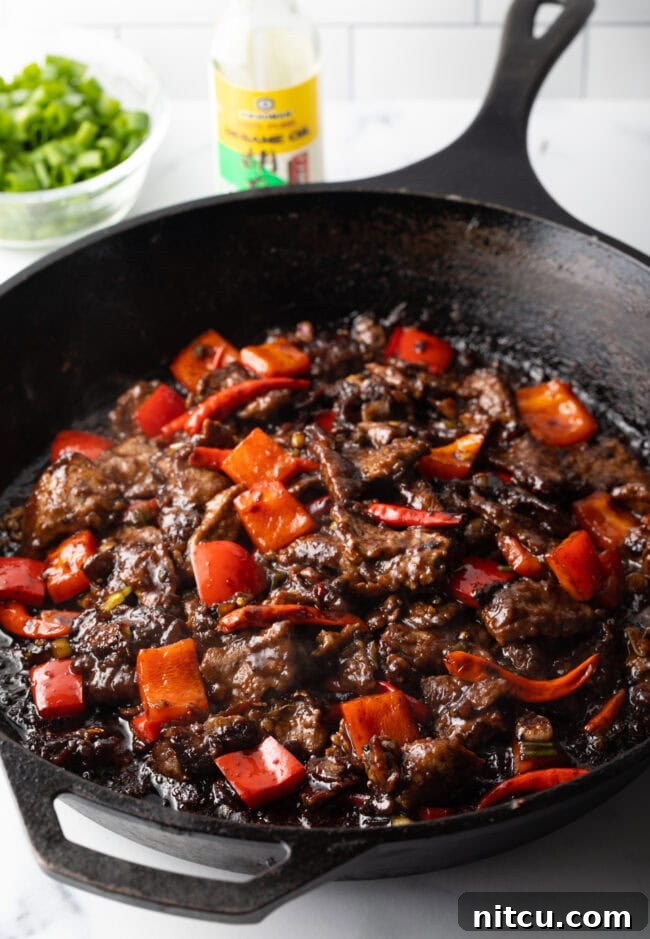
- Now, pour the cooking sherry over the vegetables. Immediately follow with the low sodium soy sauce, black bean garlic sauce, Chinese black vinegar, and Szechuan peppercorns. Stir the sauce and vegetables thoroughly into the seared beef, ensuring all pieces are well coated. If the sauce thickens too quickly, add 2 to 4 tablespoons of water to reach your desired consistency.
- Once the sauce has reached your preferred thickness, stir in the roasted peanuts and the reserved scallion greens. Serve the Kung Pao Beef warm and immediately over steamed white rice, brown rice, or for a lower-carb option, cauliflower rice.
Notes
Kung Pao Beef stir-fry recipes are fantastic for meal prepping! Allow the dish to cool completely before transferring it to an airtight container. It can be stored in the refrigerator for up to 4 days, making for convenient and delicious meals throughout the week.
Nutrition Facts
Serving: 1 cup, Calories: 524kcal, Carbohydrates: 14g, Protein: 44g, Fat: 32g, Saturated Fat: 7g, Polyunsaturated Fat: 9g, Monounsaturated Fat: 13g, Cholesterol: 102mg, Sodium: 606mg, Potassium: 919mg, Fiber: 3g, Sugar: 2g, Vitamin A: 976IU, Vitamin C: 41mg, Calcium: 88mg, Iron: 4mg
Course: Main Course, Dinner
Cuisine: Asian, Chinese, Sichuan
Author: Sommer Collier
Frequently Asked Questions About Kung Pao Beef
Is Kung Pao beef inherently spicy?
Yes, traditional Kung Pao beef is known for its distinct spicy flavor profile. Our recipe incorporates both fiery Chinese chilies and the unique numbing sensation of Szechuan peppercorns. However, the beauty of cooking at home is customization – you can easily reduce the amount of these ingredients or omit them entirely for a milder dish that still retains all the rich, savory flavors.
What is the typical taste profile of Kung Pao?
Kung Pao beef offers a complex and highly addictive flavor. You’ll experience wonderfully tender beef with a satisfying chewiness, complemented by the crisp-tender sweetness of bell peppers. Each component is generously coated in a thick, glossy sauce that masterfully balances savory, umami, and sweet notes with a significant punch of heat from the chilies and the unique tingling sensation from the Szechuan peppercorns. It’s a harmonious blend that engages all your taste buds.
What differentiates Kung Pao beef from Mongolian beef?
While both are popular Chinese-American beef dishes, their flavor profiles are quite distinct. Mongolian Beef typically features a sweeter, milder sauce made with brown sugar, soy sauce, and ginger, and it lacks the characteristic spice. It’s generally not a spicy dish (unless red pepper flakes are added by preference), making it a fantastic choice for those who prefer milder flavors. Kung Pao beef, on the other hand, is defined by its bold, spicy, and slightly numbing “ma la” flavor from the Szechuan peppercorns and chilies, offering a much more intense and complex taste experience.
Explore More Asian-Inspired Recipes You Might Enjoy
If you loved crafting this Kung Pao Beef, you’re sure to enjoy these other delectable Asian-inspired dishes that bring restaurant flavors right to your home: