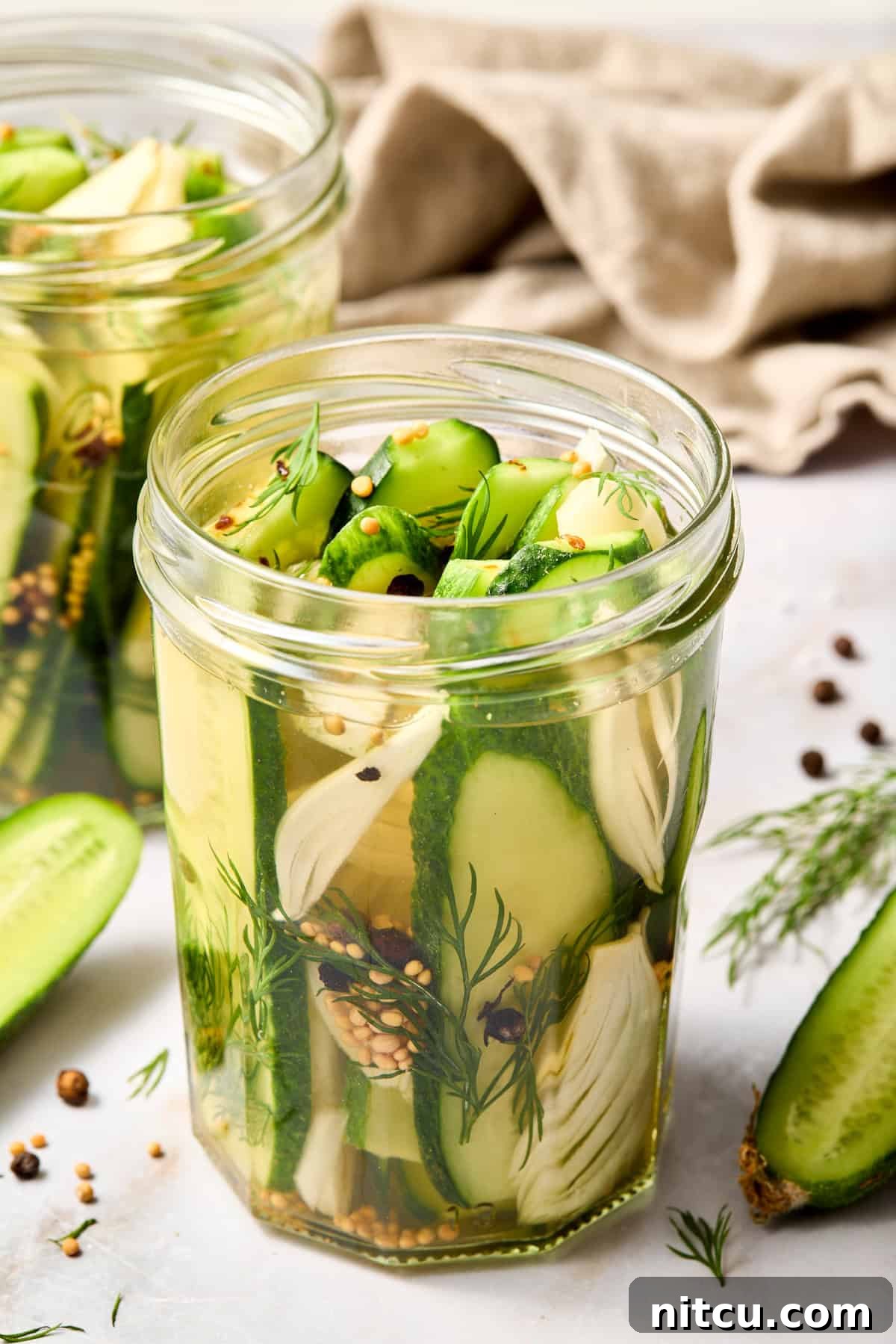
Homemade Refrigerator Pickles: The Easiest No-Canning Dill Pickle Recipe
Discover the secret to making the **best homemade refrigerator pickles** with this incredibly easy, no-canning-required recipe. These crisp, tangy, and flavorful **dill pickles** are perfect for elevating your sandwiches, burgers, or enjoying straight from the jar!
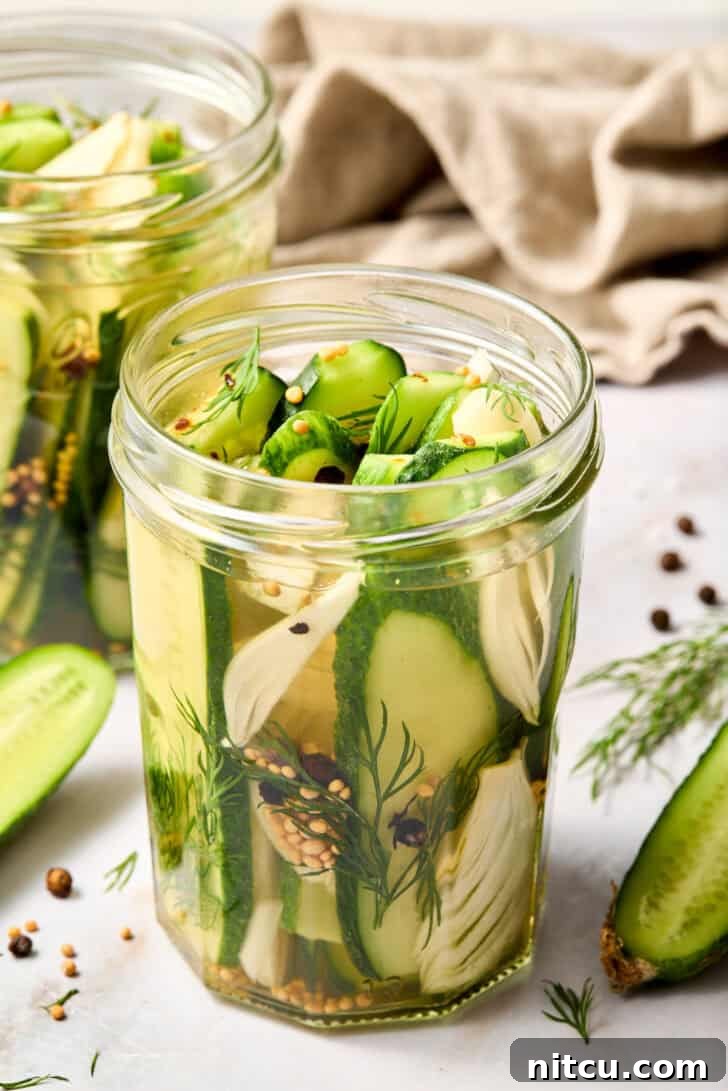
Embrace the Simplicity and Flavor of Refrigerator Pickles
Prepare your palate for an explosion of zesty flavor with the **best homemade refrigerator pickles** you’ll ever encounter! These garlic dill pickles are not only incredibly quick and easy to prepare but also deliver a powerful punch of refreshing taste and an irresistible crunch. Say goodbye to the complex, time-consuming process of traditional hot water canning; this method offers a straightforward and accessible way for anyone to enjoy fresh, homemade pickles with minimal effort and maximum satisfaction.
Crafting your own pickles at home grants you unparalleled control over the ingredients, allowing you to tailor the flavors precisely to your personal preferences. Whether you crave a sweeter profile, an intensified garlic kick, or a fiery burst of spice, this versatile recipe serves as the perfect foundation for customization. In just a few simple steps, followed by a short overnight chill in your refrigerator, you’ll have jars of crunchy, tangy, and aromatic dill pickles ready to transform any meal or snack into a culinary delight. The joy of homemade food, especially something as satisfying as crisp pickles, is truly unmatched.

The Irresistible Advantages of No-Canning Pickles
For those who prefer to steer clear of the intricate and often intimidating world of hot water canning, our **easy homemade refrigerator pickles** present a fantastic, stress-free alternative. This ingenious method completely eliminates the need for specialized canning equipment, such as large water bath canners, or the extensive sterilization procedures traditionally associated with preserving. This makes pickle-making not just accessible, but genuinely enjoyable, for every home cook regardless of experience level. You possess the flexibility to prepare a single small jar for a quick craving or multiple jars to stock up, depending on your household’s needs. The most appealing aspect? These flavorful delights are **ready to eat after just one glorious day of refrigeration!** This minimal waiting time allows the cucumbers to fully absorb the vibrant flavors of the brine while magically retaining their delightful crunch.
Another brilliant benefit of making your own **crispy dill pickles** at home is the sheer freedom and sustainability you gain regarding your choice of containers. Forget the requirement of purchasing traditional canning jars; any clean glass jar with a tight-fitting lid will perfectly suffice for this recipe. This means you can happily repurpose old jam jars, sauce jars, or any other suitable glass container you have readily available, making this recipe incredibly eco-friendly and budget-conscious. The process is wonderfully straightforward: simply pack your chosen jars with freshly sliced pickling cucumbers, a touch of delicately sweet onion, and fragrant sprigs of fresh dill. Next, whip up the tantalizing brine, carefully pour it over your packed ingredients until they are fully submerged, secure the lid, and then simply pop your creations into the refrigerator. It truly is that uncomplicated to achieve gourmet-level pickles at home.
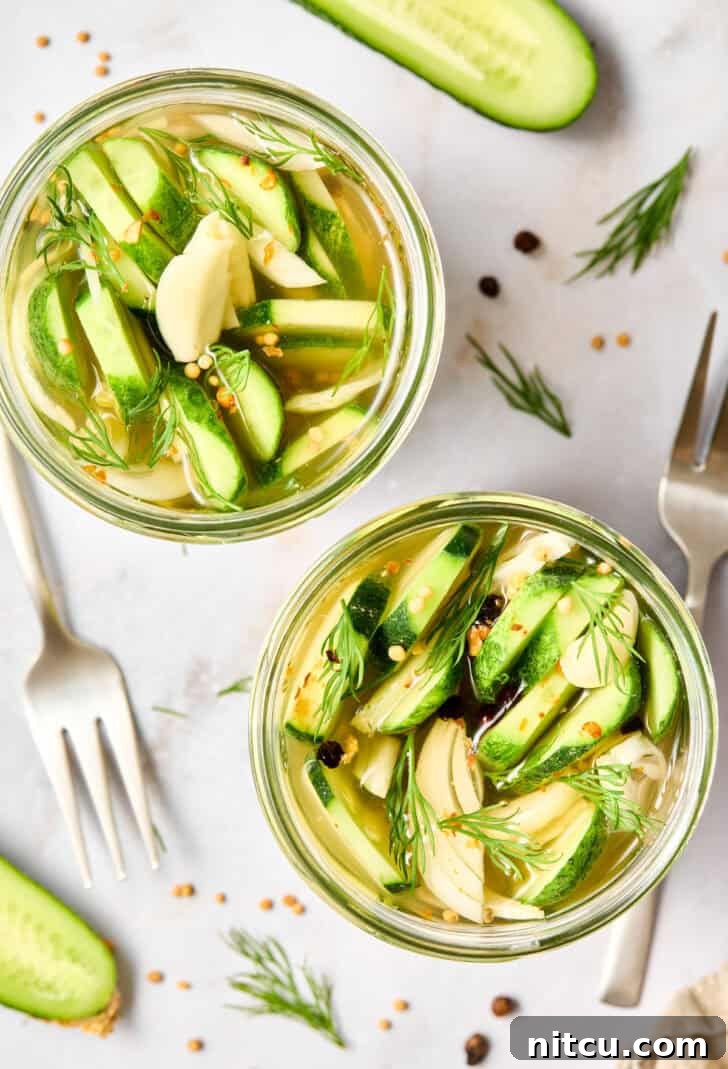
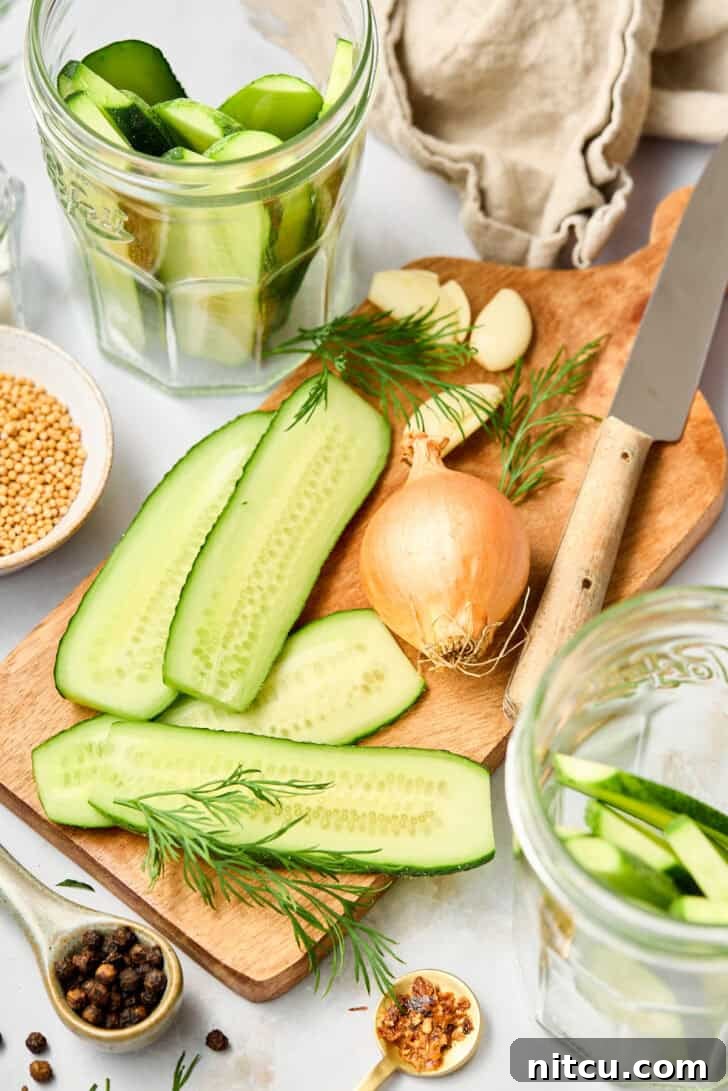
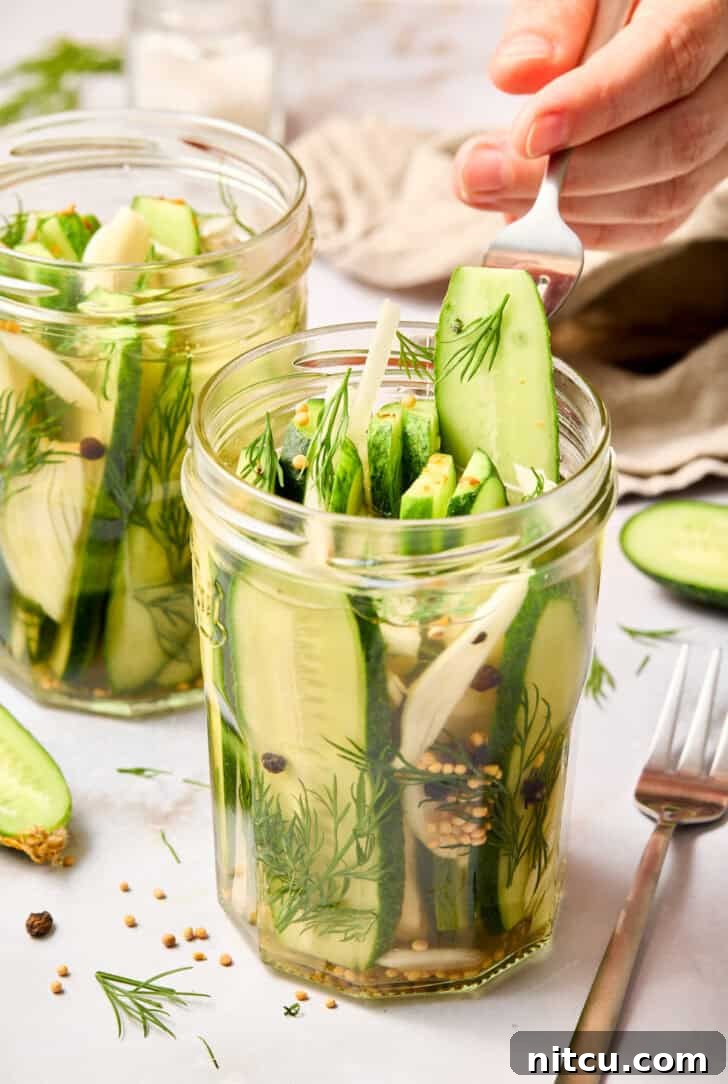
Feel empowered to unleash your creativity when selecting and preparing your cucumbers. Don’t feel confined to uniform slices; making **quick pickles** at home encourages playful customization of your cucumber shapes. I personally adore experimenting with **long sandwich slices**, which are perfect for layering into gourmet sandwiches; hearty **spears**, ideal for satisfying snacking; and charming **crinkle-cut round slices**, which add a fun, visually appealing texture. If you happen to have particularly small pickling cucumbers and appropriately large jars, you could even consider leaving them whole for a dramatic presentation and an even more satisfyingly crunchy bite. Embrace the sheer fun of homemade food preparation and allow your unique culinary flair to shine through in every batch!
Essential Ingredients for Your Perfect Pickle Brine
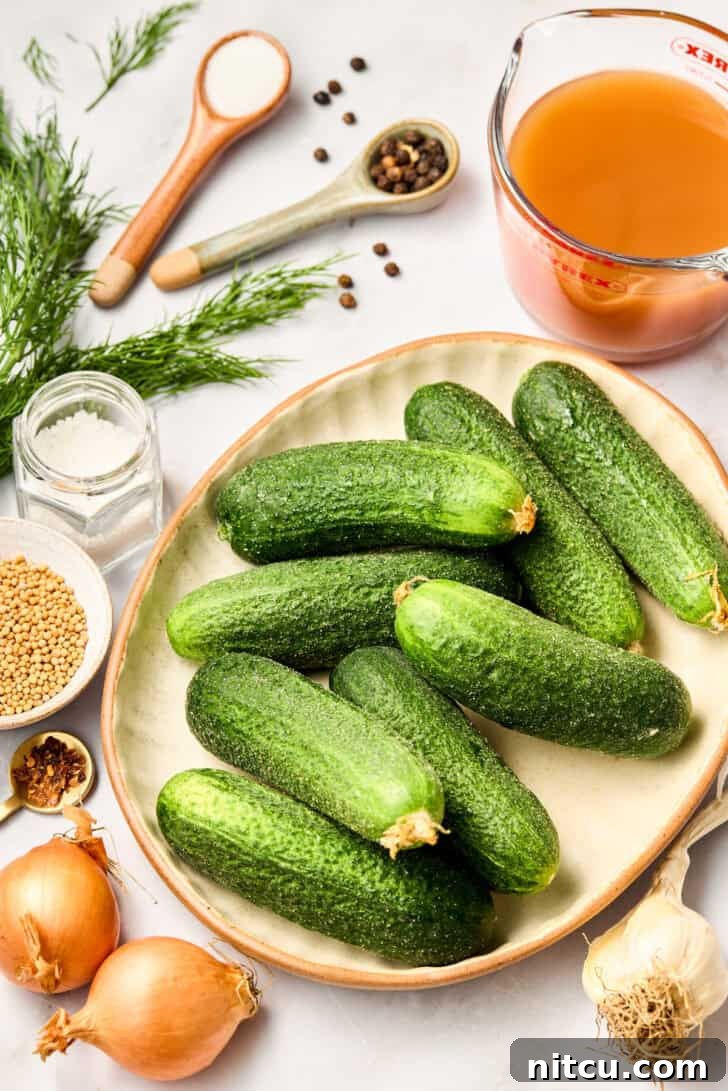
Crafting the **best homemade dill pickles** starts with a careful selection of ingredients, each playing a crucial role in achieving that signature tangy, savory, and subtly sweet flavor profile, coupled with an irresistible crunch. Understanding the function of each component will help you appreciate the magic of this **easy pickle recipe**. Here’s a detailed exploration of what you’ll need to make these amazing **refrigerator pickles**:
- Pickling Cucumbers: This is arguably the most critical ingredient. Standard slicing cucumbers (like English or hot-house varieties) will not yield the desired crisp results due to their higher water content and thinner skins. Always seek out shorter cucumbers, typically ranging from 4 to 6 inches in length, characterized by their distinctly bumpy skin. Varieties such as Kirby or Gherkin are specifically bred for pickling because of their firm flesh and lower moisture, which helps them retain their satisfying crunch when submerged in brine.
- Vidalia Onion: Celebrated for its exceptional sweetness and remarkably mild flavor, Vidalia onion (a sweet onion variety primarily grown in Georgia) adds a delicate complexity and subtle sweetness without overpowering the dominant dill notes. If authentic Vidalia onions are not readily available in your area, any other sweet onion variety, such as a Walla Walla or a common sweet onion, will make a suitable and delicious substitute.
- Fresh Dill Weed: The absolute star herb of authentic **dill pickles**, fresh dill weed is indispensable for its distinctive, slightly anise-like aroma and bright, herbaceous taste. Using fresh dill makes a monumental difference compared to dried dill, contributing significantly to the vibrant, fresh, and aromatic flavor that defines these homemade pickles. Don’t skimp on this!
- Apple Cider Vinegar: This particular vinegar provides a mellow, fruity acidity that beautifully complements and balances all the other spices in the brine. Its slightly less harsh tang, when compared to plain white vinegar, helps to create a wonderfully well-rounded and harmonious brine. While apple cider vinegar is highly preferred for its superior flavor depth and complexity, white vinegar can be utilized as a more readily available and equally effective alternative for acidity.
- Water: Essential for diluting the vinegar and achieving the perfect balance in your pickling brine. For the purest taste and to avoid any unwanted tap water flavors, it is always recommended to use filtered water.
- Garlic Cloves: A hallmark of zesty dill pickles, garlic adds an undeniable depth of savory flavor. Smashed cloves are preferred over minced or sliced as they release their aromatic oils more effectively and consistently into the brine. Feel entirely free to adjust the quantity to achieve your preferred “garlicky” intensity – some prefer a subtle hint, while others love a bold garlic presence.
- Pickling Salt: Crucially, pickling salt differs from regular table salt. It is free of anti-caking agents and iodine, both of which can lead to a cloudy brine or negatively affect the texture of your pickles over time. If true pickling salt is challenging to find, plain kosher salt (ensure it explicitly states “iodine-free” and “no anti-caking agents”) is an excellent and safe substitute.
- Granulated Sugar: A small but vital amount of sugar is essential to balance the sharp acidity of the vinegar and the savoriness of the various spices. It masterfully prevents the pickles from being overly tart or harshly acidic without making them overtly sweet, thereby ensuring a perfectly harmonious and palatable flavor profile.
- Whole Black Peppercorns: Utilizing whole peppercorns instead of pre-ground pepper provides a milder, more nuanced peppery flavor that slowly and gently infuses into the brine. This allows for a deeper, more complex spice profile to develop without the overpowering heat or grittiness that can come from finely ground pepper.
- Whole Yellow Mustard Seeds: These tiny yet incredibly potent seeds are true powerhouse flavor enhancers. They deliver a bold, slightly pungent, and distinctively earthy note that is a quintessential characteristic of classic dill pickles. They may be small, but their contribution to the overall pickle essence is truly mighty.
- Red Pepper Flakes: For those who appreciate a delightful hint of warmth and heat, red pepper flakes are a wonderful addition. They introduce a subtle kick that can be easily adjusted to your personal preference. A small pinch can already elevate the flavor significantly, but feel free to add more for a spicier pickle experience.
Mastering the Art of Homemade Refrigerator Pickles
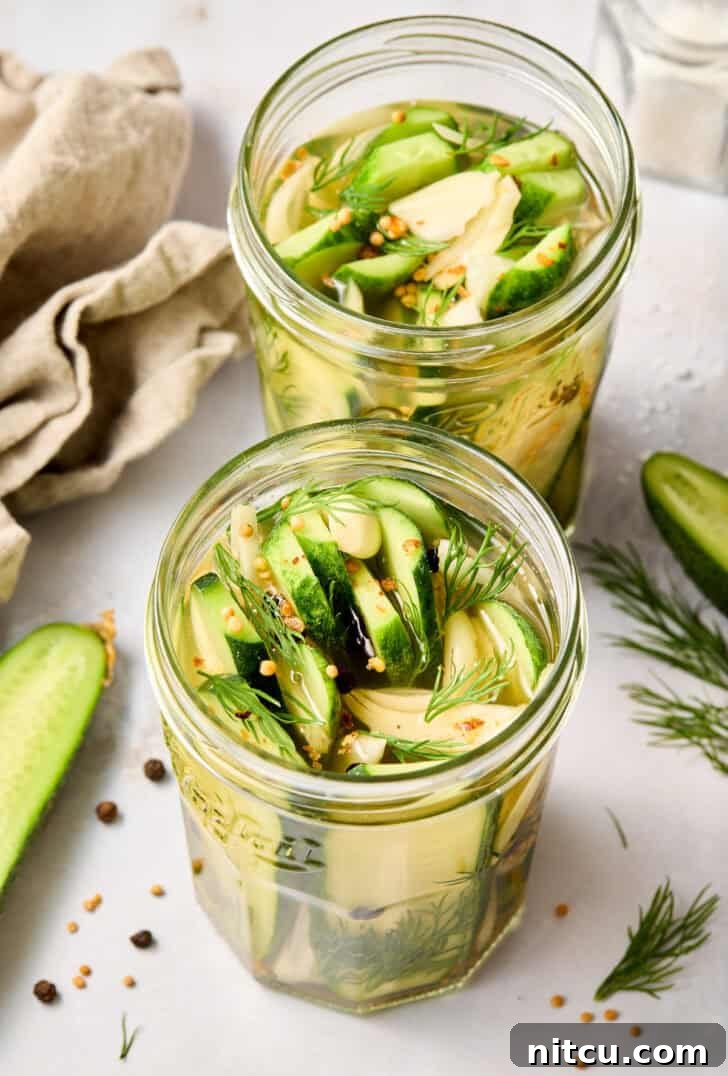
Creating your own batch of **quick and easy dill pickles** is a delightful culinary adventure that promises fresh, vibrant flavors and an unbeatable crunch. The secret to truly crisp and satisfying pickles lies not only in the perfectly balanced brine but crucially in the quality and type of cucumber you select. I consistently recommend using **small pickling cucumbers** because their thick, bumpy skin and naturally firm flesh are ideally suited to holding up exceptionally well and staying wonderfully crunchy, even after an extended period in the acidic brine. You might be surprised by how few cucumbers are needed to fill a jar; for instance, I typically manage to **snugly fit three 4-inch long sliced cucumbers** into a standard pint-sized jar, yielding plenty of delicious pickles for snacking or topping.
While the zesty garlic dill pickle is a timeless favorite and the primary focus of this versatile recipe, the true beauty of homemade pickling lies in the complete freedom to customize. Never hesitate to adjust the ingredient quantities to perfectly match your personal taste preferences. If you prefer a less intense garlic flavor, simply reduce the number of smashed cloves. Craving a pickle with a hint more sweetness? A slightly increased amount of granulated sugar in the brine can beautifully mellow the tartness. And for those who enjoy a spicier kick, feel free to generously amp up the red pepper flakes! This recipe serves as a fantastic, flexible starting point for you to explore, experiment, and ultimately perfect your ideal pickle flavor profile, making each batch uniquely yours.
Beyond the exquisite taste, the texture of a pickle is paramount. To consistently ensure your homemade pickles remain irresistibly crunchy, always begin with the freshest, firmest pickling cucumbers available. Avoid any cucumbers that feel soft, appear bruised, or are past their prime, as these will invariably result in soggy pickles. Another crucial tip is to cool your brine to a warm (not boiling hot) temperature before pouring it over the packed cucumbers. Pouring scorching hot brine directly onto the cold cucumbers can prematurely “cook” them, leading to a loss of crispness. By diligently following these simple yet effective steps, you are well on your way to creating consistently crisp, flavorful, and utterly delicious homemade pickles every single time.
Creative Ways to Serve Your Quick Pickles
Once your **homemade refrigerator pickles** have had ample time to chill and absorb all that glorious flavor, they become incredibly versatile culinary companions. Far beyond being just a fantastic standalone snack, these **crispy dill pickles** possess the power to elevate a wide array of dishes, transforming ordinary meals into extraordinary culinary experiences. Their bright, zesty acidity and satisfying crunch provide a perfect contrast that cuts through rich flavors, making them an ideal and refreshing accompaniment to countless savory meals. Here are some delicious and creative ideas for incorporating your freshly made pickles into your cooking:
- Grilled French Onion Steak Sliders: The tangy pickles provide a sharp, fresh counterpoint to the rich steak and deeply caramelized onions, creating a balanced bite.
- Best Slow Cooker Carnitas: A refreshing bite of pickle adds a vibrant, acidic zest that cuts through the richness of hearty, slow-cooked pork.
- Smash Burger Recipe: A classic and beloved pairing! Sliced pickles are an absolute must-have for a truly authentic and satisfying burger experience.
- Ultimate Southern Chicken Salad: Finely dice your homemade pickles and mix them directly into chicken salad for an extra layer of briny flavor and delightful crunch.
- Honey Pepper Pimento Chicken Sandwich: The sharp, tangy flavor of pickles brilliantly balances the sweet and creamy elements of this indulgent sandwich.
- Best Hamburger Patty: Whether placed generously on top of the patty or served as a crunchy side, pickles are an essential and beloved condiment for any burger.
- Best Ever Tuna Salad Sandwich: Much like with chicken salad, incorporating homemade pickles adds a zesty brightness and a textural pop to classic tuna salad.
- As a Side Dish: Serve these versatile pickles alongside any barbecue feast, grilled meats, picnic spread, or a simple deli sandwich to add freshness and tang.
- In Green Salads: Chop them up and toss them into your favorite green salads or grain bowls for an unexpected yet delightful briny kick and crunch.
- With Cheese and Crackers: Elevate your charcuterie board or simple cheese plate by adding a bowl of these vibrant pickles for a gourmet touch and a tangy contrast to rich cheeses.
Homemade Refrigerator Pickles Recipe
Overall Rating: 5 out of 5 stars (Based on 142 reviews)
Making your own crisp and tangy dill pickles at home has never been easier! This incredibly simple, no-canning recipe yields perfect, flavorful pickles ready in just one day of refrigeration. Enjoy them on sandwiches, burgers, or as a delightful snack.
Prep Time: 5 minutes
Cook Time: 3 minutes
Chill Time: 1 day
Total Time: Approximately 1 day and 8 minutes
Yields: 12 spears (enough for approximately 1 pint jar)
Ingredients
- 3 pickling cucumbers, each about 4 inches in length, sliced evenly (Kirby or Gherkin varieties recommended for optimal crunch)
- 1/4 cup Vidalia onion, thinly sliced (or any preferred sweet onion)
- 3-5 sprigs fresh dill weed, for that classic, vibrant dill flavor
- 1/2 cup apple cider vinegar (provides mellow, fruity tang; white vinegar is a suitable alternative)
- 1/2 cup filtered water
- 2 cloves garlic, smashed (adjust quantity to achieve your desired garlicky intensity)
- 1 1/2 teaspoons pickling salt (or high-quality kosher salt, ensure it’s free of anti-caking agents and iodine)
- 1/4 teaspoon granulated sugar (crucial for balancing the acidity of the brine)
- 1/4 teaspoon whole black peppercorns (for a nuanced and aromatic peppery note)
- 1/4 teaspoon whole yellow mustard seeds (essential for the quintessential dill pickle taste)
- Pinch crushed red pepper flakes (optional, for a subtle hint of heat; adjust to your personal spice preference)
Instructions
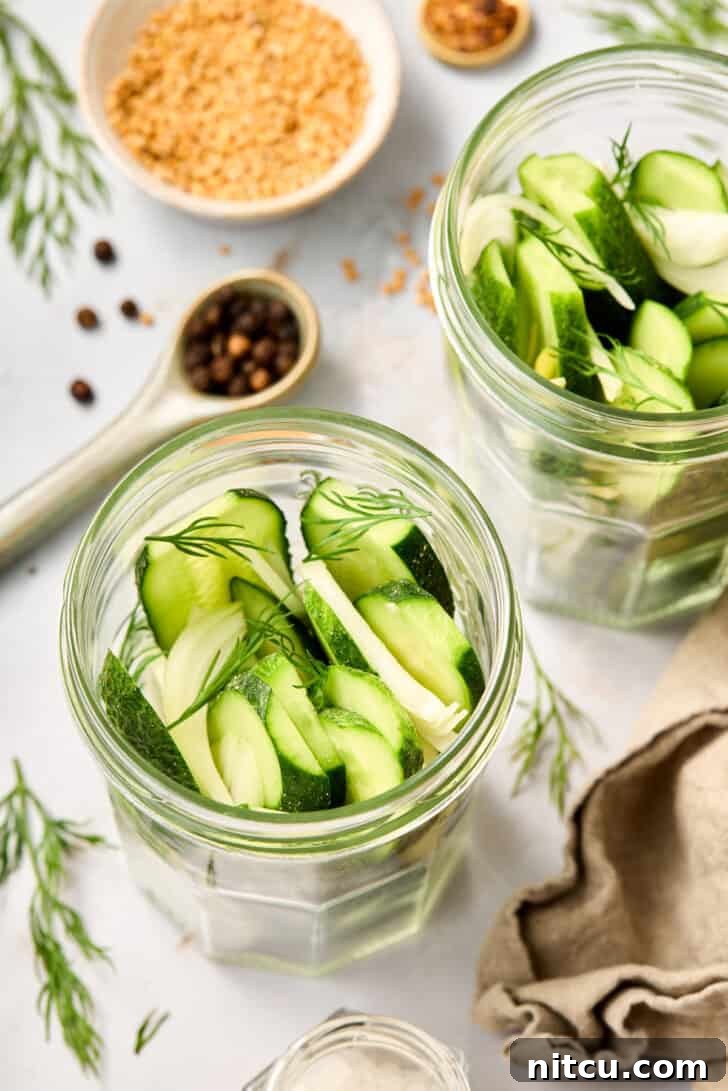
- Prepare the Jar: Begin by thoroughly cleaning and drying a pint-sized glass jar (or your chosen container). Carefully pack the jar snugly with your evenly sliced pickling cucumbers, thin onion slices, and fresh dill sprigs. Ensure you leave a critical 1/2 inch of headspace at the top of the jar; this space is essential for the liquid brine.
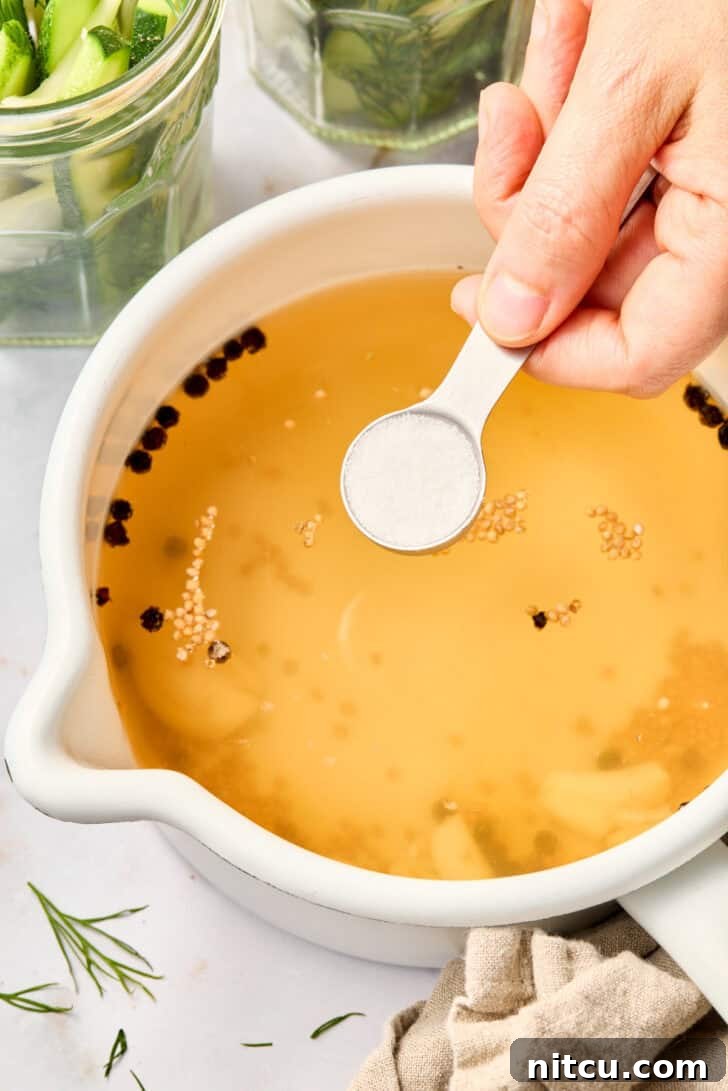
- Prepare the Brine: In a small saucepan, combine all the brine ingredients: apple cider vinegar, filtered water, smashed garlic cloves, pickling salt, granulated sugar, whole black peppercorns, whole yellow mustard seeds, and the crushed red pepper flakes (if you’re using them). Heat this mixture over medium heat, stirring gently and occasionally, until it just reaches a gentle simmer. Continue to stir until both the salt and sugar have completely dissolved into the liquid. This process allows the spices to infuse and the flavors to meld beautifully.
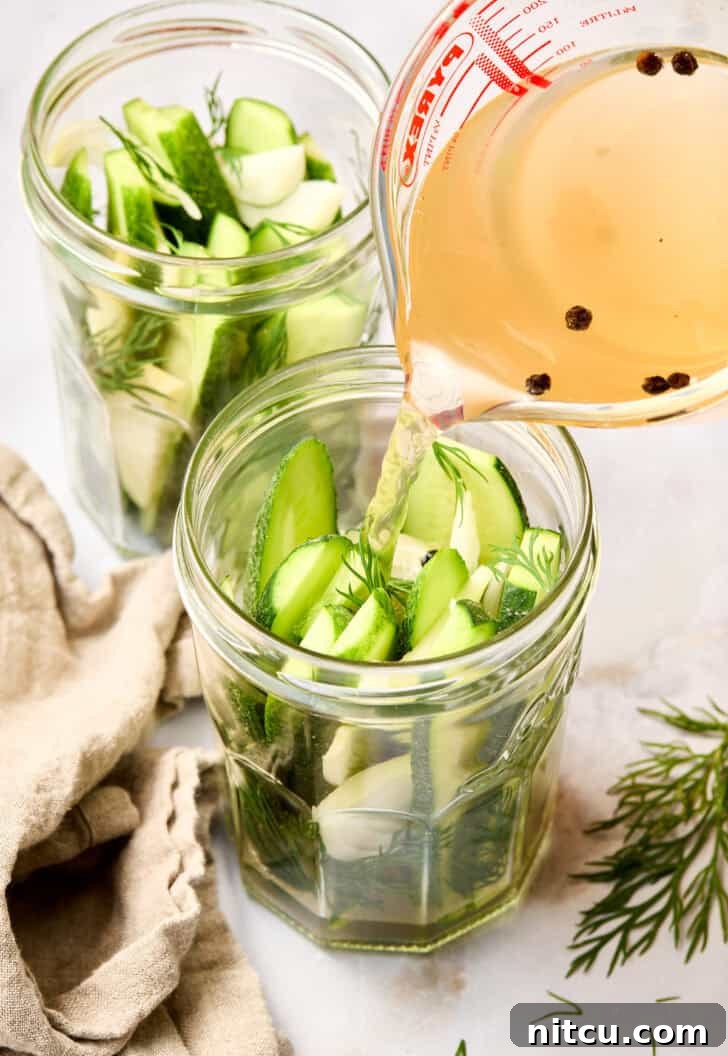
- Cool and Fill: Once the brine has simmered, remove the saucepan from the heat. Allow the brine to cool down to a warm (not scorching hot) temperature. This cooling step is crucial as pouring boiling hot brine directly over the cucumbers can cause them to soften. Once warm, carefully pour the prepared brine over the packed ingredients in the jar, ensuring that all the cucumbers, onions, and dill are completely submerged. If needed, add a tiny bit of extra filtered water to ensure everything is covered.
- Seal and Chill: Securely close the lid on your filled jar, ensuring it’s airtight. Place the jar in the refrigerator and allow the pickles to chill and meld for a minimum of 24 hours before you begin enjoying them. The flavors will deepen and the pickles will transform into perfectly tangy and wonderfully crisp delights with time.
Recipe Notes & Expert Tips for Perfect Homemade Pickles
This recipe is precisely scaled to fit a single 1 pint jar. If you desire to make a larger batch, simply multiply all the ingredient quantities proportionally according to the number and specific size of jars you plan to fill. Always ensure your jars are impeccably clean and, if possible, sterilized for the best results and extended shelf life of your pickles.
Adjusting Sweetness and Tartness: Some individuals might find the standard recipe’s tanginess to be a little too intense for their palate. While I personally enjoy pickles with a good bite, taste preferences vary greatly. If you prefer a milder, slightly sweeter pickle, feel completely free to add up to 1 1/2 teaspoons of extra granulated sugar per pint jar directly to the brine. A good practice is to taste your brine after the sugar has dissolved but before it cools, to gauge the sweetness level and adjust it to your liking.
Ensuring Maximum Crispiness: For the absolute ultimate in crunchy pickles, it’s vital to always use very fresh, firm pickling cucumbers. Avoid any cucumbers that feel even slightly soft or appear bruised, as these will invariably lead to soggy pickles. A traditional trick is to trim off the blossom end of each cucumber, as it contains an enzyme that can contribute to softening. Additionally, soaking your cucumbers in a bowl of ice water for a few hours before you slice and pack them can help firm them up. Remember, pouring warm (not boiling hot) brine over the cucumbers is key to preventing them from becoming “cooked” and soft. Lastly, consistent refrigeration from day one helps preserve their crisp texture.
Optimal Storage: These delicious **refrigerator pickles** are not shelf-stable and must always be stored in the refrigerator. When properly sealed and chilled, they will generally last for up to two months. However, for peak crispness and the most vibrant flavor, it is highly recommended to enjoy them within the first few weeks of making them, as their crunchiness tends to diminish slightly over longer storage periods.
Flavor Experimentation: Don’t hesitate to venture beyond the basic recipe and experiment with additional spices and herbs! Try incorporating a few whole coriander seeds for a citrusy note, a bay leaf for depth, or even a few thin slices of fresh ginger for a unique zest. A sprig of fresh thyme or oregano can also introduce an interesting herbal dimension to your brine, allowing you to create truly personalized pickle flavors.
Nutrition Facts (Per Serving)
Serving: 1 spear, Calories: 13kcal, Carbohydrates: 2g, Protein: 0g, Fat: 0g, Saturated Fat: 0g, Cholesterol: 0mg, Sodium: 293mg, Potassium: 113mg, Fiber: 0g, Sugar: 1g, Vitamin A: 55IU, Vitamin C: 2.7mg, Calcium: 11mg, Iron: 0.2mg
(Please note: Nutritional information provided is an estimate and may vary based on specific ingredients, portion sizes, and preparation methods used.)
Course: Side Dish, Snack, Appetizer
Cuisine: American
Author: Sommer Collier
Cook It? Love It? Share Your Experience! Your feedback is incredibly valuable and helps other hungry people discover this fantastic recipe. Consider sharing your thoughts!
Frequently Asked Questions About Homemade Refrigerator Pickles
Homemade refrigerator pickles, when properly stored in their sealed jar within the cold environment of your refrigerator, typically maintain their quality for approximately two months. While they will remain safe to consume during this period, their signature crispness and vibrant flavor are at their peak when enjoyed within the first few weeks after preparation. Over longer storage times, it is natural for them to soften slightly, although they will still retain their delicious tang.
At their fundamental core, dill pickles are essentially pickling cucumbers that have been carefully submerged and thoroughly infused in a savory and acidic brine. This essential brine typically comprises a balanced mixture of water, vinegar (most commonly apple cider vinegar for a milder taste or white vinegar for a sharper tang), and specific pickling salt. Crucially, a blend of classic pickling spices is added. These essential spices almost always include fresh dill weed, aromatic garlic, pungent mustard seeds, and whole black peppercorns. As the cucumbers soak patiently in this flavorful liquid, they undergo a fascinating transformation, absorbing the brine’s complex taste and developing their characteristic pickled texture and distinct tangy profile.
Without any hesitation, these **homemade refrigerator dill pickles** stand out as one of the absolute best choices for home pickling! They offer an unparalleled combination of ease of preparation, speed, and exceptional deliciousness. The profound satisfaction of knowing precisely what fresh, wholesome ingredients go into your food, free from any artificial preservatives or excessive sodium often found in commercially produced varieties, is incredibly empowering and rewarding. Moreover, the superior fresh, crisp texture and vibrant, nuanced flavor of these homemade pickles often far surpass anything you can purchase from a store. This particular recipe empowers you to create truly outstanding pickles that are perfectly tailored to your individual preferences, unequivocally making them the top choice for any aspiring home cook.
The incredibly versatile brine featured in this **easy pickle recipe** is by no means limited solely to cucumbers! It serves as a fantastic foundational base for pickling a wonderfully diverse array of other fresh vegetables, allowing you to expand your culinary horizons. If you are eager to broaden your pickling repertoire, consider experimenting with crisp green beans, tender cauliflower florets, vibrant bell pepper strips (in various colors), or even fiery hot peppers for an exhilarating spicy kick. Vegetables such as carrots, radishes, and asparagus also respond exceptionally well to this brine, offering unique textural experiences and delightful new flavor combinations. Always ensure to slice or cut your chosen vegetables into appropriate, uniform sizes to facilitate even pickling, and rigorously maintain excellent hygiene with impeccably clean jars.
Achieving that coveted crispy pickle is a common and highly desired goal for many home picklers! To ensure maximum crunch, always begin with very fresh, firm pickling cucumbers; avoid older or softer cucumbers at all costs, as they will almost certainly result in soggy pickles. A crucial tip is to trim off the blossom end of each cucumber, as this part contains an enzyme that can contribute to softening. You can also give your cucumbers an invigorating ice water bath, soaking them for a few hours prior to slicing and pickling to further firm up their flesh. Ensure your brine is cooled to a warm temperature before pouring it over the cucumbers, as boiling hot brine can effectively “cook” them, leading to an undesirable loss of crispness. Finally, diligently storing them in the refrigerator from day one is paramount for maintaining their delightful crisp texture.
While fresh dill weed is enthusiastically recommended for its bright, distinctive flavor, and incredibly aromatic essence, you can certainly substitute dried dill in a pinch if fresh is unavailable. As a general guideline for dried herbs, use about one-third the amount of dried dill compared to fresh dill, as dried herbs are significantly more concentrated in flavor. Therefore, for the specified 3-5 sprigs of fresh dill, you might use approximately 1-2 teaspoons of dried dill weed. However, it’s important to be aware that the overall flavor profile will be discernibly different, likely less vibrant and fresh than what is achieved with fresh dill.
Explore More Delicious Quick Pickled Recipes
If you’ve fallen head over heels for the sheer ease and fantastic flavor of these **homemade refrigerator pickles**, then you’re in for a treat! You’ll be absolutely thrilled to discover a whole vibrant world of other quick pickling opportunities waiting to be explored. Expanding your pickling skills to include a diverse variety of fruits and vegetables is a truly fantastic way to savor seasonal produce, minimize food waste, and effortlessly add bright, tangy, and exhilarating flavors to all your meals. From delightfully sweet to tantalizingly spicy, there’s a quick pickled delight perfectly suited for every discerning palate. Dive into these other exciting and incredibly easy pickled recipes, and continue your journey into homemade deliciousness: