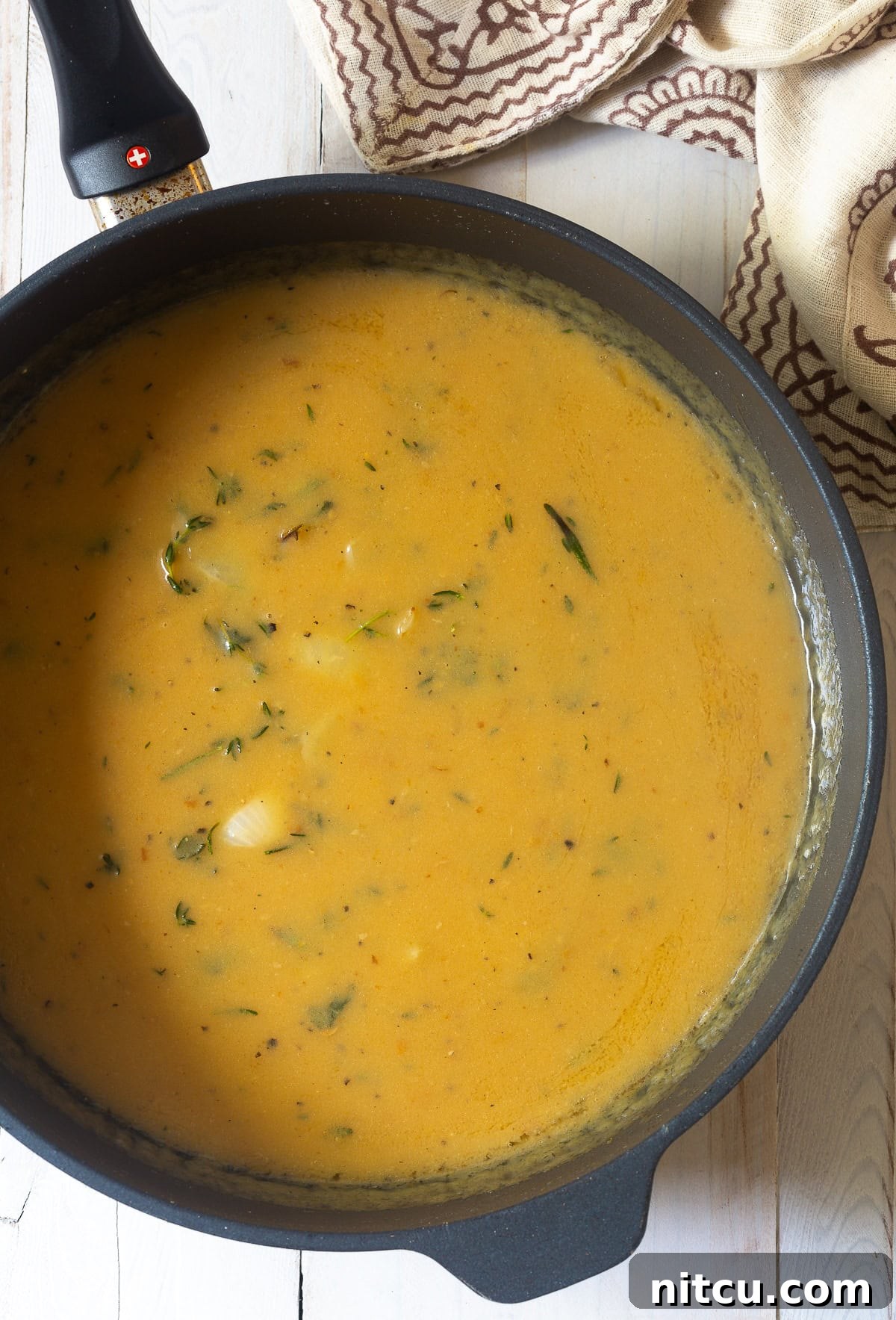
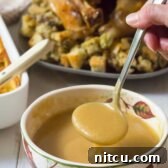
Master the Art of Turkey Gravy – Discover the easiest, most delicious, and truly foolproof way to make the best homemade turkey gravy you’ve ever tasted. This comprehensive guide will transform your Thanksgiving feast!
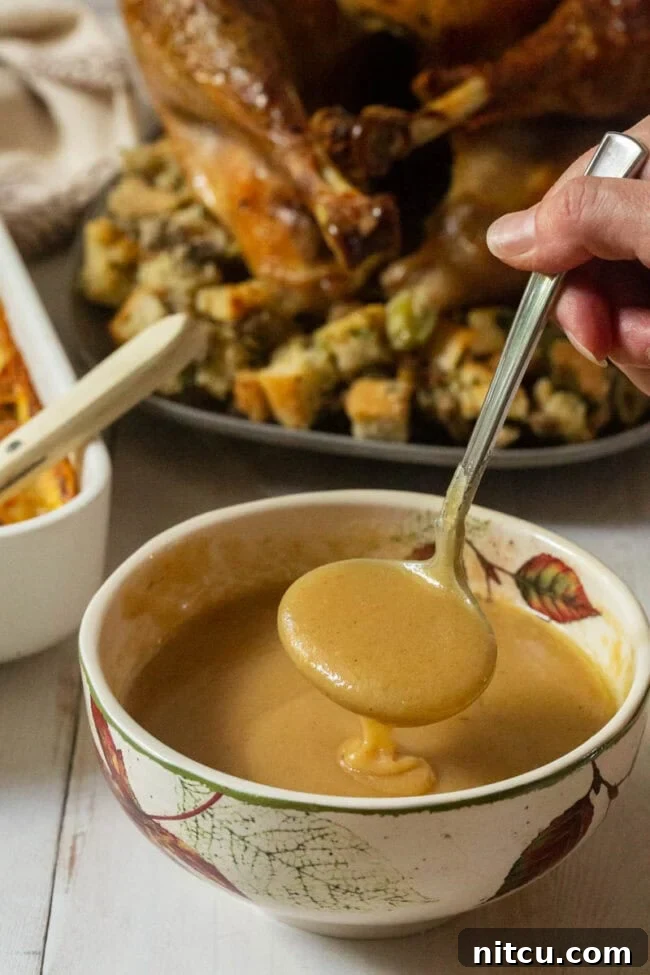
Unlock the Secret to the Best Homemade Turkey Gravy
Thanksgiving dinner is a celebration of abundance, tradition, and incredible flavors. While the roast turkey often takes center stage, it’s the supporting cast of side dishes and, crucially, the rich, savory gravy that truly elevates the meal. Every year, as the holiday season approaches, we receive countless questions about crafting the perfect turkey gravy. It’s a dish that, despite its apparent simplicity, often causes a surprising amount of apprehension among home cooks.
But why does a seemingly straightforward sauce like gravy evoke such widespread concern? For many generations, American cooking embraced convenience, with Thanksgiving side dishes frequently originating from boxes, cans, and powdered packets. Gravy, too, often came from an instant mix, leading to a disconnect from the traditional methods of preparing it from scratch.
Adults of a certain age fondly—or perhaps not so fondly—recall these holiday dinners, featuring everything from gelatinous cranberry sauce cylinders to stuffing meticulously crafted from dehydrated onion and herb pouches. While these shortcuts offered ease, they often sacrificed the depth of flavor and comforting authenticity that homemade dishes provide.
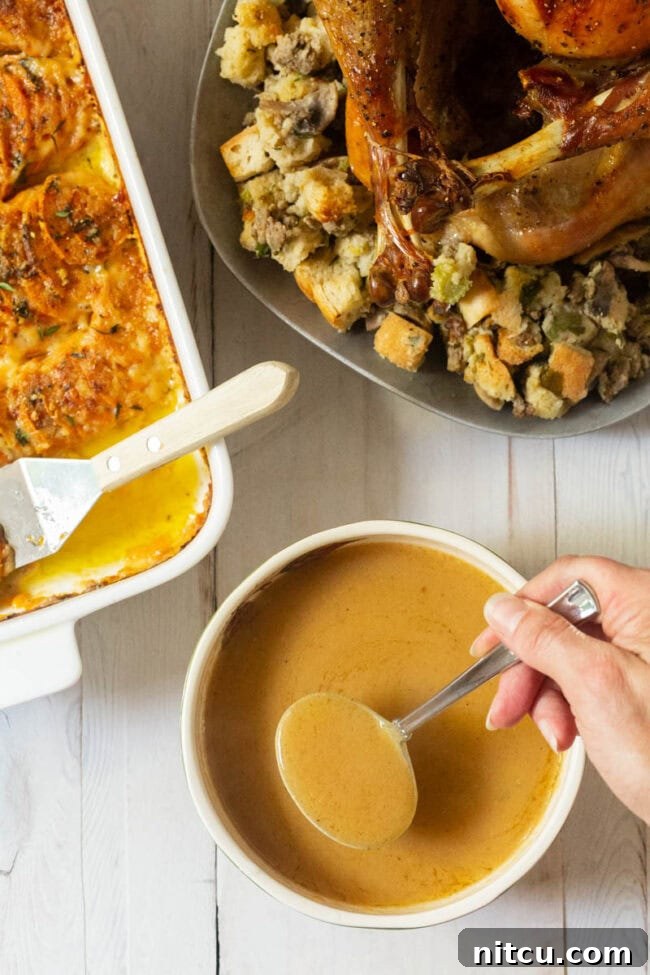

Embracing the Art of Scratch Cooking for Your Turkey Gravy
Fortunately, the American culinary landscape has evolved, coming full circle to appreciate the value of homemade goodness. There’s a growing desire to return to basics, to make dishes from scratch once more, driven by a wish for greater personal quality control over the ingredients we consume.
In this culinary renaissance, gravy often feels like the final frontier in bringing Thanksgiving dinner back to its roots. Many home cooks feel intimidated by the process, but we’re here to tell you that crafting the best turkey gravy from scratch is not only achievable but immensely rewarding.
The secret to truly exceptional turkey gravy lies in the rich pan drippings collected after roasting your holiday turkey. These drippings are packed with unparalleled flavor that simply cannot be replicated by store-bought broths alone. However, even with the best drippings, you’ll still need to supplement with some turkey or chicken broth to achieve the perfect consistency and volume for your gravy.
If you’re planning ahead, you can often find quality turkey broth available in stores during the holiday season. For an even deeper flavor profile, consider roasting a smaller turkey or turkey pieces prior to Thanksgiving. You can use the succulent meat in various recipes throughout the week, while reserving the bones and carcass to make your own rich, homemade turkey broth. This extra step will undoubtedly ensure you create the most flavorful and unforgettable homemade turkey gravy ever!
Essential Ingredients for Your Perfect Turkey Gravy
Crafting a truly exceptional homemade turkey gravy requires a few simple, yet crucial, ingredients. The magic begins with the foundational flavor derived from your roast turkey, enhanced by aromatics and a classic thickening agent. Here’s what you’ll need:
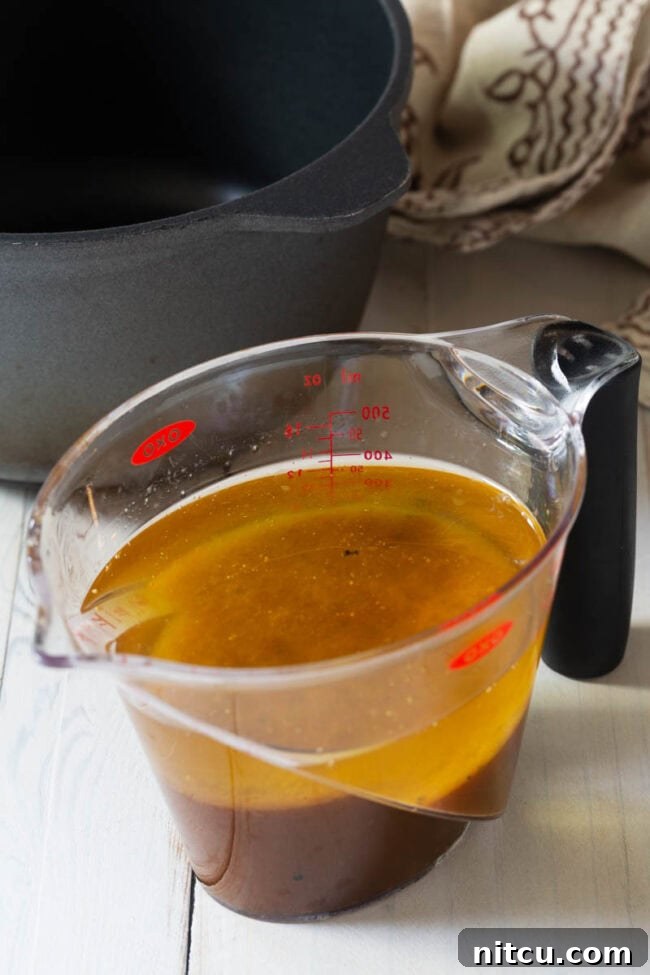
- Turkey Pan Drippings: The star ingredient, collected from the bottom of your roasting pan. These carry the essence of your turkey, offering a depth of flavor that cannot be replicated. (Optional: Include turkey giblets, if desired, for an even richer taste.)
- Low-Sodium Turkey or Chicken Broth: Essential for achieving the right volume and consistency. Opt for low-sodium to control the saltiness of your final gravy. Chicken stock can also be used as a substitute.
- All-Purpose Flour: The key to creating a smooth, velvety roux, which acts as the thickening base for your gravy.
- Finely Chopped Onions: Adds a subtle sweetness and aromatic depth that beautifully complements the turkey flavor.
- Fresh Chopped Herbs: A fragrant blend of sage, thyme, and rosemary will infuse your gravy with classic holiday aromas and an irresistible fresh taste.
- Salt and Freshly Ground Black Pepper: To season the gravy to perfection, bringing out all the wonderful flavors.
Step-by-Step Guide: How to Make Foolproof Turkey Gravy with Drippings
Follow these detailed instructions to create the silkiest, most flavorful turkey gravy your family has ever enjoyed. This easy gravy recipe ensures a perfect result every time.
- Collecting Your Turkey Drippings: The foundation of exceptional gravy begins with a perfectly roasted turkey. Once your turkey is cooked to golden perfection and removed from the pan, you’ll be left with invaluable pan drippings. Depending on the size of your turkey and your roasting method, you could yield anywhere from one to several cups of these flavorful juices. Some cooks enhance drippings by adding water, wine, or vegetables to the roasting pan during cooking, while others stuff the turkey cavity with fresh herbs and onions. Both methods infuse additional flavor into the turkey and its drippings, but even starting with a dry roasting pan will yield delicious results.
Important Note on Brining: If you brined your turkey, its drippings will likely be quite salty. It is absolutely crucial to taste your drippings before beginning gravy preparation to avoid an overly salty final product. You may need to use less drippings and more low-sodium broth to balance the flavor.
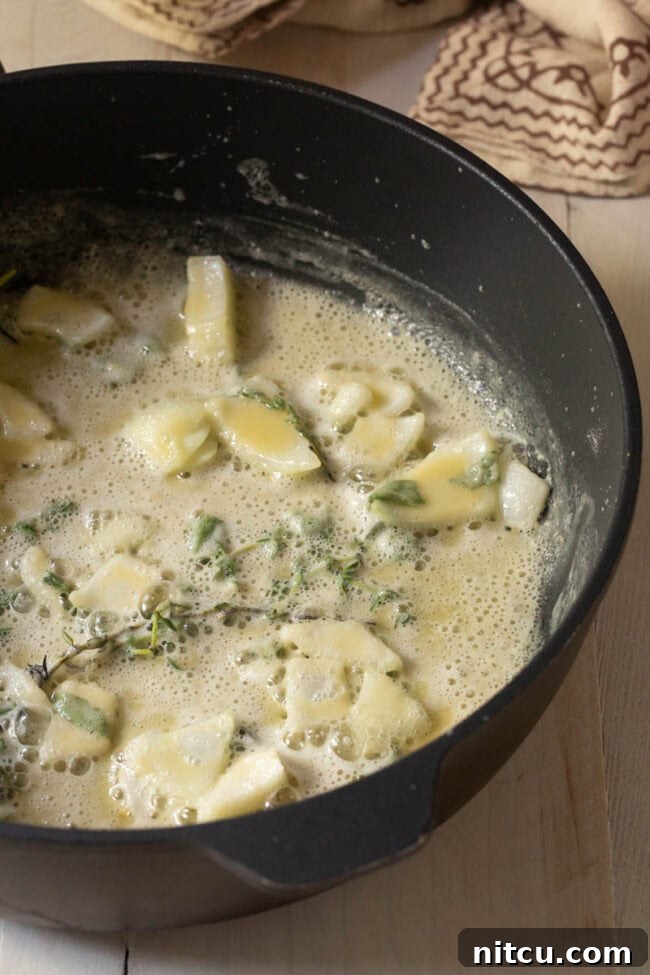
- Crafting the Perfect Roux: Instead of introducing additional butter or oil, we’ll use the flavorful fat from your turkey drippings to form the roux. Carefully skim about 1/4 cup of turkey fat from the surface of your drippings and transfer it to a large saucepan set over medium to medium-high heat. Whisk in the all-purpose flour gradually, creating a smooth paste. This is your roux, the thickening base for your gravy. For an extra boost of savory flavor, add your finely chopped onion and fresh herbs (sage, thyme, rosemary) to the roux as it cooks. Stir continuously for 2-3 minutes until the roux is golden brown and the onions are softened, and the herbs release their aroma. This process ensures a rich, nutty flavor for your gravy.
- Balancing Drippings and Broth: To begin building your liquid base, you’ll need a combined total of 4 cups of pan drippings and broth (or stock). Gravy making isn’t an exact science, as the fat-to-liquid ratio and flavor intensity of drippings can vary significantly. Therefore, tasting is key.
If your drippings are exceptionally salty (as might be the case with a brined turkey), use less of them and compensate with more low-sodium broth. If your drippings are very fatty, skim off a bit more of the excess fat before incorporating. However, if your drippings taste wonderfully balanced and have a good amount of fat without being *all* fat, feel free to use as much of them as possible. Then, top off your measuring cup to the 4-cup mark with low-sodium turkey or chicken broth, aiming to use just enough broth to reach the desired volume.
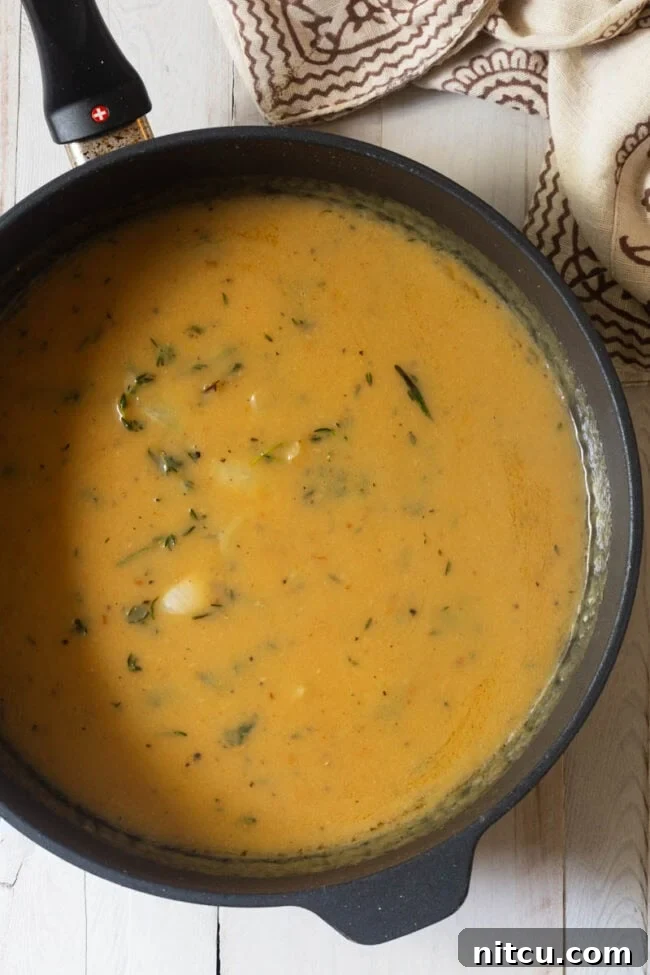
- Achieving Silky Smoothness – Whisking is Key!: Once your roux is ready, it’s time to incorporate the liquid. Gradually pour the combined drippings and broth into the saucepan with the roux, whisking vigorously and continuously. This vigorous whisking is vital for preventing lumps and creating a smooth, luxurious turkey gravy. Continue whisking until the mixture is uniform. Then, reduce the heat to a simmer and let the gravy gently cook, stirring occasionally, until it reaches your desired thickness. The gravy will thicken further as it simmers, so be patient and observe its consistency.
- Adjusting Consistency Before Serving: Gravy has a tendency to thicken considerably as it cools. To ensure your gravy is perfectly pourable and smooth when served, it’s a good practice to reserve a little extra turkey or chicken broth. Just before serving your magnificent Thanksgiving meal, whisk in 1/4 to 1/2 cup of this reserved broth, or more as needed, until the gravy achieves that ideal, luscious consistency. This step ensures your gravy isn’t too thick and gloopy.
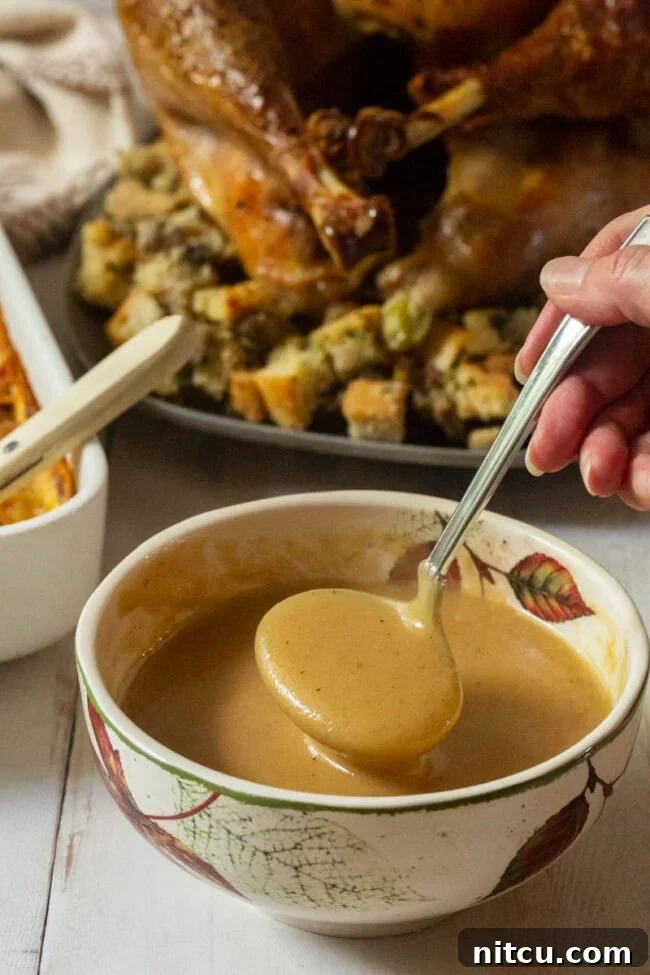
- Strain for Ultimate Smoothness: For a truly elegant and ultra-smooth gravy, especially if you added onions and herbs to your roux, use a fine-mesh sieve or strainer. As you pour the gravy into your serving boat or bowl, strain it to remove any bits of onion, herbs, or small clumps that may have formed. This final touch guarantees a refined texture that will impress your guests. Serve immediately and watch it disappear!
Get The Full (Printable) Homemade Turkey Gravy Recipe + Video Below. Enjoy!
Frequently Asked Questions About Making Turkey Gravy
We’ve gathered some of the most common questions we receive about making delicious turkey gravy. Here are our expert answers to help you troubleshoot and perfect your gravy game:
The secret to the best turkey gravy lies in using flavorful pan drippings from your roasted turkey, combined with fresh herbs and a perfectly cooked roux. Following our detailed recipe above will guide you to a truly exceptional result every time.
Making gravy from drippings involves skimming the fat, using it to create a roux with flour, then gradually whisking in the remaining flavorful liquid drippings and turkey or chicken broth until thickened. Our recipe at the bottom of this page offers a foolproof method that consistently delivers amazing gravy.
Absolutely! You can still make a very good turkey gravy even without pan drippings. Simply substitute the entire liquid portion with 4 or more cups of good quality low-sodium turkey or chicken broth. You’ll still follow the same roux-making process, perhaps using a little butter or neutral oil instead of turkey fat, and adding plenty of fresh herbs and aromatics for flavor.
While you can make a perfectly good gravy without drippings, the unique, concentrated flavors derived from a roasted turkey’s juices are unparalleled. Gravy made solely with broth will still be delicious and a perfectly decent option, especially when cooking a turkey breast that yields fewer drippings, but it won’t have the same depth and complexity as gravy made with real pan drippings.
Yes, turkey gravy can be made in advance, which is a fantastic time-saver during busy holiday preparations. Simply prepare the gravy as directed, then let it cool completely before storing it in an airtight container in the refrigerator for up to 3-4 days. When ready to serve, gently reheat the gravy on the stovetop over low heat, whisking in additional broth (1/4 to 1/2 cup or more) to loosen it and restore its smooth consistency, as it will thicken significantly upon cooling.
Yes, turkey gravy freezes beautifully! Portion the cooled gravy into small, airtight freezer-safe containers or heavy-duty freezer bags. This allows you to thaw only the amount you need later. Frozen gravy can be stored for up to 6 months. To reheat, thaw overnight in the refrigerator, then gently warm on the stovetop, whisking in broth to achieve the desired consistency.
Making gluten-free turkey gravy is simple! The best substitute for wheat flour in a roux is rice flour or a gluten-free all-purpose flour blend. Substitute it in exact proportion for the regular flour. Your gravy will be just as thick and silky. Remember, for a truly gluten-free recipe, always double-check the label on your store-bought broth to ensure it does not contain any hidden gluten-containing ingredients.
This recipe can absolutely be dairy-free. If you do not rub your turkey with butter (using olive oil or another dairy-free fat instead), your pan drippings will be dairy-free. Always double-check the ingredient list of any store-bought broth you use to ensure it is also dairy-free.
While vegan gravy is inherently different from turkey gravy, you can adapt this recipe to be entirely plant-based. Simply substitute vegan vegetable broth for the liquid and use about 1/4 cup of vegan butter (plant-based) to make your roux. For an incredible depth of flavor, many find mushroom broth makes an outstanding base for vegan gravy, offering a savory umami that mimics meat-based flavors.
More Essential Thanksgiving Recipes You’ve Got To Try!
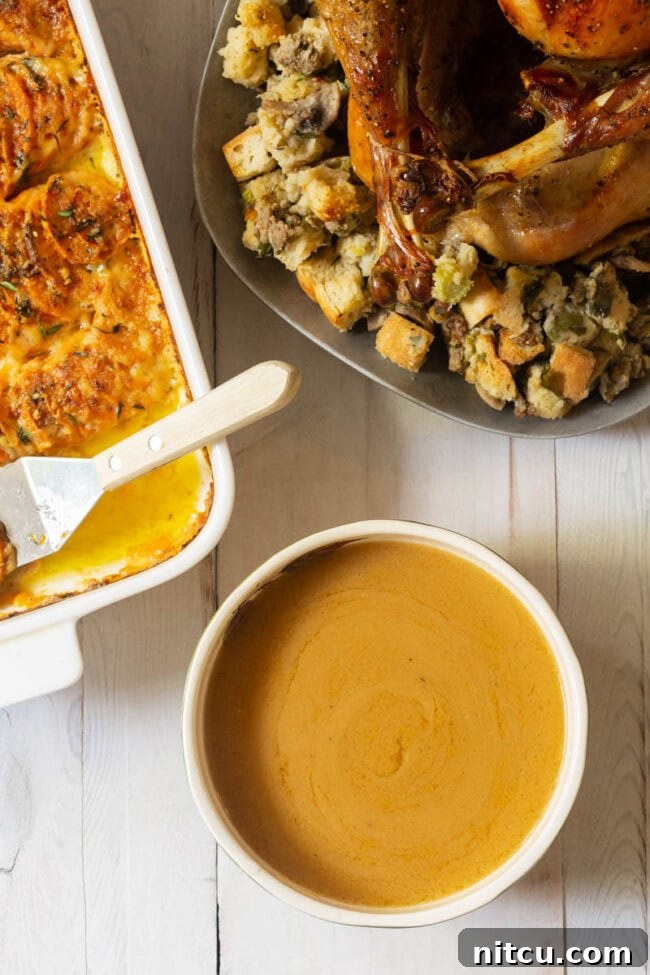
No Thanksgiving feast is complete without a collection of time-honored dishes that perfectly complement your magnificent turkey and homemade gravy. Explore these beloved traditional Thanksgiving recipes to create a truly unforgettable holiday spread:
- The Best Turkey Brine for a Juicy Bird
- Irresistible Brown Sugar Baked Ham with Glaze
- Savory Sausage Mushroom Thanksgiving Stuffing
- Comforting Southern Sweet Potato Casserole
- The Ultimate Creamy Mashed Potatoes
- Fluffy Homemade Cornbread Muffins
- Rich and Decadent Southern Creamed Spinach
- Famous Homestyle Corn Pudding Recipe
- Perfect Pumpkin Slab Pie with a Secret Ingredient
- Effortless Buttermilk Drop Biscuits
Print Recipe
Leave a Review »
How To Make Turkey Gravy
Video
For a visual guide on crafting this incredible turkey gravy, please watch the video below:
Ingredients
- 1-3 cups turkey pan drippings
- 1 1/2-3 1/2 cups low-sodium turkey broth or chicken broth
- 5 tablespoons all-purpose flour
- 1/4 cup chopped onions
- 3 tablespoons fresh chopped herbs (sage, thyme, rosemary)
- Salt and pepper
Instructions
-
After roasting your turkey, collect the drippings from the bottom of the pan. Yields can vary from 1 to 5+ cups. If you brined your turkey, the drippings will be salty; taste them before starting. If salty, use only about 1 cup of drippings and low-sodium broth to control saltiness.
-
Skim 1/4 cup of turkey fat from the drippings and place it in a sauté pan over medium heat. Whisk in the flour to create a roux. Add chopped onion and fresh herbs, cooking until onions are soft and the roux is golden.
-
Combine the pan drippings and broth to total 4 cups. Adjust quantities based on the saltiness and fat content of your drippings. If very salty or fatty, use less drippings and more broth. Aim for a balanced, flavorful liquid.
-
Pour the combined liquid into the roux, whisking vigorously until smooth. Simmer, stirring occasionally, until the gravy thickens to your desired consistency (coating a spoon is a good benchmark). Turn off the heat once achieved.
-
Taste and season the gravy with salt and pepper as needed. Gravy will thicken as it cools. Keep a little extra broth handy to whisk in and loosen it before serving, if necessary.
-
When ready to serve, rewarm the gravy if needed. Whisk in an additional 1/4-1/2 cup of broth to adjust consistency. For an extra smooth finish, use a fine-mesh sieve to strain out onions and herbs as you pour it into a gravy bowl. Serve immediately.
Nutrition Information
(Approximate values per serving)
- Serving Size: 0.5 cup
- Calories: 173 kcal
- Carbohydrates: 3g
- Protein: 1g
- Fat: 17g
- Saturated Fat: 5g
- Cholesterol: 17mg
- Sodium: 12mg
- Potassium: 47mg
- Fiber: 0g
- Sugar: 0g
- Vitamin A: 85 IU
- Vitamin C: 1.6mg
- Calcium: 3mg
- Iron: 0.3mg