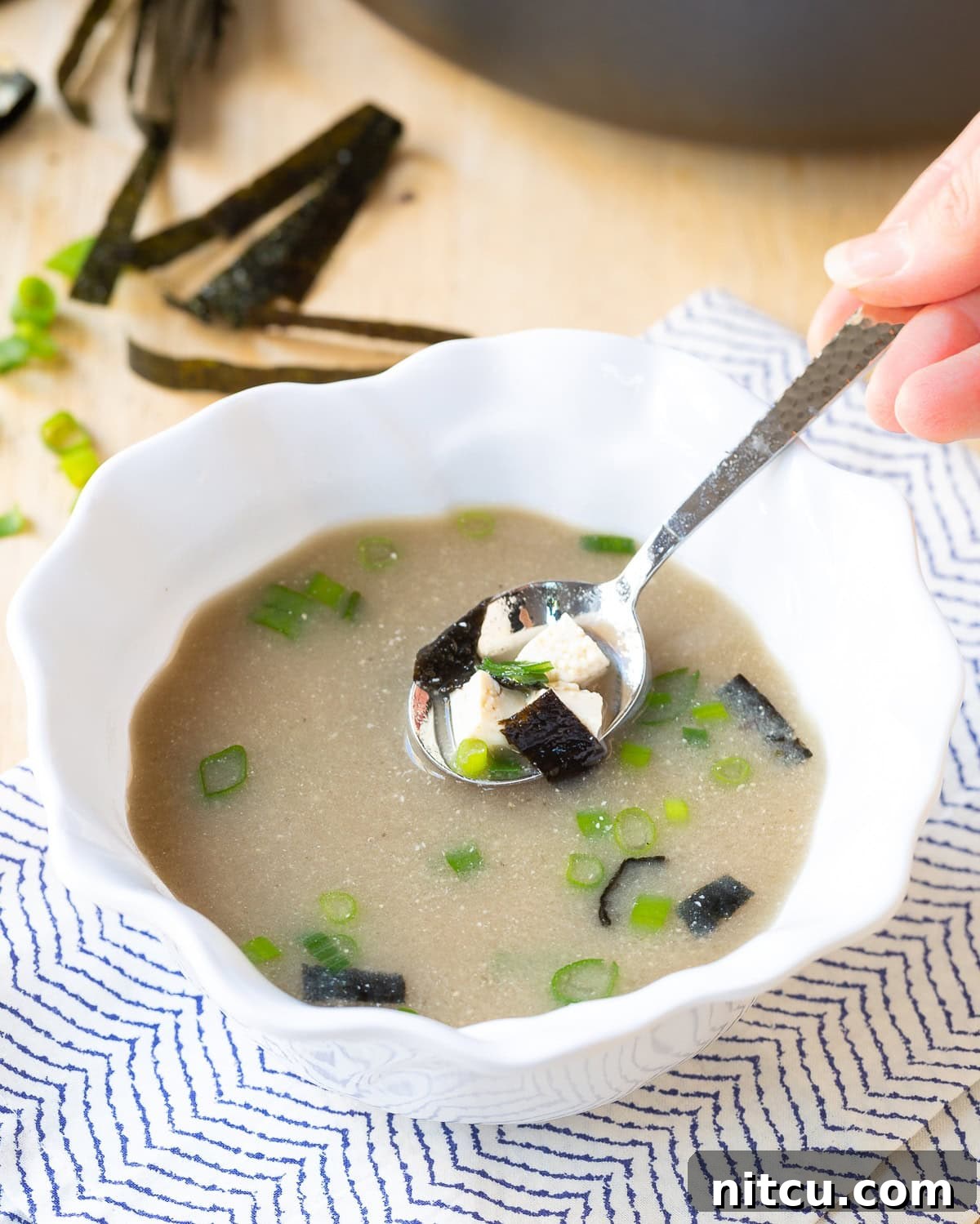
The Ultimate 5-Minute Homemade Japanese Miso Soup: A Flavorful and Healthy Delight

Homemade Miso Broth: Your Gateway to Japanese Comfort
There’s something incredibly comforting and satisfying about a warm bowl of miso soup. It’s a staple in Japanese cuisine, renowned for its distinct umami flavor, light yet nourishing qualities, and impressive health benefits. For many, miso soup evokes memories of peaceful mornings or balanced meals. It’s a dish that truly nourishes both body and soul.
You might be surprised to learn that crafting an authentic, flavorful miso soup at home is remarkably simple and quick. Forget those dry packets that offer a mere hint of the real thing. This guide will show you how to prepare a robust and savory miso soup from scratch in just 5 minutes, using only 5 key ingredients. The result is a fresh, deeply flavored broth that’s a world apart from instant versions, yet just as convenient.
Whether you’re seeking a quick, healthy lunch, a light dinner starter, or a guilt-free comfort food anytime, this easy miso soup recipe is designed for you. It’s also incredibly versatile, allowing for simple modifications to create a completely vegan miso soup that doesn’t compromise on taste or authenticity.
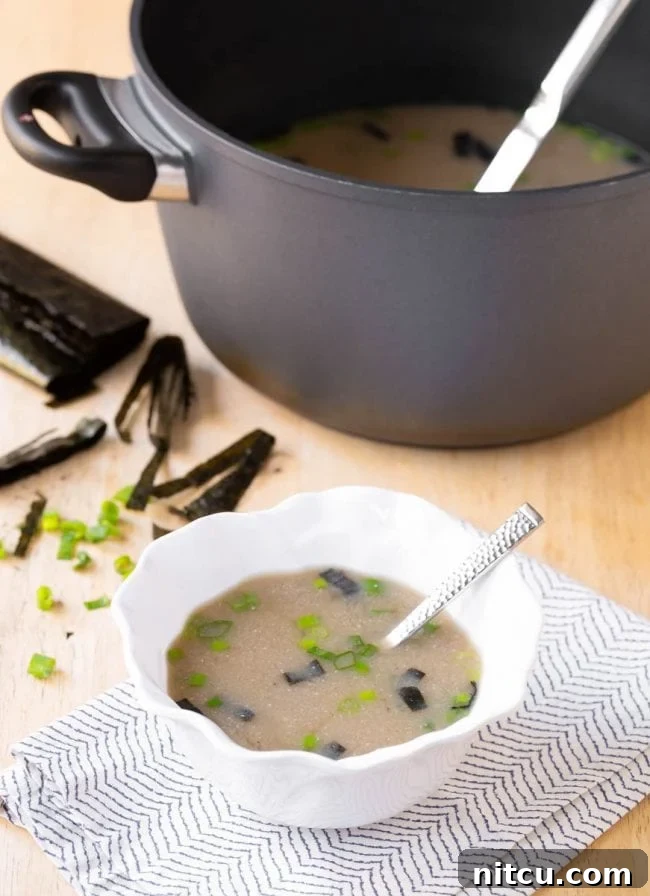
The Essence of Miso Soup: A Japanese Culinary Staple
Miso soup is more than just a dish; it’s a fundamental part of Japanese dining, served with almost every traditional meal. At its heart, miso soup is a simple broth (dashi) seasoned with miso paste and typically includes small pieces of tofu and seaweed. Its magic lies in the harmonious blend of savory, earthy, and subtly sweet notes, delivering a deeply satisfying umami experience.
This recipe focuses on creating that authentic flavor profile with minimal effort. By opting for homemade, you gain complete control over the quality of ingredients, ensuring a fresher taste and maximizing the health benefits. You’ll be amazed at how a few simple components can transform into such a profoundly delicious and comforting soup.
Crafting Your Perfect Miso Broth: The 5 Essential Ingredients
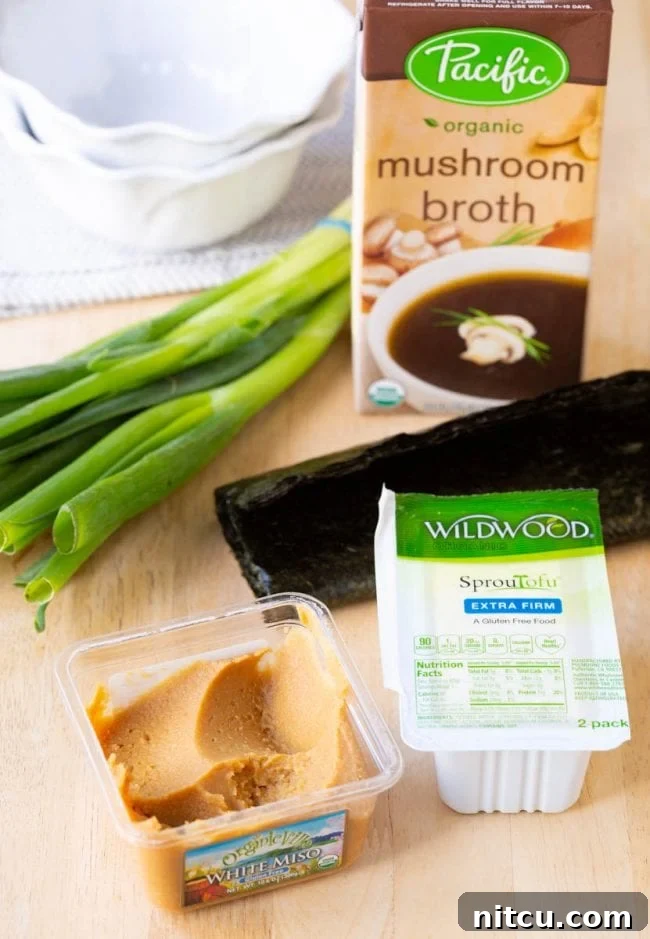
The beauty of this 5-ingredient miso soup recipe lies in its simplicity and the power of each component. Here’s a closer look at what you’ll need to create this Japanese delicacy:
Dashi: The Soul of Miso Soup
- Dashi is the foundational broth for many Japanese dishes, providing a subtle yet profound umami base. Traditional dashi is often made from kombu (dried kelp) and bonito flakes (dried, smoked skipjack tuna). This gives it a unique savory flavor that truly defines miso soup.
- Vegan Alternative: If traditional dashi is difficult to find, or if you prefer a vegan miso soup, a high-quality mushroom broth or kombu dashi serves as an excellent substitute. Mushroom broth mimics dashi’s earthy depth without the fish. You can also easily make kombu dashi by steeping a piece of dried kombu in water.
White Miso Paste: The Fermented Flavor Bomb
- Miso paste, a fermented soybean paste, is the star ingredient and lends its name to the soup. White miso (shiro miso) is typically used for its milder, slightly sweeter, and delicate flavor compared to its darker counterparts. It’s fermented for a shorter period, resulting in a lighter color and a more versatile taste profile.
- You can find white miso paste in the refrigerated section of most Asian grocery stores or larger supermarkets, often near the produce or specialty food aisles. Beyond soup, it’s fantastic for dressings, marinades, and glazes.
- Health Benefits: Miso is rich in probiotics, which are beneficial bacteria that support gut health, digestion, and can even boost immunity.
Tofu: Protein and Texture
- Tofu adds a delightful texture and a boost of plant-based protein to your miso soup. For the best results, opt for “firm” or “extra-firm” tofu. These varieties hold their shape well when diced and simmered in the broth, unlike silken tofu which can disintegrate.
- Like miso paste, tofu is typically found in the refrigerated produce section of grocery stores. A quick press with paper towels can remove excess water, allowing it to absorb the savory broth flavors even better.
Nori Sheets: Umami from the Sea
- Nori, thin sheets of dried seaweed, are most famously known for rolling sushi. In miso soup, small pieces of nori soften slightly and release a wonderful oceanic umami flavor that perfectly complements the dashi and miso.
- You’ll usually find nori sheets in the international aisle of major grocery stores. If you’re making a vegan version of the soup using mushroom broth, don’t skip the nori – it’s crucial for enhancing the depth of flavor that might be missed from traditional dashi.
Scallions: The Fresh Finish
- Also known as green onions, scallions provide a vibrant splash of color and a fresh, subtly pungent onion flavor. They add a crucial aromatic element and a slight bite that brightens the entire soup.
- Scallions can be stirred into the pot just before serving or used as a beautiful garnish, allowing their crispness to contrast with the warm broth.
Unleashing Flavor in Just 5 Minutes: Your Step-by-Step Guide to Homemade Miso Soup
You’ll be astounded by how quickly and effortlessly this nourishing miso soup comes together. It’s a low-carb, flavor-packed broth that’s perfect for any time of day. Here’s the simple process:
1. Quick Prep: Get Your Ingredients Ready
While your dashi or mushroom broth is coming to a boil, take a moment to prepare the other ingredients. First, gently press your firm tofu with paper towels to remove excess moisture, then dice it into bite-sized cubes. Next, use kitchen shears to cut the nori sheets into small, approximately 1/4-inch pieces. Finally, chop your green onions (scallions) into thin rounds, separating the white and green parts if desired for garnish.
2. Bring the Broth to Life: Heating the Base
Pour your dashi or mushroom broth into a large stockpot. Add 1 quart of water (unless using a concentrated broth that specifies less or no added water), cover the pot, and bring the liquid to a rolling boil over high heat. This initial rapid heating ensures your soup base is ready for the star ingredient.
3. The Miso Magic: Dissolving for Depth
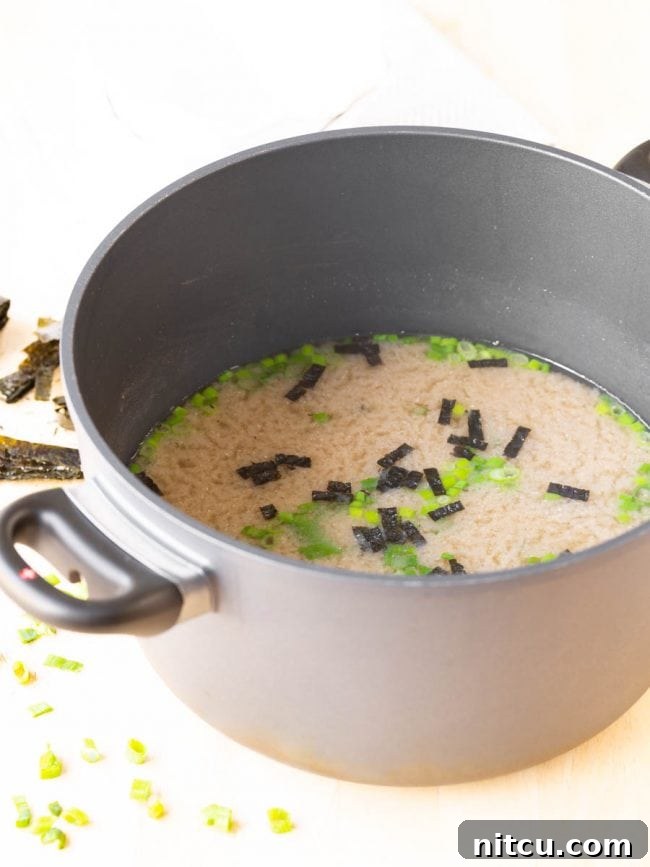
Once the broth reaches a boil, immediately turn off the heat. This is a crucial step! Miso paste should never be boiled directly, as high temperatures can destroy its delicate flavor and beneficial probiotics. With the heat off, add the white miso paste to the hot broth. Use a whisk to thoroughly dissolve the paste until no lumps remain and the broth is evenly infused with its savory essence.
4. Final Touches and Serving: Instant Gratification
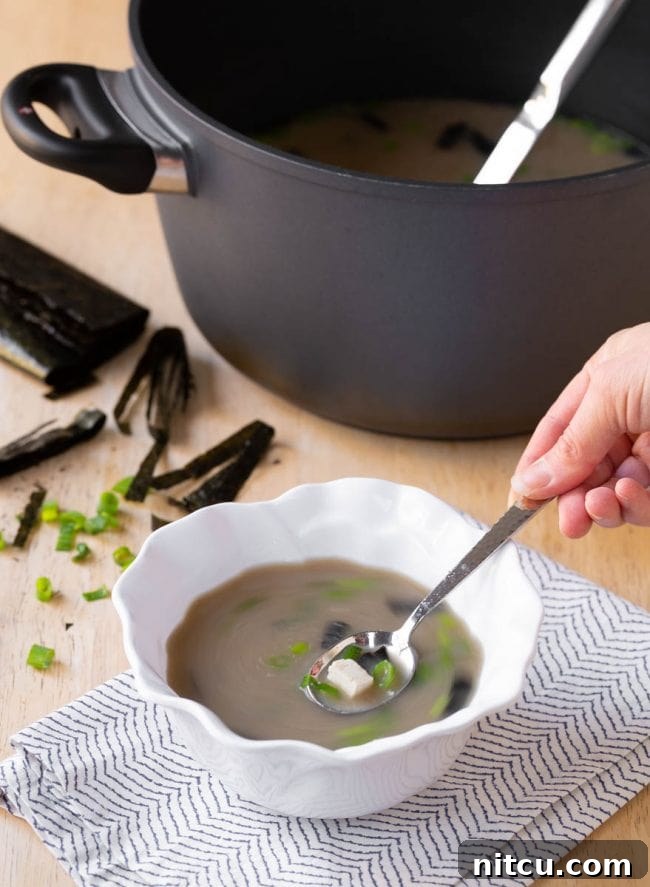
After the miso paste is fully dissolved, stir in the diced tofu, cut nori pieces, and chopped green onions. Give it a gentle stir to combine all the delicious ingredients. That’s it! Your homemade Japanese miso soup is ready to be served immediately. Ladle it into bowls and enjoy the fresh, robust flavors.
This means a healthy, satisfying meal is always within reach – whether it’s for a quick breakfast, a light lunch, or a unique dinner appetizer. It’s so easy, you might even find yourself enjoying it at midnight!
Frequently Asked Questions About Miso Soup
Miso paste is made from fermented soybeans, and while soybeans are naturally gluten-free, many commercially available miso pastes and dashi broths can contain gluten due to added grains like barley or wheat during fermentation. At restaurants, miso soup is typically not gluten-free unless specified. However, for a homemade version, it’s easy to ensure it’s gluten-free by checking the labels of your dashi broth and miso paste for certified gluten-free options. Many brands now offer clearly labeled gluten-free miso pastes. This particular recipe, when made with gluten-free ingredients, is low carb but not paleo-friendly due to soy.
Traditional homemade miso soup often uses dashi broth made with bonito flakes (dried fish), making it not vegan. However, creating a delicious vegan miso broth is very straightforward. Simply substitute traditional dashi with mushroom broth or kombu dashi (made by steeping dried kelp). These alternatives provide a similar umami depth without any animal products. If mushrooms are not preferred, a good quality vegetable broth can also be used, though the flavor profile will be slightly different. Remember, adding nori sheets is especially important in vegan versions to enhance that authentic oceanic savory flavor.
For optimal freshness, homemade miso soup, stored in an airtight container, will keep well in the refrigerator for 3 to 5 days. If you wish to freeze it, I recommend storing the broth separately from the tofu. Tofu can become rubbery when frozen and thawed within the soup. Seal the tofu in freezer-safe bags or containers, and store the miso broth in airtight containers. Both can be kept frozen for up to 6 months. Thaw overnight in the fridge and reheat gently, adding the tofu and any fresh garnishes just before serving.
Miso soup offers a wealth of health benefits, primarily stemming from the fermented miso paste. It’s an excellent source of essential minerals and vitamins, including B vitamins (like B12, crucial for vegans), Vitamin K, and Vitamin E. Most notably, miso is packed with probiotics (beneficial bacteria) that are vital for a healthy gut microbiome. These probiotics aid digestion, enhance nutrient absorption, and contribute to overall immune function. It’s also a low-calorie, hydrating, and protein-rich choice.
Miso is a versatile paste made from fermented soybeans, salt, and koji (a fungus that initiates fermentation). The type of grain used (rice, barley, or no grain) and the fermentation time determine its flavor, color, and texture. The two most common types are:
White Miso (Shiro Miso): This is the mildest and sweetest variety, fermented for the shortest time, typically with a higher proportion of rice koji. It has a light yellow to beige color and is perfect for light soups, dressings, and marinades.
Red Miso (Aka Miso): Fermented for a longer period, often with barley or other grains, red miso has a stronger, saltier, and more intense umami flavor. Its color ranges from reddish-brown to dark brown, and it’s excellent for hearty soups, glazes, and robust dishes.
Other varieties include Yellow Miso (Awase Miso), a versatile blend often combining white and red miso characteristics, and barley miso (Mugi Miso) with its deep, earthy flavor.
Can I Add Any Other Additional Ingredients to This Miso Soup Recipe?
Absolutely! This 5-ingredient recipe is a fantastic base, but miso soup is highly adaptable. Feel free to customize it with other ingredients to enhance flavor, texture, and nutritional value. Just remember to add most of these ingredients during the simmering phase of the broth (before adding miso paste) or just before serving, depending on how tender you want them. Some popular additions include:
- Shiitake Mushrooms: Sliced fresh or dried (rehydrated) shiitake mushrooms add an incredible depth of umami and a satisfying chewiness.
- Kale or Spinach: For a boost of greens, add a handful of chopped kale or spinach during the last minute of cooking, allowing them to wilt slightly.
- Corn Kernels: A touch of sweetness and texture, particularly delicious in a more casual miso soup.
- Bok Choy: Quartered or sliced bok choy adds a refreshing crunch and mild flavor.
- Carrots: Thinly sliced or julienned carrots can add a subtle sweetness and vibrant color. Add them to the broth earlier to soften.
- Bonito Flakes (Katsuobushi): For an even more authentic dashi flavor (if not vegan), a sprinkle of bonito flakes can be added to the hot broth just before straining, or even as a garnish.
- Wakame or Kombu Seaweed: While kombu is used to make dashi, dried wakame flakes can be rehydrated and added directly to the soup for a softer, more delicate texture than nori.
- Tofu Skin (Yuba): Adds a different layer of texture and soy flavor.
Explore More Quick and Hearty Soup Recipes
If you loved the simplicity and flavor of this 5-minute miso soup, you’ll be delighted by these other fantastic soup recipes:
- Chicken Detox Soup Recipe
- Vegetarian Navy Bean Soup Recipe
- Tom Yum Soup Recipe (Hot and Sour Soup)
- Beer Cheese Soup Recipe
- Japanese Clear Soup Recipe
- Greek Lemon Chicken Soup Recipe
- Best Chicken Noodle Soup Recipe
- Thai Khao Soi (Coconut Curry Soup)
- (Better Than) Olive Garden Minestrone Soup Recipe
- Easy Tomato Soup
- New England Clam Chowder Recipe
- Brazilian Feijoada (Pork and Black Bean Stew)
5-Minute Miso Soup Recipe: Your Full Guide

Print Recipe
Leave a Review »
5-Minute Miso Soup Recipe
Cook Time: 5 minutes
Total Time: 10 minutes
Easy 5 ingredient Miso Soup Recipe – This savory homemade miso soup is light yet filling, and takes only 5 minutes to make! Also easily made as a vegan miso soup.
Ingredients
- 1 quart dashi broth (or mushroom broth for vegan recipe)
- 1/2 cup white miso paste
- 3/4 cup firm tofu (diced)
- 2 nori sheets (dried seaweed sheets)
- 1/2 cup chopped green onions (scallions)
Instructions
-
Place the dashi or mushroom broth in a large stockpot. Add 1 quart of water, cover, and bring to a boil.
-
While the broth is coming to a boil, dry the tofu with paper towels and dice. Then cut the nori sheets into small 1/4-inch pieces with kitchen shears. Chop the green onions.
-
Once the broth reaches a boil, turn off the heat and whisk in the miso paste. Once dissolved, add the tofu, nori, and green onions. Stir and serve.
Notes
Keep leftovers in an airtight container in the fridge for up to 3 days.
Nutrition
Calories: 75kcal,
Carbohydrates: 6g,
Protein: 7g,
Fat: 3g,
Saturated Fat: 1g,
Sodium: 1019mg,
Potassium: 155mg,
Fiber: 1g,
Sugar: 1g,
Vitamin A: 110IU,
Vitamin C: 1.4mg,
Calcium: 79mg,
Iron: 1mg
Cuisine: American, Japanese
Cook It? Love It? Rate It!
YOU can help this recipe RANK on Google – leave a review! Thank you!