
Prepare to elevate your brunch experience with this truly magnificent Croissant Breakfast Casserole. This recipe ingeniously unites the irresistible flakiness of store-bought croissants with the savory delights of crispy bacon, rich cheese, and perfectly cooked eggs. Over the years, this dish has graced countless holiday brunches, earning rave reviews thanks to a secret tangy ingredient that imparts an unexpected, delightful kick to its savory profile. Whether you prefer to assemble it ahead of time for stress-free mornings or bake it fresh, this easy, crowd-pleasing breakfast casserole promises to be the star of any large gathering.

Why This Croissant Breakfast Casserole Is a Brunch Game-Changer
As an avid enthusiast of breakfast casserole recipes, I particularly cherish those that simplify the morning rush by allowing for overnight preparation. Imagine waking up, retrieving your prepped casserole from the fridge, and effortlessly sliding it into the oven. While my repertoire boasts many beloved breakfast bakes, this new Croissant Breakfast Casserole stands out as an absolute knockout, consistently securing its place on my brunch menu.
The Secret to Unrivaled Texture and Flavor
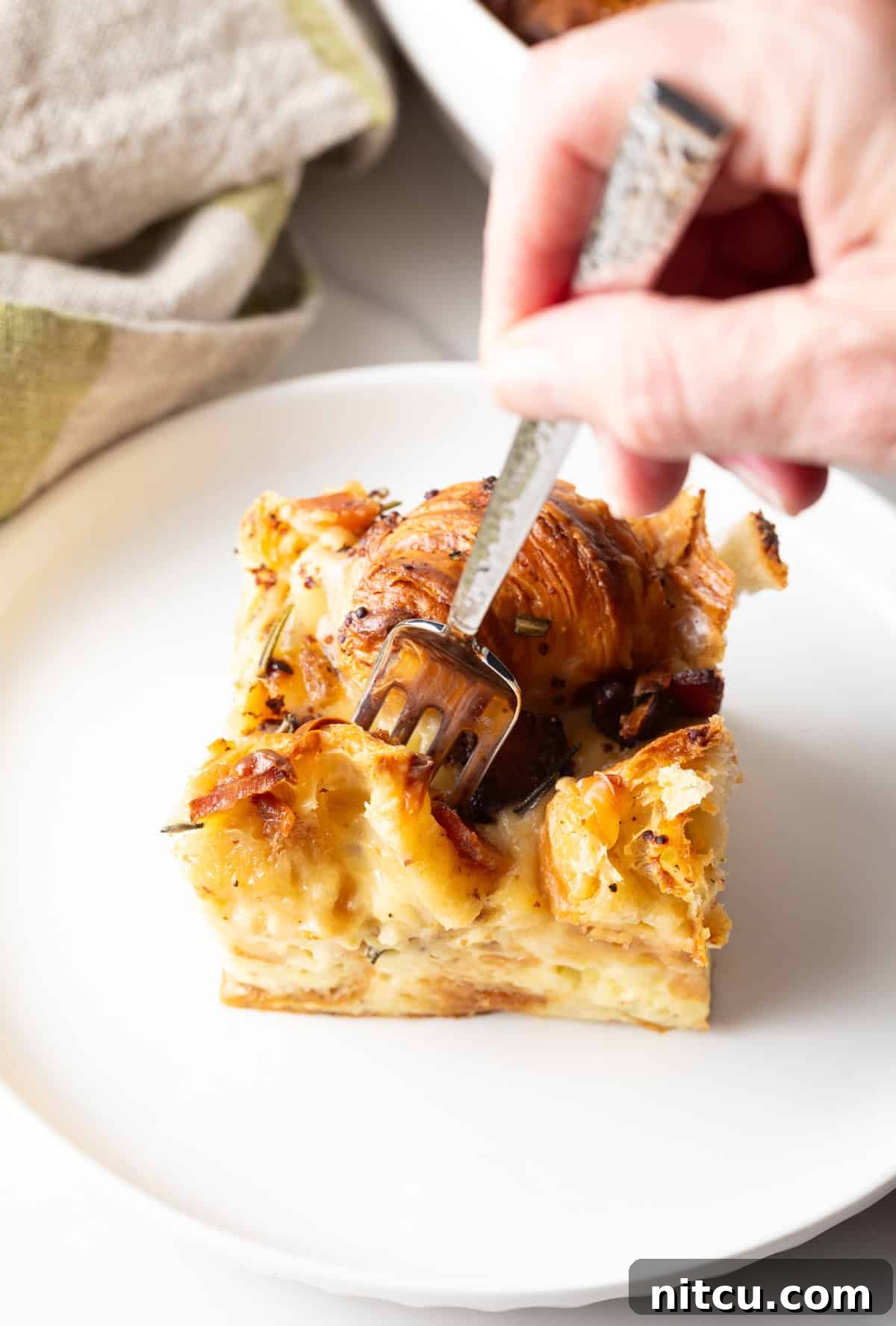
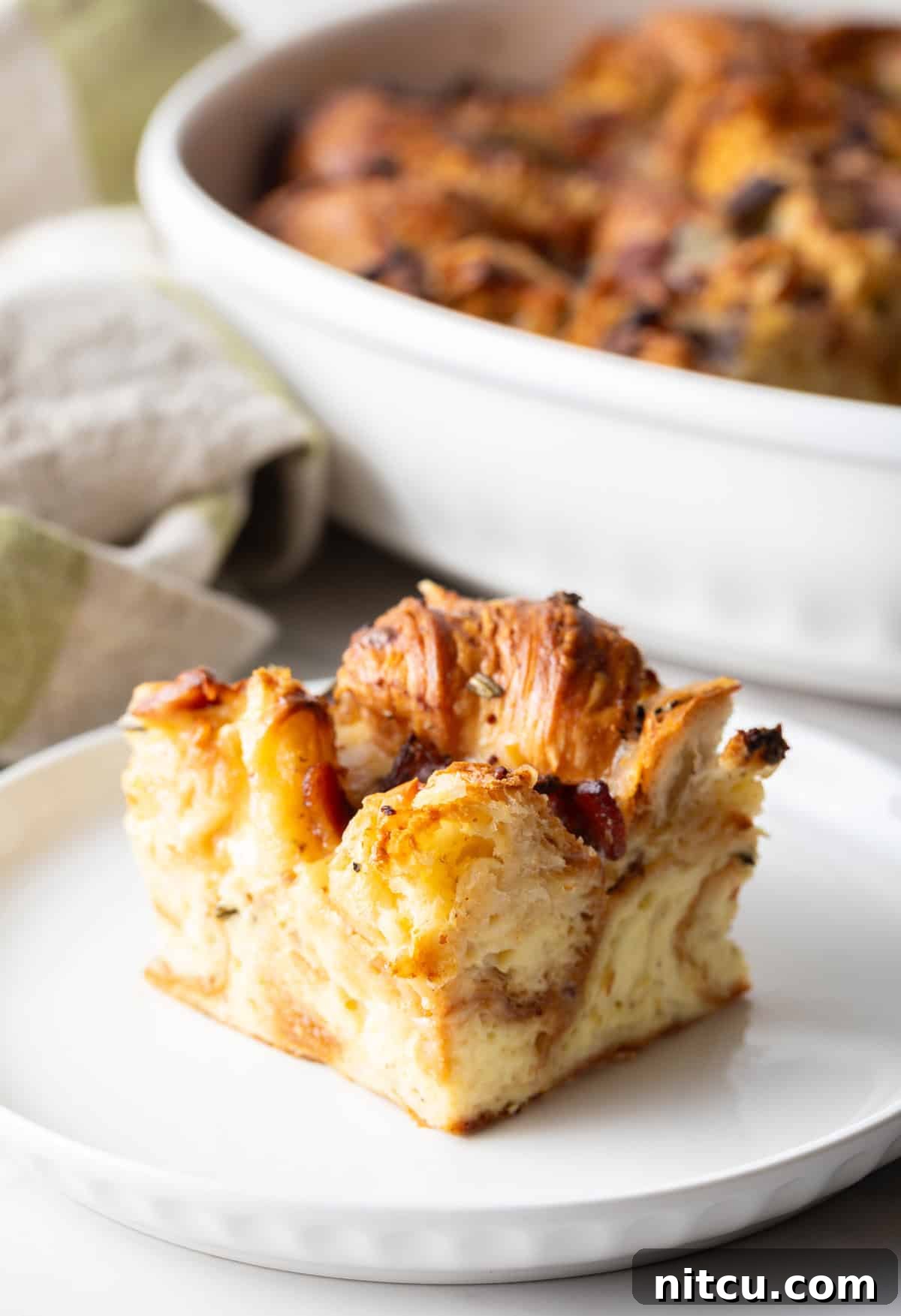
What truly sets this casserole apart is its brilliant use of croissants. Tearing these buttery pastries into generous chunks and layering them in a casserole dish creates an incredibly light and airy foundation for the egg and dairy mixture. As the casserole rests, the croissants act like sponges, meticulously absorbing all the rich liquid. Then, during baking, these saturated croissant pieces transform into a remarkable structural element, allowing the eggs to puff up higher than ever before. The result is an interior that is unbelievably light, fluffy, and tender – a textural marvel that will surprise and delight your guests.
But the magic doesn’t stop there. To complement this extraordinary texture, I’ve curated a bold, savory, and decadent flavor profile. Crumbled, perfectly crispy bacon adds a smoky, salty counterpoint. Sweet, tender sautéed onions introduce a foundational depth, harmonizing with aromatic fresh rosemary for an herbaceous complexity. Smoky Gouda cheese melts into gooey perfection, contributing a creamy, nutty richness, while a touch of coarse Dijon mustard provides that secret tangy kick, cutting through the richness and elevating every bite. This combination ensures a truly unforgettable breakfast or brunch experience.


Recipe Highlights: Effortless Excellence
This Croissant Breakfast Casserole is designed for maximum flavor with minimal fuss. Here’s why it will become your new favorite:
Simply Easy to Make
Beyond its incredibly delicious outcome, this casserole is remarkably simple to prepare. Forget complicated techniques or obscure ingredients. My approach leverages the convenience of store-bought croissants, minimizing your time in the kitchen. The process involves just a few key steps: quickly sautéing some aromatic ingredients, whisking together a handful of simple components in a bowl, and then combining everything into one baking dish before letting the oven do the rest. It’s an approachable recipe that anyone can master, guaranteeing impressive results every time.
Perfectly Suited for Make-Ahead Preparation
One of the greatest advantages of this recipe is its make-ahead versatility, making it ideal for special occasions and holiday brunches when you want to minimize morning stress. You can fully assemble the breakfast croissant casserole the night before, cover the pan tightly with plastic wrap, and refrigerate it overnight. The next morning, simply uncover and bake! Whether baked immediately after assembly or after an overnight chill, the layers remain equally flaky, tender, cheesy, and eggy, delivering consistent deliciousness. This flexibility allows you to enjoy your guests and the festive atmosphere without being tethered to the kitchen.
Designed to Feed a Crowd
This recipe is generously portioned to yield 12 substantial pieces, making it an excellent choice for major holidays like Christmas, Easter, Mother’s Day, or any large family gathering. It effortlessly serves a big group, ensuring everyone gets a hearty and satisfying start to their day. For smaller occasions, you can easily halve the recipe and bake it in an 8 x 8-inch square pan, still providing at least 6 ample servings. This adaptability ensures that whether you’re hosting a grand celebration or an intimate brunch, this casserole is perfectly scaled to your needs.
Essential Ingredients and Expert Tips
Crafting the perfect Croissant Breakfast Casserole begins with selecting quality ingredients and following a few simple tips for optimal results:
- Croissants: The foundation of this dish! You can use either fresh, flaky croissants or day-old ones. Day-old croissants often have a slightly firmer texture, which can be advantageous as they absorb the egg mixture without becoming overly mushy, while fresh ones offer unparalleled buttery flavor.
- Bacon: Opt for thick-cut bacon. Its robust texture holds up beautifully during crisping on the stovetop, providing satisfying meaty bits throughout the casserole without disappearing. Chop it into small, uniform pieces for even cooking and distribution.
- Shredded Gouda: For the best flavor and melting quality, I highly recommend buying a wedge of smoked Gouda and grating it by hand. Pre-shredded cheeses often contain anti-caking agents that can hinder smooth melting, whereas freshly grated Gouda will deliver an incredibly creamy, smoky, and delightful texture.
- Eggs: Always bring your eggs to room temperature before mixing. Simply set them on the counter for 15-20 minutes. Cold eggs can lower the temperature of your batter, potentially leading to uneven cooking and a longer bake time. Room temperature eggs also blend more smoothly and create a lighter, fluffier custard.
- Onion: Your choice of onion can subtly alter the flavor. White onion offers a slightly sharper, more pungent bite, which can be lovely for contrast. If you prefer a milder, sweeter undertone, a yellow onion is an excellent alternative.
- Half & Half: While some might wonder if plain milk can be substituted, I strongly advise sticking with half & half. Its higher fat content is crucial for achieving the rich, thick, and custardy texture that makes this casserole so decadent. Using regular milk will result in a less luxurious, thinner custard.
- Mustard: This is my secret tangy ingredient! I adore using chunky French Dijon mustard for its robust flavor and slight texture. If true chunky Dijon isn’t available, a good coarse brown mustard will provide a similar depth and tang, adding that unexpected delicious kick without overpowering the other flavors.
- Fresh Rosemary: The aromatic notes of fresh rosemary are simply irreplaceable here. If fresh rosemary is unavailable, please do not substitute with dried rosemary unless it’s finely crushed, as dried needles don’t soften well during cooking. A better alternative would be to use ½ teaspoon of dried thyme, which offers a complementary herbaceous note.
Step-by-Step Guide: Crafting Your Croissant Breakfast Casserole
Preparing this impressive casserole is surprisingly straightforward. Follow these steps to create a truly memorable breakfast or brunch:
For precise ingredient proportions, detailed instructions, storage tips, and a helpful video tutorial, please refer to the comprehensive recipe card located at the bottom of this article.
Initial Preparation and Layering
Begin by preheating your oven to 350°F (175°C). As the oven heats, take a large 9 x 13-inch (3-quart) baking dish and generously grease its interior with softened butter. Butter is my preferred choice over nonstick spray, as it helps achieve those wonderfully crispy, golden-brown edges on the casserole while ensuring nothing sticks to the pan.
Next, it’s time for a satisfying task: tear the croissants into generous, rustic chunks. This can be a great stress reliever! Each full-size croissant should yield approximately 4-6 substantial pieces. Spread these torn croissant pieces evenly across the bottom of your buttered baking dish, creating a fluffy base.

Now, prepare the remaining flavorful components: chop the thick-cut bacon into small, even pieces. Dice your chosen onion finely, and mince the fresh rosemary. Finally, hand-shred the smoked Gouda cheese for superior melt and flavor.
Sautéing the Savory Foundation
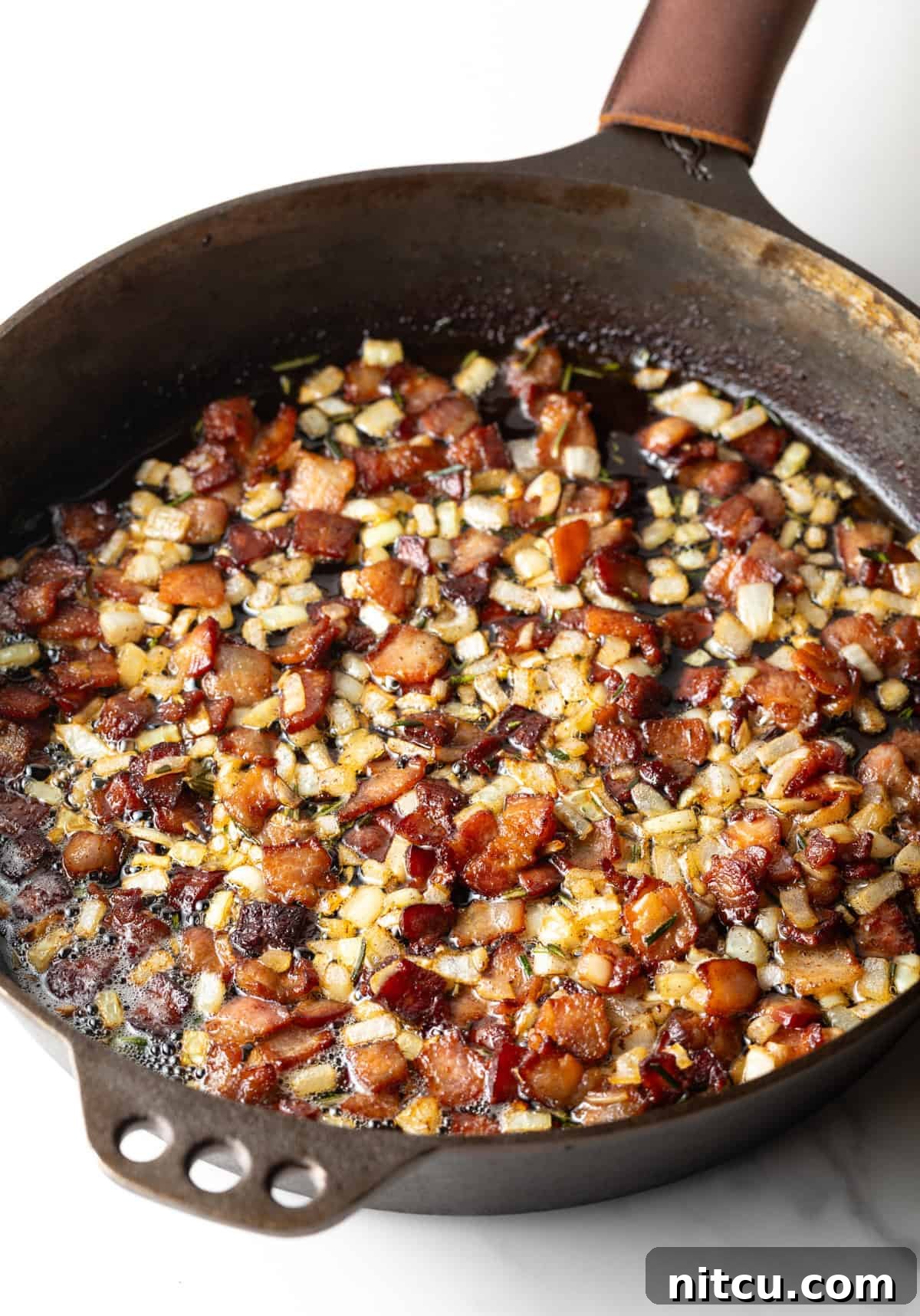
This is the minimal cooking required before most of the assembly begins. Warm a large skillet over medium heat on your stovetop. Once the skillet is sufficiently hot, add the chopped bacon. Stir and cook for a few minutes until it begins to crisp and render its fat. Then, add the diced onion and fresh rosemary to the skillet. Continue to stir and sauté the mixture for another 3-4 minutes, ensuring everything is moving regularly with your spatula. We’re aiming for softened, aromatic onions and well-cooked bacon, not burnt bits, to build a rich flavor base.
Assembling the Casserole Layers
Once your bacon and onion mixture is ready, use a slotted spoon to scoop it from the skillet. This ensures you only get the crispy, tender pieces and leave behind most of the bacon grease, which could otherwise make your casserole soggy. Sprinkle this flavorful mixture evenly over the torn croissant pieces in the baking dish.

Next, evenly sprinkle the glorious shredded Gouda cheese over the entire surface, covering the croissants, bacon, and onions. This layer will melt into a rich, cheesy blanket.

Crafting the Custard and Soaking
In a large mixing bowl, combine the room-temperature eggs, rich half & half, coarse Dijon mustard, and a generous pinch of salt and pepper. Whisk these ingredients together thoroughly until they are well combined and slightly frothy. A regular whisk works perfectly, but if you own a charming hand egg beater, this is a delightful opportunity to put it to use!
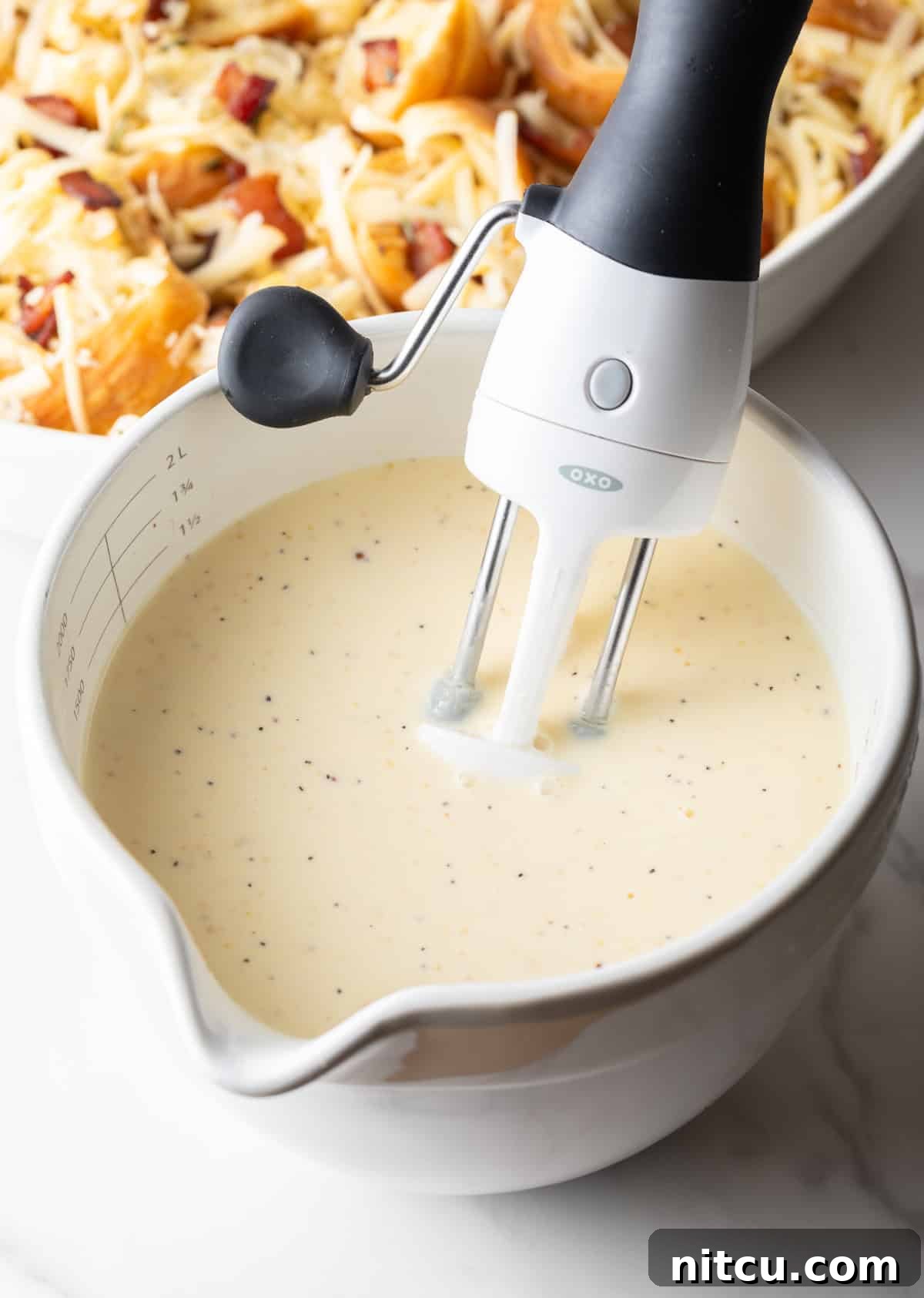
Now, the crucial step for a tender casserole: pour the egg and milk mixture slowly and evenly over the entire surface of the croissant base. The goal is to ensure every single piece of croissant is thoroughly soaked, allowing it to absorb all the delicious liquid. Pour back and forth, covering all the nooks and crannies.

Chill Time and Baking Instructions
If you’re making this casserole ahead for a morning bake, now is the time to cover the dish tightly with plastic wrap and refrigerate it overnight. This allows the flavors to meld beautifully and the croissants to fully absorb the custard.
If you’re baking right away, a little patience goes a long way. For the absolute best texture, I always recommend letting the assembled, unbaked casserole sit on the counter for at least 15 minutes before baking. This crucial step gives the egg and milk mixture ample time to truly soak into every crevice of the croissants, which are abundant in these flaky pastries, preventing a dry interior.
After the resting period, carefully slide the uncovered dish into your preheated oven. Bake for approximately 50-60 minutes, or until the top is a beautiful golden brown and the center appears puffed and set. To check for doneness, insert a knife into the very center of the casserole. If it comes out clean and the center isn’t wet or jiggly, it’s ready. If it seems undercooked, continue baking for another 5-10 minutes and check again. If the top starts to brown too quickly, loosely tent it with aluminum foil.

Serving Suggestions: Completing Your Brunch Spread
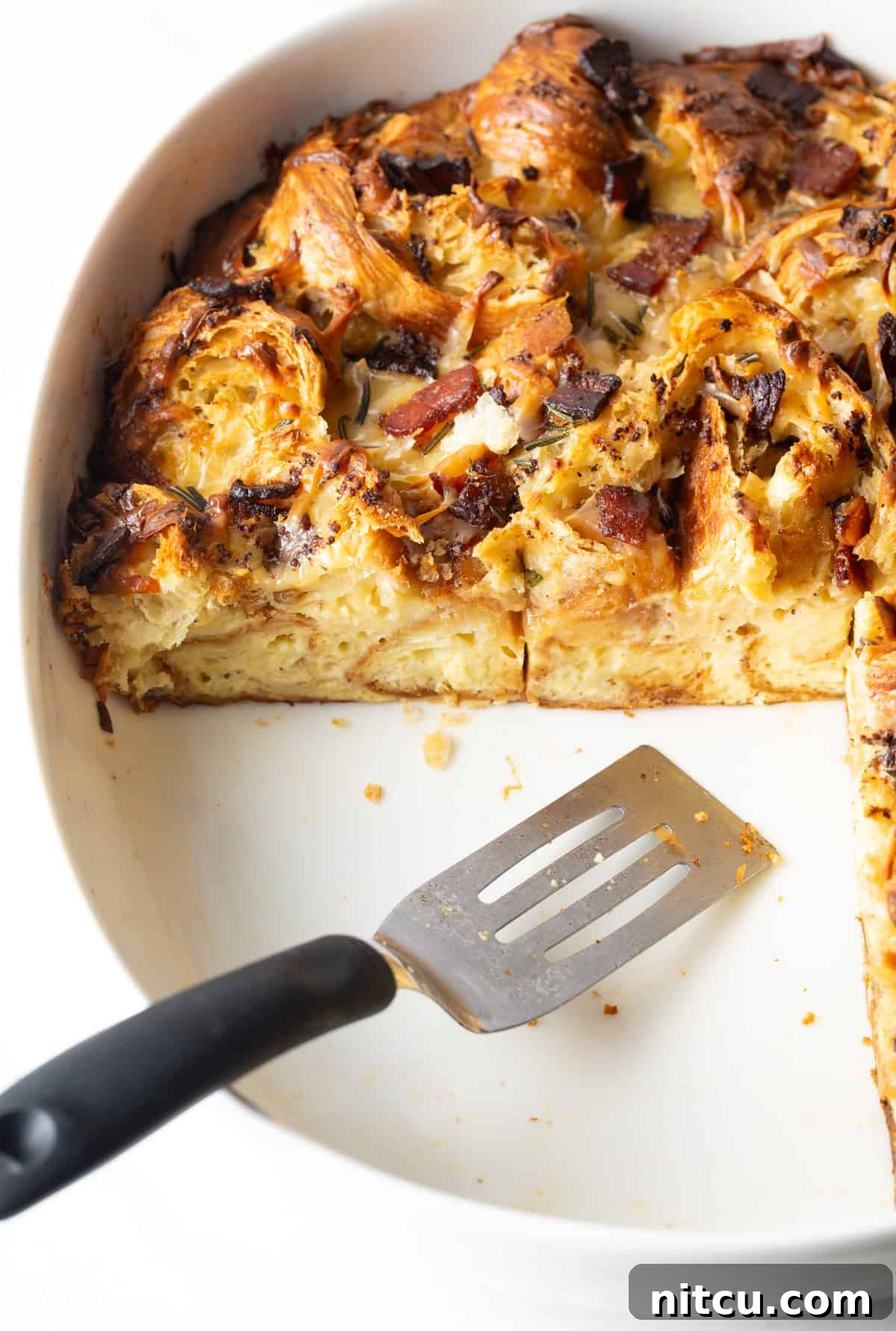
Once your magnificent casserole emerges from the oven, allow it to rest for about 5 minutes before slicing and serving. This brief resting period is essential, as it gives the ingredients a moment to firm up and coalesce, making it much easier to cut into neat, attractive portions. The waiting might be tough, but it’s worth it for a beautifully presented dish!
This Croissant Breakfast Casserole is a substantial meal in itself. It’s packed with rich carbohydrates from the croissants, abundant protein from the eggs, bacon, cheese, and half & half, and a wealth of savory flavors. So, you’re already well on your way to a complete and satisfying meal.
Feeling like you might be missing something? Ah, yes, fresh produce! To balance the richness of the casserole, consider pairing it with lighter, fresher elements. You could opt for hearty but still healthy-ish savory sides, such as a flavorful sweet potato hash or crisp baked hash browns. However, I often find myself gravitating towards fresh fruit. Slices of vibrant melon or a simple, seasonal fruit salad provide a refreshing contrast, adding brightness and natural sweetness that perfectly complements the savory depth of the casserole.
And of course, no decadent brunch is truly complete without the perfect accompanying beverages. Whether your preference leans towards a savory kick or a sweet sparkle, both Bloody Marys and Mimosas are always a fantastic idea. These classic brunch cocktails are ideal companions to a luxurious casserole like this, adding an extra layer of festive enjoyment to your meal.
Storage and Freezing Tips for Your Casserole
This Croissant Breakfast Casserole is so delicious that leftovers might be a rarity! However, should you find yourself with extra, here’s how to store and reheat it to maintain its quality:
For immediate consumption, store any leftover casserole in an airtight container and refrigerate it for up to 3-4 days. This ensures it stays fresh and delicious for a quick breakfast or snack later in the week.
This casserole also freezes exceptionally well, offering fantastic convenience for future meals. When I plan to freeze the entire casserole *unbaked*, I assemble it directly in a disposable aluminum pan. This thoughtful step allows the pan to go straight from the freezer into the oven, eliminating the need for thawing and dirtying an extra dish. First, wrap the pan securely in a layer of aluminum foil. Then, add a few more layers of plastic wrap for an airtight seal, and freeze for 2-3 months.
If you choose to bake the casserole directly from its frozen state, you’ll need to adjust the baking time, adding an extra 20-30 minutes. To prevent the top from over-browning or burning during this extended bake, loosely cover the dish with foil around the 40-minute mark. However, my preferred method for baking from frozen is to let the casserole thaw in the refrigerator overnight. This usually means I only need to add an additional 10 minutes or so to the total bake time, resulting in a more even cook.
If you freeze the casserole *after* it has already been baked, it’s best to thaw it in the refrigerator overnight before reheating. To reheat, place it in a 350°F (175°C) oven for 30-40 minutes, or until it’s thoroughly heated through and the top has regained its appealing crispness. This method helps maintain the casserole’s texture and prevents it from becoming dry.
Frequently Asked Questions About Croissant Breakfast Casserole
Absolutely! To adapt this recipe for vegetarians, simply omit the bacon. Instead of cooking the onions and rosemary in bacon grease, sauté them in 2 tablespoons of your preferred cooking oil, such as olive oil or butter. You’ll still achieve a rich flavor profile without the meat.
The key to a perfectly set casserole is managing moisture. First, it’s crucial to drain off as much grease as possible from the cooked bacon. Excess bacon fat can make the casserole overly oily and soggy. Second, when pouring the egg and milk mixture, do so slowly and evenly across all the croissants. Take your time to ensure the liquid is distributed without creating any concentrated pools in one area, allowing the croissants to absorb it uniformly.
Before placing a refrigerated casserole dish into a hot oven, it’s vital to allow it to sit on the counter for a good 15-20 minutes to bring the pan closer to room temperature. This gradual temperature change helps prevent thermal shock, which can cause some casserole dishes to crack or break if exposed to rapid temperature changes. Once it has warmed slightly, remove the plastic wrap and bake as directed. The total baking time will be roughly the same, though you might need to add an extra 10 minutes or so to ensure it bakes fully through.
If you notice the top of your casserole is browning too quickly, typically around the 30-40 minute mark of baking, simply cover it loosely with a sheet of aluminum foil. Make sure not to crimp the foil tightly around the edges; leave it slightly open. Tightly sealing it traps steam, which could make your beautiful flaky croissant casserole soggy. A loose cover will protect the top from excessive browning while allowing the rest of the casserole to cook through.

Explore More Delicious Breakfast Recipes
If you loved this Croissant Breakfast Casserole, you’ll surely enjoy these other fantastic breakfast and brunch ideas. Expand your repertoire and discover new favorites for any morning!

Print Recipe
Leave a Review »
Croissant Breakfast Casserole
15 minutes
1 hour
10 minutes
1 hour
25 minutes
12
Pieces
Video
Ingredients
- 8-10 croissants (10 large, 8 XL, or 20 minis)
- 6 strips thick-cut bacon (about 1 cup, chopped)
- 1 cup diced onion
- 2 teaspoons fresh chopped rosemary
- 8 ounces smoked gouda cheese (shredded, about 2 cups)
- 12 large eggs
- 3 cups half & half
- 2 tablespoons coarse Dijon mustard (or coarse brown mustard)
- Salt and pepper (to taste)
Instructions
-
Preheat your oven to 350°F (175°C). Prepare a 9 x 13-inch (3-quart) baking dish by generously buttering the inside on all sides.
-
Tear each croissant into large, irregular chunks, aiming for about 4-6 pieces per croissant. Evenly spread these croissant pieces into the buttered baking dish. Chop the bacon into small pieces. Finely dice the onion. Mince the fresh rosemary. Shred the smoked Gouda cheese.
-
Place a large skillet on your stovetop over medium heat. Add the chopped bacon and cook, stirring occasionally, until it turns reddish-brown and crispy. Then, add the diced onions and chopped rosemary to the skillet. Continue to stir and sauté the onions for another 3-4 minutes until they are softened and fragrant. Turn off the heat.
-
Using a slotted spoon, scoop the cooked onions and bacon out of the skillet, leaving excess grease behind. Sprinkle this flavorful mixture evenly over the torn croissants in the baking dish. Allow the bacon to cool for a few minutes. Then, add the shredded Gouda cheese and gently toss all the ingredients with the croissant pieces to combine. Spread everything into an even layer.
-
In a medium mixing bowl, whisk together the large eggs, half-and-half, coarse Dijon mustard, ½ teaspoon of salt, and ¼ teaspoon of freshly cracked black pepper. Whisk vigorously until all ingredients are well combined and slightly frothy.
-
Carefully pour the egg mixture evenly over the croissant base in the baking dish, ensuring every piece of croissant is thoroughly saturated. Allow the casserole to rest and soak on the counter for at least 15 minutes before baking. *If preparing ahead, cover the dish tightly and refrigerate overnight.
-
Place the uncovered baking dish into the preheated oven. Bake for 50-60 minutes, or until the top is golden-brown and the center is puffed and set.
-
Test the croissant casserole for doneness by inserting a knife deep into the center. If the knife comes out clean and the eggs are fully set, remove it from the oven. If it appears wet or jiggly, bake for another 5-10 minutes. If the top starts to get too dark, loosely cover it with aluminum foil. Allow the casserole to rest for 5 minutes before cutting into slices and serving warm.
Notes
This casserole freezes exceptionally well! When freezing the entire casserole unbaked, I always assemble it in a disposable aluminum pan. This allows it to go straight from the freezer to the oven.
To freeze unbaked: First, wrap the pan securely in a layer of aluminum foil. Then, wrap it in a few additional layers of plastic wrap for an airtight seal, and freeze for 2-3 months. If baking from frozen, you’ll need to add an extra 20-30 minutes to the baking time. Loosely cover the dish with foil around the 40-minute mark to prevent the top from burning. For a more even cook, I usually let the casserole thaw in the fridge overnight before baking, which only requires adding about 10 minutes to the total bake time.
If you freeze the casserole after it has already been baked, I suggest thawing it in the fridge overnight before reheating. Reheat in a 350°F (175°C) oven for 30-40 minutes, or until it’s heated throughout and the top is crisp again.
Nutrition
Breakfast, Brunch
American
Sommer Collier
Cook It? Love It? Rate It!
YOU can help this recipe RANK on Google – SHARE YOUR REVIEW so other hungry people can find it. Thank you!