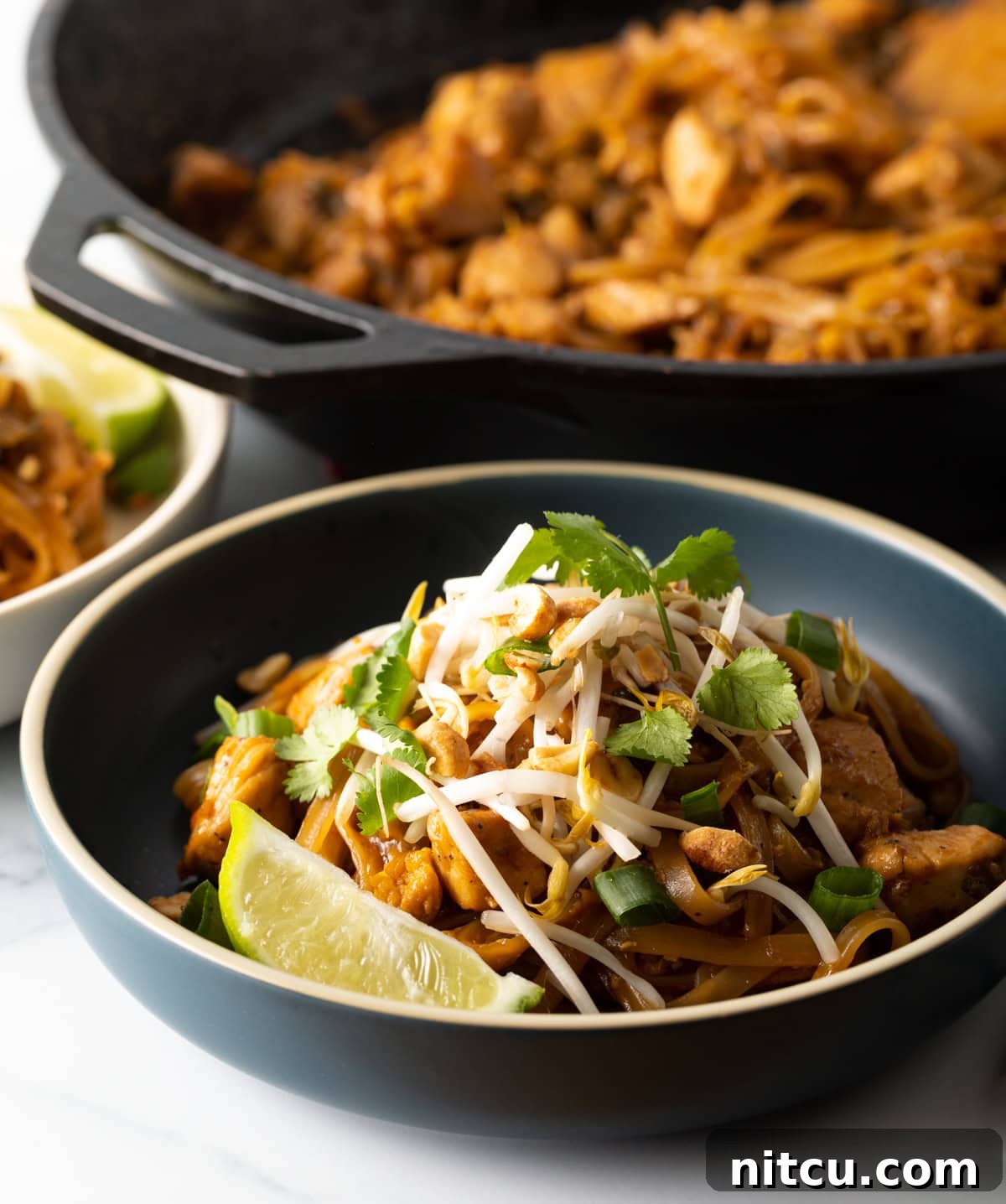
Experience the vibrant flavors of Thailand right in your own kitchen with this incredible Easy Chicken Pad Thai recipe. Forget expensive takeout; this homemade Thai noodle dish captures all the authentic taste and widespread appeal of your favorite restaurant-style Pad Thai. Best of all, it’s remarkably simple to prepare, coming together in under 30 minutes with readily available ingredients, making it the perfect weeknight meal solution!
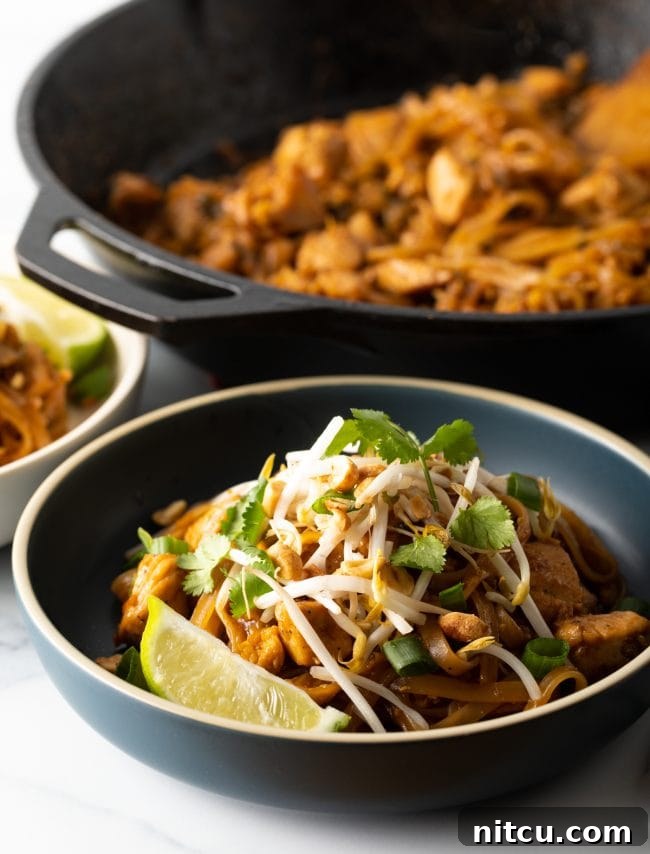
Why This Homemade Chicken Pad Thai Recipe is a Must-Try
Imagine the aroma of savory, sweet, and tangy spices filling your home, not from a delivery box, but from a meal you’ve crafted yourself. It’s time to put down the phone and rediscover the joy of home cooking! Our easy chicken Pad Thai recipe offers an unparalleled combination of speed, flavor, and freshness that far surpasses the typical takeout experience, all while saving you a significant amount on delivery fees and restaurant markups.
This isn’t just another quick meal; it’s a culinary journey to Thailand from your kitchen. In less than 30 minutes, you can serve up a steaming plate of authentic-tasting Chicken Pad Thai that will impress your family and friends. Its quick preparation time doesn’t compromise on taste, delivering that perfect balance of textures and robust flavors that define classic Thai cuisine. Even if you’re a novice in the kitchen, you’ll find this recipe incredibly approachable. Plus, if you’re a fan of Asian dishes, many of the core ingredients might already be staples in your pantry. If not, don’t worry – every item is easily sourced from your local grocery store.
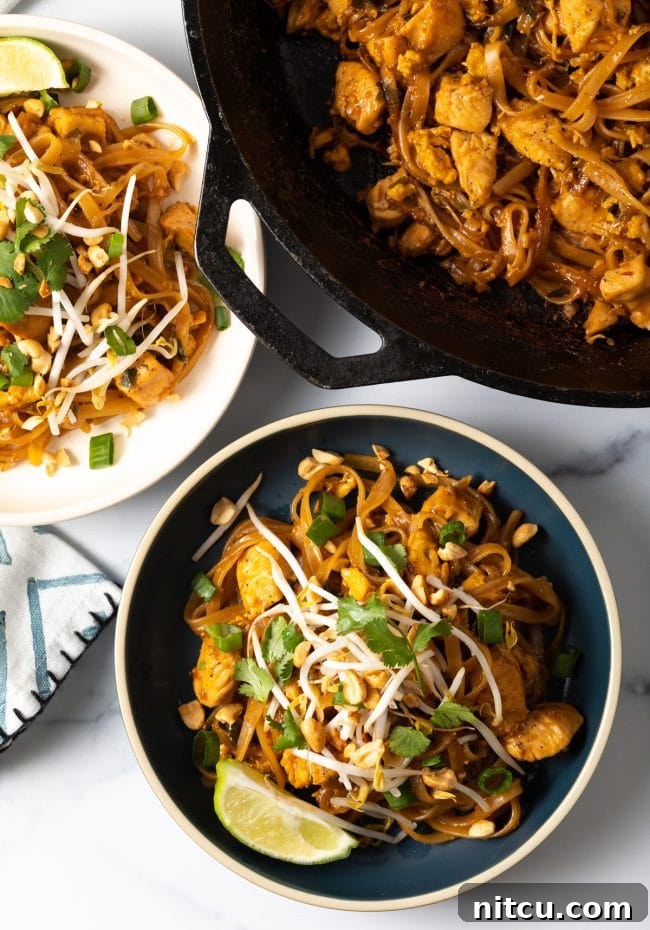
Our carefully developed recipe includes all the quintessential elements of a truly great Pad Thai: tender chicken, scrambled eggs, crisp green onions, aromatic garlic, crunchy mung bean sprouts, classic Pad Thai rice noodles, and a rich, complex sauce that truly sings. Finished with a sprinkle of fresh cilantro and crushed peanuts, each bite is a symphony of perfectly simple, fresh, and undeniably flavorful sensations. It’s a true one-pot wonder, requiring minimal prep and cooking time, yet yielding restaurant-quality results that will have everyone asking for more.
Essential Ingredients for Perfect Pad Thai
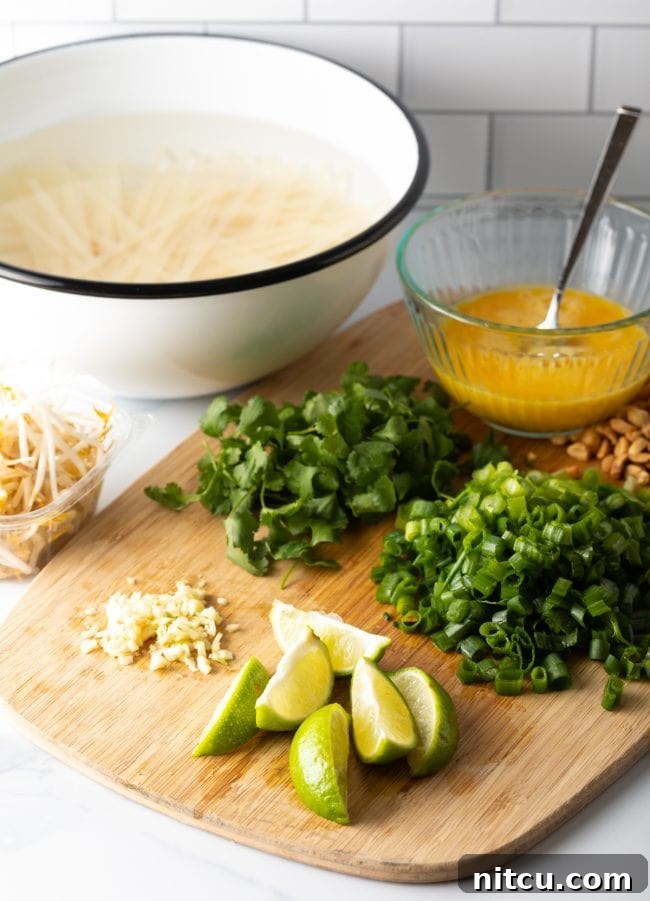
Crafting exceptional Pad Thai starts with selecting the right ingredients. Here’s a breakdown of what you’ll need for the stir-fry, the signature sauce, and those crucial garnishes that elevate the dish.
For the Stir-Fry Base:
- Boneless Skinless Chicken Breasts: Cut into uniform, bite-sized pieces for even cooking and easy eating. Chicken thighs can also be used for a richer flavor.
- Pad Thai Noodles (Rice Noodles): These thin, flat rice noodles are the heart of the dish. Look for them in the international aisle of your grocery store. Ensure they are rice-based for authenticity and a gluten-free option.
- Peanut Oil or Coconut Oil: Both oils are suitable for high-heat stir-frying and add a subtle flavor. Peanut oil lends a more traditional Asian note, while coconut oil offers a lighter, fragrant alternative, helping to keep the noodles from sticking.
- Large Eggs: At room temperature, these will scramble beautifully and integrate smoothly into the dish, adding richness and protein.
- Green Onions: Chopped for a mild onion flavor and vibrant green color, they are stirred in towards the end to retain some crunch.
- Mung Bean Sprouts: Essential for that characteristic Pad Thai crunch and a delicate, slightly nutty flavor. Add them in last to maintain their crispness.
- Garlic Cloves: Minced fresh garlic is crucial for building the aromatic foundation of the stir-fry.
For the Irresistible Pad Thai Sauce:
- Brown Sugar: Packed brown sugar provides the necessary sweetness and a hint of molasses depth, balancing the savory and sour notes.
- Soy Sauce: A cornerstone of Asian cooking, regular soy sauce adds umami and saltiness. For a soy-free and gluten-free alternative, coconut aminos work wonderfully.
- Lime Juice: Freshly squeezed lime juice is non-negotiable for that bright, tangy, and authentic Pad Thai zing. Bottled juice simply won’t compare.
- Fish Sauce: This is the secret weapon for true umami depth and an unmistakable Thai flavor. Do not skip or substitute this ingredient for the best results.
- Creamy Peanut Butter (Optional): While optional, a tablespoon of creamy peanut butter enriches the sauce, adding a deeper, nuttier flavor and a slightly thicker consistency that many find irresistible.
- Chile Garlic Sauce: Adjust the amount to your personal preference for heat. It adds a wonderful kick and complex garlic-chili notes to the sauce.
Essential Toppings for Serving:
- Fresh Cilantro Leaves: A generous scattering of fresh cilantro adds a burst of herbaceous freshness and vibrant color.
- Lightly Chopped Peanuts: These provide a delightful crunch and reinforce the nutty flavor profile, contrasting beautifully with the soft noodles.
How to Craft Authentic Chicken Pad Thai at Home
Follow these straightforward steps to create a restaurant-quality Pad Thai that’s bursting with flavor and ready in minutes.
- **Prepare the Noodles:** Begin by placing your dry Pad Thai rice noodles in a large bowl. Cover them completely with cold water. Let them soak for 25 to 35 minutes, or until they become notably pliable and bendable, but not mushy. They should still have a slight firmness. This step is crucial for achieving the perfect noodle texture without overcooking them later.
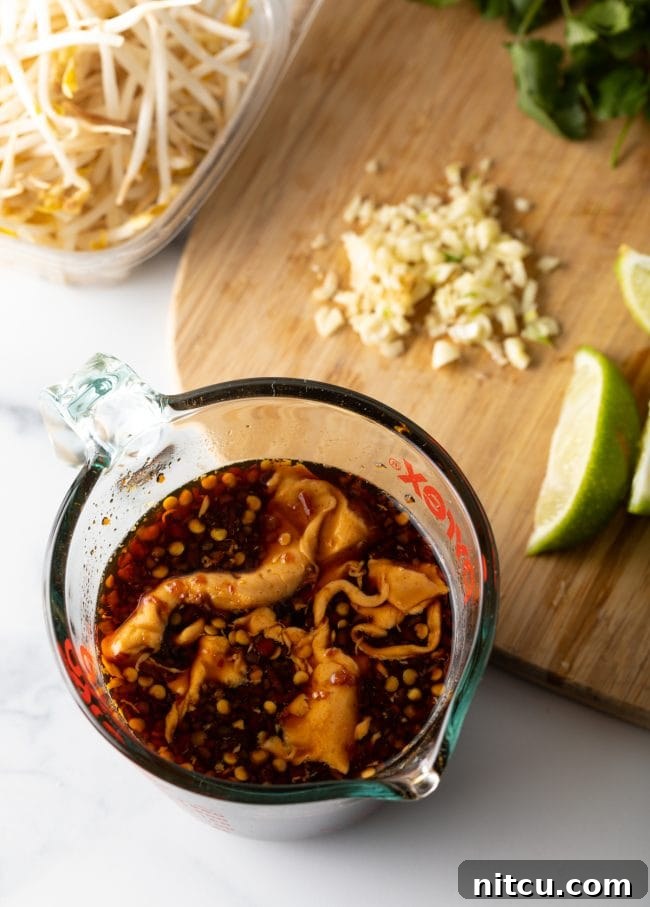
- **Whip Up the Sauce:** In a separate medium-sized bowl, combine all the ingredients for your Pad Thai sauce: brown sugar, soy sauce, fresh lime juice, fish sauce, creamy peanut butter (if using), and chile garlic sauce. Whisk them thoroughly until well combined. If you’re using peanut butter, don’t worry if it doesn’t completely dissolve at this stage; it will blend seamlessly once heated in the pan. Set this flavorful sauce aside.
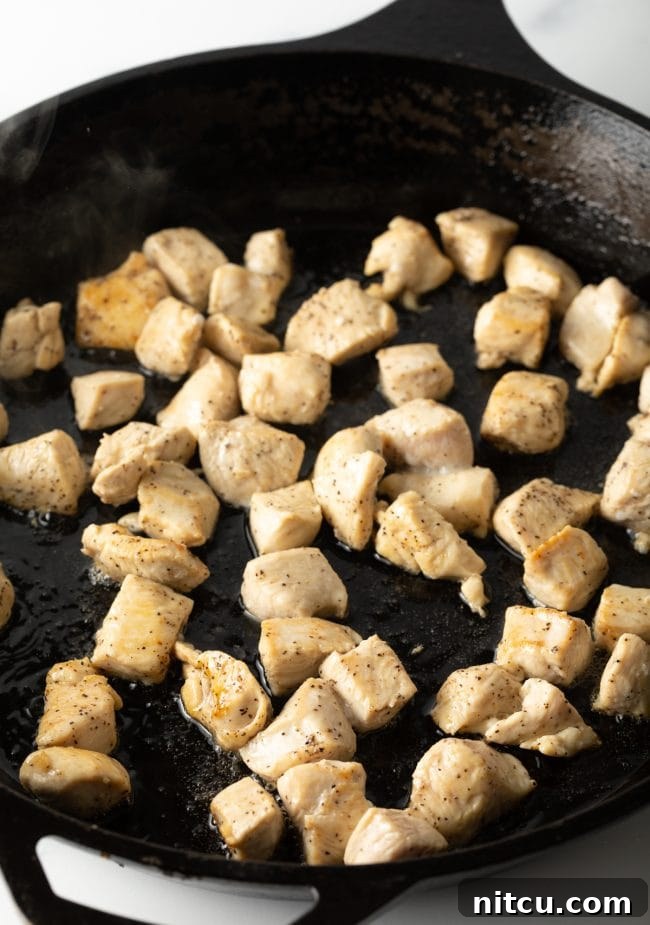
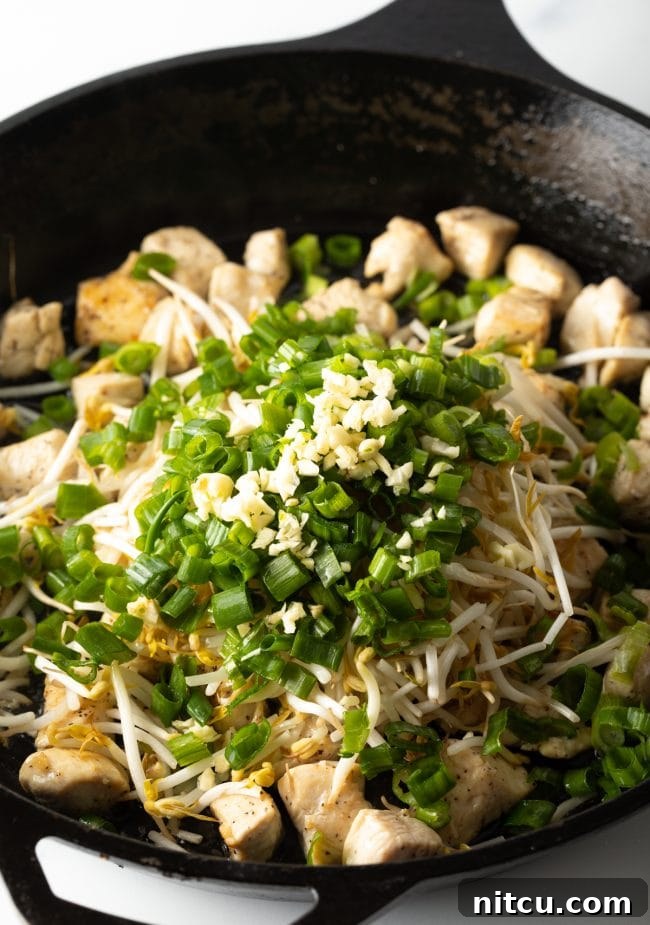
- **Cook the Chicken:** Season your bite-sized chicken pieces generously with salt and pepper. Heat your wok or a large, deep skillet over medium to medium-high heat. Add your chosen oil (peanut or coconut). Once the oil is shimmering, add the chicken and sauté for approximately 3 to 5 minutes, or until the chicken is mostly cooked through and tender. Be careful not to overcrowd the pan; cook in batches if necessary to ensure even browning.
- **Add Aromatics and Eggs:** Next, stir in the minced garlic, chopped green onions, and mung bean sprouts with the chicken. Sauté for just 1 to 2 minutes until fragrant and the sprouts are slightly tender-crisp. Then, push all the ingredients to the sides of the pan, creating a clear space in the middle. Pour the whisked eggs into this space and scramble them until they are firm and cooked through. Once cooked, gently mix the scrambled eggs with the chicken and vegetables.
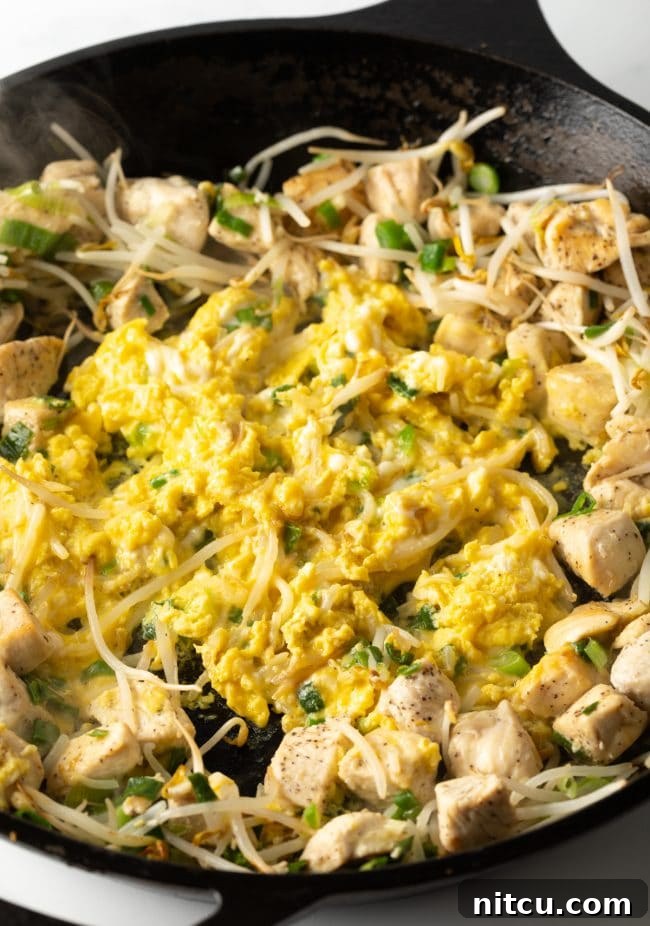
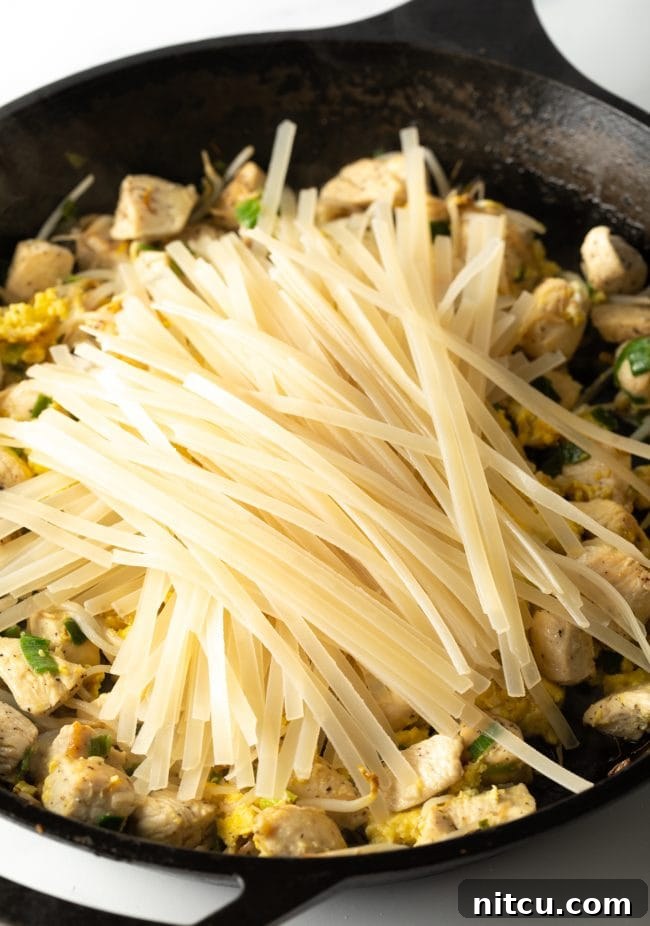
- **Combine Noodles and Sauce:** Once the noodles are pliable from soaking, drain them very well. Add the drained noodles and the prepared Pad Thai sauce to the pan with the chicken and vegetable mixture. Using tongs or two spatulas, gently stir everything together to ensure the noodles are evenly coated with the delicious sauce. Cook for another 3 to 5 minutes. It’s crucial not to overcook the noodles, as they can become gummy and break apart. If the sauce thickens too much during cooking, you can thin it out slightly by stirring in a few tablespoons of water.
Chef’s Tip: Pad Thai rice noodles are delicate and prone to breaking if overcooked or handled too roughly. Stir them gently and be mindful of their cooking time to preserve their delightful texture.
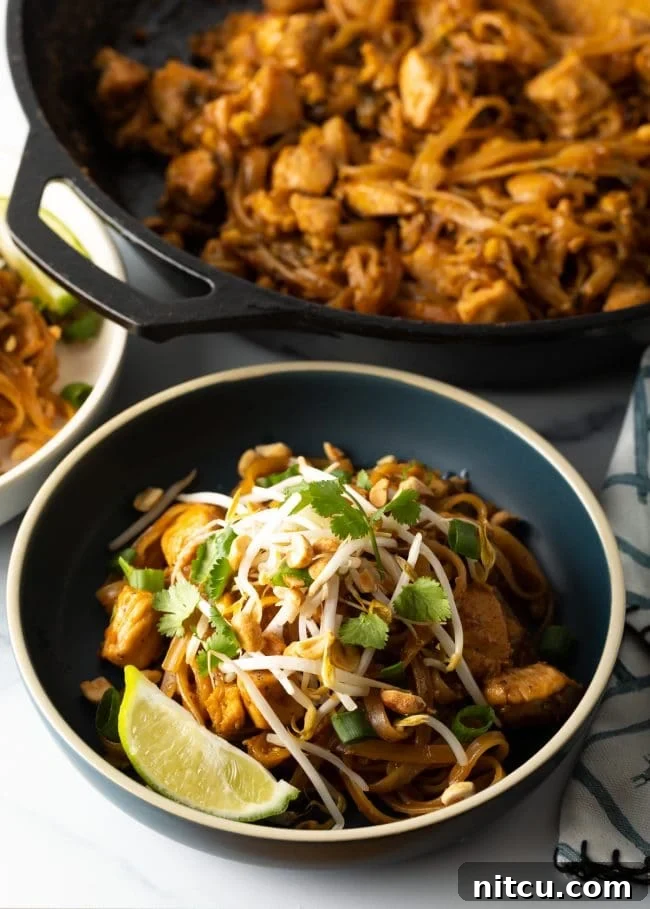
Serve your sensational homemade Pad Thai immediately, garnished generously with traditional toppings like chopped peanuts and fresh cilantro leaves. A wedge of fresh lime on the side for an extra squeeze of brightness is also highly recommended!
Find the Complete (Printable) Chicken Pad Thai Recipe Below for Easy Cooking! Enjoy Your Culinary Adventure!
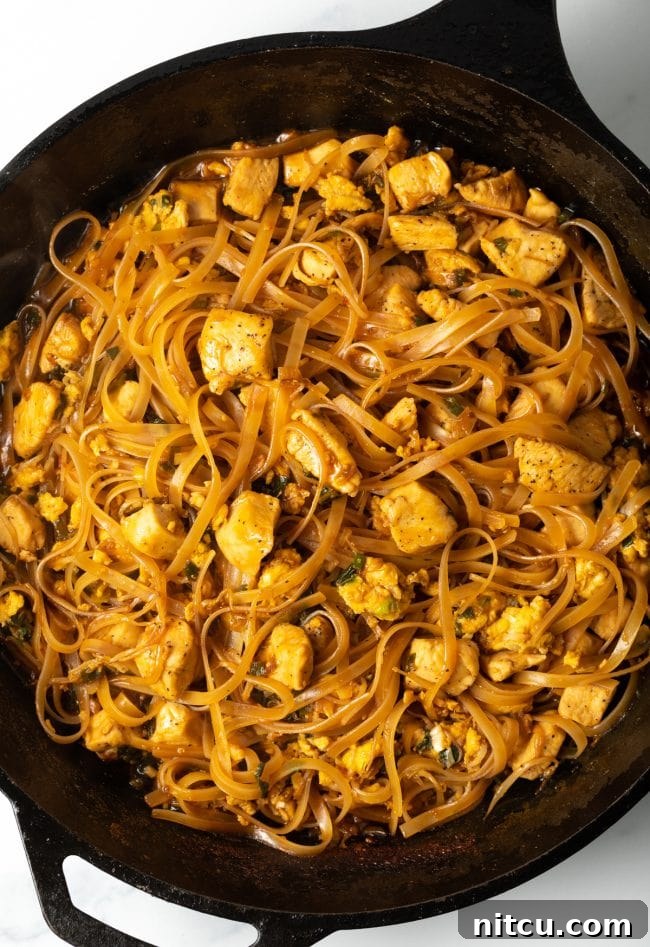
Easy Chicken Pad Thai Recipe
Prep Time: 10 minutes |
Cook Time: 15 minutes |
Total Time: 25 minutes |
Servings: 6
This homemade Thai noodle dish captures all the authentic flavor and widespread appeal of your favorite takeout Pad Thai, and it’s incredibly easy to make in under 30 minutes using simple ingredients!
Ingredients
For the Stir-Fry:
- 1 pound boneless, skinless chicken breasts, cut into bite-sized pieces
- 8 ounces Pad Thai noodles (flat rice noodles)
- 2 tablespoons peanut oil or coconut oil
- 3 large eggs, at room temperature
- 6 green onions, chopped
- 2 cups mung bean sprouts
- 2 cloves garlic, minced
- Salt and freshly ground black pepper, to taste
For the Pad Thai Sauce:
- 1/4 cup packed brown sugar
- 1/4 cup soy sauce (or coconut aminos for gluten-free/soy-free)
- 1/4 cup fresh lime juice
- 2 tablespoons fish sauce
- 1 tablespoon creamy peanut butter (optional, for richer flavor)
- 3-5 teaspoons chile garlic sauce (adjust to desired heat level)
Toppings:
- 1/3 cup fresh cilantro leaves, chopped
- 1/3 cup peanuts, lightly chopped
- Lime wedges for serving (optional)
Instructions
- Place the Pad Thai noodles in a large bowl. Completely cover them with cold water and allow them to soak for 25-35 minutes, or until they become pliable yet still have a slight firmness. Do not boil.
- In a separate medium bowl, whisk together all the sauce ingredients: brown sugar, soy sauce, fresh lime juice, fish sauce, creamy peanut butter (if using), and chile garlic sauce. Set aside.
- Season the chicken pieces generously with salt and pepper. Heat peanut or coconut oil in a large wok or deep skillet over medium to medium-high heat. Add the chicken and sauté for 3-5 minutes, until mostly cooked through and lightly browned.
- Stir in the minced garlic, chopped green onions, and mung bean sprouts with the chicken. Cook for 1-2 minutes until fragrant and slightly tender-crisp. Push the ingredients to the sides of the pan, creating a clear space in the center.
- Pour the whisked eggs into the clear space in the pan. Scramble them until firm, then mix them together with the chicken and vegetable mixture.
- Drain the soaked noodles very well. Add the drained noodles and the prepared Pad Thai sauce to the pan. Gently toss and stir to incorporate all ingredients and coat the noodles evenly with the sauce. Continue cooking for another 3-5 minutes, being careful not to overcook the noodles, as they can become mushy. If the sauce becomes too thick, stir in 2-4 tablespoons of water to thin it to your desired consistency.
- Serve the homemade chicken Pad Thai warm, garnished with fresh cilantro leaves and lightly chopped peanuts. Offer extra lime wedges on the side for a fresh squeeze.
Notes
Adding a little creamy peanut butter to the sauce provides a deeper, richer flavor to your Pad Thai. While not essential, it creates a more complex and satisfying taste for those who prefer less bland dishes.
Leftover Pad Thai should be stored in an airtight container in the refrigerator for about 2 to 3 days. Beyond this, the noodles may begin to get soggy. It reheats well in the microwave or can be enjoyed cold straight from the fridge.
To Freeze: This recipe freezes quite well! Store the cooked chicken and noodles in a suitable freezer-safe container for 3 to 6 months. Thaw overnight in the refrigerator before gently rewarming. Be aware that the noodles might have a slightly softer texture after freezing and thawing, but the flavor will remain excellent.
Nutrition Information (Approximate)
Serving: 8 ounces, Calories: 405kcal, Carbohydrates: 46g, Protein: 24g, Fat: 13g, Saturated Fat: 2g, Cholesterol: 130mg, Sodium: 1289mg, Potassium: 516mg, Fiber: 2g, Sugar: 11g, Vitamin A: 320IU, Vitamin C: 9.8mg, Calcium: 59mg, Iron: 2.1mg
Course: Main Course | Cuisine: Asian, Thai | Author: Sommer Collier
Exciting Recipe Variations to Explore
While our classic Chicken Pad Thai recipe is undeniably delicious, don’t hesitate to customize it to your taste or dietary needs. Here are a few ideas to get you started:
- Noodle Alternatives: The authentic choice is flat rice noodles, known as Pad Thai noodles, for their unique texture and ability to absorb sauce. However, if you’re unable to find them, a viable substitute can be fettuccine pasta. While the texture and flavor won’t be identical, it can still create a satisfying meal. Cook wheat fettuccine according to package directions to al dente before incorporating into the stir-fry, ensuring it’s not overcooked.
- Protein Power-Ups: Feel free to experiment with different proteins to suit your preference. Succulent fresh peeled shrimp can be added alongside or in place of the chicken for a seafood twist. For a vegetarian or vegan option, firm or extra-firm tofu cubes, pressed and pan-fried until golden, make an excellent substitute, soaking up the sauce beautifully.
- Veggie Boost: Enhance the nutritional value and crunch by incorporating additional vegetables. Sliced red bell peppers add a sweet crispness and vibrant color. Julienne carrots offer a subtle sweetness and extra texture. Small broccoli florets, snap peas, or even thinly sliced cabbage can also be stir-fried for a more robust vegetable-packed dish. Add harder vegetables earlier in the stir-fry process to ensure they cook through, while softer ones should be added later to maintain their crunch.
- Nut-Free Pad Thai: For those with peanut allergies or simply a dislike for peanuts, it’s easy to enjoy this dish without them. Simply omit the creamy peanut butter from the sauce and skip the chopped peanuts as a topping. The dish will still retain its fantastic savory, sweet, and sour balance thanks to the other robust ingredients. You can also explore alternatives like sunflower seed butter in the sauce if you desire a creamy texture.
Frequently Asked Questions About Chicken Pad Thai
Why should I add peanut butter to my Pad Thai sauce?
Adding a touch of creamy peanut butter to your Pad Thai sauce is an optional, but highly recommended, step that significantly enhances the dish’s flavor profile. It contributes a wonderful richness and depth, lending a subtle nutty undertone and a slightly thicker, more luxurious consistency to the sauce. This can transform your Pad Thai from good to extraordinary, especially if you sometimes find other versions a bit too subtle or “bland.” It’s a fantastic way to boost the umami and make the sauce cling better to the noodles.
What does Pad Thai taste like?
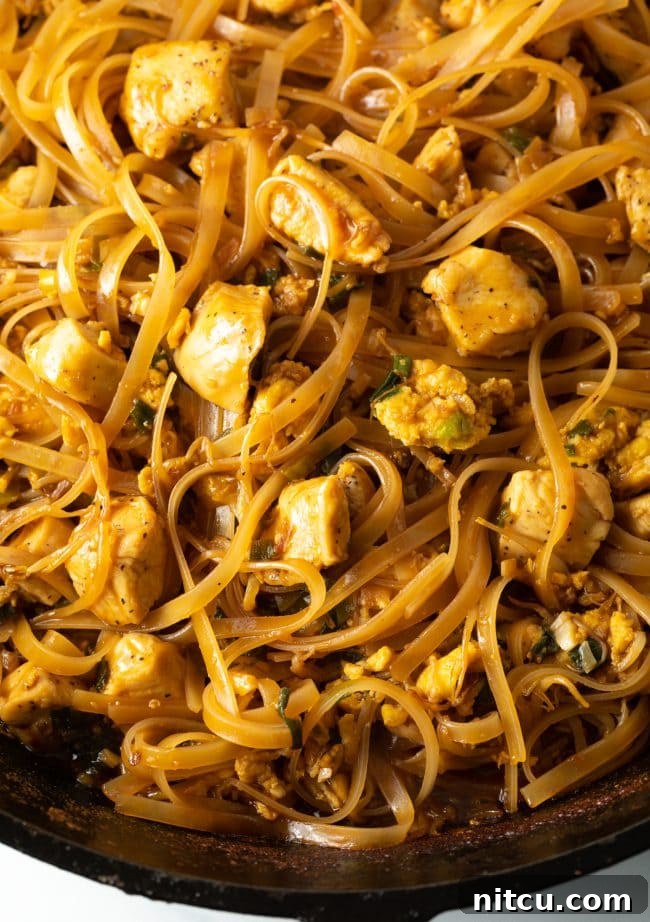
Pad Thai is celebrated for its harmonious blend of complex flavors and textures. It offers a delightful symphony of savory, sweet, sour, and sometimes spicy notes, all perfectly balanced. The thick, chewy rice noodles provide a satisfying texture, acting as an ideal vehicle for the rich sauce. The sauce itself is a dynamic mix of tang from lime, sweetness from brown sugar, umami from fish sauce and soy sauce, and a kick from chili garlic. When you include creamy peanut butter in the sauce and crunchy chopped peanuts as a topping, you introduce a delicious nutty dimension that adds even more depth and an irresistible textural contrast to the dish. Each forkful is a vibrant explosion of taste!
How long does this Pad Thai recipe last in the fridge?
Leftover Chicken Pad Thai can be stored in an airtight container in the refrigerator for approximately 2 to 3 days. While it’s still safe to eat after this period, the rice noodles tend to absorb the sauce and can become softer or a bit soggy. For the best quality and texture, we recommend consuming it within three days. You can easily reheat it in the microwave for a quick meal, or many people enjoy it cold straight from the fridge for a refreshing option!
Can I freeze Pad Thai?
Yes, Pad Thai can be frozen! To do so, allow the dish to cool completely before transferring it to a suitable freezer-safe container. Ensure it’s tightly sealed to prevent freezer burn. It can be stored in the freezer for 3 to 6 months. When you’re ready to enjoy it, thaw the Pad Thai overnight in the refrigerator. Rewarm it gently on the stovetop over low heat or in the microwave. Be aware that the noodles may become slightly softer after the freezing and thawing process, but the delicious flavors will certainly remain intact.
Looking for More Easy Thai Recipes? Be Sure to Also Try These Delicious Options:
- Thai Red Curry Grilled Chicken Salad Recipe
- Thai Quinoa Salad Recipe
- Classic Thai Fried Rice Recipe
- Thai Coconut Curry Hummus Recipe
- Thai Baked Turkey Meatballs Recipe
- Thai Basil Chicken Recipe (Pad Krapow Gai)
- Best Thai Panang Chicken Curry