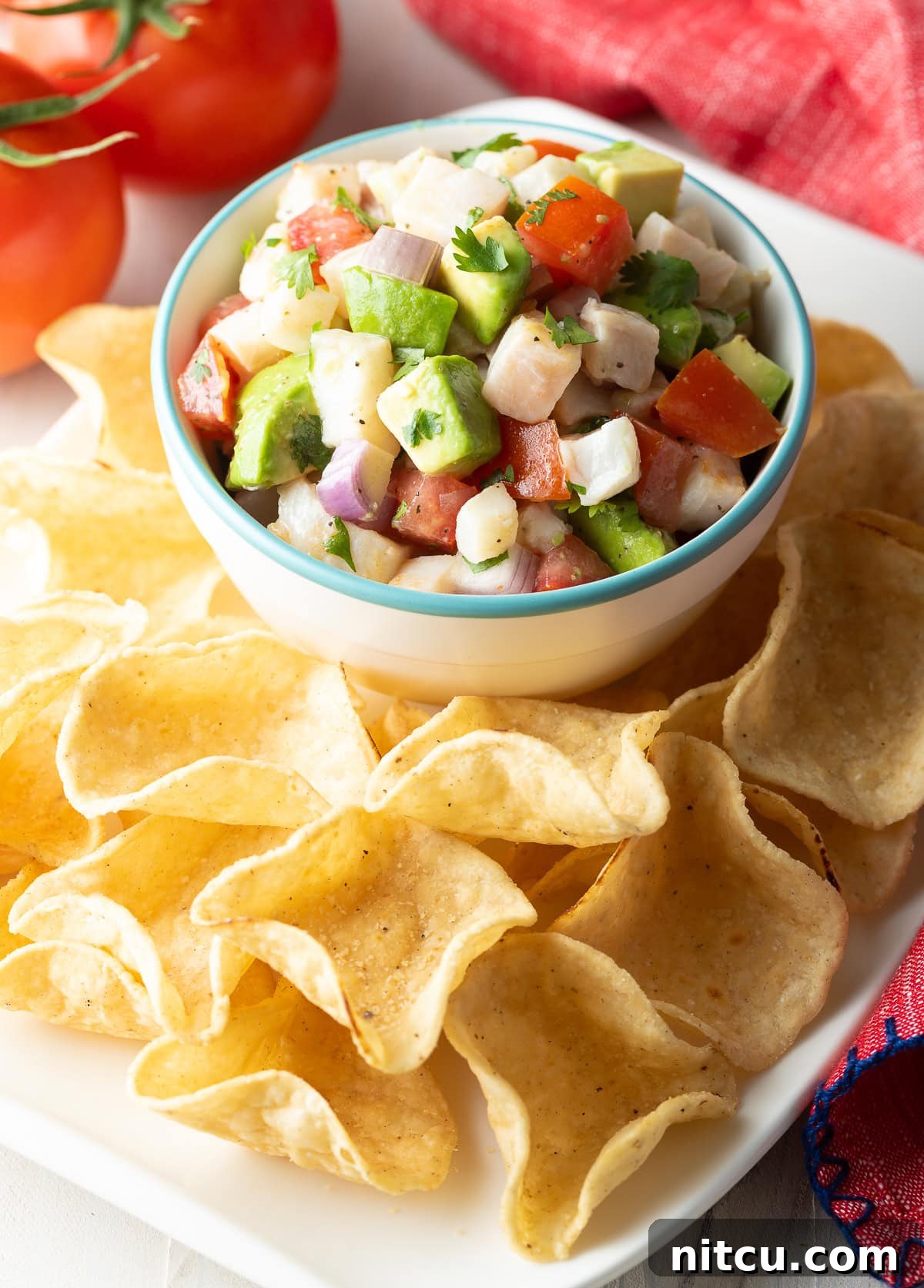
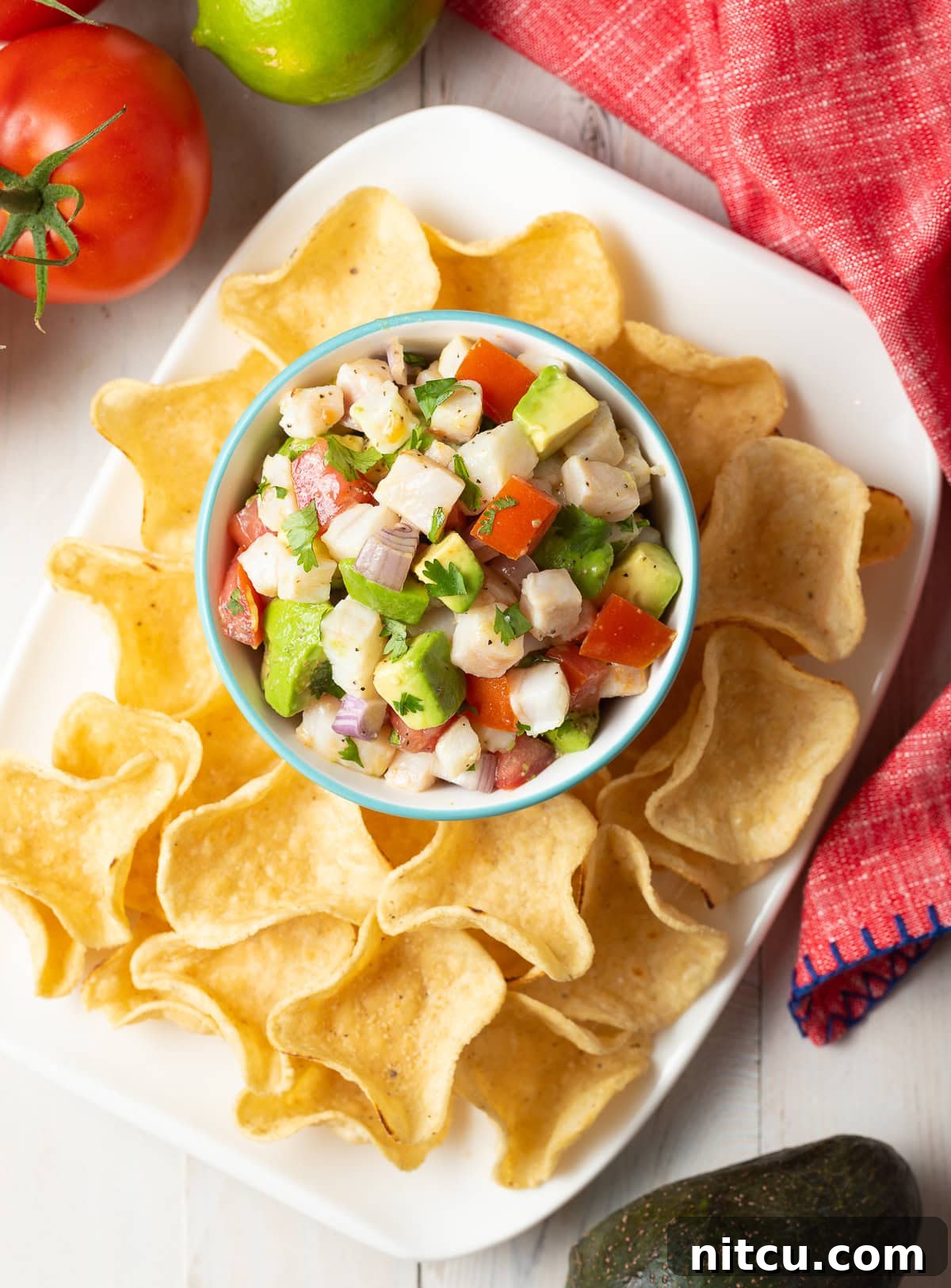
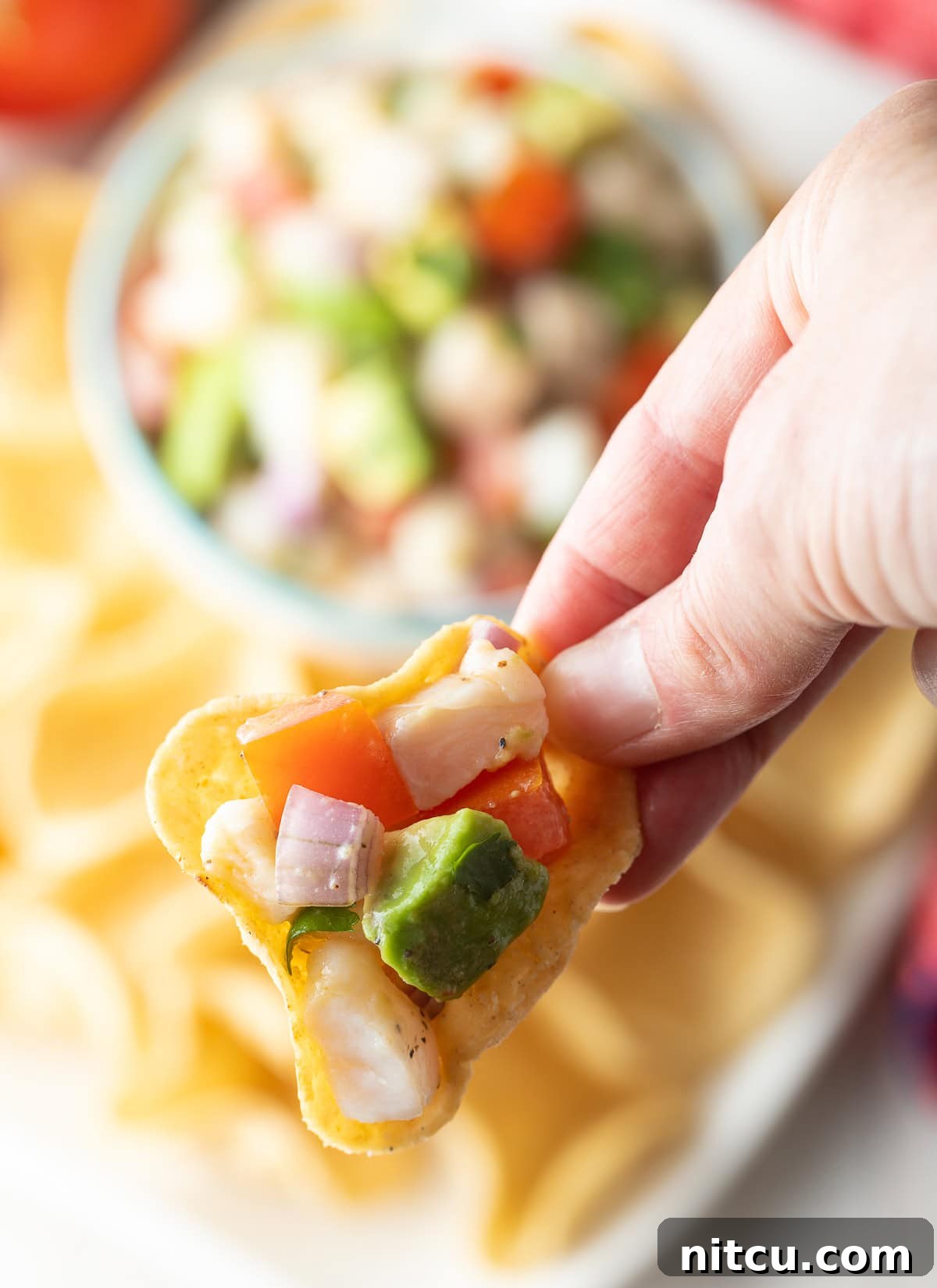
Ceviche de Pescado (Classic Fish Ceviche Recipe) – Experience the vibrant flavors of this fresh, zesty, and spicy dish. Perfect as a light meal or appetizer, ceviche is served beautifully with crispy tortilla chips or as a refreshing salad topping. This delightful recipe is naturally low-carb, gluten-free, and paleo-friendly, making it an excellent choice for a healthy and flavorful culinary adventure.
Authentic Fish Ceviche Recipe: A Culinary Journey from Sea to Plate
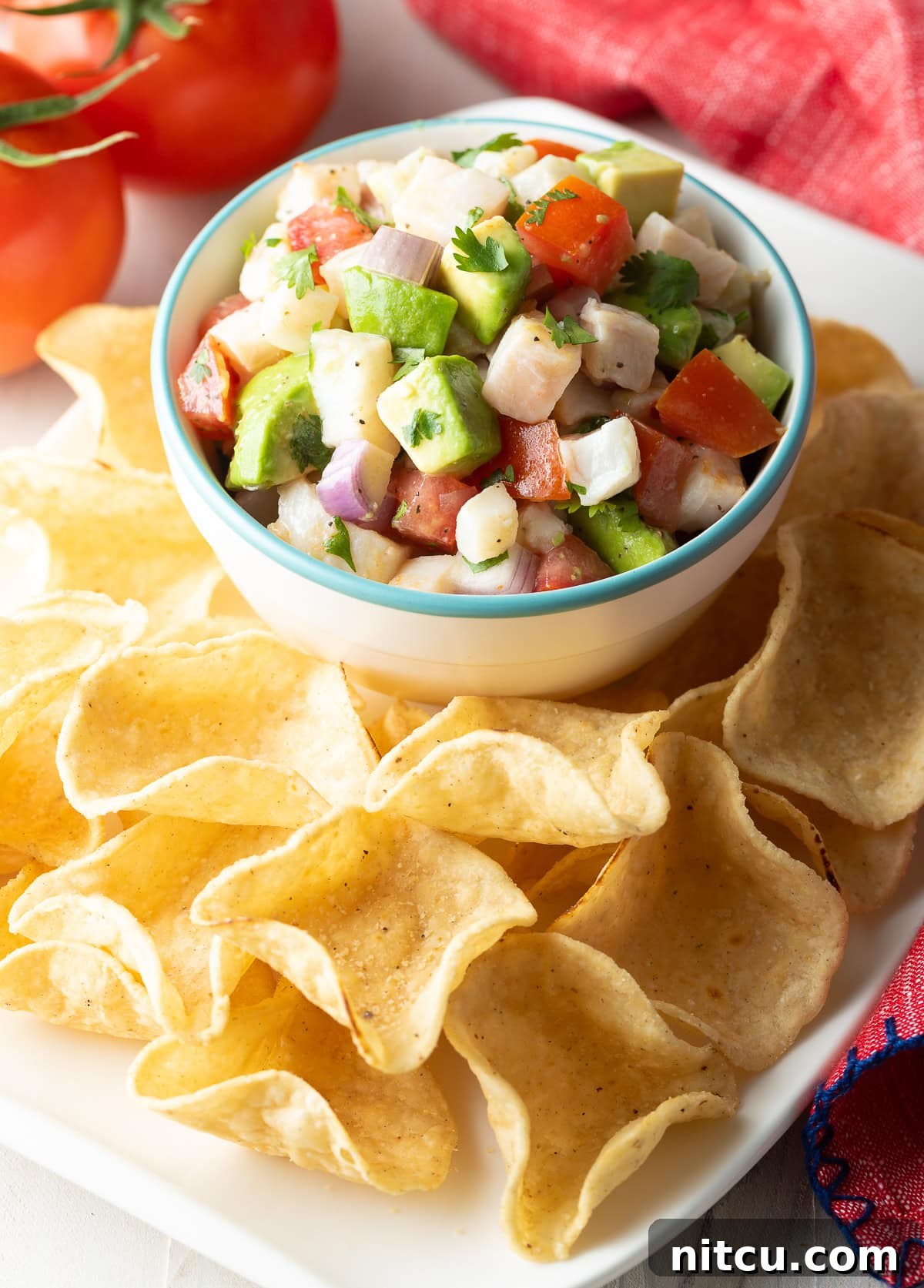
For many adventurous food lovers, a Fish Ceviche Recipe (pronounced seh-vee-chay) is an absolute delight. It’s a dish that tantalizes the taste buds with its fresh flavors and invigorating zest. However, for those unfamiliar, the idea of “raw fish” might initially seem a bit daunting. Let us assure you, this classic preparation method offers a unique and safe way to enjoy seafood.
At its heart, ceviche is a vibrant seafood salsa, where delicate fish is “cooked” by the vibrant acidity of citrus juice rather than heat. This process, known as denaturation, transforms the fish’s texture and flavor, resulting in a firm, opaque, and incredibly flavorful concoction that resembles a sophisticated salsa. It’s a culinary magic trick that allows you to savor the pure essence of the sea without the need for a stove.
This traditional preparation is not only exciting but also offers a light, robust, and utterly refreshing experience. So, shed any apprehension and prepare to embark on a delightful culinary journey with our easy-to-follow fish ceviche recipe.
Essential Ingredients for Your Perfect Fish Ceviche
Crafting the perfect ceviche begins with selecting the finest ingredients. While I personally adore rich seafood like scallops or sea bass for their luxurious texture and flavor, we also strive to be mindful of both our personal budgets and global resources. This is where Swai fish comes in as a fantastic and responsible alternative. Its delicate, almost creamy texture beautifully mimics more opulent catches, making it a surprising star in this dish.
Just last night, I served this ceviche to friends who were astounded by the smooth, clean flavor of this humble fish. If you haven’t tried Swai before, now is the perfect opportunity. Beyond the fish, each ingredient plays a crucial role in building the layered flavors of this classic dish:
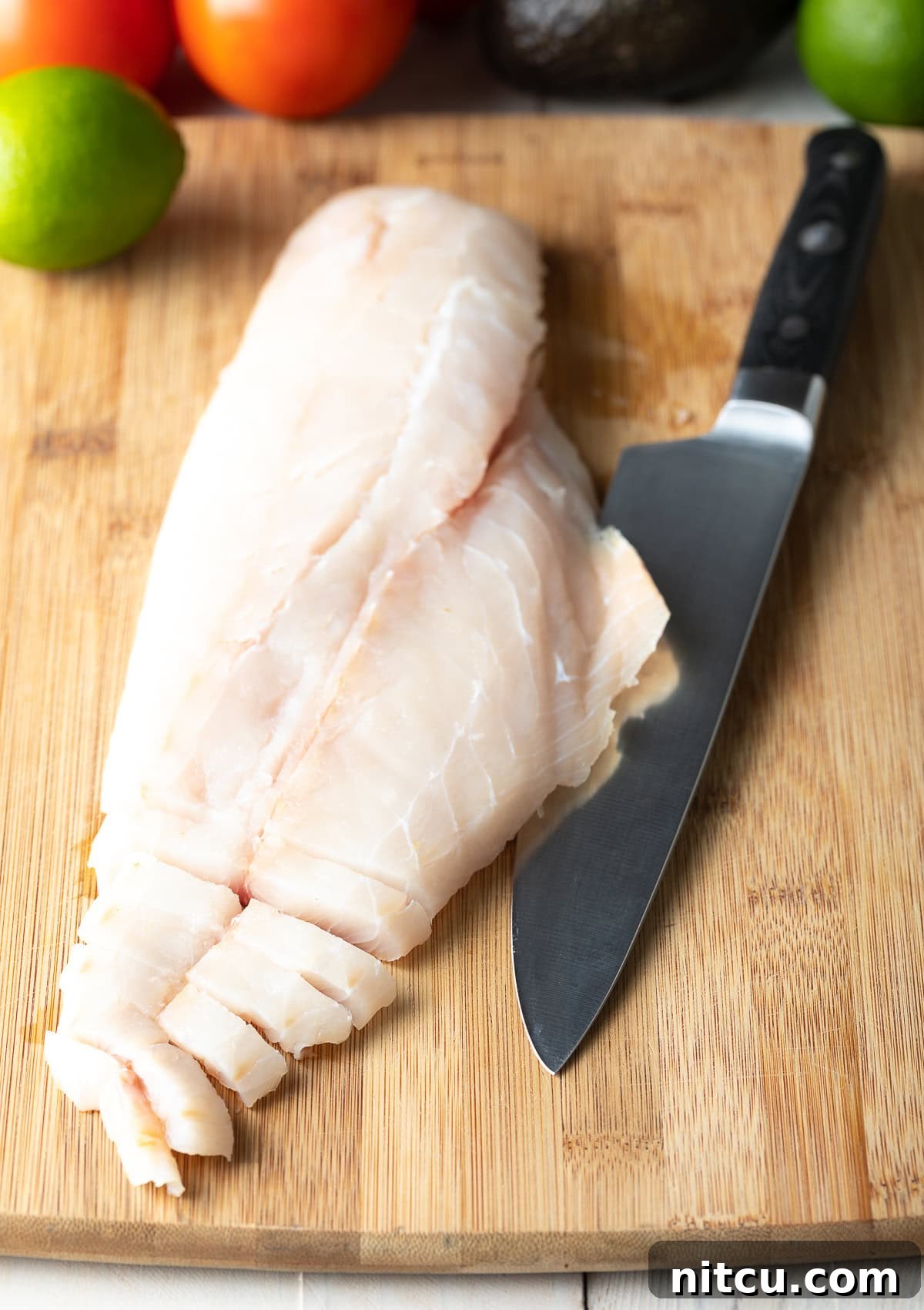
- Fish: The foundation of our ceviche! Any firm, fresh white fish will work beautifully. Excellent choices include Grouper, Halibut, Cod, Snapper, or the highly recommended Swai. Freshness is paramount for the best texture and taste.
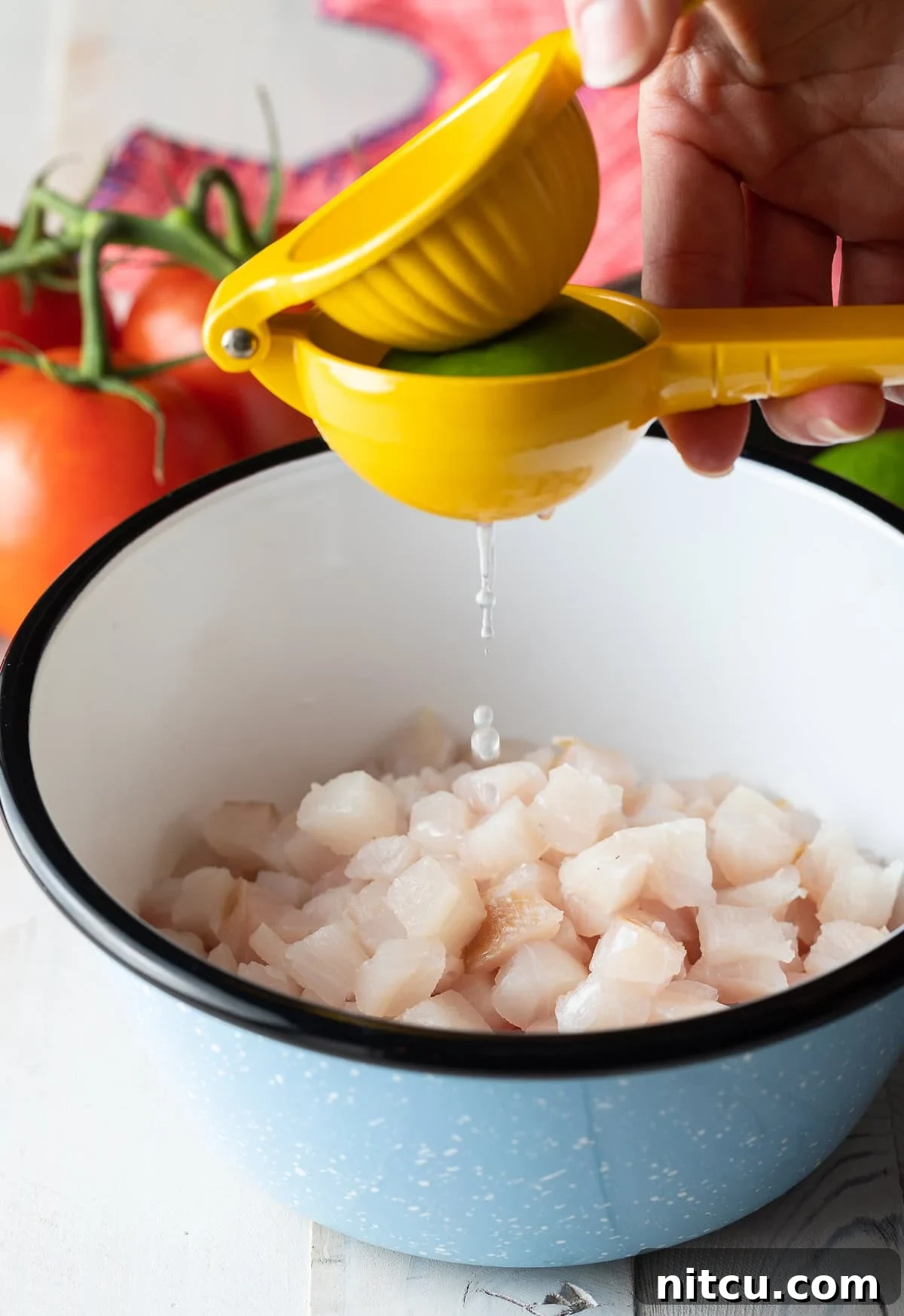
- Limes: These are the star of the show, acting as the primary “cooking” agent for the fish. The high acidity denatures the protein, transforming the fish from translucent to opaque. Limes also prevent the avocado from browning and infuse the entire dish with a bright, indispensable flavor.
- Tomato: Diced tomatoes add a wonderful balance of acidity and natural sweetness, complementing the tang of the lime and providing a pop of color and freshness.
- Avocado: Creamy, rich avocado provides a delightful contrast to the citrus and firm fish. Its smooth texture adds a luxurious mouthfeel and helps to mellow the heat.
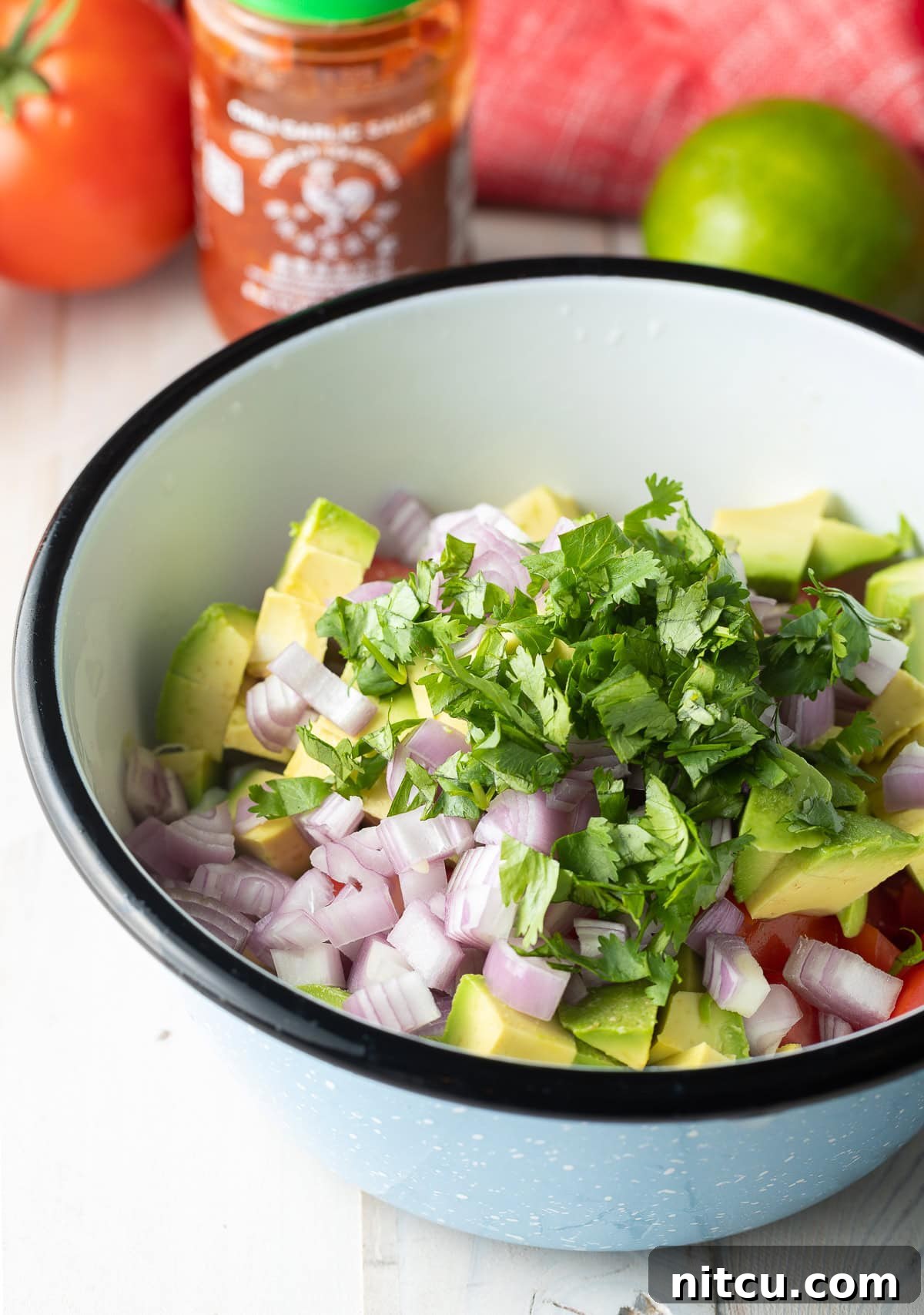
- Shallot: Shallots offer a milder, more delicate onion flavor compared to red onion, providing a bright, aromatic kick. The lime juice works to gently temper their sharpness, leaving behind a subtle, savory note.
- Cilantro: A classic and essential herb in ceviche, fresh cilantro brings an incredibly refreshing and aromatic quality, enhancing the overall vibrant profile of the dish.
- Olive Oil: A drizzle of good quality olive oil rounds out the flavors, adding a touch of richness and body that harmonizes beautifully with the acidity of the lime juice.
- Chili Garlic Paste: For those who love a bit of heat, chili garlic paste delivers a spicy, tangy kick that awakens the palate and adds depth to the ceviche. Adjust to your preferred spice level.
- Salt and Pepper: These fundamental seasonings are crucial for bringing out and balancing all the incredible flavors in your ceviche. Always season to taste.
Embracing Sustainable Seafood Choices
Seafood holds a special place in my culinary heart. There’s a particular joy in discovering new varieties to experiment with in the kitchen. I often find myself drawn to specialty markets, captivated by the diverse array at their seafood counters, searching for inspiration. During these visits, I’ve noticed a growing trend: labels on fish indicating whether they are “Sustainable,” “At-Risk,” or “Endangered.” While the intention behind these labels is commendable, they sometimes present a unique dilemma for conscious consumers.
It’s important to acknowledge that as consumers, we play a role in the health of our ocean’s ecosystems. We should strive to make choices that support sustainable fish populations. However, it can be perplexing when these same eco-conscious stores continue to offer species categorized as “at-risk” or “endangered.” This creates a conflict: why tempt consumers with beautiful, delicious, yet endangered fish, only to implicitly or explicitly discourage its purchase?
This isn’t to say we should disregard the consequences of our consumption. On the contrary, understanding the impact of our choices is vital. However, the presence of these items on display highlights a broader issue in the supply chain and consumer education. It challenges us to actively seek out and support truly sustainable options, empowering us to make informed decisions that align with our values and contribute to the well-being of marine life.
Discovering Swai: An Eco-Friendly & Wallet-Friendly Ceviche Option
In light of sustainable practices, I consciously avoid choosing bluefin tuna or red snapper, opting instead for more environmentally responsible fish. In recent years, many markets have begun stocking Swai (also known as Basa), which has emerged as an excellent eco-friendly and budget-friendly white fish option. If you haven’t yet tried it, you might be thinking, “cheap fish usually tastes like… well, cheap fish.” However, Swai is a delightful surprise that defies expectations.
This economical swimmer, an Asian variety of river catfish, boasts a remarkably mild and slightly sweet flavor profile. Unlike some catfish varieties often associated with a “bottom-dweller” taste, Swai, being a river fish, offers a clean and pleasant essence that makes it incredibly versatile for dishes like ceviche. Its delicate texture holds up beautifully to the citrus marinade, absorbing the flavors without becoming mushy.
For the most sustainable choice, look for Swai that is farm-raised in America. This typically ensures responsible farming practices and a reduced environmental footprint. It’s usually very affordable, often found around $3.99 a pound, and can sometimes be snagged on sale for even less, making it an accessible and delicious option for your next culinary creation.
How to Make Fish Ceviche: Step-by-Step Guide
Making delicious ceviche is surprisingly simple and requires minimal cooking. The key lies in fresh ingredients and patience as the lime juice works its magic. Follow these straightforward steps to prepare your own homemade fish ceviche:
- Prepare the Fish: Begin by dicing your chosen fish (grouper fillets or Swai are excellent) into small, uniform pieces, roughly 1/2 to 3/4 inch cubes. Place the diced fish in a non-reactive bowl (glass or ceramic).
- Marinate with Lime: Pour 3/4 of the freshly squeezed lime juice over the diced fish, ensuring all pieces are submerged or thoroughly coated. Gently toss to combine. Cover the bowl and refrigerate for at least 1 hour. This allows the citric acid to “cook” the fish, firming its texture and turning it opaque. After marinating, strain off the lime juice. This step is crucial for flavor balance and texture.
- Combine with Fresh Veggies: In a separate mixing bowl, combine the diced tomato, avocado, and shallot (or red onion). Add the remaining 1/4 of the fresh lime juice to this mixture and toss gently. This prevents the avocado from browning and adds a fresh zest to the vegetables.
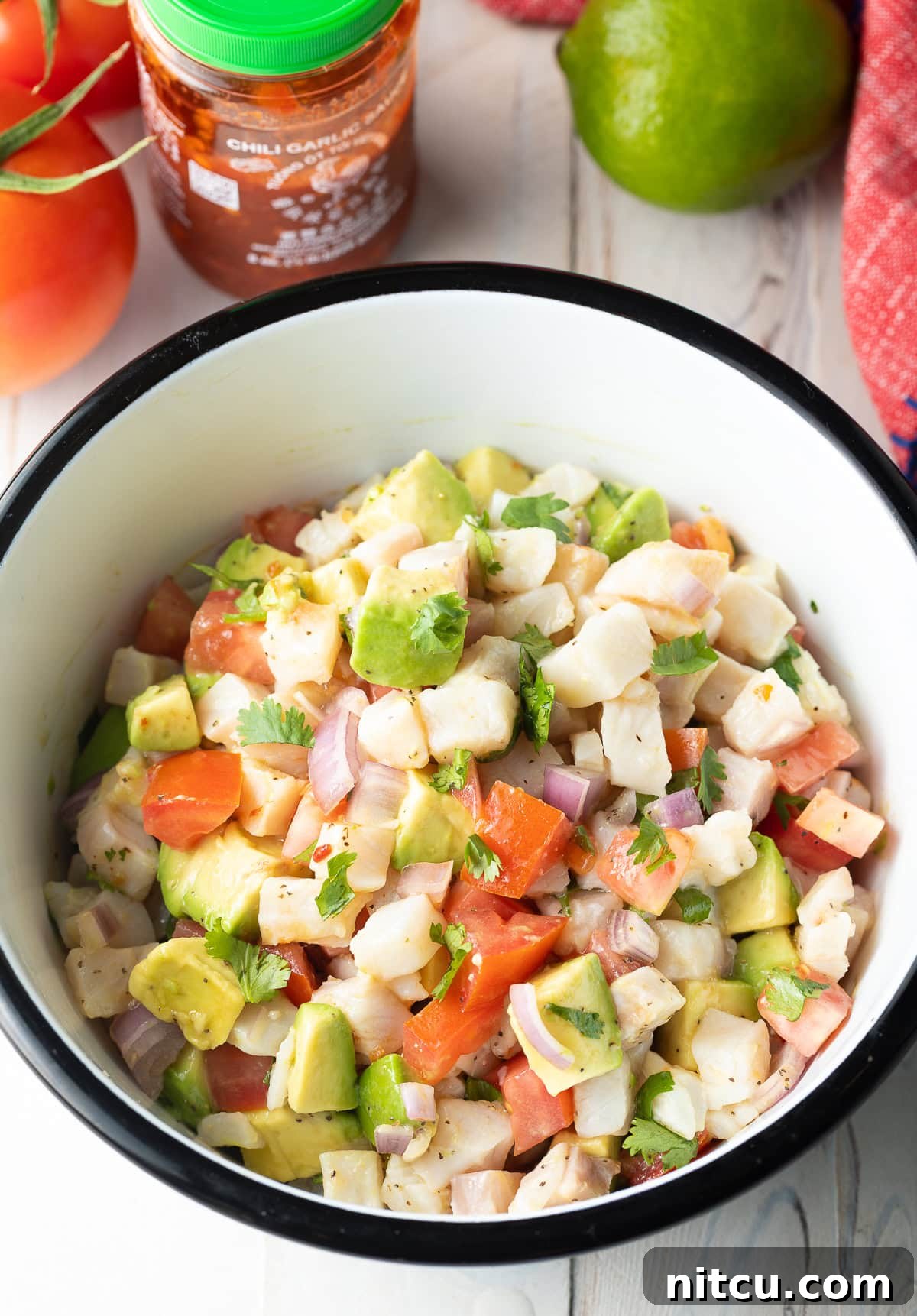
- Assemble the Ceviche: Carefully fold the marinated and strained fish into the bowl with the prepared vegetables. Add the chopped cilantro, drizzle with olive oil, and stir in the chili garlic paste (if using, adjust to taste). Gently toss all the ingredients together until well combined.
- Season and Serve: Taste the ceviche and season with salt and pepper as needed. Serve immediately for the best flavor and texture. For optimum results, avoid letting it sit for too long after mixing with the vegetables, as the avocado can soften too much.
Find the full recipe with precise measurements below in our comprehensive recipe card. Enjoy this incredibly fresh and flavorful Ceviche de Pescado!
Delicious Ways to Serve Your Ceviche
Ceviche is incredibly versatile and can be enjoyed in many delicious ways, making it perfect for various occasions. Its light, zesty, and protein-packed nature makes it ideal for a warm-weather meal or a refreshing appetizer.
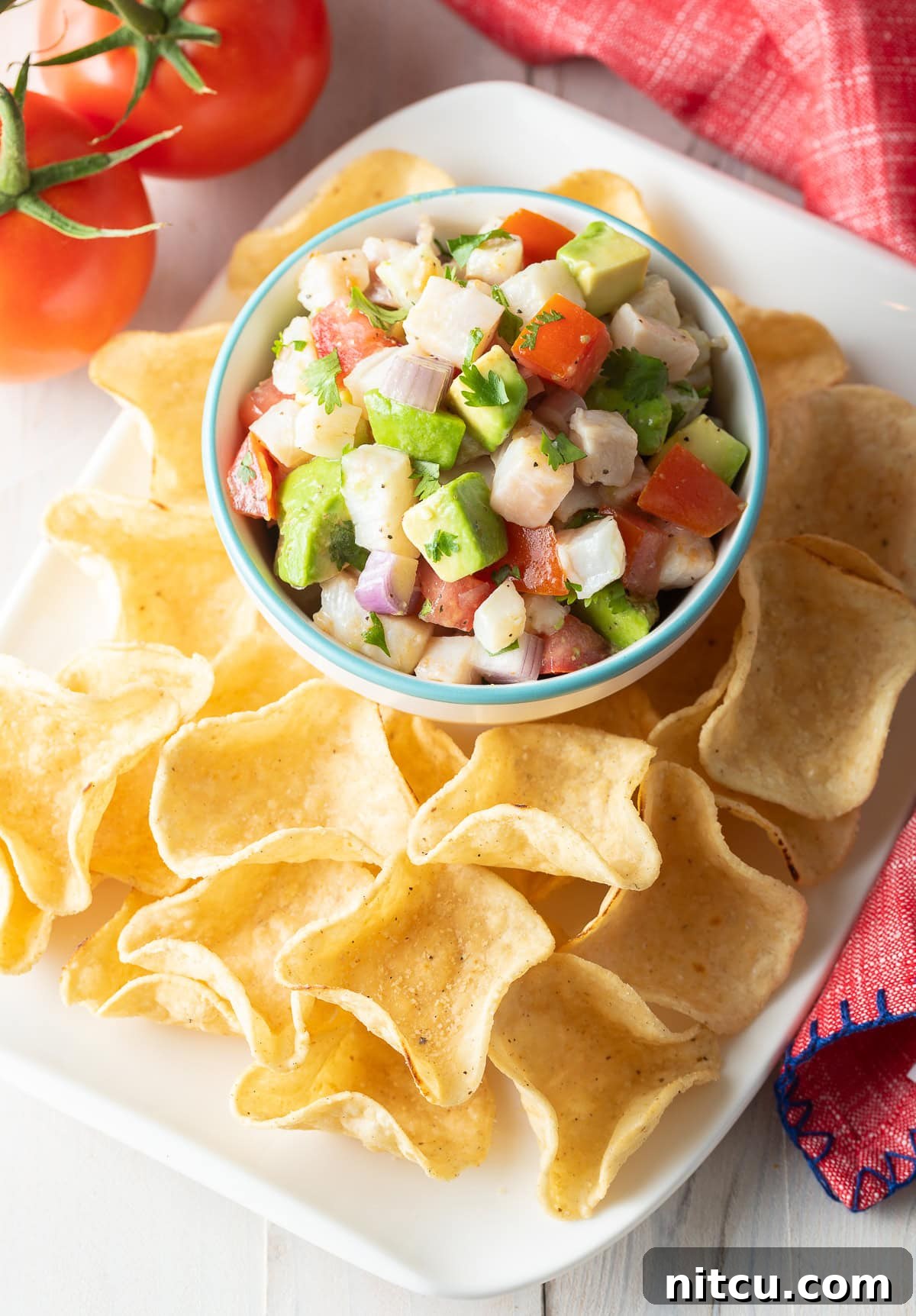
For a light and healthy main course, serve your ceviche over a bed of crisp greens to create a vibrant ceviche salad. The freshness of the lettuce perfectly complements the tangy fish and vegetables. As an appetizer or snack, there’s nothing quite like scooping up a generous portion with classic tortilla chips. For a lighter, crunchier alternative, consider serving it with baked veggie chips, such as zucchini or sweet potato chips.
Beyond these popular options, ceviche can also be enjoyed in lettuce wraps, as a topping for crispy tostadas, or even as a flavorful filling for tacos. Its bright flavors pair wonderfully with a variety of other dishes, enhancing any meal. Consider pairing your ceviche with:
- Perfect Tamale Pie Recipe
- Mexican Grilled Chicken Salad
- How To Make Mexican Sopes
- Roasted Vegetable Tostadas
- Brazilian Chopped Salad
Frequently Asked Questions About Ceviche
Can I use frozen fish for ceviche?
Absolutely, you can use frozen fish! Most commercially frozen fish is flash-frozen shortly after being caught, often within 12 hours. This process locks in freshness. When thawed properly overnight in the refrigerator, it will still yield a delicious ceviche. However, if fresh, high-quality white fish is available, it’s always the preferred choice for the best possible texture and flavor.
Where did ceviche originate?
The exact origins of ceviche are debated, but many culinary historians point to Peru or Ecuador as its birthplace. The technique of “cooking” fish with acid, rather than heat, is believed to have been introduced to the region by Spanish colonizers. This method perfectly suited the abundant fresh seafood of South America, quickly becoming a beloved culinary staple and eventually evolving into the national dish of Peru.
Is ceviche safe to eat if it’s “raw”?
Yes, when prepared correctly, ceviche is generally safe to eat. The intense acidity of the lime juice acts as a powerful denaturing agent, similar to heat. It chemically “cooks” the fish proteins, causing them to firm up and turn opaque. While it retains the appearance of raw fish, it is technically cured by the acid, making it suitable for those exploring raw fish dishes for the first time.
Does using thawed fish compromise the quality of ceviche?
As mentioned, using properly thawed fish does not significantly compromise the quality of ceviche. Most frozen fish is processed very quickly after being caught, preserving its freshness. While a truly fresh-from-the-ocean fillet might offer a slight edge in texture, high-quality frozen and thawed fish still makes an excellent ceviche. Feel free to swap Swai for another type of fresh fish if preferred.
Does the marinating time matter for ceviche?
Yes, marinating time is crucial for ceviche. The duration directly impacts the texture and “doneness” of the fish. Generally, a marinating time of at least 1 hour is recommended for the lime juice to adequately cure the fish, especially if cut into smaller pieces. Over-marinating can result in a tougher, rubbery texture, so it’s important to find the right balance based on fish type and piece size.
What other ingredients can I add or substitute in ceviche?
Ceviche is wonderfully adaptable! Many cooks enjoy adding tropical fruits like diced pineapple or mango for a touch of sweetness and exotic flavor. To make a Peruvian-style ceviche, you could incorporate chili peppers or other hot peppers common in Latin American cuisine for an extra kick. While flounder or mahi-mahi are sometimes used, sticking to the eco-friendly white fish varieties mentioned above is always a good practice.
Explore More Delicious Fish Recipes!
If you love the fresh flavors of seafood, you’re in for a treat! Discover more of our favorite fish and seafood recipes that are perfect for any occasion, from quick weeknight dinners to impressive entertaining:
- Seafood Cioppino Recipe
- Authentic New Orleans Seafood Gumbo Recipe
- Italian Bruschetta Recipe with Roasted Fish
- Pappardelle Pasta with Seafood Sauce Recipe
- Seared Ahi Tuna Salad with Avocado and Mango
- Paleo Coconut Shrimp Recipe
- Grilled Blackened Mahi Mahi
- Pesto Salmon
- Fried Fish Tacos
- Creamy Fish Chowder
- Garlic Lime Roasted Shrimp Salad Recipe
- Ahi Poke Bowl Recipe
- Shrimp Ceviche Recipe from Dinner at the Zoo
Check the detailed recipe card below for comprehensive nutrition information, including calories, protein, cholesterol, and sodium percentages.
Ceviche de Pescado Recipe

The classic Fish Ceviche Recipe – Fresh and vibrant with a punch of heat. Serve with tortilla chips or on a salad. Low carb, gluten free, and paleo!
Prep Time: 10 minutes
Total Time: 10 minutes (plus 1 hour marinating)
Servings: 8
Author: Sommer Collier
Cuisine: Spanish
Course: Appetizer
Video
A video demonstration for this recipe will be available soon!
Ingredients
- 1 pound grouper fillets or swai, diced
- 2 limes, juiced
- 1 tomato, diced
- 1 avocado, diced
- 1 shallot, diced (or 1/4 cup red onion)
- 1 tablespoon chopped cilantro
- Olive oil, to taste
- 1/4 teaspoon chili garlic paste (or to taste)
- Salt and pepper, to taste
Instructions
- Place the diced fish in a bowl and cover with 3/4 of the lime juice. Toss well to ensure all fish pieces are coated. Cover the bowl and refrigerate for at least 1 hour. When ready to proceed, carefully strain off and discard the lime juice.
- In a separate mixing bowl, combine the diced tomato, avocado, and shallot. Add the remaining lime juice and stir gently. Fold in the marinated fish and fresh cilantro. Drizzle with olive oil and incorporate the chili garlic paste, then gently toss all ingredients together.
- Taste the ceviche and season generously with salt and pepper as needed. Serve immediately with crispy tortilla chips or as a refreshing topping for a salad.
Nutrition Information
(Per serving, approximate values)
- Serving Size: 1g (approximate)
- Calories: 103 kcal
- Carbohydrates: 5g
- Protein: 12g
- Fat: 4g
- Saturated Fat: 1g
- Cholesterol: 21mg
- Sodium: 41mg
- Potassium: 460mg
- Fiber: 2g
- Sugar: 1g
- Vitamin A: 255 IU
- Vitamin C: 9.7mg
- Calcium: 25mg
- Iron: 0.8mg