
Rustic Vegetable Stew: A Hearty, Flavorful Vegan Soup for Any Occasion

Embrace Comfort with Our Delicious Homemade Vegetable Stew
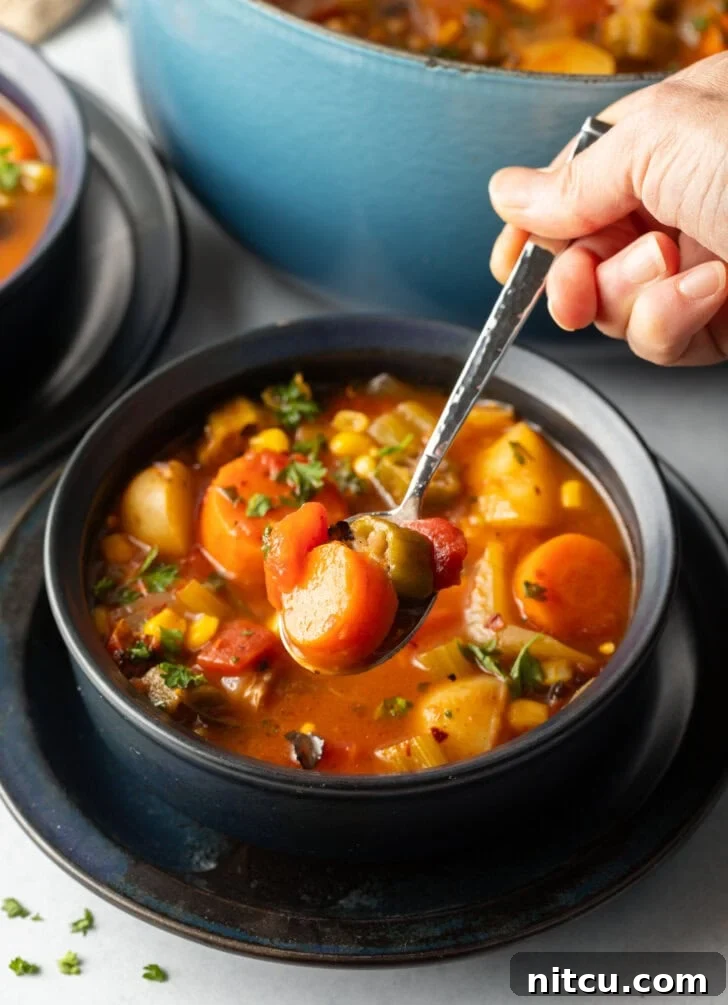
There’s nothing quite like a warm, comforting bowl of soup to chase away a chill or simply soothe the soul. Our Rustic Vegetable Stew, a truly wholesome and satisfying creation, has quickly become a cherished favorite in our family’s recipe collection. While we certainly appreciate the richness of meaty stews and the comforting appeal of noodle soups, this vibrant vegetarian and vegan vegetable soup stands out as an absolute winner. It’s a testament to the fact that plant-based meals can be incredibly hearty, deeply flavorful, and universally loved – even by the most devoted meat-eaters!
What sets this particular veggie soup apart is its exceptional depth of flavor. We achieve this by thoughtfully combining the best of garden-fresh produce with the convenience of canned goods and frozen staples. This ensures a robust taste profile that feels both gourmet and incredibly accessible. The secret to its savory punch lies not only in the generous array of vegetables but also in a harmonious blend of fresh herbs and dried spices that infuse every spoonful with aromatic delight. Furthermore, instead of traditional broth, we opt for a high-quality vegetable soup base, also known as bouillon paste. This ingenious ingredient allows us to concentrate the vegetable broth’s flavor without adding excess liquid, resulting in a stew that is intensely rich and savory. You can readily find vegetable bases in the broth section of most major grocery stores, making this flavor-boosting trick easy to incorporate into your cooking.
This plant-based masterpiece is, in our humble opinion, a perfect vegan recipe on its own. It’s packed with nutrients, fiber, and an abundance of fresh tastes. However, its true beauty lies in its remarkable versatility. This recipe is super easy to customize, inviting you to experiment with different vegetable combinations or even incorporate cooked meats if you wish to adapt it for diverse palates. Best of all, this incredible dish comes together as a delicious one-pot dinner, minimizing cleanup and making it a snap to prepare in less than an hour. Whether you’re a seasoned chef or a busy weeknight cook, this homemade vegetable stew promises a fuss-free, nourishing, and utterly delicious meal.
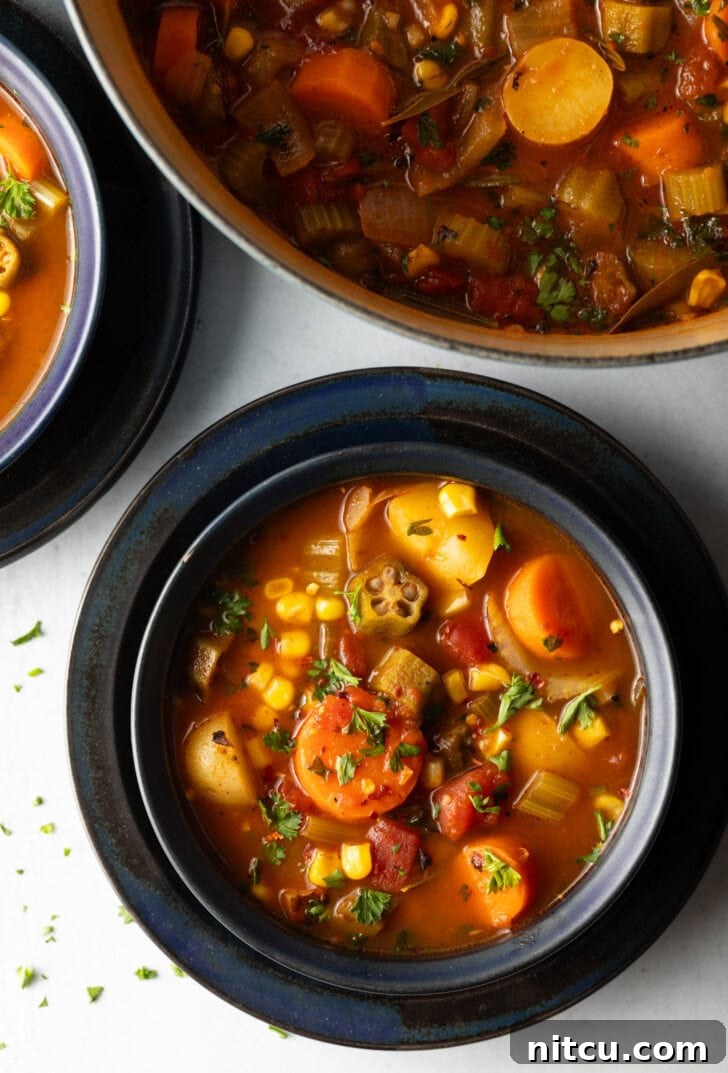
Essential Ingredients for Your Wholesome Vegetable Stew
Crafting this hearty vegetable stew requires a balanced mix of fresh produce and pantry essentials. Each ingredient plays a crucial role in building the layered flavors and comforting textures that define this recipe. Here’s what you’ll need to gather:
- Olive oil: The foundation of our stew, providing a rich, healthy fat for sautéing. You can also use other high-heat cooking oils like canola or avocado oil, or even plant-based butter for an added creamy note if keeping it vegan.
- Sweet onion: Peeled and chopped, sweet onions provide a subtle sweetness and aromatic base that deepens as it caramelizes slightly.
- Garlic: Minced fresh garlic is indispensable for adding pungent, savory depth to the stew’s flavor profile.
- Carrots: Peeled and chopped, carrots bring natural sweetness, vibrant color, and essential nutrients.
- Celery: Chopped celery contributes a mild, earthy flavor and a satisfying crunch that softens beautifully during cooking.
- Baby potatoes: Chopped with their skins left on (for extra nutrients and rustic appeal), baby potatoes add a wonderful heartiness and help thicken the stew. Any waxy potato variety will work well.
- Canned diced tomatoes: Fire-roasted diced tomatoes are highly recommended for their robust, smoky flavor, which adds a fantastic tang and richness to the broth. Regular diced tomatoes are also suitable.
- Vegetable base: As mentioned, this concentrated paste provides intense vegetable flavor. You’ll combine it with water to create the broth.
- Spices: A blend of dried bay leaves for an aromatic foundation, smoked paprika for a hint of smoky warmth, and crushed red pepper for a subtle, delightful kick that you can adjust to your preference.
- Fresh rosemary: A sprig of fresh rosemary infuses the stew with its distinct, piney aroma during simmering, removed before serving.
- Frozen corn and chopped okra: These convenient frozen staples add sweetness, texture, and a touch of Southern charm. No need to thaw them beforehand; they cook directly in the stew. If okra isn’t to your liking, frozen green beans make an excellent substitute.
- Fresh parsley: Chopped fresh parsley adds a burst of freshness and a vibrant green color, both stirred into the soup and used as a garnish for serving.
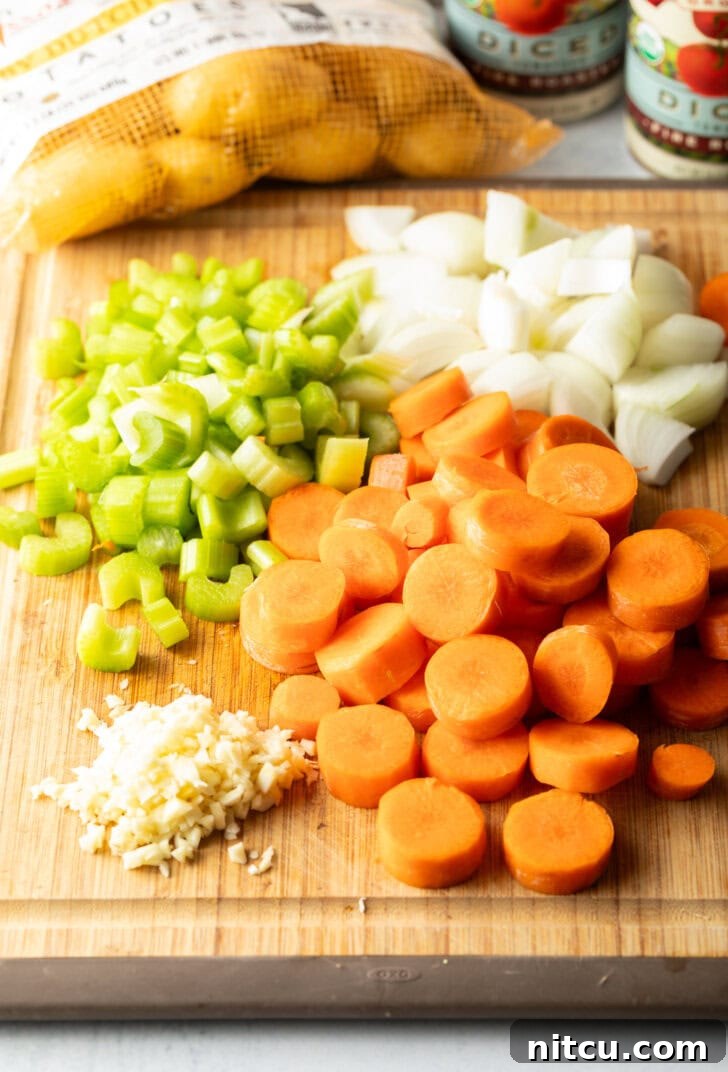
Crafting Your Rustic Vegetable Stew: A Simple Step-by-Step Guide
Creating this nourishing and flavorful vegetable stew is a straightforward process that yields impressive results in under an hour. Follow these easy steps to bring this comforting dish to your table:
- Prepare Your Vegetables: Begin by prepping all your fresh vegetables. Uniformly chop the sweet onions, carrots, celery, and baby potatoes into ¾ to 1-inch pieces. This consistent sizing ensures even cooking. Next, mince the garlic cloves and finely chop the fresh parsley. Having everything ready before you start cooking, known as ‘mise en place,’ makes the process much smoother.
- Sauté the Aromatics: Place a large 6-8 quart soup pot or a sturdy Dutch oven over medium heat. Add the olive oil (or your chosen cooking oil) to the pot. Once the oil is shimmering and hot, add the chopped onion, minced garlic, chopped carrots, and chopped celery. Stir these aromatics frequently and sauté for 2 to 3 minutes. This crucial step helps to soften the onions and garlic, releasing their sweet and savory flavors, which form the foundational taste of your stew.
- Combine and Simmer: To the sautéed vegetables, add the chopped baby potatoes, both cans of diced fire-roasted tomatoes (with their juices), the vegetable base, and water. Stir in the bay leaves, the sprig of fresh rosemary, smoked paprika, and crushed red pepper flakes. Give everything a good stir to combine all the ingredients thoroughly. Cover the pot with a lid and bring the mixture to a rolling boil. Once boiling, reduce the heat to a gentle simmer and continue cooking, covered, for 20 minutes. Remember to stir occasionally during this phase to prevent sticking and ensure even cooking. This simmering time allows the vegetables to tenderize and the flavors to meld beautifully.
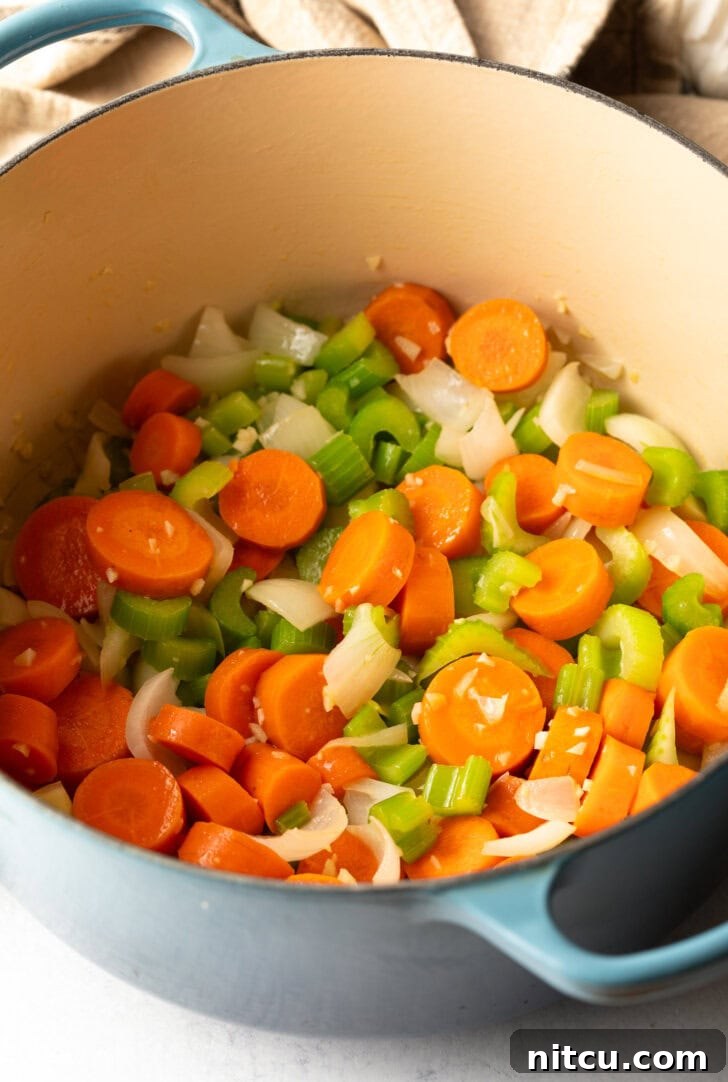
For a comprehensive, printable recipe and an accompanying video tutorial, scroll down below. Enjoy your cooking!
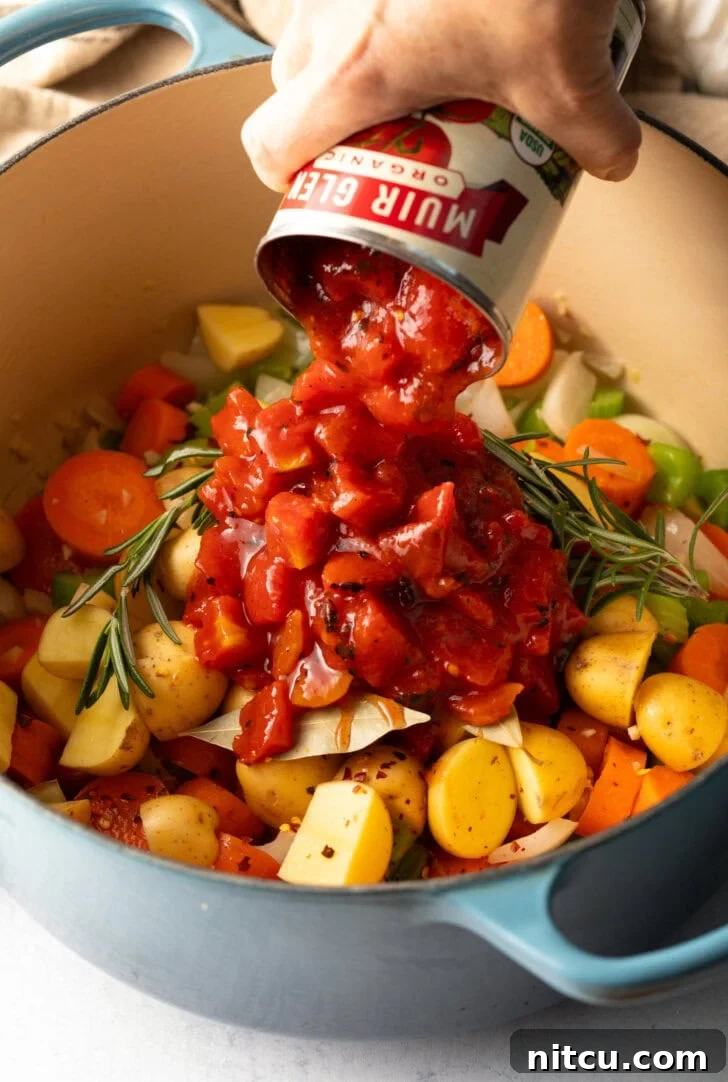
Continue with the final steps to complete your rustic stew:
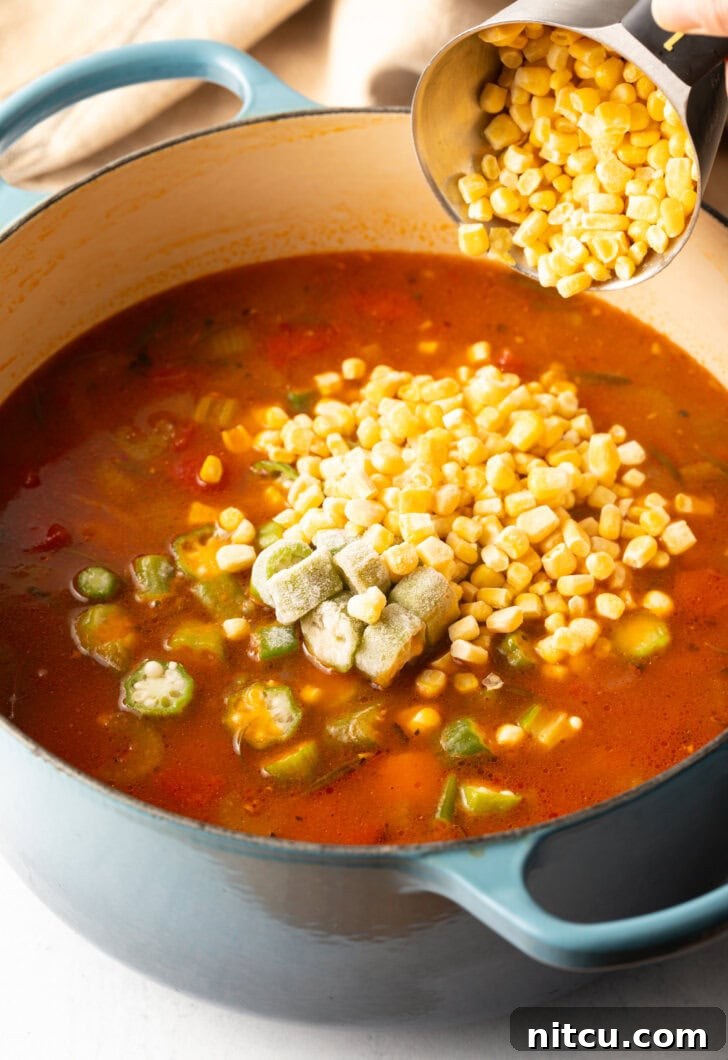
- Add Frozen Vegetables and Final Simmer: After the initial 20 minutes of simmering, remove the lid from the pot. Stir in the frozen chopped okra (or green beans) and the frozen sweet corn, along with the fresh chopped parsley. Continue to simmer the stew uncovered for another 5 to 10 minutes. This allows the frozen vegetables to cook through and become tender, and the stew to thicken slightly to your desired consistency.
- Taste and Season: Once the vegetables are tender, it’s time to taste your stew. Adjust the seasoning by adding salt and freshly ground black pepper as needed to enhance the flavors. Different vegetable bases and canned tomatoes can vary in their sodium content, so tasting and adjusting is key.
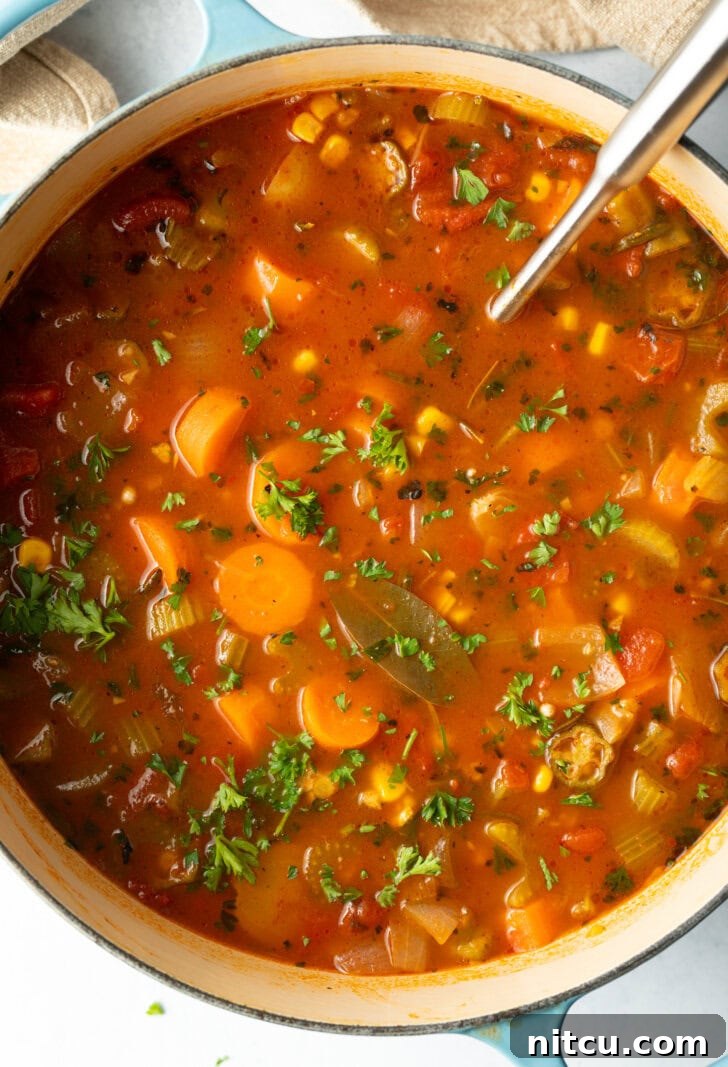
- Serve Warm: Before serving, remember to carefully remove and discard the bay leaves and the rosemary stem. Ladle the rustic vegetable stew into bowls and serve it nice and warm. Its rich aroma and hearty texture are sure to delight everyone at your table.
Customizing Your Vegetable Stew: Delicious Recipe Variations
One of the best aspects of this homemade vegetable stew is its incredible adaptability. Feel free to unleash your creativity and tailor the recipe to your taste preferences, dietary needs, or what you have on hand. Here are some fantastic ways to vary your stew:
- Butter for Oil: For a richer flavor profile, you can swap olive oil for butter. If you’re keeping the recipe strictly vegan, opt for a high-quality plant-based butter. If dairy is not an issue, regular dairy butter will add a lovely depth.
- Alternative Soup Base: While vegetable base is preferred for its concentrated flavor, you can certainly use other bouillon types. Beef bouillon or beef broth can be used if you’re not aiming for a vegan dish and desire a deeper, meatier undertone. Just be mindful of the sodium content and adjust accordingly.
- Green Beans for Okra: If okra isn’t a favorite or isn’t available, frozen green beans make an excellent substitute. They offer a similar tender-crisp texture and a familiar, comforting flavor that complements the other vegetables perfectly.
- Other Vegetable Additions: This stew is a canvas for your favorite vegetables! Consider swapping in or adding fresh chopped parsnips for a touch of earthy sweetness, zucchini or cauliflower florets for added bulk and nutrients, or a handful of fresh spinach or kale during the last few minutes for a vibrant green boost. Chopped sweet potatoes can replace or supplement regular potatoes for a different flavor and color. Frozen peas or a convenient bag of mixed frozen vegetables are also quick and easy additions.
- Pasta Power-Up: Transform this hearty stew into something reminiscent of a minestrone soup by adding small pasta shapes. Ditalini, elbow macaroni, or small shells work wonderfully. Add them to the pot about 8-10 minutes before serving, allowing enough time for the pasta to cook al dente in the simmering broth.
- Legume Boost: For an extra dose of plant-based protein and fiber, stir in a can of cooked white beans (like cannellini or navy beans) or chickpeas, rinsed and drained. Add them during the final simmering stage to heat through.
- Add Meat for a Heartier Meal: If you’re catering to meat-eaters or simply want to add more protein, this stew is incredibly receptive to cooked meat. Shredded leftover chicken, diced cooked beef, or even turkey can be stirred in during the last 10 minutes of cooking to warm through, turning it into a truly robust meat and vegetable stew.
Perfect Pairings and Serving Ideas for Your Veggie Stew
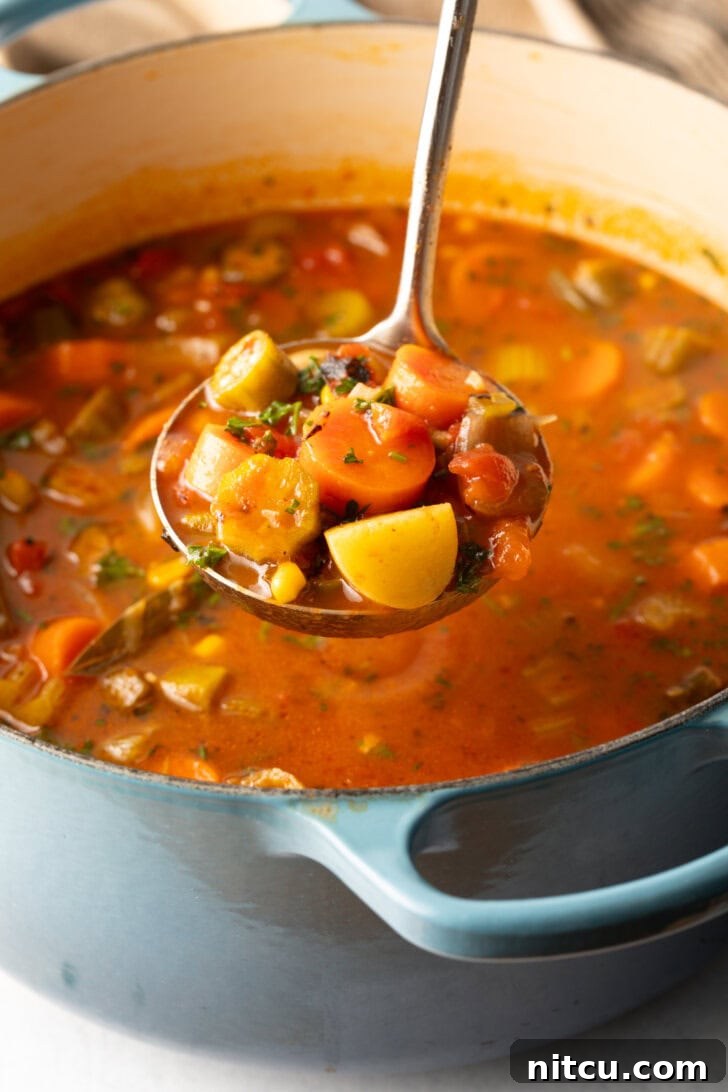
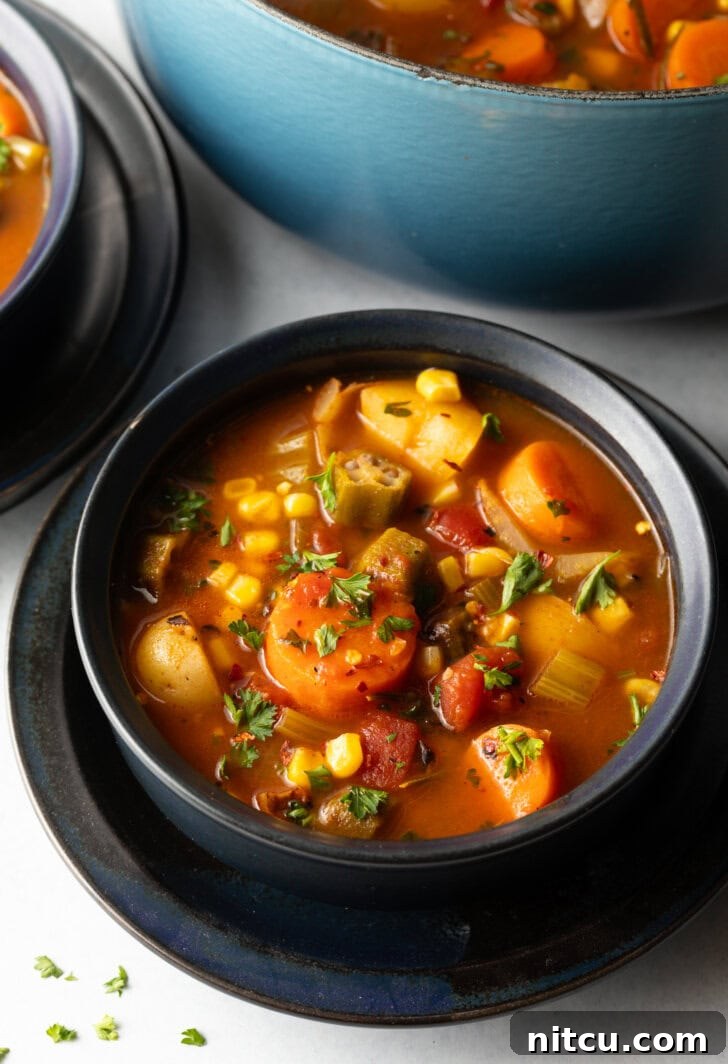
Once your rustic vegetable stew is perfectly simmered and seasoned, you’re ready to enjoy a truly satisfying meal. Remember to first remove the bay leaves and the rosemary stem before serving. Ladle the hearty vegetable soup into bowls, ensuring everyone gets a generous portion of those tender, flavorful vegetables.
For an elevated dining experience, consider these delightful serving suggestions:
- Crusty Bread or Homemade Breadsticks: Nothing complements a rich, tomato-based veggie soup better than a substantial piece of crusty artisan bread or warm, homemade breadsticks. The perfect accompaniment for soaking up every last drop of the savory broth, this satisfying stew was truly made for dunking! Consider a garlic bread or a sourdough loaf for an extra flavor kick.
- Fresh, Vibrant Salad: Can’t get enough veggies? Balance the warmth and richness of the stew with a crisp, refreshing side salad. A simple chopped salad featuring romaine lettuce and your favorite fresh vegetables—like cucumbers, bell peppers, and cherry tomatoes—all tossed together in a light Greek, classic Italian, or creamy Caesar dressing, provides a wonderful contrast in textures and flavors.
- Garnish with Fresh Herbs: A sprinkle of fresh chopped parsley or a few fresh thyme leaves before serving adds a beautiful pop of color and an extra layer of fresh aroma.
- Dollop of Creaminess: For those who enjoy a creamy element, a dollop of vegan sour cream or a swirl of plain plant-based yogurt can add a lovely tang and richness.
- Meal Prep Powerhouse: This vegetable soup recipe is absolutely terrific to make in a large batch. It’s an ideal candidate for weekly lunch meal preps, as it reheats beautifully and the flavors tend to deepen even more overnight. Pack individual portions for a healthy, ready-to-eat meal throughout the week.
Frequently Asked Questions About Homemade Vegetable Stew
Our homemade vegetable stew achieves its incredibly delicious and savory taste from a combination of factors. The robust, concentrated vegetable base (bouillon paste) forms the backbone of the broth, providing intense umami. This is then layered with a generous amount of dried spices like smoked paprika and fresh herbs such as rosemary and parsley. These ingredients work in harmony to elevate the natural sweetness and earthy flavors of the fresh and frozen vegetables, creating a wonderfully zesty and deeply satisfying stew.
For this particular rustic vegetable stew recipe, there’s no need to pre-cook most of the vegetables beforehand. It’s designed as a convenient one-pot meal. We start by briefly sautéing the onion and garlic with carrots and celery to build a flavor base. After this initial sauté, all the remaining fresh, canned, and frozen vegetables are added directly to the pot to simmer together, allowing all the flavors to meld beautifully as they cook to tender perfection.
Leftovers of this homemade vegetable stew are incredibly scrumptious and often taste even better the next day as the flavors have more time to deepen and meld. Properly stored, the stew will last for up to 4-5 days in the refrigerator. Ensure you allow the soup to cool completely to room temperature before transferring it to an airtight container. Refrigerate promptly to maintain freshness and safety.
Yes, this homemade vegetable soup freezes exceptionally well, making it perfect for future meals. We highly recommend making a large batch of this recipe at once – enjoy half for dinner tonight and freeze the other half to savor later. To freeze, first ensure the soup has cooled completely. Then, transfer it to an airtight, freezer-safe container. For an extra layer of protection against freezer burn, you can wrap the container in a layer or two of aluminum foil. The stew can be kept in the freezer for up to 3 months. When you’re ready to enjoy it, simply thaw it in the refrigerator overnight before gently rewarming it on the stovetop.
The best vegetables for a hearty stew are those that hold their shape and flavor well during simmering. Root vegetables like carrots, potatoes, and parsnips are excellent choices. Hearty greens like kale or spinach, cruciferous vegetables like broccoli or cauliflower florets, and alliums like onions and garlic form a great base. Adding sweeter elements like corn or bell peppers, and acidic components like diced tomatoes, creates a balanced and delicious flavor profile, as demonstrated in our Rustic Vegetable Stew.
Absolutely! This recipe adapts beautifully to a slow cooker for an even more hands-off approach. To do so, you can still start by sautéing the onion, garlic, carrots, and celery on the stovetop for 2-3 minutes to build flavor, then transfer them to the slow cooker. Alternatively, you can add all the ingredients (except for the frozen corn, okra, and fresh parsley) directly to the slow cooker. Cook on low for 6-8 hours or on high for 3-4 hours, or until the vegetables are tender. Stir in the frozen corn, okra, and fresh parsley for the last 30 minutes of cooking. Taste and adjust seasonings before serving.
Looking for More Scrumptious Soup Recipes? Explore These Favorites:
If you loved this Rustic Vegetable Stew, you’re in for a treat! We have a wide array of other delightful soup recipes that are perfect for any season or craving. Be sure to also try:
- Creamy Roasted Tomato Soup with Basil
- Hearty Vegetarian Navy Bean Soup
- Authentic Greek Lemon Chicken Soup
- Healthy Vietnamese Pho Soup Recipe (Low Carb Option)
- Flavorful Lemon Lentil Soup with Fennel
- Easy Instant Pot Black Bean Soup

Print Recipe
★
★
★
★
Leave a Review »
Homemade Vegetable Soup Recipe
Ingredients
- 2 tablespoons olive oil or plant-based butter
- 1 ½ cup chopped sweet onion
- 3-4 cloves garlic minced
- 2 cups chopped carrots
- 1 cup chopped celery
- 3 cups chopped baby potatoes
- 2 – 15 ounce cans diced fire-roasted tomatoes
- 2 tablespoons + 2 teaspoons vegetables base
- 6 cups water
- 2-3 bay leaves
- 1 sprig fresh rosemary
- 1 teaspoon smoked paprika
- ¼ – ½ teaspoon crushed red pepper
- 2 cups frozen chopped okra or green beans
- 1 ½ cups frozen sweet corn
- ¼ cup chopped parsley
Instructions
-
Chop the onions, carrots, celery, and potatoes into ¾ to 1-inch pieces. Mince the garlic, and chop the fresh parsley.
-
Set a large 6-8 quart soup pot (or Dutch oven) over medium heat. Add the olive oil. Once hot, add the chopped onion, garlic, carrots, and celery. Stir and sauté for 2 to 3 minutes to soften the onions and garlic.
-
Then add the chopped potatoes, canned tomatoes and juices, vegetable base, water, bay leaf, rosemary, smoked paprika, and crushed red pepper. Stir and cover. Bring to a boil. Simmer the soup, covered, for 20 minutes. Stir occasionally.
-
Remove the lid, and stir in the frozen okra, sweet corn, and chopped parsley. Simmer uncovered for another 5 to 10 minutes, until veggies are tender. Taste, then add salt and pepper as needed. Remove the bay leaves and rosemary stem. Serve warm.
Notes
- I prefer using soup base, a.k.a. bullion paste, instead of broth. The reason for this is you can add extra vegetable base to the soup without adding additional liquid. This concentrates the vegetable broth’s flavor. You can buy vegetable base in the broth section of most major grocery stores.
- Leftovers are scrumptious and last for up to 4-5 days! Let the soup cool completely before transferring to an airtight container and keeping it in the fridge.
- To freeze: Cool the soup and transfer it to an airtight freezer-safe container. Wrap the container in a layer or two of aluminum foil for extra protection. Keep in the freezer for up to 3 months; thaw in the fridge overnight before rewarming on the stovetop.