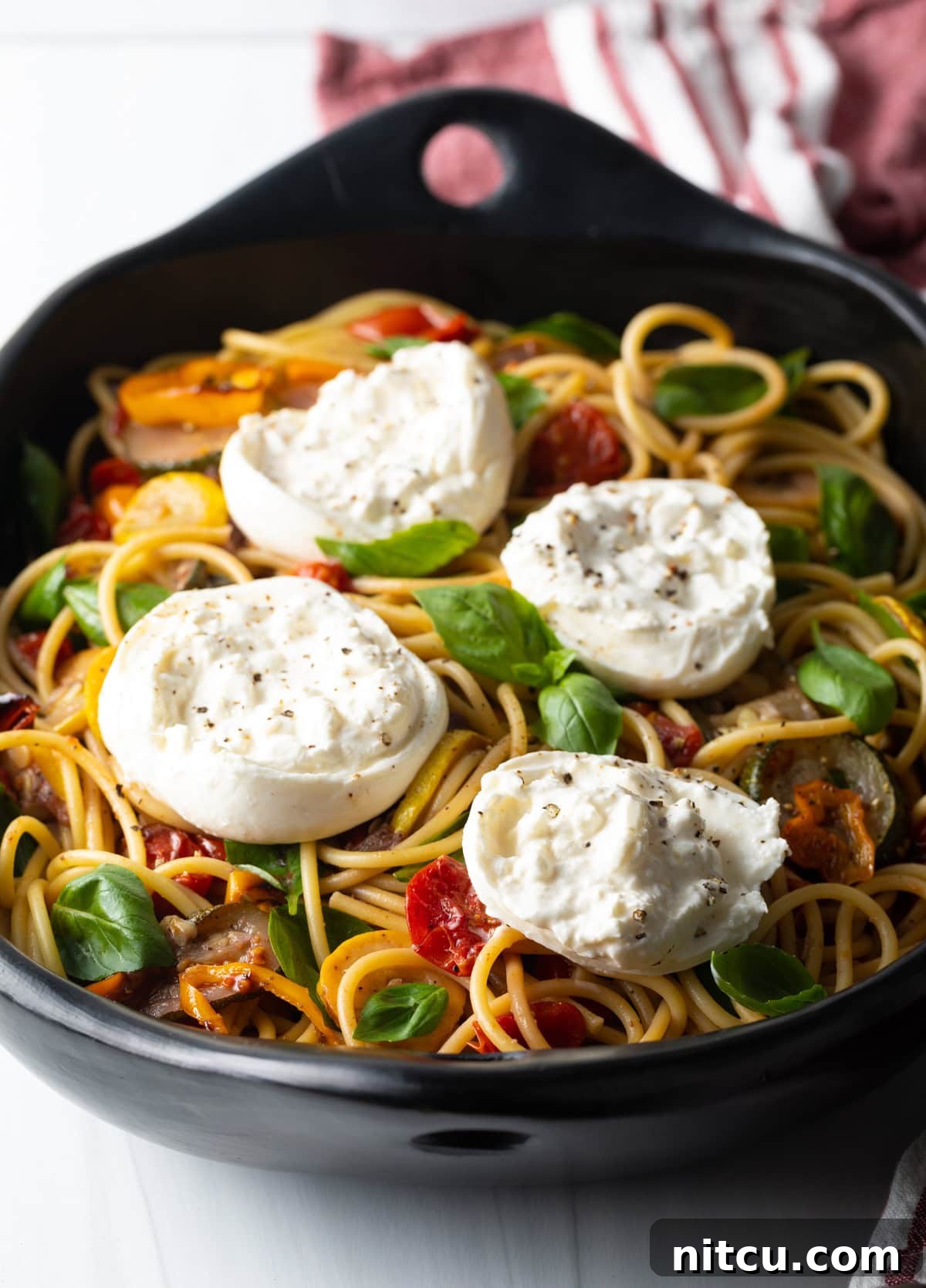
Experience the delightful fusion of fresh flavors and creamy textures with our easy Summer Burrata Pasta with Roasted Vegetables. This vibrant dish features tender pasta tossed with perfectly roasted zucchini, juicy tomatoes, and aromatic garlic, all brought to life with a hint of red wine and fresh basil. Crowned with generous dollops of luscious burrata cheese, this recipe promises a simple yet exceptionally flavorful meal that’s hearty enough for dinner but light enough for the warmer months.
Why You’ll Love This Easy Burrata Pasta Recipe
There’s something truly magical about the combination of savory roasted vegetables and perfectly cooked pasta, especially when it forms the perfect canvas for the star of the show: creamy, luxurious burrata cheese. This isn’t just another pasta dish; it’s an experience in contrasting textures and harmonious flavors that will quickly become a summer staple in your kitchen.
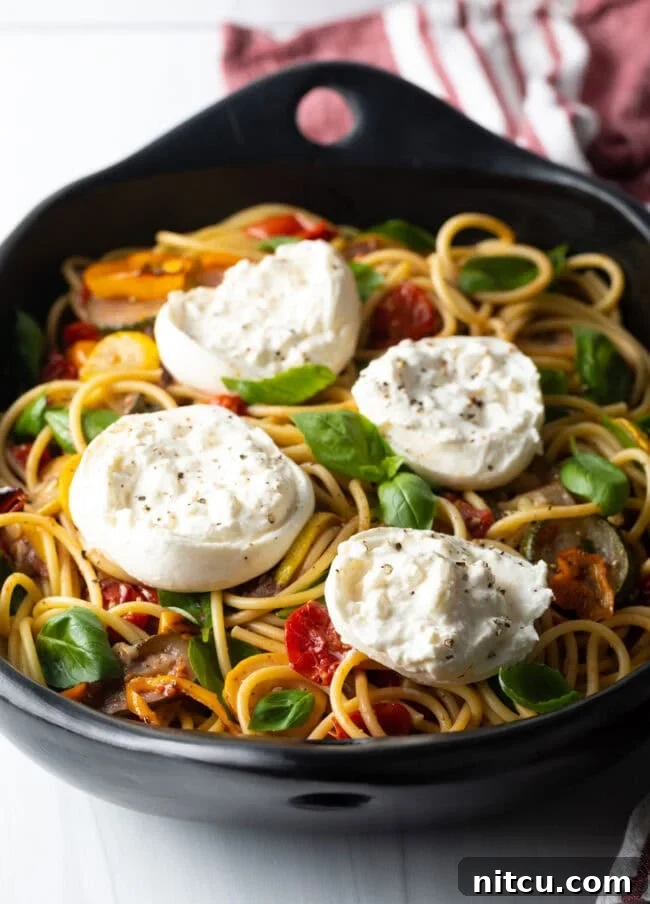
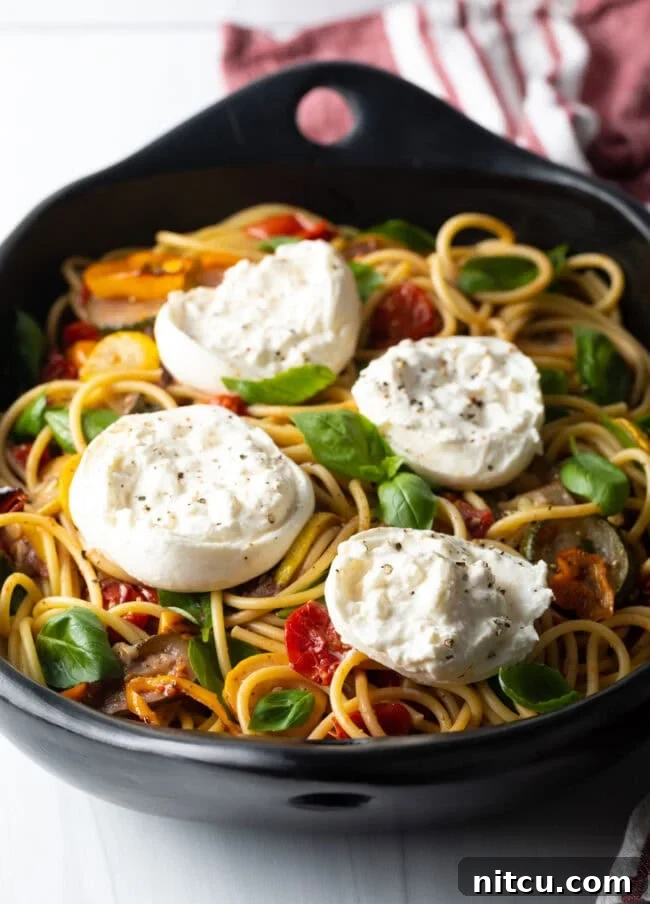
Our fabulous Easy Burrata Pasta recipe is designed for simplicity without compromising on taste. It features a delightful medley of seasonal vegetables, roasted to perfection, creating a rich and aromatic pan sauce infused with fragrant garlic, a splash of red wine, and a generous drizzle of olive oil. This simple roasting method not only deepens the flavors of the vegetables but also creates a naturally delicious sauce that clings beautifully to every strand of pasta. Whether you prefer classic spaghetti, the hollow delight of bucatini, or the broad ribbons of fettuccine, this dish adapts effortlessly. Finally, it’s crowned with generous chunks of fresh, soft burrata, which slowly melts into the warm pasta, adding an unparalleled creaminess and indulgence. It’s a summer dish that feels substantial and satisfying, yet surprisingly light.
Beyond its incredible taste, this burrata pasta stands out for its versatility and health benefits. Packed with seasonal vegetables, it’s a great way to enjoy nature’s bounty. The roasting process enhances the natural sweetness of tomatoes and zucchini, making even picky eaters fall in love with their veggies. It’s also incredibly quick to prepare, making it ideal for busy weeknights or impromptu gatherings. This recipe perfectly embodies the essence of effortless entertaining: delicious food, minimal fuss, and maximum enjoyment.
Burrata vs. Mozzarella: What’s the Difference?
While often compared, burrata and mozzarella are distinct Italian cheeses, each with its unique charm. Mozzarella, particularly fresh mozzarella, is a firmer cheese with a delicate, milky flavor that holds its shape well, making it ideal for slicing in salads or melting on pizzas. Its texture is consistent throughout, offering a satisfying chew.
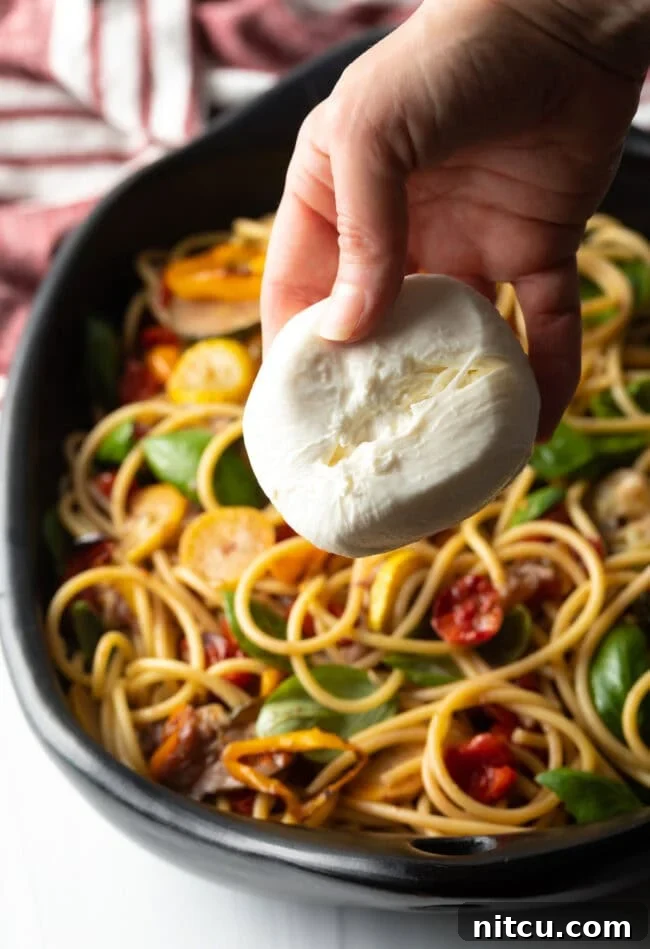
Burrata, on the other hand, is a more luxurious and indulgent cheese. Meaning “buttered” in Italian, burrata is essentially a pouch of fresh mozzarella filled with a rich, creamy mixture of stracciatella (shreds of mozzarella) and cream. This gives burrata a dual texture: a firm, elastic outer shell similar to mozzarella, encasing an incredibly soft, buttery, and decadent interior that oozes out when cut. Its flavor is wonderfully milky and slightly sweet, with a richness that sets it apart. While it tastes very similar to mozzarella, burrata’s unique creamy core elevates any dish it graces, providing a luscious counterpoint to other ingredients, as seen in this delightful pasta recipe.
Essential Ingredients for This Delicious Pasta
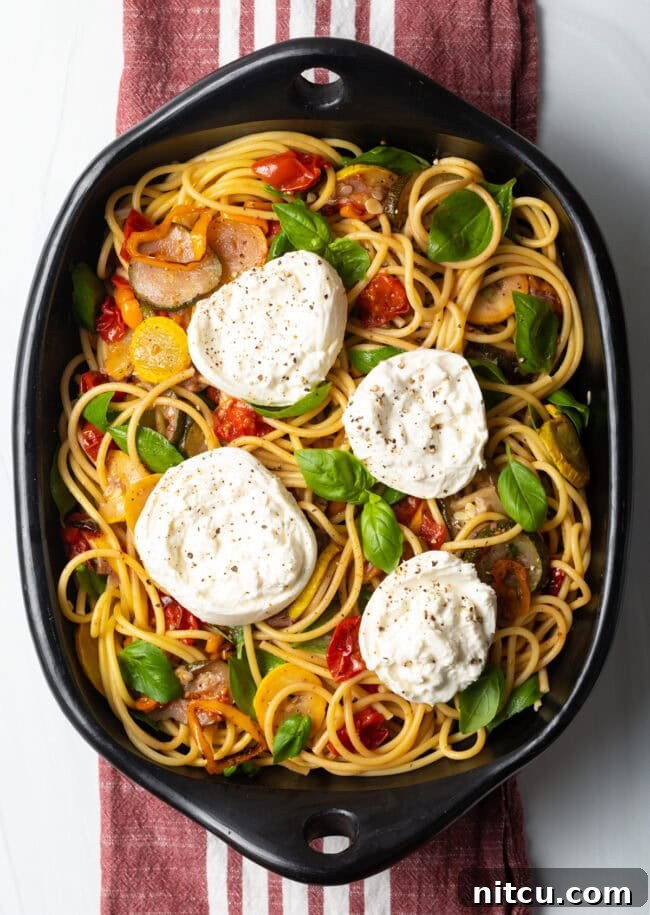
Crafting this incredible Burrata Pasta with Roasted Vegetables requires a selection of fresh, high-quality ingredients. The beauty of this recipe lies in its simplicity, allowing the natural flavors of each component to shine through. Here’s what you’ll need:
- Cherry Tomatoes: Approximately 12 ounces, halved. These small, sweet tomatoes burst with flavor when roasted, creating a natural juiciness for the sauce. Grape tomatoes work equally well.
- Zucchini: One medium zucchini, thinly sliced. Zucchini adds a delicate texture and absorbs the flavors of the roasting pan beautifully.
- Summer Squash: One medium summer squash, thinly sliced. Similar to zucchini, summer squash offers a mild sweetness and vibrant color.
- Mini Bell Peppers: About 1 cup, sliced. These add a pleasant crunch, a touch of sweetness, and a lovely pop of color to the dish. Any color combination works perfectly.
- Garlic: One whole head with skin. Roasting an entire head of garlic transforms its pungent raw flavor into a sweet, mellow, and spreadable delight that forms the aromatic backbone of the sauce.
- Olive Oil: 3 tablespoons. A good quality extra virgin olive oil is essential for roasting the vegetables, imparting a rich, fruity base. You can also use another high-heat, neutral-flavored oil if preferred.
- Red Wine: ½ cup. A light red wine like Pinot Noir adds depth and complexity to the pan sauce, deglazing the baking sheet and capturing all those caramelized vegetable bits. Choose a wine you enjoy drinking!
- Spaghetti: 16 ounces. Classic spaghetti is fantastic for twirling and soaking up the sauce. However, feel free to use your preferred pasta shape, such as bucatini, fettuccine, penne, or farfalle.
- Burrata Balls: 8 ounces, typically two standard balls, split in half. This is the star! Its creamy interior will meld with the warm pasta and vegetables, creating an unctuous, dreamy texture.
- Fresh Basil: 1 cup, fresh leaves, left whole or roughly torn. Basil adds a burst of aromatic freshness, complementing the tomatoes and cheese perfectly. Do not substitute with dried basil.
- Salt and Pepper: To taste. Essential for seasoning the vegetables during roasting and the final dish. Freshly cracked black pepper is always recommended.
Pro Tip for Customization: The beauty of this burrata pasta recipe is its flexibility. You can easily swap and use any fresh summer vegetables you adore! Consider adding roasted asparagus, earthy mushrooms, or tender eggplant slices. The key is to slice all your chosen vegetables thinly and uniformly to ensure they roast evenly and cook through at the same time, maximizing flavor and texture.
Where to Find Burrata Cheese
Burrata cheese, once a specialty item, is now widely available due to its growing popularity. You can typically find this exquisite cheese at most major chain grocery stores and, of course, at specialty Italian markets or gourmet food stores. Look for it in the fresh cheese section, usually near other fresh mozzarella, ricotta, and often artisanal dairy products. It’s usually packaged in a brine or water to maintain its freshness and creamy texture. When selecting, look for a sell-by date that gives you a few days to enjoy it fresh, as burrata is best consumed shortly after purchase for optimal flavor and creaminess.
How to Make Burrata Pasta with Roasted Veggies
Creating this flavorful Burrata Pasta is straightforward, allowing you to enjoy a gourmet-quality meal with minimal effort. Follow these simple steps for a truly delicious result:
-
Step 1: Prepare and Roast the Vegetables
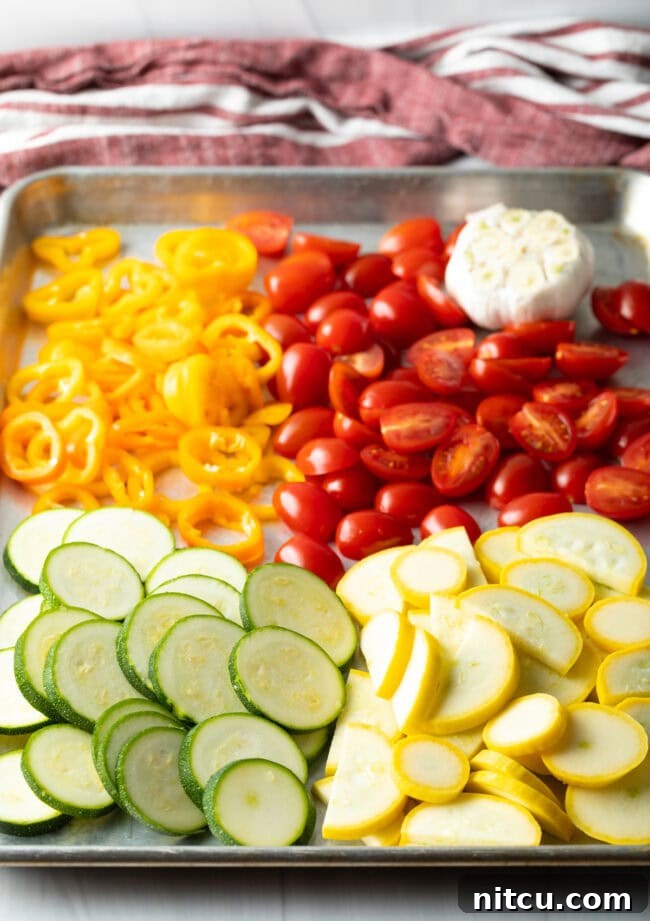
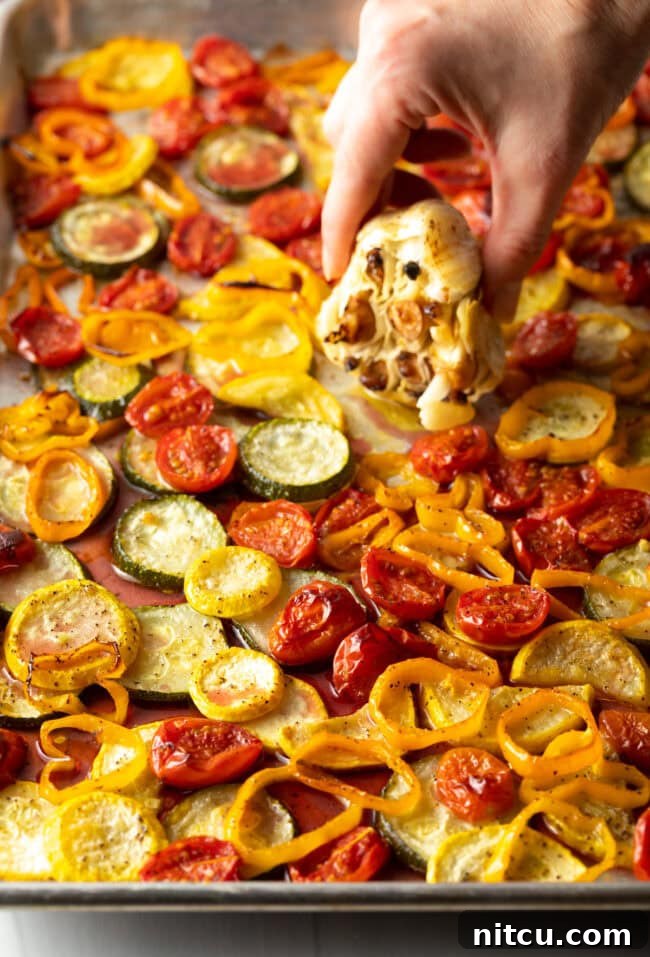
Preheat your oven to a robust 400°F (200°C). Begin by preparing your fresh produce: halve the cherry tomatoes, thinly slice the zucchini and summer squash, and slice the mini bell peppers. Spread all these vibrant vegetables evenly across a large, rimmed baking sheet. Take your head of garlic, trim off the very top to expose the cloves, and place it on the baking sheet alongside the other vegetables. Drizzle the entire sheet generously with olive oil, ensuring all the vegetables and the garlic head are well coated. Season them liberally with 1 teaspoon of salt and ½ teaspoon of freshly cracked black pepper. This initial seasoning is crucial for building layers of flavor. Place the baking sheet into the preheated oven.
-
Step 2: Continue Roasting and Deglaze with Wine

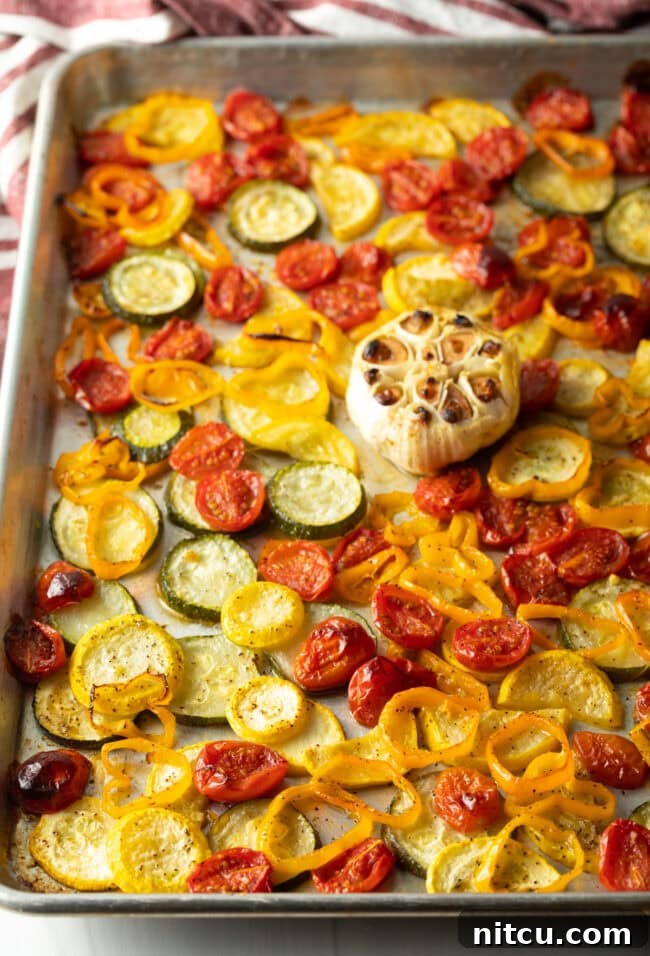
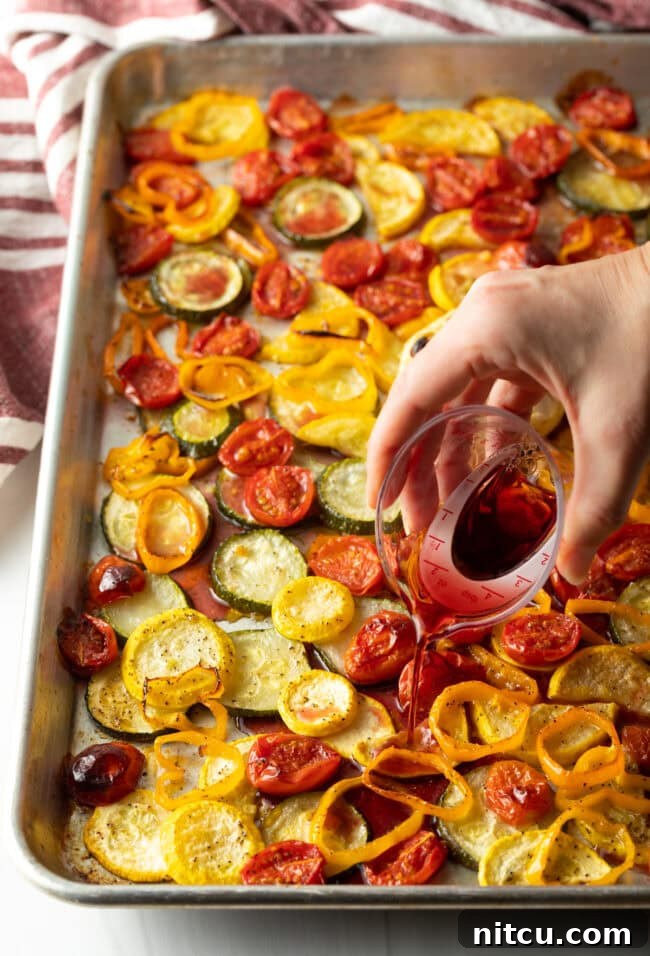
Roast the vegetables for an initial 30-35 minutes. During this time, they will soften, caramelize slightly, and their flavors will intensify. After the initial roasting period, carefully remove the sheet from the oven. Gently flip the vegetables over with a spatula to ensure even cooking and browning, spreading them out into an even layer once more. Now, pour the ½ cup of red wine directly over the vegetables on the baking sheet. The wine will immediately begin to deglaze the pan, picking up all the delicious browned bits from the bottom. Return the sheet to the oven and roast for an additional 5 to 10 minutes, allowing the wine to reduce and infuse the vegetables with its rich flavor.
-
Step 3: Cook the Pasta
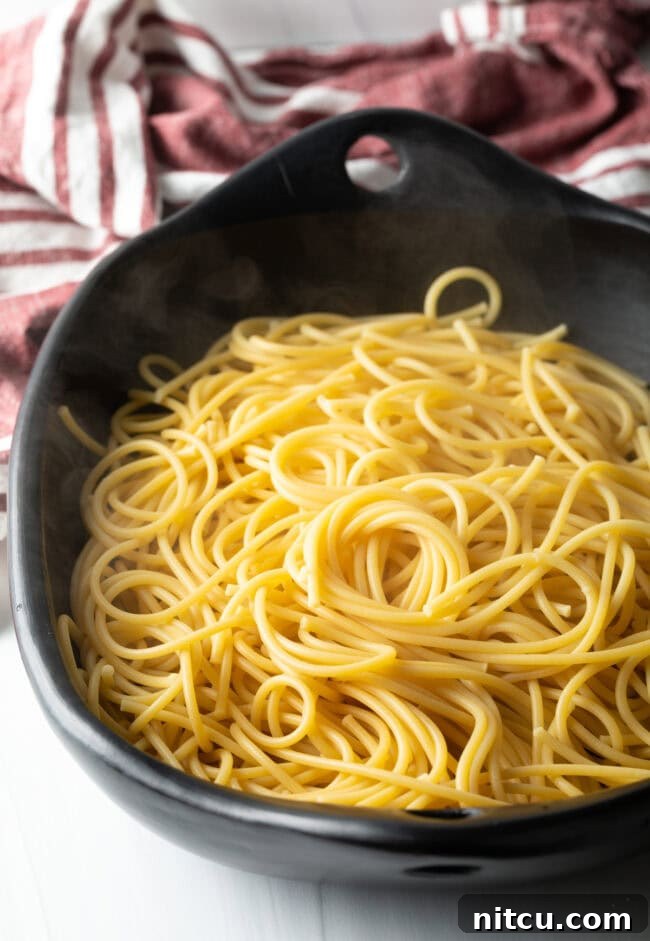
While the vegetables are roasting, bring a large pot of heavily salted water to a rolling boil over high heat. The salt in the water is crucial for seasoning the pasta from the inside out. Once boiling, add your chosen pasta (spaghetti, bucatini, fettuccine, etc.) and cook according to the package directions until it reaches a perfect al dente texture – tender but with a slight bite. Before draining the pasta, remember to scoop out about ½ cup of the starchy pasta water. This “liquid gold” is invaluable for loosening the sauce and helping it emulsify later. Drain the pasta thoroughly and transfer it immediately to a large serving bowl or a spacious, rimmed platter.
-
Step 4: Combine Pasta and Roasted Vegetables
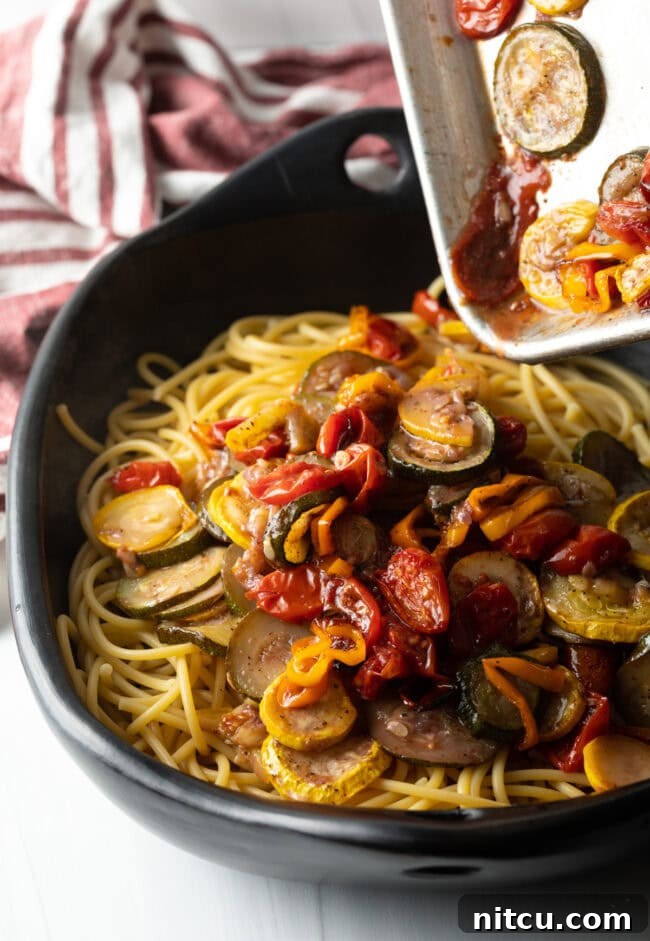
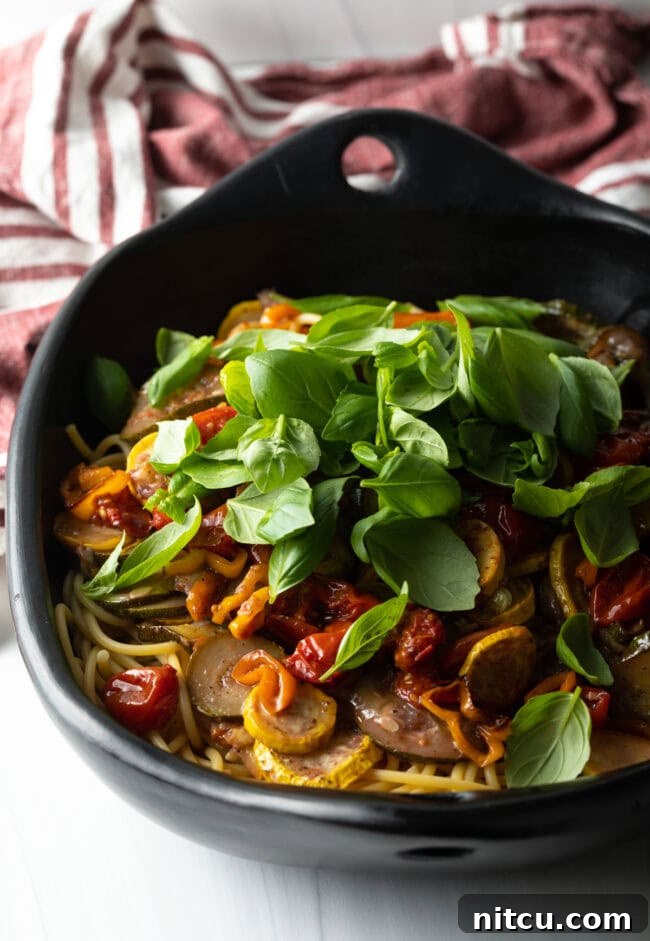
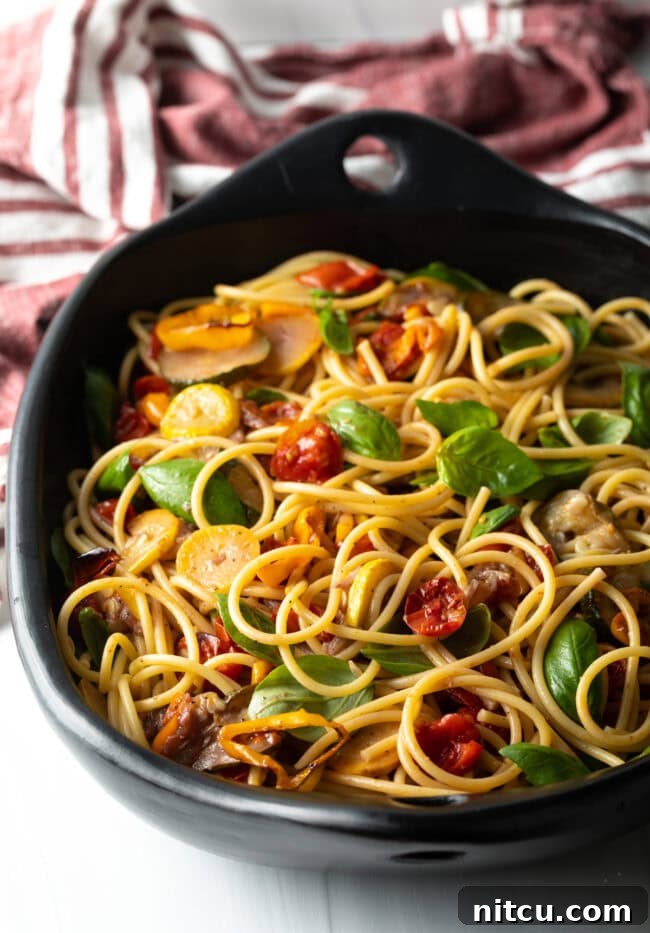
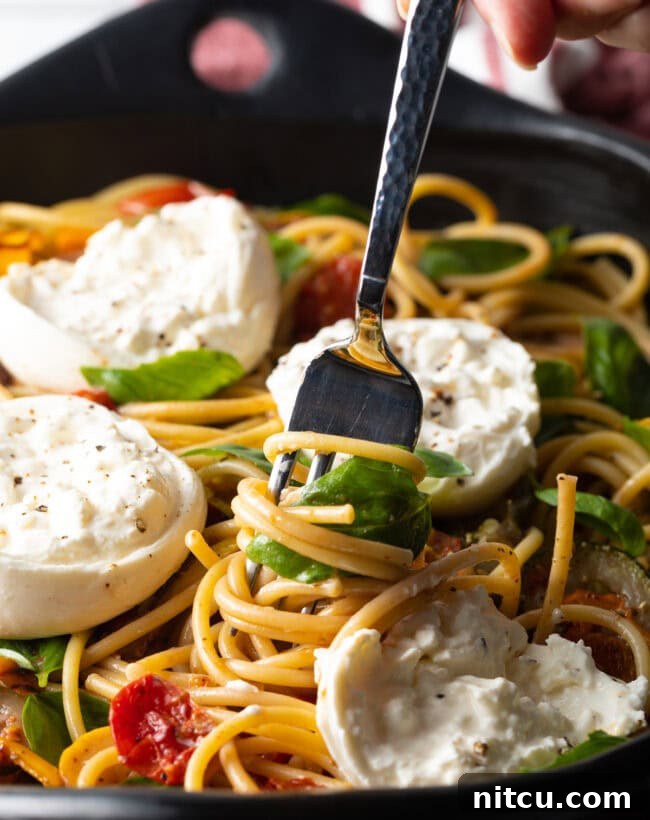
As soon as the roasted vegetables are out of the oven, their aromas filling your kitchen, carefully squeeze the soft, caramelized garlic cloves out of their papery skins directly over the sheet pan. The roasted garlic will be incredibly tender and sweet. Scoop all the roasted vegetables and the garlic (along with any delicious pan juices created by the wine and olive oil) over the cooked pasta in the serving bowl. Then, generously scatter the fresh basil leaves over the top. Gently toss the pasta, vegetables, and basil together, ensuring the pasta is thoroughly coated with the flavorful sauce and the vegetables are evenly distributed. If the sauce seems a little too thick, add a small splash of the reserved pasta water, a tablespoon at a time, until it reaches your desired consistency.
-
Step 5: Add Burrata and Serve
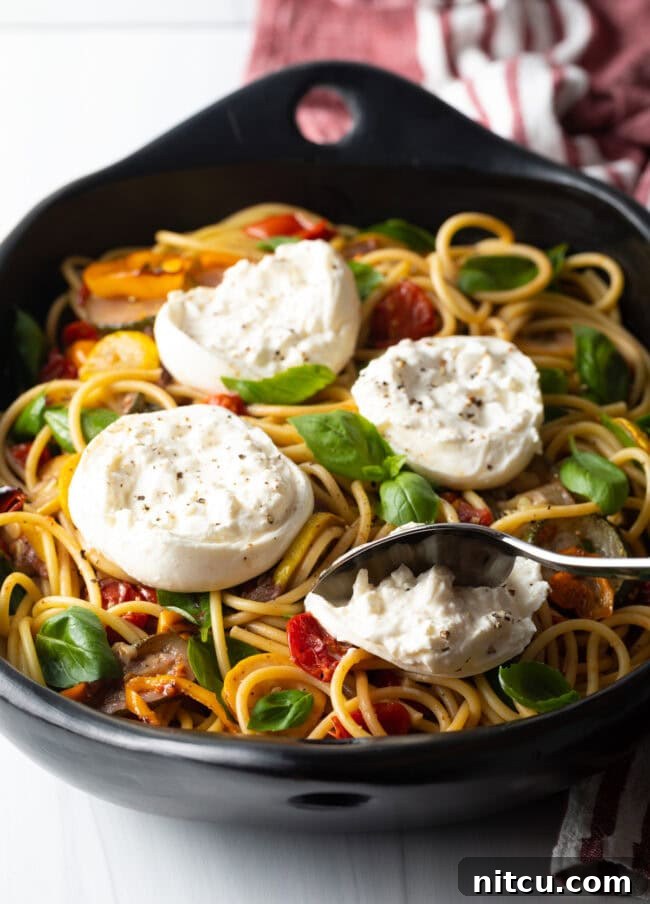
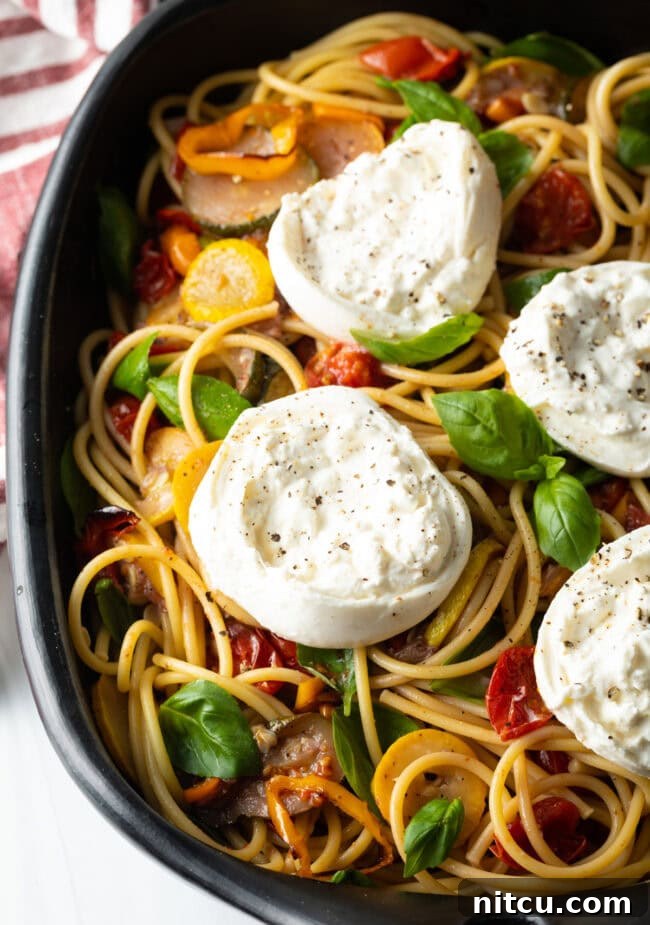
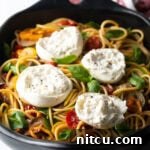
The grand finale! Carefully break the burrata balls in half, revealing their wonderfully soft, creamy interiors. Arrange these exquisite halves strategically over the top of the warm pasta. The residual heat from the pasta and vegetables will gently warm the burrata, causing its creamy core to become even more luscious and slightly melt, creating a dreamy, unctuous texture. Finish the dish by sprinkling the burrata balls with a final touch of salt and pepper. Serve immediately, allowing each guest to scoop up a portion of pasta, vegetables, and a generous piece of the melting burrata. Enjoy this vibrant and comforting meal while it’s warm and the burrata is at its peak creaminess!
Serve Suggestions for Your Burrata Pasta
This Burrata Pasta with Roasted Vegetables is a complete and satisfying meal on its own, but it also pairs beautifully with a variety of Italian-inspired sides to create a more elaborate dining experience. Serve it warm and watch it disappear!
For a refreshing addition, especially during the warmer months, pair this hearty dish with a light and crisp salad. A classic Caesar salad with its tangy dressing and crunchy croutons offers a lovely contrast, or opt for a simple green salad dressed with a bright, homemade balsamic vinaigrette. The freshness of the greens will cut through the richness of the burrata and roasted vegetables.
And of course, no pasta meal is truly complete without some crusty bread for soaking up every last drop of that delicious sauce. Don’t forget the breadsticks or a warm batch of garlic bread. A glass of crisp white wine, such as a Sauvignon Blanc or Pinot Grigio, or even the same light-bodied Pinot Noir used in the recipe, would complement the flavors beautifully. For a non-alcoholic option, sparkling lemonade or iced tea would be a refreshing choice.
Frequently Asked Questions About Burrata Pasta
Here are some common questions and helpful tips to ensure your Burrata Pasta with Roasted Vegetables turns out perfectly every time.
What other roasted summer vegetables can you use in this recipe?
This recipe is wonderfully adaptable! While our version uses zucchini, summer squash, mini bell peppers, and cherry tomatoes, you can absolutely customize it with any fresh, seasonal vegetables you enjoy. Fantastic additions include roasted asparagus, thinly sliced mushrooms, or tender cubes of eggplant. Feel free to experiment with corn kernels, red onion wedges, or even broccoli florets. The most important tip is to slice all your chosen vegetables thinly and uniformly to ensure they roast evenly and cook through at the same time, delivering consistent texture and flavor in every bite.
What types of pasta are best to make the dish?
Classic spaghetti is a fantastic choice for this recipe, allowing the sauce to cling beautifully to its long strands. However, many other hearty noodles and pasta shapes work equally well! Consider using bucatini, which is like a thicker spaghetti with a hole through the center, perfect for catching sauce. Fettuccine, with its broader ribbons, offers a different textural experience. For shorter pasta shapes, penne, rigatoni, or farfalle (bow-tie pasta) are excellent options, as their nooks and crannies or surfaces are great for scooping up the vegetables and creamy sauce. Choose your favorite, ensuring it’s cooked al dente.
Can you make this recipe with sautéed vegetables instead of roasted?
Yes, you can absolutely sauté the vegetables over medium-high heat on the stovetop as an alternative to roasting them in the oven. This method will still yield delicious, tender vegetables. Keep in mind that sautéing will result in a slightly different flavor profile and texture compared to roasting. Roasted vegetables tend to develop a deeper, sweeter, and more caramelized flavor, while sautéed vegetables will retain more of their fresh, bright taste. Both methods are delicious, so choose based on your preference and available time.
Does burrata cheese melt?
Indeed it does, and beautifully so! When placed on warm pasta and vegetables, the fresh burrata cheese will become wonderfully soft and exquisitely creamy. While it won’t melt into a completely liquid state like shredded mozzarella might, its luscious stracciatella and cream interior will gently warm and ooze out when broken, mingling with the hot pasta and forming a rich, velvety sauce. This characteristic “melt” is what makes burrata such a coveted ingredient in warm dishes, adding an incredible indulgence and mouthfeel.
How long does leftover pasta with burrata last in the fridge?
The pasta tossed with the roasted summer vegetables will keep well in an airtight container in the refrigerator for up to 3 days. For the best quality and texture, especially of the burrata, we highly recommend storing the burrata cheese in a separate container from the pasta and vegetables. When ready to enjoy leftovers, reheat the pasta and vegetables gently on the stovetop or in the microwave, then add fresh (or separately stored) burrata just before serving. This ensures the burrata maintains its optimal creaminess and fresh taste.
Looking for More Summer Pasta Recipes?
If you’ve fallen in love with the ease and freshness of this Burrata Pasta, you’ll be thrilled to explore more delightful pasta dishes perfect for summer and beyond. Here are some of our favorites:
- Italian Summer Pasta Salad with Orange and Basil: A bright and zesty salad.
- Greek Orzo Pasta Salad with Lemon Vinaigrette: Refreshing and full of Mediterranean flavors.
- Basil Pesto Chicken Pasta: A classic comfort dish bursting with fresh basil.
- Creamy One-Pot Tuscan Chicken Pasta: Rich and savory, a complete meal in one pot.
- Tuna Pasta Salad with Olives and Capers: A savory and briny option for a light meal.
- Balsamic Roasted Cherry Tomatoes (with Pasta): Simple yet profound flavors from roasted tomatoes.
- Skinny Pasta Primavera: A lighter take on a vegetable-packed pasta classic.
- Garlic Butter Noodles: The ultimate simple and comforting side dish or light meal.
5 stars (5 reviews)
Burrata Pasta with Roasted Summer Vegetables
15
minutes
45
minutes
1
hour
4
– 6 servings
Ingredients
-
12
ounces
cherry tomatoes
halved (or grape tomatoes) -
1
zucchini
sliced -
1
summer squash
sliced -
1
cup
sliced mini bell peppers -
1
head
garlic -
3
tablespoons
olive oil -
½
cup
red wine
preferably a light wine, like Pinot Noir -
16
ounces
dried spaghetti -
8
ounces
burrata balls -
1
cup
fresh basil leaves - Salt and pepper
Instructions
-
Preheat the oven to 400°F. Chop the fresh produce and spread it out on a large rimmed baking sheet. Trim off the top of the head of garlic so the cloves are exposed. Place the head of garlic on the baking sheet with the vegetables. Drizzle the top of the garlic and all the vegetables with olive oil. Sprinkle with 1 teaspoon of salt and 1/2 teaspoon of cracked black pepper.
-
Roast the vegetables for 30-35 minutes. Gently flip the vegetables over and spread them out in an even layer. Then pour the wine over the vegetables and roast another 5 to 10 minutes.
-
Meanwhile, place a large pot of salted water over high heat. Bring to a boil. Cook the pasta as directed on the package, to al dente. Before draining, scoop out ½ cup of pasta water for later use. Then drain the pasta and place it in a large serving bowl or on a rimmed platter.
-
Once the roasted vegetables come out of the oven, squeeze the soft roasted garlic cloves out of the papery skins. Scoop the roasted vegetables and garlic over the pasta, then top with fresh basil leaves. Gently toss the pasta to coat the pasta and evenly distribute the vegetables. If needed, add a little splash of pasta water to the sauce to loosen it up.
-
Break the burrata balls in half to expose the soft interiors. Place them strategically over the top of the pasta. Sprinkle the burrata balls with salt and pepper. Serve warm.
Notes
The pasta tossed with roasted summer vegetables will keep well for up to 3 days in the fridge. I recommend keeping the cheese in a separate container until ready to reheat the pasta and serve.
Nutrition
dinner, Main, Main Course, Pasta
American, Italian
Sommer Collier
Cook It? Love It? Rate It!
YOU can help this recipe RANK on Google – Share your experience! Thank you!