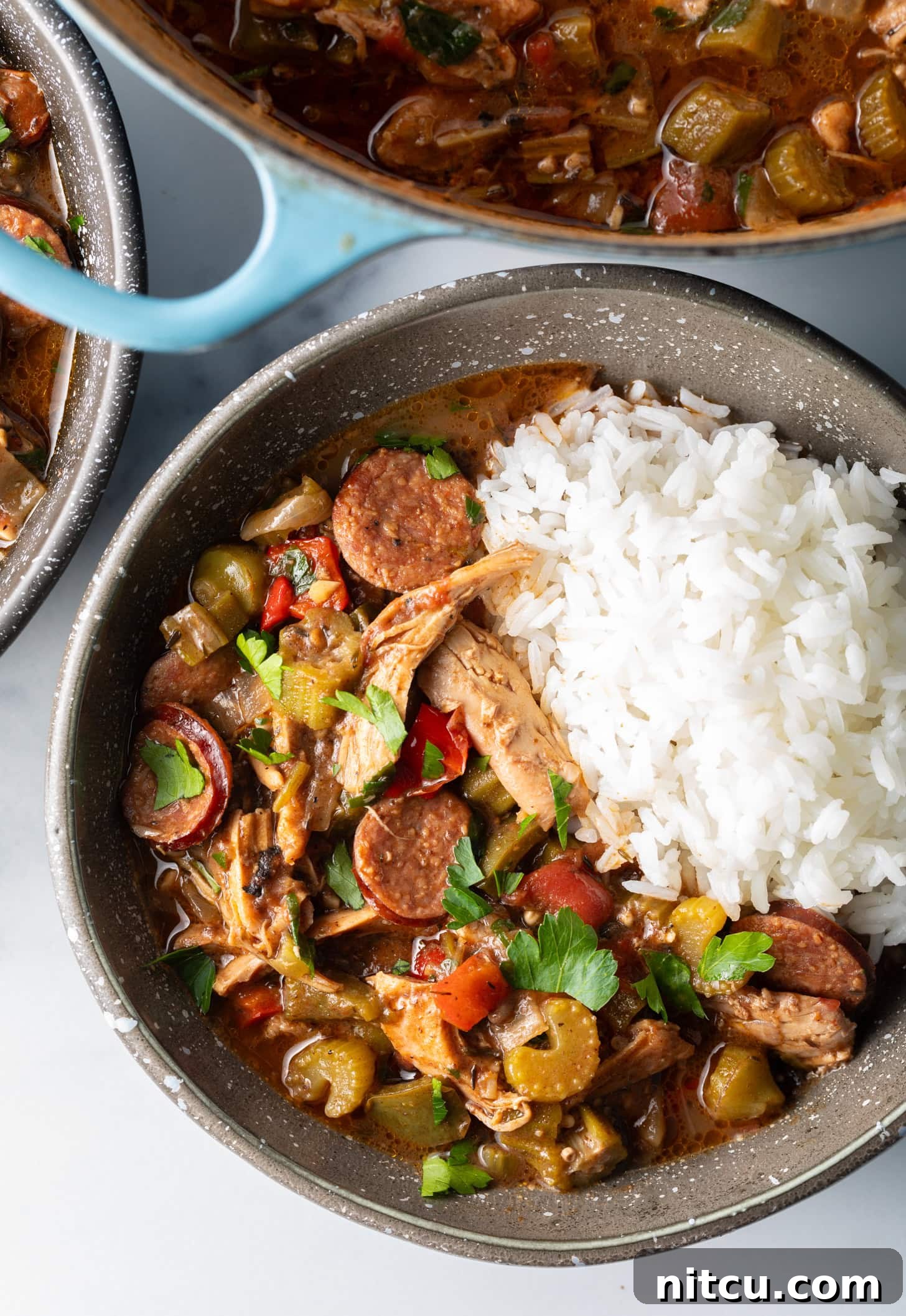
Embark on a culinary journey to the heart of Louisiana with this authentic **Chicken and Sausage Gumbo recipe**. More than just a meal, gumbo is a celebration of culture, a symphony of flavors, and a comforting staple that embodies the spirit of Southern hospitality. This beloved Cajun dish features succulent chicken and smoky andouille sausages, harmoniously simmered with a medley of fresh vegetables in a rich, deeply flavored, and subtly spicy broth. Served piping hot over a bed of fluffy white rice, it promises a truly satisfying and unforgettable dining experience that will transport your taste buds straight to the bayou.
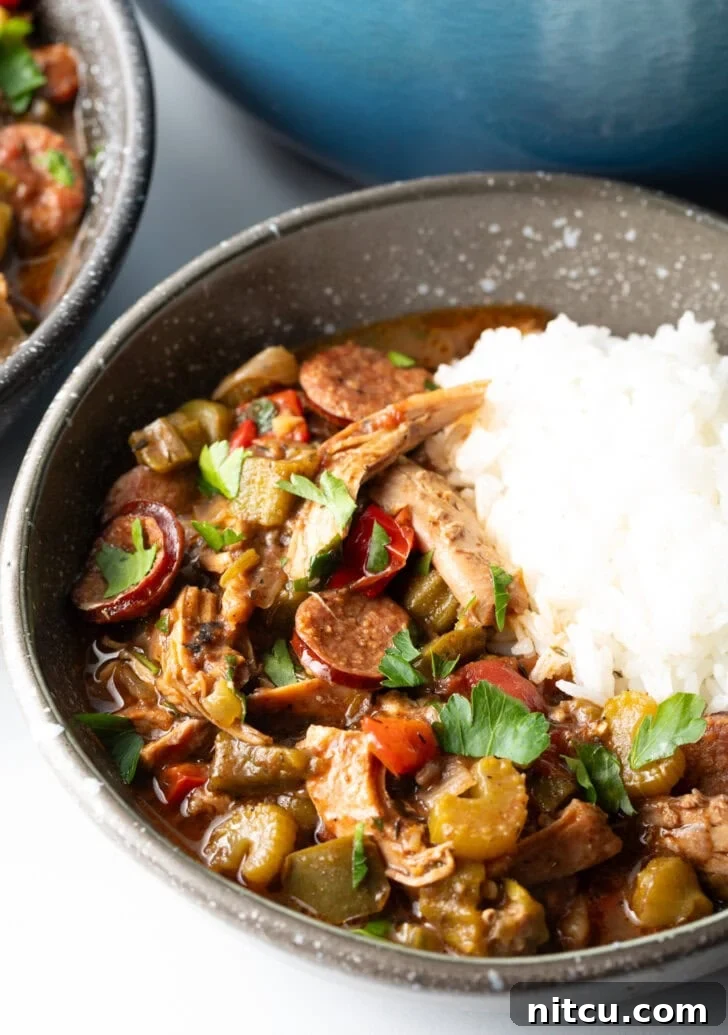
The Heart of Louisiana Cooking: Why This Gumbo Captivates
While our site proudly features a delectable New Orleans Seafood Gumbo, we understand that not everyone enjoys seafood. That’s precisely why this traditional Louisiana **Chicken and Sausage Gumbo** recipe holds a special place in our hearts. It offers all the comforting depth and robust flavors characteristic of a classic gumbo, in a way that’s approachable and incredibly satisfying. Far from complicated, this recipe proves that even the most iconic Southern dishes can be created in your own kitchen with stunning results.
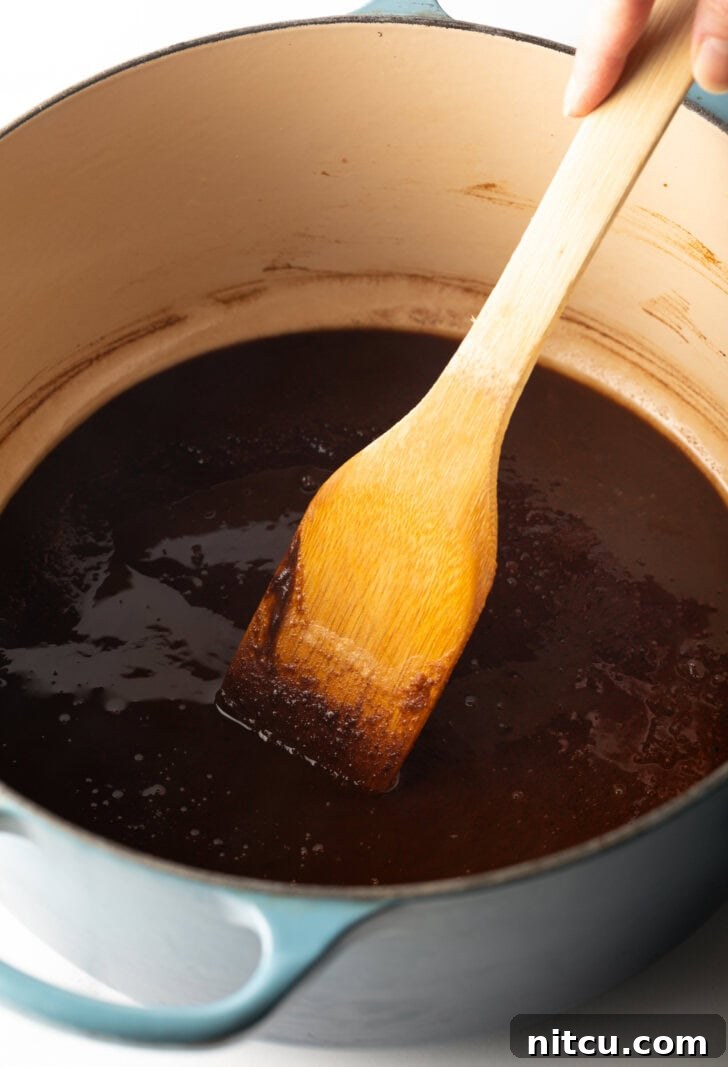
The true soul of any outstanding gumbo lies in its foundation: the **dark, rich roux**. Unlike many other recipes where a light golden-brown roux suffices, gumbo demands patience and a commitment to achieving a deep, dark chocolate color. This extensive cooking process, typically taking up to 20 minutes, is absolutely crucial. It’s not just about thickening the stew; it’s about developing an unparalleled depth of nutty, earthy flavor and a stunning rustic hue that defines authentic gumbo. Every minute spent whisking the flour and fat together slowly transforms it, unlocking complex aromas and tastes that become the very backbone of your dish. Do not rush this step – it’s an investment in flavor that truly pays off.
Another “secret” to unlocking the full potential of your gumbo is allowing it ample time to rest. Just like a fine wine, gumbo improves with age. Preparing it earlier in the day and letting it sit for a few hours (or even overnight) allows the myriad of flavors – from the spices and vegetables to the chicken and sausage – to fully meld and deepen. This resting period encourages the ingredients to truly get to know each other, creating a more harmonious and integrated taste profile. Simply re-warm it gently before serving with a generous scoop of steamed white rice, and experience the magic of flavors that have truly mingled.
Essential Ingredients for an Irresistible Gumbo
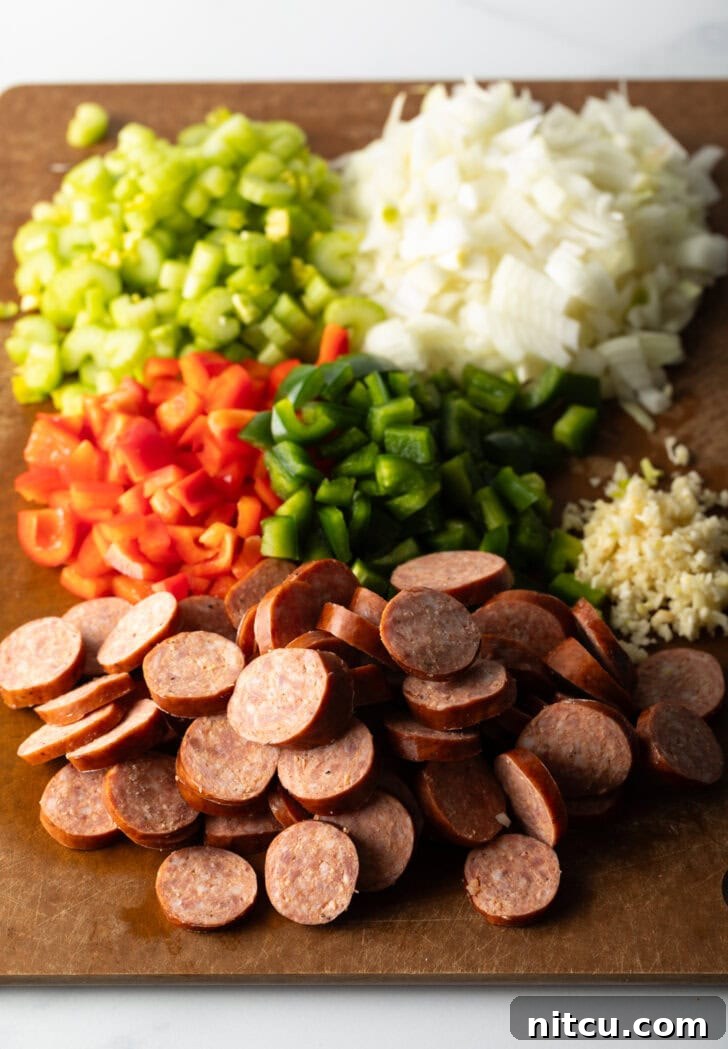
Crafting a memorable gumbo starts with selecting fresh, high-quality ingredients. Each component plays a vital role in building the layered flavors and textures that make this dish so iconic. Below is a comprehensive list of what you’ll need, along with a few tips to ensure the best possible outcome for your homemade Southern masterpiece.
- Butter & Canola Oil – A combination of both provides a rich flavor base from the butter while the high smoke point of canola oil (or other neutral-flavor oil like avocado or vegetable oil) helps ensure the roux can cook to its dark perfection without burning.
- All-purpose flour – The essential thickening agent for your roux. For a gluten-free alternative, you can explore specialized gluten-free flour blends, though results may vary slightly in texture and cooking time for the roux.
- Chicken – Boneless, skinless chicken thighs are highly recommended for their succulent texture and rich flavor that stands up well to long simmering. If you prefer, chicken breasts can be used, but be mindful not to overcook them as they can dry out more easily.
- Andouille sausage – This smoked, spicy Cajun sausage is non-negotiable for an authentic flavor profile. Opt for a good quality pork or chicken andouille, sliced into thin discs, which will render its flavorful fat into the gumbo.
- Bell peppers – The classic “Holy Trinity” calls for green bell pepper, but a combination of red and green not only adds beautiful color but also slightly different sweet and earthy notes. Feel free to use your preferred colors.
- Onion – A large, diced yellow onion provides a sweet and pungent aromatic base, crucial for building flavor.
- Celery – Diced celery completes the “Holy Trinity” with bell peppers and onion, offering a subtle bitter, earthy note and aromatic depth.
- Garlic – Freshly minced garlic is key for a vibrant, aromatic punch that complements the rich flavors of the gumbo.
- Chicken broth – Low-sodium chicken broth is preferred to control the overall saltiness. You can also use homemade chicken stock for an even richer base, or simply water if broth is unavailable, though flavor will be less intense.
- Okra – Frozen, pre-sliced okra is convenient and works perfectly; there’s no need to thaw it beforehand. Okra acts as a natural thickener and imparts a distinctive flavor.
- Canned diced tomatoes – A small amount of diced tomatoes adds a touch of acidity and brightness, which is characteristic of some Louisiana gumbos, bridging the gap between Cajun (less tomato) and Creole (more tomato) styles. Low-sodium or unsalted varieties are best.
- Spices – A blend of bay leaves for earthy notes, robust Cajun seasoning for authentic heat and flavor, dried thyme for herbaceous depth, and a touch of cayenne pepper for adjustable heat are essential. Don’t forget salt and pepper to taste.
- Chopped parsley – Freshly chopped parsley is used as a vibrant garnish, adding color and a fresh, peppery finish.
And of course, don’t forget the cornerstone for serving: **long grain rice** to soak up every last drop of that savory broth.
Crafting Your Classic Chicken and Sausage Gumbo: A Step-by-Step Guide
Making a truly exceptional gumbo is a rewarding process that builds layers of flavor from the ground up. Follow these detailed steps to create a hearty and authentic Southern masterpiece in your kitchen.
Step 1: Master the Roux – The Foundation of Flavor
Begin by placing a large, heavy-bottomed 6-8 quart soup pot or a Dutch oven over medium heat. Add the butter, canola oil, and all-purpose flour to the pot. Using a sturdy whisk, combine them to form a smooth paste. This is the beginning of your roux, and patience is your most important ingredient here. Continue to stir the roux constantly and attentively. The goal is to cook it until it achieves a deep, dark chocolate brown color, similar to melted milk chocolate. Stirring every minute prevents scorching and ensures even browning. Depending on your stovetop’s heat and the type of pot you’re using, this process can take anywhere from 8 to 20 minutes. Do not rush it, and absolutely do not stop stirring, as a burnt roux will impart a bitter flavor and ruin your gumbo.
Pro Tip: The color of your roux directly impacts both the final flavor and appearance of your gumbo. A darker roux provides a deeper, nuttier flavor and a richer color, while a lighter roux will result in a less complex flavor. Furthermore, the roux acts as the primary thickener, providing that characteristic hearty consistency.
Step 2: Building the Aromatic Base
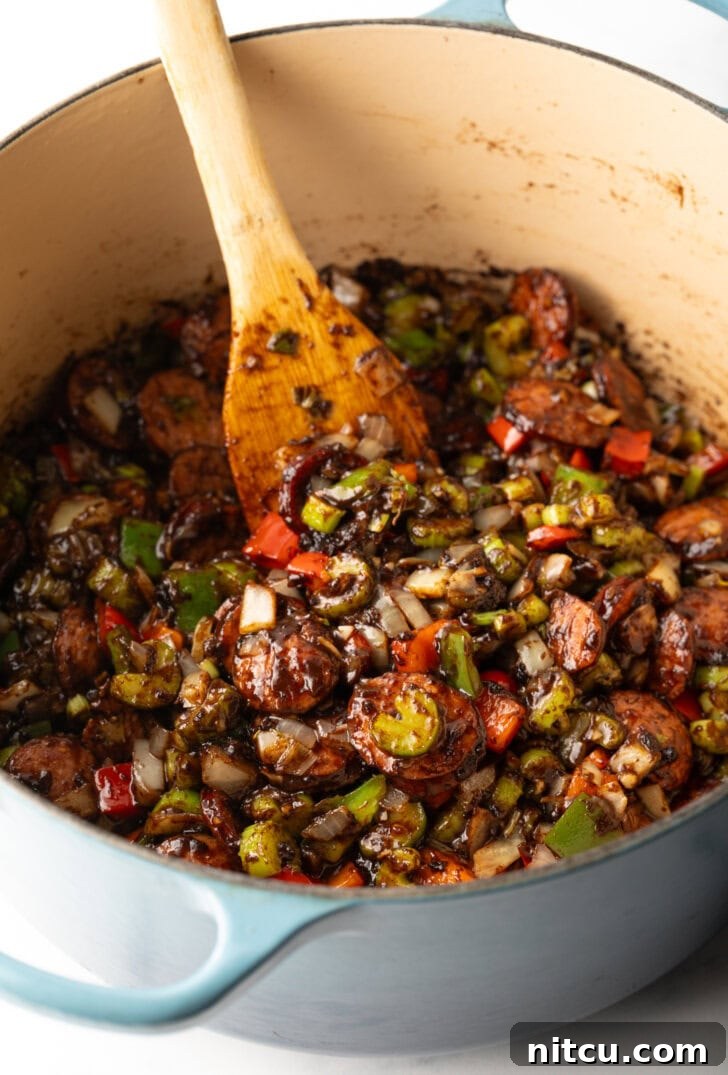
Once your roux has reached that glorious deep chocolate hue, it’s time to add the “Holy Trinity” and the star of the show. Carefully add the sliced andouille sausage, diced bell peppers (both red and green), chopped onion, diced celery, and minced garlic to the pot. Stir continuously, ensuring the vegetables and sausage are thoroughly coated in the hot roux. Sauté this mixture for 5 to 10 minutes, allowing the vegetables to soften and the sausage to release its savory, smoky flavors into the base. This step infuses the roux with additional layers of deliciousness, creating a truly rich foundation.
Step 3: Simmering the Gumbo to Perfection
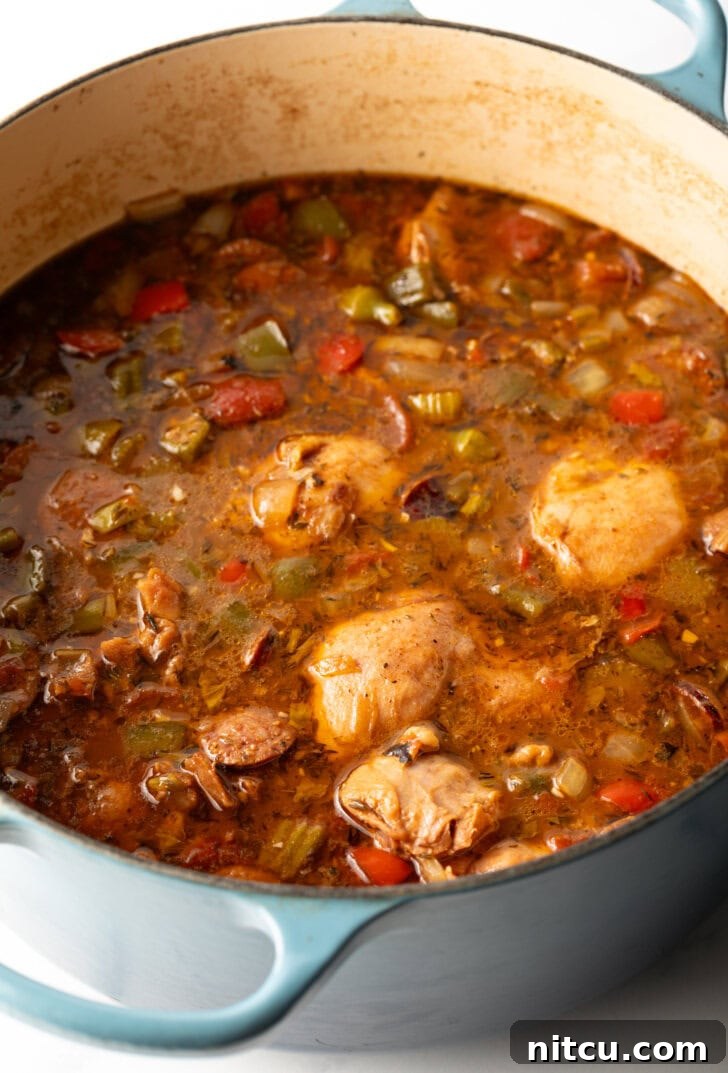
Now, it’s time to bring all the elements together. Add the whole boneless chicken thigh pieces, chicken broth, frozen cut okra (no need to thaw), canned diced tomatoes with their juices, bay leaves, a generous tablespoon of Cajun seasoning, dried thyme, and the cayenne pepper (start with a smaller amount and adjust to your preferred spice level). Stir everything thoroughly to ensure all ingredients are well combined. Bring the mixture to a gentle simmer, then partially cover the pot. Allow the gumbo to simmer for 25 to 30 minutes, stirring every 5 minutes to prevent sticking and ensure even cooking and flavor distribution. During this time, the chicken will cook through, and the flavors will begin to deepen and meld beautifully.
Step 4: Incorporating the Chicken
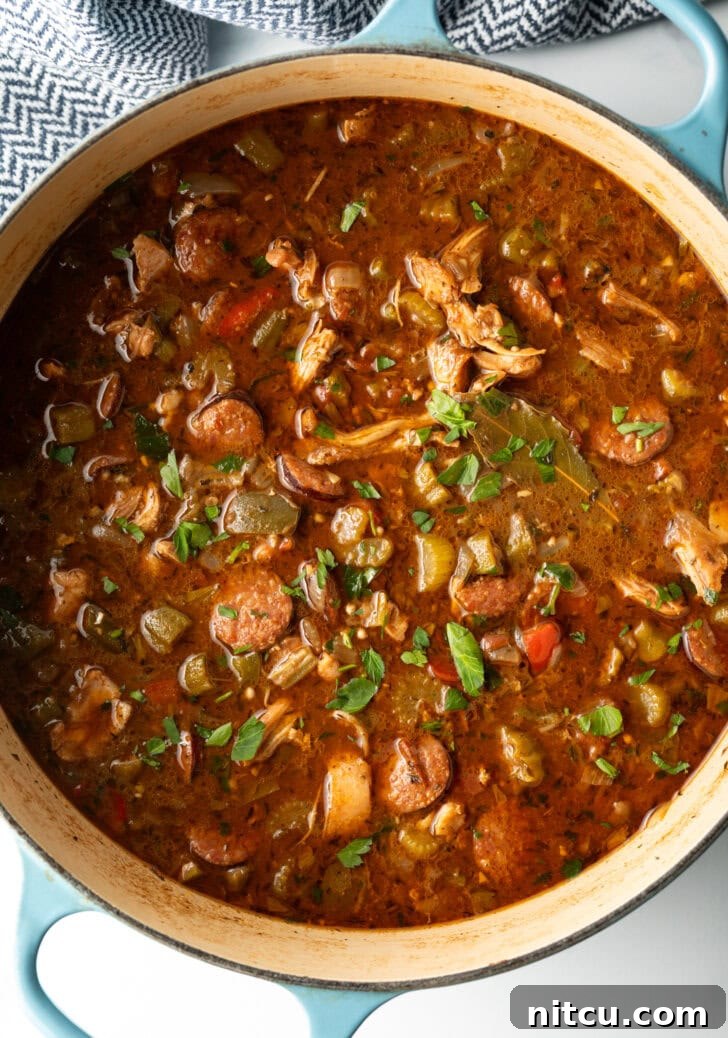
Once the chicken thighs are cooked through and tender, carefully remove them from the pot using tongs. Place them on a cutting board and, using two forks, shred the chicken into large, rustic pieces. The goal is flavorful, tender chunks of chicken, not finely shredded meat. Return the shredded chicken back into the simmering gumbo and stir to combine. This method ensures the chicken cooks perfectly within the broth, absorbing all those incredible flavors, and then integrates seamlessly into the stew.
For a complete, printable recipe card and additional video guidance, please refer to the recipe section below. Enjoy crafting this Southern delight!
Step 5: The Essential Resting Period
After returning the chicken to the pot, cover it tightly and turn off the heat. This is a crucial step for maximum flavor development. Allow the gumbo to **rest for at least 1 hour**, or ideally, for several hours. This resting time allows the spices and ingredients to infuse deeply into the broth, resulting in a far more complex and robust flavor profile. While the gumbo rests, prepare your long-grain rice according to package instructions, typically 2 cups of dry rice will suffice for 8 servings.
Pro Tip for Longer Rests: If you plan on resting your sausage gumbo for longer than 3 hours, especially overnight, it’s best to allow the pot to cool completely at room temperature before transferring it to the refrigerator. This ensures food safety and preserves the quality of your delicious gumbo.
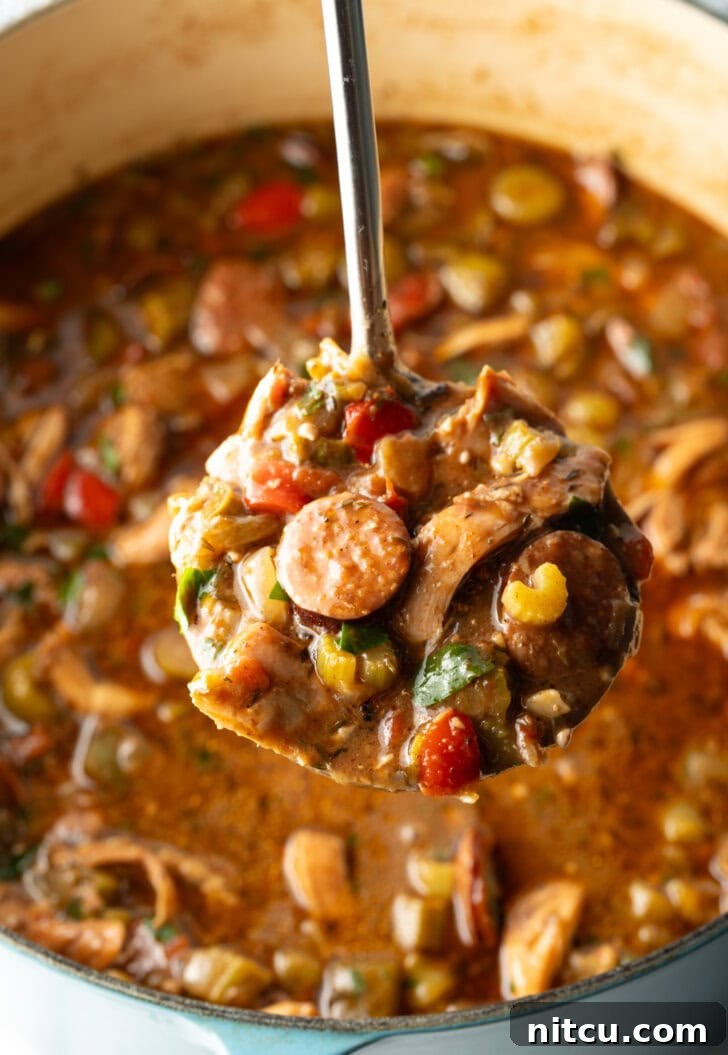
Serving Your Homestyle Gumbo: A True Southern Feast
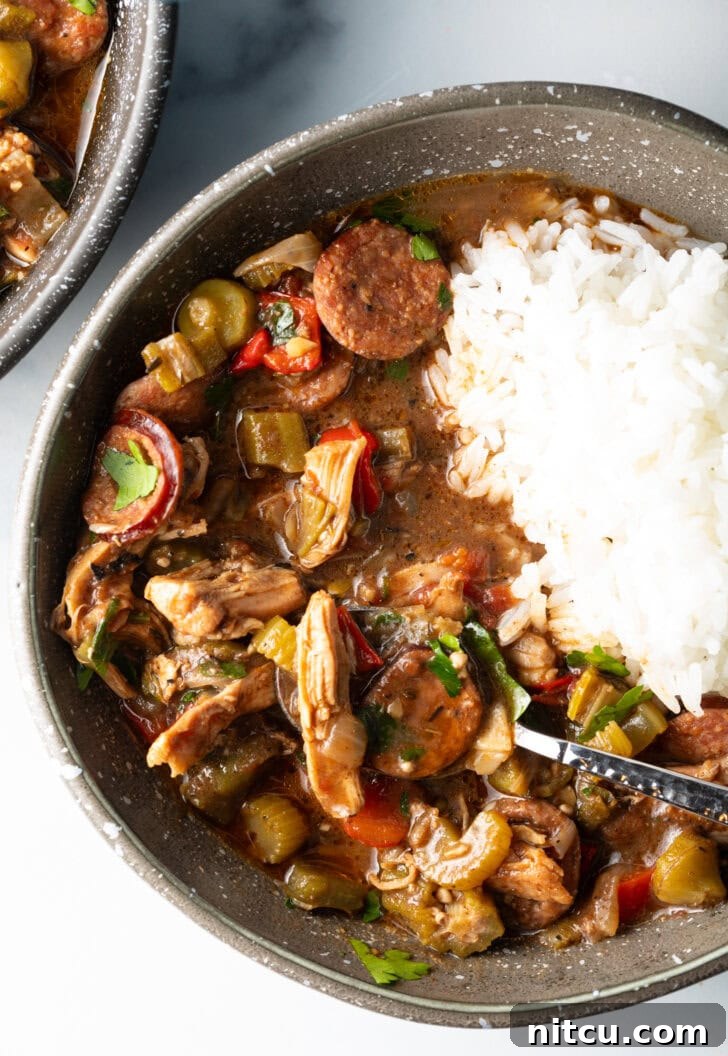
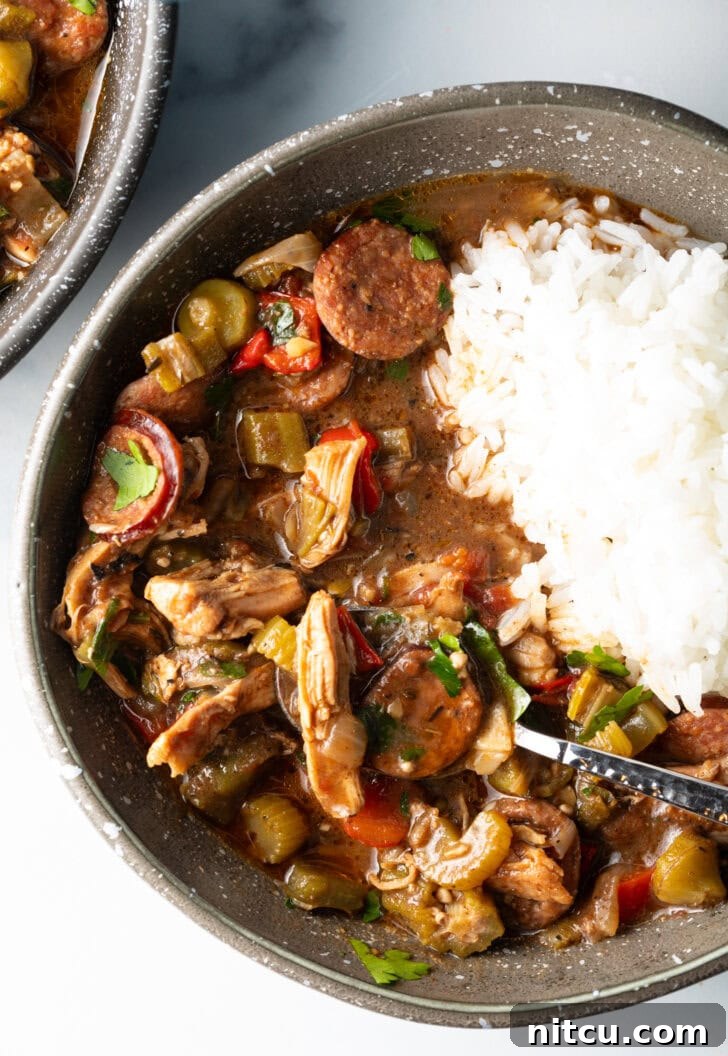
Once your gumbo has had its well-deserved rest, it’s ready to be savored. When you’re ready to serve, simply return the pot to medium heat and bring the gumbo back to a gentle simmer. Allow it to simmer for about 5 minutes, or until it’s wonderfully hot and fragrant. Stir in a generous handful of fresh chopped parsley just before serving, which adds a burst of freshness and vibrant color. Ladle the rich gumbo generously over bowls of fluffy white rice. For an authentic experience, offer hot sauce on the side for those who enjoy an extra kick, and a sprinkle of chopped green onions as a delightful garnish. For a low-carb alternative, consider serving it with our cauliflower rice.
Gumbo is inherently a complete meal, but it truly shines when paired with other Southern classics. Much like our Crock Pot Chicken Stew, this dish beautifully complements sides like tender, flavorful collard greens, or hearty red beans. And, of course, no gumbo feast is complete without something to soak up every last drop of that incredible sauce. We highly recommend fluffy squares of cornbread or rustic corn pone for an authentic Southern spread that will leave everyone feeling deeply satisfied.
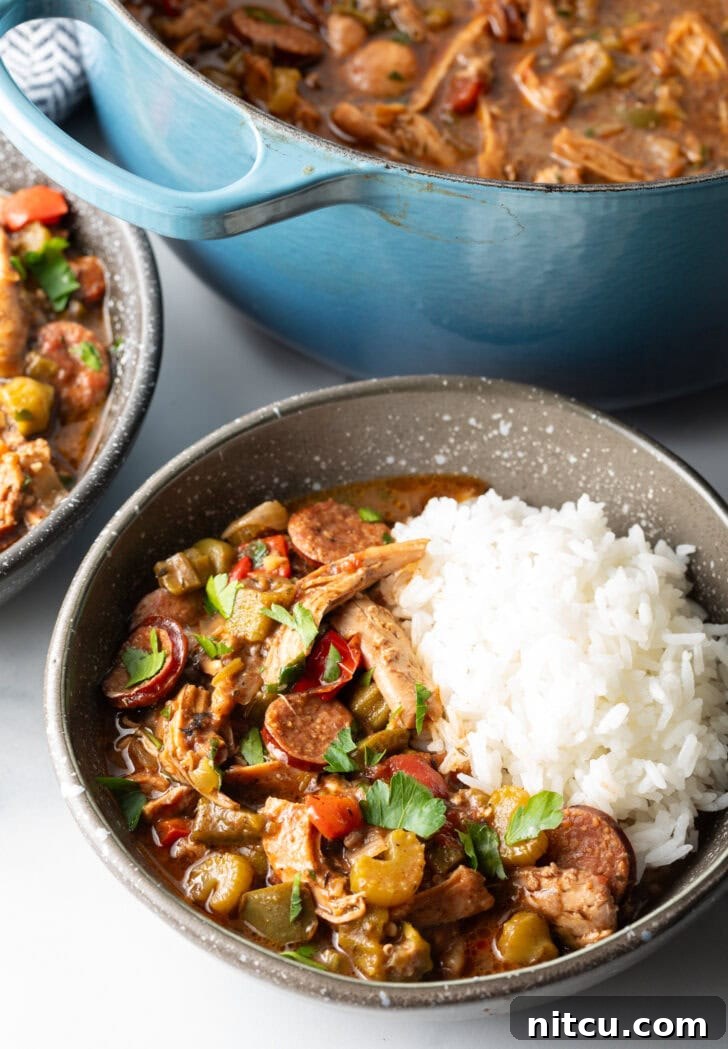
Frequently Asked Questions About Gumbo
The undeniable secret to a truly outstanding gumbo lies in two key elements: an expertly crafted roux and a generous resting period. Take your time to make a dark, rich roux, cooking it low and slow as outlined in the recipe. This foundational step builds incredible depth of flavor. Secondly, allowing the cooked gumbo to rest for at least an hour, or even better, several hours, significantly enhances the melding of flavors, making the dish taste much more complex and harmonious.
In this specific easy gumbo recipe, there’s no need to pre-cook the chicken. The boneless thighs are added whole directly into the simmering broth, where they cook through beautifully and absorb all the rich flavors of the gumbo. However, if you happen to have leftover cooked chicken, you can certainly use it. Simply shred it and add it to the gumbo during the last few minutes of simmering to heat through, ensuring it doesn’t become overcooked or dry.
Leftover gumbo is a true culinary delight, often tasting even better the next day as the flavors continue to deepen and develop. Once cooled completely, transfer any leftover gumbo to an airtight container. It will keep wonderfully in the refrigerator for up to 3 days, providing you with delicious, convenient meals.
Absolutely! Gumbo freezes exceptionally well, making it a fantastic meal prep option. To freeze, ensure the gumbo has cooled completely. Then, transfer it to an airtight, freezer-safe container. For an added layer of protection against freezer burn, you might consider wrapping the container in aluminum foil. It can be frozen for up to 3 months. When ready to enjoy, thaw it overnight in the refrigerator before gently reheating on the stovetop until warmed through.
While both are iconic Louisiana stews, Cajun and Creole gumbos have distinct characteristics. Cajun gumbo, originating from rural areas, typically features a dark roux, is less likely to include tomatoes (though some variations exist), and often relies on chicken and sausage or wild game. Creole gumbo, from New Orleans, often has a lighter roux, commonly includes tomatoes, and frequently features seafood alongside chicken and sausage, with okra also being a very common ingredient. This recipe incorporates elements of both, with its dark roux and inclusion of tomatoes, offering a widely loved “Louisiana-style” approach.
The spice level in gumbo is entirely customizable to your preference. The primary source of heat in this recipe comes from the cayenne pepper and Cajun seasoning. If you prefer a milder gumbo, start with the lower amount of cayenne (¼ teaspoon) or omit it entirely. For more heat, gradually add more cayenne pepper or a dash of hot sauce during the simmering process, tasting as you go. Remember that the flavors, including heat, will intensify during the resting period.
Explore More Southern Delights!
If you’ve enjoyed this rich and comforting gumbo, we invite you to delve deeper into the vibrant world of Southern cooking. These recipes share the same soulful flavors and culinary heritage that make Louisiana cuisine so beloved.
- Shrimp Jambalaya
- Hot Honey Chicken
- Cajun Dirty Rice
- Ambrosia Salad
- Cheese Grits
- Homemade Chicken and Dumplings
- Creamy Skillet Cajun Chicken and Mushrooms Recipe
- Easy Red Beans and Rice
- Cajun Chicken and Rice Casserole
- Grilled Blackened Chicken

Rated 5 stars by 1 user.
Leave a Review »
Chicken and Sausage Gumbo Recipe
Ingredients
- ¼ cup butter
- 2 tablespoons canola oil
- ½ cup all-purpose flour
- 2 pounds boneless chicken thighs or breasts
- 1 pound andouille sausage sliced into ¼ inch rounds
- 2 bell peppers green and red, diced
- 1 large onion diced
- 1 cup diced celery
- 3-5 cloves garlic minced
- 4 cups chicken broth or water
- 2 cups frozen cut okra
- 15 ounce can diced tomatoes
- 2 bay leaves
- 1 tablespoon cajun seasoning
- 2 teaspoons dried thyme
- ¼ – ½ teaspoon cayenne pepper
- ¼ cup chopped parsley
- 2 cups long-grain rice
Instructions
-
For the Roux: Place a large 6-8 quart soup pot over medium heat. Add the butter, oil, and flour to the pot. Whisk to form a smooth paste. Then continue to stir and watch the roux for as long as it takes to reach a dark chocolate color. Stir the roux every minute so it doesn’t burn, but browns. Depending on your heat source and the cooking vessel you are using this could take as little as 8-10 minutes or up to 20 minutes. Don’t rush, and don’t stop stirring!
-
Once the roux reaches a deep chocolate color, add the sliced sausage, diced bell pepper, onion, celery, and garlic. Stir and sauté the sausage and vegetables for 5 to 10 minutes, until the veggies are softened.
-
Next add the whole chicken thigh pieces, chicken broth, cut okra, diced tomatoes and juices, bay leaves, Cajun seasoning, dried thyme, and cayenne pepper. Stir well and bring to a simmer. Partially cover the pot and simmer for 25 to 30 minutes, stirring every 5 minutes.
-
Then remove the cooked chicken thighs with tongs. Use two forks to shred the chicken into large pieces. Place the shredded chicken back into the pot and stir.
-
Now cover the pot and turn off the heat. Allow the gumbo to rest for at least 1 hour, but up to several hours. If resting for longer than 3 hours, allow the pot to cool completely and place in the refrigerator.
-
Meanwhile, cook 2 cups of long grain rice, according to the package instructions.
-
When ready to serve, turn the heat back to medium, and bring the gumbo to a simmer. Simmer for 5 minutes until nice and hot. Stir in fresh chopped parsley, and serve over fluffy white rice.
Notes
To freeze: Cool the gumbo and transfer to an airtight freezer-safe container. For extra freezer burn protection, I suggest also wrapping the container in a layer of aluminum foil. Freeze for up to 3 months and thaw in the fridge overnight before reheating.
Nutrition
Serving: 1.5c, Calories: 755kcal, Carbohydrates: 53g, Protein: 35g, Fat: 45g, Saturated Fat: 14g, Polyunsaturated Fat: 8g, Monounsaturated Fat: 18g, Trans Fat: 0.5g, Cholesterol: 177mg, Sodium: 1124mg, Potassium: 829mg, Fiber: 4g, Sugar: 4g, Vitamin A: 1326IU, Vitamin C: 39mg, Calcium: 95mg, Iron: 4mg
Cook It? Love It? Share Your Thoughts!Your feedback helps others discover and enjoy this recipe. Thank you!