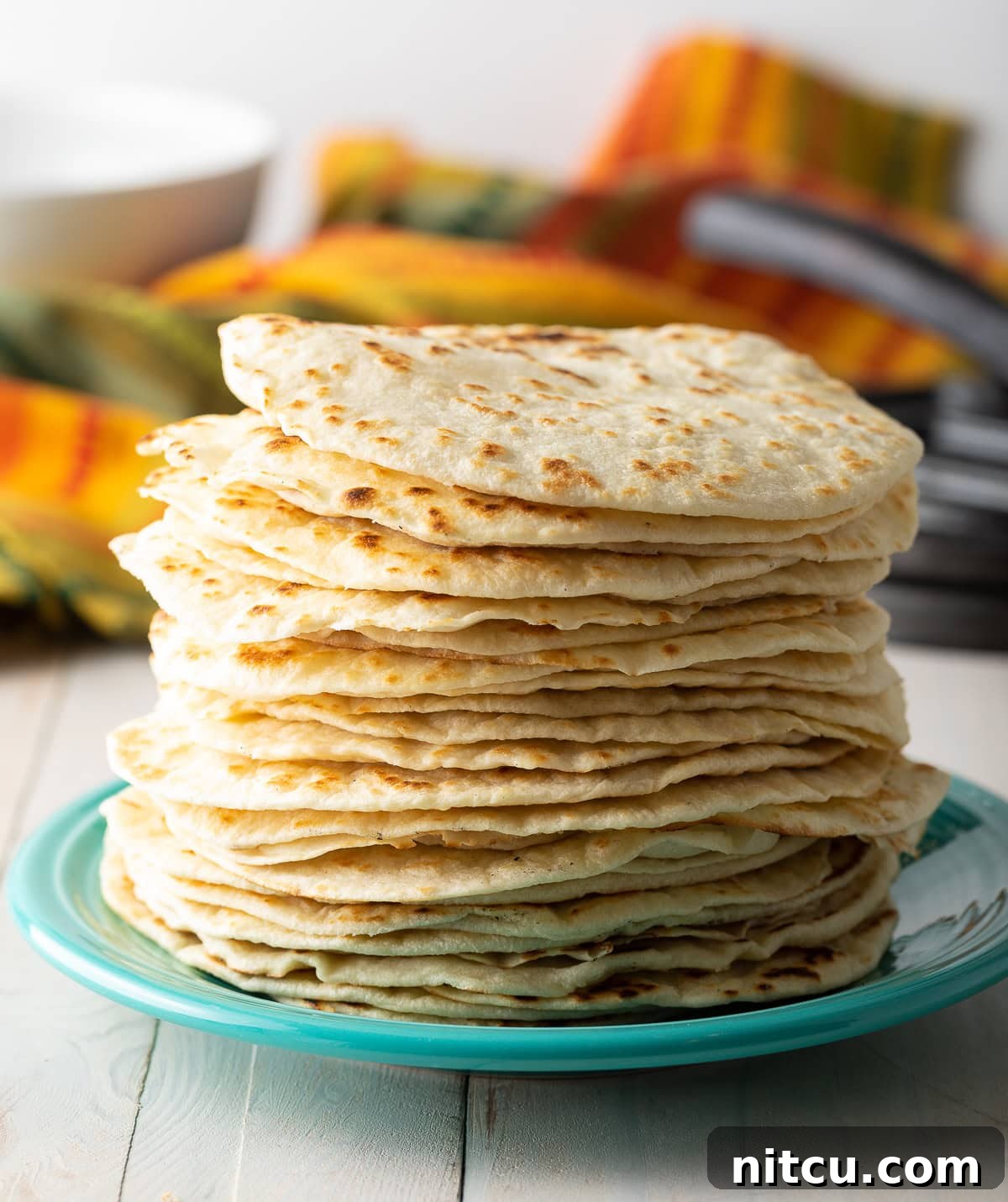
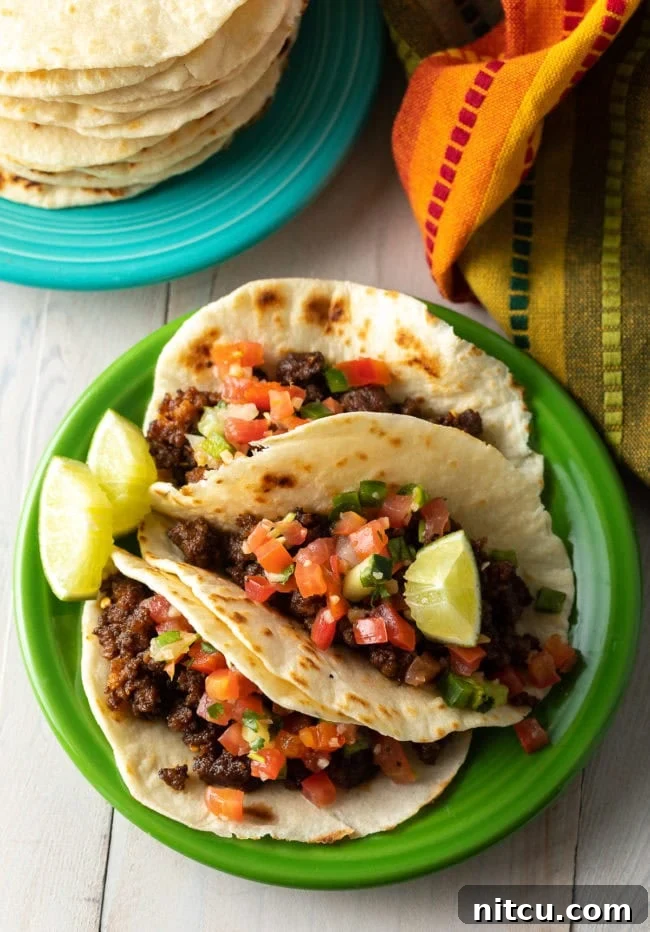
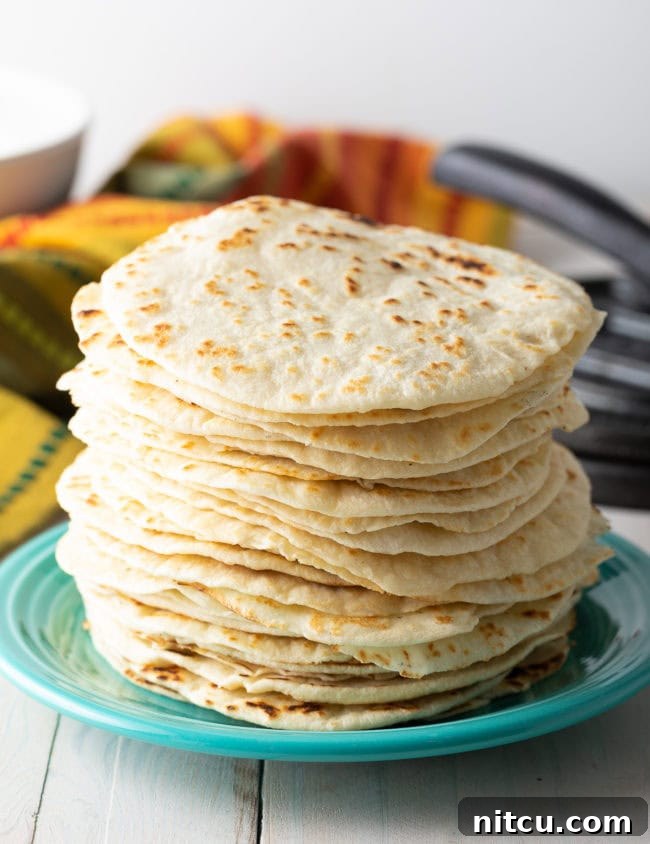
Welcome to the definitive guide for crafting the most exquisite, ultra-light, and flexible homemade flour tortillas. Forget everything you thought you knew about tortillas that come in a package; today, you’ll learn how to make flour tortillas from scratch that are so tender, soft, and full of fluffy bubbles, they’ll revolutionize your Mexican-inspired meals! This easy, fool-proof recipe promises perfect, pillowy tortillas every single time, ready to elevate your tacos, burritos, and fajitas to an entirely new level of deliciousness.
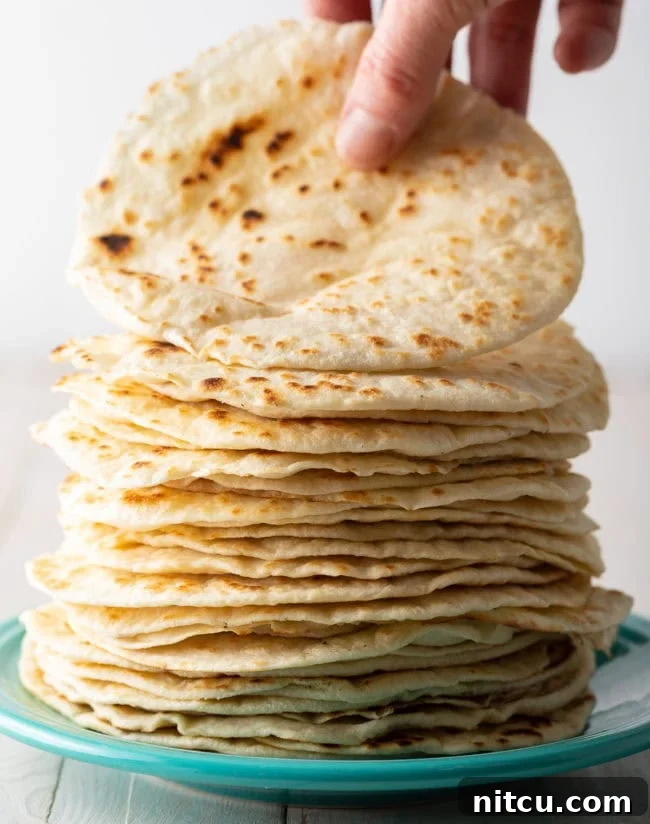
Discover the Magic of Homemade Flour Tortillas
There’s a profound difference between store-bought tortillas and those crafted with your own hands, and once you experience it, there’s no going back. Our journey into the art of tortilla making today focuses on a truly exceptional homemade flour tortilla recipe designed to yield soft, pillowy, and incredibly pliable tortillas. You’ll be able to make them in any size you desire, from small street-taco style to large burrito-ready wraps.
It’s important to note the cultural context: flour tortillas, while widely popular, are a distinct feature of Mexican-American and Tex-Mex cuisine. Traditional Mexican cuisine, particularly in central and southern Mexico, predominantly features corn tortillas, a staple with deep historical roots in Latin America. Flour tortillas, on the other hand, gained prominence in regions heavily influenced by American culture, evolving into a beloved component of Mexican-American culinary traditions.
As an American who appreciates the versatility and delightful texture of flour tortillas, I’ve perfected this recipe to bring that authentic, comforting taste right into your kitchen. They are also, arguably, a little more forgiving for beginners compared to their corn counterparts. If your preference leans towards the classic, don’t worry! We also have a fantastic killer corn tortilla recipe waiting for you to explore.
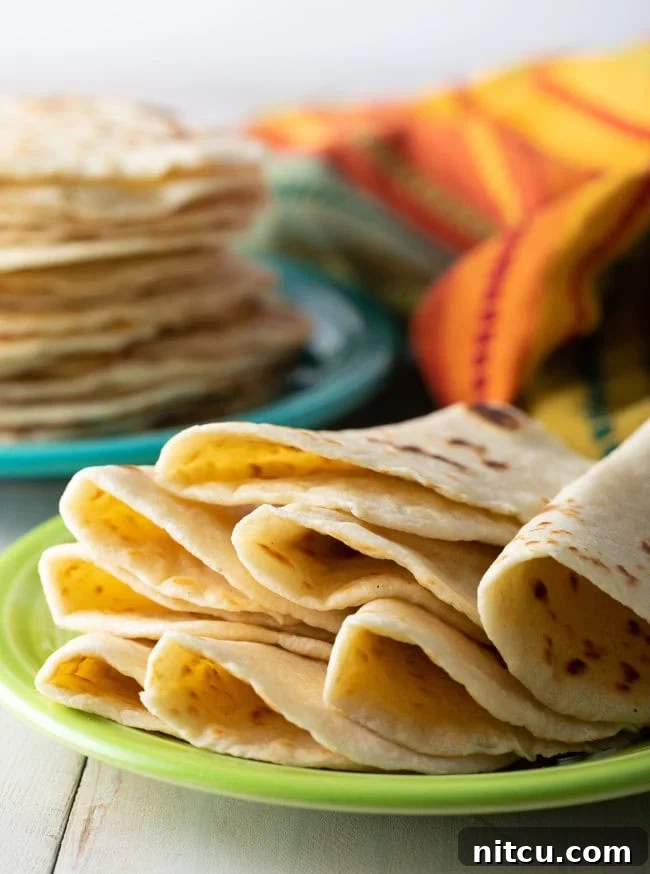
Why Embark on the Journey of Scratch-Made Flour Tortillas?
You might wonder, with so many excellent store-bought options, why invest your time in making tortillas from scratch? It’s a valid question, and one I often ponder myself. While convenience certainly has its place, there are truly special occasions when the rustic charm and superior quality of homemade flour tortillas shine brightest.
For instance, if you’re rushing home from a busy day, aiming for a quick “Taco Tuesday” dinner, grab those pre-made tortillas! Similarly, for packing lunches like tortilla wraps or veggie burritos, store-bought is perfectly acceptable and convenient. We all have those days, and there’s no shame in choosing efficiency.
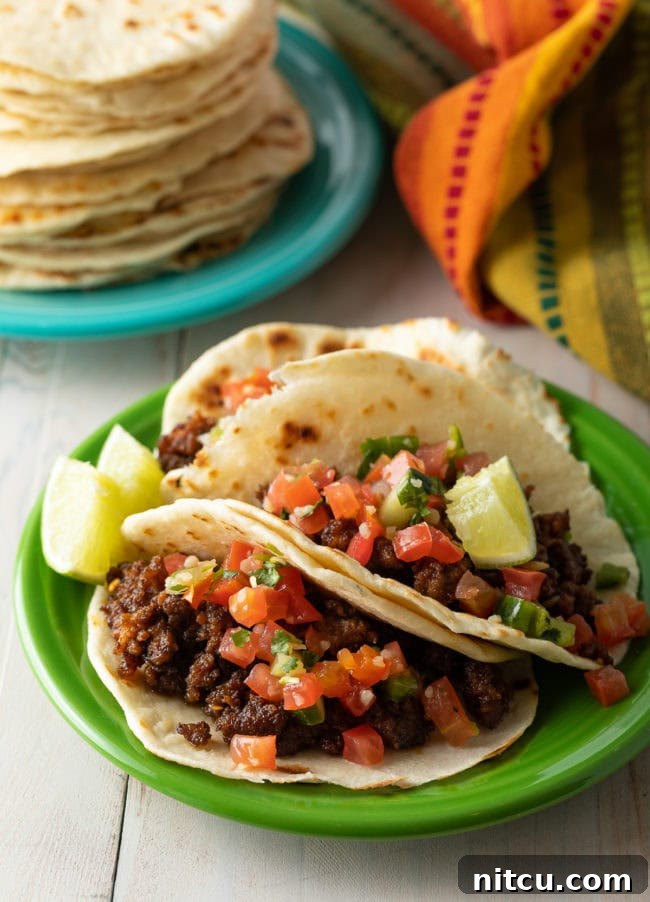
However, when you’re planning a weekend Mexican feast for friends and family, that’s when you roll up your sleeves and pull out the tortilla press. Imagine serving alongside authentic slow-cooked carnitas, sizzling carne asada, vibrant homemade salsa, creamy fresh guacamole, refreshing margaritas, and crisp agua fresca. In such a setting, nothing complements the spread quite like a stack of warm, airy fluffy homemade flour tortillas. They add an undeniable touch of authenticity and a depth of flavor that simply cannot be replicated by commercial varieties. The effort transforms a meal into an experience, imbuing every bite with freshness and love.
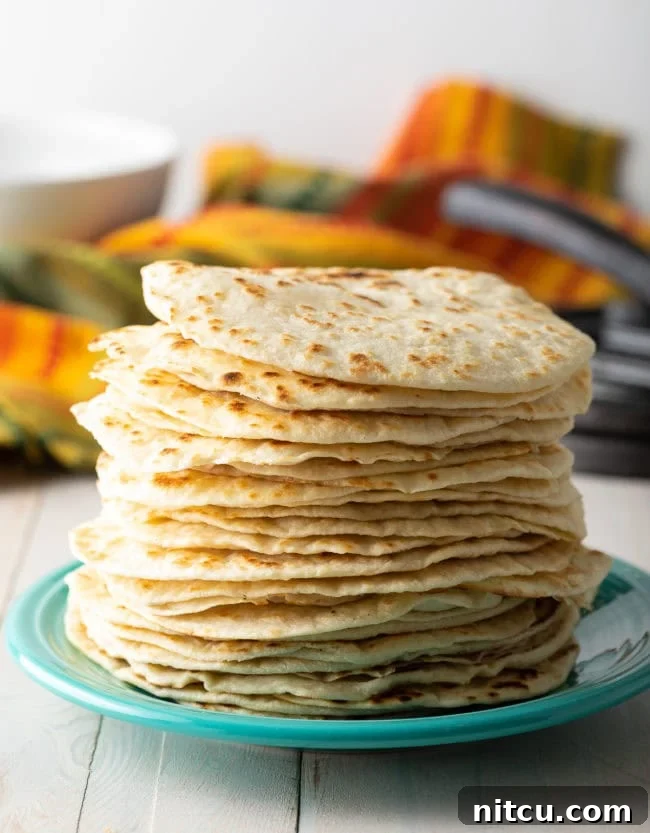
Essential Ingredients for Perfect Flour Tortillas
Creating the most delicious flour tortillas you’ve ever tasted requires just a handful of simple, readily available ingredients. The quality of these basic components makes all the difference in achieving that signature soft, flexible, and flavorful result. Here’s a closer look at what you’ll need and why each ingredient is crucial:
- All-Purpose Flour: This forms the structural foundation of your tortillas. While some recipes call for specialized flours, all-purpose flour works wonderfully, providing a balanced texture that’s neither too delicate nor too tough.
- Baking Powder: A key leavening agent that helps create those beautiful, fluffy bubbles and a lighter texture. It reacts with the heat during cooking, causing the dough to puff up slightly, resulting in an airy interior.
- Salt: Don’t underestimate the power of salt! It’s essential for enhancing the overall flavor of your tortillas, bringing out the subtle sweetness of the flour and balancing the richness of the fat.
- Lard (or Vegetable Shortening): This is where much of the magic happens. Animal fat, specifically lard, is traditionally preferred for its unparalleled ability to create incredibly tender, flavorful, and soft tortillas. If you prefer a vegetarian option, high-quality vegetable shortening is an excellent substitute, yielding a similar pliable texture, though with a slightly less rich flavor profile. The fat coats the flour particles, inhibiting gluten development and contributing to the tortillas’ signature flexibility and melt-in-your-mouth quality.
- Hot Water: The temperature of the water is vital. It doesn’t need to be boiling, but very hot tap water is crucial for properly melting the lard (or shortening) and evenly distributing it throughout the dough. This ensures a smooth, consistent dough that’s easy to work with and results in perfectly tender tortillas.
With these five simple ingredients, you’re well on your way to making truly exceptional homemade flour tortillas that will impress everyone at your table.
Mastering Homemade Flour Tortillas: Key Tips & Techniques
The secret to crafting truly fabulous flour tortillas lies not in overthinking, but in understanding a few fundamental principles and mastering some simple techniques. If you’re eager to learn how to make tortillas at home that rival your favorite Mexican restaurant, remember these essential characteristics:
- Soft and Flexible: A perfect flour tortilla should bend and fold without cracking or tearing. It should be pliable, allowing it to hold fillings securely without crumbling.
- Bubbly Texture: The formation of large, airy bubbles during cooking is a hallmark of a well-made tortilla. These bubbles contribute to a light, airy, and inviting texture.
- Delicate Flavor: The taste should be subtle yet satisfying, with a pleasant hint of wheat and the rich, savory undertones of the fat used (especially noticeable with lard).
Achieving these qualities is entirely within your reach by adhering to our proven steps and utilizing the right ingredients. While a few pieces of equipment can certainly streamline the process, don’t let a lack of specialized tools deter you. You’ll ideally want:
- An **electric mixer** (stand mixer recommended for ease) for efficient dough mixing.
- A sturdy **nonstick or cast iron skillet** for even cooking.
- A **tortilla press** for quickly and uniformly flattening the dough balls.
However, if these aren’t readily available, you have excellent alternatives. You can absolutely **mix the dough by hand**, which provides a great feel for the dough’s consistency and a satisfying tactile experience. And instead of a press, a **rolling pin** can be used to flatten the dough balls. This method might require a bit more elbow grease and practice to achieve perfectly round, thin tortillas, but it certainly won’t compromise the final quality or flavor. Think of it as a bonus upper-body workout!
Pro-Tip: Dough Consistency is Key
When mixing your dough, aim for a consistency that is soft, smooth, and slightly tacky, but not sticky. If the dough is too dry, your tortillas will be stiff and brittle. If it’s too wet, they’ll be difficult to handle. Adjust flour or water by the tablespoon until you reach the ideal texture. Allow your dough to rest for at least 30 minutes after mixing. This crucial step allows the gluten to relax, making the dough much easier to roll or press and resulting in more tender tortillas.
Step-by-Step Guide: How to Make Fluffy Flour Tortillas
Making flour tortillas from scratch is a rewarding process that, with a little practice, becomes incredibly simple. Follow these detailed steps to achieve perfect, bubbly tortillas every time:
1. Prepare Your Workspace and Equipment: Before you begin, gather all your necessary tools. Set up your stand mixer (if using), a clean cutting board, a sharp knife, your nonstick or cast iron skillet, and your tortilla press (or rolling pin). Ensure your skillet and tortilla press are appropriately sized for the tortillas you intend to make. Having everything within reach will make the process much smoother.
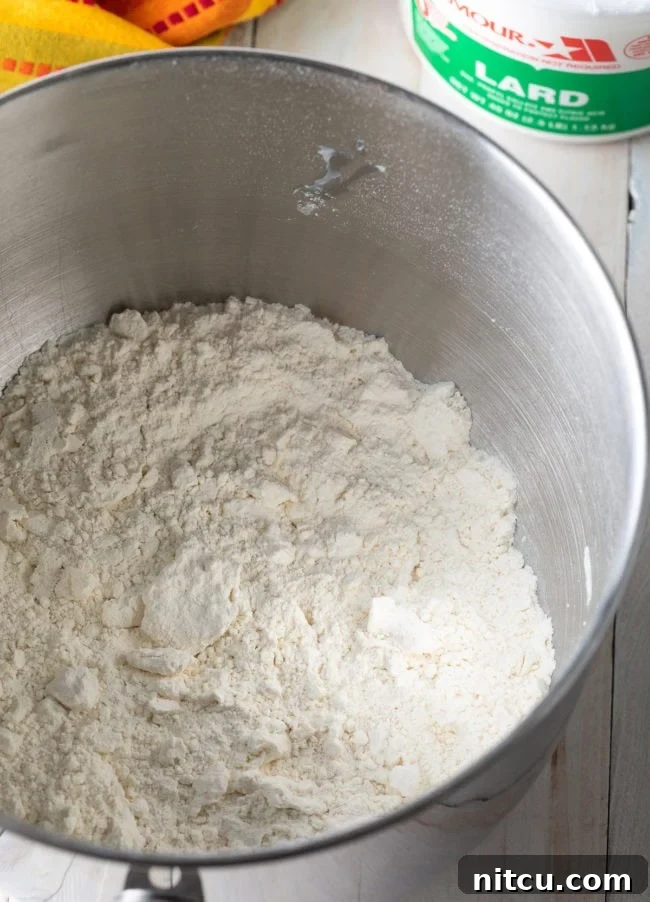
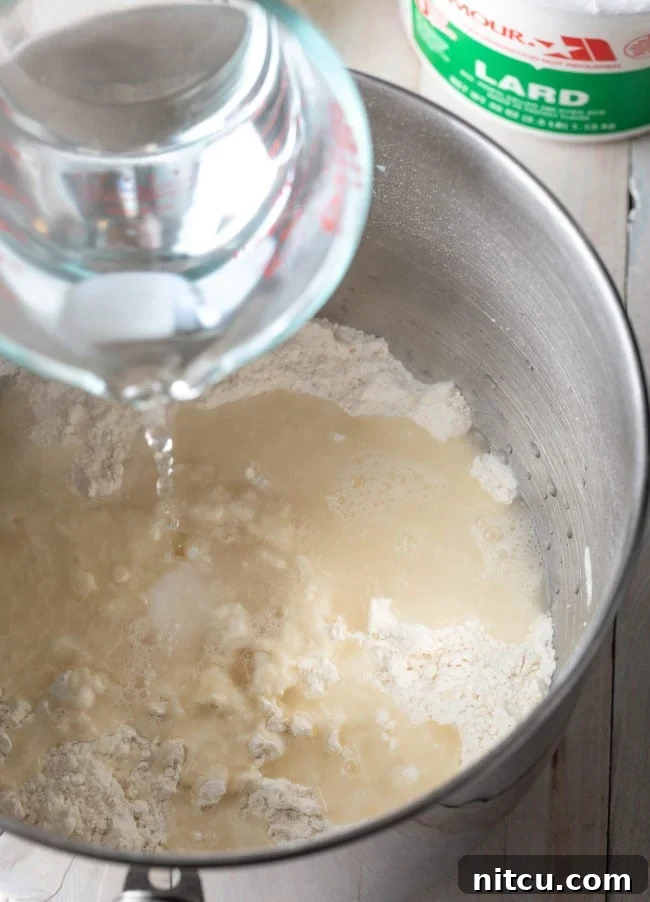
2. Mix the Dough to Perfection: In the bowl of your stand mixer (or a large mixing bowl for hand mixing), combine the all-purpose flour, baking powder, and salt. Whisk these dry ingredients thoroughly to ensure even distribution. Next, add the lard (or vegetable shortening) and mix it into the flour until the mixture resembles coarse crumbs. This step is crucial for tender tortillas. Finally, with the mixer on low speed (or gradually by hand), slowly pour in the very hot tap water. Continue mixing until a smooth, cohesive dough forms. It should be soft and elastic, pulling away from the sides of the bowl. Avoid overmixing, as this can lead to tough tortillas.
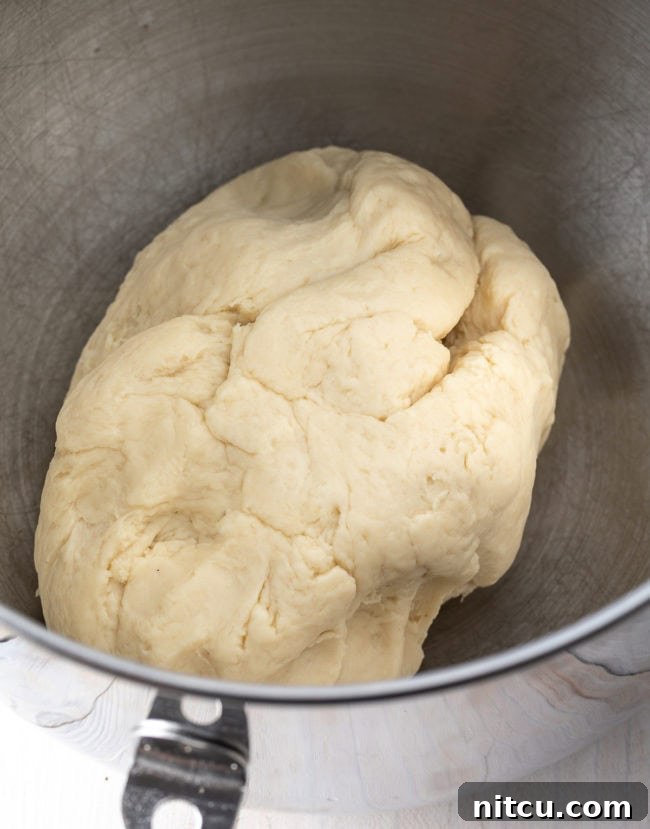
3. Rest the Dough: Once your dough is mixed, gently form it into a ball. Place it back in the mixing bowl, cover it with plastic wrap or a damp cloth, and let it rest at room temperature for at least 20-30 minutes. This resting period is vital, as it allows the gluten in the flour to relax, making the dough much more pliable and easier to roll or press without springing back. It contributes significantly to the tortillas’ final tenderness.
4. Divide and Portion the Dough: Transfer the rested dough ball to your cutting board. Using your knife, cut the dough ball in half, and then continue dividing each piece in half (or thirds, depending on your desired size) until you have a sufficient number of equal portions. The size of your dough balls directly corresponds to the size of your finished tortillas. For example, dividing into:
- 30 pieces yields small, 4-inch “street taco” tortillas.
- 24 pieces makes standard 6-inch taco tortillas.
- 15 pieces produces large 8-inch taco/fajita tortillas.
- 12 pieces creates extra-large 10-inch burrito-sized tortillas.
Roll each piece into a smooth ball and keep them covered with plastic wrap or a damp cloth to prevent drying.
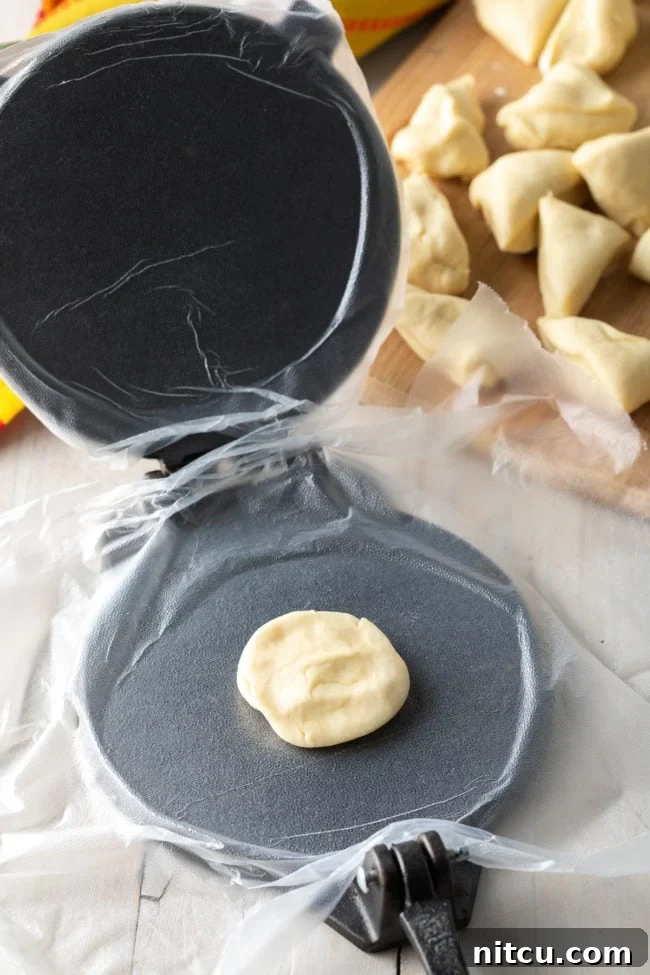
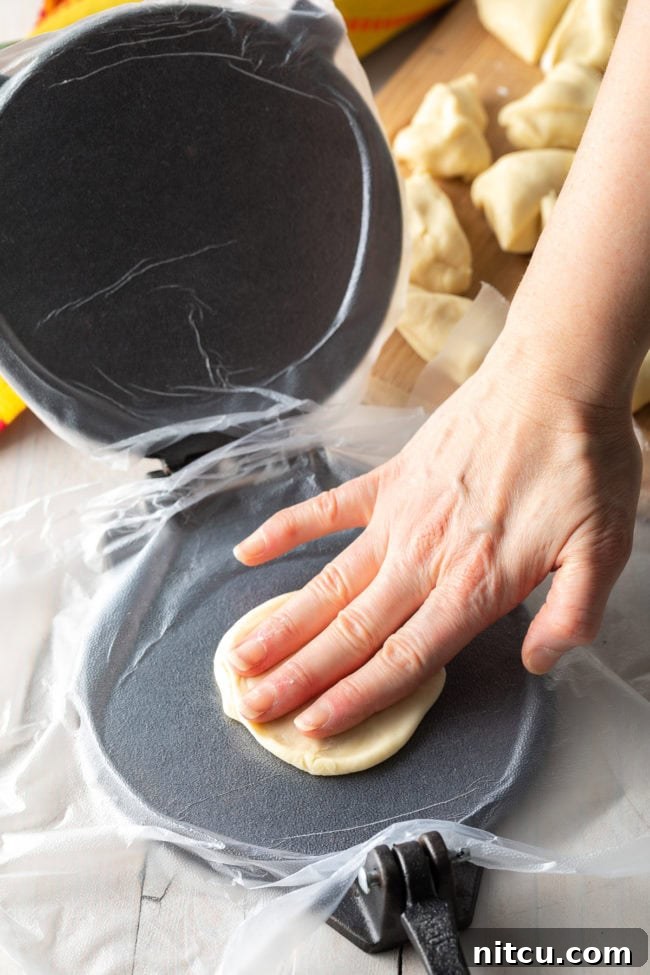
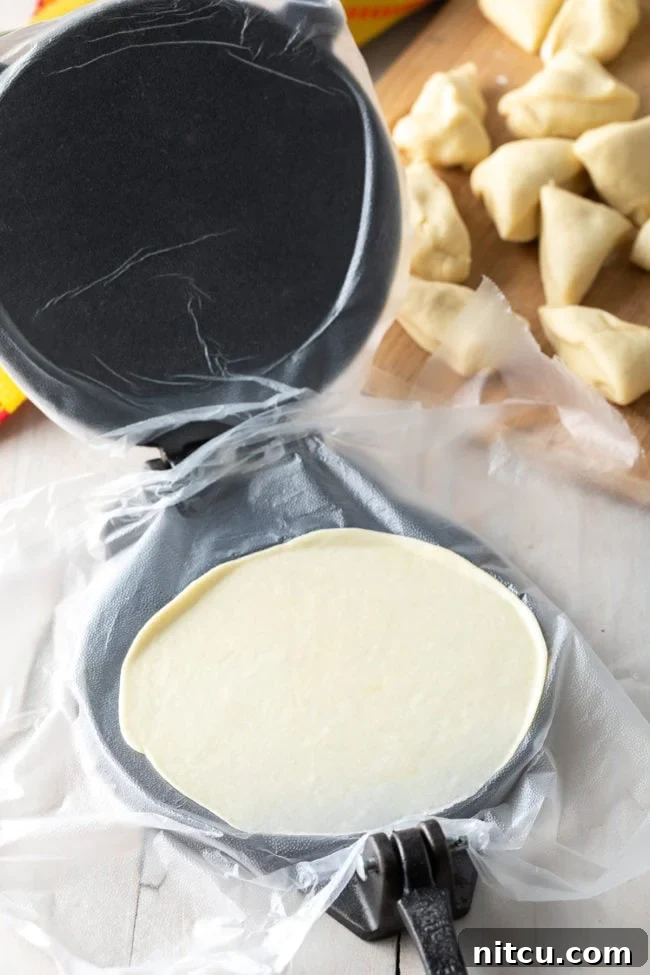
5. Press (or Roll) Your Tortillas: Heat your skillet over medium heat. If using a tortilla press, line both the top and bottom pressing surfaces with plastic wrap (or cut-open freezer bags for durability). Take one dough ball, place it slightly off-center towards the hinge of the press, and press down firmly to flatten it. Rotate the partially flattened tortilla 90 degrees and press again, ensuring it becomes uniformly thin and circular. If using a rolling pin, place a dough ball between two sheets of parchment or plastic wrap and roll it out from the center outwards, rotating frequently, until it’s thin and round. Aim for a paper-thin consistency for the best results.
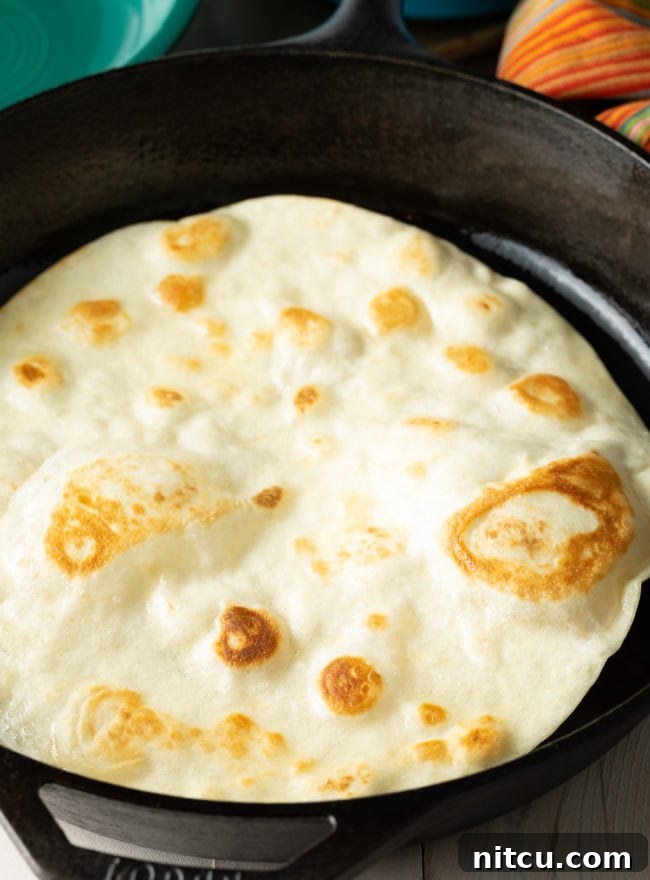
6. Cook the Tortillas: Carefully peel the flattened tortilla from the plastic wrap. Gently lay it onto your hot, dry skillet, ensuring full contact with the surface. Cook for approximately 20-30 seconds per side, waiting until large, airy bubbles begin to form on the surface. These bubbles are a sign of proper cooking and contribute to a light, tender texture. If you flip too soon, your tortillas may be dense rather than airy. Adjust the heat as needed after the first couple of tortillas – if they’re browning too quickly, lower the heat; if no bubbles are forming, increase it slightly. You want golden brown spots, not burnt marks.
7. Keep Them Warm and Soft: As each tortilla cooks, immediately transfer it to a plate and cover it with a clean kitchen towel or place it in a tortilla warmer. Stacking the tortillas and keeping them covered is crucial; the residual heat and steam will continue to soften them, transforming them from crisp to beautifully pliable. Continue this process until all your dough balls are transformed into hot, fresh, and delicious tortillas. Serve them warm and enjoy!
Get the Full (Printable) Best Flour Tortilla Recipe Below
Advanced Tips for Perfect Homemade Flour Tortillas
To further refine your tortilla-making skills and troubleshoot any issues, consider these additional insights:
- Embrace the Rolling Pin (If No Press): As mentioned, a tortilla press is incredibly convenient, but a rolling pin is a perfectly viable alternative. The key is to roll the dough balls between two sheets of parchment paper or plastic wrap. This prevents sticking and helps you achieve an even, thin circle. Remember to rotate the dough frequently as you roll to maintain a round shape. While it requires a bit more effort, the results are equally delicious.
- The Essential Role of Fat: Whether you choose lard or vegetable shortening, the fat content is paramount. It contributes significantly to the desired pliable texture and characteristic “fluffy” bubbles. Substituting with oil might not yield the same tender results, as solid fats interact differently with flour to inhibit gluten development. Stick to lard or shortening for optimal texture and flavor.
- Cost-Effectiveness and Freshness: Making tortillas at home is often cheaper than consistently buying high-quality store-bought versions, especially if you buy ingredients in bulk. Beyond the savings, the freshness is incomparable. Homemade tortillas, served warm off the skillet, have a flavor and texture that mass-produced options simply cannot match. They’re free from preservatives and artificial ingredients, offering a pure, wholesome taste.
- Temperature Control During Cooking: Pay close attention to your skillet’s temperature. Too low, and the tortillas will dry out before bubbling and developing those characteristic golden spots. Too high, and they’ll burn before cooking through. Medium heat is typically ideal, but don’t hesitate to adjust it based on how your first few tortillas are performing. Consistent heat is crucial for consistent results.
- Don’t Be Afraid of the Bubbles: Those large bubbles are a good sign! They indicate that the baking powder is activating and the steam is expanding within the dough, creating that desirable airy texture. If your tortillas aren’t bubbling much, it might be an indication to increase your heat slightly or ensure your dough has rested sufficiently.
Frequently Asked Questions About Homemade Flour Tortillas
How Many Calories and Carbs Do Flour Tortillas Have?
While delicious, traditional flour tortillas are not considered a low-carb food. However, they are also not inherently unhealthy when consumed in moderation. An average taco-sized flour tortilla (approximately 6 inches) typically contains about 16 grams of carbohydrates, around 76 calories, and roughly 1 gram of fat. For a full nutritional breakdown, please refer to the recipe card provided below.
If you’re seeking low-carb or grain-free alternatives, there are fantastic options available that still deliver on flavor and flexibility. Consider exploring:
- Low Carb Keto Cauliflower Tortillas
- Magic Plantain Tortillas (for a naturally gluten-free and grain-free option)
Can I Make Gluten-Free Flour Tortillas?
Absolutely! You can adapt this recipe to be gluten-free by simply **swapping the all-purpose wheat flour with a 1-to-1 gluten-free baking mix**. Keep in mind that gluten-free tortillas may not achieve the exact same level of elasticity and flexibility as their gluten-containing counterparts. However, when served warm, they will still have a wonderful bend and a delightful flavor that makes them perfect for your favorite fillings. For those who enjoy blending their own gluten-free flours, a recipe like this GF tortilla recipe might offer even greater flexibility and texture control.
How Long Do Homemade Flour Tortillas Last?
Freshly made homemade flour tortillas are truly at their peak when served immediately. However, any leftovers can be stored in an airtight container or zip-top bag in the refrigerator for **at least one week**. While they are undeniably best fresh, they will still taste significantly better than many store-bought options even after a day or two. To enjoy them again, simply reheat them gently in a dry skillet for a few seconds per side, in the microwave wrapped in a damp paper towel, or in a warm oven.
Can You Freeze Flour Tortillas?
Yes, homemade flour tortillas freeze beautifully, making them an excellent make-ahead option. To freeze, allow them to cool completely, then stack them with small pieces of parchment paper in between to prevent sticking. Place the stack in a freezer-safe zip-top bag, remove as much air as possible, and seal tightly. They can be stored in the freezer for **3 to 6 months**. When ready to use, simply thaw them at room temperature (or in the refrigerator overnight) before reheating as desired.
What’s the Best Tortilla Press for Flour Tortillas?
Investing in a good tortilla press can make the process of making homemade tortillas much faster and more consistent. For flour tortillas, you generally want a press that is sturdy and provides even pressure. Many home cooks swear by cast iron presses for their durability and weight. The ever-popular Victoria tortilla press, similar to the cast iron press I frequently use, is a fantastic choice. It’s known for its basic, robust design and can typically be found on Amazon for around $25. Another more lightweight and budget-friendly option is the IMUSA aluminum press, which sells for $15 at Target.
Do I Need a Tortilla Press to Make Tortillas?
Technically, no, a tortilla press is not strictly necessary, but it certainly simplifies the process significantly! It helps you achieve uniform thickness and perfectly round tortillas with minimal effort. If you don’t own a tortilla press, you can easily use a rolling pin. Simply place a ball of dough between two pieces of parchment paper or plastic wrap and roll it out into a thin, even circle. This method requires a bit more manual effort and technique to get consistent results, but it’s a completely effective way to make delicious homemade tortillas.
Print Recipe
Leave a Review »
How To Make Flour Tortillas
Video
Ingredients
- 4 cups all-purpose flour
- 2 teaspoons baking powder
- 1 teaspoon salt
- 1/2 cup lard (or vegetable shortening)
- 1 1/4 cup hot tap water
Instructions
-
Set out a stand mixer, a cutting board and knife, a cast iron or nonstick skillet, and a tortilla press. The skillet and tortilla press must be large enough to fit the size of tortillas you want to make. *You do not have to have tortilla press; you can make tortillas with a rolling pin. But the press makes it much easier!
-
Measure the flour, baking powder, and salt into the mixing bowl. Mix well. Then beat in the lard. Finally, turn the mixer on low and slowly pour in very hot tap water. Mix until the dough is very smooth. Then turn off the mixer.
-
Gather the dough and press into a ball. Place it on a cutting board. Cut the ball in half and continue cutting each piece in half (or thirds) until you have enough equals portions to make as many tortillas as you want. *You can cut them into 30 “street taco” 4-inch tortillas, 24 taco 6-inch tortillas, 15 large taco/fajita 8-inch tortillas, or 12 burrito 10-inch tortillas.
-
Set the skillet over medium heat. Place plastic wrap over the to top and bottom pressing-surface of the tortilla press. (Some people like to slide a freezer bag over each section because it’s a little more sturdy than plastic wrap.) Once at a time, place a ball of dough in the middle of the press, just slightly closer to the hinge. Press down hard to flatten the dough ball. Then rotate the tortilla 90 degrees, and press hard again. The tortilla should be paper-thin.
-
Peel the tortilla off the plastic and move it to the hot dry skillet. Make sure you lay it in the skillet carefully so it has full contact with the hot surface. Cook the tortilla about 30 seconds per side, waiting until large bubbles form. If you flip it too fast, the tortillas will be dense instead of airy and bubbly.
-
Adjust the heat as needed after the first or second tortilla. They should have golden marks from the skillet touch-points and have airy bubbles. If they are turning dark too fast, lower the heat. If bubbles are not forming, turn the heat up.
-
Once cooked, move the tortilla to a holding plate and cover with a towel to keep warm. Continue making the rest of the tortillas. Serve warm.
Notes
ASSEMBLY LINE: Making tortillas is a great family cooking project. You can have multiple skillets going at the same time, and have someone pressing tortillas in between cooking, so the process goes very quick.
NO TORTILLA PRESS: You can roll the balls or dough between two sheets of plastic or wax paper. This does take a little more effort, but is very doable. Make sure to rotate the plastic as you roll, so the tortillas are round and even.
GLUTEN-FREE? Yes, you can make a gluten-free version of this recipe by swapping gluten-free baking mix with the wheat flour. Note, the tortillas will not be quite as flexible as when made with gluten, but if you serve them warm, they still have great bend and flavor.