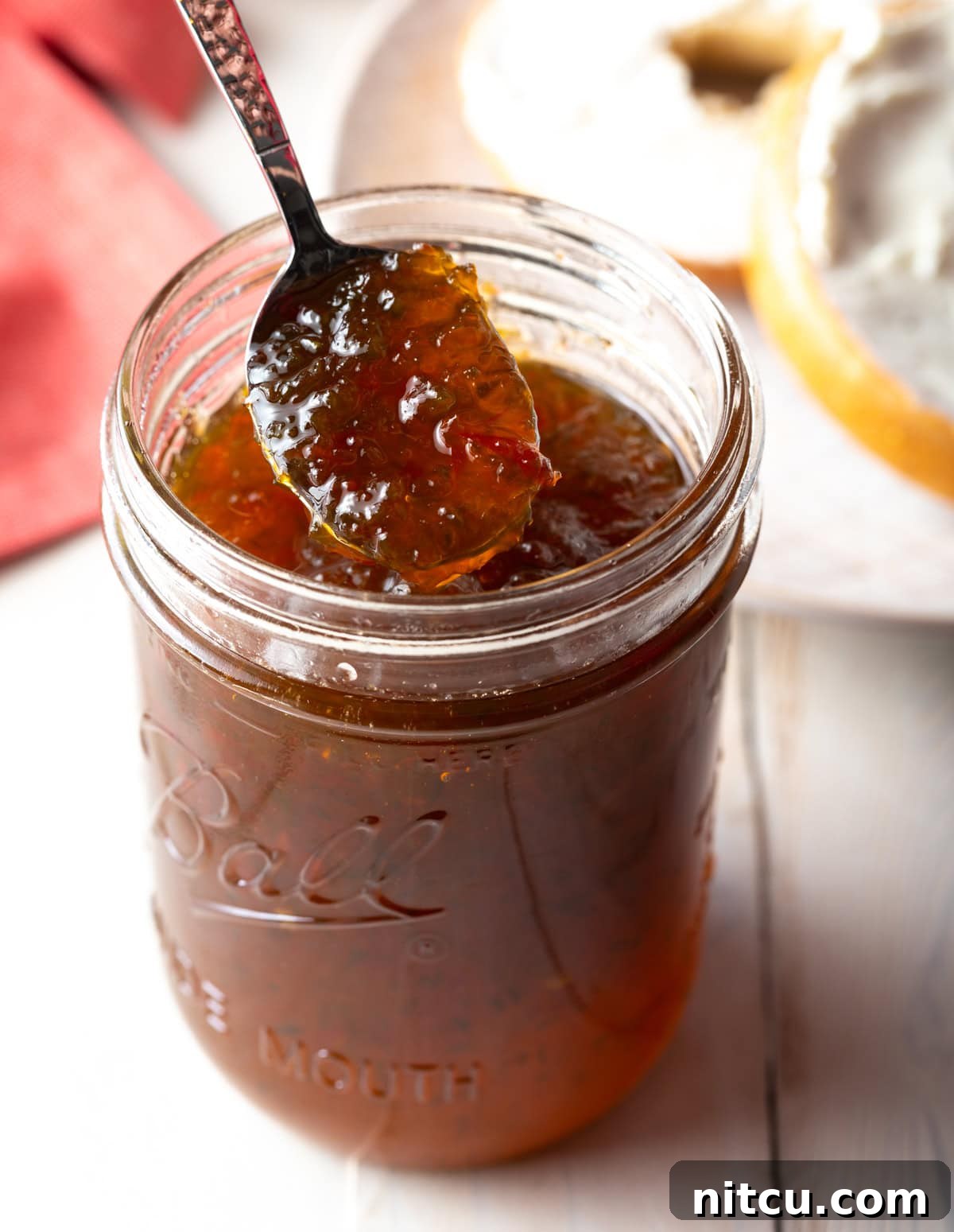
Homemade Jalapeño Jelly: A Sweet & Spicy Canning Classic
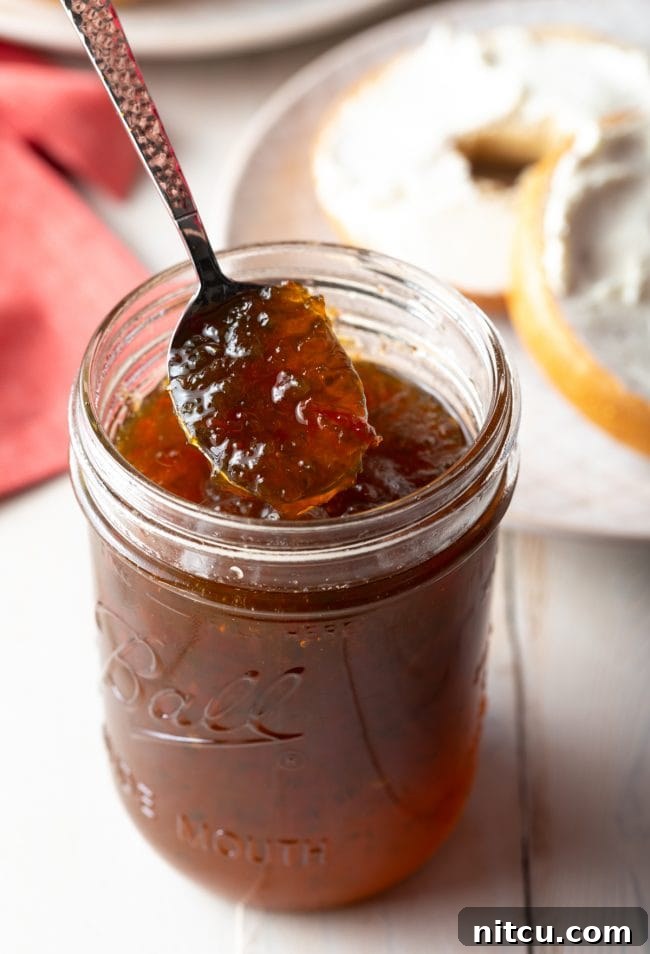
Unlock the secret to crafting a vibrantly flavored, homemade Jalapeño Jelly with our timeless canning recipe. This delightful sweet and spicy preserve is a perfect companion for everything from savory bagels with cream cheese to elegant charcuterie boards, offering a unique kick that elevates any dish.
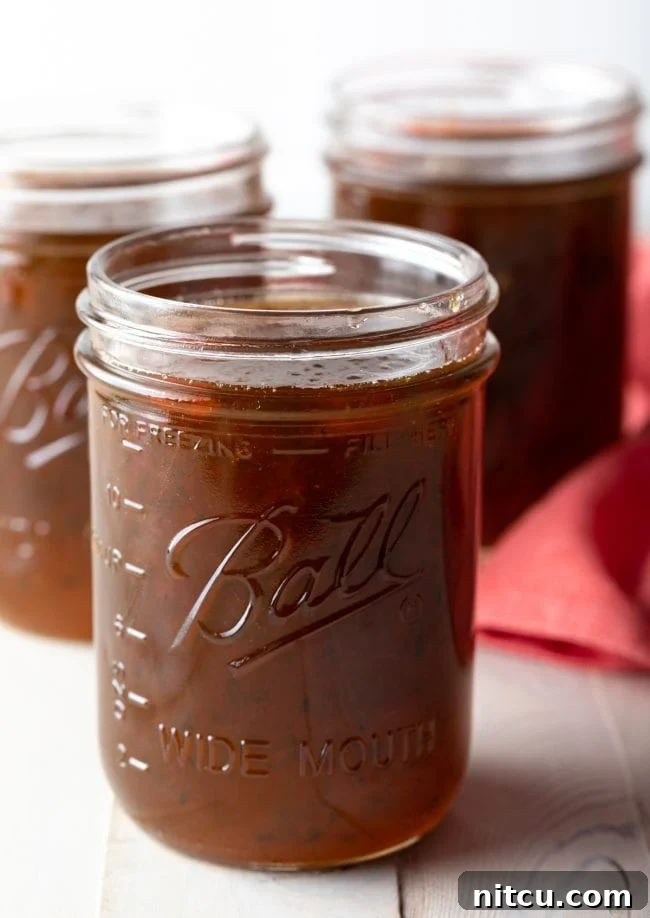

The Joy of Homemade Jalapeño Jelly
There’s something uniquely satisfying about creating preserves from scratch, and this Jalapeño Jelly recipe is no exception. While hot pepper jellies have graced tables for generations, crafting your own unveils a depth of flavor and freshness that store-bought versions simply can’t match. Imagine a perfect balance of fiery heat, comforting sweetness, and a tangy zest, all encapsulated in a beautiful, spreadable jelly. It’s truly a “perfectly perky” addition to your culinary repertoire.
This recipe offers the flexibility to prepare classic Jalapeño Jelly using traditional canning methods, ensuring a shelf-stable delight, or to whip up a quick and easy fridge or freezer jam for immediate enjoyment. We’ll guide you through both approaches, allowing you to choose the best method for your needs.
Why This Jalapeño Jelly Will Become Your Favorite
- Effortless Preparation with Minimal Ingredients: You’ll be amazed at how easily this incredible jelly comes together with just a handful of staple ingredients. Its straightforward process makes it an ideal project for both novice and experienced canners alike.
- Remarkably Versatile: This isn’t just a spread for toast. Its unique flavor profile allows it to transcend typical jelly uses. Slather it generously on bagels with cream cheese for a breakfast revelation, serve it alongside grilled chicken or pork for a sweet-spicy glaze, or elevate your next charcuterie board with a dollop of vibrant heat and sweetness.
- An Exquisite Homemade Gift: Few presents are as thoughtful and appreciated as homemade preserves. Packaged in charming jars, this jalapeño jelly makes a fantastic gift for friends, family, and hosts, especially during the holiday season or for any special occasion.
Not only is this Jalapeño Jelly naturally gluten-free, but it’s also incredibly quick to prepare, requiring just about 15 minutes of active cooking time. Once you taste its irresistible blend of flavors, it’s sure to become your absolute go-to spread for almost everything!
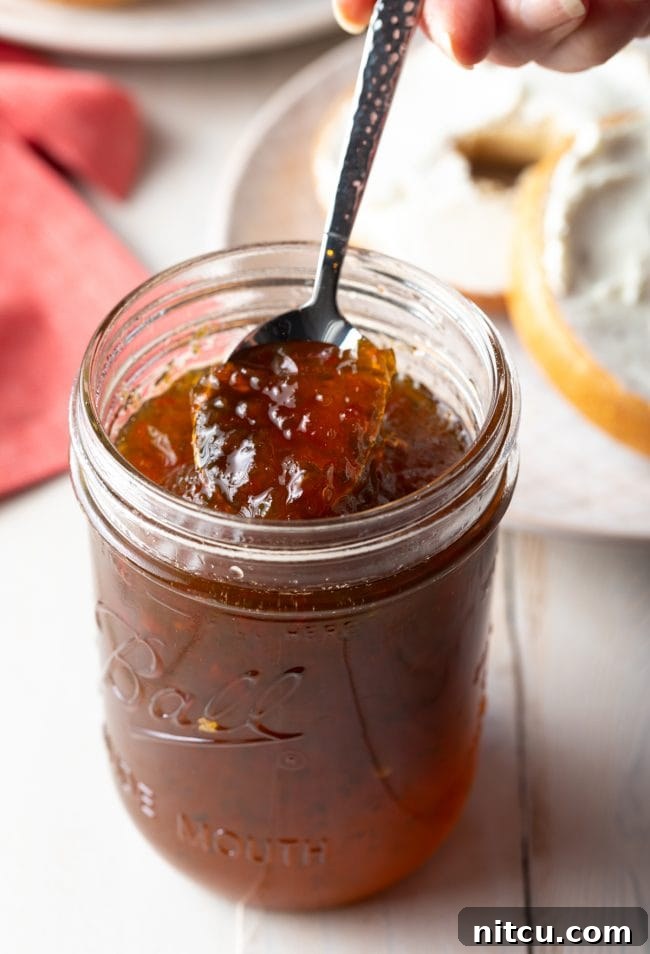
Essential Ingredients and Expert Tips
Creating the perfect Jalapeño Jelly relies on a few key ingredients, each playing a crucial role in achieving that signature sweet, spicy, and tangy profile. Here’s a breakdown of what you’ll need and some tips for success:
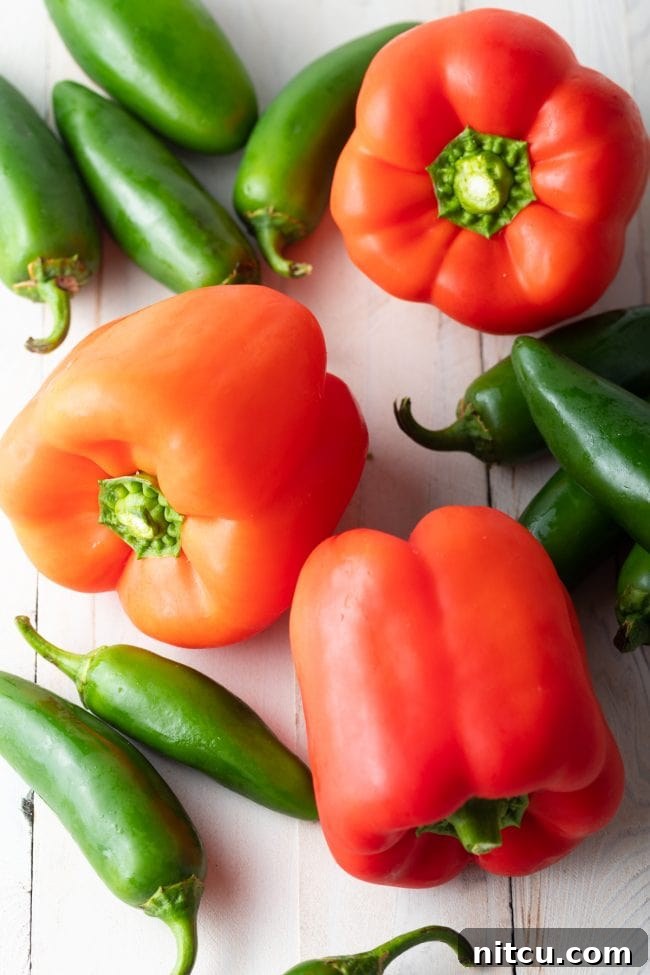
- Red Bell Peppers: These vibrant peppers are more than just a base for color; they contribute a wonderful zesty pepper taste and a subtle sweetness that rounds out the heat from the jalapeños. Choose firm, blemish-free red bell peppers for the best flavor and texture.
- Jalapeño Peppers: The star of the show! Jalapeño peppers are indispensable for delivering that wonderfully spicy kick. For a milder jelly, you can remove more of the seeds and membranes, which contain most of the capsaicin (the compound responsible for heat). For extra heat, leave some seeds in. Always wear gloves when handling hot peppers to prevent irritation.
- Granulated Sugar: Sugar serves a dual purpose in jelly making: it sweetens the preserve and acts as a vital preserving agent. The high sugar content helps inhibit bacterial growth, ensuring a longer shelf life, especially when canning. Don’t be tempted to drastically reduce the sugar unless you’re using a low-sugar pectin, as it can affect the set and preservation.
- Apple Cider Vinegar: This tangy ingredient is essential for balancing the sweetness and aiding in the gelling process. Its acidity helps break down the pepper cell walls, releasing their flavor and assisting pectin in forming a proper set. Use a good quality apple cider vinegar for the best results.
- Salt: A pinch of salt is crucial for enhancing and balancing the complex flavors of the jelly. It tames the sweetness, amplifies the pepper notes, and prevents the jelly from tasting flat. We recommend a fine-grain sea salt or kosher salt.
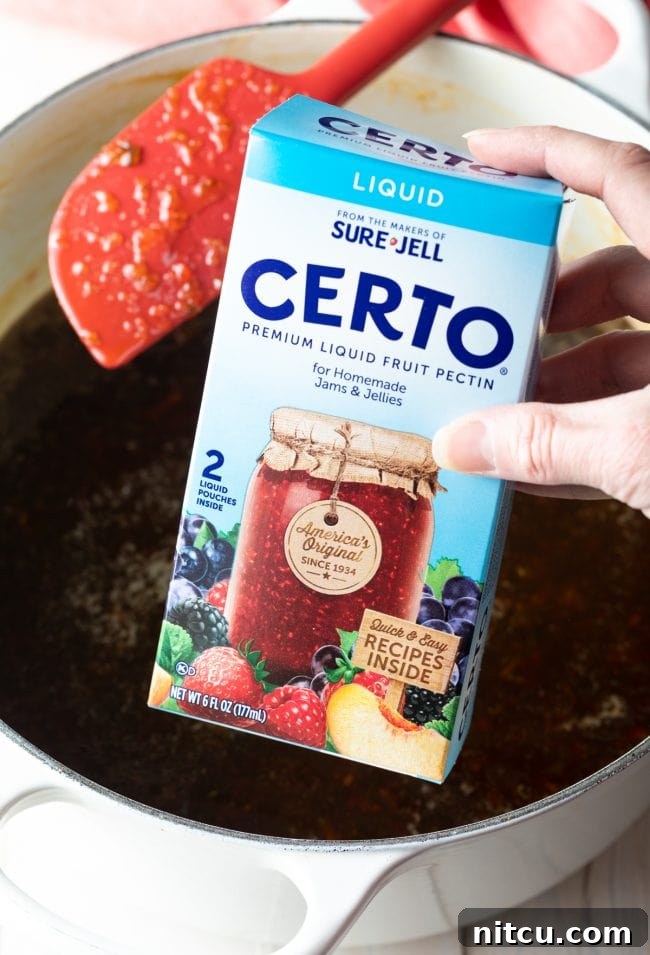
- Liquid Pectin: Pectin is a natural gelling agent found in fruits, and liquid pectin is key to achieving a firm, spreadable jelly consistently. It ensures your jalapeño jelly sets beautifully without needing excessive cooking time, which can dull the fresh pepper flavors. Ensure your liquid pectin is fresh and follow the package instructions for best results.
Creative Recipe Variations and Dietary Swaps
While the classic Jalapeño Jelly is a masterpiece in itself, this recipe serves as an excellent foundation for exploring a multitude of exciting variations. Don’t be afraid to experiment and customize it to your personal taste:
- Spicy Pepper Variations: If you’re a connoisseur of heat, feel free to swap out the jalapeños for other chile peppers. Remember to keep the red bell peppers as a base for their color and mild sweetness. Consider using:
- Habanero: For an intense, fruity heat.
- Serrano: Offers a bright, clean heat, usually hotter than jalapeños.
- Poblano: A milder option, providing an earthy, slightly smoky flavor with minimal heat.
- Thai Bird Chiles: For a very sharp and fiery kick.
- Hatch Chiles: Known for their unique flavor, ranging from mild to hot, often roasted for a deeper taste.
- Sweet and Smoky Blend: To achieve a rich, sweet, and smoky flavor profile, combine 2 large red bell peppers with 10 jalapeño peppers and 2-3 habanero chiles. The habaneros will add an extra layer of heat and a distinctive fruity aroma that complements the smoky notes beautifully.
- Fruity Twist with Added Spice: For a jelly that offers a delightful balance of fruitiness and a gentle heat, incorporate 2 red bell peppers, 9 piquillo peppers (known for their sweet and smoky flavor), 2 jalapeños, and 2-3 cayenne peppers. This combination yields a complex, multi-layered taste experience.
- Low-Sugar Option: If you’re looking to reduce your sugar intake, this jelly can still be made successfully. Opt for a specially formulated low-sugar pectin and adjust the granulated sugar to 3-4 cups. Be sure to follow the specific instructions on your low-sugar pectin package, as gelling properties can differ.
- Tropical Pineapple Sweetness: For an extra layer of sweetness and a tropical flair, consider adding some finely chopped pineapple chunks to your pepper mixture. The pineapple will infuse the jelly with its juicy, vibrant flavor, creating a wonderfully unique preserve.
How to Make the Best Jalapeño Jelly
Making this sweet and spicy Jalapeño Jelly is a surprisingly simple and rewarding process. With just a few steps, you’ll transform fresh peppers into a vibrant, flavorful preserve ready to elevate your meals and snacks. Follow these detailed instructions for a perfect batch every time:
For the complete Jalapeño Jelly recipe, including precise measurements, detailed instructions, and comprehensive storage tips, please refer to the printable recipe card located at the bottom of this article.
Before you begin, ensure you have all your ingredients prepped and your canning equipment (if using) sanitized and ready. This recipe moves quickly, so having everything organized is key!
Step-by-Step Guide:
- Prepare the Peppers: Begin by thoroughly washing your red bell peppers and jalapeño peppers. Carefully remove the stems, seeds, and any white membranes from both types of peppers. Remember to wear gloves when handling jalapeños, especially if you have sensitive skin, to avoid capsaicin burn.
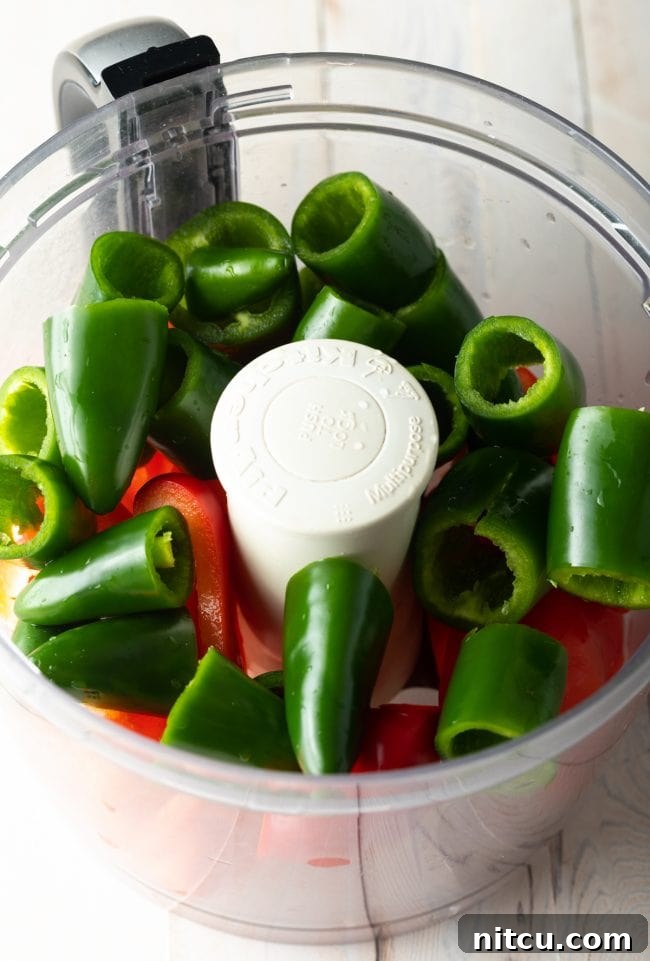
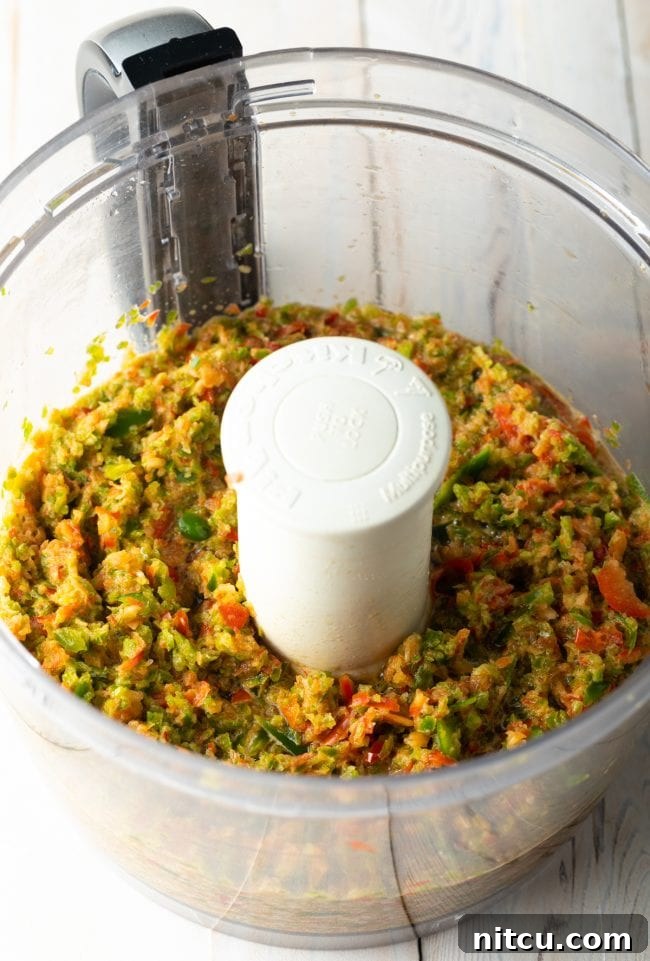
- Process the Peppers: Place the seeded and prepared bell peppers and jalapeños into the bowl of a large food processor. Pulse the peppers until they are very finely chopped, almost minced. You want a consistent, small dice for the best texture in your jelly. Avoid over-processing to prevent a watery consistency.
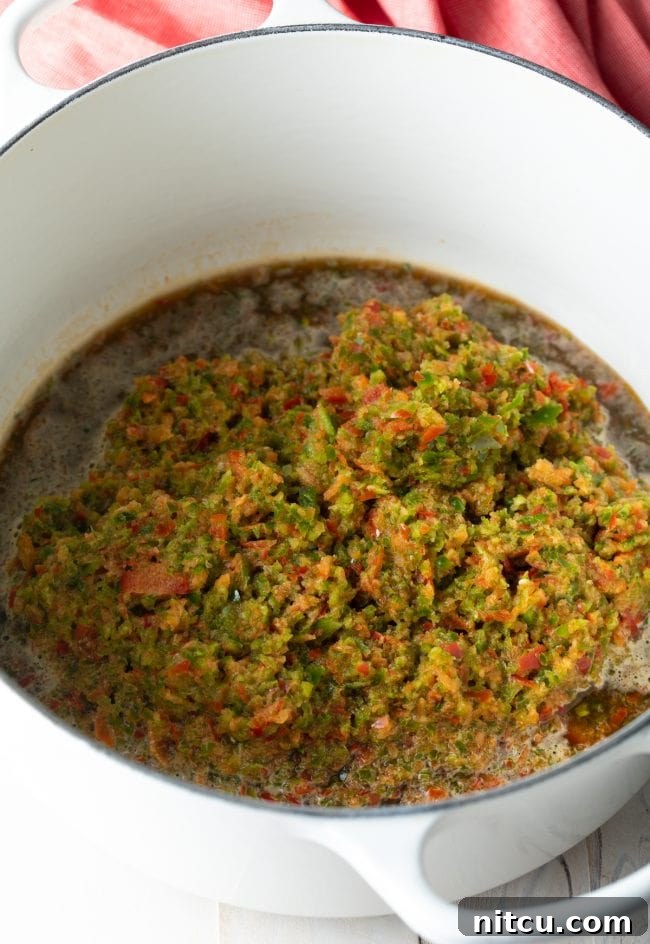
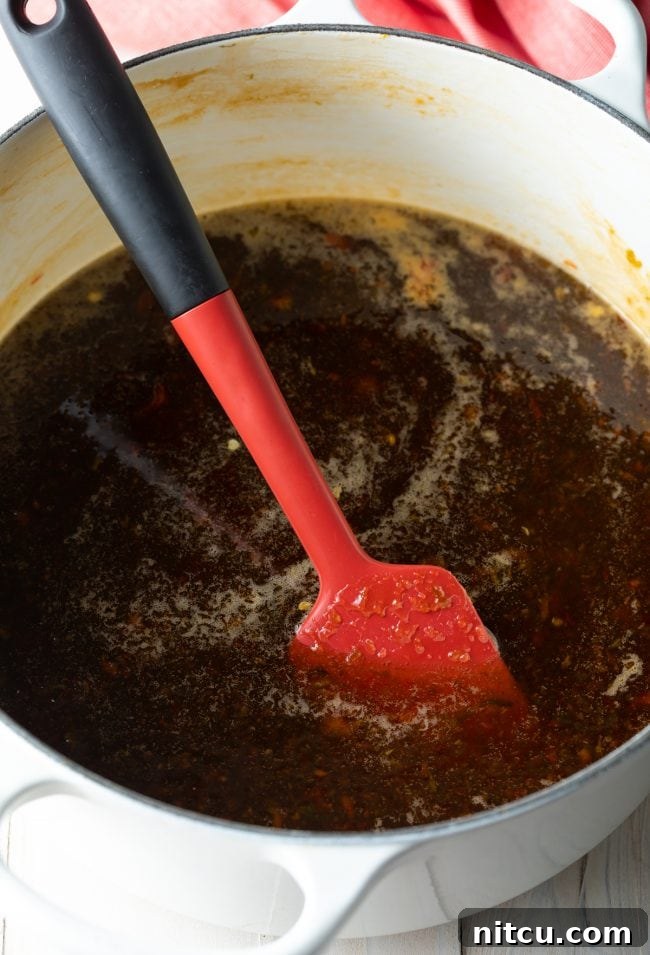
- Combine and Cook: Transfer the finely chopped peppers to a large 6-8 quart sauce pot. Add the granulated sugar, apple cider vinegar, and salt to the pot. Stir well to combine all ingredients. Place the pot over medium heat and bring the mixture to a low, rolling boil. Continue to cook, uncovered, for 14-15 minutes, stirring occasionally to prevent sticking and ensure even cooking. During this time, the peppers will soften, and the flavors will begin to meld.
- Add Pectin and Finish: After the initial cooking time, stir in the liquid pectin. Bring the mixture back to a boil and continue to simmer for exactly 1 more minute. This brief but vigorous boil is crucial for activating the pectin and ensuring your jelly achieves the proper set. Make sure to stir continuously during this final minute.
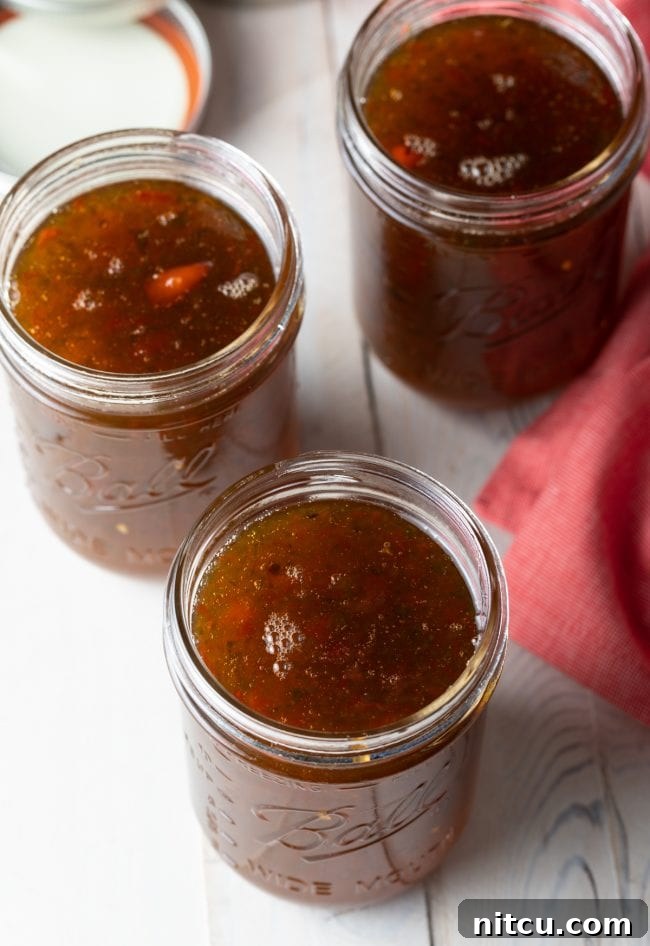
- Jar and Store: Carefully pour the hot pepper jelly into prepared jars. If you are canning, ensure your jars are sterilized and hot. Screw the lids on tightly. You can then proceed with the classic water bath canning protocol for shelf-stable preserves, place the jars directly in the refrigerator for fridge jam, or allow them to cool completely before freezing for freezer jam. If freezing, leave approximately 1 inch of headspace at the top of each jar to allow for expansion.
Storage and Shelf Life
Proper storage is essential to maintain the quality and safety of your homemade Jalapeño Jelly. Whether you opt for traditional canning or quick refrigerator/freezer methods, understanding the best practices will ensure your delicious preserves last.
- Storing Leftovers (Opened Jars): Once a jar of hot pepper jelly has been opened, it should always be resealed and stored in the refrigerator. Consume refrigerated opened jars within 6 months for the best flavor and quality.
- Shelf-Stable Storage (Unopened, Canned Jars): Jars of hot pepper jelly that have been properly processed using a water bath canner and remain unopened are shelf-stable for an impressive period. They will last for at least 18 months and often up to 2 years when stored in a cool, dark place away from direct sunlight. Always check for proper seals before storage.
- Freezing Leftovers: This jelly freezes beautifully! You can store homemade jalapeño jelly in freezer-safe jars or containers for up to 6 months. Remember to leave adequate headspace (about 1 inch) in the jars to prevent breakage as the jelly expands during freezing. Thaw in the refrigerator before use.
Irresistible Serving Suggestions
The delightful sweet and spicy kick of homemade Hot Pepper Jelly makes it incredibly versatile, perfect for enjoying any time of day with meals and snacks. Here are some inspired ways to incorporate this vibrant preserve into your culinary creations:
- Classic Breakfast & Brunch:
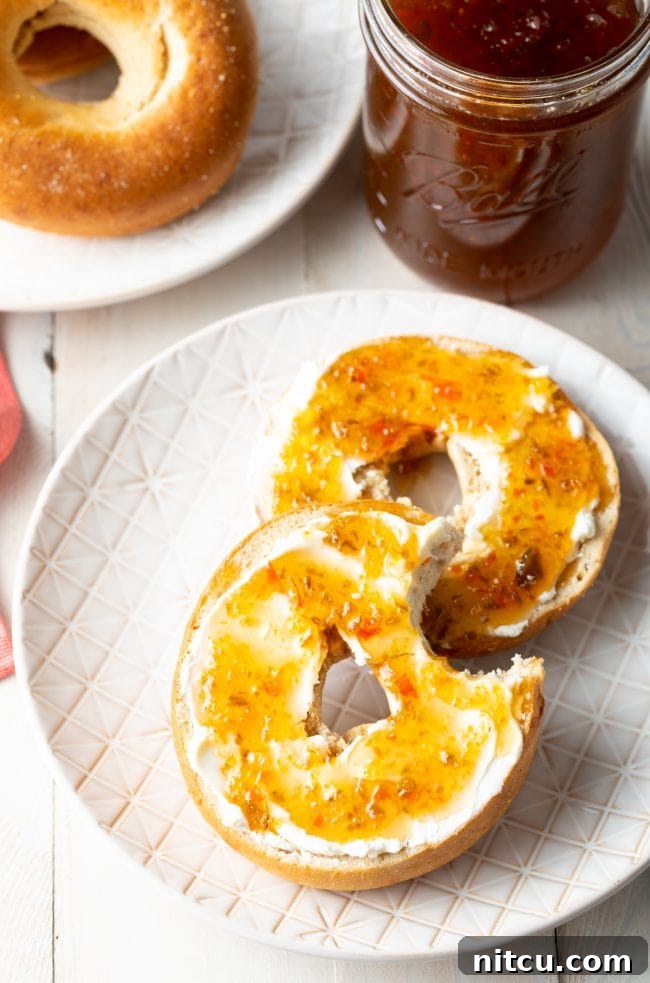
- Spread generously over toasted bagels with a thick layer of cream cheese for a quintessential sweet and savory pairing.
- Dollop onto warm croissants, fluffy pancakes, or crispy waffles for a surprising twist.
- Mix into scrambled eggs or an omelet for an unexpected burst of flavor.
- Savory Appetizers & Snacks:
- Serve as a gourmet condiment on a cheese and charcuterie board. It pairs exceptionally well with aged cheddar, goat cheese, or brie.
- Use as a dipping sauce for crispy spring rolls, chicken tenders, or even jalapeño poppers.
- Whisk into a vinaigrette for a unique salad dressing, adding a sweet-spicy tang to your greens.
- Main Course Enhancements:
- Spoon it as a glorious glaze over grilled chicken, baked pork chops, or roasted salmon. The heat caramelizes beautifully, creating a sticky, flavorful crust.
- Spread onto sandwiches or burgers as a vibrant condiment, transforming a simple meal into something extraordinary.
- Use it as a base for a quick stir-fry sauce or a marinade for shrimp or tofu, infusing your dishes with its distinctive character.
- Unexpected Delights:
- Substitute it for cranberry sauce in elegant appetizers like Cranberry Brie Bites for a surprisingly delicious and sophisticated alternative.
- Mix a spoonful into plain Greek yogurt for a spicy-sweet snack or breakfast.
- Combine with cream cheese and serve as a quick dip with crackers or pretzels.
Print Recipe
Leave a Review »
Jalapeño Jelly Recipe (Hot Pepper Jelly)
Craft this irresistible sweet and spicy homemade Jalapeño Jelly using our classic canning method. It pairs wonderfully with bagels, cream cheese, grilled meats, and more!
Ingredients
- 2 red bell peppers seeded
- 12 jalapeño peppers seeded (adjust quantity and seeding for desired heat)
- 5 ½ cups granulated sugar
- 1 ¼ cup apple cider vinegar
- 1 teaspoon salt
- 3 ounces liquid pectin
Instructions
- Set out a large food processor. Place the seeded red bell peppers and jalapeños in the bowl. Cover and pulse until finely chopped, ensuring a consistent mince.
- Scoop the chopped peppers into a large 6-8 quart sauce pot. Add the granulated sugar, apple cider vinegar, and salt. Stir thoroughly. Place over medium heat and bring to a low boil. Cook for 14-15 minutes, uncovered, stirring occasionally.
- Once the cooking time is complete, stir in the liquid pectin. Bring the mixture back to a rolling boil and simmer for 1 more minute, stirring constantly to activate the pectin.
- Carefully pour the hot pepper jelly into sterilized jars. Screw the lids on tightly. You can then either process by the classic water bath canning protocol, place in the refrigerator for immediate use, or freeze. If freezing, remember to leave approximately 1 inch of air space at the top of the jar to allow for expansion.
Notes
Hot Pepper Jelly Variations: Feel free to experiment with different peppers for varied heat levels and flavors. While using red bell peppers as a base for color is recommended, you can substitute jalapeños with habanero, serrano, poblano, Thai bird, or hatch chiles. Approximately 12 average jalapeños weigh around 2/3 pound.
Storage for Canned Jars: Left unopened and properly canned, jars of Hot Pepper Jelly are shelf-stable for at least 18 months, and typically up to 2 years, when stored in a cool, dark pantry.
Storage for Opened Jars: Once opened, reseal and refrigerate jars. Consume within 6 months for optimal freshness and flavor.
Nutrition
Frequently Asked Questions About Jalapeño Jelly
Jalapeño pepper jelly is incredibly versatile and can be used in a multitude of ways! It’s famously delicious as a spread for breakfast items like bagels with cream cheese, toast, or English muffins. For savory applications, it makes an excellent glaze for roasted meats like pork loin or chicken, a zesty addition to grilled cheese sandwiches or gourmet burgers, and a superb dipping sauce for appetizers such as chicken fingers or egg rolls. It also shines on charcuterie boards, pairing beautifully with a variety of cheeses and crackers, offering a sweet, spicy, and tangy contrast.
Achieving the perfect set for pepper jelly can sometimes be tricky, but there are common reasons why it might turn out too loose. Firstly, it’s crucial to use the correct amount of pectin, as specified in the recipe. Too little pectin, or expired pectin, will prevent proper gelling. Secondly, ensure the jelly is cooked for the precise duration indicated; undercooking can leave it watery. Conversely, overcooking can break down the pectin. Lastly, avoid adding any additional liquid beyond what the recipe calls for, as this can dilute the pectin and sugar concentration, hindering the setting process. Factors like humidity and elevation can also subtly affect setting, so always be mindful of your cooking conditions.
Absolutely! To reduce the heat in your jalapeño jelly, the key is in how you prepare the peppers. The majority of the capsaicin (the compound responsible for the heat) is concentrated in the seeds and the white membranes (placenta) inside the jalapeño. For a milder jelly, make sure to meticulously remove all seeds and as much of the white membrane as possible. You can also reduce the number of jalapeños used and increase the red bell peppers proportionally. Always taste a small piece of your raw jalapeño (wearing gloves) to gauge its heat level before adding it to the jelly, as pepper heat can vary widely.
The main difference lies in how the preserves are stored and their shelf life. Canning involves processing filled jars in a boiling water bath (or pressure canner for low-acid foods) to create a vacuum seal. This method makes the jelly shelf-stable for 1-2 years at room temperature, as the heat processing kills bacteria and enzymes. Freezer jam, on the other hand, is simply prepared, poured into jars, and then stored in the refrigerator or freezer. It does not undergo heat processing for sterilization, so it must be kept cold and has a shorter shelf life (up to 3 weeks in the fridge, 6-12 months in the freezer). Freezer jam often retains a fresher fruit flavor, while canned jam can have a slightly more “cooked” taste.