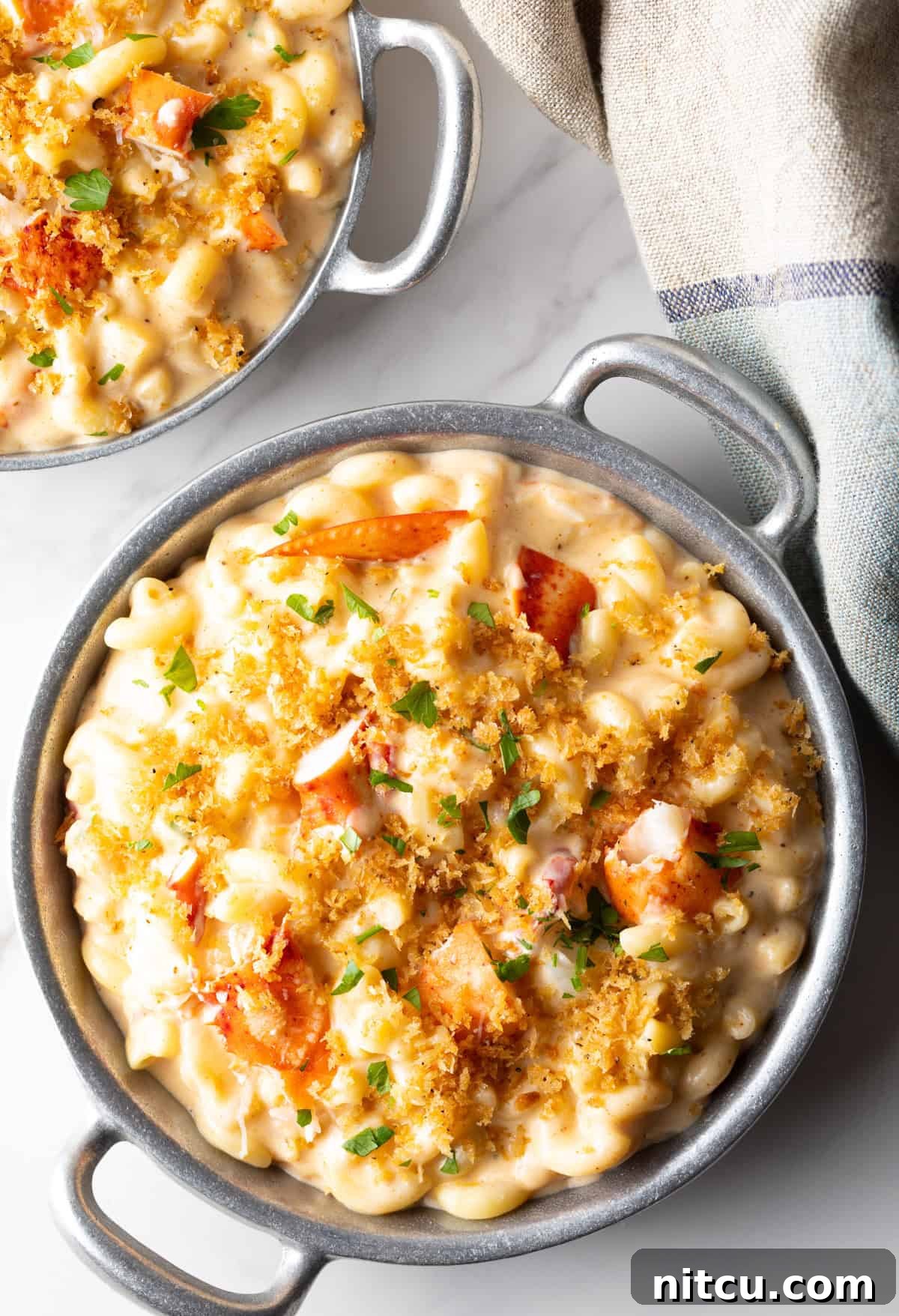
Indulge in the ultimate comfort food with a touch of gourmet luxury: my exquisite stovetop lobster mac and cheese recipe. This dish perfectly marries three decadent cheeses with succulent lobster meat, crowned with a crisp, golden breadcrumb topping. It’s a culinary masterpiece that feels incredibly special, ideal for intimate date nights or elegant dinner parties, yet it remains surprisingly straightforward to prepare and isn’t overly rich or heavy.
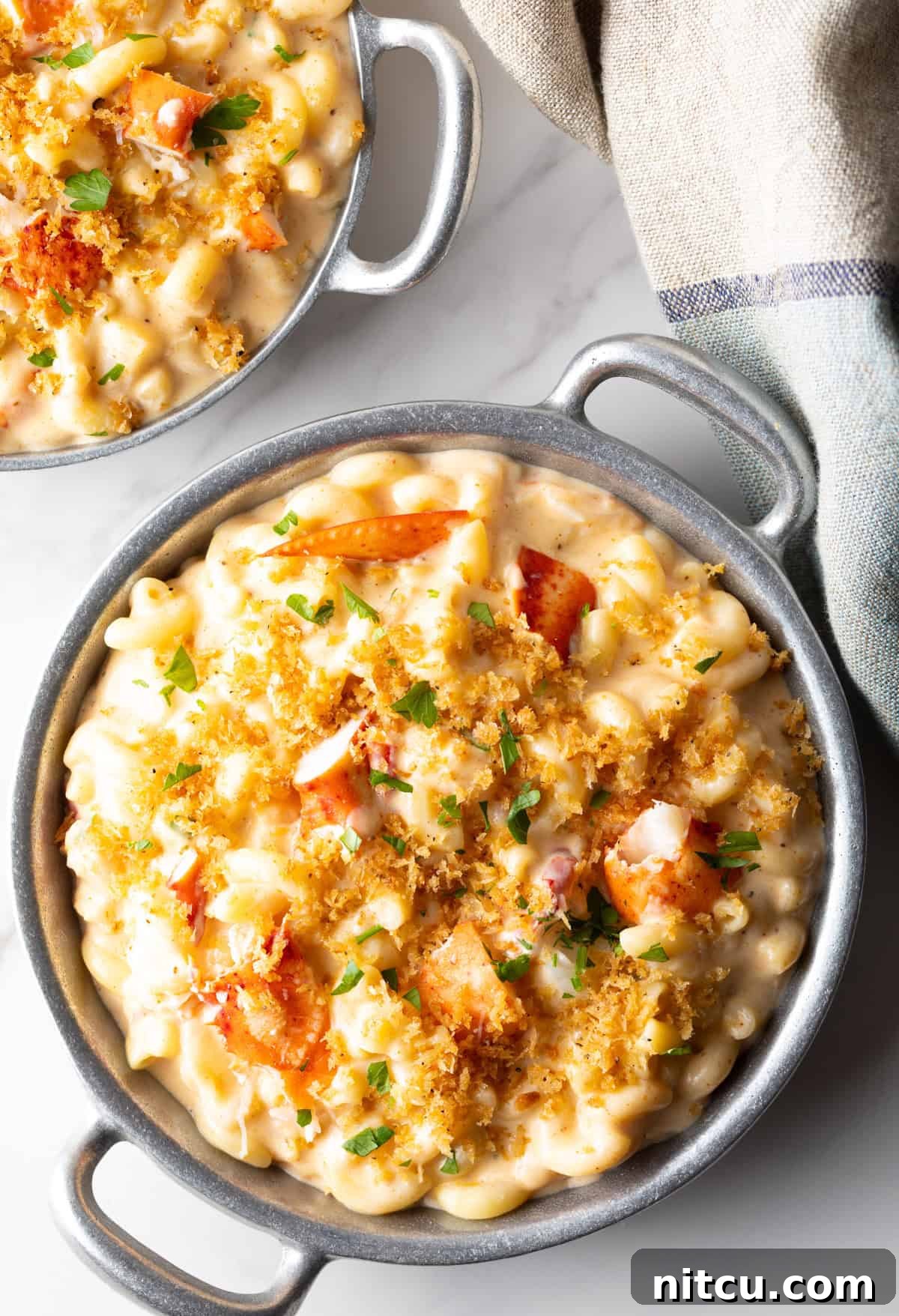
Most culinary enthusiasts will agree that the addition of lobster elevates any dish to new heights. This sophisticated yet approachable seafood reigns supreme in American cuisine, transforming even the simplest meal into an elegant and unforgettable experience. Consider, for instance, how a classic hoagie-style sandwich is magnificently upgraded by my authentic Maine lobster roll recipe. Today, I am thrilled to share another one of my favorite restaurant-quality creations: a harmonious blend of rustic homemade macaroni and cheese with premium lobster tails, resulting in a truly decadent and accessible dish. I say this with utmost confidence, having savored countless versions of lobster mac and cheese throughout my life. If I spot it on a menu, I almost invariably order it, eager to compare it to my own rendition. While I’m occasionally delighted, more often than not, it simply doesn’t quite measure up to the superior flavor and texture I achieve in my home kitchen.
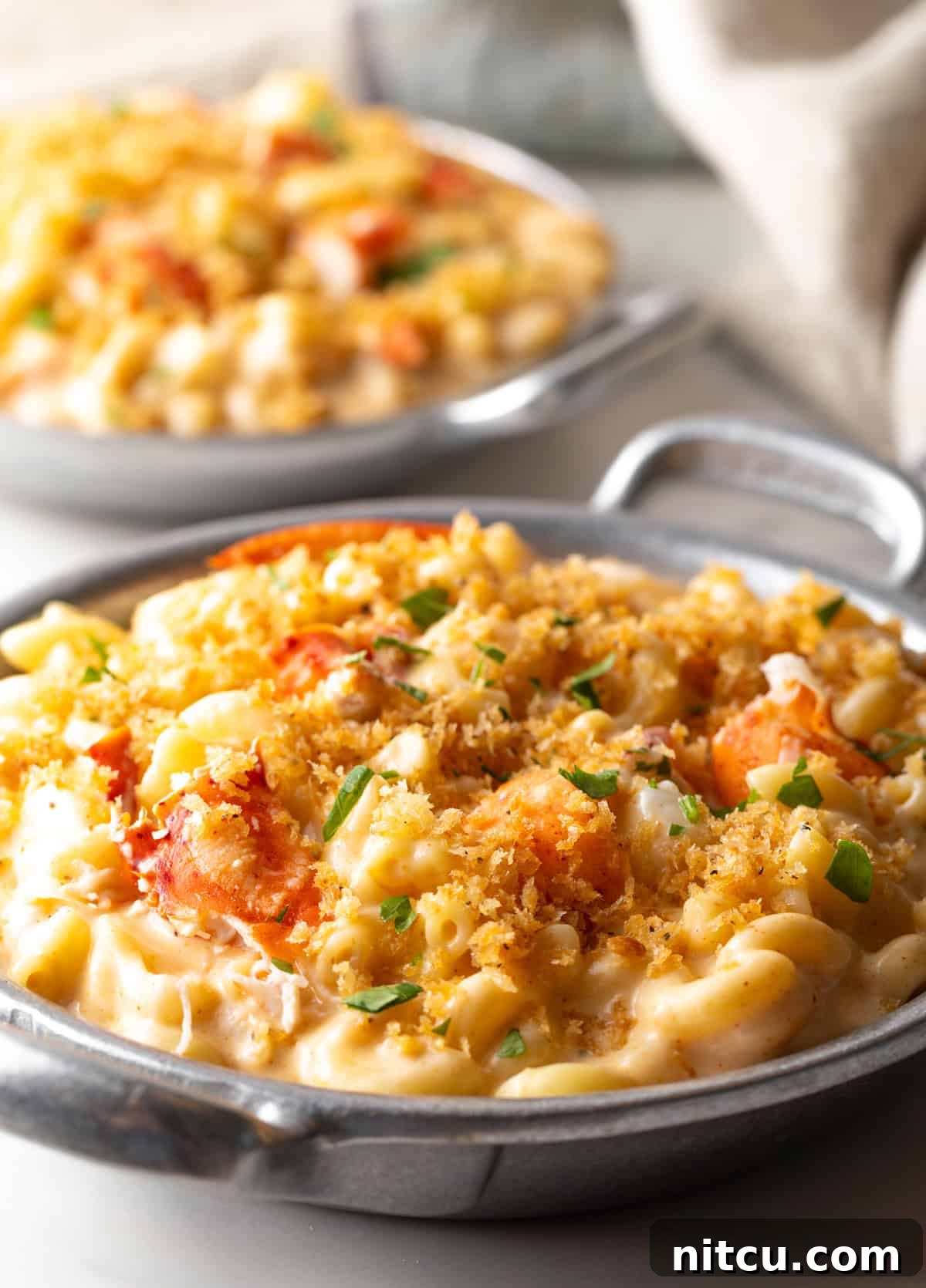

Why This Lobster Mac and Cheese Stands Out
Luxury Comfort Food Reimagined: Is it a sophisticated dish with a comforting twist, or beloved comfort food elevated to elegance? You decide! Regardless, this fusion of creamy, cozy macaroni and cheese with tender, sweet lobster is utterly delicious and guaranteed to impress even the most discerning palates.
Effortless Stovetop Preparation (No-Bake): Many lobster mac and cheese recipes call for baking in the oven to achieve a toasted breadcrumb topping. I find this step often unnecessary and, more importantly, it can compromise the delicate texture of a perfectly silky cheese sauce and the tenderness of the lobster. To ensure a crispy crumb topping without sacrificing the sauciness of the cheese, I prepare a quick Panko breadcrumb topping separately in a skillet. This allows you to sprinkle it generously over individual servings once the pasta is finished on the stovetop, ensuring every bite is both creamy and crunchy.
Restaurant-Quality, Home-Cooked Perfection: Imagine the price tag of a dish like this at a high-end restaurant today. Similar to my acclaimed lobster bisque recipe, this homemade lobster mac and cheese delivers an equally, if not more, fabulous experience. It costs a mere fraction per person and is ready to serve in under an hour. Plus, there’s no need to factor in a tip (though the chef—me!—would always appreciate the thought!).
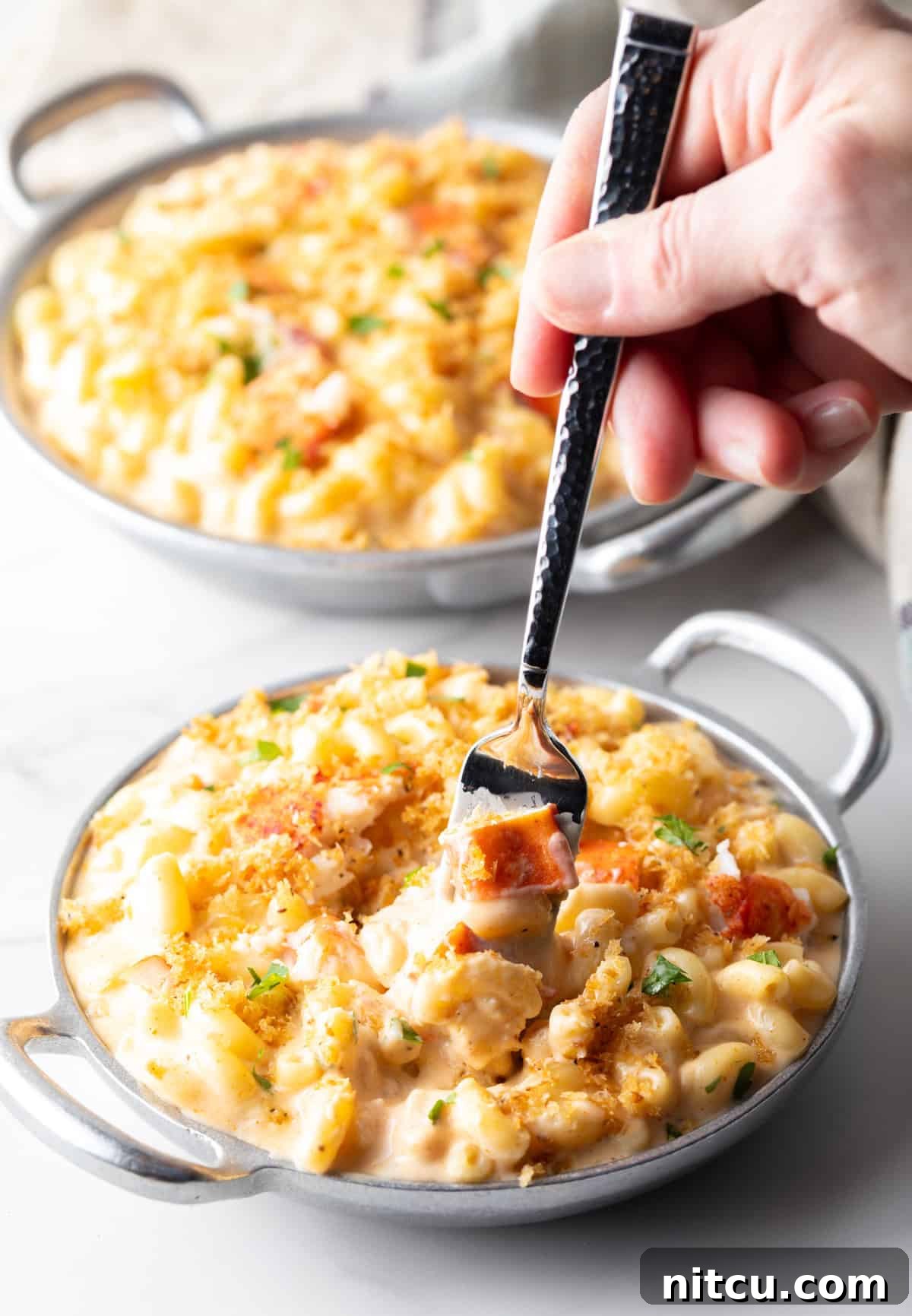
Essential Ingredients and Expert Tips
Crafting the perfect lobster mac and cheese begins with selecting quality ingredients and understanding how each contributes to the final masterpiece. Here’s a breakdown of what you’ll need and why:
- Dry Macaroni Noodles: While classic small elbow macaroni is my go-to for its ability to perfectly cradle the rich cheese sauce, any small pasta shape with nooks and crannies will work beautifully to capture all that cheesy goodness.
- Unsalted Butter: Using unsalted butter provides complete control over the seasoning of your dish. This allows you to adjust the salt content precisely to your taste, ensuring a perfectly balanced flavor profile.
- Half & Half: For an unparalleled velvety-rich flavor and supreme creaminess, half & half is indispensable. While whole milk can be substituted, it won’t achieve the same luxurious texture that elevates this mac and cheese to gourmet status.
- Premium Cheeses: The backbone of this decadent dish is a trifecta of cheeses. We combine full-fat cream cheese for its melting properties and tang, sharp cheddar cheese for its classic mac and cheese flavor, and smoked gouda for a complex, smoky depth. Always shred your cheese from the block for the freshest taste and to avoid the anti-caking agents found in pre-shredded varieties, which can affect the sauce’s texture.
- High-Quality Lobster Tails: The choice of lobster is crucial. Maine lobsters, known for their large, sweet, and buttery meat, are my preferred option. They are generally easier to cook and deliver the most exquisite flavor and tender texture, making them ideal for this luxurious dish.
- Old Bay Seasoning: This iconic blend of smoky, savory, and earthy spices is a non-negotiable for authentic American-style seafood. It imparts a distinctive flavor that truly complements the lobster and ties all the elements of the dish together. If you’re out of Old Bay, a good quality Cajun seasoning can serve as a suitable alternative.
- All-Purpose Flour: Essential for creating a thick, glossy, and smooth roux, which forms the base of our luscious cheese sauce. A properly cooked roux prevents a grainy sauce and ensures uniform consistency.
- Fresh Parsley: Stirring fresh chopped parsley in just before serving adds a vibrant herbaceous note and a pop of color, ensuring it remains fresh and bright rather than wilted. Remember to reserve a few pinches for garnish, enhancing the visual appeal of each serving.
Step-by-Step Guide to Crafting Stovetop Lobster Mac and Cheese
For precise ingredient proportions, detailed instructions, storage guidelines, and a video tutorial, please refer to the complete recipe card at the conclusion of this post.
1. Prepare the Lobster and Cheeses:
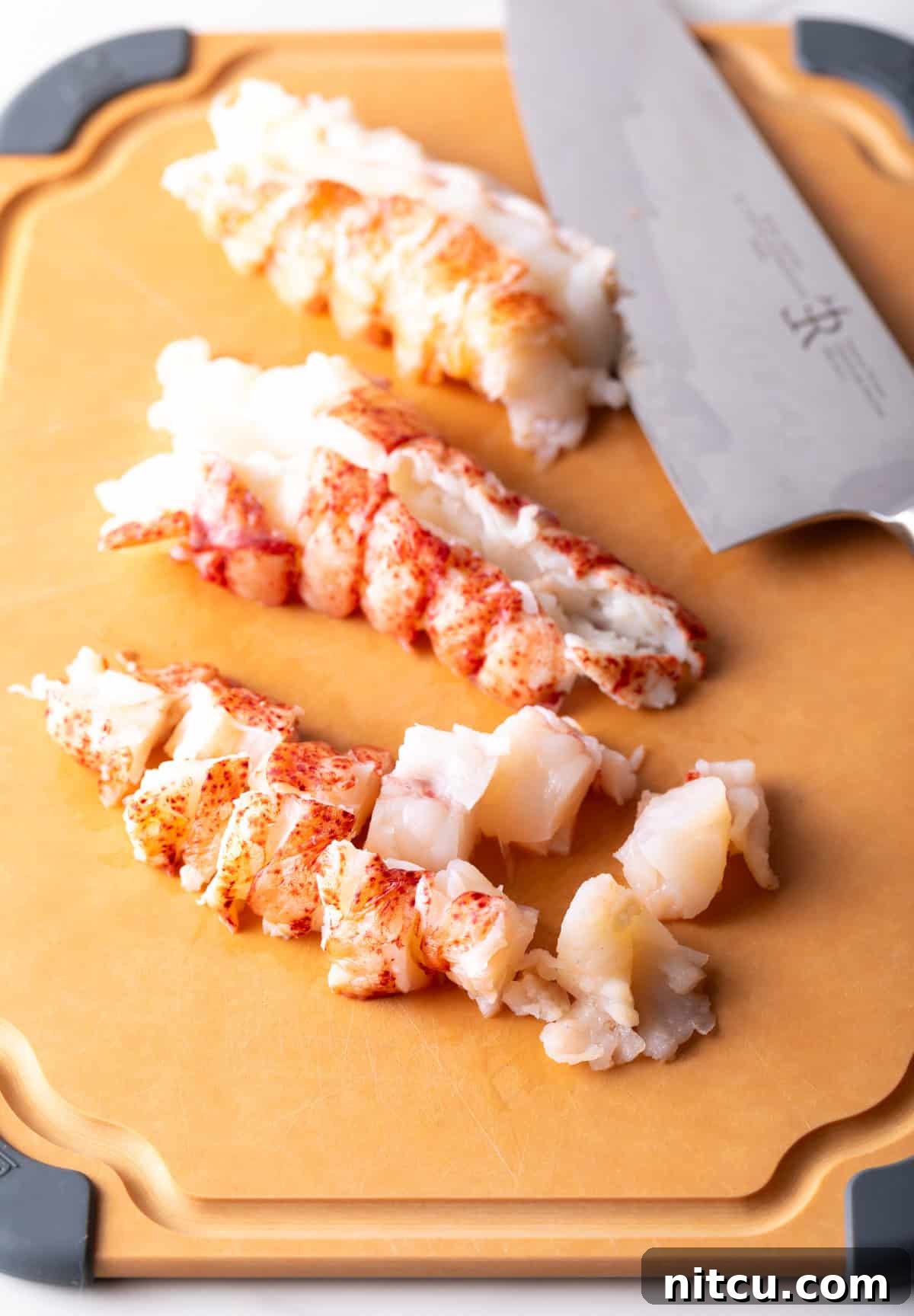
If you’re starting with raw lobster tails, begin by consulting my detailed guide on how to cook lobster tails to ensure they are perfectly prepared. Once cooked, carefully cut along the underside of the shells with kitchen shears and discard them. Chop the tender lobster meat into generous 1-inch chunks and set them aside. This size ensures you get a delightful bite of lobster in every forkful.
While the lobster cools slightly, take a moment to hand-shred your sharp cheddar and smoked gouda cheeses. This ensures a superior melt and flavor. Also, place your cream cheese on the counter to soften; this will help it melt smoothly into the sauce.
2. Toast the Crispy Breadcrumbs:
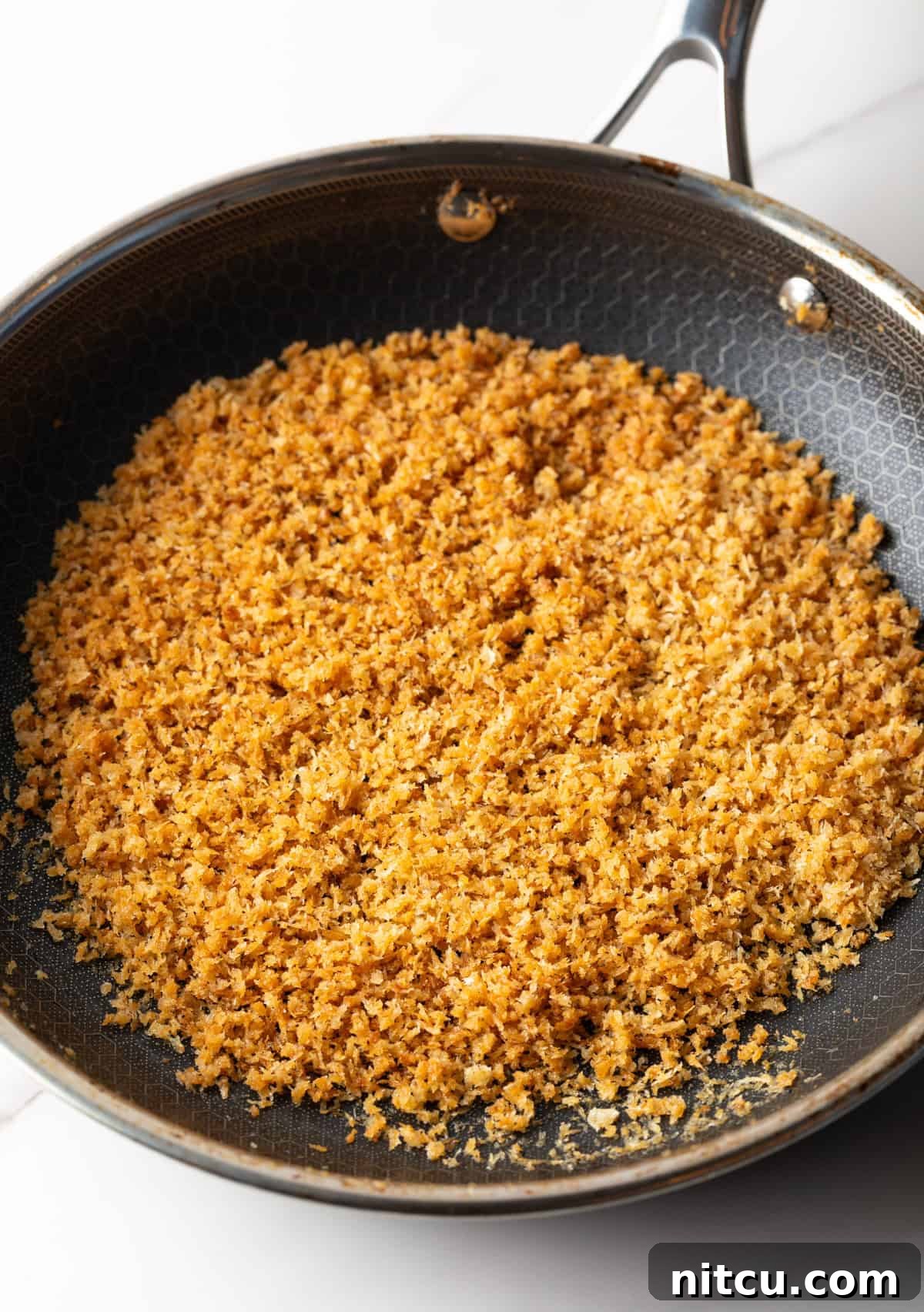
As highlighted earlier, creating a separate crispy breadcrumb topping is key to preserving the ideal texture of your mac and cheese. This method prevents the lobster and cheese sauce from overcooking, which can happen if baked in the oven. It’s incredibly simple:
Melt some butter in a small skillet over medium heat. Add the Panko breadcrumbs, along with a pinch of salt and pepper. Stir continuously as they cook until they achieve a beautiful golden-brown color and become wonderfully crispy. Immediately remove the skillet from the heat to prevent burning, and set the toasted breadcrumbs aside.
3. Cook the Pasta:
Next, bring a large pot of heavily salted water to a rolling boil. Add your macaroni noodles and cook them according to the package directions, but aim for just al dente. This means the pasta should still have a slight chew to it, not be soft or mushy. Begin checking a minute or two before the minimum suggested cook time. Just before draining, scoop out about a ladleful (approximately 1 cup) of the starchy pasta water into a heat-safe bowl. Immediately drain the pasta in a colander to prevent it from overcooking, and set it aside.
4. Prepare the Velvety Roux and Cream Base:
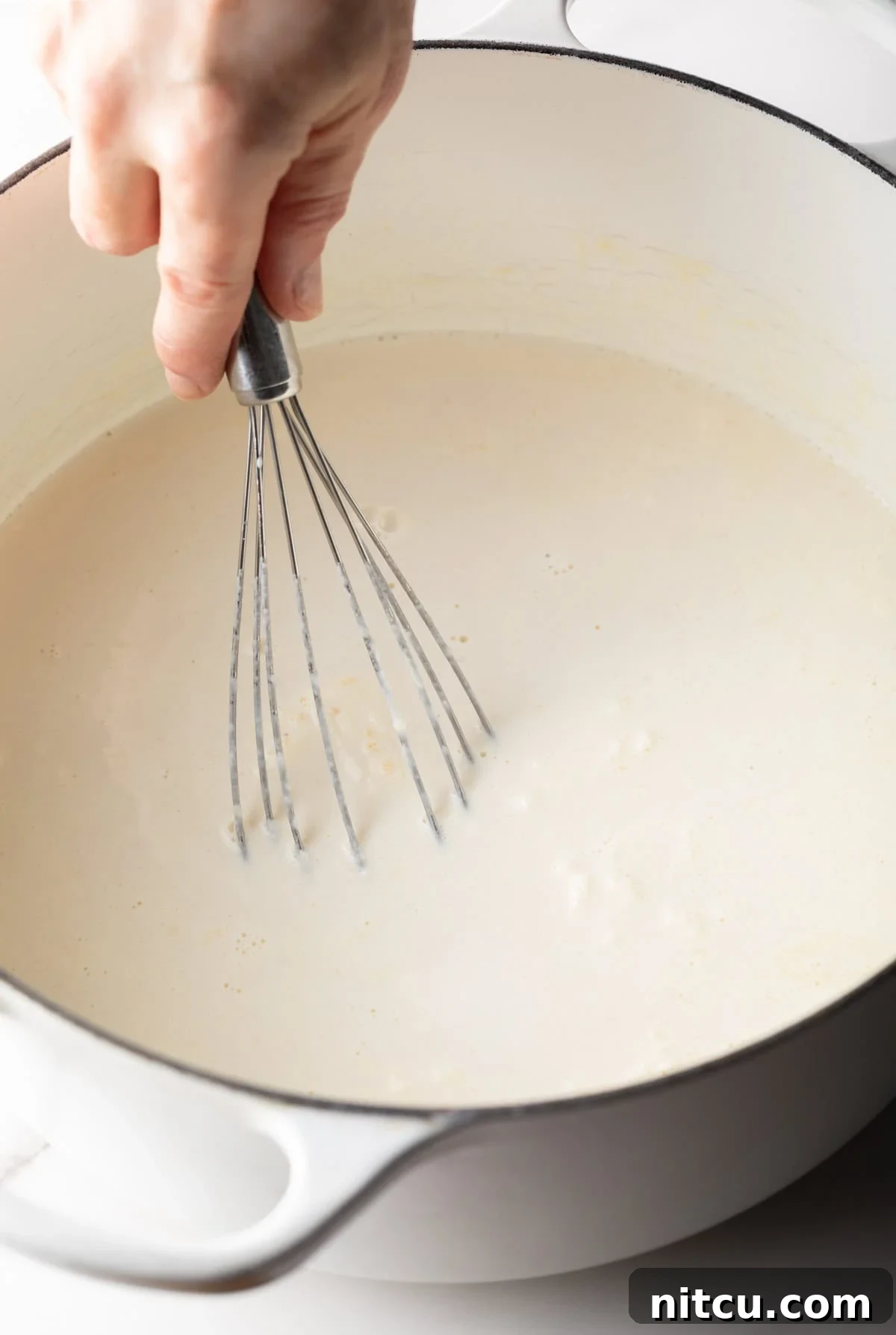
To minimize cleanup, use the same large pot used for the pasta to prepare the roux. Place the pot over medium heat and melt the butter. Once melted, sprinkle in the all-purpose flour. Whisk continuously for 2-3 minutes until the roux transforms into a beautiful golden paste. This crucial step is what makes the cheese sauce perfectly thick, smooth, and incredibly flavorful. Do not rush this process; an undercooked roux can result in a grainy sauce.
Next, gradually whisk in the half & half, ensuring there are no clumps. Once smooth, add the softened cream cheese and Old Bay seasoning. Whisk steadily until the cream cheese is completely melted and fully incorporated into the mixture, creating a rich, aromatic base.
5. Incorporate the Cheeses:
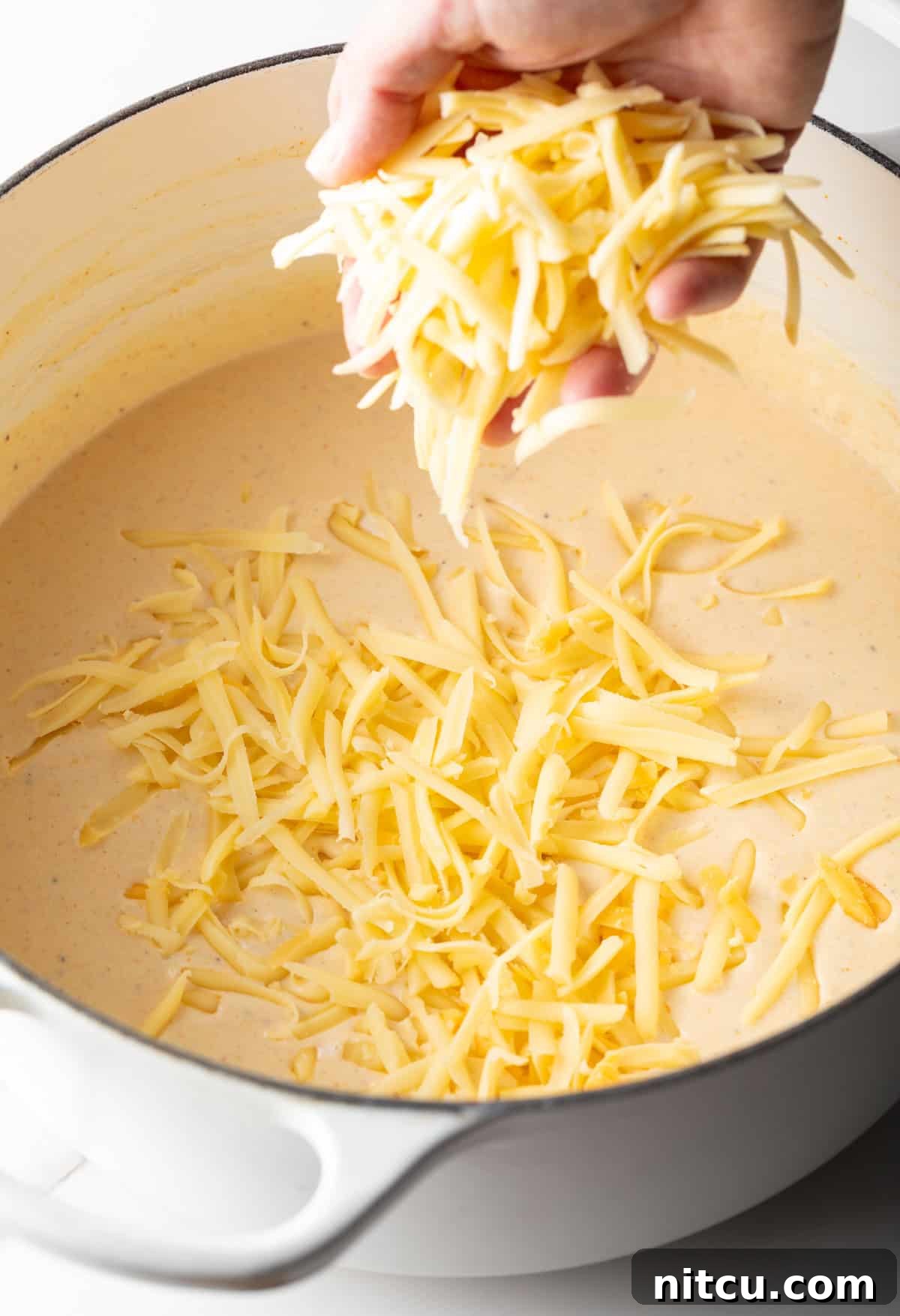
At this stage, slightly lower the heat to prevent the sauce from boiling, which can cause the cheese to curdle. Add the shredded sharp cheddar and smoked gouda cheeses, one handful at a time. Stir the sauce thoroughly after each addition until the cheese is completely melted and smoothly integrated before adding the next handful. This technique prevents the sauce from becoming gloopy and ensures a uniform, luscious consistency—a key detail when pairing with a premium protein like lobster.
6. Combine Pasta and Sauce:
Gently pour the drained pasta into the pot with the rich cheese sauce. Carefully stir to coat every noodle thoroughly in the luscious, creamy sauce. Avoid over-stirring or mashing the pasta to maintain its texture.
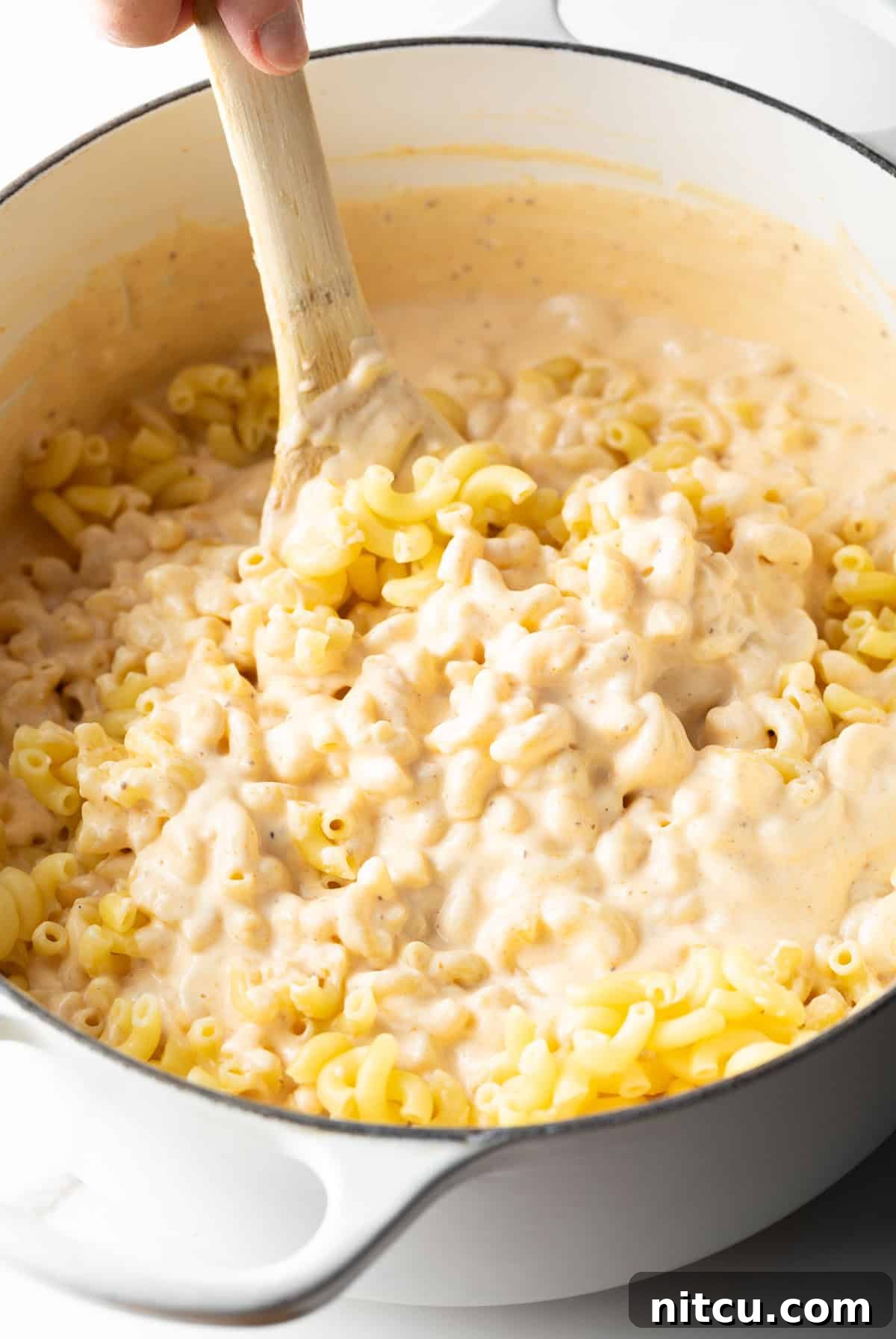
7. Fold in Lobster and Parsley:
Finally, add the cooked lobster pieces and chopped fresh parsley to the pot. Carefully fold everything together, ensuring the lobster and herbs are evenly distributed without overworking the mixture. If the sauce appears too thick for your preference, add a splash of the reserved pasta water to loosen it to your desired consistency. The sauce will naturally thicken a bit as it cools.
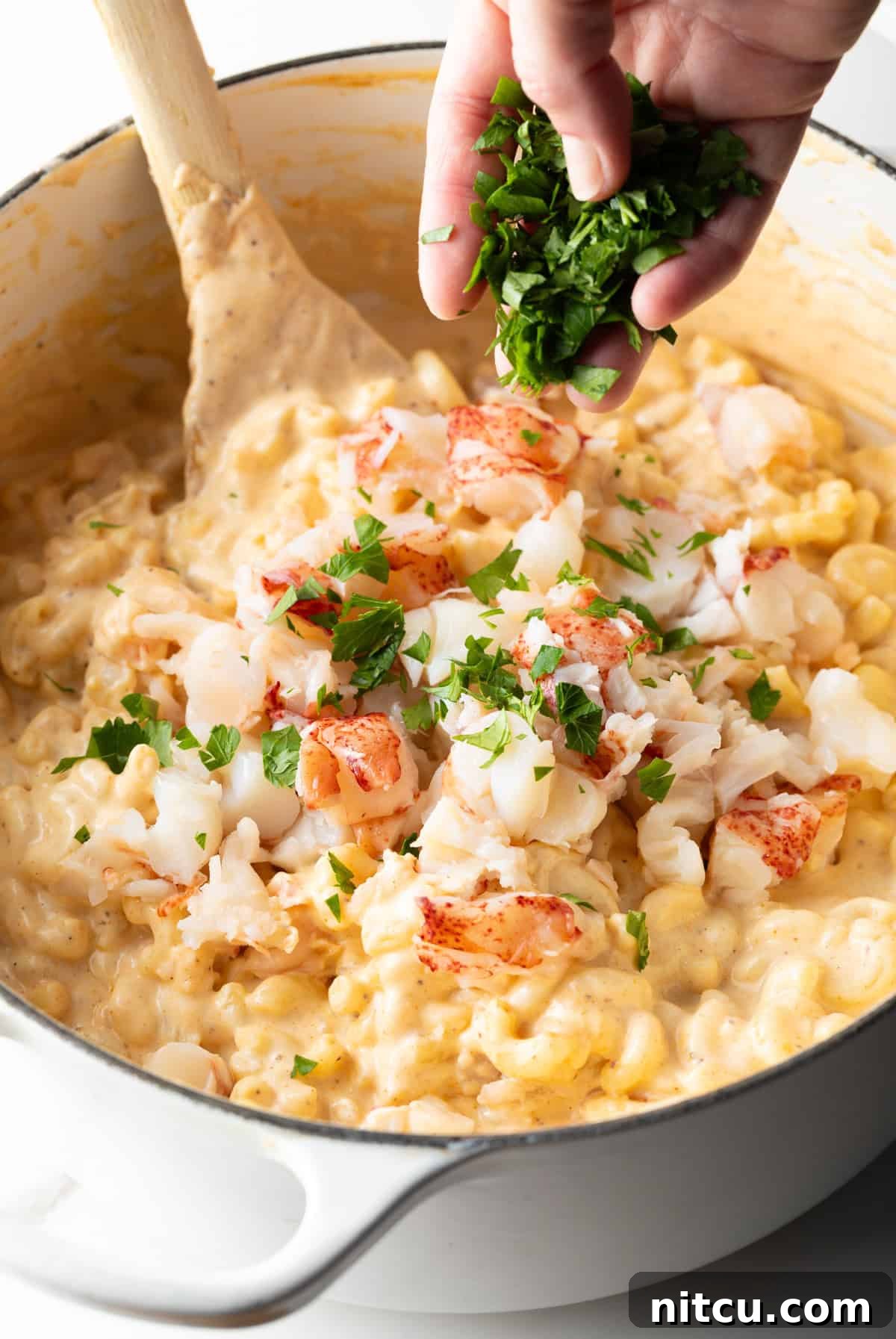
8. Serve with Breadcrumbs:
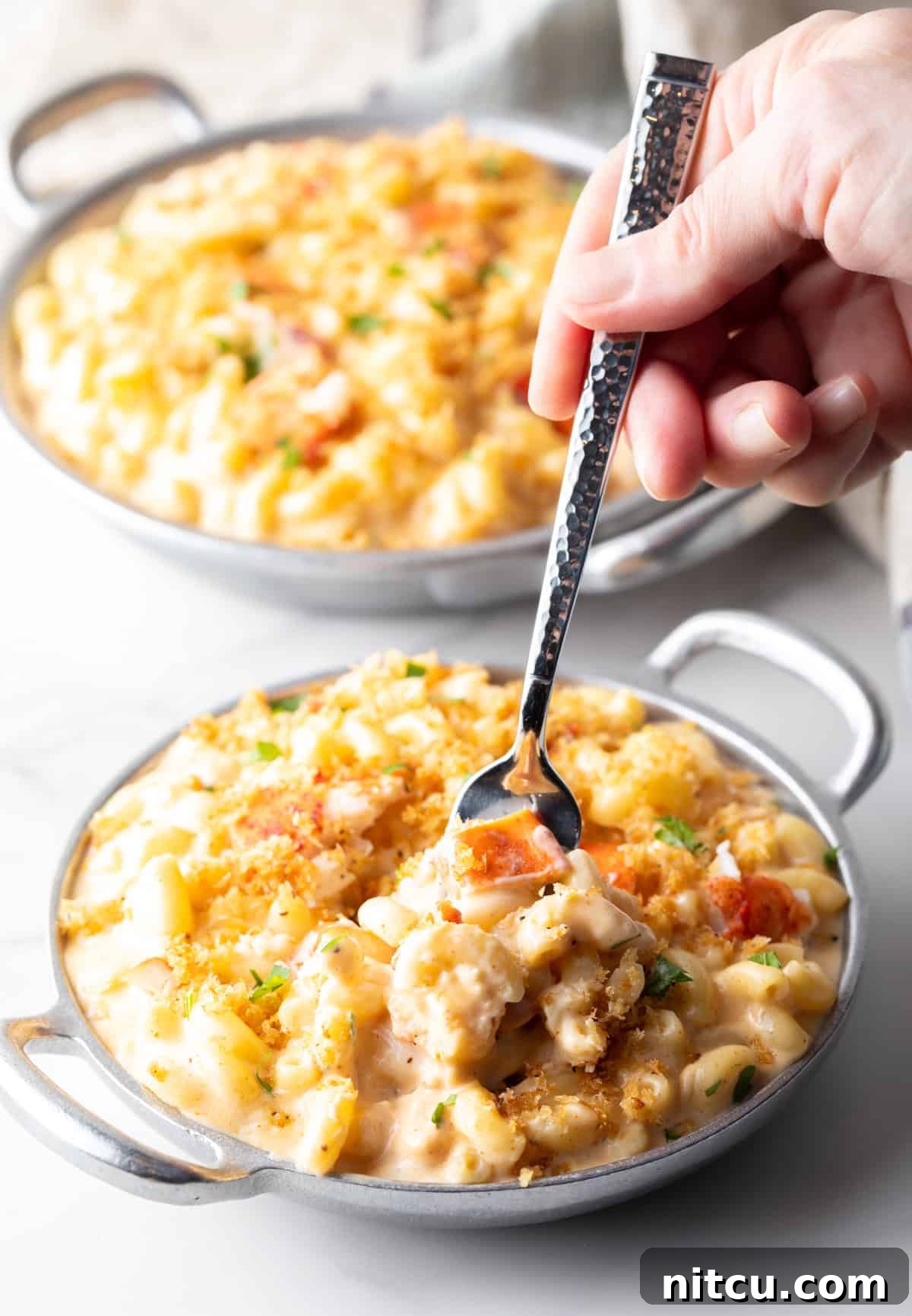
Transfer the entire pot of lobster mac and cheese to a large serving dish, or scoop individual portions as needed. Just before serving, generously sprinkle the toasted breadcrumbs over the top of each portion. This ensures they remain beautifully crispy, adding a delightful textural contrast to the creamy pasta. Garnish with a little extra fresh parsley for a finishing touch.
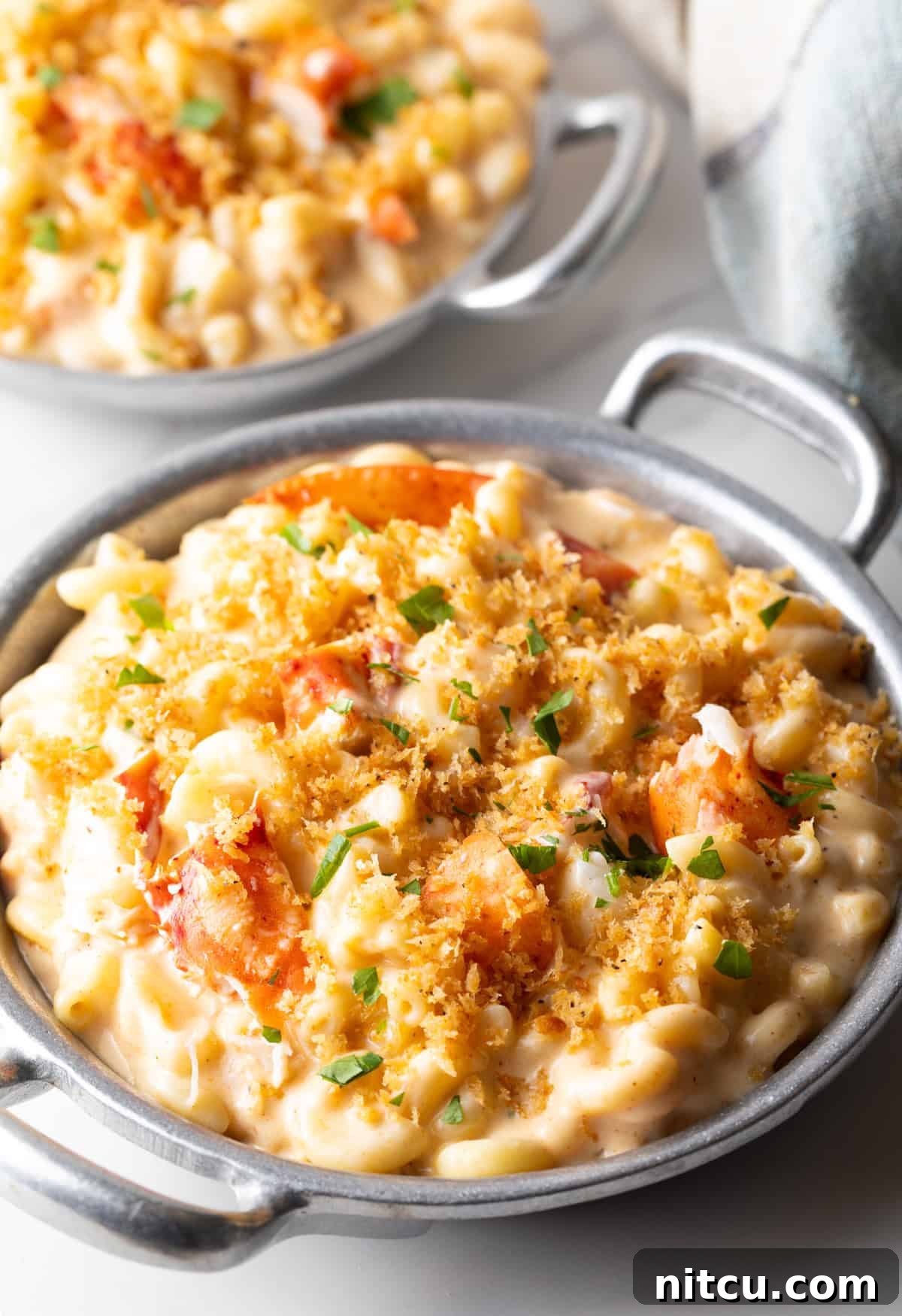
Achieving the Perfect Cheese Sauce: Essential Tips
Just like my New Orleans mac and cheese recipe, the success of your lobster mac and cheese hinges on two critical factors for the sauce. First, the roux: you must properly cook the flour and butter together to create a foamy, golden paste that will thicken your cheese sauce. It’s imperative to cook the roux long enough for it to develop a golden-brown color but not to burn it. An undercooked roux will result in a grainy, unappealing texture in your mac and cheese, failing to achieve that desired silky smoothness.
The second key is temperature control when adding the cheese. Always cook your cheese sauce at a lower temperature, ensuring it never boils. Boiling can cause the cheese to break or curdle, again leading to a grainy, separated sauce. By diligently following these two steps, you are guaranteed to create the most perfect, velvety, and smooth cheese sauce you’ve ever tasted, truly making your lobster mac and cheese exceptional.
Elevate Your Meal: Inspired Serving Suggestions
This is where you can truly tailor your lobster mac and cheese meal to your desired ambiance, whether you’re aiming for sophisticated elegance or relaxed casual dining. To complement the inherent luxury of the dish, I often lean towards refined side dishes such as perfectly roasted asparagus, crispy air fryer Brussels sprouts, decadent crispy baked Brussels sprouts, or the classic French elegance of green bean almondine.
For those evenings when a more laid-back dinner is preferred, simple yet delicious vegetable sides are ideal. Consider serving with quick roasted broccoli, lightly boiled broccoli, or a rustic Southern wilted lettuce. Each option offers a refreshing contrast to the rich mac and cheese, creating a perfectly balanced and enjoyable meal.
Storage and Reheating Best Practices
Leftovers of this delectable lobster mac and cheese will remain fresh for 2-3 days when stored in an airtight container in the refrigerator. However, for the absolute best experience, I strongly recommend enjoying this seafood pasta on the same day it is prepared. While the flavors will still be delightful on subsequent days, the beautiful, tender pieces of buttery lobster can unfortunately become a bit chewy when refrigerated and then reheated.
For the same reason—to preserve the delicate texture of the lobster—I do not recommend freezing this dish. It truly shines when served fresh, allowing the lobster’s sweetness and the cheese sauce’s creaminess to be at their peak.
Frequently Asked Questions About Lobster Mac and Cheese
The key to avoiding rubbery lobster is meticulous cooking time. I delve into this in detail in my comprehensive guide on the best methods to cook lobster. For a quick tip: the main thing to remember is not to overcook it! The meat should appear *almost* raw when removed from heat; it will continue to gently cook through and reach perfect tenderness when combined with the hot macaroni and cheese sauce.
Absolutely! If lobster isn’t within your budget, or if you’re catering to a larger gathering, substituting lobster with shrimp yields equally fabulous results. In fact, I have an entirely separate and equally delicious shrimp mac and cheese recipe that you might love to try!
Explore More Pasta Recipes

Print Recipe
Stovetop Lobster Mac and Cheese
This stovetop lobster mac and cheese is the pinnacle of comfort food, elevated with luxurious seafood and a rich blend of three cheeses. It’s a special dish, perfect for cozy date nights or elegant dinner parties, yet it’s surprisingly easy to make and not overly heavy.
Video Tutorial
Ingredients
- 16 ounce box dry macaroni noodles or any small pasta shape
- 3 tablespoons butter
- 2 tablespoons all-purpose flour
- 3 cups half & half
- 4 ounces cream cheese softened
- 4-5 teaspoons Old Bay seasoning or Cajun seasoning
- 2 cups shredded sharp cheddar cheese off the block
- 1 ½ cups shredded smoked gouda off the block
- 1 – 1 ½ cooked lobster tails (four 4-6 oz tails recommended)
- 2 tablespoons chopped parsley
Optional Breadcrumb Topping
- ½ cup panko breadcrumbs
- 3 tablespoons butter
- Salt and pepper to taste
Instructions
- If using raw lobster tails, follow our tutorial for cooking lobster tail until just tender. Then, cut shells with kitchen shears and discard. Chop the lobster meat into 1-inch pieces and set aside.
- For the optional crunchy breadcrumb topping, heat a small skillet over medium heat. Add 3 tablespoons of butter. Once melted, stir in the panko breadcrumbs and season generously with salt and pepper. Continue stirring until the breadcrumbs are golden-brown and crispy. Remove from heat and set aside.
- Shred both the sharp cheddar and smoked gouda cheeses. Place the cream cheese on the counter to soften at room temperature.
- Fill a 6-quart pot with heavily salted water and bring to a rolling boil over high heat. Add the macaroni pasta, stir well, and cook according to package instructions until just al dente (typically 6-9 minutes). Do NOT overcook; the pasta should still have a slight bite. Before draining, scoop out 1 cup of pasta water and set aside. Drain the pasta immediately in a large colander.
- Return the same pot to medium heat for the cheese sauce. Add 3 tablespoons of butter. Once melted, whisk in 2 tablespoons of all-purpose flour. Continue to whisk for 2-3 minutes until the roux mixture turns a golden color. This ensures a smooth, non-grainy, and evenly thickened cheese sauce.
- Gradually whisk the half & half into the roux until smooth and free of clumps. Then, add the softened cream cheese and Old Bay seasoning, whisking well until the cream cheese is fully melted and incorporated. Lower the temperature to avoid boiling the cheese sauce, which can cause it to break or curdle and result in a grainy texture.
- Add the shredded cheddar cheese and smoked gouda to the sauce, one handful at a time, stirring continuously until each addition is fully melted before adding more. This method helps maintain a smooth, luscious cheese sauce.
- Pour the drained pasta into the cheese sauce and gently stir to coat the noodles evenly. If the cheese sauce appears too thick, add some of the reserved pasta water, a tablespoon at a time, until it reaches your desired consistency.
- Finally, fold in the cooked lobster chunks and chopped parsley. Serve warm, garnished generously with the toasted breadcrumbs and extra fresh parsley.
Notes
Leftovers will keep for 2-3 days in an airtight container in the fridge. However, for the best experience, I recommend enjoying this seafood mac and cheese on the same day it’s made. While the flavor remains good, the lobster meat can become chewy after refrigeration and reheating.
For this reason, I also do not recommend freezing the dish.
Nutrition
Serving: 12oz, Calories: 724kcal, Carbohydrates: 54g, Protein: 32g, Fat: 42g, Saturated Fat: 25g, Polyunsaturated Fat: 2g, Monounsaturated Fat: 11g, Trans Fat: 0.3g, Cholesterol: 145mg, Sodium: 836mg, Potassium: 401mg, Fiber: 2g, Sugar: 7g, Vitamin A: 1235IU, Vitamin C: 2mg, Calcium: 697mg, Iron: 2mg
Cook It? Love It? Rate It!
Help this recipe shine on Google – consider giving it 5 stars so more food lovers can discover it. Thank you!