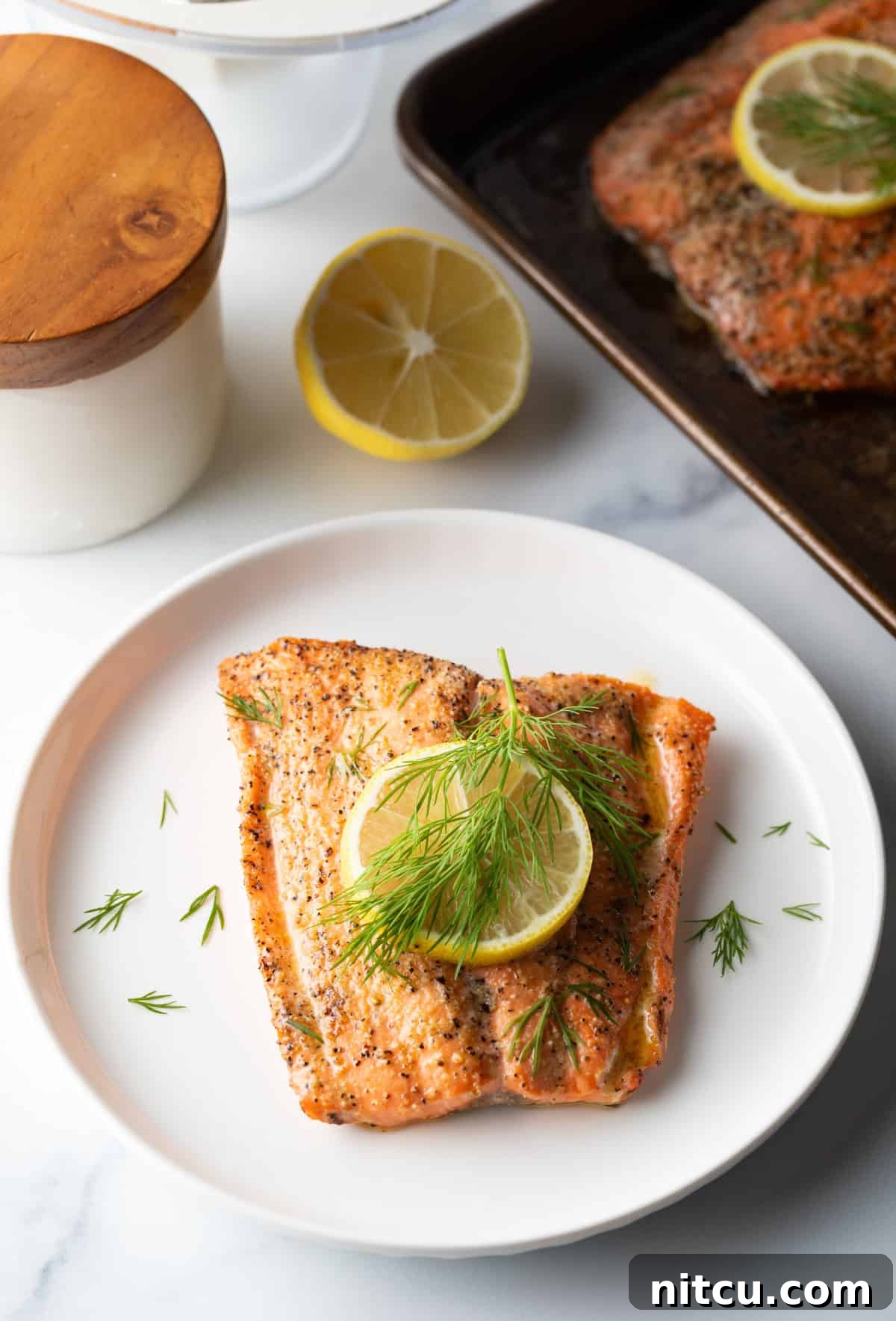
Effortlessly delicious, incredibly healthy, and ready in minutes – this Easy Baked Salmon recipe delivers moist, flaky, and intensely flavorful salmon every single time. A perfect main protein, it’s incredibly versatile, pairing beautifully with an array of toppings and side dishes, making it the ideal protein-rich dinner for any busy weeknight.
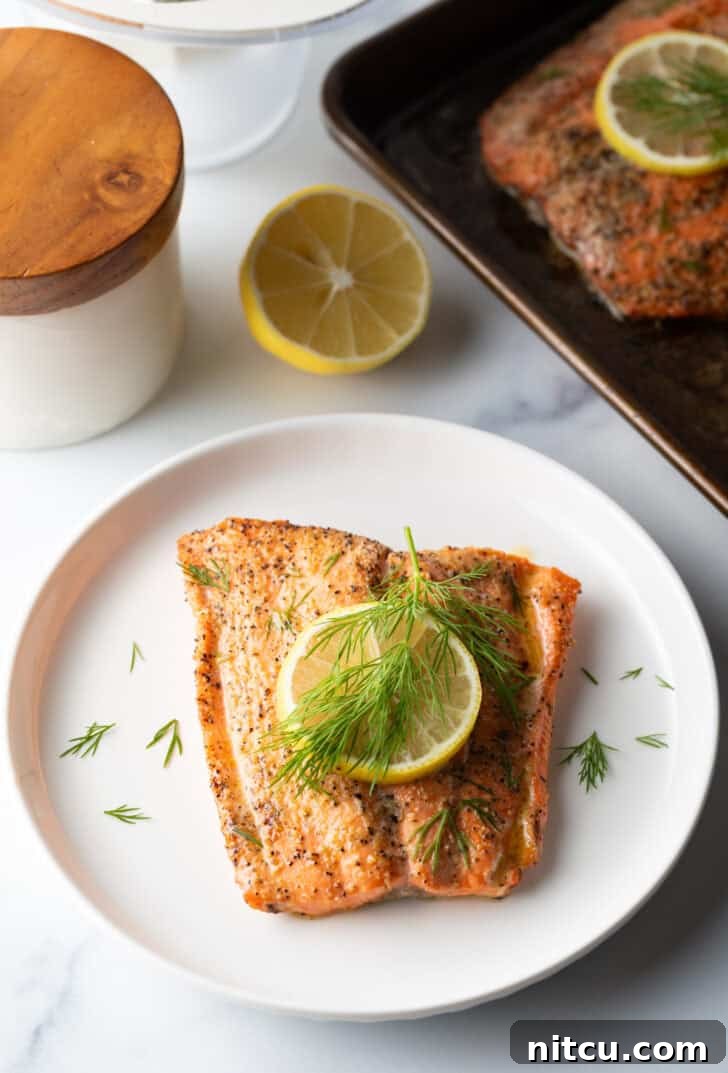
Mastering Baked Salmon: Your Go-To Oven Recipe
Salmon stands out as a true culinary gem, cherished by seafood enthusiasts worldwide for its rich flavor and impressive nutritional profile. At our core, we adore all things seafood, and salmon holds a special place, not just for its exquisite taste but also for its remarkable versatility. Whether you prefer broiling, grilling, or air frying, salmon adapts beautifully to various cooking methods. However, for a truly effortless and consistently perfect result, oven-baked salmon remains our undisputed champion. This simple technique transforms a fresh fillet into a moist, flaky masterpiece with minimal effort.
This guide is dedicated to perfecting baked salmon in the oven, ensuring you achieve restaurant-quality results in your own kitchen. We’ll walk you through the process of seasoning and roasting individual fillets or even a whole side of salmon to achieve that ideal moist, tender, and incredibly delicious texture. Forget complicated steps or extensive ingredient lists; this recipe relies on a handful of wholesome items, a reliable baking sheet, and less than 15 minutes of active cooking time. It’s designed to be a foundational recipe that you can enjoy as is, or customize with an array of fresh salsas, vibrant toppings, or complementary sauces.

Why This Baked Salmon Recipe Will Become Your Favorite
In a world of complex cooking, sometimes simplicity yields the most rewarding results. Our baked salmon recipe is a testament to this philosophy. It’s engineered for maximum flavor with minimum fuss, making it perfect for both seasoned chefs and beginner cooks. This method ensures that the salmon retains its natural moisture, resulting in a buttery, melt-in-your-mouth texture that’s simply irresistible. Beyond its deliciousness, salmon is a powerhouse of nutrition, packed with lean protein and omega-3 fatty acids, making it an excellent choice for a healthy, balanced diet. It’s a fantastic protein to anchor any clean eating meal plan or to serve as a lighter, yet satisfying, main course alongside your favorite comforting sides. With its quick cooking time and adaptable flavor profile, this recipe is designed to simplify your weeknights and elevate your home cooking experience.
Whether you’re seeking a rapid meal solution for a busy evening or aiming to incorporate more heart-healthy seafood into your diet, this oven-baked salmon delivers on all fronts. Its versatility allows it to transition seamlessly from a simple family dinner to an elegant dish for entertaining. By focusing on fresh, quality ingredients and a straightforward cooking technique, we unlock the true potential of this magnificent fish, proving that gourmet flavors don’t have to come with a hefty time commitment.
Essential Ingredients for Perfect Baked Salmon
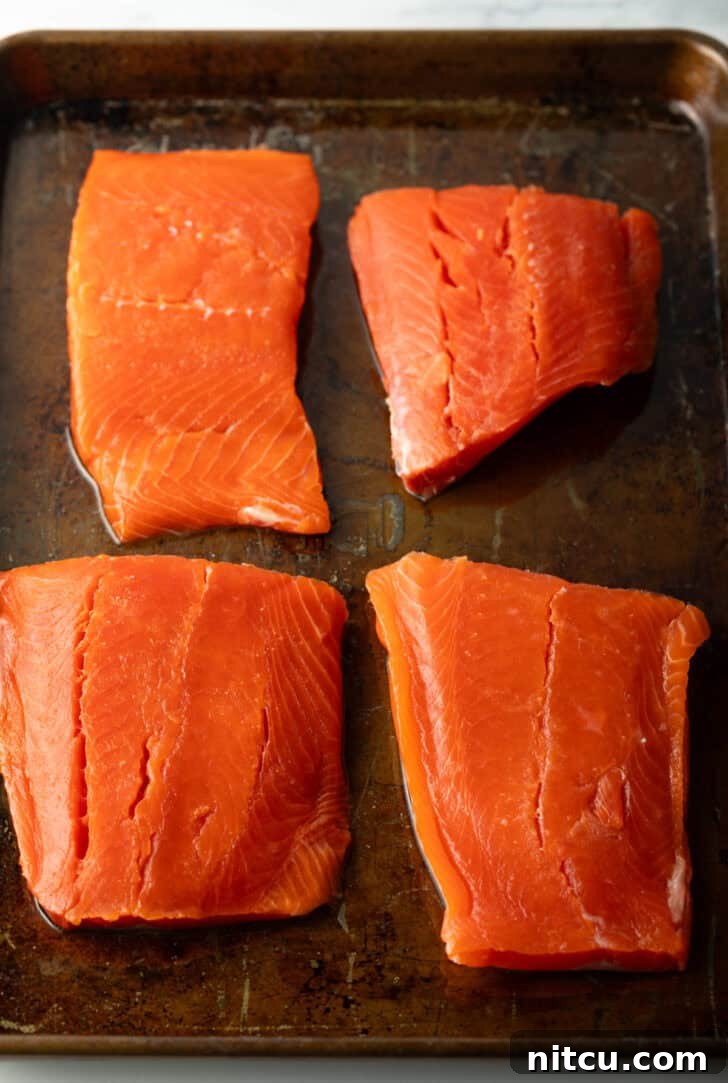
Crafting exceptional baked salmon doesn’t require an elaborate pantry. In fact, some of the best culinary creations are born from a concise list of high-quality ingredients. For this recipe, we focus on components that enhance salmon’s natural richness without overpowering it, ensuring a harmonious balance of flavors. Here’s what you’ll need to create your moist and flaky oven-baked salmon:
- Wild-caught salmon: Opt for individual portions or a whole filet, depending on your serving needs. Fresh salmon is always preferable, but previously frozen and properly thawed fillets work wonderfully. Ensure any pin bones are removed for a smoother eating experience. Wild-caught varieties often boast a richer flavor and firmer texture, though sustainably farmed salmon is also a great choice.
- Olive oil: A good quality extra virgin olive oil not only prevents sticking but also adds a subtle fruity note that complements the fish. If you prefer a more neutral flavor or are cooking at a higher heat, avocado oil or canola oil are excellent alternatives due to their higher smoke points.
- Lemon: Fresh lemon is indispensable for salmon. One lemon, cut in half, will provide both the essential acidity to brighten the fish’s flavor and beautiful slices for a vibrant garnish after baking. Its citrusy zest and juice cut through the richness of the salmon beautifully.
- Spices: A simple yet effective blend of garlic powder, salt, and black pepper is all you need to create a flavorful crust. Garlic powder offers a foundational savory note, while salt and freshly ground black pepper enhance the salmon’s inherent taste. Feel free to adjust these quantities to your personal preference.
The beauty of this recipe lies in its simplicity, allowing the natural flavor of the salmon to shine through. With these core ingredients, you’re well on your way to a truly satisfying and easy meal.
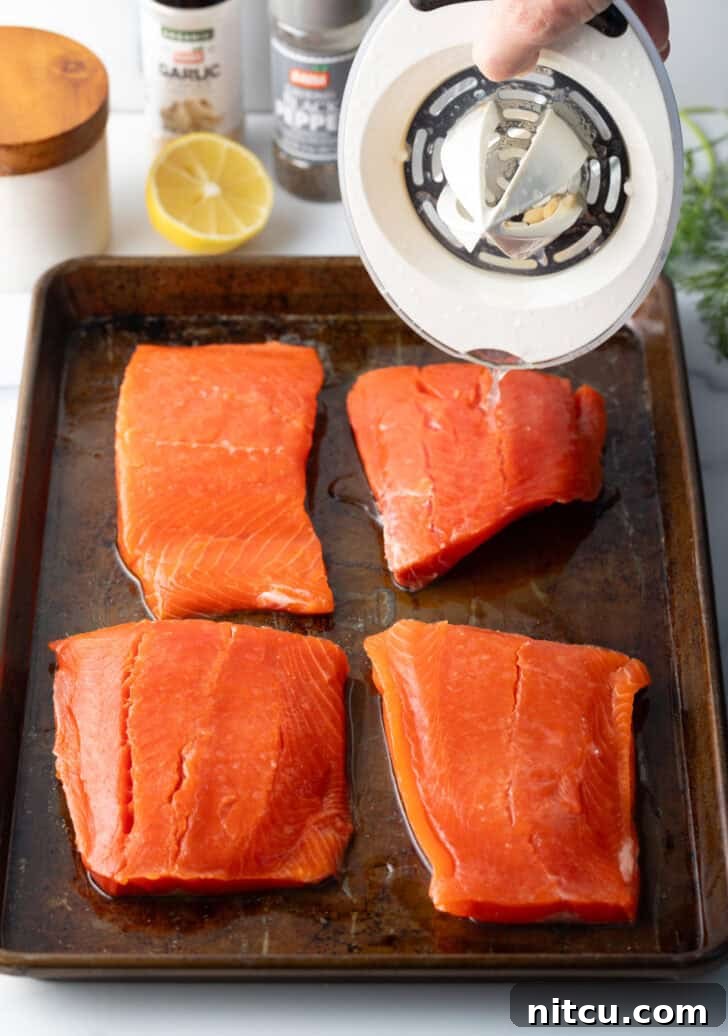
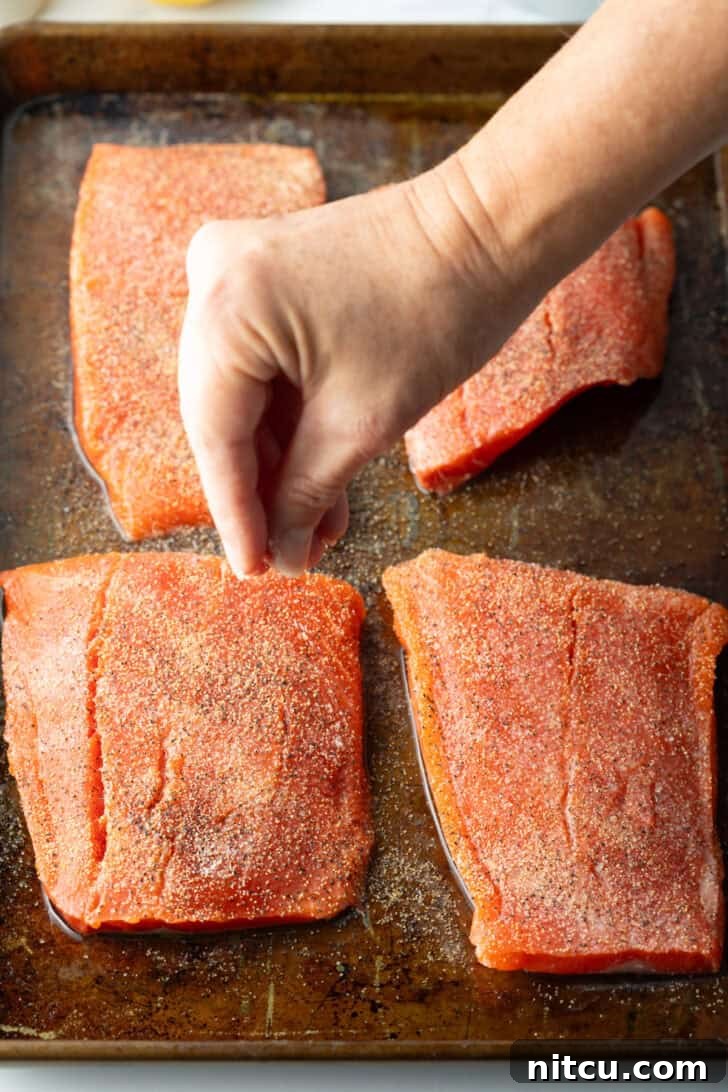
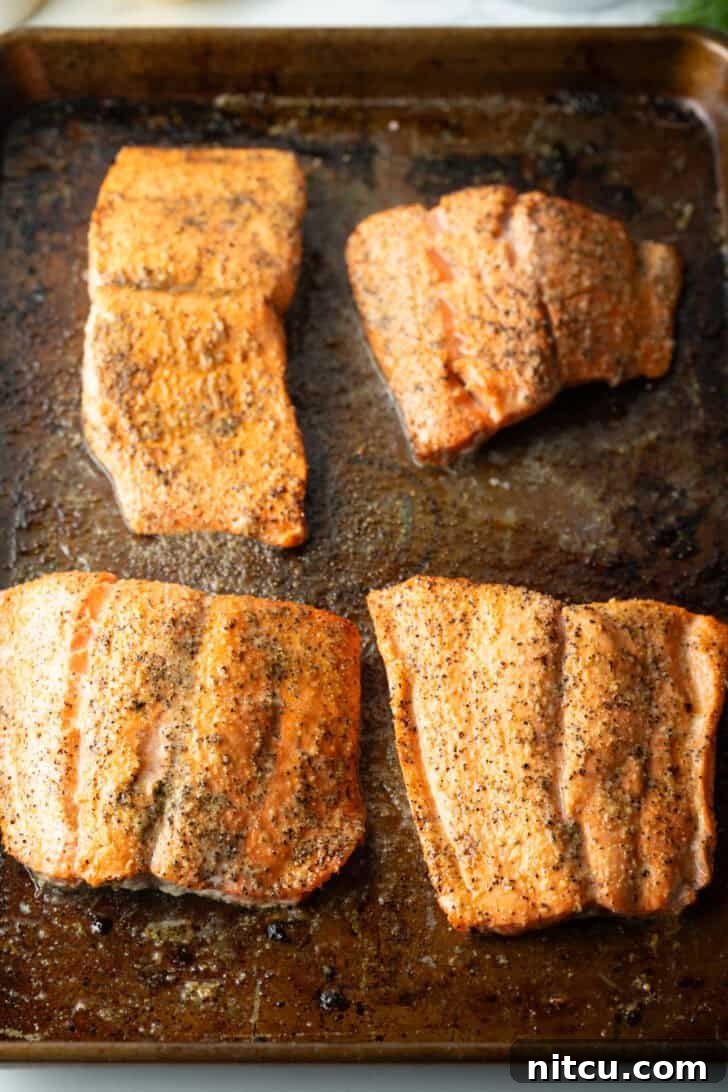
Step-by-Step Guide: How to Cook Salmon in the Oven
Achieving perfectly cooked salmon in the oven is simpler than you might imagine. This method is praised for its reliability, ensuring your salmon turns out beautifully moist and flaky with minimal effort. Here’s a detailed breakdown of the steps to follow, designed to guide you from preparation to a delicious finished dish:
For a precise breakdown of ingredient proportions and a comprehensive list of instructions, along with useful cooking tips and a visual tutorial, please refer to the complete printable recipe card located at the conclusion of this article.
Elevate Your Dish: Recipe Variations and Expert Tips
While our basic baked salmon recipe is a winner on its own, a few tweaks and insider tips can transform your dish from great to extraordinary. Here’s how to customize your salmon and ensure it’s cooked to perfection every time:
- Experiment with Spices: This recipe provides a fantastic foundation for perfectly flaky salmon. However, the world of spices is your oyster! Don’t hesitate to change up the seasonings to match your palate. Consider vibrant lemon pepper seasoning for a zesty kick, classic Old Bay for a taste of the coast, or a bold Blackened Seasoning for a Cajun-inspired flair. For an aromatic touch, try Italian Seasoning, or introduce Latin American flavors with Adobo Seasoning. Any favorite spice blend can turn this simple dish into a unique culinary experience.
- Adjusting Portions: The standard recipe typically yields 4-6 servings, making it ideal for a family meal. If you’re cooking for fewer people and want to avoid leftovers, it’s incredibly easy to halve the recipe to 2-3 fillets. Simply adjust the seasoning amounts proportionally. For a larger gathering, you can easily scale up, just ensure your baking sheet isn’t overcrowded to allow for even cooking.
- Skin On or Off?: We strongly recommend cooking salmon with the skin on. The skin acts as a natural barrier, protecting the delicate flesh from drying out and helping to retain moisture and flavor. It also makes the salmon less prone to overcooking. If you prefer not to eat the skin, it can be effortlessly peeled away from the cooked flesh after baking. If you opt for skinless salmon fillets, remember to reduce the cooking time by approximately 3-4 minutes and monitor them closely to prevent them from becoming dry.
- Lining the Baking Sheet for Easy Cleanup: For a hassle-free cooking and cleanup experience, always use a baking sheet with a deep lip to contain any delicious juices that render from the salmon. Lining the tray with parchment paper is a game-changer; it ensures the fish doesn’t stick and makes post-dinner cleanup a breeze.
- Prevent Overcrowding: Each piece of salmon needs its space to cook properly. Arrange the fillets on the baking sheet with a slight gap between them. Overcrowding or allowing the fish to touch can trap too much moisture, leading to a steamed, mushy texture rather than a beautifully roasted, flaky one. Proper spacing allows for even heat circulation and optimal browning.
- Garnish After Baking for Freshness: While it might be tempting to add fresh lemon slices and delicate herbs like dill before cooking, it’s best to wait until the salmon is out of the oven. Adding them post-baking preserves their vibrant color, fresh aroma, and bright flavor, ensuring that their freshness truly shines through in the final presentation and taste.
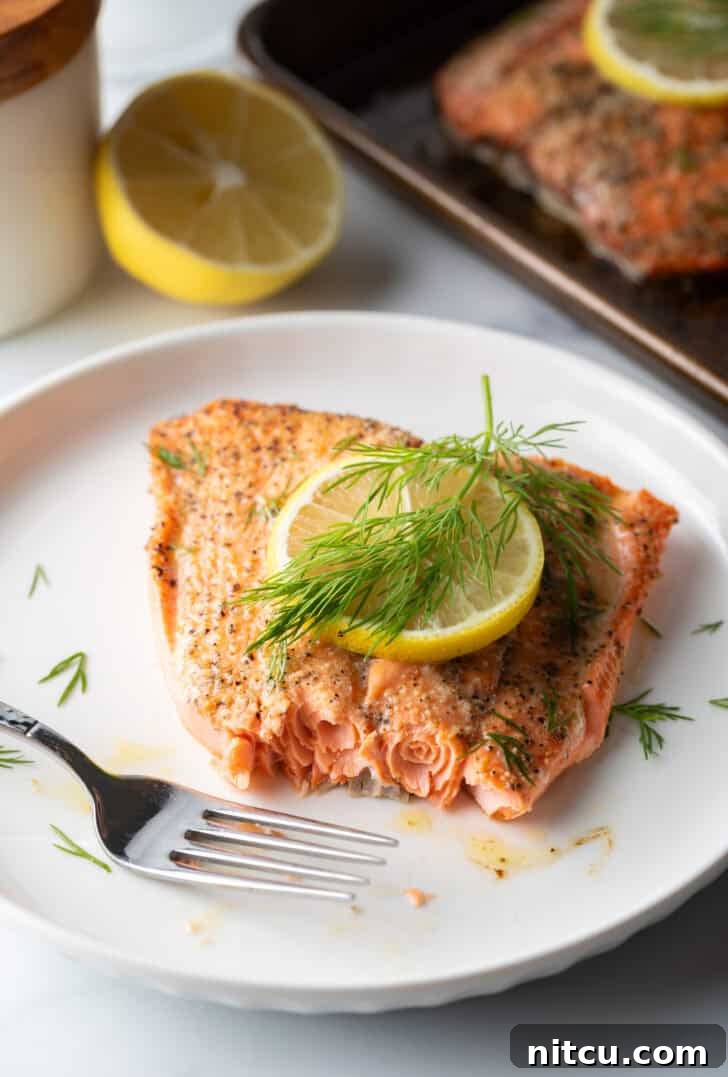
- Testing for Doneness: The key to perfect salmon is knowing when it’s just right. Cooked salmon should be opaque throughout and flake easily with a fork in its thickest part. For the most accurate result, use an instant-read meat thermometer inserted into the thickest part of the fillet. Salmon is considered medium-rare at 125-130°F (52-54°C), medium at 135-140°F (57-60°C), and well-done at 145°F (63°C). We aim for a range between 140-145°F (60-63°C) for ideal moistness.
- Don’t Overcook: Overcooked salmon can quickly turn dry and tough. A tell-tale sign of overcooking is when white albumin (a protein) begins to seep out from the flesh. As soon as your salmon reaches the desired internal temperature or flakes easily, remove it from the oven immediately.
- Resting Time: Just like with other proteins, allowing your baked salmon to rest for 5 minutes after removing it from the oven helps the juices redistribute throughout the fillet, resulting in an even more moist and tender texture.
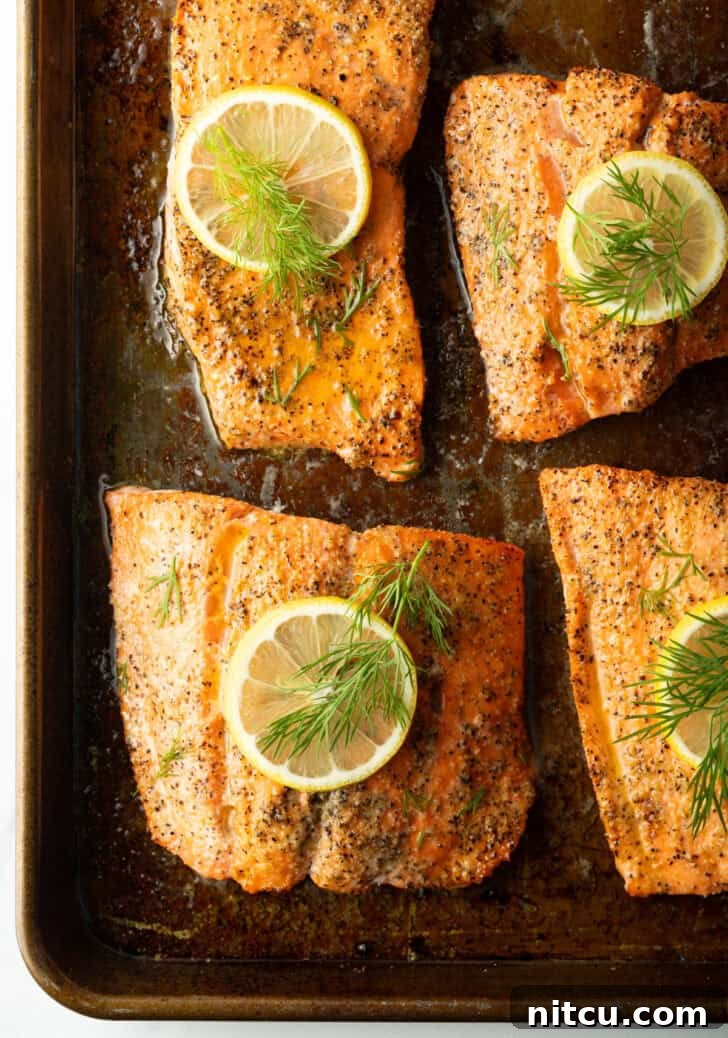
Creative Serving Suggestions for Baked Salmon
Once your perfectly baked salmon emerges from the oven, the real fun begins: customization! This versatile fish is a blank canvas, ready to be adorned with an array of garnishes and paired with a multitude of side dishes. Here are some inspiring ideas to make your salmon dinner truly spectacular:
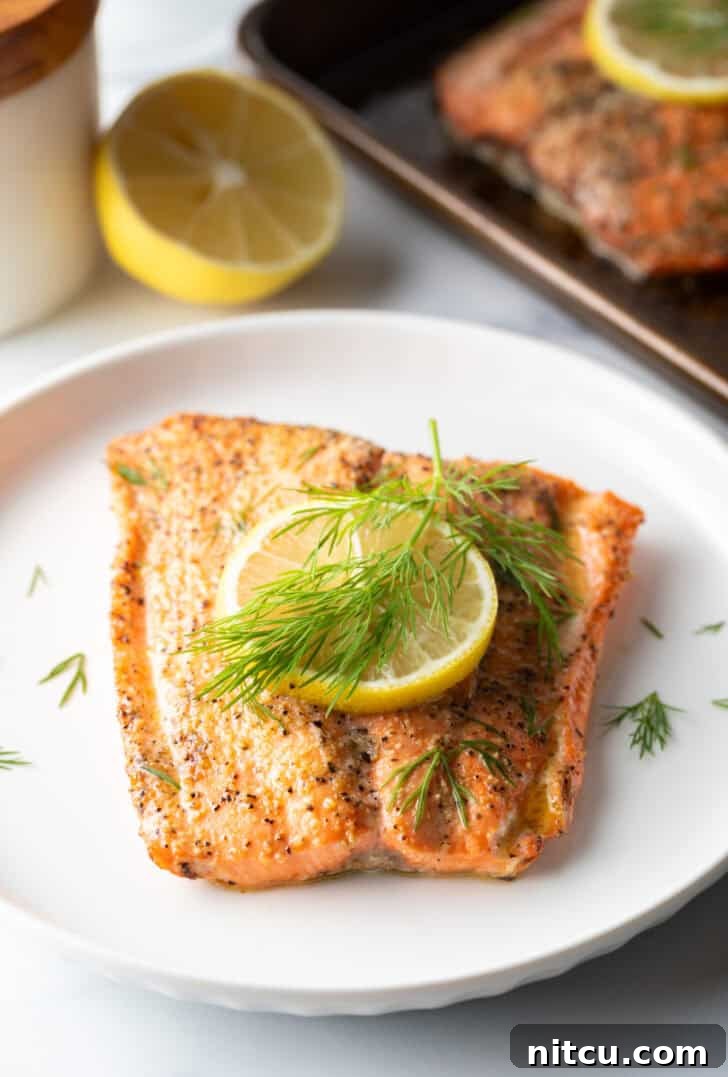
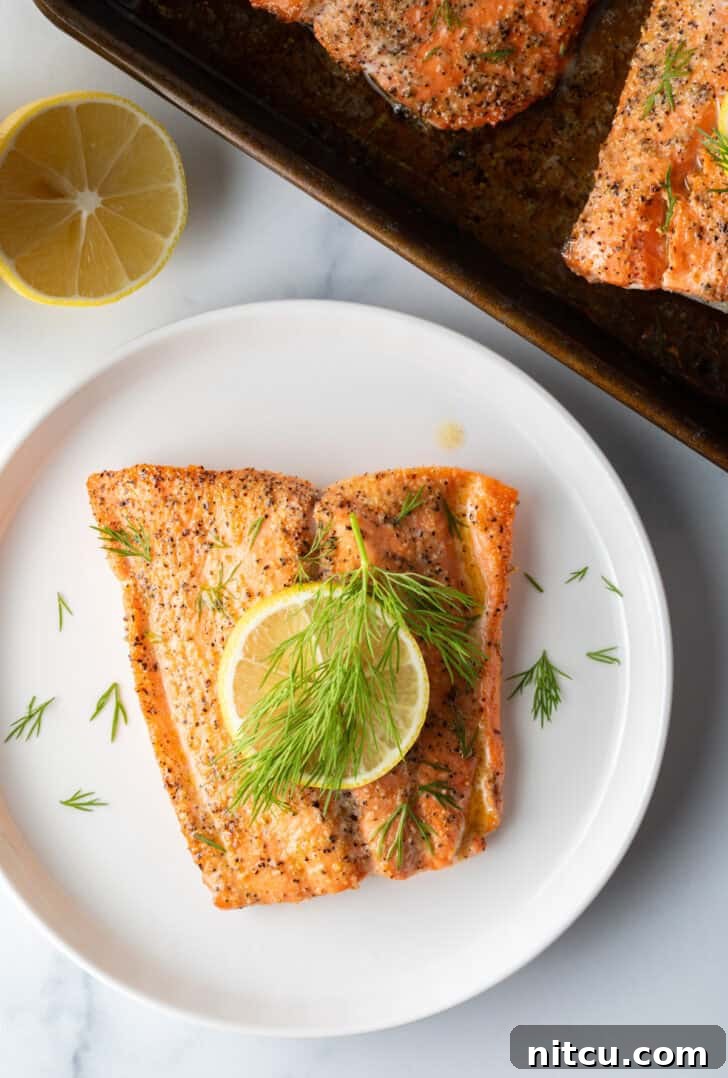
Immediately after baking, enhance the fillets with fresh lemon slices. The bright acidity of lemon not only looks appealing but also cuts through the richness of the salmon, adding a refreshing zing. For an extra pop of herbaceous flavor, sprinkle on your favorite fresh herbs such as finely chopped dill, vibrant scallions, fragrant basil, or lively fresh parsley. These additions elevate both the visual appeal and the aromatic profile of the dish.
As mentioned earlier, tailoring the spices during cooking allows you to create any flavor profile you desire. This adaptability extends to serving, where you can pair your oven-cooked salmon with various complementary toppings and sides:
- Fresh Salsas & Fruit: For a vibrant and refreshing meal, top your salmon with fresh salsas. The sweet and spicy notes of Grilled Chipotle Peach Salsa or the tropical burst of Peach Mango Habanero Salsa offer an exciting contrast to the rich fish. Consider a simple fresh tomato bruschetta or a vibrant corn and black bean salsa for another flavor dimension.
- Mediterranean & Greek Inspired: If you seasoned your salmon with Italian or Greek herbs, carry that theme through to your sides. Serve it alongside a crisp Greek Village Salad and a cool, creamy ramekin of homemade Tzatziki Sauce. Roasted asparagus with feta or a fresh cucumber and red onion salad would also be excellent complements.
- Hearty & Carb-Rich Sides: Baked salmon is incredibly versatile and pairs beautifully with almost any starchy or carb-based side. Serve fillets with fluffy white rice, such as our flavorful Chipotle-style Cilantro Rice or vibrant Caribbean Confetti Rice. Brown rice, quinoa (how to cook quinoa), pasta, or even creamy polenta are excellent choices. Roasted potatoes or sweet potato fries also provide a satisfying and delicious accompaniment. Don’t be afraid to experiment and let your imagination guide your pairings!
- Low Carb & Keto-Friendly Options: For those following a low-carb or keto lifestyle, baked salmon is a perfect fit. Consider serving it with an array of fresh salads, warm and comforting Roasted Root Vegetables, or a medley of other steamed or sautéed greens. Our favorite low-carb alternative is fluffy Cauliflower Rice, which absorbs flavors wonderfully and adds a satisfying texture without the extra carbohydrates.
The beauty of baked salmon is its inherent adaptability. Whether you’re aiming for a light, refreshing meal or a hearty, comforting dinner, it seamlessly integrates with a wide variety of flavors and textures, ensuring a delicious outcome every time.
Frequently Asked Questions About Baked Salmon
To further assist you in mastering the art of oven-baked salmon, we’ve compiled answers to some of the most common questions. These insights will help you confidently prepare, store, and even freeze your delicious salmon.
While some recipes advocate for cooking salmon in aluminum foil to lock in moisture, it’s generally not necessary for this baked salmon recipe. Our method utilizes a relatively high oven temperature for a short duration, which naturally ensures the fish cooks thoroughly without drying out. The quick cooking time and proper seasoning create a beautiful, slightly crisp exterior while keeping the interior moist and flaky. Skipping the foil also allows for better browning and a more appealing texture. If you’re concerned about cleanup, simply lining your baking sheet with parchment paper is an effective and environmentally friendly alternative.
The ultimate goal is perfectly cooked salmon – tender, light pink, and opaque, flaking easily with a fork in its thickest part. You’re aiming for a medium-rare to medium doneness, where the flesh is still incredibly moist. Be vigilant for signs of overcooking; if you observe white bits of albumin (protein) appearing on the surface of the fish, it’s a clear indication that your salmon is likely overcooking and may become dry. The most reliable way to ensure ideal doneness is by using an instant-read oven thermometer. Insert it into the thickest part of the fillet; the internal temperature should register between 140-145 degrees F (60-63°C) for optimal texture and safety. Remove it from the oven immediately once it reaches this range.
Properly stored, leftover baked salmon will maintain its quality and freshness. Once cooled, transfer the salmon to an airtight container and store it in the refrigerator. It will keep well for up to 3 days. For best flavor and texture, we recommend consuming it within 1-2 days.
Absolutely! Cooked salmon can be frozen to extend its shelf life. Allow the salmon to cool completely to room temperature before preparing it for freezing. Transfer the fish to an airtight, freezer-safe container or wrap individual portions tightly in plastic wrap and then in aluminum foil to prevent freezer burn. Store it in the freezer for up to 3 months. When you’re ready to enjoy it, thaw the frozen salmon overnight in the refrigerator. To reheat, gently warm it in the microwave on a low setting using short bursts, or in a preheated oven at a low temperature (around 275°F / 135°C) until just warmed through. This gentle reheating prevents it from drying out and helps preserve its moist texture.
Explore More Easy & Delicious Seafood Recipes!
If you’ve enjoyed the simplicity and deliciousness of our baked salmon recipe, we invite you to dive into our collection of other fantastic seafood dishes. From quick weeknight meals to impressive entertaining options, there’s something for every seafood lover:

Print Recipe
Leave a Review »
Easy Baked Salmon in Oven
5 minutes
10 minutes
15 minutes
4
– 6 servings
Video
Ingredients
-
4-6
salmon fillets
or one whole uncut salmon filet -
1
tablespoon
olive oil -
1
lemon -
½
teaspoon
garlic powder - Salt and pepper
Instructions
-
Preheat your oven to 400°F (200°C). Prepare a large rimmed baking sheet by drizzling or brushing it evenly with olive oil. For easier cleanup, you can line the baking sheet with parchment paper.
-
Carefully place the individually portioned salmon fillets, or a whole salmon fillet, onto the prepared baking sheet. Ensure there is some space between individual fillets to allow for even cooking.
-
Take your lemon and cut it in half. Squeeze the juice from one half of the lemon directly over the salmon fillets. Slice the remaining half of the lemon into thin rounds; these will be used as a fresh garnish after the salmon has baked.
-
Generously sprinkle the top surfaces of the salmon pieces with garlic powder. Follow with a liberal seasoning of salt and freshly ground black pepper, adjusting quantities to suit your taste preferences.
-
Once the oven has reached its preheated temperature, place the baking sheet with the seasoned salmon into the oven. For individually portioned salmon fillets, bake for 8-10 minutes. If you are baking a whole, uncut salmon fillet, increase the baking time to 12-14 minutes. Cook until the salmon is opaque throughout and flakes easily with a fork.
-
Once the salmon is cooked to perfection, carefully remove it from the oven. Garnish immediately with the fresh lemon slices you prepared earlier. For an added touch of freshness and flavor, you can also sprinkle on additional garnishes such as fresh chopped dill, vibrant scallions, or aromatic basil. Serve hot and enjoy!
Notes
To Freeze: Ensure the cooked salmon has cooled completely before transferring the fish to an airtight, freezer-safe container. It can be stored in the freezer for up to 3 months. For best results, thaw it overnight in the refrigerator before reheating.
Reheat the salmon gently in the microwave on a low setting and in short bursts, or in a low-temperature oven, to prevent it from drying out and to maintain its moist texture.
Nutrition
Calories: 281kcal,
Carbohydrates: 3g,
Protein: 34g,
Fat: 14g,
Saturated Fat: 2g,
Polyunsaturated Fat: 5g,
Monounsaturated Fat: 6g,
Cholesterol: 94mg,
Sodium: 76mg,
Potassium: 875mg,
Fiber: 1g,
Sugar: 1g,
Vitamin A: 74IU,
Vitamin C: 14mg,
Calcium: 28mg,
Iron: 2mg
Main, Main Course, Seafood
American
Sommer Collier
Cook It? Love It? Rate It!
YOU can help this recipe RANK on Google – TAP 5 STARS and leave a review so other hungry people can find it. Thank you!