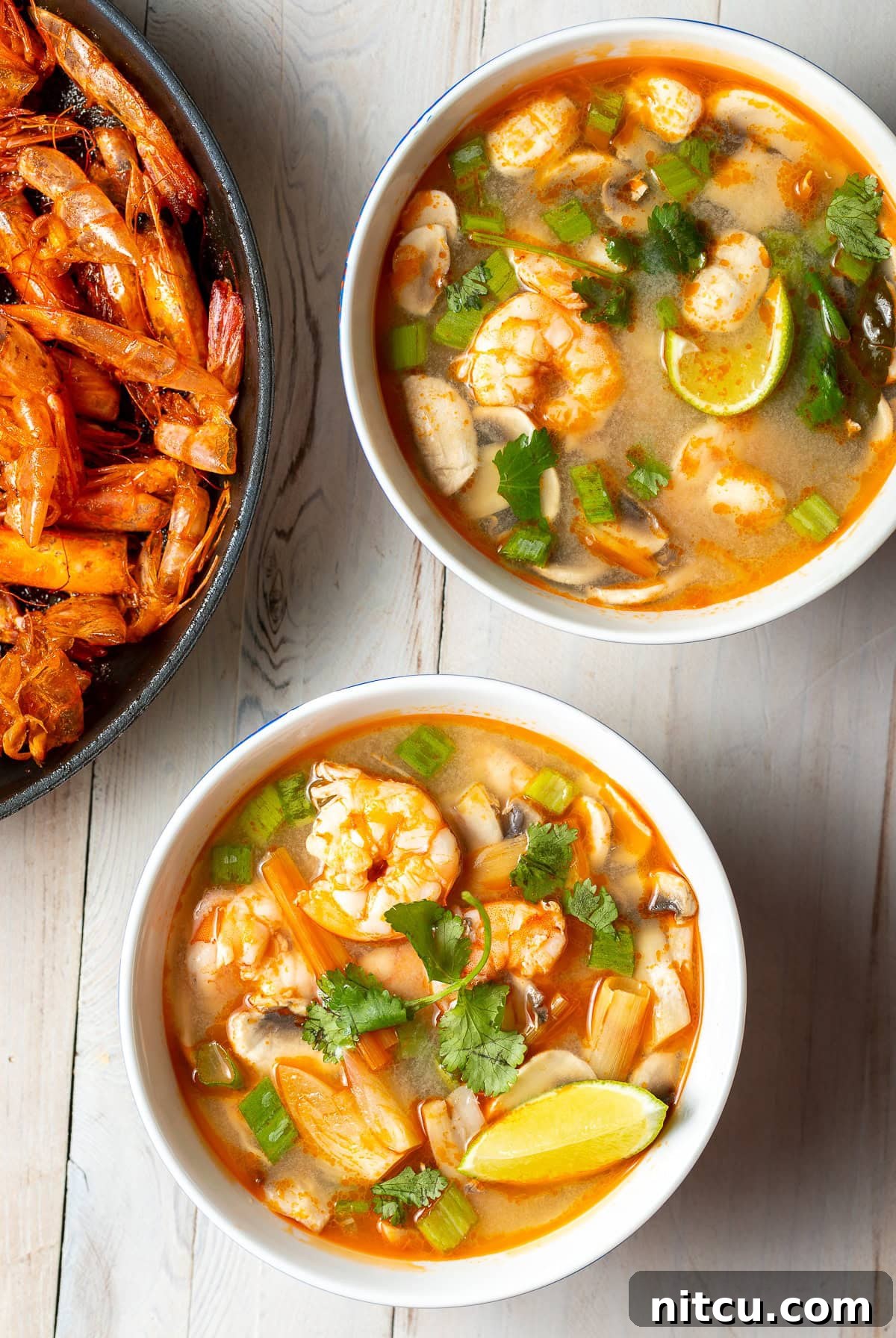
Embark on a culinary journey to Southeast Asia with this truly authentic Tom Yum Soup Recipe. Often celebrated as Thai Hot and Sour Soup, it delivers a vibrant, aromatic, and spicy kick that’s utterly unforgettable. This classic dish is naturally gluten-free and paleo-friendly, making it a healthy and delicious choice for everyone.
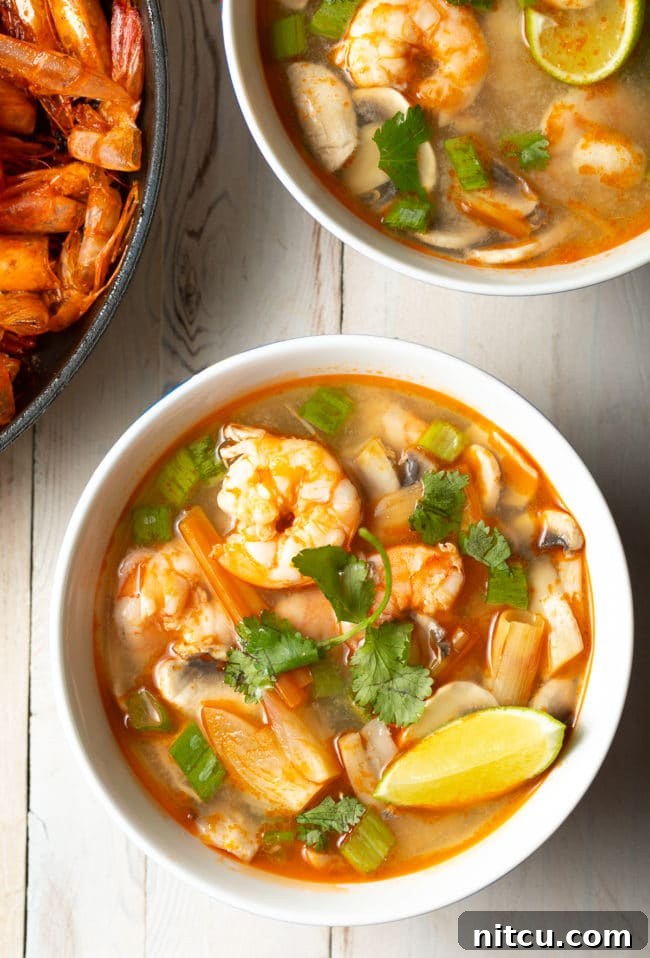

A Taste of Thailand: My Authentic Tom Yum Journey
My recent travels through Thailand introduced me to a world of incredible flavors, but one dish, in particular, captured my heart: Tom Yum. Also known as Tom Yum Goong or Thai Hot and Sour Soup, this light yet intensely flavorful soup was a delightful surprise. From bustling street markets to serene riverside restaurants, Tom Yum was everywhere – a testament to its undisputed popularity and status as arguably the most beloved recipe in the country.
The magic of Tom Yum lies in its seemingly simple yet profoundly complex profile, achieved through fresh lemongrass, kaffir lime leaves, fish sauce, fiery chiles, and often, succulent shrimp. This vibrant combination creates a soup that is both invigorating and deeply satisfying. Thankfully, you don’t need to cross oceans to experience this authentic Thai delight. I’m thrilled to share how incredibly easy it is to recreate this exquisite Tom Yum with shrimp recipe right in your own kitchen, capturing the true essence of Thailand’s culinary heritage.
Why This Thai Tom Yum Goong Soup Will Become Your New Favorite
- Unforgettable Flavor Profile: Experience the perfect balance of hot, sour, salty, and savory, characteristic of authentic Thai cuisine. The zesty lime juice and potent chiles create a bold and perky flavor that tantalizes the taste buds.
- Remarkably Easy to Make: Don’t be intimidated by exotic ingredients! Once you source these flavorful items from your local Asian market, the preparation process is straightforward and quick, yielding restaurant-quality results at home.
- Highly Customizable: Whether you prefer it extra spicy, mild, or with a creamy texture, this recipe is incredibly versatile. Easily swap proteins or add more vegetables to suit your taste and dietary preferences.
- Wholesome and Healthy: This light yet deeply satisfying soup is a powerhouse of flavor without the guilt. It’s naturally low in fat, gluten-free, paleo-friendly, and dairy-free, making it an excellent choice for a healthy lifestyle.
- Aromatic Experience: The fresh herbs like lemongrass, kaffir lime leaves, and galangal don’t just add flavor; they infuse your kitchen with an intoxicating aroma that transports you straight to Thailand.
While the ingredient list for this Tom Yum shrimp soup might seem extensive at first glance, each component plays a vital role in building its signature flavor. A quick trip to an Asian market will supply you with everything you need, and the effort is truly rewarded with every spoonful of this incredible soup.
Essential Ingredients and Expert Tips for Authentic Tom Yum
Crafting authentic Tom Yum requires specific fresh ingredients that contribute to its distinctive taste. Here’s a closer look at what you’ll need and how to make the most of each component:
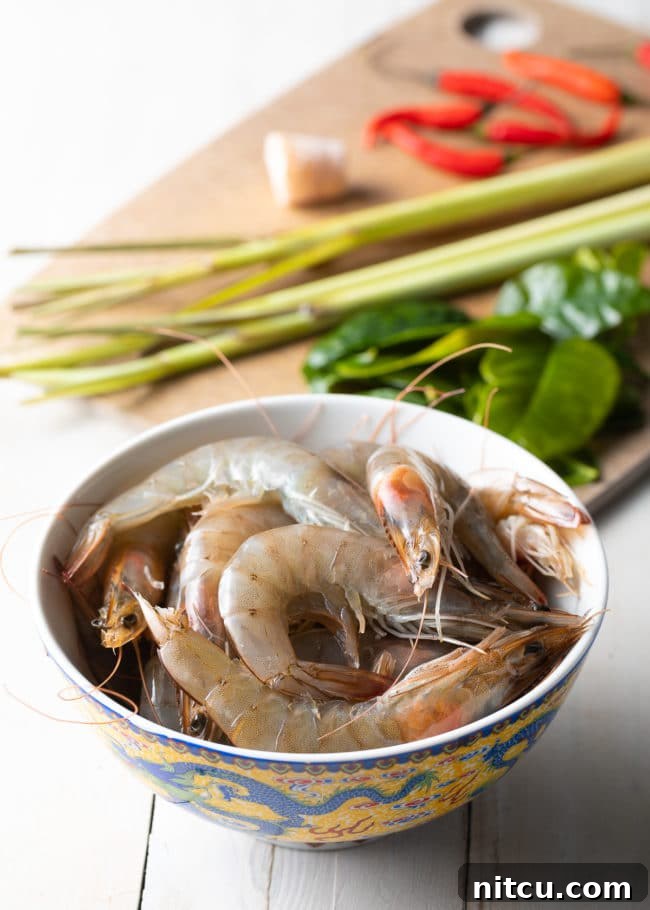
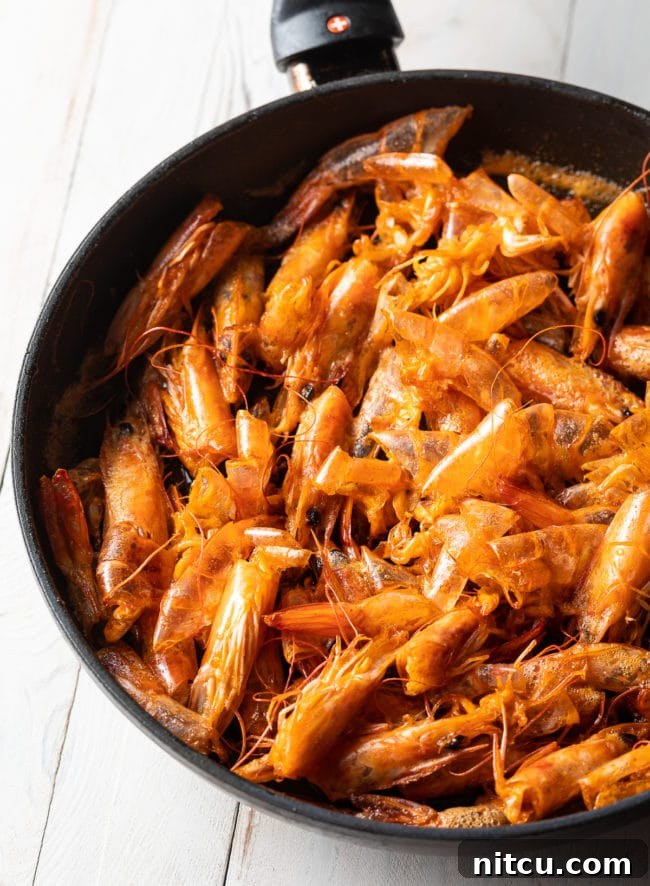
- Whole Raw Shrimp (with heads intact): This is the secret ingredient for truly authentic Tom Yum. The shrimp heads are crucial for making flavorful “shrimp oil,” which is drizzled into the soup at the end to impart an intense, umami-rich seafood essence. Do not discard them! If whole shrimp are unavailable, you can still make a delicious soup, but it won’t have the same depth of flavor.
- Flavorless Oil: Used to extract the rich flavors from the shrimp heads. Any neutral oil like vegetable, canola, or grapeseed oil will work perfectly.
- Water: The base of our homemade broth. You won’t need store-bought stock or broth, as the fresh herbs and shrimp heads create an incredibly fragrant and flavorful liquid.
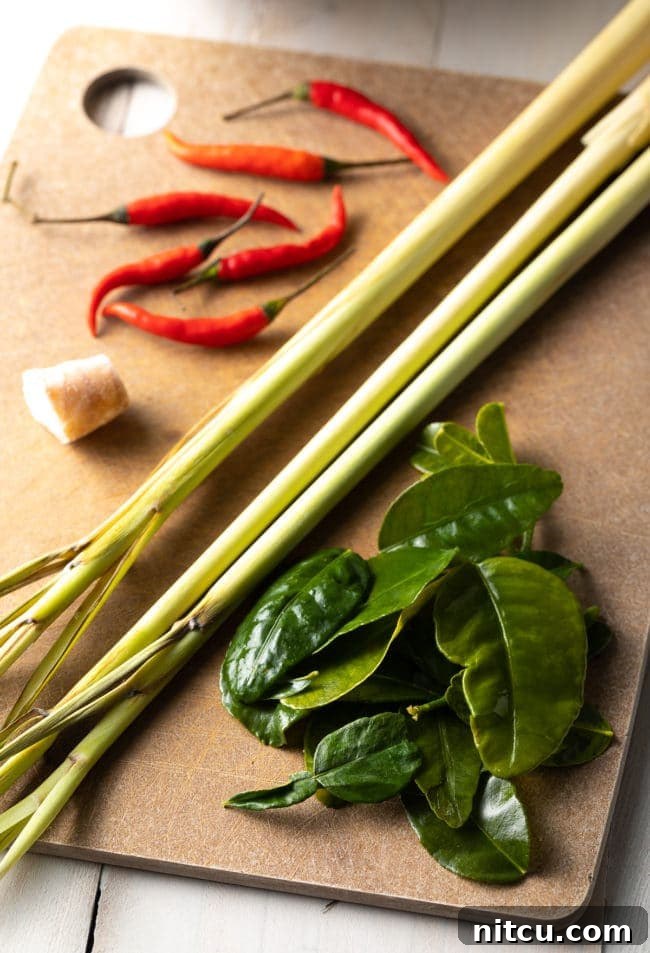
- Fresh Lemongrass Stalks: Offers a bright, citrusy, and slightly minty aroma. Use the softer interior stalks for eating; if stalks are tough, remove them before serving. Always bruise or smash lemongrass before adding it to the soup to release its essential oils and maximize flavor.
- Kaffir Lime Leaves (Makrut Lime Leaves): These leaves are indispensable, providing a unique citrusy and floral aroma that is central to Thai cuisine. Use fresh or frozen; simply tear or bruise them to release their fragrance.
- Onion: Shallots or sweet onions are traditionally used for their milder, sweeter flavor compared to pungent yellow onions. Cut them into wedges to infuse the broth.
- Thai Chiles (Bird’s Eye Chiles): These small red chiles pack a serious punch of heat and a vibrant fruity flavor. Adjust the quantity to your preferred spice level. If fresh chiles are hard to find, a good quality Thai chili paste can be used as an alternative, added to taste.
- Galangal Root (Optional, but Recommended for Authenticity): A root herb resembling ginger but with a distinct piney, citrusy, and earthy flavor. While not strictly mandatory, it’s a staple in traditional Tom Yum and often used in seafood dishes to neutralize any strong “fishy” aromas, adding an extra layer of authentic complexity. Look for it fresh or frozen in Asian markets.
- Fish Sauce: Considered the “mother sauce” of Thai cuisine, fish sauce (Nam Pla) provides the essential salty, umami depth. Choose a good quality brand for the best results. It’s the primary seasoning agent for Tom Yum.
- Mushrooms: Straw mushrooms and enoki mushrooms are traditional choices, offering a delicate texture. However, button mushrooms or oyster mushrooms are excellent and widely available substitutes. They add a lovely earthiness to the soup.
- Freshly Squeezed Lime Juice: Absolutely vital for the “sour” component of Tom Yum. The bright, tangy finish must come from fresh lime juice added at the very end to preserve its vibrant flavor. Avoid bottled lime juice, as it lacks the authentic zest.
Exciting Tom Yum Recipe Variations
One of the beauties of Tom Yum is its adaptability. Feel free to customize this recipe to your liking with these delicious variations:
- Creamy Tom Yum Soup (Tom Yum Nam Khon): For a richer, more comforting version, stir in some full-fat canned coconut milk (about ½ cup to 1 cup, depending on desired creaminess) just before adding the mushrooms. The coconut milk mellows the spice and adds a delightful velvety texture.
- Extra Spicy Kick: If you crave more heat, don’t hold back! You can increase the number of fresh Thai chiles or add a teaspoon or two of Thai chili paste (often called “Nam Prik Pao”) along with the other aromatics. When making the creamy version, the coconut milk beautifully balances the bold spiciness, allowing for more heat without overwhelming the palate.
- Alternate Proteins: Not a fan of shrimp or looking for something different? This soup is wonderfully versatile. You can leave out the shrimp entirely and instead add a handful of cooked, chopped chicken breast, thinly sliced cooked beef, or even firm tofu cubes for a vegetarian option. Add these proteins towards the end, ensuring they are heated through without overcooking.
- Vegetarian Tom Yum (Tom Yum Hed): Omit the shrimp and fish sauce. Replace fish sauce with a high-quality vegetarian mushroom sauce or a combination of soy sauce and a pinch of sugar. Increase the mushroom variety and add other vegetables like carrots, bell peppers, or bok choy for a hearty meat-free option.
- Tom Yum with Fish (Tom Yum Pla): For a different seafood twist, use firm white fish fillets like cod, snapper, or tilapia. Add the fish, cut into bite-sized pieces, towards the end of cooking and simmer gently until just cooked through, about 3-5 minutes, to avoid flaking.
Crafting Your Own Authentic Tom Yum Soup
Making delicious Tom Yum from scratch is a rewarding experience. Follow these detailed steps to achieve a perfectly balanced and aromatic Thai Hot and Sour Soup.
Success Tip: The crucial step to unlocking the deep umami flavor in Tom Yum is sautéing the shrimp heads to create a rich, aromatic shrimp oil. Do not skip this! It elevates the soup from good to truly authentic and extraordinary.
Instructions
- Prepare the Shrimp: Carefully pull the heads off the shrimp and set them aside in a wok or large skillet. Peel and clean the shrimp bodies, deveining if necessary, and place them in a separate bowl. You can also add the shrimp shells to the skillet with the heads for extra flavor, but the heads are the most important part for the oil.
- Make the Shrimp Oil: Add the flavorless oil to the skillet with the shrimp heads. Place it over medium heat and sprinkle with a good pinch of salt. Sauté the shrimp heads, pressing them gently with a spoon, to release their rich flavor into the oil. Continue cooking until the heads turn vibrant red and become crispy, indicating that their essence has been fully extracted. Once done, turn off the heat and set the skillet aside.
- Prepare the Aromatics: While the shrimp oil is infusing, prepare your aromatic herbs. Trim the very tips and root ends of the lemongrass stalks, then remove any tough outer layers until you reach the softer, more tender core. Cut the lemongrass into roughly 1 ½ inch segments. If using, cut the galangal root into 3 or 4 pieces.
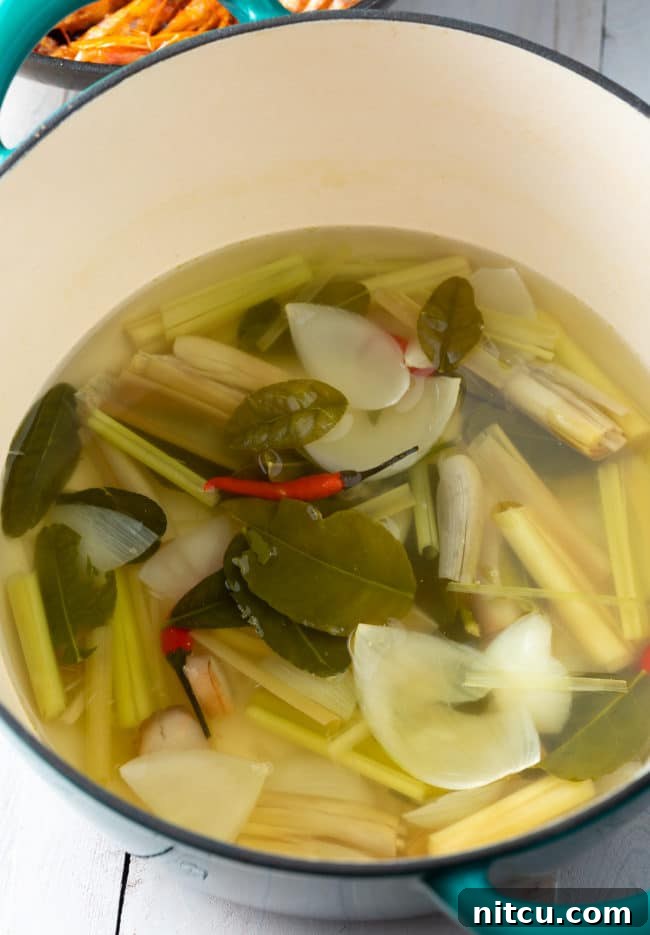
- Bruise and Simmer the Broth Base: Using a meat mallet, the side of a heavy knife, or even a rolling pin, gently smash the prepared lemongrass segments, kaffir lime leaves, onion wedges, Thai chiles, and galangal pieces. This bruising technique is essential to release their maximum fragrance and flavor. Place these smashed aromatics into a medium soup pot. Pour 6 cups of water into the pot and bring to a rolling boil over high heat. Once boiling, reduce the heat to a gentle simmer and let it cook for 5-10 minutes, or until your kitchen fills with a bright, fragrant aroma. The broth should smell distinctly citrusy and spicy.
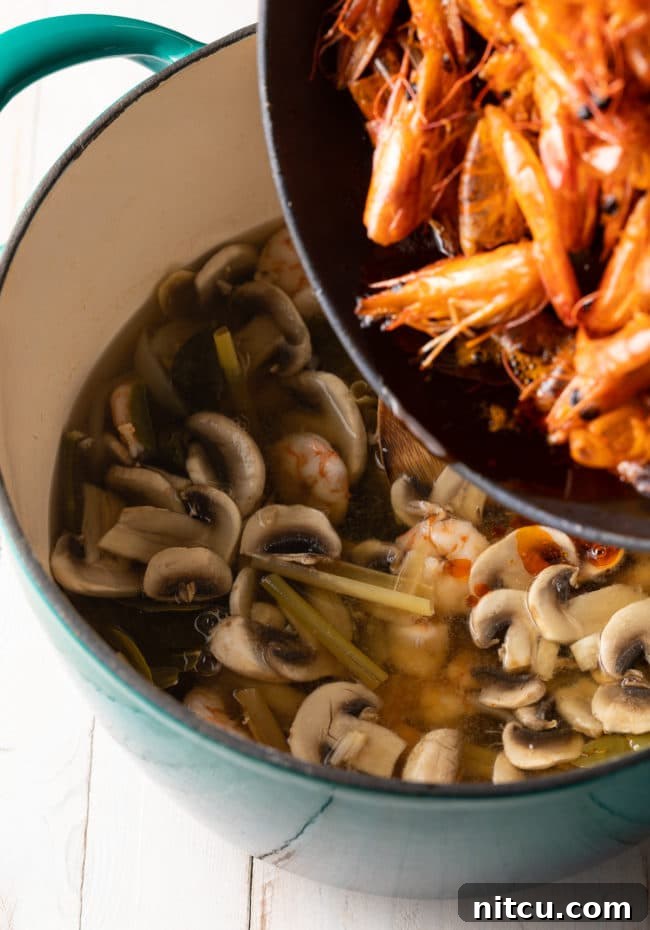
- Finish the Soup: Carefully remove and discard any particularly tough pieces of lemongrass and galangal from the broth. (If your lemongrass stalks were soft, you can leave them in.) Increase the heat to high again. Stir in the sliced mushrooms and boil for just 1 minute. Next, add the cleaned shrimp bodies and the fish sauce. Cook only until the shrimp are opaque and just cooked through, which typically takes a mere 45 seconds to 1 minute, to prevent them from becoming rubbery.
- Final Touches: Immediately turn off the heat to stop the cooking process. Stir in the freshly squeezed lime juice. Then, take the skillet with the shrimp oil and carefully spoon 3-4 tablespoons of this flavorful oil into the soup. Discard the cooked shrimp heads from the skillet, as they are not meant to be eaten in the soup.
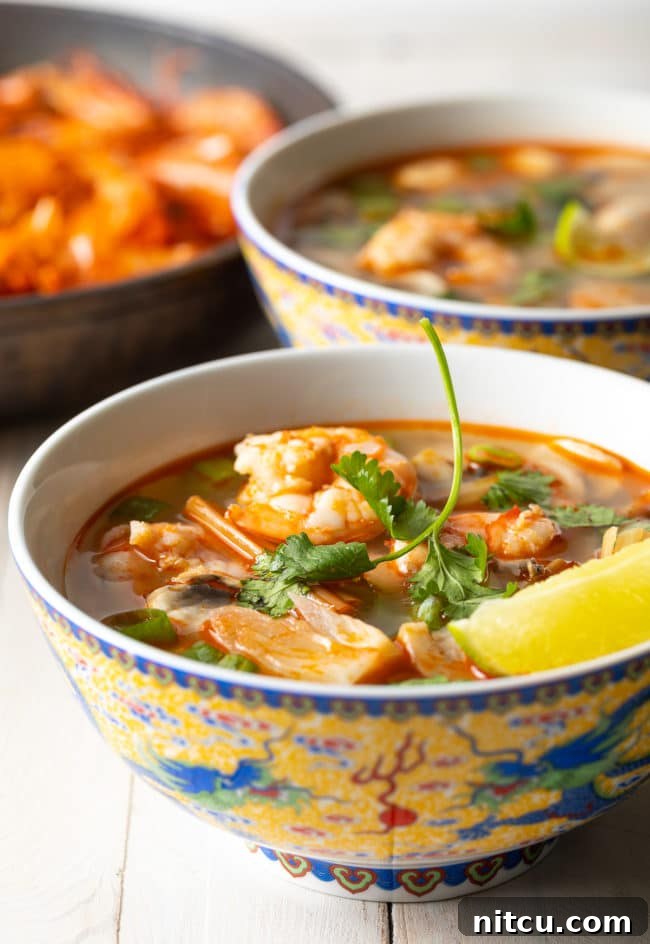
- Serve: Ladle the steaming Tom Yum soup into large individual bowls. Garnish generously with fresh cilantro leaves and serve with extra lime wedges on the side for an added burst of freshness. While traditionally often served over steamed rice, this soup is wonderfully low-carb and satisfying on its own!
Storage and Reheating Notes
To enjoy your delicious Tom Yum Soup even longer, keep these tips in mind:
- Storing Leftovers: Any leftover Thai hot and sour soup can be stored in an airtight container in the refrigerator for up to 2 days. For best flavor, consume within this timeframe, as seafood can lose its freshness quickly.
- Reheating: To reheat, you can use a microwave or gently simmer the soup in a saucepan over low heat. Be careful not to overcook the shrimp during reheating, as they can become tough. An expert tip is to remove the cooked shrimp from the soup before storing leftovers. When reheating, bring the soup to a gentle simmer, then add the shrimp back in for just a few seconds until heated through.
Perfect Serving Suggestions for Tom Yum
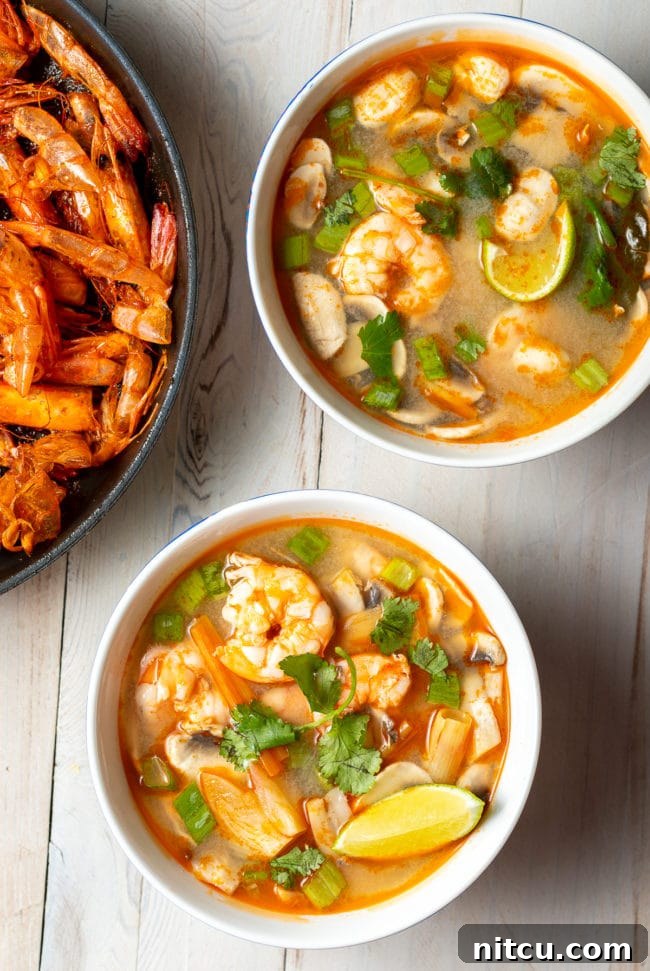
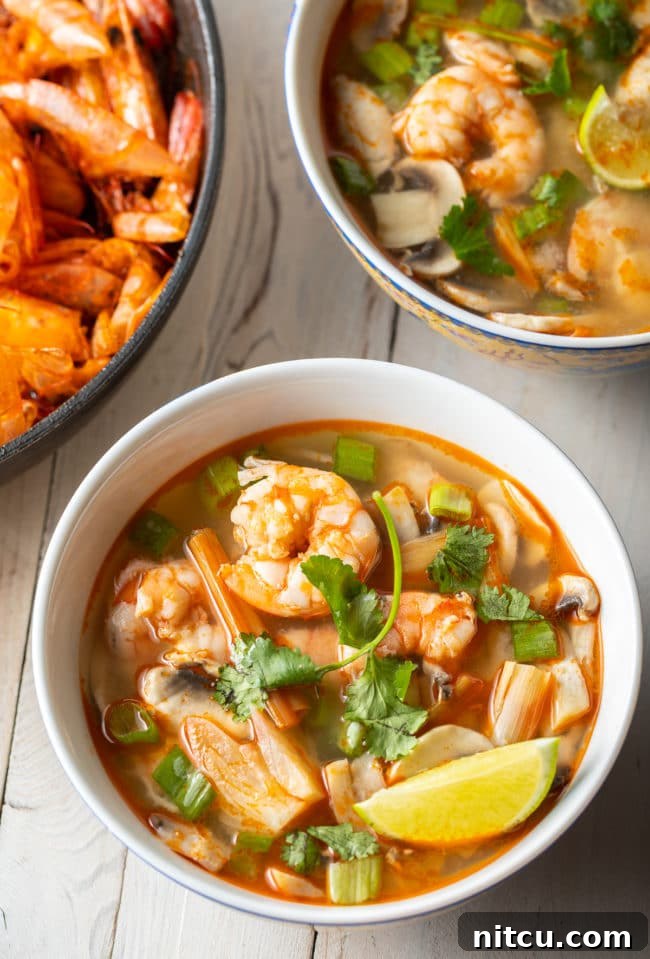
Tom Yum soup is a meal in itself, but it truly shines when presented beautifully and paired with complementary elements. Serve this vibrant soup in large, inviting soup bowls, ensuring each portion has a generous amount of shrimp and mushrooms. A final sprinkle of fresh cilantro leaves and a wedge of fresh lime on the side (for an extra squeeze of zest) adds both visual appeal and a burst of flavor.
Traditionally, Tom Yum is often served alongside steamed jasmine rice, which can absorb some of the spicy broth and provide a comforting balance to the bold flavors. However, if you’re watching your carbohydrate intake, the soup is perfectly delicious and satisfying when served as-is. For a complete Thai feast, consider pairing it with other classic dishes like Chicken Pad Thai, Panang Curry, or Spring Rolls. The contrasting textures and flavors will create an unforgettable dining experience.
Tom Yum Soup (Thai Hot and Sour Soup Recipe)
Ingredients
- 1 ½ pounds medium-sized whole raw shrimp (with heads intact)
- 1/3 cup flavorless oil
- 6 cups water
- 5 stalks fresh lemongrass
- 15 Kaffir lime leaves, fresh or frozen
- ½ onion, peeled and cut into wedges
- 4-6 Thai chiles (or Thai chile paste to taste)
- 1 inch piece galangal root, optional
- 2 tablespoons fish sauce
- 1 cup straw or button mushrooms, sliced
- 1 lime, juiced
- Possible Garnishes: cilantro leaves and lime wedges
Instructions
-
Pull the heads off the shrimp and place them in a wok or large skillet. Peel and clean the shrimp and set aside. *You can add the shrimp shells to the skillet as well, but the heads are the important part.
-
Add the oil to the skillet and set over medium heat. Add a good pinch of salt. Sauté the shrimp heads to release their flavor into the oil, cooking until they are red and crispy. Then turn off the heat.
-
Meanwhile, trim the tips and root ends of the lemongrass stalks and remove the tough outer layers. Cut the lemongrass into 1 ½ inch segments. Cut the galangal into 3 or 4 pieces.
-
Using a meat mallet or the side of a knife, smash the lemongrass, kaffir lime leaves, onion, chilies, and galangal. Place them in a medium soup pot. Pour the water into the pot then bring to a boil. Reduce the heat and simmer for 5-10 minutes, until the broth smells bright and fragrant.
-
Remove and discard any tough sections of lemongrass. (Keep them all in if the stalks are soft.) Increase the heat to high. Stir in the mushrooms. Boil for 1 minute. Then stir in the shrimp and fish sauce, cooking until the shrimp are just cooked through, about 45 seconds.
-
Turn off the heat and stir in the lime juice. Then stir in 3-4 tablespoons of the shrimp oil. (Discard the heads; do not add them to the soup.)
-
Serve with fresh lime wedges and cilantro. Tom Yum is often served over rice, however it’s low carb served as-is!
Notes
- Storing Leftovers – You can store leftover hot and sour soup in an airtight container in the refrigerator for up to 2 days.
- Reheating – To reheat, use the microwave or gently simmer in a saucepan. Make sure not to overcook the shrimp tho! You can take them out at the beginning and only add them back to the soup while reheating for a few seconds.
Nutrition
Frequently Asked Questions About Tom Yum Soup
The name “Tom Yum” is derived from two Thai words that perfectly describe its essence. “Tom” refers to the boiling process, highlighting that it is a hot, cooked soup. “Yum” describes the unique combination of spicy and sour flavors that define the dish. There are numerous variations of Tom Yum throughout Thailand, but this classic shrimp version is often called Tom Yum Goong or Tom Yum Kung, where “Goong” and “Kung” both mean shrimp or prawns. So, in essence, the name translates to “Boiling Hot and Sour Shrimp Soup” – a truly fitting description!
While both Tom Yum and Tom Kha are iconic Thai soups known for their vibrant flavors, they have a key distinguishing factor: coconut milk. Tom Yum is typically a clear, hot, and sour broth, intense and invigorating. Tom Kha, on the other hand, is the creamy counterpart. It features a rich coconut milk base, which mellows the spice and sourness, creating a smoother, milder, and often slightly sweeter profile. Both soups utilize similar aromatic herbs like galangal and lemongrass but offer distinctly different sensory experiences.
No, not entirely. While the broth, shrimp, and mushrooms are certainly for eating, several of the aromatic ingredients are added primarily for flavor infusion and are typically not consumed. These include the larger pieces of lemongrass stalks, kaffir lime leaves, and galangal slices. They are usually left in larger chunks precisely so you can easily identify and remove them from your bowl before eating. Think of them as natural flavor sachets for the broth.
While you can certainly make a delicious hot and sour soup without shrimp heads, it technically won’t be “authentic” Tom Yum in the truest sense. The shrimp heads are fundamental to creating the specialized “shrimp oil,” which provides an unparalleled depth of umami and seafood flavor that defines the traditional recipe. If you omit them, your soup will still be flavorful, but it will lack that distinct, rich character that the shrimp oil imparts. If you must skip the heads, consider using a high-quality seafood stock or broth as your base instead of plain water to compensate for some lost depth.
Yes, Tom Yum soup is widely considered a very healthy dish! It’s typically low in calories and fat, especially the clear (non-creamy) version. It’s packed with fresh herbs and spices like lemongrass, galangal, and chiles, which are known for their antioxidant and anti-inflammatory properties. The lean protein from shrimp contributes to a satisfying meal without being heavy. Being gluten-free and dairy-free also makes it suitable for various dietary needs. It’s a fantastic choice for a light, nutritious, and flavorful meal.