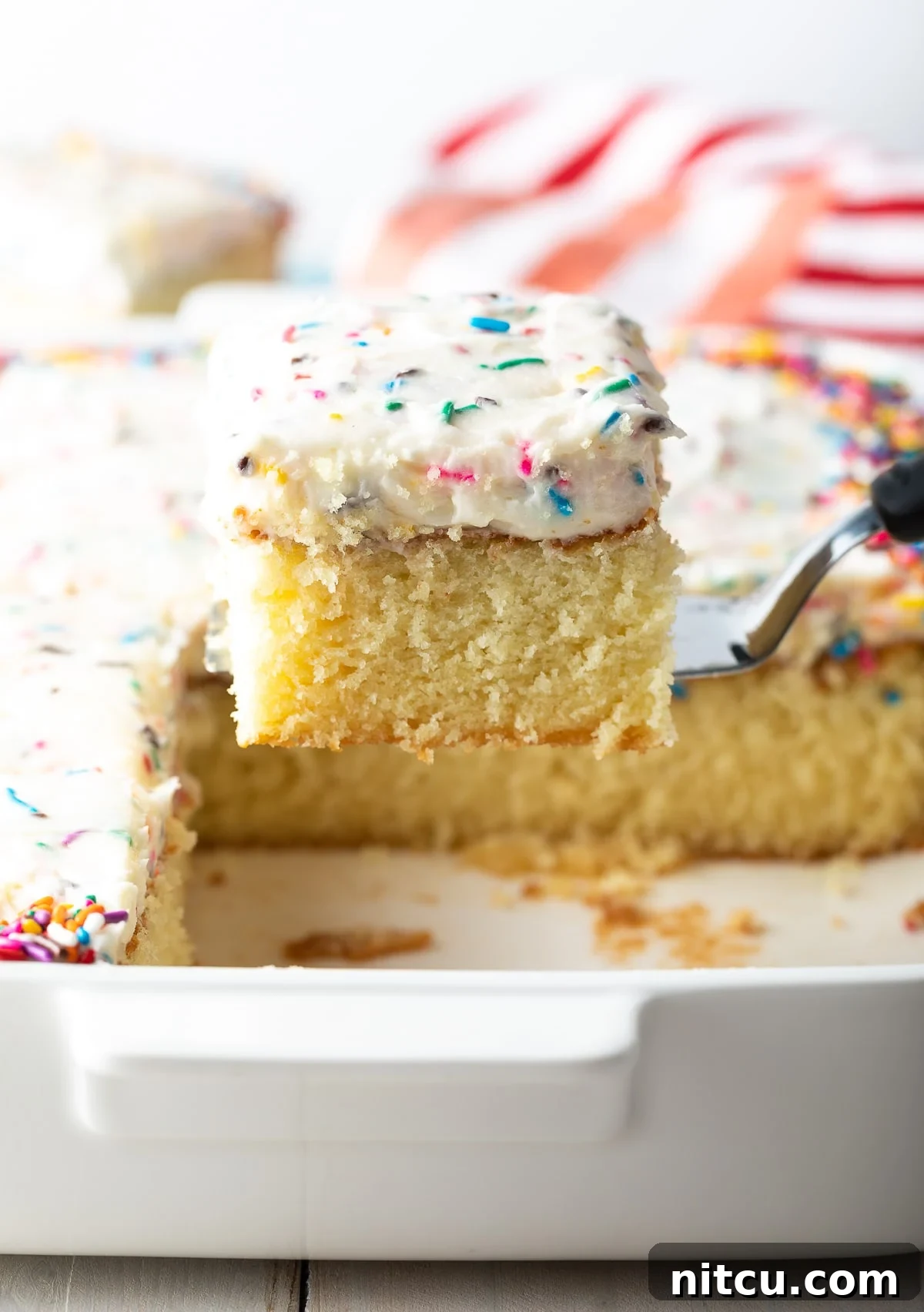
There’s an undeniable charm to a homemade cake, especially one as timeless and universally loved as a classic vanilla. For years, this particular all-purpose vanilla cake recipe has been my trusted companion for every celebration, and I can confidently say it’s the best birthday cake I’ve ever had the pleasure of serving. What sets this recipe apart is its commitment to quality ingredients, like pure vanilla extract, combined with a straightforward, foolproof method that guarantees a consistently moist, incredibly fluffy crumb. It bakes up beautifully every single time, making it a reliable choice for any occasion. This classic American celebration cake is surprisingly easy to create from scratch, using only common pantry staples. Its versatility is truly unmatched; it works perfectly whether you’re aiming for an impressive layered cake, a simple yet elegant sheet cake, or delightful cupcakes. If you’ve ever dreamt of mastering the art of homemade cake in a way that’s guaranteed to succeed, this is the recipe to trust. It consistently delivers on soft texture, rich, authentic vanilla flavor, and results that will impress everyone.
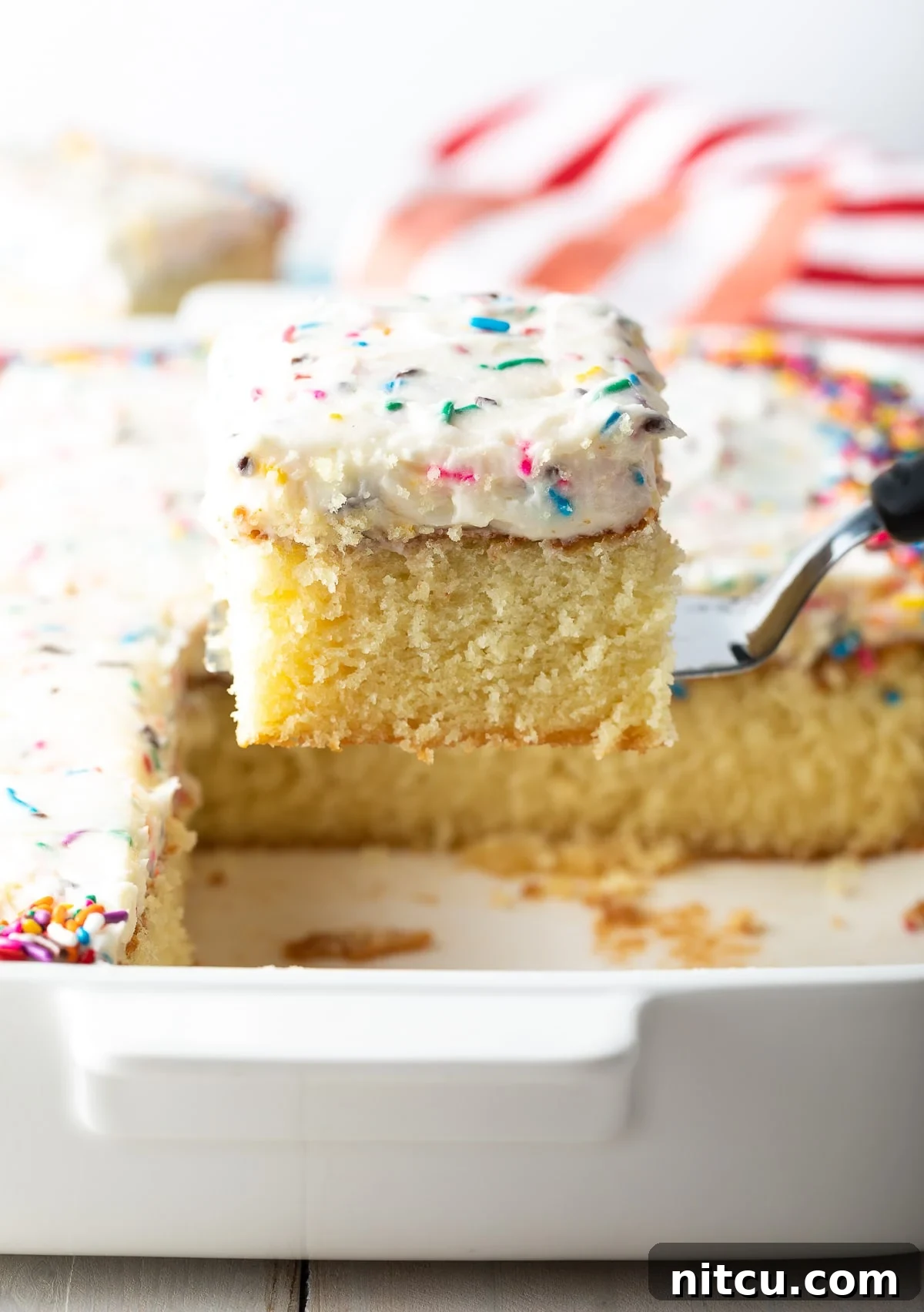
My Go-To Homemade Vanilla Cake Recipe for Every Celebration
While my passion for cooking often overshadows my baking endeavors, I always keep a select few dessert recipes that are absolute classics in my repertoire. This soft, fluffy vanilla cake stands out as a true superstar, a recipe I’ve made countless times for everything from cherished birthday celebrations and festive potlucks to professional work events. What I adore most about this made-from-scratch dessert isn’t just its incredible taste, but its remarkable adaptability. Here, I’m showcasing it as a simple yet elegant sheet cake, perfect for casual gatherings. However, this same batter transforms into magnificent vanilla layer cakes, especially when paired with my vibrant homemade funfetti frosting. It also bakes into tender, delightful cupcakes that are always a hit. While I confess a particular fondness for the festive sprinkle frosting, this versatile vanilla cake pairs beautifully with virtually any frosting you can imagine, making it my ultimate go-to when I need a dessert that’s easy to prepare, utterly reliable, and guaranteed to leave a lasting impression on my guests.
Sarah Calahasen — ⭐⭐⭐⭐⭐ Thank you so much for sharing your delicious recipe…my baby bear (my daughter) was very happy to have a homemade cake for her 8th birthday made by mama bear (me)! 😀
Table of Contents
- My Go-To Homemade Vanilla Cake Recipe for Every Celebration
- Why This Vanilla Cake is a Must-Try
- Key Ingredients for the Perfect Vanilla Cake and Essential Tips
- Step-by-Step: How to Bake Your Vanilla Cake
- Expert Baking Tips for Success
- Delicious Serving Suggestions
- Frequently Asked Questions About Vanilla Cake
- More Amazing Cake Recipes
- Full Recipe Card: Homemade Vanilla Cake

Why This Homemade Vanilla Cake is a Must-Try
The Ultimate Classic Birthday Cake – In my culinary philosophy, some things are simply non-negotiable, and the quintessential birthday or wedding cake has always been, and forever will be, a vanilla cake. While I’m certainly open to baking a luscious chocolate cake on occasion for those who prefer it, there’s an unspoken standard for the classic white cake, and I’ve dedicated myself to perfecting it here without apology. If your heart desires the absolute perfect, traditional vanilla-flavored cake, one that boasts a light, delicate texture and a clean, pure taste, then your search ends with this recipe. It truly embodies everything a classic vanilla cake should be.
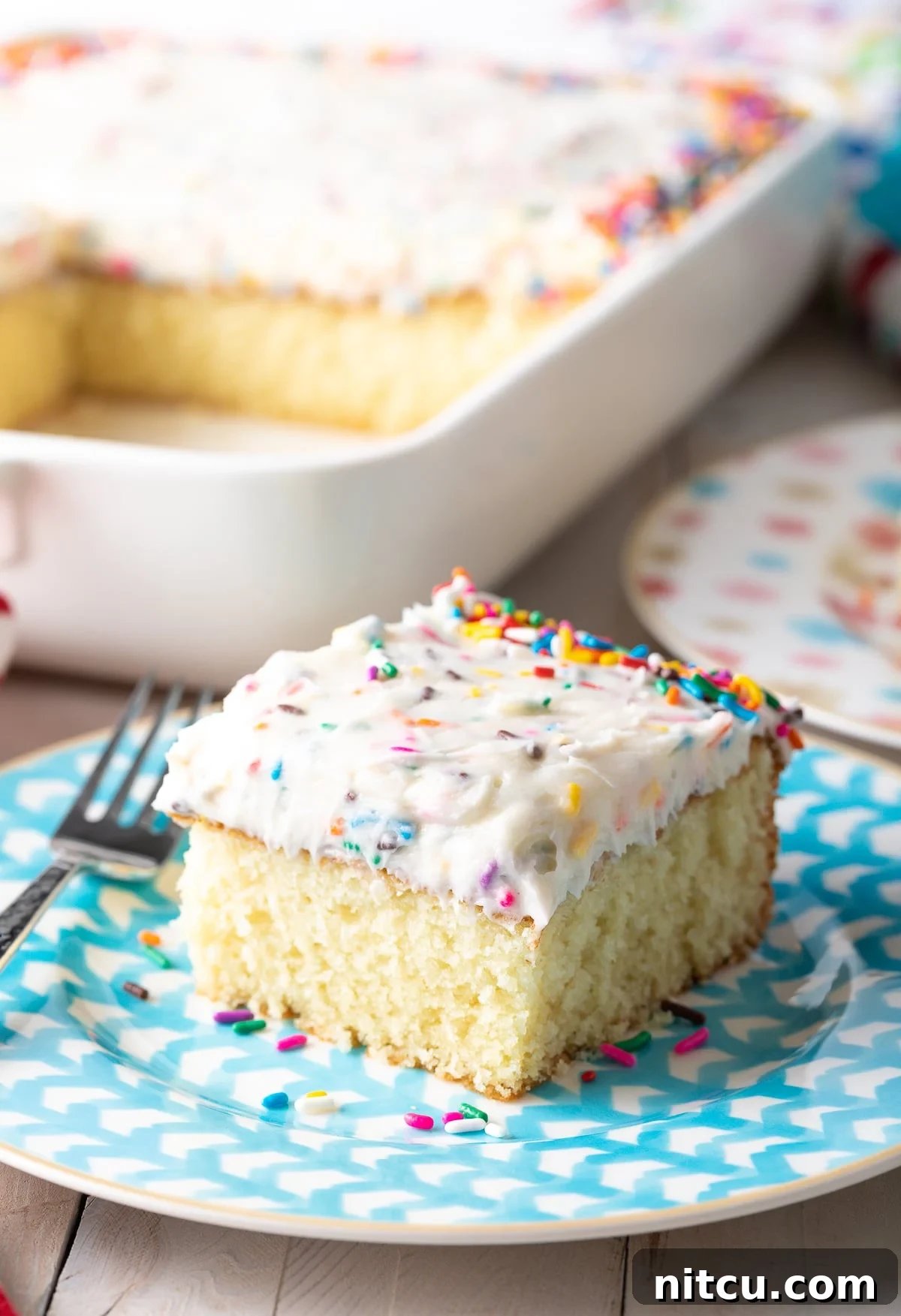
Irresistible Taste and Texture Harmony – The secret behind the unparalleled success of this homemade vanilla cake lies in a delicate balance: I haven’t sacrificed taste for texture, nor texture for taste. This cake offers a wonderfully bold and authentic vanilla flavor, complemented by an ever-so-slight touch of tanginess. This subtle tang is the magic of buttermilk, an ingredient that is absolutely essential for achieving that signature soft, tender, and moist crumb that defines a truly exceptional cake. Every bite is a testament to this perfect harmony, creating a dessert that is both flavorful and delightfully tender.
A Versatile Canvas for Your Culinary Creativity – I understand that some bakers thrive on following recipes to the letter, while others feel a strong urge to experiment and personalize. If you find yourself in the latter camp, this vanilla cake recipe serves as an incredible foundation for your own unique variations. My advice is to respect the core chemistry of the recipe – specifically, the precise proportions of dry and wet ingredients – as these are crucial for its structural integrity. However, feel free to unleash your creativity with flavor additions! You can easily swap the vanilla extract for almond, lemon, or any other flavor you love. Consider folding in chocolate chips, chopped nuts, or dried fruits. A touch of food coloring can transform its appearance, or you might add fresh citrus zest, much like I do in my vibrant lemon buttermilk cake. The possibilities are endless; have fun exploring new flavor combinations and making this cake truly your own!
Key Ingredients for the Perfect Vanilla Cake and Essential Tips
Achieving a truly exceptional vanilla cake starts with understanding the role each ingredient plays. Here’s a closer look at the stars of this recipe and why they’re crucial for that perfect texture and flavor:
- Cake Flour – This is my secret weapon for creating an ultra-airy, delicate texture. Cake flour has a lower protein content than all-purpose flour, resulting in a softer crumb that practically melts in your mouth. If you don’t have cake flour on hand, don’t worry! You can easily substitute it by combining all-purpose flour with a small amount of cornstarch. (You’ll find the exact proportions in the full recipe card below.)
- Baking Powder and Baking Soda – These are the dynamic duo of leavening agents that give our cake its incredible lift and wonderfully fluffy, tender texture. For optimal results, I strongly recommend replacing these ingredients at least twice a year. Expired leavening agents are the most common culprit when baked goods don’t rise properly, leading to dense, disappointing results. Freshness here is key!
- Unsalted Butter – I always opt for unsalted butter in my baking for one simple reason: quality control. Unsalted butter allows me to precisely control the amount of salt in the recipe, ensuring consistent flavor. Furthermore, unsalted butter tends to be fresher than its salted counterpart because salt acts as a preservative, meaning salted butter can sit on shelves for longer. Fresh butter equals a richer, purer flavor in your cake.
- Granulated Sugar – Traditional white granulated sugar is what we’re using here. Its fine crystals dissolve beautifully, contributing to both the cake’s sweetness and its tender structure. Unbleached granulated sugar works just as well if that’s what you prefer.
- Eggs – This recipe calls for a specific combination of 2 large whole eggs plus 1 additional egg white, all at room temperature. This precise ratio is crucial: the extra egg white contributes to a lighter, more ethereal texture and provides additional lift, while the yolks ensure richness and moisture. Room temperature eggs emulsify better with the butter and sugar, creating a smoother, more stable batter.
- Buttermilk – The unsung hero of many tender cakes! Buttermilk’s acidity reacts with the baking soda to create lightness, while its unique proteins contribute to an incredibly moist and fine crumb. If you can’t find buttermilk at your grocery store, it’s incredibly easy to make your own at home with milk and lemon juice or vinegar.
- Vanilla Extract – Since this is a vanilla cake, the quality of your vanilla extract is paramount to its flavor. I always insist on using 100% pure vanilla extract, not imitation vanilla. The difference in depth and authenticity of flavor is truly remarkable. While vanilla bean paste can also be used, be aware that it will leave tiny, beautiful specks of vanilla bean throughout your cake.
Step-by-Step: How to Bake Your Homemade Vanilla Cake
Baking a cake from scratch might seem daunting, but with these clear, easy-to-follow steps, you’ll achieve perfect results every time. For precise ingredient proportions, detailed instructions, and even a helpful video tutorial, be sure to consult the full printable recipe card located at the bottom of this post.
Find the full recipe with ingredient proportions, detailed instructions, and a video tutorial in the printable recipe card at the bottom of the post.
1. Essential Prepwork for Baking Success – Before you even think about mixing, it’s crucial to set yourself up for success. I always begin by preheating my oven to a precise 350°F (175°C). This ensures that when your batter is ready, the oven is perfectly at temperature, preventing uneven baking. Next, I prepare my chosen baking pan(s). Whether you opt for two 9-inch round cake pans for a classic layered look or one 9×13-inch baking dish for a simple sheet cake, meticulous preparation is key. I thoroughly grease the pan(s) with butter or cooking spray, then dust them lightly with flour, tapping out any excess. If my plan is to invert the cake out of the pan (which is usually the case for a clean finish), I take an extra, small but significant step: I trace the bottom of the pan(s) onto parchment paper, cut out the circles or rectangles, and then line the pan bottoms with this parchment before greasing and flouring. This tiny detail is a game-changer, preventing the heartbreak of a cake stubbornly sticking to the pan. No stuck cakes allowed in my kitchen!
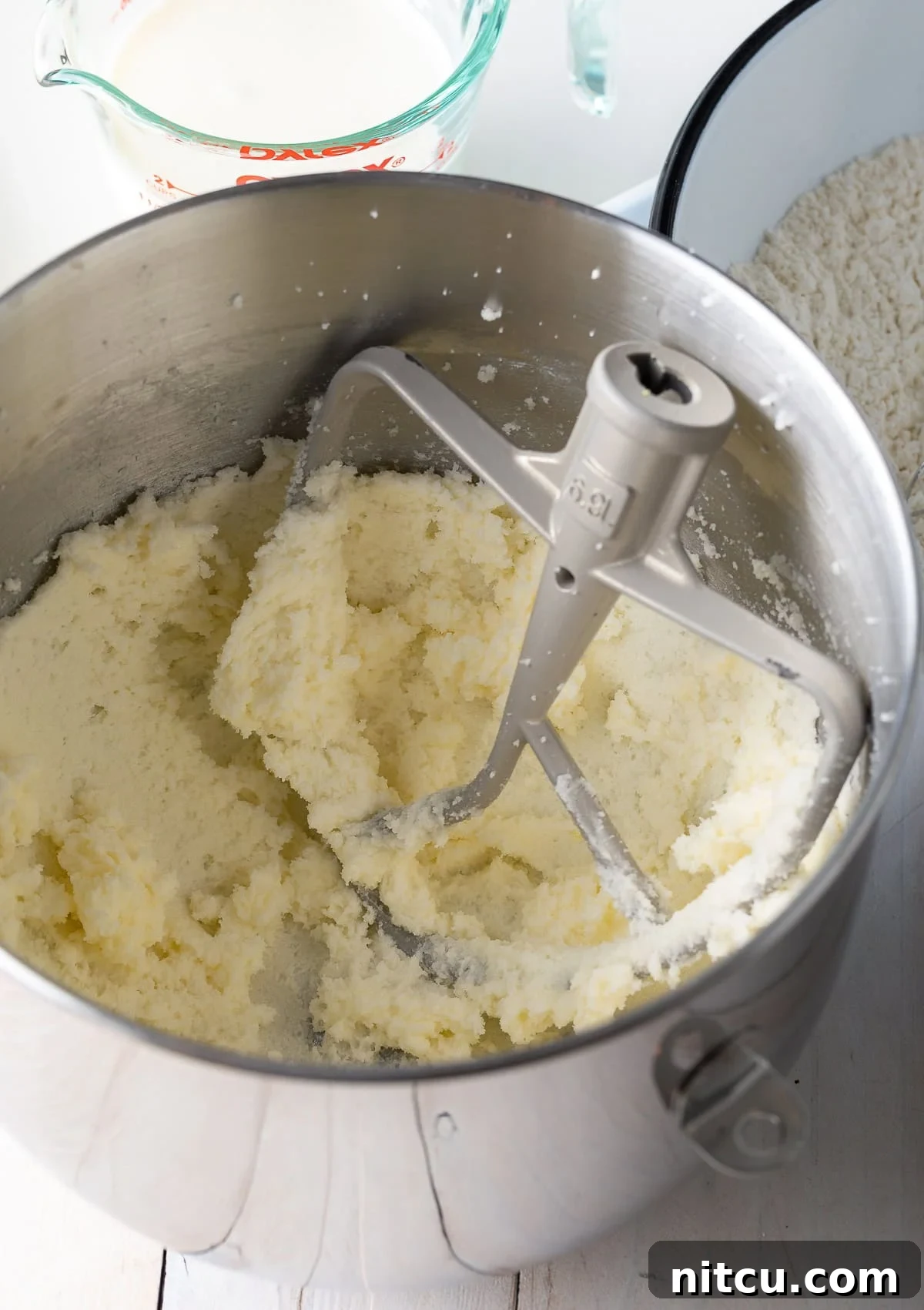
2. Creaming the Butter and Sugar to Perfection – This step is fundamental to achieving a light, airy cake texture. In the bowl of my stand mixer, fitted with the paddle attachment, I combine the softened unsalted butter and granulated sugar. I then beat them on high speed for a full 3 to 5 minutes, or until the mixture transforms into an incredibly light, fluffy, and pale-yellow cloud. It’s crucial not to rush this process, as this is where the magic of aeration happens, incorporating tiny air pockets that will contribute to the cake’s delicate crumb. Throughout this creaming, I pause at least once to scrape down the sides and bottom of the bowl with a rubber spatula. Those sneaky butter pockets hiding at the bottom can lead to an uneven mixture if not incorporated.
3. Preparing the Dry Ingredients – While the butter and sugar are creaming, I turn my attention to the dry ingredients. In a separate, medium-sized bowl, I whisk together the cake flour, baking powder, baking soda, and salt. The key here is to whisk them thoroughly for about 30 seconds. This isn’t just about combining them; it’s essential for evenly distributing the leavening agents throughout the flour. This ensures that your cake will rise uniformly and prevents undesirable random air pockets or dense spots.
4. Combining the Wet Ingredients – For the liquid components, I find it easiest to use a large measuring pitcher. I pour in the buttermilk first, then add the eggs, the additional egg white, and the pure vanilla extract. I give this mixture a good whisk until all the ingredients are well combined and uniform. Using a pitcher makes the subsequent pouring step much easier, more controlled, and significantly less messy.
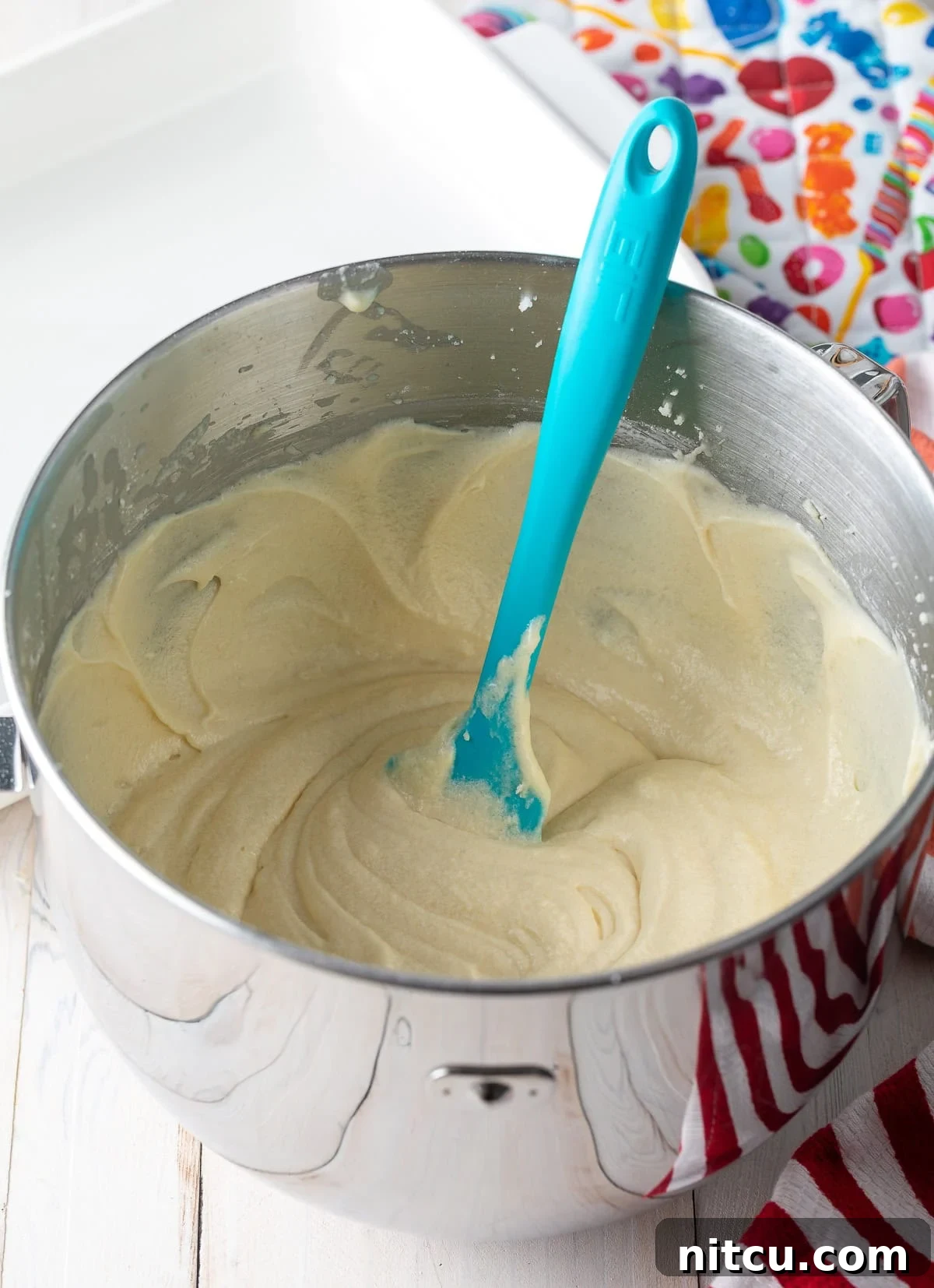
5. Gently Combining All Ingredients – Now, it’s time to bring everything together. I turn my stand mixer to its lowest speed. I then begin adding the dry ingredients to the creamed butter and sugar mixture, alternating with the buttermilk mixture. I follow a pattern: starting with about a third of the dry ingredients, mixing briefly until just combined, then adding half of the wet ingredients, mixing, then another third of the dry, the remaining wet, and finally the last of the dry. It’s crucial to mix only until the ingredients are *just* combined after each addition. Once all ingredients are incorporated, I scrape down the bowl again – yes, again! This ensures everything is uniformly mixed. Finally, I beat the batter for a very short duration, typically just 15 to 30 seconds, until it appears smooth and lump-free. Then, I STOP immediately. Over-mixing the batter is the arch-nemesis of a tender cake; it develops the gluten too much, leading to a tough, chewy texture, which is absolutely what we want to avoid!
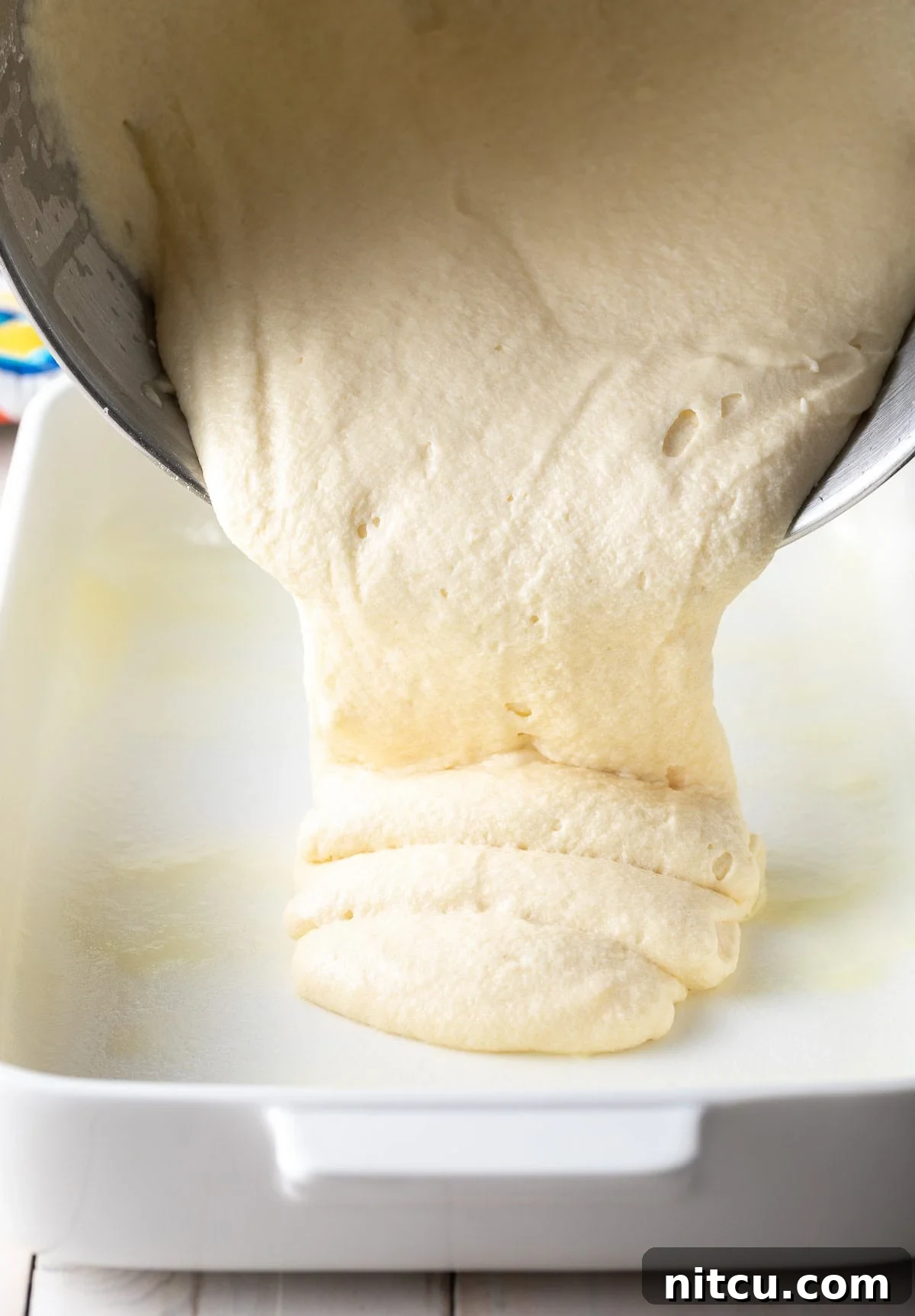
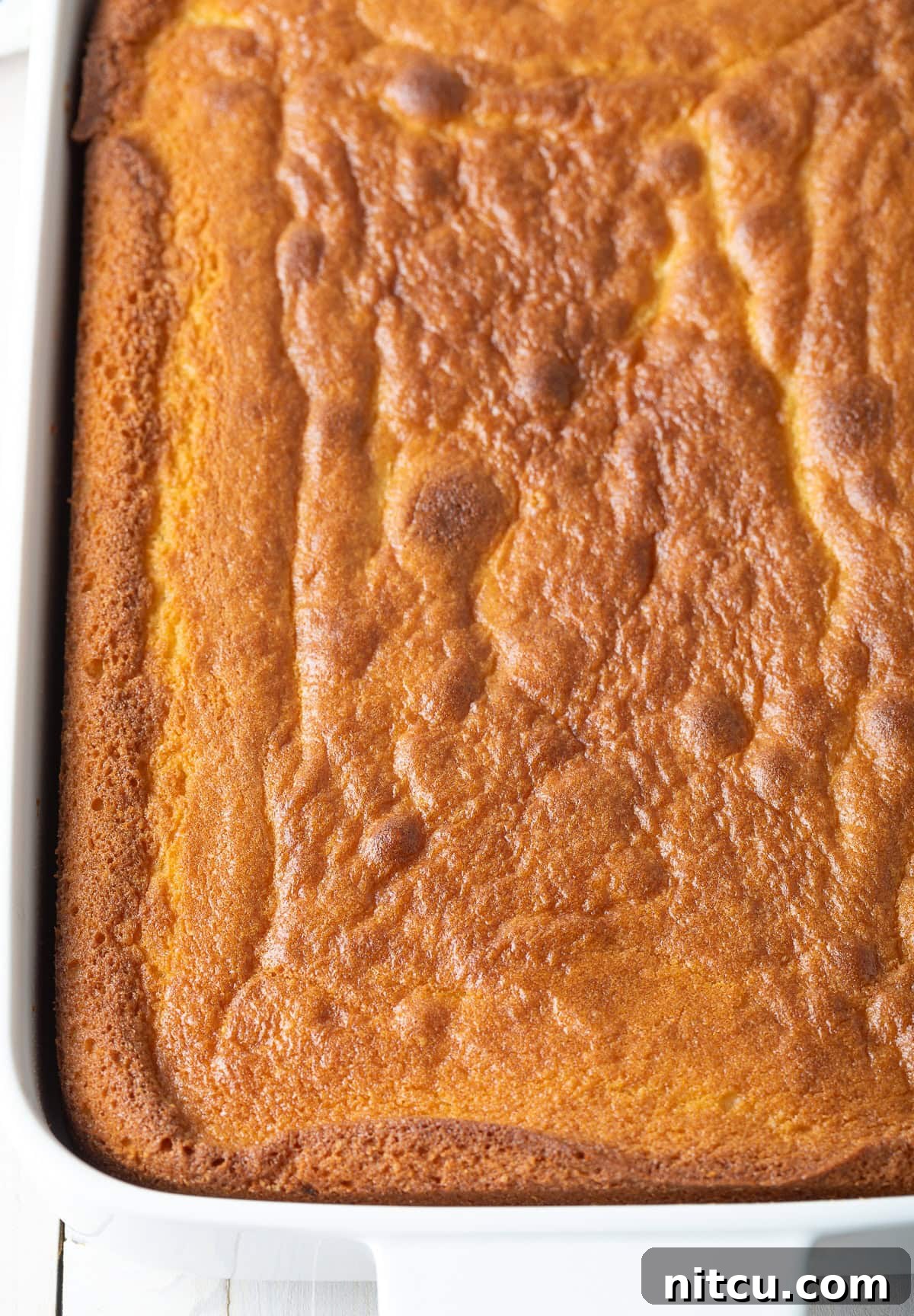
6. Baking to Golden Perfection – With the batter perfectly prepared, I carefully pour it into my previously prepared pan(s). I make sure the batter is evenly distributed. Then, I gently place the pan(s) onto the center rack of the preheated oven. Baking times will vary slightly depending on your pan choice: 9-inch round pans typically require about 22-25 minutes, while a single 9×13-inch pan will take approximately 30-35 minutes. I always start checking for doneness a couple of minutes before the suggested time, as every oven has its own quirks. To test for doneness, simply insert a clean toothpick into the very center of the cake. If it comes out clean or with just a few moist crumbs clinging to it, your cake is ready! If it comes out wet, continue baking in 2-3 minute increments.
7. The Crucial Cooling Phase – Once your beautifully baked cake emerges from the oven, resist the urge to immediately flip it out! It needs a moment to set properly. I let the cake cool undisturbed in its pan for about 15 minutes. This crucial resting period allows the cake’s structure to stabilize, preventing it from crumbling or falling apart when unmolded. After 15 minutes, I carefully invert the cake onto a wire cooling rack and allow it to cool completely. Patience is a virtue here! Frosting a warm or even slightly warm cake is an absolute recipe for a melty, sliding mess. Trust me, I speak from experience – allow it to cool down to room temperature completely before even thinking about frosting.
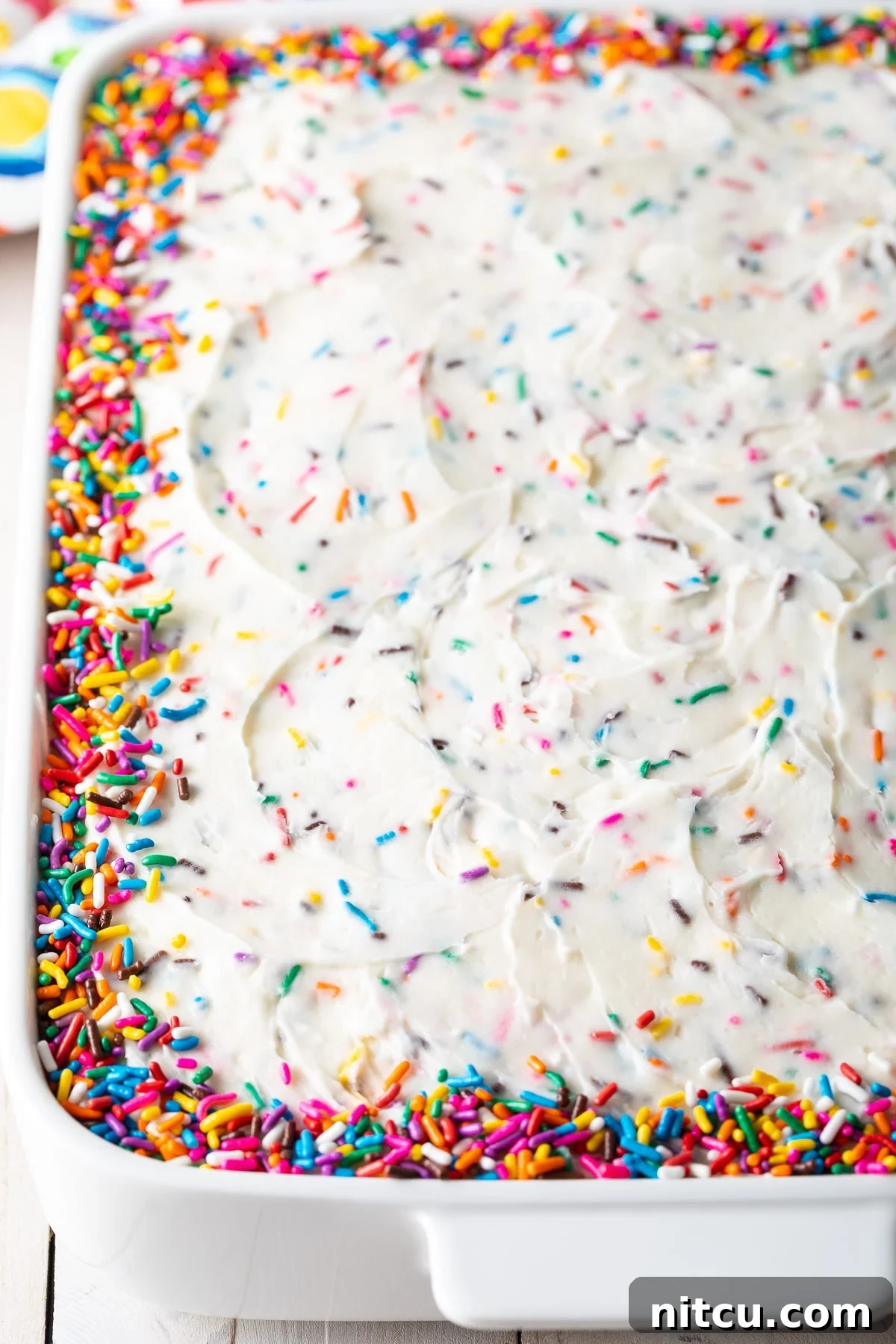
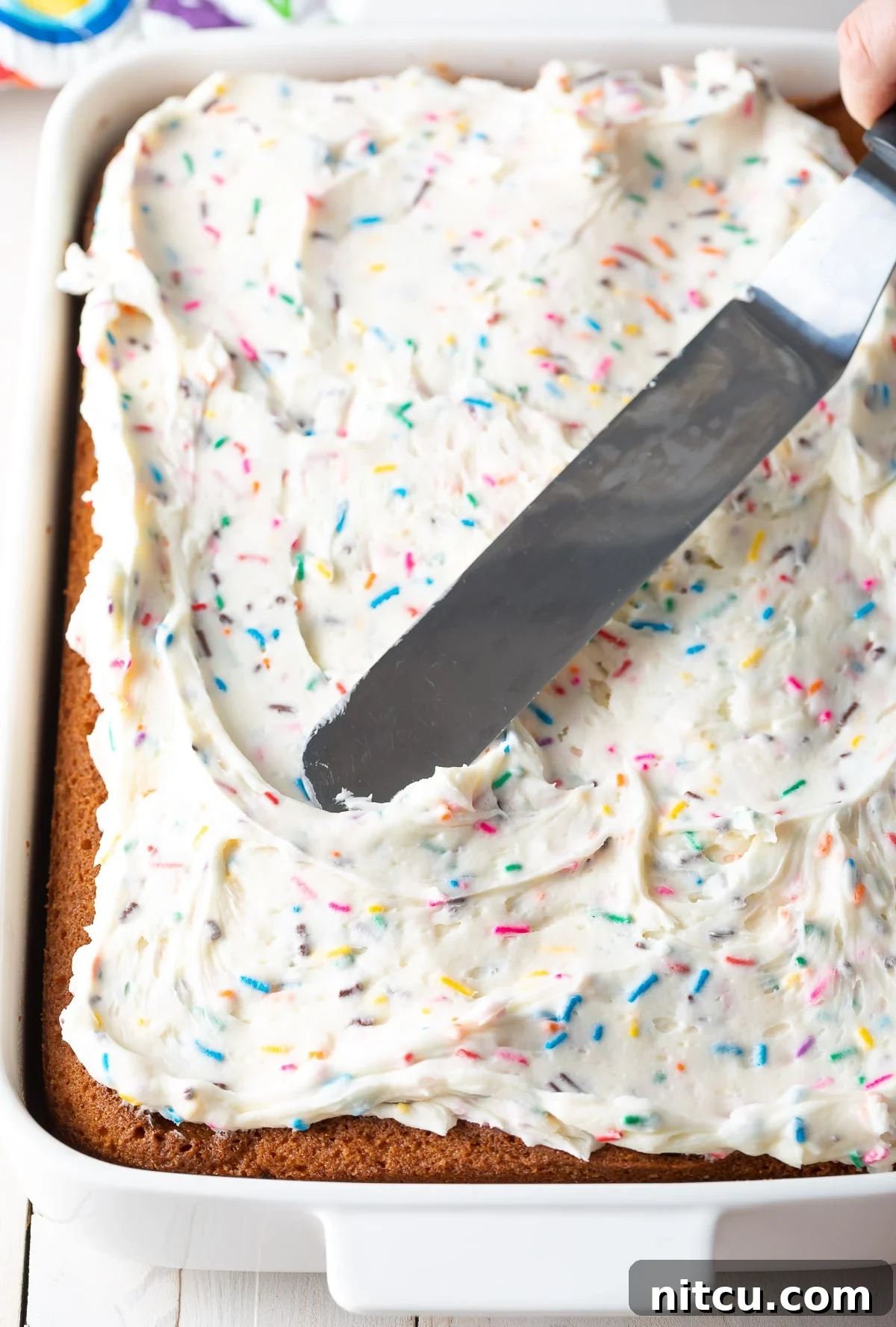
8. Frosting and Serving Your Masterpiece – Once your cake has reached a perfectly cool room temperature, it’s time for the crowning glory: the frosting! I generously slather on a thick layer of my vibrant homemade funfetti frosting. There’s no room for stinginess when it comes to frosting a homemade cake. Feel free to use your favorite buttercream, cream cheese frosting, or even a simple glaze. After the frosting is applied to your satisfaction, all that’s left is to slice into your delicious creation and serve! Prepare for compliments and requests for the recipe.
Expert Baking Tips for Success
Baking can be as much an art as a science, and these expert tips will help ensure your homemade vanilla cake turns out perfectly every single time:
- Measure Flour with Precision – This is arguably the most critical measurement in baking. Too much flour will result in a dry, dense cake, while too little can make it crumbly. To measure flour accurately, avoid scooping directly from the bag with your measuring cup, as this compacts the flour and leads to over-measurement. Instead, gently fluff the flour in its bag or container with a spoon. Then, spoon the flour into your measuring cup until it is slightly mounded or heaping. Finally, use the flat edge of a butter knife or a straight-edge spatula to level off the top, scraping away any excess. This method ensures you get precisely the right amount of flour.
- Verify Your Oven’s Temperature Accuracy – Oven thermostats are notoriously unreliable and can be off by as much as 50 degrees Fahrenheit, which can dramatically impact baking results. An oven that runs too hot will bake your cake too quickly, potentially leaving it dry or burnt on the outside and undercooked inside. An oven that runs too cool will extend baking times, leading to a dense, tough cake. Invest in an inexpensive oven thermometer to get an accurate reading. Place it in your oven and check the temperature before preheating. Adjust your oven dial as needed to reach the target temperature, ensuring consistent and perfect baking.
- Serve Your Cake at Room Temperature for Best Flavor and Texture – While a chilled slice of cake can be refreshing, the full depth of flavor and tender texture of this vanilla cake truly shines when served at room temperature. The butter in the cake softens, the vanilla notes become more pronounced, and the crumb feels more luxurious. Don’t believe me? Conduct a simple taste-test yourself: try a piece straight from the fridge and then a piece that has warmed up to lukewarm. (Confession: I’m just trying to ensure you get to enjoy two pieces! *wink*) So, if you’ve refrigerated your cake, be sure to pull it out of the cold at least 30-60 minutes before you plan to serve it.
- Weigh Your Batter for Perfectly Even Layer Cakes – When preparing a layer cake, achieving perfectly even layers is key for a professional-looking and stable final product. The best way to do this is to weigh your batter. Once your batter is fully mixed, place an empty cake pan on a kitchen scale and zero it out (tare). Pour half of the batter into the pan, noting the weight. Then, repeat this process for the second pan, ensuring both halves weigh exactly the same. This small step makes stacking and frosting your cake so much easier, resulting in beautiful, uniform layers.
- Flash-Freeze Layers for Effortless Stacking and Crumb Control – This is a game-changing technique for any aspiring cake decorator! After your cake layers have cooled completely, I often recommend wrapping each individual layer tightly in plastic wrap and then flash-freezing them for about 20-30 minutes, or even longer for a full freeze. This method helps in two significant ways: first, the firm, chilled layers are much easier to level with a serrated knife, allowing you to create perfectly flat surfaces for stacking. Second, and perhaps most importantly, freezing helps to lock in loose crumbs. This means when you apply your first layer of frosting (the crumb coat), fewer crumbs will mix into your beautiful, smooth frosting, giving you a much cleaner and more professional finish.
Delicious Serving Suggestions
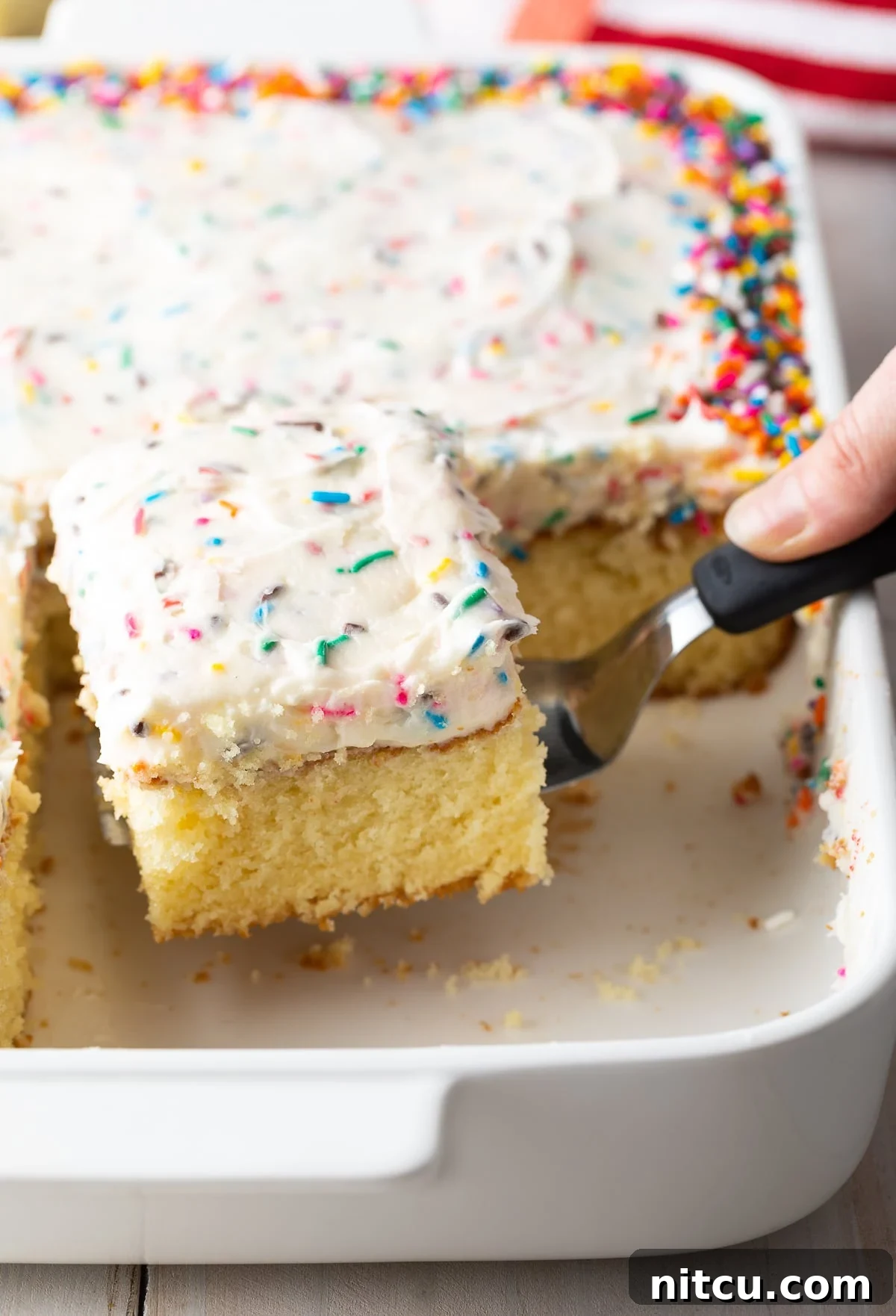
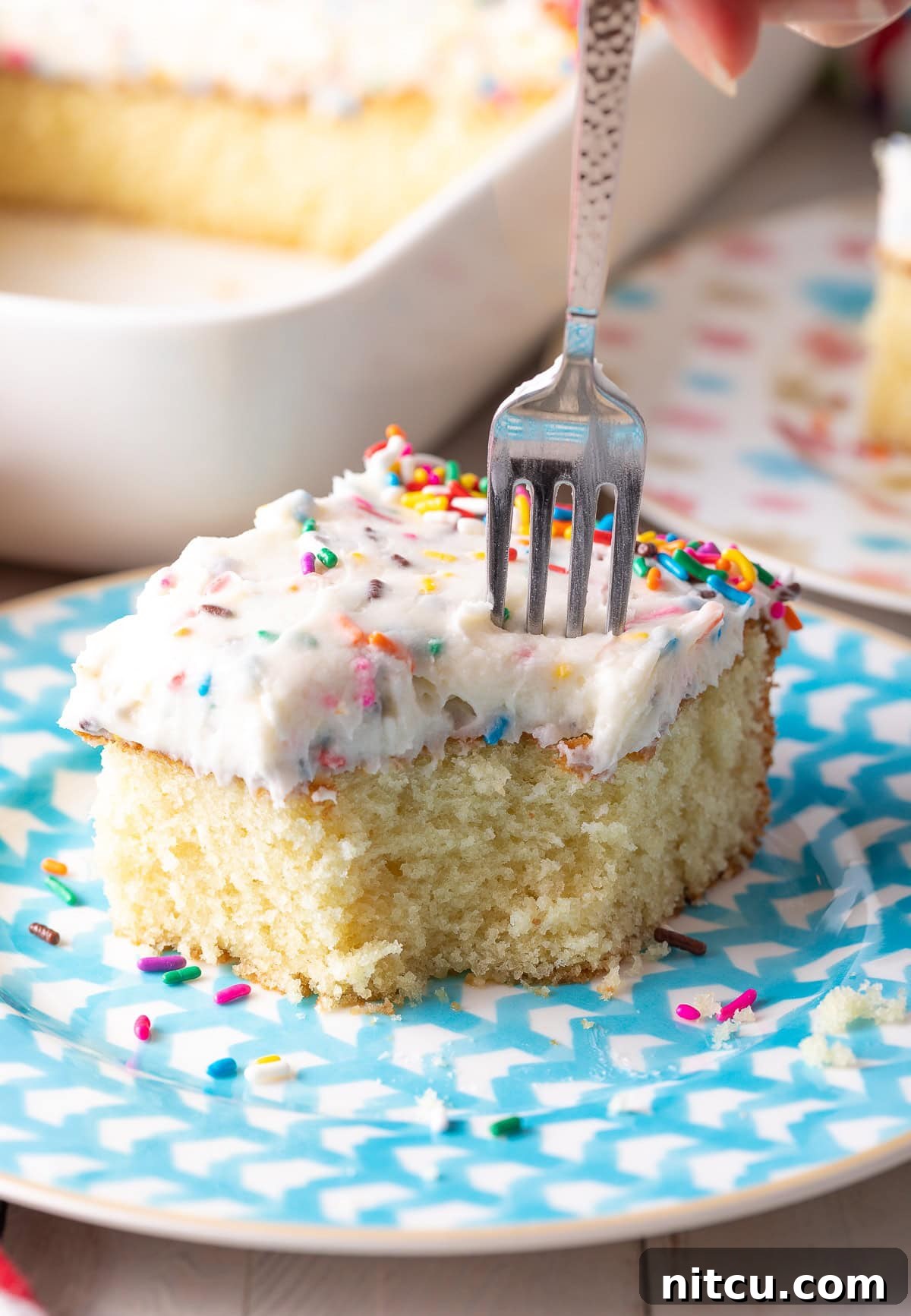
While a slice of this perfect homemade vanilla cake, generously slathered with funfetti icing, is often all you need to celebrate any special occasion, sometimes it’s fun to elevate the experience. Pair it with a scoop of ice cream or a drizzle of an extra sauce to take things up a notch. Here are some of my personal favorites that complement the rich vanilla flavor beautifully:
- Classic Homemade Vanilla Ice Cream – The ultimate pairing for a vanilla lover.
- Fun Bubble Gum Ice Cream – A playful and unexpected twist, especially for kids’ parties.
- Refreshing Blueberry Ice Cream – The tartness of blueberries offers a lovely contrast to the sweet cake.
- Rich Hot Fudge Sauce – A warm, decadent chocolate drizzle is always a winner.
- Homemade Caramel Sauce – The buttery, sweet notes of caramel perfectly enhance vanilla.
- A medley of fresh berries – A light and refreshing addition that adds color and natural sweetness.
- A dollop of whipped cream – Simple, elegant, and adds a luxurious touch.
Frequently Asked Questions About Homemade Vanilla Cake
How far in advance can I prepare this vanilla cake?
You can bake this delightful vanilla cake up to three days ahead of your event. To keep it fresh, I recommend baking the cake layers or sheet cake, letting them cool completely, then wrapping them tightly in plastic wrap. You can leave them at room temperature if serving within a day or two, or place them in the fridge for longer storage. For the best flavor and texture, prepare your chosen frosting on the day you plan to serve, and then decorate the cake just before your guests arrive.
How long do leftovers of this homemade vanilla cake last?
Once your cake has been served and enjoyed, make sure to cover any leftovers well to prevent them from drying out. A cake dome, an airtight container, or even plastic wrap pressed directly against any cut surfaces works perfectly. Leftover vanilla cake can be safely stored at room temperature for 4-5 days. If you prefer to extend its freshness, refrigerate it, and it will keep for up to a week. Remember to bring it to room temperature before serving for the best taste and texture!
Can I freeze this homemade vanilla cake?
Absolutely! Freezing is a fantastic way to preserve your vanilla cake for future enjoyment. For best results, allow the cake to cool completely. If it’s unfrosted, wrap it very well first with plastic wrap, ensuring no air can get in, and then add a second layer of aluminum foil. If it’s frosted, you can flash freeze it briefly on a tray until the frosting is firm, then wrap it. Freeze for up to 3 months. When you’re ready to enjoy it, simply thaw the cake at room temperature (still wrapped) for several hours or overnight. This method ensures your cake remains moist and delicious.
How do I adapt this recipe to make homemade vanilla cupcakes from scratch?
Transforming this vanilla cake recipe into cupcakes is incredibly simple! Prepare the batter exactly as instructed. Then, line a 12-cup muffin tin with cupcake liners. Fill each liner about two-thirds full with batter – this recipe yields approximately 24 standard-sized cupcakes. Bake the cupcakes in your preheated 350°F (175°C) oven for a shorter duration, typically around 14-16 minutes. You’ll know they’re done when a toothpick inserted into the center of a cupcake comes out clean, and the tops spring back when gently touched. Let them cool completely before frosting.
Can I use gluten-free baking flour in this vanilla cake recipe?
Yes, this vanilla cake recipe is quite forgiving and converts beautifully to a gluten-free version! To make it gluten-free, simply use a 1-to-1 gluten-free baking flour blend in place of the wheat-based cake flour. Many reputable brands offer excellent gluten-free all-purpose or cake flour blends that are specifically formulated for baking. Ensure your chosen blend contains xanthan gum (or add a small amount if it doesn’t) to help with structure, as gluten-free flours lack the natural elasticity of wheat flour. Follow all other instructions as written, and you’ll have a wonderfully moist and delicious gluten-free vanilla cake.
More Amazing Cake Recipes
Homemade Vanilla Cake Recipe
Print Recipe
Average Rating: 5 stars (45 reviews)
This all-purpose homemade vanilla cake is consistently rated as the BEST birthday cake recipe we’ve ever tasted! Learn how to make a classic vanilla cake from scratch in an easy, foolproof way that guarantees a moist, fluffy, and delicious result every single time.
Prep Time: 10 minutes
Cook Time: 30 minutes
Total Time: 40 minutes
Yields: 12 servings
Video Tutorial
Watch this helpful video to guide you through each step of making your perfect homemade vanilla cake:
The Best Homemade Vanilla Cake: This All-Purpose Homemade Vanilla Cake Recipe is the BEST Birthday Cake Recipe we’ve ever tasted! Learn How to Make Vanilla Cake from Scratch… The easy way!
Ingredients
Units: US Customary – Metric
- 2 1/2 cups cake flour (or 2 1/4 cups all-purpose flour + 1/4 cup cornstarch)
- 2 teaspoons baking powder
- 1/2 teaspoon baking soda
- 1 1/4 teaspoons salt
- 1 3/4 cups granulated sugar
- 3/4 cup unsalted butter, softened (1 1/2 sticks)
- 2 large eggs + 1 egg white (all at room temperature)
- 1 1/2 cups buttermilk
- 1 tablespoon pure vanilla extract
- Funfetti Frosting Recipe (for serving)
Instructions
- Prepare Your Workspace: Preheat your oven to 350°F (175°C). Prepare two 9-inch round cake pans or one 9×13-inch baking dish by thoroughly greasing and flouring them. If you plan to easily invert the cake, line the bottom of the pans with parchment paper (trace the pan bottom onto parchment and cut to fit) before greasing.
- Cream Butter and Sugar: In the bowl of a stand mixer fitted with the paddle attachment, cream the softened unsalted butter and granulated sugar on high speed for 3-5 minutes until the mixture is very light, fluffy, and pale in color. Scrape down the sides and bottom of the bowl with a rubber spatula to ensure even mixing.
- Whisk Dry Ingredients: In a separate medium-sized bowl, thoroughly whisk together the cake flour, baking powder, baking soda, and salt. Whisk for at least 30 seconds to ensure all leavening agents are evenly distributed.
- Combine Wet Ingredients: In a large measuring pitcher, whisk together the buttermilk, 2 large eggs, 1 extra egg white, and pure vanilla extract until well combined and uniform.
- Combine Wet and Dry: With the stand mixer on low speed, gradually add the dry ingredients to the creamed butter mixture, alternating with the buttermilk mixture. Begin and end with the dry ingredients. Mix just until all ingredients are combined. Scrape down the bowl again. Then, beat on low speed for only 15-30 seconds, just until the batter is smooth. Be careful not to over-mix, as over-mixing can lead to a tough cake.
- Bake the Cake: Pour the prepared cake batter evenly into your greased and floured pan(s). Place the pan(s) on the center rack of your preheated oven. Bake 9-inch round pans for 22-25 minutes, or a 9×13-inch pan for 30-35 minutes. To test for doneness, insert a toothpick into the center of the cake; it should come out clean or with just a few moist crumbs.
- Cool and Unmold: Once baked, remove the cake from the oven and allow it to cool in the pan for 15 minutes. This resting period helps the cake set its structure. After 15 minutes, carefully invert the cake(s) onto a wire cooling rack and allow them to cool completely to room temperature before proceeding. This prevents the cake from breaking apart and ensures frosting won’t melt.
- Frost and Serve: Once the cake is completely cool, apply your favorite frosting, such as Homemade Funfetti Frosting, generously. Slice and serve your delicious homemade vanilla cake to enjoy!
Recipe Notes for Success
- Accurate Flour Measuring: For the best texture, it’s incredibly important to measure your flour correctly. Gently stir or fluff the flour in its container. Then, spoon the flour into your measuring cup until it’s mounded. Finally, use the flat side of a knife to level off the excess, ensuring an accurate measurement.
- Homemade Buttermilk: No buttermilk? No problem! Learn how to easily make your own buttermilk here using milk and lemon juice or vinegar.
- Making Cupcakes: This versatile batter is perfect for cupcakes! Scoop the batter into 24 standard cupcake liners, filling each about two-thirds full. Bake for approximately 14-16 minutes, or until a toothpick inserted into the center comes out clean.
- Storage Instructions: After serving, cover any leftover cake tightly with plastic wrap or in an airtight container. It can be left at room temperature for 4-5 days, or refrigerated for up to one week. For best flavor, bring chilled cake to room temperature before serving.
- Freezing Instructions: To freeze, ensure the cake is completely cooled. Wrap it very well first with plastic wrap, then with a layer of aluminum foil. It can be frozen for up to 3 months. Thaw at room temperature for several hours or overnight before serving.
Nutrition Information
Serving: 1 large piece | Calories: 344kcal | Carbohydrates: 50g | Protein: 5g | Fat: 14g | Saturated Fat: 8g | Cholesterol: 69mg | Sodium: 336mg | Potassium: 150mg | Fiber: 1g | Sugar: 31g | Vitamin A: 455IU | Calcium: 76mg | Iron: 1mg
Course: Dessert
Cuisine: American
Author: Sommer Collier