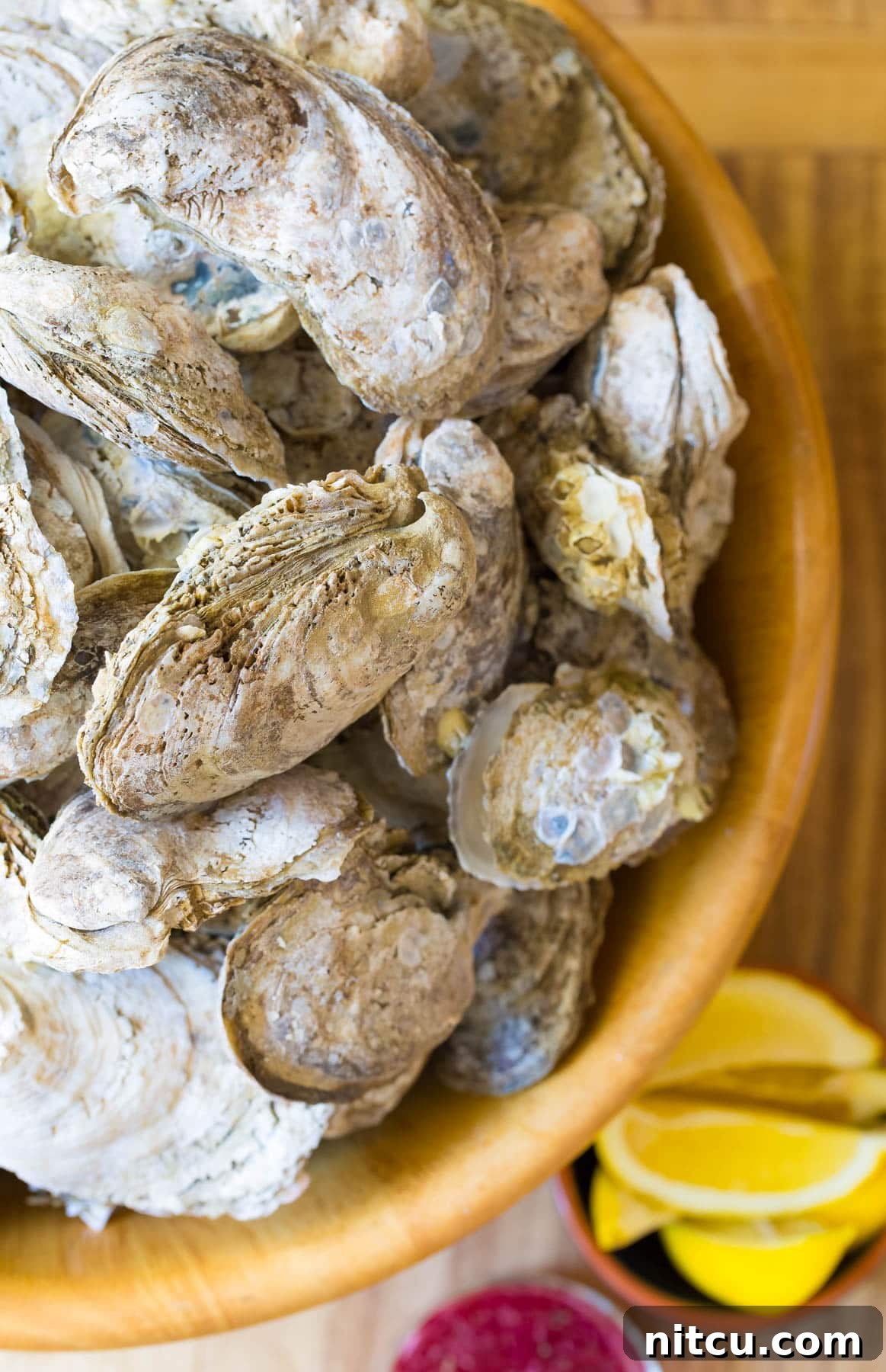
Are you an oyster aficionado eager to master the art of preparing these briny delights at home? Learning How to Shuck Oysters is an essential skill that transforms a simple meal into an exciting culinary adventure. Host an unforgettable oyster shucking party, impress your guests with perfectly served raw or steamed oysters, and confidently share your expertise on proper and safe shucking techniques.
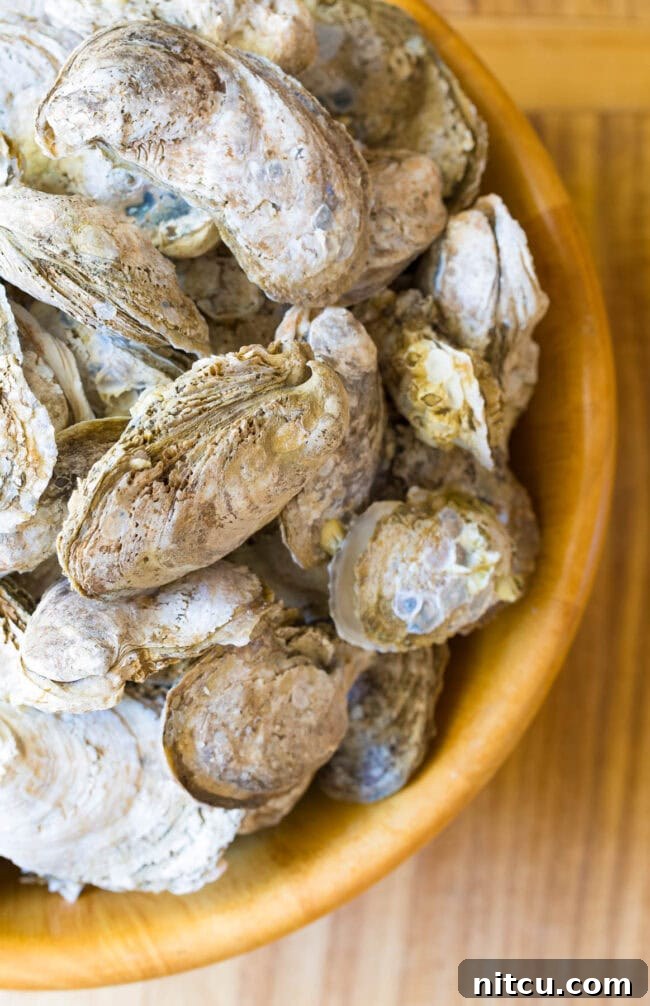
Mastering the Art of Oyster Shucking: Why It’s a Must-Learn Skill
There’s a unique joy that comes with enjoying fresh oysters, especially when you’ve prepared them yourself. For many years, one of our most cherished traditions has been gathering friends and family for lively oyster-shucking parties. It’s a delightful discovery that even the younger ones in our family, much to our surprise, share a keen enthusiasm for both shucking and savoring oysters!
Once you acquire the simple, yet rewarding, skill of opening oysters, you unlock a new dimension of entertaining. An oyster shucking bash is not just a meal; it’s an interactive and memorable social event. Guests can participate in the preparation, chat, laugh, and then customize their freshly shucked oysters with an array of delicious toppings. Imagine the buzz as everyone learns alongside you, transforming a pile of stubborn shells into a feast of oceanic flavors.
Serving oysters becomes an artistic endeavor with a variety of accompaniments. While the pure taste of the sea is sublime, offering options like classic cocktail sauce, tangy fresh lemon wedges, and spicy horseradish adds layers of flavor. For a touch of French elegance, a homemade mignonette – a simple blend of vinegar, minced shallots, and pepper – elevates the experience beautifully. Learning to shuck oysters means you control the freshness, the variety, and the entire festive atmosphere.

Sommer’s Insights: The Case for Steamed Oysters
Steamed Oysters Unveiled: The Secret to Effortless Opening
While my affection for oysters spans all preparations – raw, baked, grilled, or steamed – I’ve found that briefly steaming them offers the ultimate advantage for an oyster shucking event. There’s a compelling reason behind this recommendation.
Uncooked oysters undeniably possess the most exquisite *natural* flavor, a pure essence of the ocean that connoisseurs adore. However, the idea of consuming raw seafood can be daunting for some, and let’s be honest, raw oysters can be notoriously challenging to shuck. Their adductor muscle holds the shells shut with formidable strength, often requiring considerable force and precision to pry open.
Conversely, grilled oysters develop a lovely smoky character, and baked oysters often come adorned with irresistible toppings. Yet, these cooking methods, if not executed perfectly, can lead to a rubbery texture, causing the delicate essence of the oyster to be lost or overshadowed by other ingredients. The natural brininess and succulent texture can easily be compromised.
This is where steaming oysters for a very short duration truly shines, offering the best of both culinary worlds. For those who relish raw oysters, a quick steam results in *nearly raw* oysters that are significantly easier to open. The gentle heat causes the oyster’s adductor muscle to relax its grip on the shell just enough, making the shucking process far less strenuous and more enjoyable. You retain that fresh, oceanic taste with minimal textural change.
Simultaneously, guests who prefer their oysters cooked will find that the oysters from the bottom of the steaming pot, which receive slightly more heat, offer a more substantial and firmer texture – perfectly cooked without becoming rubbery. This method ensures that everyone at your gathering, regardless of their preference for raw or cooked, finds an oyster perfectly suited to their palate, making your oyster party a guaranteed success.
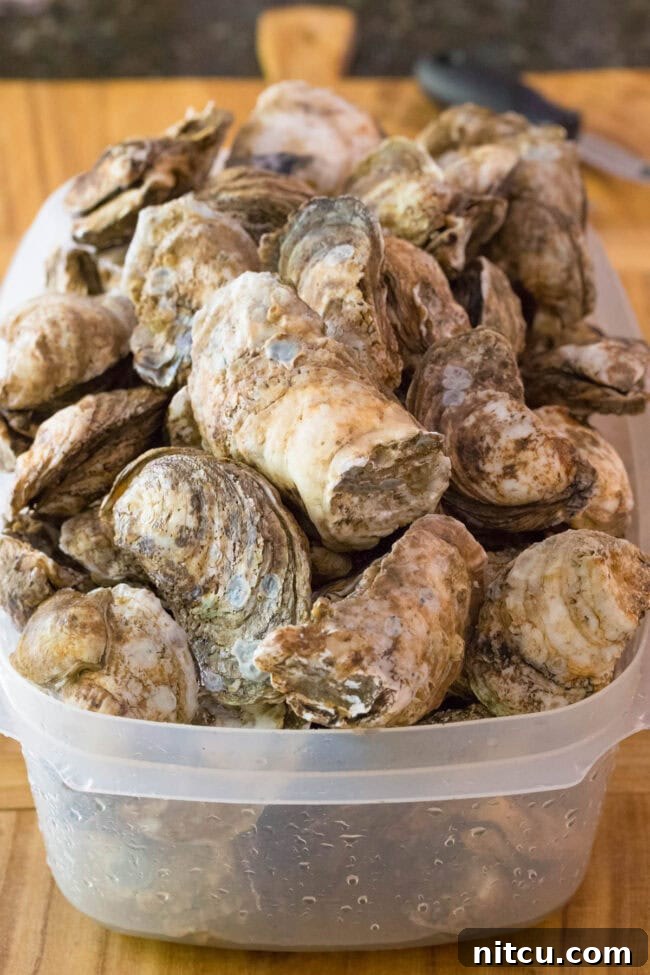
Essential Ingredients for Your Oyster Feast
To embark on your oyster shucking journey, you’ll need a few key components to ensure freshness and flavor:
- Fresh, Live Oysters: The star of the show! Always buy raw, live oysters. We’ll discuss how to select the best ones below.
- Baking Soda: An excellent natural cleaner for scrubbing the shells.
- Your Choice of Condiments and Toppings: From classic lemon wedges to exotic mignonettes, these enhance the oyster experience.
Indispensable Equipment for Safe and Efficient Shucking
Having the right tools is paramount for both safety and success when shucking oysters. Do not attempt this with regular kitchen knives, as it can be dangerous and damage your cutlery.
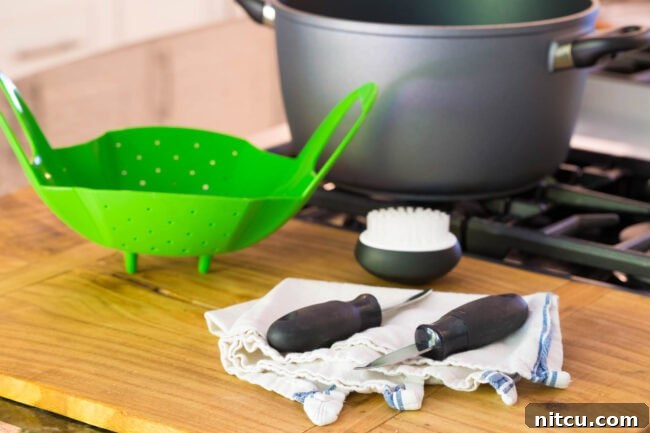
- Oyster Knife (Shucking Knife): This specialized tool is non-negotiable. Its short, sturdy blade and comfortable handle are designed specifically for prying open oyster shells without breaking the tip or slipping.
- Sturdy Kitchen Towel: Essential for protecting your hands and providing a firm grip on the oyster as you shuck. A thick, folded towel offers crucial protection against slips and potential injury.
- Vegetable Brush: For thoroughly cleaning the exterior of the oyster shells, removing any dirt, grit, or debris before serving.
- Steam Basket: If you opt for steaming, a steamer basket ensures even cooking and keeps the oysters out of direct water.
- Large Stock Pot: Paired with the steam basket, this will create the perfect environment for gently steaming your oysters.
- Optional: Cut-Resistant Gloves: For an extra layer of protection, especially for beginners, cut-resistant gloves can provide peace of mind.
Step-by-Step Guide: How To Clean Oysters
Properly cleaning your oysters is a critical first step to ensure a safe and enjoyable dining experience, removing any external grit or bacteria.
- Source and Inspect Freshness: Aim to purchase your fresh, live oysters on the day of your party. Like all seafood, the fresher they are, the better the taste and quality. Upon bringing them home, carefully inspect each oyster. Live oysters should be tightly clamped shut. If you find any oysters that are slightly open, gently tap them. If they do not close immediately, discard them. An open oyster that doesn’t close is likely dead and unsafe to eat. They should also smell faintly of the ocean, not strongly fishy.
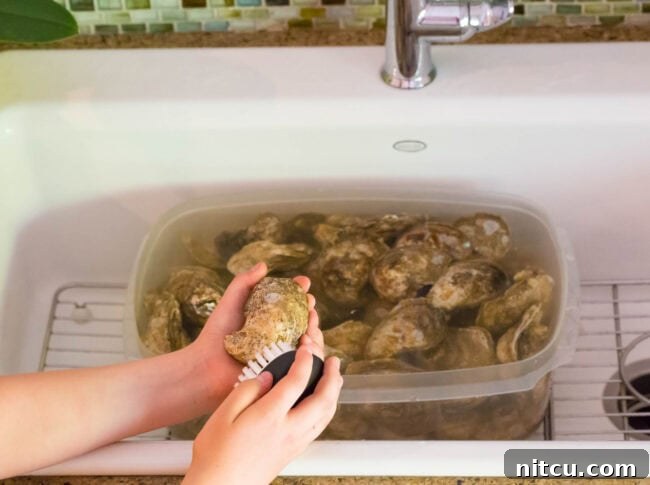
- Prepare for Soaking: Place all your live oysters in a large, clean tub or basin. Add approximately 2 tablespoons of baking soda to the tub. This helps in loosening dirt and impurities from the shells.
- Soak and Scrub: Fill the tub with cold water, ensuring the oysters are fully submerged. Allow them to soak for 10-15 minutes. This soaking period helps hydrate the oysters and makes external debris easier to remove. After soaking, use a firm vegetable brush to vigorously scrub the outside of each oyster under running cold water. Pay close attention to the crevices and hinges where dirt tends to accumulate. Sometimes, this can be a fun task for children (under supervision) or, for larger quantities, simply lay them out on a picnic table and rinse them thoroughly with a garden hose. Ensure all visible mud, sand, and grit are removed.
How to Steam Oysters for Effortless Shucking
Steaming oysters for a brief period is a game-changer for those new to shucking or for anyone hosting an oyster party. It significantly relaxes the oyster’s muscle, making them much easier and safer to open without fully cooking them.
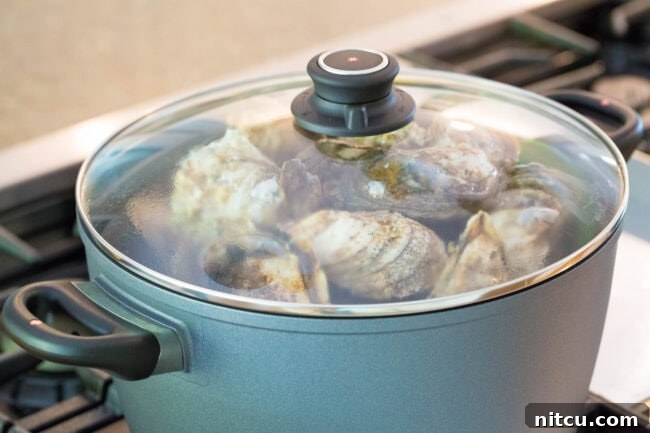
- Set Up Your Steaming Station: Place a large stock pot on your stove and insert a steaming basket. Pour 1-2 inches of water into the pot, ensuring the water level is well below the bottom of the steam basket so the oysters are steamed, not boiled. Cover the pot with a tight-fitting lid and turn the heat to high. Bring the water to a vigorous rolling boil.
- Quick Steam Process: Once the water is boiling rapidly, carefully and quickly fill the steamer basket with a single layer of cleaned oysters. Immediately cover the pot again to trap the steam. Set a timer for precisely four minutes. This brief steaming time is crucial for relaxing the oyster’s adductor muscle without overcooking the delicate meat.
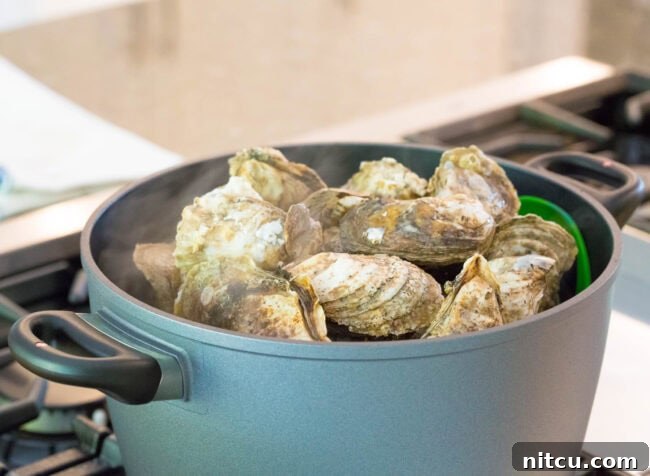
- Serve Immediately: As soon as the four minutes are up, quickly uncover the pot and use tongs or carefully tip the basket to transfer the steamed oysters into a large serving bowl or platter. This quick removal prevents further cooking. If you have more oysters to steam, repeat the process.
And just like that, your oysters are perfectly prepared and ready for shucking and enjoying! The beauty of this method lies in the subtle variation of doneness:
- Oysters closer to the bottom of the pot will be slightly more cooked, making them the easiest to open and offering a firmer texture, ideal for those who prefer their seafood cooked through.
- Conversely, oysters at the top of the basket will be just *barely* cooked – my personal favorite way to enjoy them. They retain a raw, briny center with only a slight textural change around the edges, offering the best of both worlds.
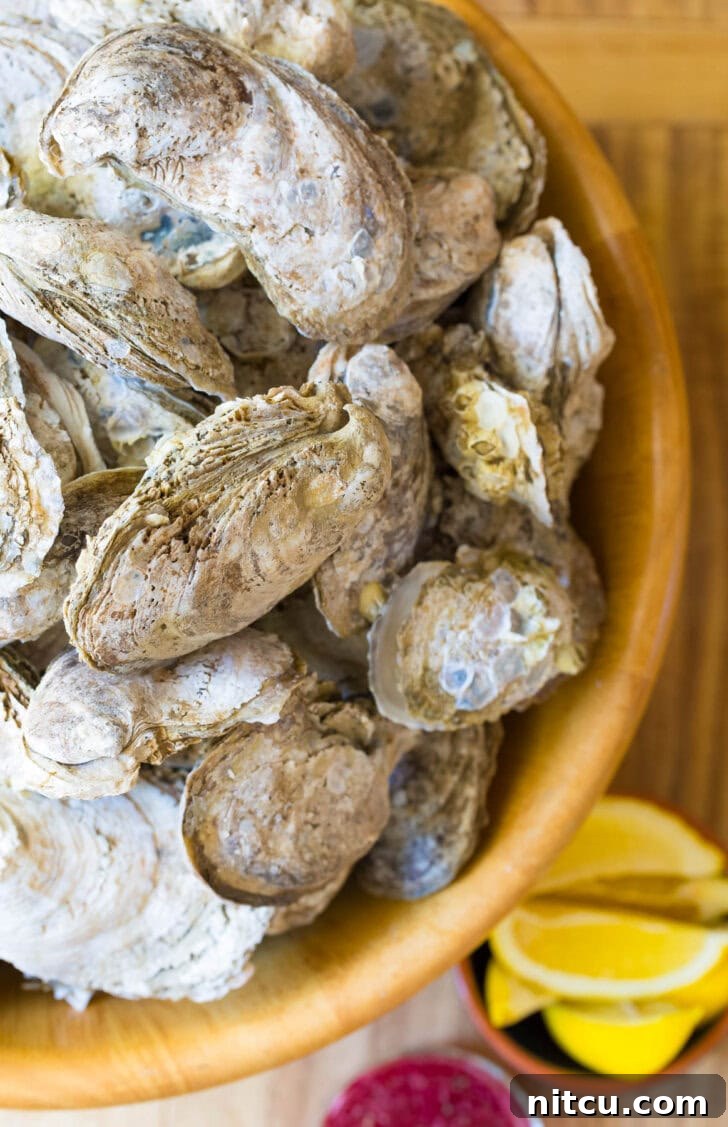
This approach ensures that every guest at your table can find an oyster that perfectly matches their desired level of doneness. Now, with your cleaned and gently steamed oysters ready, it’s time to arrange your chosen condiments and begin the enjoyable task of shucking!
The Ultimate Guide: How To Shuck Oysters Like a Pro (Safely)
Shucking oysters is a skill that, once mastered, is incredibly satisfying. With the right tools and technique, it’s a safe and rewarding process. Always prioritize safety to prevent injuries.
- Equip Yourself Safely: Provide each person with a clean, sturdy tea towel (or a specialized oyster glove) and an authentic oyster shucking knife. A crucial safety note: Never attempt to shuck oysters with a regular kitchen knife, butter knife, or any other unsuitable utensil. Not only is it extremely dangerous, risking severe cuts, but it will also damage your knives.
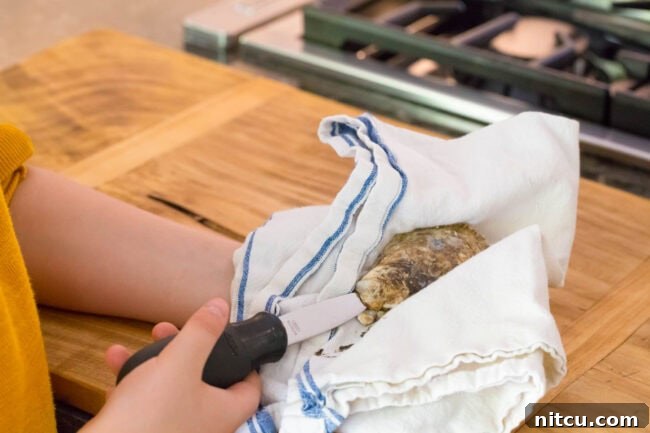
- Secure the Oyster: Lay the oyster flat on a folded kitchen towel in the palm of your non-dominant hand. The flat side of the oyster shell should face up, and the cupped side should be down. This position helps retain the oyster liquor once it’s opened. Ensure your fingers are curled back and away from the hinge and the path of the knife. Holding the oyster firmly with the towel prevents it from slipping.
- Locate and Penetrate the Hinge: Identify the natural hinge of the oyster, which is the point where the two shells connect and are thickest. This is usually at the tapered end of the oyster. Carefully insert the tip of your oyster-shucking knife into this hinge. Apply firm, steady pressure. You will need to dig, twist, and wiggle the knife gently but assertively into the hinge. The goal is to separate the shells by breaking the hinge, not to force the blade through the entire oyster. You should feel a slight pop or give when the hinge is successfully breached.
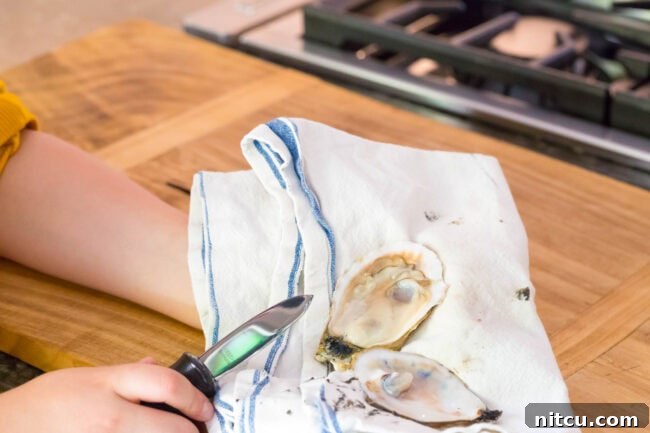
- Pry Open and Sever the Top Muscle: Once you’ve created a small opening by leveraging the knife in the hinge, twist the knife gently to widen the gap. Immediately wipe the blade of your knife clean on the towel to remove any grit from the shell. Then, slide the blade just under the top, flat shell. Run the edge of the blade along the inside of the top shell to sever the adductor muscle that attaches the oyster to the top shell. This muscle is what holds the oyster shut so tightly. Remove the top shell, discarding it.
- Release the Bottom Muscle and Serve: With the top shell removed, carefully wipe your knife again if necessary. Gently run the knife blade underneath the oyster meat, staying as close to the bottom shell as possible, to detach the remaining adductor muscle. This ensures the oyster is completely loose in its shell, making it easy to eat. Be careful not to spill the precious oyster liquor (the briny liquid) inside the cupped shell, as this is full of flavor. Turn the oyster over within its shell for a more appealing presentation.
- Present for Enjoyment: Arrange the freshly shucked oysters, cup-side down, on a large tray or platter, typically nestled on a bed of crushed ice to keep them chilled. Encourage guests to select their oysters and customize them with the array of condiments you’ve provided.
With these steps, you’ll be shucking oysters like a seasoned professional, ready to enjoy the freshest flavors of the sea with confidence and ease!
For detailed proportions and a visual step-by-step, find the full Oyster Tutorial, including ingredient amounts and a video guide, in the comprehensive recipe section at the bottom of this article.
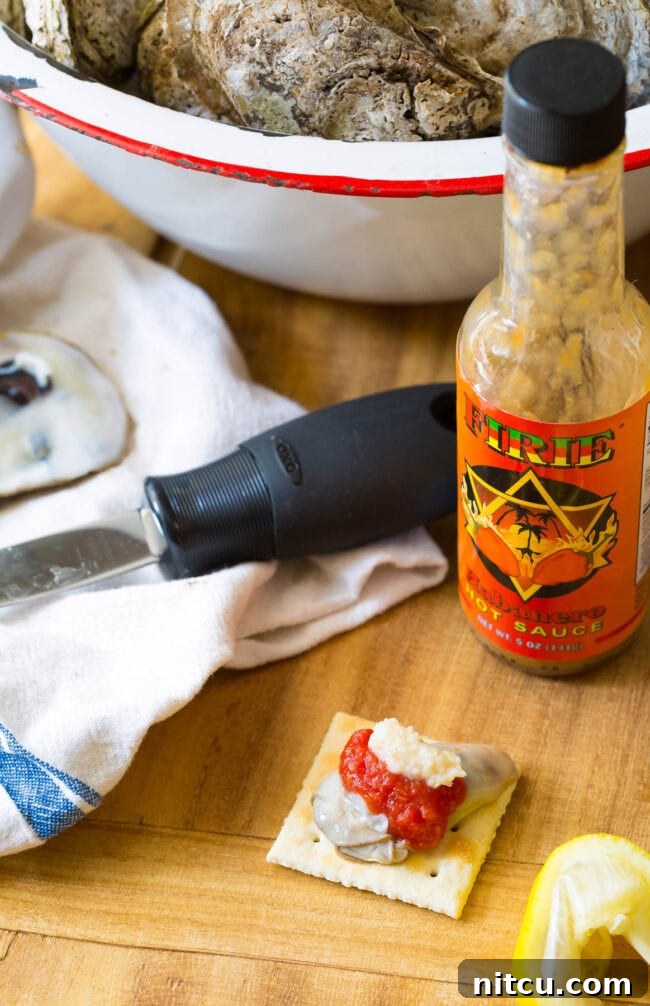
Elevate Your Experience: Raw Oyster Condiments and Pairings
One of the true pleasures of serving oysters is the vast array of ways you can accentuate their delicate flavor. Setting up an “oyster condiment bar” encourages guests to explore different taste combinations, making for a truly interactive and personalized dining experience.
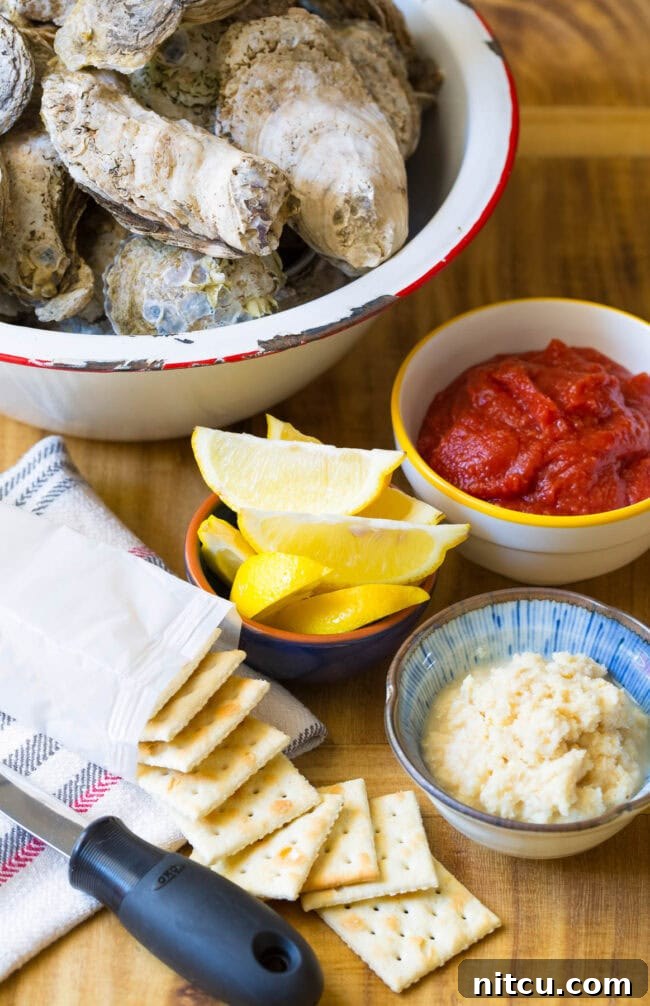
While a simple squeeze of fresh lemon juice is often all that’s needed to highlight the oyster’s natural brininess, don’t hesitate to go all out with a lavish spread of toppings! Here are some of my personal favorite condiment styles, ranging from classic to bold:
Classic American Oyster Setup
This traditional spread complements the oyster without overpowering its inherent taste.
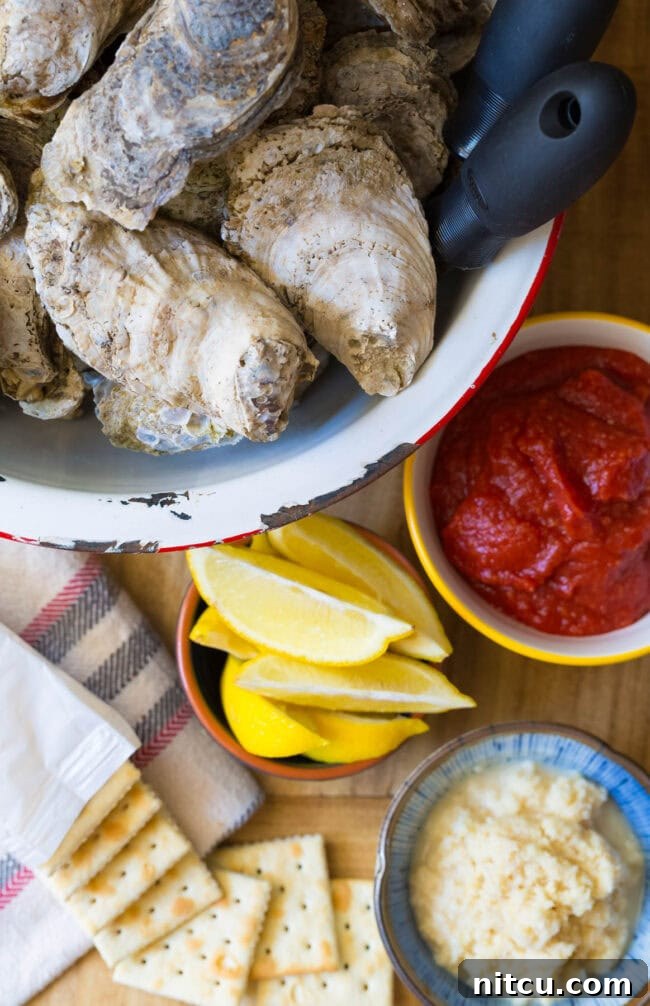
- Saltine Crackers: A crunchy, neutral base to enjoy with the oyster.
- Cocktail Sauce: A tangy, sweet, and spicy sauce that’s a universal favorite.
- Lemon Wedges: A simple squeeze of fresh lemon brightens the oyster’s flavor.
- Prepared Horseradish: Adds a fiery kick that invigorates the palate.
- Hot Sauce (like Tabasco): For those who love an extra layer of heat and a touch of vinegar.
Classic French Mignonette
An elegant and refined option, offering a perfect acidic counterpoint to the oyster’s richness.
- Red Wine Vinegar: Forms the acidic base, cutting through the oyster’s richness.
- Finely Minced Shallots: Provides a subtle oniony, garlicky flavor without being overpowering.
- Freshly Cracked Black Pepper: Adds a gentle spice and aromatic depth.
- Optional: Fresh Chives or Parsley: For a hint of herbaceous freshness.
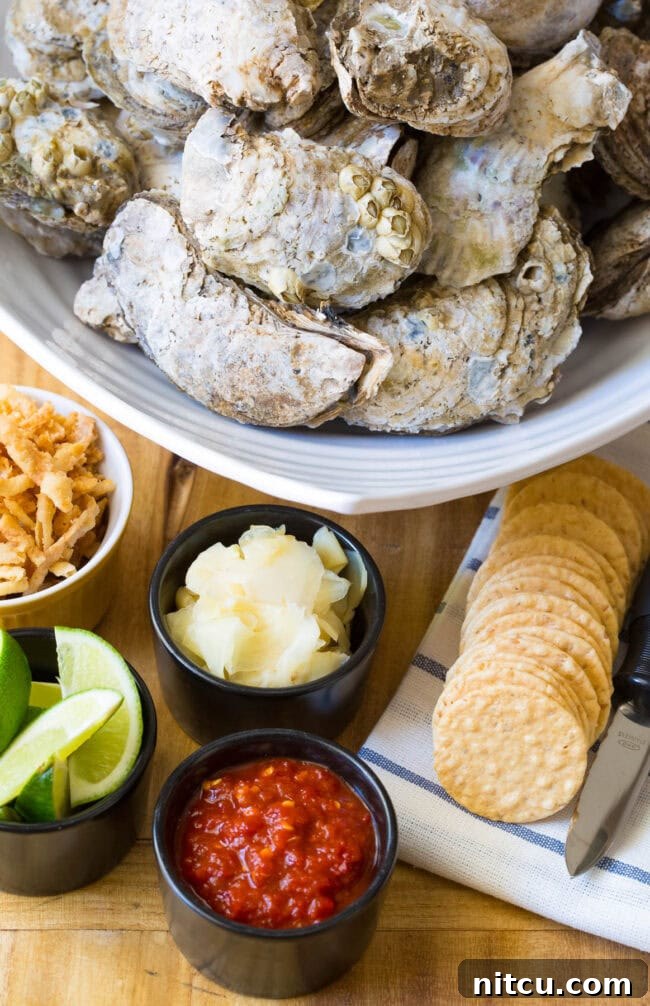
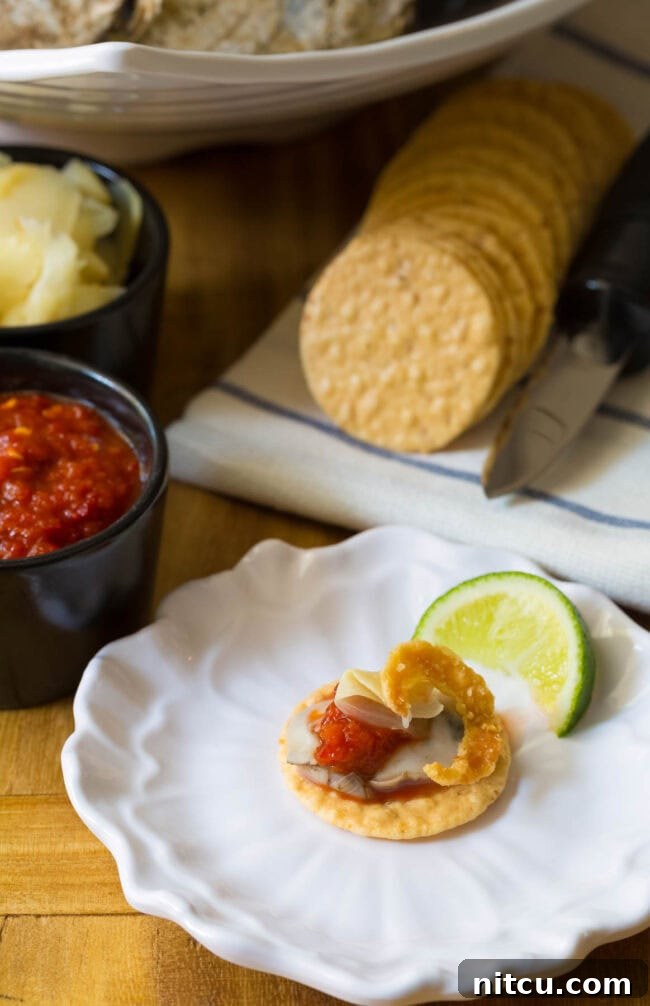
Bold Asian-Inspired Oyster
For those who crave vibrant and exciting flavor profiles, these toppings introduce an exotic twist.
- Sriracha Sauce: A spicy, garlicky chili sauce for a bold kick.
- Lime Wedges: Offers a brighter, more zesty acidity compared to lemon.
- Pickled Ginger: Provides a refreshing, slightly sweet and spicy crunch that cleanses the palate.
- Crispy Fried Onions (or Shallots): Adds a delightful textural contrast and savory depth.
- Rice Crackers: A light, crisp alternative to traditional crackers.
- Soy Sauce or Ponzu: A dash can add umami and savory notes.
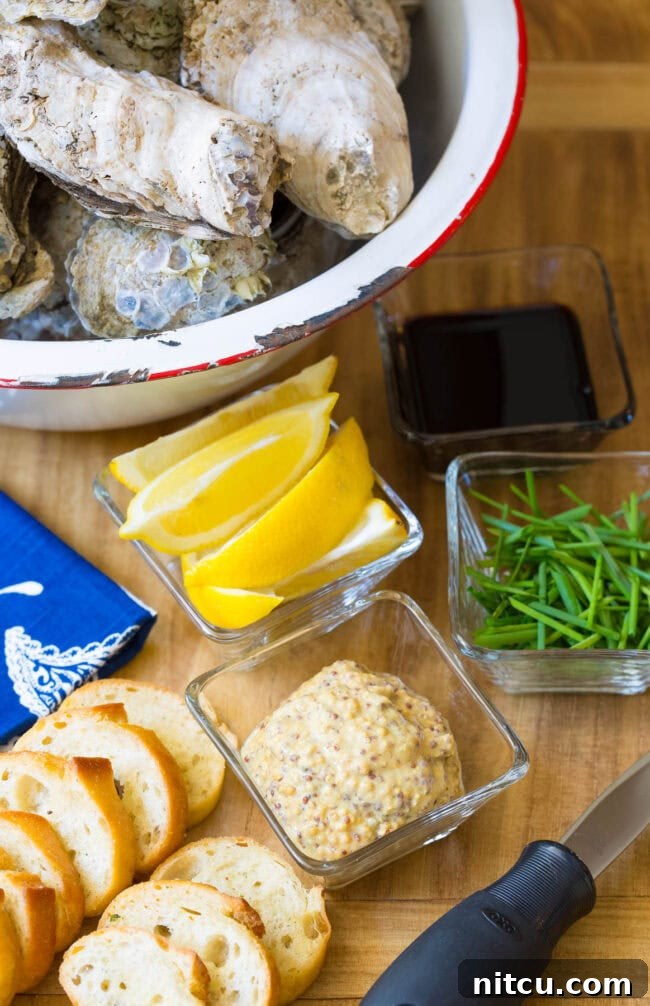
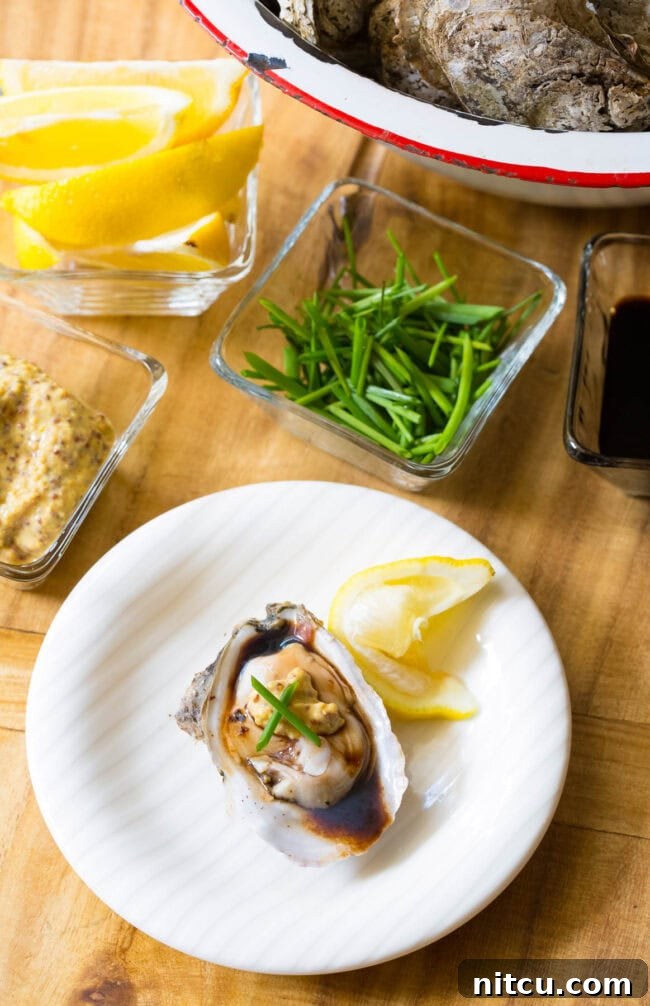
Modern American Oyster
A contemporary approach that blends classic elements with gourmet twists.
- Toasted Baguette Slices: A sophisticated alternative to crackers, offering a delicate crunch.
- Freshly Chopped Chives: Adds a mild oniony flavor and a touch of vibrant green.
- Lemon Wedges: Still a staple, providing essential brightness.
- Aged Balsamic Vinegar: Drizzled sparingly for a sweet-tart depth that complements the oyster.
- Spicy Whole-Grain Mustard: Offers a complex, robust mustard flavor with a pleasant texture.
- Microgreens or Dill Sprigs: For an added layer of visual appeal and fresh, subtle flavor.
Frequently Asked Questions About Oyster Shucking
How do you buy fresh oysters?
When purchasing oysters, always visit a reputable seafood market or the seafood section of a well-stocked grocery store. Look for fresh oysters displayed cup-side down on ice. This orientation helps them retain their natural “liquor” – the briny liquid inside – which is crucial for flavor and freshness. They should smell clean, like a fresh sea breeze, and absolutely not have a strong, fishy, or unpleasant aroma. Ensure all oysters are tightly closed; this is the primary indicator that they are alive and fresh. If any oysters are slightly agape, tap them gently. If they don’t immediately snap shut, they are likely dead and should be discarded for safety. Once home, store them in the refrigerator, still cup-side down, in an open container or covered with a damp towel to allow them to breathe. Avoid airtight containers, as this will suffocate and kill them. For optimal taste and safety, it’s always best to consume oysters on the day of purchase, or within a day or two at most.
How do I know if fresh oysters are good to eat?
The primary indicators of a good, fresh oyster are its smell and its closure. A fresh oyster should emit a clean, ocean-like scent, reminiscent of seaweed or a fresh tide pool. A strong, pungent, or sour fishy smell is a red flag. Crucially, live oysters keep their shells tightly shut. If an oyster’s shell is open even slightly, tap it firmly. A live oyster will react by clamping shut. If it remains open, or feels unusually light for its size, it is dead and should be immediately discarded. Never consume an oyster that is already open and unresponsive to tapping, as it poses a significant health risk.
Can I use a kitchen knife to shuck oysters?
Absolutely not! This is one of the most vital safety rules when it comes to oyster preparation. Using a standard kitchen knife, a butter knife, or any other non-specialized utensil for shucking oysters is highly dangerous. Kitchen knives are not designed for the leverage and force required to pry open an oyster’s hinge, making them prone to slipping and causing serious cuts to your hands. Furthermore, the delicate tip of a kitchen knife can easily snap or bend, ruining your valuable cutlery. An oyster shucking knife has a short, thick, unsharpened blade specifically engineered for this task, providing the necessary strength and safety. Invest in one before you begin.
Is shucking oysters dangerous?
While handling sharp tools and shellfish always requires caution, shucking oysters is generally not dangerous when proper precautions are taken. In fact, it’s a skill many people, including my own children (under supervision, of course!), learn to do safely. The key is to use the correct equipment: a sturdy kitchen towel for grip and hand protection, and a specialized oyster shucking knife. For an extra layer of safety, especially if you’re a beginner or shucking a large batch, consider wearing cut-resistant gloves. These gloves offer excellent protection against slips and accidental knife movements, allowing you to shuck with greater confidence and peace of mind.
What are the benefits of steaming oysters before shucking?
Steaming oysters briefly before shucking offers several significant benefits, particularly for home enthusiasts and party hosts. Firstly, it considerably eases the shucking process. The gentle heat relaxes the adductor muscle that holds the shells together, making the hinge much easier to penetrate and pry open. This reduces the force required, minimizes the risk of breaking the shell, and greatly enhances safety. Secondly, it provides a spectrum of doneness. Oysters at the bottom of the steamer will be more cooked and firmer, appealing to those who prefer their seafood cooked, while those at the top remain nearly raw with just a relaxed muscle, satisfying raw oyster lovers. Lastly, it can make the oysters more approachable for guests who might be hesitant about consuming entirely raw shellfish, offering a compromise that appeals to a wider audience.
Explore More Delectable Seafood Recipes
If you’ve enjoyed mastering the art of oyster shucking, you’ll love diving into these other fantastic seafood dishes:
- Classic Crab Salad
- Three Cheese Baked Oysters
- Gourmet Crab Stuffed Mushrooms
- Elegant Seafood Stuffed Shells
- Hearty Seafood Marinara (with Shrimp)
- Tips on How to Cook Fish Perfectly
- Refreshing Fish Ceviche
- Robust Seafood Cioppino
- Flavorful Seafood Dressing
- Zesty Skillet Shrimp Mozambique
How To Shuck Oysters: The Recipe Card
Learn the easiest way to clean, steam, and shuck oysters safely and efficiently. This guide also includes tips on serving suggestions, condiments, and sides to complement your oyster feast.
Recipe Overview
- Prep Time: 15 minutes
- Cook Time: 4 minutes
- Total Time: 19 minutes
- Servings: 10 people (approximately 4 oysters per person)
Ingredients
- 40 fresh, raw oysters
- 2 tablespoons baking soda, for cleaning
- Your choice of condiments and toppings (e.g., lemon wedges, cocktail sauce, mignonette, hot sauce)
Equipment
- Large stock pot with lid
- Steaming basket
- Oyster shucking knife
- Sturdy kitchen towel (or oyster shucking glove)
- Vegetable brush
- Large serving bowl or platter
- Optional: Crushed ice for serving
Instructions
- Clean the Oysters: Place oysters in a large tub. Add 2 tablespoons of baking soda and fill with cold water. Soak for 10-15 minutes. Scrub each oyster thoroughly with a vegetable brush under cold running water to remove dirt and grit. Discard any oysters that are open and do not close when tapped.
- Set Up Steamer: Place 1-2 inches of water in a large stock pot, ensuring the water level is below the steaming basket. Place the steaming basket into the pot. Cover and place over high heat, bringing the water to a rolling boil.
- Steam Oysters: Once the water is boiling, carefully fill the steaming basket with a single layer of cleaned oysters. Cover the pot immediately and set a timer for 4 minutes.
- Serve Steamed Oysters: As soon as the timer goes off, quickly remove the lid and transfer the hot oysters into a large serving bowl. Repeat with remaining oysters if necessary.
- Prepare for Shucking: Give each person a clean, sturdy tea towel (or specialized oyster glove) and an oyster shucking knife. Emphasize that regular knives should NOT be used for safety.
- Grip the Oyster: Hold an oyster firmly in your non-dominant hand, nestled in the folded towel. Ensure the cupped side is down and your fingers are safely curled away from the hinge.
- Locate and Open Hinge: Find the natural hinge at the tapered end of the oyster. Insert the tip of the oyster shucking knife into the hinge. Apply firm, steady pressure, twisting and wiggling the knife until you feel the hinge give a slight pop.
- Sever Top Muscle: Once the hinge is breached, twist the knife to widen the opening. Wipe the knife blade clean. Slide the blade along the inside of the top (flat) shell to cut the adductor muscle. Remove and discard the top shell.
- Release Bottom Muscle & Serve: Wipe the knife blade again. Gently slide the knife underneath the oyster meat, staying close to the bottom (cupped) shell, to release the remaining muscle. Be careful not to spill the oyster liquor. Turn the oyster over for a neat presentation. Arrange shucked oysters on a platter, preferably on crushed ice, and serve immediately with chosen condiments.
Nutrition Information (per 4 oysters, approximate)
Serving: 4 oysters, Calories: 117kcal, Carbohydrates: 7g, Protein: 5g, Fat: 7g, Saturated Fat: 1.5g, Cholesterol: 2mg, Sodium: 245mg, Potassium: 8mg, Sugar: 0g, Calcium: 3mg, Iron: 0.3mg
Additional Information
- Course: Appetizer
- Cuisine: American
- Author: Sommer Collier