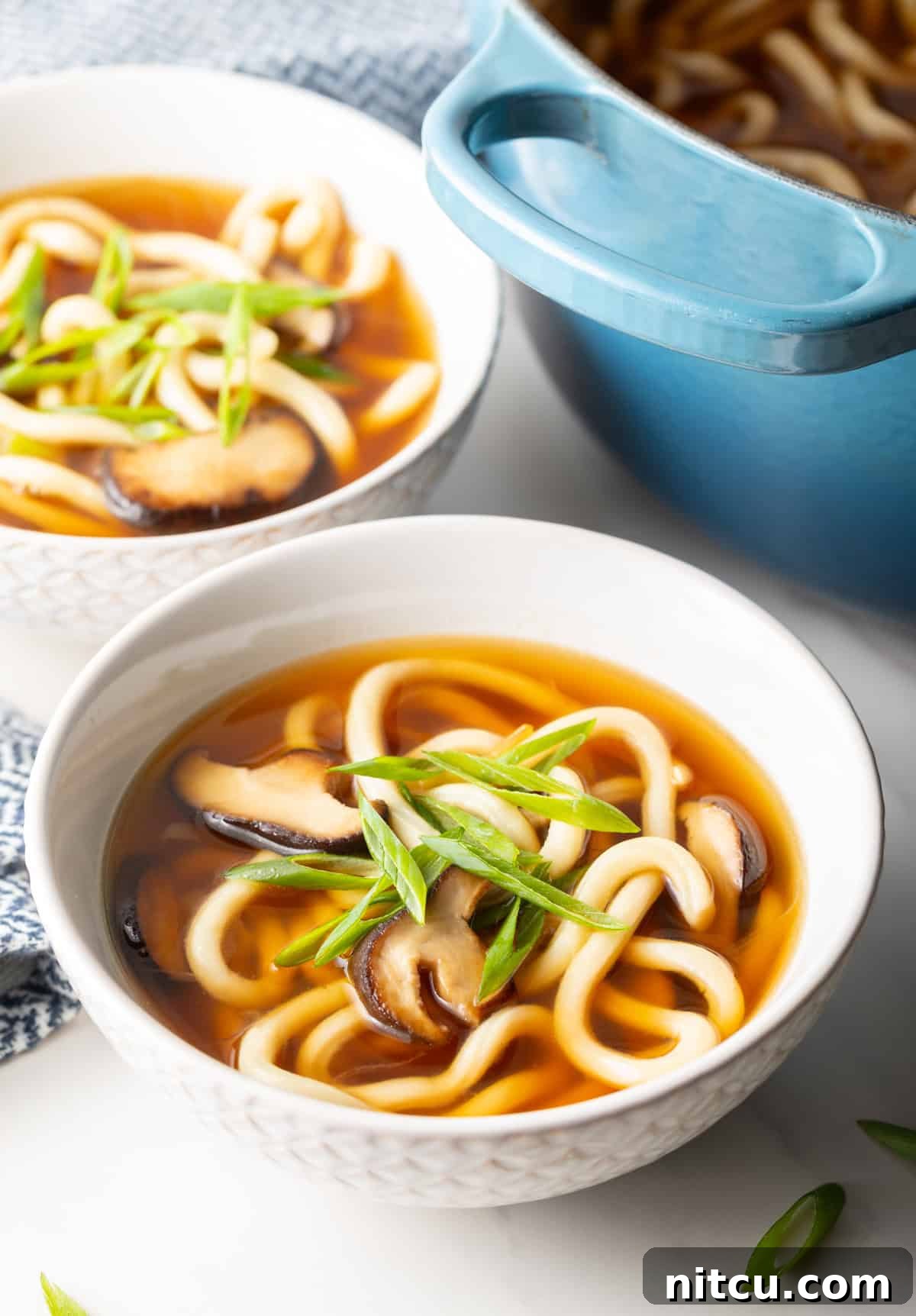
Welcome to your new favorite comfort meal! This delightful udon noodle soup, featuring thick, delightfully chewy noodles and earthy shiitake mushrooms bathed in a rich, savory broth, offers an unparalleled combination of textures and flavors. It’s a satisfying dish that warms you from the inside out, yet remains light enough not to weigh you down. Best of all, this easy udon soup recipe can be whipped up in under 30 minutes, making it the perfect quick dinner solution for those evenings when you crave something wholesome, delicious, and deeply comforting.
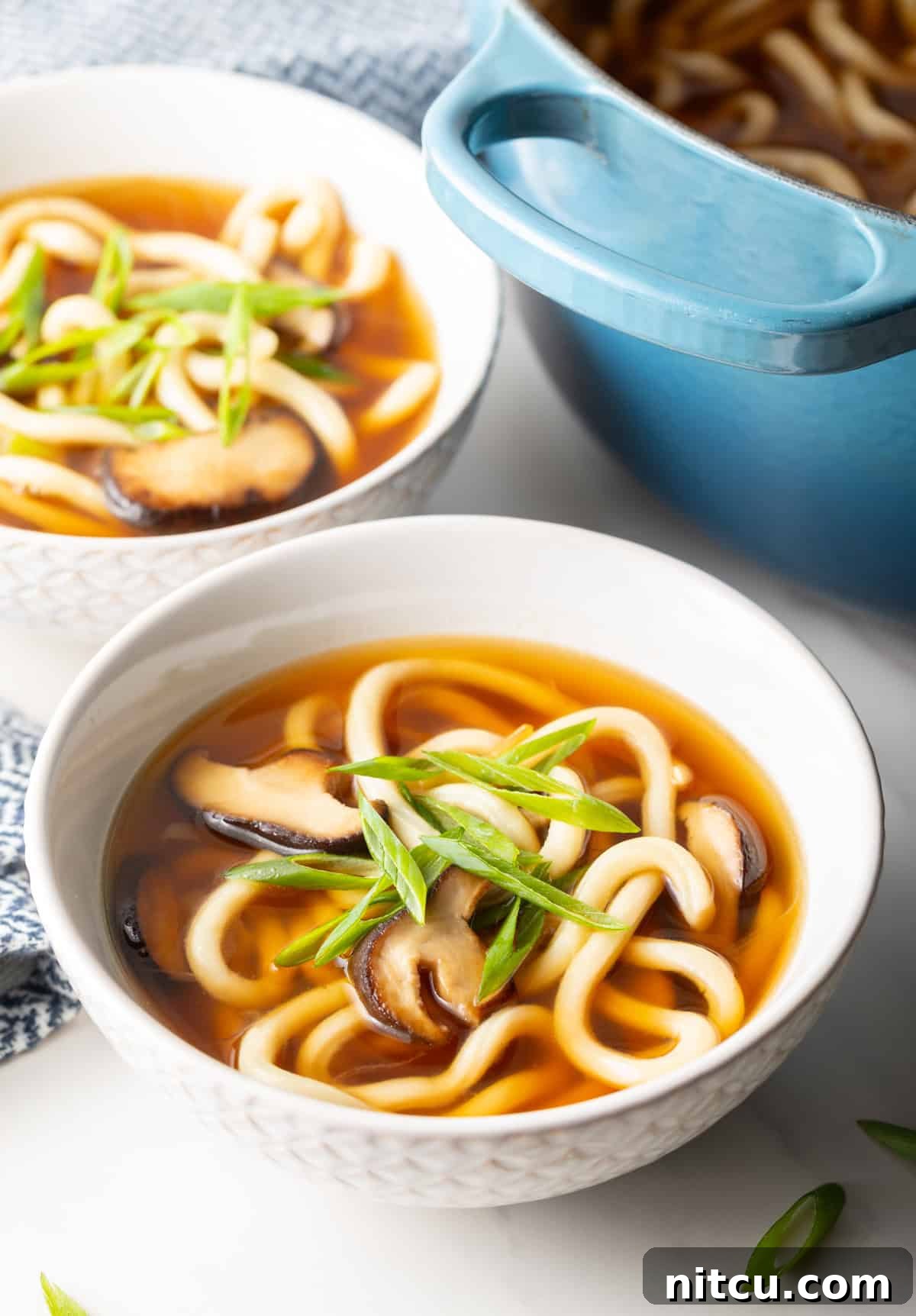
While I often find myself drawn to hearty, stick-to-your-ribs comfort foods, I also deeply appreciate the balance that lighter, healthier options bring to the table. Think crisp, vibrant salads or delicate, flavorful soups. My Japanese clear soup is a wonderful starter for any meal, but when seeking a satisfying yet not overly heavy main course, there’s nothing quite like a steaming bowl brimming with luscious noodles. And when it comes to noodles, the thick, smooth, and wonderfully unctuous udon stands in a league of its own. Today, I’m thrilled to share an incredibly simple udon soup recipe that can be enjoyed as a standalone comforting meal or customized with a variety of toppings and protein additions. Either way, this effortlessly delicious dish is guaranteed to become a cherished addition to your dinner rotation.
Table of Contents
- Why You’ll Love This Easy Udon Soup
- The Heart of the Bowl: Key Ingredients for Perfect Udon Soup
- Crafting Your Easy Udon Noodle Soup: Step-by-Step Guide
- Unleash Your Creativity: Optional Add-ins and Variations
- Beyond the Bowl: Serving Suggestions
- Storage and Reheating Tips
- Frequently Asked Questions
- More Comforting Soup Recipes

Why You’ll Love This Easy Udon Soup
This isn’t just another soup recipe; it’s a culinary experience designed for maximum enjoyment with minimal effort. Here’s why this udon soup will quickly become a cherished favorite in your kitchen:
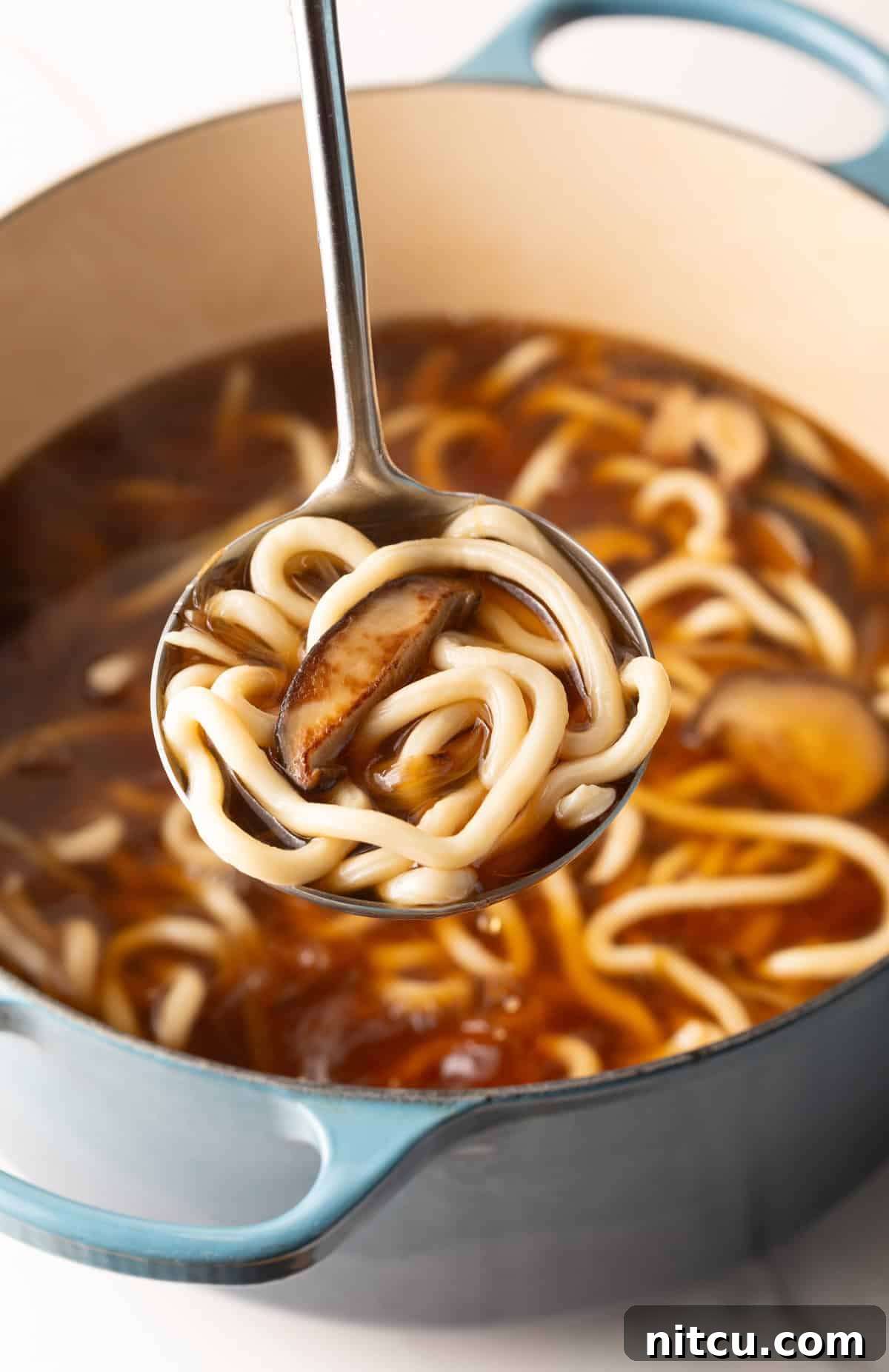
Unbeatable Flavor & Texture Harmony – Who said a light and healthy soup has to be boring? This udon soup proves that you can achieve a delicate, nuanced broth that’s anything but bland. The combination of tender, umami-rich shiitake mushrooms and those wonderfully thick, soft, yet delightfully chewy udon noodles creates a textural and flavor profile that is both incredibly cozy and utterly enticing. Each spoonful delivers a symphony of sensations, making this soup a true standout.
Endlessly Customizable & Clear Soup Base – This recipe provides a fantastic foundation for culinary creativity. Start with our expertly crafted soup base, then let your imagination run wild! Incorporate different vegetables for added nutrients and color, experiment with various seasonings to fine-tune the taste, or add crunchy elements for exciting textural contrast. Craving more protein? Transform it into an easy chicken udon soup with leftover shredded chicken, or load your bowl with succulent fish cakes, tender tofu cubes, or even perfectly soft-boiled ramen eggs for an extra layer of deliciousness and satiety. The possibilities are truly limitless.
Dinner on the Table in Under 30 Minutes – Weeknights can be hectic, but that doesn’t mean sacrificing a homemade meal. This recipe is designed for ultimate efficiency, keeping prep time to an absolute minimum. A bit of quick slicing for the veggies, and everything comes together effortlessly in a single pot. By utilizing convenient pre-cooked udon noodles, you’ll be able to ladle up bowls of perfect udon noodle soup in less than half an hour. It’s the ideal solution for a satisfying meal on busy evenings, offering maximum flavor with minimal fuss.
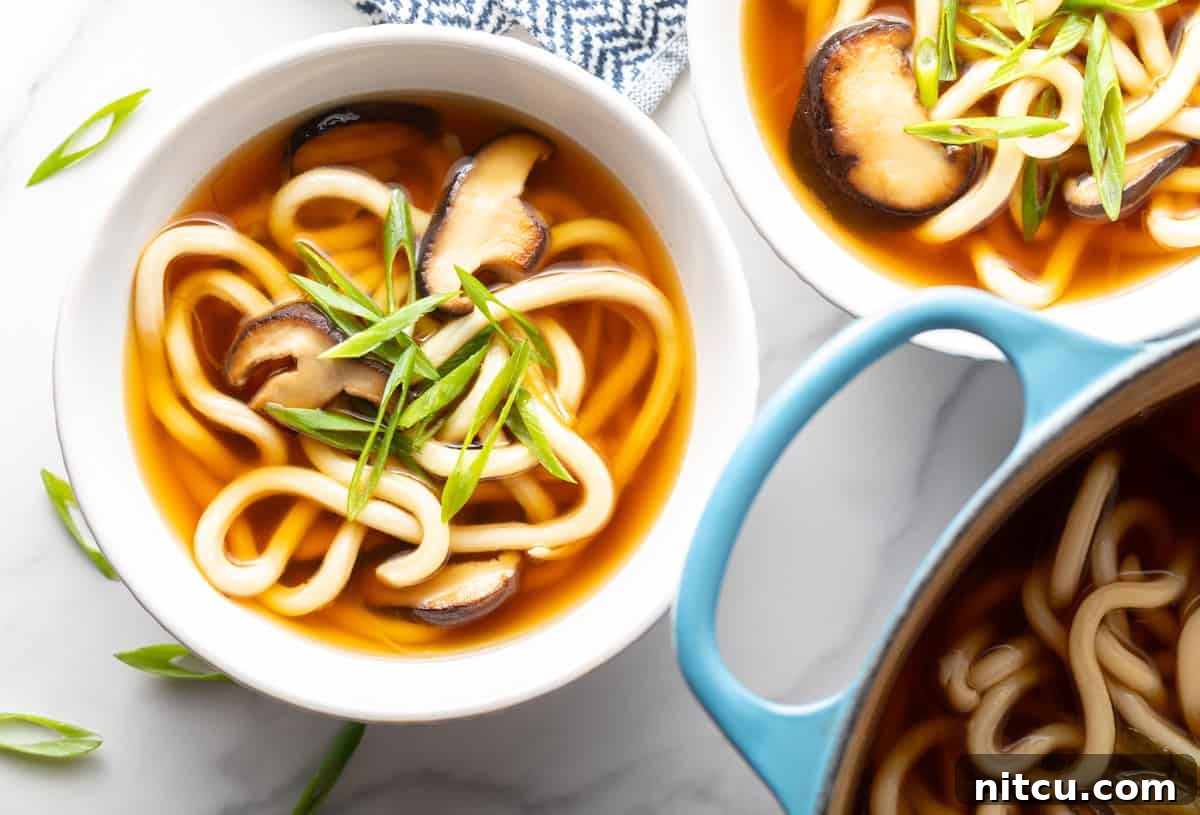
The Heart of the Bowl: Key Ingredients for Perfect Udon Soup
Every exceptional dish begins with quality ingredients. Here’s a closer look at what makes this udon soup so special, along with some helpful tips for each component:
- Udon Noodles – These iconic Japanese noodles, crafted from wheat flour, are celebrated for their characteristic thickness, silky-smooth exterior, and wonderfully chewy texture. Their mild flavor makes them an ideal canvas for soaking up the rich, savory broth. Udon noodles are typically available in two forms: dried or in convenient, partially-cooked vacuum-sealed pouches. For speed and convenience, I highly recommend opting for the vacuum-sealed pouches, as they require only 1 to 2 minutes of cooking time to reach al dente perfection. This significantly cuts down your meal prep!
- Shiitake Mushrooms – While many mushroom varieties offer deliciousness, shiitake mushrooms are non-negotiable for this particular udon soup recipe. Their distinct, earthy, and almost meaty flavor profile is truly unique and cannot be replicated by other mushrooms. They lend an unparalleled depth of umami to the broth, transforming it from good to absolutely phenomenal. Don’t skip these; they are crucial for the authentic flavor experience.
- Green Onions (Scallions) – We utilize both the white and green parts of the green onion in this recipe, each playing a vital role. The white parts are cooked to infuse the broth with a subtle oniony sweetness, while the thinly sliced green parts serve as a fresh, vibrant garnish, adding a pleasant bite and visual appeal. Be sure to select a bunch of scallions that are visibly fresh, firm, and crisp for the best results.
- Soy Sauce – Soy sauce is a fundamental flavor enhancer in Asian cuisine, contributing savory depth and umami. I typically use regular, full-strength soy sauce for its robust flavor. However, if you’re mindful of sodium intake, feel free to substitute with a low-sodium variety. Always taste and adjust to your personal preference, as different brands can vary in saltiness.
- Sesame Oil – In my kitchen, sesame oil is irreplaceable whenever called for in a recipe. Its unique, nutty aroma and distinct, smooth flavor are unmatched. While you could technically substitute with oils like avocado or canola, they simply lack the pleasant, earthy undertones that so beautifully complement the soy sauce and dashi in this soup. A touch of good quality sesame oil makes a significant difference in the overall flavor profile.
- Mirin – This sweet Japanese rice wine is a staple in many Asian dishes, adding a subtle sweetness and glaze. It’s widely available at most major grocery store chains and, of course, Asian markets. If you find yourself without mirin, a dry or sweet white wine can serve as a decent substitute. For a non-alcoholic alternative, white grape juice works surprisingly well. Rest assured, the small amount (1/4 cup) used in this recipe means the alcohol cooks out, leaving only its delightful flavor behind.
- Dashi Powder – Dashi is the quintessential Japanese soup base, revered for its savory umami depth. Traditional dashi is often made from bonito flakes (dried, smoked fish), kombu (kelp), and sometimes dried shiitake mushrooms. It imparts a truly distinctive flavor that is hard to replicate. I highly encourage you to seek out dashi powder, which is typically found in Asian markets or easily ordered online. If dashi powder is absolutely unavailable, mushroom powder can be used as a vegetarian substitute, offering a different but still savory depth. However, for an authentic taste, dashi is key.
Crafting Your Easy Udon Noodle Soup: Step-by-Step Guide
For precise ingredient proportions, detailed instructions, helpful storage tips, and a visual video tutorial, refer to the complete recipe card located at the conclusion of this post.
Making this udon soup is a straightforward process, designed for efficiency without compromising on flavor. Follow these simple steps to create a truly delicious and comforting meal:
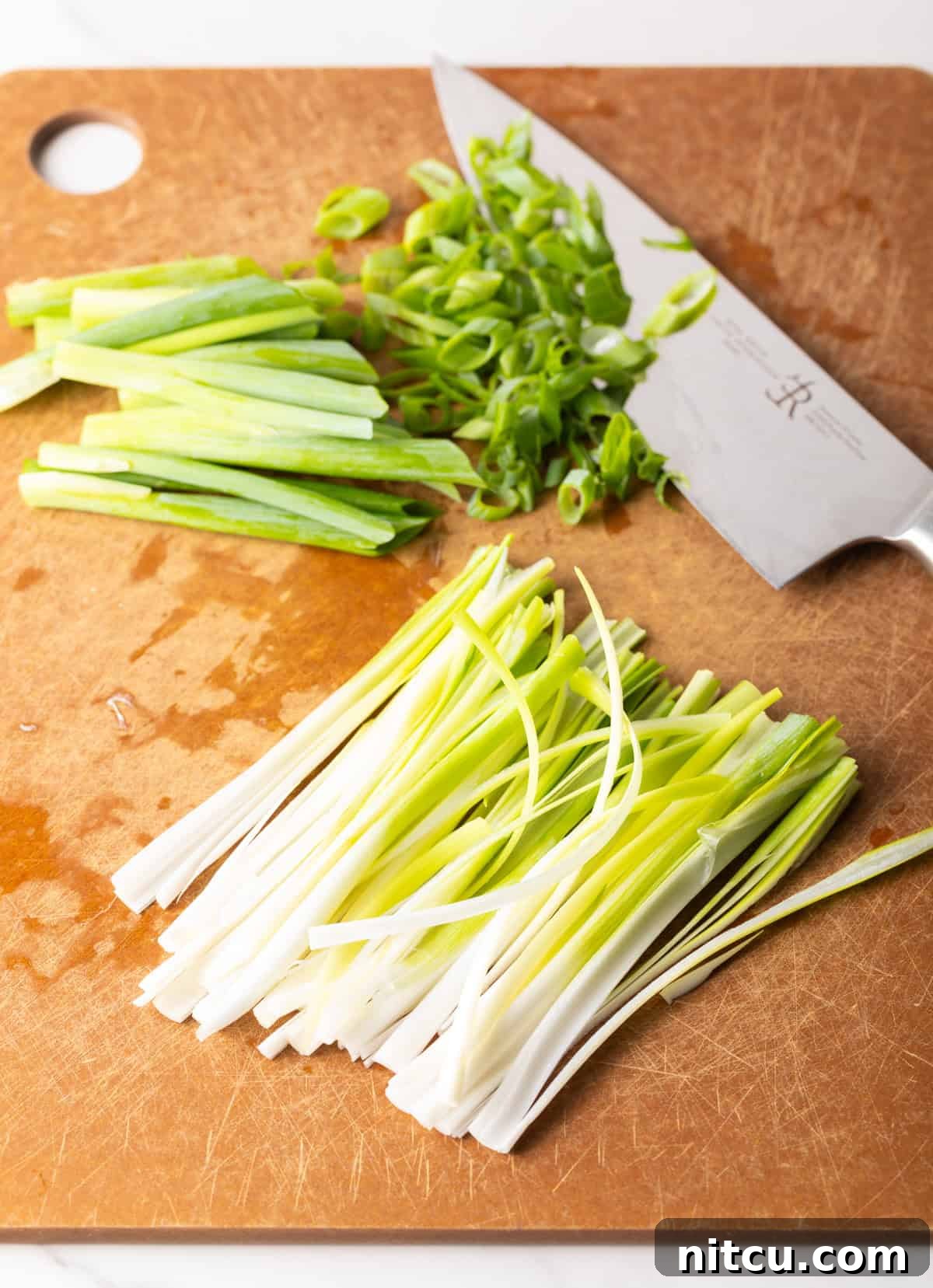
1. Prep the Veggies – Master the Slicing: This initial step is quick, taking less than 10 minutes, and primarily involves thoughtful slicing. Begin with your bunch of green onions. First, trim off the root ends. Then, carefully cut the scallions in half, separating the white sections from the green. Take the white ends and split them lengthwise, then cut each piece into quarters. This technique yields long, slender, noodle-like strips, as illustrated in the photo below. These white segments will be incorporated into the soup as it cooks, imparting their subtle flavor. For the green ends, thinly slice them crosswise and set them aside; these will be sprinkled generously over the finished soup as a fresh, aromatic garnish. Finally, finely slice your shiitake mushrooms. Once all your vegetables are prepped, you’re ready to move on!
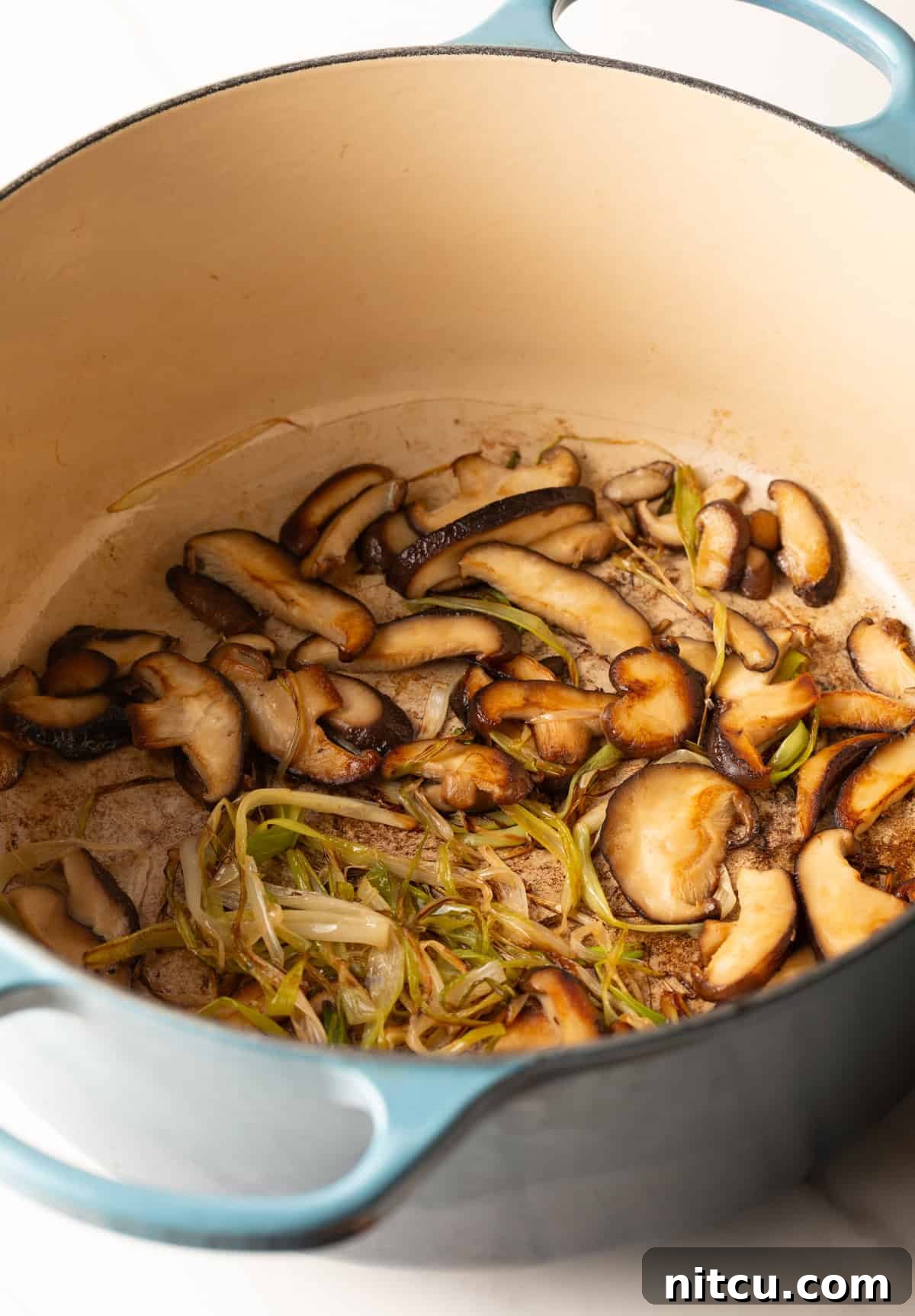
2. Building Flavor – The Sauté: Grab a large soup pot with a capacity of 6-8 quarts – this size ensures ample space for all the deliciousness. Place the pot over medium-high heat. Add the sesame oil to the cold pot and allow it to heat up gently. Once the oil is shimmering, add the prepared white pieces of scallions and the sliced shiitake mushrooms. As soon as these aromatics hit the hot pot, your kitchen will fill with an incredibly inviting aroma!
Stir-fry the vegetables for just a few minutes, typically 3-5, until the onions have softened. It’s important to keep the ingredients moving constantly to prevent the mushrooms and onions from burning and to ensure even cooking.
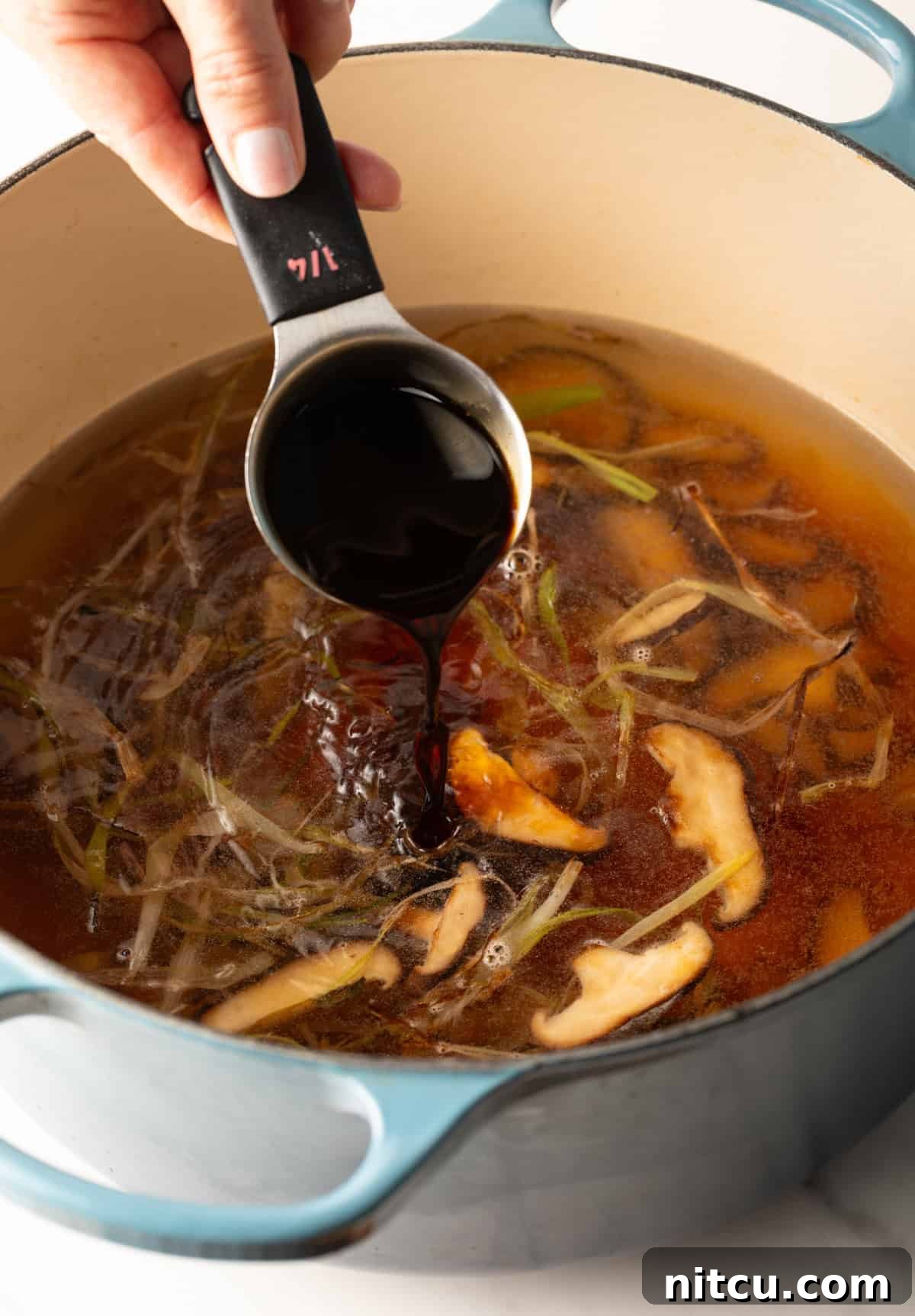
3. Infusing the Broth – Simmering Perfection: Now it’s time to build the heart of your soup – the savory broth. Carefully pour the water into the pot with the sautéed vegetables. Next, add the soy sauce, mirin, and the essential dashi powder. Give everything a thorough stir to ensure the dashi powder fully dissolves and all the ingredients are well combined. Increase the heat slightly, if necessary, until the liquid begins to bubble gently. You might need to adjust your stove’s temperature up or down to maintain a steady simmer. Allow the soup base to simmer for at least 5 minutes. This crucial simmering time allows the flavors to meld and intensify, creating a deeply aromatic and intensely flavorful broth that is the hallmark of a great udon soup.
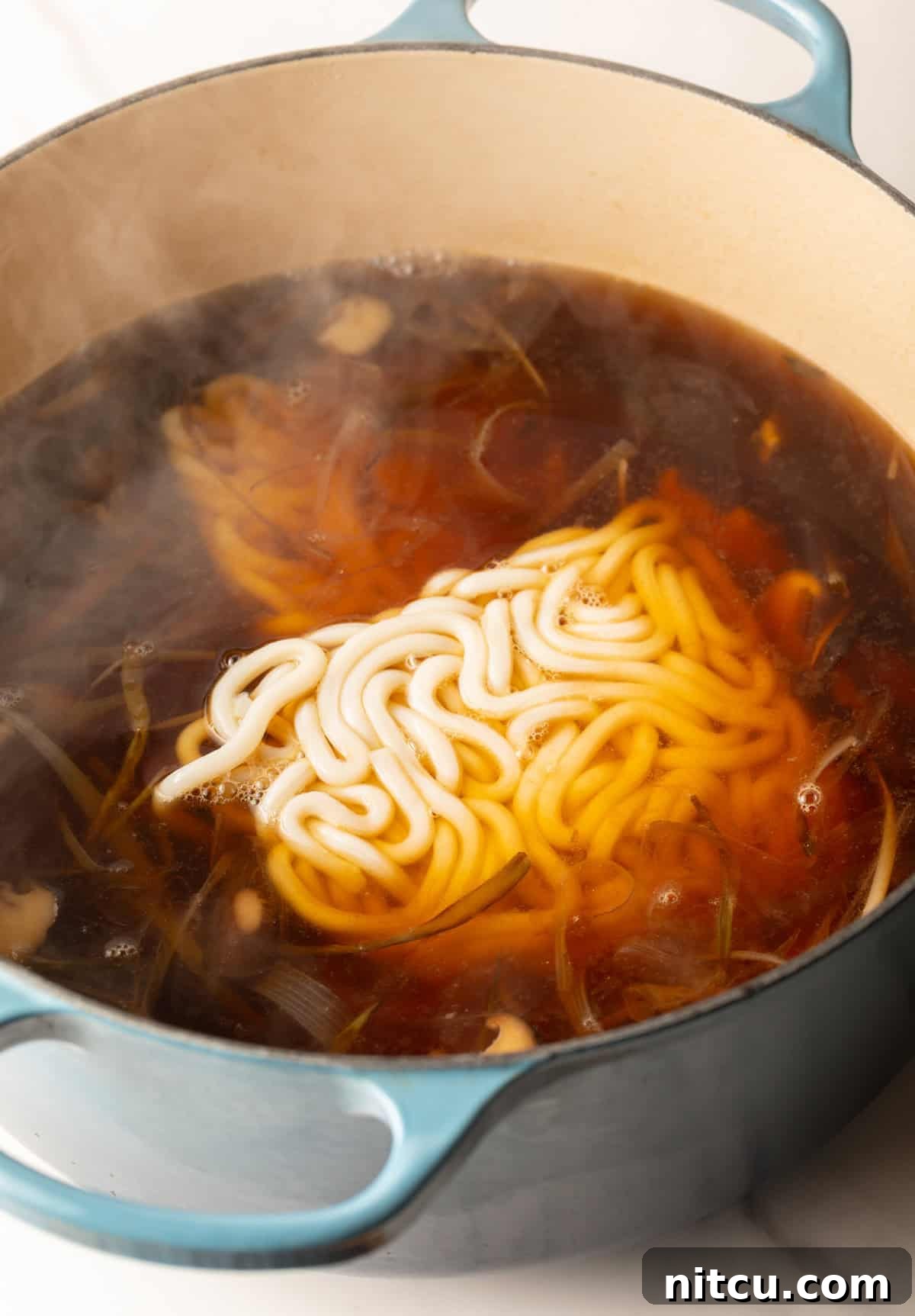
4. Noodle Integration – The Udon Secret: Once your broth has simmered to perfection, it’s noodle time! Carefully open your packages of vacuum-sealed udon noodles. Gently squeeze the thick udon noodles from their packaging directly into the simmering soup, allowing them to settle as one soft clump. Resist the urge to aggressively stir or break them apart. Instead, stir the noodles very gently, just enough to encourage them to loosen. For the best texture, let the gentle movement of the simmering broth naturally separate the noodles. Overworking udon noodles can sometimes lead to a gummy texture, so a light touch is best here. Give them the space they need to unfold gracefully in the flavorful broth.
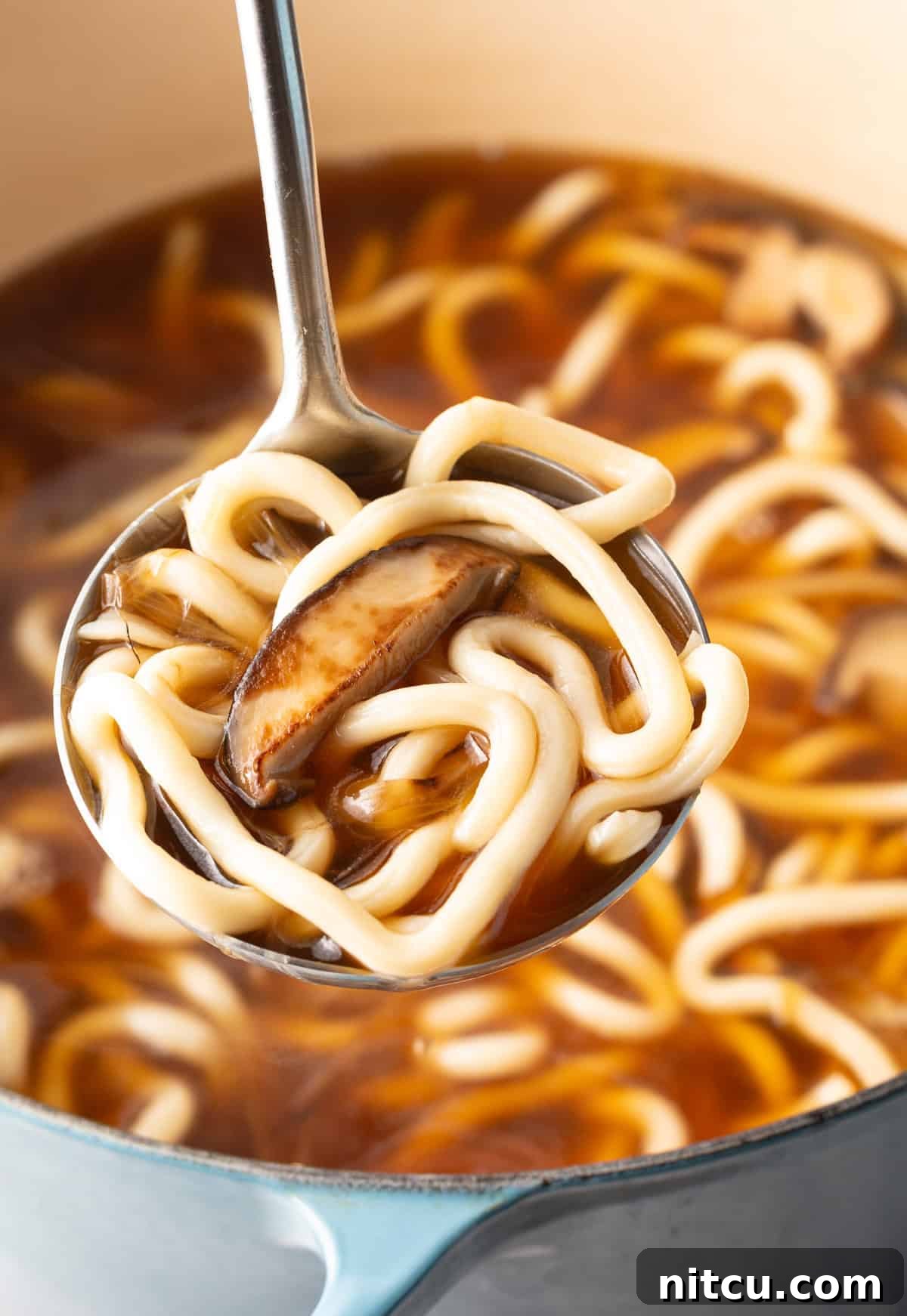
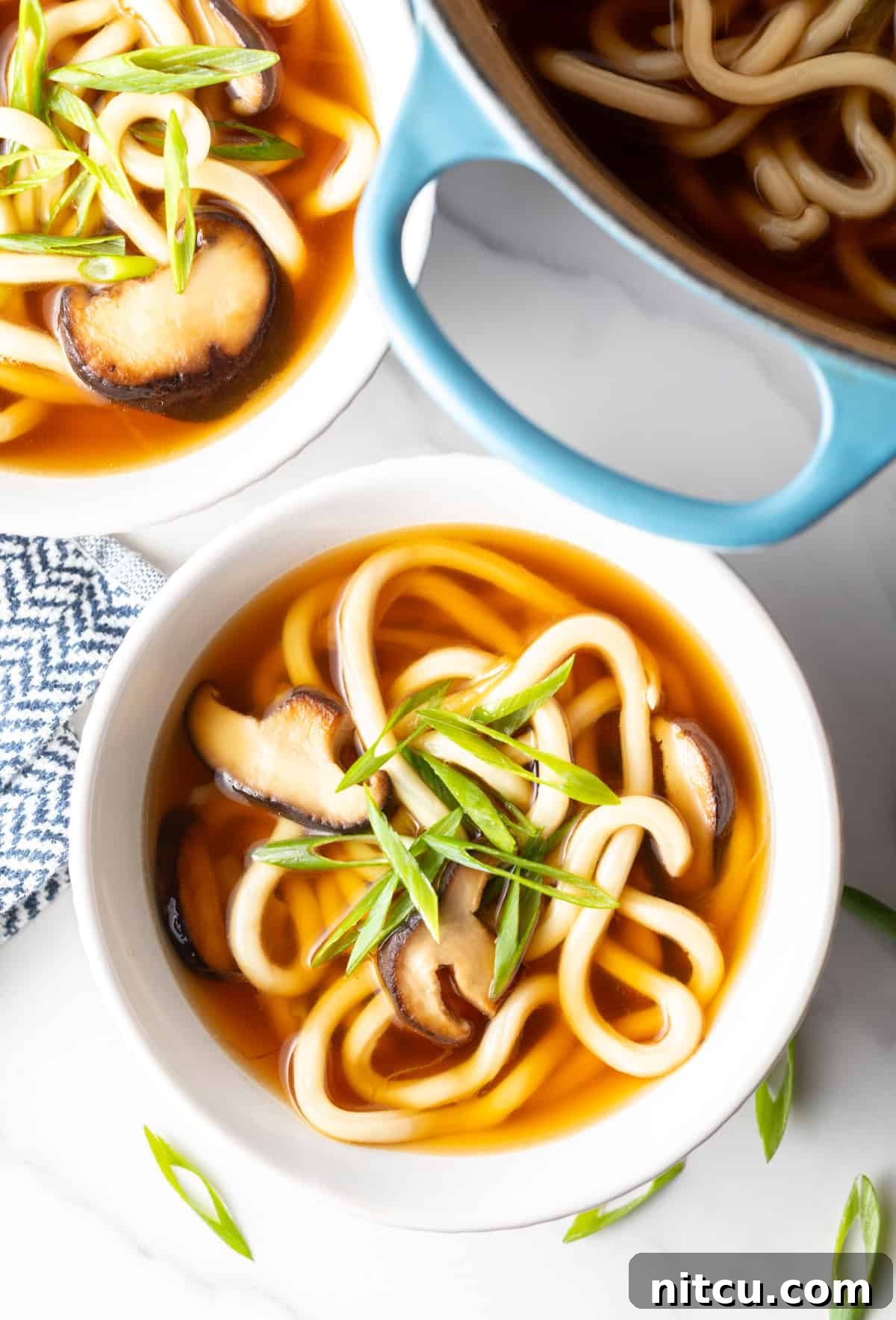
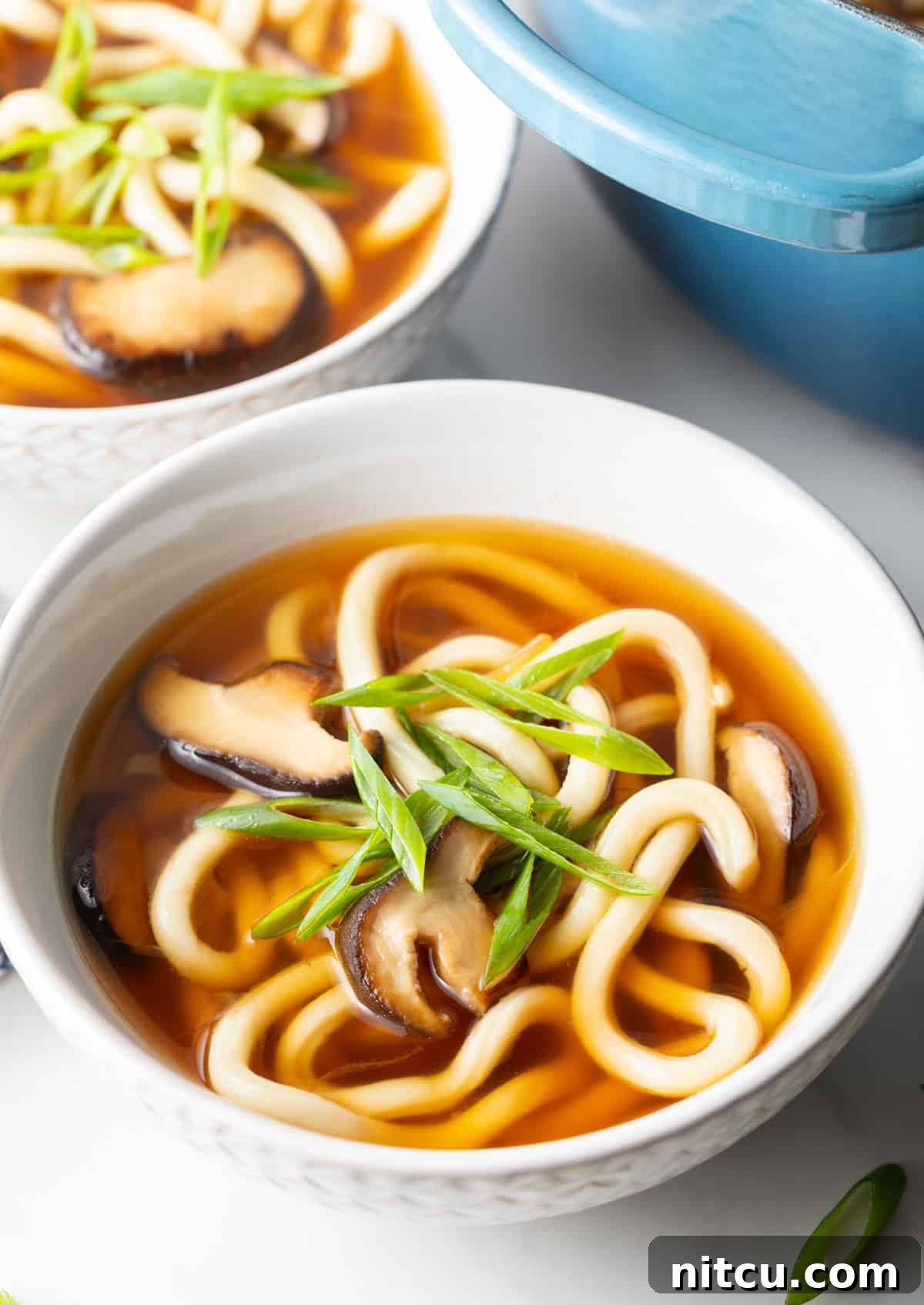
5. Simmer, Taste, Then Slurp: Because most vacuum-sealed udon noodles are already partially cooked, they require minimal simmering time – typically just about 1-2 minutes – to heat through thoroughly and absorb some of that delicious broth. Around the 90-second mark, I recommend carefully fishing out a single noodle and tasting it. Check if it’s perfectly hot and tender. If it’s good to go, remove the pot from the heat immediately. If it needs a few more seconds, continue simmering briefly. The goal is perfectly heated, tender, and chewy noodles, not overcooked mushy ones. Once ready, ladle the steaming hot udon soup into bowls, sprinkle with your reserved fresh green onion slices, and get ready to enjoy this delightful, quick, and comforting meal!
Unleash Your Creativity: Optional Add-ins and Variations
While this udon noodle soup is absolutely wonderful on its own, it also serves as an excellent canvas for customization. Depending on your mood or what you have on hand, you can easily enhance it with various add-ins to boost flavor, texture, and nutritional value.
For those times when you desire a little extra pop of pizzazz with your comforting bowl, consider incorporating some crunchy mung bean sprouts for a refreshing bite. Fresh herbs like fragrant Thai basil or bright cilantro can elevate the aromatic profile. If you enjoy a bit of heat, a swirl of spicy chili paste (like sriracha or gochujang) will add a welcome kick. For a playful textural contrast, a sprinkle of crispy fried onions or shallots can be truly delightful.
If you’re aiming for a heartier dinner that still keeps things on the wholesome side, the possibilities are abundant. Integrate protein-rich additions like savory fish cakes, firm tofu cut into satisfying cubes, or even perfectly jiggly soft-boiled ramen eggs for a rich, creamy element. If you have leftover cooked chicken or pork, thinly slice it and add it to the soup to warm through. Alternatively, channeling the spirit of a traditional Chinese hot pot, you can cook thinly sliced pieces of raw beef, pork, or chicken directly in the simmering udon broth, allowing them to cook quickly and absorb the wonderful flavors of the soup. Other popular protein additions include shrimp, scallops, or even some thinly sliced kamaboko (fish cake).
Don’t be afraid to explore different vegetables too! Napa cabbage, spinach, bok choy, carrots, or even a handful of frozen peas can add extra nutrients and vibrant color to your bowl. The versatility of this udon soup means you can truly make it your own every time.
Beyond the Bowl: Serving Suggestions
Just like any good comfort food, a warm bowl of udon soup can be paired with complementary dishes to create a more complete and satisfying meal. Here are some of my favorite ways to serve it:
If you give me a soup, I’ll almost always ask for a salad! I often find that the fresh, crisp counterpoint of a simple chopped romaine lettuce salad pairs beautifully with the rich broth of the udon soup. A vibrant, zesty dressing, such as my favorite peppy Japanese ginger carrot dressing, adds an extra layer of flavor that perfectly complements the Asian notes of the soup. The refreshing crunch of the salad provides a lovely contrast to the soft noodles and savory broth.
This udon soup can also be served as a more substantial first course, setting the stage for a delightful main meal. It’s a wonderfully inviting way to begin a dinner featuring popular Asian cuisine-inspired dishes. Imagine kicking off your meal with this flavorful soup before diving into a plate of savory shrimp fried rice, or indulging in meaty, tender Asian beef ribs. Its light yet satisfying nature makes it an ideal precursor to a wide range of main courses, enhancing the overall dining experience without overwhelming the palate.
Storage and Reheating Tips
While many soups develop even deeper flavors as they “marinate” in the refrigerator overnight, udon noodle soup is truly at its peak when enjoyed fresh. However, if you find yourself with leftovers, they can be stored and reheated successfully with a little care and attention to detail!
To store, first allow the soup to cool completely to room temperature. This helps prevent bacterial growth and maintains the quality of the ingredients. Once cooled, transfer the soup to airtight containers. It can be safely refrigerated for up to 3–4 days. A crucial tip for preserving optimal texture: if possible, store the cooked udon noodles separately from the broth. Udon noodles are incredibly absorbent and will quickly soak up the liquid, leading to a softer, potentially mushy texture if left immersed in the broth for extended periods. Storing them apart ensures they retain their delightful chewiness.
For reheating, gently warm the broth on the stovetop over medium heat or in the microwave until it is hot but not vigorously boiling. Once the broth is heated, add the separately stored noodles to the hot broth. Cook them for just about 1 more minute, or until they are thoroughly warmed through. If using the microwave, reheat in short 1-minute intervals, stirring gently between each interval to ensure even heating and to prevent the noodles from becoming overcooked. This method helps maintain the integrity and delicious texture of your udon noodles, making your leftovers almost as good as fresh.
Frequently Asked Questions
As written, this recipe is not vegetarian-friendly. The traditional dashi powder used in this recipe typically contains bonito flakes, which are derived from fish (bonito fish flakes). However, it is possible to make this udon soup vegetarian. You can easily find fish-free dashi powders online or at specialized Asian markets. Alternatively, you can substitute traditional dashi with a mushroom-based dashi or vegetable broth combined with mushroom powder for a savory, plant-based umami boost.
Flavor balance is key in any soup! If your broth tastes bland, the easiest fix is often a little more seasoning. Start by adding an extra splash of soy sauce or another dash of dashi powder (or mushroom powder, if you’re using a vegetarian version). Remember, always taste as you go. Add small amounts, stir, and then taste again until you reach your preferred depth of flavor. A tiny pinch of salt or a drop of mirin can also sometimes round out the taste.
Absolutely! While vacuum-sealed udon noodles offer unparalleled convenience for quick cooking, dried udon noodles are a perfectly acceptable alternative. The key is to prepare them according to the specific package directions before adding them to your soup. Dried udon typically requires boiling in a separate pot of water for several minutes until tender. Once cooked, drain them well and add them to the simmering soup broth during the final minutes of cooking, just enough time for them to heat through and absorb some of the delicious broth flavors.
If mirin isn’t available, you have a couple of good options. A sweet white wine (like a Riesling or Moscato) can be used in the same quantity, as the alcohol will cook out. For a non-alcoholic substitute, white grape juice or a pinch of sugar dissolved in water can replicate the sweetness, though they won’t add the same subtle depth of flavor. Start with a smaller amount and adjust to taste.
The best way to prevent mushy udon noodles is twofold: first, avoid overcooking them initially. Vacuum-sealed noodles only need 1-2 minutes to heat through. Second, and most importantly for leftovers, store the cooked noodles separately from the broth. When reheating, add the noodles to the hot broth just for the final minute or two to warm them up without further cooking.
More Comforting Soup Recipes
Easy Udon Soup Recipe
Thick, chewy, and slurp-able udon noodles with tender shiitake mushrooms in a savory broth create a fantastic combination of textures and flavors. This simple udon soup recipe is easy to make in under 30 minutes, offering a light, hearty, and delicious meal perfect for any craving.
Print Recipe
Video
Ingredients
- 1 tablespoon sesame oil
- 1 bunch green onions, divided
- 5-6 ounces shiitake mushrooms, sliced
- 10 cups water
- 6 tablespoons soy sauce
- 4 tablespoons mirin
- 2 tablespoons dashi powder (bonito soup stock)
- 14.2 ounces vacuum-sealed udon noodles (2 packages)
Instructions
- Soup Prep: Lay the bunch of scallions on the cutting board. Cut off the root ends, then cut them in half, separating the white ends from the green. For the white ends, cut them in half lengthwise, then cut each half into quarters, creating long noodle-like segments of scallion. For the green ends, slice them thin to use later as a fresh soup topping. Finely slice the shiitake mushrooms.
- Set a large 6-8 quart soup pot over medium-high heat. Add the sesame oil to the pot. Once hot, add the scallion whites and shiitake mushrooms. Stir-fry the veggies for 3-5 minutes until the onions are soft, stirring constantly to prevent burning.
- Pour the water into the soup pot. Then add the soy sauce, mirin, and dashi powder. Stir well and bring to a simmer. Simmer the soup base for at least 5 minutes to develop rich flavors.
- Cut the udon noodle packages open. Gently squeeze the noodles out of the packages into the soup broth. Stir very gently to loosen the noodles; do not try to break them apart, allow the gentle movement of the liquid to separate them naturally. Once the noodles are fully separated, simmer for another 1-2 minutes until heated through. Then turn off the heat.
- Scoop the noodles and broth into bowls and sprinkle generously with the fresh green onions. Top with any other additional ingredients you like!
Notes
Leftovers store well with a little TLC! Let the soup cool, then transfer it to airtight containers and refrigerate for up to 3–4 days. For best results, store the noodles separately from the broth – udon noodles soak up liquid quickly and can become a bit too soft/mushy if left together.
To reheat, warm the broth on the stovetop or in the microwave until hot but not boiling. Add the noodles to the hot broth and cook for 1 more minute, just until warmed through. If using the microwave, heat in 1-minute intervals, stirring between each.
Nutrition
Serving: 1 bowl, Calories: 152 kcal, Carbohydrates: 26g, Protein: 7g, Fat: 3g, Saturated Fat: 0.3g, Polyunsaturated Fat: 1g, Monounsaturated Fat: 1g, Sodium: 1460mg, Potassium: 120mg, Fiber: 2g, Sugar: 6g, Vitamin A: 20IU, Vitamin C: 0.4mg, Calcium: 19mg, Iron: 1mg
Cuisine: Asian, Japanese
Cook It? Love It? Rate It!
Help this recipe rank on Google – your 5-star rating lets other hungry people discover it. Thank you!