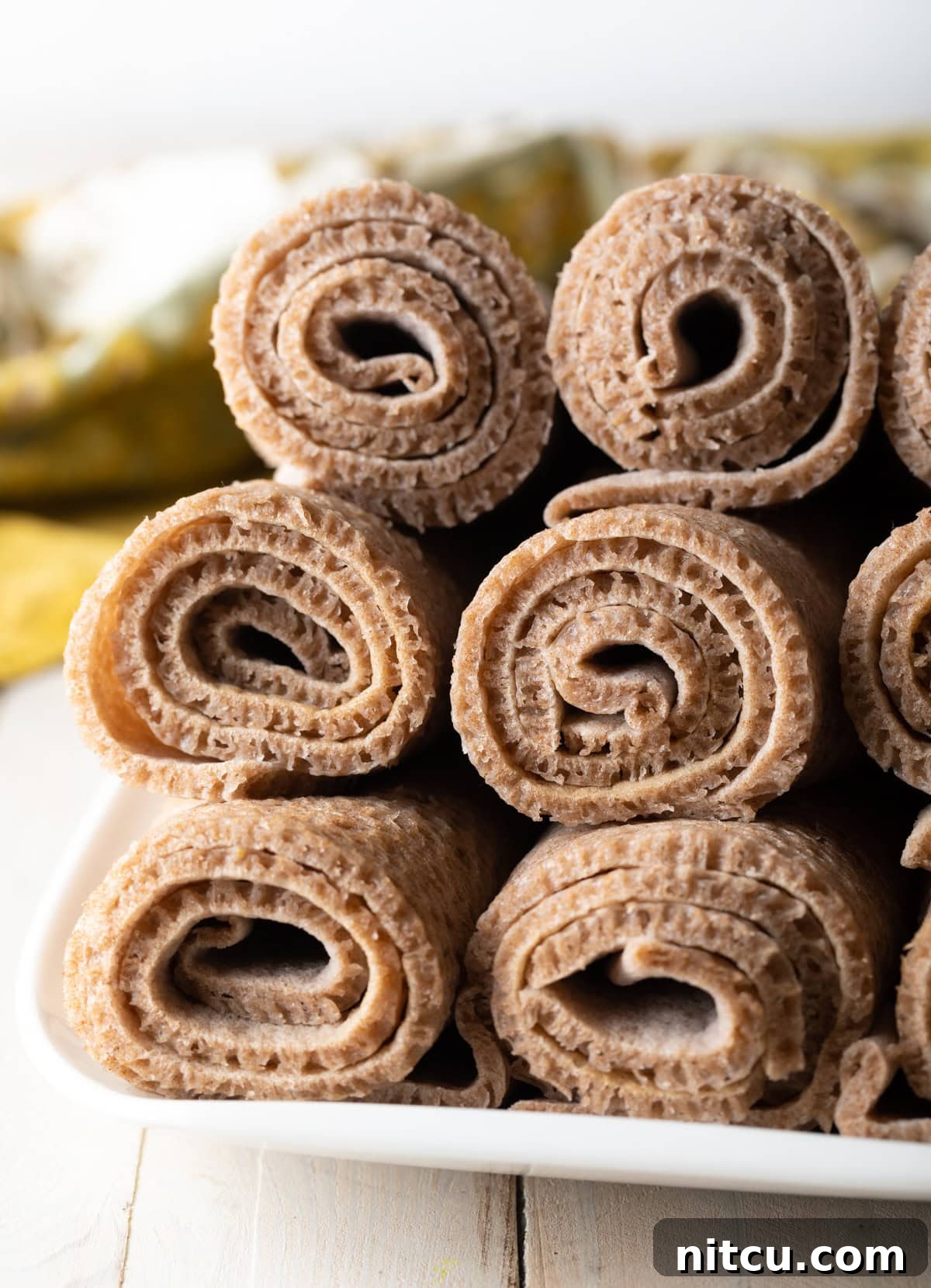
Authentic Ethiopian Injera Bread: A Simple Sourdough Flatbread Recipe
Discover how to make a quick and easy version of traditional Ethiopian Injera at home. This sourdough crepe-like flatbread is perfect for soaking up delicious stews and enhancing your Ethiopian culinary experience!
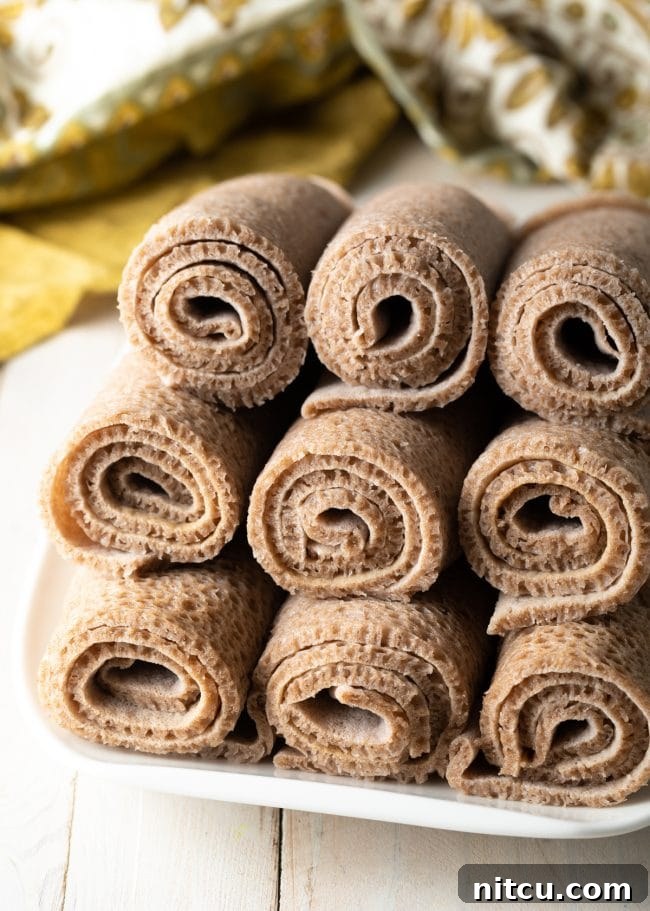

Sommer’s Culinary Journey with Injera
Ethiopian cuisine holds a special place in my heart, especially during our family visits to Dallas – a city, much like Washington D.C., New York, Chicago, and Atlanta, boasting a vibrant Ethiopian community and an array of incredible restaurants and markets. Each visit is incomplete without a stop at our favorite Ethiopian restaurant, where the delicious Injera bread is always the star of the table.
Injera, the quintessential Ethiopian flatbread, is more than just a side dish; it’s an integral part of the dining experience, acting as both an eating utensil and a canvas for rich, flavorful stews and curries. Learning to make this sourdough flatbread at home has been a culinary revelation, allowing us to recreate those cherished restaurant memories in our own kitchen.
Why You’ll Fall in Love with Homemade Injera
- Unmatched Texture and Flavor – This soft, spongy, and slightly sour flatbread is perfectly designed for scooping up generous portions of saucy meats, vibrant vegetables, and hearty beans. Its unique texture enhances every bite, making the meal an unforgettable sensory experience.
- Naturally Diet-Friendly – For those with dietary considerations, Injera is a fantastic choice as it is inherently dairy-free and egg-free. This makes it accessible for a wider range of eaters without compromising on authentic taste.
- The Ultimate Make-Ahead Meal Component – Injera is a freezer-friendly champion! Prepare large batches in advance and store them for future use, making spontaneous Ethiopian feasts a convenient reality. It’s perfect for busy weeknights or entertaining guests.
- Quick & Approachable – While traditional Injera involves a lengthy fermentation process, our recipe offers a quick and easy adaptation that delivers authentic flavors and texture without the long wait. Made effortlessly in any nonstick skillet, it’s tender, rollable, and deliciously sour from the moment it leaves the pan.
Embrace the joy of Ethiopian cooking with this simplified Injera recipe. It’s an opportunity to explore new flavors, impress your guests, and bring a taste of East Africa right to your dinner table, all without the traditional lengthy fermentation.
Essential Ingredients for Perfect Injera and Key Tips
Crafting delicious Injera at home requires a few simple yet crucial ingredients. Understanding their role will help you achieve that desirable spongy texture and signature sour taste.
- All-Purpose Flour – This common flour forms the pliable base of our Injera, contributing to its soft, crepe-like consistency. It helps create a flexible flatbread that’s easy to roll and tear.
- Buckwheat Flour – For a touch of authentic color and a subtle nutty flavor, buckwheat flour is a fantastic addition. It also aids in developing the characteristic soft and spongy texture that makes Injera so unique. While not traditional teff, it provides a similar textural benefit in this quick recipe.
- Baking Soda – A leavening agent that creates light air bubbles, essential for Injera’s porous structure. These small pockets are what allow Injera to absorb sauces so wonderfully.
- Club Soda – Beyond just hydration, club soda contributes to the bubbly texture of Injera. Its carbonation interacts with the leavening agents to create those distinctive “eyes” or pores on the surface.
- Vinegar – This is key to achieving the desired fermented, sour taste without the long waiting time of traditional Injera. A good quality white or rice vinegar provides the tangy notes that are characteristic of authentic Injera.
- Salt – A pinch of salt balances the flavors and enhances the overall taste profile of the flatbread.
- Oil (for the pan) – A small amount of oil is used to lightly grease your nonstick skillet, ensuring your Injera cooks evenly and doesn’t stick, making it easier to flip.
Pro Tip: Ensure your ingredients are fresh. While Injera is forgiving, using fresh leavening agents and good quality flour makes a noticeable difference in the final product’s texture and rise.
Recipe Variations and Dietary Adaptations
This Injera recipe is incredibly versatile, allowing for various adaptations to suit different tastes and dietary needs. Don’t hesitate to experiment and make it your own!
- Lemon Juice Instead of Vinegar – If you’re out of vinegar or prefer a slightly different tang, lemon juice can be swapped in for a similar acidic, sour flavor profile.
- Aromatic Spices – Elevate the complexity of your Injera by adding a pinch of cumin or coriander to the batter. These spices introduce an aromatic twist that can complement various stews and dishes.
- Gluten-Free Injera – For a gluten-free option, simply substitute the all-purpose flour with a high-quality gluten-free all-purpose flour blend. Be aware that the texture might vary slightly, but it will still be delicious and functional.
- The Traditional Teff Flour Experience – To make a truly traditional Injera, replace both the all-purpose flour and buckwheat flour with 4 cups of teff flour. Teff flour is the tiny, nutrient-rich grain traditionally used in Ethiopia, giving Injera its distinct flavor and texture. It can be challenging to find outside of specialty international markets, but it’s worth the search for an authentic taste. Just remember that teff Injera often benefits from a longer fermentation period for maximum flavor development.
Whether you stick to the original recipe or explore these variations, the goal is to create a versatile and delicious flatbread that enhances your culinary journey.
Crafting Your Homemade Injera: A Step-by-Step Guide
Making Injera at home is a surprisingly straightforward process, especially with this adapted quick recipe. While traditional Injera is often cooked in large, pizza-sized circles on a special griddle called a ‘mittad,’ you can easily achieve excellent results using any good nonstick skillet you have available.
The magic begins with preparing a smooth, airy batter. The combination of flours, leavening agents, and the acidic kick from vinegar or lemon juice works together to create the unique “sourdough” flavor and bubbly texture that defines Injera. Once your batter is ready, the cooking process is similar to making thin crepes or pancakes, but with a few key distinctions that give Injera its characteristic appearance and texture.
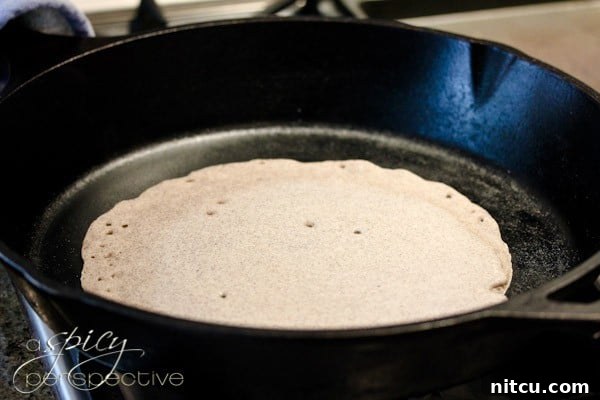
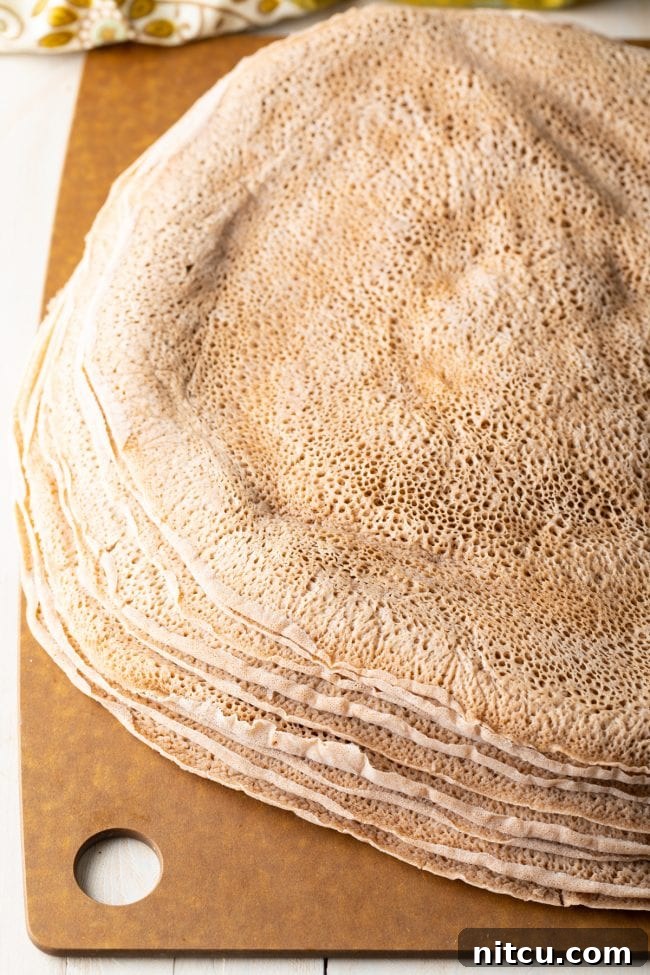
The goal is to cook your Injera until its surface is covered with tiny “eyes” or pores, indicating a perfectly leavened and spongy flatbread. Unlike traditional pancakes, Injera is typically cooked mostly on one side until the top is set, maintaining its soft, pliable nature. Once cooked, the crepes are gently removed, stacked, and allowed to soften further through self-steaming, making them perfectly rollable and ready to embrace your favorite Ethiopian dishes.
Find the full Ethiopian Bread recipe with detailed instructions, ingredient measurements, and storage tips in the printable form at the bottom of the post!
Optimal Storage and Reheating for Injera
One of the many benefits of homemade Injera is its excellent keeping qualities. Whether you’ve made a large batch for meal prep or have leftovers from a feast, storing and reheating it properly ensures you can enjoy its unique texture and flavor for days or even months to come.
- Storing Leftovers – Once cooled, place any leftover Injera in an airtight container or a resealable plastic bag. Store it in the refrigerator, where it will maintain its freshness and soft texture for up to 3 days. Ensure it’s sealed well to prevent it from drying out.
- Freezing Leftovers – For longer storage, Injera freezes beautifully. To prevent sticking, stack individual cooked Injera pieces with a sheet of parchment paper in between each one. Wrap the stack tightly in plastic wrap, then place it in a freezer-safe bag or container. It can be frozen for up to 2 months. Thawing overnight in the refrigerator is recommended before reheating.
- Reheating Leftovers – The best way to revive chilled or thawed Injera is by gently warming it. I recommend placing it in a preheated oven at a low temperature (around 250°F / 120°C) for a few minutes until it’s warmed through and soft again. You can also lightly steam it or briefly warm it in a dry skillet on low heat. Avoid microwaving if possible, as it can sometimes make the Injera tough.
Properly stored and reheated Injera means you can always have this delightful flatbread on hand, ready to complete any meal.
Serving Your Homemade Injera: A Culinary Adventure
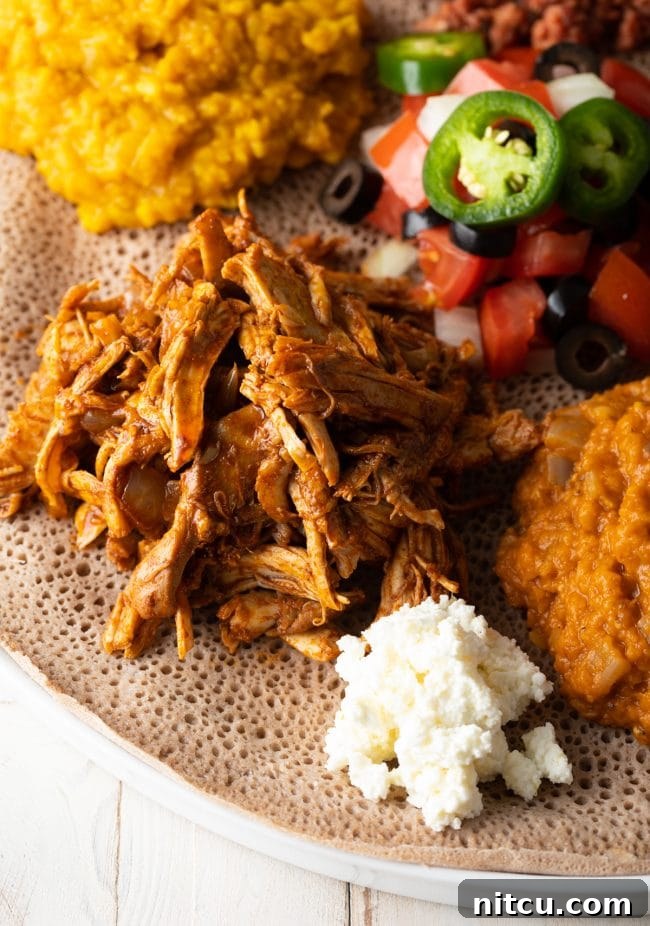
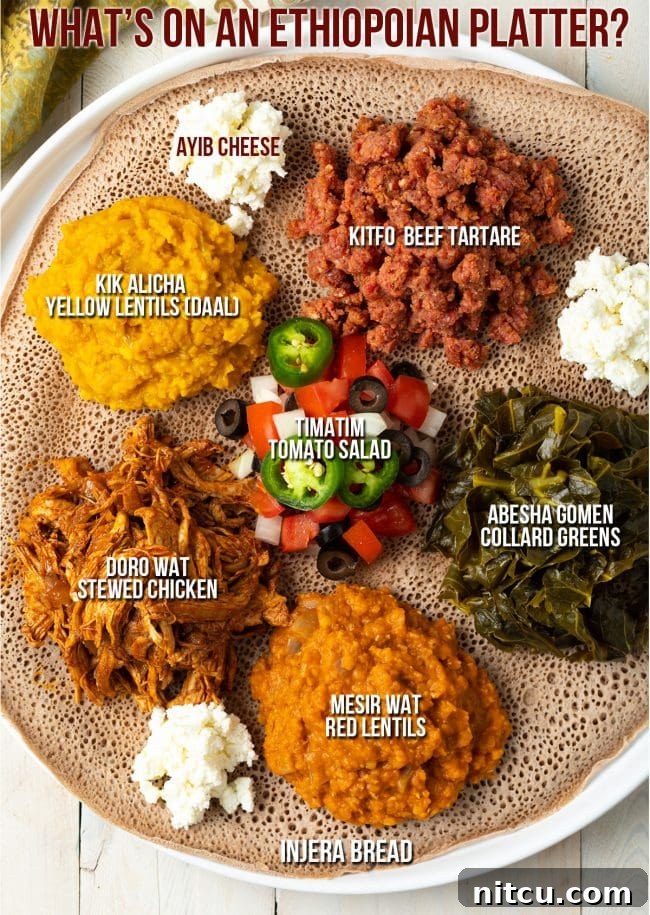
The true magic of Injera comes alive when it’s paired with the rich, aromatic stews and vibrant vegetable dishes of Ethiopia. The act of eating with Injera is an experience in itself – a communal, hands-on journey that invites everyone to gather around and share in the flavors. Ethiopian “Queen” Platters, laden with a colorful array of exotic dishes, are an incredible idea for your adventurous dinner guests, promising not just a meal, but cherished memories.
Here are some traditional and inspired suggestions to serve with your fresh-made Injera Bread:
- Kitfo Ethiopian Beef Tartare or Tere Siga (minced raw meat): A delicacy for meat lovers, Kitfo is finely minced beef, often served raw or very rare, seasoned with spiced butter (niter kibbeh) and mitmita. Tere Siga is raw beef served in chunks, both are wonderfully complemented by Injera.
- Mesir Wat Red Lentil Stew: A staple vegetarian dish, this spicy, flavorful red lentil stew is slow-cooked to perfection and offers a hearty, comforting pairing.
- Ayib Cheese: A mild, crumbly fresh cheese, often served alongside spicier dishes to provide a cooling contrast.
- Yellow Peas (similar to Daal): While not strictly Ethiopian, similar lentil or pea stews (like Kik Alicha, a turmeric-spiced split pea dish) are common and delicious with Injera.
- Collards or other Wilted Greens (Gomen): Braised collard greens, often cooked with garlic and ginger, are a nutritious and flavorful side.
- Ethiopian Tomato Salad: A refreshing and light salad, perfect for cutting through the richness of heavier stews.
- Smeared with Niter Kibbeh: A simple yet incredibly flavorful way to enjoy Injera is by smearing it with Niter Kibbeh, a spiced clarified butter that adds a rich, aromatic depth.
- Fenugreek Stew: A unique and savory stew often found in Ethiopian cuisine, offering a distinctive flavor profile.
Most of these incredible dishes can be prepared ahead of time, allowing you to focus on cooking fresh Injera and enjoying the company of your guests. Remember, Injera is your utensil; tear off a piece, pinch around your chosen food, and savor the communal feast!
Print Recipe
Leave a Review »
Ethiopian Injera Bread
30
minutes
6
minutes
36
minutes
This Ethiopian Injera Bread recipe is a quick and easy take on the traditional Injera and features a sourdough crepe-like flatbread that you can make at home!
8
Video
Ingredients
Metric
- 3 cups all purpose flour
- 1 cup buckwheat flour
- 2 tablespoons baking soda
- 1 teaspoon salt
- 4 cups club soda
- 1 cup white vinegar or rice vinegar
- Oil for pan
Instructions
-
In a large bowl, combine both all-purpose and buckwheat flours, salt, and baking soda. Whisk these dry ingredients thoroughly to ensure they are well combined. Gradually pour in the club soda, whisking continuously until you achieve a smooth, lump-free batter. Finally, add the white or rice vinegar and whisk once more to incorporate it completely. The batter should have a consistency similar to thin pancake batter.
-
Heat a large nonstick skillet (preferably 8-10 inches in diameter) over medium heat. To prepare the pan, dip a paper towel in a small amount of oil and carefully wipe the surface of the hot skillet. This creates a very thin, even layer of oil, which is crucial for preventing sticking and making it easier to flip your Injera. Re-oil lightly between each Injera as needed.
-
Using a ladle or a measuring cup, pour approximately 1/2 cup of batter into the center of the hot skillet. Immediately and carefully swirl the pan around to evenly spread the batter into a thin, circular crepe, aiming for 8 to 9 inches in diameter. The edges should be thin, and the center slightly thicker. This swirling motion is key to achieving a uniform thickness and distribution of the batter.
-
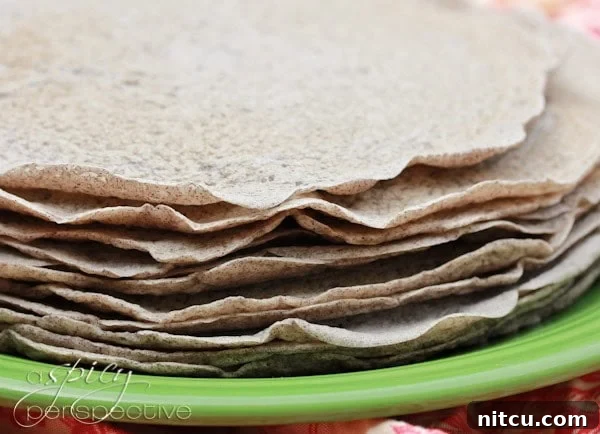
Cook the Injera for about 1 minute. During this time, you’ll notice small bubbles forming and breaking on the surface, creating the characteristic “eyes.” Once the edges begin to firm up and the surface looks mostly dry with distinct pores, gently slide a large, thin spatula underneath. Carefully flip the Injera and cook for another minute on the second side. It will seem slightly crisp in the pan, but will soften quickly once removed. Transfer the cooked Injera to a plate and immediately stack it on top of previous pieces. The residual heat and steam from stacking help to further soften and tenderize the Injera sourdough crepes, making them perfectly pliable.
-
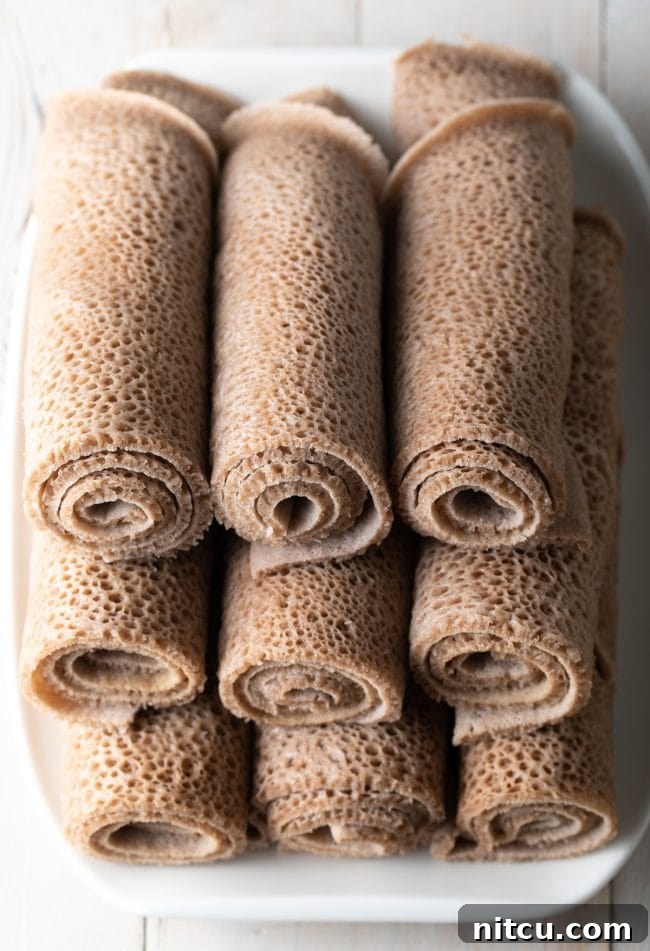
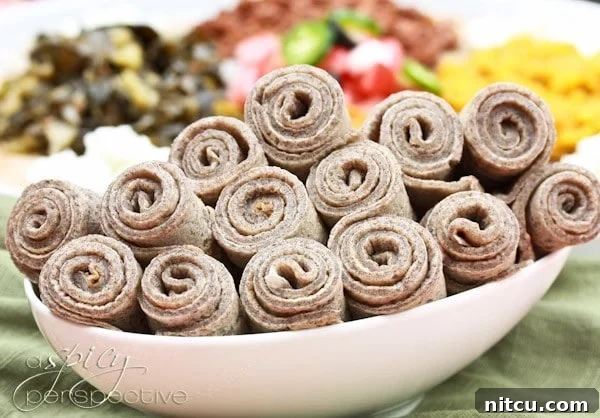
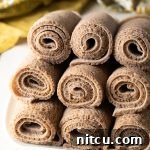
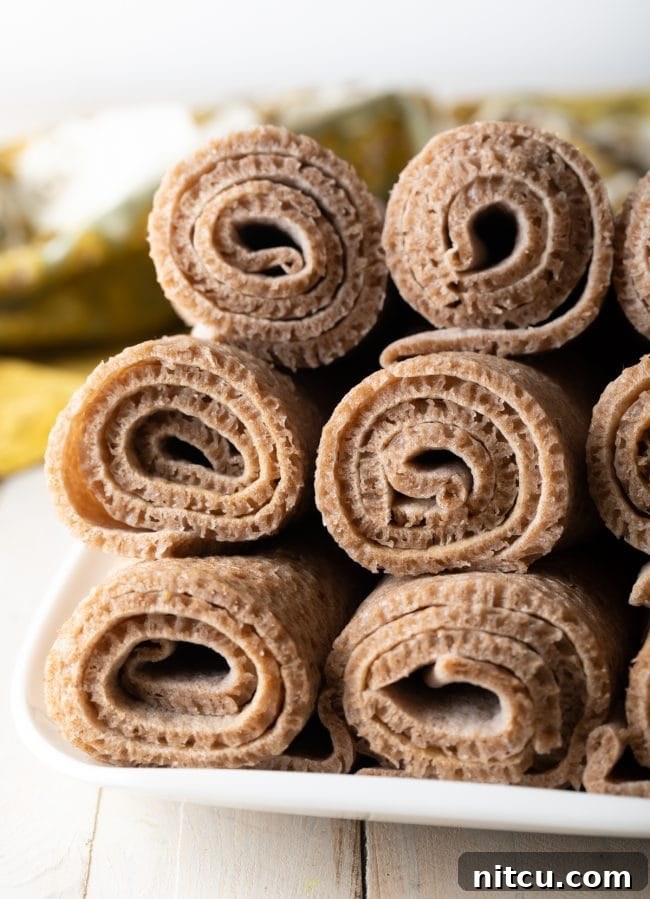
Repeat the process with the remaining batter until all the Injera is cooked. Once finished, you can serve the Injera whole or, for a more traditional presentation, cut the circular crepes in half with a pizza cutter, then roll each half into a loose tube. Stack them neatly on a serving platter. Keep them warm under a clean kitchen towel or in a low oven until ready to serve. Serve your freshly made Injera with traditional Ethiopian stews like Doro Wat (spicy chicken stew) or Mesir Wat (red lentil stew), using torn pieces of Injera to scoop up the savory food.
Notes
Storing Leftovers – Store leftover Ethiopian bread in an airtight container in the refrigerator for up to 3 days. Ensure it’s sealed well to maintain moisture.
Freezing Leftovers – For longer preservation, place cooled, cooked Injera stacked on top of one another with parchment paper between each piece. Wrap the stack tightly in plastic wrap, then place in a freezer-safe bag. Freeze for up to 2 months.
Reheating Leftovers – I recommend warming chilled or thawed Injera gently in a preheated oven (around 250°F / 120°C) for a few minutes until soft. Avoid microwaving for best texture.
Nutrition
Calories: 227kcal,
Carbohydrates: 46g,
Protein: 7g,
Fat: 1g,
Saturated Fat: 1g,
Sodium: 1140mg,
Potassium: 140mg,
Fiber: 3g,
Sugar: 1g,
Calcium: 21mg,
Iron: 3mg
Main Course
American, Ethiopian
Sommer Collier
Cook It? Love It? Rate It!
Help this recipe reach more food lovers – TAP 5 STARS to share your appreciation. Thank you!
Frequently Asked Questions About Injera
Teff flour is indeed the traditional grain used for authentic Ethiopian Injera. It’s naturally gluten-free and imparts a distinctive, earthy flavor and elastic texture to the flatbread. However, teff flour can be challenging to find outside of specialty African or health food stores. Our recipe offers a more accessible alternative using a blend of all-purpose and buckwheat flours to mimic the texture and a quick fermentation method to achieve the sour taste. If you’re fortunate enough to find teff flour, you can absolutely use it in place of both flours in this recipe. Use a total of 4 cups of teff flour for an amazing, truly traditional Injera batter. Keep in mind that traditional teff Injera often benefits from a longer fermentation period (1-3 days) to develop its full flavor.
If your Injera turns out too thick, it’s usually because too much batter was poured into the pan or it wasn’t swirled thin enough. For dryness, the most common culprits are overcooking or not stacking the Injera immediately after cooking. To prevent this, ensure you’re using the correct amount of batter and swirling it quickly to achieve a thin, even layer. Reduce the cooking time; Injera cooks relatively fast, and you want it to remain pliable. Crucially, stack the Injera pieces on top of one another as soon as they come off the skillet. This creates a steaming effect that keeps them soft and prevents them from drying out.
While Injera is traditionally served with Ethiopian stews, its neutral yet tangy flavor and versatile texture make it a fantastic companion for a wide array of non-traditional dishes. Consider building a vibrant vegetarian or vegan platter featuring roasted vegetables like green beans, cabbage, potatoes, carrots, or even sweet potatoes. You could pair it with savory grains, thick porridges, or hearty chickpea dishes. For a truly adventurous twist, Injera can even be served with fresh fruits like sliced mango or papaya, or used as a unique base for savory breakfast items. Its ability to soak up flavors means it complements almost any saucy or stewed dish, making it a creative alternative to bread or rice.
The “eyes,” or tiny pores, are the hallmark of perfectly cooked Injera and indicate good leavening and proper cooking technique. To achieve them, ensure your batter has rested enough for the baking soda and club soda to react, creating gas bubbles. When you pour the batter into a hot skillet, these gas bubbles will rise and burst, leaving those characteristic holes. A slightly thinner batter (but not watery) can also help. Make sure your pan is heated to medium-high; if it’s too cool, the bubbles won’t form as effectively, and if it’s too hot, the Injera might cook too quickly without fully bubbling.
Yes, you can! While this is a quick recipe, allowing the batter to rest for 15-30 minutes before cooking can help the flavors meld and the leavening agents fully activate, resulting in a more uniform texture and better “eyes.” For a slightly more developed sour flavor, you could even refrigerate the batter for up to a few hours, though this recipe is designed for immediate use. Just give it a good whisk before cooking to redistribute any settled flour.
Explore More Flatbread Recipes You Might Like
If you’ve enjoyed making this Ethiopian Injera, you might love exploring other unique flatbread recipes from around the world. Each offers a distinct cultural flavor and culinary experience: