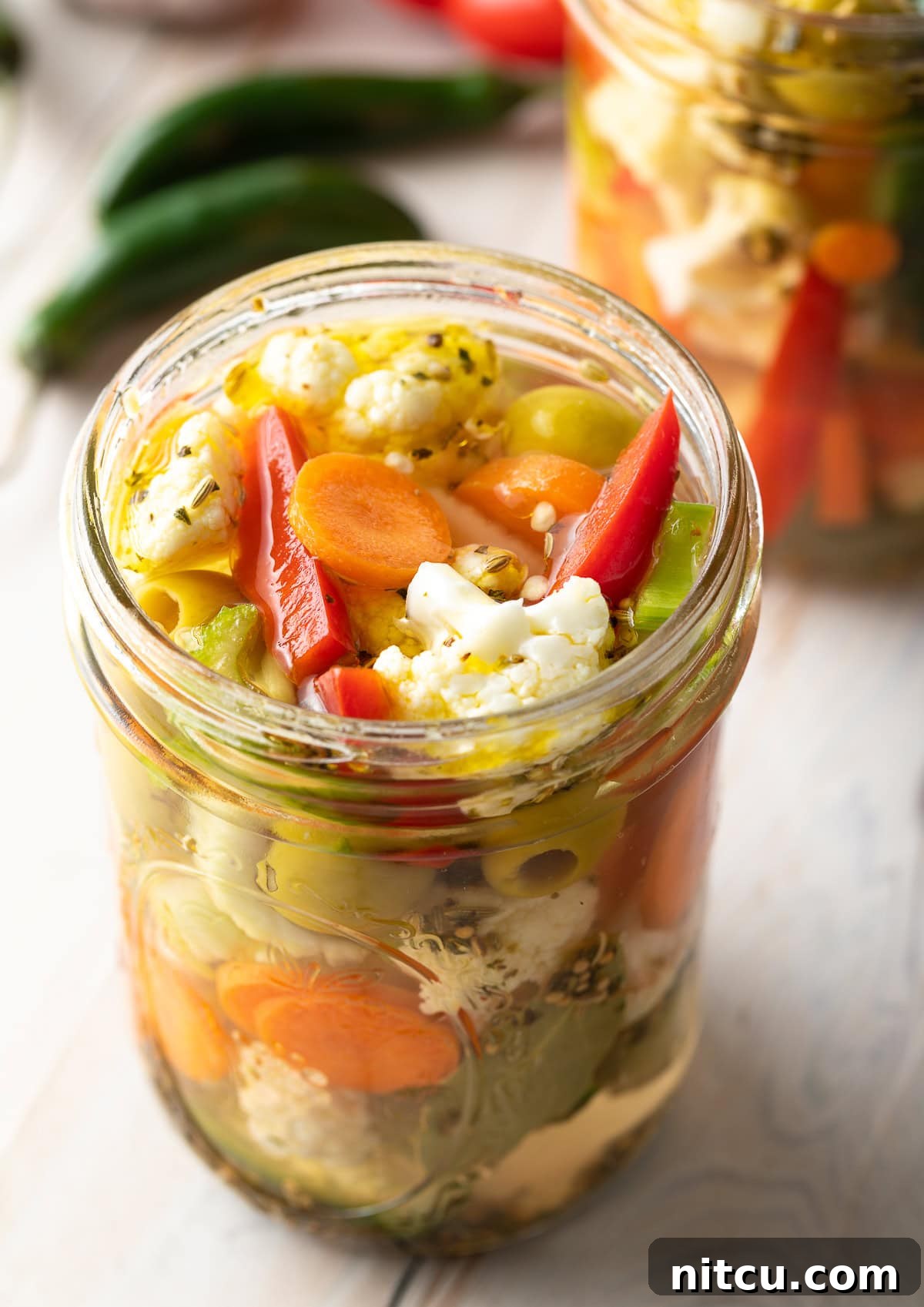
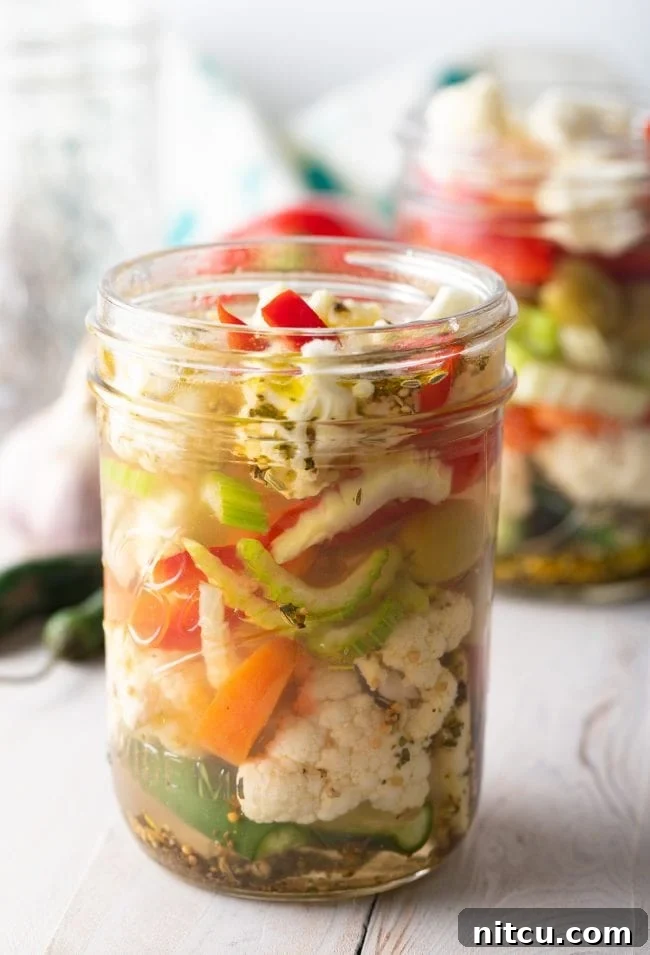
Elevate your culinary creations with these bold and tangy Homemade Giardiniera Pickled Vegetables, an incredibly easy refrigerator pickles recipe that perfectly blends fresh, crisp vegetables with zesty spices and a vibrant vinegar brine.
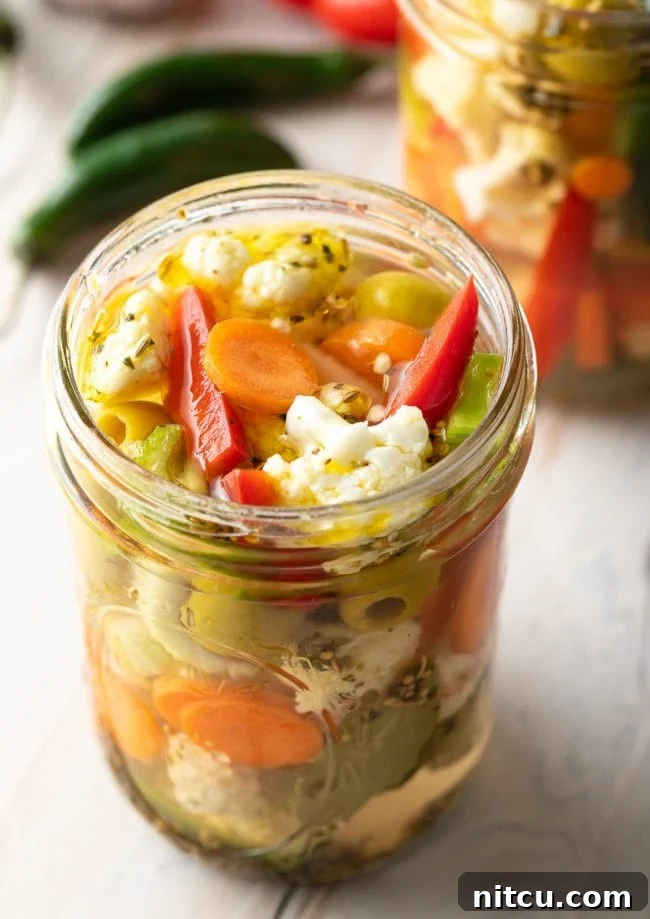
Mastering Homemade Giardiniera: Your Ultimate Pickled Vegetables Recipe
There’s an undeniable magic in homemade pickles, and when it comes to a truly versatile and flavorful pickled vegetable medley, nothing quite rivals a good Giardiniera. Originating from Italy, where its name literally means “from the garden,” Giardiniera is a classic condiment renowned for its bright, piquant flavor and delightful crunch. While store-bought versions exist, making your own Giardiniera Pickled Vegetables at home is a rewarding experience that guarantees superior freshness, customizable spice levels, and an unmatched vibrant taste.
This easy refrigerator pickles recipe is designed for simplicity and maximum flavor, allowing you to whip up a large batch that will become a staple in your fridge. Imagine having this perfectly salty, zesty, and crunchy kick readily available to enhance everything from a simple sandwich to an elaborate charcuterie board. It’s more than just a condiment; it’s a celebration of seasonal produce, preserved with care and bursting with a complex profile that will awaken your taste buds.

Why You’ll Love This Giardiniera Recipe
As an avid home cook, I developed this Giardiniera recipe to capture the perfect balance of flavors and textures that truly makes it shine. Here’s why this recipe will quickly become a favorite in your kitchen:
- Unforgettable Flavor Profile: This Giardiniera boasts a tantalizing combination of tangy, wonderfully sour, and salty notes, complemented by a satisfying crunch and a rich infusion of bold spices. It’s a flavor explosion in every bite.
- Versatile Crowd-Pleaser: From casual gatherings to sophisticated dinner parties, these pickled vegetables are a guaranteed hit. They are an essential component for elevated charcuterie boards, vibrant salads, hearty sandwiches, and an excellent accompaniment to grilled meats and main dishes.
- Effortless and Long-Lasting: Our straightforward recipe requires minimal hands-on time, spread over two days to allow the flavors to fully develop. Once prepared, this homemade blend keeps exceptionally well in the refrigerator for several weeks, meaning you can enjoy its fresh taste long after making it.
- Seasonal Produce Hero: This Giardiniera refrigerator pickles recipe is a brilliant way to make the most of abundant seasonal produce. Whether you’re harvesting from your summer garden or bringing home exciting finds from the farmers market, it’s a fantastic solution for preserving fresh vegetables and reducing food waste.
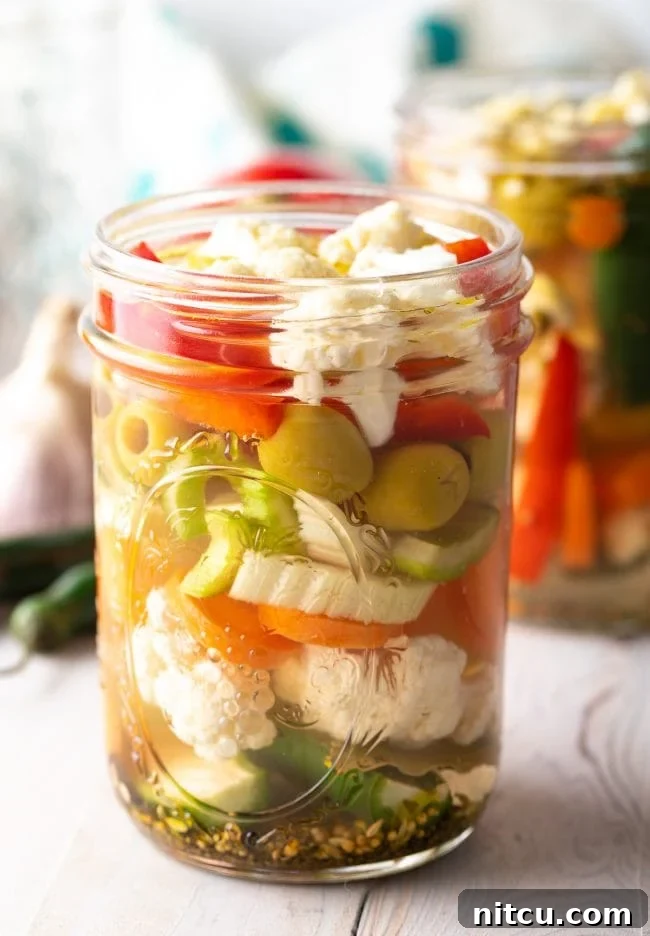
Essential Ingredients and Expert Tips
The beauty of Giardiniera lies in its flexibility. While our recipe features classic summer produce, feel absolutely free to customize it with your favorite vegetables. The key is to use fresh, high-quality ingredients for the best flavor and crunch. Here’s a breakdown of what makes our version so special, along with some tips:
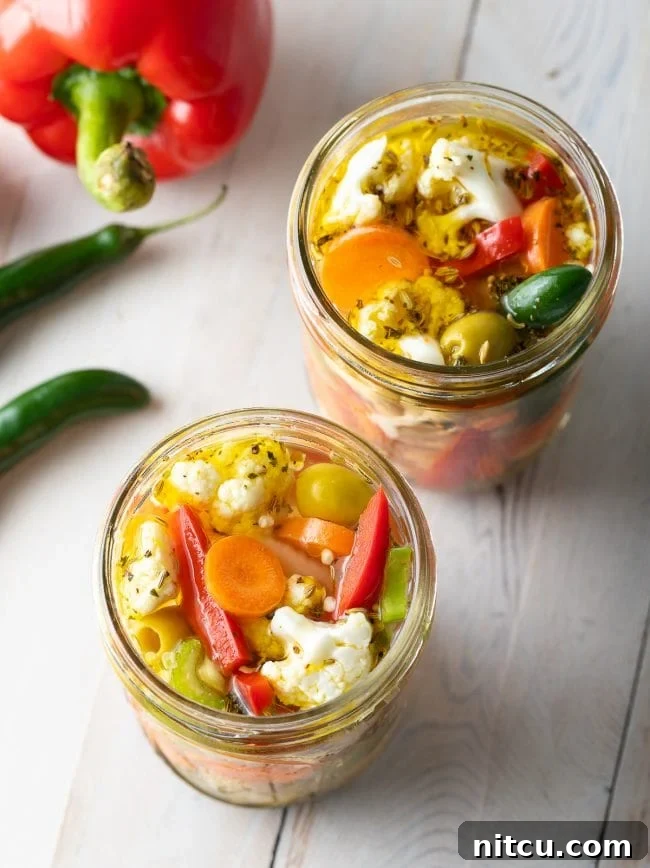
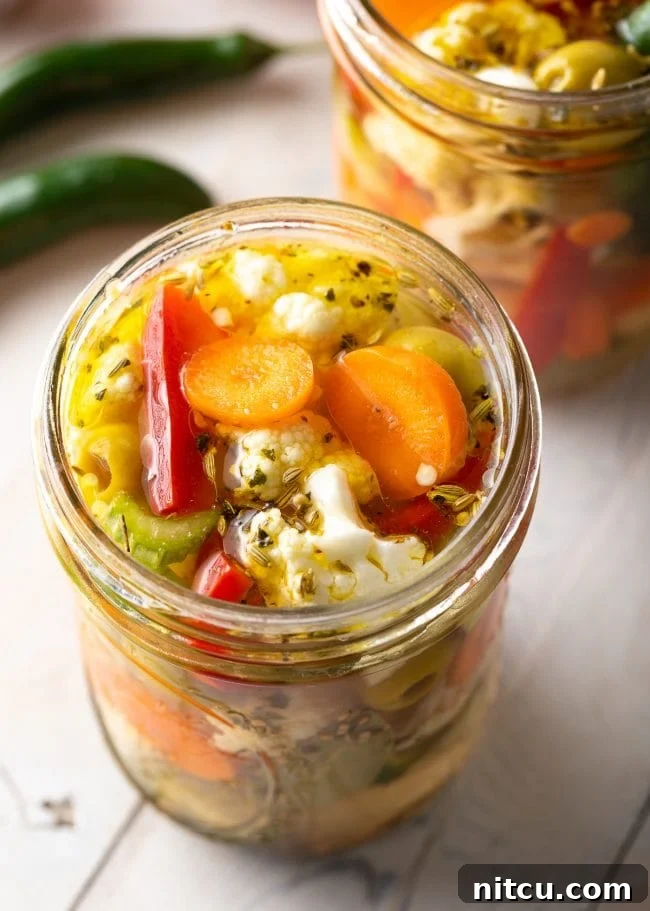
- Cauliflower Florets: These absorb the pickling liquid beautifully, offering a tender yet firm texture. Cut them into small, uniform florets for even pickling.
- Carrots: Sliced carrots add a touch of sweetness and vibrant color. Their inherent crunch stands up wonderfully to the brine.
- Celery: The subtle bitterness and crisp texture of celery are essential for Giardiniera’s authentic flavor profile. Slice it thinly or into small pieces.
- Red Bell Pepper: For a pop of color and a mild, sweet counterpoint to the tang, red bell peppers are ideal. Yellow or orange bell peppers would also work well.
- Green Olives: Pitted green olives contribute a salty, briny depth that is characteristic of Italian Giardiniera. Choose good quality olives for the best taste.
- Olive Oil: A good quality extra virgin olive oil not only infuses a rich, Mediterranean flavor but also contributes to the smooth texture of the brine and vegetables.
- Garlic: Smashed garlic cloves impart a robust, aromatic foundation. Don’t be shy with the garlic; it’s key to the savory notes.
- Bay Leaves: These fragrant leaves add a subtle, herbal undertone that enhances the overall complexity of the pickled vegetables.
- Serrano Chilis: For that signature spicy kick, serrano chilis are perfect. If you prefer a milder heat, use fewer chilis, remove the seeds, or opt for a less potent alternative like jalapeño pepper. For those who love intense heat, habanero peppers can be used with caution!
- Aromatic Spices:
- Dried Oregano: Provides a warm, earthy, and slightly peppery flavor that is a hallmark of Italian cuisine.
- Celery Seeds: Offer a concentrated celery flavor with a mild bitterness, adding depth and authenticity.
- Fennel Seeds: Impart a sweet, licorice-like aroma that beautifully complements the other spices and vegetables.
- Yellow Mustard Seeds: Deliver a pungent, tangy bite and a slight pop of texture, essential for any good pickle.
- The Perfect Pickling Liquid Brine:
- Water: The base of our brine.
- White Vinegar: Provides the necessary acidity for pickling, flavor, and preservation. Choose a good quality white vinegar.
- Kosher Salt: Crucial for flavor and firming the vegetables. Use kosher salt as it lacks anti-caking agents found in table salt.
- Sugar: A touch of sugar balances the acidity of the vinegar and enhances the overall flavor profile without making it overly sweet.
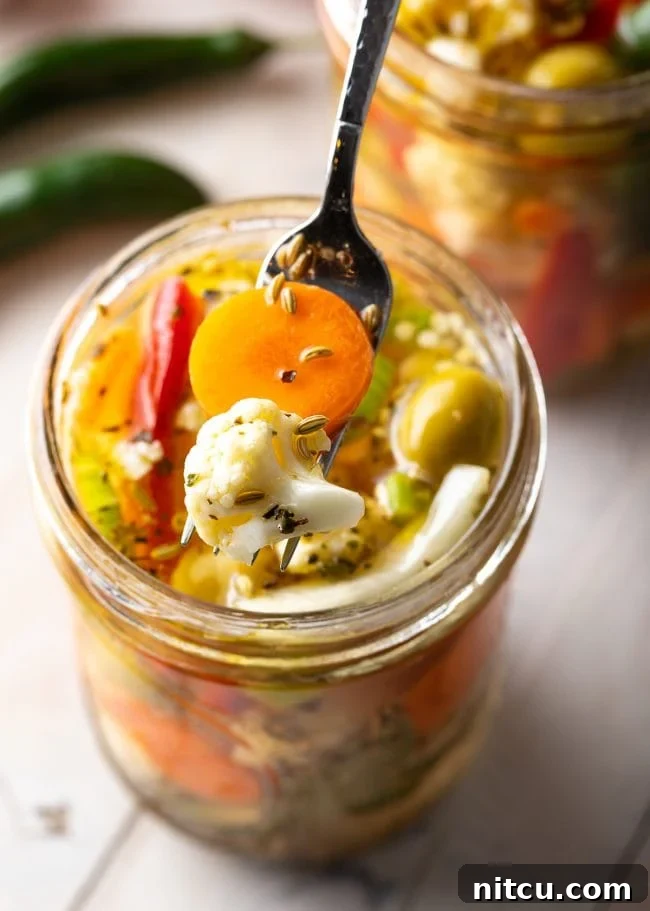
Step-by-Step Guide: Crafting Your Homemade Giardiniera Pickled Vegetables
Making Giardiniera is a straightforward process, but efficiency is key. I highly recommend performing all the prep work at once before you begin assembling and brining. This will save you significant time and make the entire process much smoother. Remember, patience is a virtue when pickling; the longer the vegetables sit in the brine, the more intensely flavorful they become.
For precise ingredient proportions, detailed step-by-step instructions, and a visual tutorial, refer to the printable recipe card at the very bottom of this post.
Preparation is Key
Before anything else, gather all your fresh produce. Wash and thoroughly dry the vegetables. Uniformly chop the cauliflower into small florets, slice the carrots and celery, and dice the red bell pepper. Ensure all pieces are bite-sized, as this ensures even pickling and a pleasant eating experience. Don’t forget to drain your green olives. For the chiles, slice them in half lengthwise to allow their heat to infuse the brine.
Assembling the Jars
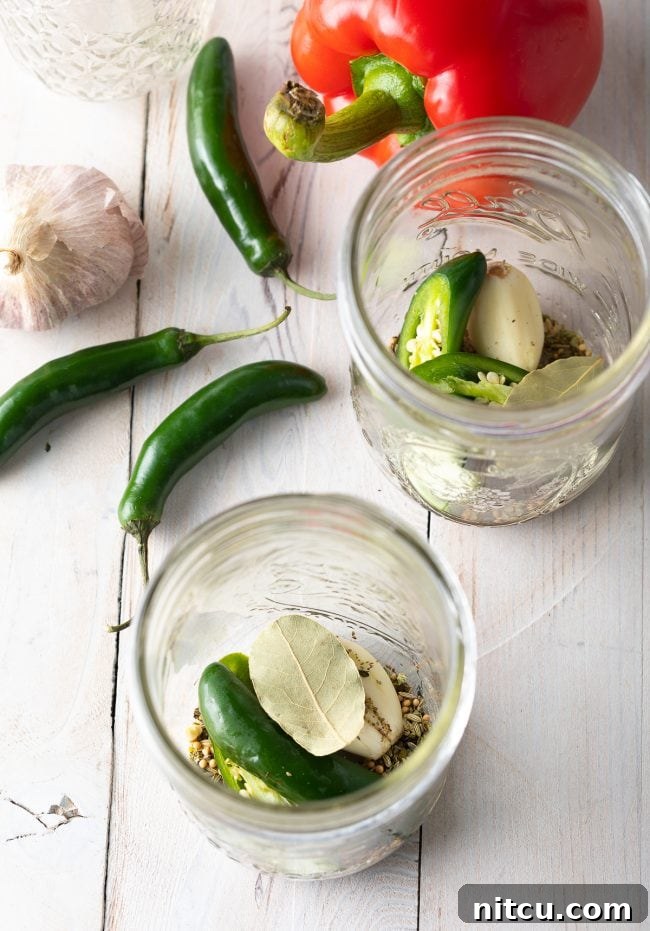
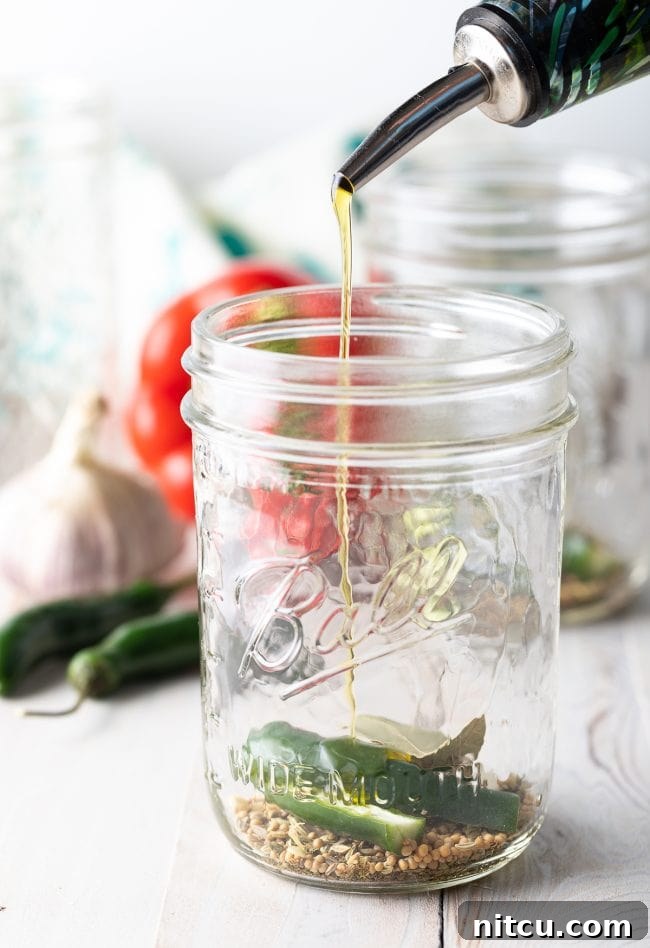
Clean and sterilize four pint-sized jars. This is crucial for food safety and the longevity of your Giardiniera. Into each prepared jar, add a tablespoon of good olive oil, one smashed garlic clove, one bay leaf, half to a whole serrano pepper (depending on your desired spice level), and a quarter teaspoon each of dried oregano, celery seeds, fennel seeds, and yellow mustard seeds. These aromatics will slowly release their incredible flavors into the vegetables.
Filling with Freshness
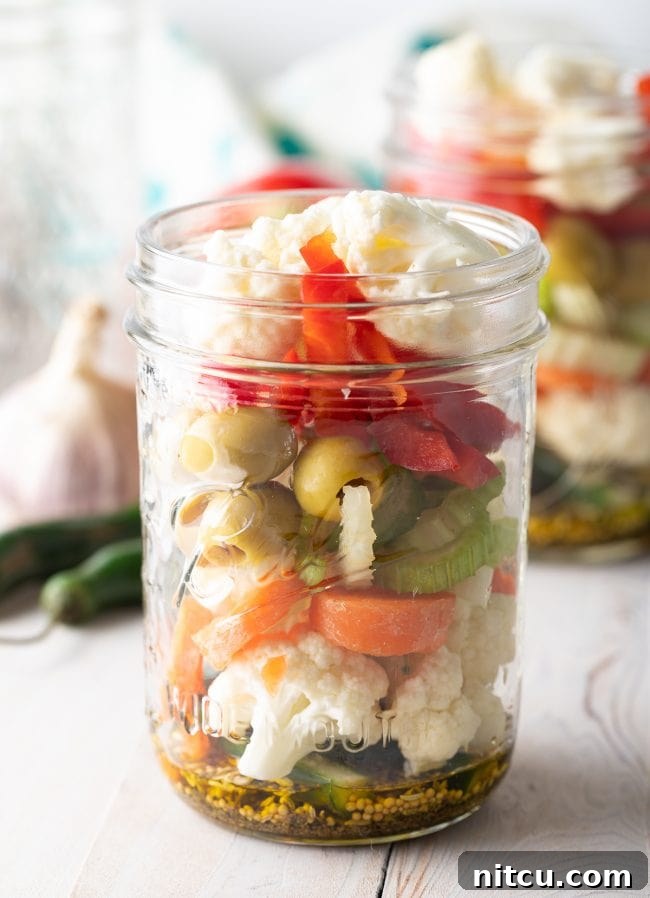
Evenly distribute the chopped cauliflower, sliced carrots, celery, red bell pepper, and green olives among the four jars. Pack them snugly, filling each jar almost to the very top. A tight pack ensures the vegetables are fully submerged in the brine, which is essential for proper pickling and preventing spoilage.
Crafting the Brine
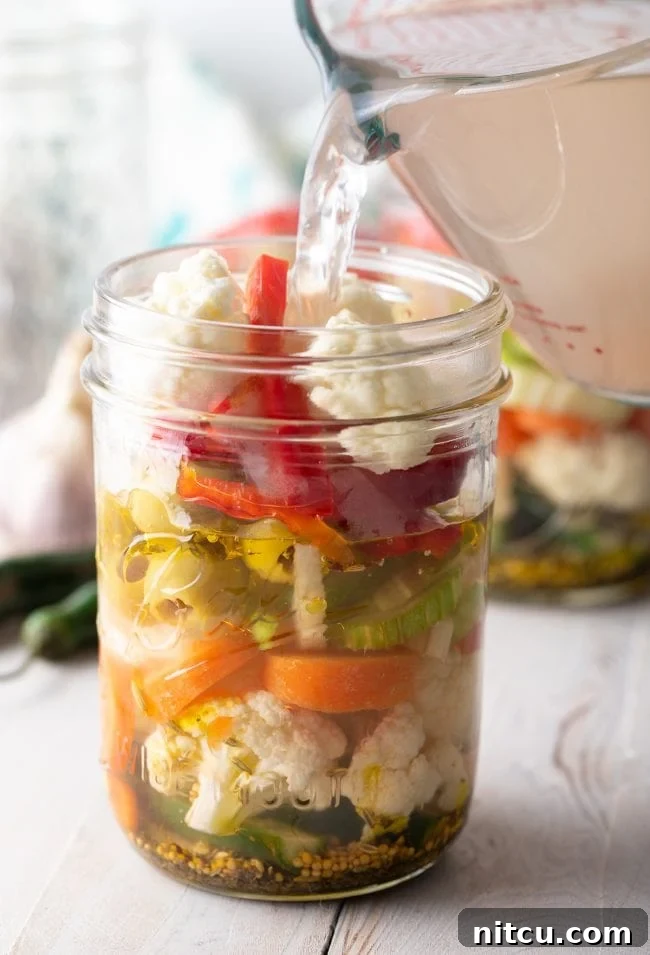
In a medium saucepot, combine the water, white vinegar, kosher salt, and sugar. Place the pot over high heat and bring the mixture to a rolling boil. Stir well to ensure the salt and sugar are completely dissolved. Once boiling, carefully pour the hot brine directly into each prepared jar, making sure to completely cover all the vegetables. This hot brine will kickstart the pickling process.
The Waiting Game
Allow the filled jars of Giardiniera to cool down to room temperature on your counter. This slow cooling helps the vegetables retain their crispness. Once cool, securely cover each jar with a lid. Give them a gentle shake to distribute the spices and then transfer them to the refrigerator. For the best flavor development, refrigerate for a minimum of 36 to 48 hours before serving. This waiting period allows all the incredible flavors to meld and deepen, transforming the fresh vegetables into truly spectacular Giardiniera.
Exciting Giardiniera Recipe Variations
One of the joys of making homemade Giardiniera is the ability to customize it to your personal preferences. Don’t be afraid to experiment with different vegetables, spice levels, and aromatic additions to create your signature blend:
- Mild Pickled Vegetables: If you or your guests prefer a milder flavor profile, simply omit the serrano chiles entirely. For just a hint of warmth without intense heat, you can add a sprinkle of red pepper flakes instead.
- Herby Pickled Vegetables: To introduce a more complex, earthy aroma, consider adding fresh herbs. Sprigs of rosemary, fresh dill, or thyme work beautifully, infusing a fragrant depth. Avoid delicate herbs like parsley or cilantro, as their flavors tend to become muted or even unpleasant in a long-term pickle.
- Switch Up the Vegetables: The beauty of Giardiniera is its adaptability. Feel free to swap or add other firm, crisp vegetables that pickle well. Excellent choices include crisp cucumbers (mini or Persian varieties work best), chopped asparagus, trimmed green beans, or thinly sliced radishes for an extra peppery bite. Ensure all vegetables are cut to a similar size for even pickling.
- Sweet Giardiniera: For a slightly sweeter, bread-and-butter-style Giardiniera, increase the amount of sugar in the brine by another tablespoon or two. This pairs wonderfully with some varieties of charcuterie.
- Garlic Lover’s Giardiniera: If you adore garlic, add an extra smashed clove to each jar, or even a few thin slices of garlic for a more intense garlic flavor.
Elevate Your Meals: How to Serve Homemade Giardiniera
Homemade Giardiniera is incredibly versatile, lending its bold, tangy crunch to a wide array of dishes. Once you have a batch ready, you’ll find countless ways to enjoy this flavorful pickled medley:
Classic Sandwich Enhancer
Finely dicing this Giardiniera mix is a classic way to enjoy it on sandwiches. It’s an absolute must-have for a New Orleans Muffuletta, where its briny bite cuts through the rich meats and cheeses. It’s equally delicious on your favorite Italian sub, adding a zesty kick and satisfying texture. Don’t limit it to cold sandwiches, though; a spoonful on a juicy burger or a grilled chicken sandwich takes it to a whole new level.
Creative Culinary Applications
Beyond traditional uses, Giardiniera can be incorporated into more elaborate dishes. Use this vibrant blend to make our crowd-pleasing Muffuletta Cheesy Garlic Bread recipe, where its tanginess perfectly complements the rich cheese and garlic. Or, for a zesty and filling main course, try our Muffuletta Stuffed Chicken Breasts, featuring the Giardiniera as a savory, flavorful stuffing.
Appetizer and Side Dish Star
Homemade Giardiniera is a fantastic and impressive addition to any charcuterie board or antipasto platter. Arrange it alongside a variety of soft and hard cheeses, an assortment of dried and cured meats, crusty artisan bread, your favorite crackers, and a selection of delicious spreads. It provides a bright, refreshing counterpoint to richer items, making for an easy yet elegant appetizer that will wow your guests.
But don’t overthink it! Sometimes, the best way to enjoy this tangy mix is simply as a cool, refreshing side dish with your summer dinners. It’s a bright, palate-cleansing accompaniment to grilled fish, roasted chicken, or any meal that benefits from a little zest.
Frequently Asked Questions About Giardiniera
Generally, yes, Italian pickled vegetables like Giardiniera can be a healthy addition to your diet. They are packed with fresh vegetables, which provide essential vitamins, minerals, and fiber. While the pickling liquid does contain salt and some sugar, when consumed in moderation as a condiment or side dish, the nutritional benefits of the vegetables typically outweigh these considerations. They are a low-calorie, flavorful way to increase your vegetable intake.
This refrigerator-style Giardiniera, unlike traditional canned pickles, is not shelf-stable and must be kept refrigerated. When stored properly in airtight jars in the refrigerator, these delicious giardiniera-style pickled vegetables will last for up to 4 months. The vinegar acts as a natural preservative, but refrigeration is key to maintaining freshness and preventing spoilage.
While white vinegar is traditionally used for its clean, sharp flavor and clear appearance, you can experiment with other types. Apple cider vinegar offers a fruitier, slightly mellower tang, while white wine vinegar provides a milder, more delicate acidity. Balsamic vinegar is generally too strong and dark for classic Giardiniera, but a very small amount could be used for a unique twist. Always ensure the vinegar has at least 5% acidity for safe pickling.
Traditional Italian Giardiniera typically features a mix of vegetables in a vinegar-based brine, often with a hint of olive oil. Chicago-style Giardiniera, on the other hand, is a much spicier, oil-based condiment. It often includes a hotter mix of peppers (like sport peppers or serranos), celery, carrots, and cauliflower, all finely chopped and submerged in an oil blend that makes it incredibly flavorful and fiery. This recipe leans more towards a versatile Italian-style refrigerator pickle, but you can adjust the spice level to your preference!
More Zesty Recipes You Might Enjoy
Print Recipe
Giardiniera Pickled Vegetables
20
5
2
2 25
24 servings
Video
Ingredients
- 3 cups small cauliflower florets
- 1 ½ cups sliced carrots
- 1 ½ cups sliced celery
- 1 ½ cups sliced red bell pepper
- 1 cup pitted green olives
- 4 tablespoons olive oil
- 4 cloves garlic smashed
- 4 bay leaves
- 2-4 serrano chiles
- 2 teaspoons dried oregano
- 1 teaspoon celery seeds
- 1 teaspoon fennel seeds
- 1 teaspoon yellow mustard seeds
For the Brine
- 3 cups water
- 3 cups white vinegar
- 2 tablespoons salt
- 2 tablespoons sugar
Instructions
-
Prep Work: Begin by washing and preparing all your fresh produce. Chop all vegetables into small, uniform, bite-sized pieces. Cut the serrano chiles in half lengthwise. Drain the pitted green olives thoroughly. Ensure you have four clean pint jars ready for filling.
-
Assemble Jars with Aromatics: To each of the four prepared pint jars, add the following: 1 tablespoon of olive oil, 1 smashed garlic clove, 1 bay leaf, ½ to 1 serrano pepper (adjust to your spice preference), ½ teaspoon of dried oregano, ¼ teaspoon of celery seeds, ¼ teaspoon of fennel seeds, and ¼ teaspoon of yellow mustard seeds. These ingredients will infuse the vegetables with incredible flavor.
-
Fill Jars with Vegetables: Evenly divide the chopped cauliflower, sliced carrots, celery, red bell pepper, and green olives among the four jars. Pack them tightly, filling each jar almost to the very top, ensuring there’s enough space for the pickling liquid.
-
Prepare and Pour Brine: Place a medium saucepot over high heat. Add the water, white vinegar, kosher salt, and sugar to the pot. Bring the mixture to a rolling boil, stirring well to ensure the salt and sugar are fully dissolved. Once boiling, carefully and slowly pour the hot brine into each jar, making sure all the vegetables are completely submerged.
-
Cool and Refrigerate: Allow the filled jars of pickled vegetables to cool completely at room temperature on your counter. Once they have reached room temperature, cover each jar securely with a lid. Gently shake the jars to distribute the spices and brine. Transfer the jars to the refrigerator and allow the Giardiniera to pickle for a minimum of 36 to 48 hours before serving. This resting period is crucial for the flavors to fully develop.
Notes
If you are interested in traditional “canning” the Giardiniera for shelf-stable storage, you will need to blanch the fresh produce in salty water before adding it to the jars. Afterward, follow the classic canning method, which typically involves boiling the sealed jars for 10 minutes to create a vacuum seal. This recipe is for refrigerator pickles, not shelf-stable canning.
If, after the 48-hour brining period, you find the pickled vegetables to be too salty for your taste, you can adjust the brine. Carefully pour out approximately one-third of the brine water from the top of each jar and replenish it with fresh cold water before placing the jars back in the refrigerator.
Nutrition
Serving:
0.33
cup
,
Calories:
48
kcal
,
Carbohydrates:
3
g
,
Protein:
1
g
,
Fat:
3
g
,
Saturated Fat:
1
g
,
Sodium:
682
mg
,
Potassium:
70
mg
,
Fiber:
1
g
,
Sugar:
2
g
,
Vitamin A:
1686
IU
,
Vitamin C:
13
mg
,
Calcium:
18
mg
,
Iron:
1
mg
Appetizer, Condiment, Side Dish, Snack
American, Italian