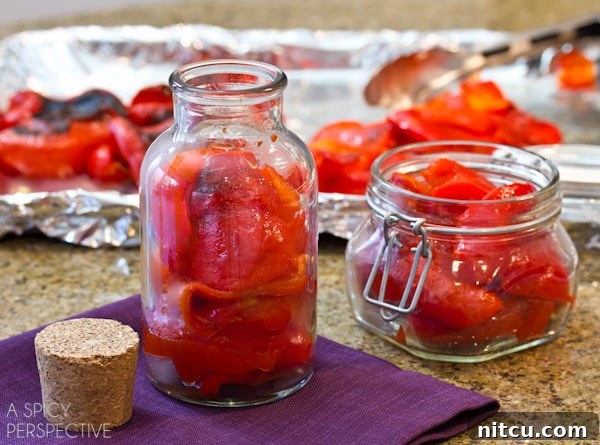
 There’s a culinary secret that elevates countless dishes from ordinary to extraordinary: the humble yet incredibly versatile roasted red pepper. This week’s essential “How To” guide focuses on transforming fresh bell peppers into a smoky, sweet, and unbelievably flavorful ingredient. Roasting your own red peppers at home is a remarkably simple process that unlocks a depth of flavor you simply can’t achieve with raw or even canned versions. Get ready to indulge in that rich, sweet, and distinctly smoky essence you’ve been craving!
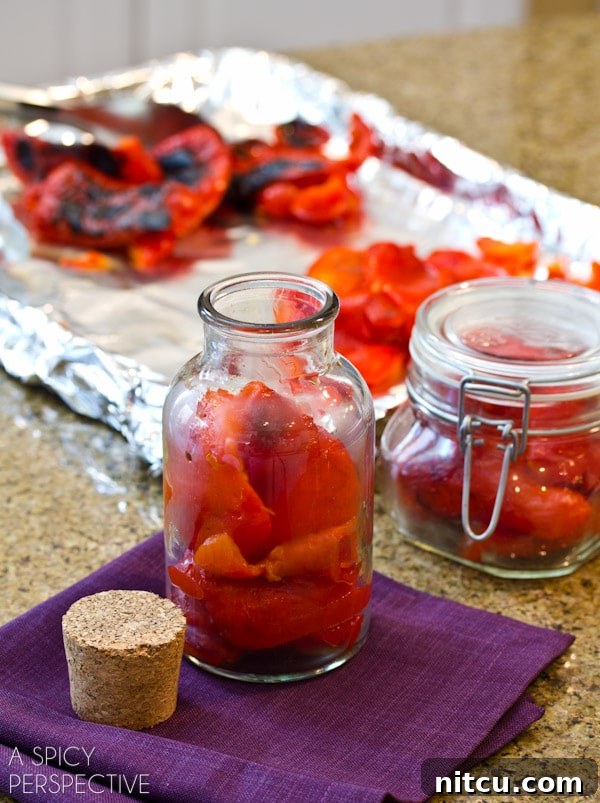
My passion for roasted red peppers knows no bounds. Seriously, I am absolutely enamored with them. You might not have noticed my subtle (or perhaps not-so-subtle) dedication, but I’ve woven these delightful peppers into a myriad of recipes across A Spicy Perspective. Their ability to add a vibrant color, tender texture, and complex flavor profile makes them an indispensable ingredient in my kitchen.
The magic of roasted red peppers lies in their incredible versatility. Once roasted, their natural sugars caramelize, intensifying their sweetness, while the charring process imparts a wonderfully smoky depth. This unique combination makes them perfect for enhancing both savory and even some sweet applications. Think about the way they can brighten up a simple spread or add a sophisticated twist to a classic pasta dish.
Here are just a few examples of how roasted red peppers can transform everyday meals into gourmet experiences:
- Red Pepper Aioli: A creamy, garlicky dip or spread, perfect for sandwiches, grilled vegetables, or seafood. The roasted peppers add a beautiful hue and a sweet, smoky undertone.
- Red Pepper Hummus: Elevate your classic hummus with the vibrant flavor and color of roasted red peppers, creating a dip that’s both visually appealing and incredibly delicious.
- Creamy Roasted Red Pepper Spread: An ideal condiment for wraps, crackers, or as a base for appetizers, offering a burst of savory sweetness.
- Roasted Red Pepper Soup: A comforting and hearty soup, where the roasted peppers contribute a rich, velvety texture and a comforting warmth.
- Red Pepper Pesto Pasta: A fresh and flavorful alternative to traditional basil pesto, bringing a sun-kissed taste to your pasta dishes.
- Spicy Feta Dip with Roasted Red Peppers: The robust flavors of feta cheese are perfectly balanced by the smoky sweetness of the peppers, creating an irresistible party dip.
- Salads: Adds a tender texture and sweet-smoky pop to green salads, grain bowls, or pasta salads.
- Sandwiches & Wraps: Elevates any sandwich or wrap with its succulent texture and rich flavor.
- Pizzas & Flatbreads: A fantastic topping that adds sweetness and color.
- Stews & Braises: Deepens the flavor profile of slow-cooked dishes.
While it’s true that you don’t *have* to roast your own peppers for any of these fantastic recipes, and readily available jarred roasted red peppers can be a convenient substitute, especially when fresh peppers are out of season or more expensive. Indeed, during certain times of the year, buying jarred can be a very economical choice.
However, as I often emphasize, particularly when it comes to flavor, fresh ingredients almost always emerge as the undisputed champions. The difference between store-bought and homemade roasted red peppers is truly remarkable. When you roast your own, you control the level of char, the freshness of the pepper, and ensure no unwanted preservatives or excess sodium are added. This meticulous control results in a superior, more vibrant, and intensely flavored product.
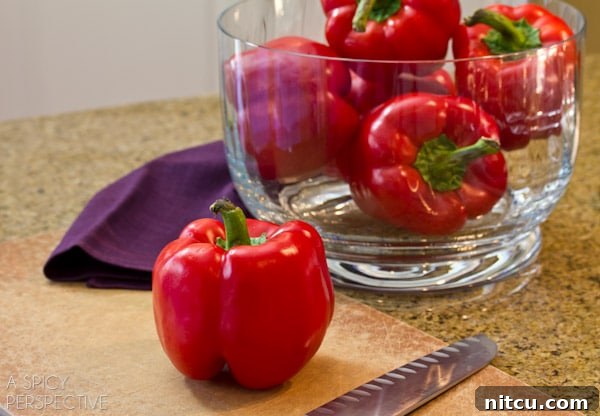
But during peak pepper season, when you can find an abundance of fresh, ripe peppers at local markets for a mere fraction of the usual cost, roasting your own becomes an even more appealing and rewarding endeavor. It’s truly the best way to capture that pristine, smoky-sweet pepper essence.
I’ve experimented with various methods for roasting red peppers over the years, each with its own merits. If I’m already firing up the grill for other dishes, I simply toss whole red peppers directly onto the grates. The open flame imparts an incredible char and a deep smoky flavor that’s hard to beat. For those occasions when I only have a single red pepper to roast, a gas burner on the stovetop works wonders – I just hold the pepper with tongs, rotating it until all sides are beautifully charred.
Yet, when you’re faced with a bounty of peppers and want to roast a substantial batch efficiently, the oven broiler method stands out as the most practical and least labor-intensive approach. With oven roasting, there’s no need for constant turning; you simply arrange the peppers, and the intense, direct heat does all the work, blackening the skins until they’re blistered and ready for peeling.
The beauty of this method lies in its simplicity and effectiveness, making it ideal for home cooks looking to maximize flavor with minimal fuss. Here’s my tried-and-true method for perfectly roasted red peppers every time.
How to Roast Red Peppers in the Oven
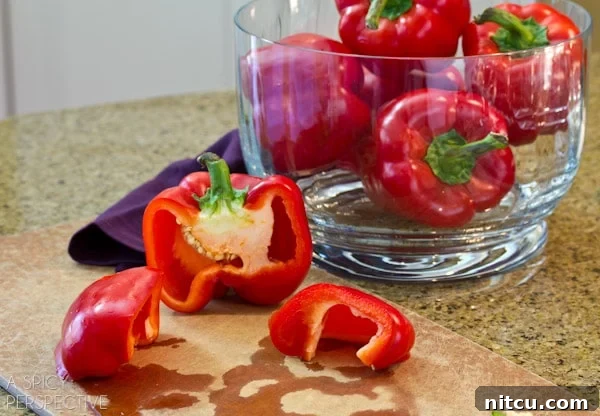
Achieving perfectly roasted red peppers begins with proper preparation and understanding your oven’s broiling capabilities. This method relies on intense, direct heat to char the skins without overcooking the tender flesh underneath.
Step-by-Step Guide to Oven Roasting Red Peppers:
1. Prepare Your Oven and Peppers:
Begin by positioning an oven rack in the highest position in your oven, typically about 4-6 inches from the broiler element. Then, preheat your oven to the broil setting. While the oven heats up, thoroughly wash your red bell peppers. Using a sharp knife, cut each pepper into quarters. Carefully remove the stems, seeds, and any white membranes from the inside of each pepper. These parts can be bitter and are best discarded for the sweetest result.
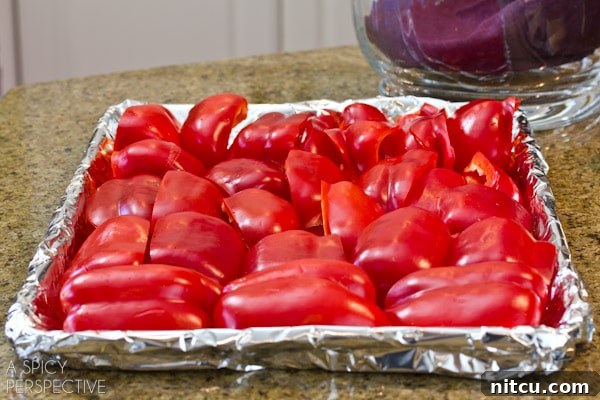
2. Arrange for Maximum Charring:
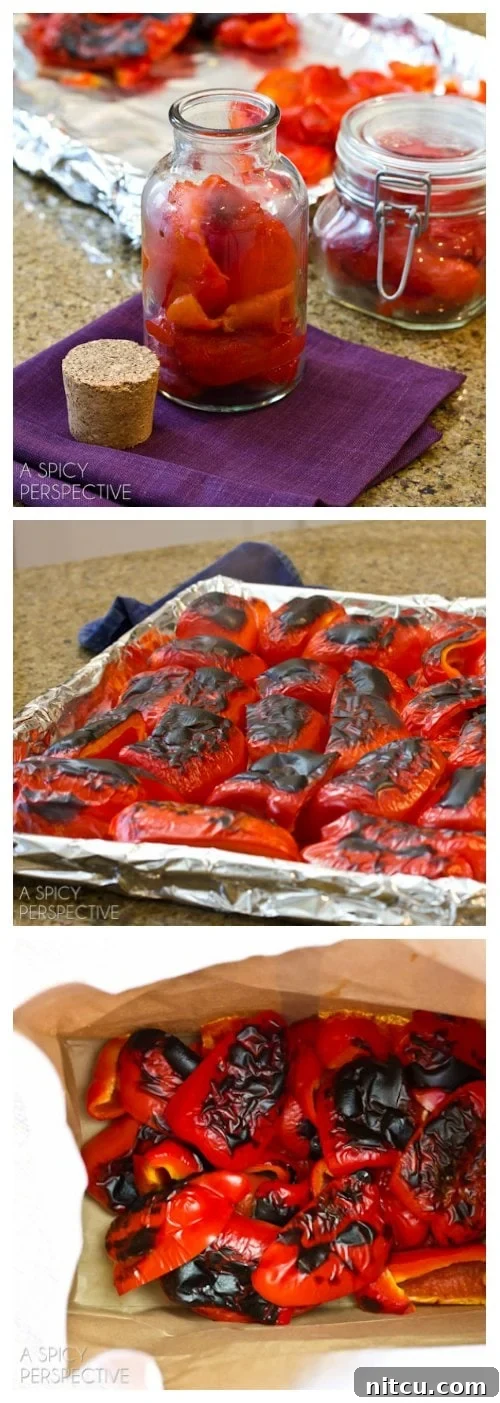
Line a rimmed baking sheet with aluminum foil for easier cleanup. Place the quartered peppers flat on the foil, ensuring the skin side is facing directly upwards. Gently press each pepper piece flat with your hand. This crucial step ensures that as much of the pepper skin as possible is exposed directly to the heat source, facilitating even charring. Maximizing skin contact with the broiler heat is key to achieving that desirable blistered texture, which in turn makes the skins much easier to remove later.
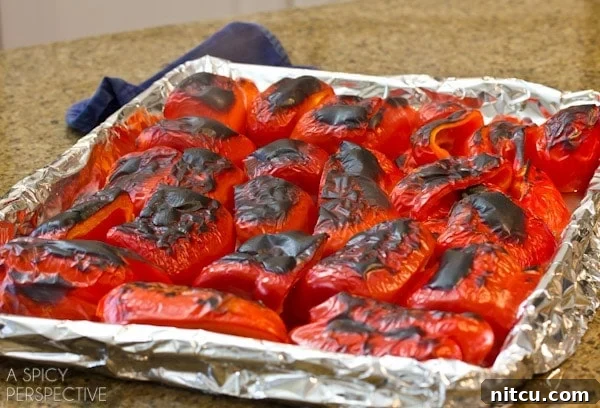
3. Broil to Perfection:
Carefully slide the baking sheet into the preheated oven. Broil the red peppers for approximately 10-15 minutes. Keep a close eye on them, as broiler intensity can vary significantly between ovens. You’re looking for the skins to become thoroughly black, blistered, and almost entirely charred. However, ensure the flesh underneath remains soft and moist, not dried out. The goal is to cook the skin rapidly while gently softening the pepper’s interior.
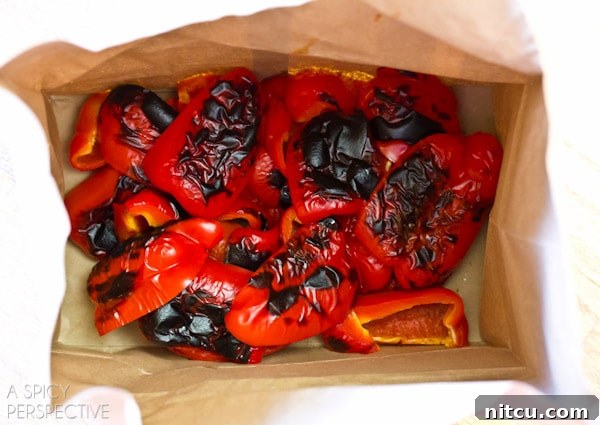
4. Steam for Easy Peeling:
Once the peppers have achieved the desired level of char, carefully remove the baking sheet from the oven. Immediately transfer the hot peppers into a large paper bag or a sealable zip-top bag. Close the bag tightly, trapping the steam inside. Allow the peppers to steam for at least 10 minutes, or even up to 20 minutes for larger, thicker-skinned peppers. This steaming process is vital; the trapped moisture helps to loosen the charred skin from the tender flesh, making peeling a breeze.
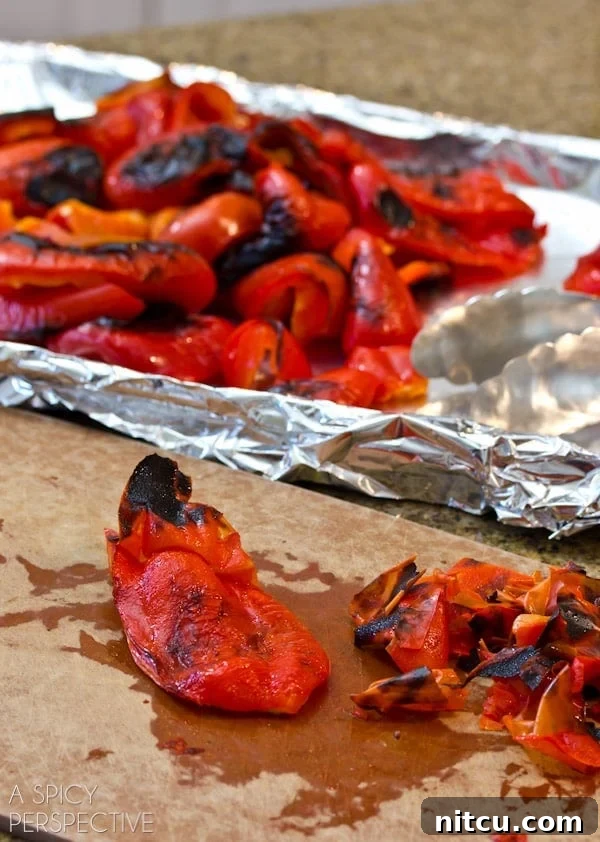
5. Peel and Enjoy:
After the steaming time has elapsed, carefully open the bag and dump the peppers out onto the baking sheet or a clean cutting board. The skins should now be soft and pliable. Gently pull the skins off the peppers. If your peppers were evenly charred and adequately steamed, the once stubborn, rubbery skins should slip right off with minimal effort. Do not rinse the peppers after peeling, as this can wash away some of their delicious smoky flavor and nutrients.
Congratulations, you now have a batch of beautifully roasted red peppers ready to elevate your culinary creations!
Storage Solutions for Your Roasted Red Peppers:
Once roasted and peeled, your peppers are incredibly versatile and can be stored in several ways to preserve their delicious flavor for future use.
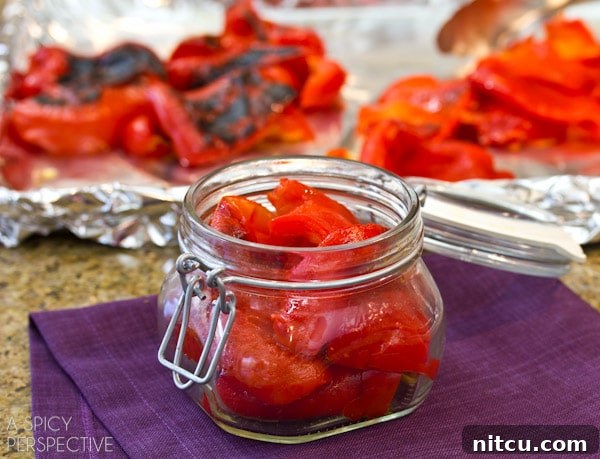
- Refrigeration: For short-term use, place the peeled roasted red peppers in an airtight container and store them in the fridge for up to a week.
- Packing in Oil: To extend their shelf life in the refrigerator, you can pack them in olive oil. Place the peppers in a clean jar, then cover them completely with a good quality olive oil. This method typically allows them to last for up to two weeks in the fridge. However, it is crucial to note that if you plan to store them for longer periods or at room temperature, home-packed garlic or peppers in oil can pose a risk of botulism if not properly acidified. For long-term preservation, especially at room temperature, it’s safer to follow proper canning procedures, which ensure a safe and tight seal.
- Freezing: This is an excellent option for long-term storage. You can freeze whole peppers, or slice them into strips or dice them before freezing. Place them in a single layer on a baking sheet until frozen solid, then transfer them to freezer-safe bags or containers. This prevents them from sticking together. Frozen roasted red peppers can last for up to 6-8 months, making them perfect for enjoying the taste of summer year-round.
- Canning: For shelf-stable storage, canning is an effective method. If you choose to can your roasted red peppers, it is absolutely essential to follow USDA-approved canning procedures precisely to ensure safety and prevent spoilage. This typically involves using an appropriate acidifying agent (like vinegar or lemon juice) and processing in a boiling water canner to achieve a tight, safe seal on your canning jars. Always refer to reliable canning guides for detailed instructions.
Tips for Roasting Different Types of Peppers:
This roasting method isn’t exclusive to red bell peppers; it can be adapted for a variety of peppers. However, keep in mind that the thickness of the pepper’s flesh will directly impact its roasting time. For thinner-fleshed peppers, such as Anaheims or even jalapeños (if you’re looking for roasted chile flavor), you will need to adjust the cooking time significantly, taking them out of the oven much earlier to prevent them from becoming overly soft or dry. Conversely, thicker-fleshed peppers like other colors of bell peppers (yellow, orange) can generally handle longer roasting times similar to their red counterparts.
Common Questions & Troubleshooting:
- Why won’t the skins peel off easily? This usually indicates that the peppers weren’t charred enough or didn’t steam for a sufficient amount of time. Ensure skins are fully blackened during broiling and allow ample steaming time.
- My peppers are watery after roasting. Is that normal? Yes, peppers release moisture when cooked. This liquid is flavorful and can be incorporated into sauces or soups. If you prefer them less watery for certain applications, you can pat them dry with a paper towel.
- Can I use a different roasting method? Absolutely! While oven broiling is efficient for large batches, grilling whole peppers on a barbecue or holding individual peppers over a gas burner are also fantastic methods that impart unique smoky nuances.
Embrace the vibrant flavors and culinary possibilities that homemade roasted red peppers bring to your kitchen. With these simple steps, you’re well on your way to enjoying this delightful ingredient in all your favorite dishes. Happy roasting!