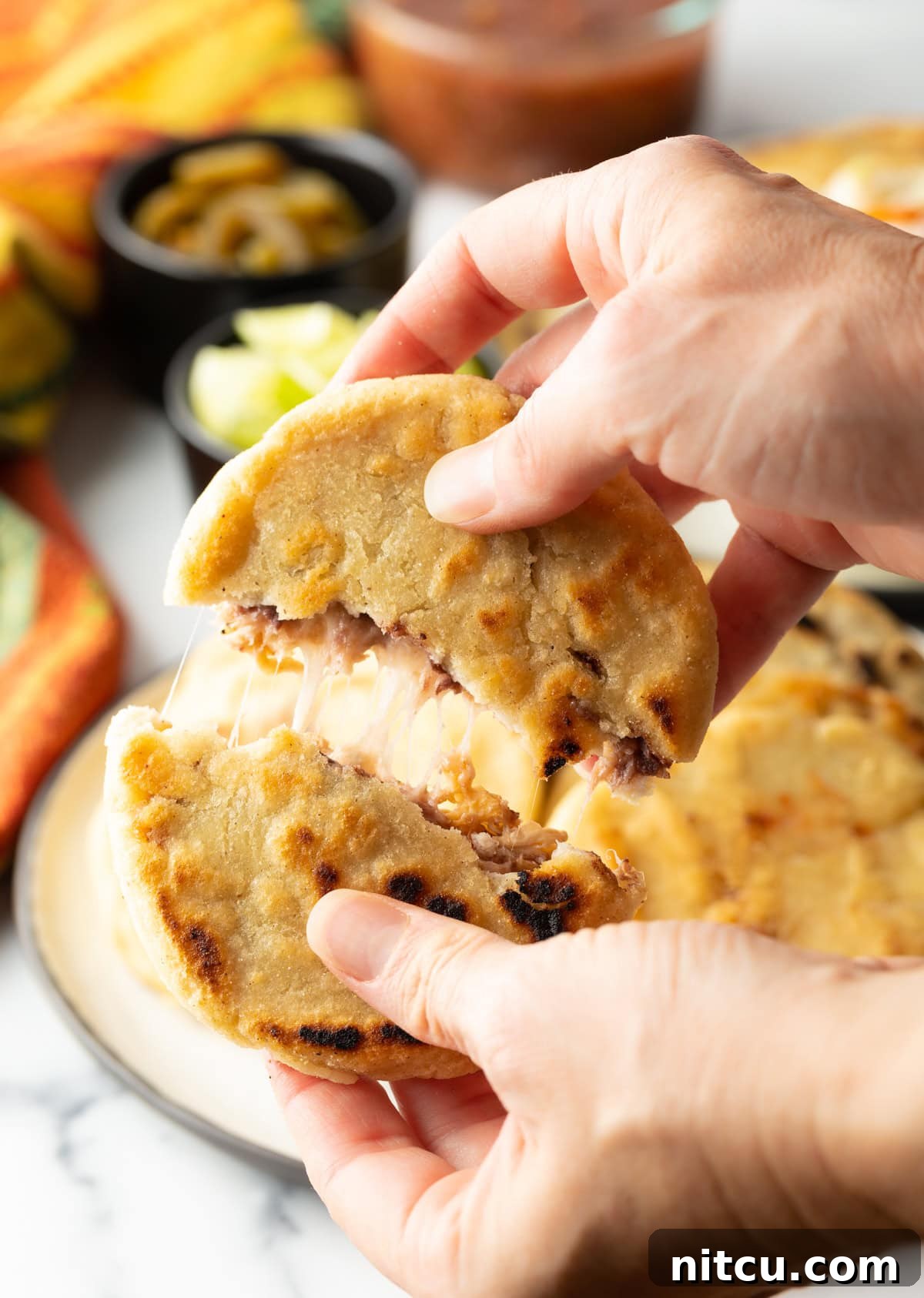
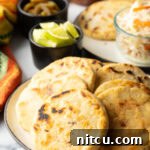
How to Make Pupusas – Dive into the heartwarming world of Salvadoran cuisine with these thick, chewy corn tortillas, generously filled with savory beans and gooey cheese, expertly pan-fried to golden perfection, and served with a refreshing, tangy cabbage slaw. Our incredibly easy pupusa recipe is your gateway to creating a beloved Central American classic, perfect for a satisfying snack or a festive, casual dinner gathering!
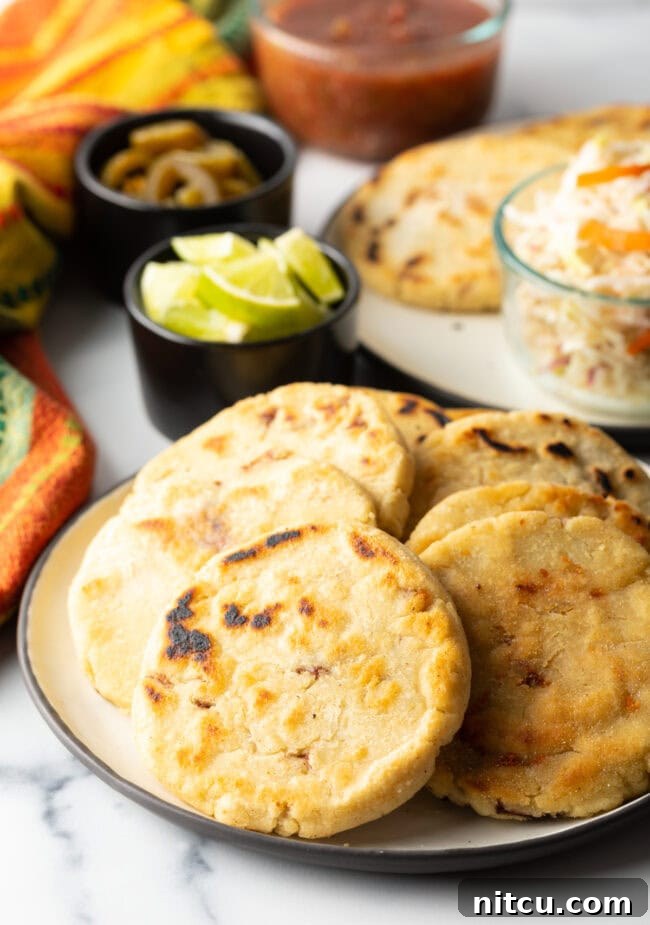
How to Make Authentic Pupusas: Your Complete Guide to El Salvador’s National Dish
Welcome to the ultimate guide for making traditional Pupusas, the iconic and irresistibly delicious national dish of El Salvador. These aren’t just any corn tortillas; Pupusas are a culinary marvel – thick, savory corn cakes made from masa harina, generously stuffed with a variety of fillings, then griddled until beautifully golden and slightly crispy on the outside, while remaining wonderfully soft and flavorful within. Often served with a crisp, tangy pickled cabbage slaw known as Curtido and a vibrant salsa, Pupusas offer a delightful texture and flavor contrast that will transport your taste buds straight to Central America.
Whether you’re new to Latin American cooking or a seasoned enthusiast, this easy pupusa recipe is designed for success. We’ll walk you through every step, from preparing the perfect masa dough and choosing the best fillings to mastering the art of shaping and frying. Get ready to gather your family and friends, because making pupusas is not just about cooking; it’s an enjoyable, hands-on experience that brings people together around delicious food.
What Exactly Are Pupusas?
Pupusas, pronounced *poo-POO-sas* (and occasionally misspelled as *papusas*), are a quintessential Central American street food, most famously from El Salvador, where they hold the esteemed title of the national dish. At their core, pupusas are thick, handmade corn tortillas, but what sets them apart is their unique preparation: they are stuffed with fillings *before* being cooked. This distinguishes them from other corn-based dishes like Mexican gorditas or Colombian arepas, which are typically cooked first and then sliced open to be filled.
The magic of a pupusa begins with masa harina, a specially treated instant corn flour. This flour, typically mixed with warm water and a touch of salt, creates a soft, pliable dough known as *masa*. The dough is then flattened, filled with delicious ingredients like refried beans, cheese, or various meats, sealed, and reshaped into a disc. Finally, these delectable stuffed corn cakes are pan-fried until they achieve a lovely golden-brown crust and the fillings inside are warm and melty. The result is a truly satisfying dish that’s chewy, crispy, and bursting with flavor. Making pupusas from scratch is not only a delightful culinary adventure but also a fantastic way to immerse yourself in authentic Latin American culture and cuisine.
Personalize Your Pupusas: Exploring Delicious Fillings and Variations
While the classic bean and cheese pupusa is undeniably delicious, one of the most exciting aspects of making pupusas is the endless possibility for customization. They are incredibly versatile, allowing you to personalize them with a wide array of savory fillings. This makes them perfect for using up leftovers or catering to diverse dietary preferences.
Traditional & Classic Fillings:
- Frijoles con Queso (Beans and Cheese): This is arguably the most popular and iconic combination, often featuring creamy refried black beans and a mild, melty cheese like Monterey Jack or Muenster.
- Queso (Cheese Only): Simple, yet satisfying. A pure cheese pupusa highlights the rich flavor and gooey texture of the melted cheese.
- Revueltas: A savory mix of cheese, refried beans, and cooked pork rinds (chicharrón) that have been finely minced. This combination offers a complex flavor and texture profile.
Savory Meat Fillings:
Don’t hesitate to incorporate your favorite cooked meats into pupusas for a heartier meal. Ensure any meat filling is finely shredded, minced, or ground to make shaping easier and prevent the pupusas from tearing.
- Stewed Chicken: Shredded chicken simmered in a light sauce adds moisture and flavor.
- Carnitas: Tender, slow-cooked shredded pork carnitas are an excellent choice, bringing a rich, savory depth.
- Ground Beef or Chorizo: Cooked and seasoned ground beef or spicy chorizo can be mixed with a little cheese for a robust filling.
- Carne Asada: Leftover, finely diced carne asada can be a fantastic addition.
Vegetarian & Vegan Options:
Pupusas are naturally adaptable for vegetarian and vegan diets. Simply omit meat and dairy or use plant-based alternatives.
- Roasted Vegetables: Soft, finely diced roasted squash, sweet potatoes, or zucchini make for a wholesome filling.
- Jalapeños: For a spicy kick, add a small amount of chopped pickled jalapeños (ensure they are well-drained).
- Leafy Greens: Finely chopped and sautéed spinach or Swiss chard can add a healthy twist.
- Vegan Cheese: For a dairy-free option, use your favorite shredded plant-based cheese that melts well.
Remember, the key to successful pupusas is not to overfill them. A modest amount of filling ensures easier sealing and prevents leakage during cooking. Experiment with different combinations to find your perfect pupusa!
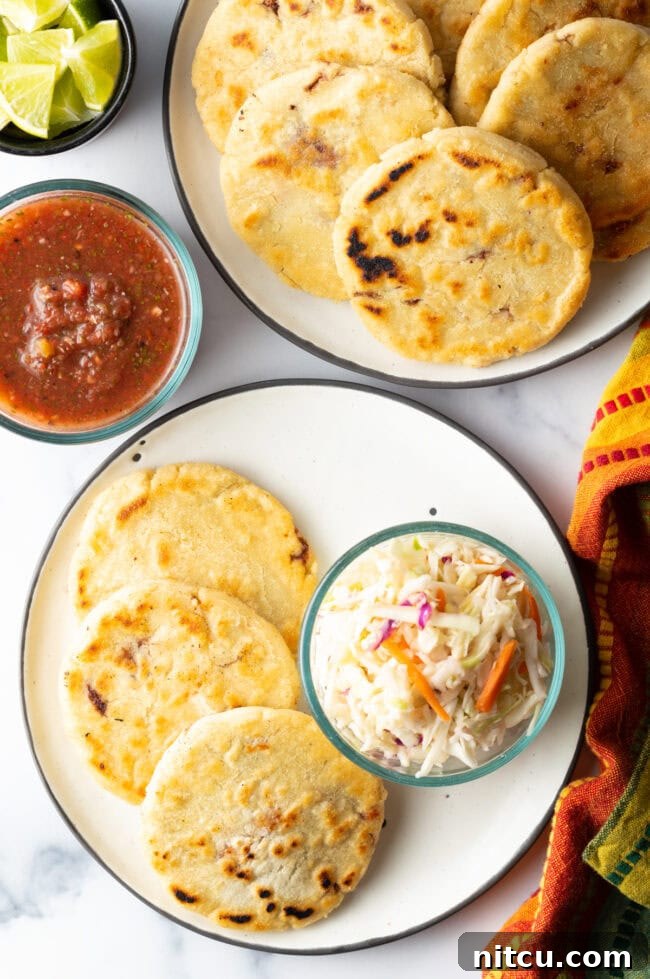
Essential Ingredients for Perfect Pupusas
For the Tangy Curtido Slaw:
Curtido is more than just a side dish; it’s a vital component that balances the richness of the pupusas with its refreshing crunch and bright, tangy flavor. It’s a simple, quick pickled cabbage slaw.
- Cabbage Slaw Mix: You can use a pre-packaged mix (typically green cabbage and carrots) for convenience, or finely shred fresh green cabbage and carrots yourself. Aim for about 2 cups.
- Lime: Freshly squeezed lime juice is essential for that zesty tang.
- Salt: Just a pinch, or about ½ teaspoon, to enhance the flavors and help the cabbage soften slightly.
For the Pliable Pupusa Dough:
The dough is the heart of your pupusas, and masa harina is the key ingredient. It’s important to distinguish masa harina from regular cornmeal.
- Masa Harina: This is a specific type of corn flour made from dried corn kernels that have been cooked and steeped in an alkaline solution (nixtamalization), then ground into flour. It’s crucial for the authentic flavor and texture of pupusas. Look for brands like Maseca or Bob’s Red Mill. You’ll need about 4 cups.
- Salt: A couple of teaspoons for seasoning the dough itself, enhancing the overall flavor of the pupusa.
- Water: Approximately 3 cups of warm water will be needed to bring the masa harina together into a soft, smooth, and pliable dough. The exact amount may vary based on humidity and brand of masa.
For the Classic Fillings:
The combination of beans and cheese is a timeless favorite, offering a creamy, savory interior.
- Refried Black Beans: Creamy refried black beans (about ½ cup) provide a fantastic savory base. Opt for low-sodium versions if possible to control the saltiness. Ensure they are thick and not too watery.
- Monterey Jack Cheese: Shredded Monterey Jack cheese (about 1 cup) is a popular choice for its mild flavor and excellent melting properties. Other great options include Oaxaca cheese, mozzarella, or a blend of Mexican cheeses.
- Oil: About 4 tablespoons of cooking oil (such as avocado, olive, or canola oil) for pan-frying the pupusas to a beautiful golden crust.
Optional additional fillings: As discussed in the variations section, feel free to include a small amount of stewed chicken, flavorful carnitas, seasoned ground beef or chorizo, finely chopped pickled jalapeños for a kick, roasted squash for a sweet-savory note, or fresh pico de gallo (ensure it’s well-drained).
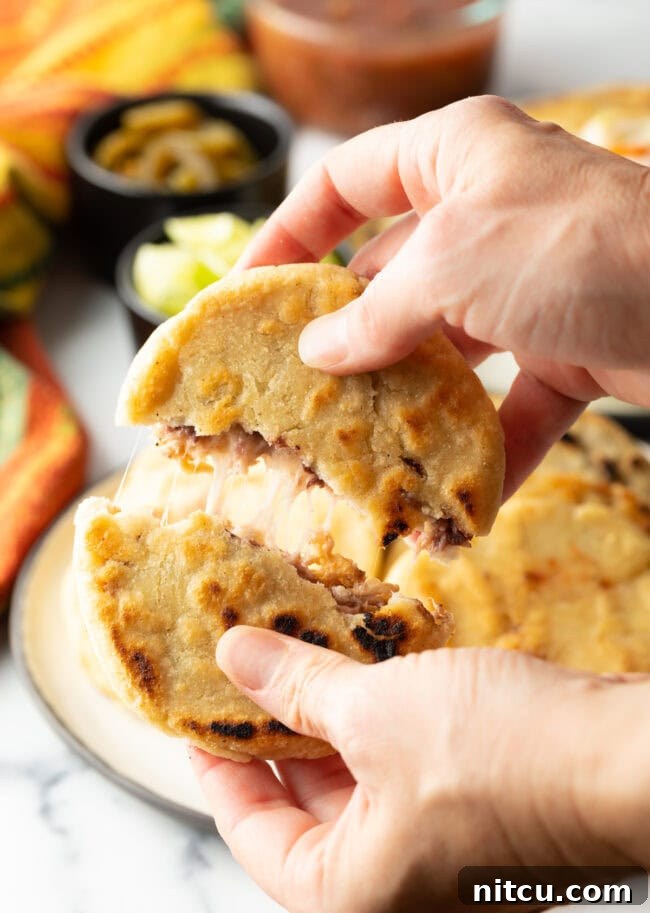
Crafting Your Refreshing Curtido Slaw
Preparing the Curtido first allows its flavors to meld and develop while you work on the pupusas. This tangy, crunchy slaw is the perfect counterpoint to the rich, warm pupusas.
- Combine Ingredients: In a medium mixing bowl, combine your finely shredded cabbage slaw mix (or fresh cabbage and carrots), the juice of one lime, and ½ teaspoon of salt.
- Mix Thoroughly: Use your hands or a spoon to mix the ingredients well, ensuring the cabbage is evenly coated with the lime juice and salt. Lightly massage the cabbage to help it soften slightly.
- Chill: Cover the bowl and refrigerate the Curtido until you are ready to serve.
Pro Tip for Freshness: For the best texture and crunch, I highly recommend preparing the Curtido no more than a few hours before serving. If it sits for too long, the cabbage can lose its delightful crispness and become too soft. A fresh, crunchy Curtido truly enhances the pupusa experience!
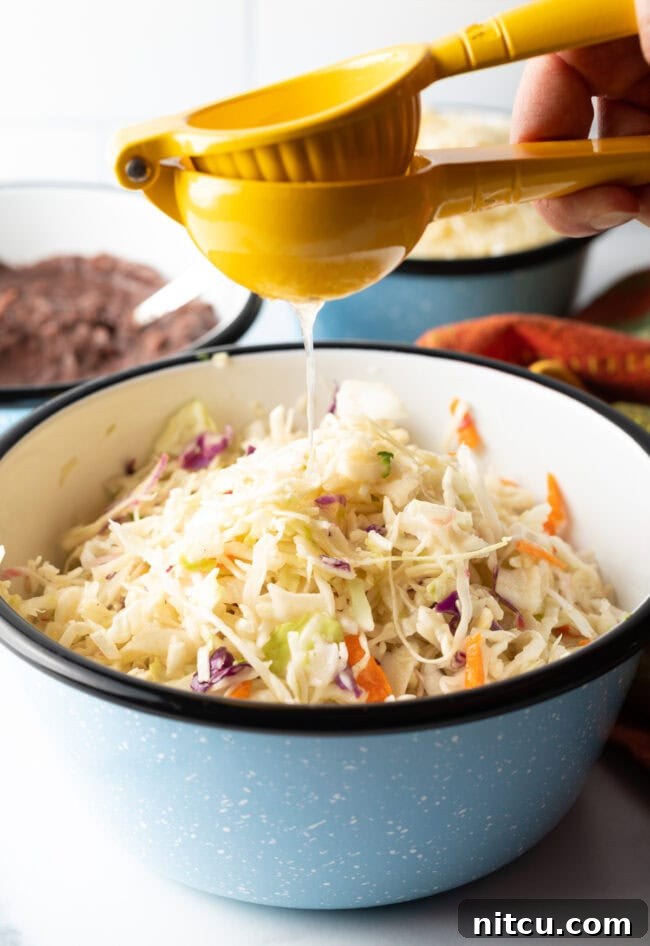
Step-by-Step Guide: How to Make Pupusas from Scratch
1. Prepare the Masa Dough
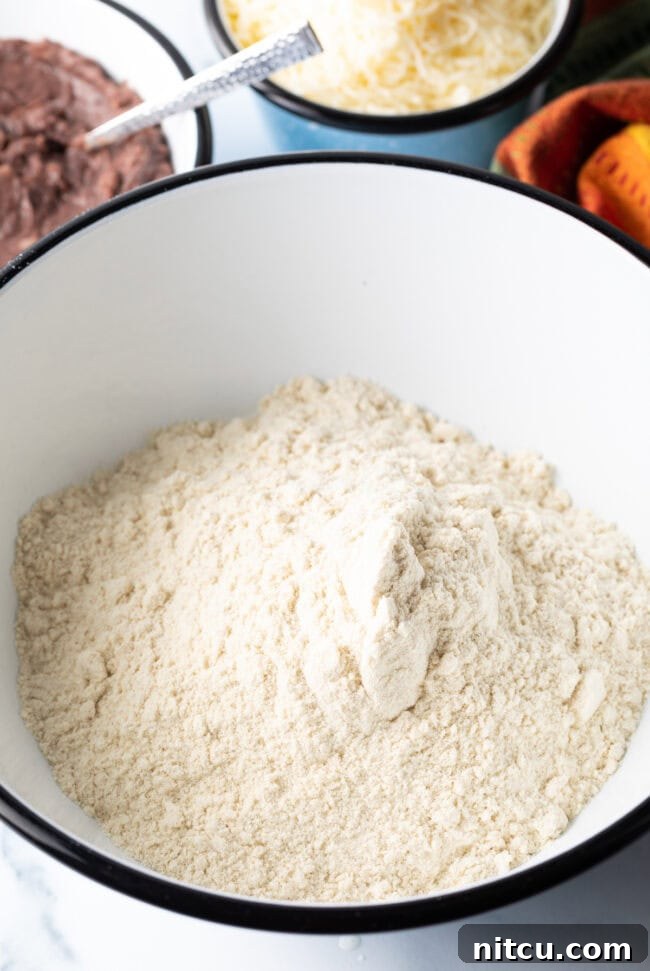
- Mix Dry Ingredients: In a large mixing bowl, combine 4 cups of masa harina with 2 teaspoons of salt.
- Add Water: Gradually add 3 cups of warm water to the masa harina. Start mixing by hand, incorporating the water until a dough begins to form.
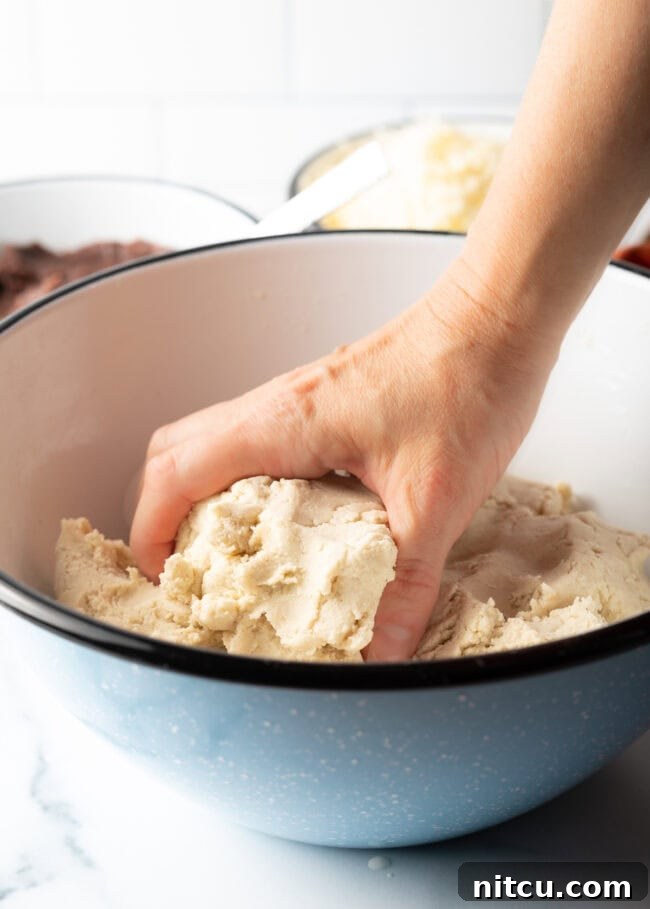
- Knead to Smoothness: Continue to mix and knead the dough by hand for 5-7 minutes. The goal is a very soft, smooth, and pliable dough that is moist but not sticky. It should feel like play-dough. If the dough feels too dry and crumbly, add water a tablespoon at a time. If it’s too sticky, add a little more masa harina. Cover the bowl with a damp cloth to keep the dough from drying out while you prepare the fillings.
2. Set Up Your Workstation
Before you begin shaping, ensure everything is within reach. Set a large cast-iron skillet (or a non-stick griddle) on the stovetop, ready for frying. On a clean work surface, arrange your refried beans, shredded Monterey Jack cheese, and any other chosen fillings. Have a small bowl of water mixed with a little oil (or just water) nearby to moisten your hands – this prevents the masa from sticking.
3. Portion and Flatten the Dough
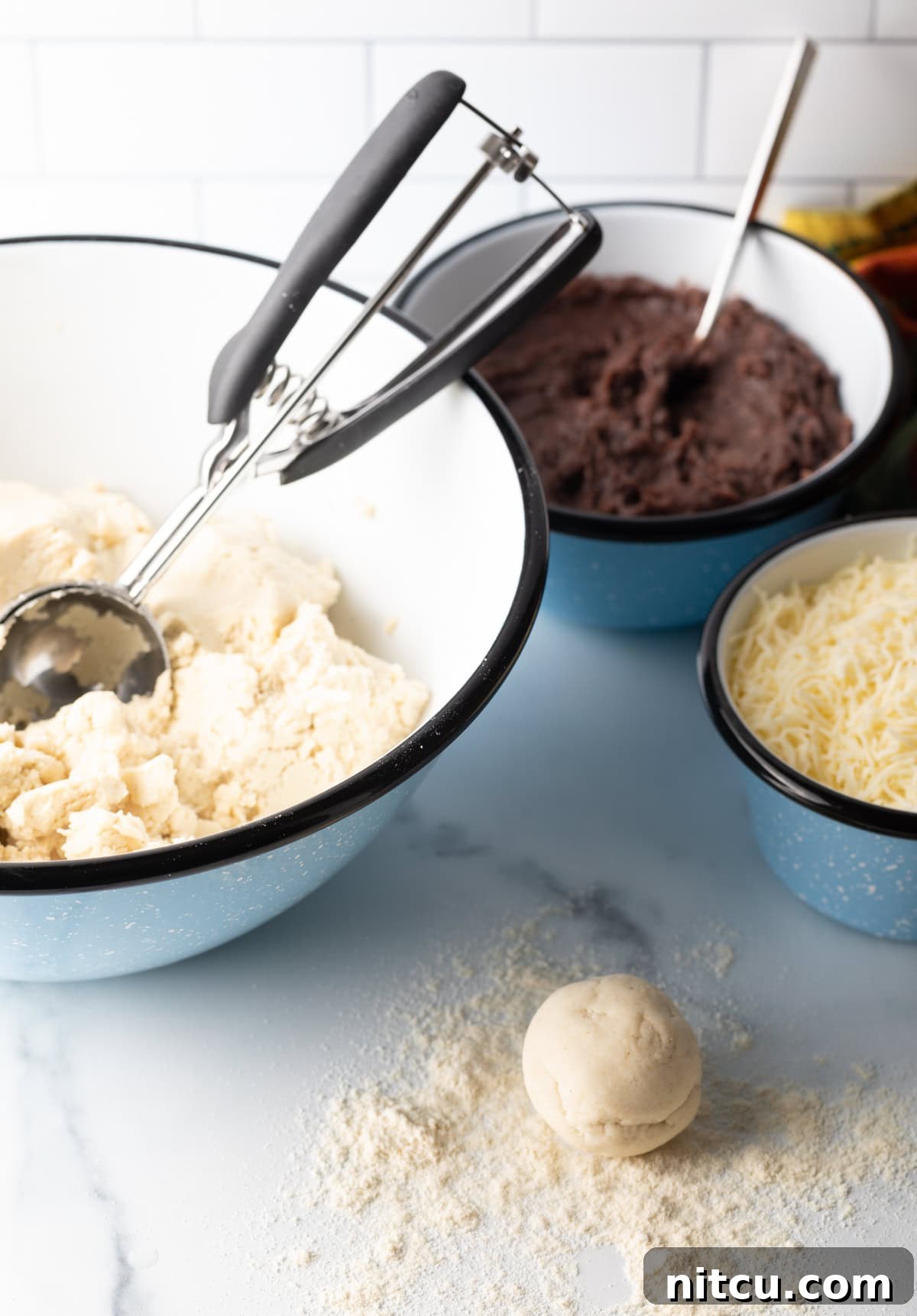
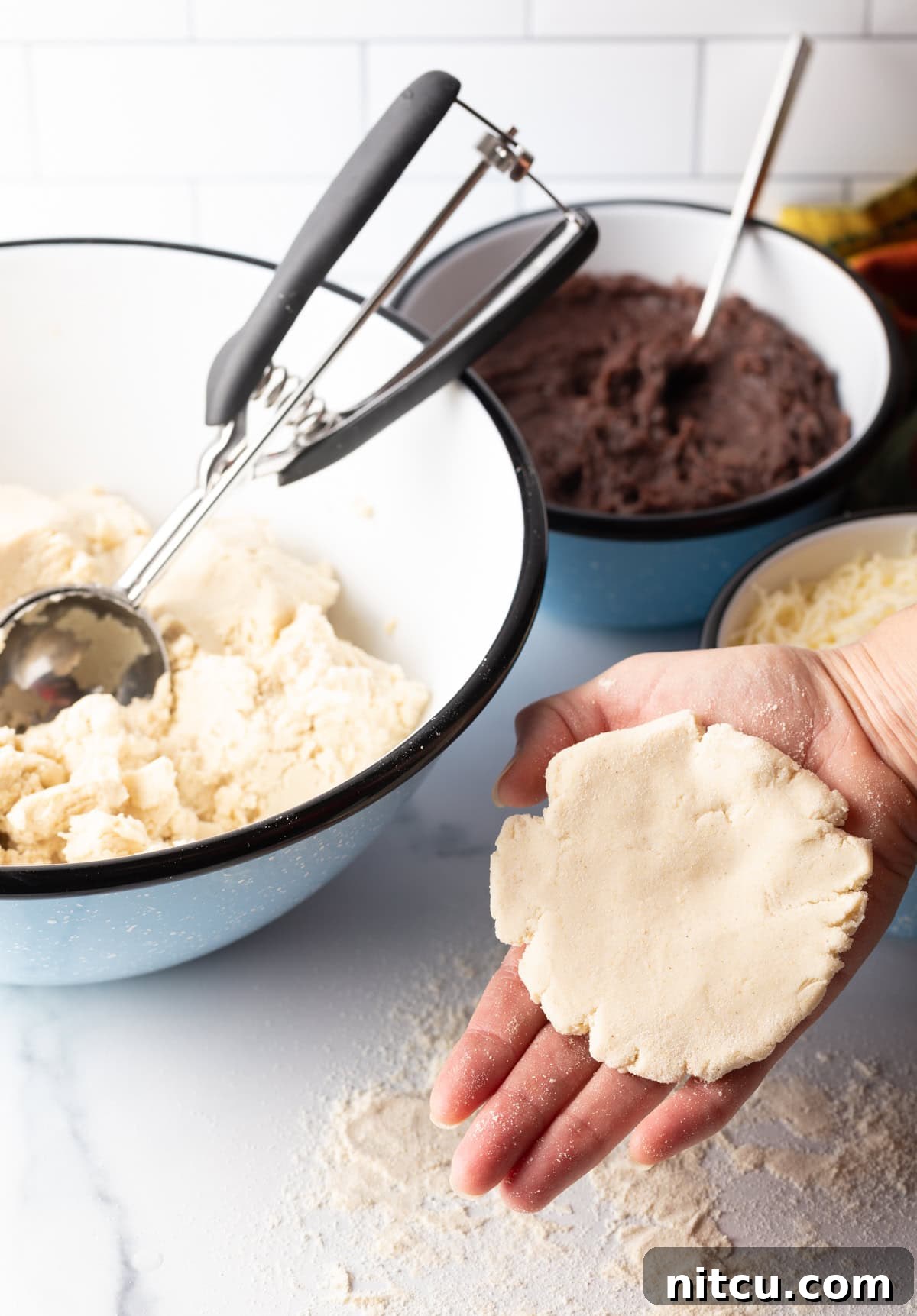
- Form Dough Balls: Using a scoop or your hands, measure out 3-4 tablespoon portions of pupusa dough. Each ball should be slightly larger than a golf ball. Keep your hands slightly damp with the water-oil mixture (or plain water) to prevent sticking.
- Create a Disc: One at a time, gently press each masa ball into a flat, round disk, about 5 inches wide – roughly the size of your palm. Don’t worry about making them perfectly round or pretty at this stage; rustic charm is part of their appeal!
4. Fill the Pupusas
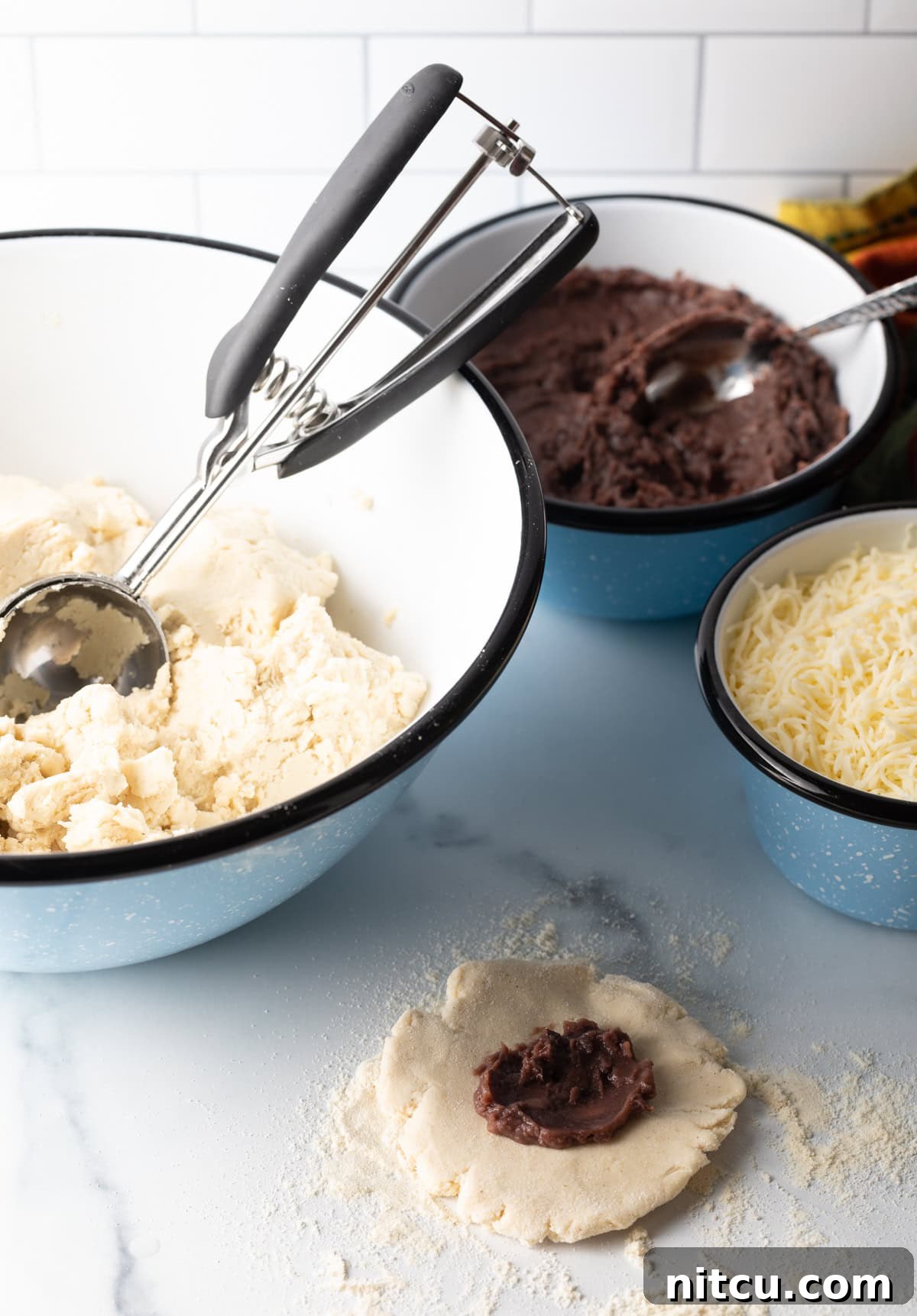
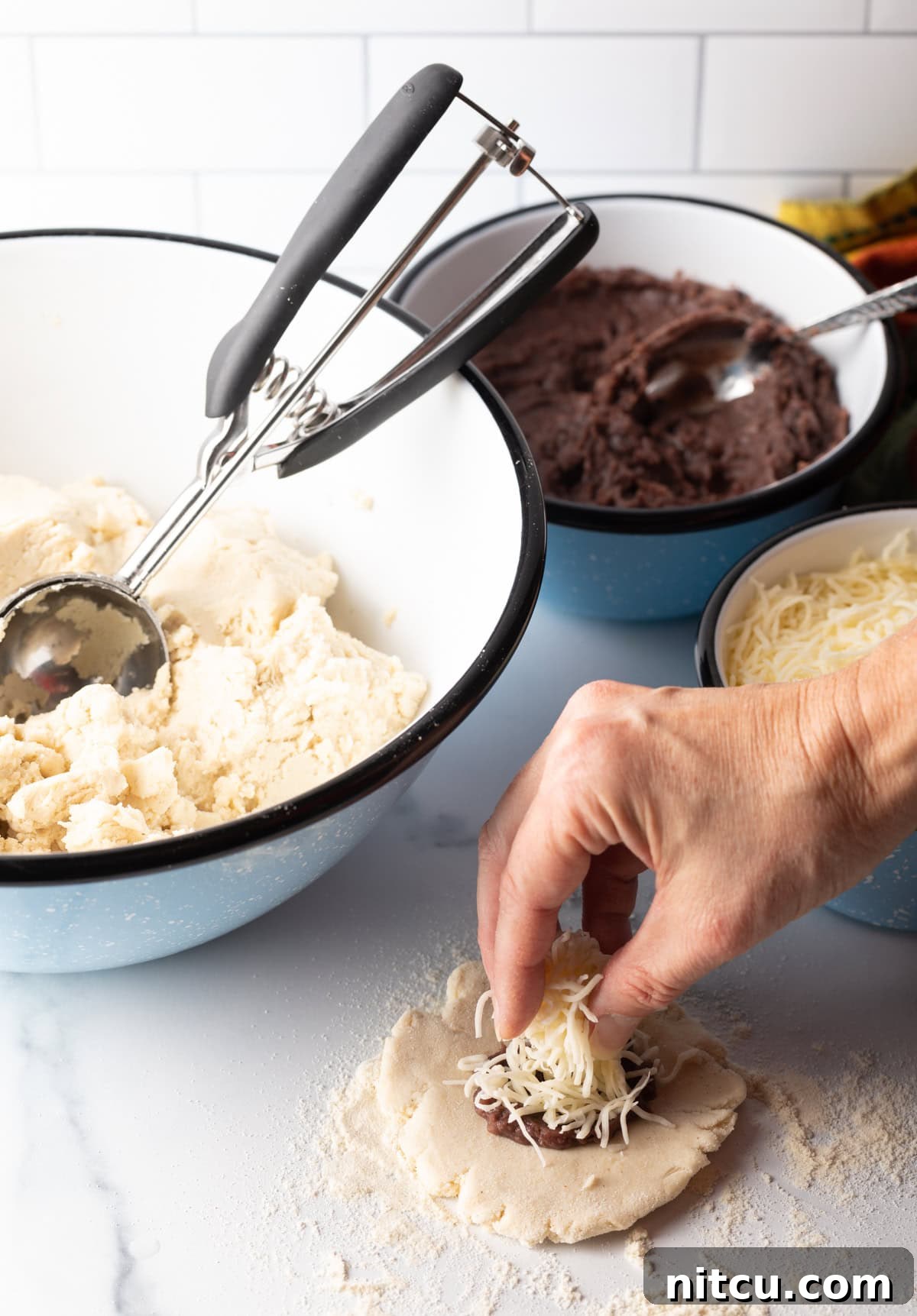
- Add Fillings: Place 1 teaspoon of refried beans in the center of the flattened dough disk. Follow with 1 tablespoon of shredded cheese, spreading it gently over the beans. If using any other optional fillings, add a scant amount on top.
- Avoid Overfilling: This is a crucial step! Be very careful not to overfill the pupusas, as this will make them difficult to seal and prone to bursting during cooking. Less is often more when it comes to pupusa fillings.
5. Seal and Reshape
Mastering the art of pupusa shaping is key to perfect pupusas!
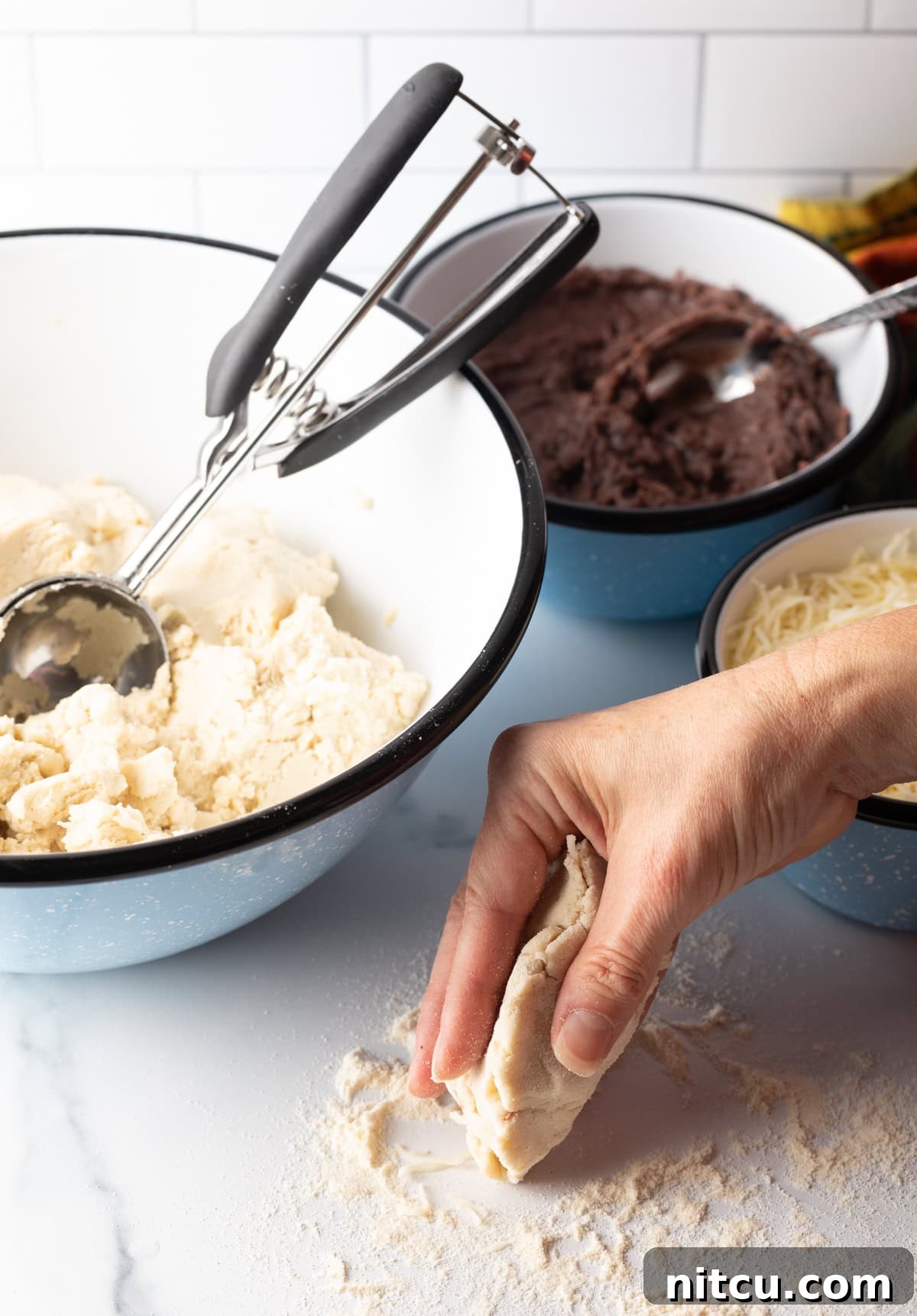
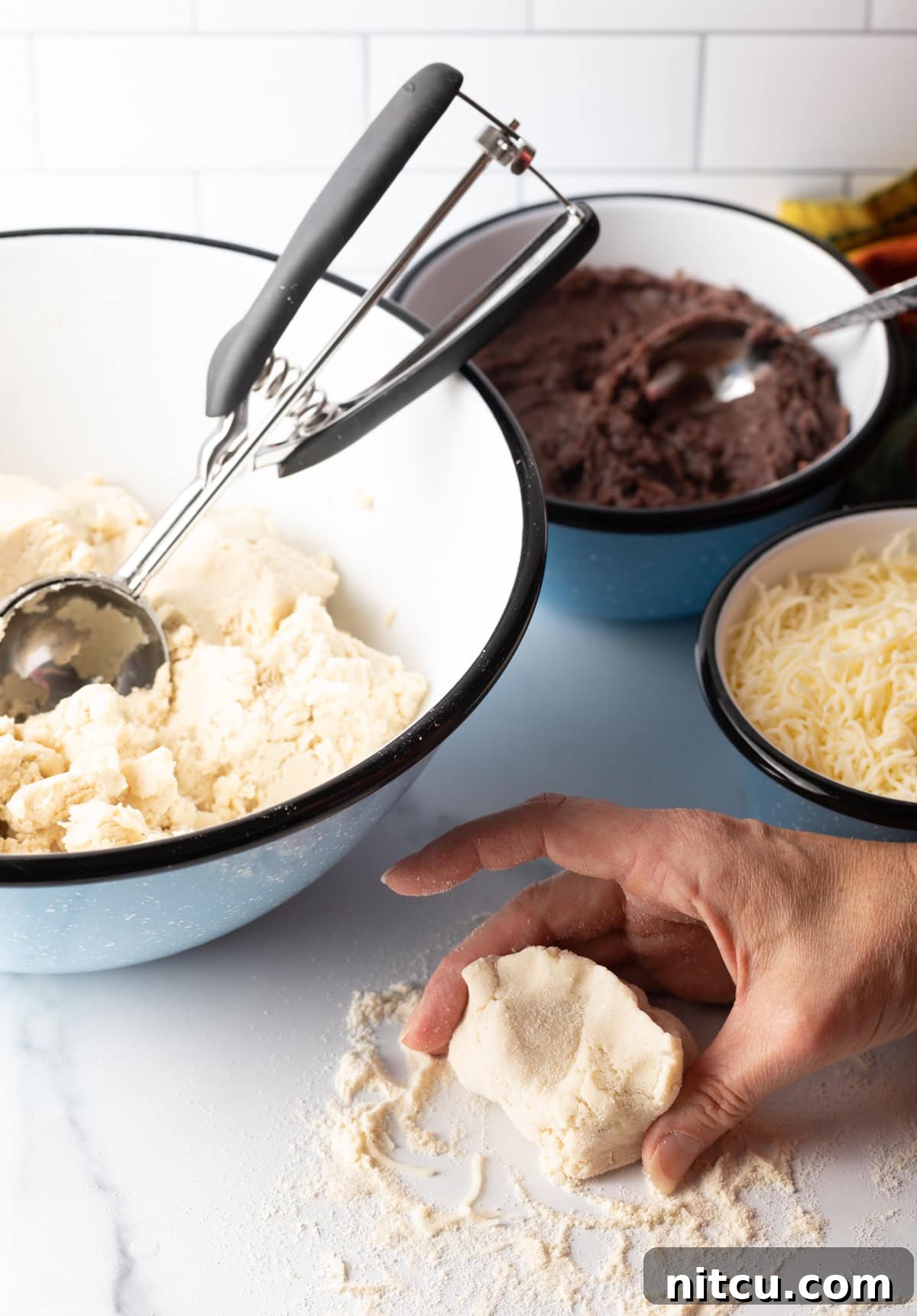
- Close the Dough: Gently fold the sides of the dough up and over the fillings, bringing them together at the top. Pinch the edges firmly to seal the dough, creating a small, filled ball or a clamshell shape.
- Form a Ball: Rotate the closed pupusa in your hands, gently rolling it to further seal the edges and form a smooth, uniform ball.
- Flatten into a Disc: Now, carefully and gently flatten the ball back into a thin disk, about 4 inches across and roughly ½ inch thick. Work slowly and evenly to prevent the filling from bursting through.
- Check for Leaks: Inspect the sides and surface of the pupusa. If you see any areas where the filling might be peeking out or the dough looks thin, gently pinch and smooth them to seal. It’s perfectly normal to see a tiny bit of black beans or cheese trying to escape here and there – that’s part of the rustic charm – but you want to avoid large, fully open areas.
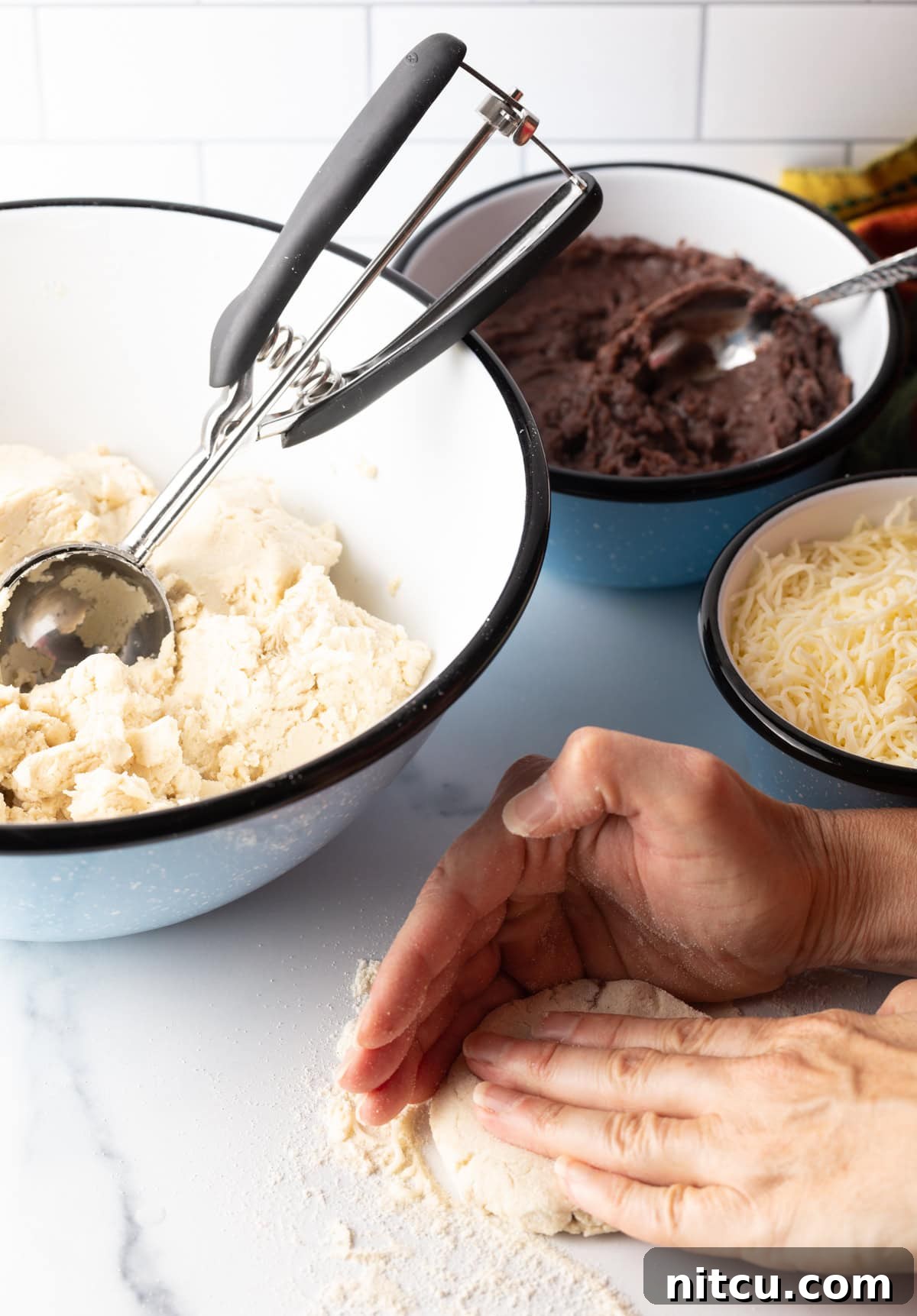
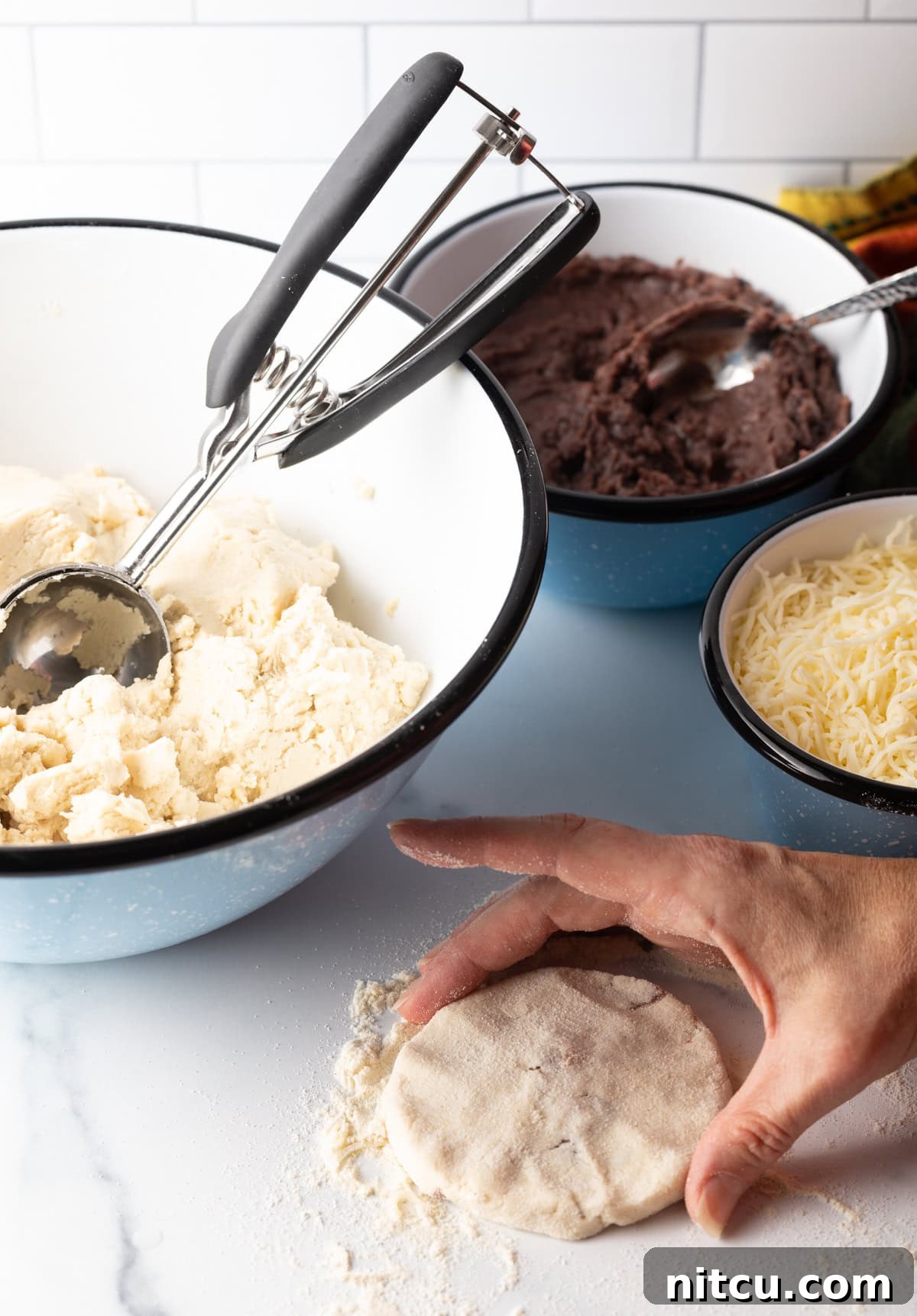
6. Pan-Fry to Golden Perfection
- Heat Skillet: Heat your large cast-iron skillet or griddle over medium heat. Once hot, add 1 tablespoon of cooking oil, ensuring it coats the bottom evenly.
- Fry Pupusas: Carefully place 4 to 6 pupusas (or as many as fit comfortably without crowding) into the hot skillet. Fry for 3 to 4 minutes per side, or until they develop a beautiful golden-brown crust and appear slightly puffed. The cheese inside should be melted and gooey.
- Continue Frying: Remove the cooked pupusas and transfer them to a plate. Repeat the filling, shaping, and frying process with the remaining dough and fillings, adding more oil to the skillet as needed between batches to ensure even cooking and prevent sticking.
- Serve Immediately: Serve your delicious pupusas hot off the griddle! If you’re cooking for a crowd and want to keep them warm, you can place the cooked pupusas in a single layer on a baking sheet in a low-heat oven (around 200°F or 90°C) until all batches are ready.
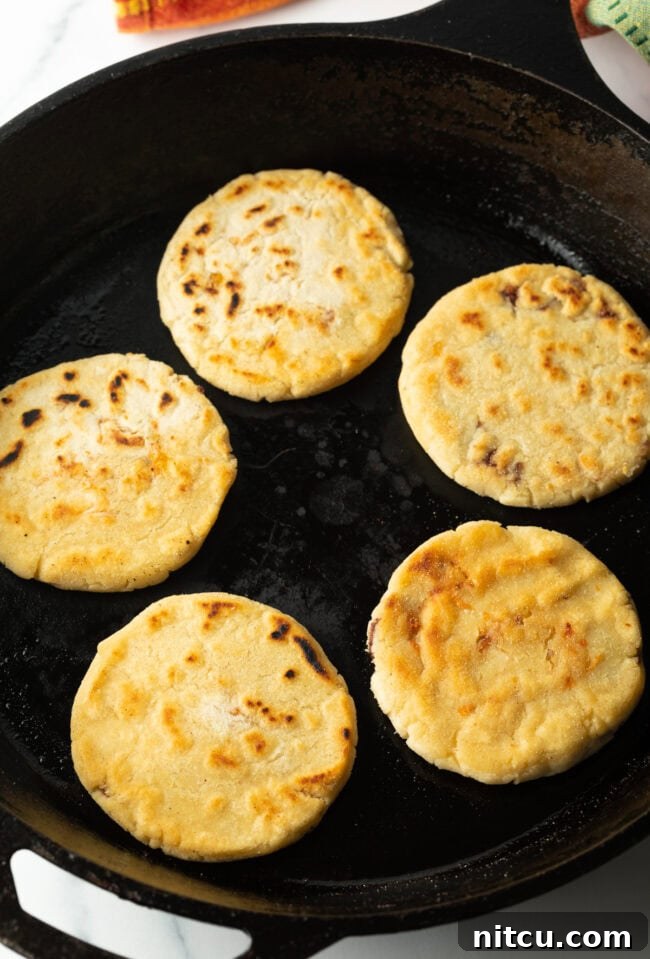
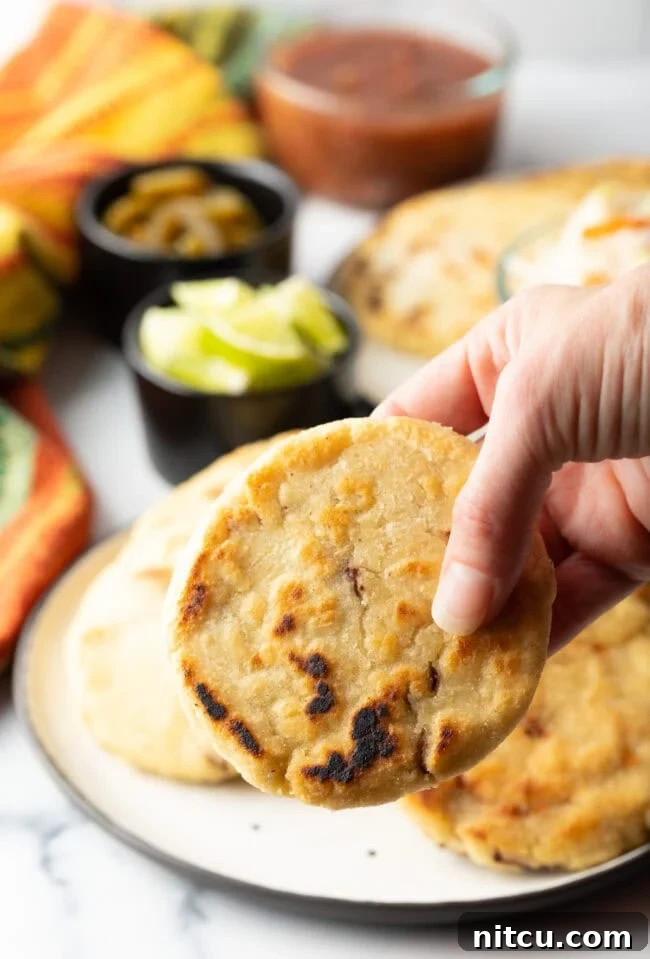
Serving Your Homemade Pupusas
Pupusas are best enjoyed immediately after cooking, while they’re still warm and the fillings are soft and melty. They are fantastic for a hearty breakfast, a satisfying lunch, or a fun, interactive dinner. In El Salvador, it’s common to eat pupusas with your hands, tearing them apart and scooping up the fillings and toppings. Don’t be afraid to dig in!
The traditional way to enjoy pupusas is to top them generously with fresh Curtido slaw. The cool, crisp, and tangy slaw provides a wonderful contrast to the warm, rich pupusa. Beyond Curtido, feel free to include your favorite Latin American toppings at the table:
- Creamy guacamole or fresh avocado slices
- Silky avocado crema for an extra touch of richness
- Spicy or mild fresh salsa
- Chunky pico de gallo for fresh tomato and onion flavor
- Cool, creamy sour cream or Mexican crema
- A dash of your favorite hot sauce for an extra kick
Set up a pupusa bar with all these toppings and let everyone customize their own perfect bite!
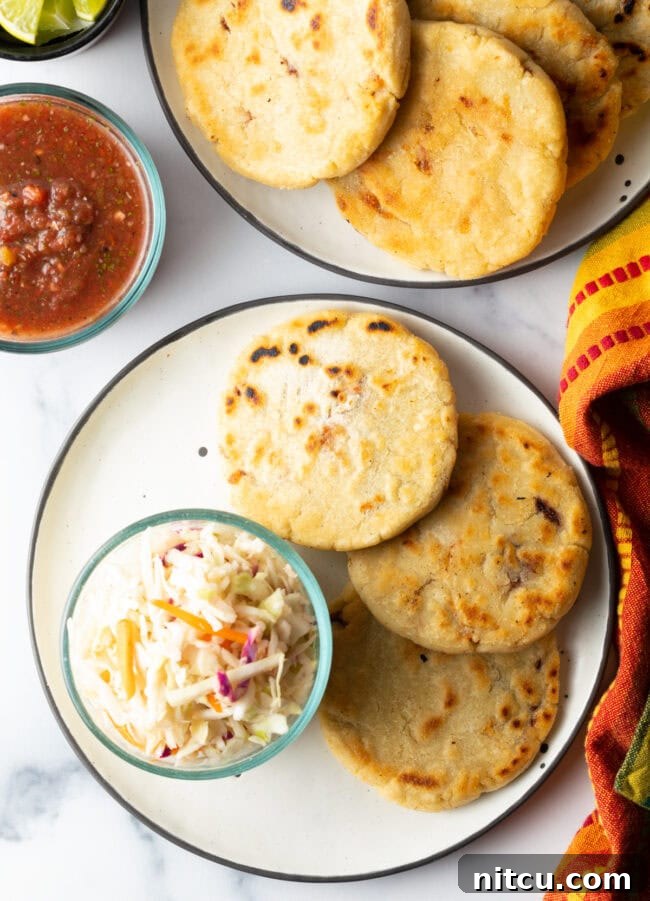
Get Creative: More Ways to Customize Your Pupusas
While we’ve touched on fillings, here are some more creative twists and adaptations for your pupusa adventures:
- Meat Lover’s Delight: Beyond the suggested meats, consider finely shredded beef carnitas, seasoned ground turkey, or even spicy shredded pork for a hearty pupusa. Ensure all meats are cooked and finely chopped or shredded to prevent tears in the dough.
- Hearty Vegetarian Options: To keep this a delicious vegetarian recipe, focus on robust vegetable fillings. Try adding roasted poblano peppers, sautéed mushrooms, or a blend of finely diced carrots and peas along with your beans and cheese.
- Bean Alternatives: If black beans aren’t your preference, feel free to swap them with creamy refried pinto beans. Both work wonderfully in pupusas.
- Cheese, Please! Monterey Jack offers a lovely mild and melty texture, but don’t limit yourself! Experiment with other melty shredded cheeses like sharp or medium cheddar, Colby Jack, or even crumbly cotija cheese (though cotija won’t melt as much, it adds a salty, tangy kick).
- Dairy-Free and Vegan Pupusas: Easily adapt this recipe to be entirely dairy-free and vegan by simply omitting the cheese. The bean filling alone is delicious, or you can use your favorite plant-based shredded cheese alternative.
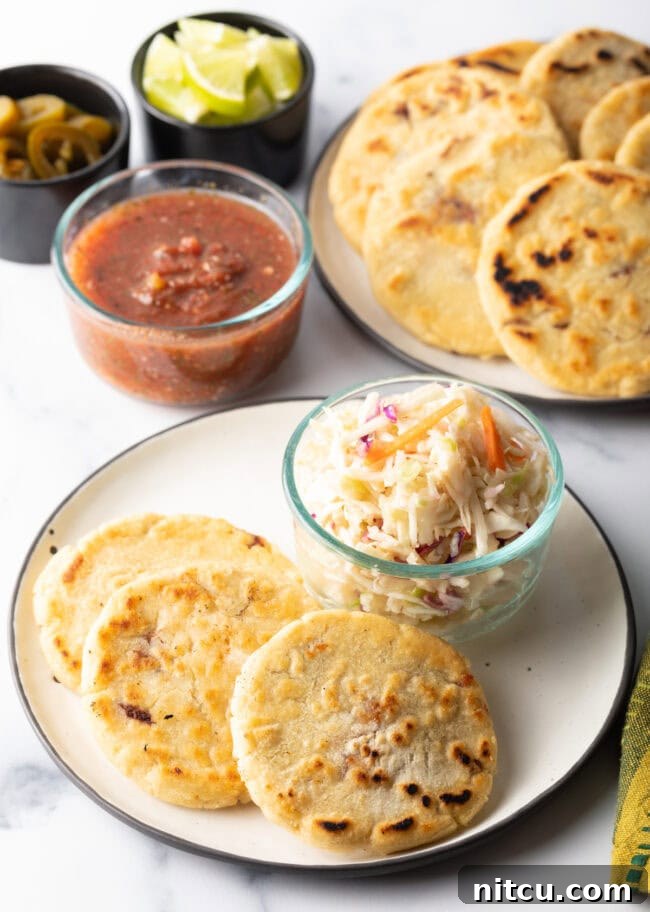
Frequently Asked Questions About Pupusas
While all three are delicious corn-based dishes, their preparation sets them apart. Gorditas and Arepas typically involve cooking a thick corn tortilla first, which is then sliced open and filled afterward. Pupusas, however, are unique because they are always filled *before* cooking. Gorditas use masa harina, similar to pupusas, resulting in a comparable texture. Arepas use a different type of pre-cooked corn flour (masarepa), which yields a distinct texture that is often crispier on the outside and softer inside than pupusas.
Yes, traditional pupusas made with masa harina (corn flour) are naturally gluten-free. Masa harina is derived from corn, making it a safe option for those with gluten sensitivities or celiac disease.
You can certainly prepare pupusas in advance by freezing them uncooked. Make the dough, stuff, and shape your pupusas as instructed, but do not cook them. Instead, place them in a single layer on a baking sheet and flash freeze for about one hour until firm. Then, transfer the frozen pupusas to a freezer-safe zipper bag or airtight container and freeze for up to 3 months. Cook them directly from frozen in a hot skillet, adding a few extra minutes to the frying time. However, uncooked pupusas should not be stored in the refrigerator for extended periods, as the dough can dry out and become crumbly.
Cooked pupusas will remain fresh for 1 to 2 days when stored in an airtight container in the refrigerator. Beyond that, the masa can start to dry out.
While technically possible, I generally do not recommend freezing pupusas once they are cooked. The process of freezing, thawing, and then reheating cooked pupusas often results in a drier, more crumbly dough and a less appealing texture compared to cooking them fresh or from frozen (uncooked).
The best method for reheating cooked pupusas is to lightly pan-fry them on the stovetop over medium heat for a few minutes per side until they are warmed through and the exterior crisps up slightly. This helps revive their texture. Alternatively, you can reheat them in a microwave: wrap each pupusa individually in a slightly damp paper towel and microwave in 20-second intervals at 50% power until heated through. Be careful not to overcook, as this can make them tough.
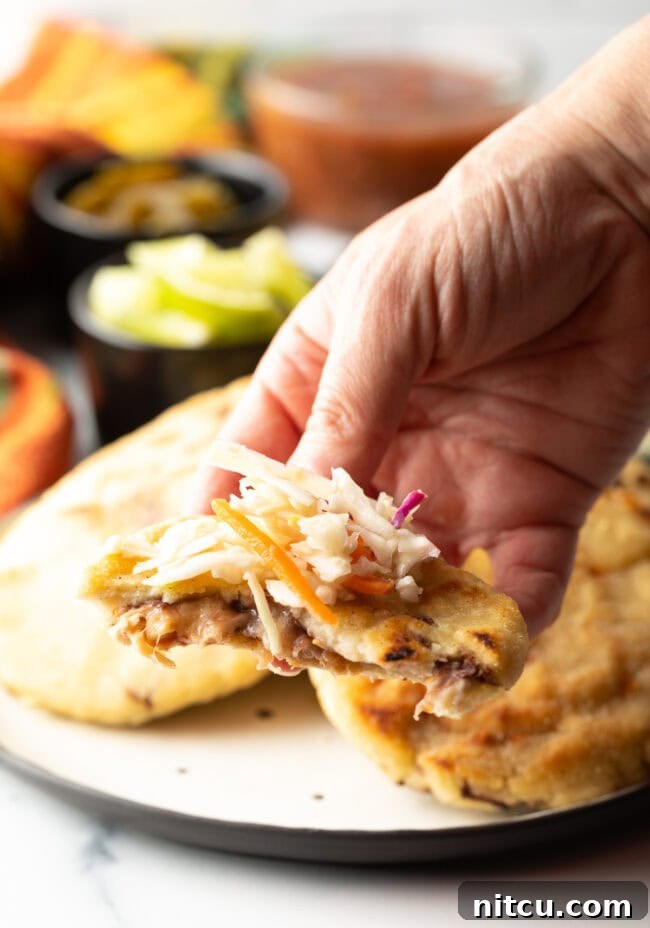
Looking for More Easy Latin-Inspired Recipes? Be Sure to Try:
- Easiest Brazilian Cheese Bread (Pao de Queijo)
- Golden Pan-Fried Potato Cakes
- Old Fashioned Corn Pone
- Belizean Garnachas (Salbutes)
- How to Make Mexican Sopes
Print Recipe
Pupusas Recipe (+ VIDEO)
Learn to make incredible, thick and chewy corn tortillas filled with savory beans and cheese, pan-fried to perfection, and topped with a refreshing cabbage slaw. This easy pupusa recipe is perfect for an authentic Central American snack or a delightful family dinner!
Ingredients
For the Curtido Slaw:
- 2 cups cabbage slaw mix (or finely shredded cabbage and carrots)
- 1 lime, juiced
- ½ teaspoon salt
For the Pupusa Dough:
- 4 cups masa harina
- 2 teaspoons salt
- 3 cups warm water
For the Fillings:
- ½ cup refried black beans (low sodium preferred)
- 1 cup shredded Monterey Jack cheese
- 4 tablespoons cooking oil (avocado, olive, or canola)
- Optional fillings: small amounts of stewed chicken, carnitas, ground beef, chopped pickled jalapeños, roasted squash, pico de gallo
Instructions
- Prepare the Curtido Slaw: In a medium mixing bowl, combine the cabbage slaw mix with the lime juice and ½ teaspoon of salt. Mix well. Cover and refrigerate until ready to serve.
- Prepare the Pupusa Dough: In a large mixing bowl, combine the masa harina, 2 teaspoons of salt, and 3 cups of warm water. Mix by hand, kneading for 5-7 minutes, until the mixture is very soft, smooth, and pliable. Adjust water or masa harina as needed to achieve a moist, non-sticky consistency. Set aside, covered with a damp cloth.
- Set Up Workstation: Place a large cast-iron skillet or griddle on the stovetop over medium heat. Arrange your refried beans, shredded Monterey Jack cheese, and any other desired fillings on a clean work surface within easy reach. Have a small bowl of water with a touch of oil nearby to moisten your hands.
- Portion, Flatten, and Fill: Take a 3-4 tablespoon portion of pupusa dough (slightly larger than a golf ball). Moisten your hands with the water-oil mixture. Press the dough ball into a flat disk, about 5 inches wide. Place 1 teaspoon of refried beans in the center, then cover with 1 tablespoon of shredded cheese and a scant amount of any other optional filling. Be careful not to overfill the pupusas, as this will make them difficult to seal.
- Seal and Reshape: Gently fold the sides of the dough up over the fillings and firmly pinch them together to seal, creating a ball. Rotate the sealed pupusa in your hands to smooth it. Then, gently flatten it back into a thin disk, approximately 4 inches across and ½ inch thick. Check the edges and pinch to seal any areas where the filling might be trying to escape.
- Pan-Fry the Pupusas: Once the skillet is hot, add 1 tablespoon of oil. Place 4 to 6 pupusas into the skillet at a time. Fry for 3 to 4 minutes per side until they are golden brown and slightly crispy. The cheese inside should be melted and gooey.
- Repeat and Serve: Remove cooked pupusas to a plate. Repeat the filling, shaping, and frying process with the remaining dough and fillings, adding more oil to the skillet as needed for each batch. Serve immediately, or keep warm in a low-heat oven (200°F/90°C) until all pupusas are cooked.
Notes
Serve the pupusas warm with a generous side of Curtido slaw. For extra flavor, you can also top them with your favorite salsa and a dollop of sour cream or Mexican crema!
Nutrition
Serving: 1 pc, Calories: 108kcal, Carbohydrates: 18g, Protein: 4g, Fat: 3g, Saturated Fat: 1g, Polyunsaturated Fat: 0.5g, Monounsaturated Fat: 1g, Cholesterol: 5mg, Sodium: 353mg, Potassium: 89mg, Fiber: 2g, Sugar: 0.3g, Vitamin A: 102IU, Vitamin C: 3mg, Calcium: 77mg, Iron: 2mg