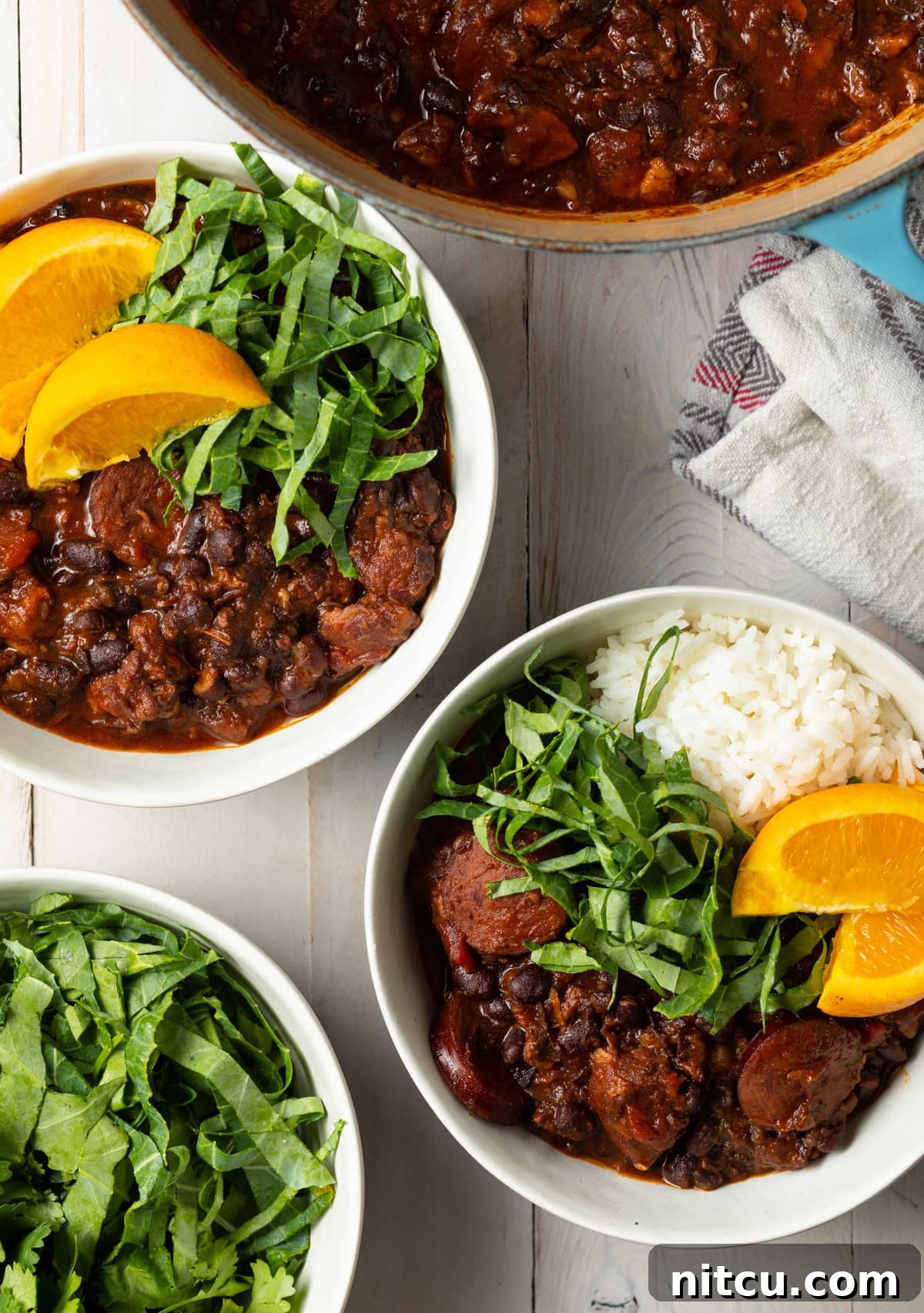
Feijoada: The Ultimate Brazilian Pork and Black Bean Stew Recipe. This iconic, slow-simmered stew combines tender, flavorful pork with rich black beans, creating a deeply satisfying and rustic dish. Perfect as-is or served over rice with an array of fresh toppings and a kick of hot sauce, Feijoada is more than just a meal; it’s a celebration of Brazilian culinary tradition.
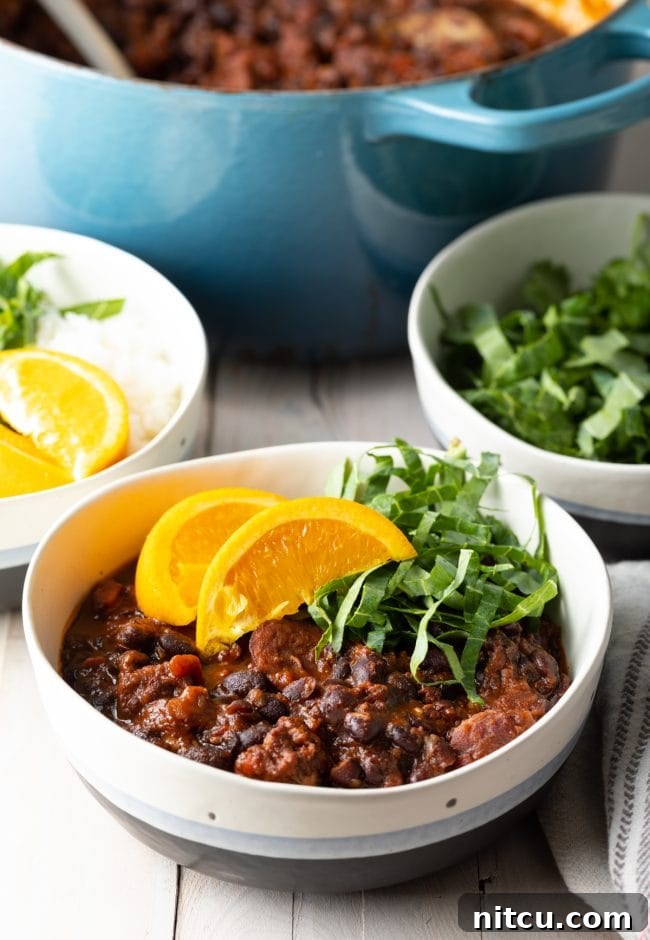
Why You’ll Fall in Love with This Authentic Feijoada Recipe
There’s an undeniable charm to a dish that cooks slowly, filling your home with an intoxicating aroma. This authentic Feijoada recipe is a true testament to that magic, crafted entirely in one large pot and cooked at a gentle simmer for several hours. It’s a culinary journey that rewards patience with unparalleled depth of flavor.
Forget fussy techniques; this recipe thrives on simple, high-quality ingredients treated with respect. The savory foundation of this stew is built upon a medley of pork, featuring succulent pork roast, the rich essence of a ham bone, the spicy kick of ground chorizo, the satisfying bite of sausage links, and the unique salty notes of dried beef, all harmoniously blended with earthy black beans.
In Brazil, Carne Seca, a traditional salty dried beef, is a staple for Feijoada. While it can be challenging to source in some regions, we’ve found that readily available “Buddig Beef” slices offer a fantastic, accessible alternative without compromising the dish’s distinctive flavor profile. This makes it easier for home cooks everywhere to experience the authentic taste of Brazil.
Feijoada, with its spicy, savory, and incredibly satisfying character, is the perfect choice for a leisurely weekend dinner. While it does require a bit of time for preparation and cooking, the effort is undeniably worthwhile. The process itself is a joy, promising a rich and comforting meal. Plus, the leftovers are absolutely *delicious*, often tasting even better the next day, making it an excellent option for meal prepping and enjoying for several days.
What Exactly is Feijoada? A Dive into Brazil’s National Dish
Feijoada, pronounced Fay-shwa-da, is far more than just a stew; it’s considered Brazil’s national dish, a culinary icon steeped in history and culture. This hearty Brazilian stew is traditionally made with black beans and various cuts of pork and beef, slow-cooked to perfection. It’s renowned for its bold spices, tender meaty texture, and a profound sense of comfort that makes it an incredibly flavorful and satisfying meal.
The origins of Feijoada are often traced back to the Portuguese settlers and African enslaved people in Brazil. It’s believed to have evolved from a humble dish made with cheaper cuts of meat and black beans, slowly stewed to maximize flavor and tenderness. Over centuries, it transformed into the beloved culinary masterpiece it is today, celebrated across all social classes in Brazil.
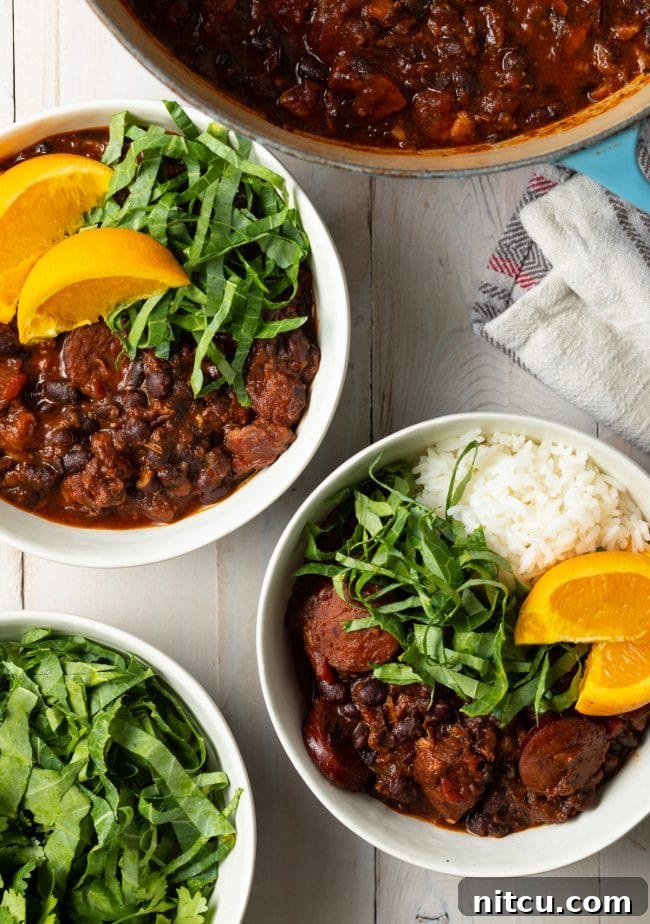
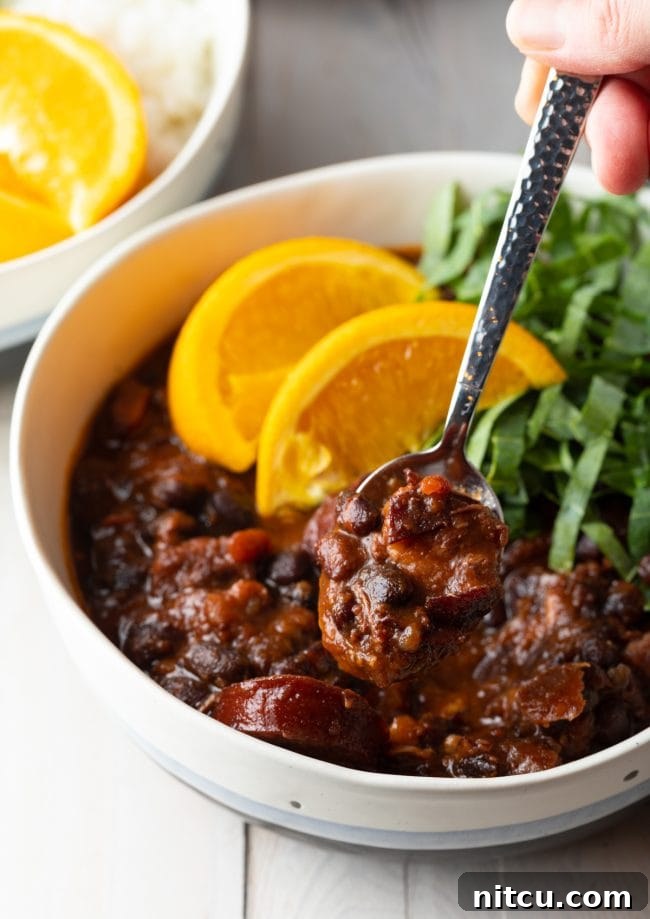
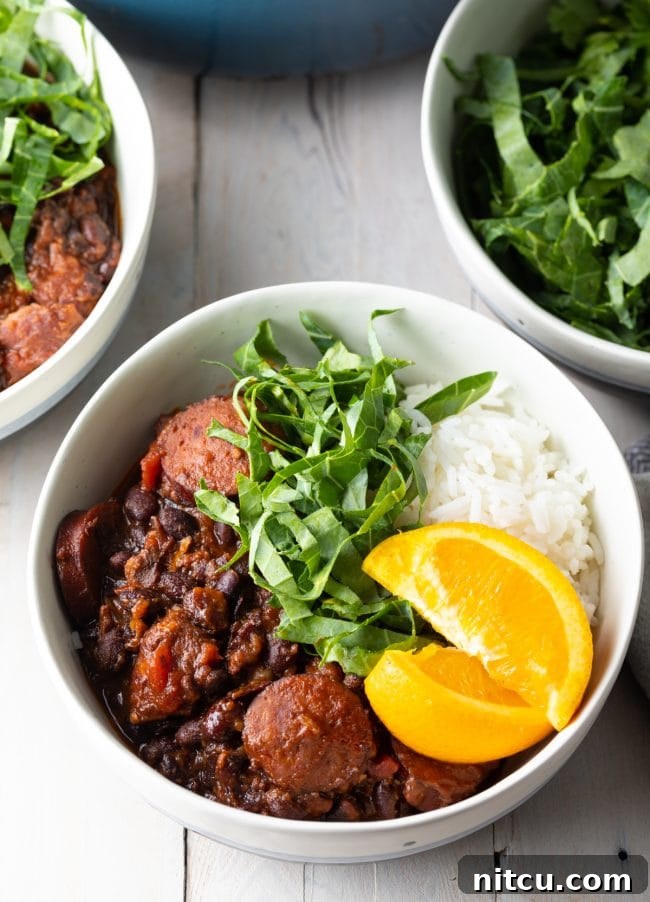
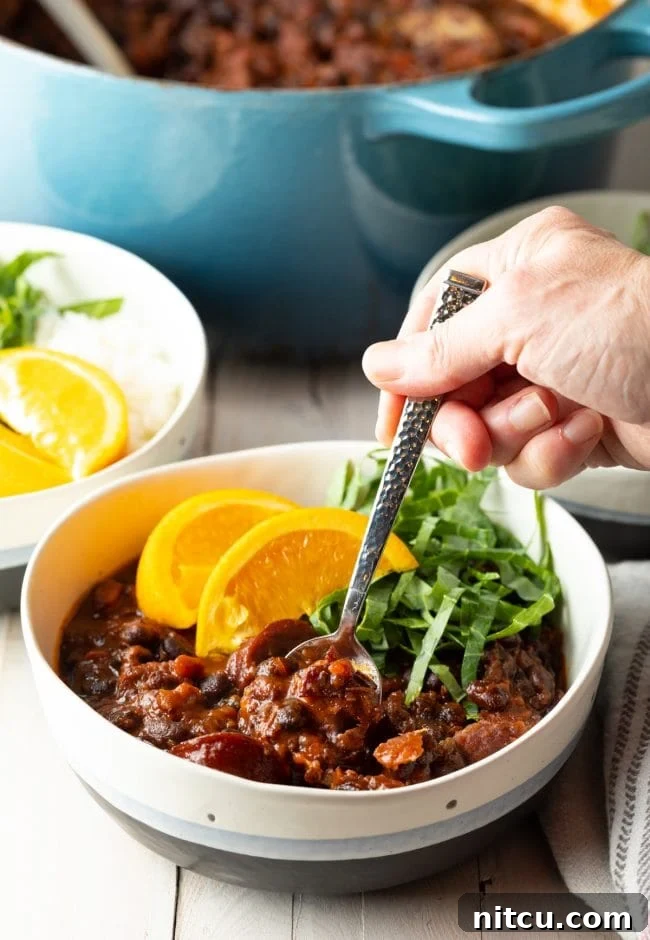
A true Feijoada experience is a feast for the senses. Bowls of Brazilian Feijoada can be enjoyed simply as-is, allowing the robust flavors to shine, or served generously ladled over a bed of fluffy white rice. Traditionally, this rich pork and black bean stew is accompanied by a vibrant array of fresh garnishes. Expect to see fresh shredded greens, often collard greens, which provide a pleasant bitterness and textural contrast. A dash of hot sauce adds a customizable layer of heat, while bright orange slices are crucial, offering a refreshing pop of citrus that beautifully cuts through the stew’s richness, balancing the palate.
Essential Ingredients for Your Feijoada
To craft this classic Brazilian Feijoada Recipe, you’ll need a thoughtful selection of ingredients, each contributing to its legendary flavor:
- Dried Black Beans: Essential for the authentic texture and deep flavor. Dried beans are preferred because they withstand the long cooking hours beautifully, yielding a creamy consistency that canned beans simply can’t replicate.
- Dried Beef Slices: Historically, Carne Seca is used, providing a salty, umami depth. “Buddig Beef” is a convenient and widely available substitute in many places, offering a similar profile.
- Bone-In Pork Roast: A key component for tenderness and a rich, meaty flavor. If using a boneless pork shoulder roast, don’t forget to include a leftover ham bone in the pot for that essential smoky, savory backbone.
- Mexican-Style Chorizo: This spiced ground pork sausage infuses the stew with a wonderful piquant flavor and a hint of heat. For a milder stew, ground pork sausage can be used instead.
- Kielbasa Sausage: Adds another layer of savory pork flavor and a satisfying texture. If you’re looking to dial up the spice, feel free to substitute with a spicier smoked sausage.
- Onion: Peeled and finely chopped, it forms the aromatic foundation of the stew, sweetening as it cooks.
- Garlic: Minced fresh garlic is indispensable for its pungent aroma and robust flavor, deeply enriching the stew’s profile.
- Crushed Tomatoes: Canned crushed tomatoes, including their juices, contribute a subtle acidity and a rich, savory body to the stew.
- Bay Leaves: These fragrant leaves impart an earthy, slightly floral note that enhances the overall complexity of the dish.
- Crushed Red Pepper: Added to taste, this provides a gentle warmth and a spicy kick, elevating the stew without overpowering it. Adjust the quantity based on your preference for heat.
Pro Tip: Many of the pork products and the dried beef used in this recipe are naturally quite salty. It’s wise to refrain from adding any extra salt to the stew until the very end of the cooking process. Once it has simmered and all the flavors have melded, taste it and then adjust the seasoning as needed.

Mastering the Art: How to Make Brazilian Pork and Black Bean Stew
Preparing this glorious Feijoada is a labor of love, but each step is straightforward and contributes to its incredible outcome. Here’s a detailed guide:
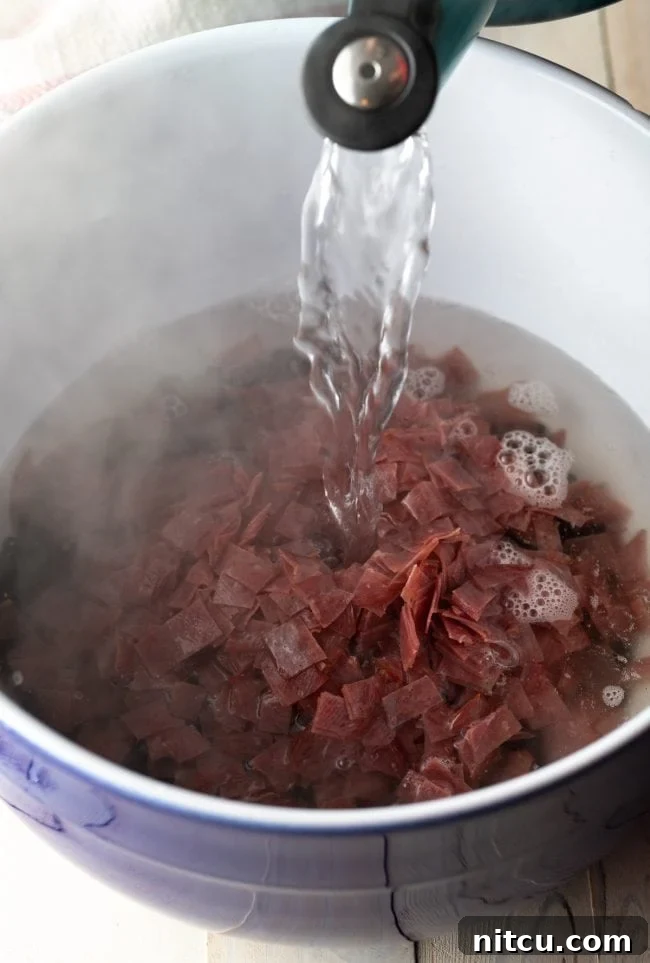
- Prepare the Beans and Dried Beef: Begin by setting out a large, heat-proof bowl. Carefully chop your dried beef slices into small, manageable pieces. Place these chopped beef pieces into the bowl along with the dried black beans. Bring 8 cups of water to a rolling boil, then carefully pour the boiling water over the beans and beef. Allow them to soak for at least 1 hour, though soaking them for several hours or even overnight (in the refrigerator) is ideal for softening the beans and rehydrating the beef. This crucial step reduces overall cooking time and ensures a tender result.
Pro Tip: While this Brazilian Feijoada recipe does require several hours of simmering, many of the preparatory steps can be done ahead of time. You can easily start the soaking process and chop your meats and vegetables in the morning, allowing you to let the pork and black bean stew cook on low throughout the afternoon or evening, finishing perfectly just in time for dinner.
- Prepare the Pork: While the beans soak, chop your bone-in pork roast into roughly 1-inch chunks. Be sure to reserve the bone; it will be simmered in the stew to impart incredible flavor. If you’re using boneless pork shoulder, adding a ham bone at this stage is highly recommended for that traditional depth. Next, slice the kielbasa sausage into ½-inch thick rounds.
- Brown the Meats: Once the beans and dried beef have finished soaking, retrieve a large, heavy-bottomed nonstick sauce pot or a Dutch oven. Place it over medium heat on your stovetop. Add the ground chorizo to the hot pot and brown it for a couple of minutes, breaking it up with a spoon. Then, add the pork chunks and the sliced kielbasa. Sauté all the meats together for another 5-8 minutes, stirring occasionally, until they are nicely browned. This browning step is crucial for developing deep, rich flavors through the Maillard reaction.

- Sauté Aromatics: Gently push the browned meats to the sides of the pot, creating a space in the center. Add the chopped onion and minced garlic to this cleared space. Sauté for another 3-4 minutes, stirring frequently, until the onions soften and become translucent and the garlic is fragrant. This step builds the aromatic base of your stew.
- Combine and Begin Simmering: Now, add the canned crushed tomatoes, the bay leaves, and the crushed red pepper to the pot. Stir well to combine these new ingredients with the meats and aromatics. Finally, add the soaked beans, the rehydrated dried beef, and crucially, the bean water from the soaking bowl. This water is packed with flavor and helps achieve the stew’s characteristic thickness. If you reserved a ham bone or pork bone, add it now.
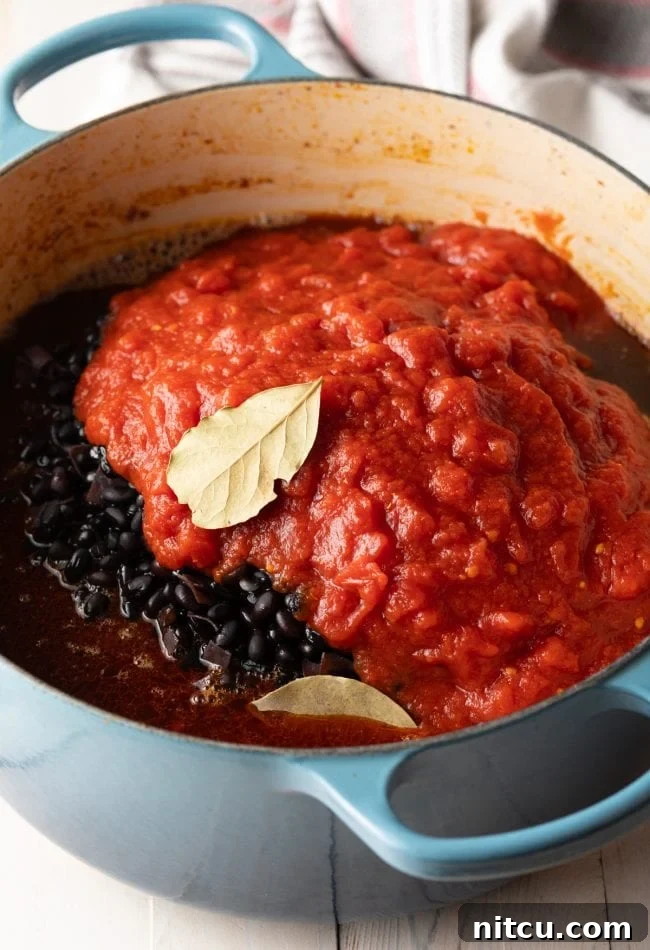
- Long, Slow Simmer: Bring the stew to a gentle boil, then reduce the heat to medium-low, cover the pot, and let it simmer for at least 3 hours, or until the black beans are wonderfully soft and creamy. The exact cooking time will be influenced by how long the beans were previously soaked. Slow simmering allows all the robust flavors to meld and deepen beautifully.
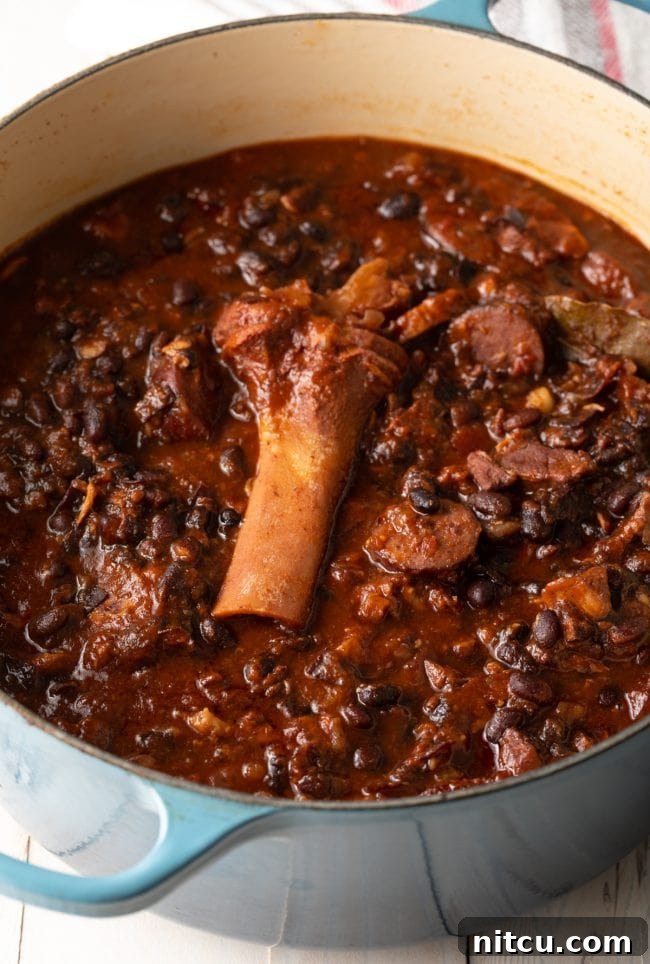
- Monitor and Adjust: Throughout the simmering process, open the lid and stir the stew every 30 minutes or so to prevent sticking and ensure even cooking. Take this opportunity to check the doneness of the beans. If the stew appears to be thickening too much before the beans are fully cooked, simply stir in another 1-2 cups of water to achieve the desired consistency. Once the beans are tender and the stew has reached its desired thickness, taste it carefully. This is the moment to add more salt if necessary, keeping in mind the inherent saltiness of some ingredients.
- Serve Warm: Once the Feijoada has achieved its ideal texture and flavor, turn off the heat. Remove any bones or bay leaves if desired. Ladle the hearty stew warm into bowls, ready to be adorned with your favorite garnishes.
Find the Complete (Printable) Feijoada Recipe Details Below. Savor this exquisite Brazilian delight!
Traditional Serving Suggestions for Feijoada
Part of the magic of Feijoada lies in its vibrant array of traditional garnishes, which not only enhance the flavor but also add visual appeal and textural contrast:
- Large Oranges: Typically cut into wedges or slices (lime wedges can also be used). The citrus acts as a brilliant palate cleanser, cutting through the richness of the stew and adding a refreshing tang.
- Shredded Fresh, Raw Collard Greens or Kale: Quickly sautéed or served raw, these greens provide a slight bitterness and a lovely textural crunch, balancing the hearty stew.
- Cooked White Rice: Fluffy white rice is the classic accompaniment, soaking up the flavorful stew and providing a comforting base. For a low-carb alternative, consider serving it with cauliflower rice.
- Hot Sauce: A drizzle of your favorite hot sauce allows each diner to customize the level of heat to their preference, adding an extra layer of spice.
- Farofa A.K.A. toasted cassava flour: This toasted flour mixture offers a delightful crunch and nutty flavor. It’s often sprinkled over the stew or rice, absorbing some of the liquid and adding a unique textural element that is quintessentially Brazilian.
Creative Add-In Ideas to Personalize Your Stew
While this Feijoada recipe is wonderfully authentic on its own, feel free to experiment and make it your own with these delicious additions:
- Fresh Chopped Cilantro (Coriander): Stirred in at the end, fresh cilantro adds a bright, herbaceous note that beautifully complements the rich flavors of the stew.
- Ground Cumin: A pinch of ground cumin can deepen the earthy, smoky undertones of the stew, adding another layer of traditional Latin American flavor.
- Poblano Peppers: Diced poblano peppers can be sautéed with the onions and garlic, offering a mild, smoky heat and a subtle vegetal sweetness.
- Red Bell Pepper: Chopped red bell pepper adds a touch of sweetness, vibrant color, and a fresh crunch, enhancing the stew’s overall appeal.
- Jalapeño: For those who enjoy a spicier kick, thinly sliced jalapeño can be added during the sautéing stage or as a fresh garnish.
- Bacon: Crispy bacon bits can be rendered before adding other meats, infusing the stew with smoky flavor from the start, or sprinkled as a garnish for extra crunch.
- Tomato Paste: A tablespoon or two of tomato paste can be added with the crushed tomatoes to intensify the stew’s tomato flavor and enrich its color.
- Vinegar: A splash of red wine or apple cider vinegar stirred in at the end can brighten the flavors, adding a subtle tang that elevates the entire dish.
Storage and Freezing Information for Feijoada
One of the many benefits of homemade Feijoada is its suitability for meal prepping; it tastes fantastic and often even better a day or two after it’s cooked!
Once the stew has cooled completely to room temperature, transfer any leftovers to an airtight container. It can be safely stored in the refrigerator for 4-5 days. If you plan on enjoying the stew with rice, it’s best practice to store any leftover rice separately from the Feijoada to maintain optimal texture and freshness.
To reheat, simply warm the leftovers in the microwave or gently on the stovetop over medium-low heat. If the stew has thickened considerably in the refrigerator, add a splash or two of water or broth to loosen it to your desired consistency.
Brazilian Feijoada also freezes exceptionally well, making it a perfect candidate for batch cooking. Store it in a freezer-safe sealed container and keep it in the freezer for up to 3 months. For optimum freshness and to prevent freezer burn, I highly recommend adding an extra layer of protection by wrapping the sealed container in aluminum foil.
Frequently Asked Questions About Feijoada
Yes, it certainly can, but with a crucial first step. To achieve the deepest flavor and best texture, you should follow steps 1-4 of our recipe (soaking beans, preparing meats, browning meats, and sautéing aromatics) on the stovetop as described. Searing the meats and sweating the vegetables upfront develops essential flavors that slow cooking alone can’t replicate. Once these initial steps are complete, combine all ingredients in your slow cooker and simmer on HIGH for 4-6 hours, or on LOW for 8-12 hours, until the beans are tender and the flavors are fully developed.
Absolutely! A pressure cooker is an excellent way to significantly reduce cooking time. Use the “Sauté” function on your Instant Pot or pressure cooker to brown the meats and sauté the onions and garlic, following steps 1-4. Then, add the remaining ingredients (soaked beans, dried beef, tomatoes, seasonings, and bean water). Secure the lid, set to high pressure, and cook for approximately 45-50 minutes. After cooking, allow a natural pressure release for 15 minutes before carefully opening the lid. This method yields tender beans and meats in a fraction of the time.
While you can use canned black beans, be aware that the texture and flavor of your Feijoada will be slightly different from the traditional recipe. Dried beans, when slow-cooked, release starches that create a thicker, creamier, and more authentic stew consistency. If opting for canned beans, be sure to drain and rinse them thoroughly to remove excess sodium and preservatives. Since canned beans are already cooked, you will need to reduce the simmering time significantly, to about 1 hour, simply to allow the flavors to meld. You may also need to adjust the amount of liquid in the recipe, adding less initially, and only more if the stew appears too thick.
Explore More Delicious Stew & Soup Recipes:
If you loved this hearty Feijoada, you’re sure to enjoy these other comforting and flavorful stew and soup recipes:
- Slow Cooker Brunswick Stew
- Authentic Jamaican Curry Chicken
- Rustic Hungarian Goulash (Gulyas)
- Pozole Verde de Pollo (Green Chicken Pozole)
- The Best Classic Beef Stew Recipe
- Hearty Beef and Lentil Stew
Access the Full, Printable Feijoada Recipe Card Below. Enjoy this culinary masterpiece!

Print Recipe
Leave a Review »
Feijoada Recipe (Pork and Black Bean Stew)
Ingredients
For the Pork Stew –
- 1 pound dried black beans
- 4.5 ounces dried beef slices Buddig or Carne Seca
- 2 pound bone-in pork roast or 1.5 pound boneless roast + hambone
- 12 ounces Mexican-style chorizo
- 14 ounces kielbasa sausage sliced
- 3 cups chopped onion 2 large onions
- 6-8 cloves garlic minced
- 28 ounces crushed tomatoes
- 2 bay leaves
- ¼ – ½ teaspoons crushed red pepper
Feijoada Garnishes –
- 2 large oranges cut into wedges
- 3 cups shredded collard greens or kale
- 4 cups cooked white rice
- Hot sauce
- Farofa (toasted cassava flour) optional
Instructions
-
Set out a large bowl. Chop the dried beef slices into small pieces. Place them in a bowl along with the dried beans. Pour 8 cups of boiling water over the beans and let them soak for at least 1 hour, but up to several hours.
-
Chop the pork roast into 1-inch chunks, reserving the bone to simmer in the stew. (You can also use boneless pork roast and a hambone for extra flavor!) Slice the kielbasa into ½-inch slices.
-
Once the beans and dried beef have soaked, set a large 7-8 quart saucepot over medium heat. Add the chorizo and brown for 2-3 minutes. Then add in the pork chunks and kielbasa. Sauté for 5-8 minutes, stirring occasionally.
-
Move the meat to the sides of the pot and add in the chopped onion and garlic. Sauté another 3-4 minutes to soften.
-
Now add in the tomatoes, bay leaves, and crushed red pepper, along with the soaked beans, beef, and bean water.
-
Cover and simmer on medium-low for 3+ hours, or until the beans are soft. (Cook time is determined by how long the beans previously soaked.) Open the lid and stir every 30 minutes or so. If the stew seems to thicken before the beans are fully cooked, add in another 1-2 cups water.
-
Meanwhile, prepare the garnishes. Once the beans are soft and silky, turn off the heat.
-
Serve warm, topped with shredded greens, sliced oranges, hot sauce, and rice if desired.
Notes
Reheat leftovers in the microwave or on the stovetop, adding a splash or two of water if needed to loosen the stew a bit.
Brazilian Feijoada also freezes very well. Store in a freezer-safe sealed container and keep in the freezer for up to 3 months. For optimum freshness I recommend that you also wrap the container in a layer of aluminum foil.